On 15th August, 2025, Bounleua Sinxayvoravong, the Deputy Governor of Luang Prabang, announced that Luang Prabang had around 2.15 million visitors in the first seven months of the year.
So, the number of visitors increased to 983,483, or around 83.8 percent YoY.
Thus, the city has already earned revenue of LAK 1,108 billion or USD 52.76 million, which is 92.2 percent of the set target for the year.
Along with the temples and waterfalls of Luang Prabang, the Luang Prabang Night Market is one of the main attractions prompting this tourism boom.
As I was reading the news in the Laotian Times, published in August, I was quickly transported to my time in Luang Prabang in 2022.
She said, “I learned to weave when I was 12 from my mother.
Each scarf tells a story of our village and ancestors. Tourists who ask about the patterns make me happy—they care about our culture.”
I vividly remember what Mai, a Hmong Textile Weaver, told me.
She also added that her expertise was in hand-dyed indigo fabrics and detailed embroidery.
Also, she often worked long hours at the stall weaved on-site to show visitors the craft in action.
She even mentioned that she did not mind working hard to support the education of her daughter.
However, Mai is not alone.
Beaming with more than 250 vendors, most of whom are women, the Night Market of Luang Prabang has such heartwarming stories scattered everywhere.
In this Tour and Travel Blog, I will share the stories of Mai, Chansy, Khamla, and Nou, the vendors I talked to at the Luang Prabang Night Market.
I will also discuss Luang Prabang Night Market tips about what to buy, what to eat, and more.
What Makes Luang Prabang Market Special?
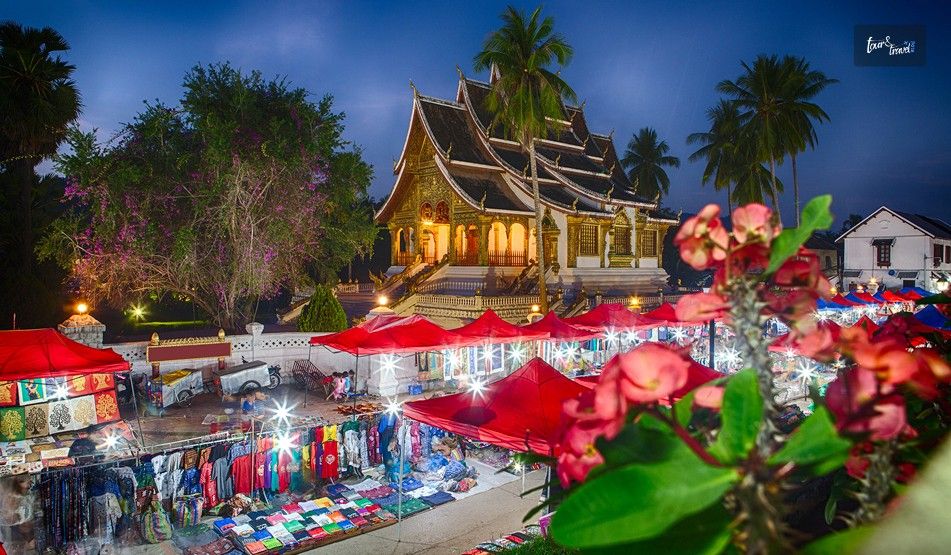
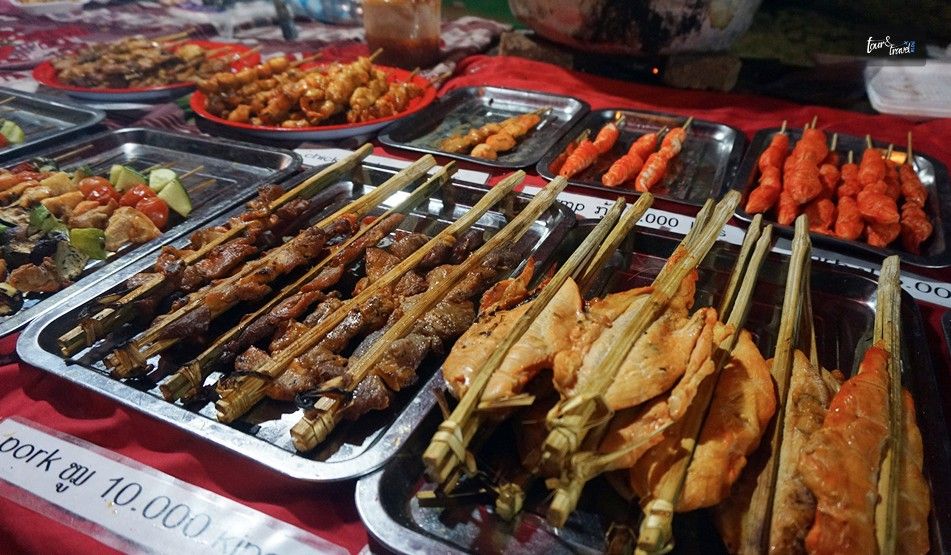
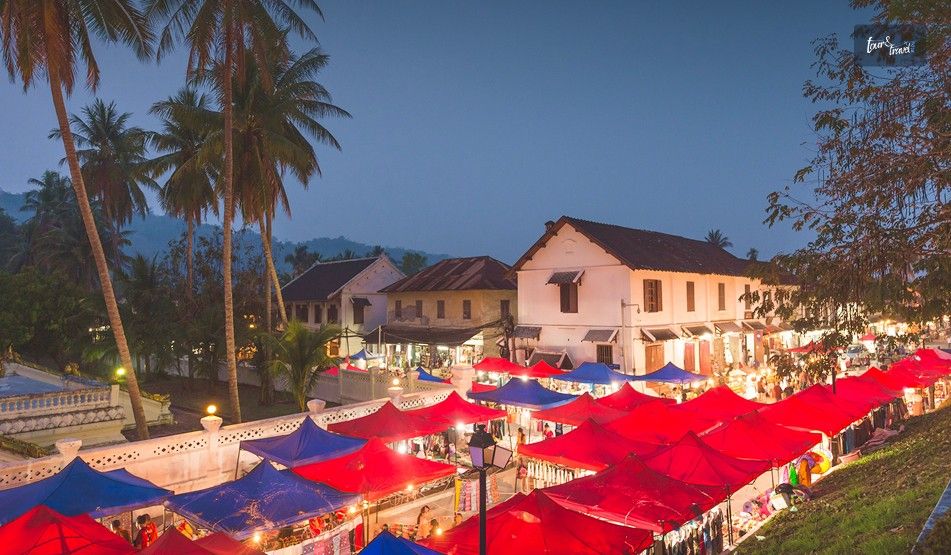
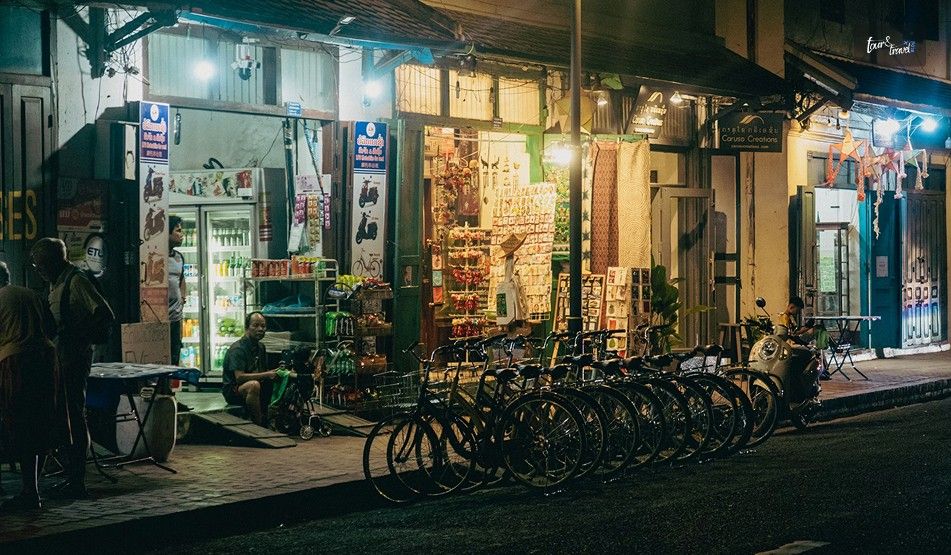
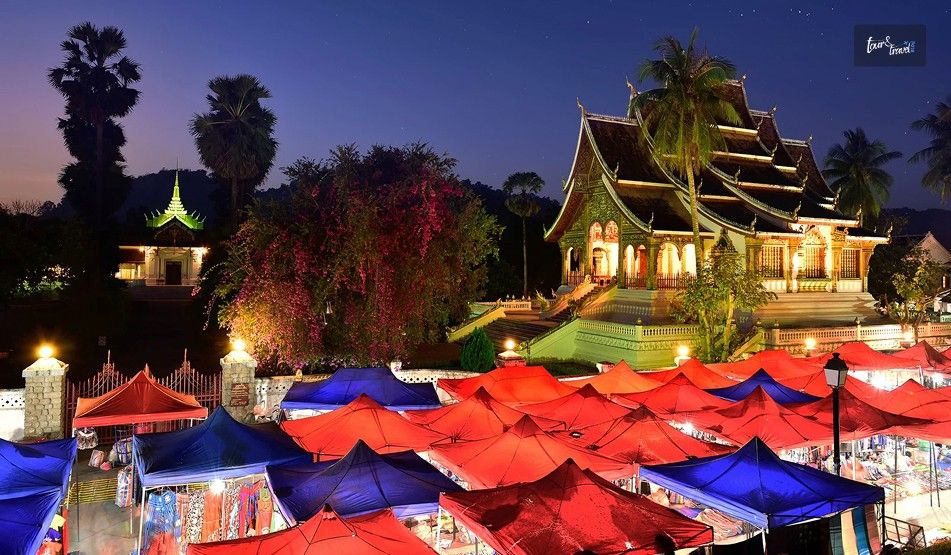
The Night Market at Sisavangvong Road welcomed me with the scent of grilled meats and the hum of bargaining.
Also, the market was decked out with colorful lanterns.
Furthermore, the area was bustling with more than 250 stalls set up side by side.
However, despite the presence of so many vendors and buyers, the Night Market was peaceful and respectful.
I was amazed to see how they did it!
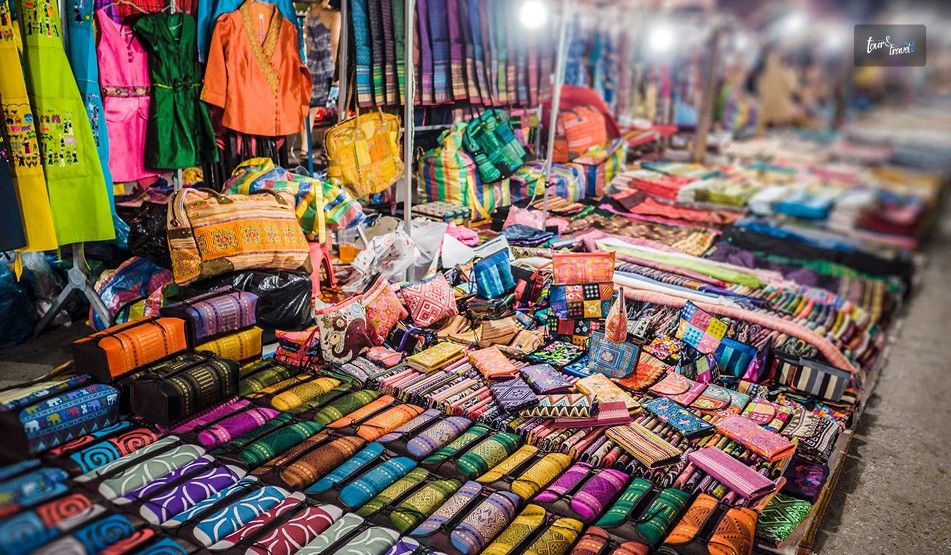
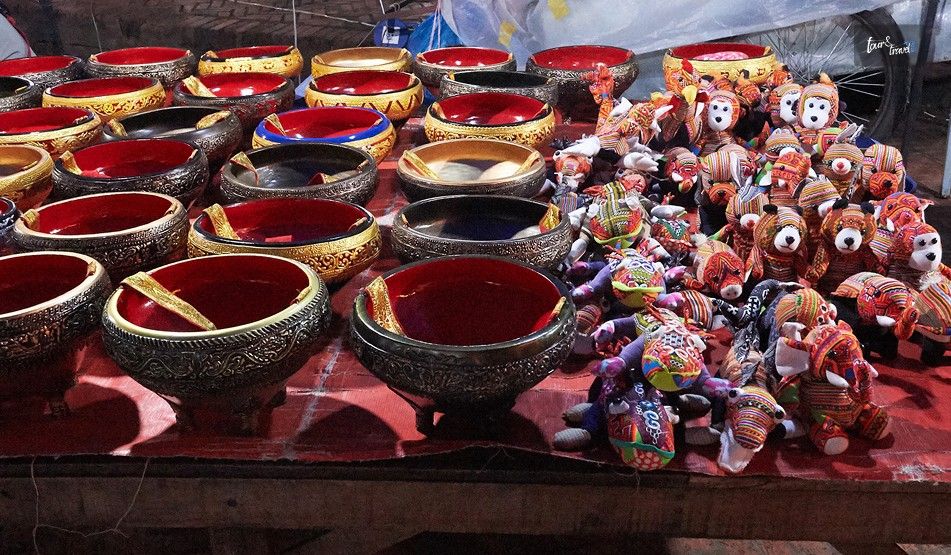
Another thing that struck me was that most of the stalls sold local, handmade items.
I found the vendors very passionate about preserving their traditions and building their livelihood based on them.
I also learned that many vendors here are from the Hmong group.
History Of The Night Market: From Candlelight To Culture
Usually, the origin of the Luang Prabang Night Market is said to be in the 1990s.
However, it has a strong connection with the Vietnam War.
After the Vietnam War, the displaced Hmong community started making and selling handicrafts for a livelihood.
Over time, it evolved into a nightly cultural showcase, attracting travelers from around the world.
Finally, in the 1990s, a modest “Candle Market” was set up, and local artisans mostly sold textiles and candles here.
Today, the Night Market is much more than a commercial hub filled with vendors and buyers.
It is a place of economic empowerment, especially for women.
Deciding what to buy is the biggest challenge at the Luang Prabang Night Market.
Here is a curated list of items that are the main attractions in the market.
Handicrafts
• Handmade and naturally-dyed scarves and tapestries
• Sustainable and stylish bamboo straws and eco-bags
• Silver jewelry with tribal motifs and intricate designs
Unique Finds
• Recycled bomb metal crafts made from war scrap metal
• Lao Lao whisky bottles infused with snakes or scorpions
• Hand-painted masks and bookmarks
Textiles
• Lightweight and colorful elephant pants
• Tapa cloth made from Mulberry silk
Where To Buy Souvenirs & Artisan Crafts At the Luang Prabang Night Market?
The main Night Market, stretching from the Tourism Office to the Royal Palace Museum, is the epicenter of the shopping experience.
The main market stretch on the Sisavangvong Road has many stalls where artisans actively weave and carve.
1. Silver Jewelry Shop At Night Market
Don’t miss these stalls. Here, the products sold are the most authentic.
At one such stall, I met Chansy, a Lao Silver Jewelry Artisan, who was engrossed in making bracelets.
I liked something at her stall, and I asked her if she uses a machine or not!
She said,
“Silver work is delicate, but it connects me to my grandmother. Every bracelet is handmade.
No machines. Sometimes visitors don’t realize the hours of work behind it.”
Chansy also had earrings and rings in her stall.
She further added that coping with the demands of customers who do not want to wait and pay the right money was a challenge for her.
2. Eco-Friendly Bamboo & Recycled Crafts
“I use bamboo and recycled materials because I want our children to have a clean future.
It’s hard work, but I feel proud when someone buys my bags or straws knowing they are helping the environment.”
– Khamla, A Local Artisan and Vendor at the Luang Prabang Night Market.
Today, Luang Prabang wins so many accolades in sustainable tourism, including the “Green Destinations Silver Certification.”
It is these craftsmen and people of Luang Prabang who play a vital role.
I spent the most time at Khamla’s stall.
Customers were standing in a queue in front of her shop to buy handmade soaps, eco-bags, and bamboo straws.
She was exchanging pleasantries with everyone.
Also, she was sharing tips about using sustainable items, turning each sale into a small lesson in environmental care.
3. Paintings And Bookmarks
I met another amazing woman vendor at a painting store at the Luang Prabang Night Market.
Her name was Nou, and indeed, a great storyteller she was.
Nou focuses on storytelling through art.
She said,
“I started painting to earn extra money, but I fell in love with it.
Each mask reflects a spirit or animal from our stories.
Sometimes tourists just take photos without asking—it feels like sharing our culture.”
When I visited her stall, she was working on a hand-painted bookmark inspired by Lao folklore.
She said the only challenge she found was conveying the folk stories and their cultural significance to the younger generation and foreign visitors.
4. Recycled Bomb Metal Cutlery And Ornaments
I visited the store selling cutlery and ornaments made of bomb metal.
It is a reminder that Laos is the most heavily bombed country in the world in terms of per capita assessment.
Furthermore, it has experienced major crises, including the Vietnam War and colonization.
If you loved visiting the UXO Luang Prabang Center, you must also explore a stall selling recycled bomb metal cutlery and ornaments for a full-circle experience.
5. Indigo-Dyed Fabric
I have mostly seen women vendors at the stalls of indigo-dyed fabric in the Luang Prabang Night Market.
Also, these women are from hill tribes, and they are really passionate about preserving their heritage.
You will get beautiful and sustainable cotton scarves at these stalls, and the tribal-style wraps and bags are quite stylish.
6. Artisan Alley Beside Indigo Café
This lane is quieter, and some of the items here are cheaper than the stalls at the main stretch of the Night Market.
It may be so because fewer tourists visit here.
I collected some miniature masks and wood-carved souvenirs from here.
7. Specialty Artisan Shops Nearby
You will find some specialty artisan and boutique shops near the Night Market.
These are not technically a part of the Night Market, but they also have brilliant handicrafts and local artisan products.
Check out the table below for the best time to visit the Night Market, bargaining tips, and safety tips.
The Best Time to Visit the Luang Prabang Night Market
• Visit between 5 PM and 7 PM for fewer crowds and better lighting for photos. • Visit after 9 PM to get the best deals from the vendors.
Bargaining Tips
• Start 20–30% below the asking price • Be polite and smile
Safety Tips
• Keep cash in a money belt. • Watch your step as there can be uneven pavement and cables.
Plan a visit to the Night Market after a hike to Mount Phousi.
Thus, you will have an amazing sunset to market experience.
Ethical Shopping: Supporting Local Women & Sustainable Crafts
Choose handmade products to support local artisans whose livelihoods depend on the heritage art or craft they are pursuing.
Talk to the vendors and try to figure out the story behind their art and craft.
Support stalls run by cooperatives and avoid buying mass-produced products from China or Thailand.
Avoid buying ivory trinkets and any products made from endangered animals.
Is The Luang Prabang Night Market Accessible For Seniors Or Visitors With Special Needs?
No, I did not find the Luang Prabang Night Market to be an accessible place for the people concerned.
In many cases, the pavements are uneven, and there are cables scattered here and there.
Also, the wheelchair facilities are limited in the market.
Furthermore, maneuvering them can be a challenge, considering the market space remains crowded.
Moreover, there are very few in the Night Market. So, you can bring a foldable stool if you need to sit and rest while exploring the market.
Seasonal Highlights And Festival Nights
The Luang Prabang Night Market gets specially decked up during festivals such as the Lunar New Year, Pi Mai Lao (Lao New Year), and Naga Fireball Festival.
Lanterns, dragon dances, the display of special crafts, and live music performances bring the market alive.
How To Be A Responsible Shopper At Luang Prabang Night Market?
See, I come from a place where many markets are developed around the art and craft of indigenous people.
So, the Luang Prabang Night Market, with most vendors from the hills or the Hmong community, felt familiar.
Also, you must understand that these people are preserving cultural heritage and some art forms that go back centurie.
Furthermore, their livelihood depends on selling these crafts.
So, you have to be respectful toward them when bargaining.
Gently ask whether they agree with the price you offered.
If not, move to the next stall.
Collecting handicrafts from the local artisans is a process of cultural exchange.
Moreover, carry a reusable and eco-friendly bag for carrying the essential items procured at the Luang Prabang Night Market.
Thus, you will be able to avoid the use of plastic bags and leaving waste at the market.
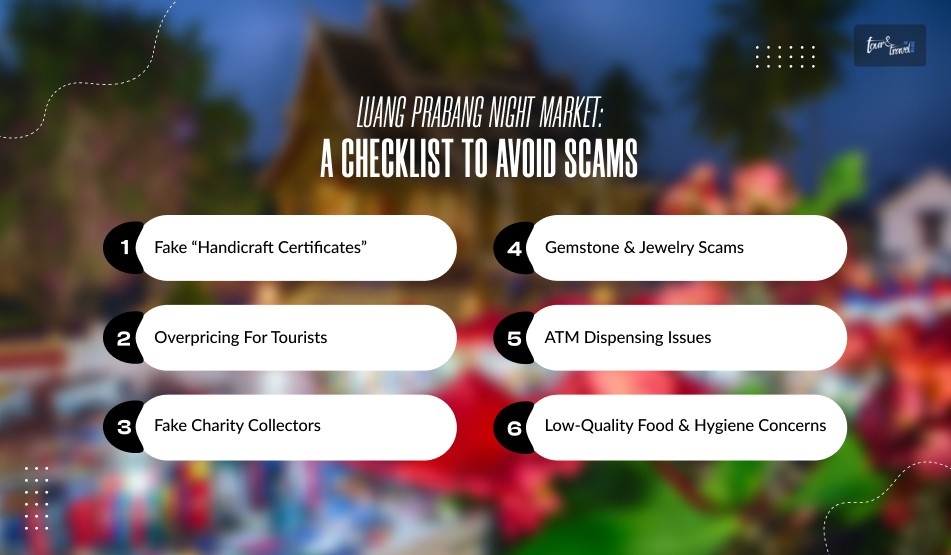
Luang Prabang Night Market: A Checklist To Avoid Scams
My local guide accompanied me through the Night Market like a shadow.
So, I did not have to worry about scams and fraud.
However, he kept me alert about the possible scams.
1. Fake “Handicraft Certificates”
Many vendors display false certificates claiming a product’s authenticity.
There have been many instances where a vendor has labelled a mass-produced synthetic product as rich silk.
So, ask vendors about the product’s origin and look for signs of actual handcrafting.
2. Overpricing For Tourists
Many vendors often charge inflated prices for souvenirs and food.
Some also sell Chinese or Thai products as local handicrafts.
Get a local guide or explore the stalls and compare the prices before buying a particular handicraft product.
3. Fake Charity Collectors
Individuals may approach tourists claiming to collect donations for local schools or temples.
These are often unverified and unaffiliated with any real organization.
So, only donate through registered NGOs, official channels, or you can get in touch with the temple authorities.
4. Gemstone And Jewelry Scams
If you are buying jewelry with precious stones, choose boutique shops or reputed sellers.
They will provide you with a certificate of authenticity.
5. ATM Dispensing Issues
ATMs here dispense large notes, or you may also find local ATMs occupied or running out of cash.
Also, when you carry large notes, the vendors may refuse to give you change.
So, always carry cash and small coins when exploring and buying something from the Night Market.
6. Low-Quality Food And Hygiene Concerns
Not every food stall at the market is safe.
Also, you cannot try every seafood you come across.
Many travelers complain about upset stomachs or allergic reactions.
Also, the local rice whisky, infused with snake or scorpion, contains many highly toxic elements.
The best thing is to eat at the stalls where locals visit.
The Luang Prabang Night Market Of Your Dreams!
The Luang Prabang Night Market is much more than a shopping experience.
Exploring the market is like knowing the true soul of the country.
Every corner of the market tells a story.
The local crafts and art present local traditions in the most interactive way.
On the other hand, vendors who make a living from them have stories about how they want to keep the tradition alive while supporting their families.
In addition, the women vendors are the soul of these Night Markets.
They are the boss ladies, nurturing their art and skills, earning bread for the family, and spreading awareness about the heritage and sustainable practices.
Luang Prabang Night Market Tips: Frequently Asked Questions (FAQs)
Here are the frequently asked questions and answers about the Luang Prabang Market tips.
1. Is The Luang Prabang Market Open Every Day?
Yes, the Luang Prabang Night Market is open every day.
The market remains open from 5 PM to 11 PM.
5 PM to 7 PM is the best time to avoid the crowd, enjoy the lights, and take photos.
On the other hand, 9-11 PM is the ideal time to get the best discounts.
2. Can I Use Credit Cards At The Luang Prabang Night Market?
No, you cannot use credit cards at the Luang Prabang Night Market. There are ATMs near the market.
However, ATMs often only accept big notes, and scams are common when exchanging them for change.
So, be prepared and carry small notes when visiting the Luang Prabang Night Market.
3. Is Luang Prabang Night Market Safe For Solo Travelers?
Yes, the Luang Prabang Night Market is safe for solo travelers and women.
The market remains well-lit, and most of the vendors are women. Furthermore, the crime rate in Luang Prabang is pretty low.
However, the market area remains crowded, and that can always lead to petty crimes.
So, carry your essentials in a money belt and dress modestly to avoid garnering attention unnecessarily.
4. Are Prices Fixed At The Luang Prabang Night Market?
No, prices are not fixed at the Luang Prabang Night Market.
In fact, bargaining is customary at the Night Market.
If you want the best prices, visit the market after 9 PM.
The vendors then offer low prices as they are in a hurry to close the shops.
5. Can I Take Photos At The Luang Prabang Night Market?
Yes, you can take photos at the Luang Prabang Night Market.
However, you have to ask and seek permission before taking the photos.
As Nou, a stall owner, was saying,
“They click our pictures without our permission and post them everywhere.
We would be happy to be in their photos, as we know it is like representing our culture.
Sibashree is a travel, culture, and leisure writer who has been writing since the age of 12 and professionally since 2014. With more than a decade of travel writing experience and journeys across India and several parts of the world, she brings a deeply personal and thoughtful perspective to her work. A student of English Literature and Mass Communication, Sibashree has always viewed travel as more than movement — for her, it has been a way of understanding people, cultures, and herself. Her passion for spiritual exploration has also led her to many unusual and meaningful destinations over the years. Outside of writing, Sibashree enjoys watching European cinema, reading about global politics, and reflecting on the stories hidden within everyday places.
All aboard, travelers! If you're looking forward to a scenic and relaxed journey on the rails, it's essential to know some key train travel packing tips. They’ll make your trip a comfortable and enjoyable experience.
Whether you're taking off on an exciting transcontinental adventure or just a weekend getaway, preparation is key. The right packing and planning can set the tone for a smooth ride. So, review these essential packing tips and must-haves for your next train travel adventure.
Train Travel Packing Tips
1. Bring A Spacious Single Carry-On
When selecting luggage, your best bet is a spacious carry-on bag. They're ideal for day trips and even those train travel packages that span a week or two. Choose a bag specifically designed for travel. It often has waterproof material and anti-theft features to protect your things inside as you focus on your trip.
If you need more room for your belongings, a lightweight wheeled bag is an excellent alternative. Not only is it easy to maneuver, but it’ll also fit into the usually constrained compartments of many trains. Packing light becomes crucial here since space on trains isn't as generous as in planes.
2. Use Organisational Packing Cubes
As a traveler's best friend, packing cubes help you organize your belongings. Organizing your belongings into various compartments allows you to easily locate what you need without turning your bag upside down.
Get cubes in varying sizes to fit everything from large pieces of clothing to socks and undies. Not only will these organizers save you time, but they’ll also keep your packing tidy throughout your journey.
3. Pack Clothing You Can Layer
Understanding the weather and climate of your train route is vital, even if you'll be inside the train for the most part. Packing layered clothing allows for easy adjustments to fluctuating temperatures. Start with light layers and add warmth as needed. That way, unexpected weather changes won't catch you off guard.
4. Consider Bringing Multi-Purpose Items
The more versatile the items in your luggage, the lighter you can pack. Think of multi-purpose garments or accessories that can serve more than one function. Bringing along a scarf that can double as a blanket, for example, saves you the need to pack too much.
Now that you know how to pack effectively for your trips, check out what you need to bring for your worry-free journey via train.
Train Travel Must-Haves
A. Travel Documents
Remember to have your necessary travel documents like tickets, identification, and any required visas at hand. A small document holder can make managing these essentials a breeze.
Failing to bring your documents could delay your trip or deny you entry on the train. Before you leave for the train, double-check these items first and last to ensure you won't forget anything.
B. Personal Toiletries
Some trains may provide complementary toiletry kits, but it's always a good idea to bring your own, just in case. A small toiletry bag with travel-size items like toothpaste and face wash can keep you fresh and clean during the journey.
Why not pack multi-purpose toiletries like petroleum jelly or moisturizer with SPF to save more space in your kit? These items can help you pack more efficiently. Consider transferring the contents into tiny travel bottles to avoid bringing the larger original containers with you.
C. Sleeping Kit
For overnight journeys, a sleeping kit including a blanket, sleeping mask, ear plugs, and neck pillow will make your trip more restful. Investing in a compact set ensures comfort without taking up too much room. Pack these items together in one compartment to grab them easily before sleeping.
D. Insulated Water Bottle And Snacks
Even if the train offers fresh food and beverages to first-class and economy passengers, it won't hurt to bring your own for the trip. An insulated water bottle will keep your drinks at the right temperature, and snacks will fill your stomach between meals. Store your food in resealable pouches to keep the contents from spilling out and making a mess.
E. Electronics And Entertainment
Don't forget your charger, headphones, and favourite book or e-reader. A relaxing train journey is perfect for unwinding with a good read or movie. If possible, store your electronics, phone, and wallet in the same small bag, as these items are often considered valuables.
F. Portable Clothesline
A portable clothesline can be handy if you plan to freshen up some clothes during extended travel. It's light, practical, and easy to use. This train travel must-have is ideal for drying wet towels or using it as a makeshift bunk divider. Though, remember to ask for permission first before using it.
G. Rubbish Bag
The train may have several rubbish bins you can walk over to, but there'll be times when you just want to remain seated. A small rubbish bag comes in handy for these occasions since all you need to do is take it out and toss your waste inside. It helps keep your space clean and organized during long-haul journeys, whether luxury travels or trips planned at the last minute.
Conclusion
Embarking on a train journey doesn't need to be a puzzle. By following these train travel packing tips, you can have a stress-free ride anytime. From versatile carry-on choices to must-have comfort items, thoughtful planning makes all the difference.
So, grab your ticket, pack wisely, and enjoy the scenic vistas through the window. The train route is waiting, and your seat is reserved!
Have you heard about the Sea of Stars Maldives? Are you planning your honeymoon and looking for a starry night sky vibe? Please read the article to learn about the magical occurrence and its reason!
What can be better than the glowing Island in the Maldives? One of the most beautiful natural wonders, the glowy beach is perfect for visitors and tourists to create a lifetime of memories.
Maldives' Luminescent Secret: The Mesmerizing Sea Of Stars!
There are reefs at the beach which show nature at its best! When the beach glows at night, it is a sight to see. It feels magical, especially because you will get privacy at the beach. In the article, I will be talking about why the Maldives Sea of Stars glows!
People have still not crowded the place, so book the tickets to Maldives if you plan to travel somewhere this year. Read the article to learn about nearby places you can visit on the glowing Island!
About Vaadhoo Island!
Located in Maldives, Vaadhoo Island is a part of another island of Raa Atoll. The Island is quite small, with a population of 500 people! Due to the phenomena of glowing beaches or the Sea of Stars, the Island has become quite highlighted on the global tourism map.
It was one of the best-kept secrets of the Maldives, but recently, it has become one of the most sought-after places for tourists worldwide! In 2022, the festive season of the Maldives was welcomed by plankton swarming everywhere!
The phenomenon, "Redhan lun," is a powerful force of nature displayed across the Ocean, making the water glow! According to the ancient Maldivians, many stories and folktales respect and revere this phenomenon. The natives consider it an omen of power and majesty of the Sea.
Even though the interpretation of the dazzling display, according to the Maldivians, is not as clear, it is quite visibly magical for both the natives and the visitors. The planktons run across the northernmost to the southernmost place of the beach!
How Do You Visit The Glowing Beach?
The Sea of Stars vaadhoo Island Maldives is well connected with different parts of Maldives; hence, reaching there is no issue! Male is the capital city of Maldives, and the distance between Vaadhoo Island and Male is 8 km!
So, if you are questioning, where is the Sea of Stars located? You are booking a flight, check if it is landing at Velana International Airport, the main airport in Maldives! Vaddhoo Island is quite accessible from the airport as you can hire a speedboat, which will take approximately 15 minutes to reach!
When you reach the Island, you will feel as if you have got paradise with its translucent water! The sun setting is another beautiful view you would forever like to keep as memories! It is one experience you must have on your bucket list if you are an offbeat traveler!
What Is The Secret Of The Glow?
The shining beach of Vaadhoo has a microorganism called plankton or phytoplankton! These microorganisms radiate under the Sea to glow a vibrant blue light; thus, at night, their glow makes the whole beach shiny and magical!
The microorganisms are bioluminescent, and through a chemical process, they create light, making the whole Sea glowy and dreamy! These mysterious and unknown creatures create the natural phenomena of 'Bioluminescence.'
It is one visual memory you want to save for the rest of your lives! Looking at the Ocean at night, it seems like all the stars are coming down from the sky, gracing the Sea and the beach! You can easily walk across the beach or swim in the water during this time. Worth it!
You can try your luck in the Greater Male area, which is quite underrated. If you want, check out the Planktons; it is a beautiful place to visit at night!
What Is The Best Time To Visit Maldives?
The best time to visit Vaadhoo Island is during the summer months, between May to November. We are saying this because, during this time, the bioluminescent display is at its peak!
People often think the time of the year matters when planning to visit the glowy beach! But it is the environmental conditions, along with the seasonal variations, that matter! To ensure that you check out the beautiful place, you have to calculate the optimal time to visit the beach.
The environment influences the Sea of Stars during specific months! During the summer months, the population of the phytoplankton increases and thrives. Your chances of coming across these aquatic microbes increase during this time as a magical symphony of lights is created across the shoreline.
Sea Of Stars: Instagramable Place To Visit!
The intensity of the Sea of Stars during summer months increases as the bioluminescent dinoflagellates increase significantly. It is visual to watch at night, especially when the stars above and below create a celestial paradise for you!
Imagine you visit the Sea of Stars in Maldives with your partner hand in hand, walking down the shore, or organizing a dinner for your little sister along with your parents on her birthday on the Vaadhoo beach. It is a perfect natural setting for the best people in your life and memories of a lifetime.
Check out the instagram account @Vaadhootours, which has beautiful photos of the Sea of Stars! You can have a beautiful picture taken at the beach with stars above your head and below your feet. Rightly named the Sea of Stars, the aquatic microbes ensure their presence is felt!
Pictures taken of glowing footprints or scrawls across the glowing sand are perfect pass time for children and even adults! The Sea then washes them away later, and with morning light, the blue fluorescent light fades away.
Where To Stay When You Visit Vaadhoo Island?
With the dark sky comes the light and the motion in the turquoise water of Maldives! The Ocean comes alive, which is otherworldly, so to check out the Sea of Stars, you need to book your accommodations close enough to experience the celestial glow of the water.
I will tell you five places to stay for your vacation at Vaadhoo Island, and enjoy the heck out of your trip!
Velassaru Maldives
Want to experience the local culture? You have to book at the Velassaru Maldives, where luxury is at its best, along with the Gentle sand guiding you to the water's edge. Further, the spectacular view that you will be getting of the water from the property is incomparable.
A tropical indulgence, Velassuru is the ultimate property, creating a perfect blend of nature and luxury! Services such as free internet, free breakfast, beach access, airport transportation, and canoeing make the whole deal worthwhile, with charges for rooms below $467.57!
Embudu Village
If you want something affordable, opt for Embudu Village at the South Male Atoll. The resort is situated on a private island which is 3 km long, so it is perfect for a stroll across the beach!
It is the perfect idyllic natural hideaway if you want some alone time! The lush tropical vegetation, along with white beaches, offer you the ideal backdrop for a vacation. Services available in this 122-room property are airport transportation, baggage storage, spa, canoeing, internet, beach access, and bar!
The charges of booking this property vary from $198.12 to $316.06 as it is one of the most affordable resorts available to enjoy the natural beauty of Maldives. There are rooms with private balconies on the pricier side!
Taj Exotica Resort & Spa Maldives
If you want to stay in one of the largest lagoons, this is it! The Taj Exotica Resort & Spa Maldives is an award-winning resort as they have created an alternative that combines nature and luxury. Water and beach villas are built amidst the largest lagoon in the Maldives!
There are a variety of water treatment rooms along with world-class holistic treatment by Jiva Grande Spa! Charges for the rooms, suites, and villas vary between $683.25 to $893.95 with free high-speed internet, pool, and gym services.
Further, you can go boating and have access to the beach and free breakfast! You can also access services such as books, music for the children, movie DVDs, and babysitting!
Baros Maldives
Based on 3971 reviews on Tripadvisor, Baros Maldives has been the best as they are rated 5 out of 5! With a shallow lagoon and marine life spread across the reef, this resort is located and the guests get the perfect tropical island experience.
The villas are elegant, created with sandstone and timber, peacefully nestled among exotic blooms across the beach. Per night, they charge around $791.32 for rooms as there is a variety, such as suites, non-smoking rooms, bridal suites, and ocean views.
Services include free high-speed internet, airport transportation, canoeing, a business center, free breakfast, a gym, and a pool for all guests!
Club Med Kani - Maldives
The resort is perfect for unwinding in the Maldives, within 2 km of swaying palms and powdery beach! They have all-inclusive services at the resort, so you can enjoy your stay along with experiencing some of the best underwater adventures, quite exhilarating.
Per-night charges for the hotel rooms are $1282.34! Free services provided to the guests are free internet, outdoor play equipment for kids, canoeing, free breakfast, private beach access, a pool, and a fitness center.
There are schools of tropical fish, snorkeling, and paddling across the shores that Club Med Kani Maldives Resort offers. There is a wide variety of cuisine, which will make your stay unforgettable!
What Other Places You Can Visit From Vaadhoo Island?
Apart from dipping your feet in the glowing Sea of Vaadhoo Island, there are other beautiful experiences that you can attain by visiting different places! On the Island, you cannot miss these natural events or experiences!
Baa Atoll Biosphere Reserve
It is the seventh-largest coral reef, with biodiversity shooting through the roof! You will see the plankton flowing through the coral reef, which maintains the food chain in the Baa Atoll Biosphere Reserve, thus sustaining 1200 species of fish.
The total area of the coral reef is 139,700 hectares, including 75 Islands in Baa Atoll! Out of the 75, there are only 13 islands inhabited mostly by Maldivians, while there is only one Island with one tourist resort!
A variety of aquatic and marine lives. If you look in the water, you will find some endangered species, such as Napolean wrasses, green turtles, tawny nurse sharks, and hawksbill turtles. There are mangroves across all the islands!
Thilafushi: The "Rubbish Island"
Maldives attracts 750,000 visitors annually, and this Island is paying the price of that as the rubbish produced by the tourists is all dumped, ditched, and piled like heaps of trash on the smooth white sand and tranquil blue water. The rubbing produced on a per-day basis is almost 3.5 kg!
It was initially a collection of shallow coral reefs, but in 1992, the Male government decided to dump all the garbage here; thus, it has been since called the "Rubbish Island"! The land suffered severely from the 330 tons of trash. Then, the garbage excavators, migrant workers, and refuse freighters were used to handle the Island!
Over the years, the Island has become hazardous while rubbish dumping has been stopped in 2011! It is a place you can check out if you are an environmentalist and want to make a study out of it.
Keahole Point Blowhole
During the winter months, you can check out Keyhole Point, located in Kailua-Kona town, in the western part of the Big Island. Spectators will be fortunate to see the mammalian blowholes, especially because not all are so organically and perfectly made!
When the water rushes through the lava tube opening, which the low viscosity pahoehoe lava has created, the spouts of ocean water swell consistently, battering the rocks!
Feeling Otherworldly Yet…
Now that you know about the Sea of Stars Maldives, you must learn about some safety details! Bioluminescence is a natural phenomenon, so there is hardly any chance of getting hurt!
Yet, considering the glowy water is an attraction for people, it can be an attraction for other animals and marine life predators. It is important to understand that even if you live in a resort, you must be careful when visiting the beach!
Comment below about your plans to visit the glowing beach and why!
Read Also:
Portals To The Unknown: Exploring Natural Gravity Vortex!
The Stairway To Heaven Hawaii: Hiking Adventure’s Hidden Gem
Walking On Sunshine: Exploring The Magic Of Vietnam’s Golden Hand Bridge!
What is the best time to visit New York?
Well, the answer is tricky. Google will tell you that the shoulder seasons are the best time to visit New York.
New York is indeed delightful from April to May and September to October. However, a seasoned traveler knows that New York shows its beauty across all seasons.
For example, you may spend the most happening Christmas in New York. So, for you, of course, December is the best time to visit New York.
So, New York is a year-round destination, and the best time to visit New York depends on the experience you want and the places in New York you plan to visit.
Best Time To Visit New York: Plan Your Trip Right
The temperature in New York is always pleasant, and it is always fine for us to visit New York.
Having said that, New York has some specialties in every season.
When To Visit New York City?
If you are asking for my recommendation? Then I would recommend from April to June, September to early November is the best time to visit New York.
During this period, the temperature in NYC is quite pleasant. But you might find the crowd a little uncomfortable during this season.
But if you wish to visit New York at low expenditure, then from mid-Jan to the end of Feb is the most fitting travel season for you.
If you are looking to visit New York in the best season possible, you need to plan well in advance for your hotel bookings.
New York sees a lot of tourists during the best seasons hence it is best that you work on the hotel and travel bookings with cozycozy.com. This will ensure that you have the best stay in New York City.
In my opinion, September is the best time to visit NYC.
Let us check some of the best times in New York City which we can enjoy the most.
2. Best Time To Visit New York For Good Weather Conditions
The good weather in New York is usually found from May to October although from July to August it is usually very hot and humid. This time period can not be considered the best time to visit New York.
If you are visiting New York during the Spring, you are in for a treat. The bustling Central Park, the high-energy Wall Street, and other attractions really come into their own.
Open Bus Tours in New York City can be enjoyed during this period. The same will take you through the major city spots and allow you to enjoy the food, culture, and history of the place.
Further, Autumn, with all the leaves turning yellow and red, is the season of festivals, including Halloween and the Rockefeller Center Tree Lighting Ceremony.
So, here, I present a table featuring the highest and lowest temperatures in New York by month.
MonthHighest Temperature (°C)Lowest Temperature (°C)Rainfall (Number of Days)January5-38February7-27March1038April1889May22159June271710July302110August292011September29157October25106November1756December1008
3. Best Time For Sight Seeing In New York
Summer and winters are both have different flavors essences. For the travel thirsty people, every season is the best time for sightseeing of course obviously without natural calamity.
April to November is the best time for sightseeing in New York.
However, the months of June, July, and August may throw some restrictions on outdoor activities as the days of rainfall are higher in these months.
4. Best Time To Explore The Nightlife Of New York
The best time for nightlife in NYC has no boundaries, it can be done throughout the year. The nightlife in NYC throughout the year looks magnificent and unbelievably beautiful.
The night charm of New York City is full of entertainment. Manhattan is a popular area where you are going to get hundreds of street sidebars along with discos and pubs.
Most of these pubs and disc are remain open for the whole night. If you want to spend your whole night, focus on Manhattan city to enjoy your entire night with good food and drinks.
Best Time To Book Hotels
New York is one of the most expensive places to visit in the world, so one should make plans beforehand.
You must find out the best hotels in New York or the best hotels for a family stay in NYC. You can Google or use apps to find out the best hotels in New York.
Best Time To Do Shopping In New York
New York is famous for its bargain market. At most shopping plazas, sales are available at least twice a year in New York. So there is no such great time to go shopping in New York.
New York is famous for shopping, so don’t worry, you are likely to meet any of the sale seasons whenever you visit are heading towards New York.
Brookfield Place is the best shopping plaza for travelers. And Manhattan is the best place where you get the whole package of the entertainment shopping mall to restaurants everything is present in the same place.
Best Time To Avoid Crowd In New York
People usually do not like to visit New York during the chilly winter months that is from January to mid of March.
Usually, most of the families going to New York do not like to get into the crowd, or it is actually difficult to go sightseeing in very winter and the crowded places in New York.
The plus point of going to New York during crowd time is that you will get air tickets at a cheap cost, plus the stay in New York would be cheap.
New York City Events And Festival
As I have already told you beforehand the new York is a great place to be all throughout the year.
But especially the events and the festival of New York City make the place even more charming and cheerful. Let’s Start month-wise, this information is something which I collected when I went to New York.
Best Things To Do In New York In January
There is always something or the other going on in New York throughout the year. But in January, some special events happen in New York.
Out of everything that happens in the January season, I have chosen some of the best things to do in New York in January.
New York is anyway famous for its Jazz Fest, which is held in more than 11 venues. Birdland and Blue note are the most famous jazz pub in New York.
In the entire month of January, there are at least 100 shows that are put up. There some Broadway shows.
You can attend the Broadway show with one more person paying for one person. In the month of January, January is the best month to enjoy food, during this month.
An entire week is solely dedicated to the Restaurants, which is why this week is called Restaurant’s week in New York.
Best Things To Do In New York In February
As of February sets in the fashion week sets in New York, It is actually great to find out about New York’s Fashion Week which is held in the month of February.
All the best Designers of the world showcase their masterpieces in this fashion week.
* The March and April months remain quite less-festive, there is barely any such eventful event that you will be covering in your visit. Then again the events set in from May month onwards.
Best Things To Do In New York In May
The three major things that happen in the month of May are the Ninth Avenue International Food Festival, Washington Square Outdoor Art Exhibition, and Fleet Week.
These eventsare taking placein New York in the month of February. These three festivals are facinginnumerable visitors from all over the world.
Hence,these events are famous all across the world. worldwide, so do not forget to visit this event to get a worldwide traveling experience.
Best Things To Do In New York In June And July
This is the peak time when a lot of people fly to New York, so the most amazing events are hosted at this time.
The events are Belmont Stakes, Pride Festival and March, Shakespeare in the Park, NYC Restaurant Week, Lincoln Center Out of Doors Festival.
Best Things To Do In New York From September To December
This is the best time to visit New York and is famous for the festive season, rightfrom festivals to celebrations.
There are many best things which you can do in New York from September to December.
Such as the village Halloween Parade, Rockefeller Center Tree Lighting Ceremony, Ice Skating Rinks, Holiday Window Displays, New Year’s Eve at Times Square, New Year’s Eve Fireworks.
These all are the events of New York which New York events are make helping to makethe mood of the travelers. This time the aura of New York amazingly becoming unique and lovely.
New York has many places that people are unaware of. But if you are in New York,then do not forget to visit Maryland and Manhattan.
It is advisable to makea wise decision by choosing the best time to visit New York according to you. These places are extraordinarily beautiful, and there are many things to do in New York, which I will discuss in my next article.
If you like this article, then keep tuned in to Tour and Travel Blog for more insights on New York.
FREQUENTLY ASKED QUESTIONS (FAQs)
What is the cheapest month to visit New York?
As you know the cheapest month of the year that is suitable to visit New York is from January to March. In these three months the costs of both flight and hotel are average for the whole year.
Where should I stay for my first trip to New York?
Here is a list of places,
Middle Town
Upper East Side
Chelsea and Greenwich Village
Soho and Lower East Side
Queens
How many days do you need in New York?
You actually need three days to see the main things in New York. If you want to cut the three days in two, that can be done as well.
Should I stay in Times Square?
Absolutely, with no doubt. The main reason to stay in Times Square is for the location. You are basically in the heart of the city.
It's a tourist attraction. At night it is perfect for walking with holding hands with your loved ones.





 Related