

Luang Prabang Waterfall Guide: How To Visit Kuang Si And Other Waterfalls In Luang Prabang? 

Nov 5, 2025

Last Updated on: Nov 12, 2025

Travel Guides

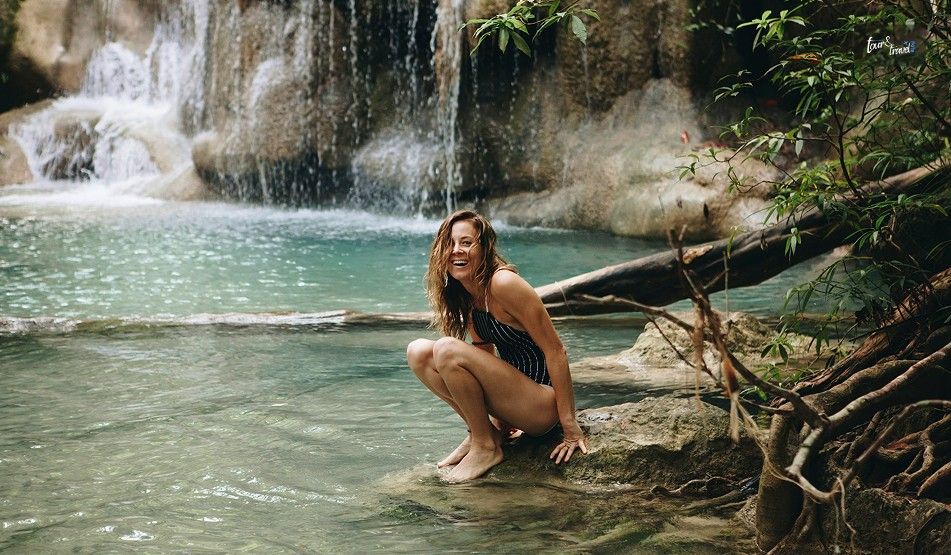
I was relaxing after a bath at the Kuang Si Falls and suddenly, an electric blue dragonfly came to visit me. It sat on my knees for some time, and then came another. Within 15 minutes or so, I spotted hundreds of dragonflies making the trees appear blue.

I was immediately transported to my childhood days when chasing a dragonfly or finding one with the most unique colors was a fun game. Suddenly, my guide called me and said, “Let me show you something unique.” He took me to the “Do Not Enter” board. 

He asked, “Want to go there? There is a secret pool.” I said, “Why not?” I found out a milky-blue calm basin. Local teenagers were hanging out there, and they were eating sticky rice from banana leaves. They offered us some, and it was the best sticky rice I ever tasted. 

Food in Luang Prabang is magical, just as is the Mekong River, temples, and Buddhist culture here. 

While coming back, my guide handed me a plastic bottle. I asked him, “What to do with it?” He said, “Fill the bottle and take the water home. It carries blessings.” 

Then, as I came down, I suddenly smelled the aroma of lemongrass and grilled chicken. I insisted. So, my guide had to take me to the local stalls. I had the best skewers there, and they tasted even better as I was hungry after hiking to the waterfall and having a bath. 

The skewers were a little black on the edges, and that burnt flavor did the trick for me. Further, the aunty selling the skewers asked me to try the chili dip she had made. It was Fire and tears rolled down my face. She was so embarrassed! She gave me coconut pancakes to eat. 

My visit to the waterfalls in Luang Prabang is filled with such amazing stories. In this blog, I will share them and talk about the best waterfalls in Luang Prabang, how to reach them, their spiritual significance, opening hours, entry fee, and everything you need to know. 

What Are The Best Waterfalls In Luang Prabang? 

What Are The Best Waterfalls In Luang Prabang

Recently, Travel + Leisure has picked the Kuang Si waterfall as one of the 21 most beautiful waterfalls in the world in 2025. This recognition further enhances Laos’s international tourism profile. 

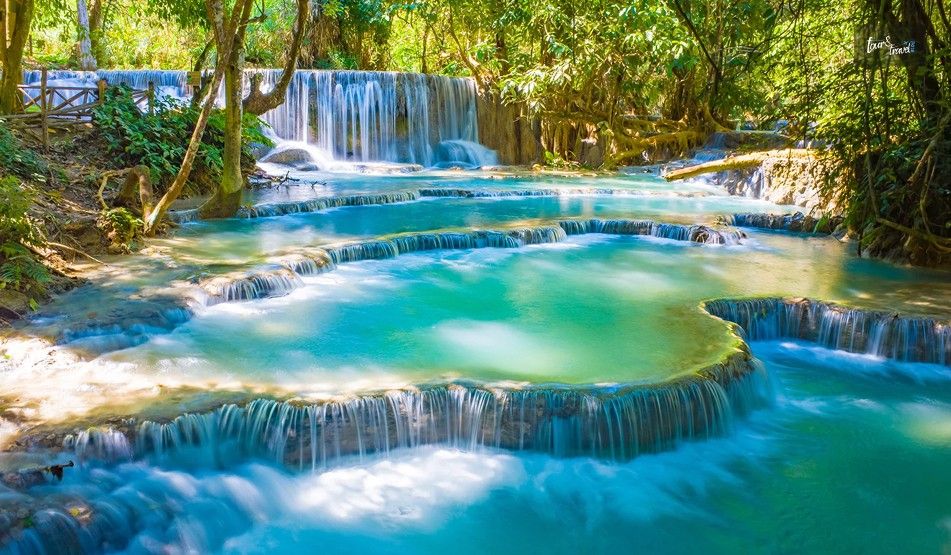
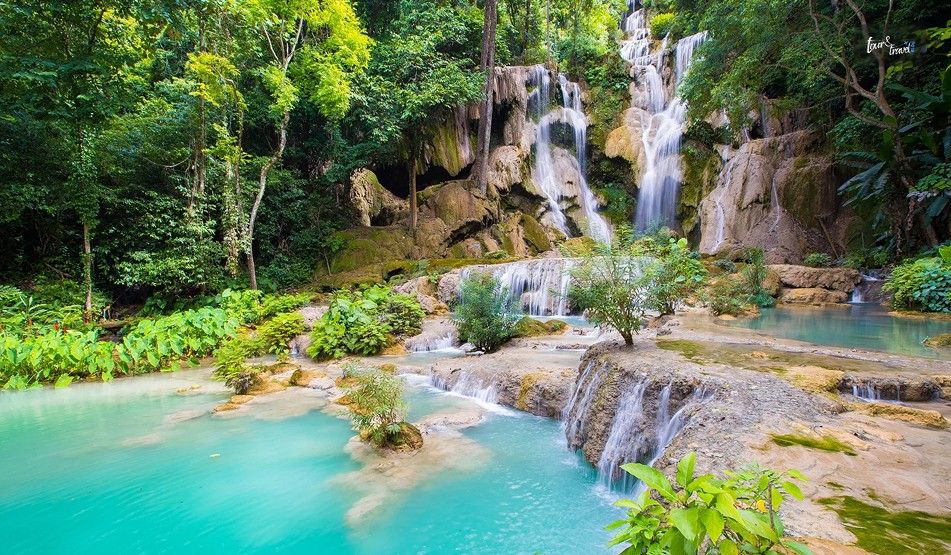
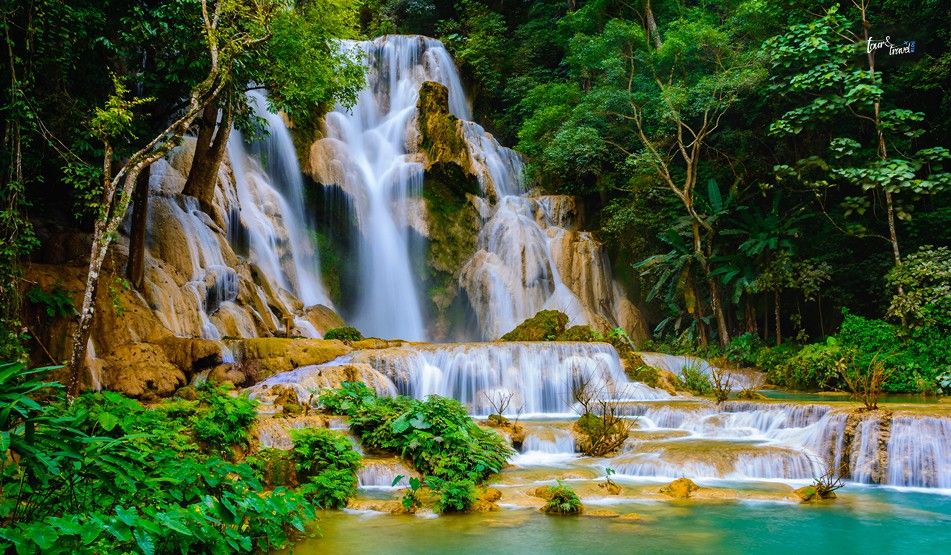
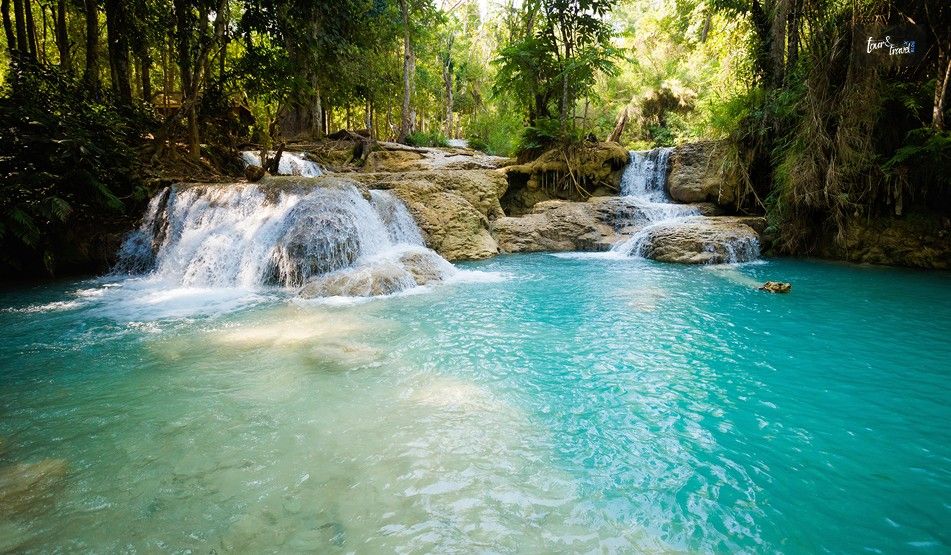
It is just an hour’s drive from Luang Prabang, and its stunning blue waters and turquoise pools formed with it, create the most dramatic landscape. 

However, Kuang Si is not the only waterfall you will find in Luang Prabang. You must also explore the Tad Sae Waterfall, Tad Thong Waterfall, Hoi Khua Waterfall, and Dheva Waterfall. 

1. Kuang Si Waterfall

Kuang Si Waterfall

When I reached Kuang Si waterfall, I heard the monks’ chants from the nearby Buddhist temple. Within an hour, the scenario changed completely, and the roar was so much that I could not hear my own voice. 

Also, on my way back, my tuk-tuk driver was saying, “The old Kuang Si was way wilder, Ma’am. Its water has blessings.” 

How To Visit Kuang Si Waterfalls In Luang Prabang?

Taking a tuk-tuk or a bike is the best way to reach Kuang Si Waterfalls from Luang Prabang. It is located 30 km south of Luang Prabang. The journey takes around 45 minutes. 

Here are the estimated costs of transport options and the expenses. 

Mode of TransportEstimated Cost
Tuk-tukAround 60000 KIP
Minivan Tour250.000 KIP/ Per Group
Motorbike Rental100,000 KIP/day
Private Car250,000–300,000 KIP

What Is The Entry Fee And Hours Of Kuang Si Waterfall? 

The waterfall remains accessible from 8 AM to 5:30 PM. For the locals, the ticket price is Laotian 20,000k/person. The ticket is free for visitors below 12 years of age. Furthermore, for foreigners, the ticket price is 60,000k/person. 

What Is The Best Time To Visit The Kuang Si waterfall?

The dry season from November to May is the best time to visit Kuang Si waterfall. These months are ideal for swimming in the clear turquoise water of the pools. You can also go hiking and explore the nearby bear rescue center and butterfly park in these months. 

Furthermore, these months are ideal for photo opportunities. 

However, if you want a quieter experience, June to October is the ideal season. Fewer tourists visit the waterfall during these months. However, the water becomes muddy due to heavy rainfall. 

Local people believe that this water carries power. 

What To Expect At Kuang Si Waterfall?

  • Swimming pools
  • Bear Rescue Centre
  • Jungle trails
  • Picnic areas

You cannot walk around the pools or waterfall with your shirts off or in bikinis. It is considered crude and does not go well with the local culture. 

2. Tad Sae Waterfall

Tad Sae Waterfall

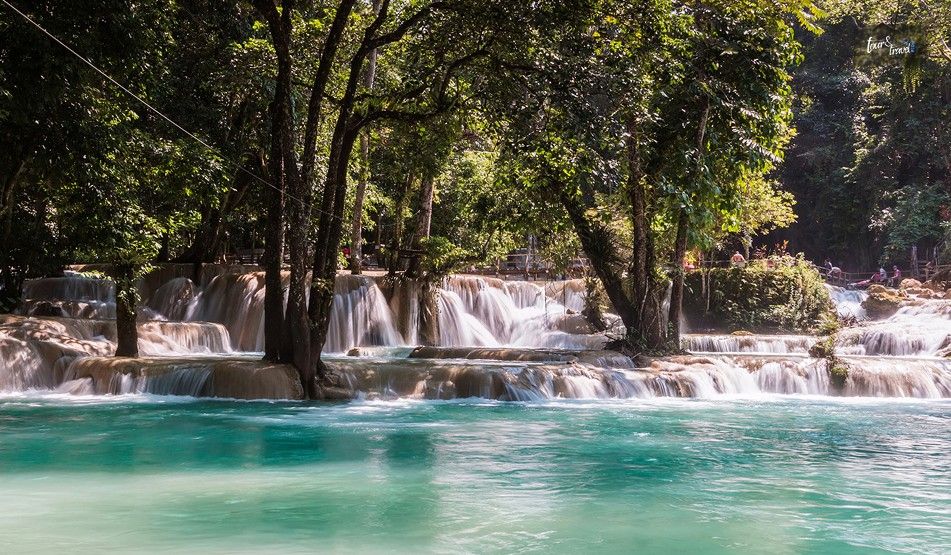
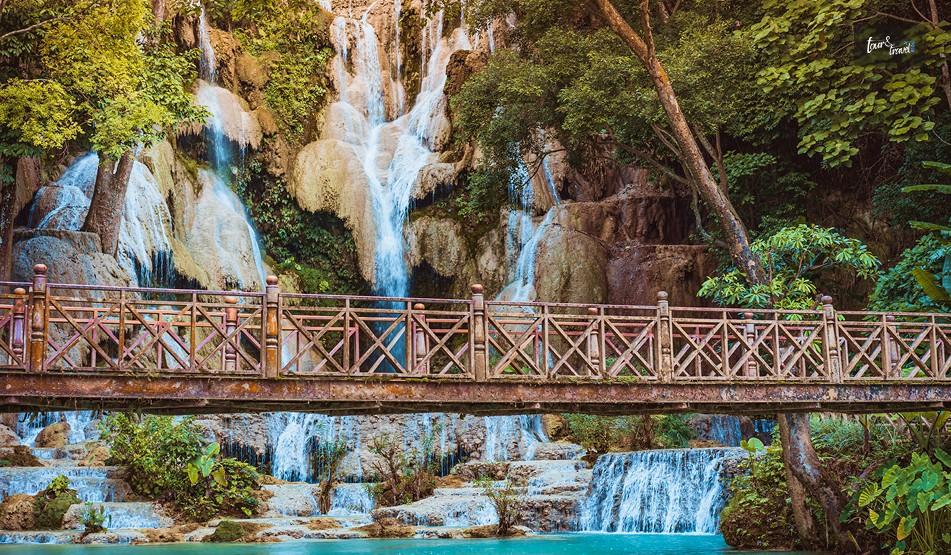
With an elephant park nearby, Tad Sae Waterfall is a quieter alternative to the Kuang Si Waterfall. The decks crisscrossing the water make the visual all the more dramatic. 

How To Visit Tad Sae Waterfall In Luang Prabang?

To visit the Tad Sae Waterfall, you have to take a short trip out of town. Then, you need to take a trip down the river in a traditional long boat. 

It is a 14 km trip from the town to the long boat launch area. Then, the boat ride is 8 minutes long. The cost of the tuk-tuk ride is around 150.000 kip. 

Furthermore, the boat ride will cost around 25,000-35,000. 

What Is The Entry Fee And Hours Of Tad Sae Waterfall? 

The ticket price for Tad Sael waterfall is Laotian 15,000 KIP for locals. Tickets are free for children under 8 years old. For foreigners, the ticket price is 30000 KIP. 

The waterfall remains open from 8 AM to 5 PM. 

What Is The Best Time To Visit The Tad Sae Waterfall?

August to October is the best time to visit the Tad Sae waterfall. From February to July, the waterfall remains almost dry. 

What To Expect At Tad Sae Waterfall?

The boat ride across the Nam Khan River felt like a time-travel for me. The Nam Khan river cuts through fog and jungle that smells like lemongrass and diesel. I also saw kids paddling in plastic tubs, laughing at me while my longtail boat sputters by. 

Another fun thing I noticed is the monkeys near the top pools. Locals believe that these monkeys were the spirits who guarded the waterfall. Also, I saw some local visitors leaving a few grains of sticky rice on the rocks for good luck. 

Tad Sae Waterfall is great for family picnics and boat rides. 

3. Tad Thong Waterfall

The spring-fed Tad Thong waterfall emerged before my eyes after a 45-minute jungle walk. The walk starts from a point, around 6 km outside Luang Prabang. 

Today, it stands in almost abandoned condition, and the hiking trails and bridges are nonexistent in several places. 

How To Visit Tad Thong Waterfall In Luang Prabang?

You can easily reach the hiking starting point by tuk-tuk, car, or bike. The tuk-tuk price will be around 800,000 KIP. 

What Is The Entry Fee And Hours Of Tad Thong Waterfall?

The Tad Thong Waterfall remains open from 8 AM to 5 PM. The entry fee is around 20000 KIP per person. 

What Is The Best Time To Visit The Tad Thong Waterfall?

From July to January, or the rainy season, is the best time to visit the Tad Thong Waterfall. The waterfall remains full and active in these months, and you can photograph the most dramatic visuals. 

What To Expect At Tad Thong Waterfall?

Tad Thong is not as massive as Tad Se, nor does it have the grandeur of the Kuang Si Waterfall. However, visiting Tad Thong felt like finding a precious old book under a heap of dust. 

Throughout the jungle walk, butterflies kept fluttering around, and the silence echoed through the rocks, making me feel a little cold after some time. 

Lesser-Known Waterfalls: The Hidden Gems Of Luang Prabang 

Located near the Green Jungle Park, Hoi Khua Waterfall is a powerful waterfall with a height of 100 meters. Along with swimming in the crystal clear pool formed by the waterfall, you can also relax inside the open-air huts at the Green Jungle Park.

Hoi Khua Waterfall also has an interesting lore associated with it. It is said that locals once took shelter behind this waterfall to protect themselves from the approaching soldiers. However, what happened to them is a mystery to date. 

Are The Waterfalls In Luang Prabang Accessible? Summarizing The Accessibility Rating Of The Waterfalls 

Have a look at the table below to see which waterfalls are accessible and which are not. 

WaterfallWheelchair AccessStairsSuitable for Kids
Kuang SiModerate
Tad Sae❌ (boat only)Few
Tad ThongMinimal
Hoi KhuaFlat terrain

What Is The Cultural And Spiritual Significance Of The Waterfalls In Luang Prabang? 

What Is The Cultural And Spiritual Significance Of The Waterfalls In Luang Prabang

The waterfalls in Luang Prabang have many fascinating stories and secrets. I am sharing a few as I heard from my local guide and a Kuang Si waterfall ranger.

1. The Golden Deer Legend Of Kuang Si Waterfalls

Kuang Si in the local language means (Kuang) Deer and Si (Dig). Stories have it that a wise man chose this spot and started digging into the earth to summon water. A golden deer made its home beneath the rock where the waterfalls flow now. 

The story suggests a harmonious bond between humans and animals. Furthermore, the golden deer is a common character in Southeast Asian spiritual and religious stories. It has a vital role to play in the Ramayana, and we get the mention of the golden deer many times in the stories about the previous lives of Lord Buddha. 

In addition, the story has given the waterfall a distinct cultural identity cherished by the locals. So, today, the Kuang Si Waterfall is more than a waterfall with a grand physical beauty.

Mr. Boun, a Kuang Si Park Ranger, told me, “We protect the forest and teach kids about the golden deer legend. Kuang Si is sacred to us.

2. Waterfalls In General Have A Connection With Buddhism

Waterfalls in Luang Prabang are mostly located near the temples. The water from these falls is also used in cleansing rituals conducted by temples and monks. 

Furthermore, offerings are made to these waterfalls during Pi Mai Lao or the Lao New Year. 

3. Bear Rescue Center’s Cultural Role

The Tat Kuang Si Bear Rescue Centre is more than a tourist attraction in Luang Prabang. It is an important center for the implementation and education of the local conservation efforts. The center also raises awareness about illegal wildlife trade. 

Furthermore, many locals consider black bears sacred. 

4. Butterfly Park Near Kuang Si

You cannot miss the Butterfly Park located within walking distance of the Kuang Si waterfall. This park is peaceful with colorful butterflies fluttering around. 

Butterflies have deep symbolism in Buddhism. These lively creatures teach us the art of letting go and how we can evolve and transform. 

5. Caves Behind the Falls

The hidden caves behind the upper tier of the Kuang Si Waterfalls are a telltale of the rich geological history of the region. These caves are missed by most visitors. So, these are ideal for a short meditation period or spending some moments of introspection. 

Cultural Etiquette Tips For Foreigners Visiting Luang Prabang Waterfalls

Cultural Etiquette Tips For Foreigners Visiting Luang Prabang Waterfalls

Some areas and pools near the waterfalls are considered sacred, and they are reserved for religious and spiritual activities. Conde Nast Traveller says, “Luang Prabang’s waterfalls offer a spiritual escape into nature.

So, swimming or access to those areas is not allowed. So, you have to adhere to these norms. 

There are many other dos and don’ts you need to follow while exploring the waterfalls of Luang Prabang. 

Dos ✅Don’ts ❌
• Dress Modestly.

• Wear a sarong or a towel over your swimsuit when walking around.
 
• Seek permission from the locals before photographing them. 

• If a sign says “No Swimming” or “Do Not Enter,” respect it. These rules often protect sacred zones, wildlife, or fragile ecosystems.

• Locals value quiet and respectful behavior, especially around sacred sites. Ensure children don’t climb on statues, splash excessively, or disturb wildlife.

• If invited to join a blessing or offering ceremony, observe first, follow others’ lead, and avoid interrupting or asking too many questions during the ritual.
• Using shampoos or soaps while bathing in the natural pools. 

• Touching the monks or offering them money directly. 

• Playing loud music or expecting a party vibe at the waterfalls. Waterfalls are often used for meditation, rituals, and family gatherings.

• Littering is deeply frowned upon. Waterfalls are natural and spiritual spaces, and locals expect visitors to treat them with reverence.

Secrets And Lesser-Known Facts You Did Not Know About Luang Prabang Waterfalls 

Secrets And Lesser-Known Facts You Did Not Know About Luang Prabang Waterfalls

The turquoise color of Kuang Si’s pools comes from the calcium carbonate particles of the limestone rocks. These particles reflect sunlight. Thus, create the iconic blue shade. 

This turquoise blue color looks the most beautiful during the dry season. 

Also, locals often bring picnic baskets and spend entire afternoons at waterfalls. Vendors near Kuang Si sell grilled chicken, sticky rice, and jaew bong for this purpose. It’s a cultural experience and the locals are welcoming enough to often ask the tourists to join them in. 

Food And Dining Near The Waterfalls In Luang Prabang 

You can visit the following areas for food and dining near the waterfall areas. 

AreaFood And Dining SpotsLocation
Kuang Si AreaKuang Si Kitchen and ResortClick Here
Tad Sae AreaMainland StallsLocal restaurants in the mainland boat landing
Tad Thong AreaThe Living Land FarmClick Here

What Are The Photography Tips For Visiting The Waterfalls In Luang Prabang? 

What Are The Photography Tips For Visiting The Waterfalls In Luang Prabang

The beautiful waterfalls of Luang Prabang are ideal for photography, and they are quite popular on social media. You need to keep in mind the following instructions for photography at these waterfalls. 

Best TimeGears RequiredInstagram Spots 
• Daily: Golden Hour: 7:00–8:00 AM and 4:30–6:00 PM

• Annually: Rainy Season
• Wide-angle lens
• Tripod for long exposure
• ND filter for silky water effect
• Kuang Si’s top tier
• Bamboo bridge near Tad Sae
• Jungle trail at Tad Thong

So, visit the Luang Prabang waterfalls and have the best moments exploring the mighty cascades and soaking in their cultural and spiritual vibe. 

Luang Prabang Waterfall Guide: Frequently Asked Questions (FAQs)

Here are the frequently asked questions and answers about the Luang Prabang waterfall guide. 

1. Can I Swim In Kuang Si Falls?

Yes, you can swim in the designated pools of Kuang Si Falls and other waterfalls. However, some pools are reserved for spiritual and religious activities. So, swimming is not allowed there.

2. Are There Lockers Or Changing Rooms?

Yes, there are changing rooms near the Kuang Si waterfall entrance. However, you will not get a locker. 

You have to carry a dry bag and keep your valuables there, or if you are traveling in a group, you can enjoy the swim in turns. 

3. Is Tad Sae Open Year-Round?

No, the Tad Sae waterfall is not open year-round. August to November, or the rainy season, is the best time to visit the waterfall. It does not have water in the dry season (February to July). 

Share on Social Media

Meet Sibashree Bhattacharya, a travel enthusiast who has a decade-long experience in transcending virtual barriers with her words! Her deep love for travel is apparent from her travel escapades to the mountain, often taking her readers on a journey, her words acting as Portkey! Fun fact: Sibashree loves to dive deep into the history of the places she is about to visit, making her travels even more wholesome. If you were wondering how her articles are not short of time travel, this answers it!

Leave a Reply

Your email address will not be published. Required fields are marked *

title-img Related

READ MORE Guide To Indiana National Parks

A Guide To Indiana National Parks – Latest Guide

BY  Mashum Aug 2, 2021

Indiana state is famous globally as the “Covered Bridge Capital” because there are 32 covered bridges alone in Historic Parke County, which are discoverable through a road trip. Apart from the Indiana national parks, the state is also famous by the name of “great lakes state” since it shares 40 miles of shoreline with Lake Michigan.  The four national parks in Indiana are renowned as outdoor adventure destinations, namely the Indiana Dunes National Park, President Lincoln’s Boyhood Cabin, George Roger Clark, and the Lewis and Clark Historic Trail. Of the four national parks, Indiana Dunes National Park is a must-see destination. Indiana Dunes National Park and George Rogers Clark National Historical Park are national parks in the term's true meaning. And, the other two national parks in Indiana, i.e., Lincoln’s Boyhood National Memorial and Lewis and Clark National Historic Trail, are the two memorial sites in Indiana, recognized for their routes of historical significance or original trails by the National Historic Trails. Let’s check more details about each of the national parks in Indiana and see how we can spend our day if we plan a trip there. The Four Noted Indiana National Parks 1. Indiana Dunes National Park:  Of the four celebrated Indiana national parks, this one is an unmissable destination if you are in the state. The national park shares 15 miles with the southern shore of Lake Michigan. Indiana Dunes National Park is spread over 15,000 acres and has a lot to offer.  Your search for rare species of birds will end here, along with 1,100 native plant species and the fun of flying kites on the sandy beach. You will feel enchanted with every step you take in this national park as this place is among the most biologically rich areas in the nation.   The park offers 50 miles of trails over rugged dunes, sunny prairies, mysterious wetlands, peaceful forests, and meandering rivers for hikers. Shall we now check out basic information about the national park to plan our tour accordingly? Directions To The Park: You can access Indiana Dunes National Park through Interstate 94, the Indiana Toll Road, U.S. Highway 12 & 20, Indiana State Road 49, and several other local roads. To visit the Indiana Dunes Visitor Center, you need to take Indiana State Road 49, between U.SD. Highway 20 and Interstate 94. Operating Hours Of The National Park: This Indiana national park has general areas that are open throughout the year but have specific hours of operation. The standard working hours of the general areas of the national park are Monday to Sunday from 06:00 am to 11:00 pm. The entrance to the Indiana Dunes National Park is through the west beach. The hours of operation of this portion of the park is Monday to Saturday from 07:00 am to 09:00 pm. Weather News: Usually, July is the warmest month in the national park, and January is the coldest month. June month witnesses the heaviest rainfall with 4.66 inches of rain on average. Entrance Fees To The Park:  West Beach - Standard Entrance Fee $6.00, Senior Pass Entrance Fee $3.00, Access Pass Entrance Fee $3.00, Bus Entrance Fee $30.00. Dunewood Campground - Standard Camping Fee $25.00, Senior Pass Camping Fee $12.50, Access Pass Camping Fee $12.50. This campground is 1.5 miles from the beach and boasts 67 campsites made for both RVs and tent camping.  One-half of the site is open for reserve, and the other half is given on a first-come-first-served basis. You will find showers and restrooms at the campground but no water or electric hookups.  Indiana Dunes Visitors Centers:  Dorothy Buell Visitor Center - This Indiana national park visitor center is open on all days except New Year’s Day, Thanksgiving Day, and Christmas Day. The operation hours are 09:00 am to 04:00 pm Central Time (Due to covid-19). At Dorothy Buell, you will view lobby displays, read brochures about Porter County, Dunes State Park, Indiana, and Indiana Dunes National Park. You can also shop in the Eastern National Bookstore and enjoy watching educational displays and two short orientation videos. Paul H. Douglas Center For Environmental Education - This visitor center is open from 09:00 am to 05:00 pm Central Time during Summers and from 09:00 am to 04:00 pm during Winters. This center is your gateway to the magnificent Paul H. Douglas Trail via Miller Woods. You will find a natural environment all through the center through its hands-on educational exhibits, animals, lectures, Nature Play Zone, ranger-guided hikes, and crafts. Popular Activities To Do At The National Park: Hiking. Picnic at the beach. Birding. Swimming. Fishing and Paddling. Geocaching. Horse Riding on the equestrian trails. Camping (Between April 1st to October 31st). Biking. Snowshoeing and cross country skiing. Shuttle Bus Services: During the summer period, on weekends, you can take the services of free shuttle buses from the Dunewood Campground to the beaches. You can stop at sites like the Miller Train Station, Marquette Park, Lake Street Beach, and The Douglas Center.  Pet Friendliness: Indiana Dunes National Park is completely dog-friendly. You can take your pet to almost all trails and other parts of the park, besides a few exceptions. For example, you cannot take your pets on Glenwood Dunes Trail’s equestrian part, in the lifeguard area of the West Beach, and the Pinhook Bog Trail. You can enjoy a free public wi-fi facility at the Indiana Dunes Visitor Center. 2. George Rogers Clark National Historical Park:  Located on Southwest Indiana and beside the Wabash River, George Rogers Clark National Historical Park is one of the small Indiana national parks, which has a few monuments, a picnic spot, statutes, and a visitor center as its main center of attraction. The national park is about an hour tour in total.   Why Was George Rogers Clark National Historical Park Built? George Rogers Clark National Park was built in the 1920s in memory of an American Colonel named George Rogers Clark, who captured Fort Sackville in 1779 and his army with help from French residents of the Illinois country. The capture of the fort guaranteed the United States a claim to the frontier, which is approximately an area as big as the original 13 states. The National Park is a memorial built to commemorate Clark’s success for his unmatchable success for the revolutionary war’s 150th anniversary. When you visit this national park’s visitor center, you will discover the fort’s history, how it was built, and how it felt living in the Pullman District. In addition, at the national park, you will be shown a 30-minute short film on the life of George Rogers Clark. Things To Do At The George Rogers Clark National Park A short walk around the nearby town of Vincennes will offer you the following things to do at this small Indiana national park: Dine at restaurants. Camping at Campgrounds. The Old Cathedral. State Historic Sites. Shops to shop. Antique Stores. There are particularly no campgrounds at George Rogers Clark National Park. But, visitors can find campgrounds for RV and tent camping at the Ouabache Trails Park, located in Vincennes.  Space For Pets: Your leashed pets can accompany you on the walkways around the Memorial and the visitor center, but their entry inside any buildings is strictly prohibited. Operating Hours: The park is open for visitors on all seven days of the week. At the same time, it is closed on most of the federal holidays except Independence Day, Labor Day, and Memorial Day. Timings for the Park District: George Rogers Clark Memorial is from 09:00 am to 04:45 pm on demand. Weather At The Park: The weather inside the national park is very much typical for the Midwest. Summer months can be hot and humid, and winters quite cool. Entrance Fees To The Park: For a George Rogers Clark National Park tour, there is no entrance fee charged.  The Visitors Centers To Visit: This Indiana national park has one visitor center with the same name as the national park. This center has a small exhibit area. You will be shown a short 30-minute introductory movie titled “Long Knives,” which tells about the backstory of George Rogers Clark and his military campaign. No drinks or food are allowed at the visitor center or Memorial. Services offered here are charging stations, restrooms, bookstores, and drinking fountains. 3. Lincoln Boyhood National Memorial:  In the southern part of Indiana and Lincoln City, you will find the third Indiana national park, named Lincoln Boyhood National Memorial. This is where former President Abraham Lincoln grew from youth to manhood before becoming the 16th President of the United States of America. Operating Hours Of The Lincoln Boyhood National Park: All visitors are allowed to tour the national park grounds and visit all the outside areas daily, between sunrise and sunset. Once you arrive at the park, there are plenty of things that you can do, such as two miles of trails, watching the sculptured panels on the outside of the Lincoln Memorial Visitor Center, visiting the Cabin-Site Memorial, the Pioneer Cemetery, and the Living Historical Farm. Unfortunately, the park is closed on almost all federal holidays. Weather At The Park: The climate in Southern Indiana is moderate, with a touch of warmness and moistness. The summers are warmer and winters cooler. It rains the most during Spring. Visitor Center At The Park: The Lincoln Boyhood park has a Memorial Visitor Center built in 1943 with two memorial halls and a connecting cloister. In the Memorial Court, you will find the works of E.H. Daniels and five sculptured panels that mark significant periods in Abraham Lincoln’s life. Taking a tour of the whole Memorial will take up to 30 to 60 minutes. There is also an orientation film shown at the visitor center every half an hour from 08:00 am to half an hour before the day’s closing. The Museum artifacts and exhibits speak about Abraham Lincoln’s life.  This national park is all about Lincoln’s family, boyhood, and frontier life in this Indiana national park area. During summers, the visitor center is open on all seven days from 09:00 am to 04:00 pm except for the federal holidays. And, at the time of the Fall season, the timings are 07:00 am to 03:00 pm. Place For Pets At The Park: Visitors are permitted to bring in their pets inside the park, but with certain restrictions. The pets must be restrained at all times on a leash, which should not be longer than six feet in length.  The pets are only allowed on the 2 miles of hiking trails and roads in the park and barred from entering public buildings. Things You Can Do At The Park: It will take at least two hours to complete a tour of the whole park. The indoor activities at the park include: Watching the Park Film at the Memorial, titled Forging Greatness and Lincoln in Indiana, which is 14 minutes in length. Paying a visit at the Lincoln in Indiana Museum, which would take around 15 to 30 minutes. The outdoor activities include: Hike the Trail of Twelve Stones, a type of front-country hiking of 20 minutes. Hike the Boyhood Trail, which is another front-country hike of 10 to 15 minutes. Visiting the Lincoln Living Historical Fa, you'll find a re-created homestead with outbuildings, log cabins, field crops, gardens, livestock, and split rail fences.  For kids of 05 years and above, there is a Junior Lincoln Boyhood Ranger Program. Lincoln Spring, which is an obscure waterway. The entry to the Lincoln Boyhood Indiana national park is free. 4. Lewis And Clark National Historic Trail:  The Lewis and Clark National Historic Trail is nearly 4,900 miles long, starting from Pittsburgh, Pennsylvania, to the Columbia River mouth, which is near the present-day Astoria, Oregon. This Indiana national park follows the historic incoming and outgoing routes of the Lewis and Clark Expedition along with the preceding section initiating from Pittsburgh, Pennsylvania, to the Wood River in Illinois. This Trail connects 16 U.S. States and many Tribal lands. Today, visitors are allowed to explore the whole Trail using varied transportation methods and interpretive means, following the approximate route of the Corps of Discovery, i.e. Lewis and Clark Expedition Members.  Places To Visit In Lewis And Clark National Park:  Lewis and Clark National Historic Trail Visitor Centers and Museums: At Lewis and Clark Historic Trail Museums and Visitor Centers and Cultural Centers, visitors can learn more about the expedition and experience blissful and diversified landscapes and communities on the Trail. Directions To The National Park: You will find the Lewis and Clark Indiana national park visitor center inside the DOI, National Park Service. Weather At The Park: The summers are sweltering, so you must drink plenty of water and wear sunscreen when stepping out for a tour of the Trail. The winters are icy, with ice settling on trails and sidewalks. Since this Trail covers 16 U.S. states, you must watch the weather prediction of the state you are planning to visit. The Final Thoughts We hope that the above comprehensive guide on Indiana national parks is a one-stop solution and a valuable guide for you if you plan a trip to any of the four national parks and trails. From serenity to beautiful natural landscapes, from magnificent and ancient monuments to rare species of animals, you will find every part of each of the four national parks surprising. More Resources: A Guide To National Parks In Georgia – Latest Guide 8 Best Bachelor Party Destinations To Visit In 2021 A Guide To National Parks In Michigan – Latest Guide 2021

READ MORE best places to live in Australia

8 Best Places To Live In Australia For You If You Have A Family

BY  sagnika Apr 27, 2024

Let me share an overview of the eight best places or cities where you can live in Australia. Of course, I have my preferences based on certain criteria, ensuring that I live a good life with safety and positivity. Considering the distance from my workplace, transportation, and connectivity to the marketplace and shops are immensely important. If I plan my future in a place, I will choose one that has nature surrounding it and a cultural aspect of the local community. Read the article to explore eight places that are considered some of the best places to live in Australia. I will help you understand these cities better and how they can offer you some of the best opportunities related to your lifestyle and personal and professional life. 8 Best Places To Live In Australia For You If You Have A Family! Australia has some of the best cities for you to work and live in! Let me create a list of eight places that offer several opportunities for you to create a beautiful lifestyle, either as an individual or as a family person. In these cities, you can grow professionally because they offer some of the finest places to work and live. This includes top employers, the best organizations, a balanced cost of living, and more. Wondering about the best time to visit Australia? Keep reading! There are also other services, such as hospitality, customer service, and agriculture, which you can access if you plan to live in one of these cities in Australia. Whenever you plan to move to one of these cities, you get the best opportunities and enjoy your life to the hilt! 1. Melbourne Did you know Melbourne is considered the top city in Australia to live in? When you compare its affordability with Sydney, another popular city in NSW, you will see that it is much more affordable than Sydney. Over the past four decades, there is an apparent average price difference between the two cities of 1.36 times! According to the Australian Broadcasting Corporation, Sydney is 22% more expensive than regarding in terms of accommodation. One of the major reasons for this is the price of housing. Housing in Melbourne is much more affordable, along with stability, education, infrastructure, and healthcare. Melbourne's cultural scene is where you can visit museums, popular music, galleries, festivals, and other places. You can see different places that bring you closer to nature. In 2023, Melbourne was called the "most livable city in Australia"; hence, when you start living there, you will experience a life full of colours! Apart from that how can we forget about the beaches in Melbourne? 2. Sydney Sydney is the capital of the state of New South Wales and one of the most popular cities in Australia. Furthermore, Sydney is the second-best place to live in Australia. With its coastal location, it offers some of the best visuals! Now, your question: Why do I say that? Some reports also tag Sydney as the fourth best place to live worldwide. Some of Sydney's significant aspects make it quite amazing, such as excellent weather, social infrastructure, and employment opportunities. The beaches in Sydney are another reason you get to live there! There are more employment opportunities in Sydney than in Melbourne in IT, tech jobs, design, technologies, and science. Sydney's culture and food are quite good, which is alluring if you are planning to live in Australia. 3. Adelaide In my list, Adelaide is the third best city to live in Australia, especially because it is so affordable. There are many green spaces, which you can access whenever you want. When it comes to accommodation, Adelaide is the most affordable! According to Propertyupdate.com.au, you can rent houses in Adelaide at a median price of $393! If you live closer to one of the bustling markets of Adelaide, you can experience some of the best food and culture in the city. Let me also highlight that Adelaide has a family-friendly atmosphere and a relaxed lifestyle. If you want to live life ambitiously yet do not prefer the regular hustle-bustle of cities, this is the place for you. 4. Brisbane The fourth city I have included in this list is Brisbane, which is well known for its educational services and healthcare opportunities. I am here to highlight the opportunities that you will receive once you move to Brisbane. The average cost of living for a single individual in Brisbane ranges between $400 and $750 weekly. Of course, your choices, living quarters, and expenses factor into this rate, so you need to do careful budgeting if you plan to live here. At times, certain factors make it easy for people to misunderstand or misinterpret Brisbane's nature. Frequent crime and an increasing negative perception of people make it difficult for people to understand Brisbane's genuineness as a city. 5. Perth Perth is a student-friendly city on the western coast of Australia. If you plan to pursue an academic career soon, you can plan on living in Perth. The city offers diverse options for gastronomic, recreational, and cultural activities. Two of the top Australian institutions are in Perth: Murdoch University and the University of Western Australia. The universities and educational institutes in Perth are quite supportive, encouraging students to achieve more and have a social life. If you compare all these places in Australia and their cost of living, Perth is the cheapest, with a total of AUD$2200 monthly! Perth has a diverse job market in construction, information technology, tourism, and healthcare. Several tourist attractions are located in West Perth, such as the Scitech Discovery Center, Cottlesloe Beach, the Pinnacles, and Kings Park. The climate is pleasant, and there is a beautiful burgeoning arts scene, so if you are an artist, this is the perfect place for you! 7. Canberra Canberra, the capital of Australia, is known for its cosmopolitan environment. If you plan to relocate to Canberra for work purposes, you are making the best choice. This place is one of the safest cities in Australia and is filled with international visitors. The city offers you information technology and consulting services and employment opportunities that you can apply for! These are the most popular employment opportunities. Let's remember the educational institutes such as Canberra University and Australian National University that welcome international students. The city's top attractions are the Black Mountain Tower, a man-made lake in the city centre, and the Captain James Cook Memorial. You will also lose yourself in the diverse food options in restaurants such as Water's Edge Restaurant, Table Canberra, Les Bistronomes, Olive at Hawker, and others. 8. Gold Coast Located in the north of Brisbane, Gold Coast is one of the most popular areas of Australia for greatest surfing! There are about four universities in the city, and 30,000 university students live there to pursue their education and grow professionally. There are interesting job opportunities available, along with several chances of you becoming a business owner by opening a cafe or a small business based on your qualifications and interests. Let me also mention some of the cutest amusement parks—maybe that is why it is known as the "theme park capital of Australia!" I suggest you visit Dreamworld, WhiteWater World, Warner Bros. Movie World, Sling Shot Gold Coast, and others. Food and culture are a winning combination; thus, you can get the best of both worlds when you start living on the Gold Coast! 8. Newcastle If you love living in a place with a strong community sense, Newcastle is the place for you! It is on the New South Wales Coastline, offering career opportunities and an affordable lifestyle. If you prepare for better educational opportunities, you can get admission to the University of Newcastle. If you have friends and family in Sydney, it will take two hours to reach Newcastle! Apart from being the seventh largest city in Australia, Newcastle provides a luxurious coastal life. You should also check out the restaurants in Australia as they give you a slice of life! If you hate congestion and the busy lifestyle of big cities, you can enjoy an easygoing lifestyle in Newcastle. Finishing Off... To sum it up, Australia as a nation is one of the most economically stable countries in the world. Yes, there are shortcomings, but I have made a list of cities that you can consider if you plan to relocate. Be it for job opportunities or personal reasons, you can consider these places. Why is it important for you to go through these places in detail before you plan to relocate? You learn about the little things that might not seem important at first but can matter a lot when you start living there permanently. Comment on which place you think is perfect for relocating in the list and name the reason! Learn More About: 6 Tips For A Luxurious Trip To Australia Budget-Friendly Travel Ideas In Australia 10 Things You Have To Do When You Visit Australia Top Restaurants In Maitland Australia That Give You Culinary Delights

READ MORE Exploring Whistler, Canada

Guide To Exploring Whistler, Canada For A Memorable Getaway

BY  Arnab Nov 22, 2023

Whistler is unlike any other ski resort - boasting charming villages, phenomenal mountain biking trails, and breathtaking scenery, making this destination truly unforgettable. To see everything helps to have your own car. That way you can explore unique attractions (like the Train Wreck) further out of town. Canada is an expansive country, so having a clear itinerary prior to traveling there is essential. First, create your budget by dividing it amongst the days that you will spend there (plus any expenses such as meals). You can visit this site to learn more about current travel restrictions. Whistler is an outdoor enthusiast's paradise, featuring stunning ski spots, thrill-packed activities, and an idyllic European-style village. As one of North America's biggest ski resorts, it attracts visitors from across the globe. Whistler Blackcomb's grand scale becomes immediately evident as you drive into town from Vancouver via the Sea to Sky Highway. The trip takes travelers on a short bus ride from coastal mountains and rainstorms that quickly transition to snowflakes before reaching Whistler Blackcomb. This is the name for two mountains connected by one of the world's largest lift systems. Once in Whistler, visitors can explore its laidback mountain atmosphere on foot or bicycle. Or if they want something a bit more exciting, they can check out snowmobile tours from companies such as Canadian Wilderness Adventures or The Adventure Group; they offer thrilling snowmobile tours through Whistler's backcountry for adventure junkies! 1. The Village Whistler is best known as a mountain resort, yet its charming Euro-style village at its base also attracts many visitors. Curving stone walkways, little bridges and an abundance of trees create a pleasant setting in which to stroll or dine both summer and winter when its snow-dusted environs transform Whistler into a breathtaking winter wonderland. No matter your level of skiing experience, strolling down Whistler Village's main street is a must. You can click the link: wikihow for beginner skiing advice. Here you will find shops and restaurants ranging from casual bites to award-winning cuisine, plus great local breweries like Whistler Brewing Company and Coast Mountain Brewing that serve up amazing craft beers! Village life offers an engaging social hub, where you will experience locals' upbeat attitude in every shop, restaurant, and gathering spot. If you are in search of some fun nighttime action head over to Longhorn or Buffalo Bills for dancing while Elements offers live music. Take in the landscape from above with helicopter tours! Both outfitters offer tours tailored specifically for different experiences and confidence levels; you may spot bears while learning a great deal about regional ecology from your guide. There are also plenty of outdoor activities in the area for those not interested in flying. From climbing ski jumps or skiing with an Olympic medalist at the 2010 Winter Olympic Park (open all summer long); to bear-watching tours through lush forests to see an estimated fifty black bears that live here (from a safe distance, of course!), coyotes, western horny marmots, barred and great horned owls and more wildlife. 2. The Mountains Whistler is surrounded by rugged peaks, glaciers, and alpine forests that can be experienced both vibrantly green and covered in pristine snowfall. While exploring them on foot is one way of appreciating them fully, other methods exist such as taking advantage of helicopter tours that enable passengers to glide effortlessly over these magnificent landmarks and experience all that they have to offer. One such tour allows passengers to fly over coastal mountains while experiencing both their beauty and charm firsthand. These one-of-a-kind tours take passengers on an aerial journey over rugged peaks with gorgeous glaciers or lush alpine forests that are either vividly green or covered in fresh snowfall - both stunning from a high vantage point! If you are up for something more daring, Whistler offers plenty of thrilling adventures! Those looking for an adventure will find that bungee jumping off a bridge spanning the Cheakamus River is an exhilarating way to experience all its beautiful surroundings while getting some memorable photographs and videos of your visit here. Vallea Lumina provides a truly relaxing way to experience the mountains: a forest stroll at night! Join this unique tour and wander along forest trails illuminated with brilliant lighting displays; it is an excellent activity suitable for families and groups of all ages! Exploring Whistler's mountainous terrain by snowmobile is another exciting way to experience winter's breathtaking mountainscape. Tours can be booked outside the village, providing both beginner and experienced snowmobilers the chance to take in its sights. Or why not give heli-skiing a try - one of the most thrilling activities available during a visit to Whistler! 3. The Festivals Whistler is an all-year destination for outdoor enthusiasts. Boasting two majestic mountains connected by the PEAK 2 PEAK Gondola, Whistler provides access to breathtaking alpine terrain. At lower elevations, its coastal climate delivers lush vegetation as well as numerous lakes and trails in its lush coastal climate. Winter in Whistler brings many events. The Whistler Pride and Ski Festival follows in the footsteps of well-known snow sportsmen by following "go big or go home." Held annually during late January or early February, this festival showcases LGBTQI ski sports activities, parties at local night clubs, and arts and cultural activities. The Spring Mountain Trail Run is an annual marathon, and half marathon held each April, offering participants stunning scenic views of mountains, forests, lakes, and rivers surrounding this beautiful mountain town while at the same time testing their endurance. Furthermore, this festival showcases nature with various activities that celebrate it in all its beauty. Whistler Art on the Lake festival takes place annually at Alta Lake's sound end in August, drawing thousands to its gallery-style event that showcases over 30 Sea to Sky-based artists as well as arts and crafts for sale at this popular gallery-style festival. The Whistler Film Festival, an annual event that takes place each December, is a celebration of independent cinema. This festival features movie screenings, gala events, guest speakers, and artist spotlights as well as industry programs like filmmaker summits, talent programs, awards, and mentoring initiatives - an excellent chance for networking among fellow film professionals while enjoying Whistler. 4. The Food Set out on a Whistler Tasting Tour to experience some of its culinary secrets! From gourmet seafood and artisanal charcuterie to classic fondue, this culinary adventure will lead you through some of Whistler's premier dining spots. Whistler boasts a diverse food scene, from casual cafes to fine dining establishments and everything in between. If you are craving some fine dining, be sure to book a table at Araxi Restaurant; its Pacific Northwest-influenced dishes and unparalleled service are among its many accolades. Other top options include Mallard Pub & Grill, located at the base of Blackcomb with an incredible sun-drenched terrace, and seasonal menu options such as grilled elk with wild mushroom tartine and braised beef cheeks with Korean barbecue glaze as crowd pleasers. Furthermore, Sidecut Steakhouse recently underwent extensive renovations, boasting high-end cuts of meat (ranging from Four Seasons black label flat iron to Japanese A5 wagyu). Hunter Gather is an Australian-inspired bakery offering delicious pastries, sandwiches, and coffee that has quickly become a favorite among both locals and visitors. Function Junction, just 10 minutes south of Whistler Village, features shops, restaurants, and breweries clustered together for locals' enjoyment. Functional Pie offers New York and Detroit-style pizza that combines the thicker aesthetic of New York slices with the crunchiness you would find from Detroit slices - definitely worth checking out if you prefer your food without tourists around! Related: Winter Camping In Canada: Tips For Cold-Weather Adventures 5. The Art Whistler offers much more than snow and mountains; it also has a vibrant arts scene. Enjoy theatrical performances, art exhibits, music events, and musical shows throughout the year - and embark on an exploration journey of Whistler's cultural treasures from museums that chronicle its development to galleries that inspire your creativity! The Audain Museum is an architectural marvel with a spectacular collection of paintings and sculptures by regional Canadian artists, from Northwest Coast First Nations masks to postwar modernists such as Emily Carr as well as local Whistler talent. Take a self-guided tour through its galleries or participate in one of the many workshops such as yoga classes or summer art camps for kids! There are also a variety of galleries located throughout Whistler that specialize in local and emerging artists, including Adele Campbell Fine Art Gallery and Black Tusk Gallery; or visit Mountain Galleries inside Fairmont Chateau Whistler for further selection. Whistler's Aboriginal culture is an integral component of its identity and should not be neglected. The Squamish-Lil'wat Cultural Centre offers visitors an amazing way to learn about the history and traditions of both Squamish and Lil'wat First Nations as well as hosting dance classes, guided tours, artist talks, and summer art camps. Whistler's arts and culture scene adds another level to its already captivating destinations. Museums documenting its evolution, galleries igniting your imagination, and cultural centers celebrating heritage are all waiting to be explored. These cultural gems will leave lasting memories behind! Read Also: Aeolian Village Beach Resort: The Ultimate Destination For Relaxing Holidays This Is The Best Time To Visit The Seven Magic Mountains In Vegas! Best Tourism Villages In The World 2023