New Orleans, a city where every cobblestone whisper stories of the past, is a treasure trove of romantic escapades for couples. Embarking on a romantic adventure in New Orleans offers couples an enchanting blend of activities that are as diverse and vibrant as the city itself.
That brings us to the question: what are the best things to do in New Orleans for couples?
If this is something that you have been searching for, then I have you covered! So, keep on reading this blog till the end to learn more…
New Orleans, a city brimming with charm and history, is the perfect backdrop for romance. Whether you’re strolling through the French Quarter or enjoying a jazz brunch, there’s no shortage of things to do in New Orleans for couples.
So, let’s dive into the heart of the Big Easy and discover 20 romantic activities that will make your visit unforgettable.
Here are the best things to do in New Orleans for couples:
1. Sunset Cruise on the Mississippi
Imagine the warm hues of sunset reflecting off the waters of the Mississippi as you and your partner glide along on a riverboat.
A sunset cruise offers not just breathtaking views but also a chance to step back in time, embracing the rhythm of the river that has been the lifeblood of New Orleans for centuries.
It’s an intimate setting where the hustle of the city fades into the background, leaving just the two of you amidst the beauty of nature’s canvas.
2. French Quarter Carriage Ride
https://www.instagram.com/p/CsZEuSJrzjx
There’s something undeniably romantic about the clip-clop of hooves on cobblestone streets. A carriage ride through the French Quarter allows couples to soak in the historic charm of the district.
As you pass by iconic landmarks and hidden gems, the carriage’s intimate space becomes a private haven, where whispers and laughter intermingle with the tales of the city narrated by your guide.
3. Jazz Nights
Music is the soul of New Orleans, and jazz is its heartbeat. For couples, spending an evening in one of the city’s legendary jazz clubs is a must-do.
The intimate settings, combined with the live, soul-stirring performances, create an atmosphere where love can’t help but flourish.
It’s more than just a musical experience; it’s a journey through the sounds that have shaped the city’s identity.
4. Garden District Tour
Take a leisurely stroll through the Garden District, where the grandeur of old mansions tells stories of a bygone era.
The area’s lush gardens and stunning architecture offer a serene backdrop for couples to enjoy peaceful moments together.
It’s a neighborhood where the city’s pace slows down, allowing you to savor each step and each other’s company.
5. Cooking Class for Two
They say the way to the heart is through the stomach, and in New Orleans, this couldn’t be truer.
Engage in a hands-on cooking class where you and your loved one can learn the secrets of Creole and Cajun cuisine.
It’s a fun and interactive way to bond, as you both discover the flavors and techniques that make New Orleans’ food so beloved.
Plus, you’ll take home more than just memories; you’ll bring back recipes to recreate the magic in your own kitchen.
6. Art Lovers’ Retreat
For couples who share a love for art, New Orleans is a treasure trove waiting to be explored.
The city’s art scene is as diverse as its heritage, with galleries and museums showcasing everything from classical to contemporary pieces.
Spend an afternoon at the New Orleans Museum of Art, or wander through the arts district on Julia Street, where you can discover local artists and perhaps find a piece to take home as a memento of your trip.
7. Picnic in City Park
City Park offers an oasis of tranquility amidst the city’s lively atmosphere.
With its ancient oak trees and picturesque landscapes, it’s the perfect spot for a romantic picnic.
Pack a basket with local delicacies, find a quiet spot by the water, and enjoy the simple pleasure of each other’s company in the embrace of nature.
8. Haunted History Tour
New Orleans’ history is steeped in tales of the supernatural, and a haunted history tour is a thrilling way to experience this aspect of the city together.
As you walk through the French Quarter, listen to stories of ghosts and spirits that are said to inhabit the historic buildings.
It’s a spine-tingling adventure that will surely bring you closer together.
9. Frenchmen Street Live Music
Music is the heartbeat of New Orleans, and Frenchmen Street is where the pulse is strongest.
Known for its vibrant nightlife and live music venues, it’s the perfect place to immerse yourselves in the sounds of jazz, blues, and funk.
Dance the night away in each other’s arms and let the music fuel your romance.
New Orleans is a food lover’s paradise, and sharing a meal here can be a sensual experience.
The city’s culinary scene is a blend of Creole, Cajun, and French influences, resulting in flavors that are as rich and complex as love itself.
Indulge in a gourmet dinner at one of the city’s top restaurants, where the ambiance, service, and exquisite dishes will make for an unforgettable evening.
11. Stroll Through the Sculpture Garden
Nestled within the lush surroundings of City Park, the Sydney and Walda Besthoff Sculpture Garden is a haven for art enthusiasts and nature lovers alike.
Couples can meander through the garden’s winding paths, hand in hand, admiring the impressive collection of modern and contemporary sculptures.
The serene environment provides a perfect backdrop for deep conversations or quiet reflection together.
12. Attend a Festival Together
New Orleans’ calendar is dotted with festivals celebrating everything from music and food to art and culture.
Attending a festival with your significant other is not just about the event itself; it’s about the shared experience of discovering new sounds, tastes, and traditions.
Whether it’s the legendary Jazz Fest or the vibrant Mardi Gras, each festival is an opportunity to create new memories and celebrate the joy of togetherness.
13. Visit a Plantation
A short drive from the city will transport couples back in time to the antebellum South.
The plantations near New Orleans, with their grandiose mansions and sweeping landscapes, offer a glimpse into a bygone era.
A visit to these historic sites can be both educational and deeply moving, providing a space for couples to explore and learn about the region’s past together.
14. Take a Ghost Tour
For those seeking a thrill, New Orleans’ ghost tours provide an eerie yet exciting adventure.
The city’s history is rife with tales of the supernatural, and exploring the haunted streets and buildings can be a fun way to bond over shared scares and laughs.
It’s an unconventional date night that’s sure to bring couples closer as they navigate the mysteries of the paranormal.
15. Enjoy Beignets at Café du Monde
No trip to New Orleans is complete without indulging in the sweet delight of beignets at the iconic Café du Monde.
The experience of savoring these warm, powdered sugar-covered treats, alongside a cup of chicory coffee, is a simple yet profound pleasure.
It’s a moment to savor the sweetness of life and each other’s company in one of the city’s most beloved spots.
16. Revel in a Rooftop Bar
Imagine sipping on a craft cocktail with your loved one as you gaze at the sprawling cityscape from a rooftop bar.
The gentle breeze, the soft hum of the city below, and the panoramic views create an atmosphere of seclusion above the vibrant life of New Orleans.
It’s a place where moments are not just made but elevated.
17. Discover the Bywater Neighborhood
The Bywater, a neighborhood that dances to its own rhythm, invites couples to explore its bohemian streets.
With a kaleidoscope of colorful murals, local art, and quirky shops, it’s a district that encourages couples to embrace the unconventional.
Cozy cafes and intimate eateries dot the area, offering spaces for couples to converse and connect.
18. Visit the Aquarium of the Americas
Step into the serene world of the Aquarium of the Americas, where the wonders of marine life unfold before your eyes.
However, it’s a place where couples can walk hand-in-hand, marveling at the beauty of the underwater realm.
The aquarium offers a tranquil escape from the city’s hustle, allowing love to bloom amidst the tranquility of the sea.
19. Take a Bike Tour
For the adventurous duo, a bike tour through New Orleans is a delightful way to discover the city.
Whether you pedal through historic neighborhoods, along the riverfront, or through lush parks.
It’s an active and eco-friendly way to explore, share laughs, and create memories that will last a lifetime.
20. End the Night with Live Theater
Conclude your day with the drama and passion of live theater.
New Orleans’ performing arts scene is as vibrant as its streets, with performances that range from the classical to the avant-garde.
While it’s an experience that stirs the emotions and sparks conversation. Therefore, the perfect end to a day spent in the heart of the Big Easy.
When is the Best Time to Visit New Orleans for Couples?
Whether you’re looking for a festive atmosphere, a quiet getaway. Or a budget-friendly trip, New Orleans has something to offer every couple. However, with its mix of culture, history, and romance, any time can be the best time to visit this memorable city.
However, there are certain times that you might prefer as a couple. I have you covered for things like that. Take a look at this:
Festive Season: February to May
The period from February to May is ideal for couples who want to experience New Orleans’ famous festivities, such as Mardi Gras. While the city is vibrant with parades, music, and cultural events, offering a lively and unforgettable experience.
Quiet Exploration: Late Fall and Winter
I recommend the late fall or winter months for a more relaxed visit. December and January offer cooler temperatures and a calmer atmosphere. Therefore, perfect for couples who want to enjoy the city’s charm at a leisurely pace.
Budget-Friendly Summer: July to September
The summer months of July, August, and September are best for budget-conscious travelers. Meanwhile, despite the heat and humidity, hotel rates are lower, and there are fewer tourists, making the city’s attractions more affordable and accessible.
So, When Should You Visit New Orleans?
No matter when you decide to visit, New Orleans has a unique charm that caters to all tastes. Whether it’s historic architecture, live jazz music, world-renowned cuisine, or the picturesque Mississippi River, the city offers countless opportunities for romance and adventure.
Meanwhile, just remember to stay hydrated and take it slow during the hotter months, and if you’re visiting Mardi Gras. Be sure to book your accommodation well in advance due to the high demand.
Therefore, in summary, the best time for couples to visit New Orleans is during the spring for the full festive experience. Or during the late fall and winter for a quieter, more intimate trip. Summer can be a great option for those looking to save money and avoid crowds.
However, regardless of where you go, the city’s eclectic mix of culture, history, and romance will surely make your trip memorable. So, pack your bags, grab your partner, and head to the Big Easy for an experience you’ll both cherish forever.
FAQs
Here are a few questions and queries on the topic of things for couples to do in New Orleans that others find help and so would you as well.
1. Where Can Couples Enjoy Live Jazz Together?
For an intimate music experience, visit Preservation Hall, known for traditional jazz performances. Therefore, couples can also explore Frenchmen Street for cozy venues featuring live bands almost every night.
2. Are There Scenic Spots For Couples In New Orleans?
Yes! Couples can relax in City Park, one of the largest urban parks in the U.S., or wander through the beautiful New Orleans Botanical Garden. However, for iconic views, head to Jackson Square at sunset.
3. What Are The Best Date-night Restaurants In New Orleans?
New Orleans is famous for its culinary scene. Romantic dining spots include Commander’s Palace for classic Creole cuisine and Café Amélie for a charming courtyard dinner. Many restaurants offer intimate atmospheres perfect for special occasions.
4. Is New Orleans Good For Anniversary Or Honeymoon Trips?
Yes, New Orleans is a popular destination for anniversaries and honeymoons. Its mix of music, history, cuisine, and nightlife provides both relaxation and excitement. Meanwhile, boutique hotels and historic inns add to the romantic appeal.
5. Are There Outdoor Activities For Adventurous Couples?
Yes. Couples can kayak through Louisiana bayous, bike along the Mississippi River trail, or explore nearby plantations for a mix of history and scenic beauty.
6. What Is The Best Time Of Year For Couples To Visit New Orleans?
Spring (March–May) and fall (October–November) offer pleasant weather and lively events. While Mardi Gras is exciting, couples seeking a quieter romantic experience may prefer non-peak weeks.
7. Is New Orleans Budget-friendly For Couples?
New Orleans can suit a variety of budgets. While there are luxury hotels and fine dining options, couples can also enjoy free live music, historic walks, and affordable local eateries.
Wrapping It Up!
In conclusion, in case you were searching for the best things to do in New Orleans as a couple, I hope that this blog has been of help to you.
However, these activities that I have mentioned in this blog offer a blend of excitement, tranquility, and culture, ensuring that every couple can find their perfect romantic moment Main New Orleans.
Whether it’s the thrill of discovery, the joy of shared experiences, or the intimacy of a shared journey, the city’s diverse offerings cater to all facets of love.
Therefore, if there are any other queries related to the same, please feel free to let me know! All you need to do is scroll down till you reach the bottom of the page. Then, leave your suggestions and doubts in the box below. And I will be there to answer them all for you!
So, take your partner’s hand and let New Orleans lead you on an unforgettable romance adventure.
Sibashree is a travel, culture, and leisure writer who has been writing since the age of 12 and professionally since 2014. With more than a decade of travel writing experience and journeys across India and several parts of the world, she brings a deeply personal and thoughtful perspective to her work. A student of English Literature and Mass Communication, Sibashree has always viewed travel as more than movement — for her, it has been a way of understanding people, cultures, and herself. Her passion for spiritual exploration has also led her to many unusual and meaningful destinations over the years. Outside of writing, Sibashree enjoys watching European cinema, reading about global politics, and reflecting on the stories hidden within everyday places.
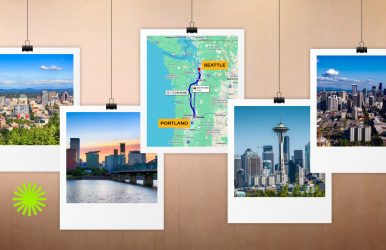
Are you planning a road trip in the Pacific Northwest? The Portland to Seattle journey, covering a distance of more than 170 miles, is one of my favorites in the region.
I love this route simply because of its diversity. You will find state parks, downtowns, and a beautiful coastline on the way.
So, in this blog, I will talk about a beautiful road trip from Portland to Seattle, the other modes of travel, and the main attractions on the way.
What Is The Portland To Seattle Distance?
The distance between Portland and Seattle is around 174 miles or 280 km. Furthermore, the travel time between two destinations is around 2 hours and 45 minutes.
Also, the main route to travel from Portland to Seattle is via Interstate 5 (I-5).
However, the travel time between Portland and Seattle will depend on the mode of transport you choose.
So, here is a quick summary.
Portland to Seattle Modes of TransportTravel Time By Car2 Hours and 45 MinutesBy Bus3 to 4 Hours and 30 MinutesBy TrainAbout 3 Hours and 30 MinutesBy Rideshare About 3 to 4 HoursBy Air53 Minutes
Furthermore, the Portland International Airport is around 12 miles away from the city. Also, the Seattle-Tacoma International Airport is about 14 miles away from Seattle.
So, consider the travel time to and from these airports by road.
On the other hand, the Portland Union Station is 1 mile away from the city, and the King Street Station serves the Seattle area. From the train station, the Downtown and other main attractions are within walking distance.
How To Travel From Portland To Seattle?
The fastest way to travel from Portland to Seattle is to take a flight. However, if you love TheLowDownUnder Travel philosophy and want a more local experience, you can also plan a road trip by car or take a ride share.
Buses and train services are also available between these two destinations. So, here are the details.
1. How To Travel From Portland To Seattle By Car?
Traveling the Portland to Seattle distance of 174 miles by car takes around 2.5 hours. The route through I-5 North is quite straightforward, and some important stops on the way are Washington, Olympia, and Tacoma.
Furthermore, you start the ride early in the morning, before 7 AM. 7 AM to 9 AM and 4 PM to 6 PM are the busiest times on the route.
Also, there is an alternative route via US-101, which passes through Astoria to the coast.
Nevertheless, based on the route you take and the vehicle you choose, the car rental price will be around $34 to $50.
2. How To Travel From Portland To Seattle By Bus?
Flixbus and Greyhound are the main bus services from Portland to Seattle. The bus services start from as early as 7 AM, and the last bus leaves Portland at 10 PM.
The bus leaving at 10 PM is also the fastest, completing the journey in just 2 hours and 50 minutes.
Furthermore, the buses leave from the Portland Curbside Bus Stop, and the popular drop stations are the Seattle Tacoma International Airport, Seattle Bus Station, and Seattle 6th Avenue S and S Lane Street.
Moreover, the ticket price starts from 30.48 Euros.
3. How To Travel From Portland To Seattle By Train?
Amtrak runs seven daily from Portland to Seattle. Furthermore, the ticket price starts from $27.
Also, check out the timings of the train from the Portland Union Station to the King Street Station in Seattle in the table below.
DepartureArrival 6:45 AM10:10 AM8:30 AM11:50 AM10:40 AM2:05 PM2:10 PM5:37 PM3:56 PM7:51 PM5:55 PM9:20 PM7:25 PM10:50 PM
4. How To Travel From Portland To Seattle By Flights?
As I have mentioned, the flights from Portland International Airport (PDX) to Seattle-Tacoma International Airport (SEA) take around 55 minutes.
American Airlines and Delta Airlines are some of the popular services on this route. Furthermore, the ticket price will be around $350.
Moreover, the travel time by road from Portland to the Portland International Airport (PDX) and the Seattle-Tacoma International Airport (SEA) is around 20 minutes.
5. Portland To Seattle Rideshare Or Taxi
Shuttle services such as Portland Express, Uber, and Lyft are other ways to travel from Portland to Seattle.
Uber and Lyft services are a little expensive, costing around $60 for the ride.
On the other hand, a ride on the Portland Express from Portland to Seattle will be around $50-$70 based on the vehicle and the group size.
What Are The Important Stops From Portland To Seattle?
Portland is one of the best family vacation spots, and Seattle is one of the safest places for women solo travelers.
Furthermore, on the way, it has some wonderful attractions such as the Columbia River Gorge, the Oregon Coast, Mount St. Helens, Mount Rainier, and Tacoma.
Also, throughout the journey, you will find small but wonderful cafes. Don’t forget to spend some time understanding the local vibes at these cafes.
Portland To Seattle: Frequently Asked Questions (FAQs)
Here are the frequently asked questions and answers about the Portland to Seattle distance.
1. How Much Is A Train Ride From Portland To Seattle? A train ride from Portland to Seattle starts from $27 and goes up to $68 for standard coaches. Furthermore, the ticket price for business coaches costs around $80 to $90. Moreover, the private room amenities come at $182. 2. Is It Worth Driving From Seattle To Portland? Yes, the Portland to Seattle journey is every bit worth it. It is an easy and quick journey, However, the short route offers the best experiences with various culinary stops, mountain views, and the beauty of the Pacific Northwest. 3. Can You Do A Day Trip From Portland To Seattle? Yes, you can easily plan a day trip from Portland to Seattle. The travel time by road is around 3 hours to 4 hours and 30 minutes. So, you can easily complete the ride, explore the attractions en route, and come back by evening. However, you have to start really early to avoid the traffic.
Moving to a new residence marks an exciting new chapter for your family, but it can also bring overwhelming stress.
The process involves tasks such as organizing, packing, and choosing a suitable moving company.
Still, you can turn the house-moving checklist into a smoother, more enjoyable experience for your entire family.
You just have to implement thorough planning and adopt a proactive mindset,
Relocations are unsurprisingly common throughout the United States.
Most people move from one state to another for employment prospects. Others move because of inflation and other factors.
Chicago, for instance, has seen more people move out of the city, citing housing costs and rising inflation.
These factors can make relocation even more stressful.
Here Are Ten Prime Ways To Make Moving Easy For Your Family
Below, we’ll share tips to streamline the process and reduce the stress of moving.
1. Engage a Reliable Moving Company
The first step in moving is contacting a trusted moving company.
Choosing a reputable, dependable moving company can significantly reduce stress during the move.
Research and compare moving companies in your area, for instance, Chicago.
Review their credentials, customer feedback, and insurance coverage. Request multiple quotes and inquire about additional services they offer.
Once you find a suitable moving company, secure their services well in advance to ensure your preferred moving date.
Clear communication and a well-documented contract with the movers will help ensure a smooth, hassle-free move day.
Leaving a big city like Chicago can be stress-inducing, especially for big families. Still, professional movers can make the transition smoother.
Looking up Chicago long-distance movers near me will help you find the right movers.
2. Create a Moving Timeline
A well-structured moving timeline is essential to stay organized throughout the moving process.
Start by creating a detailed checklist of all necessary tasks, including
Decluttering,
Packing,
Scheduling movers,
Notifying relevant parties of your change of address.
Break these tasks into manageable chunks and assign specific deadlines to each.
By following a timeline, you can avoid last-minute rushes and complete everything systematically.
3. Downsize
Moving is a great opportunity to downsize and let go of items you no longer need.
Assess each room and categorize your belongings into keep, donate, sell, or discard.
For unwanted junk, it can help to contact a dumpster rental service like Waste Removal USA.
If you're curious where this company is located, you can find the answer to "where does Waste Removal USA operate?" in their list of local service areas.
Most reliable dumpster removal services list their locations on their websites, which can come in handy when you're looking for a service near you.
Consider organizing a garage sale or donating unwanted items to local charities. It not only lightens your load but also provides a sense of fulfillment while assisting those in need.
4. Employ Strategic Packing Techniques
Efficient packing is key to a successful move. Gather high-quality packing supplies, including:
Sturdy boxes,
Bubble wrap,
Packing paper,
Tape.
Label each box clearly with the room it belongs in to make unpacking easier.
Use extra care when packing fragile items, and provide ample cushioning for protection.
Additionally, consider creating an "essentials" box containing necessary items such as toiletries, a change of clothes, and important documents.
Keep this box easily accessible when you arrive at your new home.
Strategic packing saves time during the move and makes unpacking easier.
5. Involve the Entire Family
Moving is a major change for the whole family, so involving everyone can help reduce overwhelm.
Assign age-appropriate tasks to each family member.
This includes packing personal belongings or researching new schools and activities in the new neighborhood.
Encourage open communication and address your children's concerns or anxieties about the move.
By involving everyone, you foster unity and shared responsibility.
6. Conduct Research and Prepare for the New Neighborhood
Before the move, research and familiarize yourself with your new neighborhood.
Identify local amenities, schools, medical facilities, and recreational areas your family needs.
Connect with neighbors through online forums or social media groups to gather valuable information about the community and upcoming events.
By familiarizing yourself with your new surroundings, you can help your family adjust more quickly.
7. Arrange Child and Pet Care on Moving Day
Moving day can be chaotic, and children or pets can make it even more so.
To minimize stress, arrange childcare or find pet care centers on moving day.
This way, you can oversee the moving process without worrying about their safety and well-being.
Ask a trusted family member or friend for help, or hire a professional caregiver for the day.
Knowing your loved ones are comfortable will help ensure a smoother transition for everyone involved.
8. Prepare an Overnight Bag
Moving day and the days immediately afterward can be physically and mentally exhausting.
Packing an overnight bag for each family member with essentials like toiletries, clothes, and bedding will make the first night in your new home more comfortable.
This way, you won't have to search through boxes to find what you need right away.
Also pack any necessary medications, snacks, and entertainment to keep everyone occupied during the transition.
9. Update Your Address and Utilities
Update your address with all relevant parties to ensure a hassle-free transition to your new home.
Notify the post office, banks, insurance providers, subscriptions, and other important organizations or institutions of your move.
Also, arrange the transfer or setup of utilities such as electricity, water, and internet services at your new home before you move in with your family.
10. Allow Time for Settling In
Finally, give yourself and your family time to settle into your new home.
Unpacking and organizing can take time, so don't feel pressured to do everything in one day.
Start by setting up the essentials, then work through each room.
Encourage your family members to explore the new neighborhood, visit local attractions, and do activities that help them connect with the community.
Conclusion
Moving houses is stressful only if you don't plan well.
These ten practical tips simplify the process, making it more enjoyable and less overwhelming.
Remember to:
Create a moving timeline,
Declutter and downsize,
Hire a reliable moving company, pack strategically,
Involve the whole family,
Research and prepare for the new neighborhood,
Arrange child and pet care on moving day,
Pack an overnight bag,
Update your address and utilities,
Allow time to settle into your new home.
With careful planning and a positive mindset, you can ensure a successful and positive transition for your family's move.
Read Also:
Moving To Paris – How To Start
The Most Beautiful Places In The World
Top 10 National Parks In Oregon That You Need To Explore In 2023!
Gates of the Arctic National Park is where the Brooks Range and the Tundra landscape come to life with wilderness and vivid topography. This national park is a place of topographical diversity with the coexistence of mountains, glaciers, rivers, lakes, and marshy lands.
A home to nomadic people for more than 13,000 years, the Gates of the Arctic is a prominent example of how human lives can be dependent on wilderness or nature.
Many visitors love backpacking and trekking in this national park. Further, many stay in camps in the backcountry to experience its rich wildlife despite the challenges.
Do you want to know why camping in the backcountry is worth the hardship? Does the national park have camping sites?
Find the answers to all your questions in this guide.
Knowing The Gates Of The Arctic National Park (Why Camping Here Is A Great Experience)
The Gates Of The Arctic National Park is a paradise for wilderness travelers. The intriguing land of Tundra, embraced by jungles, mountains, and rivers, makes camping in the backcountry worth all the effort.
Gates Of The Arctic Geography
You can explore the arctic geography of this national park by trekking or by air. Tundra peaks and the Schwatka Mountains region of the Brooks Range ensure a humbling experience. You trek to Mount Igikpak, a glacier-carved peak with an 8,510-foot elevation. Another mountain to have glaciers in this region is Mount Arrigetch.
Even backpacking and trekking to Mount Doonerak have a distinct charm, as the mountain is the quintessence of wilderness and unadulterated beauty.
Further, this national park has six designated wild rivers. Those are:
Alatna River
John River
Kobuk River
Noatak River
North Fork of the Koyukuk River
Tinayguk River
Alatna and Noatak are great for canoeing. If you want more adventurous pursuits, you can try rafting in Nigu (to the north) and Kobuk (to the west).
Gates Of The Arctic Wildlife
The Gates of the Arctic is home to many mammals and birds. The Alaska Department of Fish and Game says,
“Forested southern foothills rise to limestone and granite peaks more than 7,000 feet high in this remote wilderness park. North of the peaks, clear water rivers run through glacier-carved valleys; and Tundra, covered with wildflowers during the brief northern summer, stretches toward the Arctic Ocean. Many of the nearly 500,000 member Western Arctic caribou herd migrate through the park each fall. Brown and black bear, wolf, Dall sheep, lynx, moose, wolverine, and red fox live here year-round. In the spring, the park hosts migratory birds from Europe, South America, Asia, tropical archipelagos, and the continental U.S.”
Other animals found in this national park are grizzly bears, Dall sheep, and musk oxen. Among the birds, Tundra swans, common loons, and golden eagles are the most common.
Further, if you enjoy the playfulness of aquatic animals, watch out for graylings, trouts, sheefish and salmon.
Gates Of The Arctic And Human History
The Gates of the Arctic is a prominent place for archaeological research. The study and interpretations of the museum collections depict how people have been surviving in the Brooks Range for around 13000 years now.
Along with Inupiat, Nunamiut, and Athapaskan descendants, you will also find many non-native Alaskan people in this region. These people have always been dependent on fishing and hunting. The wilderness of the Gates of the Arctic is the foundation of their livelihood.
What Is The Best Camping Near Gates Of The Arctic National Park?
With marshy lands and tussocks, Arctic Tundra has a vulnerable landscape and it is difficult to find a steady spot for setting up camps or tents. Also, the existence of wildlife in a remote location and dense vegetation make the space unsuitable for camping.
So, there is NO CAMPING SITE in the Gates of the Arctic National Park.
There are designated areas in the backcountry for camping. However, you will have to strictly adhere to the rules and regulations of the national park when putting up a tent.
You must also attend the orientation program and be particular about the gear, food, and safety essentials to be carried.
With permission from the park authority and the National Park Service, you can set up tents near the Arctic Interagency Visitor Center in Coldfoot or around Wiseman and Bettles communities.
However, while camping in the backcountry, you will have to keep the following factors in mind.
Be respectful to the local communities like the Koyukon Athabascan Indians or Nunamiut. Their livelihood depends on the wilderness.
There are no provisions for running water, a dump station, or restrooms.
Your phone network will be unavailable in this location.
You have to carry all your trash back as you leave the camping site. You cannot adulterate the pristineness of the location.
If you have plans for camping in the backcountry near the Gates of the Arctic, summer is the best season. The temperature is a little moderate on these days, and sunnier days make all outdoor pursuits in the park easier for you.
Did You Know?
The Gates of the Arctic National Park is the second-largest national park in the USA.
It stretches over 13,000 square miles.
You can see aurora borealis from this park if you visit between November and March.
July and August are the best months to visit Gates of the Arctic National Park for hiking and backpacking.
Bob Marshall, a wilderness advocate, named this national park “Gates of the Arctic.”
Final Words
Unlike popular national parks like the Biscayne National Park or the Kenai Fjords National Park, the Gates of the Arctic National Park does not have many visitors yearly. In 2023, only 11,045 tourists flocked to this place. (Source)
With a diversity in topography and wildlife and an association with human history, this park has much to explore. However, the extreme trekking conditions and wilderness make it far from an easy excursion or trekking experience.
Despite the absence of campgrounds in this park, you can camp in the backcountry at the designated spots in the fields. However, only an experienced backpacker should try it with proper orientation and extra safety measures.
Have you ever been to this wild and intriguing national park? Do you have any camping experience in the backcountry? Don’t forget to share your experience with us!
Gates Of The Arctic National Park FAQs
Can You Camp In The Arctic National Wildlife Refuge?
Only backcountry camping is possible in the Arctic National Wildlife Refuge. The absence of roads, villages, or facilities makes this area unsuitable for having designated campsites.
Backpacking and hiking are the best ways to explore this vast landscape with rich wildlife and geographical interests.
Can You Stay In Gates Of The Arctic National Park?
You can stay or try backcountry camping near the Gates of the Arctic National Park. Undefined terrains, wilderness, and a lack of modern amenities make it risky to put up camps in the national park.
Even to camp in the backcountry, you will need the highest outdoor survival skills. The arctic ecosystem, topography, and weather conditions are different, and if you are confident enough to stay in the backcountry, plan in advance and get in touch with the Park and Preserve authorities for updates and advisories.
How Much Does It Cost To Visit The Gates Of The Arctic National Park?
You don’t have to pay entry fees to visit the Gates of The Arctic National Park. However, you must attend the backcountry orientation program at any of the visitor centers.
In this way, the Gates of The Arctic National Park is different from other national parks as most of them demand an entrance fee.
How Difficult Is It To Get To The Gates Of The Arctic National Park?
The Gates of the Arctic is a wilderness park. So, as you enter the park, hiking is the best way to explore. Remember, it is home to the Schwatka Mountains region of the Brooks Range and the highest peak here is Mount Igikpak with an 8,510-foot elevation.
So, exploring the national park is not going to be a cakewalk. A lack of established trails further makes hiking difficult.
Further, there are six designated rivers, including Koyukuk and Dietrich, in this national park. So, you will have to pass through multiple meandering river crossings. The water levels of these rivers keep fluctuating throughout the season. They are furious throughout the spring season.
Tussocks, marshy lands and dense vegetation are other hurdles to your fast movement while trekking.
Do you want to visit the backcountry? You can take a bush plane operated by permitted pilots with knowledge of the region.
What Is Special About Gates Of The Arctic?
The Gates of the Arctic is special because of its geographical uniqueness, rich wildlife, and significance in human history.
The glacier-carved valleys, rivers, and ancient trails make the Gates Of The Arctic a favorite destination for backpacking and hiking.
Thanks to its geographical typicalness, you will meet many animals and birds. The adorable grizzly bears will be seen feeding, and the musk oxen are another unique animal you must watch out for. If you are a birder, you will love watching the golden eagles, Tundra swans, or common loons.
Near the Nigu River or throughout the park, you will find stone fences and camping rings. These are a testament to how Inland Eskimos or Nunamiut have lived in this region for thousands of years. They survived on fishing and hunting.
In addition, as I pen this guide, I must tell you that the Gates Of The Arctic National Park is going to celebrate its 45th anniversary of designation next year. First, it became a national monument on 1st December 1978. In 1980, it became a national park and preserve.
Also read
Italy: Is Florence flat or hilly?
Ultimate Guide to Your Next Family Vacation in Israel.
The Glaciers of Wrangell-St. Elias National Park: Experience The Magnificence Of Nature.



















 Related