
Kataragama Temple (Ruhunu Maha Kataragama Dewalaya): Inside Sri Lanka’s Most Sacred Multi-Faith Pilgrimage Town

When I reached Kataragama Temple, it was completely silent. 

It was a little before dusk, and the Ruhunu Maha Kataragama Devalaya was still catching the last orange light.

For a few minutes, the precinct looked like it was holding its breath. 

Then the Kavadi bells started ringing, and the drums started rolling. 

In an instant, I understood why people describe this place less as a temple complex and more as a living current that pulls Hindus, Buddhists, Muslims, and Vedda communities.

The sandy courtyard has people who pray, taking different names of the God. 

The temple is fresh off the back of the 2026 Esala Perahera.

This festival, worshipping the Hindu God Skanda (Murugan), drew its usual crowd of pilgrims before wrapping up its final grand procession in late July.

So, Kataragama is once again settling back into its quieter, year-round rhythm.

However, if you ask me, this quieter time is actually ideal for understanding what makes this place so unusual.

Kataragama Temple At A Glance


Detail

Information

Detail

Information

Also known as

KathirkamamRuhunu Maha Kataragama Devalaya

Presiding Deity

Skanda/Murugan for the Hindus
Kataragama Deviyo for the Buddhists

Location

Kataragama, Moneragala District, Uva Province

Distance from Colombo

228 km (via Tissamaharama)

Nearest major town

Tissamaharama (18 Km)

Nearest national park

Yala National Park (adjoins Kataragama)

Sacred river

Menik Ganga (bathing ghats)

Religions represented

Hindu, Buddhist, Muslim, Vedda

Main festival

Esala Perahera/ Kataragama Esala Festival

Festival timing 2027

Around 18th July

Annual festival pilgrims

Over 500,000 (peak Esala season)

Entry fee (temple)

Free (donations accepted)

Complex includes

Maha DevalayaKiri Vehera DagobaValli Amman Kovil Mosque of Al-Khidr

Typical visit duration

Half-day for the complex
Full day with Kiri Vehera and river

Festival dates follow the lunar Esala calendar and shift by a few days each year. So, always confirm current dates through Sri Lanka Tourism or the Kataragama Devalaya administration before booking travel.

My First Impressions Of The Sacred City

My First Impressions Of The Sacred City

Everyone says that Kataragama is multi-religious. However, you can only understand its pluralistic nature after a physical visit. 

I walked from the parking area toward the Devalaya for ten minutes. 

There was a Buddhist family circling the dome of Kiri Vehera in silent reverence. 

There was also a group of Hindu devotees carrying kavadi frames decorated with peacock feathers. 

Again, there was a small cluster of Muslim visitors heading toward the Mosque of Al-Khidr. 

The best thing is that there is no air about something really special happening here by bringing different religions together. 

Everyone worships in a way that feels like this is how it is meant to be. 

The monks, religious teachers, and spiritual leaders of the world only work toward achieving this inclusivity without imposing anything. 

Crossing The Menik Ganga

I stopped at the Menik Ganga (Gem River) before entering the temple grounds. 

I got into the ankle-deep water and washed my hands and face. The cool water was rejuvenating, and it was like entering the temple with clean energy. 

Some vendors were selling flowers on the riverbank. I bought some flowers, betel leaves, and fruits for offering. 

If you also have plans of making an offering to the temple, carry around LKR 100-200 in cash. 

The Walk To The Maha Devalaya 

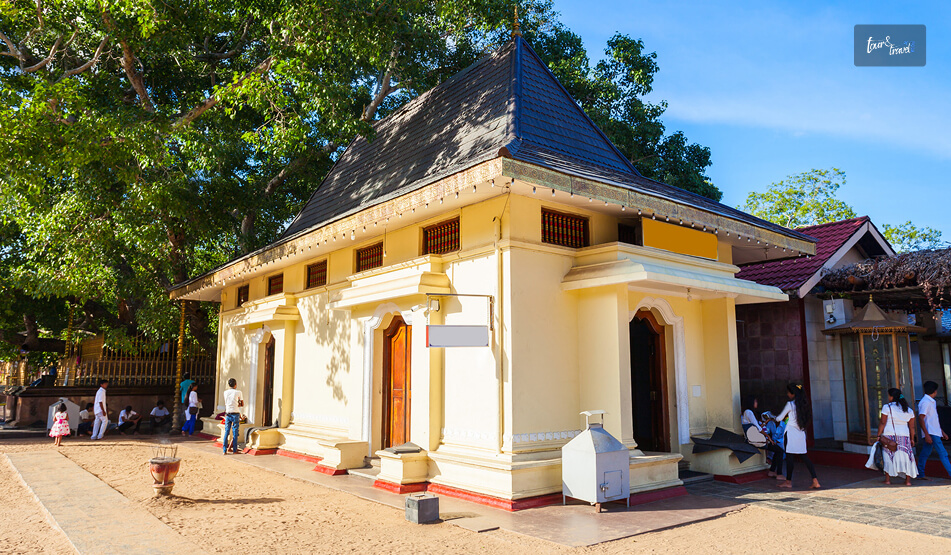
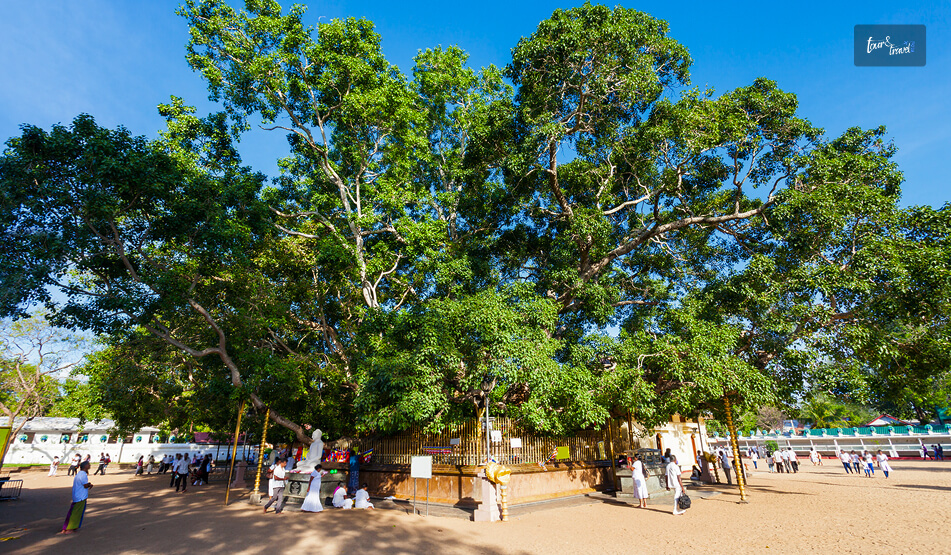
The walk to the Maha Devalaya passes through wide sandy paths. I came across many smaller shrines on the way. 

It was a regular weekday evening, and still there was a crowd of hundreds. 

This means the Devalaya is not a monument that becomes quiet beyond festivals. It is a functioning place of daily worship. 

The Legend Behind The God Of Kataragama

The Legend Behind The God Of Kataragama

There are a lot of stories and beliefs around Skanda, the God of Kataragama. 

Skanda, or Murugan, is the “Dev Senapati” or the warrior leader of the Gods in the Hindu religion. 

He is also called Kartikeya, the son of Lord Shiva and Goddess Parvati. 

However, the Sinhala Buddhists worship him as Kataragama Deviyo.

Kataragama Deviyo is a guardian deity who protects the island. They worship him for spiritual merit and worldly well-being. 

Again, Al-Khidr is a Quranic figure. He is also referred to as the Surah al-Kahf or the rightful servant of God. 

Furthermore, he was someone with great mystic knowledge. 

Nevertheless, the most common story about Skanda is that he arrived here after a falling-out with his consort, Devasena. 

He settled on Wedahitikanda, a hill near Kataragama. 

There he fell in love with Valli, a young woman raised by the indigenous Vedda community.

This love resulted in the union of a celestial figure with an earthly, forest-dwelling people.

Many locals point to it as the symbolic root of Kataragama’s cross-community character even today.

Inside The Sacred Precinct: What You Will Actually See

Inside The Sacred Precinct What You Will Actually See

The complex is larger and more layered than photos suggest. 

It is not a single temple. It is a cluster of many shrines, each with its own rhythm, crowd, and etiquette.

Ruhunu Maha Kataragama Devalaya

This is the central shrine, and Lord Skanda is the presiding deity here.

It has an ornate golden gateway, and it is a favorite photo spot in the temple. 

Irrespective of your religious faith, you can enter the temple courtyard. However, the puja and other rituals in the inner sanctum are performed only by the priests or Kapuralas. 

Evening pujas draw the thickest crowds.

So, if you want space to actually look around rather than shuffle with the flow of people, an early morning visit works better.

Kiri Vehera

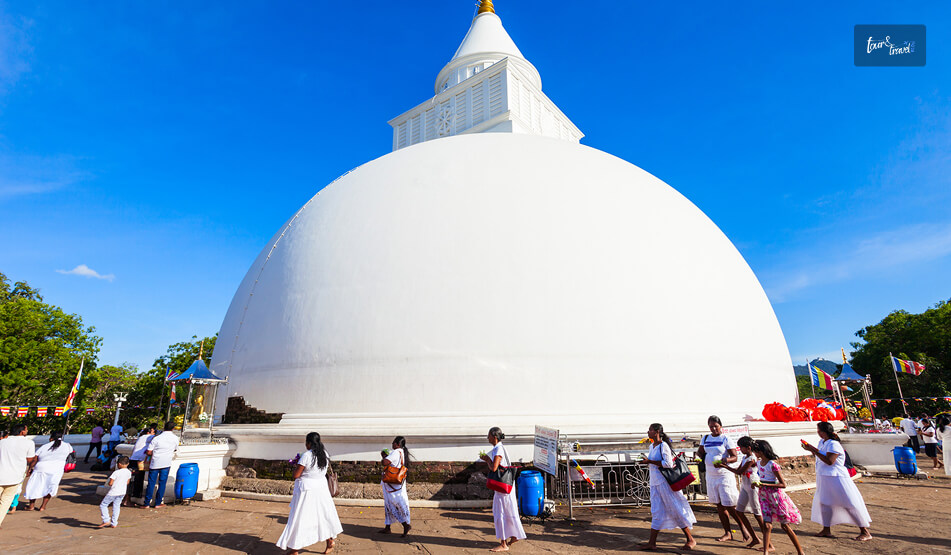
Kiri Vehera is a white dagoba, a short walk away from the main Devalaya. 

It is connected to King Mahasena, one of the oldest Buddhist stupas built around the 6th century BCE.

I circled it barefoot in the late afternoon.

The dome looked beautiful after catching the light. 

It was honestly one of the calmer moments of my visit and a useful contrast after the noise and colour of the Devalaya.

Valli Amman Kovil And The Mosque

The shrine dedicated to Valli, Skanda’s consort, sits a little apart from the main Devalaya.

During the Esala festival, the elephant procession famously travels between the two, symbolically re-enacting their union. 

Nearby, the small mosque of Al-Khidr marks the site’s connection to Islamic tradition.

The Kataragama Esala Festival: Fire, Faith, And The Long Walk From Jaffna

The Kataragama Esala Festival Fire Faith And The Long Walk From Jaffna

Esala Perahera is the main festival of the Kataragama Temple. 

I did not time my own trip around that festival. However, I spoke to local shopkeepers, guesthouse owners, and priests about this event of their year.

What Happens During the Festival

The festival is held annually around the Esala full moon (July–August).

It runs for roughly fourteen nights and draws upward of half a million pilgrims, according to festival guides tracking the event’s scale. 

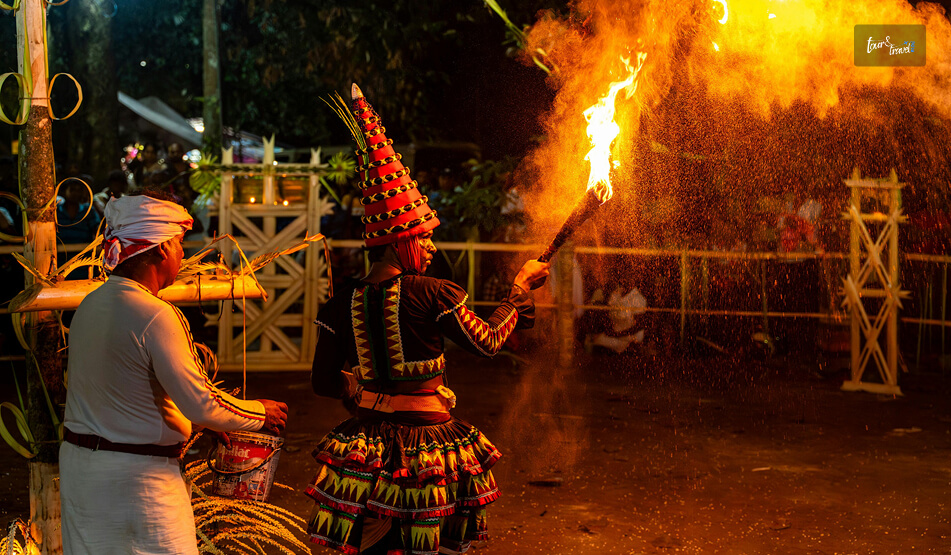
Nightly perahera processions feature elephants and traditional dancers.

Also, the drummers walk through the town after dark.

The festivities then build toward two of the most intense rituals in Sri Lankan religious life.

One is fire-walking across a bed of white-hot embers, and the other is the closing Water Cutting ceremony on the Menik Ganga at the festival’s end.

The Pada Yatra: A Two-Month Walk To Get There

What struck me most was the journey some pilgrims take to reach it. 

The Pada Yatra is a traditional foot pilgrimage that begins in the Jaffna Peninsula in the north.

Some also start walking from Nagadipa, Vallipuram, Mullaitivu, Trincomalee, and Batticaloa.

This is roughly a two-month walk to reach Kataragama, and they cover a distance of around 400 kilometers in the process. 

They walk along the east coast and through wildlife reserves like Kumana and parts of Yala. 

Also, they sleep outdoors, are fed by villagers along the route, and stop at dozens of shrines on the way.

While talking to a local, he told me that these devotees visit around 70 temples en route. 

I found it very similar to the Kanwar Yatra in the month of Shravan, or July-August, to many Shiva temples in India. 

The tradition nearly disappeared during the civil conflict years but has been steadily reviving since the war ended.

Festival Snapshot


Event

Typical Timing

What to Expect

Best For

Flag Hoisting (Kodi Etruthal)

Mid-July

Ceremonial start of the festival period

Witnessing the opening rites

Nightly Perahera

Throughout the 14-night festival

Elephants, dancers, drummers, processions with torch-bearers

Evening spectacle, photography

Fire-Walking

Final days of the festival

Devotees walk a 20-foot ember pit.

Serious devotees and observers, not participants

Water Cutting

Esala Poya (full moon) night

Closing ritual on the Menik Ganga

Marking the festival’s symbolic end

Getting There

Kataragama is around 228 km southeast of Colombo.

You can travel to Kataragama via Tissamaharama. 

Again, a visit to Kataragama and Yala Safari is the most natural combination you can think of. 

Private car hire from Colombo takes around 4.5–5 hours.

However, if you are traveling on a budget, you can take a bus to Tissamaharama or Wellawaya with a connecting local bus or tuk-tuk into Kataragama town.

The bus ride from Colombo to Tissamaharama takes around 4.5 hours, and the ticket price is around LKR 750. 

Furthermore, from Tissamaharama, a tuk-tuk ride to Kataragama will cost around LKR1800-1900. 

When To Visit The Kataragama Temple? 

If you want to experience the festival atmosphere, you can plan a visit around the Esala Perahera festival in July-August. 

However, there will be a huge crowd and extreme heat. Also, the festivities and noise reach well into the night. 

Again, you need to make bookings well in advance because the accommodations get filled during the festival. 

For a quieter, contemplative visit, choose any other month.

The November to April dry season offers the most comfortable weather for walking around the open, sun-exposed courtyard.

A Simple One-Day Plan Around Kataragama


Time

Activity

Notes

Duration

7:00 AM

Arrive and take a ritual bath at Menik Ganga.

Cooler hours, fewer crowds

30 to 45 Minutes

8:00 AM

Visit Maha Devalaya courtyard

Morning pujas draw smaller crowds than evening.

45 Minutes

9:00 AM

Walk to Kiri Vehera

Circumambulate the dagoba barefoot.

30 to 45 Minutes

10:00 AM

Valli Amman Kovil and nearby mosque

Quieter, less touristy corners

30 Minutes

11:00 AM

Local breakfast in town

Try a simple rice-and-curry stall near the bazaar.

1 Hour

6:00 PM

Return for evening puja at the Devalaya.

The most atmospheric time of day

1 Hour to 1.5 Hours

Continuing The Journey Through Southern Sri Lanka

You can easily combine Kataragama with many other stops in the deep south and east. 

Yala and Bundala National Parks are natural additions for a wildlife experience. However, Yala is getting more crowded every day. 

On the other hand, Tissamaharama and the southern beach towns work well as a base for a multi-day loop. 

Moreover, if you are building out a longer southern Sri Lanka itinerary, you can include the Wilpattu National Park, Hikkaduwa, Mirissa and Unawatuna in your list. 

Thus, a Kataragama stop fits into a wider route.

Share on Social Media

Sibashree is a travel, culture, and leisure writer who has been writing since the age of 12 and professionally since 2014. With more than a decade of travel writing experience and journeys across India and several parts of the world, she brings a deeply personal and thoughtful perspective to her work. A student of English Literature and Mass Communication, Sibashree has always viewed travel as more than movement — for her, it has been a way of understanding people, cultures, and herself. Her passion for spiritual exploration has also led her to many unusual and meaningful destinations over the years. Outside of writing, Sibashree enjoys watching European cinema, reading about global politics, and reflecting on the stories hidden within everyday places.

Leave a Reply

Your email address will not be published. Required fields are marked *

title-img Related

READ MORE Hurulu Eco Park

Hurulu Eco Park Safari: Exploring The Wilder Side Of Sri Lanka

BY  Sibashree Mar 16, 2026

After Kaudulla National Park and Dehiwala Zoo, the Hurulu Eco Park was another destination for me to explore Sri Lanka’s wildlife.  If places such as Jaffna in northern Sri Lanka and Kandy in Central Sri Lanka have been the cultural hubs of the country, these parks have shown how people have lived here since eternity in collaboration with nature and wildlife.  The Hurulu Eco Park is especially very close to Habarana, the epicenter of cultural and historical landmarks such as the Sigiriya Rock Fortress, Pidurangala Rock, Ritigala Forest Monastery, and Ritigala Forest Reserve.  The distance between Habarana and the Hurulu Eco Park, at the edge of the Hurulu Forest Reserve, is just around 3 to 4 kilometers. However, despite the short distance, this eco park is quiet and understated.  Also, you know what makes Hurulu Eco Park different? Here, you relish the art of slow traveling and the scent of wet soil after a fresh spell of rain.  Furthermore, elephants are the heart of this eco park, and watching them grazing through the golden light is a delight.  Here is more about this beautiful eco park in Sri Lanka.  Hurulu Eco Park, Sri Lanka: Quick Details  Hours Open7 AM to 6 PMLast Time to Enter5 PMPark Entrance Fee- $15-25 for an Adult- $5 for Children above 6 Years- Free for Children below 6 YearsSafari Cost$65 OnwardSafari DurationAround 3 HoursBest Time to VisitDecember to June Where Is Hurulu Eco Park And How To Reach?  In Sri Lanka’s North Central Province, Hurulu Eco Park is between the landmarks such as Polonnaruwa (1 hour and 15 minutes), Anuradhapura (1 hour and 50 minutes), Dambulla (45 minutes), and Sigiriya (45 minutes).  So, often there is a safari add-on to explore these ancient cities and the cultural landmarks.  Furthermore, as mentioned, it is closest to Habarana. So, ideally, it should be your base.  Habarana also has many budget, mid-budget, and luxury accommodations. Moreover, most hotels in Habarana, Dambulla, and Sigiriya offer door-to-door safari facilities.  You can expect a pick up around one hour before the safari time.  Moreover, you can take a train from Trincomalee, Kandy, or Colombo to reach Habarana Junction. From there, you can take a 10-minute tuk-tuk ride to reach the eco park.  However, online booking for these train tickets may not work most of the time.  The Landscape Of Hurulu Eco Park  Hurulu Eco Park is a mix of open plains, rock, and jungle.  Furthermore, as a part of the dry evergreen forest area of Sri Lanka, it functions as an important corridor for elephants roaming between Minneriya and Kaudulla National Parks.  So, you can easily spot Sri Lankan elephants here, especially the mothers and babies making small groups and moving.  Along with elephants, you can also spot peacocks, spotted deer, macaques, langurs, and many birds here.  What I Saw At Hurulu Eco Park  I was initially disappointed the day I had to visit the Hurulu Eco Park. I thought that the tropical rain would mess up my safari experience.  However, I opted for an afternoon safari, and by the time I reached Hurulu, except for the heavy dampness in the air, everything was fine.  Also, the mud on the track was not a problem to start the safari in full swing.  After a few turns in the park, I could spot a herd of elephants, and they were winding up leaves and fruits with their trunks. Moreover, they were flapping their ears.  Then, after waiting for 15 minutes, the herd passed by and we continued our safari.  We passed through rocks, canopies, and bushes. I spotted a peacock and monkeys before reaching an open land. And that was the moment of the entire safari.  At least 25 elephants were grazing, and the younger ones were rolling in the mud.   Finally, the air became cooler, and the sky started getting red. So, our jeep driver planned a return.  How To Plan A Safari In The Hurulu Eco Park?  Safaris in Hurulu Eco Park include a guide, a jeep, park entry, and a pickup and drop off from Hurulu Eco Park.  Morning safaris are the best, ideally starting from 7 AM. Furthermore, like me, you can also opt for an afternoon safari at 1 PM.  Furthermore, each jeep carries about 6 tourists. Also, you must carry some water, wear sunscreen, and a hat. What Is The Best Time To Visit Hurulu Eco Park? The best time to visit Hurulu Rco Park is between December and June. Especially, February to April is the ideal time to see the lush landscapes and the biggest elephant herds.  Furthermore, the number of jeeps is quite low in these months.  Again, from May onward, the conditions become drier, and the elephants start moving from the Kaudulla National Park to the Minneriya National Park. So, in Hurulu Eco Park, you will notice smaller herds of elephants.  Moreover, from October to January is the wet season, and the jungle becomes the most vivid. So, these months are the best for photographers.  Photography Tips For Hurulu Eco Park  You will find a mix of open plains, forest shades, and red earth in Hurulu Eco Park. So, the landscape is challenging yet interesting for photographers.  Furthermore, for photography, you must bring a 70-200 mm lens. It is ideal to capture wildlife, and the wider lens is the best to frame the color and scale of Hurulu Eco Park during the golden hour.  Moreover, after the rain, the conditions become more ideal for photography. Grey elephants, red dust, and the green foliage create wonderful frames.  Again, the light filters through the tree branches becomes low in the late afternoon. So, you can capture the texture and warmth of the Hurulu Eco Park. Things To Keep In Mind For A Visit To Hurulu Eco Park  Do not use single-use plastic bottles during the safari to minimize the impact on the environment, wildlife, and marine life.  Furthermore, keep the water use to a minimum level to reduce the pressure on water resources.  Moreover, collect your souvenirs from the local shops and eat at the local eateries to help the economy of the community.

READ MORE where to stay in yala national park

Where To Stay In Yala National Park? Know The Best Accommodations 

BY  Sibashree Jun 3, 2026

The Yala National Park is the ideal place for a dawn safari. As the first rays of golden light pierce through the canopy and the untamed bush comes to life, you will enjoy an acoustic and raw symphony.  You will listen to the rumble of wild elephants and the exotic birdcalls. Furthermore, you will spot crocodiles gliding into still lagoons.  You will also find monkeys scampering through the treetops, and if you are extremely lucky, you can even see a Sri Lankan leopard.  So, no wonder that Yala National Park is a bucket-list destination when you are on a trip to Sri Lanka.  However, finding the right accommodation, the ultimate sweet spot to explore the Yala National Park, can be a daunting task.  You can find a wide range of accommodations here, including the avant-garde ones and the bush camps.  Furthermore, there are some family-run guesthouses and luxurious canvas cocoons. So, in this guide, I will discuss where to stay in Yala National Park.  Where To Stay In Yala National Park? Pick The Zone Based On The Experience You Want  Before you choose an accommodation for yourself, you must decide on the area you want to stay in.  You need to especially understand the entry points of Yala National Park and the surrounding regions.  It is more so because the logistics of your safari will depend on the base and the entry point to the national park you are choosing.  1. Tissamaharama Or Tissa Tissa is just a distance of 20 minutes from the Palatupana Gate, or the main gate of the Yala National Park.  So, this historic lakeside town serves as the primary gateway to the park. Also, here, you will get to indulge in a sense of wilderness paired with civilization.  Moreover, the town has strong infrastructure, such as  Pharmacies Small Restaurants ATMs Cafes  Moreover, you may not find massive architectural buildings, but you will get boutique lakeside hotels offering easy evenings, proper amenities, and strolling along the water.  2. Kirinda And The Palatupana Coast The Palatupana coast is located to the south of Tissa. Also, it is the place where the jungle collides with the crashing waves of the Indian Ocean. The Palatupana Coast further stretches into Kirinda. Kirinda has the most opulent coastline, with elephants wandering down onto the sand.  Furthermore, here, you will find the ultra-luxurious and specially designed eco resorts.  Also, staying here means that you are very close to the national park.  3. Inside The Buffer Zone  If you want the most immersive experience in the Yala National Park, you can choose one of the high-end camps within the protected buffer zones of Yala.  You will stay in canvas tents here, and you will love the experiences such as open-air dining, lantern-lit pathways, and dawn wake-up calls from wild peacocks. Moreover, you can find many other wildlife roaming around your tents.  The cost of staying in these high-end tents can be on the higher side. However, the experience of sitting around a campfire while the unseen jungle hums around you is unforgettable. 4. Katagamuwa And Kataragama Katagamuwa is on the quieter northern perimeter of Yala. It is a culturally rich and slower alternative to other accommodation zones in Yala.  Furthermore, Katagamuwa backs onto a multi-religious pilgrimage site, rarely visited by Western tourists.  If you choose to stay here as a backpacker, you will enjoy the morning wildlife safaris with a visit to historic sites in the evening.  The camps in these sectors are smaller. However, it is run by locals who have endless tales to share. Also, the camps here offer a highly personalized experience.  So, the warmth and the thrill of knowing the unknown stories about the historic places, more than make up for the lack of luxury.  Where To Stay In Yala National Park?  I have divided the best places to stay in and around the Yala National Park into three categories.  Luxury Accommodations Mid-Range Accommodations Budget-Friendly Stays  The Best Luxury Accommodations In Yala  If you want a perfect safari country reimagined, you can plan a stay at any of the luxury accommodations in Yala.  Here, you will find copper bathtubs and canvas tents beneath wild palms.  These luxury accommodations will offer you unmatched luxury without breaking your connection to the world.  Wild Coast Tented Lodge The Wild Coast Tented Lodge is a definitive and flagship safari lodge in Sri Lanka. It is located at a place where the jungle kisses the ocean.  Furthermore, this tented lodge has an otherworldly feel. The copper-toned canvas "cocoons" are scattered amidst the scrubs.  So, when the Sun is up, these tents look like giant desert beetles.  Moreover, inside the tent, you will find a fusion of colonial and contemporary aesthetics. There are leather campaign chairs, teak floors, canvas walls, and freestanding copper bathtubs.  Best Mid-Range Accommodations In Yala It is okay if you do not want to bear the premium price tags of the accommodations in Yala. The mind-range accommodations in Yala offer you immersive nature experiences, beautiful swimming pools, and superb tracking options.  Cinnamon Wild, Yala Cinnamon Wild is an amazing mid-range accommodation in Yala. It is right inside the active buffer zone of Yala.  Furthermore, its location between a crocodile-frequented freshwater lagoon and the ocean makes it more fascinating.  Also, elephants here stroll through the grounds regularly, and the 68 rustic chalets raised on stilts offer simple timber interiors and comfortable bedding.  Moreover, the property has a rooftop bar that looks across the forest canopy. So, this is ideal for sundowners.  In addition, the restaurant here serves authentic lagoon crab curry.  The Best Budget-Friendly Accommodations In Yala  You don’t need to spend a fortune if you want to experience the magic of Yala Safari. You will get amazing hospitality, clean rooms, and authentic experiences at these budget-friendly accommodations in Yala.  Mahoora Yala You can experience the genuine thrill of a buffer zone in Mahoora Yala.  The glamping camps here come without the price markup.  Furthermore, the safari tents are practical and well-equipped, featuring king beds, fans, and private ensuite bathrooms. Moreover, the camp is directly on the boundary of the park. As a result, the safari trucks will get you deep into leopard territory early in the morning.  Thus, you will be able to avoid the heavy line of the day tourists in the town. Read Also: What Are The Places To Visit In Matara? A Southern Sri Lankan Commercial Hub With Dutch Colonial Heritage Where To Stay In Mirrissa, Sri Lanka In 2026? Know The Best Accommodation Options What Are The Best Sri Lanka Travel Tips? Things You Need To Know

READ MORE Jaffna temple guide

Jaffna Temple Guide: What Are The Top Hindu Temples To Visit In Sri Lanka’s North?

BY  Sibashree Jan 2, 2026

When Lonely Planet names Jaffna one of the 25 best cities to visit in 2026, it becomes a celebration of Jaffna’s culture and heritage. It is the spiritual heartbeat of the Tamil culture, and temples such as the Nallur Kandaswamy Kovil serve as the epicenter of the local community. Also, during my visit to Jaffna, I found the Hindu temples there similar yet different from South Indian temples. From the look of them, I could tell that there was something inherently Dravidian about them. However, the Jaffna temples have a wide use of palmyra wood instead of granite or bricks of the South Indian temples. Also, the temples in Jaffna, the spiritual and social anchors of the community, are more eclectic in nature compared to the South Indian temples. It is the intense spirituality that makes them so special. I shared a beautiful experience at Nallur Kandaswamy Kovil in my Jaffna Sri Lanka Travel Guide. It is about how a priest offered me sweets out of 1000s of devotees present there. Overall, these Hindu temples in Northern Srilanka are places to worship, appreciate architectural beauty, and celebrate the Tamil culture. In this Jaffna temple guide, I will talk about the major temples of Jaffna, their history, significance, hours, festivals, and more.  What Are The Top Hindu Temples To Visit In Jaffna, Sri Lanka?  The men entering the Nallur Kandaswamy Kovil were bare-chested. Now, I am familiar with such customs, being from India. But I saw some travelers being uncomfortable around it. Probably, they only go bare-bodied in public when hitting the best beaches in Jaffna. So, taking their shirts off for a temple visit was weird for them.  All the temples in Jaffna are associated with such customs, stories, history, and spiritual significance. Let’s talk about them in detail and know why you must include them in your Jaffna travel itinerary.  1. Nallur Kandaswamy Kovil (The Icon)  Nallur Kandaswamy Kovil, with Lord Murugan as the presiding deity, is the most prominent religious landmark in Jaffna, Sri Lanka. It is also an important place to learn about the Tamil culture in Jaffna.  Lord Murugan is the God of valor, eternal youth, and the destruction of ignorance. The Vel or spear in his hand stands for divine wisdom. He has six faces, which represent the five senses and the mind. These symbolize his mastery over all these faculties. The first thing I noticed was the magnificent golden Gopuram with detailed carvings. As I entered the temple, I felt calm instantly with the smell of the incense sticks. History And Significance Of Nallur Kandaswamy Kovil (Lord Murugan)  The current architecture of the Nallur Kandaswamy Kovil temple is of the 18th century, specifically in 1734. However, the origin of the temple goes back to 948 AD. The temple was further built in the 13th century by Puvenaya Vaku. He was a minister to King Kalinga Magha of the Jaffna Dynasty. Nallur was the capital of this dynasty. Currently, the descendants of Ragunatha Maapaana Mudaliyar and a private trust are in charge of the temple. The Golden Arch And Architecture  With the Dravidian style as the base, the Nallur Kandaswamy Kovil beautifully integrates water, wind, space, fire, and earth, the five elements that constitute the universe. Furthermore, the temple has four gates, and its multi-tiered gopurams feature sculptures of important mythological figures and Hindu deities. Again, the large halls (Mandapas) and compounds are ideal for gatherings and celebrations. These features show how these temples are important for the community activities in Jaffna. Visitor Rules: The "Shirtless" Law Explained  The Nallur Kandaswamy dress code requires men to wear dhotis with their chests bare. Women need to wear modest clothes with their shoulders and knees covered. Sarees, long skirts, and blouses are the ideal outfit for women. Like any other temple, here also, you need to take off your shoes before entering.  Nallur Kandaswamy Kovil Temple Timing  Check out the table below for details on the temple timing and rituals. Temple Timing HoursDoors Open 4 AM Morning Palliyarai Pooja 4:30 AM Ushathkala Pooja 5 AM Temple Doors Reopen, Morning 7:30 AM Kalasandhi Puja 10 AM Uchikala Puja 12 PM Temple Doors Reopen, Evening 3 PM Sayarakshai Pooja 4 PM Second Kala Pooja 5 PM Evening Palliyarai Pooja and Arthasama Pooja 6 PM  Major Festival At Nallur Kandaswamy Kovil  The annual Nallur Festival, observed for 25 days in August, is a major event at the temple. The celebration starts with a flag hoisting ceremony, and there are daily processions with Nadaswaram or music, dancers, and idols. Furthermore, on the 24th day, the devotees pull colossal chariots. This festival has a deeper cultural significance as it celebrates the Tamil identity of the Sri Lankan people. The Karthigai Festival, celebrated in the Tamil Month of Karthigai (November-December), is another major festival here. It is a festival of lights. How To Reach Nallur Kandaswamy Kovil?  I took a cab from Jaffna to reach Nallur Kandaswamy Kovil. I reached the temple within 5 minutes, and the price was INR 90. 2. Naguleswaram Temple (Keerimalai)  Naguleswaram Temple is the most revered among the Pancha Ishwarams of Sri Lanka, or the five prominent Shiva Temples in Sri Lanka. Furthermore, this Hindu shrine has all the features, such as the deity (Moorthy), the holy water (Teertham), and the temple with its precinct (Thalam).  The temple remains open from 6 AM to 11 AM and 4 PM to 7 PM. Naguleswaram Temple History  The Naguleswaram Temple or Keerimalai gets its name from Nagulam or Keeri, which means mongoose. It is associated with the myths of Nagula Muni or Nakula Swami, who was said to have a mongoose-like face due to a curse by another sage, Yamathagini. Nagula Muni was originally called Sudhama, and he got this name for a sacrifice he made during his penance. He regained his human form after a holy bath in the Keerimalai spring. A devout follower of Lord Shiva, Nagula Muni, built the shrine. That is why it is called the Naguleswaram Temple.  This temple has a mention in the Dhakshina Kailaya Puranam and Suta Samhita, a part of the Skanda Purana, which is also a prominent work on Shaivism. Thus, the temple is a prominent landmark in the spread of Shaivism in ancient Jaffna. Also, the Keerimalai spring here has a mention in the ancient texts. It has the water from the Ganga Samudra Sangamam or the sea and the coastal springs. Thus, the spring is seen as a symbol of the holy union of Lord Shiva and Shakti, the divine masculine and feminine. The spring water is believed to have curative properties, and it has an association with the Ramayana, as Lord Rama took a bath here. Naguleswaram Temple Destruction, Restoration, And Architecture  The Naguleswaram Temple you see today is a reconstructed form during the Mahakumbhabhishekam in 2012 under the leadership of the chief priest. The temple was severely damaged after the bombing by the Sri Lankan Army in 1983. Nevertheless, the first restoration of the temple took place by Prince Vijaya in 543-505 BCE. Then, in 1621, the Portuguese destroyed it. Again, nearly 400 years later, Arumuka Navalar revived it in 1894. Then, in 1918, it was destroyed by fire and later reconstructed. Moreover, the final blow was the bombing by the Sri Lankan Army, and it was restored in 2012.  The Current Architecture Of Naguleswaram Temple  True to the Dravidian style, the temple has big pillars, towering Gopurams, and intricate sculptures. However, with restoration in different ages, the temple now shows eclectic influences. So, along with granite stones, concrete and cement are widely used in the construction of these temples. Naguleswaram Temple Festivals Aadi Amavaasai is the main festival at the Naguleswaram Temple. It is the New Moon night in the Tamil month of Aadi. The Moon ascending in the Kataka rasi is occupied by the Sun. So, it is seen as the confluence of the Shiva and Shakti. On this day, the Sri Lankan Hindus pay respect to their ancestors. How To Reach Naguleswaram Temple (Keerimalai)?  The Naguleswaram Temple is located at a distance of 25 km from Jaffna. You will get Tuk Tuks and public buses (768 and 769) from Jaffna to this temple. Of course, you can book a private car to travel the short distance.  3. Nainativu Nagapooshani Amman Temple  Located at Nainativu Island, the Nagapooshani Amman Temple is located at a distance of around 35 km from Jaffna City. It is one of the 64 Shaktipeethas in the region, and Goddess Nagapooshani, an avatar of Devi Durga, is the presiding deity here. The goddess gets her name as Nagapooshani because the idol depicts a 5-headed cobra around her head. This also relates to her other name, Bhuvaneshwari, or the Queen of the Universe. She is also called Indrakshi, as she eliminated the curse of Lord Indra by transforming his wounds into eyes. Lord Indra was cursed by Gautama Maharishi, and he received the blessings of the goddess after penance. The History And Architecture Of The Nagapooshani Amman Temple  The current form of the temple is the restored version, which took place after the Portuguese attack in 1620. However, the restoration took place much later, between 1720 and 1790. Nainativu has been an important strategic location for the people of South India and the Hindus of Sri Lanka, as it was on an important trade route in the medieval era. The temple today has four large Gopurams, and the main Gopuram, or the Raja Raja Gopuram, rises to the height of 108 feet. The idol of Goddess Nagapoosani is also very unique here. The idol has a ten-headed statue of Ravana at the base. How To Reach The Nagapooshani Amman Temple  I took the bus 776 to reach the Kurikkaduwan Jetty from Jaffna city center. The journey took an hour, and from there, I boarded a ferry to Nainativu Island, and it cost LKR 160 for a round trip. The ferry ride took us around 20 minutes. Major Festival At Nagapooshani Amman Temple  The Mahostavam or Thiruvilla is the biggest festival at the Nagapooshani Amman Temple. It is a 16-day observation during the months of June and July. More than 100000 devotees attend this ceremony. The Nearby Nagadeepa Buddhist Temple  The Nagadeepa Buddhist Temple is within 700 meters of the Nagapooshani Amman Temple. The Mahavamsa Buddha, an ancient Pali text, records that Lord Buddha visited this island for the second time in the 6th century BCE. He made this visit for the pacification of two Naga kings who were at loggerheads. Today, it has a main Stupa and a Bodhi Tree. Of course, the ambience is very peaceful. Hidden Gems: Lesser-Known Temples For Culture Lovers  Along with these major Hindu temples, Jaffna also has many lesser-known temples. Here, I will share details about the ones I loved.  1. Vallipuram Alvar Vishnu Kovil (Point Pedro)  Built by the Vijayanagar kings, the Vallipuram Alvar Vishnu Kovil is one of the ancient temples in Jaffna. The Maha Vishnu Utsavam festival here in September and October is the biggest celebration here. The pillars of this temple are intricately carved. 2. Selva Sannithi Murugan Temple  The Selva Sannithi Murugan Temple near the Thondaimanaru Aru stream has Lord Murugan as the presiding deity. Chola King Kulottunga first built the temple from 1070 to 1122 A.D.  3. Maviddapuram Kandaswamy Temple (The Historic Royal Temple)  King Thissai Ukkirasinga Cholan built this temple dedicated to Lord Murugan around 789 AD. He built the temple after his daughter, Maruthapuraveegavalli, got rid of her congenital deformity, a horse-like face, by the grace of Lord Murugan. Maviddapuram also literally means the holy city (Puram) where the horse (Ma) was removed (Vidda).  Cultural Immersion: The Annual Festival Of Nallur Kandaswamy Kovil  The Annual Nallur Festival, centered on the Nallur Kandaswamy Kovil, is a deep spiritual and cultural experience. A local friend of mine shared that more than 60 priests were present at this festival. The best thing is the inclusive spirit and vibe of the temples. There are no VIP gates or lines. Everyone is treated equally. The Festival Experience  From the grand chariot festival to devotees performing penance, the 25-day celebration is quite eventful. It begins with Kodiyetram, or the flag hoisting ceremony. The Chariot Festival or Ther and the Water Cutting Ceremony or Theertham are the other highlights of the festival. It culminates with Tirukalyanam or the divine marriage ceremony. Cultural And Spiritual Highlights The festival is dedicated to Lord Murugan (also known as Kandaswamy or Skanda), who is worshipped here in the form of the Vel (sacred spear).  1. Discipline And Purity  The people of Nallur are very particular about punctuality, and they adhere to their traditions. You have to maintain silence inside the inner sanctum, and the atmosphere there is meditative. 2. The Chariot Procession (Ther Thiruvizha)  The 24th day of this 25-day-long festival is reserved for the grand chariot procession. In 2025, the Annual Nallur festival started on 29th July, and the chariot procession took place on August 22nd. Devotees pull the wooden chariot of Lord Murugan by thick hemp ropes. â€śWhen we pull the ropes, we feel that he is among us! The divine.” A temple volunteer shared with me. 3. Acts of Devotion (Penance)  Kavadi Attam: Kavadi Attam is a rhythmic dance where devotees carry decorated semicircular structures or Kavadi in their hands.  Angapirathshanam: Some people perform an extreme level of penance by rolling their bodies along the hot sands surrounding the temple. This is a form of prayer and humility. Self-Mortification: Again, this is not for the faint-hearted. The devotees pierce their skin with small silver spears to fulfill vows.  4. The Atmosphere In Jaffna  The air reverberates with the resonance of the Nadaswaram, a long pipe instrument, and the drum or Thavil during these 25 days. The environment is trance-like. Also, the streets are decked out in a sea of white, gold, and red, the temple's signature colors. You can try the famous Nallur ice cream, Vadai, and Murukku, and the traditional food of Jaffna at the temporary street stalls.  However, as I mentioned earlier, the festival's greatest asset is unity. People from all walks of life and irrespective of their social status stand shoulder-to-shoulder to pull the chariot. Practical Tips For Visitors  You have to be an early bird to see the Chariot Festival, as the temple grounds get filled by 5 AM. You cannot take photos inside the inner sanctum, and it is disrespectful to turn your back to the deity and take selfies. The Sun is scorching in Jaffna during this festival. So, carry water. If you want to donate, do so only in the designated boxes or areas of the temple. A Jaffna Temple Guide Tips From Experts People of Jaffna are warm and inclusive. However, they are very sincere about their traditional practices. So, follow these tips. “The temple is not a tourist attraction; it is a living organism of devotion. Every renovation and every ritual is done to enhance the 'Vibration' (Shakti) of the space, not just its beauty.”  - A Temple Trustee Member Shared.  1. Evening Puja Feels Different  I visited the Nallur Temple at around 4:30 PM. The atmosphere was electric with the trumpet and drumming music. Also, it was less crowded. 2. You Will Get The Archana Or Fruit Basket Outside The Temple  Buy the fruit basket for $2-3 and hand it to the priest after entering the temple. Be a part of the ritual. 3. Be Respectful To The Vibuthi Or Holy Ash When the priest offers you the Vibuthi or the Kungumam (Red Powder), you must put it on your forehead. 4. Carry Extra Clothes For Keerimalai Dip  At Naguleswaram, pack a change of clothes. You can bathe in the historic Keerimalai ponds next to the ocean. It’s said to cure skin ailments.  5. Carry Cash For Shoes  You will always find a shoe keeper at the gate. Keep a small change of 50-100 handy. 6. The Island Commute  If you are traveling to Nainativu, arrive at the Jetty by 8:00 AM. It will help you avoid long queues and the Sun in the open sea. Temple-Specific Architecture And Jaffna Architecture Photography  You will notice a fusion of the Dravidian style of architecture and Portuguese, Dutch, and British styles in the Jaffna temples. They have the large Gopurams, a signature of the Dravidian architecture of Sri Lanka. Furthermore, these colorful temples of Sri Lanka have wide circumambulatory paths and sturdy outer walls. Unfortunately, you cannot take photographs inside these temples. For Gopuram photography in Jaffna, you have to capture the golden-ochre Gopurams from the surrounding roads, like Point Pedro Road, during "Golden Hour."  In July and August, especially during the Nallur Annual Festival, you will love capturing the street photos and the devotees in action. Jaffna Temple Visit Itinerary: Nallur And Nainativu  Here is a combined itinerary of Nallur Kandaswamy Kovil and Nainativu Nagapooshani Amman Kovil. Morning in Nallur â€˘ 5 AM to 6:30 AM - Attending the first puja at the Nallur Kandaswamy Kovi• 07:00 AM: Having hot Jaffna Dosa for breakfast.Mid-Day: The Island Pilgrimage (Nainativu) â€˘ 08:30 AM: Depart Jaffna for the Kurikadduwan (KKD) Jetty.• The drive takes about 1 hour across the scenic Kayts and Pungudutivu causeways.• 09:45 AM: Board the ferry to Nainativu Island.• The Ferry: It is a public service (approx. 80–100 LKR). The ride takes 15–20 minutes. â€˘ 10:15 AM – 12:30 PM: Explore the two major sites on the island: Nagapooshani Amman Kovil and Nagadeepa Purana Vihara (A 5-minute walk or short tuk-tuk ride away). Afternoon: The Return & Coastal Views â€˘ 01:00 PM: Catch the ferry back to the mainland.The last public ferry usually departs around 4:00 PM, but schedules can shift.• 02:30 PM: Stop at the Baobab Tree on Pungudutivu Island on your way back. It is a massive tree planted by Arab traders centuries ago.• 04:00 PM: Arrive back in Jaffna. Visit the Jaffna Fort for sunset to capture the coral-stone walls against the sea.  Jaffna Temple Guide: Frequently Asked Questions (FAQs) Here are the frequently asked questions and answers about the Jaffna temple guide. 1. Can Non-Hindus Enter Jaffna Temples?  Yes, non-Hindus can enter Jaffna temples. However, you need to be respectful of the temple's customs. Be careful about the dress code, as women need to wear modest clothes and men need to wear dhotis with a bare chest. 2. Is It Safe To Travel To Jaffna Now?  Jaffna is currently recovering from the aftermath of Cyclone Ditwah. Also, the recent Chikungunya outbreaks have been a concern. Still, Jaffna is one of the most popular bucket-list destinations in 2026. Also, politically, it is stable, and there is increased landmine safety with military installations in multiple places. However, you must always carry your original ID and passport. 3. How Long Does A Temple Visit Take?  It will take around 45 to 60 minutes to explore each temple in Jaffna. However, if you want to attend the Pujas or talk to the trustee members about the history and significance of the temple, you may need an additional 45 minutes to one hour. 4. Are There Guides Available At The Temples?  No, there are no official guides available at the temples in Jaffna. However, you can hire a local guide or get in touch with the temple volunteers and trustee members for more guidance on the temples and the protocols of visiting them. 5. What Is The Red Dot Placed On The Forehead?  The red dot placed on the forehead is called Pottu or Tilak. It is a blessing from the deity, and it symbolizes divine wisdom. You must be respectful when the priest applies the red dot on your forehead. Read Also: What Are The Raja Ampat Liveaboard Tips? What Are The Best Liveaboard Diving Trips In Raja Ampat? What Are The Kotor Montenegro Free Activities For Budget Travelers? (Cheap And Free Are Not The Same) Top 13+ Famous Wonders Of India That You Must Visit [Updated 2024]