

Kandy Is So Underrated!! What Are The Unique Things To Do In Kandy? 

Mar 5, 2026

Last Updated on: Mar 23, 2026

Travel Guides

Kandy has been in the news recently for the last-over clincher between Pakistan and Sri Lanka in the last ICC T-20 World Cup tournament. 

It is also good to see Kandy slowly getting its rhythm back after the major disruption in the beautiful Colombo-Kandy-Ella-Badulla railway due to the impact of Cyclone Ditwah in the latter part of 2025. 

With a man-made lake at the epicenter, Kandy, in a bowl of mountains, was home to the last rulers from the Kandyan empire. 

Today, it continues to play an important role in the politics, economy, and culture of Sri Lanka as the capital of the Central Province. 

Sri Lanka is full of contradictions. From the rich Tamil Culture in Jaffna and the abandoned Buddhist ruins at the Ritigala Forest Monastery, to the bustling city of Kandy, it’s like visiting different countries with a few miles of traveling. 

Moreover, Kandy is just 20 km away from Gampola, the home to the famous Ambuluwawa Tower, the symbol of natural diversity and religious inclusivity in Sri Lanka. 

Hi, in today’s blog, I will talk about how to reach Kandy, the things to do in Kandy, where to stay, where to eat, and more. 

How To Reach Kandy? 

Kandy, one of the major cities of Sri Lanka, is easily accessible. If you are a budget traveler and a believer of the LowDownUnder Travel philosophy, you can take a local bus or train for the journey. 

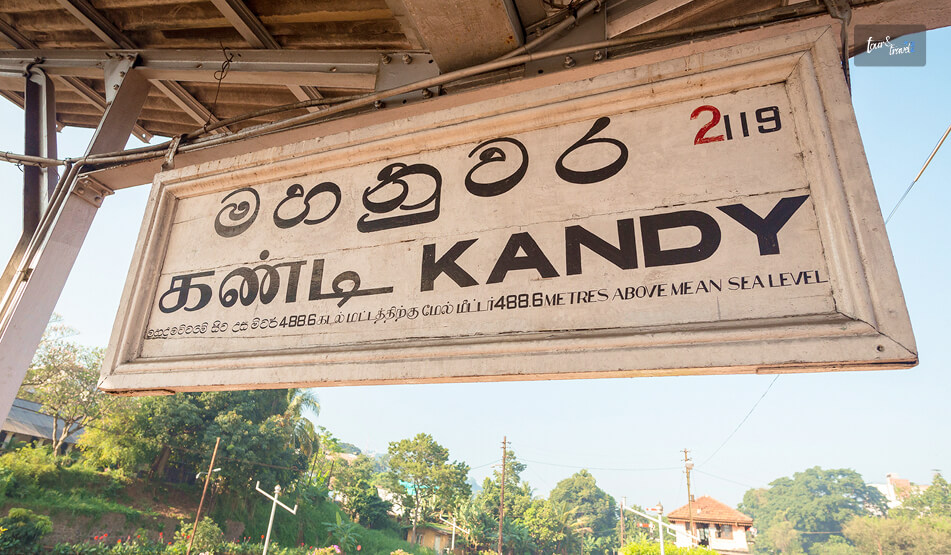
1. The Kandy Railway Station: The Major Gateway

The Kandy Railway Station The Major Gateway

The Kandy Railway Station is the main gateway to the city if you are traveling from other parts of the island. 

Also, this railway station on the beautiful Kandy to Ella line still exudes a colonial charm and shows Victorian influences in its architecture. 

A train ride from Colombo to Kandy takes around 2 hours and 30 minutes, and based on the class, the ticket prices cost between LKR 300 and 1200. 

You can even take a train on the Kandy to Ella route to explore the tea plantations, mountains, and the highland region. 

However, being one of the most scenic railway routes in the world, tickets for these trains are always in high demand. 

You can check out the available tickets at the official website of the Sri Lankan Railways. Tickets for a date get sold out even 1 month before. 

2. Colombo To Kandy Bus 

If you cannot book trains to reach Kandy. Don’t get disheartened, as buses are available from the Bastian Mawatha Bus Station in Colombo. 

You can take an ordinary or AC intercity bus to reach Kandy from Colombo. The distance is around 120 km and the travel time is approximately 3-4 hours. 

Also, the ticket prices start from LKR 360. 

What Are The Things To Do In Kandy? 

Kandy is the cultural capital of Sri Lanka. So, no wonder that it offers a good mix of colonial history, spiritual experience, and the serenity of the Kandy Lake. 

Also, Kandy is home to the quintessential Singhalese food. I found the delicacies in Kandy to be way creamier and milder than the fiery food in Jaffna. 

Nevertheless, I will talk about what to eat in Kandy a little later, and for now, let’s explore the things to do in Kandy and enjoy a mixed bag of experiences. 

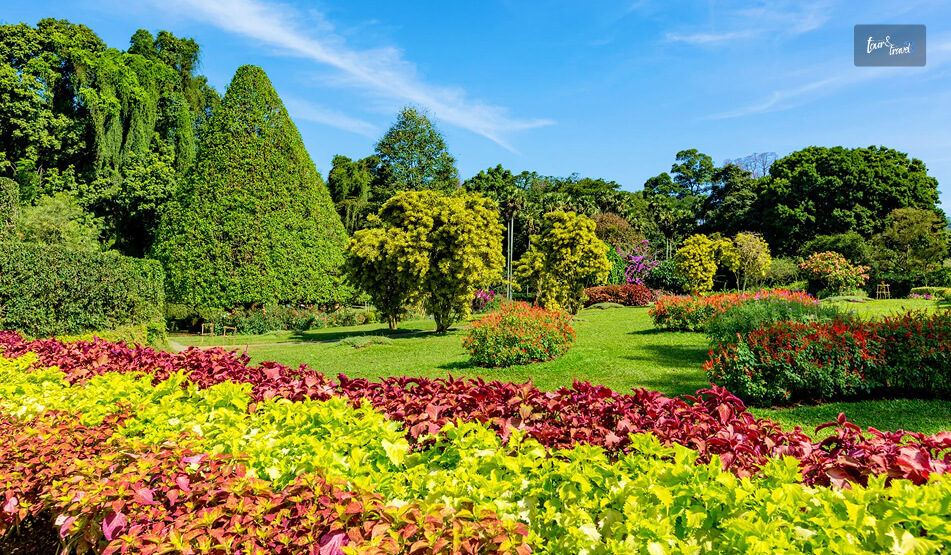
1. Visiting The Royal Botanic Gardens

Visiting The Royal Botanic Gardens
  • Hours Open: 7:30 AM to 5:30 PM
  • Entry Fee: LKR 200 for Locals, LKR 3540 for Foreign Visitors

From Kandy City, you can take a short tuk-tuk ride to reach the Royal Botanic Gardens. It is home to more than 4000 plants and covers an area of 147 acres. 

A green oasis in the overwhelming city landscape, it also has an arboretum and decorative flower beds. 

My favorite, however, was the majestic palm tree avenues. However, as the day grew, it got crowded by social media content creators. 

Furthermore, there are giant bamboo trees. Another popular photography spot in the national park is the Mahaweli Ganga River suspension bridge. However, more than five people cannot get on the bridge at a time. 

So, you may have to wait in a queue if you desperately want a photo for your socials. 

Moreover, you will see bats hanging from trees, chipmunks, and monkeys in the botanical gardens. And don’t miss the Spice Garden here. 

Also, if you feel hungry, you can buy drinks and snacks from the stalls inside and the local vendors outside the park.

2. Exploring The Udawattakele Forest Reserve

Exploring The Udawattakele Forest Reserve
  • Hours Open: 6 AM to 6 PM
  • Entry Fee for Foreigners, LKR 830, For Locals: LKR 70 

I walked for around 30 minutes to reach the Udawattakele Forest Reserve. You can even take a tuk-tuk ride from the Centre of Kandy. 

It has some of the most famous caves in Kandy and diverse fauna. 

However, I did not expect that mother macaque monkeys would welcome me with their babies clinging to them. 

After the grand entry, I chose the circular route around the park as I wanted to see the religious caves, the bathing pond, and the city viewpoint. 

The Route 

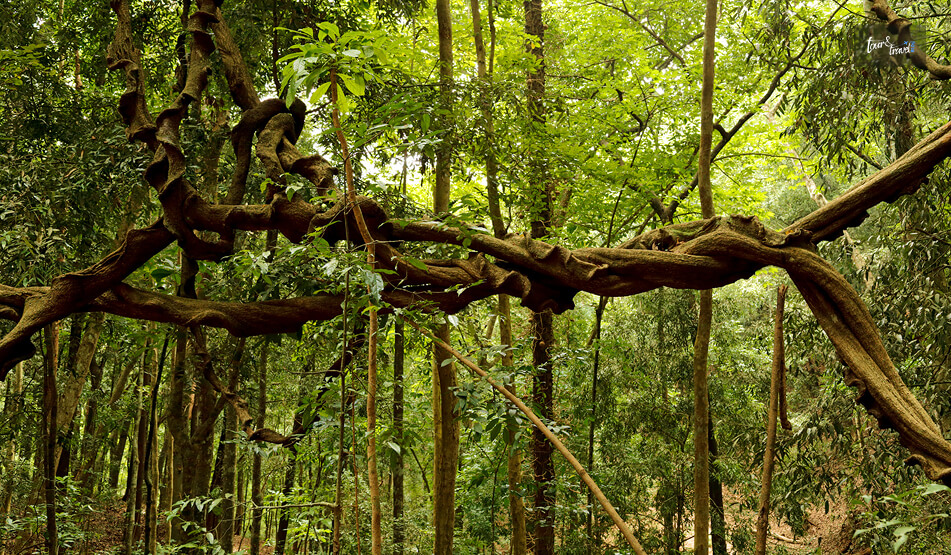
The green canopy stands in humility as you advance on the route, and now you are transported to a different world. 

The birds were chirping, and I could hear the squeal of monkeys. 

However, the highlight on that route was the Liana’s. These tree-sized vines created coils along the oath. 

I followed the route upward and reached the City View Point. 

The City View Point 

From the City View Point, I loved the perspective of Kandy City and Lake. Then, walked further to come across the Cittavisuddhi Lena cave and othe two religious caves. 

The cave had beautiful sculptures, paintings, and offerings by pilgrims. These are sacred to the Buddhist people. 

However, overgrown trees and the fear of insects and bats deterred me from entering the cave and exploring the two other Buddhist caves. 

Despite all the cautions, destiny had something different in store for me. There were leeches all over my legs, and luckily, I was carrying adequate salt to get rid of them. 

The fellow tourists also helped to remove the leeches. 

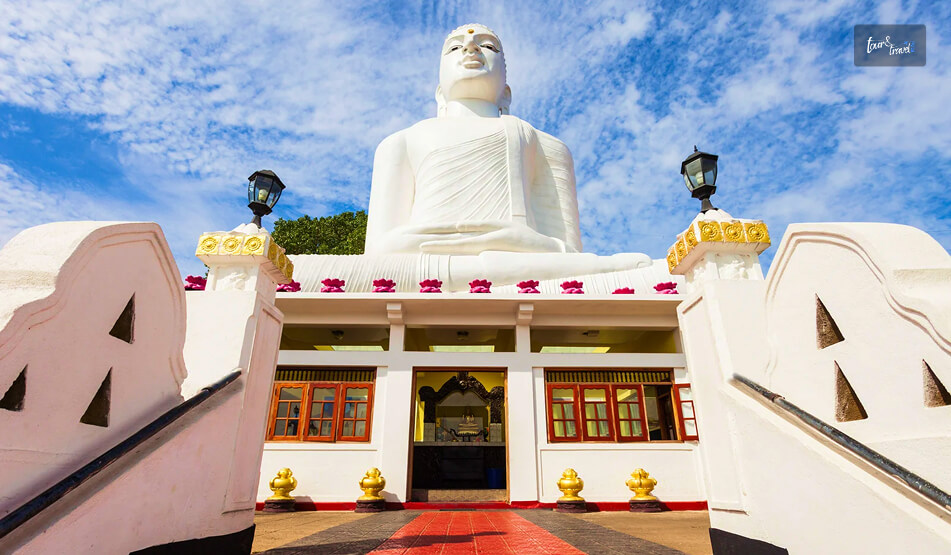
3. Visiting The Bahirawakanda Vihara Buddha Statue

Visiting The Bahirawakanda Vihara Buddha Statue

The Bahirawakanda Vihara Buddha Statue at the top of a hill is the guardian angel of Kandy. You need to take a short and steep walk to reach the Buddha Statue from the town. 

You can even take a tuk-tuk. 

Once you reach the statue, you can find the steps behind the magnificent statue and climb to higher vantage points looking over the other side of the city of Kandy. 

Moreover, there is a small shop from where you can take trinkets and religious texts. The entry fee was 600 LKR when I visited last. 

4. Exploring The Kandy Market

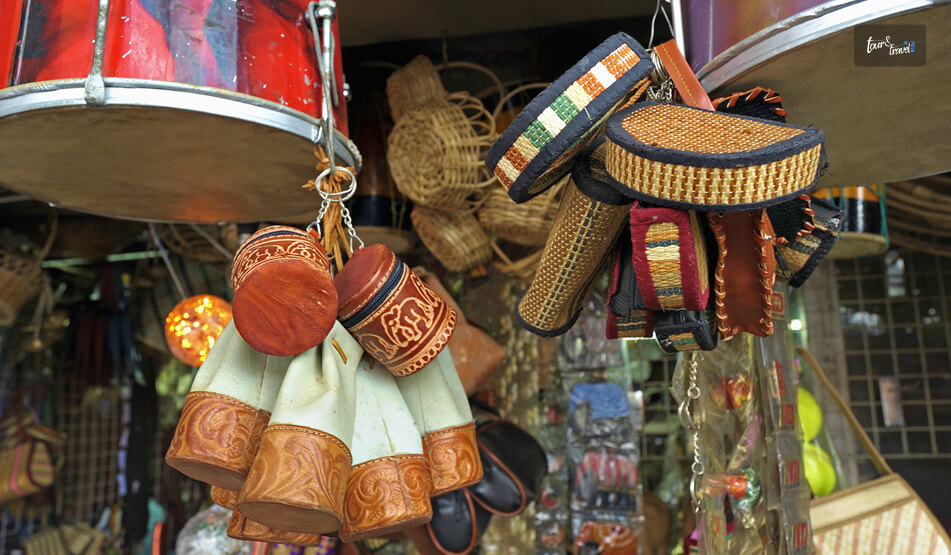
Exploring The Kandy Market

I mentioned how an old lady in the Jaffna Public Market was the icebreaker during my trip to Jaffna. 

In Kandy, it was the Kandy Market, which made me acquainted with the hilly region of Sri Lanka. 

The market was near the Kandy Station. I visited it early in the morning and found vendors selling dried fish, bananas, fresh vegetables, and souvenirs. 

5. Spending Moments By The Kandy Lake

Spending Moments By The Kandy Lake

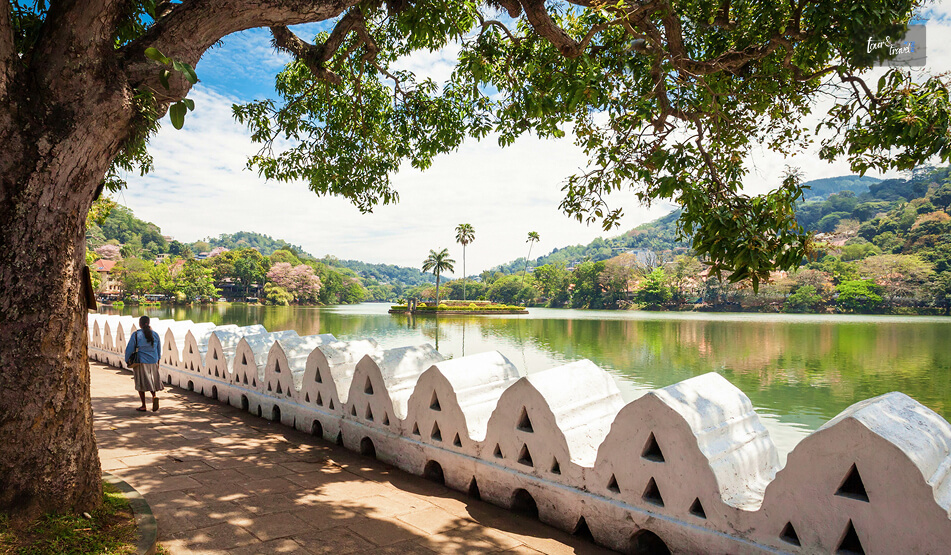
The Kandy Lake, or Lake Kandy, is at the heart of the city and is very close to the Temple of the Tooth. 

It is a magnificent man-made lake around which you can take a walk of 2.1 miles. The pathway is called the Cloud Wall, and the highlight of my walk was finding out about the Queen’s bathing pavilion. 

This ivory excellence reminded me of the regal past of the Kandy Lake. 

I also spotted the ducks, busy schools of fish, and water monitor lizards. 

Moreover, there is a well-groomed garden in the center of the lake. When I visited, it was in full bloom. 

6. Walking To The Kandy Viewpoint

Walking To The Kandy Viewpoint

After stretching my legs at the Kandy Lake, I took a short walk to reach the Kandy Viewpoint. 

Hiking to the Kandy Viewpoint is one of the most delightful free things to do in Kandy. You can capture panoramic shots of the city from this viewpoint and interact with local hawkers for a meaningful cultural exchange. 

7. Visiting The Asgiri Maha Vihara Pirivena – Buddhist Stupa And Temple

If you are a Buddhist or someone eager to learn about the religion, visiting the Asgiri Maha Vihara Pirivena is one of the best things to do in Kandy. 

This stupa is very close to the city, and I took the stairs across the train tracks to reach the stupa. 

For me, the highlight of the stupa was the meditation room on the central floor. The iconographies were grand and meaningful. 

Furthermore, the walls there depicted the three stages of decay a body has to undergo after death. 

However, I did not yet know what was awaiting me, the dome of the stupa. 

Filled with Buddhist artwork, an enormous lotus carving, and eight statues of Lord Buddha, it defined enormity. 

The military guide finally took me to the balcony that surrounds the stupa. I found many monks clad in orange robes busy in their rituals, and I also loved the view. 

8. Visiting The Temple Of The Tooth

Visiting The Temple Of The Tooth

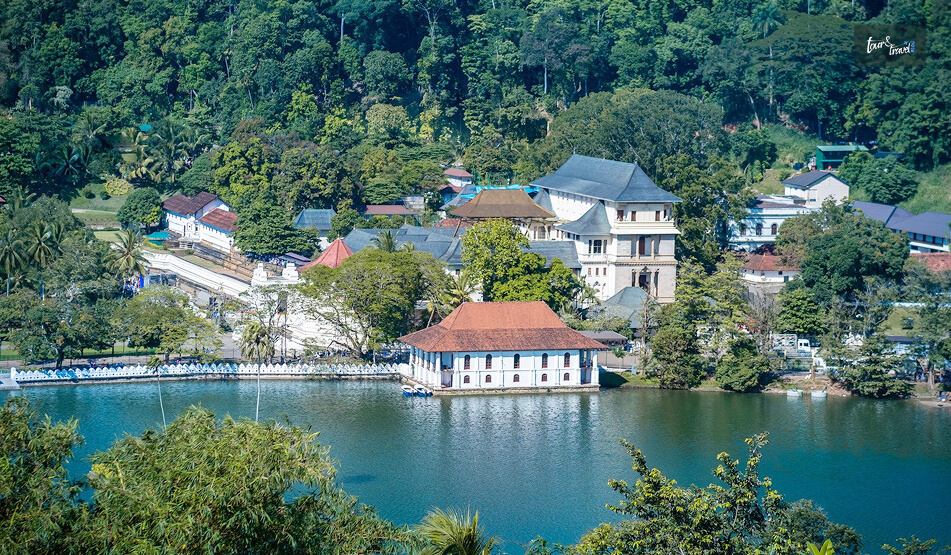
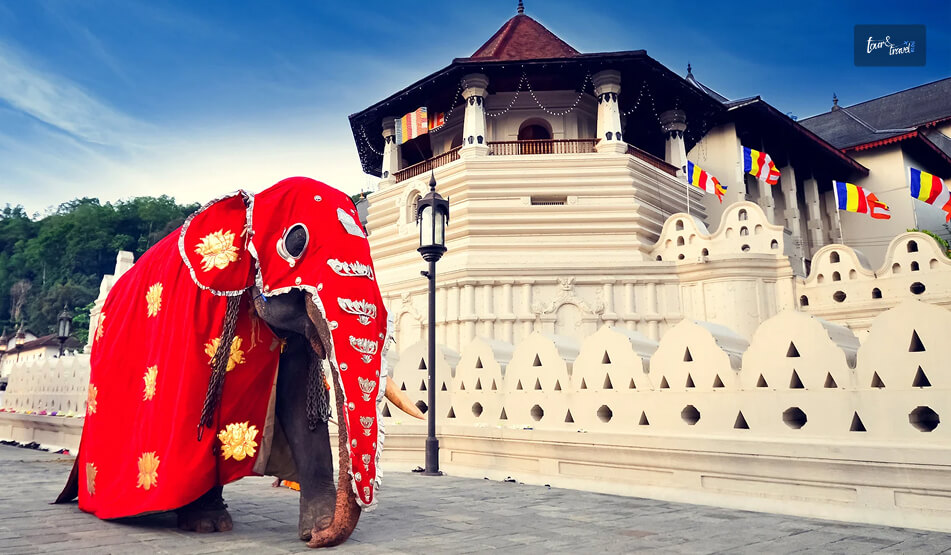
A UNESCO World Heritage Site, the Temple of the Tooth or Dalada Mandira preserves the canine tooth of Lord Buddha. 

It has the Udawaththa Kelaya to the east and the Lake Kandy to the south. 

After several invasions and destructions, the temple was finally rebuilt by King Keerthi Sri Rajasinghe, and it is in its current form that we see today. 

The temple has beautiful works of ivory, gold, and silver. 

More Things To Do In Kandy 

Along with being a primary tourist attraction in Sri Lanka, Kandy is also the gateway to many iconic landmarks showing the richness of Sri Lanka in nature and wildlife. 

You can take a train ride or a bus ride from Kandy to the Royal Cave Temples of Dambulla. Or, you can attend a wildlife safari in Kaudulla National Park and other national parks of Sri Lanka. 

Where To Stay In Kandy? Know The Accommodations

I stayed at a hostel near the hillside surrounding the city. It was modest, but the views I got from the room and balcony were amazing. 

However, if you are not willing to walk so much, you can choose places such as the Ceyloni City Hotel. 

The tariff of this city hotel is around 7500 LKR. 

What To Eat In Kandy? 

You can choose between vegetarian and non-vegetarian options in Kandy. Balaji Dosai is a nice spot to try vegetarian food, especially dosa. 

The Siri Ramya Hotel is the place to try Kottu Roti in Kandy. You can have it as spicy as you want. Also, you can combine them with different types of veggies, eggs, chicken, or mutton. 

Another thing you must not miss in Kandy is the snacks available on the bus or train. The fried chips and snacks have a lot of salt and chilli. 

However, they are great for the taste buds. 

Also, do not forget to try the rice and curry combination at the “famous hole in the wall rice and curry joints” in Kandy. 

These offer a nice and filling lunch at the best price. 

The Nightlife In Kandy: Where To Drink? 

Kandy is not a place famous for its nightlife. However, if you want to cherish some drink after a busy day, you can visit places such as The Stag’s Head Pub and the Royal Bar and Hotel. 

Enjoy the beers, cocktails, and your favorite drinks with spicy local snacks, and enjoy the view of the city and lake at night. 

Drinking at any of these places will cost you around 790 LKR.

Share on Social Media

Sibashree is a travel, culture, and leisure writer who has been writing since the age of 12 and professionally since 2014. With more than a decade of travel writing experience and journeys across India and several parts of the world, she brings a deeply personal and thoughtful perspective to her work. A student of English Literature and Mass Communication, Sibashree has always viewed travel as more than movement — for her, it has been a way of understanding people, cultures, and herself. Her passion for spiritual exploration has also led her to many unusual and meaningful destinations over the years. Outside of writing, Sibashree enjoys watching European cinema, reading about global politics, and reflecting on the stories hidden within everyday places.

Leave a Reply

Your email address will not be published. Required fields are marked *

title-img Related

READ MORE things to do in malacca

What Are The Unique Things To Do In Malacca? Know The Malacca Tourist Attractions 

BY  Sibashree Jan 28, 2026

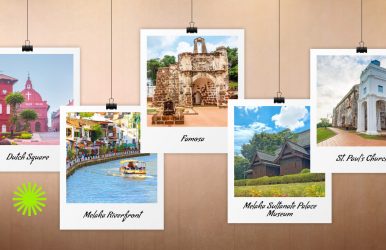
Malacca gave me pieces of history, an insane fusion of cultures and cuisine that I can still remember now, and plenty of tourist attractions with meaning behind them.  There are many similarities between Georgetown, Penang, and Malacca – I hear that line all the time – but Malacca has a quieter atmosphere that you can feel when you walk through the streets. For starters, Georgetown and Malacca are both UNESCO World Heritage sites. You have no excuse not to visit either of these cities.  Malacca is located right between Singapore and KL, and it’s also a convenient spot to visit if you’re going to be in the area. Alright, no excuses. Need to visit Malacca in a day? Yes, you can definitely visit it on a day trip if you’re coming from Kuala Lumpur. I’ve also compiled a list of things to do in Malacca! How To Reach Malacca? Malacca can be found on the southeastern coast of Malaysia. The city lies nearly midway between Kuala Lumpur and Singapore, though it is slightly nearer to KL.  Buses to Malacca operate from Kuala Lumpur and Singapore, in addition to routes from Penang. You can also catch buses directly from KL Airport if you prefer not to spend time traveling there.  As I stated, taking a day trip from KL to Malacca is quite simple. How To Get Around Malacca? Although walking was my favored way to navigate Malacca, there are other alternatives available.  You can effortlessly arrange light-up rickshaws, taxis, and Grab ride shares to navigate the city.  If you’re coming to Malacca by bus, check if your hotel offers a free shuttle, as mine does.  If not, since Malaka Sentral is 3km away from Jonker Street, you'll have to use a taxi or take the local bus. Where To Stay In Malacca? Determining accommodation in Malacca should be straightforward if you concentrate on Chinatown.  There is no shortage of budget accommodations in Malacca, and I happily recommend Hotel Hong.  Simple and affordable, the employees were pleasant, and it was located in a fascinating neighborhood near the community mosque.  It contributed to making my time in Malacca a pleasant experience. What Are The Unique Things To Do In Malacca? Malacca's diverse cultures have influenced its captivating history, food, and architecture.  There are numerous activities in Malacca that allow you to discover these aspects of the city even more. View these eight as your foundation. 1. Exploring The Dutch Square Dutch Square is likely the ideal location to begin a visit to Malacca as it lies at the heart of the city's historic center.  Situated by the city's riverbank, this square is visually striking and carries historical importance.  At the center of Dutch Square lies a lively garden and fountain that are pleasant, but the stunning Dutch colonial buildings surrounding this square are the true highlight.  Painted uniformly in an earthy red hue, it's improbable you ever envisioned Malaysia resembling this.  However, Malaysia has many reminders of its colonial history, just like Malacca. This assortment of reminders truly possesses an impressive appearance. The primary attractions of Dutch Square include the Stadthuys, Christ Church Melaka, and the Malacca Clock Tower.  All were constructed in the 17th century by Dutch settlers, thus the square's name.  The Stadthuys, previously the home of the Governor, now contains an ethnographic museum. 2. Climbing To St. Paul’s Church As you ascend the side of the Stadthuys, you ought to notice a tiny staircase leading up the hill a little.  As you progress along this path, you’ll make your way to the summit of the hill and the atmospheric remains of St Paul’s Church.  The remnants of this roofless church hold a prominent position atop St Paul’s Hill, offering views across much of Malacca.  It's not a very challenging hike, and the church serves as a natural pause along the Malacca sights trail. Originally constructed by the Portuguese in the 1500s, it was harmed, restored, and renamed by the Dutch when they seized Malacca in the 1600s.  For more than a hundred years, the church has remained in decay, its stained walls serving as a testament to Malacca's intricate history. Additional reminders can be discovered by taking the northern route down from St Paul’s Hill, where you will come across several tombstones and the Dutch Graveyard. 3. Exploring A Famosa Before the Dutch came, Malacca was a fortified settlement of the Portuguese known as A Famosa. Numerous walls and fortifications from A Famosa were destroyed during the Dutch conquest, but Portuguese traces remain in several sites. Among the defenses, only the Porta de Santiago gate is still preserved. Capturing a picture here is undoubtedly one of the most popular pastimes in Malacca. 4. Taking A Tour Of The Melaka Sultanate Palace Museum Let’s not forget that before European settlers showed up, people were already living here.  The Malacca Sultanate ruled this area for over a century before the Portuguese ever set foot on these shores. When the Portuguese landed in the early 1500s, they didn’t waste any time. They tore down the sultan’s palace and put up St Paul’s Church right where it stood. Now, if you walk around Malacca, you’ll come across what looks like a real Sultanate Palace. Here’s the thing: it’s not the original.  The Melaka Sultanate Palace you see today is a detailed reconstruction from the 1980s. The reconstruction work took the old records as a guide.  Inside, there’s a museum that really dives into the culture and history of the city. Stroll through the gardens or check out the museum’s exhibits—you’ll see plenty about local traditions, clothing, legends, and more.  Honestly, it’s one of the most interesting spots to visit if you want to get a real feel for Malacca’s past. 5. Seeing The Melaka Riverfront Although there are more famous attractions in Malacca, the river undeniably stands as the city's primary landmark.  Winding through the larger city before dividing the Old Town from the colonial areas, the Melaka River is difficult to overlook.  When Malacca was a prominent port city, the river played a role in its prosperity. Nowadays, it fulfills its role by providing guests with river cruises and beautiful views. 6. Eating At Jonker Street Undoubtedly, no street in Malacca is more renowned than Jonker Street.  While it often appears to be just a primary road in the Old Town, the atmosphere shifts significantly on Friday and Saturday nights.  You see, that’s when the renowned Jonker Street night market takes place, and the street transforms into a crowd of people and food vendors.  Naturally, with my luck, I ended up overlooking this important attraction entirely by visiting at the wrong point in the week.  The Jonker Street night market is an excellent spot to sample traditional local Nyonya dishes along with innovative new foods.  To get a sense of what’s available, try the food here.  7. Wandering Through Old Chinatown However, the Old Town of Malacca offers much more than merely Jonker Street. Venture in any direction from this point and you'll quickly discover tighter streets, where each home exudes unique charm.  Half Chinatown and half Old Town, this district reveals another aspect of Malacca’s cultural blend.  Most impressively, distanced from the hustle of other areas in Malacca, strolling through this more tranquil section of the city allows you to absorb all the intricacies.  Although many of these historic residences feature weathered exteriors, several are completely deserted.  But isn’t that character, though? In any case, the softer atmosphere here is evident, with individuals simply going about their daily routines and extending a cheerful wave.  Malaysia can be chaotic and noisy at times, making my walks here distinctly memorable.  8. Visiting The Cheng Hoon Teng Temple Walk around the streets of Malacca’s Chinatown, and you’ll spot plenty of temples—no surprise there.  But it’s not just Chinese temples lining the streets. You’ll also find mosques and Hindu temples mixed in, which gives the area this cool, unexpected blend. In Malacca, Cheng Hoon Teng Temple stands out above the rest.  It sits right across from another temple, Xiang Lin Si, but Cheng Hoon Teng is the one with the real history behind it. They built it back in the mid-1600s, which actually makes it the oldest Chinese temple in Malaysia. When you look at all the intricate details, the carvings, and the roof ornaments, it’s wild to think how well everything’s held up after all these years. Cheng Hoon Teng does not belong to just one religion.  Inside, you’ll find people practicing Taoism, Confucianism, and Buddhism, all under one roof. That kind of mix is rare, and it gives the temple a unique energy you don’t see everywhere. Other Places You Can Add To Your Itinerary In Malacca Although I’ve mentioned the most remarkable and significant activities to engage in Malacca, they aren't the sole options.  Malacca hosts numerous other cultural sites, featuring a variety of museums. However, it also features a playful aspect, ranging from its Upside Down House to the Taming Sari Tower to the Oceanarium.  Generally, you will primarily remain in locations close to Chinatown or Dutch Square. Read Also: Luang Prabang Temple Guide: What Are The Top Buddhist Temples To Visit In Laos? 5 Top Bangkok Attractions to Add to Your Itinerary 5 Best Temples To Visit In Bangkok
READ MORE Seeker 4 Mini EDC Flashlight

Features Of Seeker 4 Mini EDC Flashlight With White And UV Light

BY  Arnab Jun 1, 2023

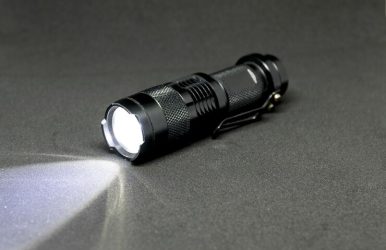
The Seeker 4 Mini EDC Flashlight is a top-of-the-line lighting tool for outdoor enthusiasts and everyday carry enthusiasts alike. It boasts an array of features that make it an ideal choice for anyone in need of a reliable, durable flashlight. One of the standout features of the Seeker 4 Mini EDC Flashlight is its dual light sources. Equipped with both white and UV lights, this flashlight can be used for everything. Its usage ranges from illuminating dark trails to detecting counterfeit currency. Seeker 4 Mini EDC Flashlight The Seeker 4 Mini is a small flashlight that has both white and UV light. It is a part of the Seeker Series. This flashlight is versatile and can be utilized in various situations. Such as climbing, camping, repairs, power outages, fluorescent agent detection, stain detection, hotel cleanliness checking, ringworm detection, and more. It measures just 3.43 inches in length and comes with a two-way clip. This makes it effortless to carry and fit comfortably in your hand. Features: Mention the white and UV light features Two Light Sources: Featuring both white and UV light, this versatile flashlight is suitable for a diverse range of applications. Such as climbing, camping, repairs, power outages, fluorescent agent detection, stain detection, hotel cleanliness checking, ringworm detection, and more. Mini and Portable The Seeker 4 MINI EDC FLASHLIGHT WHITE AND UV LIGHT is the perfect size for those who are always on the go. With a length of only 3.43 inches, it is lightweight and easy to carry around wherever you need it. You can use it for camping trips or simply carry it in your pocket while out and about. This flashlight is designed to be compact and portable. Premium Metal Side Switch: The high-end side switch is extremely durable. The battery level indicator in the center of it allows you to easily see the remaining power at a single glance. Non-slip Body: The Seeker 4 MINI EDC FLASHLIGHT is a perfect tool for those who want a sturdy and reliable flashlight. It can also serve as an emergency light source. Its ergonomically designed curved body provides a good and comfortable grip. This makes it easier to carry around without having to worry about it slipping out of your hands. This flashlight's non-slip body ensures that you will be able to hold onto it even when your hands are wet or damp. This makes it perfect for use in situations where you might need to quickly grab your flashlight without having the time to dry off your hands first. Magnetic Charging: The Seeker 4 Mini EDC Flashlight is a revolutionary piece that promises to change the way you charge your flashlight forever. With its magnetic charging feature, this flashlight allows you to simply snap it on and enjoy a fully charged battery in just 1.5 hours. But that's not all. This powerful little device also boasts dual color capabilities. It provides both white and UV light options for all your illumination needs Temperature Options: The black and OD green models offer both CW and NW options, allowing you to select the appropriate hue for any given situation. Sturdy Build: The Seeker 4 Mini EDC flashlight is a high-quality tool. Its design can withstand harsh environments as well as adventurous activities. With an IPX8 waterproof rating, this flashlight can stay underwater for extended periods without sustaining damage. Moreoevr, this feature makes it the perfect tool for underwater exploration or rainy outdoor activities. Additionally, it has a 1.5-meter impact-resistant rating, which means it can withstand dropping from a height of up to 1.5 meters without breaking or malfunctioning. This feature makes it the perfect tool for hiking, camping, rock climbing, and other outdoor adventures that may require durable equipment.  Benefits of using this flashlight The Seeker 4 Mini EDC flashlight in white and UV light is designed to be portable and easily held in your hand. Moreover, its metal side switch is durable, and the battery level indicator in the center of the switch provides real-time monitoring. The flashlight's curved surface is ergonomically designed to prevent slipping as well as provide a comfortable grip. The magnetic charging cable allows for quick as well as easy charging, fully replenishing the battery in just 1.5 hours. With its aluminum alloy body, the Seeker 4 Mini can withstand water immersion and hard drops, making it suitable for use at home, outdoors, or for daily tasks. Design: compact design of the flashlight DIMENSIONS Length: The Seeker 4 Mini EDC Flashlight is a compact and durable tool that's perfect for everyday carry. With its dimensions of 3.43in (87mm) in length, 1.18in (30mm) head diameter, and 0.94in (24mm) body diameter, it's easy to slip into your pocket or attach to your keychain. WEIGHT: The Seeker 4 Mini EDC Flashlight is a compact and powerful tool that weighs only 3.95oz or 112g, including the battery. Despite its small size, this flashlight packs a punch with its impressive brightness and long-lasting battery life. Non-slip Body: The ergonomically designed curved body provides a good and comfortable grip. Conclusion: In conclusion, the Seeker 4 Mini EDC flashlight is a versatile and reliable tool for everyday use. Its compact size and dual light modes make it perfect for carrying with you wherever you go. Moreover, the white light is bright and illuminates even the darkest corners, while the UV light has a range of practical uses such as detecting stains or checking currency. With its durable construction as well as long battery life, the Seeker 4 Mini EDC flashlight is an excellent investment for anyone in need of a reliable source of light. Don't hesitate to add this handy tool to your collection today! Read Also: Kiwi Flights Review – Login, Services, And Travel Experiences The Olight Warrior X3: A Must-Have For Any Outdoor Enthusiast How To Enjoy Your Journey After You Book Flight Tickets From Canada To India?

READ MORE card-img

Do The Sand Dunes Come Alive At Kobuk Valley National Park?

BY  Sibashree Sep 11, 2024

Kobuk Valley National Park is surreal! Have you ever thought to meet sand dunes in the Arctic Circle? The unique geology of the park makes it possible. That’s not all! The Great Kobuk sand dunes stand here, along with the remains of the North American continental glaciers.  Three of the sand dunes in this national park are active or alive. The Great Kobuk Sand Dunes, Hunt River Dunes, and Little Kobuk Sand Dunes here cover a mesmerizing 20,000 acres of area in the park.   Today, hiking through these dunes is one of the most popular activities in the Kobuk Valley National Park.   While it is visually unusual or unexpected to see sand dunes in an Arctic National Park, you also need to understand that the Arctic region gets very little rainfall every year. So, this is also a desert region.   “Sand dunes in the Arctic landscape are not what you would expect. Since most people associate sand dunes with a hot desert environment, it is a visually unusual thing to see. In fact, what most people don't realize is that the Arctic is also a desert with very low levels of rainfall.”   - Christian, a Kobuk Valley National Park Worker  Having said that, how the sand dunes came to be here, and the experience of exploring them, will be a great thing to discuss in this article.   This Is How The Kobuk Valley National Park Became The Land Of Sand Dunes   Much of Alaska, including the Kobuk Valley National Park, falls in the Tundra region. Tundra, the coldest of the biomes, gets only around 150 to 250 mm of rainfall and snowfall yearly1. So, the national park has less rainfall than some of the most well-known deserts in the world.   Further, the sand dunes in the Kobuk Valley are as old as the Ice Age. Now, as the mighty glaciers moved forward and made a retreat, the rocks beneath were ground. Now, the blowing wind transported the sand into the empty and ice-free Kobuk Valley. The sand dunes in the park are up to 150 feet high, and they are the biggest, high-altitude, and most importantly, “active sand fields” on Earth.   In The Land Of The Great Kobuk Sand Dunes  Are you in the Sahara? No, you are around 35 miles above the Arctic Circle and still find the largest active sand dune field in the world. Today, it is a popular backpacking, hiking, and camping destination in the National Park. You must visit the Northwest Arctic Heritage Center to learn more about the outdoor pursuits in the land of sand dunes.  Let’s quickly look at why the Great Kobuk Sand Dunes is a preferred destination for camping, hiking, and backpacking.  The sand is steady enough for the landing of an aircraft with wheels.  You can put up your tent on any level surface.  Also, you can hike in any direction.  Further, you can board a float plane and reach the Kobuk River. From there, you can take a backpacking tour for around two miles and reach the dunes.  You must visit the Kotzebue Visitor Center if you have plans to take this backpacking journey to and from the Kobuk River.   There is no marked route for hiking.  In summer, the temperature in the sand dunes can reach up to 100 degrees Fahrenheit. Also, fall is the season to see caribou migration here.   However, there’s more to it! Let’s learn about the Great Kobuk Sand Dunes as relics of the Ice Age and how life thrived here.   Great Kobuk Sand Dunes: The Relics Of The Ice Age   To know about the formation of the Great Kobuk Sand Dunes, we must go back to the Ice Age. Around 28000 years ago, glaciers in the mountains formed. I have already discussed how the glaciers ground the rocks and wind deposited them in the Kobuk Valley.   Further, approximately 14000 years ago, the glaciers made a massive retreat. As a result, there were 200,000 acres of sandy land formation on the river banks. Complex Holocene activities and geomorphic processes keep the sand dune field at the Kobuk Valley National Park active or alive. Along with the Kobuk Valley, small lakes in the park have also accumulated sand over thousands of years.   However, most of the landscape today is occupied by the vegetation of the national park. Also, the sand dune area consists of only 20,000 acres. The vegetation found here consists of the following varieties.  Wild rye  Grasses  Sedges  Kobuk locoweed  Wildflowers blooming occasionally  These species grow on the shifting sand, and they function as stabilizing agents. You can see shrubs, lichens, mosses, and algae following this vegetation. Finally, there are spruce, birch, and aspen trees covering the landscape.    The slopes of the Kobuk Valley sand dunes are the only place where Kobuk locoweeds grow. These plants belong to the pea family, and they are known for their purple flowers. If you want to see these flowers, you must visit the park in late June and July.   The inland dune field of Kobuk Valley National Park is surrounded by boreal forest.   Humans And Wildlife In The Great Kobuk Sand Dunes  It’s amazing to see the Western Arctic Caribou walking through the Great Kobuk Sand Dunes. Fall and spring are the migration seasons for these animals. The north of the Brooks Range is the caribou herd’s calving ground, and they migrate to and from this place.   As the caribou herds pass through the sand dunes, their footprints remain in the ground for the longest time. According to National Park Service data, around 250,000 caribou pass through this national park annually.   No wonder that the Kobuk Valley National Park is one of the “last great migrations” remaining in the world. The table below gives you a brief idea of the animals and birds in the sand dunes.  Birds •Sharp-shinned Hawk •Golden Eagle •Bald Eagle •American Wigeon •Northern Pintail •Rough-legged Hawk •Marsh Hawk Mammals •Caribou •Wolverine •Muskox •Snowshoe Hare •Moose •Gray Wolf •Grizzly Bear •Beaver •Arctic Fox •American Pine Marten Amphibians Wood Frog Fish •Longnose Sucker •Salmon* •Northern Pike •Alaska Blackfish •Alaska Whitefish •Humpback Whitefish •Alaskan Stickleback •Ninespine Stickleback  Human history in the Great Kobuk Sand Dunes is at least 8000 years old. They lived by the Kobuk River and were mainly focused on fishing, hunting, and trapping for survival. It is fascinating to visit the thousand-year-old hunting camps on the edges of the sand dunes.  The golden and shifting Great Kobuk Sand Dunes are located a few miles away from the Kobuk River. Further, the sand dunes soar up to 100 miles in the air.   Kobuk Valley National Park Is Also The Land Of Iñupiaq Subsistence  Human life, which started in the Great Kobuk Sand Dunes 8000 years ago, is still thriving with the mantra of subsistence. The Iñupiaq people here use the available natural resources to fulfil their physical needs and safeguard their spiritual and cultural requirements.   For example, they depend on caribou and salmon to feed themselves and their dogs. At the same time, caribou skin hide is extensively used to make parka jackets to combat Arctic winter. They also make mukluks or boots using reindeer skin to walk through the snow.   Further, the local people made baskets using birch and willow. Moreover, in darkness, caribou tallow or seal oil were the only ingredients to light up their stone lamps.   Irrespective of the trade with the coastal communities, the “customary, traditional and non-commercial” use of natural resources is still important in the park.   Iñupiat Ilitqusiat And Respecting The Ecosystem   Aboriginal people in the Kobuk Valley National Park are committed to passing on their values from generation to generation. The Iñupiat Ilitqusiat value asks them to transfer the knowledge and skill of hunting and everything about life.  In addition, this transfer of knowledge helps to make the most of various seasons and subsistence opportunities. For example, the caribou season comes to this park after the salmon season.   Earlier, Noatak Valley was the destination for these people during the caribou season, and even today, some families move to Noatak Valley. Again, summer camping around the Kobuk River is common for fishing, especially catching salmon and whitefish.   Summer is also the season for harvesting berries and wild greens for the local people.  If you want to learn about the local people and their values, you must be respectful and understand their seasonal activities as a part of their subsistence practices.   Overall, the Kobuk Valley National Park is not just a place to see sand dunes and wildlife. It is a tapestry of human lives depending on nature.   Things To Know Before You Visit The Kobuk Valley National Park   For me, the sand dunes and Iñupiaq subsistence practices are the most fascinating things in the Kobuk Valley National Park. However, keep the following information handy if you are to pay a visit anytime soon.   Mode of Transport: Authorized air taxis from Kotzebue or Bettles  Visitor Center: Northwest Arctic Heritage Center  Entrance Fee: Free  Permits Required:  Commercial Use Authorization (CUA) for commercial activities, Research Permits, Filming and Photography Permits  Activities to Do: Boating, fishing, camping and backpacking, hiking, flight-seeing, and exploring nearby attractions  Best Time to Visit: June to July   Area: 1,750,000 Acres  Established: 2nd December, 1980  Number of Visitors: 17,616 (2023) (National Park Service Data)  Snowfall, downpours, and extreme weather conditions can occur in any season of the year. So, follow the instructions shared at the visitor center and keep your gear ready for survival!