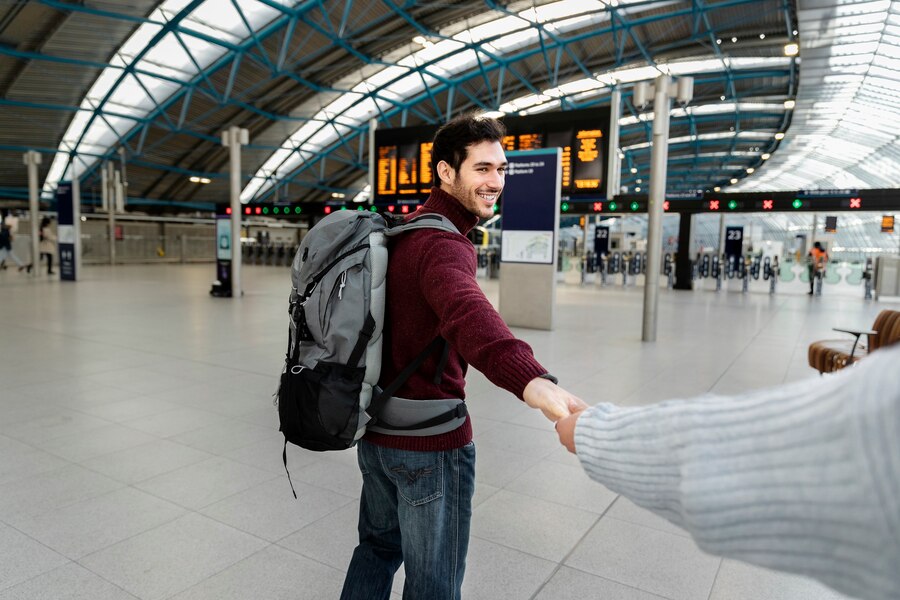




7 Modes of Transportation Analyzed: What is the Most Cost-Effective Way to Reach the Airport?

Jun 24, 2024

Last Updated on: Nov 13, 2025

Travel Guides

If you are planning to fly out of an airport this travel season, you need to spend a little time thinking about how you will get there.

Transportation to an airport can quickly get expensive, and perhaps you do not have a whole lot of extra cash at the moment, especially if you’ve spent a lot on tickets, hotel accommodations, etc.

Finding a more reasonably priced option means you can save money that will likely come in handy at another point during your trip.

Maybe you need to save cash for a Los Angeles van rental or for getting into museums and other attractions once you arrive at your destination.

In these circumstances, keeping as much money in your pocket as possible when heading to the airport is often crucial. We will discuss seven modes of transportation that are worth your consideration in the following article.

Most Cost-Effective Way to Reach the Airport

Most Cost-Effective Way to Reach the Airport

Read this article till the end to know which is the most cost-effective ride to the airport.

You Can Walk

Is it possible to walk to an airport? Sometimes it is, but that would have to mean you would already have to be pretty close to it.

The most practical time to walk to an airport is if you stayed at a hotel adjacent to it the previous night. Most other times, it is not possible or practical. Whenever you can manage it, though, you will presumably pay nothing.

It really does not get much better than that if you are attempting to conserve your money. You will even get some exercise by walking, which is nice.

If you can walk to the airport, make sure to watch out for traffic and only use roads with sidewalks. Using airport access roads or ones only intended for cars is dangerous. Saving money is great, but not if it comes at the possible price of being hit by a taxi or airport shuttle.

You Can Consider Hiring an Uber or Lyft

In the past decade, hiring an Uber or Lyft has become a piece of common knowledge in the urban scene. You can book a ride on these rental cars within seconds with the help of apps on your phone. If you are not a very tech-savvy person, you can still get the Lyft or Uber app, order a vehicle for yourself, and ride to the airport with someone else handling the driving duties.

The real drawback with either Uber or Lyft is the expense. During surge hours pricing can become quite expensive in the case of these rental cars. At certain hours when the demand for these rental cars increases, Uber or Lyft increases their pricing as well. Hiring a rideshare vehicle off hours is almost always cheaper.

You Can Hire a Taxi

The option of hiring a taxi can be efficient and expensive. For example, if you book a cab from Midtown Manhattan to JFK it will easily cost you $50 or more. This cost varies based on the demand of the cab, city or state, and other circumstances affecting the booking prices.

If you are in a smaller city with a less busy airport, getting a taxi may not break the bank. If you are considering this option but have a tight budget, it never hurts to go online and do a little research before you flag down the nearest taxi on the street.

Take a Hotel Shuttle

Take a Hotel Shuttle

Hotel shuttles are usually free if you are staying at that hotel, so getting to the airport that way is certainly an attractive prospect. Hotel shuttles are usually clean and well-maintained. They are also generally air-conditioned, which is nice.

You should have at least a couple of dollars to tip the driver if you go this route. $5 for a tip is usually the expected amount, but the driver will likely be happy if you give them anything, since not all travelers do.

Get a Public Bus or Train

Cities that have public buses and trains you can take to the airport are another one of the cheaper options in most instances.

These choices can save money, but they often take much longer to get to the airport because they make many stops. If you decide to grab a train or bus, make sure to leave yourself plenty of time for this reason.

Rent a Town Car

You might also rent a town car if you have enough money. A town car offers a VIP feeling, meaning you get a ride to the airport in style. Then this experience comes at a high cost so you will try this only when you feel like treating yourself. 

Again, if you can afford the cost of renting a town car then that is a great advantage. Your advantage is that you get to enjoy the ride alone without sharing it with anyone.

It will also most likely be air-conditioned and comfortable. The only danger if you decide on this option is a chatty driver. If you do not mind making small talk, though, that might not be a significant source of concern for you.  

Take an Airport Shuttle

Take an Airport Shuttle

Many airports operate shuttles that will pick you up throughout the city. Generally, you can find the operating routes of these airport shuttles through the airport’s website and choose the shuttle accordingly. 

On the other hand, a hotel shuttle is free, unlike an airport shuttle which can be expensive.

Conclusion

To recap, walking is usually your only free option. Taking public transportation can keep the price down while getting a hotel shuttle is generally free. 

Other options can be expensive for you such as Lyft, Uber, or hiring a taxi or town car. Then again this expense comes with an advantage of not sharing the ride with anyone.

If these options don’t work for you, then just ask a family member or a friend to drive to the airport if they are available. This is only an option in cities where you know someone, though.

If someone you know is willing to give you a lift, you might be obliged to buy them breakfast or something along those lines as a way of saying thank you.  

Know More:

Share on Social Media

Abdul Aziz Mondol is a professional blogger who is having a colossal interest in writing blogs and other jones of calligraphies. In terms of his professional commitments, he loves to share content related to business, finance, technology, and the gaming niche.

Leave a Reply

Your email address will not be published. Required fields are marked *

title-img Related

READ MORE Rocky Mountain National Park Trails

Rocky Mountain National Park Trails: A Complete Hiking Guide

BY  Sibashree Nov 11, 2024

It’s already fall, and the Rocky Mountain National Park Trails are adorned with the Aspen leaves’ glistening gold. Also, the dark green of the pine trees in the backdrop complements the dark red and orange of Alpine shrubs. Hiking through the park trails is the best way to explore the beauty of the USA National Park to the fullest. Further, the hiking trails come with varying difficulty levels. Some are also great for enjoying a walk with your furry friends.  Moreover, the trails are varied in their destinations. Some trails in the park will take you to beautiful waterfalls, and some will end at breathtaking summits and immersive lakes. Do you also want to hike and experience the park at its best? Here is a brief overview.  Hiking Through The Rocky Mountain National Park Trails: A Rocky Mountain National Park Guide  Rocky Mountain National Park has over 350 miles of hiking trails. Further, you will find a delightful activity in the park irrespective of your abilities.  However, you will need proper traction devices and a Rocky Mountain National Park map to remain safe during hiking. Moreover, you will need proper footwear with a treaded sole as the routes can be snowy and slippery.  With proper safety measures, it’s time for you to hit the waterfalls, summit, and lake trails.  Best Rocky Mountain National Park Trails To Waterfalls Rocky Mountain National Park is home to 31 waterfalls. Do you want to witness water cascading through rocky terrains? Hit any of the following trails in the park.  1. Granite Falls Trail  Trail Head: Green Mountain Trailhead parking area Trail Distance: 5.2 miles one-way Difficulty Level: Moderate You will pass through lush green meadows while hiking to Granite Falls Trail. However, the terrain is marshy here, and you must be careful as you explore the path.  Further, lodgepole pine, aspen, Engelmann spruce, and subalpine fir greet you throughout the trail. The elevation gain is 1,046 feet in the trail, and you must proceed carefully.  2. Chasm Falls Trail Trail Head: Old Fall River Road or Winter Closure Gate Trail Distance: 2 Miles (Round Trip) Difficulty Level: Moderate The Chasm Falls Trail will take you to a cascading beauty. With an elevation of just 640 feet, this trail is moderate to hike. Further, if the hiking trail from Old Fall River Road is closed, you can take the trail from Winter Closure Gate. Then, you will have to walk or bike for 2.2 Miles.  3. Adam Falls Trail  Trail Head: East Inlet Trail Distance: 0.6 Miles round trip Difficulty Level: Easy With an elevation of just 79 feet, the Adam Falls Trail is one of the easiest ones in the park. Adam Falls is small but excels in its quaint beauty.  If you want to be more adventurous, you can walk past the waterfall. A beautiful glacier valley will emerge before your eyes, and you will love the exuberance of wildflowers.  4. Cascade Falls Trail Trail Head: North Inlet Trail Distance: 3.4 Miles one-way Difficulty Level: Moderate to Strenuous (Expect changes in the difficulty level throughout the route) You will love the gurgling sound of the North Inlet stream water, and as it thrashes the pure granite stone, it’s a beauty to behold. This waterfall is 100 feet tall and forms a cascade, as the name rightly suggests.  You will meet the most adorable marmots As you continue your hike and pass through the open meadow. They are frequent to the winding river through the lodgepole pine forest. Further, you can stop here to fish river trout and brown trout.  Best Rocky Mountain National Park Trails To Lakes Great National Park has 156 lakes. Some of these lakes have dense trout populations. Further, areas near these lakes are great for spotting wildlife. So, let’s know about the lake hiking trails that lead us to these beautiful lakes.  1. Bear Lake Trail Trail Head: Bear Lake Trail Distance: 0.7 Mile Difficulty Level: Easy With mountains of the Continental Divide in the backdrop, Bear Lake Trail is one of the best locations in the park for watching the sunset. You will love the beauty of Hallett Peak, Continental Divide, and an Alpine lake here. Bear Lake is the epicenter of many hiking trails. You can start your hike to Alberta Falls, Flattop Mountain, Emerald Lake, and more from here.  2. Sprague Lake Loop Trail Trail Head:  Estes Park Trail Distance: 0.7 Miles round trip Difficulty Level: Easy Sprague Lake Loop Trail is the most accessible trail in the park. Wheelchairs are allowed here. So, patients with disabilities can also explore this trail.  You can stop at the benches and many lookouts throughout the trail to reflect on the beauty of nature. Further, you can see the mountain peaks along the Continental Divide.  Moreover, Sprague Lake is an amazing destination for spotting wildlife.  3. Mills Lake Trail Trail Head: Glacier Gorge Trail Distance - 5 Miles round trip Difficulty Level: Moderate to Strenuous  With a 700-foot elevation, the Mills Lake trail will take you through a gorge carved by glaciers, streambeds, and waterfalls.  The beautiful Mills Lake gets its name from Enos Mills, the founder of the Rocky Mountain National Park. Further, if you want to continue your hiking pursuit, you can walk to Black Lake, and that will be an additional 1.7-mile hike.  4. Gem Lake Trail Trail Head: Lumpy Ridge Trailhead Trail Distance: 3.4 Miles round trip Difficulty Level: Moderate to Strenuous  The expansive field of granite domes houses the Gem Lake. It is indeed a hidden gem and one of the biggest attractions in the area, along with Lumpy Ridge.  Gem Lake is shallow, and it has water of melted snow and rainfall.  5. Dream Lake Trail Trail Head: Bear Lake Trail Distance: 2.2 miles round trip Difficulty Level: Moderate to Strenuous  You must go for a steady ascent from Bear Lake to reach Dream Lake. The trail comes with an elevation change of 830 feet. Don’t miss the following highlights of this hiking route.  Nymph Lake Aspen Groves Ponderosa Pine The Nymph Lake looks most beautiful in summer, with pond lilies in full bloom. Further, you can use Dream Lake as the base and trek to the amazing Emerald Lake or Lake Haiyaha.  Best Rocky Mountain National Park Trails To Summits Despite the elevation gain of around 1000-3000 feet, the hiking trails to summits are very popular among visitors. The wonderful vistas from the mountain tops make the effort worth it.  1. Deer Mountain Trail Trail Head: Deer Ridge Jct Trail Distance: 3.1 miles one-way Difficulty Level: Moderate to Strenuous  The Deer Mountain comes with an elevation of 10,006 feet. Further, as you hike and reach the summit, you will enjoy the most beautiful view of Upper Beaver Meadows, Longs Peak, Estes Park, and Moraine Park. Be careful about the weather forecast before you start your journey on the trail.  2. Flattop Mountain Trail Trail Head: Bear Lake Trailhead Trail Distance: 8.8 miles round trip  Difficulty Level: Moderate to Strenuous  The trail from Bear Lake is the best way to reach Flattop Mountain, and this route is one of the trickiest ones in the park. However, if you cannot access the trail from Bear Lake, you can try the route to Flattop via Tonahutu Trail. Further, as you reach the Flattop Mountain summit, you will enjoy the beauty of Hallet Peak, Dream Lake, and Tyndall Glacier.  3. Chasm Lake And Longs Peak Trail Trail Head: Old Fall River Road or Winter Closure Gate Trail Distance: 4.2 miles one-way Difficulty Level: Strenuous  Chasm Lake, just beneath the Longs Peak, offers a spectacular view. You will come across Tundra meadows and Alpine tundra through the trail. Further, animals like pikas and marmots are common here.  As you reach the Chasm Junction and find an outhouse, you can hike along a wall to see Columbine Falls and Peacock Pool Gorge. After this point, the terrain becomes rocky, and you will need cairns to reach Cirque, the lake's location.  Mistakes You Must Avoid When Hiking Through Trails Of Rocky Mountain National Park Making a rushed trip to the Rocky Mountain National Park is the biggest mistake you can make. You can face severe issues like dehydration and acute mountain sickness here if you don’t allow your body to acclimatize or work on your physical and mental endurance. So, carry enough water or hydrating solutions and start your training under proper guidance at least one month before your Rocky Mountain hike.  Further, don’t think that you will always make it to the trails in your usual track pants or leggings. You have to wear hiking clothes as on many days, you will have no escape from the afternoon rain.  Rocky Mountains National Park At A Glance  Location: Colorado, USA Established: 26 January 1915 Highest Point: Longs Peak Area: 415 Square Miles How to Reach: Take a drive or shuttle from the Denver International Airport.  Also read Why Include Whale Watching In Your LA Itinerary. Traveling On A Budget: Tips For Affordable Adventures. From Cocktails To Kickflips: Must-Try Activities In San Diego.

READ MORE Boot Dryers

Why Boot Dryers Are A Must-Have For Outdoor Enthusiasts

BY  Abdul Aziz Dec 30, 2023

If you're an outdoor enthusiast, you are familiar with the difficulty of keeping your boots dry. Your boots will get wet whether you hike on damp terrain, journey in the snow, or cope with rain. This is when the humble but quite helpful boot dryer comes into play.  High-performance boot dryers for outdoor enthusiasts are essential for braving wet conditions. They're a step toward improved comfort, health, and durability of your equipment, not merely a convenience. This blog will explore compelling reasons why a boot dryer is an essential outdoor lover.  Flexibility  Boot dryers aren't restricted to drying boots — they may likewise be used to dry gloves, covers, and even attire. They are a significant expansion to any open-air lover's hardware due to their flexibility, permitting them to act as an across-the-board answer for drying outside gear. Keeping Infections and Blisters at Bay Damp boots can harbor germs and fungus, which can cause blisters and diseases on the feet. Effectively drying your boots lowers the likelihood of these problems considerably. You may enjoy your activities without worrying about the health of your feet thanks to a boot dryer, which helps to maintain a healthy environment for your feet. Time-Saving Efficiency At the point when you're an energetic voyager, there's no time to waste, and air-drying boots could consume a large chunk of the day. By speeding up the drying system, a boot dryer ensures that your boots will be prepared when you are. With this ease, you can spend less time waiting for your equipment to dry and more time having fun outside. The Durability of Your Boots Most materials, including the leather and textiles used to make boots, are harmed by moisture. Putting away damp boots regularly can cause material degradation, weakening the structure and shortening the boots' lifespan. By maintaining your boots' integrity, you can ensure they function better and last longer. A boot dryer may assist. Removal of Odors Let's face it: wet boots stink. The damp air inside your boots is excellent for developing microorganisms that cause scent. A boot dryer helps eliminate these unpleasant odors and keeps your boots fresh for your next trip. Increased Coziness Nothing is more horrendous than awakening in wet, crisp boots. A boot dryer ensures your boots are dry and toasty, making outdoor activities more bearable. Dry feet are more agreeable and vital for saving your feet' well-being, especially in colder regions. Taking to the Outside with Dry Boots: The Sharp Choice for Any Adventure How does all of this relate, then? Think about putting resources into a boot dryer for your open-air exercises. It's about solace, well-being, and taking advantage of your open-air undertakings, not simply dry boots. Due to its versatility and ease of use, a boot dryer is an obvious choice for anyone who enjoys the great outdoors. Review that moist attire doesn't need to destroy your exercises. Putting resources into a boot dryer can guarantee that each excursion begins well. It's a small step toward having a happier, healthier, and cozier outdoor experience. In this manner, guarantee your provisions incorporate a boot dryer when preparing for an endeavor. Read Also: Why You Need A Military Flashlight? 10 Reasons Why We Love The Smoky Mountains A Backpacker’s Guide: Must-Have Camping Essentials

READ MORE is Indianapolis safe

Is Indianapolis Safe? Things You Must Know Before Planning An Indiana Tour

BY  Sibashree Jan 30, 2025

Despite having famous cultural trails and many important museums in the USA, Indianapolis tourism has always been affected by safety concerns. Is Indianapolis safe? This is the question that people keep asking, considering the high crime rate.  2024 was a relatively good year for Indianapolis as the crime rates decreased from 2023.  So, Indiana's public safety leaders are planning to keep the momentum with public safety plans.  Further, there are endeavors to bring positive changes in the community. So, despite having a 43.82 crime rate and 100 homicides taking place in Indianapolis in 2024, it is making every effort to change for the better.   Moreover, the homicide rate in the state has gone down consistently every year since 2021. So, is Indianapolis safe to travel to? You can travel to some parts of the state as they are safer.  Do you want to know about these safer areas in Indianapolis? Here is the list with brief details about the places to visit. Is Indianapolis Safe? Yes, You Can Visit The Following Places  Indianapolis has a crime rate way higher than the national average. However, that does not indicate that all parts of Indianapolis are crime-infested.  For example, the downtown area and the neighborhoods in the northeast have higher crime rates. On the other hand, Greenwood, Carmel, and Zionsville have lower crime rates. So, learn where you will stay in Indianapolis during your next trip. 1. Zionsville In Boone County, Zionsville has remarkably maintained a low crime rate (1 in 1000). The first place of attraction in Zionsville is Traders Point Creamery. It is a 19th-century dairy barn promoting a farm-to-table culture in Zionsville.  You can even visit the Fanimation Antique Fan Museum, Zionsville Nature Center, and the Starkey Nature Park in Zionsville.  2. West Lafayette If you want to live in a place filled with a youthful vibe, West Lafayette in Tippecanoe County will be your instant favorite. Here, the crime rate is low (1 in 1000).  West Lafayette has many places of tourist attractions, and Purdue University is the best among them. The Ross-ade Stadium, Mackey Arena, Fort Ouiatenon, and Lily Nature Center are some favorites of locals and tourists in West Lafayette.  3. Fishers https://www.instagram.com/p/C7hOb1uuzmb/?img_index=1 Fishers, a growing suburb bordering Carmel, is one of the safest places to visit in Indianapolis. Ritchey Woods Nature Preserve is one of the most prominent tourist attractions in Fishers.  Further, you can visit the Conner Prairie Museum, Flat Fork Creek Park, Cheeny Creek National Park, etc., to spend some time in nature at Fishers.  4. Highland Along the southern tip of Lake Michigan, Highland in Indianapolis is one of the safest places in Indianapolis. Highland is a great place to visit in Indianapolis, also its proximity to Chicago makes it accessible.   5. Brownsburg https://www.instagram.com/p/C9zvwB1OfSo/ Brownsburg has been growing in the last few decades, and when asked is Indianapolis safe or not, Brownsburg is the place you need to visit.  Furthermore, Brownsburg has visitor attractions like Williams Park and Natural Valley Ranch. 6. Crown Point Lake County, in northwest Indiana, has Crown Point, one of the most peaceful places in Indianapolis. So, if you want to know is Indianapolis safe, Crown Point can be your go-to destination.  Crown Point is also close to Chicago, and you will love the quintessential small-town vibe here. Moreover, the places to visit here are Lemon Lake County Park and Lake County Historical Museum.  7. Avon Avon in Hendricks County has the best amenities and is known for its public parks. Further, just 20 minutes away from Indianapolis, Avon, the newest community here, is also growing at the fastest pace.  The places to visit are Washington Township Park, Avon Town Hall Park, and the most beautiful Avon Gardens.  Moreover, don’t miss a bite of the pork tenderloin sandwich when you are in Avon. The Coachman Restaurant & Lounge is one such place for indulging in gastronomic delight.  8. Dyer Dyer, a safer place in Indianapolis, has many public parks. When in Dyer, you will get to drive along the Ideal Stretch. It was a manifestation of the vision of having a coast-to-coast rock highway by Carl G. Fisher.  It was the first paved road in Indianapolis. Further, Meyer's Castle is an important historic landmark in the city.  Moreover, don’t miss a gastronomic delight at DOC's Smokehouse & Craft Bar. Here, everything you get is made using fresh and local ingredients.  9. Carmel Carmel, nestled in Hamilton County, has the second-lowest crime rate in Indianapolis. You will find the Monon Trail here, where you can hike, bike, and explore the city hotspots. Further, Carmel will never disappoint you with its copious dining and entertainment options. You can visit the Clay Terrace, a community lifestyle center.  Moreover, you can explore dining options here are Juniper on Main at 110 E Main Street, Carmel. It serves amazing crabs and deviled eggs; you can reach them at (317) 591-9254.  10. Greenwood Located in the Johnson County of Indianapolis, Greenwood has a Farmer's Market and a distinct vibe that distinguishes it from the hustle and bustle of Indianapolis.  The places to visit are the Greenwood Park Mall, Old City Park, shopping malls, etc.  Is Indianapolis Safe? A Tour And Travel Note On Safety Tips  The Indianapolis Metropolitan Police Department (IMPD) works closely with the local community to maintain law and order in Indianapolis. Furthermore, the local people here are very welcoming.  Still, you need to follow some safety tips if you are planning a trip to Indiana, and here they are! Do A Little Research About The Place You Want To Visit As I have already shared a list of safer areas in Indianapolis, you can choose your place to stay or vacation.  Avoid Walking Alone At Night This is like a thumb rule when you are new to a city. So, even if you are staying in Zionsville or some of the safer places in Indianapolis, you must wander around the city alone. And you must especially avoid areas like the Canal Walk or Downtown at night.  Seek Assistance From A Local Guide If you want to explore the nearby neighborhood or want to learn about Indianapolis culture, you can seek assistance from a local guide.  Further, you can join a community tour conducted by a local tour operator if you are new to the city and want to explore new places.  Also read Top 10 Most Popular Paraguay Food That You Must Try. Top 13+ Famous Wonders Of India That You Must Visit. Top Tips For Motorbike Rental In Phuket – A Guide To Exploring The Island On Two Wheels.