

What Is The Ultimate Luang Prabang Itinerary Planner For Solo Travelers? How To Explore Laos’ Cultural Gem In 3–7 Days? 

Nov 3, 2025

Last Updated on: Sep 24, 2026

Asia

In my Luang Prabang travel guide, I last wrote about my travel experience and shared a 5-day itinerary.

However, I wanted to go more in-depth about the cultural exploration of the Laotian gem and a UNESCO World Heritage Site.

Also, Luang Prabang, with its commitment to sustainable tourism, has emerged as a leader in responsible tourism in Southeast Asia.

Furthermore, the recent win of the “Green Destinations Silver Certification” has confirmed how Luang Prabang is dedicated to cultural conventions.

In fact, Luang Prabang has achieved a harmony between cultural heritage and nature.

The mountains, rivers, and temples reflect a lifestyle that is deeply connected to the environment.

Thus, Luang Prabang shows how traditional practices and values can thrive alongside modern sustainability practices.

Hi, in this Luang Prabang itinerary planner blog, I will talk about how you can explore the cultural gems of Luang Prabang in three to seven days.

Why Visit Luang Prabang? 

Why Visit Luang Prabang

The Green Destinations organization, accredited by the Global Sustainable Tourism Council, has awarded Luang Prabang the Green Destinations Silver certification for 2025–2027.

The certification conferred at the Sustainable Destinations Forum 2025 in Dubai on 28-29 October now inspires this UNESCO World Heritage Site to aim for a gold certification in 2026.

So, learning how this city in Laos is evolving the sustainable tourism landscape can be a reason to visit it these days.

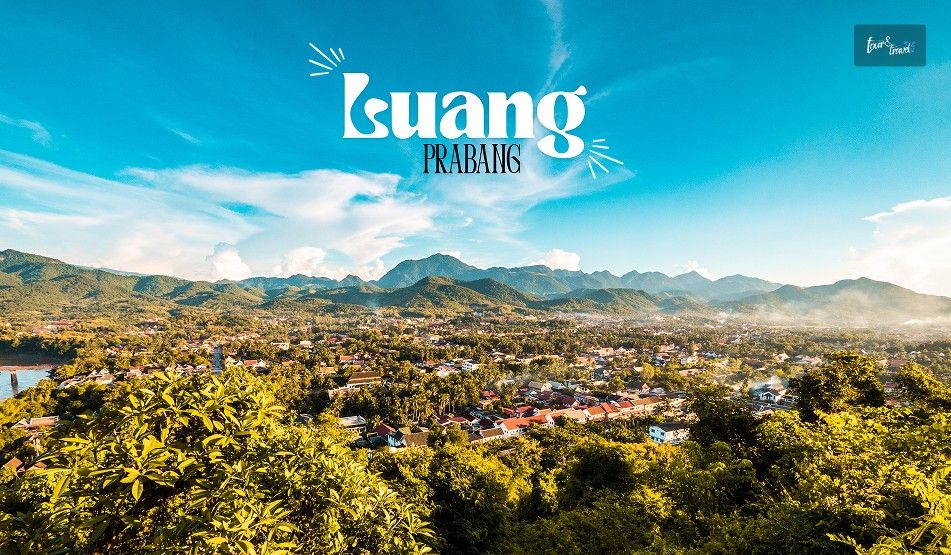
Furthermore, its location between the Nam Khan and Mekong Rivers and the presence of Mount Phousi make Luang Prabang a natural treasure trove.

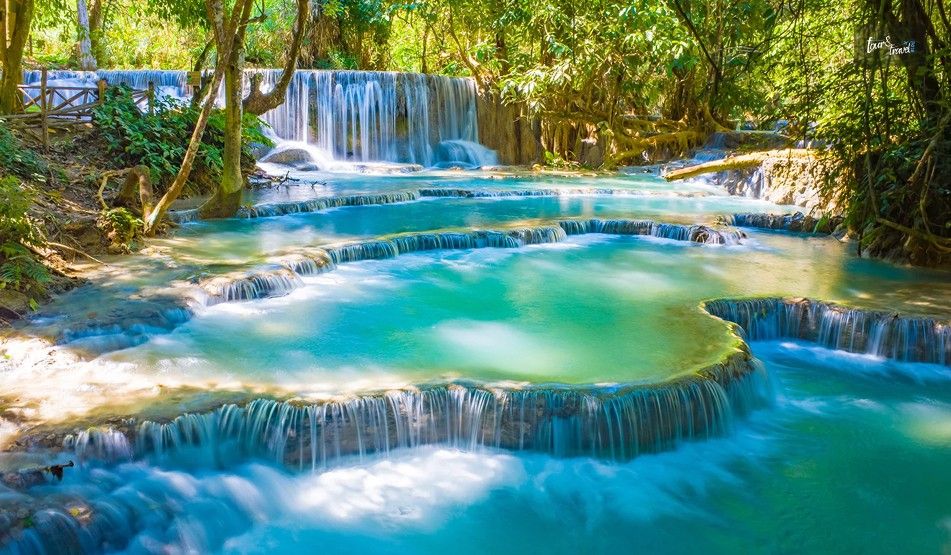
Kuang Si Falls is another major natural attraction here.

Historically, it is significant as the capital of the ancient Laotian Kingdom.

Also, due to the 19th-20th century colonial influence, the city shows a wonderful fusion of traditional Lao urban architecture and English colonial architecture.

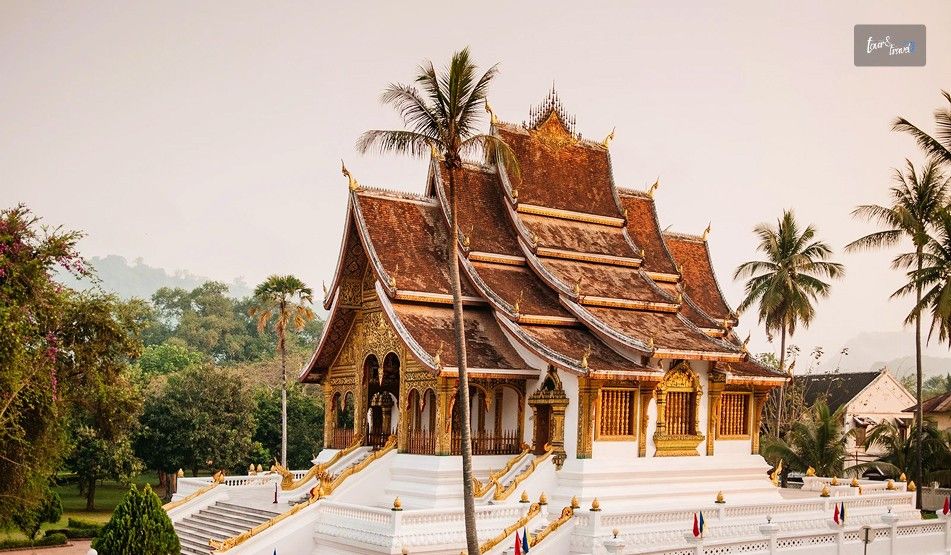
Moreover, the city’s well-preserved temples, monasteries, and colonial villas make it a living museum of Southeast Asian heritage. 

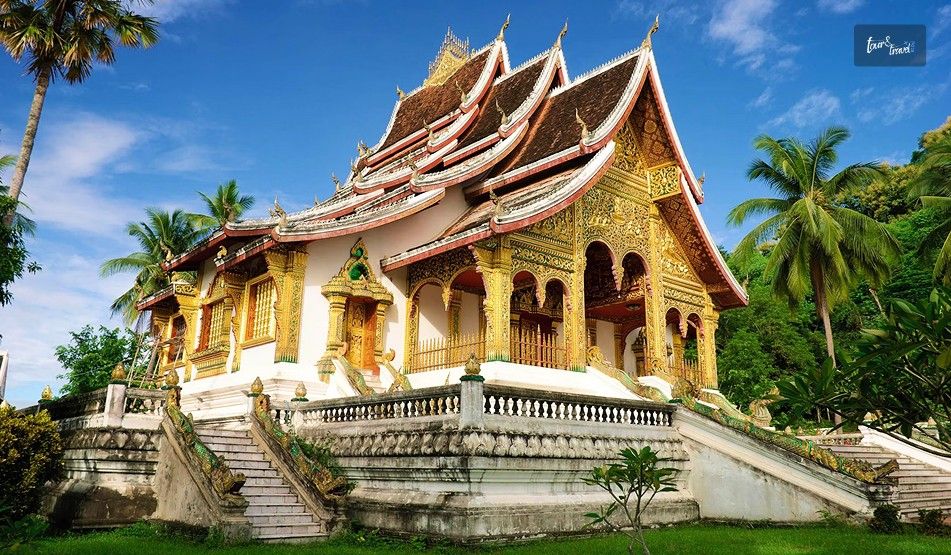
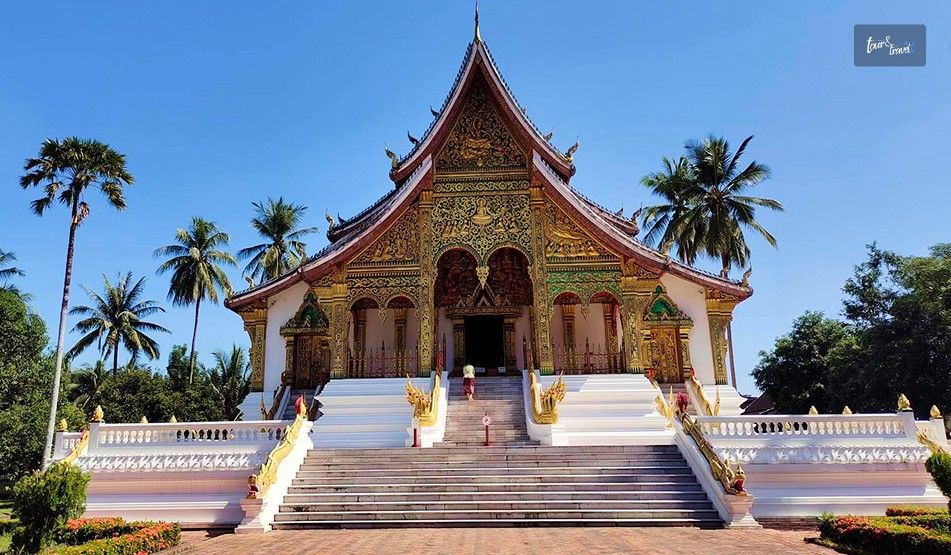
In addition, Luang Prabang has beautiful temples such as Wat Xieng Thong, and its Night Market is a vibrant hub for local crafts, textiles, and street food.

What Is The Best Time To Visit Luang Prabang? 

What Is The Best Time To Visit Luang Prabang

The best time to visit Luang Prabang depends on the experience you want.

For example, if you want to enjoy clear weather conditions and your time outdoors, you can plan a visit between November and February.

April and May are the hottest months in Luang Prabang, with the highest temperature hitting around 35 degrees Celsius.

January is the coolest month, with an average temperature of 14-28 degrees Celsius.

However, attending the local festivals is a major part of a holistic cultural exploration.

So, if you want to attend any specific celebration, you can check the table below.

Festivals in Luang Prabang Timing 
Boun Pi Mai Lao, or the Lao New Year Mid-April 
Boun Suang Huea, or the Boat Racing Festival September 
Boun Lai Heua Fai, or the Festival of Lights October 
That Luang Festival at the That Luang Stupa November 
Haw Khao Padap Din, A Festival Honoring Ancestors September 

How To Reach Luang Prabang?

I reached Luang Prabang by flying to Luang Prabang International Airport (LPQ) via Bangkok.

However, there are also boat, train, and bus options.

Mode Of Transportation Details
By Flight• Airport: Luang Prabang International Airport (LPQ)

• Airport Connected to: Bangkok, Hanoi, Chiang Mai, and Vientiane

• Laos Offers Visa on Arrival Facilities for Many Countries.
Slow Boat from Thailand • This 2-Day Journey from Huay Xai via Pakbeng along the Mekong River is beautiful.

• It is Ideal for Photographers and Slow Travelers.
Train • You Can Travel to Luang Prabang via the China-Laos Railway.

• This Railway Connects Luang Prabang with Vientiane and Boten.

• This Route is Scenic, Fast, and Affordable.
Buses • Travel in a Long Distance Bus to Luang Prabang from Vientiane, Vang Vieng, and Other Lao Cities. 

• For More Comfort, Choose Overnight VIP Buses.

Where To Stay In Luang Prabang? 

I stayed in a hostel, which cost me around $20 per night.

However, you will also find mid-range and luxury hotels, as well as eco-lodges suitable for families.

1. Budget Hostels In Luang Prabang 

Name Amenities Location 
Mad Monkey Hostel • Clean 
• Centrally Located 
Luang Prabang, Laos
Y Not Laos Hostel • Ideal for Solo Travelers and Digital Nomads Laos, Luang Prabang, Phusi RD, Aphay village, Luang prabang, Laos

2. Mid-Range Accommodation In Luang Prabang 

Name Amenities Location 
Villa Chitdara • Stands Out with Its Colonial Charm Near the Local Market Ban Vat Nong, Khounsua Road, Luang Prabang 06000, Laos
My Dream Boutique Resort • Lush Gardens
• Riverside Views 
Ban Meung Nga Village Meung Nga Street, Luang Prabang 06000, Laos

3. Luxury Accommodation 

Name Amenities Location 
Satri House • A Former Royal Residence Turned Into A Boutique HotelLuang Prabang, Laos
Avani+ Luang Prabang • It Offers Modern Luxury with A Colonial Touch Setthathirath Road, Hua Xieng Village, Luang Prabang 06000, Laos

4. Family-Friendly & Eco-Lodges 

Name Amenities Location 
Zen Namkhan Resort • Eco-conscious
• River Views
• Family Bungalows 
CP 082, Ban Xieng Lom 06000, Laos
The Namkhan Ecolodge • Nature Activities
• Farm-to-Table Dining 
Luang Prabang 06000, Laos

A 3-Day Luang Prabang Itinerary

A 3-Day Luang Prabang Itinerary

Here is a brief 3-day itinerary for a trip to Luang Prabang. 

Days Activity
Day 1 • Visiting Wat Xieng Thong, Wat Mai, and the Royal Palace Museum in the Morning

• Strolling through Old Town and Having the Best Coffee at Saffron Café

• Sunset Trek to Mount Phousi

• Exploring the Night Market for Street Food and Collecting Souvenirs 
Day 2 • Visiting Kuang Si Falls (30 km away) in the Morning.

• Swimming in Turquoise Pools and Visiting the Bear Rescue Center in Late Morning.

• Stopping by the Kuang Si Butterfly Park and Having a Picnic Lunch in the Afternoon. 

• Back to the Town and Having a Lao Massage.
Day 3 • Attending a Lao Cooking Class at Tamarind or Bamboo Tree in the Morning.

• Taking a Boat Trip to Pak Ou Caves, Filled with Thousands of Buddha Statues.

• A Sunset Cruise on the Mekong River with Local Drinks and Snacks.

A 4-Day Luang Prabang Itinerary

A 4-Day Luang Prabang Itinerary

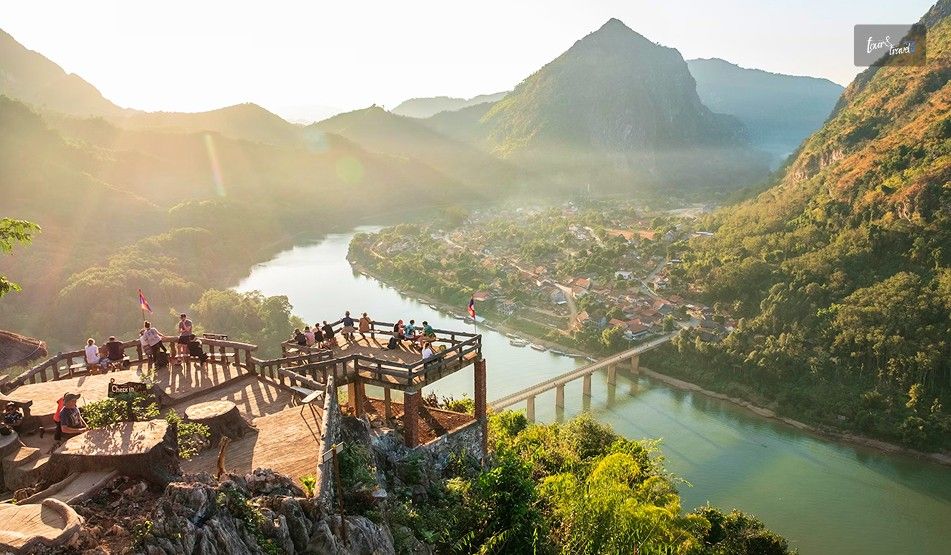
If you are in Luang Prabang for another day, you can plan a day trip to Nong Khiaw.

It is a 3-hour drive from Luang Prabang.

It has beautiful limestone cliffs and caves, and it is ideal for kayaking.

A 7-Day Luang Prabang Itinerary

A 7-Day Luang Prabang Itinerary

With the activities for your first four days sorted, you can now try the following activities/attractions for the last 3 days.

Days Activities 
Day 5 • Learning Traditional Rice Farming Techniques and Plowing with Water Buffaloes in the Morning.

• Cooking Sticky Rice in the Afternoon.
Day 6 • Visiting Tad Sae Waterfalls & Ziplining in the Morning.

• A Trip to the MandaLao Elephant Conservation in the Afternoon.
Day 7 • A Visit to Wat Pa Phon Phao and A Meditation Retreat.

• Spending the Night at the Khmu Village.

A Family-Friendly Itinerary For Luang Prabang 

A Family-Friendly Itinerary For Luang Prabang

Here is a 5-day family-friendly travel itinerary for Luang Prabang.

I have kept the itinerary relaxed to suit multi-generational travel.

Furthermore, even if the itinerary keeps you busy, don’t forget to bring drawing books and journals for your children.

Days Activities 
Day 1 • Arrive and Check in to Your Hotel

• Visit the Royal Palace Museum and Take a Walk Along the Old Town

• Climb Mount Phousi

• Dinner at a Riverside Restaurant 
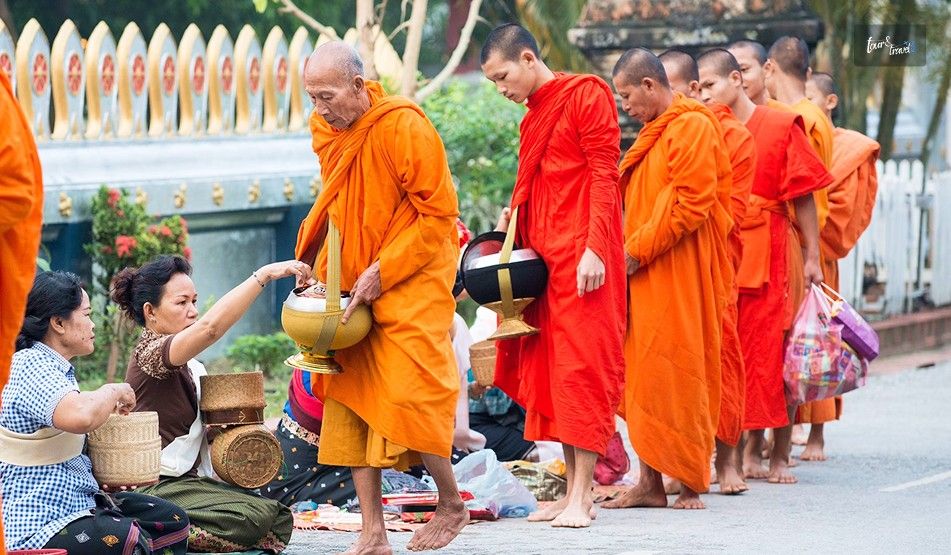
Day 2 • Attend the Alms Giving Ceremony or Tak Bat. 

• Breakfast at a Local Cafe. 

• Visiting the Elephant Conservation Center

• Return to Luang Prabang

• Dinner at a Restaurant With a View of the Nam Khan River 
Day 3 • Attending a Family-Friendly Cooking Class with Children, Helping with the Preparations. 

• Attending Dyeing and Weaving Workshops at Ock Pop Tok Living Crafts Centre.

• Dinner at Utopia Café.
Day 4 • A Visit to Kuang Si Waterfall.

• Exploring the Butterfly Park.

• A Visit to the Free the Bears Rescue Center.

• Shopping at the Night Market 
Day 5 • Visiting the UXO Visitor Center to Learn About Laos’s History and Demining Efforts (Especially Suitable for Children)

• Souvenir Shopping

• Off to the Airport 

What Are The Best Cultural Experiences In Luang Prabang? 

What Are The Best Cultural Experiences In Luang Prabang

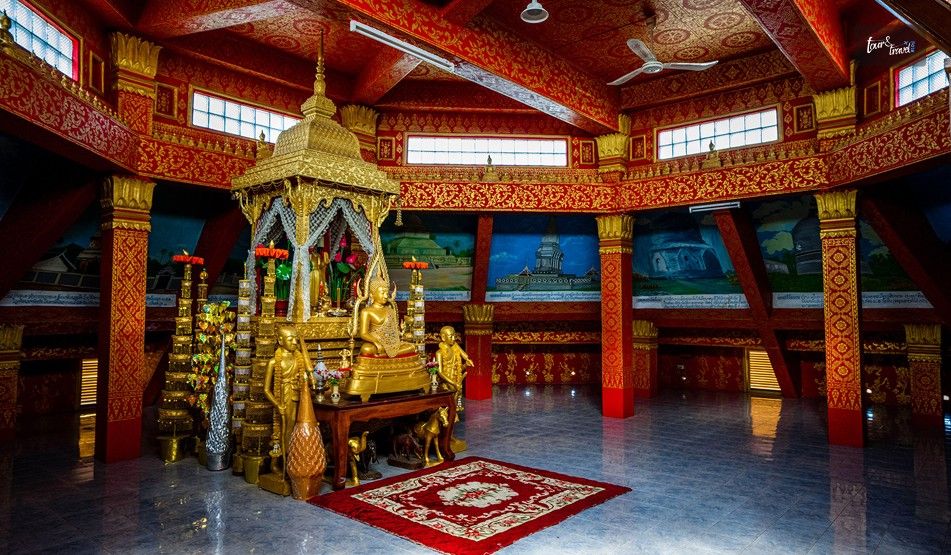
The recent That Chomsi Stupa ceremony at Luang Prabang from 5th to 6th October 2025 has once again highlighted the strong cultural tourism aspect of the city.

Built during the reign of King Anourouth in 1804, this stupa blends history with spirituality.

Today, it also demonstrates the sincerity of Luang Prabang and Laos in preserving heritage.

Moreover, the Chomsi Stupa ceremony emerges as an important landmark here to attract travelers who seek authentic experiences.

You can understand community development and the essence of Buddhism.

So, visiting this Stupa is a unique cultural experience in Luang Prabang.

Another important aspect is the Alms-Giving Ceremony, where monks are offered fresh food for their worldly sustenance.

In addition, for holistic well-being and energy alignment, you can try a traditional Lao Massage.

Also, visit the Ock Pop Tok Living Crafts Centre or attend traditional bamboo weaving and rice farming workshops.

These help us understand the livelihood and the true essence of Luang Prabang.

What Are The Hidden Gems In Luang Prabang? 

What Are The Hidden Gems In Luang Prabang

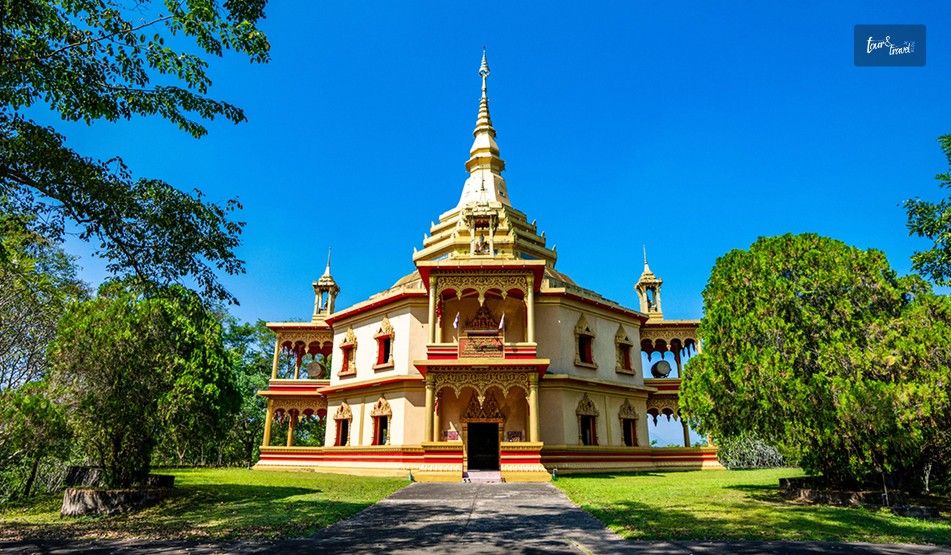
Wat Pa Phon Phao temple on a hill southwest of Luang Prabang is a hidden gem in Luang Prabang.

It is one of the central places for Vipassana meditation.

The single pagoda has an octagonal structure. It has a peaceful ambiance, and it is an ideal place for introspection.

Local Cafes And Art Galleries In Luang Prabang 

Don’t miss a visit to these places if you want to sink into the community vibe and have an excellent cultural understanding. 

1. Saffron Coffee 

Saffron Coffee is one of the best cafes in Luang Prabang, and it is a great contributor to sustainable tourism.

It sources the coffee beans ethically from local farmers. The coffee here is grown organically.

Furthermore, Saffron Coffee is known for its profit-for-purpose policy.

It reinvests its profit to benefit the individual farming family.

2. L’Etranger Books & Tea 

What should I say?

L’Etranger Books & Tea is a cafe, a bookstore, and a community center for reading and exchanging books.

Furthermore, the attic room of L’Etranger Books & Tea hosts a film screening at 7 PM every evening.

It was the city’s first licensed bookshop. 

Located at Pha Tad Ke Botanical Garden, Project Space Gallery is a non-profit multifunction space.

It hosts contemporary art exhibitions and events.

Culinary Tourism In Luang Prabang: A Food And Drink Guide

Some must-try dishes in Luang Prabang are Khao Soi, or Northern Lao noodle soup with tomato and pork.

It is a minced meat salad with herbs and lime, or Laap and Or Lam, or a spicy soup with buffalo meat and eggplant.

Furthermore, grilled meats, coconut pancakes, mango sticky rice, and fruit shakes are popular street foods, and you can enjoy them at the Night Market.

Manda de Laos, Dyen Sabai, and Tamarind are some renowned restaurants in Luang Prabang.

Budget For A Luang Prabang Trip 

Here is a daily cost estimate for a solo trip to Luang Prabang.

Budget Type Daily Cost (USD) Inclusions 
Budget \$25–\$40 • Hostel 
• Street Food 
• Tuk-tuks 
Mid-Range \$50–\$100 • Boutique
• Hotel Restaurants 
• Tours 
Luxury \$150+ • 4–5 Star Hotels 
• Private Guides 
• Fine Dining 

Travel Tips For A Luang Prabang Trip

Travel Tips For A Luang Prabang Trip

Luang Prabang is safe to travel to. However, you can face connectivity issues.

So, you must collect Unitel and Lao Telecom SIMs at the airport. Also, drink bottled water and use mosquito repellent.

Moreover, you must adhere to the sustainability norms and follow local customs for a seamless experience. 

Luang Prabang Itinerary Planner: Frequently Asked Questions (FAQs)

Here are the frequently asked questions and answers about the Luang Prabang Itinerary Planner.

1. How Long Should You Stay In Luang Prabang? 

Three to five days are enough for a cultural exploration in Luang Prabang. However, if you want a deeper cultural experience with nearby day trips and attending cooking, farming, or weaving workshops, plan a vacation of 7 days.

2. Is Mount Phousi Worth It? 

Yes, Mount Phousi is a wonderful destination for a sunrise or sunset hike. Once you reach the top, you will enjoy wonderful views of the city and the surrounding hills.
 
Moreover, the Wat Chom Si Stupa is located at the top of Mount Phousi. It is an important spiritual, historical, and cultural landmark of Luang Prabang.

3. Is Luang Prabang Better Than Vientiane?

Vientiane is the current capital of Laos, and Luang Prabang was the ancient capital of Laos. Today, Vientiane is a more popular destination thanks to better national and international connectivity.
 
However, if you ask me, Vientiane lacks the cultural vibrancy and scenic beauty of Luang Prabang.

Share on Social Media

Sibashree is a travel, culture, and leisure writer who has been writing since the age of 12 and professionally since 2014. With more than a decade of travel writing experience and journeys across India and several parts of the world, she brings a deeply personal and thoughtful perspective to her work. A student of English Literature and Mass Communication, Sibashree has always viewed travel as more than movement — for her, it has been a way of understanding people, cultures, and herself. Her passion for spiritual exploration has also led her to many unusual and meaningful destinations over the years. Outside of writing, Sibashree enjoys watching European cinema, reading about global politics, and reflecting on the stories hidden within everyday places.

Leave a Reply

Your email address will not be published. Required fields are marked *

title-img Related

READ MORE Gal Oya National Park

Gal Oya National Park, Sri Lanka: A Place Where I Saw Elephants From Boats

BY  Sibashree Sep 7, 2026

I visited the Gal Oya National Park in 2022, and after a few months of being back in my country, I got a call from my friend in Sri Lanka.  It was December, and he shared the news published on the Daily Mirror Online, which mentioned the threats of illegal mining to the flora and fauna of the national park.  I felt numb, as this was not the Gal Oya National Park I visited. Even if Sri Lanka has icons such as the Yala National Park, for me Gal Oya offered the most remarkable encounters with elephants.  For the first time, I did a safari from a boat, drifting quietly across open water while a herd of elephants waded between islands ahead of us. There was no engine noise to spook them, no queue of vehicles, just the reservoir, the herd, and the sound of water. It felt more like a secret that Sri Lanka preserves so dearly, not a national park.  Gal Oya National Park At A Glance DetailInformationLocationAmpara District, Eastern Province, Sri LankaEstablished1954AreaApproximately 25,900 HectaresCentrepieceSenanayake Samudraya, the Largest Reservoir in Sri LankaKnown forBoat Safaris and Elephants Swimming between IslandsWildlife32 Recorded Mammal Species, including Elephants, Leopards, and Sloth Bears150+ Bird SpeciesBest time to visitDry Season, Roughly May to SeptemberDistance from ColomboAround 300 KM,  Roughly 6 Hours by Road A Reservoir-Built Park With A History Tied To Irrigation The history of the Gal Oya National Park goes back to 1954. It was built to protect the Senanayake Samudraya. This newly constructed reservoir, the largest in Sri Lanka, was part of a major post-independence irrigation scheme in the dry zone of Sri Lanka.  The scale of the reservoir made my boat ride in the park all the more fascinating. It is just open water with forests around.  So, the jeeps on the dusty tracks are replaced by the boats on the serene water.  The landscape around the reservoir was more varied than I expected from a dry-zone park. Forested Hills! Savannah Grassland! Also, there were rocky outcrops that locals call turtleback formations.  Moreover, low grasslands all sit within the park's boundaries, alongside historical sites like the Digha Vapi Dagoba and the Henebedde cave. Wildlife And The Swimming Elephants The most fascinating experience in Gal Oya was watching wild elephants swimming between the reservoir’s islands.  They were moving in search of fresh grazing as water levels dropped in the dry season.  Beyond elephants, the park has around 32 mammal species, including: Leopards Sloth Bears Grey Langurs Endemic Toque Macaque. Also, the park, though not as fascinating as Bundala, has more than 150 species of birds. I could spot the following ones. Painted Storks Ospreys Endemics like the red-faced Malkoha and Sri Lanka spurfowl. I could also spot crocodiles and water monitors along the reservoir's edges. How To Reach Gal Oya National Park? You can take a drive from Colombo to reach Gal Oya National Park via Ampara. The distance is around 300 km, and the journey takes around 6 hours by road.  However, staying in Ampara Town as the base or finding a lodge close to the park’s boat safari jetty is a more reasonable move.  Also, Gal Oya National Park is a natural inland detour from the east-coast surf town, Arugam Bay, roughly 2 to 2.5 hours away. Again, if you are traveling from Kandy, it is 4-5 hours by road via Mahiyangana. So, Gal Oya is a workable stop on a route heading toward the east coast. Gal Oya Entrance And Boat Safari Costs (2026) On top of the park entrance fee, the boat safari itself is typically arranged and priced separately, usually through your lodge or a licensed operator. Remember that access to the reservoir's boats isn't managed the same way jeep permits are at other parks. Also, the boat safari costs around LKR 6000 to LKR 8000.  CategoryApproximate Cost (2026)Foreign Adult (12+)USD 12Foreign Child (6–12 Years)USD 6Foreign Children under 6 Years FreeSAARC NationalsUSD 10 for AdultsUSD 5 for Children between 6 and 12 YearsFree for Children below 6 YearsLocals Adults: LKR 60Children from 6 to 12 Years: LKR 30Children below 6 Years: FreeStudents: LKR 20Boat SafariLKR 6000-8000 A One-Day Gal Oya Itinerary A day at Gal Oya has a different rhythm from most Sri Lankan national parks because here the safari is on a boat and not a jeep.  Here is a structure that works well if you're based near Ampara or the park's eastern lodges. TimeActivity5:30 - 6:30 AMEarly transfer to the boat jetty on Senanayake Samudraya6:30 - 9:30 AMMorning boat safari.It is the best window for elephant sightings near the shoreline. 9:30 - 10:30 AMReturn to lodge for breakfast.10:30 AM - 12:30 PMOptional short trek or visit to the Henebedde cave/Digha Vapi Dagoba area.12:30 - 2:30 PMLunch and rest during the hottest part of the day.4:00 - 6:30 PMEvening boat safari for a second wildlife window and sunset over the reservoir. What Are The Practical Tips For Visiting The Gal Oya National Park?  Boats and slots are more limited than jeep availability at bigger parks. Bring a hat, sunscreen, and a light waterproof layer. Pack a zoom lens or good binoculars as elephant sightings are often across open water rather than at close range on a jeep track. Stay two nights if you can, so you get both a morning and an evening boat safari rather than just one. Combine with Arugam Bay or Ampara for a fuller east-coast itinerary. What Is The Best Time To Visit Gal Oya National Park? May to September, or the dry season, is the best time to visit Gal Oya National Park.  In the dry season, the water level of the reservoir drops. So, all the animals, especially the elephants, concentrate near the remaining islands and water.  Thus, the sight of swimming elephants is more common in this national park than anywhere else in Sri Lanka.  This season is also ideal for birdwatching in Sri Lanka, as migratory and resident species settle around the shrinking waterline.

READ MORE things to do in sapporo

What Are The Unique Things To Do In Sapporo? Exploring The Capital Of Hokkaido  

BY  Sibashree Mar 31, 2026

If you want to explore offbeat Japan, you can surely visit Sapporo, the capital of Hokkaido Island.   Hokkaido Island,anyway, teaches the art of slow living and slow traveling.   The scenic beauty here is amazing, the winters are snowy, and the food and beer here are amazing.   Also, it is an amazing year-round destination, and the things to do in Sapporo are as diverse as they can be.   And here are the details. However, before that, let us talk about the best time to visit Sapporo.  What Is The Best Time To Visit Sapporo?   As I have mentioned, you can visit Sapporo throughout the year. However, December to February is the best time to plan a visit.   Especially, February is the month of the winter festival in Sapporo.   Moreover, April to May is the ideal time if you want to experience the Cherry Bloosm Season from the Hokkaido Shrine and Maruyama Park.   Also, the warm and humid summer months are ideal for enjoying the “beer garden events.”   In addition, from September to November, or the autumn months, are great for seeing the fall foliage, hiking, and attending the food festivals.   What Are The Most Unique Things To Do In Sapporo?   More than ticking the bucket list, in Sapporo, you need to soak in the laid-back vibe.   It is way less crowded than Osaka and Tokyo, and despite that, it has an important role to play in the tourism industry of the country.   That is why many people travel from Tokyo to Hokkaido.   1. Visiting The Parks And Gardens  As a nature lover since forever and daily walking the streets and parks of Sapporo, I have learned that Sapporo has lots of green spaces where you can enjoy nature.  The parks of Sapporo are the city's heart.   Odori Park is my usual starting point in the morning when I first walk.   This park is located in the center of downtown and is an ideal and convenient place to take a refreshing morning walk before starting your day.   On days when I want to be more active, I cycle, jog, or photograph all the amazing trees and flowers at Moerenuma Park. It is absolutely stunning how vast the area is!  You will probably find me at Maruyama Park, located next to Hokkaido Shrine, during the spring and fall months.   It’s an incredible place to see the cherry blossoms in full bloom, and it’s usually very pretty to see the fall leaves change color from green to red.   During the wintertime, it becomes a wonderful family-oriented ski resort that I simply love!  For a bit of a deeper dive, I love visiting the Hokkaido University Botanical Gardens. It’s a peaceful retreat where I can admire rare plants and learn about the indigenous Ainu culture.  2. Exploring The Galleries And Museums  Upon arriving in Sapporo, I did not take long to figure out that this is a city that has beautifully integrated its history with modernity, which is a masterclass.   I spent the first day of my trip exploring the history of the island of Hokkaido by visiting the Hokkaido Museum.  Then, I went to the Historical Village, which showed how the early infrastructure and primitive architecture were examples of the area's strength.   The Hokkaido University Museum is also a majestic place, with its enormous collection of extensive academic research and archaeological artifacts through the ages.  Of course, I couldn't resist a detour to the Sapporo Beer Museum. Learning the history of Japan’s iconic brew made that final tasting session feel well-earned.  As a fan of art, I was spoiled for choice with several locations from which I could pick my favorites.   The JR Tower Art Gallery has an impressive array of artwork, and at the Sapporo Art Park, there are some unbelievably large sculptures sitting throughout the grounds.   I was amazed at how much creativity and energy could be found in the city of Sapporo.   While looking at all the galleries, you can also plan a trip to Uji, located approximately 500 km south.   A visit to Japan would not be complete without enjoying a cup of matcha at this city's matcha capital.  3. Visiting The Shrines And Temples  Kyoto may have the most amazing shrines, but Sapporo also has some beautiful ones.   The Hookaido Shrine is the most popular among them, and you will find it just next to the Maruyama Park.   Furthermore, the Sapporo Suitengu Shrine is another place where families and pregnant women visit for a healthy baby.  Moreover, if you are a seeker and want some spiritual guidance, Joganji Temple is your place. It has the most meditative environment.  4.  Exploring The Historical Landmarks Of Sapporo  Sapporo has many historical places to visit, and you can start with the “Former Hokkaido Government Office.”   It has beautiful gardens, and with its insightful exhibitions, it offers a deep understanding of the local history.   The next place you can visit is the Sapporo TV Tower. It is an important landmark for broadcasting and tourism.   Furthermore, from the TV Tower, you can enjoy an amazing view of Odori Park and its surroundings.   The Clock Tower is another important landmark in Sapporo. It has been standing there since 1878.   However, for me, the most iconic historical landmark in the city was the Hoheikan Guest House.   This 1880 guest house in Nakajima Park had many important guests, including the royal family and important foreign guests.   In addition, for a culturally immersive experience, you can explore the Hokkaido historical village. It is like an open-air museum with distinct architecture, buildings, and Japanese townscapes.  5.  Souvenir Shopping   It’s a sin to visit Sapporo and not do some serious shopping.   Furthermore, souvenir shopping is one of the best things to do in Sapporo because of the diversity of stuff you can procure.   Firstly, the sweets here are amazing. You must try Marusei butter sandwiches and Royce chocolates.   Also, you will find skincare products made of horse oil.   In addition, you will love local crafts such as Ainu crafts and Otaru glassware.   Moreover, the best places for shopping in Sapporo are “Ario Sapporo Mall,” “Apia Mall,” “Sapporo Stellar Place Mall,” and “Tanukikoji Shopping Street.” 

READ MORE things to do in galle

What Are The Things To Do In Galle Fort, Sri Lanka? Exploring A UNESCO Heritage Site

BY  Sibashree Mar 24, 2026

Galle has been my ideal dreamy, sepia-toned travel destination located on the southwestern coast of Sri Lanka.  Moreover, the city’s stunningly beautiful old fortified peninsula reaches defiantly out into the Indian Ocean and boasts many crumbling colonial-style buildings, narrow cobblestone streets, and swaying palm trees.  However, the true magic of Galle comes from taking it slowly.  Hi, in today’s blog, I will talk about the things to do in Galle Fort. However, I will begin with why a visit to the Galle Fort is worth it and how to get there.  Why Visit Galle Fort? A UNESCO World Heritage Site And The Fortress That Defied Time “Founded in the 16th century by the Portuguese, Galle reached the height of its development in the 18th century, before the arrival of the British.  It is the best example of a fortified city built by Europeans in South and South-East Asia, showing the interaction between European architectural styles and South Asian traditions.” • UNESCO World Heritage Convention.  The trading post was once impenetrable, and the rampart walls kept the invaders at bay.  However, centuries later, during the 2004 Tsunami, the same stone walls that stood against cannons also protected the people from the ocean.  Thus, the Galle Fort remained intact even though the surrounding coastline was devastated. Today, it stands as a UNESCO World Heritage Site for being a unique example of a fortified city.  How To Reach The Galle Fort? You can easily reach the Galle Fort from Colombo or down the coast.  From Colombo  You can take a train from Colombo Fort, and after a three-hour journey and amazing ocean views, you will reach Galle.  However, currently, this route is being reconstructed. So, you can take a Highway AC bus from the Makumbura Station.  Furthermore, it is a 2-hour journey through the Expressway.  From Mirissa Or Weligama If you’re already beach-hopping the south coast, you can just hop on any local bus headed toward Matara or Galle.  It’s cheap, frequent, and gives you a real taste of local life, and that’s amazing as a follower of TheLowDownUnder Travel philosophy.  Also, from my days in Jaffna to the things to do in Kandy, I have always ditched comfort and the obvious for a more authentic experience.  What Are The Things To Do In Galle Fort, Sri Lanka?  When talking about the things to do in Galle Fort, you have to think beyond the tourist checklist.  Furthermore, Galle is a place of contrasts! You have the rugged, salt-sprayed stone of the ramparts on one hand, and on the other hand, you have the most polished boutique shops.  So, Galle is beyond your usual Instagram photo op.  And one of the best things to do in Galle is to understand how the fortress and the neighborhood have survived empires and natural disasters.  Moreover, in Galle, you become a part of the history as you watch the sunset from an ancient bastion or sip cold beer at a wine bar on a cobblestone street.  Also, you will see an extension of all these in my detailed account of two days in Galle Fort.  Day 1: Getting Lost In The Living Museum Walks, exploring the architecture, culture, and the much hyped sunset experience! These were the things to do in Galle Fort on day one.  Morning: The Rampart Walk Walking is the best way to begin your exploration of Galle Fort. It is small and, therefore, a great destination for pedestrians.  In the morning, I climbed to the top of the stone ramparts and walked the entire way around the edge of the Fort, obtaining a 360-degree view of Galle. I saw the sparkling, turquoise ocean to one side and the red tiled roofs of the original buildings of the town on the other. On your walking tour, look for the famous Galle Clock Tower and the historic Galle Lighthouse, which is probably the most photographed place in all of Sri Lanka.  The whitewashed lighthouse is stunning against the clear blue sky, but I found that the late afternoon light gives it that soft, golden color that makes the palm tree shadows cast perfectly across the grass. Afternoon: Culture And Architecture After you’ve finished exploring the upper level of the walls, it’s time to explore the narrow alleyways of the city.  Throughout the streets, you are going to notice something extremely wonderful. You will see the cultural and ethnic diversity and the same inclusive culture of Sri Lanka, prominent through the iconic Ambuluwawa Tower in Colombo.   In just a matter of blocks, I was able to visit the Dutch Reform Church, All Saints Anglican Church, Meeran Mosque, and Sri Sudharmalaya Buddhist Temple.  All these places serve as a testament to the many different people who have influenced the development of Sri Lanka over many hundreds of years. If the heat of the sun becomes unbearable, I recommend that you check out either the Historical Mansion Museum or the Maritime Museum.  Both of these museums are in beautifully restored colonial structures and provide visitors with great artifacts dating back to Sri Lanka’s colonial period. Evening: The Sunset Ritual When the sun is going down, I suggest that you make your way to the western walls of the fort.  At Flag Rock Bastion, you will find the locals performing their “cliff jumping” tourism attraction.  You will have the opportunity to see how far they will go into the crashing waves.  If you would rather have a quieter spot to watch the sunset, I would recommend that you go to Triton Bastion.  I spent an hour there on the grassy ramparts watching as the sky slowly burned with bright oranges. What a way to see Mother Nature's fireworks show. Day 2: Boutiques, Buffets, And Beaches Day 2 was more relaxed as I shopped, gorged on grand feasts, and explored the beaches.  Morning: The Shopping Mecca Galle is now Sri Lanka's shopping capital. Pedlar Street is the epicenter of the boutique shops, from where you can collect elegant souvenirs.  A few of my personal favorites are in the table below.  Places to Visit for ShoppingThings to BuyStick No BillsVintage-Style PostersThe Tea Room by Evergreen GroupBuy Tea in BulkOld Dutch HospitalThis former colonial hospital is now a chic shopping and dining precinct. It’s the perfect place to grab a coffee and browse. Lunch: A Local Feast After the spicy food in Jaffna, the food in Gelle was comforting. So, trying the Coconut Sambal is one of the best things to do in Galle.  You will get the curries with chicken and vegan-friendly options here. Also, to beat the midday Sun, have some homemade ginger beer or treat yourself to a scoop at Isle of Gelato.  Moreover, don’t forget to try the cashew caramel at Isle of Gelato.  Afternoon: Beyond The Walls As the Sun starts getting softer, you can explore the surrounding coast. Also, if you want to extend your coastal hunt, head to Dewata Beach.  Here, you will find many beginners and professionals surfing the waves.  Furthermore, if you want to just relax, take a tuk-tuk ride to the Jungle Beach in Unawatuna. It is a small sandy cove with lush greenery.