So, to clear the air of confusion, I thought of sharing some Kotor Montenegro transport tips.
These tips will give you a clear picture of how to move around the city on a budget.
What Are The Best Ways To Move Around Kotor? A Quick Summary of The Transportation Tips
The best modes of transportation in and around Kotor will depend on how much you are ready to spend.
Also, the kind of experience offered by each mode of transportation is very different.
Here is a quick summary of the modes of transportation in Kotor, Montenegro.
Modes of Transportation in Kotor
Best For
Average Expense
Blue Line Bus
Budget Travelers
Around $4-$51 based on the route
Red Taxi & Transfers
Comfort and Speed
$25-$40
Car Rental & Scooter
Flexibility, Speed, and Comfort
$45-$60 a day for small and medium cars and $15-$30 a day for bikes.
You will get the car and scooter rental services offering the best deal if you are staying in a homestay or hostel in Montenegro.
These hostels are like social hubs where tourists, locals, and tourist service providers meet to celebrate the authentic charm and history of Kotor while doing business.
Why Are Budget Transportation Tips So Crucial For Travelers To Montenegro?
Though the tourist demographics in Kotor, Montenegro, are a mixed bag, most travelers in Montenegro are young explorers between the ages of 20 and 30.
The reason?
Take any major Western European country, including Germany, Spain, Portugal, or Italy!
Exploring the historic landmarks of these countries is challenging for young students and professionals due to budget constraints and the impact of overtourism.
The overtourism issue is so big in these countries that there is a social backlash in cities such as Barcelona, Naples, and Lisbon.
Kotor, on the other hand, is a sustainable tourism gem after a successful sustainable assessment by the Global Sustainable Tourism Council (GSTC).
Also, with hostels and cheap eating places, it really attracts travelers who want to experience history and culture but at a lower price and in a less crowded setup.
I was talking to Sohini, a 23-year-old digital marketing professional who works as a digital nomad.
She said,
“I have heard so much about Kotor, Montenegro, that I just had to go and visit this place.
I did not want to spend a lot on expensive homestays there.
A friend of mine suggested staying in a hostel, as well as all the means of transportation.”
The words of Sohini echo what young travelers feel like or look for when traveling to Kotor on a budget.
And as a young professional or a digital nomad, you will need the transportation tips that align with your budget and backpacking itinerary.
Easy Transportation In Kotor: Making The Travel Scenario More Inclusive
Kotor is not just a dream destination for budget-friendly travelers.
At a cafe in the Old Town, I met Suzanne and Richard, who were traveling with their 7-year-old son with autism.
I was curious and maybe borderline intrusive, as a friend of mine has an autistic daughter, and I knew how traveling was difficult for her.
I asked them, “Why Kotor?” Suzanne said,
“The cats! They have been absolutely delightful, and they offered the first sense of familiarity to my son in Kotor.
He was instantly at ease with them.
Also, moving around the Old Town is so straightforward for the children on the spectrum.
And when visiting the outskirts, we took golf carts.
So, he never had to stay cooped up in a bus or car for long.
That was the highlight for us while exploring Kotor.”
Again, Kotor’s walkability and compactness play a major role in making it suitable for autism-friendly travelers.
Also, thanks to the Blue Line bus services and Red Taxis, traveling in and around Kotor requires fewer transitions.
How To Get Around Kotor, Montenegro On A Budget? A Detailed Guide
I had a slimmer face and stomach when I came back from Kotor, and it’s because I really walked while I was there.
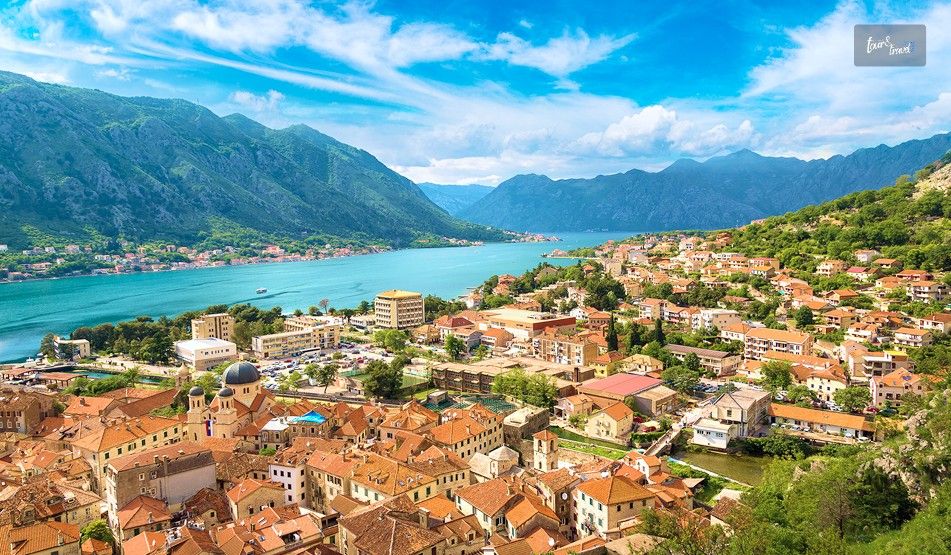
Exploring the medieval lanes, ancient walls, and the 12th-century churches, Kotor was all about a delightful time travel.
Nevertheless, with the Blue Line Bus and various car and bike rental services across the city, Kotor has a well-managed public and private transportation system.
Here are the details.
1. Walking The Old Town (Stari Grad)
Walking along the pedestrian-only historic squares and medieval cobblestone streets is the best way to experience Kotor.
This is an experience everyone loves!
Be it an introvert who just wants to be by themselves and introspect, or the young and curious minds who want to explore new places and people!
After exploring the Old Town, you can also take a walk or cycle along the flat promenades, taking you to the waterfront.
Walk or cycle and stop by to interact with the cats, the guardians of the city, or have the best meal at a quaint coffee shop.
Life is beautiful in Kotor when you walk and discover.
2. Using The Blue Line Bus System
When traveling to Kotor on a budget, the smartest method is to buy the Blue Line Hop-on Hop-off tourist bus service.
The pass will cost around 25 Euros for a day, and it departs from the Central Bus Station of Kotor.
The bus route is Kotor, Risan, Perast, Bajova Kula, and Kotor.
However, you can also take the regular intercity buses to Podgorica, Budva, Belgrade, and Herceg Novi.
Also, you can travel to areas such as Dobrota, Tivat, and Muo within 20 to 30 minutes and for a ticket price of 1 to 3 Euros.
3. Taxis And Private Transfers In Kotor
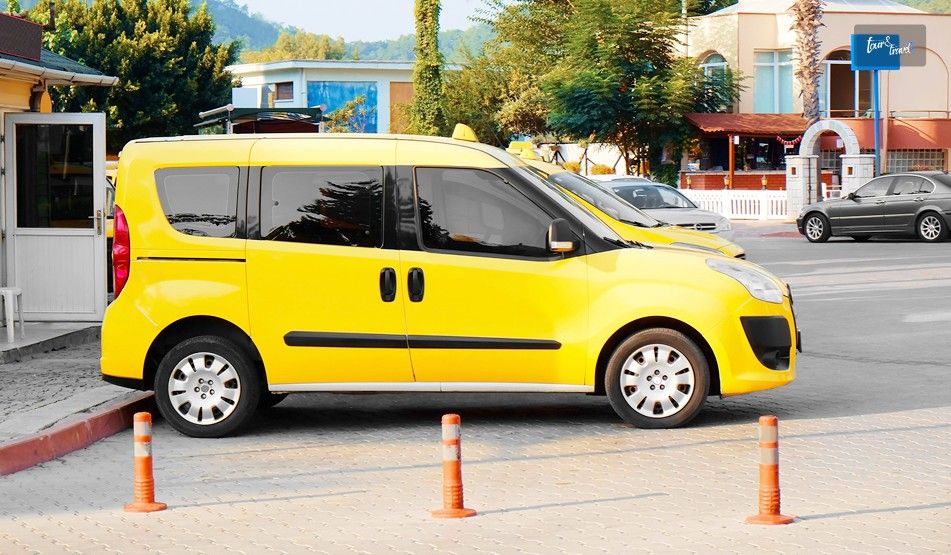
Taxis and private transfers are easily available in Kotor, and most vehicles operate with a metered fare or a standard tariff rate.
Red Taxi Kotor and GarGo Taxi Kotor are some trusted taxi services in the city.
You will easily find the taxis from the Lower Station of the spectacular Kotor-Lovćen Cable Car or the DUB Station.
The charges will be around $45-$60 a day, or based on the destination, it can vary from $15-45.
4. Kotor Water Taxis: Tours Vs. Commute
Kotor water taxis are not public transport services.
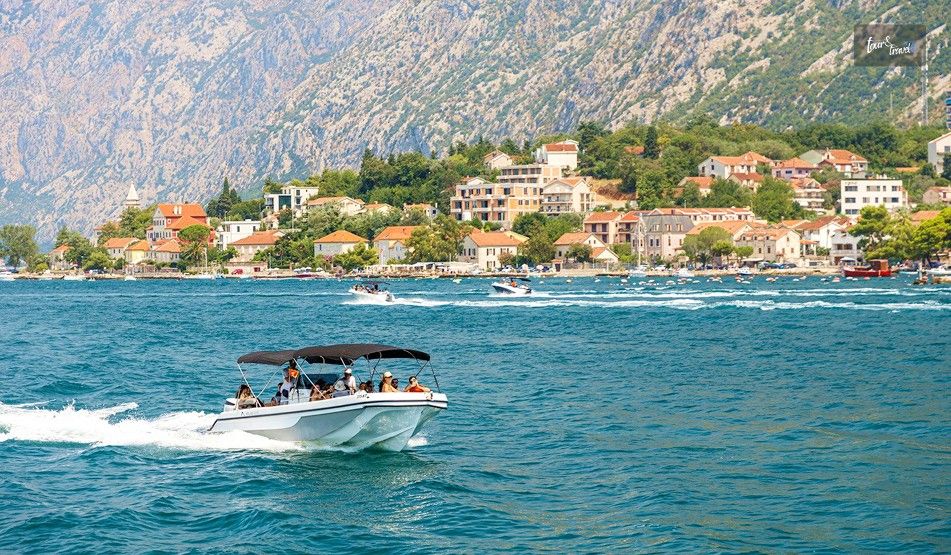
These are private tourist services, taking you to the Blue Cave of Montenegro, Perast Island.
Montenegro Water Tours and Rijo Tours are popular water taxi services in Montenegro.
Rijo Tour offers speedboat tours to the Blue Cave and Our Lady of the Rock at 40 and 20 Euros, respectively.
You can even book a private boat tour for 100 Euros per hour.
Montenegro Water Tours is a little expensive, charging 150 to 250 Euros for its most popular tours.
How To Reach Kotor From The Nearby Airports?
Tivat Airport, Podgorica Airport, and Dubrovnik Airport in Croatia are airports near Kotor.
Know how to travel to Kotor from these airports.
1. From Tivat Airport
Tivat Airport is the closest to Kotor Old Town.
If you want to explore the scenic view of Kotor Bay from the water and avoid the traffic, go for a private water taxi service.
However, the best way to travel from the airport to Kotor is to take a private taxi.
Also, if you are a budget traveler, you can take a walk to the Tivat Bus Station and then take a Blue Line bus from there.
2. From Podgorica Airport
The Podgorica Airport is located at a distance of 79 km from Kotor.
The travel time is close to 2 hours.
If budget is not a constraint and you want to experience the highest comfort, you can take a taxi from Podgorica Airport’s Arrival Hall.
The metered taxi fare from Podgorica Airport will be around 85 Euros.
There is no direct bus service from Podgorica.
You will have to reach the Podgorica Central Bus Station at Golootočkih žrtava Square, and from there, you will get a bus to Kotor.
You can book your bus ticket by calling busticket4.me at Golootočkih žrtava Square at +382 (0)20 633 010.
There is also a storage service near the bus station where you can keep your luggage for 1 Euro.
The first bus for Kotor from Podgorica Bus Station starts at 12:30 AM and the last one for the day departs at 10:25 PM.
The bus ticket price will be between 7 and 9.5 Euros.
3. Dubrovnik In Croatia
There are four ways to travel from the Dubrovnik Airport in Croatia to Kotor, Montenegro.
Bus from Dubrovnik Central Station to Kotor
Private Transfer
Ferry Ride
Car Rental
However, for a budget traveler, the bus ride is a more suitable option.
You can take the airport shuttle or the Platanus service to reach the Central Bus Station, from where buses to Kotor are available.
You can check the options on flixbus.com.
One bus starts at 11 AM from Dubrovnik Central Bus Station and reaches Kotor at 1:10 PM.
The next bus departs at 5:30 PM and reaches Kotor at 7:30 PM. The ticket price is 32 Euros.
However, keep 1 hour or so as a buffer, as passport checking at the border of Debeli Brijeg can take up to one hour.
Expert Kotor Montenegro Transportation Tips: The Secret Hacks You Must Know
This is where I will talk about how to travel like a local around Kotor.
Follow these hacks to avoid missing a Blue Line Bus, get rid of the parking worry, and make the overall transportation experience easier.
1. The “Yellow Paint” Bus Stop Rule
Are you looking for signs or vertical poles to catch a “Blue Line” bus from a stop?
You will inevitably miss the bus. Kotor is different from other European cities in this matter.
To keep the visual appeal of the city intact, Kotor has the word “BUS” painted on the asphalt.
It is the only indication that the bus will stop here.
You will have to stand at the mark and wave your hands so that the bus stops to pick you up.
2. Use The Lepetane-Kamenari Pedestrian Loophole
You can save 40 kms of driving if you are crossing the narrow strait at Verige.
Furthermore, when crossing the bay, the crossing charge for a car will be $5.
However, if you are crossing as a pedestrian, there will be no charge.
I used this hack, and our hostel owner suggested it to me.
I took a bus to Lepetane and boarded the ferry for free. Then, upon reaching the Kamenari side, I took a bus to Herceg Novi.
3. Red Taxi And Red Taxi Apps Are Safer And Cheaper Than Regular Taxis
Red Taxi is the most reliable mode of transportation in Kotor.
The metering system is the most accurate.
You can contact Red Taxi at +382 67 319 714. Also, you can install the Viber app on your phone.
If you are travelling in a Red Taxi or a Viber Cab, you will have to pay around $15-$40, based on the distance you are traveling.
4. Know About The “Kamelija” Parking Validation
Parking anywhere in and near the Old Town of Kotor is tricky and expensive.
So, if you are traveling in a private or rented car/bike, you will need a parking hack to save money.
You can park your car at the Kamelija Shopping Centre parking lot.
If you are shopping for $5 or more, you will get free parking. Keep the receipts handy to show as proof.
You will have to validate the receipt at the information desk before you make an exit.
5. Sunday Schedules For The Blue Line Buses Are Irregular
Blue Line buses are the saviors when you are on a budget and traveling in Kotor.
However, Sundays are not the best if you want to travel by bus.
The frequency becomes lower, and the buses running on hourly intervals can run every two to three hours.
So, if you are traveling in Kotor on a Sunday evening, you need to look for an alternative, like a taxi or a bike.
6. Remember That There Is No Direct Bus To The Podgorica Airport
Many buses run between Podgorica and Kotor.
However, only a local knows that the buses do not take you to the airport.
You can go to the City Center or the Bus Station.
From the bus station, you will have to take a taxi, which will cost around $15-16, and the journey will take around 45 minutes.
7. Be Extra Careful During The Tivat Airport “Highway Walk”
The Tivat Airport is the closest to Kotor. The nearby bus station is just 800 meters away.
For a traveler in their twenties, walking this distance seems like a breeze.
However, being a budget-friendly traveler does not mean that you have to compromise on your safety.
Here, you will have to walk along the Adriatic Highway, and there is no designated sidewalk.
So, walking along this way with luggage, especially in the evening, can be dangerous.
It is okay to spend $5-$6 on the taxi ride from the Kotor Airport to the Kotor Bus Station.
8. Remember This Hack To Avoid The Hiked Fortress Wall Fee
You know, in 2026, Kotor is probably the most unexpected European travel destination to be on everyone’s bucket list.
Also, recently, it has been getting a lot of attention from young and budget travelers in the USA and the UK.
It happened after the US News called it an underrated destination, and British Airways made an announcement about starting new flights to Tivat in 2026.
Now, Kotor, a postcard-perfect fjord, will make your camera drop, and the “Ladder of Kotor” is one of the most interesting features of Kotor.
This zigzag hiking route with 70 switchbacks takes you to Cetinje and Njegusi.
This route, built by the Austrians, was an important trade and military route.
It is just behind the Kotor Old Town and near the River Gate exit, which you can access via Tabačina Street.
However, only locals know that it is the trusted alternative route to reach San Giovanni Fortress.
After the recent hike, the entry fee to the San Giovanni fortress is 15 Euros.
So, now you know how to explore the fortress walls for free!
The route is moderately challenging with its steepness and loose rocks, and climbing up and down the route takes around 1.5 to 2 hours.
After ascending for 20-30 minutes, you will find the famous “Window” through which you can get into the fortress.
I know it’s not right, but many locals do it.
Updates About The Ladder Of Kotor Route
The famous “Window,” the access point to the fortress from the Ladder of Kotor, has been blocked.
The authorities were always against it, but this time, it has finally been blocked.
So, the Ladder of Kotor will not give you access to the fortress.
You can choose a free hike along the route for the best views of the Kotor Bay and the fortress.
Also, on this route, I tasted the best cured ham at a family-run smokehouse.
I had the ham with honey, cheese, and rakija.
9. The Perast “Upper Road” Bus Trap Is A Nightmare
Following the “Bus” sign in yellow is a task when taking a Blue Line bus.
The traffic on the Perast waterfront also makes it difficult to catch a bus.
To avoid the traffic, the bus drivers often stick to the upper highway only and skip the waterfront.
So, if you are standing by the waterfront and waiting for a bus that never arrives, you need to run up the stairs to the main highway stop.
You will get the bus from there.
10. Luggage Storage Is Old School
You will not get a digital locker for storing your luggage in Kotor.
However, there is a cloakroom near the Kotor Bus Station.
This garderobe or cloakroom service allows you to keep your bags at a charge of 2-3 Euros per bag.
You will have to pay the charges in cash.
However, in the peak season, the cloakroom can get full.
Then, check the House 44 Seafront Apartments in Muo for your luggage storage.
Also, some nearby hostels offer similar services.
Kotor Montenegro Transportation Tips: Frequently Asked Questions (FAQs)
Here are the frequently asked questions and answers about the Kotor Montenegro transport tips.
1. Is There Uber Or Lyft In Kotor?
No, Uber, Lyft, or any other international app-based cab service does not operate in Kotor, Montenegro.
You have to rely on Red Taxi or local cab services.
Furthermore, the Blue Line bus service is another trusted mode of transportation in Kotor.
2. How Much Is The Bus From Kotor To Perast?
Perast, a small coastal town to the north, is a popular day trip destination from Kotor.
The distance between Kotor and Perast is around 15 km, and a Blue Line bus ticket will cost 1.5€.
Children below 6 years can travel for free on this Blue Line Bus route.
The travel time is around 35-40 minutes in ideal traffic conditions.
The first bus, the Blue Line, departs from Kotor to Perast at 5:18 AM, and the last bus departs at 11:18 AM.
From Perast to Kotor, the first bus departs at 6:29 AM, and the last bus departs at 10:34 PM.
3. Can I Drive Inside Kotor Old Town?
No, you cannot drive inside Kotor Old Town.
It is a pedestrian-only area, and you have to trust your feet to take you through the medieval cobblestone streets.
You must park your car or bike outside the city walls, and from there you will have to walk.
However, finding a free and safe parking spot near the city walls can be a challenge.
4. How Do I Pay For The Blue Line Bus?
You can pay for the Blue Line Bus rides with cash and small coins.
Keep the ticket price, around 1 to 2 Euros, handy.
The drivers usually don’t have change for the 20 or 50 Euro notes.
You can buy the ticket immediately after boarding the bus.
However, make sure that the bus goes to your destination.
5. What Is The Main Bus Station In Kotor?
Kotor Main Bus Station, or Autobuska stanica Kotor in the Škaljari neighborhood, is the main bus station in Kotor.
You can reach the bus station after a walk of just 5 minutes from the Kotor Old Town.
From this bus stop, you will get domestic buses to Tivat, Budva, and Podgorica.
You can even get international buses like the ones to Albania from Kotor Main Bus Station.
6. Is The Blue Line Bus Reliable?
The Blue Line bus service in Kotor is trusted for moving in and around Kotor Bay on a budget.
It also offers transfer services to Tivat and Perast.
However, the summer heat and traffic on the Kotor roads often cause delays in these bus services.
These buses can get late by 30 minutes or so.
Also, due to cheap ticket prices, the buses often get overcrowded, and the ACs in these buses may not always work.
So, the Blue Line Bus Service is reliable for its affordability and scenic journey to Perast.
However, it is not so dependable regarding timeliness and comfort.
In fact, the digital display of these Blue Line Buses often does not work.
7. What Is The Best Taxi Company In Kotor?
Red Taxi is probably the most popular private taxi company in Kotor.
Djir Taxi and Orahovic Taxi are other trusted taxi companies in Kotor.
Furthermore, you can use the MonteGO app to book taxis for Kotor and other cities in Montenegro.
Irrespective of the service or app you use, make sure that the taxi only charges the metered fare.
Also, carry small coins and cash to pay the taxi driver.
8. Can I Rent A Scooter In Kotor?
Yes, you can rent a scooter or bike in Kotor.
These scooters and bikes are the best modes of transport to beat the summer traffic of Kotor.
These are also great for enjoying flexibility while moving in and around the city on a shoestring budget.
You will get scooters and bikes ranging from 50 to 650 CC from local companies such as Boka Rent-a-Scooter and Step Up Scooter.
Motoroads.com is an online platform from which you can rent a moped.
The average cost of renting a bike is around $15-30 per day.
However, make sure that you have a valid driver’s license, especially if you are renting a gas-powered bike.
9. Is There A Water Taxi From Kotor To Tivat Airport?
Yes, you will get a water taxi service from Kotor to Tivat Airport.
Montenegro Water Taxi (MWT RIBS) offers this private transfer service in RIB boats.
Remember that it is not a public ferry service, and it would cost more, around 30 to 50 Euros.
It is ideal for a touristy experience through a scenic route and to avoid the dense traffic on the road.
However, taking a bus or a taxi service to Tivat Airport is the most budget-friendly way.
Remember that the bus only goes to the Tivat Bus Station, and from there it is around an 800-meter walk to the airport.
So, despite a cheap ticket price (around 2-5 Euros), it may not be the best choice.
Take a private taxi instead and reach the Tivat Airport from Kotor within 10 minutes at a cost of around 5 Euros.
10. How Do I Cross The Border From Dubrovnik To Kotor?
You have to cross the border at Debeli Brijeg or Karasovići to reach Kotor from Dubrovnik.
You can take a bus from the Gruž bus station.
However, you have to book it in advance as there is always a rush, and the journey takes around 3 hours.
Tickets are available on platforms such as BusTicket4.me and from the Dubrovnik main station.
Also, remember that Montenegro is not a Schengen country. So, there will be stringent passport checks at the border.
As a result, the travel time will be around 4 hours or more during the peak season.
FlixBus, Blue Line, and Croatia Bus run buses on this route, and the ticket price will be between $ 30 and $ 40 based on the distance you travel.
You can even take a car rental or drive a car through E80/M2 to Debeli Brijeg and cross it to reach Kotor.
The charge will be around $150 for the rental.
If there is heavy traffic on the route, you can choose the smaller Vitaljina crossing.
Start early so that you get a free parking space near Tanjga Grill or the city walls.
Sibashree is a travel, culture, and leisure writer who has been writing since the age of 12 and professionally since 2014. With more than a decade of travel writing experience and journeys across India and several parts of the world, she brings a deeply personal and thoughtful perspective to her work. A student of English Literature and Mass Communication, Sibashree has always viewed travel as more than movement — for her, it has been a way of understanding people, cultures, and herself. Her passion for spiritual exploration has also led her to many unusual and meaningful destinations over the years. Outside of writing, Sibashree enjoys watching European cinema, reading about global politics, and reflecting on the stories hidden within everyday places.
The Las Vegas Strip is undoubtedly the most evocative tourist location. After all, it's the only location on Earth where you can easily stroll from your accommodation to the Eiffel Tower, Lago di Como, and an Egyptian pyramid.
However, your first task would be to find the best hotels in Vegas, a safe accommodation to make the trip more memorable.
Of course, a lot of this started out as schtick, but a new era of hospitality in Las Vegas has been sparked by the rush to accommodate a visitor base that is becoming more and more well-traveled and cosmopolitan.
These days, the resorts lining this three-mile stretch of the city offer some of the most affordable luxury lodging options available anywhere in the world.
For example, a hotel that's perfect for you and the kids might not be the best choice for a romantic weekend away for two. Our list of the best hotels in Las Vegas offers a variety of travel experiences.
The Wynn Las Vegas (and its sister resort Encore) is a must-visit for anyone seeking an opulent, five-star experience. These are the best hotels in Vegas for your trip in 2023, regardless of what's on your itinerary.
Best Hotels In Vegas
If you're looking for a resort with an abundance of amenities (think cutting-edge spas and high-tech features), the Aria Resort will not disappoint.
Maybe you're searching for a place to stay right on the Strip, a resort that welcomes families and has lots of pools, or a cozy place to crash during your upcoming business trip.
Here are some of the best hotels in Vegas for your pure lodging pleasure.
Encore At Wynn Las Vegas
Although it's Wynn Las Vegas' sister resort, Encore has earned a stellar reputation of its own.
It offers opulent amenities, including a pool surrounded by cabanas and breathtaking views from floor-to-ceiling windows.
Dubbed one of the best hotels in Vegas, its fine lodgings are perfect for individuals who appreciate the finer things in life.
Perhaps Encore's bar-only nightlife scene sets it apart most. Regular visitors to the XS Nightclub include The Chainsmokers, Calvin Harris, and Diplo, among other well-known DJs.
Dance music often plays at Encore Beach Club as well, starting in the afternoon and running late into the evening.
All it takes for a genuinely remarkable, rejuvenating experience is to enter the Spa at Encore, an exotic hideaway that offers services like the couples-only Encore Escape and the Polynesian-inspired Nalu Body Ritual.
If you're in the mood for a classy meal, consider the Italian restaurant Sinatra, which honors Ol' Blue Eyes (complete with the crooner's Academy Award, of course).
Pan-Asian restaurant Wazuzu and farm-fresh restaurant Jardin are two low-key options. Both serve food in a breezy conservatory setting.
Wynn Las Vegas
With its sun-dappled atrium gardens, floral mosaic floors, private lakes and waterfalls, and the Strip's only golf course—a par 70 championship course created by Tom Fazio—the luxurious Wynn completely rewrote the idea of a resort casino when it opened in 2005.
Because the resort has such a loyal following, many people now say they're going to Wynn rather than Vegas.
While some resorts might take it easy, Encore, Wynn's sister property, never stops glamorizing itself. Wynn unveiled a $200 million makeover of nearly 2,700 Wynn guest rooms and Wynn Tower Suites in 2022.
Cubist-inspired artwork, warm wood accent walls, custom-designed etageres, and furniture all contribute to the masculine 1940s aesthetic.
After you pick yourself up off the floor, you'll want to tuck into the resort's fascinating dining and lounge options.
Supper club Delilah, evoking memories of the city's golden age in the mid-1900s, is one of the hardest reservations to get in town.
Elegantly attired guests enjoy wagyu beef Wellington and Alaskan king crab in an exquisite space centered by 40-foot-tall cast brass palm trees (imagine El Tropicana in Havana around 1950).
Check out these three gorgeous new cocktail lounges: the clever Overlook Lounge, which draws inspiration from the Regency era; Bar Parasol, which pays homage to the opulent European jet set lifestyle; and Aft Cocktail Deck, which is influenced by yachting.
You'll swear you can feel the ocean breeze as you sip a Monaco seaside spritz cocktail and gaze out at the Lake of Dreams.
Skylofts At MGM Grand
There are 51 duplex penthouses on top of the sprawling 5,000+ room MGM Grand, a fact that most guests are completely unaware of.
The ultimate Vegas experience for those who are fortunate enough to have a reservation starts long before they arrive.
Concierge services are available around the clock to help book difficult reservations, such as those at Restaurant Joel Robuchon, the only three-star establishment in the city.
When visitors arrive, they are shown to lofts that accommodate one or three bedrooms and range from 1,400 to 6,000 square feet.
You can expect steam showers, an infinity-edge bath with champagne bubble jets, private jacuzzi terraces, pool tables, and Bang & Olufsen electronics in media rooms.
If the need arises early in the morning, butlers can arrange in-loft dining from any MGM venue or even grab an In-N-Out burger.
Perhaps the greatest benefit for visitors to Skylofts is the chance to reserve a table in the Mansion Estate Dining Room, adjacent to a climate-controlled atrium that rivals the Conservatory at the Bellagio.
Traditionally, only the biggest high rollers and celebrities were allowed inside The Mansion; don't miss their brunch, which includes a harpist and the best Bloody Mary cart around.
Aria Resort & Casino
Aria's two glass-and-steel towers added more modernity to the Vegas resort casino when they opened in 2009 as part of the enormous CityCenter complex.
The bright, natural-material-filled lobby of Aria is the complete opposite of the dim, windowless casino area.
High-tech features like temperature, lighting, and curtain controls have long been standard in sanctuary-like guest rooms; however, Aria's seven Sky Villas and more than 400 Sky Suites elevate luxury to a new level.
The villas and suites feature private pools, personal concierges, elevators, and entrances. They also provide airport transportation.
Additionally, visitors staying in the desert-themed Sky Suites enjoy a rotating assortment of turndown gifts, including truffles, kid-friendly backgammon, and drink coasters created by regional artists.
The butlers at Sky Villa might arrive with freshly baked bread, bespoke chocolates, or a cigar cart.
The rooms offer excellent amenities, and Aria is also conveniently located near T-Mobile Arena, the Shops at Crystals, and CityCenter.
Among the top eateries in Aria were Jean Georges Steakhouse, Din Tai Fung, and a branch of the popular New York restaurant Carbone, where Drake gets first choice for the restaurant's private dining area when he visits.
This could easily be one of the best hotels in Vegas.
Wrapping Up
There is something for everyone in the world's most magnificent hotel pools in Las Vegas. Encore Beach Club has the best adult party scene, complete with three tiers of pools and an incredible summer DJ lineup.
Mandalay Bay, with its 1.6 million-gallon wave pool, white sand beach, and lazy river, is a family favorite.
With seven pools, Caesars Palace has something for everyone: a large kid-friendly pool, an adults-only pool, a pool with swim-up blackjack, and a poolside cabana at the spa.
The Cosmopolitan's Boulevard Pool offers a plethora of activities, including swim-up evening films, brunches by the pool, and an ice skating rink in the winter.
If you have thoughts to share or questions to ask about the best hotels in Vegas, please leave a question below. We would love to hear from you!
Read Also:
Eternal Elegance: A Guide To The Best Hotels In Rome
Here Are The 25+ Best Hotels In Mexico City That You Must Visit!
Seaside Splendor: Unveiling The Hidden Charms Of Hotels In Brighton
Moving to a new residence marks an exciting new chapter for your family, but it can also bring overwhelming stress.
The process involves tasks such as organizing, packing, and choosing a suitable moving company.
Still, you can turn the house-moving checklist into a smoother, more enjoyable experience for your entire family.
You just have to implement thorough planning and adopt a proactive mindset,
Relocations are unsurprisingly common throughout the United States.
Most people move from one state to another for employment prospects. Others move because of inflation and other factors.
Chicago, for instance, has seen more people move out of the city, citing housing costs and rising inflation.
These factors can make relocation even more stressful.
Here Are Ten Prime Ways To Make Moving Easy For Your Family
Below, we’ll share tips to streamline the process and reduce the stress of moving.
1. Engage a Reliable Moving Company
The first step in moving is contacting a trusted moving company.
Choosing a reputable, dependable moving company can significantly reduce stress during the move.
Research and compare moving companies in your area, for instance, Chicago.
Review their credentials, customer feedback, and insurance coverage. Request multiple quotes and inquire about additional services they offer.
Once you find a suitable moving company, secure their services well in advance to ensure your preferred moving date.
Clear communication and a well-documented contract with the movers will help ensure a smooth, hassle-free move day.
Leaving a big city like Chicago can be stress-inducing, especially for big families. Still, professional movers can make the transition smoother.
Looking up Chicago long-distance movers near me will help you find the right movers.
2. Create a Moving Timeline
A well-structured moving timeline is essential to stay organized throughout the moving process.
Start by creating a detailed checklist of all necessary tasks, including
Decluttering,
Packing,
Scheduling movers,
Notifying relevant parties of your change of address.
Break these tasks into manageable chunks and assign specific deadlines to each.
By following a timeline, you can avoid last-minute rushes and complete everything systematically.
3. Downsize
Moving is a great opportunity to downsize and let go of items you no longer need.
Assess each room and categorize your belongings into keep, donate, sell, or discard.
For unwanted junk, it can help to contact a dumpster rental service like Waste Removal USA.
If you're curious where this company is located, you can find the answer to "where does Waste Removal USA operate?" in their list of local service areas.
Most reliable dumpster removal services list their locations on their websites, which can come in handy when you're looking for a service near you.
Consider organizing a garage sale or donating unwanted items to local charities. It not only lightens your load but also provides a sense of fulfillment while assisting those in need.
4. Employ Strategic Packing Techniques
Efficient packing is key to a successful move. Gather high-quality packing supplies, including:
Sturdy boxes,
Bubble wrap,
Packing paper,
Tape.
Label each box clearly with the room it belongs in to make unpacking easier.
Use extra care when packing fragile items, and provide ample cushioning for protection.
Additionally, consider creating an "essentials" box containing necessary items such as toiletries, a change of clothes, and important documents.
Keep this box easily accessible when you arrive at your new home.
Strategic packing saves time during the move and makes unpacking easier.
5. Involve the Entire Family
Moving is a major change for the whole family, so involving everyone can help reduce overwhelm.
Assign age-appropriate tasks to each family member.
This includes packing personal belongings or researching new schools and activities in the new neighborhood.
Encourage open communication and address your children's concerns or anxieties about the move.
By involving everyone, you foster unity and shared responsibility.
6. Conduct Research and Prepare for the New Neighborhood
Before the move, research and familiarize yourself with your new neighborhood.
Identify local amenities, schools, medical facilities, and recreational areas your family needs.
Connect with neighbors through online forums or social media groups to gather valuable information about the community and upcoming events.
By familiarizing yourself with your new surroundings, you can help your family adjust more quickly.
7. Arrange Child and Pet Care on Moving Day
Moving day can be chaotic, and children or pets can make it even more so.
To minimize stress, arrange childcare or find pet care centers on moving day.
This way, you can oversee the moving process without worrying about their safety and well-being.
Ask a trusted family member or friend for help, or hire a professional caregiver for the day.
Knowing your loved ones are comfortable will help ensure a smoother transition for everyone involved.
8. Prepare an Overnight Bag
Moving day and the days immediately afterward can be physically and mentally exhausting.
Packing an overnight bag for each family member with essentials like toiletries, clothes, and bedding will make the first night in your new home more comfortable.
This way, you won't have to search through boxes to find what you need right away.
Also pack any necessary medications, snacks, and entertainment to keep everyone occupied during the transition.
9. Update Your Address and Utilities
Update your address with all relevant parties to ensure a hassle-free transition to your new home.
Notify the post office, banks, insurance providers, subscriptions, and other important organizations or institutions of your move.
Also, arrange the transfer or setup of utilities such as electricity, water, and internet services at your new home before you move in with your family.
10. Allow Time for Settling In
Finally, give yourself and your family time to settle into your new home.
Unpacking and organizing can take time, so don't feel pressured to do everything in one day.
Start by setting up the essentials, then work through each room.
Encourage your family members to explore the new neighborhood, visit local attractions, and do activities that help them connect with the community.
Conclusion
Moving houses is stressful only if you don't plan well.
These ten practical tips simplify the process, making it more enjoyable and less overwhelming.
Remember to:
Create a moving timeline,
Declutter and downsize,
Hire a reliable moving company, pack strategically,
Involve the whole family,
Research and prepare for the new neighborhood,
Arrange child and pet care on moving day,
Pack an overnight bag,
Update your address and utilities,
Allow time to settle into your new home.
With careful planning and a positive mindset, you can ensure a successful and positive transition for your family's move.
Read Also:
Moving To Paris – How To Start
The Most Beautiful Places In The World
Top 10 National Parks In Oregon That You Need To Explore In 2023!
Is it about getting most of your travel credits? It’s time to check out the FintechZoom best travel credit card alternatives.
As I was traveling in July this year, the travel credit card I was using gave me a lot of hassle. Only a traveler stuck in a foreign land knows what a nightmare it is! The bonus policies were all over the place for me, and every time I wanted to redeem my award points, the hotels charged me a certain fee. I was angry and did not know why I earned those points!
However, as I returned home, I started exploring other options and found the Platinum Card® from American Express a feasible option.
Then again, a better option for me may not work for others. So, as a traveler, I felt that I should have a sincere discussion about the traveler-friendly options available.
The travel credit card you choose will decide your travel benefits and how many miles you gather. FintechZoom has suggested some of the most suitable travel credit card options. In this guide, we will delve deeper and determine the best options for you.
THIS IS Why You Will Choose FintechZoom Best Travel Credit Card
Let me be as honest as a mirror for you! I am always skeptical about what financial solutions to trust, and I piss my partner off with endless questions as he has a better understanding of these things. Then again, he wanted me to learn things the hard way. So, he suggested that I explore the FintechZoom options.
FintechZoom is the best platform for choosing the best travel credit card because of its in-depth analysis and comparisons. Further, FintechZoom makes the most of the artificial intelligence (AI) technology to provide specific information based on accurate financial stats.
In addition, I was really impressed by the transparency of the platform, and the app offered easy navigation while I was exploring options.
THIS Is The FintechZoom Best Travel Credit Card
Here, I present the FintechZoom best travel credit card! I will keep it to the point and drive to your travel requirements.
1. Chase Sapphire Preferred® Card
As I was exploring the Chase Sapphire Preferred® Card travel benefits, I found out that USA Today has called it the best travel credit card for “beginners and experienced travelers.” Indeed, the terms are pretty clear and transparent.
Also, my research said that in 2021, Chase was the largest credit card issuer based on market share. So, there is enough backing to go by the FintechZoom suggestion.
What You Get From The Chase Sapphire Preferred® Card
The table below explains the benefits of the Chase Sapphire Preferred® Card.
Welcome Bonus60000Flexible Point Transfers* 14 Airline or Hotel Partners (Or you can redeem through Chase Travel℠ at 1.25 cents each.)Travel Purchase through the Card5x Reward PointsDining3x Reward PointsAll Other Travel Purchases2x Reward PointsAnnual Hotel CreditsUp to $50Points Worth 25% More When Booking Travels (For example, for 10000 points, you will get $125 as cash back or gift cards)Yearly Bonus10%Repay Eligible PurchasesUp to 24 Months Without Interest (Purchase of $100 or More)Complimentary Travel Protections$10,000 Per Person and $20,000 Per Trip (Against non-refundable, pre-paid travel expenses when the trip is canceled or interrupted)Purchase Protection Benefits $500 for Each Item and $50000 for Every AccountForeign Transaction FeesWaived OffReferral PointUp to 75000 a Year on Successful Referrals (15000 Points on Each Referral)
However, I found two downsides of the card. The $95 annual fee is a little bothersome. Also, the “21.49%-28.49% variable APR” is high.
* Point transfers can occur among 11 airlines and 3 hotel partners on a 1:1 basis. So, there will be no transfer fees. Marriott, Hyatt, United Airlines, Air Canada, and Air France are some of the prestigious partners for this point transfer benefit.
2. The Platinum Card® from American Express
Platinum Card® from American Express is celebrating its 40th year. So, you will get many years of trust and safety when you pick this one. Further, with this best travel credit card, you will get access to airport lounges, and as I have started using this travel credit card, I am already in love with the car rental benefits.
Even though the $695 annual fee is quite high, it has offered me more than $1500 in benefits and values. For me, it is a suitable option as I travel quite often. Honestly, the high annual fee can be justified only when you are using the card frequently.
“No other card comes with as much perk potential as The Platinum Card® from American Express (terms apply, see rates & fees). If you travel frequently and want to do so in style, this card deserves a place in your wallet. However, this card is best for urban fitness buffs, frequent travelers, high-end shoppers and those who want top rewards on flights and premium accommodations. If you don’t fit the profile, justifying the $695 annual fee might be a stretch.” - Forbes
This Is What You Get From Platinum Card® from American Express
Learn the American Express Platinum Card® benefits from the table below.
Membership Rewards80000 (After spending $8000 on “eligible purchases in the first six months of the card ownership.)Foreign Purchase Transaction Fees NoneFlight And Prepaid Hotels Booked through the Card5x Reward PointsOther Purchases 1x Reward PointsAirline Free Credit Up to $200CLEAR® Plus Membership$199Global Entry or TSA PreCheck® Application Fee CreditUp to $85Hotel Benefits Up to $200Digital Entertainment CreditMaximum $240Equinox Credit $300Cellphone ProtectionUp to $800 for Each Eligible Card Account
Further, British Airways Avios and Air Canada Aeroplan are some of the prestigious aviation partners of this travel credit card. Also, among the hotel partners, Marriott Bonvoy and Hilton deserve a special mention.
I am so proud to have chosen this card!
3. Capital One Venture Rewards Credit Card
The Capital One Venture Rewards Credit Card offers an easy and transparent reward program. Here is what you get with this best travel credit card.
Unlimited 2x reward points on every purchase
75000 sign-up bonus on a $4000 purchase in the first three months
1,300+ airport lounges access
So, overall, this is a card for travelers who go on a trip twice or thrice a year and prefer simple terms.
4. Citi Premier® Card
The Citi Premier® Card has great rewards for travelers. You can earn 3x reward points on air travel, hotel booking, and gas station usage.
You have to visit the ThankYou® Rewards program to redeem your reward points. Further, you can transfer the points to the airline partners of the travel credit card for added benefits.
Things No One Told You About Choosing FintechZoom Best Travel Credit Card
FintechZoom’s selections are great, and now you have better options. However, to choose the best travel credit card for you, you will have to abide by the following smart tips.
Earlier, I was foolish not to think of these aspects, and I don’t want you to make the same mistakes.
Consider Your Travel Habits
You must keep your frequency and expense of traveling and the benefits a card offers on purchases. Further, be careful about dining, lodging, flight booking, and car rental benefits. These are the things that cover the majority of our travel expenses, right?
Know the Sign-Up Bonus
When you get a travel credit card, know the minimum amount you need to spend to get the sign-up bonus. It is crucial to get the sign-up bonus if you want to increase your rewards balance.
Further, make sure that the minimum amount you need to spend for the sign-up bonus is within your budget.
Look at the Annual Fee
Is your travel credit card waiving off the annual fee for the first year? Or does it offer annual credits?
These are some of the factors that you need to consider to get the best travel credit card. Also. ensure that the perks and rewards of your card are more than the annual fee you pay.
Know About The Foreign Transaction Fees Benefits
Foreign transaction fees are bothersome for international travelers. So, waiving foreign transaction fees is crucial if you travel to other countries frequently.
Flexible Redemption Options
Flexibility and versatility in redemption options are important while using a travel credit card. The best one will allow you to transfer points to hotels and airline partners.
Of course, the option of redeeming your points as cashback or gift cards is always available.
FAQs About FintechZoom Best Travel Credit Card
1. What makes FintechZoom’s travel credit card recommendations reliable?
FintechZoom is famous for its objective and accurate reviews. Further, FintechZoom has reviewed factors, such as sign-up bonuses, redemption points, travel benefits, and annual fees, to suggest the best travel credit cards for us.
Also, the FintechZoom travel credit card suggestions cater to all types of travelers and their different requirements.
2. Can I have more than one travel credit card?
Yes, you can have more than one travel credit card. Each card comes with its unique reward redemption benefits and bonuses.
If you are an aware user, you will know the perks of each card and which one will be the most suitable for the type of travel expenses you are making now.
So, use your cards strategically to optimize your travel benefits and earn more points.
3. How can I maximize my travel rewards with the FintechZoom best travel credit card?
You can follow simple tricks to optimize your travel credit card benefits.
Know and use the sign-up bonuses.
Pay your credit card bill in full and final at the end of every month.
Know and transfer the transfer points and transfer them to travel and airline partners for optimized benefits.
4. Are there any downsides to using the FintechZoom best travel credit card?
Yes, some travel credit cards can have downsides in the form of high annual fees and APR. Also, the interest rates of these credit cards increase in leaps and bounds if you don’t pay the monthly bill in full.
Therefore, you have to be mindful of your financial state and control your spending habits before you apply for a credit card.
Also read
Why Include Whale Watching In Your LA Itinerary.
Traveling On A Budget: Tips For Affordable Adventures.
From Cocktails To Kickflips: Must-Try Activities In San Diego.






 Related