



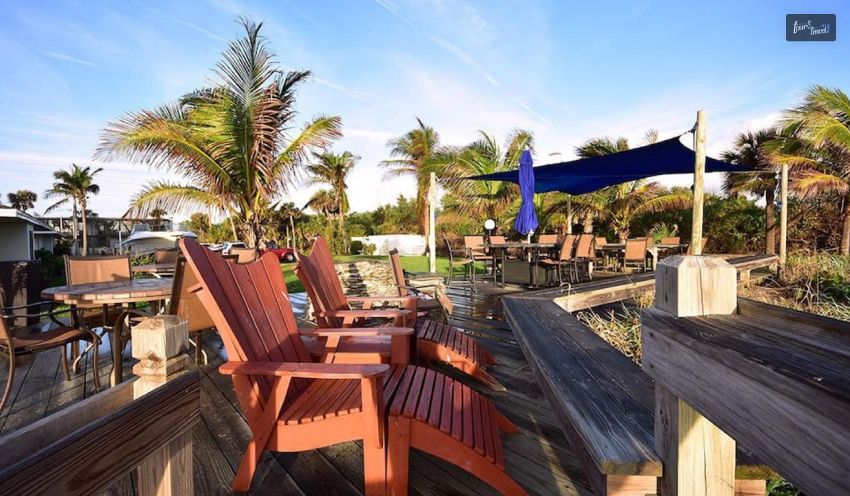


Are you planning to visit Orlando? Did you know that the closest beach to Disney World is a captivating place to stay and do Disney rounds? I get it! If you book your stay in Orlando, you will not have to drive an hour from Cocoa Beach!
But guys, wouldn’t you want your vacation to be more interesting and filled with fun activities instead of just hustling Orlando’s city air? Read this article to learn about Cocoa Beach, the closest to Disney World.
I will also list the places you can stay and the things you can do while living in Cocoa Beach. It will make you happy along with your kids, considering only some adults enjoy the parks at Disney World and the Universals.
The Perfect Getaway: Discovering The Closest Beach To Disney World!
So, you ask what beach is closest to Disney World? Cocoa Beach it is! My idea of staying at Cocoa Beach and traveling to Disney World for your children is a small sacrifice, especially with the host of activities I will suggest in this article.
If your children are adventurous and a little bigger than 5 years old, I am sure they will be hooked on the water sports available in Cocoa Beach. Don’t forget the Kennedy Space Center if you have a space junkie of a kid!
What can be better than giving them a treat of watching a rocket launch? So read more about how you can make the trip more memorable for your kid and you! The closest beach to Walt Disney World is the one we are planning around.
Closest Beach To Disney World: Cocoa Beach
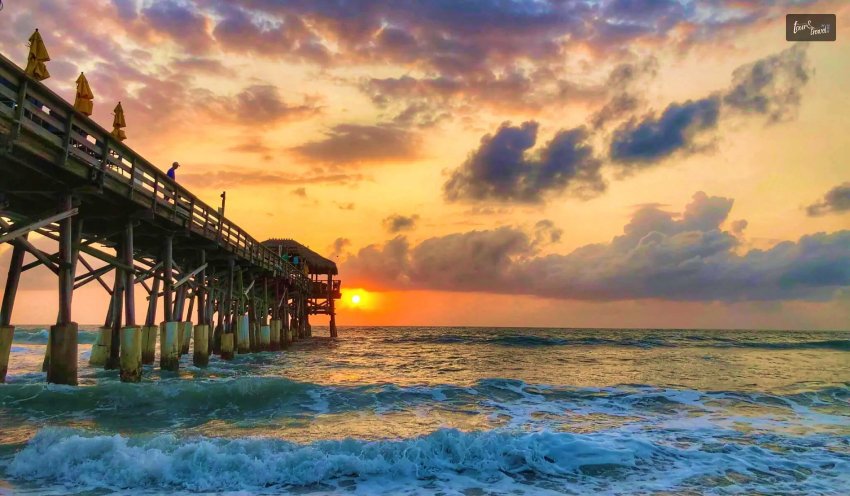
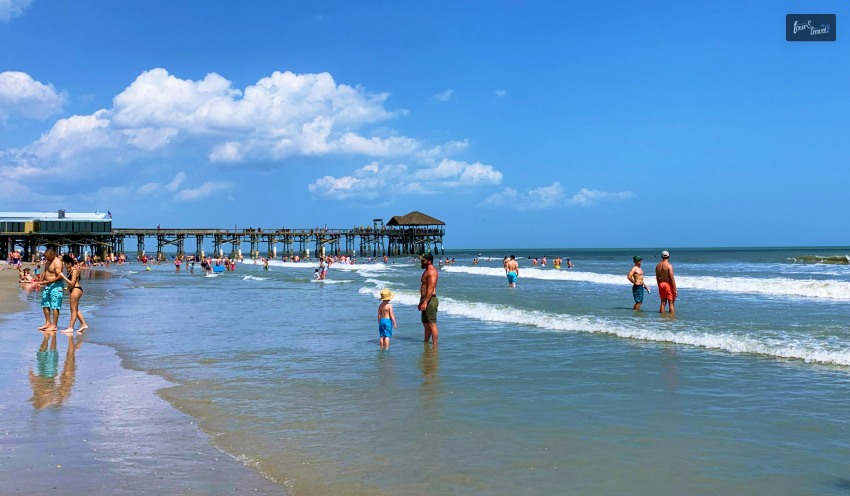
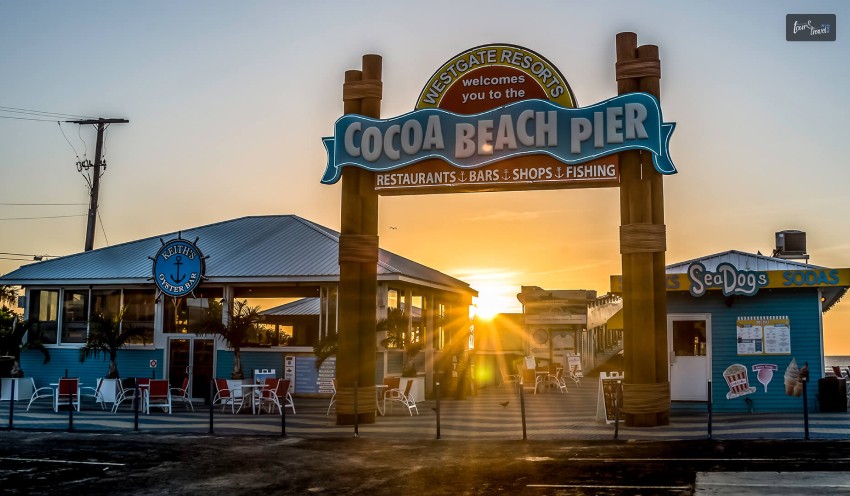
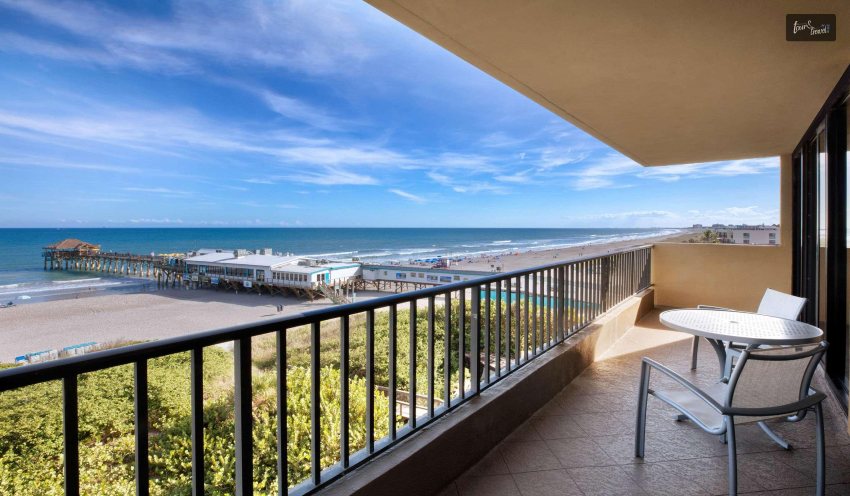
Cocoa Beach is the closest beach to Disney World, located south of the Kennedy Space Center and Cape Canaveral Air Force Station. It is, therefore, a perfect location to watch rocket launches while enjoying the delicious food at the Cocoa Beach Pier!
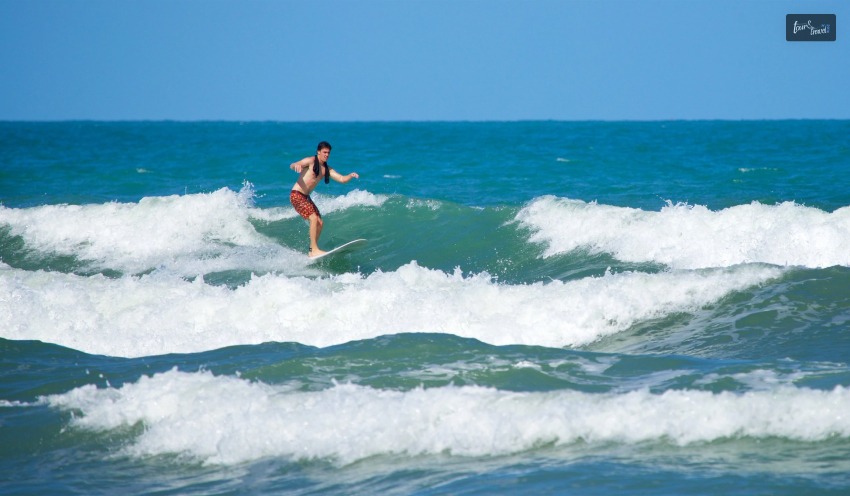
Cocoa Beach is well known for its surfing sports shops, such as the Cocoa Beach Surf Company and the Ron Jons. There are also several parks close to the beach where you can go with your kids or if you are just a nature lover!
The water is shallow enough to wade in, with perfect opportunities to surf! The waves are calm and consistent, and it is one of the safest places worldwide to surf.
The beach is accessible daily from 9 a.m. to 4 p.m. for visitors! The weather at the beach is a bit humid! Take advantage of the beauty of the water at Cocoa Beach that glows after the sun goes down due to the brightest dinoflagellate bio-luminescence.
The algae are the brightest from July to October, so as visitors, you cannot miss this beauty. The comb jellies glow during November, so you are in for a show when the sun goes down!
Things To Do At Cocoa Beach
Cocoa Beach is one of the best places to visit if you are in Florida or have plans to go to Disney World. The town has much to offer and is a perfect destination for day trips, water-related activities, family-based activities, and attractions.
I will share some of my favorite spots to visit and activities to try out in Cocoa Beach. All amenities are available, such as restrooms, a dog park, a picnic area, service animals, showers, parking, and others.
Considering Cocoa beach near Disney World will offer you a variety of activities to perform. Read the article to learn about the best spots and activities you must try if you are staying or visiting Cocoa Beach!
1. Cocoa Beach Pier
It is one of Cocoa Beach’s iconic places, perfect for tourists, especially with the wide variety of beach activities, shops, and restaurants. From Sunday to Thursday, the pier is open from 11 a.m. to 9 p.m., while on Friday and Saturday, it is open from 11 a.m. to 10 p.m.
There is no entrance fee! However, you will need to pay at the shops or the surf stores! There are shops where you can buy clothing items, decor, or toiletries. Further, inside the park, you can go surfing and play volleyball.
2.Ron Jon Surf Shop & Surf School
You must visit this beach lifestyle store for anything related to surfing. Ron Jon Surf Shop is a popular surf school that is quite iconic and is one of the best places to visit in Cocoa Beach.
There are surfboards, swimsuits, and tourist merchandise across the whole shop! You can participate in surf lessons and camps here too!
3.Historic Cocoa Village
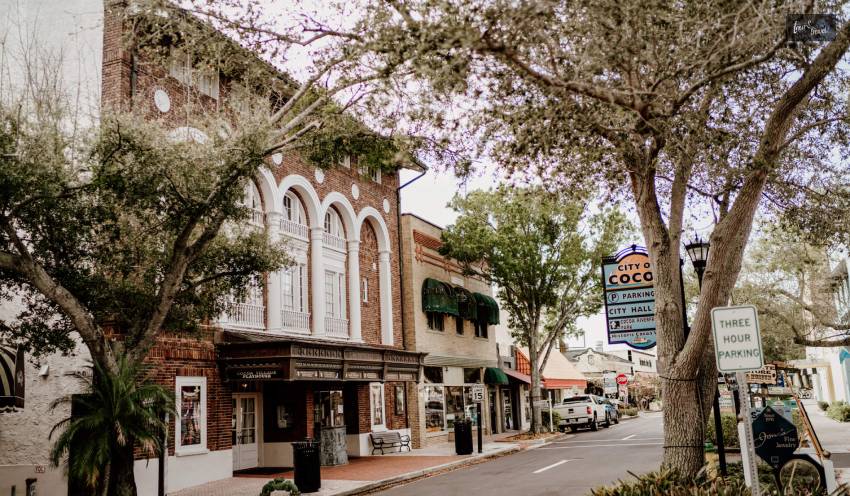
This village is pretty close to the beach, and do not get confused with the Barrier Island here! It is some 10 miles inland. When you reach the village, you will realize what a visual treat it is, considering there are colorful buildings across the village, some of the best restaurants, and unique shops.
4. NASA’s Kennedy Space Center
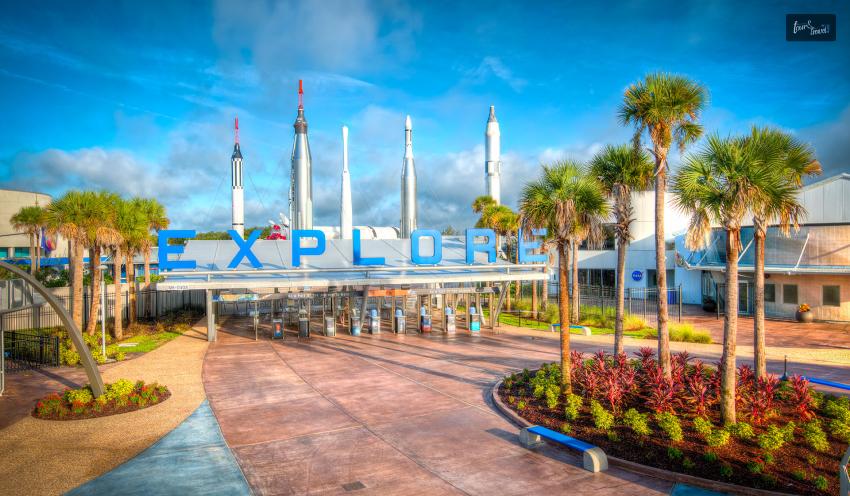
You have a kid with you who is a space geek; you have to go to the Kennedy Space Center. Even if your child is unaware, this is a good way to introduce them to the concept of space and watch them fall in love.
The attraction is home to educational and historical exhibits like the Space Shuttle Atlantis. There is also an IMAX theater for visual content, which is interactive and impressive. Human spaceflight and rocket launches are done here, considering it is a primary site.
Check the KSC’s launch schedule when you plan to visit Cocoa Beach. You might catch a rocket launch, a cool site for adults and children.
Note: Not getting your hopes high or anything for the rocket launches considering the launches get rescheduled or scratched constantly.
5.Eat At A Beach Bar
Planning a day at the beach, and you are not going to try out bar food or, for that matter, seafood? Cocoa Beach is among the best places to check out the Floridian beach bars. The most popular bar joint on Cocoa Beach is ‘Coconut‘!
With a menu and full bar, it provides the best location, especially just a step away from Cocoa Beach. If you want a more laid-back vibe, go to the Beach Shack just next door.
You will also get live music in the shack. Another significant beach bar is Rikki Tiki Tavern, where you can enjoy the water because it is directly situated on the beach.
You also cannot miss the seafood offered in popular restaurants such as Squid Lips, The Fat Snook, Fat Kahuna’s, and Florida’s Seafood Bar & Grill. Some of the best food dishes are pompano, snook, or speckled sea trout.
6.Take A Kayak Tour
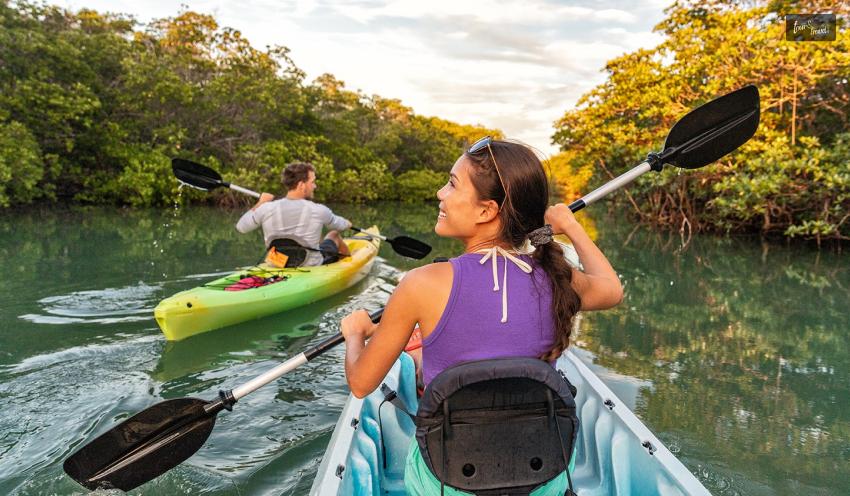
You have to take a Kayak tour to enjoy the Banana River Lagoon inside the barrier island, Cocoa Beach. It is a vibrant ecosystem, and the adventure you will have is one of the best, especially with the sightings of dolphins and manatees.
7. Lori Wilson Park
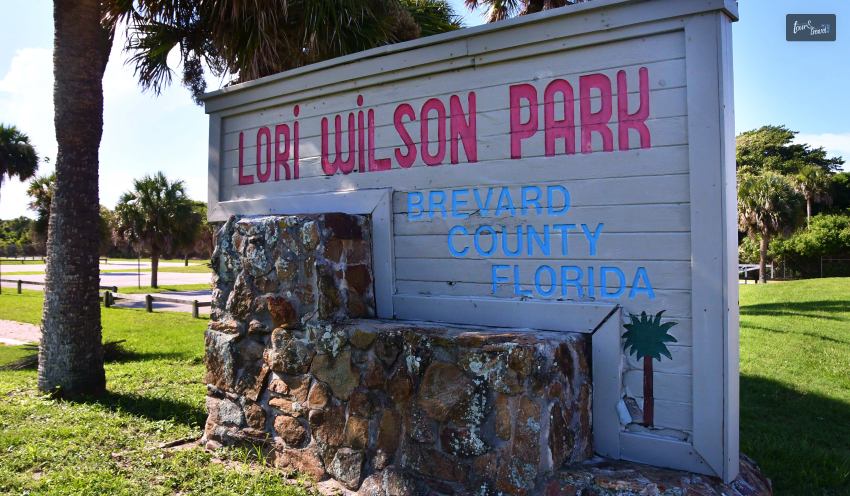
Visit Lori Wilson Park, with calm, shallow water and open beach space. The park has free parking with a picturesque beach so that you can click beautiful pictures.
There are nature trails, forested areas, and boardwalks inside the park! What can be better than inside the park? There is a dog park where you can take your pets for a walk.
8. Brevard Zoo And Brevard Musuem Of History & Natural Science
The zoo has almost 900 animals across this 75-acre area, and they are collected worldwide. The place has hands-on experiences where you can kayak along the expedition Africa exhibit, feed birds and giraffes, and zipline across the trees.
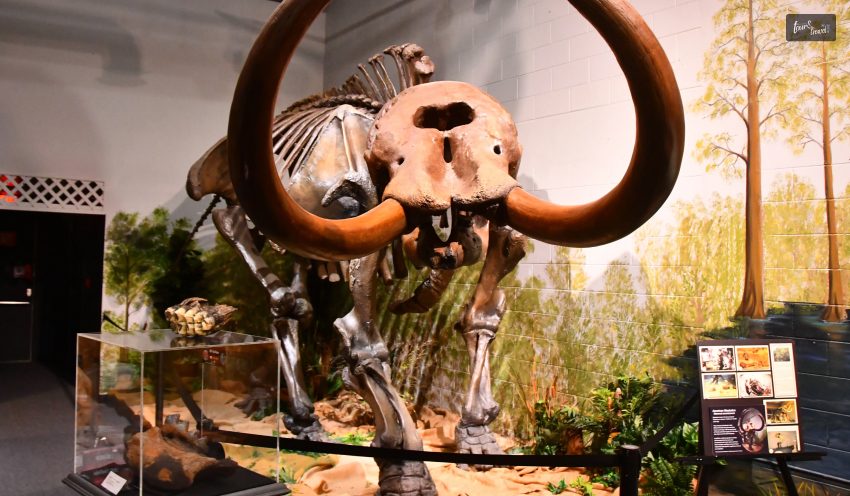
Many moments are captured as exhibits across the Brevard Museum of History & Natural Sciences. You can observe Wind-over archaeological artifacts that belong to prehistoric times. The museum is also situated across 22 acres of natural trails.
Places To Stay At Cocoa Beach
You need to book accommodation when you visit these places and participate in diverse, fun activities. Further, when booking the places, you must evaluate your budget and the accessibility of different places from the place of accommodation.
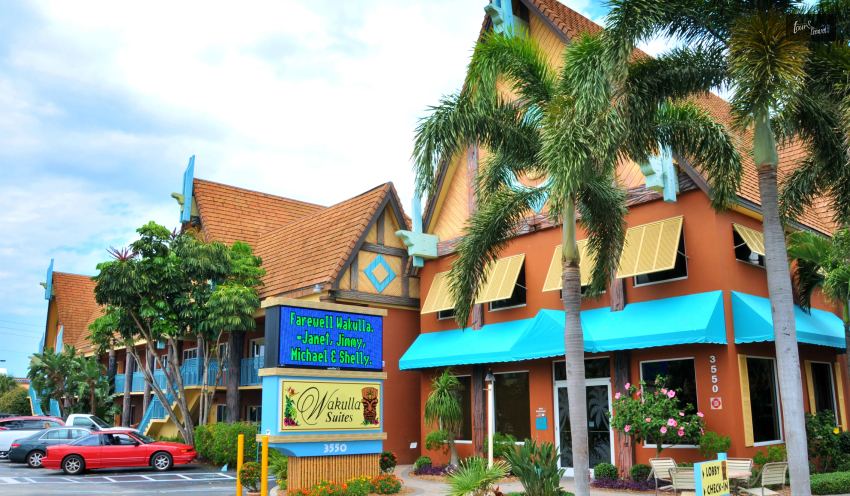
Wakulla Suites
The accommodation at Wakulla Suites is all two-bedroom suites with a king-size bed, a double bed, and a twin bed. It is a perfect place to stay, especially if this is a family-based vacation.
There is also a living room in the suites. Families can use a full-size refrigerator in the kitchen and an oven at their convenience. There is free Wi-Fi, and the gas BBQ grill is open for guests.
There are also options for beach volleyball, a shuffleboard court, a game room, a pool, and a kid’s pool. You can also rent beach chairs, kayaks, boogie boards, and umbrellas from the hotel.
One suite for a night costs around $267 and is rated 4 out of 5 on TripAdvisor based on 1537 reviews. In case of a supply of toiletries, you can buy diapers or suntan lotions from the online gift store.
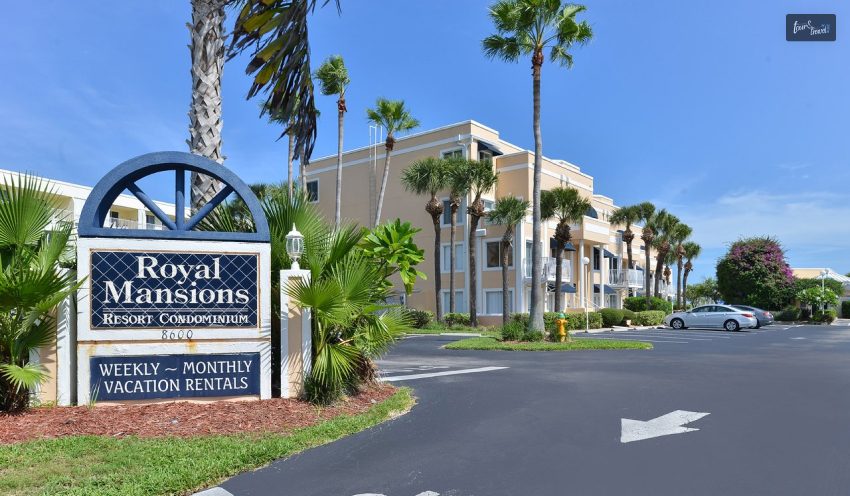
Royal Mansions Resort
The hotel is the most convenient accommodation if you are visiting Florida or, even better, Cocoa Beach, especially because of the mix of convenience, comfort, and value. The Royal Mansions Resort offers a friendly setting where travelers like you can enjoy diverse amenities.
The rooms in the hotel offer free Wi-Fi, a refrigerator, air conditioning, and a flat-screen TV. Barbecue facilities and pools are available for you while staying at the resort, along with free parking.
If you are craving barbecue dishes, you can book this resort as it is close to Gator’s Dockside, Smokehouse Foods, and Graham’s Smokehouse. You will be charged $133 for a room in the inn.
Take advantage of the exploration tower, which is located pretty close to the resort, considering it is one of the most popular landmarks of Cape Canaveral.
Homewood Suites By Hilton
The hotel Homewood Suites By Hilton has rooms with theme park features. You can access free Wi-Fi, a fitness center that you can access, free hot breakfast as a part of your booking, and a heated outdoor pool accessed all year round.
You can visit the Orange County Convention Center. It is close to the hotel so you can also see it! The hotel has a kitchenette, suites, a coffee machine, and a 50-inch flat-screen cable TV!
You need to pay $25 for a room per night, and it is centrally located with theme parks. According to Tripadvisor, the hotel has been rated 4.5 out of 5.
A dining area and a sofa bed accompany every room in the hotel. Apart from that, the toiletries are free while each room of the suite has a private bathroom. If you want to visit the theme parks, there is a complimentary shuttle.
Courtyard By Marriott Cocoa Beach
The hotel by Marriott Cocoa Beach has almost 156 contemporary and spacious rooms, each offering beautiful river and ocean views and a private balcony.
You can access free Wi-Fi apart from the streaming digital services accessed from every room on the HD TV. The hotel recently opened a new restaurant called the Courtyard Cabana Bar at the poolside.
You can also access evening room service offering healthy food and beverages from their in-house restaurant, The Bistro, which is quite refreshing! Based on the 1331 reviews on Tripadvisor, the hotel has been rated as 4.5 out of 5, charging $275 per room per night!
Surf Studio Resort Cocoa Beach
Are you planning a romantic getaway with surf, sand, and water? Well, book your rooms at Surf Studio Resort Cocoa Beach! The air-conditioned rooms of the hotel have a kitchenette along with a refrigerator. You will also get free Wi-Fi in this hotel as well.
A picnic area, beach chairs, and sun umbrellas are also available in the Surf Studio Resort Cocoa Beach. There is also a pool on the property, which you can enjoy all year! There are also free parking services.
The price of the rooms in the hotel charges $205 on a per-day basis. If you are a Chinese food lover, there is a restaurant called Yen Yen Chinese Restaurant close to the resort.
Where Do We Stop?
You will be pretty busy with all the activities, including surfing, fishing, swimming, wildlife, food, and others! With children, you have to visit the Disney World theme parks and the Universal Studio.
What other plans might you have when you visit Orlando considering the beach area is one of the best for fun? You can also access playgrounds and parks, which will help you keep your children in line.
Comment below to let us know about your favorite place in Cocoa Beach or the one spot out of the list that you will visit!
Sagnika Sinha is a content writer who is passionate about writing travel vlogs, entertainment and celebrity articles and literature-based pieces. With a 4 years experience in teaching, she loves reading books. A procrastinator by nature, she loves travelling, listening to music, planting and gardening.
Welcome to Missouri, the Show-Me State! Often overshadowed by its more well-known neighbors, Missouri is home to an impressive array of hidden gems and lesser-known attractions. It offers unforgettable experiences for both tourists and locals. In this guide, we'll uncover some of the state's unique destinations that even many locals may not be aware of. So get out your maps and cameras, and let's start exploring!
As you explore these hidden gems in Missouri, remember to stay updated on traffic rules and regulations. If you find yourself dealing with Missouri traffic tickets, then familiarize yourself with the local laws and seek professional assistance. Drive safe and have a great time exploring the Show-Me State!
City Museum
The City Museum in St. Louis invites visitors to crawl, climb, and slide their way through an architectural labyrinth. It was created from repurposed urban and industrial objects. Converted from a former shoe factory, the museum features attractions like a 10-story spiral slide, a rooftop Ferris wheel, and MonstroCity, an outdoor space with multiple interconnected metal climbing structures.
Meramec Caverns
Located in Stanton, Missouri, Meramec Caverns is a breathtaking underground wonder. A vast system of limestone caves stretches over 4.5 miles, making it the largest commercial cave in Missouri. Inside, you'll find spectacular stalactite and stalagmite formations, as well as a unique wine table formation that took millions of years to form. The cave also played a vital role in the Underground Railroad movement and is believed to be a hideout used by the infamous outlaw Jesse James.
The World's Largest Rocker
Who wouldn't want to snap a photo with the World's Largest Rocker? Sitting at a whopping 42 feet, 4 inches tall, this gargantuan rocking chair can be found in the small town of Fanning, Missouri. Don't just stop for the photo-op, though. Stick around and enjoy the small-town charm and nearby attractions, such as the Fanning 66 Outpost, home to the eclectic Route 66 Red Rocker.
Graham Cave State Park
Delve into history at Graham Cave State Park, where ancient Native American tribes once sought shelter within the cave's depths. The 6,000-year-old structures and artifacts found within the cave make it one of North America's most significant archaeological sites. In addition to exploring the cave, the park offers hiking trails, picnic areas, and fishing opportunities on the Loutre River.
Elephant Rocks State Park
Located near Graniteville in the St. Francois Mountains, Elephant Rocks State Park features giant granite boulders that resemble a herd of elephants. This unusual geological formation offers visitors a one-of-a-kind hiking experience. The park also showcases Missouri's intriguing mining history and offers a playground for children and a picnic area for a relaxing family outing.
The Jesse James Wax Museum
Following the theme of Missouri's deep connection to the outlaw Jesse James, the Jesse James Wax Museum in Stanton presents a unique collection of lifelike wax figures depicting key moments in the life of the legendary figure. The museum also poses an intriguing question: Was it really Jesse who died in 1882, or is there a different story to be told? Discover the evidence and decide for yourself.
The Missouri Botanical Garden
With 79 acres of beautifully maintained gardens, the Missouri Botanical Garden in St. Louis is an oasis for plant enthusiasts and nature lovers. Discover rare and endangered plants, walk through themed gardens, and admire the historic architecture of the Climatron, the world's first geodesic dome greenhouse. Seasonal events and festivals make the garden an ever-changing and vibrant destination.
The Saint Louis Loop Trolley
Take a ride back in time on the Saint Louis Loop Trolley. This vintage electric trolley system connects St. Louis City with University City, passing through the historic Delmar Loop entertainment district. Hop on and off as you please, visiting art galleries, restaurants, and live music venues along the way.
Missouri State Penitentiary
Experience the eerie and fascinating history of the Missouri State Penitentiary in Jefferson City. This decommissioned prison, which operated from 1836 to 2004, offers guided tours that delve into its dark past. Learn about infamous inmates, daring escapes, and the penitentiary's role in Missouri's justice system. Ghost tours are also available for thrill-seekers looking for a paranormal experience.
With the inclusion of specialized ghost hunting equipment, such as electromagnetic field (EMF) meters, infrared thermometers, and digital voice recorders, participants can actively engage in the quest for otherworldly encounters.
Big Cedar Lodge
Nestled in the Ozark Mountains, Big Cedar Lodge near Ridgedale is a luxurious and serene destination for relaxation, adventure, and outdoor pursuits. With exceptional accommodations, a world-class spa, and an array of activities like golfing, fishing, and horseback riding, it's a perfect retreat for those seeking an unforgettable getaway in Missouri's scenic wilderness.
Conclusion
Missouri's hidden gems offer a wide range of unique, unforgettable experiences for everyone. Whether you're interested in nature, history, or simply unique attractions, you're bound to have an amazing time exploring these lesser-known sites. So get your friends and family, and set out on a Show-Me State adventure like no other.
If you have thoughts to share or questions to ask, then please leave a comment below. We would love to hear from you.
Read Also:
Top 12 Montana National Parks You Must Visit In 2023!
10 Best Places To Travel In April – Travel Guide 2022
4 Fun Trip Ideas To Plan For This Year
Discovering Asheville with your loved ones?
This vibrant city offers an abundance of family-friendly activities and attractions that promise both fun and adventure.
From the natural beauty of the Blue Ridge Mountains to the urban charm of downtown Asheville, there's something for every family member to enjoy. And what better place to stay than the family-friendly suites at Embassy Suites in Asheville by Hilton? Let's dive into the heart of Asheville's family attractions.
Cultural Experiences in the Heart of Asheville
Asheville's vibrant cultural scene mirrors the diversity of its landscapes. Engage your family's curiosity at the Asheville Museum of Science and the Asheville Art Museum, where interactive exhibits and educational programs merge entertainment with learning. These institutions serve as gateways to understanding the world through a creative lens, ensuring that every visit is both fun and enlightening.
The Biltmore Estate stands as a testament to America's Gilded Age, offering a glimpse into the past with its opulent mansion and expansive gardens. Here, families can embark on a journey through time, with falconry experiences and more adding to the estate's allure.
Family Fun at Embassy Suites
In the heart of this vibrant city, Embassy Suites in Asheville by Hilton presents the ideal accommodation for families. The hotel's spacious suites are designed with families in mind, ensuring comfort for all.
An indoor pool provides endless entertainment for children, while the hotel's strategic location places Asheville's top attractions within easy reach. At Embassy Suites, every detail is considered to make your family's stay as enjoyable and convenient as possible, allowing you to focus on making lasting memories in Asheville.
Exploring Asheville's Educational Landscapes
Asheville isn't just a beacon for outdoor enthusiasts and culture seekers; it stands as a pivotal center for educational enrichment, offering families a myriad of learning adventures. This section delves deeper into the city's educational offerings, blending fun with knowledge in unique ways.
Hands-On Learning Experiences
The city brims with educational sites that provide interactive learning opportunities for children. The Asheville Science Museum, a cornerstone of discovery, engages young minds with exhibits spanning physics, natural history, and more, making learning a hands-on, captivating experience.
Delving into the earth's wonders, the Colburn Earth Science Museum offers an extensive look at geology, showcasing an impressive collection of minerals and gems that illuminate the natural world's complexity.
Cultural Immersion and Historical Exploration
Beyond its scenic vistas, Asheville's historical narrative offers a rich tapestry for educational exploration. Embarking on the Historic Downtown Asheville Guided Walking Tour unveils the city's architectural marvels, notable figures, and pivotal moments, enriching visitors' understanding of this vibrant community.
For a deeper cultural dive, the Museum of the Cherokee Indians presents an invaluable look into the Cherokee people's heritage, providing an immersive experience that bridges past and present. A visit here, easily accessible from Embassy Suites in Asheville by Hilton, promises a profound journey through the indigenous culture and history of the region.
Staying at Embassy Suites in Asheville by Hilton not only places families in the heart of these educational experiences but also offers a comfortable and convenient base from which to explore Asheville's rich educational landscapes. Whether delving into science, exploring geological wonders, or uncovering the past, Asheville provides a backdrop where learning and leisure intersect seamlessly.
Asheville's Green Spaces: Nature's Classroom
Asheville's commitment to preserving natural spaces offers families unique opportunities to learn about environmental stewardship and the importance of conservation. The city's parks and greenways serve as open-air classrooms where children can learn about local flora and fauna, ecosystem dynamics, and the principles of Leave No Trace to minimize their environmental impact.
One standout is the Beaver Lake Bird Sanctuary, a haven for birdwatching and learning about local wildlife. Guided walks and educational signage provide insights into the species that call Asheville home, fostering a deeper appreciation for biodiversity and the need for habitat protection.
Another gem is the Botanical Gardens at Asheville, where families can participate in guided tours and workshops designed to educate visitors about plant science, conservation, and the role of plants in our ecosystems. These gardens not only offer a peaceful retreat but also play a crucial role in educating the public about the Appalachian region's native plant life.
Staying at Embassy Suites in Asheville by Hilton gives families the advantage of being close to these natural learning environments, making it easy to incorporate educational outings into their visit. The hotel's commitment to sustainability complements the city's green ethos, providing a comfortable and eco-friendly base from which to explore Asheville's environmental wonders.
Asheville's Artistic Soul: Fostering Creative Minds
Asheville's vibrant art scene is not only a feast for the eyes but also a fertile ground for educational enrichment. The city's myriad art galleries, studios, and street art installations offer a hands-on approach to understanding and appreciating art.
Families can explore the River Arts District, home to working artists in studios spanning everything from painting and sculpture to glassblowing and pottery. These interactive environments allow children to see artists at work, ask questions, and sometimes even try their hand at creating art themselves.
Workshops and art classes available throughout the city cater to all ages, providing a fun and educational way to engage with art. Whether it's a family-friendly pottery session or a painting class, these experiences not only foster creativity but also encourage critical thinking and fine motor skills development.
A stay at Embassy Suites in Asheville by Hilton places families at the heart of this artistic hub, making it easy to explore Asheville's creative offerings. The hotel's proximity to the River Arts District and other artistic venues ensures that your family's journey into Asheville's artistic soul is both convenient and enriching.
Embracing Asheville's Wonders: A Family Adventure Awaits at Embassy Suites
Asheville offers a unique blend of outdoor adventure and cultural richness that makes it an ideal destination for family vacations. With so much to see and do, each day promises a new adventure. And at the end of a fun-filled day, Embassy Suites in Asheville by Hilton provides a welcoming and comfortable retreat for your family.
From the natural wonders of the Blue Ridge Mountains to the educational and interactive city attractions, Asheville ensures that your family vacation will be one to remember.
Read Also:
Family Activities & Attractions In Dubai
Top 10 Places To Go On New Year’s Eve Worldwide According To Agoda’s AI Technology
These Are The Closest Beaches To Ohio That You Need To Go For A Dreamy Vacation!
Kobuk Valley National Park is surreal! Have you ever thought to meet sand dunes in the Arctic Circle? The unique geology of the park makes it possible. That’s not all! The Great Kobuk sand dunes stand here, along with the remains of the North American continental glaciers.
Three of the sand dunes in this national park are active or alive. The Great Kobuk Sand Dunes, Hunt River Dunes, and Little Kobuk Sand Dunes here cover a mesmerizing 20,000 acres of area in the park.
Today, hiking through these dunes is one of the most popular activities in the Kobuk Valley National Park.
While it is visually unusual or unexpected to see sand dunes in an Arctic National Park, you also need to understand that the Arctic region gets very little rainfall every year. So, this is also a desert region.
“Sand dunes in the Arctic landscape are not what you would expect. Since most people associate sand dunes with a hot desert environment, it is a visually unusual thing to see. In fact, what most people don't realize is that the Arctic is also a desert with very low levels of rainfall.”
- Christian, a Kobuk Valley National Park Worker
Having said that, how the sand dunes came to be here, and the experience of exploring them will be a great thing to discuss in this article.
This Is How The Kobuk Valley National Park Became The Land Of Sand Dunes
https://www.instagram.com/p/BWatGdVFuis/
Much of Alaska, including the Kobuk Valley National Park, falls in the Tundra region. Tundra, the coldest of the biomes, gets only around 150 to 250 mm of rainfall and snowfall yearly1. So, the national park has less rainfall than some of the most well-known deserts in the world.
Further, the sand dunes in the Kobuk Valley are as old as the Ice Age. Now, as the mighty glaciers moved forward and made a retreat, the rocks beneath got ground. Now, the blowing wind transported the sand into the empty and ice-free Kobuk Valley. The sand dunes in the park are up to 150 feet high, and they are the biggest, high-altitude, and most importantly, “active sand fields” in the earth.
In The Land Of The Great Kobuk Sand Dunes
https://www.instagram.com/p/BgmZYDdAA_r/
Are you in the Sahara? No, you are around 35 miles above the Arctic Circle and still find the largest active sand dune field in the world. Today, it is a popular backpacking, hiking, and camping destination in the National Park. You must attend the Northwest Arctic Heritage Center to learn more about the outdoor pursuits in the land of sand dunes.
Let’s quickly look at why the Great Kobuk Sand Dunes is a preferred destination for camping, hiking, and backpacking.
The sand is steady enough for the landing of an aircraft with wheels.
You can put up your tent on any level surface.
Also, you can hike in any direction.
Further, you can board a float plane and reach the Kobuk River. From there, you can take a backpacking tour for around two miles and reach the dunes.
You must visit the Kotzebue Visitor Center if you have plans to take this backpacking journey to and from the Kobuk River.
There is no marked route for hiking.
In summer, the temperature in the sand dunes can reach up to 100 degrees Fahrenheit. Also, fall is the season to see caribou migration here.
However, there’s more to it! Let’s learn about the Great Kobuk Sand Dunes as relics of the Ice Age and how life thrived here.
Great Kobuk Sand Dunes: The Relics Of The Ice Age
https://www.instagram.com/p/BYwfdMYlr-0/
To know about the formation of the Great Kobuk Sand Dunes, we must go back to the Ice Age. Around 28000 years ago, glaciers in the mountains formed. I have already discussed how the glaciers ground the rocks and wind deposited them in the Kobuk Valley.
Further, approximately 14000 years ago, the glaciers made a massive retreat. As a result, there were 200,000 acres of sandy land formation on the river banks. Complex holocene activities and geomorphic preservations keep the sand dune field at the Kobuk Valley National Park active or alive. Along with the Kobuk Valley, small lakes in the park have also accumulated sand over thousands of years.
However, most of the landscape today is occupied by the vegetation of the national park, and the sand dune area consists of only 20,000 acres. The vegetation found here consists of the following varieties.
Wild rye
Grasses
Sedges
Kobuk locoweed
Wildflowers blooming occasionally
These species grow on the shifting sand, and they function as stabilizing agents. You can see shrubs, lichens, mosses, and algae following this vegetation. Finally, there are spruce, birch, and aspen trees covering the landscape.
The slopes of the Kobuk Valley sand dunes are the only place where Kobuk locoweeds grow. These plants belong to the pea family, and they are known for their purple flowers. If you want to see these flowers, you must visit the park in late June and July.
The inland dune field of Kobuk Valley National Park is surrounded by boreal forest.
Humans And Wildlife In The Great Kobuk Sand Dunes
https://www.instagram.com/p/Cv0EhpdLsJ5/
It’s amazing to see the Western Arctic Caribou walking through the Great Kobuk Sand Dunes. Fall and spring are the migration seasons for these animals. The north of Brook Range is the caribou herd’s calving ground, and they migrate to and from this place.
As the caribou herds pass through the sand dunes, their footprints remain in the ground for the longest time. According to National Park Service data, around 250,000 caribou pass through this national park annually.
No wonder that the Kobuk Valley National Park is one of the “last great migrations” remaining in the world. The table below gives you a brief idea about the animals and birds in the sand dunes.
Birds Sharp-shinned Hawk Golden Eagle Bald Eagle American Wigeon Northern Pintail Rough-legged Hawk Marsh Hawk Mammals Caribou Wolverine Muskox Snowshoe Hare Moose Gray Wolf Grizzly Bear Beaver Arctic Fox American Pine Marten Amphibians Wood Frog Fish Longnose Sucker Salmon* Northern Pike Alaska Blackfish Alaska Whitefish Humpback Whitefish Alaskan Stickleback Ninespine Stickleback
Human history in the Great Kobuk Sand Dunes is at least 8000 years old. They lived by the Kobuk River and were mainly focused on fishing, hunting, and trapping for survival. It is fascinating to visit the thousand-year-old hunting camps on the edges of the sand dunes.
The golden and shifting Great Kobuk Sand Dunes are located a few miles away from the Kobuk River. Further, the sand dunes soar up to 100 miles in the air.
Kobuk Valley National Park Is Also The Land Of Iñupiaq Subsistence
https://www.instagram.com/p/BWdjyOBl_Lw/
Human life, which started in the Great Kobuk Sand Dunes 8000 years ago, is still thriving with the mantra of subsistence. The Iñupiaq people here use the available natural resources to fulfil their physical needs and safeguard their spiritual and cultural requirements.
For example, they depend on caribou and salmon to feed themselves and their dogs. At the same time, caribou skin hide is extensively used to make parka jackets to combat Arctic winter. They also make mukluks or boots using reindeer skin to walk through the snow.
Further, the local people made baskets using birch and willow. Moreover, in darkness, caribou tallow or seal oil were the only ingredients to light up their stone lamps.
Irrespective of the trade with the coastal communities, the “customary, traditional and non-commercial” use of natural resources is still important in the park.
Iñupiat Ilitqusiat And Respecting The Ecosystem
https://www.instagram.com/p/CzjboNfsc4Y/
Aboriginal people in the Kobuk Valley National Park are committed to passing on their values from generation to generation. The Iñupiat Ilitqusiat value asks them to transfer the knowledge and skill of hunting and everything about life.
In addition, this transfer of knowledge helps to make the most of various seasons and subsistence opportunities. For example, the caribou season comes to this park after the salmon season.
Earlier, Noatak Valley was the destination for these people during the caribou season, and even today, some families move to Noatak Valley. Again, summer camping around the Kobuk River is common for fishing, especially catching salmon and whitefish.
Summer is also the season for harvesting berries and wild greens for the local people.
If you want to learn about the local people and their values, you must be respectful and understand their seasonal activities as a part of their subsistence practices.
Overall, the Kobuk Valley National Park is not just a place to see sand dunes and wildlife. It is a tapestry of human lives depending on nature.
Things To Know Before You Visit The Kobuk Valley National Park
For me, the sand dunes and Iñupiaq subsistence practices are the most fascinating things in the Kobuk Valley National Park. However, keep the following information handy if you are to pay a visit anytime soon.
Mode of Transport: Authorized air taxis from Kotzebue or Bettles
Visitor Center: Northwest Arctic Heritage Center
Entrance Fee: Free
Permits Required: Commercial Use Authorization or CUA for commercial activities, Research Permits, Filming and Photography Permits
Activities to Do: Boating, fishing, camping and backpacking, hiking, flight-seeing and exploring nearby attractions
Best Time to Visit: June to July
Area: 1,750,000 Acres
Established: 2nd December, 1980
Number of Visitors: 17,616 (2023) (National Park Service Data)
Snowfall, downpours, and extreme weather conditions can occur in any season of the year. So, follow the instructions shared at the visitor center and keep your gear ready for survival!