Kotor Montenegro Cheap Eats: Why Is Kotor A Paradise For Foodies On A Budget?
Before I visited Kotor, Montenegro, I read an article named “Keeping Montenegro’s flavours alive” by the Food and Agriculture Organization of the United Nations.
It showed how the European Bank for Reconstruction and Development (EBRD) has helped around 100 smallholder farmers to keep the century-old culinary traditions and flavors alive.
The fresh produce, such as mushrooms and blueberries, offers tourists the most organic and authentic food experience.
Also, they are hosting tourists, and hospitality has become a source of income for them.
Danka Sekularac, while talking to EBRD, said,
“We have organic food, always organic. We have blueberries, mushrooms, actually everything.We do not buy anything at the market. That’s the best because we make the food with our hands and we know how it’s made. And it’s very delicious for tourists.”
The story came to mind more so because, recently, Montenegro’s food imports exceeded exports by 25%, according to a FreshPlaza report.
Still, Kotor, Montenegro, remains a food paradise for budget travelers, with opportunities such as farm stays, rural exploration, wine tasting, and oyster farming.
Furthermore, traditional Montenegrin dishes such as Njeguški pršut, kacamak, and burek are hearty and affordable.
In addition, a meal at the street food stalls or the family-run taverns costs around $10.
Moreover, the fresh seafood and seasonal produce here make dining affordable and more delicious.
1. Farm Stays And Farm-To-Table Experience
You can include staying in a Katun or a traditional farm hut and having the best locally grown meals in your Kotor, Montenegro, travel itinerary.
However, this is not just about having farm-fresh food.
You can also be a part of the harvesting and cooking process for a wholesome experience.
2. The Art Of Slow Travel
Slow travel has brought the ultimate paradigm shift in tourism these days.
Kotor, Montenegro, offers you ample chances for slow tourism.
You can plan a stay in the rural areas.
Moreover, you can experience their local life and hospitality.
This way of traveling is also beneficial for the local economy and community development.
3. A Tour Of Oyster And Mussel Farms
You can drive to Ljuta and find farms that use sustainable aquaculture practices.
There, you can also have the best and freshest oysters and delicacies made with mussels here.
4. Olive Oil Tasting
Luštica is a drive of less than 30 minutes from Kotor.
Here, you will find ancient olive trees that are 1000 years old.
You will also find facilities where olive oil is produced using ancient methods.
5. Affordable Traditional Cuisine
Try the authentic and hearty cuisines of Montenegro.
These are Njeguški pršut (smoked ham), kacamak (cornmeal with cheese), and burek (savory pastry), costing just around $2-$5 per portion.
6. Street Food And Bakeries
I had the best savory pastries at Montenegro.
The local bakeries used to sell them at $1-$2.
Furthermore, sandwiches and grilled meats cost $5.
7. Family-Run Konobas
The family-run taverns in Kotor, Montenegro, are not just eating places.
These are the places where you make bonds and experience how food can bring people from different cultures and countries together.
Also, the owner of the Konoba offered me Kanija, or the local brandy, for free, and then I ordered a seafood platter.
It cost me $10.
8. Seasonal Freshness
Kotor is rich in seafood.
So, if you are especially in Kotor in the off-season, you will get fresh seafood at a minimum discount of 40%.
9. Market Culture
As you head for a picnic by the Kotor Bay, visit the market beforehand.
You will get fresh fish, seafood, cheese, fruits, and also cured meat for less than $10.
Where To Eat Cheap In Kotor Montenegro? Know The Best Restaurants, Cafes, And Bars In Kotor Old Town?
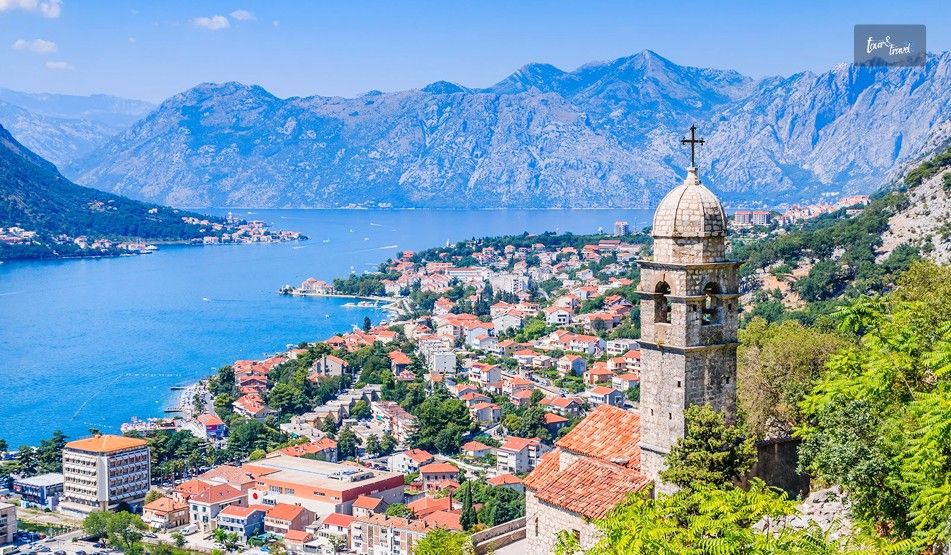
The Old Town is the best place for budget-friendly eating in Kotor.
It has a historic charm.
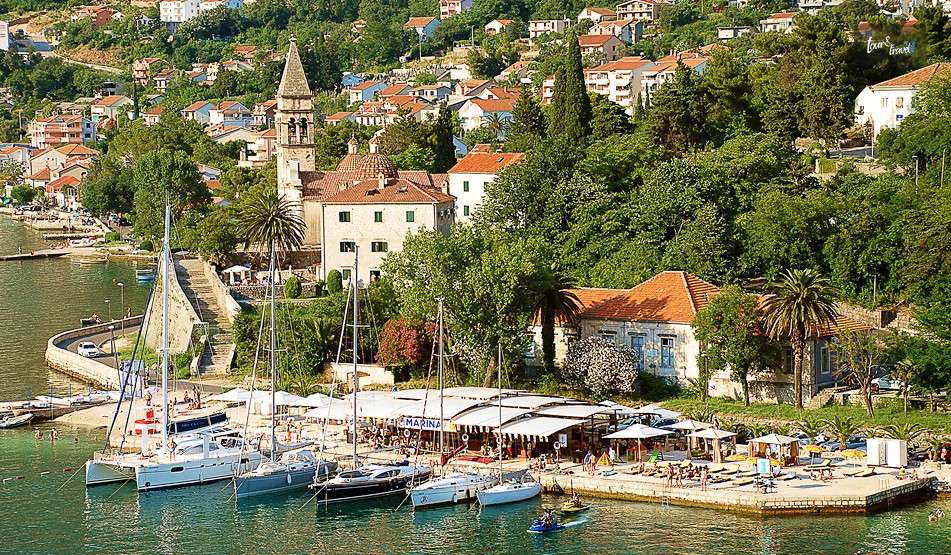
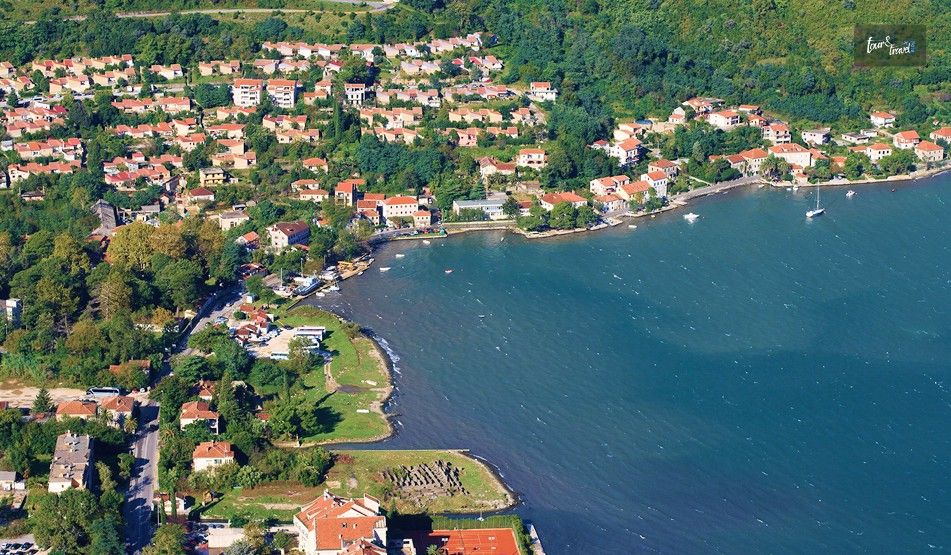
Dobrota, with its waterfront cafes and affordable seafood, and Muo, with family-run konobas, are the best neighborhoods in Kotor for budget-friendly eating.
Along with the traditional konobas, the restaurants and wine bars of Kotor, Montenegro, also serve authentic Montenegrin cuisine.
So, explore any of the following restaurants, cafes, and bars.
1. Restobar Taraca
Google Rating: 4.5
Pocket Pinch: €10 – €15 (Per Person)
Want to have the most magical food experience in Kotor?
Then, grab a table on the terrace at Restobar Taraca and watch the Sun spread its brightest red as you savor seafood delicacies with a Mediterranean twist.
Furthermore, if you are at Restobar Taraca, you must try grilled octopus with olive oil and herbs.
2. Konoba Scala Santa
Google Rating: 4.5
Pocket Pinch: €15-€30 (Per Person)
Konoba Scala Santa is one of the oldest taverns in Kotor.
It offers a true Balkan experience as you sip the local Vranac wine with the signature smoked ham (Njeguški pršut) and cheese platter.
Moreover, you have to be a little particular about your dress code if you are visiting Konoba Scala Santa.
So, choose smart casuals as your outfit.
3. Restoran Cesarica
Google Rating: 4.4
Pocket Pinch: €20-€25 (Per Person)
Cesarica is a seafood lover’s dream in the Kotor Old Town.
Also, Cesarica is a favorite among seafood lovers as it always serves the “catch of the day.”
Moreover, a fresh catch from the Adriatic and a freshly prepared dish from it make the day for visitors.
You must try the cuttlefish ink black risotto at Cesarica.
4. Hoste
Google Rating: Not Available
Pocket Pinch: €10 – €15 (Per Person)
Hoste is a trendy café-bar perfect for brunch or evening cocktails.
So, if you truly want to experience “eating like a local” at Hoste, you must try avocado toast with poached eggs.
Also, the espresso martini here is a local favorite.
5. Galion
Google Rating: 4.2
Pocket Pinch: Around €50 (Per Person)
To be honest, Galion is not ideal for budget travelers.
It offers an upscale dining experience with panoramic views of the Bay of Kotor.
However, if you are planning a romantic dinner here, you can reserve a waterfront table in advance.
Also, it is famous for its lobster pasta with creamy sauce.
6. Astoria Restaurant
Google Rating: 4.4
Pocket Pinch: Around €25-65 (Per Person)
How about trying the authentic cuisine of Kotor with some local flavors?
Then, Astoria Restaurant is the place you need to be.
The setup inside a historic hotel is elegant, and their tasting menu offers a complete culinary journey.
Moreover, Beef medallions with truffle sauce are the star of their menu.
7. Bastion
Google Rating: 3.9
Pocket Pinch: Around €15-30 (Per Person)
Bastion offers hearty Montenegrin meals in a rustic ambiance.
It is also famous for its slow-cooked lamb.
Moreover, the portions in Bastion are generous.
So, you can share the delicacy with others.
8. Pizzeria Pronto
Google Rating: 4.4
Pocket Pinch: Around €5-€12 (Per Person)
If you are in Kotor Old Town, Pizzeria Pronto is the best place to try authentic wood-fired Italian pizza.
I loved the spicy Diavola the most.
You can also try variations such as Capricciosa and Margherita.
Moreover, it is very close to the Main Square of Kotor, and the joint is a great conversation starter with fellow travelers and locals.
9. BBQ Tanjga
Google Rating: 4.7
Pocket Pinch: Around €30-€40 (Per Person)
The day I visited BBQ Tanja, I was running a little late for the day.
Fortunately, I found this place serving authentic Montenegrin food just outside the Kotor Old Town.
I could see meat getting grilled through the glass cover as I entered the space.
The interior has a unique setup, with the walls covered in images of a compass and scribbles.
However, I preferred to sit in the backyard area, which was quiet and more aesthetic.
I was in a hurry.
So, I tried some chicken and pork.
You can even opt for the family platters with different sauces, pickled onions, cabbage, French fries, and bread.
I also loved the bottle of Cedevita in lime flavor.
It was a much-needed dose to start the day.
What Are The Hidden Gems in Dobrota?
Dobrota, home to the Clock Tower and Maritime Museum, is also famous for its food scene.
Moreover, it has some hidden gems offering the ultimate Montenegro food experience.
10. Dobrotski Dvori
Google Rating: 4.5
Pocket Pinch: Around €15-€20 (Per Person)
Dobrotski Dvori is a family-run konoba by the water.
Also, it serves grilled calamari with garlic and parsley.
However, you must visit the tavern early and book a table for an amazing view of the Bay of Kotor.
11. Konoba Portun
Google Rating: 4.7
Pocket Pinch: Around €20 (Per Person)
Konoba Portun serves homemade rakija with their seafood delicacies and grilled specialties.
So, enjoy the local vibe here and don’t miss the Seafood Salad.
It costs 17.5€. You can even try the Cold fish platter for two.
Moreover, you will get an amazing view of the Boka Bay from Konoba Portun.
12. Mudra Art Cuisine
Google Rating: 3.9
Pocket Pinch: Around €35 (Per Person)
Mudra Art Cuisine is not a cheap eating place, let me be honest!
However, you cannot miss the mention of this place when discussing authentic Montenegrin food.
Chef Iskander spills magic in every dish he makes with locally sourced and organic ingredients.
Also, the Tuna Crudo & Burrata, with a raspberry-and-tomato cold soup infused with herbs, is a specialty here.
It costs around 32 Euros.
You can even try grilled seafood, lobsters, and octopus dishes here.
Moreover, there is a special kid-friendly menu at Mudra Art Cuisine, making it ideal for a family dining experience.
13. Hotel Forza Mare
Google Rating: 4.4
Pocket Pinch: Around €35-40 (Per Person)
Hotel Forza Mare is located inside a boutique hotel.
It is famous for sunset dinners and a stunning view of the Kotor Bay.
Moreover, sea bass fillet with roasted garlic ragout and scallops with potato cream are some of the specialties of Hotel Forza Mare.
Again, this is not ideally a place for Kotor Montenegro’s cheap eats.
What Are The Hidden Gems In Muo?
Black risotto made with squid ink, grilled calamari, cheese, and local meat dishes are the delicacies you must try at the restaurants in Muo.
However, the family-run taverns or Konobas are the best place to try the traditional Montenegrin cuisine.
So, try any of the following places.
14. Konoba Akustik
Google Rating: 4.6
Pocket Pinch: Around €10-20 (Per Person)
I had the best Niksicko beer, brewed in Montenegro, along with grilled lamb chops.
The sun was setting, spreading its brightest red over the Kotor Bay.
Also, the silence of the sunset was broken as the entire setup started preparing for the acoustic night.
Moreover, mixed prawns and mussels and Shopska Salad, a Balkan specialty with cheese, tomatoes, and cucumber, are other must-try dishes.
Comparing The Best Kotor Montenegro Cheap Eats: A Summary Table
Traditional Montenegrin dishes are a wonderful fusion of Balkan and Mediterranean influences.
Along with fresh seafood delicacies, you can also try hearty and slow-cooked meat dishes here.
1. Njeguški Pršut
It is a smoked ham delicacy and a specialty of the Njeguši village.
Also, it is served uncooked, and the flavors in this cured meat come from the burnt beech wood.
Traditional producers also believe that the distinct sea and mountain air of Montenegro make Njeguški Pršut so special.
BBQ Tanjga is one of the best family-run joints to try Njeguški Pršut. You can also have this delicacy at any traditional tavern.
2. Kacamak
Kacamak is a Balkan delicacy, and this cornmeal porridge is a rich mix of butter, potatoes, and salty cheese.
However, Kacamak is more than a hearty meal.
It is the national dish of Montenegro and has long been a staple among mountain dwellers.
Also, it is usually served with toppings of sour cream, kajmak, or fried bacon.
Moreover, it celebrates the country’s agrarian roots.
3. Burek
These flaky pastries are also a Balkan specialty, with the savory ingredients varying from one family to another.
This delicacy originated in Central Asia, and the Ottoman Turks made it popular across countries such as Serbia, Croatia, Turkey, etc.
Furthermore, Burek pastries vary in shape, from pie-like structures to snail shapes.
Also, common fillings include cheese, ground meat, potatoes, spinach, and mushrooms.
Moreover, I have seen many bakers using eggplant filling for these pastries.
4. Fresh Seafood
Due to its location in the Adriatic Sea, Montenegro is rich in seafood.
Moreover, the nutrient-rich waters of the Adriatic Sea are home to diverse marine creatures, including fish, octopus, lobsters, and scallops.
Also, the geomorphological conditions of Boka Kotorska Bay and the traditional fishing culture are other major factors behind the ingrained seafood heritage of Kotor, Montenegro.
Moreover, try delicacies such as octopus salad, Riblja Čorba, or a traditional fish soup, and Buzara, a shrimp or mussels delicacy cooked in white wine.
What Are The Best Neighborhoods For Budget Dining In Montenegro?
The neighborhoods of Kotor, the Old Town, Muo, and Dobrota are a paradise for a budget eater.
However, each neighborhood has a distinct charm.
Also, the Old Town is the busiest, and Muo offers a quiet dining experience.
1. Kotor Old Town
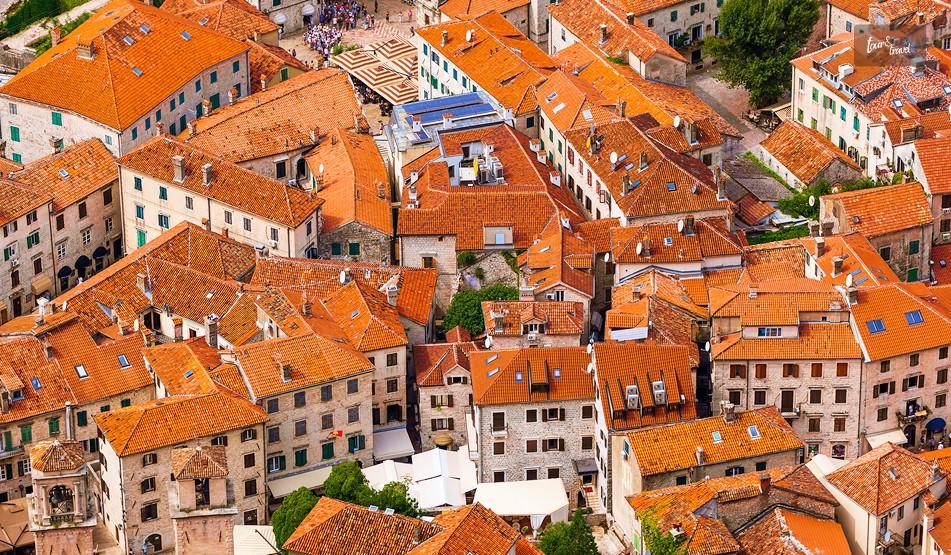
It is great fun exploring the maze-like streets and the food stalls in Kotor Old Town.
Also, when you wander away from the main squares, you get stalls selling local delicacies at a lower price.
Moreover, the bakeries here are great for breakfast and snacks.
Also, you will get big portions of food for around 1 to 3 Euros in these bakeries.
So, Kotor Old Town is a great locality to eat cheaply in the city.
2. Dobrota
Dobrota is a favorite cheap eating place in Montenegro because of the variety of places it has.
So, you can find a mini piazza or local stalls, family-run taverns, and restaurants.
Furthermore, Dobrota especially has the best grilled meat delicacies of the other two neighborhoods.
Moreover, this is something only locals know.
3. Muo
Muo, or the Muo Village of Kotor, Montenegro, is replete with family-run taverns or konobas.
Also, these eating places are more affordable than the ones in Kotor Old Town or Dobrota.
Moreover, being family-run, the taverns offer authentic Montenegrin food.
Seasonal Pricing And Dining Tips For Kotor, Montenegro: Cheap Eats
For the transportation tips and cheap eats, you have to rely on locals or a local guide who will help you navigate Kotor.
Furthermore, it is always a smart option to visit eateries that have “menu of the day” deals.
Also, keep in mind how food prices here differ every season.
Tourist Seasons
Months
Expected Change In Food Price
High Season
June to August
A price hike of 20–30%
Off Season
October to April
Expect a 30-40% discount on the food items
Drinking water in Kotor is safe.
So, you can carry refillable water bottles instead of buying sealed bottles.
Also, try the local wines and beers, such as Nikšićko, to save money.
Moreover, you must avoid restaurants that offer “special tourist menus.”
These are marketing tricks and traps for charging a higher price for the same food.
What Are The Vegetarian And Vegan-Friendly Spots In Kotor, Montenegro?
Many local taverns and eateries serve vegetarian and vegan-friendly options in Kotor.
1. Vegan Options
•Restobar Taraca is the most trusted vegan-friendly eating option in Kotor.
Also, its Buddha bowl, Vietnamese rolls, sandwiches, and teriyaki are some of the extensive vegan options available.
•Java Coffee in Tivat is another vegan-friendly eating option in Kotor, Montenegro.
It is especially famous for its vegan breakfast items and drinks.
Moreover, you can have overnight oats, chia pudding, raw cakes, wraps, and plant-based milk here.
Also, Hamsa Hummus & Happiness and Nama Sushi are two other popular vegan-friendly options in Kotor, Montenegro.
2. Vegetarian Options
Pizzeria Pronto, with its varied options in veg pizzas, is a popular vegetarian eating joint.
Here, you will get the most popular veg options, such as Garden Fresh pizzas with fresh veggies, and simple Margherita pizzas with basil, fresh mozzarella, and tomato sauce.
You can even eat Spinach & Feta pizzas or the classic veggie one with bell peppers, mushrooms, tomatoes, etc.
Map Of Cheap Eats In Kotor
Popular Areas
Spots to Eat
Old Town cluster (walkable in 10 minutes)
•Pizzeria Pronto •Gyros King •Konoba Scala Santa •Cesarica •Fortuna •Delicious Burger •Moritz Eis •Marshall Gelato •Street Food Athos
Waterfront Area
•Pier65 Gastrobar •Little Bay Restaurant
Near Center/Outside The Walls
•BBQ Tanjga •Grill Pizzeria Bucko
Dobrota
•Dobrotski Dvori •Konoba Portun
Muo
•Konoba Akustik •Taverna Muo •Muo Wine Bar
Kamelija Mall
•Soleil
Remember that Old Town spots are close enough to hit several in one walk.
Moreover, Dobrota and Muo are better as a separate afternoon.
What Are The Insider Tips For Eating Cheap In Kotor?
The tips for eating cheaply in Kotor start with choosing the right accommodation.
So, find a hostel or a budget-friendly accommodation with provisions for cooking.
Now, look for discounts and deals at local supermarkets.
Then, stock up on meats, prosciutto, crackers, nuts, cheese, and wine.
Furthermore, if you are eating out, find out places that sell pizza by slices and shareable meat platters.
Also, have Burek for breakfast and as snacks.
These flaky pastries are very filling, and most local bakeries sell them at 1 to 3 Euros.
Street Food, Markets, And Farm-To-Table Spots
Beyond restaurants and konobas, some of the cheapest and most authentic bites in Kotor come from stalls and stands rather than sit-down menus.
1. Kotor Market (Pijaca)
Just outside the Old Town walls, this open-air market is where locals shop daily.
Here, you can stock up on cured meats, local cheese, fresh figs, and cherries for a bay-side picnic.
Moreover, when you shop for food items and fresh produce from the Kotor Market, you will usually spend under €10 for two people.
2. Bakery Counters (Pekare)
You must look for burek and pastries sold straight from the window.
Also, as you bypass the sit-down section, you will have to pay just €1–€2 instead of €3–€4.
3. Don’t Miss The Grilled Meat Stands Near The Bus Station
The no-frills grill stalls near the bus station may look unimpressive.
However, these stalls serve ćevapi and sausage in bread for just €3–€5.
So, if you want to truly eat like local commuters, you must eat at these stands.
4. Farm Stands On The Dobrota Road
It is a small honesty-box stalls sell local honey, olive oil, and seasonal fruit.
Also, it is a usual stop for locals walking or cycling toward Dobrota.
The Ultimate Budget Food Planner For Kotor, Montenegro
Planning a few days of budget eating in Kotor?
Then, use this simple daily framework to keep costs down without repeating the same meals.
Meal
Budget Option
Estimated Cost
Breakfast
Bakery Pastry, and Coffee
€2–€4
Lunch
Pizza Slice or Gyros Wrap
€4–€6
Snack
Gelato or Market Fruit
€2–€4
Dinner
Konoba Meal with Local Wine
€10–€15
Daily Total
–
€18–€29
If you are still confused about how to budget for cheap eats or the entire Kotor trip? Then, you can use our travel budget calculator.
Moreover, budget for one “splurge” dinner like Cesarica or Galion mid-trip, and keep the rest of your meals to bakery and market spots.
Thus, you will still eat well for well under €30/day.
Kotor Montenegro Cheap Eats: Frequently Asked Questions (FAQs)
Here are the frequently asked questions and answers about Kotor, Montenegro, cheap eats.
1. What’s The Average Cost Of A Meal In Kotor?
The average cost of a meal in Kotor, Montenegro, is around 10 to 20 Euros.
However, this amount is for lunch and dinner.
For breakfast and evening snacking, you can have pastries from local bakeries, and the cost will be 1 to 3 Euros.
2. Is Tipping Expected In Kotor?
Yes, tipping is customary in Kotor. Paying 10% of your bill amount is the standard practice.
However, if your restaurant bill already includes a service charge, it is up to you who can decide whether to pay a tip.
Furthermore, when staying in a hostel or hotel, you will have to pay a tip of €2-€3 to the maids and €1 per piece of luggage to the porters.
In addition, a standard tip for a tour operator is €5-€10 per person.
3. Are There Late-night Food Options?
Yes, Kotor has late-night food options.
However, you will mainly find the pizzerias and eateries selling food late at night near the Kotor Old Town.
Also, the Nitrox Pub & Eatery is a popular eating and hanging out zone in Kotor.
However, if you don’t want to visit a pub or bar, you can try local cuisine at traditional taverns or konobas.
4. Can I Find Vegetarian Food Easily?
Yes, many eating places or traditional taverns in Kotor serve vegetarian food.
Pizzeria Pronto is a popular joint for vegetarian pizzas.
Some other vegetarian-friendly food joints here are Restobar Taraca and La Catedral Pasta Bar.
5. Where Can I Buy Cheap Snacks?
The local bakeries and Kotor Market are the best places to buy cheap snacks in Kotor, Montenegro.
You can always negotiate with the local vendors, and the local market is the best place for buying vegetables and fruits at a low price.
However, supermarkets are better options if you are stocking up in bulk.
There you will find the family packs, the best discount deals, and offers.
Sibashree is a travel, culture, and leisure writer who has been writing since the age of 12 and professionally since 2014. With more than a decade of travel writing experience and journeys across India and several parts of the world, she brings a deeply personal and thoughtful perspective to her work. A student of English Literature and Mass Communication, Sibashree has always viewed travel as more than movement — for her, it has been a way of understanding people, cultures, and herself. Her passion for spiritual exploration has also led her to many unusual and meaningful destinations over the years. Outside of writing, Sibashree enjoys watching European cinema, reading about global politics, and reflecting on the stories hidden within everyday places.
Before packing your first box, make sure to notify your utility and service providers of your move date and new address. This includes essential services like gas, electricity, water, internet, phone, and cable or satellite TV. Notifying them in advance ensures you receive a final bill for service at your old address so you can pay any remaining balance.
Provide the exact date the service should stop and your new address where the service should start. Also give them a forwarding address for the final bill, which may come later. Taking these proactive notification steps alleviates headaches from missed bills or payments during a busy move.
Avoid Bill Surprises While On The Go
Constantly traveling or relocating for extended periods can make paying and keeping track of utility bills a real headache. Set your accounts for automatic and paperless billing to avoid missing payments or getting hit with late fees. Have electric, gas, cable, internet, phone, and other bills set to autopay directly from your bank account every month while you are away, and make sure you have enough funds available to cover those payments?
Also, set up your accounts so that bills can be viewed and managed electronically online through each provider's website. Retail expert movers recommend routing all bills and statements to a trusted relative or P.O. box that will forward your mail to wherever you end up. With a few preparatory steps before locking up and heading out, you can travel worry-free knowing vital services won't be disconnected.
Forward Important Mail During Transitions
Whether you're moving across town or traveling overseas for months at a time, don't let lapses in mail service leave you in the dark on important communications. Before an upcoming move, submit a change of address to the post office so mail gets routed to your new residence or a trusted contact.
This ensures you receive mail from utility companies, banks, insurance providers, and other services during the transition process. If taking an extended trip, have the post office hold your mail until you return or forward it to a friend or family member who can scan and email you anything urgent.
This way bills, legal documents, and other correspondence don't pile up unchecked at your empty house while you're gone for weeks or months. Staying up-to-date on mail prevents unexpected issues.
Read Also: Corporate Travel Redefined: The Power Of Taxi Amsterdam For Business Rides
Streamline Services While Away
When you're preparing for an extended time away from home, look at temporarily suspending non-vital home services to save money. Cable TV and internet packages often tack on fees, so you end up paying for services never used.
Before an extended trip or during slow relocation periods:
Put cable TV services on seasonal hold - once reactivated, retain your previous channel package without added fees
Suspend internet if wireless access is not essential during your time away
Stop newspaper delivery which will pile up unread
Place gym memberships on hold status so monthly fees aren't wasted
Disable alarm monitoring systems with the assurance of quick reactivation
Pausing unnecessary utilities and home services over weeks or months gives savings that add up. Most providers let you conveniently pick up where you left off for seamless transitions.
As the Federal Communications Commission notes, be aware of any terms or conditions associated with temporarily discontinuing services. With some advanced planning, you can streamline the services you actually need and forego the rest while you’re away.
Get Seasonal Utility Rates For Long Trips
When planning for an extended trip spanning multiple seasons, take advantage of many utility providers' seasonal service plans to maximize savings. Call your gas, electric, and water companies to inquire if they offer special rates for customers who will be away for months at a stretch–common for snowbird travelers and those holding up somewhere warm for the frigid winter months.
Oftentimes providers give breaks on standard bills when they know in advance you won't actually be occupying the home to use services for a fixed duration. Find out what options are readily available for putting gas, electric, water, and even cable on hold status just until your return, even if you come back at a different time annually.
Checking on special cost-saving programs specific to extended seasonal gaps in service can pay off. This allows flexible travelers focused on warm weather destinations to save a little more towards their next adventure on the road.
Reconnect Services Upon Returning Home
Don't come home to a property full of shut-off notices! Be proactive by scheduling and confirming the reactivation of utility and home services shortly before your return.
A few days ahead:
Call the cable company to reopen service on your scheduled move-in date - this prevents lagging connections.
Have the power company resume electrical service by your designated date to avoid dark, warm apartments.
Reactivate your home internet modem and wireless router to get back online for work and entertainment needs as soon as you arrive.
Resume your garbage pickup on the day you move back to prevent waste pile-ups.
As cautioned by USA.gov's household services guidance, don't assume providers will automatically switch your accounts back on. After lengthy absences, directly request all services be transferred or started at your location effective on the precise date of your arrival to avoid any lapses.
Scheduling ahead alleviates having to reboot utilities one by one after coming home tired from travel. Instead, enjoy seamless access to functioning appliances, climate control, and amenities.
Planning Ahead Minimizes Headaches
Whether you're frequently on the go or planning an extended getaway, don't let utility billing and services fall by the wayside. With some advance preparation before transitions, you can redirect mail, suspend non-essential accounts, take advantage of seasonal rates, and seamlessly reconnect everything upon returning home. Staying actively informed and visible to providers while away reduces the chances of penalties, confusion, or disruptions down the road.
A few simple proactive tasks like automating payments or consolidating bills to one trusted advisor can alleviate countless headaches. Embrace solutions that simplify managing obligations from afar. The little time invested upfront in organizing your affairs makes for smooth travels every step of the journey.
Read Also:
Sands Of Splendor: Luxurious Desert Safari Experiences In Dubai
20 Of The Best Places To Travel In Africa In 2024
6 Best Destinations For A Safari In Kenya
It was my first day on the Tucumán wine route, and I saw a few local guys pouring a few drops of wine on the field before tasting it. I was amazed, as at my house I have seen my grandfather offering small portions of food to the gods before having it.
I did not expect to see a similar culture thousands of miles away. I walked to them and asked about the ritual. A guy said, “This is how we pay respect to Pachamama, the Mother Earth.”
Now, this is what traveling does! It creates a common ground when everyone feels the connection, even when exploring the new.
Tucumán, with its Afro-Argentine history and a rich indigenous Diaguita culture, is now expecting more tourists with improved connectivity. The flagship carrier of Panama, Copa Airlines, has now started a flight service to Tucumán from Panama City.
The cradle of Argentina’s independence, Tucumán is also known as the Garden of the Republic for its greenery and a rich agricultural scene. Furthermore, the nearby mountains make Tucumán a favorite of hikers and adventure lovers.
With so many things to see and history, culture, culinary richness, and adventure shaking hands, I had a tough time making the ideal Tucumán, Argentina itinerary.
The best approach is to make an itinerary based on your interests and the side of Tucumán you want to explore.
Knowing Tucumán, Argentina
Located in the northwest of Argentina, Tucumán has Andean foothills, subtropical forests, and lush valleys. Thus, it gets the name El Jardín de la República or the Garden of the Republic.
Furthermore, San Miguel de Tucumán, the capital of the province, is historically significant as Argentina declared its independence here in 1816.
The province enjoys Spanish colonial influences along with the indigenous Diaguita-Calchaquí heritage. Furthermore, the province enjoys a strong Afro-Argentine and Catholic influence.
Did You Know These Cultural Facts About Tucumán, Argentina?
The Diaguita people still practice traditional weaving and pottery.
Afro-Argentine communities in Tucumán celebrate unique music and dance traditions.
The Fiesta Nacional de la Empanada is held annually in Famaillá.
The region has a strong tradition of folk music, including zamba and chacarera.
The Jesuit legacy is visible in old missions and churches.
Local artisans use natural dyes from native plants.
The city of Tafí del Valle hosts indigenous spiritual ceremonies.
Traditional medicine practices are still used in rural areas.
The sugar industry shaped much of Tucumán’s modern history.
Local legends and myths are passed down through oral storytelling.
How To Reach Tucumán, Argentina?
Now, Tucumán has a direct flight from Panama City. However, the most common route is flying to the Ezeiza International Airport in Buenos Aires. From there, you will have to take a flight to the Teniente General Benjamín Matienzo International Airport in San Miguel de Tucumán.
If you are in Europe, you can connect via Madrid or Frankfurt. American tourists can fly through major hubs like Miami or Dallas. Long-distance buses and trains also connect Tucumán with other Argentine cities, offering scenic and budget-friendly options.
A 7-day Travel Itinerary For Tucumán, Argentina Wine Region
View this post on Instagram A post shared by Marisa Cecilia D Onofrio (@marisa_dot1)
It was the second day of my Tucumán, Argentina wine tour. I was at Bodega Los Amaichas, and it happened to be early March, very much in the harvest season of Argentina. I saw a Quechua woman who was sorting the grapes.
I asked her, “Can I be of any help?” She smiled and gave me a basket full of grapes. I spent two hours crushing the grapes. Then, she handed me a glass of sweet Torrontés as the reward.
They say that you have not been on the wine route of Tucumán if your hands and feet are not purple at the end of the day. Here is what I did during my 7-day wine tour.
7-Day Tucumán Wine Region Itinerary
DaysActivities Day 1• Arrival at San Miguel de Tucumán, the provincial capital• Visiting Casa Histórica de la Independencia and Plaza Independencia• Lunch and Torrontés session• Spending Night at San MiguelDay 2• Driving via Provincial Route 307 through the Yungas forest and into the Calchaquí Valleys.• Reaching Bodega Los Amaichas. Bodega Los Amaichas is the first Latin American winery run by a community. • Grape crushing session• Tasting the finest TorrontésDay 3• Stopping at Colalao del Valle on the Tucumán wine route• Exploring Bodega Las Arcas de Tolombón in search of high-altitude wines• Having humita and locro for lunch. • Exploring nearby wineries and vineyards, and staying overnight at Amaicha del Valle. Day 4• Visiting the Ciudad Sagrada de Quilmes, the largest pre-Columbian archaeological site in Argentina.• Driving the scenic Cuesta del Infiernillo mountain pass for panoramic valley views.• Wine tasting in the evening • Overnight stay in Amaicha or Colalao.Day 5• Visiting high-altitude wineries (1,750–3,000 m)• Learning about high-altitude viticulture and local grape varieties (Malbec, Torrontés, Cabernet Sauvignon)• Lunch at a local winery restaurant• Spending the evening in the valleyDay 6• Drive to San Miguel de Tucumán• Stopping by Tafí del Valle for a walk around the village• Reaching San Miguel de Tucumán in the evening• Having dinner and relaxing in San Miguel de TucumánDay 7• Shopping at San Miguel• A farewell lunch• Leaving for the airport
5- Day Cultural Itinerary For Tucumán, Argentina
View this post on Instagram A post shared by Tucumán Turismo (@tucumanturismo)
The rich heritage, history of Argentine independence, and traditions of Tucumán make it an ideal place for cultural exploration.
From colonial landmarks and indigenous heritage to vibrant festivals and museums, this multi-day plan offers a deep dive into the cultural fabric of the region.
DaysActivitiesDay 1• Guided tour and watching the reenactments at Casa Histórica de la Independencia, the birthplace of Argentine Independence• Exploring the neoclassical Catedral de San Miguel de Tucumán• Walking through Plaza Independencia and cherishing the local cafes and colonial buildings in the surroundingsDay 2• Visiting Museo Miguel Lillo and seeing exhibits on botany, paleontology, and zoology• Getting familiar with the local art scene at Museo Provincial de Bellas Artes Timoteo Navarro• Watching cultural performance at Teatro San MartínDay 3• Visiting the Quilmes Ruins• Diaguita cultural experience in Amaicha del Valle• Visiting Museo PachamamaDay 4• Attending a folkloric performance• Exploring the local marketsDay 5• Visiting the urban park of Parque 9 de Julio• Having a meal and watching a folkloric performance at a peña folklórica• A stroll through the historic city center
I was in Tucuman when the carnival had just ended. If you want to be a part of the carnival here, you must plan a trip around the end of February. Furthermore, the National Festival of the Pachamama, the biggest festival here, is held in Amaicha del Valle during the month of August.
6-Day Adventure Itinerary For Tucumán, Argentina
View this post on Instagram A post shared by Tucumán Turismo (@tucumanturismo)
Tucumán is a hub for trekking, paragliding, and kayaking activities across some of the region's most scenic and exciting destinations. Here is a 6-day itinerary for you.
DaysActivitiesDay 1• Reaching San Miguel de Tucumán and checking into the hotel. • Gathering information about local weather and transportation updates. Day 2Trekking in Parque Sierra de San Javier• Trekking on the Risto Bendicente trail and the trail to Villa Nougués• Exploring diverse wildlife• Enjoying panoramic viewpoints Day 3Paragliding at Loma Bola• Enjoying beautiful views of the Yungas forest during paraglidingDay 4• Kayaking at El Cadillal ReservoirDay 5• Exploring Casa Histórica de la Independencia and Parque 9 de Julio• Trying local cuisineDay 6• Morning stroll along the historic center• Departure for the airport
You can even have an extra day for adventure tourism. Talk to your tour operator if you are interested in zipline, mountain biking, or horseback riding.
Tucumán Aventura, offering trekking and kayaking tours, Loma Bola Parapente, specializing in paragliding experiences, and EcoViajes Tucumán, providing eco-friendly adventure packages, are some of the best tour operators here.
Safety Tips For Adventure Trips In Tucumán
Always follow the guidance of certified tour operators.
Wear appropriate gear for each activity.
Stay hydrated and protect yourself from the sun.
Inform someone of your itinerary and expected return times.
Carry a basic first aid kit.
Gear Recommendations For Adventure Trips In Tucumán
Trekking boots and breathable clothing
Lightweight backpack
Sunscreen and insect repellent
Waterproof jacket
Helmet and harness for paragliding
Life jacket and dry bag for kayaking
A 7-Day General Itinerary For Tucumán, Argentina
View this post on Instagram A post shared by Tucumán Turismo (@tucumanturismo)
A bit of history, culture, wine tasting, and food? Well, if you want an eclectic experience, you can try this 7-day itinerary.
DaysActivitiesDay 1• Arrival in San Miguel de Tucumán• Exploring Plaza Independencia and Casa HistóricaDay 2• Exploring the cafes, shopping, and nightlife at Yerba BuenaDay 3• A scenic drive to Tafí del Valle• Enjoying the lake views• Exploring the artisan marketsDay 4• Visiting the indigenous museum and Pachamama Museum at Amaicha del ValleDay 5• Exploring the ancient Diaguita fortressDay 6• Wine tasting in Colalao del ValleDay 7• Return to San Miguel• Enjoying local cuisine• Departure for the airport
Top Hotels, Resorts, And Stays In Tucumán, Argentina
The Name of HotelsWhy FamousSheraton Tucumán HotelLuxury stay with spa and poolGarden Park HotelCentrally located with modern amenitiesHotel BicentenarioGreat for families and business travelersEstancia Las CarrerasColonial-style lodge in Tafí del ValleHostería LunahuanaBoutique hotel with mountain views
Must-Visit Destinations In Tucumán, Argentina
Exploring Tucumán, Argentina, is a rich cultural experience. However, try to cover these places when you are in Tucumán.
1. Casa Histórica De La Independencia
View this post on Instagram A post shared by Argentureros | Viajes | Destinos | Filmaker (@argentureros)
This iconic building in San Miguel de Tucumán is where Argentina's Declaration of Independence was signed on July 9, 1816. It’s a key historical landmark.
2. Parque Sierra De San Javier
View this post on Instagram A post shared by Luciana Lescano (@lucianaa.lescano)
A natural park offering hiking trails, stunning panoramic views, and a peaceful escape into the lush greenery of the Sierra de San Javier mountains.
3. Tafí Del Valle
Nestled in the Calchaquí Valleys, Tafí del Valle is famous for its cool climate, scenic landscapes, and traditional craft markets. A perfect spot for nature lovers.
4. Quilmes Ruins
These ancient ruins are remnants of the Quilmes indigenous civilization, providing insight into their advanced society and their resistance to Spanish conquest.
5. Amaicha Del Valle
Amaicha del Valle has the famous Pachamama Museum. Also, the charming town in the Calchaquí Valleys is ideal for learning about the indigenous people and their culture.
6. Museo Miguel Lillo
View this post on Instagram A post shared by Marce Almaráz (@marce_almaraz23)
Are you interested in the prehistoric fossils, local flora, and fauna? Visit the natural history museum of Museo Miguel Lillo.
7. San Pedro De Colalao
View this post on Instagram A post shared by ꧁ 𝓢𝓪𝓷 𝓟𝓮𝓭𝓻𝓸 𝓭𝓮 𝓒𝓸𝓵𝓪𝓵𝓪𝓸꧂ (@sanpedrodecolalaoturismo)
Home to Gruta de Lourdes, San Pedro de Colalao is a charming village and pilgrimage site. It has a serene ambiance.
8. Cristo Bendicente
View this post on Instagram A post shared by Ⓛⓔⓣⓨ (@leticia_ysa)
Cristo Bendicente is a giant statue of Jesus Christ on Cerro San Javier. From here, you can enjoy wonderful views of the surroundings.
9. Villa Nougués
It is a quintessential European village located in the foothills. It has a lush green surrounding, and you will love the quaint streets and peaceful ambiance here.
Food Culture And Culinary Tours In Tucumán, Argentina
Empanadas, tamales, humitas y locro! Tucumán is a place that takes the ancestral recipes to the international tourists. Furthermore, Tucumán is home to the annual National Empanada Festival in Famaillá.
Empanada in Tucuman is different from these delicacies in other parts of the country. The crust here is thicker and perfectly baked or fried. Furthermore, the chopped meat and the abundance of white onions make it special.
Traditional peñas are the best places to try the local dishes and enjoy the folk music. Furthermore, you can join cooking classes here.
Moreover, don’t miss the regional desserts like quesillo with honey and dulce de cayote.
10 Sustainable And Ethical Travel Tips For Tucumán, Argentina
1. Support local artisans and markets.2. Choose eco-lodges and green-certified hotels.3. Avoid single-use plastics.4. Respect indigenous customs and traditions.5. Use public transport or bike rentals.6. Participate in community-based tourism.7. Conserve water and electricity.8. Avoid disturbing wildlife.9. Volunteer with local NGOs.10. Leave no trace when hiking or camping.
Accessibility And Travel For Seniors And People With Disabilities
Many hotels in San Miguel de Tucumán, such as Hotel Carlos V and Garden Park Hotel, offer wheelchair-accessible rooms and elevators.
Public spaces like Plaza Independencia and major museums are accessible. However, rural areas may lack infrastructure, so it’s best to plan ahead and contact accommodations directly.
Tucumán Nightlife And Evening Activities
Tucumán’s nightlife is vibrant, especially in Yerba Buena. Enjoy live folk music at peñas, dance at local clubs, or relax at rooftop bars. Cultural centers often host evening performances and art exhibitions.
Best Seasons To Visit Tucumán, Argentina
April to October is the best time to visit Tucumán as the weather is dry and mild in these months. Furthermore, the summer season from December to February can be hot and humid.
Nevertheless, here is a monthly temperature breakdown of Tucumán. (Source: National Oceanic and Atmospheric Administration, NOAA).
MonthsTemperature (Degree Celsius)January20-32February20-31March18-29April15-26May11-22June8-20July7-20August8-24September11-27October15-30November18-31December19-32
Cultural Etiquettes For Foreign Tourists
Greet with a handshake or cheek kiss.
Dress modestly when visiting churches.
Learn a few Spanish phrases.
Always ask permission before taking photos of people.
Tipping is customary in restaurants (10%).
Budget And Affordability For A 7-Day Travel Vacation
View this post on Instagram A post shared by Tucumán Turismo (@tucumanturismo)
The expenses in Tucuman include accommodation, meals, transport, and activities. Budget options include hostels and public buses, while mid-range travelers can enjoy boutique hotels and guided tours.
Types of TravelerExpensesSolo Traveler$500–$700 (Per Day)Couples$900–$1200 (Per Day)Family of 4:$1500–$2000 (Per Day)
Crime Rates And Safety Tips In Tucumán, Argentina
Authorities such as The Guardian have already highlighted how women’s rights are being violated in Argentina. In recent times, Argentina has been the only country to “vote against a UN general assembly resolution to prevent and eliminate violence against women and girls.”
Furthermore, it is dangerous that the Javier Milei administration has plans to remove femicide from the Argentine Penal Code. So, this raises a question about women travelers to the country.
Also, the following numbers about the crime rate of Tucumán are very alarming. (Source: Numbeo).
Crime Level84.22Crime Increased in the Last Five Years87.35Robbery and Mugging86.44Things from Car Stolen84.00
So, follow the recent travel advisory of your country before planning a trip.
Is Visiting An Off-Beat Location Like Tucumán Worth It?
Yes, visiting an off-beat destination such as Tucumán is absolutely worth it, as the less touristy the place is, the more meaningful the connection and experiences you will have.
Furthermore, Tucumán offers a unique blend of history, culture, nature, and gastronomy. Also, the adventure activities here are a favorite among the young-at-heart travelers.
Tucumán Argentina Itinerary: Frequently Asked Questions (FAQs)
Here are the frequently asked questions and answers about Tucumán Argentina Itinerary.
1. What Language Do They Speak In Tucumán? Spanish is the language in Tucumán. However, the intonation of the Spanish language here is a little different. Thanks to the impact of Creole and Italian languages, the Spanish language here is similar to what is spoken in Buenos Aires. Southern Quechua is another popular dialect here. 2. Is Tucumán Expensive For Tourists? Argentina has been facing a high rate of inflation and monetary woes due to inconsistent policies and a parallel black market economy post the run on banks in 2001. So, today, visiting Argentina is way expensive than expected. However, Tucumán, located in the Northern region, is one of the most affordable areas of Argentina. Affordable street food and budget-friendly accommodations make the trip more affordable.Still, the imported adventure gear here is pretty expensive. So, if you are here on an adventure holiday, your budget will be higher than for wine tours and cultural exploration. 3. What Are Popular Foods In Tucumán? Empanadas are the best in Tucumán, and it is different from those in other parts of Argentina. The sandwiches or sánguche de milanesa here are also delicious.
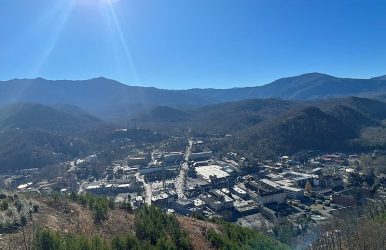
With a burst of colors, melodies of chirping birds, and the tender touch of a mountain breeze, Gatlinburg is the picture-perfect postcard town you’ve always dreamt of.
It’s a place where nature’s majesty meets man-made marvels, creating a harmonious blend of adventure, serenity, history, and charm.
This family-friendly haven in the heart of the Smoky Mountains.
It offers an exciting playground for kids, with valuable lessons waiting at every turn.
It’s time we cast aside the electronic distractions and head outdoors for good old-fashioned fun and frolic.
Dive into this article to discover the top seven reasons why Gatlinburg should be your next family vacation destination.
1. Cozy Corners in Gatlinburg
Imagine a wooden cabin with rustic charm, crackling fireplaces, and panoramic views of lush green mountains, the perfect setting for creating lifelong family memories.
These cozy cabins offer more than just a place to rest your head.
They are a sanctuary for quality time, conversations, and connections.
This allows you to unplug from the rest of the world and unwind in tranquility.
From story time by the fireplace to stargazing from the deck, these moments become the highlights of your trip.
If you're searching for the best cabins in Gatlinburg, you won't be disappointed with the myriad of options, each promising an unmatched hospitality experience.
2. Adventure Parks and Ziplines in Gatlinburg
Kids and adults alike can't resist the adrenaline rush that Gatlinburg’s adventure parks and ziplines offer.
With safety always a priority, these adrenaline-packed experiences are carefully crafted for young and young-at-heart alike.
Imagine the thrill of swooshing through treetops on a zipline or conquering rope courses at one of Gatlinburg’s top adventure parks.
It's not just about the thrill. It’s about building confidence and overcoming fears together as a family.
3. Exploring the Great Smoky Mountains
Introducing your kids to the grandeur of the Great Smoky Mountains is akin to presenting them with a key to a treasure chest of natural wonders.
Spanning over 522,149 acres, it is home to a vast array of wildlife and vegetation, including black bears, elk, and over 1,800 plant species.
Hiking trails offer a vivid display of wildflowers, creating an enchanting canvas of nature’s artistry.
Witnessing autumn's vibrant hues during scenic drives can foster a deep appreciation for nature's transformative cycles.
These experiences, rich in beauty and knowledge, spark curiosity and foster lifelong learning.
Each adventure in the Smoky Mountains plays a significant role in shaping your child's understanding of and respect for the environment.
It promotes preservation, instilling a sense of responsibility toward our planet.
The thrill of spotting a white-tailed deer or the serenity of a distant waterfall echo becomes an unforgettable part of their childhood narrative.
With their wealth of experiences, the Smoky Mountains entertain and educate, reinforcing Gatlinburg’s standing as an ideal destination for kids.
4. Gatlinburg’s Historical Attractions
Gatlinburg is a tapestry intricately woven with threads of rich cultural history and natural splendor.
It offers much more than the eye-catching scenic beauty, standing as a testament to a vibrant historical past.
A journey through Gatlinburg's historical attractions gives kids a living history lesson and a glimpse into the region's bygone era.
Events like the Appalachian Folk Festival offer immersion in local heritage through music, dance, and storytelling.
Here, kids can not only witness but also participate in preserving traditions.
Exploring Gatlinburg’s historic sites and museums deepens their understanding of the past and enriches their cultural awareness, thus enhancing the value of their visit to this extraordinary town.
5. Gatlinburg’s Aquatic Adventure
The phrase 'making a splash' takes on a literal meaning in Gatlinburg, thanks to its thrilling array of aquatic adventures.
Navigating through rushing rapids during a white water rafting expedition offers a heady blend of excitement and challenge.
For those who prefer a more tranquil experience, lounging in the sun by the pool provides an equally enjoyable alternative.
These water activities are designed to cater to all age groups.
Older kids can embrace the thrill of rafting, while younger ones will find endless joy at the water parks.
Amid these aquatic escapades, water safety becomes a vital lesson, making Gatlinburg a destination that entertains, educates, and supports your kids' well-being.
6. Craft Communities and Workshops in Gatlinburg
Gatlinburg's artistic soul breathes life into every visitor's experience, further enhancing its appeal as a family destination.
Integral to this artistic experience is Gatlinburg's renowned Arts & Crafts Community, the largest assembly of independent artisans in North America.
It is a vibrant canvas, an artistic playground inviting exploration and engagement.
Participating in kid-friendly craft workshops is more than a hobby: it gives kids a way to develop artistic sensibilities.
They can use simple materials to craft unique masterpieces and discover creativity's enchanting power.
These workshops also serve as platforms for artistic appreciation and expression, enriching Gatlinburg experiences with colorful hues of creativity.
Related: 4 Must-Go-To Places To Visit In Gatlinburg
7. Gatlinburg’s Dazzling Evenings
Gatlinburg takes on a new persona when darkness falls, enchanting all who witness its nocturnal beauty.
The city magically transforms, creating a captivating ambiance unique to its nightlife.
Many family-friendly attractions come to life in the evening, offering opportunities for bonding and discovery.
Immerse yourself in captivating night shows, strolls, and fairs tailored to mesmerize people of all ages.
These nighttime activities offer a fresh perspective on Gatlinburg, adding diversity to the unforgettable experiences that make it an ideal destination for families and kids.
After a full day of adventure, retreat to the comfort of your cabin as the tranquil Gatlinburg night surrounds you.
Gather around the warm fire and share stories of the day's escapades.
This peaceful conclusion showcases the multifaceted charm of Gatlinburg, a city that continuously delights from morning until nightfall.
Read Also:
4 Reasons You Must Visit Gatlinburg This Summer
Tips To Make Your Vacation In Gatlinburg More Enjoyable





 Related