

11+ Best Beaches In Portugal That You Must Visit Once In Your Life
Sep 24, 2025

Last Updated on: Dec 15, 2025

Europe

The Algarve region in Portugal is home to some of Europe’s best beaches – especially if you love to swim and go on epic hikes! 

It took us only three hours to reach Lisbon. I’ll suggest renting a car and driving to the Algarve because that is the only way you will be able to explore the beautiful coastline. Moreover, parking here is pretty convenient. As a result, exploring the best beaches in Portugal was the perfect road trip. 

On that note, I’ve tried listing down the best beaches in Portugal. My parameters? Well, I’ve got quite a few – check them out before jumping down to my list of Portugal’s best beaches!

  1. Does the beach come with a long coastline and a great view? 
  2. Is the water good for swimming?
  3. What activities can you try? 
  4. How’s the sand?
  5. Is there a restaurant to dine at? Does the restaurant offer takeaway?
  6. How’s the parking?
  7. Can you rent umbrellas and chairs? 
  8. Is there anything unique or rare about the beach?

Stay tuned.

13 Best Beaches In Portugal:

Keeping my parameters, let’s check out the best beaches in Portugal:

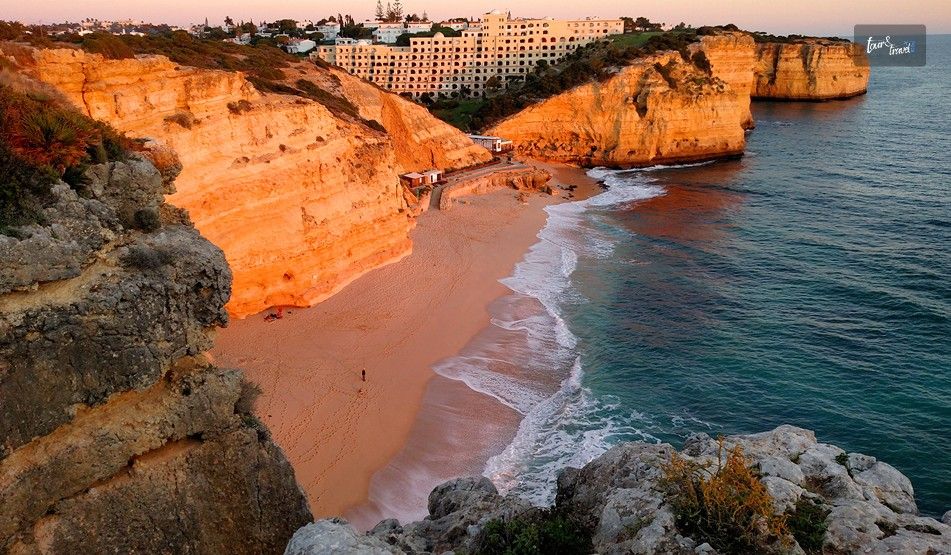
1. Centeanes Beach/Praia Do Vale Centeanes:

Centeanes Beach Praia Do Vale Centeanes

Before I visited Portugal’s beaches, I had no idea about the seaweed phenomenon here. Some beaches are home to so much seaweed (called Saguaro Seaweed) that you will only find small pockets with open water for swimming. 

In contrast, Praia Do Vale Centeanes is perhaps one of the only beaches I found in Algarve that was entirely free from seaweed – the only beach that welcomed us with clear water and golden sand. 

Surprisingly, we stumbled upon this beautiful beach on the same day we visited the iconic Seven Hanging Valleys Trail. And the next day, we were back!

While you are here, you can visit the O Stop Restaurant overlooking the golden sand for a perfect dinner by the beach. I remember we had ordered a bottle of wine and some fried fish on the side. Also, you will find parking easily behind this restaurant – and that is one more reason to definitely check this beach out. 

How Much Will It Cost You?

So, visiting the beach will not cost you anything. Also, parking is free here, so no expenses for that as well. However, if you go on boat tours, it usually starts from $25 – of course, the pricing varies depending on the duration and type of boat you opt for. Also, rentals on the beach come for affordable rates but vary a lot. 

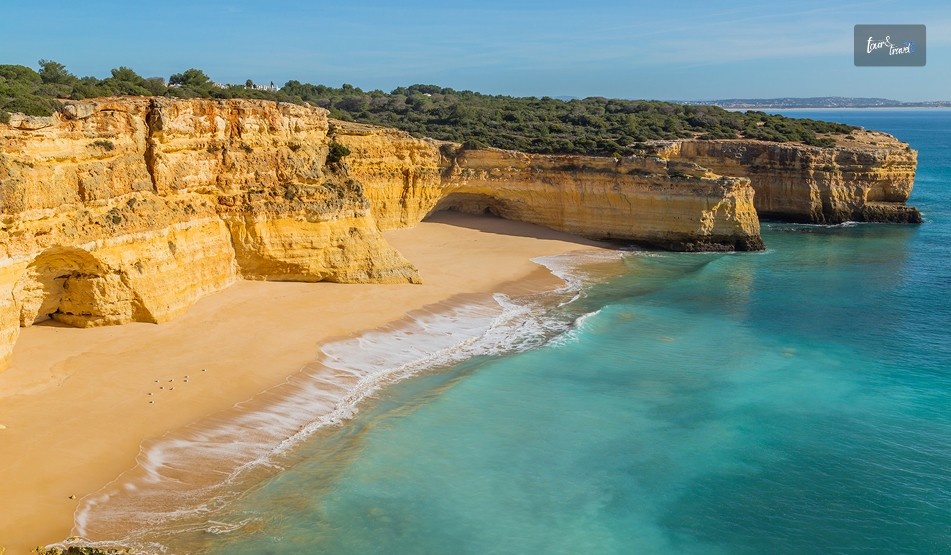
2. Praia Da Marinha:

Praia Da Marinha

While my favorite beach is definitely Centeanes Beach in the Algarve region, there is no competition to the view you get from Praia Da Marinha. For me, it was one of the iconic spots for a breathless view. 

And once you are here, you will know why this stunning view is so famous, making Praia Da Marinha one of the best beaches in Portugal – and the world (I’m not kidding)! Moreover, there is a huge parking lot right above the beach, making it one of the most convenient places to spend time.

How Much Will It Cost You?

Again, access to the beach comes for free. Plus, parking is free here, but it has limited spots (32 free spots when we went) and fills up very fast.

Coming to costs, kayaking starts at $35, and boat tours start at $24. Moreover, private boat tours are somewhat expensive – it will cost you around $294. Of course, the rates vary depending on the duration and the type of tour.

Additionally, if you want to go for the famous Seven Hanging Valleys hike, then it will cost you around $42. 

3. Rafael Beach, Albufeira/Praia De São Rafael:

Rafael Beach Albufeira Praia De So Rafael

This small and sandy beach is great for reading under an umbrella and a few chairs for a day – it’s a very short drive from the town of Albufeira. I stayed here for a day with my partner, and it was a beautiful day! 

The best part? The cove has calm waters – perfect to swim in, and you can even hunt for pink seashells. Right above Rafael Beach, you will find Restaurante da Praia de São Rafael. I recommend going here for a full-blown meal if you get hungry – the restaurant overlooks the water and beach.

I had ordered several Spritzes to go while I was here – it kept us hydrated and somewhat tipsy! Also, I loved how the parking lot is not very far from the beach. 

How Much Will It Cost You?

Access to the beach is free, like most beaches on the list. Also, parking is free, but there are only two free spots that fill up pretty fast. We had parked on the street for free when we were here, but this area also fills up very fast during peak season. 

To explore hidden beaches and caves in this area, you can rent kayaks from Albufeira Surf SUP – single kayaks will cost you $18/hour, and double kayaks will cost you $36. 

4. Pirate Beach/Praia Dos Paradinha:

Pirate Beach is pretty underrated – so much so that you will probably miss it out (now, you won’t!) Just beside the beautiful Praia São Rafael, you will find this underrated gem. I found the beach has rock formations that are super cool – in fact, these appeared to be very interactive. 

Then, you will spot mazes created by rock towers in the sand and caves in the far side of the beach – the best part? You can walk through the mazes and caves. 

While you are exploring the rock formations on Pirate Beach, don’t forget to pause for some time and look closely around you. You will come across an endless number of fossils and seashells embedded in the rocks. I also found a lush (albeit small) waterfall tucked away right behind the cliff. 

How Much Will It Cost You?

Access to the beach is free. But parking is not always free here, especially during peak tourist seasons. Since we stayed in Albufeira, this beach wasn’t that far – only 6.1 kilometers from the town. It took us 12 minutes to reach via Uber – we paid the Uber $33. 

For an underrated beach, kayak tours for exploring caves were somewhat expensive, costing around $45 per adult.

5. Point Of Mercy/Ponta Do Piedade:

Point Of Mercy Ponta Do Piedade

Ponta Do Piedade is not really a beach – it’s more like a cove. But this place has such a beautiful view that it would be a crime not to write about it. Plus, it’s not very far from Lagos, the center – only a few minutes, TBH. 

I had a great time exploring this area – on a kayak with my partner! You can also opt for a paddleboard or a boat, since there are many tours available here. Also, you can consider going on grotto tours via boats running from the grotto’s center. I didn’t opt for this tour because the grotto was 200 steps away.

I don’t mind going downstairs – but coming up? That is very exhausting.

How Much Will It Cost You?

Like most beaches on this list, access to Point of Mercy is free. However, if you want to explore the sea caves and grottos, you can go on boat tours. It will cost you between $24 and $30 for a 75-minute to 120-minute boat tour. 

Also, if you go kayaking (like we did), then you will have to shell out a little bit more. Guided kayak tours here will cost you $47 for a two-hour tour. 

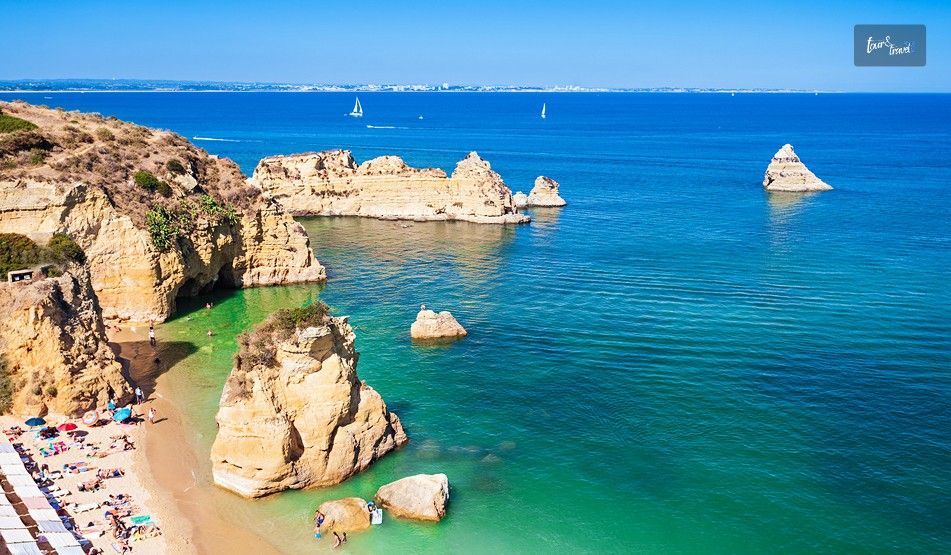
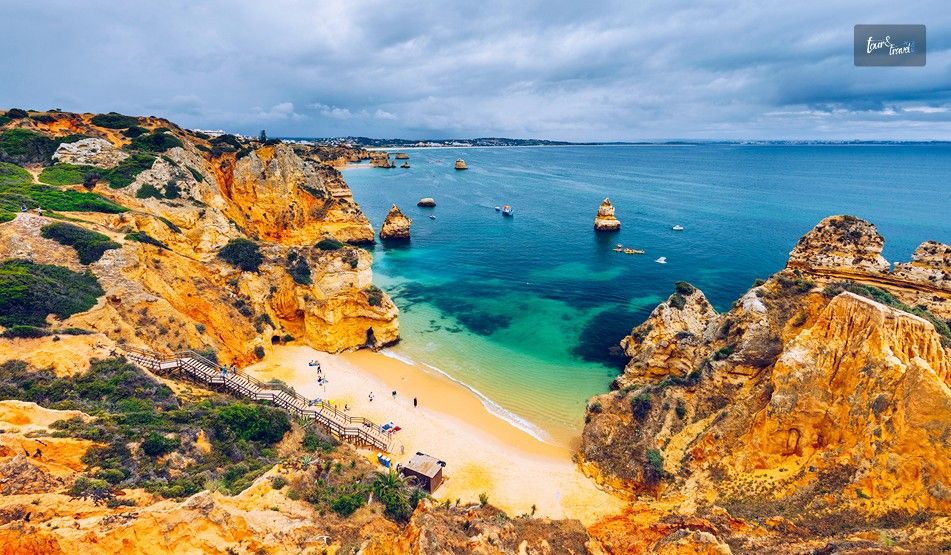
6. Camilo Beach/Praia Do Camilo:

Camilo Beach Praia Do Camilo

While Praia Da Marinha has the best view (without any competition), Camilo Beach comes a close second when it comes to iconic views. 

Naturally, thanks to the stunning views, you can expect the area to get crowded on busy days. In spite of the crowds, I could spend time with my partner relaxing and having a fantastic day. 

You can go swimming or just lie on the soft sand. Also, I want to mention how we found the calmest water in Camilo Beach – the calmest in the Algarve region. 

You will see that the beach has been divided into two different sections. On the left, you will see a cave – walk through it and you will find another cove. And trust me, this one is better than the other cover outside.

Having said that, I was really annoyed with the 200 or so steps we had to take just to reach this beach – but in the end, the view made it worth the physical exhaustion. 

How Much Will It Cost You?

Access to the beach is free, and the parking is free as well, but then again, there are only limited free spots available. In case you want to avoid dealing with parking issues, you can choose to walk – it’s a 5 to 10-minute walk from Lagos. 

While it might seem expensive, think about the amount of money you spend on recreational purposes at any given time. 

For instance, I bought this percolator bong with my disposable income, and while it doesn’t serve me a purpose every day, it makes me happy on the days I use it.

Similarly, you can look at travel money as something that might not add value to your life every day, but it is certainly worth every penny when you think about it.

7. Praia Do Carvoeiro, Carveiro:

Praia Do Carvoeiro Carveiro

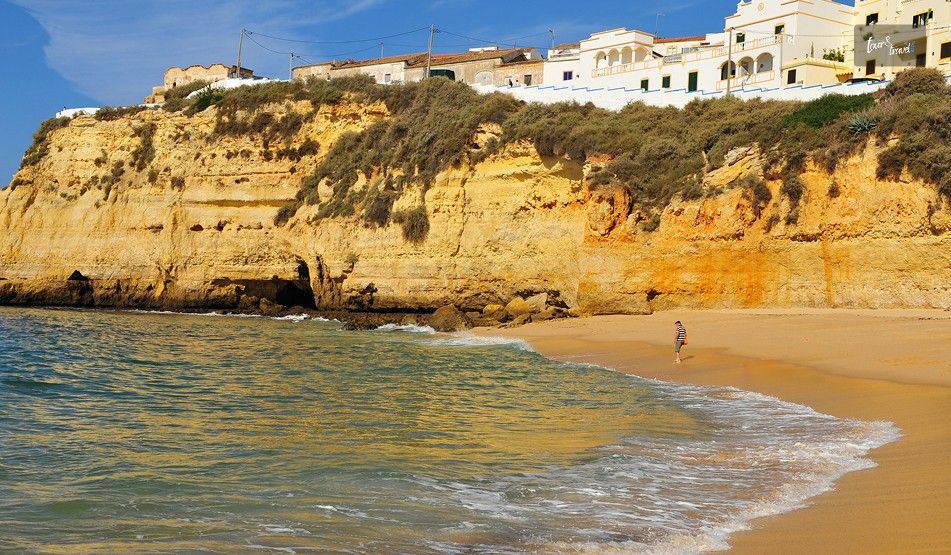
Carvoeiro is a small fishing village that we had visited primarily because I am obsessed with fish (sorry, I love to eat fish and see how fish farming works)! At the heart of this fishing village, we found the picturesque beach of Praia Do Carvoeiro.

Surrounded by whitewashed houses and golden limestone cliffs, Praia Do Carvoeiro offers a postcard-like setting.

This sandy beach is beautiful and is known for boat tours to the well-known Benagil Cave. Apart from this beach, Carveiro is a charming village – so many cafés, restaurants, and shops. Also, definitely stop by the coastline and check out the Carvoeiro Boardwalk for the best views.

How Much Will It Cost You?

Access to the beach is obviously free. For rentals like umbrellas and sunbeds, it will cost you $36 for two. During peak summer months, costs for rentals can go up to $40. 

Also, boat tours start at $42 – you can go for a two-hour-long Benagil & Marinha tour, or you can also go for the Benagil Long Boat tour.

8. Praia De Benagil:

Praia De Benagil

Only a while ago, I had mentioned the world-famous Benagil Cave – one of the most famous sea caves in the world. 

The cave is home to natural sunlight and a stunning dome-shaped roof – you can access the cave by kayak, paddleboard, or boat. This time, we decided to go on a boat tour, ditching kayaking in the process. 

And you cannot miss out on this spot – while you are here, you should definitely visit Benagil village. 

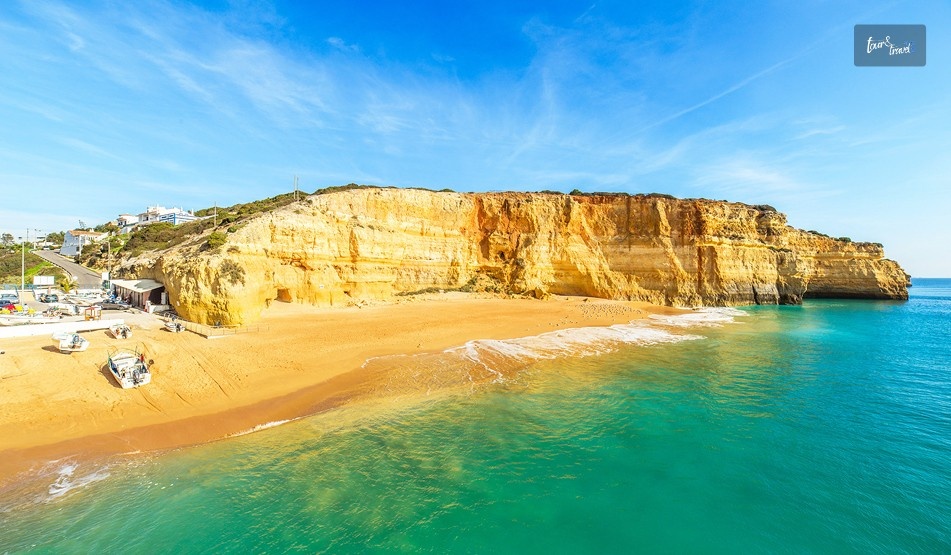
Close to this village, we found a small beach, Praia De Benagil, protected from the world and tucked away behind towering cliffs. You can easily access the beach by car – plus, you will find nearby parking as well.

How Much Will It Cost You?

You can access this beach for free. However, to visit the popular Benagil Cave from this beach, you can opt for guided boat tours – it will cost you between $24 and $59. Moreover, you can rent equipment (SUP/kayak) from here – it will cost you $48. Also, guided kayak tours are available, ranging from $41 to $59 for an adult. 

9. Praia Do Peneco, Albufeira Old Town:

Praia Do Peneco Albufeira Old Town

Algarve’s top party destination is hands down Albufeira. So, if you are planning a night of debauchery and staying out late, then you have to spend a weekend in Albufeira! 

While we were here, we were super lucky – out of the two days I spent in this town with my boyfriend, I stumbled upon a crazy music festival on the beach! The next day, we visited the old town and parked outside just so that we could walk around. 

While you are here, definitely check out Café Mané for some delicious breakfast and great coffee. I will also recommend Alfredo’s if you love Italian food – this diner is super cozy and serves delicious food. 

How Much Will It Cost You?

The beach has free access, so there’s no cost to enter and access the beach. Parking is not free, and rates tend to vary during busy seasons. We had taken a taxi from Albufeira, and it cost us $10, which makes this commute alternative fast and convenient.

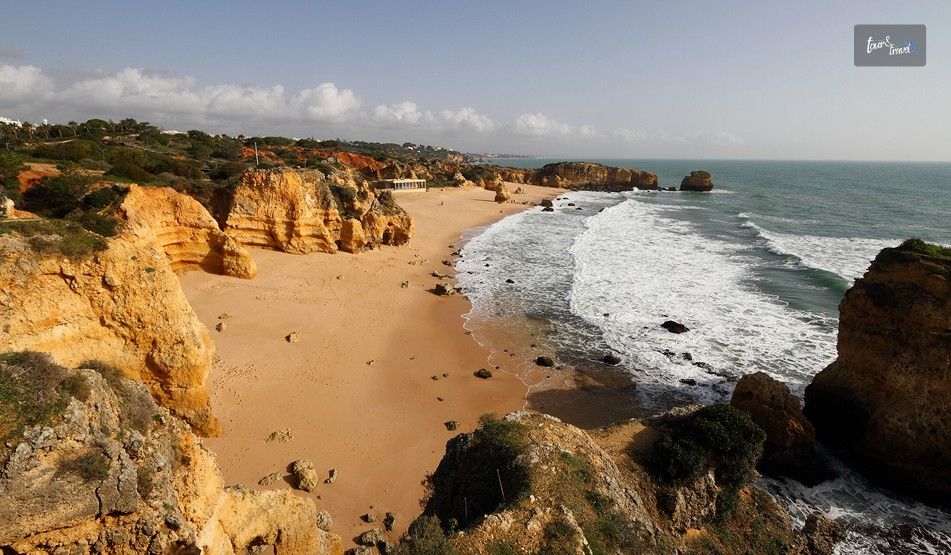
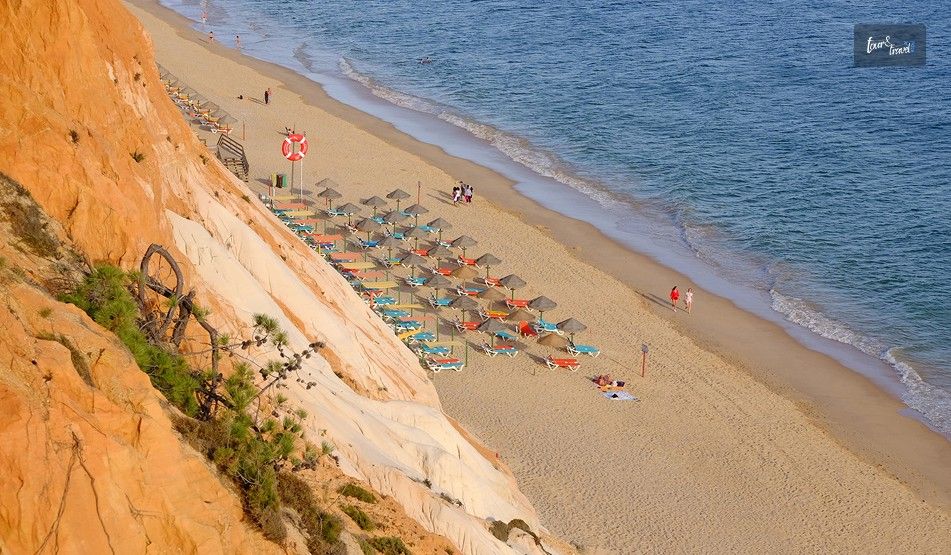
10. Falesia Beach/Praia Da Falesia:

Falesia Beach Praia Da Falesia

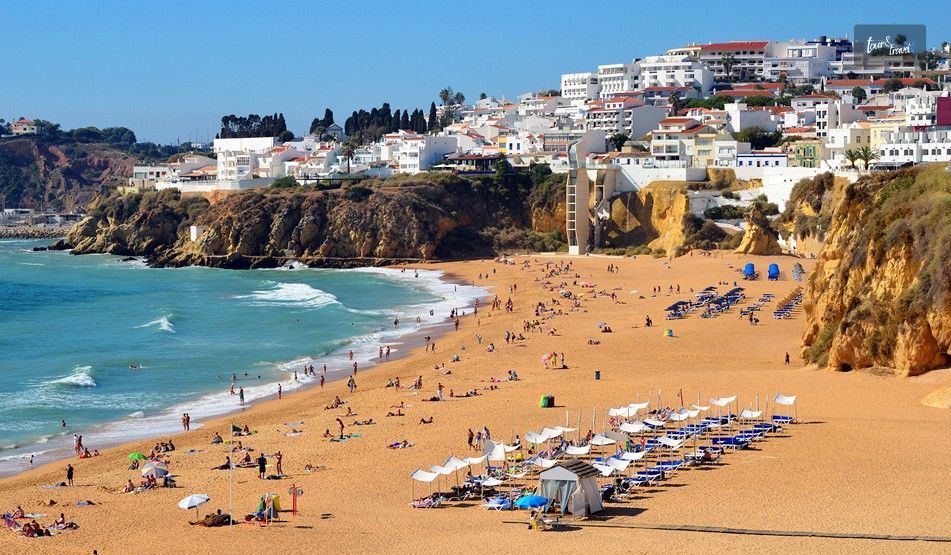
I loved Falesia – it was the Algarve’s longest beach with an uninterrupted coastline that goes for miles. We rented an umbrella (you can bring your own umbrella too) and spent time being lazy on the sand.

Also, the beach is home to deep orange and red cliffs – something we had not seen before in this region. Moreover, if you get hungry, then you can check out the restaurant perched above the cliff – you can sit here for a meal or get some drinks and snacks on the go. 

How Much Will It Cost You?

Access to the beach is free. Of course, you can rent umbrellas and sunbeds at different spots on the beach, especially close to Vilamoura – this place is home to several fun beach clubs. 

Also, you can go on various tours from this beach. The cave and dolphin tours will cost you somewhere between $49 and $55. Then, luxury boat tours will cost you $61, while paddleboarding is priced between $38 and $43.

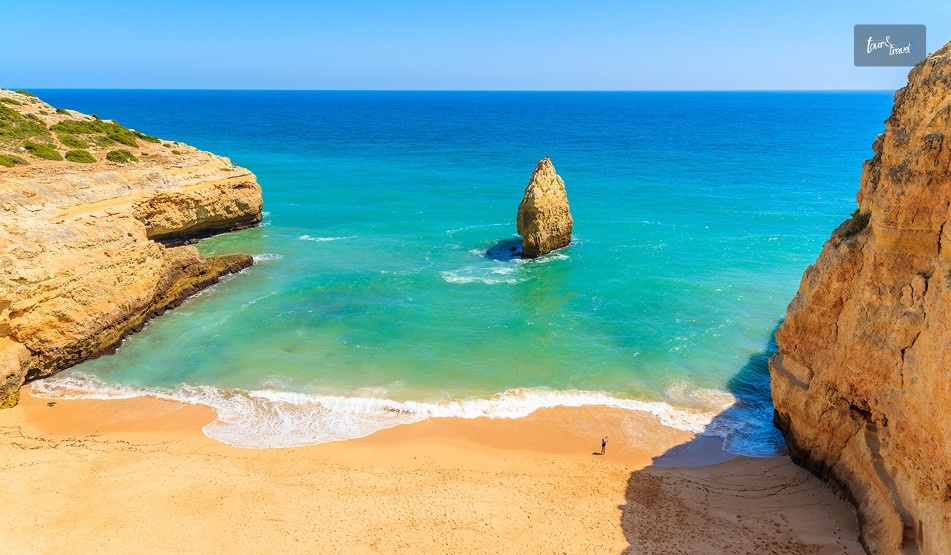
11. Carvalho Beach/Praia Do Carvalho:

Carvalho Beach Praia Do Carvalho

Carvalho is a cozy, small cove, hidden between cliffs. I’ll tell you why it’s one of the best beaches in Portugal. You can’t access this beach with a vehicle – you have to walk down stairs that have been carved into the stone, literally through a tiny cave. 

Unlike most people who love lying under the sun, I am not a big fan of getting tanned – and this is precisely why I loved this beach so much. Most parts of the beach are free from the sun, but for people who like lying in the sun, there is a big rock peninsula. 

However, we had ordered food from O Carcaca Truck located above the beach – it was terrible. So, avoid this food truck when you are here.

How Much Will It Cost You?

There’s no entry fee for entering Praia Do Carvalho – yep, you can access the beach for free. The problem is dealing with parking – parking is usually free with limited spots, but during peak months, you have to pay to park your car. 

12. Burgao Beach/Praia Do Burgao:

The Algarve is home to another charming fishing village, Burgau. We fell in love with the blue-accented, white-washed buildings – it was like stepping into a movie. Moreover, my boyfriend and I are not fans of crowds, and Burgao was exactly that – free from crowds!

The village and the nearby beach have a tranquil, calm vibe. Also, there are so many cute cafes and restaurants. 

If you have time, spend time at Love Burgau, a lovely bar and cafe – you have to eat their specialty sourdough pizza. It was absolutely delicious – the best pizza I have had in months!

How Much Will It Cost You?

Access to the beach is free. However, the beachside parking has limited spots – so, arrive early if you want to avoid paying for parking. 

Once the beachside parking fills up, people have to park in the surrounding areas and pay rates that vary locally regularly. We spent time relaxing in the comforting atmosphere – the beach’s natural beauty made us too lazy to explore much.

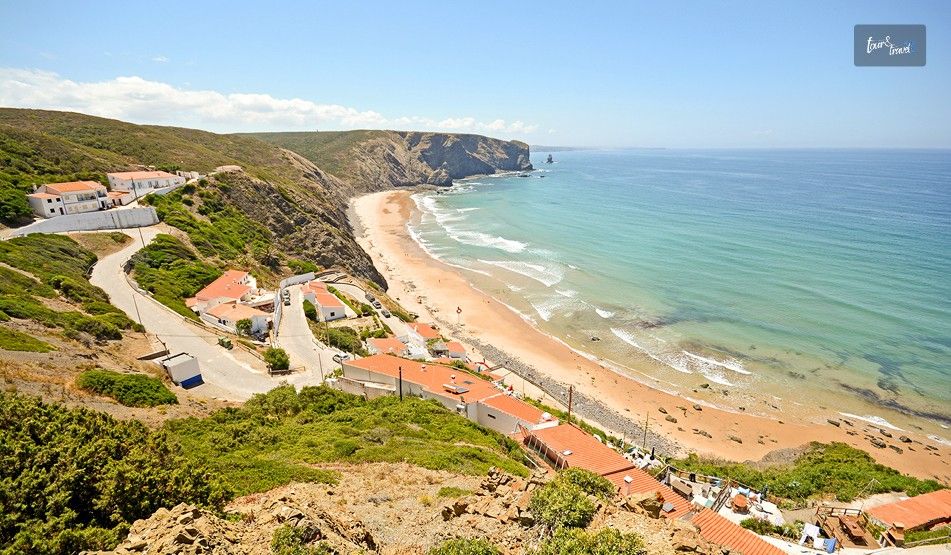
13. Praia Da Arrifana, Aljezur:

Praia Da Arrifana Aljezur

The West Algarve is somewhat different from the rest of the region – the beaches certainly have a different vibe. Moreover, the area is actually even known as the California of Europe – and rightly so. 

We drove to the western Algarve directly from Lisbon – and it certainly felt like a true Californian beach town! The crispy air, the agave, the cactus, the salty small – all felt like Southern California. Once we reached, we decided to stay in Aljezur, a town popular for its surfing culture and rugged beauty. 

The largest beach near this town is Praia da Arrifana – and it’s a must-visit! Also, if you visit the beach, don’t forget to check out Cal Arrifana Restaurant. We really liked the food at this laid-back restaurant. Moreover, we visited a few places in Aljezur (because we love eating) – and our favorite was a yummy dinner at Tamrab Thai.

How Much Will It Cost You?

Again, like all beaches on this list, access to this gorgeous place is free, but parking here is not free – the rates vary locally. However, we didn’t take our car – we had taken a taxi, instead. Yep, taxis will cost you between $16 and $22, depending on your location in the Aljezur area. Also, public buses and shuttles are your other commute alternatives.

Are Beaches In Portugal Safe?

The best beaches in Portugal are safe, with available lifeguards during peak months and warning flags; safety is not an issue on these beaches. Having said that, it is vital to understand that your safety is always in your hands – you should be responsible, thanks to unpredictable dangers such as rip currents, falling rocks, jellyfish stings, and Atlantic currents. 

On this note, remember to follow warning flags and local advice, since drowning incidents are not uncommon here. Also, the authorities can fine you for not following the rules.

Frequently Asked Questions:

Check out the most frequently asked questions about the best beaches in Portugal:

1. Which Part Of Portugal Has The Best Beaches?

Portugal is home to some of the world’s best beaches. So, if you are looking for beautiful, sandy beaches in this country, then you have to explore the Algarve region. I was here for a whole month exploring the popular and underrated beaches – and the Atlantic has never looked more beautiful. 

2. Where Is The Warmest Beach Water In Portugal?

Praia da Barreta is the beach with the warmest water in Portugal. Yep! Located in Faro’s Deserta Island, this beach experiences average temperatures that range between 20°C and 24°C. While most beaches in the Algarve region buzz with crowds and activity, Praia da Barreta practically remains a deserted beach, albeit a tranquil one. 

3. Are There Any Sandy Beaches In Portugal?

Yes. Portugal is home to several long and sandy beaches, perfect for families. I’ve listed several beaches in my blog that have endless sand areas like Praia Do Vale Centeanes, Rafael Beach, and Praia Da Falesia. 

4. What Is The Most Photographed Beach In Portugal?

Praia da Marinha is the most photographed beach in Portugal – at least as per my Instagram feed and Google’s AI Overview. And once I reached here, I realized why – it is one of the most iconic beaches in Portugal, thanks to its golden sand, miles of coastline, and breathtaking view. 

5. What Is The Most Beautiful Beach Town In Portugal?

The most beautiful beach towns in Portugal are Albufeira, Lagos, and Tavira in the Algarve region. Also, you will find some beautiful and charming beach towns near Lisbon and the central coast, such as Sesimbra, Cascais, and Ericeira.

Read Also:

Share on Social Media

Barsha Bhattacharya is a senior content writing executive. As a marketing enthusiast and professional for the past 4 years, writing is new to Barsha. And she is loving every bit of it. Her niches are marketing, lifestyle, wellness, travel and entertainment. Apart from writing, Barsha loves to travel, binge-watch, research conspiracy theories, Instagram and overthink.

Leave a Reply

Your email address will not be published. Required fields are marked *

title-img Related

READ MORE best beaches in Greece

9 Best Beaches In Greece That You Must Visit Once In Your Life
BY  Barsha Sep 26, 2025

With more than 200 inhabited (and beautiful) islands dotting the Ionian and Aegean Seas, Greece is definitely a beach lover’s paradise. However, with so many stunning options, it can get very overwhelming to find out which island is perfect for a sun-soaked getaway.  And I’ve been there, truly! But then my partner and I have always hated crowds - plus, all the popular islands were too expensive. So, our aim was simple - to find the best spots in Greece.  If you explore them and fall in love with one of them, you may decide to buy a property here for your holidays or for rental. On that note, I’ve listed the best beaches in Greece. My parameters? Well, I’ve got quite a few - check them out before jumping down to my list of Greece’s best beaches - and yes, all of them are located in Milos.  Does the beach come with a long coastline and a great view?  Is the water good for swimming? What activities can you try?  How’s the sand? Is there a restaurant to dine at? Does the restaurant offer takeaway? How’s the parking? Can you rent umbrellas and chairs?  Is there anything unique or rare about the beach? Stay tuned. 9 Best Beaches In Greece: Keeping my parameters, let’s check out the best beaches in Greece: 1. Kleftiko Beach: Kleftiko Bay, a truly magical place, ah! This protected bay is home to crystal-clear turquoise water, hidden sea caves, and dramatic white cliffs. In fact, the sea caves were actually used by pirates as a hideout.  This beach is an iconic spot in Milos - and for all the right reasons. The beach was stunning, and the view? Absolutely worth every single penny. Technically, it's not really a beach - it was a sort of bay. Still, for me, this was one of the best beaches in Greece. Now, coming to the beach’s accessibility, you just can’t walk to this bay. Yep, there’s no road that directly leads to this bay. In fact, you can access this boat only by boat. However, there’s a three-mile hike that you can take - it leads directly to the beautiful bay.  My boyfriend is a professional mountaineer, and there’s no way he will compromise on the hike! So, he convinced me that this would be a great experience - and like always, he was right!  When you descend, you will get a stunning perspective of the entire bay. We found a few flat rocks at the very bottom and paused for a break to soak in the breathtaking view around us.  Later in the evening, we went back to this bay - but this time, we opted for a speedboat tour, and it was a different experience, much like checking out the same view from two different perspectives.  How Much Will It Cost You? Access to this beach is completely free. However, we recommend boat tours - and those will cost you between $35 and $70 for half-day tours and around $117 for a full-day tour.  2. Kolympisionas Beach: Kolympisionas Beach is perhaps the most underrated beach on this list. Thanks to Away Lands, a fellow travel blog, I first read about this beach - and it made it to my bucket list. When I reached here, I realized this was indeed worth the effort and time! The best part? This is so underrated that you will not even find it by its English name on Google Maps. So, if you are looking for a beach where you can enjoy the isolation, then this is your best shot!  It was Summer, and everywhere we went, we were greeted with crowds. But this was a complete surprise. We had just hiked from Milos Cove Hotel without knowing what we could have found at the end of the trail, ending up at this private cove.  Also, thanks to the unpaved roads here, it is best to rent an ATV or SUV for an entire day to drive around. There’s so much to explore in easy Milos - so the extra expense on commuting is necessary and absolutely worth it.  Moreover, if you have been dreaming about going skinny dipping at least once in your life, this is the spot! (We might have done it, and it was one of the best highlights of the trip.) How Much Will It Cost You? Like most European beaches, entry to this beach is free. You can rent umbrellas and sunbeds in different areas on the beach - but the rates tend to vary. While a set of sun loungers and umbrellas cost $94 at one spot, they cost us as little as $36 in another area. If you add food and drinks, it will cost you around $140. 3. Firiplaka Beach: We found the Firiplaka Beach on the island’s southern coast. It is one of the best beaches in Greece to rent an umbrella and a chair for spending an entire day lounging by the sea. Once here, you can enjoy the crystal-clear blue water, the soft sand, the wide bay, and the surrounding calmness.  Moreover, you can rent paddleboards and kayaks from a small beach shack here. Plus, we had a great time at the beach bars - sipping on cocktails and lounging in comfy chairs.  For people who are up for some exploring, you can walk down the beach towards the candy-colored rocks - you can explore the private, sandy inlet near the rocks. Also, if you don’t want to rent sunbeds, then don’t forget to carry an umbrella or a hat because the beach has no shade.  How Much Will It Cost You? Access to the beach is free, so you can enjoy the water and swim around for free. We rented a set of sun loungers and umbrellas for $60. However, we found out later that some places on the beach offer the same things for only $35 - so, it’s better to ask around before renting umbrellas from the first place you spot.  4. Mandrakia Beach: Mandrakia, a fishing village that was right out of a European movie! This classic Greek village is home to traditional whitewashed buildings, colorful fishing shelters, and vibrant boat garages beautifully carved into rocks - the view? Postcard-perfect!  Moreover, the beach is the right blend of small sandy spots and rocky outcrops, making it a unique spot for sunbathing and swimming. The water is crystal-clear in the small port - that way, you can just go down the colorful steps and jump into the water from the dock.  Also, being a food junkie, I dragged my athletic partner to several places serving delectable food - my favorite? One of the most iconic restaurants of Milos, Medusa, stood out for its fresh seafood and the view.  How Much Will It Cost You? Access to this underrated beach is free. There are some spots to order food from, but I suggest spending money on exploring this classic Greek fishing village.  5. Firopotamos Beach: Only a few minutes from the beautiful Mandrakia, we found another charming little village, Firopotamos. This scenic seaside village is literally perched on a cliff with crystal-clear, turquoise water.  You can rent umbrellas and sunbeds on the beach. Plus, there’s a cool beach bar here, if you want to sip on cocktails while enjoying the view like us!  Moreover, there’s a road from this tranquil cover - if you walk up this road for a few minutes, you will find stone ruins open to the visitors.  We had gone to explore these ruins behind the church, and guess what? We realized these ruins overlook the whole bay and are worth spending time at.  In addition, you can rent small, waterfront houses here and stay in some of the most beautiful places in Milos. However, we had to book our house months ago since people book them in advance - and that too months ago. So, do plan early if you want to stay in these charming little houses.  How Much Will It Cost You? Access to this beach is free. We rented a set of sunbeds for $20 - the rates tend to vary between $12 and $35, depending on the season. Also, I got very drunk here and ended up paying the beach bar $80 for the cocktails.  6. Agkali Beach: The beautiful Milos Cove Hotel has a hidden cover inside with a picturesque ambience (similar to that of a private beach) and candy-colored cliffs - welcome to the unbelievably beautiful Agkali beach.  You will only need one thing to access this beach - you have to stay in the Milos Cove Hotel. Yes, the beach is only open to hotel guests. Moreover, you can easily reach the beach by boat. Otherwise, the drive is not very comfortable thanks to the unpaved roads - it’s a rocky paradise out here.  While we were here, we were mesmerized by the rocks scattered everywhere on the beach - the rainbow of colors and the beautiful striations made it unique and memorable. How Much Will It Cost You? This is a common problem with all beaches in Greece - prices tend to vary a lot. And Agkali beach was no different. Access to the beach is free, and the boat ride to the beach costs us $47.  7. Sarakiniko Beach: Sarakiniko Beach is famous - it literally put Milos on the map for having some of the best beaches in Greece. This beach is known all around the globe for its beautiful moonscapes.  Walking around in this cove of white rocks almost felt like walking on another planet, especially when the light starts dropping before sunset. Truly, the landscape here is something I am sure I won’t see anywhere else - you have to see the white rocks in both their evening glory and under the bright sun.  Also, if the water is calm, you can experience cliff jumping since the edges of cliffs here jut out over the water. But in case the winds pick up and the water seems to be relatively rougher, be cautious about your swimming skills. How Much Will It Cost You? Access to the beach is free. Renting sunbeds and umbrellas will cost you between $12 and $18. If you go on a land excursion in Milos with Sarakiniko as a stop, it will cost $440 for every traveller. Moreover, you can do the same via boat - in that case, it will cost you around $150. 8. Kalamos Beach: Kalamos Beach is not a beach - rather, it's a tiny, pristine strip that was accessible only by boat. The sand here looks like nobody has ever stepped on it.  And the thing about such beaches is that they're a rarity in the world we are living in currently. As a result, swimming around in the water here was an incredible experience.  Moreover, if there’s one activity that you have to try, then that would be to go on a boat tour. My partner planned one for me. We rented a speedboat and spent an entire day exploring the water, hidden beaches, beautiful bays, and coastlines.  You can do the same - there are different companies offering boat tours everywhere on the island, starting from party boats to boats for small groups. How Much Will It Cost You? Kalamos beach has no entrance fees. Renting a set of sunbeds and umbrellas will cost you between $12 and $24. In some spots, it will cost you $24 to rent sunbeds, but it comes with a cocktail or beer.  9. Paralia Paleochori Beach: The only reason I visited this stunning beach and wrote about it in this list is its unique landscape - a volcanic landscape and colorful cliffs with a blend of pebbles and soft sand.  What we found especially unique here was the cove’s natural warm water due to geothermal activities taking place under the water.  As a result, stem vents close to the shoreline make the sand somewhat warm, even in the cold. So, if you are planning a trip during the summer, it's best to wear sandals to protect your feet from hot sand.  While we were here, we did visit the popular (and super expensive) Sirocco Volcanic Restaurant, a pricey restaurant in Milos close to the Paralia Paleochori beach. The USP? The restaurant is famous because it cooks fish directly in the heat from the volcanic sand. The reviews aren’t lying - the food here is delicious and the place is a must-visit.  How Much Will It Cost You? Paralia Paleochori beach is somewhat expensive compared to the other beaches on this list. As a result, renting a set of sunbeds and umbrellas will cost you between $47 and $94. Are Beaches In Greece Safe? Yes, the best beaches in Greece are usually safe, famous for their calm water and clean environment. Having said that, it is always vital to be aware of all potential risks, including underwater hazards such as jellyfish and sea urchins, riptides, strong sun, and even theft.  Also, it is vital to check warning flags, wear appropriate gear (especially footwear), follow rules (including what the lifeguard says), and protect yourself from the sun for a safe experience.  Frequently Asked Questions: Check out the most frequently asked questions about the best beaches in Greece: 1. Is Milos Cheaper Than Crete? Yes. It is cheaper to plan a trip to Milos - instead of Crete. The islands of Milos have a laid-back atmosphere and are much smaller in size, with several budget-friendly options for food, lodging, and local experiences, making the island a cost-effective spot for travel enthusiasts.  2. What Is The Cheapest Month To Visit Greece? While you will find the most budget-friendly options between November and March, each month comes with its own set of unique experiences and advantages. So, whether you feel like making the budget a priority or seeking fewer crowds and pleasant weather, planning a trip as per these insights will make your Greek holiday memorable.  3. When Not To Visit Greece? Summer is very hot in Greece, especially close to the sea. This warm weather and heat make the experience uncomfortable, especially when you are visiting historical spots or enjoying any outdoor activity during the day. So, it’s best to avoid a trip to Greece in any extreme weather conditions - it's best to visit in autumn or spring.  4. Which Greek Islands Are Not To Visit? It's best to avoid Santorini and Mykonos if you are not a fan of high prices and crowds, since these islands are expensive and overcrowded. Then there are other islands that you can avoid, depending on what you prefer. For instance, we picked Milos because it's one of the most underrated islands of Greece. Read Also: The Best Luxury Villas Greece Le Collectionist: Why Are They Unique? Seven Reasons To Visit The Stunning Greek Ionian Islands A Beginner’s Guide To Island-Hopping In Greece

READ MORE south of france

What Is South Of France? What Will Be The Perfect South Of France Itinerary? 

BY  Sibashree Aug 13, 2025

Key Highlights: What Is The South Of France? Why Is The South Of France So Popular? Where To Go In South Of France? How Does A Perfect South Of France Itinerary For 7 Days Look Like? Where To Stay In The South Of France? Where To Visit In The South Of France On A Budget? What Are The South Of France Cities Near The Beach? What Are The Most Beautiful Places In Southern France For Young Adults? What Is The Best Time To Visit The South Of France? Home to the Cannes Film Festival and the Monaco Grand Prix and blessed with 300 days of Sunshine in a year, the South of France is the ultimate luxury tourism destination.  The region also appeals to global travelers with the best wines, such as Bordeaux, Languedoc, Cahors, and Armagnac brandy. So, it is no wonder that the South of France is a crown jewel in the French luxury tourism landscape, about to reach $53.6 billion by 2030. Moreover, the South of France is home to many luxurious hotels, chateaux, and villas, such as Le Collectionist luxury villas in Provence. These high-end accommodations cater to ultra-high-net-worth travelers and ensure a premium experience.  However, there is more to visiting the South of France. Natural abundance, cultural heritage, and great food make it a destination for wholesome travel delights.  In this Tour and Travel Blog, we will explore the various aspects of the South of France and why it is a dream destination. We will also share a 7-day itinerary so that you can plan the trip well.  What Is South Of France?  The South of France is a district region, comprising Provence-Alpes-Côte d’Azur. Provence-Alpes-Côte d’Azur (PACA), itself, is a combination of six district departments. Those are: Alpes-Maritimes Bouches-du-Rhône Alpes-de-Haute-Provence Hautes-Alpes Vaucluse Var This region caters to every type of traveler and is almost an epitome of the natural wonders we love to visit.  The French Riviera beaches complement the rugged beauty of the Alps here. On the other hand, Provence promises the most quaint experience with vineyards, small villages, and hills smelling like lavender.  You can add to that the cultural and artistic heritage of Aix-en-Provence and the cosmopolitan vibe of cities such as Avignon and Marseille. Marseille especially indulges you with the charm of the French good life, and it’s for wanderers who just want to travel slow and connect.  Bordeaux with its best wines and vineyards, Verdon Gorge with its serene green landscape, and Camargue with its wetlands and wildlife are other prominent destinations in the South of France. Why Is South Of France So Popular?  Gorgeous seaside towns The majestic Alps Roman ruins Medieval villages Long stretches of vineyards The Best wines The tranquility that makes you connect to nature! These are reasons why everyone loves the South of France. Now, nobody will take away the best from the South of France. However, some new developments make the South of France more popular among modern travelers.  1. Better Accessibility And Travel Connectivity: How To Reach The South Of France? The South of France is well connected to Paris. You can take a flight from Paris, and it takes around 90 minutes to cover the distance.  Furthermore, you can take the SNCF Connect sleeper train, running from Paris to Cannes or Nice. For a more luxurious journey, board Belmond’s Venice Simplon-Orient-Express from Paris to Cannes.  It is an 18-hour journey with breakfast and gourmet meals.  Irrespective of the train you choose, you can buy the unlimited rail pass for the commute between Paris and the South of France.  2. Urban Improvements To Enhance The Experience Of Global Travelers  Nice has been a UNESCO World Heritage Site since 2021. It now has the Promenade des Anglais, which is ideal for strolls and tourists who love to explore the city on foot.  Furthermore, today, the sidewalk looks beautiful with many trees and cafe terraces.  Moreover, the new Convention Center here just hosted the U.N. Ocean Conference 2025 in July. Also, it is likely to have a tram line directly connected to the airport and a pleasure port for excursions on boats. 3. Aix-en-Provence Is To Have New Cultural Sites And Updated Museums Atelier des Lauves, the studio of the famous French impressionist, Paul Cezanne, reopened in Aix-en-Provence on 28th June, 2025.  Also, Jas de Bouffan, his family’s home, was opened for the first time. Fondation Maeght in Saint-Paul de Vence, the first independent art foundation of France, just had an expansion to celebrate its 60th anniversary last year. After the expansion, the foundation now has an exhibition space of 5,300+ square feet.  This space shows the works of Pablo Picasso, Alberto Giacometti, and Marc Chagall.  Furthermore, Nice’s Musée Matisse reopened in 2024 after a long period of renovation work, and La Malmaison, the contemporary art exhibition space of Cannes, reopened.  4. The Celebration Of Perfume Heritage In South Of France  The South of France is the Mecca for a perfume connoisseur. The Rose et Marius in Aix-en-Provence or the factory of L’Occitane en Provence in Manosque have enhanced the tourism experience for tourists having a keen interest in fashion and perfumes.  Moreover, at Rose et Marius, you can attend a workshop and design your own perfume. On the other hand, you can register online and visit L’Occitane en Provence for a face diagnostic and get a free hand cream.  5. For The Love Of Ceramics And Pottery  Marseille, the port city of the South of France, is now emerging as the new hotspot amidst all the glamor and glitz of the French Riviera.  Since the COVID-19 era, many Parisians have also moved to Marseille for the quality of life, and the high-speed train ride to this port city from Paris is an amazing experience.  Furthermore, Aubagne, just outside this city, is a popular destination in the European ceramic landscape. Ravel Poterie, Santon Di Landro, and Louis Sicard are some important potteries here. Where To Go In South Of France?  The South of France has many options if you want to experience the ultimate French beauty. However, here are our favorite destinations in the South of France. 1. Nice And Alpes-Maritimes Nice, the capital, and Cannes are two landmark destinations in Alpes-Maritimes.  Furthermore, Nice is a cultural hub with Matisse and Chagall museums and the Promenade des Anglais.  Cannes, with its glitz and glamor and, of course, the much-celebrated film festival, is a global name in cultural tourism.  Also, this region has the town of Grasse, “The Perfume Capital of the World,” and Antibes, housing the Picasso Museum and wonderful beaches.  2. Bouches-du-Rhône And Marseille Marseille, the capital of Bouches-du-Rhône, is a crown jewel in the tourism of the South of France. Some important cultural and historical landmarks here are: Basilique Notre-Dame de la Garde MUCEM museum Arles here is a standout place, being home to the Roman amphitheater and its connection with Van Gogh.  Moreover, the Camargue wetlands, with flamingos and wild horses, and the Calanques National Park with limestone cliffs are prominent natural wonders in thai region.  3. Var And Its Capital, Toulon Mediterranean coastline A vibrant nightlife Rich maritime history A beautiful harbor Var and its capital, Toulon, are famous for all these things. Furthermore, you will love the quiet beaches of Îles d’Hyères and areas like Bandol with expansive vineyards and massive production of rosé wines.  4. Avignon And Vaucluse Along with the quintessential Provençal countryside charm, Vaucluse remains an important historical and cultural landmark in the South of France.  Vaucluse, its capital, has a performing arts festival every year in July. On the other hand, Orange has one of the best preserved Roman theaters, and it still hosts many performances. Pont d’Avignon and Palais des Papes are other important landmarks in Vaucluse.  In addition, Valucluse offers you the most peaceful retreat in the Luberon region, filled with beautiful rolling hills, quaint villages like Roussillon, and vineyards.  5. Alpes-de-Haute-Provence And Digne-les-Bains With Digne-les-Bains as the capital, Alpes-de-Haute-Provence is famous for thermal baths and lavender fields. It is also home to Gorges du Verdon, the largest canyon in Europe, and a beautiful hilltop town with a citadel, Sisteron.  Also, don’t forget to visit the Lavender Museum and the Valensole lavender plains in summer.  Moreover, if it is Jean Giono who introduced you to the South of France, you must explore Manosque, the writer’s hometown. 6. Hautes-Alpes And Gap Hautes-Alpes is famous for the beauty of the French Alps. Gap is the capital city, and Haute-Alpes is also home to the Écrins National Park, a popular summer destination for hikers thanks to its dramatic cliffs and glaciers.  Also, Hautes-Alpes has Briançon, one of the highest mountainous cities, and it is a UNESCO World Heritage Site because of the Vauban fortifications.  How Does A Perfect South Of France Itinerary For 7 Days Look Like?  Here, we have made a sample 7-day itinerary for you in the South of France. As I am yet to make it to the South of France, I have made this itinerary based on my online research and after consultation with a local travel expert. 7-Day Itinerary for the South of France Activities and Places to VisitDay 1• Exploring Marseille and traveling to Aix-en-Provence• Visiting the fountains and the Cours Mirabeau in Aix-en-ProvenceDay 2• Visiting the Luberon Region and exploring beautiful villages such as Roussillon and GordesDay 3• A trip to the Calanques National Park, boating, and kayaking thereDay 4• Visit Nice and enjoy the vibe at the Promenade des AnglaisDay 5• Monaco day tripDay 6• Explore Antibes and its Picasso MuseumDay 7• Day trip to Cannes Where To Stay In South Of France?  View this post on Instagram A post shared by Le Collectionist (@lecollectionist) I have already mentioned that the South of France, being a luxury tourist destination, has high-end villas such as Le Collectionist villas in Provence.  Furthermore, you will find many short-term and long-term holiday rentals for improved privacy at a more reasonable rate.  Also, Hotel Port Palace in Monte Carlo or Le Negresco in Nice are some luxurious hotels in this region.  Moreover, the Provence region, Côte d'Azur, and Languedoc-Roussillon have some amazing campsites if you want to spend your days in Southern France in the company of nature. What Is The Best Time To Visit The South Of France? April to May and September to October are the best months to visit the South of France. In April and May, you will see the lavender in full bloom, while the summer is yet to set, keeping the temperature within 20-25 degrees Celsius.  On the other hand, September to October is the ideal time to explore the beaches and other coastal getaways of the South of France.  South Of France: Frequently Asked Questions (FAQs) Here are the frequently asked questions about the South of France.  1. Where To Visit In The South Of France On A Budget? If you are traveling on a budget, you can explore the following destinations in the South of France. • Antibes• Nice• Avignon• Cannes• Saint Paul de Vence• Monaco• RoussillonFurthermore, while traveling on a budget, you can choose Nice as your base. It has the most affordable holiday rentals. Also, you can easily take train trips from Nice and explore places like Monaco. Also, cook your own meals to avoid spending a fortune at expensive restaurants.  2. What Are The Most Beautiful Places In Southern France For Young Adults? From classic French Riviera destinations to a place with beautiful lemon groves, the South of France has plenty to offer to young adult tourists. Here are our favorites.• Nice with its beaches, vibrant nightlife, and of course, the Promenade des Anglais• Cannes with its boutiques and all the love for films• Saint-Tropez with its happening beach clubs and high-end shopping experience• Menton, with its vibrant buildings, lemon groves, and proximity to the Italian border 3. What Are The South Of France Cities Near Beach? Cannes, Nice, Saint-Tropez, Marseille, and Menton are the most beautiful cities near the beaches in the South of France.  4. What Is The Nicest Part Of The South Of France? Provence is the nicest part of the South of France. Artistic heritage, Roman ruins, beautiful lavender fields, great wines and food, and charming hilltop villages. Furthermore, blessed with the Mediterranean Coast and the Verdon Gorge, it is also a popular destination for watersports. 5. What Is The Safest Part Of the South Of France?  Bordeaux, Toulouse, Monaco, and Aix-en-Provence are some of the safest places to stay in the South of France. These places have low crime rates, and the chances of encountering violent crimes are pretty rare. However, the French Riviera has frequent cases of petty theft. 

READ MORE Chios Greece travel guide

Chios Greece Travel Guide: How To Explore Chios Beyond Santorini? 

BY  Sibashree Oct 29, 2025

Afternoon siesta is a cherished luxury where I come from. Thousand miles away, I did not expect to experience something similar in Chios, Greece. I was driving through Mesta, and the faint, sweet-spicy scent of mastic trees overtook me.  I noticed one strange thing! Not a single shop was open, and even the ATMs were closed, despite it being a weekday. Curious, I asked my guide, and he said,  “We loved our naptime in the afternoon. The shops are closed from 2 to 5 PM. We value our food and rest! There is nothing to rush!” This is the moment I felt at home in Chios.  Chios in the eastern Aegean was hit by one of the largest wildfires of recent times in June and August 2025. These incidents were a major blow to the mastic trees and the entire region, with many trees destroyed by the wildfire.  However, a few months down the line, Chios, Greece, is experiencing a positive rebound in its tourism landscape. Despite being a relatively new name compared to Santorini or the Amalfi Coast, it is gaining attention for its genuine charm.  Despite an increase in interest, the tourism model here is focusing more on sustainability. Also, it is avoiding mass tourism to preserve its cultural heritage.  In terms of accessibility, Chios is going to get a new airport very soon. Also, for hospitality, this eastern Aegean island depends heavily on family-run lodges. Moreover, the island is capitalizing on its natural beauty and medieval villages to stay true to the official theme of “Experience Chios.”  Hi, in today’s blog, I will talk about the Chios, Greece travel guide that takes you to local artisan workshops, cooking classes, adventurous places, and more. Exploring The Local Artisan Workshops And Experiences  The mastic resin is the signature product of the region. The Pistacia lentiscus var. chia trees produce this resin. These are called the “tears” of Chios. The aroma is faint, but it lingers just like the most beautiful melody of a flute. My mastic harvesting tour was already set, and the experience I had will stay with me forever. We talk about environmental protection and sustainability. The people of Chios practice it in their lives.  Nevertheless, along with the mastic harvesting tours, attending the weaving workshops, pottery classes, and distillation plants were the best local experiences in Chios. I also enjoyed my time at the local tavernas.  1. Mastic Harvesting Tours In Mastichochoria Pyrgi, Mesta, or other villages in the south are ideal for farm tours. These have cooperatives and farms, where harvesting takes place during August and September. I was lucky to be in Chios in August.  The farmers here “wound” the trees so that they weep, and the tears are collected. Then, the tears are cleaned using a process called “Kefalari,” and watching the entire process is an immersive slow travel experience.  I talked to an old man in Mesta who was collecting the resin by hand. As I approached him, he said, “We treat the trees like family. If one dies, we plant another. We also pass on these trees to our future generations.”  Standing there, I could almost hear my grandfather, who used to say the same things about the trees he planted.  In Mesta and Pyrgi, I saw the soil getting hardened wherever the resin had fallen. Children love collecting those.  If you want to learn more about mastic harvesting in Chios, you can visit the Chios Mastiha Growers Association (CMGA). It now has around 4500 members from the 20 primary cooperatives spread across 24 villages.  2. Weaving Workshops In Pyrgi The houses in Pyrgi look wonderful, with distinct black geometric decorations. On some walls, I saw diamond shapes; others had stripes, and some even featured crisscross patterns. There is also a personalized touch in these geometrical shapes. I was standing near a house appreciating the diamond-shaped designs on the walls. An old lady peeped, and I asked her whether she had done the design or not! She started giggling like a little girl and said, “I have hidden the name of my husband in these diamond designs. It was a lot of fun when I asked him to spot his name for the first time.”  Once again, I felt that emotions are universal and the art of finding joy in little things.  The village also has a tradition of weaving. Explore the traditional looms and try your hand at the craft.  3. Pottery Classes In Armolia Armolia is the epicenter of pottery traditions in Chios, Greece. It is like a kingdom of brightly colored ceramics. Kefalakia, a one-necked Chian ceramic jug, is a must-buy.  I tried my skills at a hands-on pottery class, and I must say that I was not so proud of what I made!  4. Soap-Making And Herbal Distillation Chios has the best flowers and herbs. So, you will find many small family-run businesses here, including soap-making and herbal distillation. They also make local olive oil, mastic oil, and distilled water.  These small businesses have kept alive the heritage of natural wellness in Chios.  5. Getting Lost In The Alleys Of Mesta At Night View this post on Instagram A post shared by ᴍᴇꜱᴛᴀ ᴄʜɪᴏꜱ (@mesta.chios) It may sound a little scary, but it was fun for me. Mesta is like a labyrinth, and exploring this fortified village was like a treasure hunt. Indeed, it was planned this way to confuse the pirates who wanted to rob the town.  After my dinner at the guesthouse, I wanted to take a quick stroll around, and after half an hour, I was clueless about the road to take.  The alleys twisted and turned until I stood before a stone archway and a dead-end courtyard filled with vines. I could listen to my footsteps on the cobblestone road, and after a few minutes, I sat on a rock.  Suddenly, something magical appeared before the eyes. The stars over the Aegean were unreal, and the absence of light pollution made it look like I could reach them by stretching my arm.  I cannot tell you how long I waited there, and suddenly a call from my guesthouse broke my trance. The receptionist asked me to wait for a while and sent a guide from the guesthouse to guide me back.  6. Eating And Drinking At A Local Taverna Most tavernas I visited during my stay on Chios did not have a printed menu. That’s actually good, considering the menu is decided based on the fresh produce available on that day.  My guide used to ask “Ti echete simera?” or “What do you have today?” The waiter used to read from the list of items that were offered for the day.  Wellness And Retreat Travel In Chios, Greece  View this post on Instagram A post shared by Royal Pearl Island Chios Hotel & Spa (@royalpearlisland) Chios opened its first luxury wellness retreat, Pearl Island Chios Hotel & Spa, last year. Nevertheless, Chios has been celebrating its unique wellness tradition for years now.  1. Mastiha And The Herbs Of Chios Furthermore, Chios has been harvesting mastiha for more than 2500 years, and this natural product has medicinal properties. In fact, this knowledge of cultivating mastiha has been identified as an Intangible Cultural Heritage of Humanity by UNESCO.  Mastiha gum has anti-inflammatory properties, it helps heal wounds, and it improves oral health and the digestive system.  However, mastiha is not the only herbal ingredient grown here. The region also has chamomile, sage, thyme, and oregano. Furthermore, Souma, a traditional fig-based spirit is a crucial element in the wellness tradition of mastic oil and mastiha, the signature of Chios.  2. Holistic Healing In Chios  The holistic healing facilities in Chios include meditation sessions near Mavra Volia beach. Furthermore, you can look for yoga retreats in secluded coastal villas and thermal spa visits in nearby Volissos.  Away from the crowd, the thermal spa visit near Amani was the ultimate rejuvenation for me after a busy day.  Cooking Classes And Culinary Tour In Chios, Greece I visited a cafe called Citrus Memories inside an old estate near Chios town. They served a citrus drink made with local fruits grown in Kampos.  The juice was not very sweet. In fact, the hint of bitterness in the drink was the kick. The garden of the old estate had orange trees and stone walls around. So, it was like being in a different era.  The citrus smell of the oranges offered the most refreshing olfactory experience, while the sound of cicadas was somehow felt healing. This was one of the best experiences of food and beverage in Chios, Greece.  1. Mastic Liqueur Tastings I tasted mastic liquor at a local taverna in Mesta. My guide told me that having the mastic liquor after food helps with faster digestion.  The one I tasted had just the right hint of anise. However, it did not overpower the drink's citrusy finish. The texture of the drink was clean, and it cleansed my palate.  2. Cheese-Making Workshops I took a guided tour of the Sinanis' family's traditional cheese workshop. You will notice a wonderful fusion of modern and traditional techniques in cheese-making. Furthermore, you will get to taste their cheese along with other local produce.  3. Traditional Bread Baking In Wood-Fired Ovens Making bread in wood-fired ovens is one of the most cherished culinary traditions of Chios. I was fortunate enough to visit the Klossas bakery in the village of Volissos.  Started in 1955, it is still run by the same family. The setup still has a traditional setup without windows, and they bake a limited variety of bread.  4. Farm-To-Table Cooking Classes With Local Chefs Many local chefs organize a farm-to-table cooking class using locally produced olive oil, citrus fruits, and seafood. I learned to make ipovrihio, a special sweet made using mastic. It is a flavored sugary paste served in cold water.  5. Festivals Celebrating The Food Of Chios  I was lucky enough to be in Chios in the month of August. I could attend many festivals celebrating the local food.  FestivalsSignificanceTimingSouma Festival• Celebrates the Souma spirit made from figs• Celebrated with local delicacies and traditional dance • First two weeks of AugustMountain and Livestock Festival• A three-day festival in Pityos• Vendors selling local produce directly to the public• July or early AugustAmateur Fishermen's Festival• Celebrated in Mesta• Kakavia, or fish soup, is served as part of the marine tradition• AugustPanagia Festival and Saint Markella Festival• Food and drink are shared at the village square • August and July, respectively Moreover, festivals celebrating local saints, such as the Feast of Agios Ioannis the Theologian, are ideal for enjoying local food and beverages. Goat or hake delicacies are served at the end of the religious ceremonies.  Adventure Activities Beyond Hiking The diverse geography of Chios makes it an ideal place for nature walks and hiking. However, it offers many unique adventures. For example, swimming in the tiny coves near Vroulidia and Agia Dynami was the best experience for me.  I started swimming at Agia Dynami early in the morning. The water was so clear that it felt like glass. I could see schools of tiny fish flickering like silver confetti.  Also, after the swim, I went to the taverna up the hill. The owner there served grilled fresh sardines. The dog under the table, taking a nap, made the picture perfect.  Nevertheless, sea kayaking, rock climbing, cave exploration, and mountain biking are some adventure activities in Chios, Greece. 1. Sea Kayaking Along Volcanic Beaches The southern coast around Emporios and Mavra Volia of the Black Pebble Beach is dramatic. The clear water here creates the perfect contrast with the dramatic volcanic beach.  I loved kayaking here and explored the surreal geological formations that we cannot reach on foot.  2. Rock Climbing In Kambia Climbing the limestone cliffs in Kambia offers serious adventure. The crowd here is smaller. Also, you will enjoy the most amazing views of the Aegean from the cliff top.  3. Cave Exploration In Olympoi Olympoi Cave is an active sinkhole. It has a unique geological formation surrounded by stalagmites and stalactites. It is a cooler retreat from the summer Sun, and every formation here tells the stories of the rich geological past of Chios, Greece.  4. Mountain Biking In The North The Amani Forest and the northern mountain ranges have many trails challenging the skills of a mountain biker. As the biker winds through the pine forests, they get to see the panoramic views of the surroundings.  Hidden Historical Sites In Chios, Greece If you are a history buff, you can explore the following locations in Chios, Greece.  • Daskalopetra (Homer’s Stone)  View this post on Instagram A post shared by Hidden Chios (@hiddenchios) Daskalopetra, or the stone formation at the center of this archaeological site near Vrontados, is said to be the birthplace of Homer. The ancient poet of the Iliad and the Odyssey.  Steeped in mythology, the place looks over the sea. It offers moments of quietude and looks the most beautiful during the sunrise hours.  • Anavatos Ghost Village  The location of the Anavatos Ghost Village on a sheer granite cliff itself looks surreal. Also known as the “Mistress of the Wind,: Anavatos has been lying vacant since the 1822 Chios Massacre.  I was walking through its alleys just before the sunset hours, and I felt history coming alive and the island celebrating its resilience at the same time.  • Phanai Archaeological Site  The Phanai Archaeological Site is at the southern tip of the island. It has the ruins of an ancient temple dedicated to the God Apollo.  This site does not receive many visitors. So, exploring the remnants of the Hellenic civilization was quite thrilling. The beautiful coastal views add to its appeal.  • Byzantine Churches  Everyone talks about the UNESCO-listed Nea Moni Monastery. However, in search of something lesser known but equally meaningful, I reached Byzantine churches in the mountain villages of the north. These offer stunning iconography and architectural details, often overseen by a single, welcoming caretaker ready to share local lore. Interactive Cultural Places In Chios, Greece If you are traveling with your family, you can explore the following interactive cultural places. These are ideal for multigenerational tourists.  1. Chios Mastic Museum Hours Open: 1st March to 15th October (10 AM to 6 PM) and 16th October to 28th February (10 AM to 5 PM) Entry Fee: Standard Ticket - €3, Concession Ticket: €1.5, Free on Specific Days Such as 18th May, 5th June, and the Last Weekend of September View this post on Instagram A post shared by Çeşme - Chios Ferry Tickets (@sunrise_lines) The Chios Mastic Museum celebrates the tradition of mastic production, an intangible UNESCO heritage. Located in the Pyrgi Village, the museum is inside an eco-friendly building.  This museum focuses on the uniqueness of mastic as a versatile product. Further, it shows how cooperatives have played an important role in the production of mastic products in the recent past.  2. Chios Castle Hours Open: 8 AM to 3:30 PM (Tuesday Closed) Entry: Free View this post on Instagram A post shared by Nazli Usta Lazaris (@yunanistandannotlar) Located in the north of the town center, Chios Castle used to be the fortified core of the town, starting from the Genoese period. Spanning over an area of 180,000 m2, the castle is still inhabited.  3. Giustiniani Palace Inside the Chios Castle, the Giustiniani Palace was the headquarters of the Genoese administration. As a museum, it holds archaeological and art exhibitions.  4. Chios Archaeological Museum Hours Open: 8 AM to 7 PM (Closed on Mondays in Winter) (Temporarily Under Renovation) Entry Fee: 10€ The Archaeological Museum of Chios has art exhibits from the Neolithic period to the Roman era. Furthermore, sculptures from the Prehistoric settlements, coins, inscriptions, mosaics, and more are exhibited in the museum.  5. Chios Maritime Museum Hours Open: 9 AM to 2 PM (Tuesday, Wednesday, and Thursday) Standard Fee: €3.00 Concession Fee: €2.00 Nestled in a neoclassical building, Chios Maritime Museum celebrates the rich maritime history of the island. It has nautical artifacts and ship models.  Beaches In Chios, Greece  Agia Dynami will always be my favorite with its calmness and the absence of any loud beach amenities.  However, Mavra Volia is a more touristy one, with its dramatic black pebbles and sapphire water.  Elinda Beach is another beach on the west of the island. It has a hidden cover, and it is famous for amazing sunset views of the Aegean.  A 5-Day Itinerary In Chios, Greece They say that 3-4 days are enough in Chios. However, for me, even the five days I spent here were not enough.  This is how I spent the days. DaysActivitiesDay 1• Mastic Harvesting Tour• Pottery Class in Armolia• Sea Kayaking near Mavra Volia• Attending the Souma Festival• Dinner at a TavernaDay 2• Early Morning Swim in Agia Dynami• Exploring Pyrgi and its Weaving Scene• Visiting the Mastic Museum• Visiting the Phanai Archaeological Site• Attending a Bread Baking ClassDay 3• A Trip to Daskalopetra and the Byzantine Churches• Visiting the Chios Castle• Exploring the Anavatos Ghost Village before Sunset Hours• Feasting at the Amateur Fishermen's Festival • An After-Dinner Stroll and Getting Lost in the Alleys of ChiosDay 4• Visiting the Chios Archaeological Museum• Mountain Biking near Kambia• Attending a Soap Making ClassTaking a tour of the Sinanis' Family's Traditional Cheese Workshop• Back to Chios in the Evening• Thermal Spa Visit near AmaniDay 5• Attending A Farm-to-Table Cooking Class• Collecting Olive Oil and Mastic Products• Off to the Airport Things To Remember For A Trip To Chios, Greece Here are some essential things you need to keep in mind for a trip to Chios, Greece.  Family Travel Tips• Visit shallow beaches like Agia Fotini• Choose kid-friendly tavernas with playgrounds.• Visit interactive museums and farms Eco-Tourism & Sustainability Tips• Stay in an eco-lodge• Visiting the Amani Forest and its protected eco trailsEco-Lodges and Sustainable Travel• Mastic Eco Retreat• Volissos Earth Homes• Amani Forest CabinsPhotography Spots & Sunrise/Sunset Locations• Sunrise at Daskalopetra• Sunset over Volissos Castle• Colorful alleys of Pyrgi• Black pebble beach of Mavra Volia• Panoramic views from Anavatos How To Reach Chios, Greece?  You have to reach Chios by air or sea. Here are the details. Also, many people include Chios as an extension of the coastal tour of Turkey, which is just a 30-45 minute ferry ride away.  Nevertheless, here are the details. By Air• Route: Direct flights from Athens International Airport (ATH).• Airlines: Aegean Airlines/Olympic Air and SKY Express.• Duration: The flight takes only 50 minutes.By Ferry• Route: Piraeus Port (Athens) to Chios Town Port (or sometimes Mesta Port)• Operator: Primarily Blue Star Ferries.• Duration: 7.5 - 10.5 Hours.From Turkey• Route: Çeşme, Turkey to Chios Town Port.• Duration: An incredibly short 30–45 minutes by high-speed ferry. Taking a car rental is the only way to explore Chios. However, if you drive, make sure that you can manage driving on the cobblestone streets.  What Is The Best Time To Visit Chios, Greece? April to October is the best time to visit Chios, Greece. Furthermore, April to June is the ideal time for adventures, and July and August are the ideal time for mastic harvesting tours, hitting the beaches, and taking part in the festivals.  September onward, the crowd becomes less, and you can enjoy the beauty of the quiet autumn here till October. November onward, the island does not have many tourists, and many facilities also shut down during these months.  Budget For The Chios Trip My trip to Chios cost me around $2000. However, that does not mean that Chios is a very expensive place. Here is a quick breakdown of the expenses.  ExpensesCostFlights$1200Accommodation for 4 Nights$180Food and Drink$150Local Transport$75Activities$150Total $1755 So, get ready to experience offbeat Greece and the most authentic Chios. Kaló taksídi! Chios Greece Travel Guide: Frequently Asked Questions (FAQs) Here are the frequently asked questions and answers about Chios, Greece. 1. Is Chios A Nice Island? Less than an hour away from Turkey’s coast, Chios is the fifth-largest island of Greece. It is a nice island with a pristine vibe and a rich heritage around mastic production, natural healing, pottery, and weaving. Furthermore, its historical ruins have many stories to share about the vivid past of the island.  2. Does It Snow In Chios? No, it does not snow in Chios because the air is typically around 62% humid. However, temperatures drop significantly in the months of January and February, and the temperature is around 6 to 12 degrees Celsius.  3. What Is Chios Food? Chios food is an extension of what is available as local produce. So, you will find the use of citrus fruits such as mandarin, local cheese such as mastelo, fish, and mastic resin. Furthermore, despite its distinct culinary heritage, food here shows an influence of the nearby Asia Minor.