
What Is Badulla Famous For? What Are The Best Places To Visit In Badulla In 2026? 

It’s great that Badulla has slowly and steadily bounced back after the rampage of Cyclone Ditwah in December 2025.

With proactive measures, the Badulla–Haputale railway line was restored in just 18 days, and it’s great that in 2026, with its iconic landmarks such as the Demodara Railway Loop remaining a serene hill-country town. 

Moreover, this serene stop on the iconic Kandy-to-Ella railway route has ancient temples, cascading waterfalls, and misty tea plantations. 

So, if you want to enjoy a place with a cooler highland climate such as Nuwara Eliya, Badulla will be the go-to place. 

In this article, I will discuss why Badulla, the capital of Sri Lanka’s Uva Province, is famous. The places to visit and more. 

However, let’s begin with its location. 

Where Is Badulla, Sri Lanka?

Badulla is in the southeastern part of the central hill country of Sri Lanka. Furthermore, it is at an elevation of 680 meters. 

So, it enjoys a misty, cool climate. In addition, the surrounding tea gardens and the Badulu Oya River make it a sought-after hill station. 

In addition, the Namunukula mountain range overlooks this hill country town as the supervising guardian. 

Moreover, it is located at a distance of around 230 km east of Colombo.

Why Is Badulla Famous?

Why Is Badulla Famous

Badulla, in the central highlands of Sri Lanka, is cherished for its unique colonial engineering. 

At the same time, it is a place where nature and history meet. However, the most significant aspect of this highland is its spiritual heritage. 

As a result, Badulla is an iconic ecotourism destination, and it is also ideal for someone who is fascinated by architecture and history. 

Scenic Wonders And Ecotourism

Cascading waterfalls and a dramatic mountain terrain dominate the landscape of Badulla. 

The Dunhinda Falls, with its height of 64 meters, is the iconic landmark that draws visitors from across the globe. 

Again, the majestic Namunukula mountain range surrounds the central highland. 

This mountain range, further, is a sanctuary for avid hikers, campers, and nature enthusiasts seeking panoramic vistas of the Uva Province.

Moreover, thanks to the geographical features, Badulla has a microclimate ideal for growing some of the world’s finest high-grown Ceylon teas. 

So, Badulla has endless green estates terracing the valley walls. 

Historic Architecture And Heritage Sites

Badulla is not just an ecotourism hotspot. It is way beyond a living museum depicting the diverse history of Sri Lanka. 

The Muthiyangana Raja Maha Vihara is at the heart of Badulla. It is an ancient temple complex, and it is sanctified by a visit from Gautama Buddha. 

So, it is a significant pilgrimage site for the Buddhists. 

Another significant architectural marvel on the site is the Bogoda Wooden Bridge. This 13th-century bridge has no metal nails. 

Again, the Demodara Nine Arch Bridge is a classic example of colonial architecture. 

This iconic stone railway viaduct stands as a testament to early 20th-century British engineering and remains a globally recognized symbol of Sri Lankan travel.

What Are The Places To Visit In Badulla?

Badulla is versatile, as I have already mentioned. 

So, I have divided the places to visit in Badulla into three main sections: the natural attractions, the spiritual and religious places, and the architectural attractions. 

Natural Attractions To Explore In Badulla 

It goes without saying that Badulla, as an iconic ecotourism hotspot, will have many natural attractions. 

1. Dunhinda Falls

Dunhinda Falls

The Bride’s Veil Falls, or the Dunhinda Falls, is very close to Badulla Town. I could hear the roaring sound of the waterfall from a distance. 

As I followed the roar and reached the waterfall, the journey culminated in an amazing view of plunging water. 

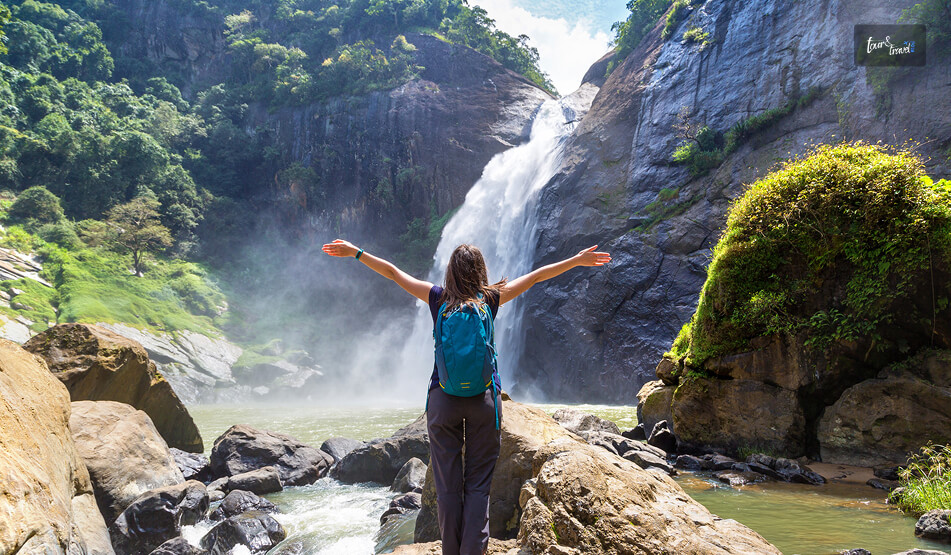
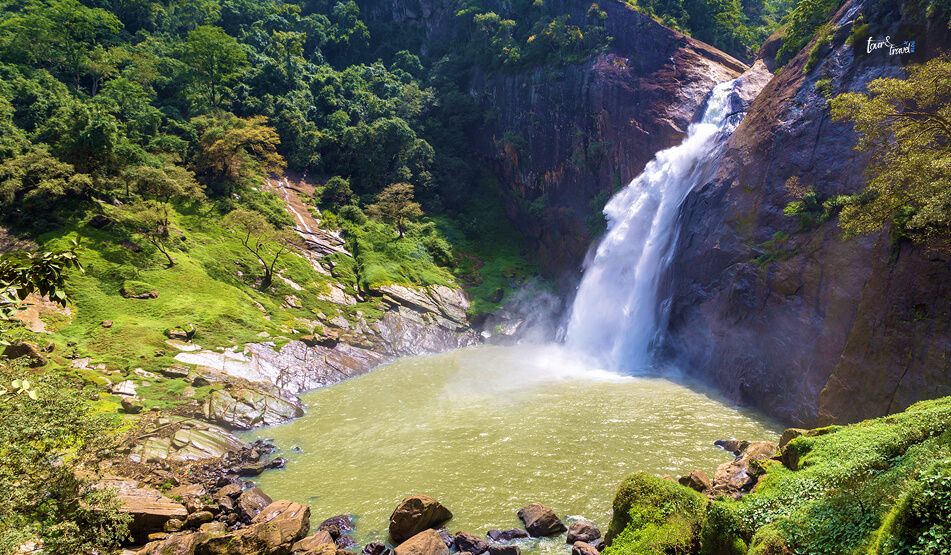
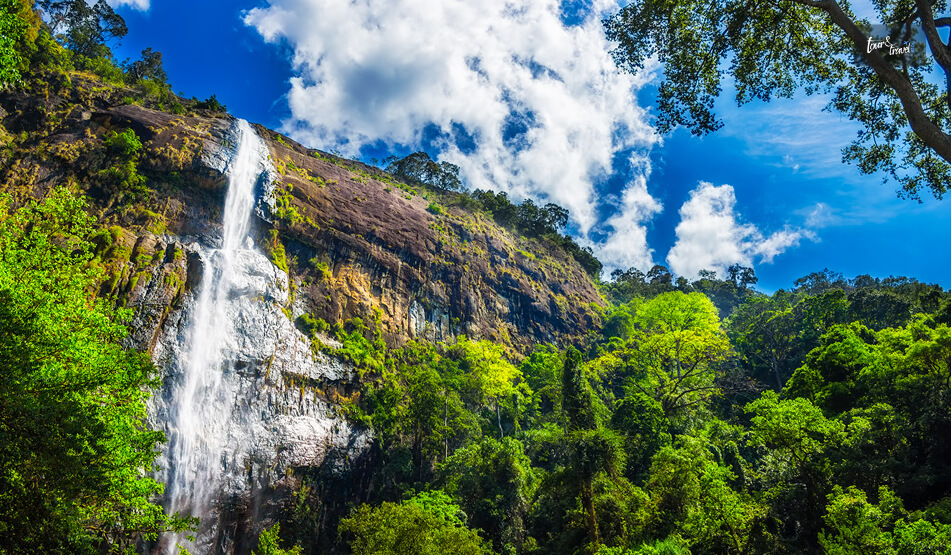
2. Diyaluma Falls

Diyaluma Falls

The second-highest waterfall in Sri Lanka, the Diyaluma Falls, stands at the end of an adventurous hike from Badulla. 

It is around 60 km away from Badulla, and the travel time is around 2 hours. 

Furthermore, the Diyaluma Falls are so beautiful that after reaching the base, I opted for an adventurous hike to the top. 

The views were incredible, and I even took a dip in the refreshing pool formed below. 

However, always listen to the local guides and check the weather updates before visiting the Diyaluma Falls. 

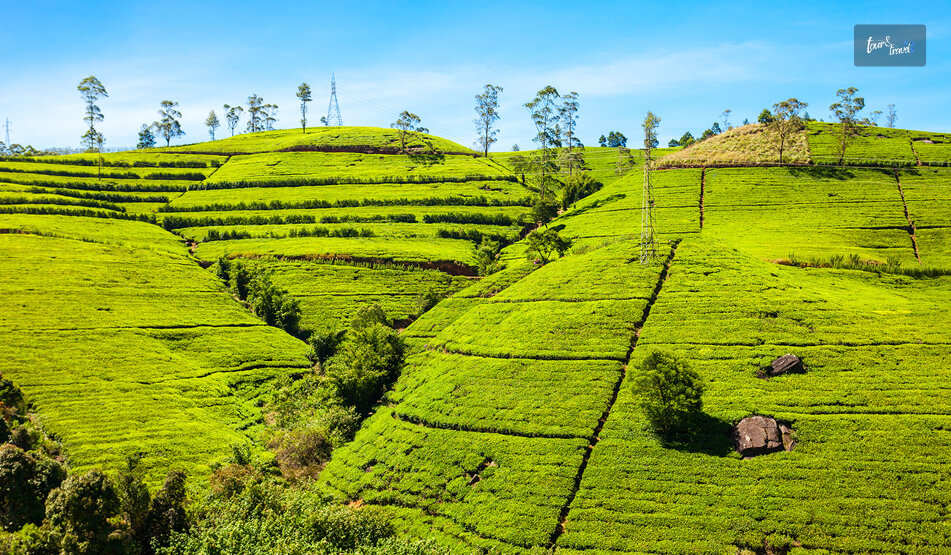
3. Tea Plantations And Viewpoints 

Tea Plantations And Viewpoints 

Badulla looks like a carpet of green with the tea plantations on the hillsides. These tea gardens do not just offer lush greenery. 

These are also great locations for learning how tea is processed and how the transformation from leaves to cup happens. 

Religious And Spiritual Places To Visit

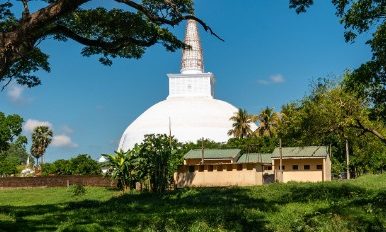
The Muthiyangana Raja Maha Vihara and Dowa Rock Temple are two important religious landmarks in Badulla. 

Muthiyangana Raja Maha Vihara

Muthiyangana Raja Maha Vihara

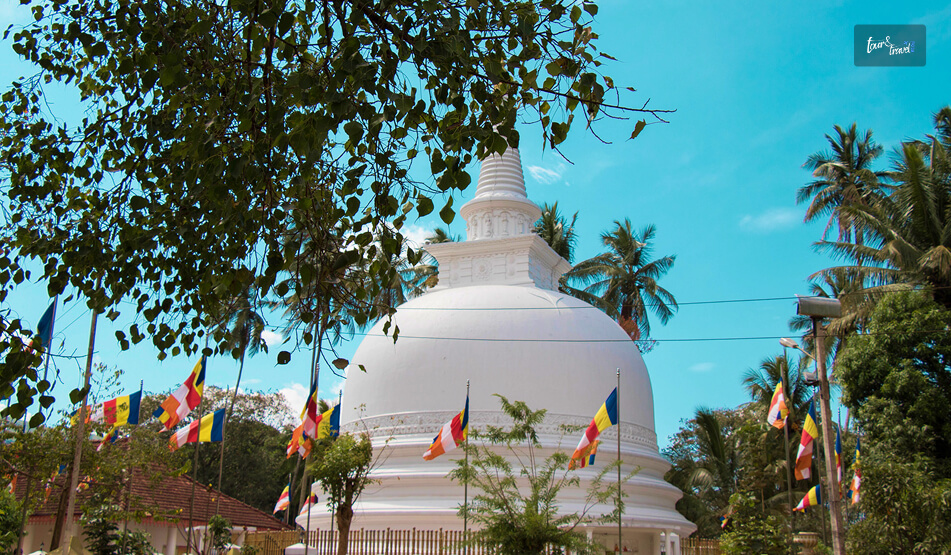
You can find the mention of the Muthiyangana Raja Maha Vihara in the Mahavamsa chronicle itself. 

King Indaka, a chieftain of the Deva tribe, built this Vihara in the 5th century. However, King Devanampiyatissa transformed this structure into a formal temple complex. 

This temple is so significant as Lord Buddha visited it. 

Furthermore, the Muthiyangana Raja Maha Vihara has impressive architecture. 

The stupas and the stone structures here are the quintessence of important Buddhist sites in Sri Lanka, such as the Dambulla Royal Cave Temple and the Gal Vihara in Polonnaruwa

Dowa Rock Temple

The power of unfinished art and what it signifies! Everything is for you to interpret, and there are thousands of possibilities about why the art could not be completed. 

This is what I felt after seeing the Dowa Rock Temple. 

Carved into a giant rock face, this temple has an unfinished and giant statue of Lord Buddha. 

The scale and the intricate carvings of the temple were amazing, and they showed the mastery of the Sri Lankan artisans in the ancient age. 

You will even get a glimpse of the religious and artistic heritage of the island country. 

Architectural Marvels In Badulla 

Walking on the Bogoda Wooden Bridge is like connecting to ancient times. The air there felt very different, and it immediately transported me 400 years back. 

Furthermore, the tiled roof of the bridge is a telltale of the Sri Lankan engineering excellence in ancient times. 

Moreover, when you are in Badulla, don’t miss the spicy vegetable and meat curries and rice.

Share on Social Media

Sibashree is a travel, culture, and leisure writer who has been writing since the age of 12 and professionally since 2014. With more than a decade of travel writing experience and journeys across India and several parts of the world, she brings a deeply personal and thoughtful perspective to her work. A student of English Literature and Mass Communication, Sibashree has always viewed travel as more than movement — for her, it has been a way of understanding people, cultures, and herself. Her passion for spiritual exploration has also led her to many unusual and meaningful destinations over the years. Outside of writing, Sibashree enjoys watching European cinema, reading about global politics, and reflecting on the stories hidden within everyday places.

Leave a Reply

Your email address will not be published. Required fields are marked *

title-img Related

READ MORE talalla beach

Where Is Talalla Beach? Know The Top Attractions And The Best Time To Visit 

BY  Sibashree May 4, 2026

The southern shores of Sri Lanka have many amazing beaches stretching from Tangalle to Dondra Head, or the southernmost tip of the country.  Talalla Beach is one of them, and it has sea vines, golden sands, and sleepy hotels lining the coast.  Furthermore, if you are a fan of the TheLowDownUnder Travel philosophy, Talalla is the perfect pick.  Again, if you are visiting the Hiriketiya Beach or the Kudawella Beach, the Talalla Beach is just a short tuk-tuk ride away.  Moreover, it is a peaceful place to see the turtles hatching and surf.  Here is more about the things to do in Talalla Beach, the nearby attractions, and other details. Where Is Talalla Beach?  Talalla Beach is just 6.5 km away from the Dondra Head, the southernmost part of Sri Lanka.  Also, it is between Dickwella and Matara towns.  You can, of course, take a taxi from Colombo to reach Talalla Beach after a journey of 3.5 hours.  However, if you are also traveling on a budget like me, you can take a train from Colombo to Matara, and then you can take a tuk-tuk ride from there. It costs around LKR 1500.  Also, from Matara, you will get a local bus to Talalla Beach, and the ticket price will be LKR 50.  Nevertheless, I was already at the Kudawella Beach, which is around 7 km away. So, I boarded a tuk-tuk, and it charged me 500 LKR. Surfing And More: What Are The Things To Do At Talalla Beach?  Now, many travel guides claim that surfing is one of the best things to do in Talalla Beach. However, the reality is that Talalla Beach is not a surfing spot.  Still, if you are visiting Talalla Beach, you will find many surfing breaks or spots on the southern coast of Sri Lanka nearby.  1. Surfing Near Talalla Beach  Starting from the west to the east, these are some places to surf near the Talalla Beach.  Madiha  The left and right reefs at Madiha are one of the most challenging breaks in the southern coast of Sri Lanka. Early morning is the best time for surfing here. SK Town  SK Town is around 20 minutes away from Talalla Beach.  However, SK Town is still an emerging place for beginners and intermediate surfers.  The A-frame peaks here are powerful, and you will find a sandy bottom.  Dawn and late evening sessions are the best times for surfing in SK Town. Hiriketiya Hiriketiya is the most prominent place for surfing near Talalla Beach. You can do a surf camp here and explore the semi-hollow and fast left-hand break.  However, Hiriketiya is touristy, and that can be a problem for surfers.  Kudawella  If you have never tried surfing before, you must visit the Kudawella Beach.  The beach has its own break, and it is even more protected than Hiriketiya.  2. Watching Turtle Hatching From Mount Lavinia to Uppuveli Beach in Trincomalee, the beaches in Sri Lanka are famous for turtles.  However, at Talalla Beach, I had the unique experience of seeing turtles hatching from their eggs.  The small turtles break the egg shells and come out. Then, they immediately crawl toward the sea.  Furthermore, if you visit the beach at night, you can see turtles laying eggs.  3. Visiting The Lace Factory Now, the lace factory is not a tourist attraction in Talalla Beach. I luckily came to know about it from a local.  It was just a walk of 5 minutes from the beach, and the artwork I saw inside the factory was fascinating.  It was a great cultural experience seeing the locals preserving the traditional art form of the country.  4. Yoga Sessions The Talalla Beach Resort has a Yoga Shala.  If you are an early morning person, you can attend a Yoga session here and rejuvenate your mind and body.  5. Getting An Ayurvedic Massage  Like Southern India, Sri Lanka also has a tradition of Ayurvedic treatments.  You can avail yourself of some relaxing ayurvedic therapies and massages at the Taltalla beach houses. What Are The Places To Visit Near Talalla Beach?  You can combine your time at Talalla Beach with a fascinating wildlife experience, enjoying town life at Matara, and a delightful swimming experience at the Seethagalla natural seawater pool.  1. Udawalawe National Park Spotting elephants in the Udawalawe National Park is one of the best things to do in Ella.  Despite a distance of 161 km, a trip to Udawalawe National Park from Talalla Beach is worth it.  You just cannot miss the early morning safari here and spot the baby elephants and their mothers.  2. Matara  I loved Galle Fort. However, to me, Matara, at a distance of around 44 km, felt more intimate.  I enjoyed the cheerful voices and the sound of the balls getting struck when the youngsters were playing cricket inside the old fort.  Furthemore, I visited the Mid Mountain Tea & Spices here and collected some local brews as souvenirs.  3. Seethagalla Natural Seawater Pool The Seethagalla Beach is to the east of the Talalla Beach. It has sand with black patches and coconut trees.  Furthermore, this rugged cove has a tidal pool. It was a lovely swimming experience.  Where Is The Best Time To Visit The Talalla Beach?  The dry season, from November to March, is an ideal time to plan a trip to Talalla Beach.  These months offer the best wave conditions for swimming and surfing. Especially November to early January is the best window for surfing.  However, the temperature in these months ranges between 32 and 37 degrees Celsius. Moreover, the high humidity in the air makes it stuffy sometimes.  In addition, there can be sudden downpours.  Also, in a day, early mornings and late evenings are the best times for surfing as the winds are the weakest.  Moreover, if you are in Sri Lanka in April onward, you must look further east. Arugam Bay, especially, is a delightful location for surfing on the eastern coast of Sri Lanka in the wet season.   Where To Stay Near The Talalla Beach? Talalla Beach has limited accommodation options. However, the Talalla Sunshine Beach is a delightful option with 10 beautiful rooms and an uninterrupted view of the sea.  Also, it is just a few steps away from the beach. So, you can even walk to the beach at night for a serene experience.  Another popular option here is the Talalla Resort, which also functions as a retreat center and has spa and yoga facilities.

READ MORE Batticaloa

What Is Batticaloa Famous For? Know The Best Things To Do In This Eastern Town Of Sri Lanka 

BY  Sibashree Jun 24, 2026

The first time I reached Batticaloa, a quaint town in eastern Sri Lanka, I did not expect to experience the slow but steady flame of human protest.  It was 9 AM in the morning, and I noticed a small group of people gathering near the Kallady Bridge. They held up placards written on old sarees, torn clothes, and newspapers.  In a single line, they walked for around 2 kilometers peacefully and ended their walk at the Gandhi Park.  Known as the Batticaloa Justice Walk, this has been continuing since 12th May 2022, the next day after the GotaGoGama (GGG) protest site faced the attack of mobs, followed by the resignation of the Prime Minister Mahinda Rajapaksa.  This protest walk has been a movement demanding a fundamental change, and the participants demand accountability for the people who disappeared during the period of conflict.  While this protest walk won me over, as I come from the land of Satyagraha and a long history of protests for political, social, and humanitarian reasons, I felt more eager to know the town and explore the top attractions.  What Is The Location Of Batticaloa Town? The Batticaloa Town, the administrative capital of the Batticaloa district, is in the eastern province of Sri Lanka.  This coastal town on a flat island is surrounded by a large lagoon and the Indian Ocean.  Pasikudah, a popular beach destination of Sri Lanka, is just 35 km northwest of Batticaloa Town. Also, Trincomalee is the nearest major city to Batticaloa, and it is located 111 km south of Trincomalee.  How To Reach Batticaloa?  The Batticaloa Town is easy to reach as it is well-connected to Colombo by road, train, and air.  By Train  It has the Batticaloa Railway Station, which receives direct express trains such as Meenagaya from the Colombo Fort Railway Station.  The 6075 Batticaloa Special is the fastest train between these two stations. It left Colombo Fort at 3:15 PM and reached Batticaloa at 9:52 PM. Also, the third-class ticket price was LKR 1400.  By Bus Regular bus services are available from the Bastian Mawatha Bus Terminal in Colombo to Batticaloa. Based on the traffic, the journey will take 6 to 7 hours. The ticket price is around LKR 1500. From this bus stop, you will also get buses to the cultural capital, Kandy, and the Tamil hub in Sri Lanka, Jaffna.  Furthermore, the Batticaloa International Airport (BTC) in SLAF Batticaloa is the main hub for regional air and chartered flights connectivity.  The travel time by air is around 1 hour and 15 minutes, and the ticket price will be around LKR 20000.  Transport Within Batticaloa You will get tuk-tuks for local transportation in this coastal town, and based on the distance covered, the charges will be between LKR 150 and LKR 400.  Also, if you want, you can rent a tuk-tuk for the entire day at a negotiated price.  What Is Batticaloa Famous For?  History, colonial heritage, and spirituality merge in the small town of Batticaloa.  So, next time you are in Sri Lanka, you must plan a visit to Batticaloa. Also, these are the top attractions in Batticaloa.  Top Historical And Cultural Attractions In Batticaloa  Batticaloa is a coastal town rich in colonial history and unique cultural landscapes.  These landmark attractions showcase the area's diverse heritage, ranging from ancient fortifications to cultural museums. 1. Batticaloa Gate This historic monument marks the official landing site where early British colonial officials first arrived in the region.  It features a grand statue of Mahatma Gandhi and serves as a peaceful, picturesque viewpoint overlooking the tranquil lagoon. 2. Batticaloa Fort Originally built by the Portuguese in 1628, this structure was later captured and expanded by the Dutch and British forces.  The well-preserved fort is surrounded by a scenic moat and currently houses local government administrative offices. 3. Batticaloa Lighthouse Standing 28 meters tall, this iconic red-and-white beacon was constructed by the British in 1913 to guide ships safely into the harbor.  Visitors flock to this coastal spot to enjoy panoramic views where the lagoon meets the Indian Ocean. 4. Kattankudy Heritage Museum This specialized cultural museum documents the rich, centuries-old history and unique traditions of the Muslim community in Sri Lanka.  It displays fascinating life-sized exhibits, traditional crafts, ancient weapons, and historical trade artifacts. The museum remains open from 9 AM to 4 PM Monday to Thursday, and it remains open till 7 PM on weekends. The ticket price is LKR 100 for local adult visitors, LKR 50 for local children, and LKR 500 for foreign visitors.  Top Religious And Spiritual Places In Batticaloa Batticaloa, despite being a small coastal town, has the inclusive religious nature of Sri Lanka.  1. St Mary's Cathedral St Mary's Cathedral is a 200 year old catholic church in Batticaloa, and despite being located in the middle of the town, it is a very quiet place.  It has a vibrant blue color, and its architecture exudes a quintessential colonial style you will find in Sri Lanka.  2. Hindu Temples  Like Jaffna Hindu temples, the temples in Batticaloa are also an extension of the local Tamil culture and religious beliefs.  Here are the temples that you cannot miss in Batticaloa. Temple NameMain DeityLocationSignificanceMajor Festival TimeSri Mamangeswarar Temple (Mamangapillayar)Lord Shiva and Lord Ganesha3 Km from the Town CenterAssociated with the Ramayana (Prince Rama worshiped here)10 Days of Festivity in July/AugustKokkadicholai Thaanthonreeswarar TempleLord Shiva15 km southwest of Batticaloa TownIt has a Swayambhu or self-manifested Shiva lingam. SeptemberSri Pathirakali Amman TempleGoddess KaliPeriya UraniKnown for its vibrant ceremonies and festivalsMahotsavam, a 15-Day Festival in March, and NavratriAnaipanthy Sri Sithy Vigneswarar ThevalayamLord GaneshaHeart of Batticaloa town (Pulliyanthivu)Popular community templeDailySri Sithira Velayutha Swamy KoyilLord MuruganPulliyantivuPopular community templeDaily Natural Attractions In Batticaloa A serene coastal town, Batticaloa, has beautiful beaches and a beautiful lagoon.  1. Kallady Beach Kallady Beach is less trodden, and it still bears the signs of the devastation by the 2004 tsunami.  Due to fewer crowds, the beach with golden sands is an ideal place to relax. Also, it looks surreal during dusk.  2. Kalkudah And Passikudah Around 35 km north of Batticaloa, you will find the Kalkudah cliff. The twin bay shorelines of Kalkudah and Passikudah are located on either side of the cliff.  An ocean reef protects the twin bay from harsh monsoon winds. So, these are ideal spots for bathing, windsurfing, sailing, and water skiing.  3. Batticaloa Lagoon A boat ride in Batticaloa Lagoon is a must, and during the boat ride, you can explore the Buffalo Island, Bone Island, and Puliayantheevu Island. Also, I loved my time in the fishermen's boats.  Architectural Wonders In Batticaloa  The architectural attractions in Batticaloa show deep colonial and indigenous influence.  1. Kallady Bridge  The Kallady Bridge, crossing the Batticaloa Lagoon, connects Kallady with Batticaloa town.  Also known as the Lady Manning Bridge, it is more famous for a local myth.  Deep under the Batticaloa Lagoon, aquatic life produces rhythmic, humming, or musical vibrations that can sometimes be heard echoing into the night.  The best time to listen to the vibration is between April and September, especially on full moon nights.  Also, the trick is to take a boat ride and reach under the Kallady Bridge. Then, you need to plunge the oar vertically into the lagoon water and keep the dry end of the oar close to your ears to listen to the vibrations.  2. Unnichchai Tank I rented a bicycle for LKR 800 in Batticaloa. I came across the Unnichchai Tank as I proceeded toward the lagoon from Batticaloa.  The entire route is scenic with low forest extending over the serene lagoon.  Furthermore, the Unnichchai Tank is an important landmark as it supplies the water for the entire area.  Also, its modern concrete architecture emulates the ancient stone structure of the tank. The modern version of the tank was built in 1919, and it supplies irrigation water for 6,200 hectares of farmland.  What Are The Things To Do In Batticaloa? Batticaloa is a small town. However, the things to do in Batticaloa are diverse, from temple and museum visits to boat and bicycle rides.  So, here I am presenting a 4-day itinerary in Barricaloa for you. Day 1: Colonial History And Sunset Views Time of the DayAttractionKey HighlightsActivityMorningBatticaloa Fort1628 Portuguese fortifications and scenic moat wallsExplore colonial buildings and walk the historic ramparts.Mid-DayBatticaloa Gate and Town CenterIconic British landing monument and Mahatma Gandhi statueVisit the monument and stop for a traditional Sri Lankan rice and curry lunch.Late AfternoonBatticaloa Lighthouse1913 British beacon where the lagoon meets the seaEnjoy panoramic coastal views and take photographs of the landmark.Evening Kallady BeachGolden sands and the historic Kallady BridgeRelax by the ocean and learn about the legendary "singing fish" folklore. Day 2: Cultural Heritage And Sacred Temples Time of the DayAttractionKey HighlightsActivityMorningSri Mamangeswarar TempleAncient site linked to the RamayanaPerform morning prayers and soak in the spiritual vibeLate MorningKattankudy Heritage MuseumTravel south from the town centerExplore exhibits, traditional crafts, and Muslim community history.AfternoonTown ExplorationPulliyantivu district templesVisit Anaipanthy Sri Sithy Vigneswarar and Sri Sithira Velayutha Swamy Koyil.EveningLagoon Boat RideLagoon Park AreaHire a local boat for a relaxing sunset cruise on calm waters. Day 3: Spiritual Journey And Southern Coast  Take a scenic drive across the lagoon and move southwest to visit the Kokkadicholai Thaanthonreeswarar Temple.  It is one of the oldest and most revered Shaivaite temples in Sri Lanka, and it has a Swayambhu Shiva Lingam.  In the afternoon, visit the Sri Pathirakali Amman Temple in Periya Urani.  Then, head to the Pasikudah Beach in the late afternoon. It has crystal clear turquoise waters and calm waves.  Day 4: Nature And Hidden Gems Visit the Unnichchai Tank in the morning. The ambiance surrounding this massive irrigation reservoir is peaceful, and it is an ideal destination for birdwatching.  Do some souvenir shopping in the afternoon. Explore the local markets to buy traditional handloom textiles, palmyra palm handicrafts, and local snacks like Aluwa. Where To Stay In Batticaloa? The Batticaloa Municipal Council has many listed accommodations if you want to stay in this coastal town.  The most affordable option among them is the Vishna Guest in Batticaloa Town. The tariff per night will be around 3500 LKR, and you can contact them at +94 71 658 8779.  Also, Sunrise Villa Batticaloa in Kattankudy is another delightful option, despite being a little expensive. The tariff will be around LKR 11000 per night, and the contact number is  +94 76 890 1234.  Important Phone Numbers You Must Keep Handy  When you are in Batticaloa, you must keep the following phone numbers handy. Contact the Batticaloa Police Station at +94 65 2224422. Also, you can reach out to the Batticaloa Teaching Hospital at +94 65 222 2261.  Falling In Love With The Resilient Spirit Of Batticaloa Batticaloa is beyond a coastal town with sun-drenched beaches, colonial remnants, and architectural landmarks. It is a town where history is actively lived. Furthermore, the quiet dignity of people here complements the serene beauty of the landscape.  Also, on one hand, you can listen to the haunting, melodic mysteries echoing beneath the Kallady Bridge here.  On the other hand, the unyielding footsteps of the Batticaloa Justice Walk at Gandhi Park, this coastal enclave, leave an indelible mark on anyone who visits. Overall, it reminded me that travel is not just about visiting places. It is about connecting with the enduring human spirit that defines them.

READ MORE Yala National Park Safari

What Is The Yala National Park Safari Price? Why Is It One Of The Top Things To Do In Sri Lanka?

BY  Sibashree Jun 16, 2026

I shared my experience of visiting the Kumana National Park recently. Now, it’s time to talk about the Yala National Park, with which the Kumana National Park shares a contiguous border.  The park is home to lush lagoons, open plains, forests, and dunes.  As a result, it attracts diverse wildlife and birds. Including elephants, Yala National Park has around 44 species of mammals and 215 species of birds.  In addition, the Yala National Park safari allows you to spot leopards as it has one of the largest populations of leopards. In just Block 1, you will see around 25 leopards.  However, this diversity has further posed a problem for the wildlife and ecology of the national park. Mongabay reports that Yala National Park had 380000 visitors in the first half of 2025.  Backed by the social media boom, this increasing number of visitors has further triggered jeep jams and the problems of speeding jeeps in the national park.  Conservationists plan to restrict these, and rightly so, to maintain the experience of the Yala National Park safari.  Nevertheless, in this article, I will talk about the Yala National Park safari price, my experience, location, transportation options, and more.  Let’s begin with a quick overview of the Yala National Park and the safari price details.  An Overview Of The Yala National Park  LocationSouth-Western Sri LankaSize- 979 Square Kilometers- Total Five Blocks with Block 1 as the Main Tourist Spot Best for- Birdwatching- Spotting Leopards- Watching Sloth Bears, Elephants, and Crocodiles Hours Open- 6 AM to 6 PMSafari Prices (Based on the Safari Blocks Covered)- LKR 16900 to LKR 29,700/Main Entrance - Palatupana Gate, Close to Tissamaharama Furthermore, if you are looking for the perfect accommodation, you can check my guide on where to stay in Yala National Park. Yala National Park Safari Price: A Detailed Breakdown  Yala National Park Various ZonesDurationSafari Price in 2026 (LKR)Block 1 (Palatupana)Half Day16,900/=Block 1 (Palatupana)Full Day28,100/=Block 1 (Katagamuwa)Half Day16,900/=Block 1 (Katagamuwa)Full Day28,100/=Blocks 4 and 5 (Galge)Half Day19,800/=Blocks 4 and 5 (Galge)Full Day29,700/= (Source: Yala National Park Official Website).  Where Is Yala National Park? How Can You Reach There? Between the mighty Indian Ocean and a dense jungle, the Yala National Park is an expansive wildlife zone in the southeastern region of Sri Lanka.  Furthermore, it is well-connected to all parts of Sri Lanka. From the southern surf towns such as Ahangama, Weligama, Mirissa, and Hiriketiya to the dramatic Ella and Nuwara Eliya in the highlands, it is easily accessible.  So, here are the details of how to reach the Yala National Park from various parts of Sri Lanka.  1. From The Southern Coast To Tissamaharama The surfing towns on the southern coast are well connected to the Yala National Park.  The best way to travel is to take a train from Mirissa to Colombo Fort Station and then walk to the Colombo Bastian Mawatha Bus Terminal to catch a bus to Kataragama.  From Kataragama, you can hire a 4x4 jeep to reach the Yala National Park.  Check the table below to know how you can reach the Yala National Park from Mirissa. Stage 1: Train from Mirissa to Colombo Fort Station - Time: Around 3 Hours- Ticket Price: LKR 250 OnwardStage 2: Taking a Bus from Colombo Bastian Mawatha Bus Terminal to Kataragama- Time: 5 Hours Onward- Ticket Price: LKR 750Stage 3: 4x4 Jeep Ride from Kataragama to the Yala National Park Travel Time- 30 Minutes to Katagamuwa Entrance- Around 1 Hour to the Main Entrance or the Palatupana Entrance- Around 45 Minutes to Galge EntrancePrice (Per Vehicle)- LKR 9000 to 18000  3. From Ella To Tissamaharama From Ella, you can either take a bus or a private transport to reach Tissamaharama.  Bus Ride The bus passes through Wellawaya and takes 4.5 hours to complete the journey. Furthermore, the ticket price will be around LKR 200.  Also, a local told me of a bus route from Bandarawela to Kataragama, having Tissamaharama and Ella as stopovers. However, I could not fact-check the availability of such services.  Private Transfer  For a premium and flexible travel experience, you can book a private transfer to cover the distance in a shorter time.  The journey is for 2.5 hours. However, the cost will be around LKR 10000.  Also, if you are planning to take a private transfer, choose Uber for a safe journey at a reasonable price.  By Train  There is no direct railway connectivity to Yala. However, if you are traveling from the southern coast, you can get off at Matara.  From Matara, you can take a tuk-tuk, bus, or taxi to reach the Yala National Park.  What Is The History Of The Yala National Park?  The history of Yala National Park as a protected wilderness is at least a century old. As an ecotourism zone, it is a bucket-list destination for anyone on a trip to Sri Lanka.  However, earlier, it was a hunting ground for the British colonial elites. However, at the beginning of the 20th century, the colonial administration took effective steps for the preservation of the park.  The Designation As A Wildlife Sanctuary The British government designated the area as a wildlife sanctuary in 1900. It was an attempt to restrict and regulate game hunting. The Designation As A National Park  Under the Fauna and Flora Protection Ordinance, Yala became a national park in 1938.  Thus, the core activity here became absolute wildlife protection from managed hunting.  Mid-Century Turmoil And Restoration  The park faced several challenges during the mid-to-late 20th century. Furthermore, during the 1970s and 1980s, Yala suffered from ivory hunting, illegal poaching, and agricultural encroachment along its borders.  DWC, or the Department of Wildlife Conservation, along with dedicated non-governmental organizations, launched sustained anti-poaching patrols and habitat restoration initiatives.  These endeavors established the delicate ecological equilibrium of the national park. Also, the population of the elephants and leopards made a recovery during this time span.  The 2004 Tsunami And Ecological Resilience  The coastal fringe of Yala was massively impacted due to the Indian Ocean tsunami on 26th December 2004.  However, fortunately, deer, leopards, and elephants had fled to higher ground hours before the tsunami hit.  Furthermore, the land has made a tremendous recovery over the last two decades. There has been a proper regeneration of the coastal scrub, showcasing the profound resilience of this coastal wilderness.  The Five Blocks Of The Yala National Park  The expansive area of the Yala National Park has five different geographical blocks for better management of the expansive area.  Have a look at the table below to understand the uniqueness of each block.  Blocks in the Yala National Park UniquenessBlock I (Palatupana)- The Crown Jewel of Yala- The Most-Visited, Wildlife-Dense, and Most Accessible Block of the National Park. - It features an Excellent Mix of open grasslands, monsoon forests, and Brackish Lagoons. Block II (Katagamuwa)- A Quiter, Transitional Zone- It Offers Exceptional Opportunities for Elephant Viewings and Excellent Birdwatching. Blocks III, IV, and V- The Deeper and Wilder Interior of Yala- These Northern Blocks Have Thick Vegetation, Minimal Tourist Infrastructure, and a Rugged Geology- Authentic Wilderness Experience Devoid of Jeep Convoys.  The Wildlife Experience I Had On The Yala National Park Safari  The Yala ecosystem is not just about the elephants and leopards. Furthermore, the ecosystem of Yala relies on a rich web of biodiversity, including hundreds of species.  1. The Sri Lankan Leopard  The Yala National Park does not have tigers or lions. Thus, Sri Lankan leopards rule as the undisputed predators of the zone.  Furthermore, Yala National Park is home to one of the biggest populations of Sri Lankan leopards. As a result, leopards are more visible here compared to different parts of India and Africa.  2. The Asian Elephants  Solitary bull elephants and large herds roam freely in the Yala National Park. These majestic creatures rely on inland lagoons and seasonal watering holes for bathing and feeding.  3. The Sri Lankan Sloth Bear  These animals are territorial and highly elusive. Furthermore, these shaggy, insect-eating animals are most frequently spotted during the fruiting season of the Palu tree. 4. Other Wildlife  The dry zone of the Yala National Park teems with wildlife. Along with these massive mammals, I could even spot a spotted  Deer (Chital) Sambar Deer Wild Boar Tufted Gray Langurs Toque Macaques Water Buffalo Water Monitor Lizards Mugger Crocodiles These animals were mostly visible near the water.  5. A Paradise For Birdwatchers  Yala National Park is a premier global destination for birdwatching. There are more than 215 bird species in the national park.  Furthermore, November to January is the ideal time for spotting the migratory waterfowl that fly to Sri Lanka to escape the strong winter of the Northern hemisphere.  Bird Categories in Yala National ParkKey Species to Spot in Yala National Park Endemic Species - Sri Lanka Junglefowl- Sri Lanka Grey HornbillWaterfowl and Waders- Painted Storks- Lesser Whistling Ducks- Black-Necked StorksPredators and Raptors- Crested Serpent Eagles- White-Bellied Sea EaglesVibrant Showstoppers- Green Bee-Eaters- Indian Peacocks- Malabar Pied Hornbills The Fascinating Yala National Park Safari Experience  The Yala National Park safari offers a sensory and intense experience. Furthermore, the safari experience begins before sunrise.  1. The Dawn Patrol  The safari began at 4 AM from Tissamaharama. It was still pitch black, and we took a sip of the local coffee.  Then, the cold morning breeze touched us, and we advanced with the jeep headlights piercing through the predawn mist.  Furthermore, by 5:15 AM, we reached the main Palatupana Gate. The drivers waited for the park rangers to issue permits.  Then, the gates opened at 6 AM, and the vehicles started roaring through the dirt tracks of Block I.  2. The Landscape And The Sighting  When the first rays of the Sun touch the Yala National Park, the landscape looks very African.  It has scattered grasslands, spindly thorn scrub, and flat plains. Furthermore, the air was thick with humidity.  Then, the driver spotted a leopard suddenly, and the driver made a coordinated dash across the park.  The leopard was standing tall across a massive granite boulder in the soft morning light.  3. Midday Solace At Patanangala As the day progressed, the wild creatures made a retreat deep into the thick shade with surging heat.  So, our jeep, along with many others, united at the Patanangala Beach picnic area.  In this part of the park, its rugged self became visible. The crashing waves of the Indian Ocean met the vast rocky outcrops.  Also, it was the place to stretch our legs and relax.  4. Exploring The Sacred Ruins In The Scrub  Along with rich wildlife, Yala National Park also stands out due to its deep historical and cultural footprint.  Especially in Block I of the national park, you will find some well-preserved ruins that depict the picture of an ancient civilization.  Sithulpahuwa Rock Temple This rock temple is around 2200 years old and is a prominent architectural feature of the Kingdom of Ruhuna.  Once, thousands of Buddhist monks used to live in this temple. Today, you can see its white stupas rise dramatically above the forest canopy from a massive granite peak. Furthermore, monks still live in this rock temple, and you can see leopards and tigers roaming in the courtyard.  Magul Maha Vihara Magul Maha Vihara is on the southern fringes of the Yala National Park. It is believed to be the ancient site where King Kavantissa married Princess Viharamahadevi.  You can admire the intricate moonstones and stone pillars of the Vihara.  What Is The Best Time For The Yala National Park Safari?  February to July, or the dry season in the southern coast of Sri Lanka, is the ideal time to plan a Yala National Park safari.  In these months, the grass in the park thins out, and the secondary waterholes dry up completely. So, the animals have to gather around the water in search of water.  Furthermore, November to April is the best time for birdwatching in the Yala National Park.  Also, remember that the Department of Wildlife Conservation typically closes Yala National Park for the entire month of September (sometimes extending into early October). Yala National Park Safari And The Overtourism Issues  The rising popularity of the Yala National Park, especially on social media, now impacts the intimate wilderness experience.  It feels like a rushed safari tour, and by sunrise, hundreds of high-clearance safari jeeps queue at the Palatupana Gate.  Moreover, drivers are under immense pressure from their clients to find the "Big Three." So, whenever there is a radio transmission about a leopard getting spotted, the jeeps get into a frantic race.  Furthermore, the rush of these jeeps is disrupting the ecology and the natural wildlife behaviors of the national park.  In an interview with Mongabay, warden Ravindra Kumara, while narrating the controversial case of the male leopard Lucas’ encounter with a jeep, mentioned, “Usually, when a safari jeep is close to an animal, jeep drivers have been advised to switch off the engine.  But this driver had turned on the engine, and it had scared away the animal. However, Lucas was spotted the following night near Yala junction, the animal’s usual territory, and is in good health.” However, the driver training programs conducted by the Department of Wildlife Conservation and the Wildlife and Nature Protection Society are proactive measures to avoid such unwanted disturbances.  In addition, the opening of remote blocks in the park can reduce the concentrated traffic in Block I.  So, Is The Yala National Park Safari Worth It?  Yes, the Yala National Park safari is absolutely worth the hype. I could see leopards softly walking through the scrub, elephant herds roaming, and peacocks dancing on open plains.  Furthermore, the shift in the landscape is dramatic.  However, the safari of this expansive area is quite demanding, and that is why you need to keep several things in mind. What Are The Things To Keep In Mind For A Yala National Park Safari?  The rest stops and toilets are limited, and you will find the facilities near the main gate and the Patanangala Beach.  Furthermore, you must carry cash, preferably LKR, to pay for the permits and other expenses at the park.