

World’s End, Sri Lanka: Chasing the View Before the Clouds Roll In

Nobody tells you how early a ‘5 AM start’ actually feels until you are standing in the dark outside your Nuwara Eliya guesthouse, breakfast pack in hand, waiting for a tuk-tuk.  

But that is the deal with World’s End. 

The view is clear from about 9 AM to 10 AM. 

After that, clouds roll in off the valley and swallow the whole thing whole.  

I had heard this enough times before arriving that I did not question the alarm. And I am glad I did not. 

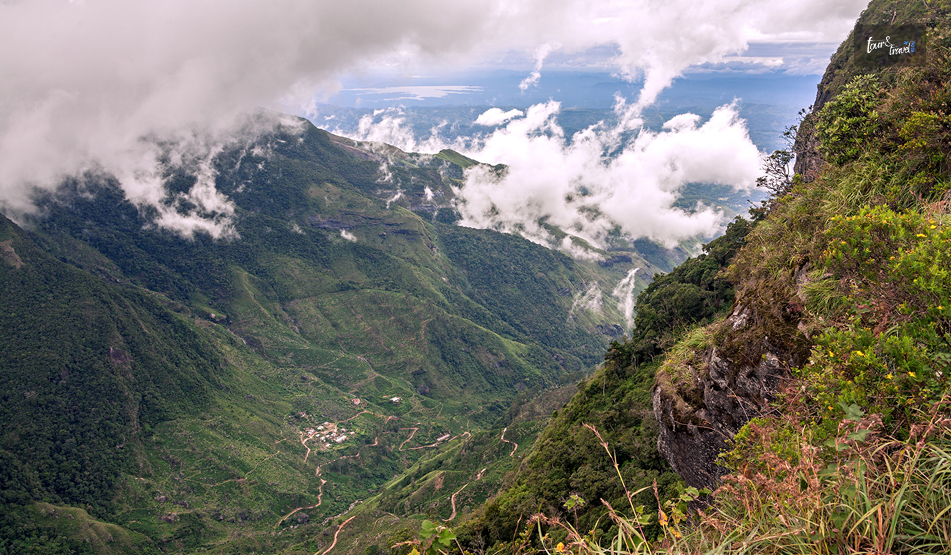
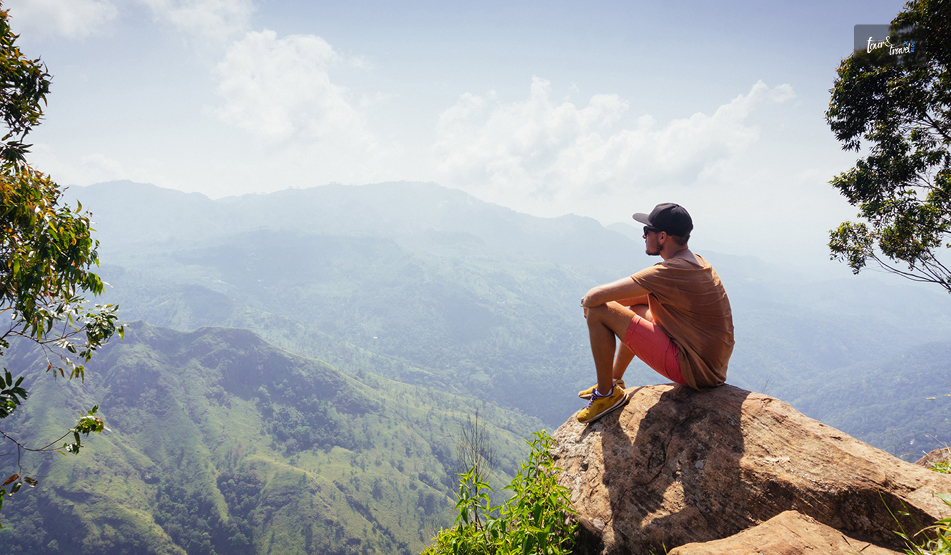
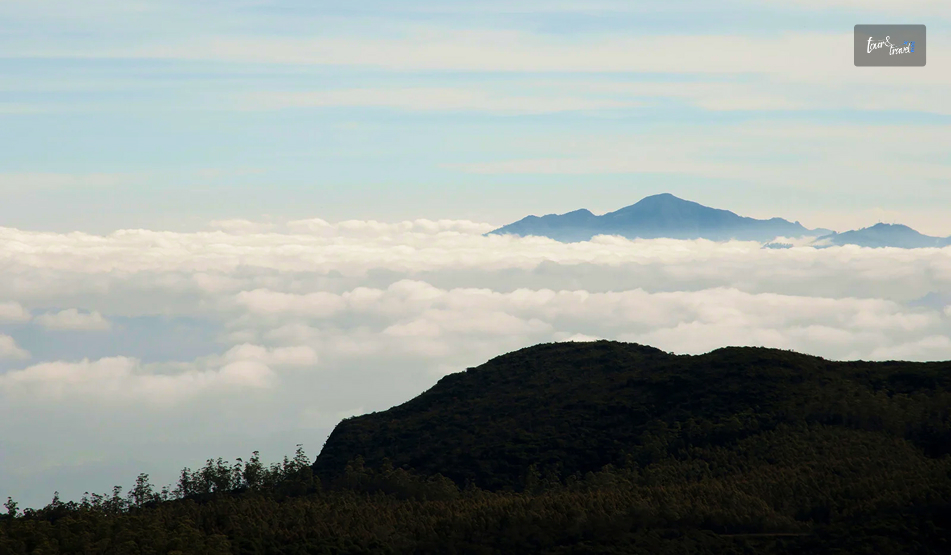
By the time I reached the escarpment, the drop in front of me was still clear enough to see the coast, some 80 kilometres away. 

World’s End is a sheer escarpment inside Horton Plains National Park, in Sri Lanka’s central highlands.  

You have to take a circular hiking trail to reach it, and the same route also takes you to Baker’s Falls and a smaller companion viewpoint called Mini World’s End. 

It has become one of the most-hiked routes in the country precisely because the effort-to-reward ratio is so favourable. 

It is a manageable walk for a view most people only expect to earn after a serious trek. 

World’s End, Sri Lanka: At A Glance 

Location Horton Plains National Park, central highlands  
Elevation at start About 2,100 metres  
Drop at World’s End Approximately 870–880 metres  
Circular trail distance 9–9.5 km (Red Bridge → Mini World’s End → World’s End → Baker’s Falls → back)  
Typical hike duration 2.5–4 Hours  
Park hours 6 AM to 6 PM  
Best time to visit January to March (Driest Months). You must arrive by 6 AM regardless of season.  
Nearest base Nuwara Eliya  

Why The Early Start Actually Matters

World’s End, Sri Lanka: Chasing the View Before the Clouds Roll In

This is not exaggerated marketing. World’s End genuinely clouds over by mid-morning most days, often as early as 9 AM. 

The park opens at 6 AM, and the guidance from pretty much every guide, driver, and fellow hiker I spoke to was the same. 

Get there at opening, start walking immediately, and don’t dawdle at Mini World’s End if clear skies at the main viewpoint are your priority.  

I reached World’s End a little under an hour and a half after setting off and had maybe twenty clear minutes before the first wisps of cloud started drifting up from the valley below. 

There is no public transport directly to Horton Plains from Nuwara Eliya. 

So you are looking at a hired tuk-tuk, car, or a pre-booked tour. 

The PickMe app works if you would rather arrange it yourself the night before.  

Whatever you choose, the pre-dawn logistics are worth planning a day ahead, since most hotels won’t have breakfast ready at 4:30 AM and will instead hand you a packed breakfast to eat on the trail. 

The Hike Itself

World’s End, Sri Lanka: Chasing the View Before the Clouds Roll In

The full loop runs roughly 9 to 9.5 kilometres and is considered moderate rather than difficult. 

It is mostly flat with some gentle inclines.  

It is well-marked, and it is notably the only national park in Sri Lanka where you are allowed to walk the trail without a mandatory guide.  

From the Red Bridge entrance, it is about 2 kilometres to Mini World’s End. 

Then on to the main viewpoint, before the trail loops back via Baker’s Falls, one of the widest waterfalls in the country, and a good spot to slow down once the pressure of beating the clouds is behind you. 

Along the way, expect sambar deer grazing close to the trail. 

They are genuinely unbothered by hikers here. 

I also spotted purple-faced langurs, giant squirrels, and a decent range of highland birdlife.  

Leopards are present in the wider Horton Plains area, but sightings are rare enough that I would not build any expectations around it. 

Mini World’s End Vs. The Main Event 

It is easy to treat Mini World’s End as a warm-up and rush past it. 

However, it is worth a few minutes on its own terms. 

A smaller drop, fewer people at that hour, and in some ways a calmer view than the more crowded main viewpoint! 

Some hikers reverse the usual direction of the loop specifically to hit World’s End last rather than first. 

Either way works, but going clockwise from Red Bridge (Mini World’s End, then World’s End, then Baker’s Falls) is the standard and the one most guides default to. 

Planning Your Visit

World’s End, Sri Lanka: Chasing the View Before the Clouds Roll In

World’s End earns its reputation honestly. 

It is one of the few views in Sri Lanka that lives up to the hype, provided you respect the clock.  

The hike itself is forgiving enough for most fitness levels. 

Also, the wildlife along the way is a pleasant bonus, and the payoff at the escarpment, on a clear morning, is the kind of view that makes the 5 AM alarm feel like a fair trade. 

Entry Fees 

Expect to pay in the region of USD 20–25 per foreign adult visitor. Also, you will have to pay a separate vehicle fee if you are driving or being driven in. 

The total for a couple with a hired tuk-tuk can run well over what the headline entry fee alone suggests. Fees are collected in USD or LKR at the park entrance. 

What To Pack 

Pack layers as it is cold enough at 2,100 metres before dawn to want a proper jacket. However, you will likely be down to a T-shirt by mid-hike.  

Add sturdy shoes, water, the breakfast pack, and a hat for once the sun burns through.  

The terrain does not demand technical gear, but the temperature swing from predawn to midday catches people out. 

Best Time Of Year 

January to March is generally the driest and most reliable stretch for clear views. 

However, the daily mist pattern matters more than the season. 

Even in the driest months, arriving after 9 AM risks losing the view entirely. An early start in a wetter month can still pay off. 

Where This Fits In A Sri Lanka Itinerary 

World’s End is a natural pairing with a Nuwara Eliya stay. It is often combined with tea estate visits, Adam’s Peak, or the train journey onward to Ella.  

Given the early start and 3–4-hour round trip, I would treat it as a dedicated half-day rather than trying to combine it with much else that same morning. 

By the time you are back at the entrance, most of the day’s clear-view window has already closed anyway.

Share on Social Media

Sibashree is a travel, culture, and leisure writer who has been writing since the age of 12 and professionally since 2014. With more than a decade of travel writing experience and journeys across India and several parts of the world, she brings a deeply personal and thoughtful perspective to her work. A student of English Literature and Mass Communication, Sibashree has always viewed travel as more than movement — for her, it has been a way of understanding people, cultures, and herself. Her passion for spiritual exploration has also led her to many unusual and meaningful destinations over the years. Outside of writing, Sibashree enjoys watching European cinema, reading about global politics, and reflecting on the stories hidden within everyday places.

Leave a Reply

Your email address will not be published. Required fields are marked *

title-img Related

READ MORE best beaches in thailand

What Are The Best Beaches In Thailand For Families? Here Are The Ones I Loved

BY  Sibashree Jun 18, 2026

As the names of the World’s 50 best beaches get declared, three beaches in Thailand get shoutouts. These are the Freedom Beach, Paradise Beach, and Donald Duck Bay.  Also, with popular hubs such as Pattaya and Phuket, beach tourism is a major driver of the blue economy and the GDP of the country.  However, beyond these facts and accolades, the best beaches in Thailand, for me, are important because of the “Feel.”  The clear water, soft sand, and the warm hospitality of the place make it one of a kind. Furthermore, the landscapes starlight out of a storybook offer the quintessential tropical charm.  However, while traveling with my kids, I decided to focus more on the best beaches in Thailand beyond the commercial hubs such as Phuket. I wanted to take them to smaller regions where they could relax and feel the intimacy.  So, in this article, I will talk about the best beaches in Thailand for families, with Ao Nang in focus. I have also included the names from Phuket and Koh Lanta.  Ao Nang In Focus: The Best Beaches In Thailand For Family  As I have mentioned, despite Phuket getting most of the attention, Ao Nang is more suitable for a family vacation.  It has calmer waters, dramatic scenery, and a more authentic, community-centric environment for children. No wonder that Ao Nang in Krabi Province has emerged as the most overlooked gem among the beaches in Thailand.  The overall experience here is more authentic, and it offers a community-centric environment for children.  And here are the best beaches in Ao Nang I visited and loved.  Pai Plong Beach: The Ultimate Jungle Adventure Pai Plong is one of the best beaches in Thailand for families because of the soft golden sand. Furthermore, reaching the Pai Plong Beach is an adventure in itself. Children especially will love it.  How To Reach The Pai Plong Beach Via The Monkey Trail?  To reach the hidden cover, we took a walk along the main Ao Nang beachfront until we reached the start of the famous Monkey Trail.  This hiking path passes through a lush and dense jungle. Walking was quite adventurous but convenient with elevated boardwalks and wooden steps.  Furthermore, my kids were thrilled to have such close encounters with local monkeys. So, the excitement built up even before hitting the ocean.  Scenery And Swimming Beauty At The Pai Plong Beach  The Pai Plong beach is smaller than the neighboring public bays. However, the visual punch was unmatched.  It has surreal limestone cliffs and a striking karst island sitting just off the coast.  Furthermore, it was a welcome relief from the world-famous and overcrowded Railay Beach. Also, as a mother, the best part was the texture of the beach. The sand was soft. So, I did not have to check frequently whether any of them had toppled over and gotten a cut or gotten hurt.  In addition, the water was crystal clear, and the sea floor was entirely free of painful sea urchins. So, the kids could splash around safely without heavy water footwear.  2. Phra Nang Cave Beach: A Crystal-Clear Paradise Phra Nang Cave is another world-class coastal destination when you are traveling through Krabi with your family.  Even if many people consider Railay Beach to be the ultimate spot in the area, Phra Nang is actually a clear winner by miles.  How To Reach The Phra Nang Cave Beach?  The journey to the Phra Nang Cave Beach is an exciting experience. We took a traditional Thai longtail boat from Ao Nang to the Railay peninsula. As we stepped off the boat, we had to walk for around 20 minutes through a scenic route.  The path meandered through quiet and quaint villages, and the entire route runs alongside a vertical and majestic limestone mountain.  Moreover, the road is well-shaded, and it is full of biodiversity. We got to see playful monkeys on the route.  However, I got a little scared seeing the giant monitor lizards.  What Are The Best On-beach Activities For Children On The Phra Nang Cave Beach? The ocean water is so clear that we could easily spot schools of tropical fish around our ankles. We did not even have to wear a snorkel mask.  Furthermore, kids love the rock climbing spectacles here as professional climbers scale the massive and overhanging limestone crags right on the edge of the sand.  Moreover, there is this secret sandbar walk. During some tide windows, we could spot a pristine and shallow sandbar. We walked right across the ocean on the sandbar to explore a nearby rocky island.  3. Noppharat Thara Beach: The Golden Shell-Collecting Haven Noppharat Thara Beach is an ideal place if your family prefers tranquility and wide-open spaces.  Away from crowds, this beach is more popular as the “Other Beach” in Ao Nang. It is also less commercialized.  We took a quick tuk-tuk ride to reach the beach from the town. You can even plan a walk for 20-30 minutes from the town.  Unending Golden Sand And Natural Cleanliness Guarded by giant karst limestones on both horizons, the Noppharat Thara Beach boasts a long stretch of golden-brown sand.  The beach was pristine in the truest sense, and it was a relief seeing no litter or discarded garbage on the shoreline.  This is so hard to find on the beaches of Southeast Asia.  Noppharat Thara Beach Has A Thriving Ecosystem For Little Explorers  Young kids and inquisitive toddlers will love the shoreline covered in thousands of intact, beautifully colored marine seashells. Even I could spend hours collecting and sorting those seashells. Furthermore, as the ocean water stays calm and shallow at a distance from the shore, the beach is safe for toddlers and youngsters to swim.  In addition, you can spot thousands of miniature crabs and tiny sea snails in the damp sand here. So, overall, the beach offers an interactive learning session for the kids.  Planning A Day Trip To Hong Island (Ko Hong) From Ao Nang After spending some time on the mainland, we decided to go for a day trip to Hong Island from the Ao Nang coast.  We chartered a private longtail boat from the boatman's collective located at the northern edge of Ao Nang Beach. Once the boat arrived at Hong Island, getting off it was a lot of fun. We had to disembark onto a floating pier and not directly on the sand.  It is a great move to protect the delicate shoreline. However, before you leave the dock, take a note of the specific boat number and ask the captain about the exact pick-up time in the afternoon.  We also went to the National Park. The entry fee for the national park was around 400 Thai Baht for adults, and for children, it was free admission.  Here are more attractions for travelers on Hong Island.  The Hidden Turquoise Lagoon A key highlight of visiting Ko Hong is journeying into its hidden inner lagoon. Most organized day tours include this stop.  Your boat captain will slowly pilot the vessel through a breathtakingly narrow opening in the towering rock walls.  Once inside, the water becomes beautifully shallow and shifts into a brilliant, glowing shade of turquoise.  The lagoon is entirely encircled by vertical, jungle-covered cliffs, creating an enchanting environment for kids.  Powder-White Sand And Protected Swimming Once you arrive on the main island, skip the exposed southern beach and head directly to the far northern tip.  Here, you will find a secondary lagoon that is completely shielded from the rough open ocean. This area offers perfectly calm, waveless water.  Hong Island easily rivals Railay Beach in raw beauty. While Railay features darker golden sand, Ko Hong boasts brilliant, blindingly white sand.  The sand texture is incredibly soft, feeling exactly like talcum powder underfoot. However, note that it sticks stubbornly to wet skin and clothes. Park signs and automated loudspeakers frequently remind visitors to wear life jackets while wading.  Additionally, the shallows contain jagged chunks of bleached coral reef and sharp, broken shells.  It is highly recommended to pack durable water shoes for the family to avoid cuts.  The Educational Tsunami Nature Trail As my kids were getting restless sitting on a beach towel, I took them on a 15-minute break to explore Hong Island’s interior nature trail.  The path features highly educational English interpretive signs.  These include profound historical accounts detailing exactly how the island was impacted by the devastating December 26, 2004, Indian Ocean tsunami.  While walking through the dense brush, keep a sharp eye out for the island's native residents: massive water monitor lizards.  These docile reptiles grow so large that children frequently mistake them for real Komodo Dragons. Overrated Icons: Why Railay And Ao Nang Main Beach Can Disappoint Families Railay Beach and the primary Ao Nang town beach are the two suggestions you will usually get when you search for the best beaches in the Krabi region.  However, there are practical reasons why I have not included them in my list of the best beaches in Thailand.  Railay Beach: The Longtail Boat Traffic Jam  The Railay Beach is visually stunning, and it has dramatic limestone peaks that jut straight out of the clear ocean water. Furthermore, the massive rock walls completely cut off the peninsula from the mainland. So, you can only reach it by boat.  This logistical setup creates the biggest problems for families.  Noise, Exhaust, And Crowds The constant presence of longtail boats is one of the major problems with Railay Beach.  Dozens of commercial transport boats gather right offshore and create a dense cluster in the center of the beach.  Furthermore, the boats have unmuffled and loud automotive engines. This process creates a near-constant roar, and it prompts strong fuel exhaust fumes across the sand. This ruins the peaceful tropical ambiance. Rocky Shallows And Missing Shells Thousands of tourists walk these sands daily during the high season. As a result, you will hardly find interesting pieces of coral or seashells for kids to collect.  Furthermore, the ocean floor here stays shallow and clean for a long distance. However, there is the presence of jagged and hidden rocks.  Moreover, you have to wear sturdy water shoes if you want to visit the beach for snorkeling and kayaking.  Ao Nang Main Beach: A Busy Transit Hub The main municipal beach running directly along the primary resort strip is noisy and has high traffic.  So, you can visit this as an important transportation hub, and it is not suitable for a swimming beach.  Furthermore, here are the following main problems with the Ao Nang Main Beach. Endless Rows Of Water Taxis  The water of the Ao Nang Main Beach has a continuous line of a massive row of longtail boats. These longboats wait to ferry tourists away to cleaner, offshore islands.  Pollution Concerns  Many sections of the beach have significant environmental issues.  One of the issues is the large municipal drainage pipes empty directly across the open sand into the surf line.  As a result, this can cause unpleasant odors near the runoff zones. Litter In The Sand  There is constant foot traffic from the shops and bars nearby. Furthermore, you will find a noticeable amount of garbage embedded in the sand. Furthermore, the garbage in the sand includes sharp metallic beer bottle caps. So, it is hazardous to walk barefoot in the sand here.  Comparing Alternatives: Phuket And Koh Lanta If you want to go beyond Krabi and explore more beaches in Thailand, you can visit Phuket and Koh Lanta.  Both islands have many beaches for the kids. However, these beaches are vastly different in their environments.  Phuket Beaches For Families  The beaches in Phuket are charming despite the dense crowd. Also, my kids especially loved the Bang Tao Beach.  I also loved Kamala Beach because of its long stretch of sand without rocks and seashells.  Kamala Beach  Kamala Beach has soft golden sand, and it allows an obstruction-free movement with a clear ocean floor and very little presence of rocks and seashells.  However, it is also a popular hub for parasailing and jet skiing. So, the waves can be huge sometimes, and you need to be watchful. Bang Tao Beach  With its long stretch of 8 km and unbroken beach, Bang Tao Beach was a delightful place to visit.  The southern part of the beach was quite busy, and as we headed north, we found a manmade ditch.  My kids immediately slid down the ditch and played happily for quite a long time.  Furthermore, the beach had many cool Thai food stands. So, we had a fun snacking time. Koh Lanta Beaches Khlong Dao Beach in Koh Lanta has a diverse marine life, white sand and gentle waves.  Furthermore, it is ideal for kid-friendly body surfing, and the sunset here was magical. Read Also: What Are The Things To Do In Santorini? A Complete Guide For Travelers Heard Of Patong Beach In Thailand? It Will Blow Your Mind! Bali vs Thailand: Which Place is Better?

READ MORE cherry blossom kyoto japan

Cherry Blossom Kyoto Japan: 2026 Season And The Top Viewing Spots 

BY  Sibashree Mar 27, 2026

The cherry blossom season has arrived in Japan. The Japan Meteorological Agency has announced the arrival of the most coveted season in the country on 19th March, 2026.  The somei-yoshino tree of the Yasukuni Shrine had more than 60 blossoms open then, and that prompted the announcement.  So, the recent warm weather has caused the arrival of the cherry blossom season earlier than last year.  However, the season of cherry blossom in Kyoto arrived a few days later on 23rd March, 2026. So, currently, the fervor around the cherry blossom Kyoto Japan is at its peak.  With the country now becoming irresistible with the blooms taking over the parks and roads, here is more about the cherry blossom season in Kyoto and the best viewing points.  When Is The Cherry Blossom Kyoto Season? Timing a trip to the cherry blossom Kyoto season or to see Sakura is a crucial exercise. The beauty and charm of these flowers are fleeting.  So, the when part of it is equally important as the where part.  Check out the table below for an idea about when the cherry blossom season arrives in Kyoto and how it progresses.  Cherry Blossom Season Months Budding and Blooming of Cherry Blossoms Kaika or the First Blossoms Late March Early April Mankai or Full Blooms by 7th AprilMid-AprilPetals Start to Fall and Create Petal Carpets Everywhere However, like 2026, the season can arrive early or even a little late.  The variation happens because the present temperature impacts the budding and blossoming of flowers.  If the weather is warmer, the flowers will blossom earlier than the average season. On the other hand, if there is a cold snap, the flowers will arrive late.  However, Kyoto has an advantage in this regard thanks to its diverse microclimates. Also, it boasts different cherry blossom tree varieties spread across different elevations.  So, even if you miss the cherry blossom scene at any of the shrines in Kyoto, you may find the flowers at any other place.  What Are The Places To See Cherry Blossom In Kyoto? Kyoto and all of Japan celebrate the cherry blossom season. It is enriching to witness such a deep bond between the people there and nature.  They love clicking pictures of flowers, picnicking under the trees, and just soaking in the happiness and beauty the flowers bring.  However, if you want to experience the best of the cherry blossom scene, you need to know about the places with the best views.  1. The Philosopher’s Walk (Tetsugaku-No-Michi) The Philosopher’s Walk is a canal-side stone walkway winding its way along the base of Hikoshiyama (Eastern Mountain Range). I began my day here.  The name has significance, and legend has it that Professor Kitaro Nishida of Kyoto University (an early 20th-century philosopher) walked this route daily for meditative purposes. Thus, it’s now known as the “Philosopher’s Walk.”  When I first set foot on the Philosopher’s Walk, I could see why he was always walking there each day.  The entire length of the pathway is lined with hundreds of cherry trees leaning above the water, creating a ceiling of pale pink blooms.  I found myself continually distracted while walking to the shop, eat, or visit the small shrines draped throughout the landscape.  Even with hundreds of people visiting this site daily, I felt as if I were walking alone, contemplating life.  There is nothing that compares to the silence created by having cherry blossoms fall off branches and drift gently down into the slow-moving canal below.  I felt as if I had achieved a moment of peace, not as a tourist but rather as an individual taking time out of their busy lives to think quietly, like all the others on the path. 2. Maruyama Park (Maruyama-Kōen) The Philosopher's Walk is for reflection, and Maruyama Park is the place to be to party!  The number of people in the park and how electric the atmosphere felt, I have to believe it is the most popular place to view blossoms in all of Kyoto.  It serves as a hub of hanami (flower-viewing) culture within the city. A huge, famous weeping cherry tree serves as the main attraction of the park.  Seeing the tree in person was an overwhelming experience for me because its branches seemed to flow downwards like water from a fountain.  The portion of the park that surrounded the tree became a festival site.  I saw blue tarps lying all over the park, and the universal sign of hanami gatherings with friends and family, eating, drinking, and just being together under the flowers.  The edge of the park had many food stalls offering various foods like yakitori and sweet dango. 3. Shimbashi Street (Shirakawa-Dori) Later, as I headed to find Shimbashi Street in the Gion neighborhood, my guidebook boldly said that Shimbashi was the “most beautiful street in Asia.” When you first step into Shimbashi, you feel the essence of Kyoto’s refined beauty throughout the street.  Cherry trees line the street and form a thick canopy above the walkways, and beside the traditional wooden buildings, streams flow gently through the area.  Many of the wooden buildings along the way hold exclusive ryotei (expensive) restaurants, and the whole atmosphere feels as if it were pulled from a time before us.  The most exciting thing for me was the ‘parade’ of kimonos that I observed as I strolled.  Locals and couples routinely have their picture taken in a kimono (professional photo), and the vibrant colours of the silk kimono against the soft pastel cherry blossom trees made a beautiful visual transition from the past to the present.  I ended up discovering a small bistro at the end of Shimbashi Street that had cherry blossoms providing a tunnel effect above.  Eating lunch (al fresco) under the blooming tunnel while watching the many young couples walk past in traditional clothing was certainly the highlight of my time in the city.  It was both romantic and timeless and contained an ideal balance between the two. 4. To-ji Temple With the sunlight fading, I headed to the To-ji Temple.  The To-ji Temple is known for its five-story pagoda, which has the tallest wooden tower in Japan. However, what I was more excited to see was the massive, beautiful, weeping cherry tree. A trip to To-ji Temple in the evening is highly recommended.  They flood the entire grounds with bright white flood lights when it gets dark outside.  The weeping cherry tree illuminated with pink lighting is stunning against the night sky and the outline of the ancient pagoda.  Also, the weeping cherry took up most of the memory on my camera.  I spent a fair amount of time walking around the grounds. There are many other cherry blossom trees around the grounds that also have the same beautiful effect from the lights at night as well. They take on an almost ghostly, pearl-like quality that you can only get from external lighting at night. 5. Kiyomizu-Dera Temple No visit to Kyoto would be complete without going to see the Roji temple, aka the "Pure Water Temple."  However, viewing it in cherry blossom season looks like such a different experience from what I saw.  The main hall has a huge terrace about 97 feet long, which is one of the best places I found to view it. As I looked down from this height, I could see all across the surface of the mountain, where there were many different types of cherry trees blooming or not blooming along the slopes.  The pink blossoms (the cherry trees' flowers) create a nice light-coloured contrast with the dark, weathered wood of the temple architecture.  When I walked down the ramp toward the exit, I noticed there were more clusters of trees planted near the pond at the end of the flower field.  I saw the reflection of trees on the surface of the pond.  The temple complex is enormous, and the scale of the cherry tree blossoms in this area is impressive.  6. Arashiyama Last, I traveled to the far west side of the city to Arashiyama. It is about 8 km from downtown and is a really refreshing and beautiful area filled with nature. While standing just north of the Togetsu and looking up at the mountain beside me, I could see a dense tapestry of hundreds of cherry trees interlaced with evergreen trees. They made a perfect background for the Hozu River below me, with its many small boats full of people renting out their time to experience the beauty of the flowers from the water's side.  I was envious that I had not scheduled more time to experience this part of Japan.  I also thought that this (the hills full of flowers) was very similar to the Yoshino slopes.  On my way out of the area, I stopped at the Tenryū- ji Temple. I saw some incredibly large, mature cherry trees. These, along with the well-kept Zen gardens, appeared to be glowing against each other. Walking through Kyoto in the spring taught me that the cherry blossom isn't just a flower. It’s a vibe that settles over the entire city.  Is Osaka Or Kyoto Better For Seeing Cherry Blossom?  It’s difficult to pick a favorite between Osaka and Kyoto for the cherry blossom season. The vibes are very different.  While Kyoto has these iconic spots for seeing cherry blossoms, Osaka also has the Osaka Castle Park.  Furthermore, the scene in Kyoto is more traditional with temples, historical atmosphere, and the weeping cherry trees.  On the other hand, Osaka is more about picnics and exploring amazing food stalls.  However, Osaka is less crowded than Kyoto in the cherry blossom season. That is one advantage.  Also, Osaka is less expensive than Kyoto.  So, if you want less crowd and you are on a budget travel, Osaka will be your go-to place. Read Also: Is The Japan Rail Pass Worth It In 2026? Should I Buy Or Avoid It As A Conscious Tourist? What Are The Best Day Trips From Tokyo? Most Popular Ones You Will Love Is an Mt Fuji Day Trip From Tokyo Worth It? How To Plan It?

READ MORE Jimbocho Book Town

What Are The Things To Do In Jimbocho Book Town? Visit The Best Book Stores And Cafes 

BY  Sibashree Mar 30, 2026

Jimbocho Book Town is a massive book district or book town with more than 400 book stores.  It is one of the oldest and biggest in the world and is often uttered with respect equal to the Kaifeng and China book towns.  Also, it is a great place for dark academia fans, students, and readers, as they will find most of the second-hand books in Japan here.  Furthermore, it’s not just about the love for the book and the “intellectual” aspect of it.  Time Out has named it the best neighborhood in the world in 2025.  But do you know about the best book stores and cafes in the Jimbocho Book Town? Here is a detailed list.  However, let’s talk about the history, accessibility, and the best things to do in this book town.  Jimbocho Book Town: A Neighborhood That Survived World War II The Kanda-Jinbōchō area started getting many law schools in the late 19th century and early 20th century, and this is how the book town came.  Many bookshops opened then, and students of the law schools often sold their old books to these shops at a cheaper rate. Thus, this concept of second-hand books came.  New students used to buy these books because they were cheaper.  Furthermore, it is nothing short of a miracle that this book town survived the bombing and destruction during World War II.  Jimbocho started flourishing as a book town once World War II was over, and today, it is the most fascinating place for bibliophiles.  Furthermore, Shūeisha (Jump Manga Magazines), Iwanami, and many other leading publication houses have their headquarters in the Jimbocho Book Town.  Moreover, the curry restaurants and cafes here have been hosting the most famous authors for the longest time.  I must mention Ladrio in this context. It was built in 1949 as the reading room of a bookstop. It was also the first place that brought Viennese coffee to Japan.  Now, it was more than an elevation in the texture and flavor. The whipped cream helped to keep the coffee warm for longer as the intellectuals here took part in debates and hot discussions.  How To Reach The Jimbocho Book Town?  The central location of Jimbocho in Tokyo makes it easy to visit. You can take a ride on the Subway network to make this commute.  Reach Jimbocho Book Town By Subway  The nearest subway station is the Jimbocho Station. You will take the subway to the station on the following lines.  Toei Mita Line Tokyo Metro Hanzomon Line And, Toei Shinjuku Line Moreover, once you reach the subway station and exit from A5 or A6, you can find the book stores along Yasukuni-dori.  Reach Jimbocho Book Town From Shinjuku And Shibuya The journey through the Toei Shinjuku Line from Shinjuku Station is the easiest way to reach the Jimbocho Book Town. It does not need any transfer.  Furthermore, the travel time is about 15 minutes.  On the other hand, from Shibuya Station, you can take a ride through the Tokyo Metro Hanzomon Line to reach Jimbocho Station within 20 minutes. Reach Jimbocho Book Town From Tokyo Station From Tokyo Station, you have to take a Rapid ride on the R Chuo Line and reach Kanda Station.  Then, you have to reach the Toei Mita Line or the Toei Shinjuku Line to complete the journey in 5 minutes. Shopping For Old And Rare Books And Magazines: The Best Thing To Do In Jimbocho Book Town  From antiquarian books and documents to specialized books and first editions, you will find all the books in the Hakusan-dori and Yasukuni-dori intersections of the Jimbocho Book Town.  Starting from the Meiji Era(1868-1912) to today, it has been a book town par excellence.  Furthermore, the Aozora Kohon Ichiba, or the annual Kanda Used Book Festival, draws book lovers across the globe to the Jimbocho Book Town.   This festival is held in late October or early November, and it was celebrated from October 24th to November 3rd in 2025.   What Are The Book Stores You Must Visit In The Jimbocho Book Town?  Do you think that the Jimbocho Book Town only has Japanese books? You will get books in various languages in the book stores here.  Here are the book stores you must visit.  1. Kitazawa Book Store  The Kitazawa Book Store is the best book store to find English books and classics in the Jimbocho Book Town.  It started in 1902 and has thus completed more than 125 years in serving as a beacon of Western literature connoisseurs in Jimbocho Book Town.  You will mostly find foreign and humanities-related books here.  2. Magnif Zinebocho Magnif Zinebocho is a paradise for readers and lovers of retro magazines. You will mostly find lifestyle and fashion magazines from the last few decades here.  Though it mostly sells Japanese retro magazines, you will also find magazines that overcome language barriers.  Furthermore, the Mondrian artwork on the bookstore’s facade is really impressive, and you will find retro magazines such as Olive and Relax. 3. Books Tokyodo Built in 1890, Books Tokyodo is one of the oldest book stores in the Jimbocho Book Town. Here, you will find books of different genres from the bygone eras and modern times.  Furthermore, it is one of the book stores that has helped to create a community of book lovers, and that is the most cherished thing about it.  4. Komiyana Tokyo The history of Komiyana Tokyo goes back to 1939. It is a dedicated 4-story building with each floor offering distinct attractions to book and art lovers.  You will find here books on history, Japanese art, Western art, and fashion.  Furthermore, it has the widest collection of photo books, and most of them are by the original photographers or painters.  Also, watch out for the weekend “Garage Sale” behind the shop.  You never know when you can find a diamond.  5. Bohemian’s Guild  The Bohemian’s Guild is a great place to find vintage books on visual art and design.  Furthermore, the bookstore has been there since the Taisho era (1912-1926). The first floor of the store has all the books and a warm lighting that, along with the brown wooden floor, creates an inviting atmosphere.  Furthermore, on the second floor, the book gallery allows you to explore the lithographs, paints and prints.   What Are The Best Cafes To Visit In The Jimbocho Book Town?  Kissaten, or the coffee house culture of Japan, is unique. The best cafes in the Jimbocho Book Town allow you to get familiar with that.  Furthermore, the cafes here celebrate the history and origin of the book town. So, here are my favorites. 1. Sabouru With an origin in 1955,  Sabouru stands out with its unique Showa-era charm and nostalgic vibe.  You must try the cream soda here, and it is available in seven colors. They also make an excellent strawberry juice smoothie.  Moreover, the adjacent Sabouru 2 is a popular place here to have classic “Japanese Napolitan Spaghetti.”  2. Milonga Nuova Built in 1953, Milonga Nuova is a paradise for Tango lovers.  Furthermore, the charcoal-roasted coffee here hits different, and that is often accompanied by the signature desserts.  Moreover, you will find more than 30 varieties of imported beers here.  Along with these cafes, Jimbocho Book Town also has various curry restaurants. From Mandala to Bondy, these restaurants celebrate the tradition started in the Meiji era.  The book lovers found it very convenient to eat curry with one hand while the other hand was busy holding the book or flipping the pages.  Read Also: Is The Japan Rail Pass Worth It In 2026? Should I Buy Or Avoid It As A Conscious Tourist? Cherry Blossom Kyoto Japan: 2026 Season And The Top Viewing Spots Osaka Food: Know What To Eat In The Streets Of Osaka