

Adam’s Peak (Sri Pada): Climbing Sri Lanka’s Sacred Mountain

Aug 21, 2026

Last Updated on: Sep 23, 2026

Asia

It was two in the morning, and I started climbing Adam’s Peak.

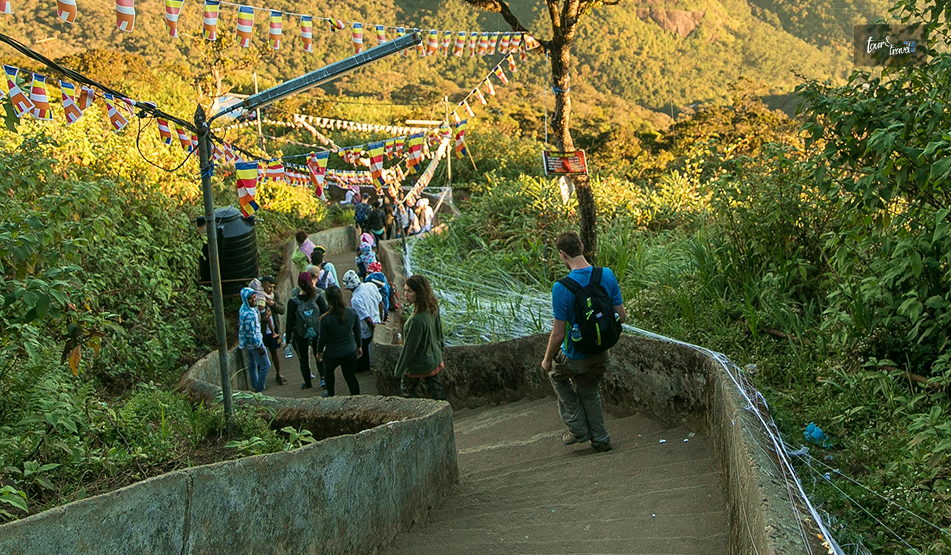
I was in a line of pilgrims, and the line stretched as far as I could see with my torchlight.

All the guides about climbing up this sacred mountain tell you about climbing the 5500 steps.

However, nothing prepares you for the experience you will have in conquering them in pitch darkness. 

Furthermore, the crowd itself was a reflection of how inclusive Sri Lanka is in its religious practice.

It was a gathering of people from four different religious beliefs. 

The reasons for everyone’s climb were not the same.

However, that did not quite clash with each other. 

That is the beauty of the Indian Subcontinent, and Sri Lanka sets an example each time I visit it.  

Nevertheless, in this guide, I will talk about my experience of reaching the summit of Adam’s Peak and all the details you need to know. 

Adam’s Peak: Some Quick Facts You Need To Know

AttributeDetails
LocationInside Peak Wilderness Protected Area, Central Highlands, Sri Lanka
Elevation2,243 Metres (7,359 Feet)
Local NameSri Pada (“Sacred Footprint”) or Sivanolipaathamalai
Religious SignificanceSacred to 
Buddhists, Hindus, Muslims, Christians
Total StepsRoughly 5,500 Stairs via the Popular Hatton Route
Average Hike Time3 to 5 Hours for the Ascent1.5 to 2 Hours for the Descent
Pilgrimage SeasonDecember (Unduvap Poya) to May (Vesak Poya)
Best Months to ClimbJanuary to March for Dry Weather and Clear Sunrise Views
CostFree (No Entry Fee or Permit Requirements)

What Makes Adam’s Peak Sacred

Adam’s Peak (Sri Pada): Climbing Sri Lanka’s Sacred Mountain

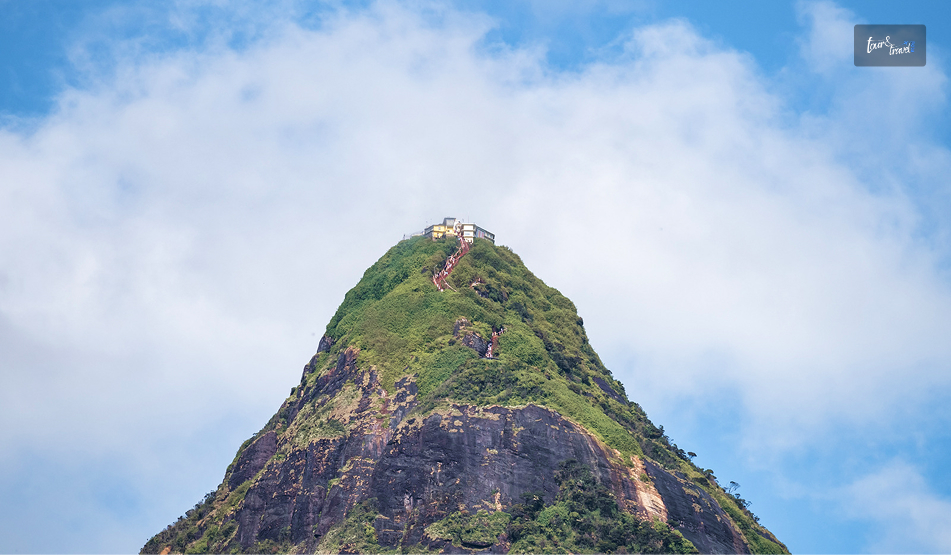
Mount Pedro is the tallest mountain in Sri Lanka. However, Adam’s Peak has the highest spiritual significance. 

The local name for the peak, Sri Pada, or “Sacred Footprint,” itself sets your expectations high. 

It rises 2243 meters in the Central Highlands of Sri Lanka.

Adam’s Peak has a rock formation at the summit resembling a large footprint, which is claimed by four separate religions.

The Mystery Of The Footprint At The Adam’s Peak Summit

The Buddhists believe that the sacred footprint at the summit is of Lord Buddha.

On the other hand, Hindus believe that the footprint is of Lord Shiva. 

Some Christians think the footprint is of Adam. He set his first footprint here after falling from the Garden of Eden.

Muslims also believe Adam, the first prophet in their religion, left this footprint. 

Furthermore, there is a different Christian belief that the footprint belongs to St. Thomas. 

Again, the locals call it the “Mountain of Saman.”

They think the mountain is associated with Saman, a significant figure of worship in local traditions. 

Irrespective of the religious significance of Adam’s Peak, pilgrimage to the summit has continued for over a thousand years.

A Brief History Of The Pilgrimage

Some of the earliest recorded efforts to conquer Adam’s Peak go back to the reign of King Vijayabahu I in the eleventh century.

He built wayside rest houses along the route.

Later, various rulers expanded the mountaintop shrine.

They also built roads and installed the iron chains that still assist climbers on the steepest sections near the summit.

Another fascinating local belief is that the chains in the steep sections of the route belonged to Alexander the Great.

Also, you will find a mention of Adam’s Peak in the writings of the Chinese traveler Ma Huan.

He described Adam’s Peak as a place rich with precious stones.

Along with the religious significance, the richness of gems is another reason why this peak has drawn visitors from far beyond Sri Lanka.

Where Is Adam’s Peak Located?

https://maps.app.goo.gl/CZeW7kGZ8rTZG2Xc8

The sacred mountain is in the southwestern part of the Central Range in Sri Lanka. It is at a distance of around 40 km from Ratnapura. 

However, the more popular trekking route is through Hatton, which is just at a distance of 32 km. 

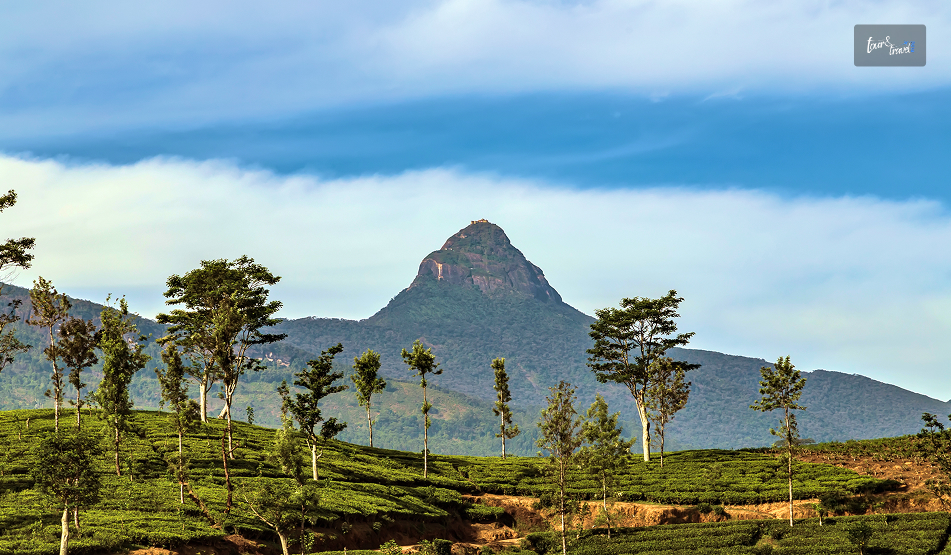
The landscape surrounding the mountain is delightful and quintessential of the Sri Lankan Central Highlands.

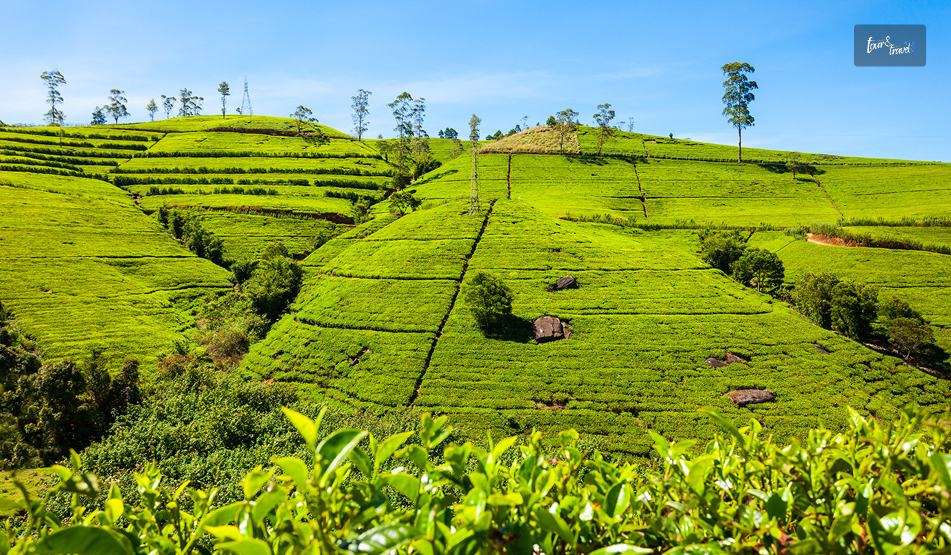
You will see tea plantations and rainforest. 

Moreover, Dalhousie, or Nallathanniya, is the village at the base of this mountain.

Most trekkers start their journey from this village itself. 

It is an easy base to reach from Hatton, Maskeliya, or Ratnapura, depending on which direction you’re coming from.

Getting To The Trailhead

Hatton is the main transport hub for this side of the mountain.

It is well connected by train on Sri Lanka’s scenic hill-country line as well as by bus from Kandy, Nuwara Eliya, and Colombo. 

From Hatton, local buses and shared taxis run the remaining stretch to Nallathanniya.

During peak pilgrimage season, you will get extra buses heading to the base. 

If you are driving yourself, the roads narrow considerably in the final approach to Dalhousie.

Also, parking fills up quickly on weekends and full moon nights.

Choosing Your Route To Adam’s Peak

Adam’s Peak (Sri Pada): Climbing Sri Lanka’s Sacred Mountain

Just as pilgrims of four different religions want to conquer Adam’s Peak, there are six trails that lead to Adam’s Peak. 

However, as I have mentioned, the Hatton route via Nallathanniya is popular with travelers. It is also the easiest. 

The route is around 5 km one-way, and the staircase on this route is well-maintained for a safe ascent. 

The Kuruwita-Erathna, Ihala-Maliboda, and Ratnapura routes are longer.

They are also less developed and used mainly by more experienced or locally guided hikers rather than casual visitors.

The Night Climb

Most pilgrims start the climb to the summit at around 2 to 3 AM.

This reminded me of the walk and the queue for visiting the Tirupati Balaji Temple and Aruanchalam Temple in India.

Both of these temples are located at hilltops. 

Nevertheless, with the ascent starting at 2 AM to 3 AM, you can reach the summit before sunrise at around 6 to 6:15 AM. 

You know your fitness level and the number of stops you are taking at the tea shops along the way.

The total duration to complete the ascent will change with these factors. 

Also, very few people talk about the descent, which is actually way harder, and my knees had a hard time. 

The reward of all this hardwork is the sacred “Shadow of Sri Pada” on a clear morning. 

Difficulty And Fitness Considerations

The climb to Adam’s Peak is moderate to hard. There is no technical scrambling. 

However, the stone stairs are relentless, and they test different muscles than a usual hiking trail.

So, basic fitness is important, and only reasonably fit adults can complete the ascent in three to four hours.

Having said that, mental endurance is most important here. 

I passed pilgrims well into their seventies moving slower but steadily upward alongside groups of teenagers. 

The descent deserves just as much respect as the climb.

The repetitive downward impact on knees and quads catches many first-timers off guard.

Also, rushing it is a common way to end up sore for days afterward.

What Is The Best Time To Climb Adam’s Peak

Adam’s Peak (Sri Pada): Climbing Sri Lanka’s Sacred Mountain

From the Unduwap Poya (full moon) in December to the Vesak Poya in May is the official pilgrimage season for climbing Adam’s Peak. 

It is the dry season in Sri Lanka. 

The entire route gets decked up during this season.

The strings of lights, the tea stalls, and rest huts open all night make the ambience festive. 

However, if you want to avoid the crowd, you can plan a climb between June and November. 

Skip the monsoon months and slippery stone steps. 

Crowds And Timing Within The Season

If you want to join the pilgrims in the peak season, you must avoid the following days.

  • Full Moon Days
  • Weekends
  • The Week Around the Sinhala New Year in Mid-April.

Also, the months of January and February remain the busiest. 

So, if you are planning a quieter climb in the festive season, aim for a weekday in early December or late April instead.

What To Pack And Expect

Comfortable, broken-in walking shoes matter more here than technical hiking gear.

The trail has no scrambling but plenty of relentless stairs. 

Nights on the mountain get cold, particularly in December and January.

So, a warm layer is worth the extra weight in your bag. 

The entry is free, though donations are welcomed at the temple near the base.

Moreover, you must carry cash for tea, snacks, and simple meals from the stalls lining the route during the season.

Nearby Places To Combine With Your Visit

Adam’s Peak (Sri Pada): Climbing Sri Lanka’s Sacred Mountain

Hatton and the surrounding tea country make a natural base before or after the climb.

You can combine Adam’s Peak with a trip through Nuwara Eliya or onward toward Ella.

Take the trip via Sri Lanka’s scenic hill-country rail line. 

Do you have a rest day built in?

The tea estates around Maskeliya and Dalhousie are worth exploring at a slower pace once your legs have recovered from the descent.

Guides And Group Climbs To Adam’s Peak

Hiring a guide is not necessary on the main Hatton route, since the path is obvious and well-populated during the season.

However, having a guide can add real value for first-time climbers.

These guides help you know the context of the mountain’s history and the shrines passed along the way. 

Many guesthouses in Nallathanniya and Hatton can arrange a local guide on short notice. 

Also, joining a small group climb is a good option for solo travelers who would rather not do the pre-dawn ascent entirely alone.

Share on Social Media

Sibashree is a travel, culture, and leisure writer who has been writing since the age of 12 and professionally since 2014. With more than a decade of travel writing experience and journeys across India and several parts of the world, she brings a deeply personal and thoughtful perspective to her work. A student of English Literature and Mass Communication, Sibashree has always viewed travel as more than movement — for her, it has been a way of understanding people, cultures, and herself. Her passion for spiritual exploration has also led her to many unusual and meaningful destinations over the years. Outside of writing, Sibashree enjoys watching European cinema, reading about global politics, and reflecting on the stories hidden within everyday places.

Leave a Reply

Your email address will not be published. Required fields are marked *

title-img Related

READ MORE what to do in Weligama

What To Do In Weligama In 2026? Beach, Nightlife, Water Sports, And More

BY  Sibashree May 27, 2026

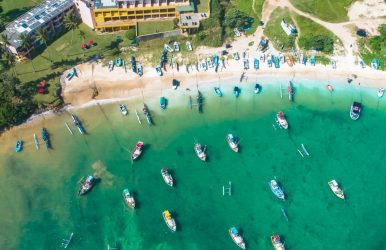
From the beaches of Jaffna to Weligama, Sri Lanka has so many places that can teach you the art of slow traveling and the TravelDownUnder philosophy.  The southern coast of Sri Lanka, especially, has a distinct magic. Furthermore, the Hiriketiya Beach and Mirissa Beach often steal the social media limelight.  However, Weligama is an exception even in this age of Instagram craze. The region has a legendary surf culture and a salty heart.  So, surfing is the most popular answer when you ask what to do in Weligama.  It has a massive, shallow crescent bay that transforms everyday ocean swells into beautifully consistent, beginner-friendly rollers. However, surfing is not the only activity you will love in Weligama. Even if you never plan on waxing a surfboard, the laid-back beach town pulls you in with an infectious, slow-paced lifestyle.  Moreover, here you will spend the mornings in flat whites, hide from the tropical Sun in shaded pools in the afternoon, and enjoy the distinct nightlife.  So, as I was on a backpacking trip to Sri Lanka, I enjoyed every bit of this remote coastal area.  I have penned my experience, the best things to do in Weligama, what to eat, and more in this article.  What To Do In Weligama? Indulging In The Quintessential Coastal Experience In Sri Lanka According to a recent report of the World Economic Forum regarding the Jobs and the Future of Work, 25% of the workforce in the world will be fully digital.  With this shift in the workforce, there will also be a paradigm shift in the way young people and professionals travel.  The digital nomads especially look for budget-friendly and beautiful locations that offer them the ease and amenities of working.  In this regard, Weligama in Sri Lanka remains a prominent choice, and even according to a survey of the Hotel With Tub website, Weligama has secured the 43rd place among the 100 best destinations for digital nomads in the world.  It is affordable, and you must try the following attractions here.  1. Enjoying The Quintessential Weligama Surf Experience  Surfing is the very fabric of Weligama. Decades ago, some eager travelers chased the rumor of finding the perfect breaks in this sleepy fishing hub.  Today, it is one of the premier learning grounds for surfers in Asia.  The gentle sandy floor of the slope reaches across hundreds of meters in the water. Thus, the incoming waves lose their chaotic bite and turn into rolling whitewash,  With the waves getting predictable, even if you are stepping onto a board for the first time, you can walk down the main beach strip to find dozens of local wooden shacks offering board rentals and affordable one-on-one coaching. However, that does not mean that Weligama will disappoint the advanced surfers. For example, Kima Surf Camp is a high-end hub for premier surfers.  Housed within a meticulously restored colonial mansion, it pairs intensive, expert-led coaching with a vibrant communal lifestyle, yoga classes, and poolside recovery sessions.  2. Attending A Rooftop Yoga Session At Hangtime Hostel  The neighboring Ahangama is a more popular place for the niche Yoga subculture. However, the Yoga studios in Weligama stand out because of their amazing views.  The Hangtime Hostel is the place I visited, and the open-air rooftop platform grounded me as soon as I stepped in.  Also, it offers a quick relief from the street noise, and on one side, it offers the most amazing view of the expansive Indian Ocean.  On the other hand, the dense, emerald canopy of the Sri Lankan jungle sways in the breeze.  Like every day, the classes began at 9 AM, and I was a little early to reach as I wanted to secure a good spot.  Furthermore, the session was on Power Vinyasa, and it cost around LKR 2500.  3. Chasing Horizons In The Golden Hour  Along the southern coast of Sri Lanka, Sunset is more than a natural occurrence that takes place daily.  It is like a social ritual and a magic of nature that brings people together. It is an amazing experience to see the Sun dipping into the water.  However, only the locals know the right time to start a short scooter ride to reach The Cliff and see the most vibrant sunset.  It is over rugged coastal rocks, and this open-air tiered place ensures that every single table is positioned for panoramic ocean views.  Overall, it is a complete fusion of the upscale "sunset lounge" aesthetic and the unpretentious warmth that defines Sri Lanka.  Furthermore, to attend this perfect fusion, The Cliff has leaned on tropical flavors without the use of artificial sugar.  Also, I had the most amazing grilled octopus here with pillowy flatbread.  4. Exceptional Brunching Experience At Nomad Cafe Weligama has a booming cafe culture, and Nomad Cafe is surely the crown jewel. It began its journey as a modest, five-table passion project, and now it is an experience in its own right.  Foodies frequently travel from nearby towns to experience the great food and ambiance here. You must not miss the Flat White here.  Moreover, the menu of Nomad Vafe deftly bridges European brunch staples with vibrant, fresh flavor profiles. The undeniable star of the show is the rösti eggs Benedict. I loved its texture play with perfectly poached eggs and rich, velvety hollandaise balanced precariously on a shatteringly crispy potato hash brown. Moreover, if you are looking for something with a kick, don’t miss their smoky and perfectly spiced shakshuka.  5. Coworking At Plan B For Community And Connection  As I have already mentioned, Weligama is a prime location for digital nomads. Plan B is one of the prime destinations for digital nomads here.  Furthermore, if you need to answer emails, crunch numbers, or take a Zoom call without sacrificing your tropical state of mind, Plan B is the place to be.  It is an excellent fusion of a cozy garden cafe, coworking hub, and coliving space. Furthermore, there is a shaded courtyard at the epicenter of the cafe.  The space hums with gentle productivity; you will find professionals from across the globe typing away over iced lattes while jazz music filters through the trees.  Moreover, the beauty of Plan B is inclusivity. You will not need a formal workspace pass to enjoy the grounds.  Their smoothie bowls are amazing, and so are the traditional Sri Lankan hoppers and decadent eggs Florentine. You will also find many delightful vegan options here. 6. Enjoying Seafood By The Shore: A Culinary Feast At Maru Weligama is not just about cafes and local rice-and-curry spots when it comes to food. Maru, for example, is a place that elevates the beachfront dining experience.  It is right against the ocean’s edge, and the restaurant celebrates the bounty brought in daily by Weligama’s fishing fleets.  Furthermore, the menu here focuses heavily on bright, clean, and coastal flavors.  For example, the shrimp ceviche is a masterclass with fresh flavors and the right acidic balance. It is perfect for a hot midday meal.  Moreover, if you are looking for something hearty and healthy, try their assorted teriyaki and fresh fish poke bowls with crisp veggies, seasoned sushi rice, and premium cuts of fish.  In addition, Maru offers the most delightful perk in the form of the on-site swimming pool. I took a dip there before and after the meal.  So, it is an amazing base camp to escape the intense midday Sun, work, enjoy the ocean breeze, and indulge in a leisurely lunch.  7. Unwinding At Zephyr Zephyr becomes the go-to place after the surfboard rental shacks close their doors. It offers meticulously crafted cocktail, and the nightlife here is not pretentious.  Instead, you will find a highly sophisticated, relaxed beachside aesthetic here.  Moreover, the bar staff here is well aware of the finer details of classic cocktails.  Their espresso martini is properly frothy and bitter, while their classic mojito relies on freshly plucked mint and perfectly balanced lime juice.  While primarily celebrated for its drinks, Zephyr surprises many with its highly curated food menu.  Instead of heavy entrees, they specialize in elevated small plates designed to complement the spirits.  The seared tuna plate, crusted in local spices and perfectly rare at the center, is an absolute must-try. Like Maru, Zephyr features a pool that adds to its luxury-resort feel.  Essential Day Trips Beyond Weligama Bay You can extend the list of what to do in Weligama thanks to its unique geographic location.  It is a delightful epicenter for exploring the culture, wildlife, and history of southern Sri Lanka. 1. Galle Fort You can take a tuk-tuk ride for 45 minutes to reach Galle Fort.  It is a A gorgeous UNESCO Heritage site filled with 16th-century Portuguese and Dutch colonial architecture, high-end boutiques, jewelry galleries, and a striking seaside lighthouse. 2. Handunugoda Tea Estate The tea estate is a 45-minute scooter ride from Weligama.  It is a lush lowland plantation producing legendary "Virgin White Tea," completely untouched by human skin during harvesting. Here, you will enjoy fascinating machinery tours and extensive tea tastings. 3. Yala National Park  You can take a car ride of 3 hours to reach the Yala National Park.  The Yala National Park is an intense, bucket-list wildlife safari. Leave in the pre-dawn hours to spot wild Asian elephants, crocodiles, leopards, and diverse birdlife in their natural habitats.
READ MORE lahugala national park

Lahugala National Park: A Quiet Corner Of Sri Lanka’s Wild East

BY  Sibashree Sep 8, 2026

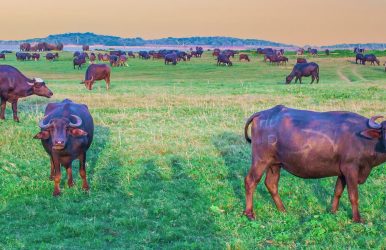
I was quite content at Arugam Bay for a week of surfing, and I had Kumana penciled in as one of my big wildlife detours.  I had heard about Lahugala, but most guides or locals I met mentioned it in passing.  It was more like, “Oh, that little park on the way to Pottuvil, you'll drive past it anyway.” However, an elderly guesthouse owner told me not to skip it. I listened to him. Otherwise, I would have missed the most understated, elephant-dense pockets of wilderness.  It was not like anything I had visited in Sri Lanka. Also, the best part was that I had it almost entirely to myself.  The park neither can nor tries to compete with Yala National Park or Wilpattu in scale or star power.  It is 5.4 square kilometres of flat, tank-fed scrubland in the Eastern Province, and that smallness is precisely the point. Everything in Lahugala revolves around water, grass, and elephants, and on the afternoon I visited, all three came together in a way I still think about. A Quick Introduction To Lahugala National Park Lahugala Kitulana National Park is in the eastern province of Sri Lanka, and it is roughly 16 Km inland from Arugam Bay.  It is also just off the Pottuvil–Monaragala road, which actually cuts through the park's southeastern edge. This park began its journey as a wildlife sanctuary in July 1966. Then, on 31st October 1980, it had an upgrade as a national park.  Furthermore, the ecology of the park revolves around the three ancient tanks, Lahugala, Kitulana, and Senagamuwa. These tanks eventually drain into the Heda Oya River. Nevertheless, have a look at the quick snapshot below before you plan a visit to Lahugala National Park.  DetailInformationLocationEastern Province, near Pottuvil and Arugam BayAreaApproximately 15.4 sq kmEstablishedSanctuary in 1966National park status on 31 Oct 1980Key featureThree Interconnected TanksLahugalaKitulanaSenagamuwaFamous forElephant gatherings around Lahugala tank, especially in the dry seasonNearest townPottuvil (approx. 16 km)Arugam Bay (approx. 16–18 km)Best seasonYear-roundElephant sightings are strongest July–September How To Reach Lahugala?  You do not need to plan a standalone trip for Lahugala National Park.  Like most travelers, I reached Lahugala from Arugam Bay. The tuk-tuk price was LKR 3000, and it took around 45 minutes.  Furthermore, the distance between Colombo and Lahugala is around 378 kilometers. So, if you are traveling from Colombo, choose Ella or Monaragala as your overnight stop.  Attempting the national park from Colombo will be an overly ambitious plan.  FromApprox. DistanceApproximate Drive TimeArugam Bay16–18 kmAround 30- 45 MinutesPottuvil16 km20–25 minutesMonaragala45 km1 hourColombo378 km6–7 hours The A4 Highway from Pottuvil to Monaragala runs directly alongside and briefly through the park. So, you do not even need a dedicated safari transfer to see part of Lahugala.  So, you can see a major section of the tank and grassland from the main road.  However, if you want to explore the interior tracks or the tank edges, you will need a park-registered tracker and jeep.  My Safari Experience At Lahugala National Park It was around 3:30 PM when I reached Lahugala. From the locals, I already knew that it was the ideal window for the classic dawn safari here.  The heat is at its peak in the afternoon, and that is what pushes elephants toward the tanks.  So, in the late afternoon, you will find them near the tanks.  The Elephants Of Lahugala Tank The Lahugala Tank supports a thick growth of Sacciolepis interrupta, a wetland grass elephants seem to genuinely love.  I saw herds gathering along the tank margins to graze on it.  The herds I came across had a decent strength of 20 to 30 elephants. However, the guide told me that during the peak season, there can be around 100 elephants in a herd.  Also, one thing I want to share here. The largest herd I spotted in the park was nowhere near the known gathering spots.  I saw them across the far bank and in the shallows.  Overall, barring the famous gathering of Minneriya, this was the largest elephant encounter I had in Sri Lanka.  I loved the elephant watching experience here because of how unhurried it felt.  No other jeeps were jostling for position, and there was no radio chatter about a sighting three tracks over.  My tracker cut the engine near the tank edge, and we simply sat and watched calves wade in, and adults strip grass with their trunks for close to forty minutes. Birdlife Along The Tanks The three tanks of Lahugala made it an exciting spot for bird watching. The park especially stands out with its population of waterbirds.  I picked out painted storks, several egret species, cormorants, and a pair of white-bellied sea eagles working the thermals above the water. Because the park is so rarely crowded, birds tend to stay closer and longer than they would somewhere busier. Sloth Bears And Other Wildlife In the park, I saw spotted or axis deer, sloth bears, along with mugger crocodiles and freshwater turtles.  However, to be honest, sloth bears are elusive, and you can spot them by luck.  They are shy. So, even if you cannot see them, know that they are present in the park.  What Is The Best Time To Visit Lahugala National Park? Lahugala National Park is a year-round destination.  However, if you are in the park especially for elephant gatherings, dry months are the best time to spot them.  During the dry months of July to September, elephant sightings become frequent, with the water levels dropping elsewhere and the gigantic creatures gathering around the tanks.  Also, you must avoid the northeast monsoon period from October to January. The tanks are full in these months, and the elephants disperse into the surrounding forest, making sightings far less predictable. Entrance Fees And Permits CategoryApproximate Cost (2026)Foreign Adult (12+)USD 12Foreign Child (6–12 Years)USD 6Foreign Children under 6 Years FreeSAARC NationalsUSD 10 for AdultsUSD 5 for Children between 6 and 12 YearsFree for Children below 6 YearsLocals Adults: LKR 60Children from 6 to 12 Years: LKR 30Children below 6 Years: FreeStudents: LKR 20Vehicle Entry TicketLKR 300Foreign Group Fee Per VehicleUSD 10 A Half-Day Lahugala Itinerary Because Lahugala is small, it is easy to pair with either Arugam Bay's beaches or a longer Kumana National Park excursion. Here is roughly how I had structured the afternoon based on my own visit. TimeActivity2:30 PMDepart Arugam Bay 3:00 PMArrive at Lahugala entrance, collect tracker3:30–4:45 PMSafari loop around Lahugala tank, elephant and bird watching4:45–5 PMStop at the old Magul Maha Vihara ruins near the park boundary5:15 PMReturn to Arugam Bay in time for sunset Tips From My Visit A few practical notes I will pass on. Go in the late afternoon rather than dawn, since Lahugala's elephant activity peaks as the heat pushes them toward water. Bring binoculars, as the tank is wide and animals often graze on the far bank. Do not expect the density of jeeps you will find in Yala National Park. This is one of the few parks in Sri Lanka where a wildlife sighting still feels unhurried and private. Nearby Places To Explore Lahugala sits at the crossroads of Sri Lanka's east coast and its deep south, which makes it easy to fold into a longer itinerary.  If you are basing yourself in Arugam Bay, it pairs naturally with a Kumana National Park safari for a more thorough wildlife day.  Travellers heading further south along the coast often continue on toward Pasikudah or Nilaveli for beach time. Again, those coming from the cultural triangle sometimes route through Mullaitivu or Vavuniya on the way east.

READ MORE dikwella

Dikwella, Sri Lanka: The South Coast Town That Asks You To Slow Down 

BY  Sibashree Jul 28, 2026

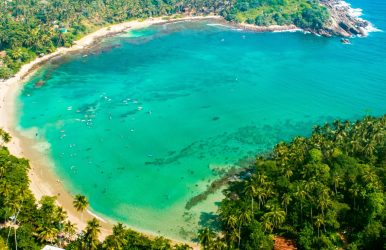
On the bus route hugging Sri Lanka's south coast, Dikwella sat as a shadow to two more prominent names in Sri Lankan Tourism, Tangalle and Mirissa.  Mirissa stood out with its whale-watching boats and rooftop bars. Tangalle, on the other hand, showed its glossy resort strips.  However, Dikwella waited quietly with just a busy street, a fish market, and a few guesthouses.  Furthermore, the stretch of coastline of Dikwella unfolded quietly on either side of town.  I was looking for that quietness exactly, and that is why I ended up spending three nights there.  In this article, I will share my experience in Dikwella Beach, how to reach there, the things to do, and more! Where Is Dikwella? How To Reach It?  Dikwella or Dickwella is in the southern province of Sri Lanka.  Between Tangalle and Matara, this coastal town is also closer to the Galle–Mirissa corridor. So, Dikwella is accessible.  However, the thing is that it is usually far enough off the main tourist script. So, to me, Dikwella felt like a place where locals lived and not a backdrop built for visitors. If you are already exploring the south coast, Dikwella is a short hop from nearby towns. It is just about twenty minutes from Matara, fifteen from Mirissa, and only ten minutes or so from Tangalle.  Local buses run this route constantly, and the ticket prices are very low, though a tuk-tuk is more comfortable if you're carrying luggage. If you are traveling from Colombo, you will have to drive for around three and a half to four hours down the Southern Expressway to reach Dikwella.  The road exits near Matara and continues along the coastal road.  However, I took the Colombo Fort to Matara train and then a short tuk-tuk ride to Dikwella.  The train takes longer. However, the time you spend on the train journey here is more than worth it as it is one of the most beautiful railway routes in Sri Lanka.  It hugs the coastline for long stretches south of Galle.  Colombo Fort To Matara Train  There are many daily and weekly trains running between the Colombo Fort and Matara railway stations.  I took the 8050 Express train. It runs daily.  It departed the Colombo Fort Station at 6:50 AM, and I reached Matara at 10:15 AM. I was traveling in a 3rd class compartment, and the ticket price was LKR 300.  The second class tickets cost LKR 600.  From Matara, I took a tuk-tuk that charged me LKR 2500.  Getting Around Dikwella  You can hire a tuk-tuk to explore Dikwella and visit the nearby attractions such as the temple and the blowhole.  The rental cost is around LKR 3000 to LKR 4000.  However, I rented a scooter. It was more affordable, costing me LKR 1000 a day, and it gave me more flexibility to explore the smaller lanes and beaches nearby. What Are The Things To Do In Dikwella (The Best Is That You Do Nothing) Dikwella is the place that allows you to enjoy the joy of just existing.  So, even if you are an introvert like me, you will find the place comfortable for getting knocked over by a wave or simply waiting for the water to wash your feet.  Nevertheless, exploring the Blue Beach, a visit to Hiriketiya, a ride to the Hoo-maniya Blowhole, and a visit to the Wewurukannala Vihara are the to-do things in Dikwella. Being At The Blue Beach And The Double Bay  Dikwella Beach or Dickwella Beach has become the Blue Beach thanks to the locals and the nearby hotel owners.  It is a double bay formation just west of town, where two curved stretches of sand meet at a narrow rocky point. Due to the shape of the bay, the open-ocean swell gets broken up. So, the water inside remains calmer than most beaches along this stretch of coast. So, if you are visiting alone or with family, this is a more comfortable space for swimming.  I saw palm trees leaning out over the sand at angles that look almost too deliberate, like a photograph. Furthermore, in the late afternoon, the light turned the water somewhere between turquoise and navy.  I spent one whole evening doing nothing but sitting on the sand with a king coconut, watching fishermen haul in nets a little further down the beach. It was not a dramatic sunset by postcard standards. It was better, honestly, because there were maybe a dozen other people on the entire beach to share it with. 2. A Visit To Hiriketiya After soaking in the silence of Dikwella, Hiriketiya was my next stop to feel the pulse of the area.  Technically part of the greater Dikwella area, Hiriketiya has become one of the fastest-growing spots on Sri Lanka's south coast in recent years. It is a near-perfect horseshoe-shaped bay that has turned into a magnet for surfers, yoga retreats, and a rotating cast of digital nomads working from beachfront cafés. The bay itself is small. While the small bay offers intimacy, a lack of space can also make it feel very crowded with a surge in the number of visitors.  I rented a board for a couple of hours one morning, and it cost me LKR 500. Even as an amateur, the gentle, consistent waves here made it one of the friendlier places I have tried to learn surfing.  The scenario, however, entirely changed by the evening. The beanbags outside the restaurants were occupied, and people were busy gorging on the best seafood and wood-fired pizza.  It felt like a stark contrast to how quiet Dikwella felt.  3. A Visit To The Hoo-Maniya Blowhole I took a scooter ride toward Kudawella and reached Hummanaya, or Hoo-maniya blowhole.  It was like a narrow rock chimney with incoming waves getting forced up through a submerged cavern and bursting out at the top in a sudden plume of spray.  The water here makes a low rumbling sound that gives the blowhole its onomatopoeic name. Despite being the only natural blowhole in Sri Lanka and one of the largest in the world, the Hoo-Maniya Blowhole is unpredictable.  Some eruptions are a modest fizzle, others send spray shooting dramatically into the air, and the difference comes down entirely to the sea conditions that day. The locals told me that the blowhole is the most powerful during the southwest monsoon.  During the monsoon months, rougher seas force water through the cavern with more pressure. As a foreign visitor, I had to pay 500 LKR as the entry fee. For locals, however, the entry fee was 50 LKR for adults and LKR 20 for children.  The parking charges were LKR 50 to LKR 100.  There is a proper viewing platform from which you can cherish the unique geology of the place.  4. Visiting The Wewurukannala Vihara And Its Giant Buddha I took a scooty ride for about twenty minutes inland from Dikwella, and on the road toward Beliatta, I found a Buddhist temple appearing over the treeline.  It was Wewurukannala Vihara, home to the largest seated Buddha statue in Sri Lanka.  The statue rose around 50 meters, dominating the skyline of an otherwise low, palm-covered landscape. The temple complex itself is older and more layered than the giant statue suggests at first glance.  Parts of it date back to the 18th century, built during the reign of King Rajadhi Rajasinha, with a smaller, more traditional Buddha image worked into the original structure. Walking through the complex, I passed from that older, quieter section into the base of the giant statue.  Along the way, most visitors passed through a strange, slightly unsettling tunnel of painted dioramas depicting Buddhist concepts of karma and consequence.  Where To Stay In Dikwella?  You can decide where to stay in Dikwella based on the experience you want.  Close to the town center and the Budget, there is a good mix of budget guesthouses and a couple of larger beachfront resorts. While the budget guesthouses were more suitable for me, the larger beachfront resorts were for travelers who wanted easy beach access without the buzz. However, if you want a little buzz and the pulse of the area, Hiriketiya will be a more suitable choice.  The prices of guest houses here are higher. Also, the energy shifts toward boutique guesthouses, surf hostels, and design-forward small hotels aimed at the surf-and-yoga crowd. I split my stay between the two, a couple of nights in a simple guesthouse near Blue Beach for the quiet mornings, then a night in Hiriketiya just to experience the contrast. The stays near Blue Beach cost me LKR 1800 per night, and in Hiriketiya, it was around LKR 6000 per night. What To Eat In Dikwella?  Dikwella does not promise a huge restaurant scene. It has not come out of its shell of a working fishing town yet.  The daily catch showed up on almost every dish I had.  Some of my best meals were the simplest, including grilled fish, coconut sambal, and rice and curry from small local spots along the main road. Furthermore, the cost of food in Dikwella was a fraction of similar meals' cost in Mirissa or Unawatuna. For a livelier and more elaborate food scene, you can visit Hiriketiya. It has cafés and restaurants aimed squarely at the international crowd. So, there you will find smoothie bowls, wood-fired pizza, and fresh pasta alongside Sri Lankan staples. Overall, I cherished the contrast of eating a rustic curry in Dikwella town one night and a plate of pasta overlooking the surf in Hiriketiya the next. Things To Remember If You Are Visiting Dikwella  December to April, or the dry season, is the best time to visit Dikwella.  You will enjoy the calmest ambiance and nature for swimming in these months.  However, if you specifically want to see the Hoo-maniya blowhole at its most dramatic, aim for the southwest monsoon months instead, around May to September. Also, two to three days are enough if you want to experience the best of Dikwella. You can visit the Blue Beach and the Vihara in one day.  On the next day, you can visit Hiriketiya and the blowhole and try surfing. Then, leave a spare day if you just want to do nothing. So, Is Dikwella Worth Visiting? During my trip to Sri Lanka, especially when exploring the southern coast, Dikwella was my favorite spot as it allowed me to slow down and be myself.  Dikwella does not have an ancient fortress or a famous surf competition. It does not have a five-star strip or a world-class resort.  In fact, it is still very much a working fishing town that has not been built around tourism.  Dickwella Beach is beautiful because it is not overrun. Also, the nearby attractions such as the booming blowhole and a giant Buddha allow you to spend a couple of unhurried days. So, if your south coast itinerary has room for one detour off the Mirissa–Tangalle highlight reel, make it this one.