
These Are The 10 Top Restaurants In Macau Out Of The 25 Restaurants I Visited

Macau is a small East Asian City. It is on the west of Hong Kong and on the south coast of China. 

Macau is 64 kms away from Hong Kong, and it has the City of Zhuhai in Mainland China to the north. Then, the Pearl River Delta is to the south and east. 

It was a Portuguese colony once, but now it is an autonomous territory. Also, even today, Macau shows an influence of ancient Chinese culture. 

However, this ancient Chinese culture has created a fusion with new-age European influence. The cuisine of Macau explains it the best, and that’s why you need to visit the best restaurants in Macau. 

You will especially experience a blend of Cantonese and Portuguese flavors. 

What Are The Top 10 Restaurants In Macau? 

What Are The Top 10 Restaurants In Macau

Macau has many top restaurants to eat at. Along with the starred restaurants, there are also bakeries, taverns, street food corners, and age-old tea houses. 

Furthermore, freshly baked almond cookies, egg tarts, and slices of beef and pork jerky are some of the best delicacies to try in these restaurants. 

Also, thanks to the culinary legacy of over 400 years, there is a global interest in the Macanese cuisine. 

Moreover, Irina Bokova, the Director-General of UNESCO, has designated Macau as the UNESCO Creative City of Gastronomy. 

Nevertheless, visiting all the restaurants in the city is not possible logistically. So, I have 25 places and picked 10 among them. 

I have further divided the top 10 Macau restaurants into two categories: luxury restaurants and budget-friendly restaurants.  

It’s time to celebrate Macanese history and the eclectic culture of the city. 

Top Luxury Restaurants In Macau 

As I have mentioned, Macau is a global gastronomic destination, and it is home to names such as The Ritz–Carlton Cafe, which is a Michelin Guide restaurant. 

So, let’s find out the top names on our list of the luxury restaurants in Macau, along with The Ritz–Carlton Cafe. 

However, before I give brief details about the restaurants with you, I want to share a table or a quick summary comparing the names I have chosen. 

A Quick Summary 

Best Luxury Restaurants in MacauCuisine Type and SpecialtyAverage Price Range Per Person (₹)Ideal Dining OccasionLocation
The Ritz-Carlton CaféFrench Brasserie and Classic Desserts2,500 – 15,000– Romantic Dates
– Group Dinners
– Family Dining
Ground Floor, The Ritz-Carlton Macau, Estrada da Baía de Nossa Senhora da Esperança, Cotai
The Manor (St. Regis)Seafood, Oysters, and Robata Grilled Meats2,500 – 15,000– Romantic Dinner – Dates
– Trying Local Cuisine 
– Family Dinners
1st Floor, The St. Regis Macao, The Londoner Macao, Estrada do Istmo, Cotai
Lai HeenMichelin-Starred Haute Cantonese and Vegan Options2,500 – 13,000– Private Dining
– Intimate Family Gatherings
51st Floor, The Ritz-Carlton Macau, Estrada da Baía de Nossa Senhora da Esperança, Cotai
Vida Rica (Mandarin Oriental)Classic Cuisine with Modern Twist and Cheese Wheel Risotto2000+– Panoramic Waterfront Views
– Bar Scene
– Romantic Dining
Mandarin Oriental Macau, 945 Avenida Dr. Sun Yat-Sen, NAPE, Macau Peninsula
Belon Restaurant (Banyan Tree)Marine-Themed International Seafood and Dry-Aged Ribeye6000+– Sunday Champagne Brunches
– Kids Lunch
– Romantic Events
31st Floor, Banyan Tree Macau, Galaxy Macau Resort, Estrada da Baía de Nossa Senhora da Esperança, Cotai

1. The Ritz-Carlton Café

One of the best restaurants in Macau, China, the Ritz Carlton Cafe is the ultimate spot if you are looking for a French brasserie. 

It exudes the charm of a quintessential French Cafe. Also, it is a fusion of sophisticated decor and flavorful food that stands out because of its simplicity. 

Furthermore, based on the group size, you can choose between its two and four-seater intimate seating arrangements. 

Also, it offers a wonderful view of the shopping area. 

2. The St. Regis Macao

I had the finest oysters in Macau at The Manor. This signature grill restaurant and oyster bar of St. Regis Macao also serves prime cut meats. 

Furthermore, its wine list is exquisite, and it is one of the topmost restaurants in Macau to follow the unique Robata technique for grilling. 

In the Robata technique, Northern Japan’s “white oak Bincho-tan” is used for the perfect grilling of the meat. 

As a result, the meat gets a charred texture on the outside, and it remains moist in the center. The subtle smoky aroma makes it all the more appetizing. 

You can also try Portuguese chouriço and squid ink here, and Instagram celebrates its cross-cultural plates, such as the Glacier 51 Toothfish. 

3. Lai Heen

Lai Heen is a Michelin-starred restaurant in Macau and one of the best in the city for vegetarian food. 

The atmosphere of the restaurant is sophisticated, and a lot of experimentation with haute Chinese cooking happens here. 

Furthermore, the Chef’s Creations served here are innovative, and they celebrate the modern spirit of the city. 

Along with vegetarian cuisines, it also has custom-made vegan options such as “Asparagus Barley Risotto with Morel Mushrooms.”

So, if you are a vegetarian and looking for an Indian restaurant in Macau, you can choose Lai Heen. 

However, please mention your vegan preferences to them well in advance before visiting the restaurant. 

4. Vida Rica, Mandarin Oriental

I visited Vida Rica to try delicious cakes and an assortment of cocktails. However, as soon as I stepped inside, I was bowled over by the amazing glass wall. 

It offered a brilliant view of the Nam Van Lake and the South China Sea. 

Furthermore, the seating arrangement of the restaurant was unique. Every guest could see how the executive chefs interpret the classic cuisine. 

I loved the red curry prawn bisque there, and they make brilliant risotto. 

5. Belon Restaurant: Banyan Tree

Belon Restaurant has a marine theme, and it felt like dining under the ocean. You will notice the inspiration of the marine life even in the dishes such as smoked scallop. 

Along with being one of the top dining restaurants in Macau, it is also a popular spot for a Sunday Brunch. 

It got its name from the famous flat oysters from France, Belon. Furthermore, Hong Kong Tatler designated it as one of the best restaurants in Macau in 2017. 

What Are The Most Affordable Restaurants In Macau? 

Budget-friendly dining in Macau is not limited to the local eateries or Cha Chaan Tengs. You will also find many affordable restaurants here. 

A Quick Summary Of Budget-Friendly Restaurants In Macau 

Affordable Restaurants in MacauAddressAverage Price Per Person (₹)Must-Try DishesIdeal For
Terrazza In Galaxy MacauShop 2001, 2nd Floor, Galaxy Macau Integrated Resort, Estrada da Baia de Nossa Senhora da Esperança, Cotai, Macau4300– Country Style Suckling Pig
– Tuscan delight with the Paccheri Pasta and Carabinero Prawns
– Eggplant Parmigiana
– Classy Wine and Portuguese Dining
– Dining with Kids
– Romantic Dining
– Group Dining

Dragon Portuguese Cuisine In BroadwayBroadway Food Street, Shop A-G005–G009, Broadway Macau, Avenida Marginal Flor de Lotus, Cotai, Macau1500– Baked Duck Rice
– Baked Suckling Pig, 
– Homemade Curry Crab
– Family Dinners
– Casual Dining
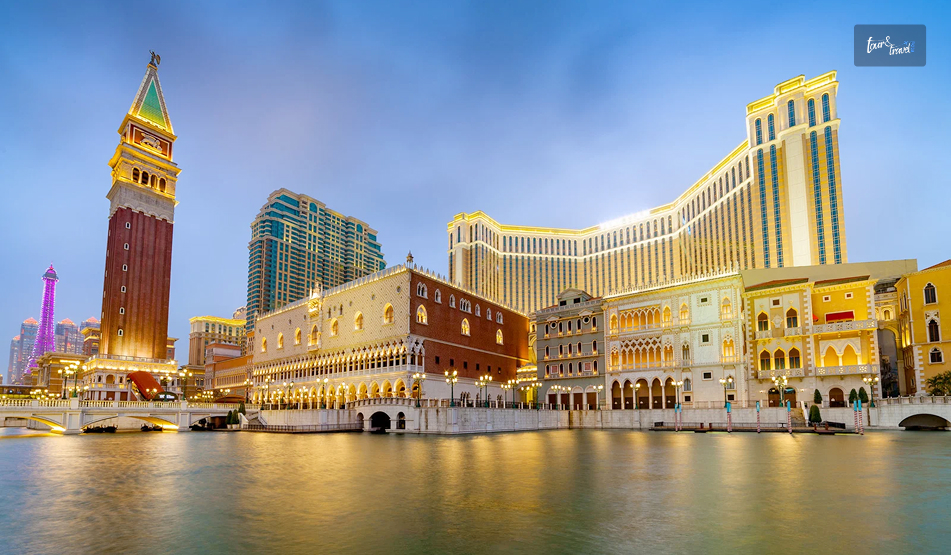
Cafe Deco Restaurant – The VenetianShop 1036, Level 1, The Venetian Macao-Resort-Hotel, Estrada de Baia de Nossa Senhora da Esperança, Taipa, Cotai, Macau1277– Crab Legs
– Wood-Fired Pizza
– Pastries
– Family Gathering
– Dining with Kids
MIAN In Studio CityShop 1181, 1st Floor, Studio City Macau, Estrada do Istmo, Cotai, Macau1550– Barbecued Iberico Pork and Ramen
– Prawn and Seafood Hokkaido Miso Soup Ramen
– Grilled Eel Kamameshi
– Date Nights
– Family Dinner
Le BuffetShop 3100, Level 1 (Ground Floor Lobby Area), The Parisian Macao, Estrada do Istmo, Cotai Strip, Macau1700– Fresh Seafood from the Buffet’s Seafood Table
– Ham
– Cured Meats (like Prosciutto)
– Romantic Dinner
– Family Dining

6. Terrazza In Galaxy Macau

Terrazza in Galaxy Macau celebrates the love for Italian cuisine in Macau. It has prestigious listings in Ospitalita Italiana and the Michelin Guide. 

Furthermore, beyond the food, it is the wine cellar of the restaurant that stands out. 

Also, from the restaurant, you can enjoy amazing views of Cotai. 

7. Dragon Portuguese Cuisine In Broadway

One of the top Portuguese restaurants in Macau, Broadway’s Dragon Portuguese Cuisine has dishes that present the perfect fusion of Macanese and Portuguese dishes. 

Despite the sophisticated setting and the excellent quality and innovation in the dishes served here, the prices are moderate. 

Moreover, the food served here has the comfort of a home-cooked meal. Also, it has a “Galatian-inspired” setting that makes the ambiance vibrant and cozy. 

8. Cafe Deco Restaurant: The Venetian

Cafe Deco Restaurant is one of the most affordable Chinese restaurants in Macau. 

However, along with traditional Chinese food, it also serves local Macanese cuisine and International delicacies made with fresh seafood. 

Also, boasting a soothing and classy setting, the restaurant serves a full-course buffet including soups, appetizers, fresh seafood, salads, and desserts. 

9. MIAN In Studio City

MIAN in Studio City serves the best Japanese cuisine in Macau. In the classic Japanese dishes it serves, the restaurant uses homemade soup bases and noodles. 

Furthermore, it has an open kitchen. So, watching the delicacies being made is quite an experience. 

Also, it has a dim lighting setup. So, you can enjoy a romantic ambiance. 

10. Le Buffet

At Le Buffet, I saw the chefs making the European delicacies at live counters. 

While it is very European in the cuisine served, the decor is Persian with muted colors and grilled walls. 

Furthermore, the desserts at Le Buffet deserve special mention, and the mini Eiffel Tower dessert tower is the most creative among them. 

Some More Information You Need To Know About The Top Restaurants In Macau 

  • If you are looking for Indian restaurants in Macau, you can explore options such as Macau City, Indian Spice, and The Golden Peacock. 
  • Furthermore, if you are searching for authentic Italian restaurants, you must try options such as La Cucina Italiana, Portofino, Bene, and Don Alfonso 1890. 
  • Also, if you want to have vegetarian food, consider places such as Vida Rica Restaurant, Blissful Carrot, and Lai Heen. 

Celebrating The Fusion Of Local And Global Cuisines 

The top restaurants in Macau celebrate the words of George Bernard Shaw, “There is no love sincerer than the love for food.”

Also, what makes the gastronomic experience in Macau special is the eclectic influence and the rich history of over 400 years. 

So, let’s indulge in great food in Macau. Bon Appétit!

Read Also:

Share on Social Media

Sibashree is a travel, culture, and leisure writer who has been writing since the age of 12 and professionally since 2014. With more than a decade of travel writing experience and journeys across India and several parts of the world, she brings a deeply personal and thoughtful perspective to her work. A student of English Literature and Mass Communication, Sibashree has always viewed travel as more than movement — for her, it has been a way of understanding people, cultures, and herself. Her passion for spiritual exploration has also led her to many unusual and meaningful destinations over the years. Outside of writing, Sibashree enjoys watching European cinema, reading about global politics, and reflecting on the stories hidden within everyday places.

Leave a Reply

Your email address will not be published. Required fields are marked *

title-img Related

READ MORE Diyaluma Waterfall

Diyaluma Waterfall, Sri Lanka: The Eternal Memoir Of Love (Location, Hiking, And More)

BY  Sibashree Mar 16, 2026

After visiting the Nine Arch Bridge and the iconic blue trains, my next stop was the Diyaluma Waterfall, at a distance of around 45 km.  Now, Sri Lanka is full of hidden gems. Along with the Ritigala Forest Monastery, this waterfall has also offered me a slice of offbeat Sri Lanka.  Furthermore, the Diyaluma Waterfall, with a height of 220 meters, is the second-tallest waterfall in Sri Lanka, and it has many natural infinity pools.  If those were not reasons enough, Diyaluma Waterfall is irresistible for the local tragic love story associated with it. Also, it is a place of great ecological importance.  Moreover, the journey from Ella to Poonagala and the trek further offer an equally unforgettable experience.  Here are more details about visiting the Diyaluma Waterfall, its location, transport options, history, hiking experience, and more.  Where Is Diyaluma Waterfall?  The Diyaluma Waterfall is on the Colombo-Badulla highway in the Badulla district of Sri Lanka.  Koslanda, around 6 km west, is the closest town to the Diyaluma Waterfall.  Furthermore, it is located at a distance of around 30 km from Ella. Also, the waterfall is located about 196 km away from Kandy, the cultural hub of central Sri Lanka.  Moreover, the Kirindi Oya River has formed this waterfall. This river starts flowing near Bandarawela and flows across the central part of Sri Lanka.  How To Reach The Diyaluma Falls, Sri Lanka?  Tuk-tuks are easily available from Ella to Poonagala. Further, from the Poonagala village at the top, you have to do a short hike to reach the Diyaluma Falls.  However, you can also hike from Koslanda. This is a bottom-to-top hike and way more difficult than the top-to-bottom hike from Poonagala.  Also, the tuk-tuk to the Poonagala village cost me LKR 4000.  Moreover, remember that you have to inform your tuk-tuk driver that you need to go to the upper Diyaluma Falls and trek down from there. 1. Hiking From Poongala To Diyaluma Falls  Carry an offline map when hiking from Poongala to the Diyaluma Falls as the network is inconsistent here.  Furthermore, you must take your tuk-tuk driver as a guide or a different local guide for the hike.  My trek to the falls started from the Makaldenya Junction, and I walked for around 30 minutes to reach the Upper Diyaluma Waterfall.  The path is even, and that is why you need to wear proper hiking shoes with a good grip. Also, long and dry grasses cover the entire route.  You will find all the infinity pools here, and taking a bath is a must, considering the heat and strain of walking downhill.  Then, I took a walk of around 10 minutes to reach the Lower Diyaluma Fall. From there, you can see water falling into the valley from a height of 220 meters.  Also, this is the moment you realize the meaning of the Diyaluma Waterfalls. The name is a combination of Diya and Haluma.  Moreover, the name means the “liquid light” or a “rapid flow of water.”  2. Hiking From Koslanda To Diyaluma Falls  The hike from Koslanda is difficult. However, it offers an amazing view of the waterfall from the Diyaluma Falls Bridge below.  Furthermore, the hike takes around 20 to 30 minutes, and on this hiking route, you will find many snacks and coconut shops.  What Are The Things To Do At Diyaluma Falls?  To enjoy hiking and other activities at the Diyaluma Falls, you have to arrive a little early. The waterfalls are open from 6 AM to 5 PM.  Then, you can enjoy a bath in the infinity pools, relax on the rocks, or talk to the locals. In fact, I got to know about the history of this waterfall when talking to a local hiker.  1. Swimming In The Natural Infinity Pools Of The Diyaluma Waterfall On the edge of the main Diyaluma Waterfall, you will find the main natural infinity pool. Also, you will find many other natural infinity pools formed by the Upper Diyaluma Waterfall.  However, you must check with the locals and take enough precautions before getting into the water.  2. Relaxing On The Surrounding Rocks It may not sound very appealing to you. However, for me, who always cherishes TheLowDownUnder Travel experiences, it is a great thing to experience.  Sitting on a rock and seeing streaks of water gushing from a height of 220 meters. You don’t get to see these scenes often, right? Also, don’t forget to bring a towel if you want to sit on the rocks and relax.  3. Talking To The Locals  I come from a country where cricket is the religion. Sri Lanka also has a celebrated cricket team and has produced legends such as Sanath Jayasuriya, Kumar Sangakkara, Muttiah Muralitharan, and Arjuna Ranatunga.  So, it was great fun talking about cricket.  Then, a local guy shared the history of the Diyaluma Waterfall and the tragic love story associated with it. The History Of The Diyaluma Waterfall  A king once fell in love with a lady. However, she was from a lower caste, and the societal norms did not allow them to get married. So, they fled. Unfortunately, people against it chased them down, and the lady fell into the waterfall and died.  Safety Norms To Follow While Visiting The Diyaluma Falls  No set rule exists for the visitors to the Diyaluma Falls, and that is probably the most concerning matter.  The tourist inflow here is high, and most of them are adrenaline junkie.  So, stand on the edge and swim in the infinity pools, but with caution. Moreover, avoid visiting the waterfall in the monsoon season, from September to early December.  Even if you hike in these months, do not swim in the waterfall.  Overall, the Diyaluma Waterfall remains the symbol of the grandeur of nature, and the myths associated with it make it more intriguing.  So, if you are in Sri Lanka, don’t miss a hike to this waterfall, which is also at the epicenter of a unique ecosystem.  Moreover, enjoy the serenity and spirituality in the air.

READ MORE ratnapura

What Is Ratnapura Famous For? Know The Best Places To Visit In Ratnapura 

BY  Sibashree Jun 30, 2026

I wanted to begin this article with details about how the air in Ratnapura is different from the air in Colombo.  However, the recent news about the Ratnapura air quality index (AQI) made me stop for a while. The presence of the main air pollutant PM2.5 in the quantity of 11 µg/m³ in the air is actually 2.5 times higher than the World Health Organization (WHO) standard.  When I read the news, I could not match it with the heavy air of Ratnapura, constantly laden with the scent of wet earth, crushed tea leaves, and the electric promise of an impending downpour. Also, when I first stepped off the bus onto the rain-slicked tarmac of this valley town, wrapped tight by the jagged peaks of the Sabaragamuwa Province, I felt an immediate shift in energy. So, my experience of Ratnapura will always remain soaked in wet soil and very intimate.  Ratnapura: The Story Behind The Name Ratnapura gets its name from the Sanskrit words Ratna (Gem) and Pura (Town). So, literally, the name of the town means the “City of Gems.” It is fascinating how the region has been unearthing unbelievable wealth out of the mud. These gemstones include: Cat’s Eyes Deep Cornflower Blue Ceylon Sapphires Fiery Rubies Alexandrites Still, the glitz of neon lights has not touched Ratnapura. Everywhere you go, you will notice the rugged humility typical of a working class community.  Also, as a traveler, getting my boots caked in mud was a way more rewarding experience for me than walking on a pristine resort floor.  In the next section, I will describe in detail why Ratnapura is so famous and the best places to visit in the City of Gem.  What Are The Best Places To Visit In Ratnapura?  Located in the Sabaragamuwa province, Ratnapura is not just the Gem Capital of Sri Lanka. It is a rich depository of the fossils of extinct elephants and rhinoceroses from the prehistoric age.  Furthermore, it is the gateway to Adam’s Peak, and it is home to the spiritually significant Maha Saman Devalaya.  It is the shrine of Lord Saman, the presiding deity of the region.  Moreover, as a high-rainfall wet zone of Sri Lanka, it is also famous for its waterfalls and ecotourism.  1. Sinharaja Forest Reserve As I entered the forest reserve, for the first 20 minutes, my boots were in the mud.  It is a UNESCO World Heritage Site and it is special as it is one of the last remaining virgin rainforests on Earth.  Even in mid-noon, you will experience the thrill of the emerald twilight in the forest reserve as the canopy grows very dense. The canopy swallows the midday Sun.  Nuwan, a local guide, accompanied me through the forest reserve.  Within an hour, he silently pointed into the dense brush where a purple-faced langur monkey sat watching us with an expression of mild amusement.  We spotted giant squirrels leaping across tree crests and listened to the distinct, symphonic calls of over 130 bird species.  Keep a bottle of saltwater or a stick of soap handy, though, because the forest floor crawls with overzealous leeches who consider trekkers a moving buffet. 2. Udawalawe National Park The Udawalawe National Park, with its sweeping grasslands and skeletal trees, offered a lot of drama.  All these create a stark contrast against the distant highlands. Furthermore, the park is as thrilling as the African savannah for wildlife viewing.  I was on an open-top jeep safari, and our driver had cut the engine near a large watering hole. Then, within minutes, I could spot a large herd of wild Sri Lankan elephants emerging from the scrub.  Those were moments of absolute silence as three matriarchs gently guided a tiny, clumsy calf into the water, spraying mud to shield its skin from the Sun. Along with the elephants, I could also see glimpses of water buffaloes tracking us with heavy gazes and water monitor lizards sliding into the reeds. And the most fascinating part? I could spot a solitary, brief shadow that our driver swore was a Sri Lankan leopard. 3. Bopath Ella Falls Bopath Ella Falls was a short drive from the city center in Kuruwita.  The water flows through a narrow gap at the top and cascades down a stepped rock face, widening out into a shape that perfectly mimics the sacred Bo leaf (Ficus religiosa)  Furthermore, a dense forest surrounds the pool at the bottom. I was a little tired, and I sat on a slick rock and sipped fresh king coconut water bought from a roadside vendor.  He shared a fascinating local folklore with me.  “The old people say the pool is haunted," he murmured, looking at the churning white water. "They believe a great ancient treasure trove lies buried underneath, guarded by spirits." 4. Adam’s Peak (Sri Pada) Climbing Adam’s Peak from the Ratnapura Side is a strenuous job, and the path is known as the “King’s Way.” It is an act of sheer endurance.  The northern route from Nallathanniya is shorter and more popular. However, you cannot deny the allure of this southern trail which climbs over 7,300 feet via thousands of uneven, ancient stone steps. I started climbing the Adam’s Peak under a blanket of stars, my calves burning instantly. The closer I got to the top, the trails got steeper.  Furthermore, as the Sun broke over the horizon, its rays cast a perfect, triangular shadow of the mountain across the misty lowlands below.  The overall ambiance was deeply spiritual, and from pilgrims to adventure lovers, everyone can experience the shift of energy here.  5. Kitulgala  If you want to complement the tranquil ambiance of Ratnapura with something more vibrant, you can head to Kitulgala.  This small tone is home to a wet-zone rainforest that sees two monsoons a year. It holds fame not only for its raw beauty but also as the filming location for the 1957 classic The Bridge on the River Kwai. Furthermore, Kitulgala is the adventure capital of the region. I threw myself into white-water rafting down the churning Kelani River, gripping the paddle tightly as our raft slammed through technical, white-capped rapids. Moreover, if you want to stay in the land, you can enjoy bird-watching, canyoning, and the rides of natural rock slides in the jungle.  6. Maha Saman Devalaya Stepping into the tranquil grounds of the Maha Saman Devalaya was a humbling experience.  It is the spiritual heart of Ratnapura, and Sumana Saman, the presiding deity here, watches over the sacred mountain and the surrounding gem valleys. Furthermore, according to a legend, a royal court minister built this temple after a successful gemming expedition.  Though it carries deep historical Hindu influences, it functions today primarily as a serene place of Buddhist worship, framed by beautiful white Kandyan-style arches. 7. Bambarakanda Waterfalls The Bambarakanda Waterfalls stand at an amazing height of 790 feet, and it is the tallest waterfall in Sri Lanka.  I reached this waterfall after a steep hike through whispering pine forests. So, I did not feel the humidity and heat of the lower valleys here.  The cliff face is regularly shrouded in thick, rolling mountain mist, giving the entire landscape an ethereal quality.  Standing at the rocky base of the falls, looking up as the water plummeted from the clouds, I let the cool spray drench my face. It was the perfect antidote to days of humid trekking. 8. The Gem Mines You cannot leave Ratnapura without visiting a gem mine. I bunked the commercial showrooms and walked out into the surrounding paddy fields to see a traditional, artisanal pit mine.  I saw the miners digging deep, narrow shafts into the mud, reinforcing the walls with logs and fern leaves. They haul up baskets of illam (gem-bearing gravel) using simple wooden pulleys, then wash the dirt away in nearby streams.  A seasoned miner let me watch over his shoulder as he swirled a woven basket in the water, revealing a translucent, rough pebble of purple-blue sapphire.  It was an unfiltered look at the hard, manual labor behind the world's most glamorous stones. 9. Batadombalena If you are a history enthusiast, Batadombalena is a must visit for you.  This ancient rock cave and archeological site, hidden deep within the foothills, contains evidence of the prehistoric Balangoda Man (Homo sapiens balangodensis), dating back over 30,000 years. I hiked up to the cave, walking through rubber plantations and dense thickets.  Furthermore, this cave has excavation trenches where stone tools and charred animal bones were uncovered.  10. National Museum Of Ratnapura The National Museum of Ratnapura is inside the Ehelepola Walauwa, which is a historic colonial mansion.  Here, I became familiar with the natural history of the valley. Also, I spent an hour marveling at prehistoric fossils of hippopotamuses, rhinoceroses, and elephants excavated directly from the local gem pits.  It also holds an incredible collection of traditional weapons, ancient jewelry, and an educational breakdown of the region's complex geology. My 3-Day Ratnapura Itinerary DaysThe Time of the DayActivities/Places to Visit Key Highlights and TipsDay 1MorningMaha Saman DevalayaStart early to beat the heat, enjoy the crisp air, and listen to peaceful morning chants.AfternoonBatadombalena Caves and Bopath Ella FallsHike up to explore prehistoric cave history, then enjoy a picnic lunch by the unique heart-shaped waterfall.EveningCentral Clock Tower Street MarketWander the central streets to watch local merchants rapidly trading rough gemstones right on the pavement.Day 2MorningSinharaja Forest ReserveEnter via Kudawa or Pitadeniya gates by 7:00 AM for the best chances of spotting active wildlife and rare birds. AfternoonUdawalawe National Park SafariHead south and hire a 4x4 jeep for a 3:00 PM safari to see elephants gathering by the water reservoirs.Day 3MorningActive Gem Mine TourCoordinate with a local guide to visit a working mine; remember to tip the miners generously for their time.AfternoonNational Museum of RatnapuraHead back into the city to view ancient fossils of extinct animals that once roamed the valley.EveningLocal Culinary DiningWind down at a local eatery with traditional red rice, jackfruit curry, pol sambol, and sweet kithul jaggery. Ratnapura: Muddy, Chaotic, And Magical  Ratnapura is not the place where you will find curated beauty. It can be wet, muddy, and chaotic.  However, if you don’t mind smelling the coffee, you will experience the magic it offers.  The magic of the smile of a miner hauling up mud and the primeval silence of Sinharaja!  Also, it is not the place where you will just pass through for the sapphires.  Moreover, I would love to come back for the wild, untamed spirit and mist of the waterfalls.  Read Also: Why Is Puttalam Sri Lanka Famous? What Are The Things To Do In Puttalam? What Is Batticaloa Famous For? Know The Best Things To Do In This Eastern Town Of Sri Lanka What Is The Yala National Park Safari Price? Why Is It One Of The Top Things To Do In Sri Lanka?

READ MORE Japanese shrines to visit

What Are The Best Japanese Shrines To Visit? Celebrating Nature Spirits And Inherent Spirituality

BY  Sibashree Mar 31, 2026

I am eager to engage with the traditional cultures of Japan through my visit to Japanese shrines. When you walk right through the enormous torii gate, something almost magical happens to your inner being. Leaving the hectic modern life behind, you enter a space where time appears to move at a different pace, and that is when you experience a certain tranquility. Situated in a Japanese Shinto shrine are rich traditions and a belief system that make the shrine a very sacred place. Moreover, the shrine is the perfect place to practice and get some understanding of the age-old Shinto rituals. Along with that, every visit to a Shinto shrine, I take a whiff of the smell of burning incense or cedar, or just have a glance at the bright red cedar floor in the forest, and each time I get a different insight into how primitive communities have transformed the land. Although it is really tough to designate the best Japanese shrines to visit, I would like to show you the ones that left a deep impression on me. You can visit most of these shrines on a day trip from Tokyo. But before that, let's talk about the Shinto religion in Japan and what makes Shinto shrines so priceless. The Shinto Religion In Japan: A History Rooted In Nature Shinto is an indigenous religion of Japan and is the oldest form of worship in Japan.  It differs from most Western religions in that there is no central text for Shinto, nor is there a single historical founder of the faith.  Rather, Shinto grew out of the relationship that early Japanese people had with the land and their environment.  While Shinto is less about trust through a prescribed belief (or doctrine), it is more about lifestyle, and in particular, how to live life in harmony with nature. 1. The Core Belief Of Kami At the heart of Shinto lies a philosophy of the universe where various forms of nature (of the divine) are inhabited by divine spirits known as kami (in Shinto).  The kami can take on many different forms, from mountains, trees, rocks, and waterfalls to winds, rains, fertility, and much more.  Furthermore, in Shinto, people believe that after humans die, they become kami themselves.  As a result, it is a profoundly beautiful and cyclical view of existence where our forebears continue to be present with us to influence and guide our lives in the landscape we live in today. 2. Rituals, Offerings, And Evolution At The Best Japanese Shrines To Visit  Shrines are where kami (gods) receive worship from believers in Shintoism.  Because kami can be both good and bad for human beings. So, people can make offerings in hopes of receiving blessings from them.  Shinto uses purification and prayers as a method of avoiding bad kami through Shinto rituals.  There are no founders, no scriptures, or no absolutes in Shintoism, and it has no preaching or strictures.  Instead, Shinto relies on time-honoured traditions to help ensure the spiritual well-being of its followers, or for them to receive good fortune. As a matter of fact, Shintoism was Japan’s official religion from the 1870s until the 1940s.  It was officially separated from Buddhism at that time. Shintoism continues today to be an important part of Japanese culture and exists amicably with Buddhism. What Are The Features Of The Shinto Shrines To Visit In Japan?  Shrines are places where worshippers come to honor the kami.  If you are staring at a map or walking on a street, you can recognize these locations by their shrine-related words. Shinto shrines in Japan end in –jinja, –jingu (this one is reserved for Imperial shrines), or –taisha.  As I travel to a new town, one of my favourite things to do is try to find these suffixed words, as I know there are shrines nearby, and I have a quiet place to relax. 1. The Types Of Shinto Shrines  Each type of Shinto shrine has a different spiritual purpose to accomplish. In the table below, I have tried to divide the shrines into different categories.  Types of Shinto ShrinesWhat They MeanImperial ShrinesHistorically funded and overseen by the government.Sengen ShrinesDedicated specifically to the deity of Mt. FujiInari ShrinesThese are for the kami of rice and prosperity (easily spotted by fox statues).Tenjin ShrinesThese shrines worship the kami of Sugawara Michizane, a famous scholar and politician.Hachiman ShrinesDedicated to the kami of war and protection. 2. Distinct Architecture Of The Shinto Shrines  Torii gates are the easiest and most recognizable way to mark Shinto shrines.  These gates are entrance accessories to the shrines, and are usually made of wood painted in the color combination of bright orange and black. Although some can be made of stone.  After the gate, you will find the worship hall (haiden), where you can offer prayers. Furthermore, the main sanctuary (honden) is the most sacred.  Also, you will see shimenawa or sacred straw ropes and komainu or guardian lion-dogs in the architectural features of the shrines.  Moreover, ema are small wooden plaques where visitors express their innermost desires to the gods and hang them to be read. What Are The Best Japanese Shrines To Visit?  There are about 80,000 Shinto shrines in Japan. However, based on the shrines I have visited, I have made choices of which I consider to be the most attractive places to visit for any traveler. 1. Fushimi Inari Shrine, Kyoto  Probably the most widely recognized image of Japan is Fushimi Inari Shrine.  It is well-known for its thousands of vermillion torii gates "tunnel" that lines the 4 km track going up Mount Inari.  Being the main shrine of all shrines, Inari, the god of rice and sake, is deeply significant.  I advise you to hike a bit more on the mountain. The lower section is very crowded, but the upper trails have a serene atmosphere where you can enjoy the fox statues of the deities in an unhurried manner. 2. Meiji Shrine, Tokyo Meiji Jingu is the most magnificent Imperial shrine in Tokyo.  It is also quite different from the flashing neon lights of the nearby Harajuku.  It is a shrine devoted to Emperor Meiji and Empress Shoken.  Moreover, a forest of more than 100,000 trees surrounds it. To me, this shrine stands for the "hopefulness" of Shinto.  Moreover, it's a place where you can stroll along wide gravel paths, look up huge sake barrels that brewers have given. Also, if you're lucky, see a Shinto wedding ceremony carried by a slow, graceful bridal party crossing the courtyard.  3. Toshogu Shrine, Nikko The Toshogu Shrine in Nikko is a very bright and gaudy place with the use of various colors and gold.  This shrine is the final resting place of Tokugawa Ieyasu, the founder of the Tokugawa Shogunate.  Detailing here is mindblowing, and you will notice the elements such as "See No Evil" monkeys and the "Sleeping Cat" carving.  It is a one-of-a-kind place as it has preserved numerous Buddhist features even after the Meiji-era separation of the two religions. Thus, it is a combination of a regal and an eccentric style, which is a wonder in itself. 4. Itsukushima Shrine, Miyajima Located on Miyajima Island near Hiroshima, Itsukushima is world-famous for its "floating" torii gate.  The shrine stands on stilts over the water, so it looks like it's drifting in with the tide.  It's a classic example of Shinden-Zukuri design.  The thing is that I always go at sunset when the gate fades into shadow against the Seto Inland Sea.  That moment feels deeply quiet, almost sacred.  It seems hard to ignore how powerful that stillness can be. And the colors shift with the light. Making it one of Japan's most striking photo spots. 5. Nezu Shrine, Tokyo Nezu Shrine is perfect if you want some respite from the crowded temples of Kyoto.  There's a small tunnel of torii gates like Fushimi Inari, and a koi pond that glows under the Sun.  The buildings flash red and gold, kind of like Nikko's Toshogu, but it is smaller and simpler.  Moreover, late April brings wild azaleas up the hillside and pink waves rolling through purple hillsides. You don't see that everywhere. 6. The Sengen Shrines Of Mt. Fuji Located in the area of Fuji Five Lakes, I was quite impressed by two shrines that are a must-see for me.  Fujiyoshida Sengen Shrine is right at the foot of the mountain and was the old point for pilgrims who started climbing the volcano.  It has a very ancient feel thanks to huge cedar trees that surround and stone lanterns.  Close to it is the Arakura Sengen Shrine that gives the "typical" Japanese photograph. It has a red five-tiered pagoda with Mt. Fuji towering in the background.  If you decide to go to the top, you will have almost 400-step stair climbing, but the panorama is breathtaking. 7. Kumano Nachi Taisha, Nachisan This shrine is the main shrine of about four thousand Kumano shrines and is located on the Kii Peninsula.  It is extremely beautiful because it is very close to Nachi Falls, which is the highest waterfall in Japan.  Also, it is quite a spiritual experience to witness the vivid red pagoda of the shrine contrasting with the white thundering falls and the misty mountains.  Moreover, it is one such place of worship along the old Kumano Kodo pilgrimage route. Read Also: Haneda Vs Narita: Which Tokyo Airport Should You Choose For Your Next Trip? Are You Planning A Trip To Osaka? This Is Your Quintessential Guide Is an Mt Fuji Day Trip From Tokyo Worth It? How To Plan It?