
Wadduwa, Sri Lanka: A Quiet Stretch Of Coast Worth Slowing Down For

Wadduwa is very close to Colombo, just 35 kilometers south. You reach it in less than an hour’s drive down the Galle Road or the Southern Expressway. 

However, it is easy to miss Wadduwa on the way to Bentota or Hikkaduwa

It is true that Wadduwa does not have a single big attraction. Still, the fishing boats going out at dawn, coconut palms leaning over empty sand, and an unhurried rhythm make it different from built-up beach towns further south. 

Wadduwa At A Glance 

LocationWestern Province, Kalutara District, southwest coast of Sri Lanka
Distance from Colombo35 Km
Distance from the airport50 km from Bandaranaike International Airport
Known ForQuiet BeachesAyurvedic Wellness ResortsFishing Village Culture
Best Time to VisitNovember to April (Dry Season, Calmer Seas)
Getting AroundTuk-tukTaxiCoastal Train LineBus
Ideal ForCouplesWellness TravelersTravelers Looking for a Low-Key Base Near Colombo
Nearby TownsKalutara (10–15 Minutes)Bentota (45 Minutes)Panadura (20 Minutes)

How To Reach Wadduwa?

Wadduwa, Sri Lanka: A Quiet Stretch Of Coast Worth Slowing Down For

Wadduwa is well-connected by bus, train, and private transport options. However, since the distance from Colombo is just around 35 km, traveling by a private taxi is the best option.

By Taxi

Traveling from Colombo City Center to Wadduwa via the Galle Road is a journey of around 40-50 minutes. 

The private taxi charged me around LKR 7500. 

However, if you are traveling directly from the airport, the travel time will be around 1.5 hours, and the cost will be close to LKR 12000.

Here, you need to keep one thing in mind regarding the charges. During negotiations, cross-check whether the toll charges for the Southern Expressway (E01) are included in the fare or not. 

By Train

If you are a budget traveler and want to enjoy the view of the southern coast, a train ride is a more suitable option. 

The distance between the Colombo Fort Railway Station and Wadduwa Railway Station by train is just 32.47 km. 

Trains on this route are available from 4:20 AM to 9:36 PM at regular intervals on a daily basis. Also, the travel time is around 50 minutes. 

The ticket prices for this train ride are LKR 80, LKR 200, and LKR 350 for 3rd class, 2nd class, and 1st class tickets, respectively (Source: https://www.railway.gov.lk/). 

This is the best option if you are traveling solo or do not have much luggage with you. 

By Bus

You can travel from Colombo to Wadduwa by bus also. You can catch the route number 100/2 bus or any bus going to Galle or Matara from the Central Bus Stop in Colombo Fort. 

The travel time is around 50-60 minutes, and the ticket price is just around LKR 150. However, if you want to travel in an AC bus, the ticket price will be approximately LKR 250.

What Are The Top Attractions In Wadduwa? 

Wadduwa does not have bucket-list destinations. However, all it takes is hiring a tuk-tuk, which will cost around LKR 150 to 400 for short rides. 

It will take you to the serene beach, Richmond Castle, and Kalutara Bodhiya. You can even visit the Kaluwamodara Bridge and the beautiful Kalu River.

Also, Wadduwa is known for its wellness tourism. You can indulge in the magic of Ayurvedic treatment here. 

1. The Beach

Wadduwa, Sri Lanka: A Quiet Stretch Of Coast Worth Slowing Down For

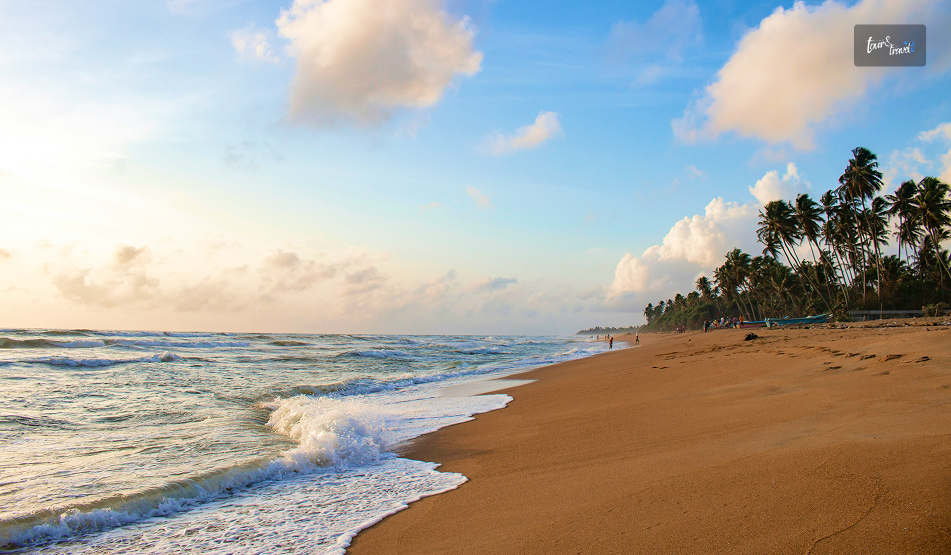
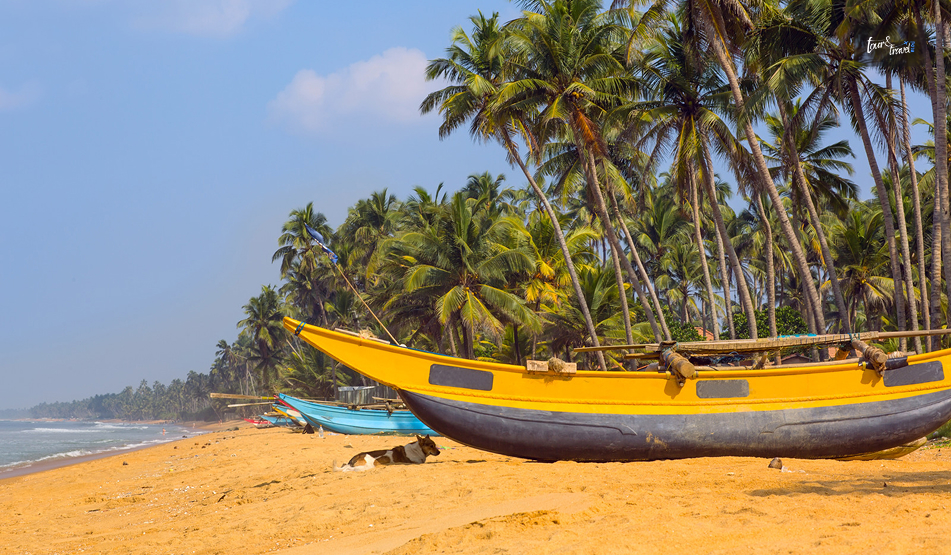
I started exploring Wadduwa with the beach as the starting point. It is a sheer contrast to Mirissa or Unawatuna if you are expecting high drama. 

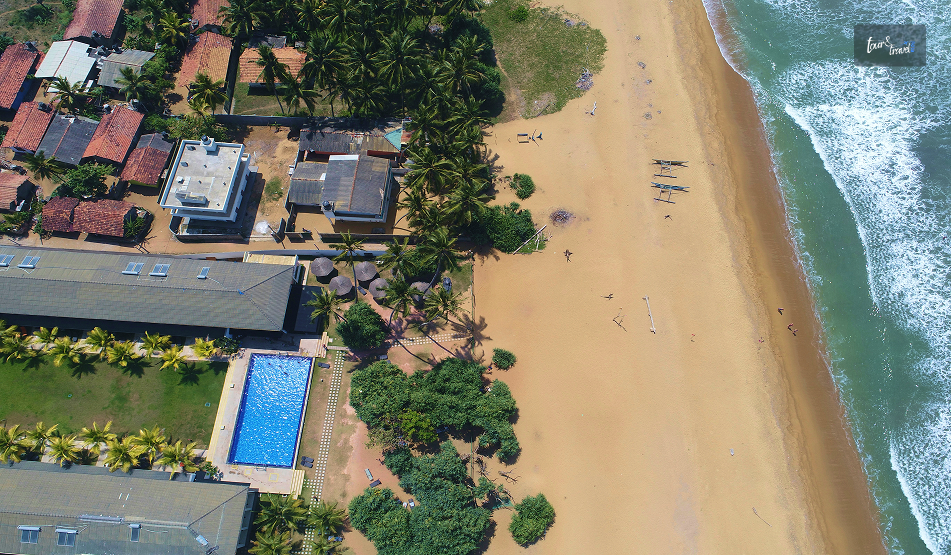
The sand here is soft and golden, and the water is calm. 

Also, the coconut trees line the shore in a way that feels more like a working coastal town than a resort strip.

Watching The Fishermen At Dawn At The Beach

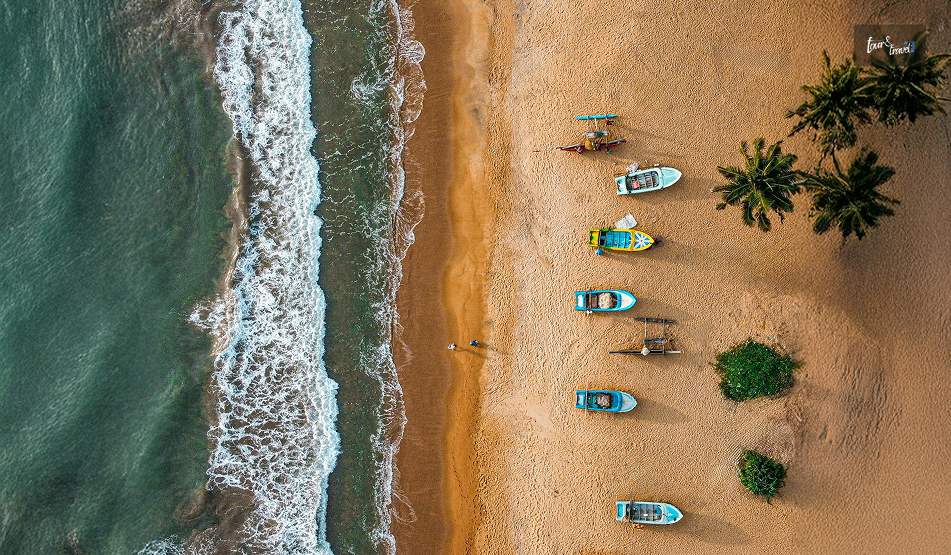
During my stay in Wadduwa, I used to wake up very early. It was just to observe the fishermen at work at dawn. 

They used to push the brightly painted boats into the surf. They also checked and mended their nets. 

There were no tourists in sight, proving once again that Wadduwa is a fishing community first and a holiday destination second.

Swimming And Conditions

The calm waters of Wadduwa make it a safe destination for swimming. However, like the other southern coastal destinations, the waters here also face occasional rip currents. 

Wadduwa is also famous for coconut plantations. 

These plantations back up right against the shoreline in places. That greenery is part of what makes the beach feel less commercialized than some of its neighbors.

2. Ayurveda And Slowing Down

Wadduwa, Sri Lanka: A Quiet Stretch Of Coast Worth Slowing Down For

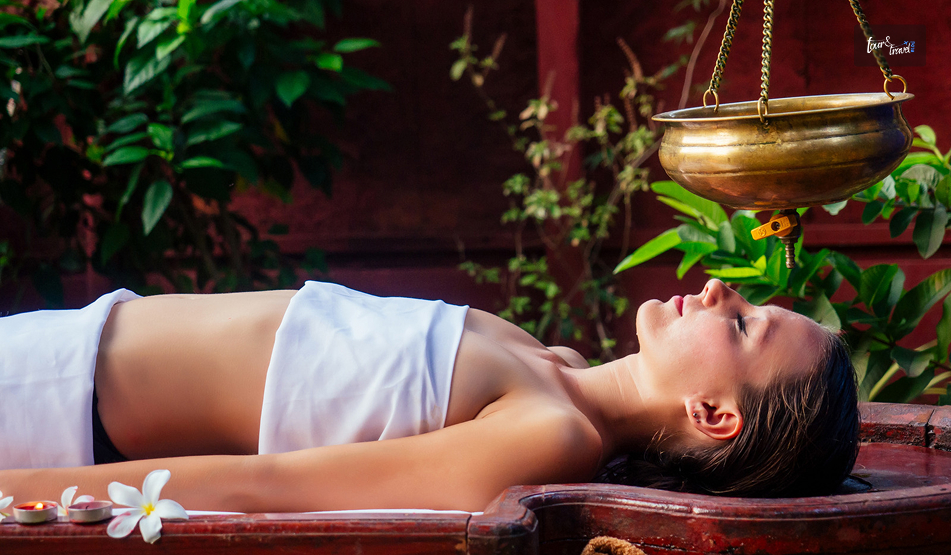
Ayurvedic wellness tourism is the biggest attraction in Wadduwa. It has a number of resorts that have reputations specifically around traditional Sri Lankan healing practices.

You can opt for the following wellness practices in Wadduwa. 

  • Herbal Oil Massage
  • Steam Treatments
  • Detox Programs

I am not usually one for spa itineraries.

However, I gave in for an afternoon and came away understanding the appeal. The cost of steam treatments and herbal oil massage came to around LKR 6000. 

It is a genuinely different kind of beach holiday, oriented around rest rather than activity, and Wadduwa has quietly become one of the country’s go-to spots for it.

3. Richmond Castle And Kalutara Bodhiya

After an Ayurvedic massage and complete rejuvenation, I took a short trip to neighboring Kalutara. 

It was just a 20-minute drive along the coast. I visited Richmond Castle and Kalutara Bodhiya there. 

Richmond Castle

Wadduwa, Sri Lanka: A Quiet Stretch Of Coast Worth Slowing Down For

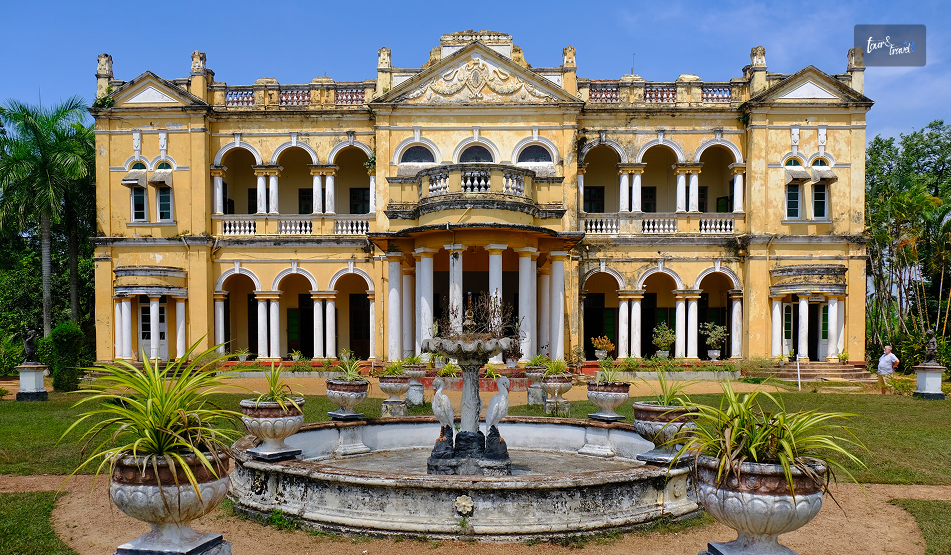
Richmond Castle is an early-1900s mansion built for a local Mudaliyar (a headman title from the colonial era).

It is an impressive 42-acre property blending colonial architecture with signature Sri Lankan styles. 

The entry fee to the castle is LKR 100 for local adults, and as a foreigner, I had to pay LKR 500. 

The entry fee may seem higher, considering it does not match the grandeur of a European castle. 

However, given that all the proceeds go toward funding local schoolboys’ education, you will not mind paying the same. 

The entry fee for the local schoolchildren to the castle is also very low, and it is just LKR 10. 

Guides are available on-site and can walk you through the history in about forty minutes to an hour, and the grounds are open daily from 8 AM to 4 PM.

Kalutara Bodhiya

Wadduwa, Sri Lanka: A Quiet Stretch Of Coast Worth Slowing Down For

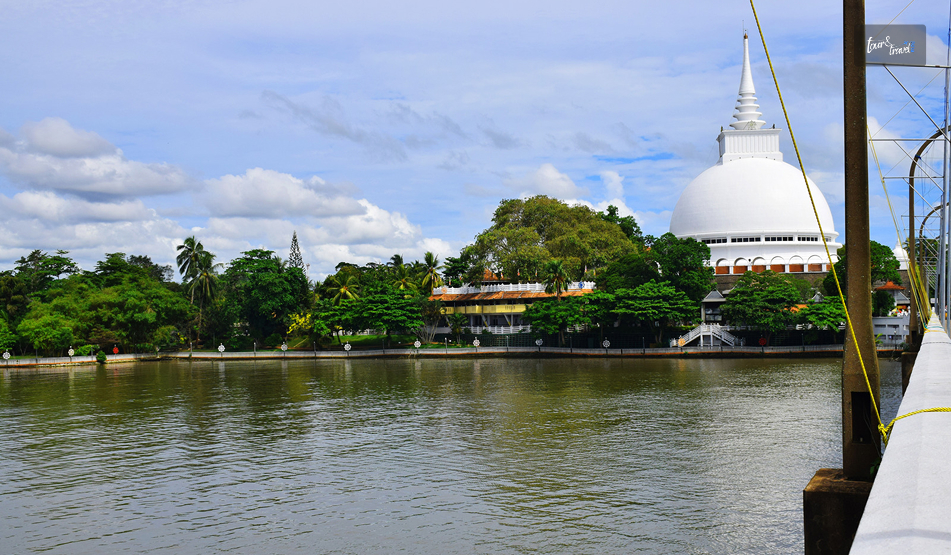
Kalutara Bodhiya, a major Buddhist temple and stupa, sits on the top of the river mouth. 

Along with its religious significance, Kalutara Bodhiya stands out with its striking structure. 

The hollow dagoba lets you walk inside and look up at painted panels depicting scenes from Buddhist scripture. This is something you see at every temple in Sri Lanka.

I have shared the details of visiting the Kalutara Bodhiya in my guide on the historic coastal town of Kalutara

4. Bridges, Rivers, And A Slower Kind Of Sightseeing

The Kalu River is the lifeline of Wadduwa and Kalutara. Furthermore, the Kaluwamodara Bridge connects the northern and southern parts of Kalutara across the Kalu River.

The bridge has an impressive arch design, and you can notice it while taking a tuk-tuk ride. 

However, I opted for a scenic boat ride of 90 minutes for LKR 3500. 

The short boat ride along the Kalutara River one afternoon wove through mangrove patches. 

I also got a look at local fishing life from the water rather than the shore. 

It is a quieter, more low-key version of the river safaris you will find further south in Bentota, and I actually preferred it for that reason. Fewer boats, more birdlife, no rush!

Day Trips From Wadduwa

Wadduwa, Sri Lanka: A Quiet Stretch Of Coast Worth Slowing Down For

Thanks to its central location on the western coast, Wadduwa is the ideal base for exploring the nearby coastal towns. 

You can plan the following day trips from Wadduwa. 

Bentota

About 45 minutes south, Bentota offers river safaris, water sports, and garden estates.

Brief Garden

The landscaped estate created by Sri Lankan artist Bevis Bawa is a worthwhile detour if you have any interest in tropical garden design or local art history.

Dehiwala Zoo

One of the older zoos in Asia, around 26 kilometers north, Dehiwala Zoo is an easy option if you are traveling with kids.

Pahiyangala

For something further afield, this prehistoric archaeological site near Yatagampitiya is about 40 kilometers from Kalutara.

It appeals if you are curious about Sri Lanka’s deeper human history rather than its colonial-era one.

Pahiyangala, or the Fa-Hiden Caves, has been home to prehistoric human beings around 37000 years ago, as backed by archaeological evidence

Such a fascinating site, the caves offer free entry, and they remain open for visitors from 6 AM to 6 PM. 

However, you need to climb a staircase for around 20 minutes to reach the caves. 

Food And Water Sports

Wadduwa, Sri Lanka: A Quiet Stretch Of Coast Worth Slowing Down For

Beyond the beach and the temples, Wadduwa gave me some of my simplest, best meals of the trip, and enough on-water options to fill an afternoon if lounging isn’t quite your speed.

Eating in Wadduwa

Eating in Wadduwa leans heavily, unsurprisingly, toward seafood.

The fresh catch sold right off the boats in the morning turns into curries and grilled fish by evening at the small local restaurants scattered along the coast road. 

On The Water

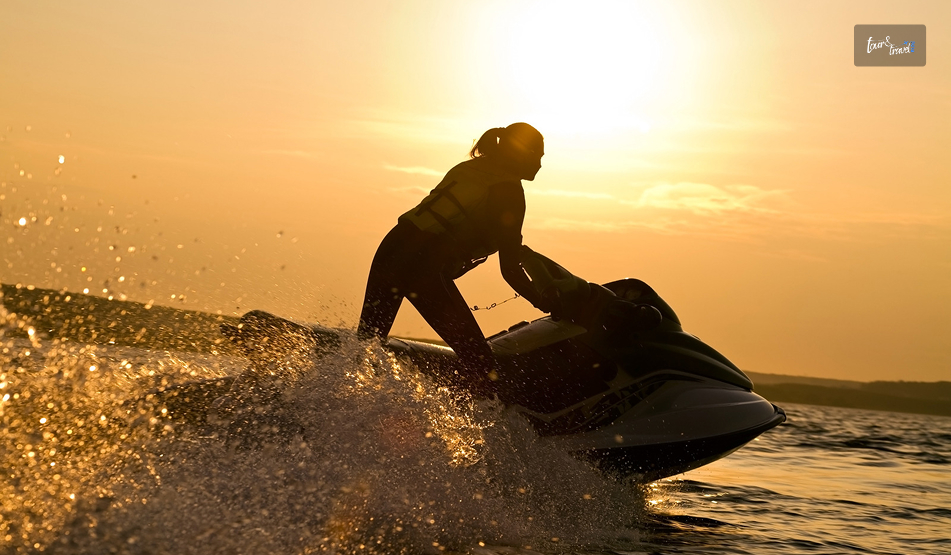
For anyone wanting more than sunbathing, the calm-but-active waters here support jet skiing, windsurfing, and light surfing.

All of these felt more accessible and less crowded than the equivalent setups in Bentota or Hikkaduwa. 

Here is a breakdown of the estimated costs for taking part in different watersports in Wadduwa.

WatersportsEstimated Cost (LKR)
Jet Skiing8000-12000
Banana Boat Ride5000-7000
Tube Ride6000-8000
Windsurfing / Wakeboarding10000-15000

I am mentioning all the charges here based on what the local organizers quoted me. The prices can change for your next trip. 

Wadduwa is not a surf town in the way those places are, but if you just want to get out on the water without booking weeks in advance, Wadduwa makes it easy.

What Is The Best Time To Visit Wadduwa?

Wadduwa, Sri Lanka: A Quiet Stretch Of Coast Worth Slowing Down For

Like most of the western coast, Wadduwa is best visited between November and April, when the weather is dry and the seas are calmer.

This is also when the Ayurvedic resorts tend to be fullest.

So, it is worth booking ahead if that’s part of your plan. 

The town holds a warm, tropical climate year-round, but the shoulder and monsoon months bring rougher water and less predictable weather.

A Simple 2-Day Wadduwa Itinerary

DaysActivities
Day 1, Beach and WellnessMorning
ArriveSettle inEarly walk on Wadduwa Beach to catch the fishermen heading out. 

Midday
Relax by the beach or pool.Light seafood lunch at a local restaurant
Afternoon
Ayurvedic spa treatment at your resort
Evening
Sunset on the beach, dinner of fresh grilled fish.
Day 2, Kalutara and the RiverMorning
Drive to Kalutara (~20 min) to visit Richmond Castle.
Midday:
Kalutara Bodhiya TempleLunch nearby
Afternoon: 
Kalutara River boat tour through the mangroves
Evening
Return to Wadduwa, water sports session (jet ski or windsurfing) if conditions allow.

If you have a third day, use it for a half-day trip to Bentota for river safaris and garden estates, or Brief Garden if you would rather stay closer.

Slowing Down At Wadduwa 

Wadduwa is one of the best-kept secrets of Sri Lanka in the truest sense. Just 35 km away from Colombo, it is a place to slow down and be a part of a livelihood based on fishing. 

Also, it is an important base for Kalutara and Bentota day trips due to its accessible location. 

Still, Wadduwa is quieter and on its own. So, the mornings on the beach never felt like they belonged to anyone but the fishermen and me.

Share on Social Media

Sibashree is a travel, culture, and leisure writer who has been writing since the age of 12 and professionally since 2014. With more than a decade of travel writing experience and journeys across India and several parts of the world, she brings a deeply personal and thoughtful perspective to her work. A student of English Literature and Mass Communication, Sibashree has always viewed travel as more than movement — for her, it has been a way of understanding people, cultures, and herself. Her passion for spiritual exploration has also led her to many unusual and meaningful destinations over the years. Outside of writing, Sibashree enjoys watching European cinema, reading about global politics, and reflecting on the stories hidden within everyday places.

Leave a Reply

Your email address will not be published. Required fields are marked *

title-img Related

READ MORE how to get from colombo to galle

How To Get From Colombo To Galle: Know The Best Options For Traveling The Distance 

BY  Sibashree Jun 6, 2026

The historical Galle Fort, a UNESCO World Heritage Site, is going to play an important role in the tourism growth of Sri Lanka in 2026.  Its colonial-era landmarks, such as the Groote Kerk, the Dutch reformed church or the Galle Clock Tower, the living heritage, and the rich maritime history make Galle Fort such a prominent landmark in the landscape of cultural tourism in Sri Lanka.  It is also easily accessible from the Bandaranaike International Airport in Colombo, at a distance of around 153 km.  Various bus routes between Colombo and Galle, and the train connectivity ensure a smooth journey.  Here are more details about how to get from Colombo to Galle.  How To Get From Colombo To Galle? Know The Transport Options The best way to get from Colombo to Galle is to enjoy a scenic train ride. However, if you miss the train, you can also opt for a local bus ride.  Also, if the budget is not a constraint, you can book a ride from a ride-hailing app or book a cab to travel the distance by road.  Here, I will decode the train, bus, and private transfer journeys along with details such as the travel duration, ticket pricing, and amenities.  Moreover, the journeys in buses and local trains offer distinct cultural experiences, as I have mentioned in my Kandy to Ella train journey blog.  1. How To Get From Colombo To Galle By Train?  To get from Colombo to Galle, you can plan a coastal train ride.  Here, the railway track runs along the palm-fringed coasts for most of the journey.  Moreover, the ocean waters here will crash just meters away from your open window.  So, overall, it is, in no way, a mundane commute experience. You are going to have an experience of a lifetime.  You can have a look at the table below to know about the train timings. (Source: Sri Lanka Railways).  Departure From Colombo FortAvailableArrival In Galle 6:17 AM Saturdays, Sundays, and Holidays 8:32 AM6:50 AMEveryday9:29 AM8:35 AMEveryday10:49 AM10:30 AMEveryday12:49 PM2:40 PMEveryday4:57 PM3:50 PMEveryday5:57 PM4:47 PMEveryday7:04 PM5:32 PMMonday to Friday (Except Holidays)8:25 PM5:31 PMSaturdays, Sundays, and Holidays 8:05 PM5:51 PMEveryday9:29 PM6:16 PMExcept Saturdays and Sundays8:40 PM7:30 PMEveryday11:10 PM The trains have second-class and third-class sections.  The ticket price for the second-class commute is LKR 500, and for the third-class commute it is LKR 240.  How To Book The Tickets To Get From Colombo To Galle By Train?  You can book the ticket from Colombo to Galle online (reserved) or offline (unreserved).  If you are traveling between December and April, it is the peak season for a trip to Sri Lanka. So, you must book the tickets at least 32 days in advance from the Sri Lanka Railways online seat reservation portal.  However, in the off-season, you will get the tickets a few days before.  In addition, you can book a train ticket from the local counter at the Colombo Fort Railway Station.   2. The Colombo To Galle Express Bus: Speed And Comfort If you want a more comfortable journey to get from Colombo to Galle without spending much money, you can try the bus routes.  Express Highway Bus (EX01) Duration: 2 hours to 2.5 hours Route The bus travels through the Southern Expressway (E01).  Moreover, if you choose this route, you will be able to bypass every coastal traffic, and you will reach faster than the coastal route buses. Traveling Experience The buses are usually fast and relatively smooth.  Additionally, the buses are very comfortable, usually air-conditioned, and have comfortable cushioned seats.  Moreover, the journey through this route is through the highway, which means that you will not be able to see any ocean views. Where To Catch The Bus From These buses depart from the Makumbura Multimodal Center or the Colombo Bastian Mawatha Bus Terminal.  Additionally, these buses are frequent you will be able to catch a bus every 20 minutes to 30 minutes. Coastal Route Bus (Route 02) Duration: 3 hours to 4 hours Route Buses of this route pass through the coastline, giving you an amazing coastal view.  These buses pass through some magnificent towns like Mount Lavinia, Wadduwa, and Hikkaduwa, which enhance the beauty of the journey. Traveling These buses will provide you with an authentic and local Sri Lankan ride.  Sometimes the ride can also be chaotic but enjoyable. Moreover, if you choose these buses, be prepared for a bold and rapid ride.  These bus rides are often characterized by a stop-and-go rhythm because of their sudden bursts of speed.  Furthermore, these bus rides are enjoyable with loud, crowded, and vibrant locals hopping on and off, and street vendors selling snacks.  Finally, the most amazing part of this bus ride is the spectacular views of coconut palms and the Indian Ocean. You can also jump off and go around the beach towns along the way. Where To Catch The Bus From  You can catch these buses from the Central Bus Stand near the Colombo Fort Railway Station. Some Tips For Your Ride Here are some other details you need to know if you want to get from Colombo to Galle.  Ticket Prices These buses are very affordable. The ticket prices depend on whether you take a local non-AC bus or an AC highway bus. The ticket prices usually range between LKR 300 and LKR 1000. Luggage You usually won't find a cargo hold on coastal buses. In such situations, you will need to keep your backpack on your lap or squeeze it into overhead racks. Music And Noise If you have never been on a Sri Lankan bus, this is going to be a light-and-sound journey for you.  Public buses in Sri Lanka are known for their lively atmosphere, featuring Sri Lankan pop music and colorful interiors, which you can enjoy throughout the journey. Private Transfers And Taxis: Seamless Door-To-Door Service Suppose you are traveling with family or small children.  Or, if you are part of a group where everyone is carrying heavy luggage, you can choose a private transfer.  Also, a private transfer can be of two types.  Taking A Private Taxi  A private taxi will pick you up from the Bandaranaike International Airport or your hotel in Colombo and drop you off outside your accommodation inside the Galle Fort ramparts.  You will enjoy the ride through the Southern Expressway.  A private taxi ride on this route will take between 1.5 and 2 hours.  However, the charges will be really high as a standard sedan will cost between LKR 15000 and 20000.  Using Ride-Hailing Apps If you are traveling to Sri Lanka for the first time, you can avoid negotiating with unpredictable street drivers.  You can book a cab using local ride-hailing apps such as PickMe. It is the premier local Sri Lankan ride-hailing platform. Furthermore, you can also use Uber to operate reliably and extensively throughout the Colombo metropolitan area.  The price range for these cabs from Colombo Fort to Galle is between LKR 8000 and 12000.

READ MORE things to do in nara

What Are The Things To Do In Nara? How To Plan A Two-Day Trip?

BY  Sibashree Mar 31, 2026

A trip to Nara was long overdue, and as the first permanent capital of the country, it is a must-visit.  Furthermore, this Japanese capital, before 794 AD (then Kyoto became the capital), has many UNESCO World Heritage Sites.  The Todai-ji Temple is the most famous among these 8 UNESCO World Heritage Sites. You will find one of the largest Buddha statues in the country here, and the statue is made of bronze.  Of course, the deer roaming in the city are beautiful, and you feel like getting transported to a bygone era.  It reminded me of one of the most famous literary works in our country, Shakuntalam Abhigyan, an immortal love story between King Dushyanta and Shakuntala, written by Kalidasa in Sanskrit.  Also, this is a place that will ask you to come back, and most people plan a day trip to experience its historical charm and natural beauty.  But, smitten by its beauty, I chose a 2-day trip, and here is the list of things to do in Nara. Also, I will discuss how I can get to Nara.  How To Reach Nara?  Nara is easily accessible from Kyoto, which is also famous for its history and cherry blossom season.  You can also visit Nara from the Osaka prefecture. So, overall, a visit to Nara can fit well into your itinerary of visiting the Kansai region of Japan.   Also, the robust railway system of Japan makes it easy and budget-friendly to visit Nara. A Japan Railway Regional Pass will be the best for traveling across Nara, Kyoto, Osaka, and Kobe, and the entire Kansai Region.  Also, when in Osaka, don’t forget to explore the street food stalls and have the best Osaka food, including Mochis and seafood delicacies.  Here is how you can travel from Kyoto to Nara. 1. Traveling From Kyoto To Nara Through The JR Nara Line You will get an express train or a local train from Kyoto to Nara every hour.  Furthermore, if you opt for the Miyakoji Rapid Service on this line, you will reach Nara within 45 minutes, and the ticket price will be 720 JPY.  Also, the local train services, with the same ticket price, will take about 70 minutes.  Once you reach the JR Nara station, you will get buses to the Nara Park and other top attractions in Nara.  2. Take The Kintetsu Railway To Reach Nara From Kyoto This is the most convenient way to reach Nara from Kintetsu Railway Station.  The train journey is the fastest, and the journey takes about 35 minutes by the express trains, and the ticket price is 1280 JPY.  Also, the regular trains take about 45 minutes to complete the journey. The ticket price is 760 JPY.  What Are The Things To Do In Nara?  From a visit to the Nara Park to exploring Heijo Palace and the temples, there are many things to do in Nara.  Here are the things I did during my 2-day stay.  1. Day 1 In Nara: Exploring The Nara Park  With deer passing by, Nara Park, the home to the main attractions in Nara, is a place you cannot simply miss.  The park is free to enter, and it remains open for 24 hours.  However, many attractions in the park close after 5 PM. So, you have to be early when visiting it.  Also, here are the attractions you will come across in the Nara Park, along with the deer passing by.  • Kasuga Taisha One of the UNESCO World Heritage Sites in Nara, Kasuga Taisha, takes us back to the Nara Period from 710 to 794 AD.  It is the most revered shrine among the Fujiwara clan as the tutelary shrine.  Furthermore, the main attraction of the shrine is the “Hall of Lanterns.” There, I saw many bronze lanterns illuminating the darkness.  During the special festivals, Setsubun Mantoro in February and Chugen Mantoro in August, all these lanterns are lit.  Moreover, you will find a cider tree in the inner shrine, and it is 1000 years old.  • Mt. Wakakusa I took the back road from Kasuga Taisha on the way to the Todai-Ji temple.  I came across many small shrines there. However, the highlight was Mt. Wakakusa.  This hill between the two shrines has a height of 350 meters. Also, on the 4th Saturday of January, it becomes the venue for the Wakakusa Yamayaki celebration.  People burn dead grass on the slopes, and this is a ritual that has been celebrated since the 18th century.  • Todai-Ji Todai-Ji is another UNESCO World Heritage Site, and one of the “Historic Monuments of Ancient Nara.” It was built in 752 AD, and it was the head of all the temples in the province. It even had a strong influence on the royal family.  In fact, with Todai-Ji being the seat of control even in the royal decisions, the emperor decided to move the capital to Nagaoka in 784 AD.  However, the main attraction of the Todai-Ji Temple is the massive Buddha statue, or Daibutsu.   A depiction of Dainichi Nyorai,  it represents the primordial Buddha in the orthodox East Asian Buddhist philosophy.  You will also find two similarly sized Bodhisattva statues here.  However, the temple and statues you see today were burned down, and they were rebuilt during the Edo period (1603–1868).  2. Things To Do In Nara: Day 2 I visited the Heijo Palace and many other temples of Nara on day 2.  • Visiting The Heijo Palace  When Nara was the capital, the Heijo Palace was the seat of power for the chrysanthemum throne.  It had a dimension of 1 kilometer, considering the other palaces and architecture of that time.  However, the remains of this UNESCO World Heritage Site in Nara are now at the Toshodai-ji Temple, nearby.  However, since the 1950s, archaeologists have been studying the remains of the Heijo Palace, and this has evoked further public interest.  That is why you can now see many placards there and read about the history and legacy of the site.  Moreover, the audience hall and two other parts of the palace were rebuilt. The restoration of the largest part, the audience hall, happened in 2010.  It was an ode to the 1300th anniversary of Nara as the capital of Japan.  • Toshodai-Ji As I have mentioned, the Toshodai-ji Temple has the remains of the Heijo Palace.  This temple dates back at least a millennium. Ganji, a Chinese monk, built this temple in 759 AD.  Monk Ganji brought Buddhism to Japan, and the Toshodai-Ji today is a UNESCO World Heritage Site.  • Yakushi-Ji It is a UNESCO World Heritage Site, and people here worship Lord Buddha as Yakushi Nyorai or the Medicine Buddha.  The dual main halls here have unique architecture, and each has a dedicated 3-story pagoda.  • Horyu-ji  Horyu-Ji is older than most temples in the Nara region, and Prince Shotoku founded it in 607.  Furthermore, this UNESCO World Heritage Site stands out with its wooden edifices, which are some of the oldest in Japan. This time, I missed many attractions such as Asuka, Omiwa Shrine, and Mount Yoshino. Some day for sure!  And till then, Sayōnara, guys!

READ MORE Colombo to Kandy

What Is The Colombo To Kandy Distance? Know How To Travel By Car, Bus, Tuk-Tuk And Train 

BY  Sibashree Mar 24, 2026

Ancient Temples! Colonial Architecture! The Serene Kandy Lake! Beautiful Gardens! And, the Bustling Crowd! All these and more things to do in Kandy make it the cultural and historical capital of Sri Lanka.  And this time, it’s about the Colombo to Kandy distance.  It is now more important to know about the modes of travel because Cyclone Ditwah has devastated the Sri Lankan railway infrastructure, including the Colombo to Kandy route.  So, explore the options.  What Is The Colombo To Kandy Distance? The distance between Colombo and Kandy is around 121 km. The travel time by road through the Kandy Road is around 3 hours and 30 minutes.  However, the travel time will depend on the mode of transport you choose.  So, here is a quick summary. Modes of Transfer from Colombo to KandyTravel Time By Car3 Hours and 30 MinutesBy Train2.5 to 3.5 HoursBy BusAbout 4 Hours Furthermore, from Kandy, you can enjoy the most scenic train ride on the Colombo-Kandy-Ella-Badulla railway through the Nine-Arch Bridge.  Also, Kandy is well-connected to Habarana by train. And Habarana is the gateway to cultural attractions such as the Sigiriya Rock and Ritigala Forest Monastery.  You can even go on a wildlife safari from Kandy to the Kaudulla National Park. How To Travel From Colombo To Kandy?  You can travel from Colombo to Kandy by bus, private transfer, or train. Here are the details.  1. How To Travel From Colombo To Candy By Train? Unfortunately, the Colombo to Kandy train route is still under renovation. So, if you are traveling to Sri Lanka anytime soon, you will not be able to take the train service.  However, according to a report published on Adaderana.lk, a leading 24x7 news portal of Sri Lanka, the train service on this route will resume within 1 year.  In this report dated 11th January, 2026, Prasanna Gunasena, the Deputy Minister of Transport and Highways, has further confirmed that the authority is taking every possible measure to restore the services.  2. What Is The Colombo To Kandy Bus Service? The Colombo to Kandy bus service operates from the Colombo Bastian Mawatha Bus Terminal to the Kandy Good Shed Bus Station.  Bus services are available every 30 minutes, and the travel time by these buses is around 4 hours.  Furthermore, the ticket for the public bus services from Colombo to Kandy costs about 157 LKR, and the tickets for the AC buses can cost close to 3000 LKR.  Also, the public bus service from Colombo to Kandy (Route No: 1) starts from 3:30 AM and the last bus departs at 11 PM.  3. Private Transfers From Colombo To Kandy  Starting from my days in Jaffna to now, this Colombo to Kandy journey, I have always opted for budget-friendly modes of transport in Sri Lanka.  However, if budget is not a constraint for you, you can choose a private transfer from the Sri Lankan capital to the cultural epicenter.  The private rental for this route will cost you around 9000-13000 LKR, and you will also find many online options.  Moreover, if you want the safest option to travel between Colombo and Kandy by road, you can opt for the Uber service.  Yes, it is expensive as the services start from around 48000 LKR, and it is the price for the Uber Go Intercity rentals.  The Uber Sedan Intercity and the UberXL Intercity services cost even more.  What Is The Best Time For A Colombo To Kandy Trip?  Kandy’s central location in Sri Lanka’s highlands gives it a cooler and wetter climate compared to the surrounding lowland coasts.  Plan your trip to Kandy during the right time of the year to get the most out of your visit. The Best Time To Visit  The best time to visit Kandy is between the months of January and April due to the warm temperature and low humidity.  This time frame has the least amount of rain, which is essential for planning out sightseeing activities. The Monsoons The climate of this region is heavily influenced by the monsoon seasons.  The unpredictable weather can be a challenge during the months of May to July and October to December.  A visit in November has the advantage of having fewer tourists compared to other months; however, consistent rain can make visiting outdoor attractions difficult. Important Travel Advice Kandy is extremely busy during the Sinhalese New Year, which occurs twice a year in April.  Avoid traveling during this week as all public and road travel will be extremely congested due to the celebratory travel of the locals.  This will create a frustrating and overwhelming spike in logistical travel obstacles. What Are The Places To Visit On The Route From Colombo To Kandy?  The drive from Colombo to Kandy takes you on an enjoyable journey through beautiful scenery as you travel uphill from a busy, urban environment to the lush tea plantations and mountain peaks shrouded with mist.  If you plan to take this trip, there are many places where you will want to stop so that you can appreciate what is known as the "Gateway to the Hill Country." 1. The Pinnawala Elephant Orphanage The Pinnawala Elephant Orphanage is one of the best-known detention centers for orphaned elephants in the world and has been established for many years.  Now that you know the date, I recommend arriving at least 30 minutes before the start of your visit so that you can watch the elephants walk from the orphanage to the Maha Oya River to have their daily bath. 2. The Ambuluwawa Tower The Ambuluwawa Tower is a great location for Wright Brothers-style views of the area.  It is located within a short distance of Gampola. It is at a multi-religious complex, and this unique white spiral structure offers an exciting, narrow ascent with amazing 360-degree views of the entire central highlands. 3. The Kadugannawa Rock Tunnel  It is a tunnel chiseled from the rock on your way towards Kandy, and also has a legend that British soldiers cut this tunnel so that they could fulfill a prophecy.  The prophecy said that "Those who pierced the mountains will be the ones who take Kandy." 4. The Bible Rock Bible Rock is a flat-topped mountain that is shaped like an open book.  You can spot it at the Kadugannewa Pass. Dawson Tower stands atop the pass; this is a white column built to commemorate the British Engineer who created the road.