Suva has the nickname of “The Green Heart of the Pacific,” and there is a reason behind that. It is more than government buildings and rich cultures.
It is a rainforest city. Also, the city has Naitasiri and Rew adventure zones in the surrounding.
Moreover, with an annual rainfall of 3000 millimeters, it has natural wonders such as the Colo-i-Suva Forest Park and urban places such as the Thurston Gardens and Albert Park.
In addition, the city is home to a “Healthy City” initiative. Newer and greener pedestrian paths, parklands, and improved waste management systems of the city are the major parts of this initiative.
Hi, in today’s blog, I will talk about the Suva nature guide. The topics discussed here are:
The best natural places to visit in Suva, Fiji
Suva nature guide tips from experts
Things to know to travel like a local
FAQs.
Suva Nature Guide: What Are The Best Natural Places To Visit In Suva?
Located on a hilly peninsula on the southeast coast of Viti Levu, Suva is incredibly blessed with lush greenery.
Also, starting from Colo-i-Suva Forest Park, to the hidden nature spots in Suva, Fiji, there are many places to explore.
1. The Crown Jewel: Colo-I-Suva Forest Park
Do you know how the locals of Suva pronounce Colo-I-Suva Forest Park? They call it tholo-ee-soo-va.
This rainforest has an area of 2.5 square kilometers. Also, this lush green forest oasis serves as the primary green lung of the city.
The Upper Vs. Lower Pools
The two pools, the upper and lower pools of Suva, are divided by the main road. On each side, you will have a distinct experience.
The Upper Pools
Nature lovers and hikers love the steep and well-maintained trails of the Upper Pools.
Also, here it is less about the splash of swimmers. The focus is more on the symphony of the forest.
The Lower Pools
The Lower Pools have swimming holes and a rope swing that has seen decades of use. Daring travelers and local families love this area.
Also, these are the ideal places if you want to cool off after a humid trek.
Birdwatching Guide In Colo-I-Suva Forest Park
Suva’s rainforests are a symphony of endemic species. Keep your binoculars ready for the scarlet robin and pink-billed parrotfinch.
You must not miss the dawn chorus as it is the best birdwatching experience you can have in Suva.
Safety And Practical Tips For Colo-I-Suva Forest Park
While the park is beautiful, it requires common sense. Security guards are usually stationed at the main pools and trailheads.
It is wise to stick to the populated trails and avoid hiking alone late in the afternoon. Slippery paths are a guarantee, and Suva’s high rainfall means the clay-heavy soil is perpetually slick.
Wear shoes with aggressive tread, not flip-flops.
2. Hidden Waterfalls And Swimming Holes (Within 20 Mins)
If you find that Colo-i-Suva is very curated, you can choose a more local or secret experience and know the rugged side of Fiji.
Here are the best waterfalls and swimming holes of Suva. These are just 20 minutes away from the city.
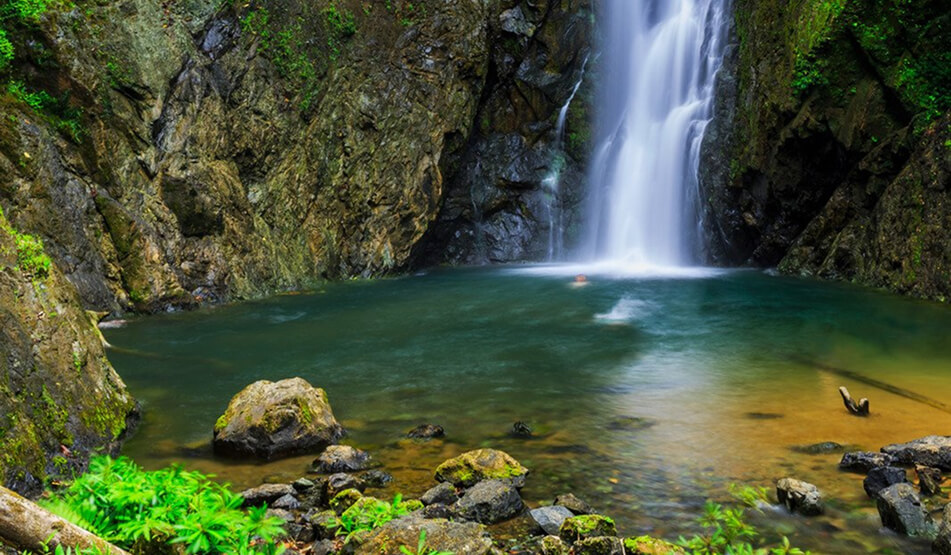
Korolailai Waterfall (Wailoku)
The Korolailai Waterfall in Wailoku is a favorite of the locals. Use the Sikh Temple in Wailoku as your landmark, and the trail starts from here.
The trail passes through local farms and secondary forest.
Also, the main fall features a flat rock ledge directly behind the curtain of water. You can sit there and let the weight of the waterfall pound your shoulders. It’s the best free spa treatment in the Central Division.
Navakavu Blue Hole
Take a short drive toward the Lami side of the bay to reach the Navakavu coastline.
A short drive toward the Lami side of the bay brings you to the Navakavu coastline. This area is a protected tabu (sacred/restricted) site under the local Iqoliqoli (customary fishing grounds).
So, you have to check with the village headman or local guides before entering the village.
Moreover, “Blue Hole” is a stunning turquoise indentation in the reef flats, perfect for snorkeling during high tide.
3. Hiking Suva: From Peaks To Reserves
Are you looking for some elevation and solitude? Do you have the fitness to explore heights? Hike these peaks and explore these reserves.
• Mount Korobaba Summit Hike
It is the best Suva hike experience you can have. Mount Korobaba rises above the Lami harbor, and from the mountain, you can enjoy a panoramic view of the Suva peninsula and Laucala Bay.
This trekking trail starts behind the Lami Cement Factory. So, the start is humble, but it is worth the grand view.
However, the hike is strenuous, and a return trip will take at least 2 to 3 hours. Also, here, you have to be very careful about the mud warning.
If it rains, the trail will become muddy and act like a vertical natural slide. Nevertheless, there are ropes in some sections to help you haul yourself up.
• Savura Forest Reserve
Savura Forest Reserve is like a hidden gem, and it is a quiet academic zone that you would love to explore. It is a vital area for the water supply of Suva.
Furthermore, because it has fewer tourists, the biodiversity of the place remains almost intact. Overall, the condition is meditative and peaceful.
4. Coastal And Island Nature
To cherish the coastal beauty and Island nature of Suva, you must visit the Nukulau Island and My Suva Park & The Seawall.
At these places, you will understand the relationship of Suva with its marine landscape. So, leave the mainland and walk the southern edge.
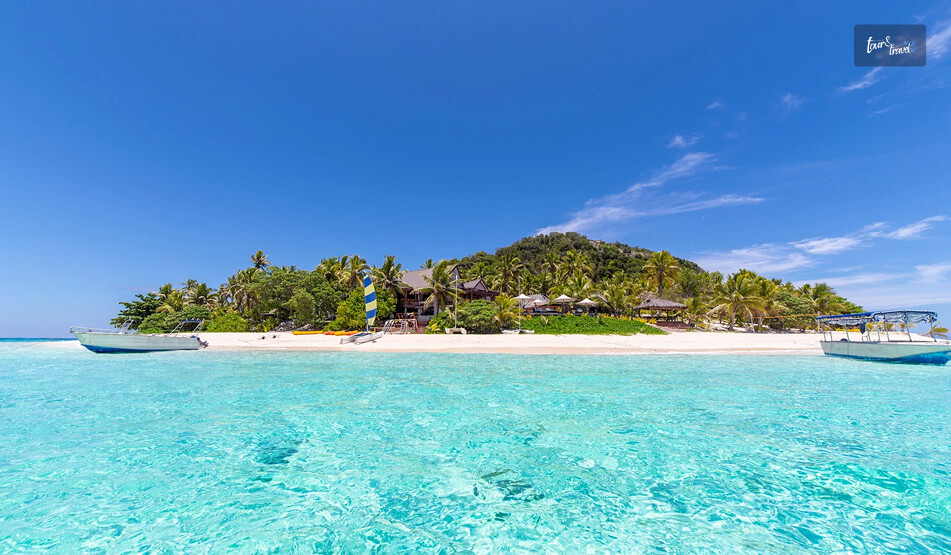
• Nukulau Island
The Nukalau Island is small, but it has a long history. It has served as a quarantine station and a prison. However, ironically, today, it is not a dark tourism site anymore.
In fact, it is now a peaceful place for a picnic.
Sandbank, And The History Of Nukulau Island
When there is a low tide, you will notice a massive stretch of sandbank here. The sandbank is ideal for wading.
You will also find here the remnants of many old structures. Thus, you can blend history with a beach day.
Nukulau Island Boat Logistics
The boats in the Nukulau Island leave from the Suva Wharf or the Vatuwaqa area. Charter a long boat and enjoy a breezy ride across the lagoon for 20 minutes.
A longboat is a fiverglass boat with an outboard motor.
• My Suva Park And The Seawall
You don’t always need a boat to see the coastal beauty of Suva. You can visit My Suva Picnic Park and explore the rehabilitated mangrove walkways.
Here, you will find the most intricate root systems that protect the shoreline from decay.
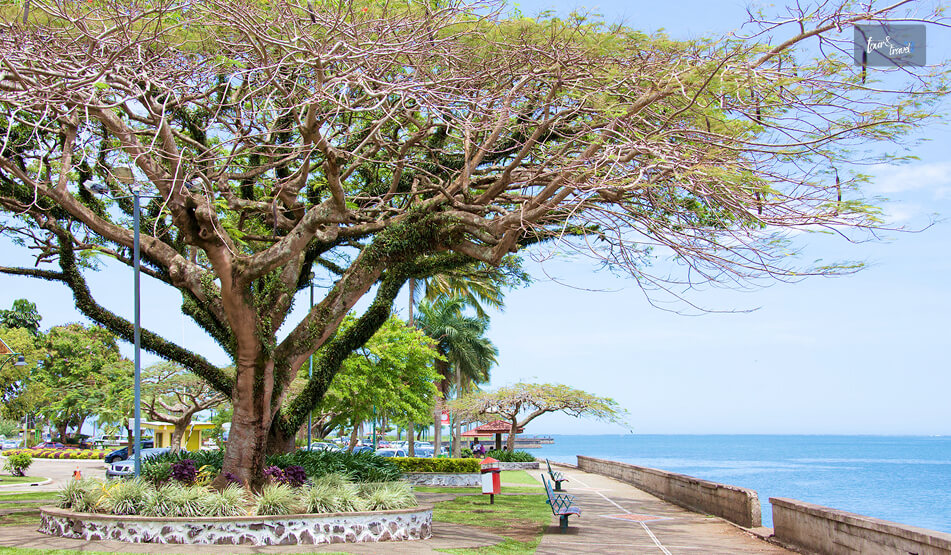
On the other hand, the Suva Seawall is the social hub of Suva City. Here, you will enjoy the sunset views over the peaks of Joske’s Thumb.
Also, don’t miss the view of Mount Korobaba in the distance.
During the sunset, the sky has the most fiery shade of violet, and looking at that, you can end a day of exploration on a perfect note.
5. Urban Greenery: Thurston Gardens
Suva Botanical Gardens, or the Thurston Gardens, is an urban green space. The place got its name in 1976 after Sir John Bates Thurston, the founder of this botanical garden and the fifth governor of the city.
You can see diverse fauna in this botanical garden. It has water lilies, colorful gingers, ferns, and palms. It is also home to a prominent bat colony. In this context, you must know that bats are the only native mammals of Suva.
Currently, the Fiji Museum maintains this urban park, and other historical landmarks in the park are the bandstand and the Clock Tower.
These were built to commemorate the first mayor of the city.
Suva Nature Guide And Tips From Experts
Now, only the locals and taxi drivers know that Mt. Korobaba, “Pacific Cement Limited” factory in Lami, is better than the “Korobaba trailhead.”
You can start your hike behind the factory fence. Now, this is what makes all the difference. The local and expert tips always help to enhance your Suva travel itinerary.
Do you want to know more such tips? Follow the details here.
1. Avoid Heavy Rain Days
The weather in Suva is either wet or very wet. So, while it’s not practical to wait for a sunny morning and you must embrace the rainforest bath, you cannot trade the day of or after a heavy rainfall.
When it rains, the trails and forest tracks of Suva become natural and dangerous mudslides.
2. Take The Bus To Colo-i-Suva If You Are Traveling On A Budget
You don’t need to take a taxi for $15 if you are traveling to Colo-i-Suva from the city.
As a budget traveler, you can take the Sawani Bus from the main bus station and ask the driver to drop you at the park gate.
The ticket price will be just $2.
3. Suva Keeps It Quiet On Sundays
Sundays are great for exploring the natural spots of Suva. These places are less crowded on Sundays.
Quite a surprise compared to the Western standards.
However, there is a catch! Public transport options are very limited on Sundays. So, you must pre-book a taxi for a smooth experience.
4. Follow The Sulu Rule
Suva is very particular about its customs and traditions.
Suppose you are visiting a secluded nature spot and you have to walk through a village, such as Korolailai, to reach that place.
Then, you will have to cover your legs with a sarong as a gesture of respect for the local community.
5. Be Aware Of Leptospirosis
The pools and natural swimming places in Suva have tropical water. So, you cannot swim in them if you have open cuts.
Tropical water carries bacteria, and if you swim in the water with open injuries, you may have Leptospirosis.
6. Use Your Skills To Negotiate
You cannot just agree to whatever the boat owner asks you to pay for a ride to Nukulau. You must negotiate the boat fee at the Suva Carrier Stand, which is near the Suva Market.
If you are taking a private fiberglass boat, a return trip will cost you around $80-$100 FJD.
7. Wear Mosquito Repellent
My Suva Park in Suva, or the mangrove areas and rainforest, has mosquitoes. Also, Dengue is a serious concern here.
So, you have to wear mosquito repellent, and you need to spray to get rid of the mosquitoes.
8. Stay Hydrated
The humidity percentage in Suva Rainforest is more than 90%. So, when you are hiking, sweating will be profuse.
If you are hiking for 1 hour or more, you need to carry around 2 liters of water.
Things To Know In Suva, Fiji, If You Want To Travel Like A Local
You have to embrace Suva, Fiji, as it is, if you want to travel like a local. Also, there are some stories, or rather facts, that only locals know.
For example, the Dakua trees are native to this place. However, the Mahogany Trees were later introduced to stabilize the soil.
Here is more about the reality checks, about the weather quirks, and the food of Suva if you soak in the true spirit.
1. The Reality Of The Rain Capital
The precipitation of around 3000 millimeters in a year, or a wet tropical climate, makes Suva the rain capital of Fiji.
In Fiji, it rains for more than 200 days a year.
So, if you want to explore Suva, you cannot wait for the Sun to shine bright. You have to embrace the rainforest swimming.
It means that you can get wet while it rains while exploring the rainforest, and do not waste time waiting for the Sun.
2. Picnic Like A Local In Suva, Fiji
If you are on a Suva food tour and want to indulge in the real flavors, you will have to picnic like a local.
Once you are tired after a long swimming session, you must buy a Bhuja or a spicy mix and have it with a long loaf as a snack.
So, when you visit these waterfalls, you must not shout or scream.
The guardians can be angry, and they can curse you if you shout and disturb them.
Along with this myth about the Liuliu or guardians, Suva is also known for its Lami vibe. It is at the base of the Mt Korobaba. It is the town that has the perfect fusion of a silent natural retreat and an industrial town.
In addition, the dark past of Nukulau is very intriguing in Suva, Fiji. It was once a quarantine island and later became a prison for coup leaders.
Moreover, this place has a stark contrast between the beautiful sandy beaches and a turbulent past. Thus, it has all the potential of becoming a dark tourism destination.
Do you want to learn more about the culture of this Fijian capital? Read my Suva cultural guide.
Discovering The Real Suva
The primal beauty of Viti Levu, the amber pools of Colo-i-Suva, the mud-slicked trails of Mt. Korobaba, and finding peace in the hidden Korolailai basin!
Also, the Fijian capital asks you to be a little dirty. So, wear your reef shoes, pack your mosquito repellent, and step off the pavement.
Moreover, allow the trees to embrace you and show you the real Suva.
Suva Nature Guide: Frequently Asked Questions And Answers (FAQs)
Here are the frequently asked questions and answers about the Suva nature guide.
1. Is It Safe To Swim In Colo-i-Suva?
Yes, you can swim safely in the freshwater pools of the Colo-i-Suva Forest Park. The pools here are in an inland rainforest, and they are not connected to the ocean. So, there will be no saltwater hazards. However, like other natural pools, these pools also vary in depth, and the surfaces can be rocky or slippery. So, you have to exercise caution when swimming in the natural pools here.
2. How Long Is The Mt. Korobaba Hike?
The Mt. Korobaba hike is around 6 Kilometers or 3.7 miles long. It is a challenging hike, and the elevation gain is around 404 meters. Furthermore, the red clay path is challenging, and the clay route often gets muddy. Also, based on your pace, you will be able to complete the trek in 2 to 3 hours.
3. Are There Crocodiles In Suva’s Rivers?
Unlike many other islands of the Pacific Ocean, the rivers of Suva do not have crocodiles. However, you can spot saltwater crocodiles in Suva, and these crocodiles come from the nearby Solomon Islands or Papua New Guinea. They visit the region due to the strong oceanic currents. However, their sightings are very rare.
4. Do I Need A Guide For The Hikes In Suva?
No, it is not mandatory to have a guide if you’re hiking in the Colo-I-Suva forest or areas near Suva. However, the trails can be slippery, and the presence of wildlife in Suva is abundant. Also, often the major trails are linked to minor trails, and staying on the right tracks becomes difficult. So, it is better to have a local guide for safety purposes, and they will also guide you about the flora and fauna.
5. How Much Is The Entry Fee For Colo-I-Suva?
The entry fee for Colo-I-Suva is around $1 FJD for the local adults and $0.50 FJD for children. However, if you are a foreign visitor, you will have to pay $5 FJD for adults and $1 FJD for children.
6. Can I Camp On Nukulau Island?
Yes, you can camp on Nukulau Island, but you need a permit from the Department of Environment in Suva City beforehand. The permit will cost you around $2 for 24 hours. Also, the island has a shade for camping. However, you will have to bring your own tent, food, and water.
7. What Wildlife Will I See In Suva, Fiji?
Suva is rich in wildlife. Places such as the Suva Botanical Gardens and Colo-i-Suva Forest Park are ideal for watching the birds, mammals, and amphibians. Birds to see in Suva are the Collared Lory (Kula), masked shining parrots, Fiji Goshawk, and blue-crested Broadbill. You will also find amphibians such as the Pacific Boa, Fiji Tree Frog, and Fiji Banded Iguana. Furthermore, while bats are the only native mammals of Suva, you will also find the Samoan Flying Fox, the Fijian Monkey-faced Bat, and the Mongoose. Moreover, Spinner & Bottlenose Dolphins, Banded Sea Krait, Spinner & Bottlenose Dolphins and Reef Sharks are the prominent marine animals found in Suva, Fiji.
8. Is Korolailai Waterfall Free?
Yes, the Korolailai Waterfall is free to visit. However, there is a border of a settlement around the waterfall. You can pay a small donation of around $2-5 as a polite gesture. Also, you will have to pay a taxi fee of FJ$15–FJ$25 to reach the Korolailai Waterfall from Suva City.
9. What Is The Best Time For Birdwatching In Suva?
Early morning is the best time of day for birdwatching in Suva. If you start birdwatching between 5 and 5:30 AM, you will find birds such as the Slaty Monarch, Fiji White-eye, and fruit dove. Season-wise, May to October is the best time for birdwatching. Especially, mid-August
10. Where Can I See Mangroves In Suva?
You will find the mangrove trees along the coastal areas of Suva. The easiest zone to access from the city is, of course, the Suva Seawall & Queen Elizabeth Drive. Another easy zone is the Rewa River Delta. It is around 25 km from Suva. It has an extensive stretch of mangroves. You can take a boat ride from Nausori to explore the area. Furthermore, Kalokolevu Village is a local community that proactively conserves the mangroves and is very particular about the restoration efforts. Moreover, the areas near the University of the South Pacific campus have mangroves. Low tide is the best time of the day to explore the mangrove forests. This is the best time for noticing the intricate root systems and the wildlife in the mangrove zone.
Sibashree is a travel, culture, and leisure writer who has been writing since the age of 12 and professionally since 2014. With more than a decade of travel writing experience and journeys across India and several parts of the world, she brings a deeply personal and thoughtful perspective to her work. A student of English Literature and Mass Communication, Sibashree has always viewed travel as more than movement — for her, it has been a way of understanding people, cultures, and herself. Her passion for spiritual exploration has also led her to many unusual and meaningful destinations over the years. Outside of writing, Sibashree enjoys watching European cinema, reading about global politics, and reflecting on the stories hidden within everyday places.
If you're an outdoor enthusiast, you are familiar with the difficulty of keeping your boots dry.
Your boots will get wet whether you hike on damp terrain, journey in the snow, or cope with rain. This is when the humble but quite helpful boot dryer comes into play.
High-performance boot dryers for outdoor enthusiasts are essential for braving wet conditions. They're a step toward improved comfort, health, and durability of your equipment, not merely a convenience.
This blog will explore compelling reasons why a boot dryer is an essential outdoor lover.
Flexibility
Boot dryers aren't restricted to drying boots — they may likewise be used to dry gloves, covers, and even attire. They are a significant expansion to any open-air lover's hardware due to their flexibility, permitting them to act as an across-the-board answer for drying outside gear.
Keeping Infections and Blisters at Bay
Damp boots can harbor germs and fungus, which can cause blisters and diseases on the feet. Effectively drying your boots lowers the likelihood of these problems considerably. You may enjoy your activities without worrying about the health of your feet thanks to a boot dryer, which helps to maintain a healthy environment for your feet.
Time-Saving Efficiency
At the point when you're an energetic voyager, there's no time to waste, and air-drying boots could consume a large chunk of the day. By speeding up the drying system, a boot dryer ensures that your boots will be prepared when you are. With this ease, you can spend less time waiting for your equipment to dry and more time having fun outside.
The Durability of Your Boots
Most materials, including the leather and textiles used to make boots, are harmed by moisture. Putting away damp boots regularly can cause material degradation, weakening the structure and shortening the boots' lifespan. By maintaining your boots' integrity, you can ensure they function better and last longer. A boot dryer may assist.
Removal of Odors
Let's face it: wet boots stink. The damp air inside your boots is excellent for developing microorganisms that cause scent. A boot dryer helps eliminate these unpleasant odors and keeps your boots fresh for your next trip.
Increased Coziness
Nothing is more horrendous than awakening in wet, crisp boots. A boot dryer ensures your boots are dry and toasty, making outdoor activities more bearable. Dry feet are more agreeable and vital for saving your feet' well-being, especially in colder regions.
Taking to the Outside with Dry Boots: The Sharp Choice for Any Adventure
How does all of this relate, then? Think about putting resources into a boot dryer for your open-air exercises. It's about solace, well-being, and taking advantage of your open-air undertakings, not simply dry boots. Due to its versatility and ease of use, a boot dryer is an obvious choice for anyone who enjoys the great outdoors.
Review that moist attire doesn't need to destroy your exercises. Putting resources into a boot dryer can guarantee that each excursion begins well. It's a small step toward having a happier, healthier, and cozier outdoor experience. In this manner, guarantee your provisions incorporate a boot dryer when preparing for an endeavor.
Read Also:
Why You Need A Military Flashlight?
10 Reasons Why We Love The Smoky Mountains
A Backpacker’s Guide: Must-Have Camping Essentials
We’ll go on jeep safaris to explore wildlife closely. But if you want a true wildlife experience that enriches you physically, mentally, and even spiritually, then you must try bush walks.
Bush walk takes you on a walking safari to national parks that are havens for unique flora and fauna. These let you immerse into a healthier and happier community.
In this blog, we’re going to tell you how an African walking safari can change your life.
But First, What Is A Walking Safari?
A walking safari takes you on less-traveled paths, bringing you the most authentic safari experience. On your journey, you’ll experience many things that are easy to miss in a vehicle.
Instead of simply gazing at animals and vegetation, you can examine these wildlife entities closely. You get the opportunity to track the footprints of animals on the ground. Watch lovely beetles roll the dung and hear birds singing melodically.
If you happen to be in South Africa, you're in luck. The land has a lot to offer for bushwalkers. You typically start in the morning.
Some walking safari camps also run in the afternoon. But if you’re after an incredible experience, then head out at the crack of dawn. At this time of the day, animals are most active, and the crisp morning air simply touches your soul.
Walking becomes even easier during the African dry winter, mainly because of low temperatures and humidity. Also, dry vegetation increases your chance of spotting animals. So, it’s the best time to go on bush walks in South Africa.
Top Reasons To Book An African Walking Safari
While there are many reasons to book a bush walk, the key benefits are:
1. Connect with Nature
You don't need to confide in a vehicle. Instead, you can walk on foot and have an intimate experience with the wild. You’ll get to see lots of fascinating animals, soaking your eyes in their incredible beauty.
You can see, smell and feel things around you. It’s not possible to experience this from a distance. All in all, a safari on foot lets you connect with nature on different levels.
2. See Finer Details
While exploring the African bush on a walking safari, you'll be able to discover every single detail of your surroundings. These include plants, animals, birds, insects, and even some wonderful landscapes.
So, you’ll be able to slowly absorb your surroundings so that you can easily drive straight past while driving a vehicle.
3. Learn A New Skill
In addition, you’ll learn a new skill, that is, tracking. Your tour guide to bush walking will teach you to read tracks in the sand and successfully follow animals.
This wonderful skill will improve your overall wildlife experience in the bush. You may spot wild giraffes, wild elephants, and hippos playing in the woods.
By going on a walking safari in African woods or national parks, you can expect a lot of immersive experiences. You can travel solo, with your family, friends, or in a group of other travelers.
So, book a bush walk tour in South Africa.
What Is The Best African Walking Safari In 2026?
Whether one seeks the raw, historical birthplace of the industry or the luxury-laden paths of private concessions.
However, by 2026, industry experts and travel data consistently point to one destination as the gold standard. That is South Luangwa National Park in Zambia.
While other regions offer spectacular foot-based experiences, South Luangwa remains the unrivaled leader due to its historical legacy, exceptionally high guiding standards, and pristine wildlife density.
A Quick Summary Table
DestinationBest ForUnique HighlightSouth Luangwa (Zambia) Authenticity and Guiding Multi-day mobile walking camps Mana Pools (Zimbabwe) Adrenaline and Nature Walking alongside massive elephant herds Laikipia (Kenya) Conservation and Culture Rhino tracking and Maasai-led trekking
South Luangwa: The Birthplace Of The Modern African Walking Safari
South Luangwa is widely recognized as the birthplace of the walking safari.
The concept was pioneered in the 1950s by legendary conservationist Norman Carr, who believed that "you do not know a place until you have walked it.”
Unlike vehicle-based safaris, which can sometimes feel like watching a documentary, walking safaris in this region emphasize a primal connection to the land.
Guiding Standards: The Zambian Difference
One reason South Luangwa remains the premier choice is the rigor of its guide training.
Zambian walking guides are considered some of the most highly qualified on the continent, often undergoing years of mentorship and field-based training before leading guests.
These specialists are trained not only to track big game safely but also to interpret the "smaller" wonders, such as botany, entomology, and birdlife, that are often missed from a 4x4 vehicle.
Mana Pools: The Adventurer’s Choice
In Zimbabwe, Mana Pools National Park provides a compelling alternative.
It is famous for its "wild" feel and the unique opportunity to approach elephants and other predators on foot with highly skilled professional guides.
The Zambezi River provides a dramatic backdrop, and the lack of permanent structures in many areas ensures a truly immersive wilderness experience.
Laikipia (Kenya)
Laikipia, Kenya, has emerged as a premier safari destination, distinguished by its successful community-led conservation and private conservancy models.
Unlike the busier Maasai Mara, Laikipia offers an exclusive, rugged landscape where the Big Five roam alongside rare species like the Grevy’s zebra and the reticulated giraffe.
It is arguably the best place in East Africa for a walking safari, as private lands allow for off-road exploration and night drives prohibited in national parks.
Guided by local Maasai and Samburu trackers, visitors gain intimate cultural insights while traversing dramatic plateaus, making it a sophisticated blend of adventure and conservation.
What To Expect: Safety And Etiquette For An African Walking Safari
Modern walking safaris are remarkably safe when conducted by reputable operators. Safety is maintained through strict protocols:
Armed Escorts: Most walks are led by a professional guide and accompanied by an armed scout or ranger.
Single File Movement: Guests walk in a single line to minimize their visual footprint and remain quiet to avoid startling wildlife.
Safety Briefings: Every excursion begins with a comprehensive briefing on how to react to animal encounters, and the first rule is Never run.
Read Also:
What Are The Best Restaurants In Cape Town? Eat Like A Local In South Africa
Where Are the Best Places to See African Elephants in The Wild?
20 Of The Best Places To Travel In Africa In 2024
The specific geographical location of New Orleans, especially the proximity to Lake Pontchartrain and the Mississippi River, blesses the city with a vast coastal landscape.
So, along with the local heritage and culture of the city, the beaches and beach activities on the Gulf Coast can be a prominent factor in boosting tourism here.
From Bay Saint Louis, the closest beach to New Orleans, to more beautiful options like the Biloxi Beaches, await you with a lot of excitement!
No wonder people are opting for vacation rentals near the New Orleans beach locations and cruise trips in the Mississippi River.
Adventure Life is such a service, organizing a Lower Mississippi River Cruise. You can contact them at +1.800.344.6118 to know more about the cruise trip.
Along with these cruise trips, many other activities like fishing, nature strolls, hiking, and bird watching make the beautiful beaches in New Orleans a lot of fun!
Charmed and impressed with these beaches, we have created a beach tour guide at Tour and Travel. Let’s explore the places!
Closest Beach To New Orleans | Explore The Gulf Shores At Their Best
Summer days in New Orleans can be extra balmy. So, winter, especially January, is the ideal time to explore the beaches here. The average temperature in New Orleans ranges between 43-62 degrees F and rarely there is snowfall in the city.
All these weather conditions add to beach fun and vibe in New Orleans, and these are places you need to be at for some beach fun.
1. Bay Saint Louis, Mississippi | The Closest Beach To New Orleans
Distance from New Orleans: 58.7 Miles
An hour's drive from New Orleans will take you to Bay Saint Louis, Mississippi. The water here is shallow, but the peaceful ambiance and stretches of white sand more than makeup for it.
Enjoy sunbathing and crabbing here on a sunny day, and let your kids build adorable sand castles.
2. White Sands Lake Day Beach
Distance from New Orleans: 74 Miles
Franklinton, on the north of New Orleans, has White Sands Lake Day Beach. This is a man-made and spring-fed lake that has become a popular tourist destination near New Orleans.
The Aqua Park is the prime attraction here. Your little ones will love playing on the slides and with inflatable water toys here. You can even play beach volleyball, kayaking, and boating here.
For a relaxing experience, you can even try full-day cooking. The entry fee to the Aqua Park is $18 for adults and $12 for children.
3. Biloxi Beaches
Distance from New Orleans (90.2 Miles)
The City of Biloxi has been one of the forerunners in restoring the beaches after the rampage of Hurricane Katrina. On its southern border, Biloxi is surrounded by a beautiful white sand beach, the Harrison County Sand Beach.
With a whopping 26 miles of shimmering white sand, the Harrison County Sand Beach is the largest man-made white sand beach in the world. You can take a stroll along the pedestrian pathway here and on your way, you will also find some magnificent sand dunes.
The beach is also known for hosting special events. You can contact the Harrison County Sand Beach Authority at (228) 896-0055.
Moreover, you can take a drive along Beach Boulevard to enjoy the sound of the Mississippi and meet the historic oak trees. You will even find the antebellum homes here.
4. Grand Isle State Park
Distance from New Orleans (110 Miles)
Grand Isle State Park is next on our list of closest beaches to New Orleans. If you want to experience the coastal wildlife of Louisiana, there can be no better place than your destination.
Nestled at the southeast corner of Louisiana, the Grand Isle State Park is accessible to visitors with an entry fee of just $3.
Here, you can be a part of the deep-water fishing excursions and wildlife viewing. If you are here for fishing, don’t miss the longest fishing pier in Louisiana. It is 400 feet in length.
Do you want to make the most of the Grand Isle State Park fishing experience? Why don’t you get in touch with the best fish charter services, like the Southern Angler Fishing Charters, and explore the options? You can reach out to them at +1 504-458-7328.
Furthermore, this state park has a lot of hiking trails that you can explore. You will even enjoy birdwatching here with varieties like seagulls and pelicans displaying their prowess.
5. Dauphin Island, Alabama
Distance from New Orleans (148 Miles)
Dauphin Island on the border of Alabama and Mississippi, is a great spot for family vacation near New Orleans. This will be your ideal destination if you especially want to relax and have a low-key holiday.
Like many other beaches in New Orleans or beyond, it does not experience a rush of visitors. However, if you want to know about the local history, you will love visiting Fort Gaines here.
This historical site has an association with the American Civil War. You must pay $10 for adults and $5 for children to visit this historical fort.
Moreover, Dauphin Island is a wonderful location for avid birders. It is home to the Audubon Bird Sanctuary. Covering a span of 165 acres, this bird sanctuary will allow you to walk through the trails and meet winged wonders.
You will find osprey, gray catbirds, blue jays, and yellow-rumped warblers here.
No wonder that the American Bird Conservancy has termed Dauphin Island as the "Globally Import Bird Area.” Dauphin Island is also “America's Birdiest City."
6. Orange Beach, Alabama
Distance from New Orleans: Around 200 Miles
Orange Beach, Alabama, is not the closest beach to New Orleans. However, covering the 200-mile distance between the two is worth it because of the pristine shores. Looking at the stretches of white sand shores is an experience in itself.
Another major attraction on Orange Beach is the coastal cuisine. In fact, Gulf Shores and Orange Beach Tourism organized a specialized Foodie’s getaway for a gastronomic tour of the area.
Further, there are dedicated food trails like the “Oyster Trail,” “Burger Trail,” “Shrimp Trail,” etc. The Mardi Gras Food & Drink trail is another attraction for food lovers here.
You can email Gulf Shores and Orange Beach Tourism at Info@AlabamasBeaches.com to learn more about this food tour.
You can even get real-time updates about the city of Orange Beach, Alabama, from the government website or by contacting the authorities at 251-981-6979.
Also read
Why Include Whale Watching In Your LA Itinerary.
Traveling On A Budget: Tips For Affordable Adventures.
From Cocktails To Kickflips: Must-Try Activities In San Diego.





 Related