
The northernmost major city of Sri Lanka is famous for its beautiful Hindu temples, such as the Nallur Kandaswamy Kovil and Naguleswaram Temple (Keerimalai). It also stands out with its unique sculptural scenario and great food.
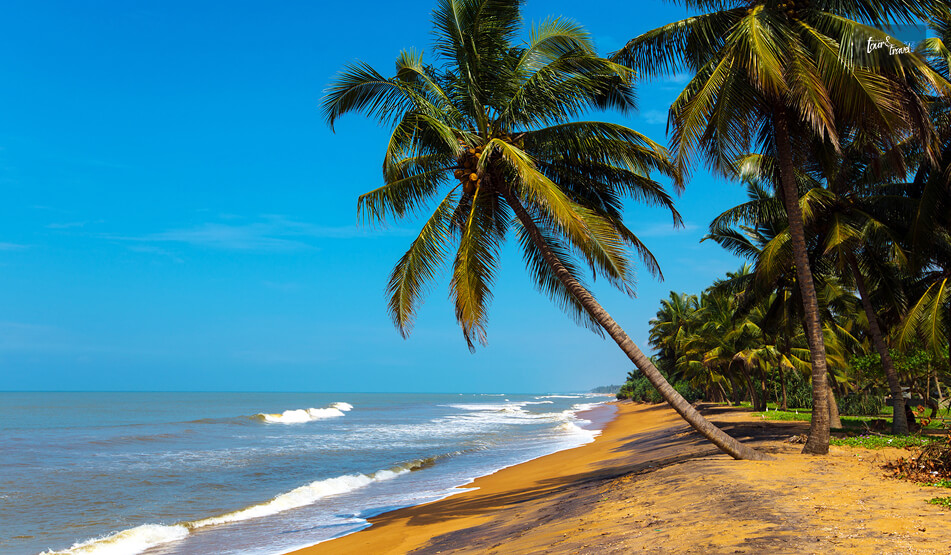
However, very few people talk about the beautiful beaches of Jaffna, such as Kankesanthurai and Casuarina. During my trip to Jaffna, I loved the white sands, calm shallow waters, and Palmyra trees. Also, the Jaffna beaches are a paradigm shift from beach towns like Mirissa.
You will not get the vibrant nightlife or the maddening crowd. The vibe is pristine and slow. And with the Sri Lanka Tourism Development Authority (SLTDA) focusing on Jaffna now for the diversification of the country’s tourism profile, these beaches are going to play a vital role.
In this Jaffna beach guide, I will talk about the most prominent beaches, the amenities, expert tips, and more.
What Are The Best Beaches Near Jaffna Sri Lanka?
The beaches in Jaffna show a contrasting vibe in comparison to the beaches near Colombo, such as Bentota or Unawatuna. The Colombo beaches are touristy and offer watersport activities such as parasailing, diving, and surfing.
On the other hand, the shallow water of Jaffna is ideal for swimming. Also, the golden sands of the Colombo beaches are replaced by the soft white sands.
Overall, the beaches in Jaffna focus more on tranquility and show the slow-paced vibe of the city. You know Jaffna Siesta is a real thing!
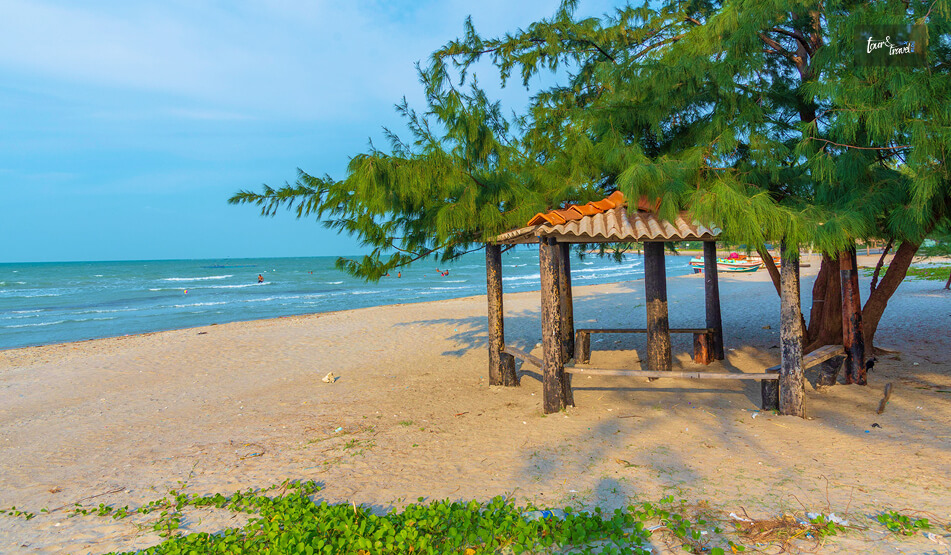
As you reach the Casuarina Beach, a wide stretch of casuarina trees, creating a canopy over your head, welcomes you. The beach gets its name from these trees.
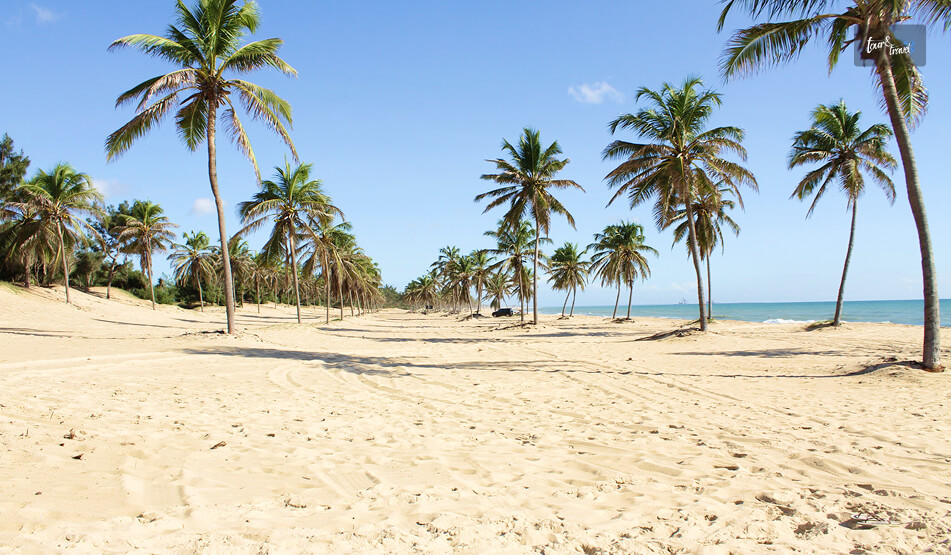
The stretches of the soft white sand of the beach are also surrounded by palm trees. Furthermore, the west-facing is known for beautiful sunset views.
What Are The Things To Do In Casuarina Beach?
Casuarina Beach is a place to relax. The shallow water here is ideal for swimming. You can go to the middle of the ocean, where you will find fishermen in action.
The fishermen ride in a raft-like boat. You can join them and have a conversation about their daily lives and how they survive the sea. For me, it was pretty much the “Riders to the Sea Moment.”
Also, Kamban, a middle-aged fisherman of Jaffna, shared something about the impact of the Civil War here. He reminded me of a Reuters report published many years back.
It talked about how the Puthumathalan beach, around 113 km from Jaffna, was filled with broken medicine bottles, pieces of clothes, and rusty cooking pots as the aftermath of the civil war.
Nevertheless, Kamban said, “You know, we did not have any food. We could not go out for fishing, and we never knew who would be the next to take a bullet.
We are now recovering and getting tourists. Still, we need more support, and the fear will remain among people of my generation and the next one.”
Today, Casuarina Beach has some beach clubs and resorts offering water sports activities such as snorkeling and jet skiing.
Still, I feel, it’s a place to relax and ponder over how the locals are showing resilience to maintain the glory of a city devastated by the Sri Lankan Civil War.
Also, the Casuarina Beach is the place to try the authentic food of Jaffna. I loved the crabs and vadai here.
How To Reach Casuarina Beach From Jaffna?
The most convenient way to reach the Casuarina Beach is to take a private taxi to Jaffna. The cost will be around 1200 LKR.
2. Kankesanthurai (KKS) Beach
Entry Fee: Free
Distance from Jaffna: 19 Km
How to Reach: Take Tuk-Tuks from Jaffna
The Kankesanthurai is a navy-maintained beach with sparkling blue water. It is also just 10 minutes away from the Keerimalai Freshwater Springs, one of the iconic landmarks in the spiritual and cultural landscape of Jaffna.
Also, the nearby Thalsevana Resort is a place to relax and try authentic Jaffna cuisine while indulging in the beauty of the pristine beach.
You can swim in Kankesanthurai. However, you need to be careful about the current. However, this beach is more popular for the snorkeling activities and is famous for the Keerimalai to Kankesanthurai Walk.
Kankesanthurai (KKS) Beach Snorkeling
Kankesanthurai, with its shallow water and some marine life and corals visible, is a decent snorkeling site. I saw some sea turtles while swimming at Kankesanthurai beach.
The water here is warm, and the calm conditions make it beginner-friendly. May to September is the best time for snorkeling in Kankesanthurai.
However, there is no established snorkeling facility here. So, you need to bring your own gear, including fins and masks.
So, if you want a proper snorkeling experience, you can explore alternative locations in Sri Lanka, such as the Nilaveli Beach of Pigeon Island, which also has the Pigeon National Park.
The Coral Island of Trincomalee and the southern coastal spots such as Hikkaduwa & Mirissa are some of the best locations to try snorkeling in Jaffna.
Keerimalai To Kankesanthurai Walk
The distance between Keerimalai and Kankesanthurai is just around 2 km. So, when you start from Keerimalai and walk north toward Kankesanthurai, you will reach your destination in 25-30 minutes.
There is no marked beach trail for the walk. However, as you proceed, you will experience amazing coastal views and fishing activities, especially near the pier and shorefront.
However, if you want to beat the heat, you can take a tuk-tuk to reach the beach from Keerimalai.
Manalkadu Sand Dunes: The Hidden Gems Near Jaffna
Manalkadu sand dunes are the ideal location for an off-the-grid camping experience in Jaffna. Also, at times, I want absolute silence around me. Being an introvert, too many interactions and activities often drain me.
Stargazing in those moments works like a therapy for me. If you are also like me and want the world around you to “Shut Up,” you must try stargazing at Manalkadu.
The long chain of sanddunes here stretches to meet the sea, and this is a geologically striking feature. The desert-like setup and the sand dunes offer some “interesting perspectives” for photography, especially while watching the sunset.
And the best way to experience stargazing at Manalkadu? Try off-grid camping here.
Camping At Manalkadu And Stargazing
I set up my tent on the Manalkadu beach, and the wild, open area with almost no light pollution offered the best stargazing experience. Of course, it was not as vivid as stargazing in Great Barrier Island.
Still, the spontaneity and simplicity won me over.
However, Manalkadu is not a formal camping or stargazing site. So, you will need to bring your tent, telescope, red light, water, and other essentials.
Also, we spotted some fishing huts on the beach. We sought their permission, and they happily agreed. In fact, they shared their meal with us, allowing me to spend more time stargazing and enjoying the silence.
Things To Pack For Camping At Manalkadu
Manal Kadu means sand jungle in the Tamil Language. True to its name, it is a pristine place where desert, jungle, and the sea co-exist.
Also, it is called the “Swimming Pool of the North.” Nevertheless, since it has a primitive setup, you need to carry some essentials.
Tent
Sand Anchors or Stakes
Plenty of Food and Water Nearby
Portable Stove
Cooking Gear
Headlamp or Lanterns
First-Aid Kit
Power Banks
Trash Bags
The Quiet Alternatives: Jaffna Beaches
Do you want to enjoy a sunset stroll by the water with no one around? Visit the quieter alternatives such as the Charty Beach and Akkarai Beach.
1. Charty Beach
The Charty Beach is on Velanai Island, and it is a 15 km drive from Jaffna City. You will reach the beach from the city within 30 minutes after a journey through the Jaffna–Pannai–Kayts Road.
The warm water here is ideal for swimming, and you can even try near-shore paddling.
Changing Facility
• Nearby Huts • Rest Shades
Food And Snacks
• Local Eateries
Accomodation
• AC and Non-AC Rooms at Charty Beach Resort
Lifeguard
• Not Available
Ideal Season
• May to September
Best Time to Visit in a Day
• Early Morning • Late Afternoon
2. Akkarai Beach
Take a drive for around 30-40 minutes to reach the Akkarai Beach in Thondamanaru. Lying along the Palk Strait, it stretches toward the Indian coastline.
It is very close to the Lord Murugan Temple and the Thondamanaru Bridge.
Parking Fee
Free
Resting Areas
Benches and Shaded Spots
Washroom
Freshwater Wash Areas
Swimming Condition
Near-Shore Swimming with the Sandy Bottom Deepening Gradually
Lifeguards
Not Available. So, Don’t Swim when the Current is Strong.
Best Months
May to September
Best Time to Visit in a Day
• Early Morning • Late Afternoon
Beach Amenities And Safety Guide
Once again, the Jaffna beaches are not the luxury tropical getaways you are looking for. So, you must have a clear idea about what to expect at these pristine beaches.
Also, learn about the safety infrastructure before getting into the water.
1. Basic Beach Amenities
Casuarina Beach has paid changing rooms. However, other beaches have no makeshift provisions for changing and resting.
So, you must carry beach umbrellas and folding chairs if you don’t want to sit on the sand.
There is no official presence of a lifeguard or support on these beaches. Network coverage is decent. However, you can face connectivity issues if the weather deteriorates.
The beaches in Jaffna are accessible from Jaffna City by tuk-tuk and other vehicles. However, in Casuarina Beach, you will have to pay a small fee for entrance and parking your vehicle.
2. Safety And Norms
Do not go very far into the ocean water, as there can be strong currents, and there is no formal lifeguard support.
Also, be careful while walking barefoot on the sand,d as there can be seashells and seaweeds.
In addition, dress modestly, shorts and T-shirts are fine! Also, do not leave trash behind.
Exploring The Jaffna Coastline: Know The Expert Tips
Want to explore the coastal beauty of Jaffna to the fullest? Follow these expert tips.
1. Go On Weekdays
You will find local buses packed around the Casuarina Beach, and the noise of loud music can be an annoying factor.
Choose a Monday or Tuesday for your ocean visit to spend some moments of quietude.
2. Bring Reef Shoes
The Charty and KKS beaches have sharp dead coral very close to the water’s edge. So, your feet may get a cut if you don’t wear reef shoes.
3. Have Navy Food
When you are visiting the Kankesanthurai (KKS) beach, you don’t need to eat at a beach shack. You can walk into the Thalsevana Holiday Resort run by the military.
Enjoy a hygienic and tasty lunch and cold beer there while enjoying the ocean view.
4. Riding On Manalkadu? You Will Need A 4X4
You can drive a scooter to Manalkadu. However, you have to park it on the hard road. You cannot take it to ride onto the sand dunes, and the wheels will get stuck.
5. Morning Is The Best Time For The Beach Visit
You cannot visit a beach in Jaffna at noon. The Northern Sun is scorching. So, plan a visit between 7 AM and 8 AM or after 4 PM.
6. You Can Wade In Akkrai But Cannot Swim
The water at the Akkarai Beach is usually knee-deep. So, you can wade through the water of this beautiful beach.
However, swimming does not look like an ideal activity here.
7. Changing Rooms Are Basic
The Casuarina Beach has changing rooms. However, these rooms are just concrete stalls with a bucket of water.
You will have to bring your towel and toilet paper.
8. Respect The Fishermen
Most beaches in Jaffna are like a workspace for the fishermen. So, there will be fishing boats and nets on the shore.
You cannot step on or lie on them. Do not tamper with them.
9. Drink Thambili To Stay Hydrated
Jaffna beaches do not have places serving fancy cocktails. The best refreshment is to drink the King Coconut or Thambili water.
It replenishes the micronutrients, and it is a must-have when the Sun is scorching.
What Are The Authority Voices On Jaffna Beaches And Coastline?
“Casuarina Beach is named after the shady trees that line it, offering a rare respite from the scorching Northern sun. It’s the closest Jaffna gets to a holiday vibe.” – The Lonely Planet.
“Don’t expect the polished tourism of the South. Jaffna’s beaches are raw, working coastlines where fishermen outnumber tourists—and that is their charm.” – Rough Guides.
Here are the frequently asked questions and answers about the Jaffna beaches.
1. Can Foreigners Swim In Jaffna Beaches?
Yes, foreigners can swim in Jaffna beaches. Casuarina and KKS beaches get many foreign visitors.
The KKS beach offers free entry. However, for the Casuarina Beach, the entry fee is 50 LKR for locals and 500 LKR for foreigners.
Also, the amenities at the Jaffna beaches are basic. So, a foreigner looking for a luxury beach experience or the resort vibe can feel disappointed.
2. Is It Safe To Wear A Bikini At Jaffna Beaches?
There is no formal restriction regarding wearing bikinis at Jaffna beaches. However, the social setup of Jaffna is conservative.
So, there can be stares, and you may feel out of place. So, wear shorts and T-shirts while swimming.
3. Are There Sharks In Jaffna?
You will rarely see sharks in the waters of Jaffna. However, you will find sea turtles and coral reefs in the waters here. The water here is very shallow.
4. Which Is The Cleanest Beach In Jaffna?
Kankesanthurai (KKS) is a navy-maintained beach, and it is the cleanest in Jaffna. It also has the Thalsevana Holiday Resort, run by the military. You can have food and drink here.
5. Can I Surf In Jaffna?
No, you cannot surf in Jaffna. The water here is shallow and calm like a lagoon. If you want to surf in Jaffna, you can go to Arugam Bay on the East Coast.
6. Are There Hotels On The Beaches Of Jaffna?
Yes, though not frequently, there are some hotels on the beaches of Jaffna. For example, KKS has the Thalsevana Holiday Resort and the Charty Beach has the Tilko Charty Beach Resort.
Furthermore, there are smaller guesthouses near the Casuarina beach.
7. What Is The Best Time Of Year To Visit Jaffna Beaches?
May to September is the ideal time for exploring the northeastern beaches of Jaffna. Jaffna has dry weather conditions in these months, and the calm water is ideal for swimming and snorkeling.
Jaffna experiences heavy rainfall from October to December. So, avoid these months.
Meet Sibashree Bhattacharya, a travel enthusiast who has a decade-long experience in transcending virtual barriers with her words! Her deep love for travel is apparent from her travel escapades to the mountain, often taking her readers on a journey, her words acting as Portkey! Fun fact: Sibashree loves to dive deep into the history of the places she is about to visit, making her travels even more wholesome. If you were wondering how her articles are not short of time travel, this answers it!
Dalawella Beach is the best beach for families in Sri Lanka in 2026.
It’s not me, and Lonely Planet has conferred this title to Dalawella Beach, which is just south of the Unawatuna resort town.
Furthermore, it is just 20 km from Galle and less than 8 km from Galle Fort, a UNESCO World Heritage Site.
On the same list, the Hiriketiya Beach has become the best beach for amenities, the Mirissa Beach has been chosen as the best beach for whale watching, and Unawatuna Beach has been selected as the best beach overall.
You can take a tuk-tuk from Unawatuna and reach this beautiful beach within 10 minutes. Furthermore, it is a 2-hour journey by road.
Taxis to Dalawella Beach are also available from Galle.
While easy accessibility remains a plus for the beach on the southern coast of Sri Lanka, it stands out because of its rope swing attached to a leaning palm tree. This swing is also called the Dalawella Swing.
Moreover, Dalawella Beach or Wijaya Beach has a sheltered natural pool, formed by a reef and adorable turtles.
So, what are the things to do and the top attractions at this beach? Let’s discuss this in detail in this blog.
How To Reach Dalawella Beach?
As I have said already, you can easily take a tuk-tuk from Unawatuna and reach Dalawella Beach within 10 minutes.
I paid LKR 200 as the tuk-tuk price and got off at the Dream Cabana Hotel. Here, you will find the palm tree that has the famous Dalawella Swing.
You will also get buses from Unawatuna to Dalawella every 15-20 minutes, and the ticket price is LKR 50.
Why Is Dalawella Beach A Must-Visit? (Things To Do In Dalawella Beach)
Sri Lanka has the best of many things. It has the famous Buddhist sites, such as the Dambulla Royal Cave Temple, or the Sacred City of Anuradhapura.
These are high-energy places and are soaked in spiritual fervor.
On the other hand, the coastal gateways such as the Uppuveli Beach in Trincomalee or Ahangama Beach Town, offer you the ideal places to relax and unwind.
The Dalawella Beach near Unawatuna is, of course, a nice addition to this list of beaches in Sri Lanka.
While relaxing and enjoying a laid-back vibe is the best thing to do when you are at Dalawella Beach, here are some other activities you must try.
1. Swing Over The Water
The palm tree swing is the top attraction at Dalawella Beach. This swing is attached to the leaning palm tree in front of the Dream Cabana hotel.
You can enjoy this swing ride over the water and have the most amazing experience. A hit on Instragram, this is the perfect spot for photography or making reels at Dalawella Beach.
The cost of taking this swing is LKR 500, which I have seen many travel guides mentioning as the entry fee.
However, entry to Dalawella Beach is free.
2. Watch The Sunset From The Wijaya Rock
You will find the Wijaya Rock if you walk a few hundred meters from the Wijaya Rock. The standalone rock comes out of the sand and reaches out into the ocean.
There is a palm tree right beside the rock. So, the overall setup is very Insta-worthy, especially during the hours of sunrise and sunset.
3. Swim With Turtles
Turtles are a major attraction on the Sri Lankan beaches.
Be it the beaches in Jaffna or the Sea Turtles Conservation Centre near Mount Lavinia Beach, these adorable creatures add more delight to the beach experience.
At Dalawella Beach also, I spotted some turtles, and swimming by them in the lagoon was relaxing.
So, you don’t need to snorkel to meet them.
Furthermore, if you don’t want to swim in the water, you can watch them from the top of the Wijiya Rock or use a drone camera to capture their beauty.
4. Surfing Near The Frog Rock
Dalawella Beach is not the best option if you want to enjoy surfing in Sri Lanka. However, it is not the worst either.
You will find the iconic Frog Rock at the end of Dalawella Beach. The natural formation of this boulder makes it look like a frog.
However, the water here is quite shallow, and the reef is a major challenge. So, you will mostly find locals surfing in this area.
Moreover, Dalawella Beach has some delightful cafes and restaurants. You can enjoy seafood and chilled beer here and enjoy amazing sunset views.
What Are The Other Beaches To Visit Near The Dalawella Beach?
As I have mentioned, Dalawella Beach is not that great as a surfing destination, and it does not have a surfing break.
So, you can try nearby beach options such as Ahangama, Kabalana, or Koggala.
The best among them is, of course, Ahangama, and you can easily reach this beach town by a tuk-tuk, and it takes just 20 minutes.
Ahangama is the best because it has around fifteen surf breaks along a few kilometers of the coast.
The Kabalana Beach, around 15 km away from Dalawella Beach, is also a popular surfing destination and has the best A-frame in Sri Lanka.
However, if you want a more peaceful experience at a remote place, you can try Koggala. It is just 10 minutes away, but it can be a little dumpy.
Where To Stay If You Want To Surf At Dalawella Beach?
You will find many hotels to stay at Dalawella dotting the beach. However, it is always better to take a tuk-tuk ride or a short walk to find better options.
For example, the Rockside Cabanas Hotel is the most popular accommodation, and it is within walking distance of the beach. It is also very close to the turtle lagoon.
You can also plan a stay at the Horizon Hill Top Villa. Take a tuk-tuk to reach this hotel in two minutes from the beach.
It serves an amazing breakfast, and it has a lovely pool in the jungle.
What Is The Best Time To Visit Dalawella Beach?
Dalawella Beach remains open 24x7. However, 6 AM to 7 PM is the best time to visit the beach in a day.
Season-wise, December to March or the dry season, is the best time to visit Dalwella Beach.
Moderate temperature with an average of 31-32 degrees Celsius, long sunshine hours, and calm waves make this season ideal for regular tourists and surfers.
Moreover, these months are the best for spotting turtles here.
Anuradhapura is a part of the Golden Triangle of Sri Lanka along with the Dambulla Royal Cave Enclave, Polonnaruwa, and Sigiriya Rock Fortress.
Furthermore, the Sacred City of Anuradhapura, a UNESCO World Heritage Site, was built from the “cutting of a Bodhi Tree” or the “Tree of Enlightenment.”
Before 993, when it was abandoned due to an invasion, it was the political and religious capital of Ceylon, the previous name for Sri Lanka.
Also, if Jaffna attracted me with its Tamil Culture and Hindu Temples, Anuradhapura was a great calling because it was the first place to adopt Buddhism outside India, the country I belong to.
Moreover, Jetavanaramaya, the early 4th-century BCE Stupa, was once the “third-largest man-made building in the world,” with an original height of 122 meters.
However, while the Jetavanaramaya Stupa continues to evoke awe with its grandeur and mystery, the other ruins and remains of Anuradhapura also wait to tell you the history and cultural richness of the region.
So, here is a brief discussion on the places I visited in Anuradhapura.
What Are The Places To Visit In Anuradhapura?
I was staying in a guest house near the Sacred City of Anuradhapura. I rented a bicycle from my guest house for LKR 500, and I took the back route as the staff in the guesthouse guided me.
Off the main road, the cycling experience was beautiful, and I loved spotting the roaming peacocks and little children waving at me.
Beyond the charming views and ambiance, I noticed one more thing. In Anuradhapura, the past and the present walk side by side.
There have been no evictions of the locals in the name of preserving or promoting the ancient ruins and remains in a UNESCO World Heritage Site.
Nevertheless, after talking to the local children for a while, I reached the entrance of the Anuradhapura Sacred City. The entry fee was around 9500 LKR or INR 2800.
However, remember that the ticket includes archaeological sites such as Jetavanaramaya, Abhayagiriya, Ruwanwelisaya, and Thuparamaya. So, if you want to explore other sites such as the Isurumuniya Viharaya, you will need to pay separate fees.
Nevertheless, these are the places I visited in Anuradhapura.
“This sacred city was established around a cutting from the 'tree of enlightenment', the Buddha's fig tree, brought there in the 3rd century B.C. by Sanghamitta, the founder of an order of Buddhist nuns.
Anuradhapura, a Ceylonese political and religious capital that flourished for 1,300 years, was abandoned after an invasion in 993.
Hidden away in dense jungle for many years, the splendid site, with its palaces, monasteries, and monuments, is now accessible once again.”
- UNESCO World Heritage Convention.
1. Abhayagiri Vihara Stupa Complex
The Abhayagiri Vihara Gargantuan Stupa is magnificent, and the brick stupa creates a contrast against the bright blue sky and the lush greenery of Anuradhapura.
King Vattagamani Abhaya or Valagamba founded this Stupa in the first century BCE. This prominent center of Mahayana Buddhism remains an active place of worship.
Also known as the Northern Monastery or Uttara Vihara, it changed the course of Buddhism in Sri Lanka by deviating from the monolithic tradition of Theravada Buddhism.
Moreover, the Abhayagiri Vihara Stupa is the first Stupa in Sri Lanka to house the tooth relic of Buddha.
Also, the Abhayagiri Dagoba or Stupa at the epicenter of the Abhayagiri Vihara Complex is one of the largest stupas in Sri Lanka.
The Structure And Architecture Of The Abhayagiri Vihara
Apart from the Stupa or Dagoba, most parts of the Abhayagiri Vihara are in ruins. There were living houses for the monks and students, libraries, dinner halls, and meeting halls surrounding the Stupa.
Here is a detailed overview of the structures as I saw them. However, the heat will be scorching, and you will find langur monkeys roaming around.
So, try to be there by 6 AM, when the gates open, or after 4 PM. The Sacred City remains open till 8 PM. However, it will take you around an entire day if you want to explore the major ruins of the Anuradhapura Sacred City.
The Dagoba Or The Stupa
The Stupa or Dagoba in the Abhayagiri Vihara is in a well-preserved condition. The massive bell-shaped structure of the stupa has a height of around 120 meters, and at its widest, the circumference is close to 350 meters.
The dome, made of brick and lime mortar, has four entrances, and you will find a Devatakotuva or a cylindrical spire and Hataraskotuva or a square-shaped structure as the crowns of the Stupa.
Image Houses, Refectories, And Sub Shrines
I saw the remains of various refectories, image houses, living complexes, and sub-shrines around the stupa.
Among the smaller stupas, the Indikatu Seya and Silasobbhakandaka Cetiya are the most common.
Meeting Halls
The remains of the meeting halls or Uposathagharas have been found in the complex.
These Uposathagharas were multi-storied, and Ratnaprasadaya or the jewel mansion was most prominent among them.
Congregation Hall
The Sannipatasala, or the congregation hall near the southern entrance of the stupa, is the largest hall in the complex.
The image of Nagaraja, or the king of snakes, or Virupaksha, the protector of the Western Direction, was found in this congregation hall, which is now in ruins.
You can see this image at the Abhayagiri Museum.
Abhisheka Mandapa Or Anointing Pavilion
The Abhisheka Mandapa had a stepped entrance, and people believe it to be the place where the statues of Lord Buddha and other Bodhisattvas were consecrated.
Some even consider this the bathing house or Snanghara.
Stone Slabs
Many stone slabs with inscriptions in Nagari Script have been found in this site.
Again, there are two moon stones in Anuradhapura, and one was found at the Queen’s Pavilion and the other at Mahasena’s Palace.
These moon stones are significant features of Buddhist stupas or shrines, as these semi-circular stone structures depict the Buddhist Samasara.
The Dining Room
The dining room or hall of the Abhayagiri Vihara has a stone-clad trough, and it is ideal for storing or serving rice that could feed 5000 monks.
Furthermore, there was a dining area, hearths, underground channels, grinding stones, and a sundial in the site Faxian or Fa-Hien described as the dining hall.
The dining hall also has two courtyards.
The Bodhi Tree Shrine
The Bodhi Tree Shrine, or the Bodhighara is a subsidiary shrine of the Abhayagiri Stupa. As a token of Buddha’s enlightenment, Sanghamitta, a Buddhist nun from India, brought saplings of the Bodhi Tree.
She planted the saplings in Abhayagiri, and many patrons built small aediculae-like shrines around these trees.
These sub-shrines had images of Lord Buddha in a meditative or Samadhi posture and his footprints.
Moreover, excavation of Buddha statues took place in the Bodhighara sites, and one of them is from the 3rd century BCE, and these resemble the sculptures of the great Gupta dynasty in India.
You can visit the Anuradhapura Archaeological Museum if you want to see these Buddha statues.
The Ponds
The tanks and reservoirs near the living quarters were the main sources of water for the complex.
However, water in these reservoirs or tanks came from the Kuttam Pokana or Twin Ponds to the far east of the Stupa.
Moreover, these rectangular ponds were built by Aggabodhi I in the 6th or 7th century CE, and they have shallow ridges, and the inner walls are made of polished stone.
However, for me, the most fascinating thing was the stone slab with the motif of a hooded cobra.
Also, this hooded cobra or Naga establishes a deep connection with India, as Nagas and water have deep connections in Indian mythology.
As I walked further, I came across the Elephant Pond or Eth Pokuna. It is the largest artificial tank in Sri Lanka, and it is the main water supply for all the tanks and reservoirs in the Vihara Complex.
Here also, I noticed a depiction of a hooded cobra on a stone slab.
At the end of exploring the Abhayagiri Vihara Stupa Complex, I must tell you that you must read a little about the place before a visit.
Otherwise, it will be difficult for you to catch up when the guide shares the details.
2. Jethawanaramaya Stupa
You will also find the Jetavanaramaya Stupa in the Sacred City of Anuradhapura. It was one of the largest man-made structures in the world, and it ranked only after the Great Pyramids of Giza.
The original height of this structure was 122 meters, and after restoration, the height is now 71 meters.
The stupa, built by King Mahasena in the 3rd Century AD, is a part of a large Jetavana Vihara complex that used to house around 200 monks. Also, like the Abhayagiri Vihara, it has a brick architecture.
This once again indicates how ancient Anuradhapura was a hub of brick production. In fact, Ruwanwelisaya, the most sacred stupa of the country inside the Anuradhapura Sacred City Complex, also had a brick architecture.
However, for the recent restoration, they used cement in the outer layer of the stupa.
Moreover, massive excavation works have taken place in the Sacred City of Anuradhapura, and the gold panels showing the imagery of the Bodhisattva and the partial inscriptions of the Prajñāpāramitā Sutra.
Now, Prajñāpāramitā Sutra is the foundational text of Mahayana Buddhism. This shows how the Jethawanaramaya Stupa was the hub of different Buddhist thoughts and schools.
However, you can see these gold panels now at the Colombo Museum.
Also, I came to know about another fascinating thing from a monk here, that the stupa used to have a diamond in the crown. It used to turn aside lightning during the monsoon season.
3. The Gleaming White Ruwanwelisaya Stupa
The Ruwanwelisaya Stupa is most famous among the locals and followers of Buddhism.
Now, unlike the Ritigala Forest Monastery, the Ruwanwelisaya Stupa or the other stupas in the complex are live hubs of Buddhist practices.
Also, the Ruwanwelisaya Stupa is especially famous for housing the remains of Lord Buddha.
Originally, the Ruwanwelisaya Stupa was much smaller than the Jethawanaramaya Stupa. However, thanks to continuous maintenance, it now stands at a height of 100 meters.
Now, this was my experience in the ancient ruins of Anuradhapura. If you want to explore more, you can visit the Kaudulla National Park, at a distance of less than 2 hours, and the Hurulu Eco Park, at a distance of 1 hour and 50 minutes.
Location And How To Reach Anuradhapura?
Anuradhapura City is located on the banks of the Malwathu Oya. It is the capital of the central-west region of Sri Lanka and the district of Anuradhapura.
Anuradhapura is a 4-hour journey from Colombo and Kandy.
Once I explored the top attractions in Kandy, I took a minivan, which cost me LKR 1600. Now, you will also get private and public buses.
However, I had luggage and wanted to keep the schedule flexible. So, I chose the minivan.
Things To Remember For A Trip To Anuradhapura
The Sun is merciless in Anuradhapura, even if you visit the Sacred City in winter. It becomes unbearable past 11 AM.
So, you have to really start early.
Also, carry water and wear full-sleeve clothes to maintain the dignity of the place and protect your skin from the Sun.
Moreover, as I have mentioned, visiting a place like Anuradhapura demands preparation. So, study well and have basic ideas about these stupas beforehand.
Everyone knows that you cannot complete exploring Japan in a day. And I had no choice but to miss Oshino Hakkai on the first trip.
However, on the next trip, I made sure to plan a visit.
Of course, an image on Instagram was my major drive behind being so passionate about a trip to Oshino Hakkai.
I saw a series of houses with thatched roofs along the shore of a pond. The magnificent and snow-covered Mount Fuji stood behind, strong and unshakable, as the eternal truth.
Born and raised in the land of spirituality and the Himalayas, I had to visit Oshino Hakkai.
However, as I have explained in my narrative from Tokyo to Mount Fuji day trip, you have to time your trip really well and have to be extremely lucky to see the snow-capped Mount Fuji.
Also, if you are planning a trip in summer, you will only get to see Mount Fuji partially or fully covered by clouds.
Nevertheless, as Mount Fuji continues to act elusive, here is why Oshino Hakkai will win your heart.
Oshino Hakkai: Why Is Visiting The Eight Springs Of Oshino So Special?
As I stood at the center of where both Lake Kawaguchiko and Lake Yamanakako meet in the small village of Oshino, I was able to look at the eight sacred ponds of Oshino Hakkai.
These sparkling, clear water springs are all that is left from a long-lost sixth lake that existed hundreds of years ago. It's as if time stood still when you visit these sacred areas.
When I looked into the water, I didn't see just water, and I saw history. The springs were used by pilgrims (Fuji-ko) during Japan's Edo period to cleanse their bodies and souls before climbing Mt. Fuji.
What a magical process the water goes through!
From snow accumulation on the summit of Mt. Rainier, through melting and filtration through approximately 80 years' worth of porous lava before it actually emerges at this location, its absolute perfection.
Moreover, it was crystal clear and pure.
Also, as I walked through the "Natural Monuments," I had an intense feeling of appreciation for the many years of waiting, so that each would have such serenity.
How To Reach Oshino Hakkai?
The journey to the stunning waters of Oshino Hakkai is as much a part of the experience as the location itself.
Here’s my recommendation for how to get to Oshino Hakkai, depending on whether you want a more convenient (train) or an adventurous (rental car) way of doing so.
1. Reaching Oshino Hakkai From Tokyo
When travelling from Tokyo, you have several options available.
Highway bus lines go to Oshino Hakkai directly.
If you plan to take the train, either Fujisan Station (the nearest station) or Kawaguchiko on the Fuji Kyuko Line is your best option.
Once at Fujisan or Kawaguchiko, catch a local bus to get to the village.
You may take the Fujikko-go (tourist buses), Mt. Fuji World Heritage Loop, or Uchino or Hirano routes via local bus from Fujisan Station.
Generally, there are 1-2 buses/hour on these routes.
At Kawaguchiko Station, there are 11 Fuji-Q buses each day that leave for Lake Yamanaka Oriental side, and the 11 Fuji-Q buses that leave for Gotemba and also the Oshino springs.
Just watch out for the Oshino Hakkai or Oshino Hakkai-Iriguchi as their stops.
2. Driving And Village Logistics
I rented a car, and it is the most convenient way to visit the nearby Five Lakes region.
Parking here is convenient, and there are many public and private parking spaces.
After parking the car, you can explore the nearby villages.
However, you will need 300 JPY to enter the Hannoki Bayashi Shiryokan Museum.
You can visit the museum from 9 AM to 5 PM every day for a deep understanding of the local history.
Moreover, you will find signage in Japanese and English for every pond.
My Trip To Oshino Hakkai
I felt a bit out of place when I got to Oshino Hakkai.
I thought it would be a nice, quiet area for reflection and meditation, free of other people.
However, I found a busy and fully built-out village of people, shops selling food, and many shoppers and visitors to the area, as well as people engaging with local merchants about the items that were being sold.
There were also a lot of people around Wakuike Pond, and they were excited to see how clear the water of the pond was and the fish that were swimming in the pond.
1. Finding Solitude And Peace Within The City
Although I typically search for the peace of solitude, I did not mind being in a populated environment.
I became curious after wandering among the crowds to find out where my curiosity would take me.
I found a quiet, undeveloped area just minutes from the main road, where I could hear the water from the pond, see ducks on the water, and watch an old man with two little boys quietly fishing right next to me.
2. Folklore And Galactic History
The folklore & Galactic history of the 8 springs were fascinating to explore.
Especially, that water from Wakuike Pond traveled on the Space Shuttle Challenger in 1983 for a snow-making experiment in space!
3. My Personal Highlight
The highlight for me was the open-air museum at the Hanoki Bayashi Shiryokan. It was a true escape from contemporary living, immersing yourself in the cultural heritage of the area.
4. Hannoki Bayashi Shiryokan: The Main Attraction Of The Trip
To tell the truth, I went to Oshino Hakkai because of Hannoki Bayashi Shiryokan.
One of the most amazing sights I've seen in the Five Lakes region was the thatched-roof farmhouses against a colorful garden and the imposing backdrop of Mount Fuji.
I became engrossed in the displays of antique household items and rustic farming implements inside the traditional farmhouse.
The tour was brief, but I stayed by the big pond long after I was done because of the subtle beauty of the architecture.
I couldn't resist making another lap because the landscaping was so welcoming.
Read Also:
What Are The Things To Do In Jimbocho Book Town? Visit The Best Book Stores And Cafes
Cherry Blossom Kyoto Japan: 2026 Season And The Top Viewing Spots
Osaka Food: Know What To Eat In The Streets Of Osaka