The question appears simple, at least at a glance. But if you think about it, it does open an interesting window into the dynamic world of temperature, rather, how we tend to measure temperature.
Moreover, it also gives insight into why different people use different measurement systems across the globe.
The most fascinating part? How do these systems even relate to extreme temperatures?
The answer might actually surprise you. -40°C and -40°F are exactly equal. Yep! That’s right – it is the point of meeting for the two temperature scales.
On that note, let’s dissect and unpack why this even happens.
More importantly, what else do you need to know about the two temperature scales before you can plan your next mountain escapade.
Celsius Vs Fahrenheit: What’s The Difference?
To make things super easy for you to understand, I have laid out the difference between Celsius and Fahrenheit in simple terms below:
Aspects
Celsius
Fahrenheit
Origin
Anders Celsius, a Swedish astronomer, developed the Celsius scale in 1742.
Daniel Gabriel Fahrenheit, a German physicist, developed the Fahrenheit scale in 1724.
Definition
“of or using a scale of temperature in which water freezes at 0° and boils at 100°.” (Oxford Dictionary)
“of or using a scale of temperature in which water freezes at 32° and boils at 212°.” (Oxford Dictionary)
Used In
Most places in the world, including Europe, Australia, Africa, Asia, and most scientific work.
I already answered this question in the very beginning – both are the same! It is the point at which the two scales meet.
So, if you use the conversation formula I have listed above, then:
-40°C × 9/5 + 32 = -40°F
Also, this is the only point where Fahrenheit and Celsius readings match.
Then, why does it confuse all of us? It is mainly because of three primary reasons, as per my understanding:
Most individuals don’t really encounter extreme weather conditions. So, they do not really come across this overlap point.
Secondly, in most countries, the education system teaches only one scale. As a result, there is little or no intuitive comparison.
Finally, Fahrenheit readings are usually larger for both outdoor and room temperatures. For example, 50°F is equivalent to 10°C. This automatically makes most individuals assume that the two scales don’t match.
Where Does It Hit -40 On Earth?
Places like Greenland, Northern Canada, Siberia, and some regions of Scandinavia go down to -40 regularly during the winter months.
For example:
In February 2021, temperatures dipped to -43°C in Sweden.
Siberia, Canada, and Yukon also experience these levels regularly.
In these regions, both Fahrenheit and Celsius are the same – you will shiver equally.
In this context, I have a fun fact about the coldest temperatures recorded on Earth: In 1983, Vostok Station, located in Antarctica, recorded −128.6°F (-89.2°C) (Source: Britannica)
That is literally double what you will feel at -40°. More importantly, it is a real-world reminder that extreme weather conditions and environments exist on Earth.
How Cold Does It Feel At -40°?
The truth is that whether it is -40°F or -40°C, you will feel the same. And trust me, I’m not kidding – you will literally shiver!
In February 2021, I experienced -40°C in Yukon. My thermometer read -40°F, and I experienced frostbite risk within minutes.
Whether it’s -40°C or -40°F, the result is the same:
Your skin will freeze within minutes without the right protection.
Vehicles might not even start.
Metal will stick to the skin.
Your eyelashes might freeze.
At -40°, it is dangerously cold regardless of what scale you are using.
Also, the wind is so chilly that you will shiver and can fall sick or even die without the right gear and equipment.
How -40° Feels On The Human Body?
So, I can’t just keep telling you guys that it is going to be dangerously cold.
Instead, it is much better to give you all the real picture of how the human body is bound to react at sub-zero temperatures:
Temp (°F/°C)
Impact On The Human Body
-76°F/-60°C
It is painful to even breathe. Also, exposed body parts, including eyes, will freeze.
-40°F/-40°C
Skin will freeze in two minutes. Also, metal will stick to the skin.
-22°F/-30°C
Exposed and unprotected skin, including eyelashes, will freeze in ten minutes.
-4°F/-20°C
Numbness begins to set in, with an increasing risk of frostbite.
14°F/-10°C
The skin begins to sting, with a risk of frostnip if exposed.
32°F/0°C
Breathing becomes visibly tough. Also, fingers stiffen in a few minutes.
Even without any chilly winds, subzero temperatures are hazardous, especially if you are not prepared.
At -40°, both Fahrenheit and Celsius, there is only one brutal truth: without protection and preparation, it is dangerous and life-threatening.
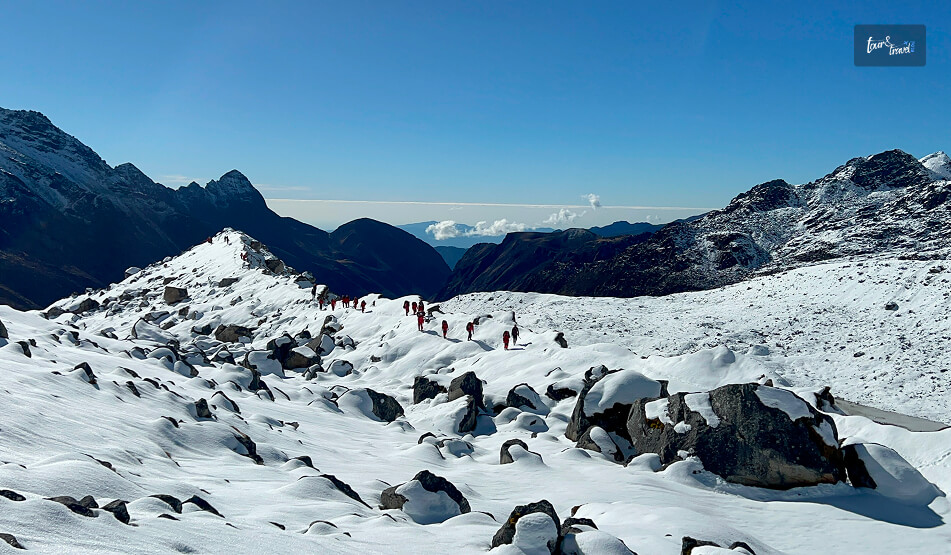
Winter Hiking Hazards You Should Know About:
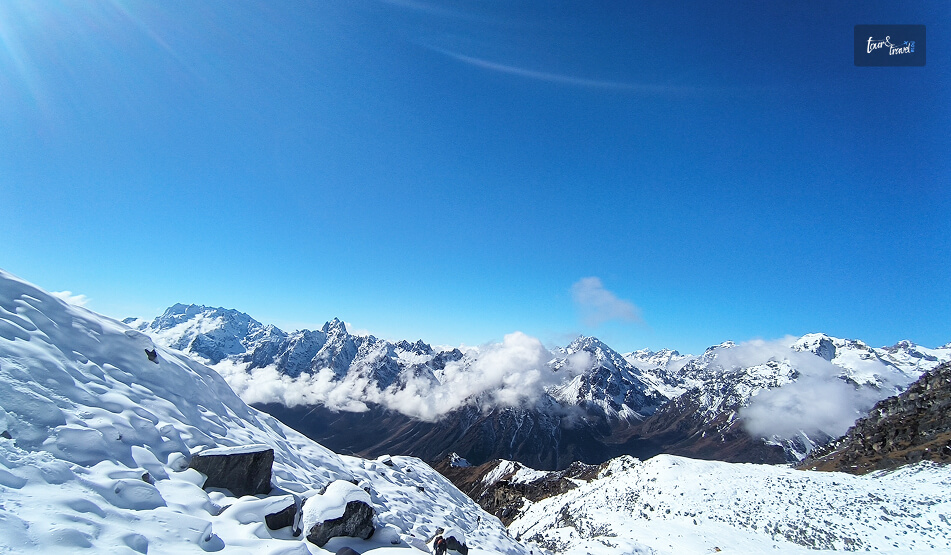
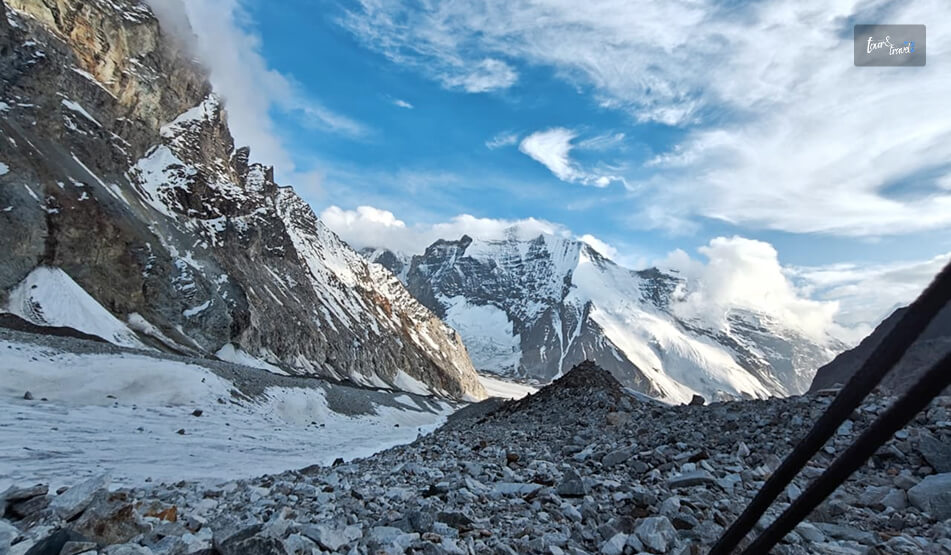
Winter can alter any landscape radically, striking a balance between mesmerizing beauty and quirky dangers.
And while it is impossible to talk about all hazards in detail, I’ve compiled all the possible winter hiking hazards and their mitigation strategies below:
Winter Hiking Hazard
Mitigation Strategy
Frostbite & Hypothermia
Check the weather, pack extra clothes, and layer well.
Slip & Fall
Use microspikes or crampons and trekking poles.
Getting Lost
Use a compass, maps, and a GPS. Also, try mapping your route.
Fatigue & Dehydration
Eat frequently, stay hydrated, and pack extra food (and water).
Falling Into Ice or Water
Always test the ice and be careful while crossing icy terrains.
Cornices
Avoid walking under or on the edges of ridges.
Equipment Failure
Keep electronics warm. Also, carry gear repairs and physical maps.
Tree Wells
In deep snow, avoid the base of trees.
Avalanches
Check forecasts for avalanches. Also, avoid steep terrains.
Short Daylight Hours
Start early, carry spare batteries, and definitely wear a headlamp.
In addition, I’ve touched upon the common (but very dangerous) hiking hazards that you can come across at sub-zero temperatures in the mountains in detail:
1. Ice:
Of course, you need to worry about ice! In the winter months, melt-freeze cycles turn hiking trails into slippery ice. Similarly, this can also happen on popular tourist routes where snow is compressed over a long period of time.
If you slip on these icy trails, it will lead to bruises and bumps. Moreover, a bad slip and fall can lead to serious wrist, ankle, or back injuries.
As a result, it is best to carry metal-tipped trekking poles and traction for additional stability in such conditions.
2. Avalanches:
In the United States, avalanches (as per avalanche.org) kill between 25 and 30 people every winter. Moreover, the injury rates are much higher.
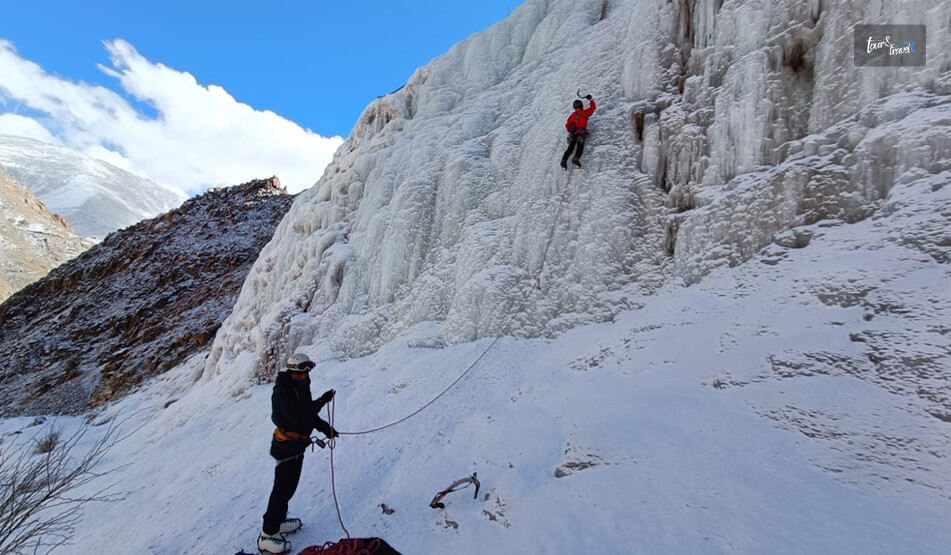
Most victims are ice climbers, snowmobilers, snowboarders, and backcountry skiers. However, oblivious hikers do get caught in avalanches occasionally.
The worst part? Nearly 95% of avalanches begin on slopes that are between 30 and 45 degrees in steepness.
However, the snow ends up traveling down to the flat terrain – and it even appears to be safe to an untrained eye.
As a result, it is vital to consult topo maps, check trip reports, and talk with local experts before you set out. That is your best shot at safety in the face of an avalanche.
3. Glaciers:
Many of the iconic summits in the United States are guarded by glaciers.
While there are several snowfields across the western part of the United States – mostly misnamed as glaciers – you will find true glaciers mostly in the Pacific Northwest and in the far north.
Moreover, these are active glaciers that moves around, forming cracks with time. As a result, these fissures, A.K.A crevasses, lie under the snow, hidden from the human eye. Naturally, fatal falls – and unexpected ones – become a major possibility.
So, it’s best not to step out on glaciated terrain unless you have some experience in both glacier navigation and snow travel. This also includes improving your fissure-rescue skills.
4. Steep Snow:
The challenge and adventure of climbing snow-covered, steep slopes is certainly thrilling.
Recently, I had the opportunity to try out snow climbing, and while it was thrilling, I can’t overstate the importance of safety and experience.
It’s so much more technical than it appears visually – if you slip even once, you can slide down the steep slope. Also, you have to know:
How can you assess the snow conditions around you?
Use crampons.
Take a fall with the help of an ice axe.
Additionally, it is best to be familiar with avalanches and safety first. Because a majority of snow climbs will require you to cross terrain prone to avalanches.
What To Know Before Planning Your Next Mountain Escapade? 9 Tips That Can Keep You Safe!
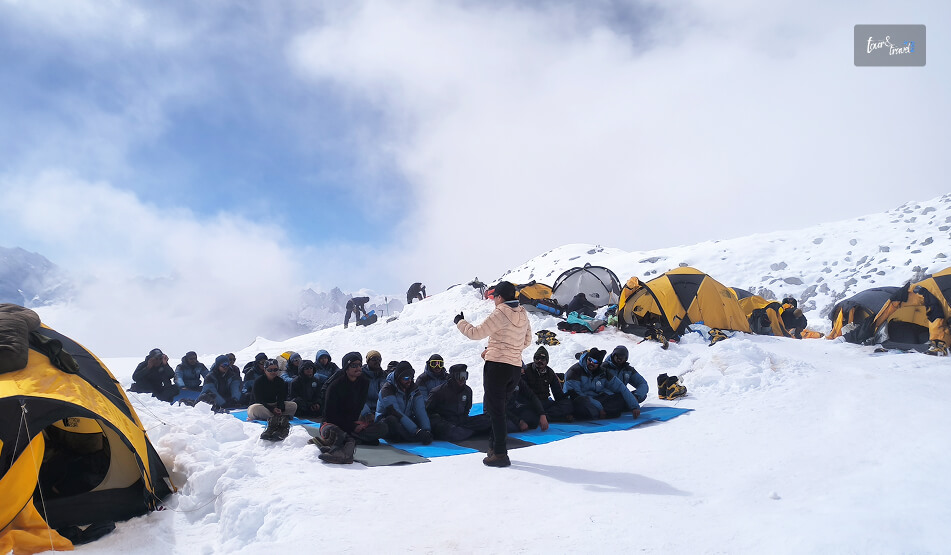
Safety in weather extremes, especially in the mountains, requires careful preparation, specialized equipment, and a constant awareness of your body’s condition.
Moreover, the combination of high winds, rapid changes in weather, and freezing temperatures leads to life-threatening conditions. And that too in minutes.
This includes the risk of both frostbite and hypothermia. Moreover, preparing for freezing temperatures is incomplete without strict layering, high-calorie nutrition, and waterproof gear.
And still it’s not enough – surprised? Well, don’t be! Instead, scroll down for the internet’s most comprehensive list to prepare for survival in freezing temperatures in the mountains.
1. Stay Hydrated:
Problem:
Dehydration is very common in freezing temperatures, much like hotter regions with arid weather conditions.
How? The cold weather conditions can easily suppress thirst. But the dry air in the mountains and high levels of physical activity will make your body dehydrated – and this will happen faster than you can possibly imagine.
Moreover, dehydration can lead to dizziness, fatigue, and headaches.
Solution:
As a result, you should try carrying a thermos with herbal teas (like chamomile, tulsi, or ginger) or just warm water with lemon and honey. These can hydrate you, keep you warm from the inside, and boost immunity.
Also, on this note, avoid caffeine or any caffeinated drinks since they will dehydrate you faster.
2. Nourish Yourself:
Problem:
Your body will burn a lot of calories to stay warm in freezing temperatures.
As a result, even if you think that a bowl of hot Maggi seems like an appealing meal for the mountains, it is crucial to balance comfort and nutrition.
Solution:
So, you should focus on energy-dense and high-calorie food items like seeds, whole grains, and roasted nuts to ensure high energy levels in the body.
Moreover, you can consider adding warming ingredients to your food. Ingredients like turmeric, garlic, and ginger can fight cold and improve digestion.
Also, if you do end up eating a steaming bowl, then add boiled eggs or vegetables for a healthy, protein-packed version.
On that note, here’s a list of things you can eat:
Beef jerky.
Trail mix.
Nuts.
Milk chocolate.
Pretzels or chips.
Cheese and deli meat.
Tortillas or crackers.
Pizza slices.
Pumpkin or banana bread.
Peanut butter sandwiches.
3. Protect Your Lips And Skin From Dryness:
Problem:
Cold and dry air is not good for the skin – it strips the skin of moisture. And this in turn leads to dry hands, irritated skin, and cracked lips.
This is highly uncomfortable and causes skin damage if you don’t address it within minutes.
Solution:
As a result, always use a moisturizer that is thick and nourishing before stepping out. Moreover, while doing so, focus on different areas like your face, neck, and hands, which are prone to getting exposed.
Also, do not forget to apply lip balm on your lips – and ensure the lip balm comes with SPF for protection against the UV rays of the sun and the cold, both of which are strong at high altitudes.
In addition, eat food items that have a high percentage of omega-3s. This includes flaxseeds and walnuts, both of which are perfect for hydrating your skin from within.
4. Stay Active For Proper Blood Circulation:
Problem:
When you are absolutely stationary in freezing temperatures, your blood circulation will slow down. This, in turn, makes you feel colder.
Solution:
The only solution here is not to sit in the same spot for too long.
So, try out light activities such as walking, stretching, or even a few squats to ensure proper blood circulation. Also, it feels good to do light physical activities after a long day of trekking.
5. Take Care Of Your Altitude Sickness:
Problem:
At high altitudes, you can expect oxygen levels to fluctuate and drop. This, in turn, can cause fatigue, nausea, or dizziness.
Solution:
You should give enough time to your body – that way, your body will be able to adjust. As a result, it is best to take it easy on day 1.
Moreover, drink lots of water and eat food items that are rich in antioxidants. This includes berries, nuts, and fresh fruits. That way, your body will be able to fight the stress and pressure of altitude.
If you are feeling unwell at any point, don’t push too hard. Rest is very important.
6. Support Your Body’s Immune System:
Problem:
The blend of altitude and cold weather can easily weaken your body’s immune system. This, in turn, will make you prone to illnesses.
Solution:
Incorporate food items that are rich in Vitamin C, like amla or oranges, in your daily diet in the mountains to boost your body’s immune system.
Moreover, warm soups are also great – but ensure these have vegetables, lentils, or even chicken stock. Why? Because it offers warmth, hydration, and nourishment together.
Also, ensure you can sleep well – a good sleep cycle will recharge your body.
7. Look After Your Feet:
Problem:
Remember that cold or wet can lead to chilblains, frostbite, and lots of discomfort.
Solution:
Invest in insulated and waterproof boots. Moreover, you can consider wearing thick woollen socks to ensure your feet are dry and warm.
Also, don’t forget to carry an additional pair of dry socks – that way you can change socks if your feet feel too damp.
In addition, you can try massaging your feet with a nice, warm balm. Why? It will prevent dryness and improve circulation.
8. Breathe Smartly For Avoiding Cold-Air Effects:
Problem:
If you directly breathe in icy, cold air, then it will irritate your lungs.
Trust me on this one! It has happened to me. And then you will start coughing. Some people also feel a tightness in their chests.
Solution:
When you start feeling chilly, try to breathe through your nose and avoid doing it through your mouth.
This will keep you warm, moisturizing the air even before it can reach your lungs. Also, this will help you to keep respiratory problems at bay.
9. Prioritize Mental Wellness:
Problem:
The beautiful solitude of the mountains can be very peaceful. However, at times it can get very overwhelming. As a result, staying healthy mentally is just as crucial as looking after yourself physically.
Solution:
Take some time for yourself so that you can practice mindfulness – and while doing so, don’t forget to appreciate the beauty around you.
Moreover, you can consider carrying a journal for jotting down your reflections and thoughts.
Also, it is healthy to count on your group to stay connected. Why? Sharing experiences together can motivate everyone and lift spirits.
Barsha Bhattacharya builds stories for a living and seeks mountains for everything else. An English major and remote content strategist, she travels every month, structuring her life around movement rather than routine. Her journeys are rooted in mountaineering and rock climbing, with a deep preference for tents over hotels and cold mornings over comfort. Barsha believes the mountains demand clarity, patience, and presence - the same qualities that shape her work. For her, travel is not an escape but immersion: long routes, rough terrain, and nights under open skies where the line between work and wilderness disappears.
With the beautiful Spanish culture spread across Manila, there are a lot of places to visit. There are a lot of things to do in Manila which I will highlight in this blog so that you can plan your trip accordingly.
Starting from contemporary museums to art scene, the place is the home of the oldest Chinatown across the world. Let me share with you several elements that will help you explore the place, both the old and the new.
I think Manila is one of the best places to visit in February especially because the weather is dry and pleasant. You can easily explore the city during this time.
Read All About Things to Do in Manila!
If you are wondering about the things to do in Manila, let me share with you some of the coolest places to visit. The nightlife is good here, but I am more of a museum and art scene girlie. It is the home of several parks and museums that will express history to you.
Several elements will make you feel that you have come to a previous era. Additionally, several places offer entertainment and fun to people of all ages.
Rizal Park
A beautiful park, open from Monday to Sunday. It is mostly open from 5 am to 10 am and 11 am to 8 pm. When you visit the park, entry is completely free. There are several gardens, laws, and other outdoor events organized across the 57-hectare park.
There is also a statue of hero Jose Rizal, commemorating him, and the name of the park is given. The hero has contributed to the wellbeing of the city hence, you get to see a lot of him and his commemoration in and around the city and places to visit.
There are a lot of places where you can go shopping once you explore the city. Henceforth, if you are traveling alone, carry the best travel credit card you possess.
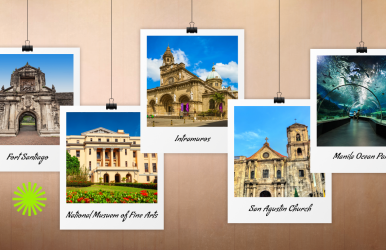
Fort Santiago
It is a landmark in Manila which is open from Monday to Sunday, from 8 am to 11 pm. The place is a defensive fortress which has a museum exhibiting many arts and sculptures. The national hero, Jose Rizal is commemorated through the exhibits of the museum.
In 1571, the Spanish governor and navigator, Miguel Lopez de Legazpi built the castle or the citadel. The city of Manila was newly established by then and is currently one of the oldest fortifications.
National Museum of Fine Arts
A massive museum, the place is a collection of fine art, botany, natural history and archaeology related to Filipino culture. The museum is open from Sunday to Monday from 9 am to 6 pm.
As the home of 29 galleries and exhibitions in the hallway, it comprises national artists and Filipo masters of the 19th century.
San Agustin Church
A beautiful place to visit, this historic place was constructed in the 16th century. The San Agustin Church is open from Monday to Sunday from 8 am to 5 pm. The ceilings are vaulted while the church exhibits detailed frescoes.
It is a Roman Catholic church which is located in the intricate walled city of Intramuros in Manila. The church functions under the auspices of the Order of Saint Augustine. Furthermore, when you visit you get to see Baroque art in the church.
Manila Ocean Park
More of an aquarium if you ask me, the Manila Ocean Park is open from Sunday to Monday from 10 am to 6 pm. The theme park is owned by China Oceanis Philippines Inc. and it has evolved into the perfect holiday destination for tourists.
It is an aquatic theme park which you will have both fun and knowledge when you check it out. Additionally, it is a perfect place for you, if you are traveling with your kids. It is one of the best places to travel with kids.
It is also an educational facility that features live shows, an oceanarium, and hands-on activities. There are all-star Bird shows, Sea lion shows and many more giving you the perfect experience and offering you the thrill of the ocean.
Intramuros
The meaning of the term, Intramuros, is the “Walled City” which is the oldest district in Manila. It looks like a fortified city which was one of the most important places for Spanish governor during earlier times of colonial times.
If you are a lover of history, this is the place for you. The culture of the place has been heavily influenced by the colonial rule and the impact it has on ordinary people.
Paco Park
An urban park which offers you serenity when you visit it between 6 am to 5 pm from Monday to Sunday. The park has been developed on a cemetery site which is walled of course. There are shaded paths for people to walk along with areas dedicated for gardens.
The cemetery is under the maintenance of municipality, and it was built by the Dominicans. During the Spanish colonial period, it was built and filled within it are interred remains of city figures.
Ayala Museum
https://www.instagram.com/p/DGpqNWWTrLn/?img_index=4
Another amazing museum that you must visit if you are going on a trip to Manila is Ayala Museum. It is open from Sunday to Monday from 10 am to 6 pm. The museum has a modern touch exhibiting Filipino archeological exhibits.
Starting from history to modern and cultural artifacts and exhibits are available here. There is also a research library that is quite important for you if you are writing a research paper on the history of Spanish colonial period.
The place is run by the Ayala Foundation privately. It houses several ethnographic, archaeological and cultural exhibits and art. You will be fascinated to know that the place exhibits the Surigao treasure of the indigenous tribe?
Arroceros Forest Park
Another urban park that you must visit is Arroceros Forest Park as things to do in Manila. There are a wide variety of plants and trees in the park along with a riverside walkway and a fishpond! A perfect combination of nature and modern practices will enhance your overall experience.
The park is open for you to visit from Sunday to Monday from 8 am to 5 pm. The lush green forest is filled with greenery. Did you know this place is also known as “Last Lung of Manila”? Spread across 2.2 hectares, the park is a home of many flora and fauna species.
Casa Manila
The Casa Manila is a house that now serves as a museum which is open from Sunday to Monday from 9 am to 6 pm. The house was built in the 1850s and is not restored to exhibit art, architecture, and colonial furniture of the Spanish colonial rule.
It is often called the living museum which features the way a well to do affluent Filipino family will live. The lifestyle of this family is depicted through the arrangements of furniture, art and architecture.
The colonization had severely impacted Manila and this is how we can see when we enter the museum. It is a must-do list of things to do in Manila.
Wrapping Up!
In conclusion, now that you have gone through the things to do in Manila, I am sure you are already planning on what to do. When you visit the place, I am sure you will experience the ancient practices and instances of the Spanish colonization of the Philippines.
Comment below on which place is your favorite to visit when you to Manila. You also need to share with us if you think we have missed something on the things to-do list.
Also read
Top 10 Most Popular Paraguay Food That You Must Try.
Top 13+ Famous Wonders Of India That You Must Visit.
I stood before the remnants of the South Pueblo walls, looking over the Mission Church on an autumn day last year. Looking at the archaeological site and standing below the blue fall sky, I was transported to the time of the American Revolution.
Further, I could hear the noise of a bustling trade fair with people from the Pecos Pueblo community doing business. However, the historical importance of the park is much beyond its association with the American Revolution. It is also related to the Civil War in New Mexico and the Independence of Mexico.
So, with centuries of human history etched in every corner, the Pecos National Historical Park is an intersection of past tales and nature. To be honest, The Pecos Pueblo and Santa Fe Trail were the biggest highlights for me when I was at the national park.
Therefore, my ode to the park will start with brief accounts of these places. Then, I will talk about the Glorieta Pass, again a site of historical importance in the park. Finally, you will have a quick look at the park's wildlife.
Pecos National Historical Park: A Land Of Historic Wars And Revolutions
The history of human lives in the Pecos National Historical Park goes back to the Preceramic Period or the 11,500 B.C.E. - 600 C.E. However, the Pecos Pueblo site in the park became a prominent place in the history of the American Revolution in the Early Colonial and Pre-Revolt era.
Spanish people started interacting with the Pueblo people. Further, thanks to the Franciscan Missions, the Spanish rule wanted to have command over the economic life and beliefs of the Pueblo people.
Thus, the first seeds of the American Revolution were sown. To combat the oppression of the Spanish people, the Pueblo Revolt took place on 10th August 1680. As a result, the Spanish Government and Franciscan Friars were expelled from the southwest under the leadership of Po’pay from Ohkay Owengeh. The Spanish Mission Church, built in 1625, was also destroyed in the revolt of 1680.
However, in 1692, the Spanish People further reclaimed the Pecos Pueblo and many other pueblos. Finally, the Pueblo people declined in numbers in 1700. Before, during, and after the first American Revolution, The Pecos Pueblo emerged as an important location with significant events around it!
Further, around 200 years later (1821-1846 C.E.), another site in the park, the Santa Fe Trail, witnessed travelers, settlers, and everyone else passing through it. The trail was opened in 1821 after Mexico gained its independence from Spain.
The remains of Pecos Pueblo stood there! By the 1830s, the migration of the Pubelo people was complete, and everyone had shifted to the Pueblo of Jemez and continued their traditions.
Moreover, in 1862, there was the “Battle of Glorieta Pass.” On 26th March 1862, this battle between the Union forces and Confederates occurred at a 700 feet elevation.
The Pecos Pueblo Site Today
https://www.instagram.com/p/Cto5MWnS5Oa/
The rise of the Pecos Pueblo site occurred between 1350 C.E. and 1838 C.E. The Pueblo site had two units, the north and south, and could accommodate around 2000 people. Further, it had 1000 rooms.
Therefore, Pecos Pueblo thrived as a busy trading center with trade fairs involving people from Rio Grande Pueblos, Plains Nations, the Gulf of Mexico, and the Pacific Coast. The flint arrowheads and shells found here explain the expansive stretch of the route.
Nevertheless, with time, Pecos Pueblo became instrumental in eliminating Spanish oppression and rule. Still, a drop in the trade, Comanche attacks, and diseases deserted Pecos Pueblo. By 1838 C.E., the last resident of the Pueblo had left and joined the Pueblo of Jemez.
Today, the site stands as a relic from the past. However, it is still equally important for archaeologists and historians.
The Santa Fe Trail
Do you know what the Santa Fe Trail marker near Kozlowski's Trading Post says? It says,
Santa Fe Trail
1822-1879
Marked by the daughters of the American Revolution and the Territory of Nex Mexico.
With the independence of New Mexico and the western territories becoming an annexure to New Mexico, the Santa Fe Trail became the route or passage to the westward movement. Naturalists, journalists, travelers, aspirants, traders, and others took this passage as part of the American expansion.
Colonel Henry Inman’s “Stories of the Old Santa Fe Trail,” published in 1881, describes the trail well. If you are a history buff, you must read this book well before visiting the Santa Fe Trail today!
“Kozlowski’s Stage Stop and Trading Post” is the highlight of this trail. You can spend some time here to visualize travelers from the past catching some rest after a long journey through the trail. When on the trail, you can explore the remains of the Pueblo and the Mission Church. You can even consider taking a guided tour of the Forked Lightning Ranch.
Glorieta Pass Battlefield Trail
https://www.instagram.com/p/B9xRKctnb3M/
Important Details About the Glorieta Pass Battle1. Reason for Conflict: Union forces and Confederates wanted to control the Glorieta Pass Route through the Sangre de Cristo mountains and the main supply center (Fort Union) for the passage of soldiers and supplies. 2. Contenders: The Confederates, with volunteers from Texas and under the leadership of General Shipley and the Union forces led by Colonel Canby, and soldiers from Fort Union, New Mexico, and Colorado. 3. Battle Begins: March 26, 18624. Reinforcements: 27th March, 18625. Battle Resumes: 28th March, 18626. Battle Ends: 29th March, 18627. Casualty: Death of 375 People 8. Consequence: The Union forces defeat the Confederates as they fail to ruin the Fort Union. Further, the Union forces maintain complete control over Southwest America.
The Glorieta Battlefield Trail is a popular hiking destination today in Pecos National Historical Park. It is a roundtrip loop, and you will have to cover a distance of 2.25 miles to complete your expedition. Further, the unpaved or graveled hiking route makes it moderately difficult for the hikers. In addition, there is an elevation gain of 152 meters.
You have to drive for around 7.5 miles from the main visitor center of the park. You will need to collect a gate code from the visitor center, which is your access code, to open the locked gate in front of the trail.
As you walk through the forest trail, you get to know more about the Civil War in New Mexico. Many infographics are installed throughout the trail, telling you tales from the past. In addition, there are wayside signs and 14 trail markers to explain the history of the battle on this pass in detail.
More About Hiking The Glorieta Pass Battlefield Trail
Time: Around 1 hour
Refreshments (Hikers’ Favorites): Pecos Burger at El Maria Bonita (With a lot of meat and a smoky green chilly flavor!) and Chips and Salsa, of course!
The Trail Guide you collect from the visitor center already keeps you hooked on the site's history. Indeed, this trail is less about hiking and more about flipping through the pages of the American Civil War in Mexico.
Let’s Hear It From Other Visitors To The Park
“Really nice park. Easy to find and it is free!
Inside the visitor center, they had a really great exhibit that followed the pecos overtime. It was super informative and brought a lot more meaning to the actual park. After looking around the exhibit, you can take the trail up and around the park and church. It's amazing that the walls are still there. The view around the park is also beautiful. We spent about 2 hours here.” - Isabelle M.
“I really enjoyed this park. My husband didn't care for it but I think it's really amazing what is still here. He thinks it's all recreation and I can't say if it is or not but I know the current Pecos people don't see it that way. It's pretty awesome that it's free to visit and the visitors center has a little museum that's also free! The trail starts near the restrooms. We accidentally started it from the end. But who cares. We saw everything and I recommend checking it out. Native people history is really cool.” - Lydia G.
Exploring Wildlife At The Pecos National Historical Park
https://www.instagram.com/p/CA-hAl8nrUW/
This historical national park is a hub of wildlife with a 6,500-acre expansion of forests, rivers, grasslands, and streams. The table below enlists the species that call the Pecos National Historical Park their home.
MammalsElk of Northern New MexicoColorado Chipmunk DeerRock SquirrelBirds*Steller’s JayMountain BluebirdBald EagleFish and AmphibiansRio Grande ChubLongnose DaceRainbow TroutBrown TroutNew Mexico Spadefoot ToadWoodhouse ToadTiger SalamanderPlains Leopard FrogReptilesShort-horned LizardNew Mexico Whiptail LizardBull SnakesGarter SnakesPrairie Rattlesnakes
You will find the Prairie rattlesnakes along the trails. So, please exercise caution and inform the ranger if you come across one on your way.
A Quick Glance At Some Important Information About Pecos National Historical Park
You must quickly look at the important information available about Pecos National Historical Park before you set in.
Location: San Miguel County, New Mexico
Established: 28th June, 1965
Area: 27 km²
Highest Landscape: Truchas Peak, 3990 Meter
Visitor Center: Pecos National Historical Park Visitor Center
How to Reach: Via State Road 63
Entry Fee: Free
Best Time to Visit: Autumn (Early September to Mid October)
Also read
Why Include Whale Watching In Your LA Itinerary.
From Cocktails To Kickflips: Must-Try Activities In San Diego.
Kootenay National Park Or The Land Of Ice And Fire (Experiencing Nature’s Game Of Contrasts)
Do you know what’s common between the ex-husband of Naomi Campbell, Vladimir Doronin, and the Soccer giant Zidane?
They have luxury villas in Ibiza.
Now, Ibiza, home to many global stars, is also the favorite luxury holiday destination for the ultra-wealthy.
Also, it stands in the same bracket as other luxury Mediterranean destinations like Saint-Tropez and Capri.
Ibiza is a popular destination for luxury tourism, with tourist spending reaching €825 million in August 2024.
Still, Ibiza stands strong to keep its charm intact and stay away from the perils of overtourism.
Also, luxury villas like Ibiza Le Collectionist and other luxurious accommodations have played an important role in tourism in Ibiza, being so large.
In fact, enhancing luxury accommodations has been one of the main tools for combating mass tourism or overtourism in Ibiza.
These luxury accommodations, especially the private villas, offer the best views, exclusive and personalized services, and, most importantly, privacy that high-end travelers crave.
In this article, I have taken luxury villas Ibiza Le Collectionist as the case study.
Also, I have explored how they are playing a crucial role in the luxury tourism of Ibiza.
Why Are Luxury Villas Ibiza Le Collectionist Unique? Having A Holiday That Feels Magical
I have shared my dream experience of staying at one of the luxury villas Italy Le Collectionist in Lake Como.
It was amazing to find the gem after a wonderful Milan to Lake Como journey.
It’s time to explore why the luxury villas at Ibiza Le Collectionist are unique.
This understanding is crucial to analyze the role of luxury accommodations in boosting Ibiza tourism, which represents 84% of the island’s GDP.
1. Allows You To Explore The Best Of Ibiza’s Nature
Do you want to relax your mind with the view of the turquoise waters of Es Cubells?
Also, do the beautiful beaches of Portinatx allure you?
You can get familiar with the wilderness of the island by planning your stay in any of the luxury villas at Ibiza Le Collectionist.
Furthermore, the luxury villas in Ibiza are home to beautiful olive orchards and almond trees.
So, it’s time to slow down, enjoy, and rejuvenate.
During your stay, you can also plan a tour of Ses Salines Natural Park, Es Vedrà, or the mystical rock rising from the sea, Cala Saladeta beaches, and Atlantis.
2. Offers You An Amazing Atmosphere
How about getting the perfect fusion of a festive spirit and the freedom of slow travel?
You will experience the same at Ibiza.
Furthermore, the luxury villas at Ibiza Le Collectionist give you the opportunity to be a part of the vibrant nightlife and food scene of the island.
So, you can even explore the most pristine areas of the island during your stay at these luxury villas.
However, for me, the best experience would be partying by the Es Vedra and soaking in its mystical charm.
3. Offers A Wide Range Of Collections
The luxury villas in Ibiza allow you to stay near the luxury islands such as:
Es Cubells
Cala Conta
Santa Eulalia
Santa Gertrudis
Also, San Antonio
4. Personalized Holidays
A tailor-made holiday in Ibiza.
This is what you get when you plan your stay in any of Le Collectionist villas in Ibiza.
Also, there are no obligations!
Moreover, you will always have an on-site team, taking care of your every requirement.
What Is The Ideal Time To Plan A Stay In Le Collectionist Luxury Villas In Ibiza?
Summer is the best time to plan a stay in the luxury villas at Ibiza Le Collectionist.
Furthermore, the summer months from May to early October bless Ibiza with mild weather and a calm ambiance, devoid of the rush of the peak season.
However, the two summer months, July and August, are the club season in Ibiza.
So, if you want the festive spirit, these are the ideal months for you to plan a stay.
However, irrespective of the summer month you choose, you will love three things for sure in Ibiza.
The glorious sunshine hours
Wildness and nature
Also, an exclusive experience at the luxury villas
How To Reach Ibiza For A Stay In The Le Collectionist Luxury Villas?
Ibiza Airport is well-connected to the major European cities and other parts of the world.
Moreover, with your reservation in any of the Le Collectionist luxury villas in Ibiza, you will get a two-wheeler concierge service.
So, from the airport, you will reach your villa quickly, bypassing the traffic and parking hassles in the peak summer months.
How To Select The Best Le Collectionist Villa In Ibiza?
There are primarily three factors to choose the best Le Collectionist villa in Ibiza.
So, I have considered the group size while traveling, the location, the kind of experience you want, and the villa style and amenities.
Furthermore, you can make your choice between the ones giving direct access to sea beaches and the ones placed in beautiful Mediterranean gardens.
Best Luxury Villas Ibiza Le Collectionist: Make Your Choice
Le Collectionist has more than 80 luxurious holiday accommodations and villas in Ibiza.
Also, the villas are divided into four categories so that you can choose one according to your preference.
1. A Finca By The Sea
So, these are our top three picks for the best Le Collectionist luxury villas in Ibiza to stay close to the sea.
Name of the VillaCost Key FeaturesAmenitiesCheck-in and Check-outVilla Blue$48,100 (7 Nights)‣ Mediterranean garden with cypress and pine trees‣ 5 bedrooms and bathrooms‣ Suitable for 10 guests‣ American-style bar‣ 630 Sqm area‣ View of the sea, countryside, and mountains from the verandah‣ Close to Cala Benirrás, famous for its cliffs and beautiful sunset views‣ Nature reserve‣ Barbecue‣ Petanque‣ Fitness room‣ Partial air-conditioning‣ Swimming pool4 PM and 11 AMVilla Beatrice$32,420 (7 Nights)‣ Located in the mysterious Es Cubells‣ Chiringuito bar‣ Beautiful views of the Mediterranean Sea‣ Terrace barbecue dinner‣ Area: 349 sqm‣ Suitable for 10 guests‣ 5 bedrooms and bathrooms‣ Barbecue‣ Air-conditioning‣ Swimming pool‣ Fireplace‣ Fitness room4 PM and 11 AMVilla Eloise$79,055 (7 Nights)‣ Infinity Pool‣ Yoga area with trees and waterfalls‣ Multi-storied architecture with the best views of the sea‣ Area: 500 sqm‣ Suitable for 10 guests‣ 5 Bedrooms and bathrooms‣ Mediterranean garden‣ Surrounded by fields‣ Airconditioning4 PM and 11 AM
2. Luxury Villas Ibiza Le Collectionist For The Best Views Of Ibiza
So, these three luxury villas are the best for cherishing the scenic beauty of Ibiza.
Name of the VillaCost Key FeaturesAmenitiesCheck-in and Check-outVilla Alegre$48,100 (7 Nights)‣ Located in the Vista Alegre neighborhood‣ Infinity pool‣ Breakfast on the terrace‣ Outdoor areas for dining under the stars‣ Area: 633 sqm‣ Suitable for 14 guests‣ 7 Bedrooms and bathrooms‣ Jacuzzi‣ Massage room‣ Barbecue‣ Fitness room‣ Airconditioning4 PM and 11 AMVilla Geisha$35,005 (7 Nights)‣ Located in the Es Cubells hills‣ Al fresco dinner‣ Stunning sunset views‣ Infinity pool‣ Partial air conditioning‣ Grill4 PM and 11 AMVilla Amitya$63,460 (7 Nights)‣ 14th century Blakstad Finca‣ Blessed by the beautiful landscape of Sant Antoni‣ Powered by photovoltaic implants‣ Infinity pool‣ Painting studio‣ Gym‣ Ping pong table‣ Area: 430 sqm‣ Suitable for 10 guests‣ 5 bedrooms and 6 bathrooms‣ Paddle court‣ Petanque‣ Fitness room4 PM and 11 AM
3. Luxury Villas Ibiza Le Collectionist With The Most Beautiful Pools
So, you will love these luxury villas in Ibiza Le Collectionist with the most beautiful pools.
Name of the VillaCost Key FeaturesAmenitiesCheck-in and Check-outVilla Uma$$39,960 (7 Nights)‣ Minimalist architecture‣ Outdoor lounges‣ Private pool‣ Area: 405 sqm‣ Ideal for 12 guests‣ 6 bathrooms and bedrooms‣ Barbecue‣ Nature view‣ Airconditioning4 PM and 11 AMVilla Liette$41,910 (7 Nights)‣ Modernist architecture‣ Intimate Balinese pavilion inside the villa‣ Boho chic spiritWalls with mirrors and artwork‣ Area: 600 sqm‣ Suitable for 12 guests‣ 6 Bedrooms and bathrooms‣ Jacuzzi‣ Outdoor swimming pool‣ Barbecue‣ Golf4 PM and 11 AMVilla Arum$22,120 (7 Nights)‣ Wooden terrace‣ Glass balustrades‣ Sun-kissed patio‣ Area: 485 sqm‣ Suitable for eight guests‣ 4 bedrooms and bathrooms‣ Hammam‣ Sauna‣ Fireplace‣ Overflowing pool4 PM and 10 AM
4. Luxury Villas Ibiza Le Collectionist For Larger Groups
So, traveling with a large group? Then, check out these luxury villas in Ibiza.
Name of the VillaCost Key FeaturesAmenitiesCheck-in and Check-outVilla Aleni$23,880 (7 Nights)‣ Idyllic retreat with modern amenities‣ Area: 576 sqm‣ Suitable for 12 guests‣ 6 bedrooms and bathrooms‣ Floor heating‣ Barbecue‣ Partialairconditioning‣ Fireplace4 PM and 11 AMVilla Doleane$58,455 (7 Nights)‣ Homemade breakfast on the terrace‣ Shared cocktails‣ Area: 600 sqm‣ Suitable for 13 guests‣ 6 Bedrooms and bathrooms‣ Tennis court‣ Sauna‣ Fireplace‣ Swimming pool‣ Barbecue4 PM and 11 AMVilla Salem$22,615 (7 Nights)‣ Looks like a humble flowered temple‣ Wooden terrace‣ Vegetable garden‣ Outdoor bar‣ Area: 500 sqm‣ Suitable for 11 guests‣ 5 bedrooms and bathrooms‣ Swimming pool‣ Barbecue‣ Nature reserve‣ Mediterranean garden4 PM and 11 AM
How To Book Luxury Villas Ibiza Le Collectionist?
So, the easiest way to book any of the luxury villas at Ibiza Le Collectionist is to call +33173030202.
Also, you can call this number between 1 PM and 10 PM (Local Time).
Furthermore, you can make the booking on the Le Collectionist official website.
On the home page, once you select Ibiza as the location, you will get the villa options categorized according to your preferences.
Once you select the villa, there will be pricing details, your check-in and check-out dates, and other details on the right side.
So, you will get two options: make a request or reserve.
If you click on “Make a Request,” you will get a form where you will have to fill in your name, email address, and mobile phone number so that Le Collectionist can get back to you.
However, if you select “Reserve,” you will be directed to the next page with the details of the amount to be paid and the advance amount.
Also, at this stage, if you face any difficulty, you can contact +16468512321 for assistance.
6. Now, if you click on the Continue button at the bottom right of the page, you will be asked to log in to the website using your email ID.
Furthermore, once you log in, you will find the areas for filling in the card details on the same page and make your payment.
Are Luxury Villas Ibiza Le Collectionist Worth It? Hear It From Real People
Yes, luxury villas Ibiza Le Collectionist are loved by all the visitors. One of them writes on the Le Collectionist official website,
“Thank you for your excellent organisation of our stay.
The location was magical and our whole family fell in love with it. The staff on site were lovely, flexible, and very attentive.”
Julia Margaux C shared,
“The villa was amazing, one of the most beautiful locations we have ever been to.
It was even more beautiful in real life than in pictures.
Also, we were delighted with our stay and would recommend this house to anyone considering a stay there.”
Furthermore, Joanna has shared her review about her stay at a luxurious Le Collectionist villa in Ibiza on Trustpilot.
On 21st July 2024, she wrote,
“We had the most wonderful holiday and created many new memories with friends and family, the team at Le Collectionist were very professional and went over and above to make everything work.”
Luxury Villas Ibiza Le Collectionist: Frequently Asked Questions (FAQs)
Here are the frequently asked questions and answers about luxury villas Ibiza Le Collectionist.
1. What Are The Cancellation Terms For Booking Luxury Villas Ibiza Le Collectionist? You will get a 50% refund of your rental amount if you cancel the booking 2 months before your booked stay. Also, after that, 100% of the rental amount will be charged. However, if you are making a pre-booking online, you are eligible to get a complete refund until the reservation is confirmed. 2. Can I Check In Or Check Out Early? Yes, you can check in or check out early at any of the luxury villas at Ibiza Le Collectionist. However, these permissions are only provided by the property owners based on the availability of the property. Also, you cannot request an early check-in or check-out on the spot. So, you need to inform the authority earlier. 3. Do I Need To Pay A Security Deposit? Yes, you will have to pay a security deposit, and the amount will be mentioned in your rental contract. Moreover, this amount will be used to cover the damages (if any) during your stay. 4. Are Le Collectionist Villas Pet-friendly? Many of the Le Collectionist villas in Italy are pet-friendly. However, you have to check the facilities when booking a particular villa, as the pet-friendly villas need to have large courtyards and dog-friendly amenities. Also, you will find pet-friendly villas in Ibiza in the Balearic Islands. Moreover, Villa Mabrun, Villa Miali, and Villa Wenya are some pet-friendly Le Collectionist villas here. 5. What Makes Le Collectionist Different From Airbnb Luxe Or Plum Guide? A service-oriented approach and an expert on-site team are the factors that make Le Collectionist different from Plum Guide or Airbnb Luxe. Furthemore, though all three of them are meant for luxury travelers, Le Collectionist villas stand out with their personalized services. In a way, Le Collectionist is hyper-specialized with curated properties and the best concierge services. Also, Plum Guide is a benchmark for quality and Airbnb Luxe, and a broader audience.Still, it is slightly behind in terms of the exclusivity of Le Collectionist villas. 6. Do Le Collectionist Villas Include Private Chefs Or Butlers? You will not have a private chef or butler at your service automatically when you are booking a Le Collectionist villa. However, you can always request a private chef or butler through the concierge services. You can even have specialized staff for childcare and a driver through concierge services. 7. Can I Host Events Or Weddings In These Villas? Yes, you can host events or a wedding in Le Collectionist villas in Ibiza. Le Collectionist has a dedicated event service for organizing weddings and other events. Furthermore, Le Collectionist has many event-ready properties in Ibiza, and there is a new event department for properties in Ibiza. Moreover, Villa Uma and Villa Miali are some villas in Ibiza with services to plan the event. 8. How Does Le Collectionist Ensure Guest Privacy? Le Collectionist ensures guest privacy in multiple ways. So, only the concerned personnel have access to guest data. Furthermore, using strong encryption protocols and password management tools, Le Collectionist ensures safe data transmission and storage. Also, regular audits of the systems and operations and investment in wireless security keep unauthorized access at bay. In addition, Le Collectionist ensures that all its third-party vendors adhere to the security policies to protect customer data.





 Related