
Travel And Enjoy Your Vacation With Canadian Train Trips

Aug 30, 2025

Last Updated on: Sep 10, 2025

Travel Blog

Canada is renowned for its breathtaking landscapes, featuring mountains that resemble a winter wonderland and stunning lakes located in various regions. 

It has a natural beauty that many people appreciate, and fortunately, anyone can see these works of nature by train.

Unlike driving, rail journeys are often far more relaxed, where you can get uninterrupted views. Someone else will be doing the driving, and all you have to do is soak in the majestic scenery while remaining comfortable in your seat. 

You can be an adventurer for days and discover majestic waterfalls in faraway mountains, and everything is in full color.

See the jagged peaks of the Rockies and revel in the tranquil lakes of Banff. The train routes are going to take you into the parts of the country that can be inaccessible by car. 

It can be your first time as a tourist in Canada, or you’re wondering if you can see the country from a new perspective, and regardless of the reason, a Canadian train vacation is going to help you unwind and experience an enjoyable journey.

Why Is A Canadian Train Vacation Special?

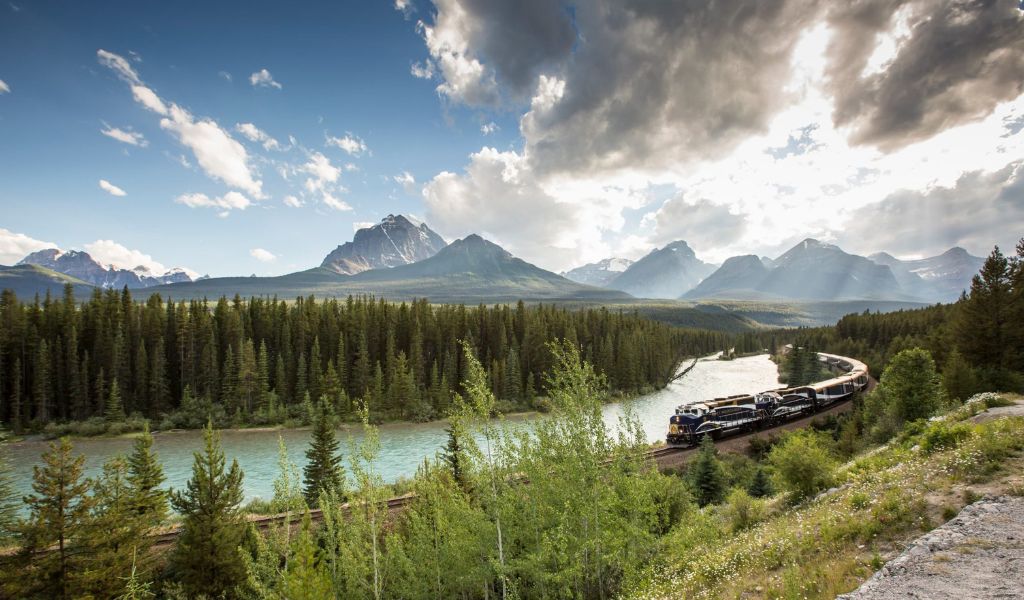
Why Is A Canadian Train Vacation Special
Credit: Rocky Mountaineer

Trains are very immersive in Canada, and you can be face-to-face with the country’s grandeur that no plane ride can match. 

Enjoy the entire trip by looking at the amazing landscape and not just focusing on arriving at a destination. 

Every mile is meant to be savored, and many travelers may often find themselves spotting eagles overhead or catching glimpses of the Northern Lights. 

Enjoy a community while you’re on board the train and share meals with fellow passengers between stops. 

These trips are great for fostering a connection and encouraging slow conversations. It’s a travel experience that feels human, and everything is often unhurried and full of wonder.

1. About The Rail System

Canadian trains are going through rails that connect major cities located in remote regions. This is going to give you a scenic view that many may not experience. 

There are rugged coastlines that feature high cliffs and dramatic rock formations. These Canadian train trips often glide past the snow-dusted mountains and stop in historic towns so you can take a lot of pictures. 

Travelers are going to find it to be an ideal option during their vacation because they won’t need to do long drives.

Also, the trip is very flexible, and you can choose multi-day expeditions or opt for shorter two-day regional routes depending on your schedule. 

Many travelers may be looking for luxury tours with gourmet meals, while others may prefer a more budget-friendly option that can still provide them with incredible views. 

Regardless of your travel style, you can definitely find a journey that fits what you want with the right tours.

2. Top Routes On Canadian Train Vacation That Showcase Canada’s Natural Wonders

Many luxury trains are going to show you the diverse landscapes that Canada offers. When you embark on this journey, you can see towering mountains and then bustling cities that are changing colors according to the season. 

Many routes offer access to cultural landmarks, but it will still depend on you on the type of adventure that you want to explore. 

Some will let you spend around 11 days on the tour, and you can board the train for a scenic view. Watch the transformation of forests and prairies and head to lakes to appreciate the alpine beauty better. 

Go to national parks and ride gondolas with a specific itinerary from the experts. See more information about the location of these companies, where you can book the tours below:

What Are The Benefits Of Choosing A Canadian Train Vacation?

If you’re still wondering whether a train trip is right for you, consider the many advantages it offers:

  • Stress-Free Travel: You won’t have to deal with traffic or go through a lot of airport security lines. In trains, you just sit back and enjoy all the views that you’re seeing.
  • Eco-Friendly Option: This kind of traveling often produces lower carbon emissions compared to driving long distances by automobile.
  • Unmatched Scenery: Get access to large windows with open observation decks and take pictures of the diverse landscapes that you’re seeing.
  • Flexible Itineraries: Select a schedule that matches your vacation days. Opt for longer routes if you want to explore more of the country.

Planning The Perfect Rail Journey For The Ultimate Canadian Train Vacation

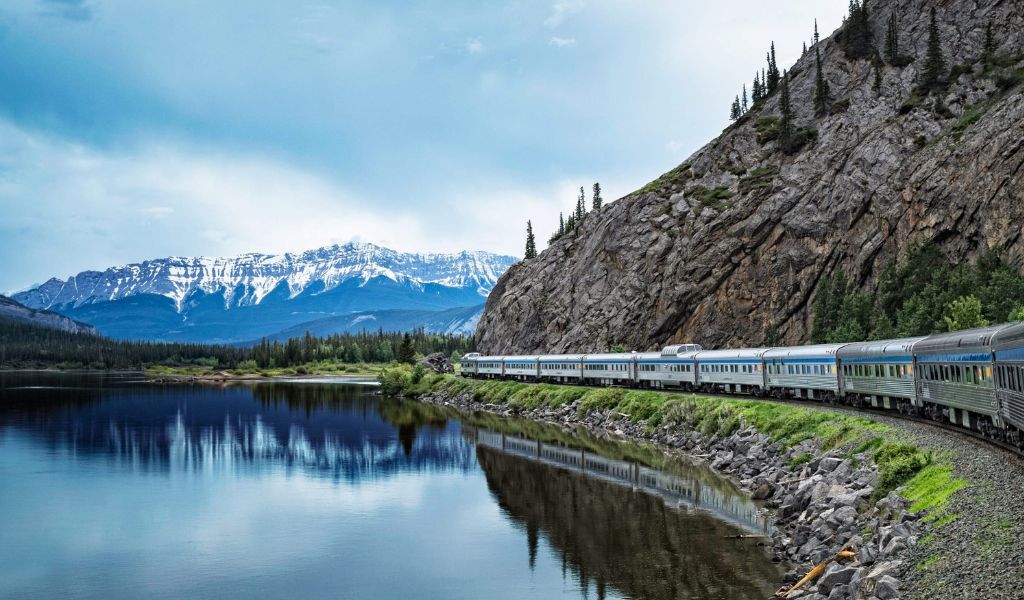
Planning The Perfect Rail Journey For The Ultimate Canadian Train Vacation
Credit: VIA Rail Canada

Now, before rushing to book your ticket, you need to determine the type of experience that you want in the first place. You might want a luxurious escape where budget isn’t a problem.

Fortunately, there are train trips that can give you that along with a scenic adventure. Others would want to discover the charm of Eastern Canada on a budget, and if so, compare your options and do your research.

Plan well and learn about the changing seasons. Summertime can generally offer lush greenery, while wildlife can also be viewed from the train windows. 

In the meantime, winter routes are often magical, and you can discover snow-covered trees and a cozy train interior that’s perfect for sipping hot cocoa. 

Why Is It More Than Just A Vacation?

Overall, this is more than a trip, but it’s a storytelling where each town has a tale to tell. Each moment on the train becomes a wonderful memory of quiet mornings or bonding with your loved ones. 

Watch the sparkling stars from your window and revel in the things that nature is capable of.

These Canadian trips are going to allow you to reach destinations that you might have only dreamt about previously. 

They can give you a chance to rediscover the art of traveling without rushing.

Share on Social Media

Meet Sibashree Bhattacharya, a travel enthusiast who has a decade-long experience in transcending virtual barriers with her words! Her deep love for travel is apparent from her travel escapades to the mountain, often taking her readers on a journey, her words acting as Portkey! Fun fact: Sibashree loves to dive deep into the history of the places she is about to visit, making her travels even more wholesome. If you were wondering how her articles are not short of time travel, this answers it!

Leave a Reply

Your email address will not be published. Required fields are marked *

title-img Related

READ MORE natural drug detox

Nature’s Healing: How Camping Can Aid Drug Detoxification

BY  Sibashree Oct 22, 2025

I’ve got to say that recovering from any kind of addiction is a messy business. It’s never just about flushing things out of your system. It’s about fighting your thoughts, your habits, and all those little triggers.  Lately, I’ve noticed more people stepping outside to heal. Camping, of all things, has become one of those hidden gems in detox. Being out there, far from traffic noise and glowing screens, surrounded by trees and honest silence? It hits differently. Some even find it just as helpful as staying in a structured facility like the detox clinic. The Therapeutic Power Of Nature Have you ever stepped outside and just felt your shoulders drop? Nature does that.  Science loves to back this up, and Harvard even found that twenty minutes in fresh air can lower cortisol, the nasty stress hormone that spikes during detox. And honestly, that relief matters. Stress is like gasoline poured straight on withdrawal. When you’re camping, you can’t help but notice how calm things get. No alarms, no rush. Just breathing, listening, thinking.  It’s almost strange how fast you start noticing yourself again. For folks coming out of a storm of substance use, that reconnection to your emotions, your body, your thoughts isn’t just nice, it’s necessary. Camping Facilitates Natural Drug Detox By Improving Sleep Cycles  Camping improves your internal body clock as you are continuously exposed to the natural light cycle. So, by regulating your internal clock, you will get more sleep.  Furthermore, during camping, you remain busy with physical activities. You are hiking through trails, setting up the tent, cooking, and doing other recreational activities or survival chores. This is also crucial for improving your sleep cycle and quality.  Moreover, when camping in remote areas, you cannot use your phone, and you are also away from the daily stressors. With no pressure of deadlines and ETAs and all the chaos in your head vanishing in the thin air, you actually get a better sleep.  Community And Support There’s something wild about how people open up under the stars. I’ve seen it, how those late-night talks by a campfire, voices crackling right alongside the flames, do the magic. That’s a real connection, and it’s gold during detox. A big part of healing is not doing it alone. Most programs preach about support networks, but in the woods, that happens naturally.  You gather wood together, laugh over burnt marshmallows, and share your stories without judgment.  The National Institute on Drug Abuse even says social support can make or break recovery. Makes sense as feeling seen keeps you anchored when cravings hit or the loneliness creeps in. No clinic room can fully replace that kind of bond. Physical Activity And Mindfulness Camping gets your body moving, whether you plan it or not. You set up a tent, haul water, and climb a hill.  Little things that make you tired in a good way. That movement pumps out endorphins, which do wonders for mood, especially when detox brings anxiety or sadness along for the ride. Then there’s the quiet stuff, too. You find yourself being mindful without calling it that! Staring at a lake, flipping fish over a grill, sitting in silence until time just fades! It grounds you.  That kind of focus pulls you away from cravings and teaches you how to ride emotions instead of running from them. Funny how stillness can feel like a workout for your mind. Disconnecting From Technology Let’s be honest. We live glued to screens now. Scrolling when we’re bored, anxious, lonely, or anytime you name it. But camping forces a break.  The first few hours feel weird, almost twitchy without your phone, then a calm sets in. You start talking more, thinking more. Maybe even remembering what silence sounds like. People in recovery deal with enough mental noise already, and research shows that too much screen time can make anxiety and depression worse.  So, cutting that off, even for a weekend, resets something inside you. Suddenly, you’re aware of how addicted we all are to distraction more than anything else. Structured Activities And Goal Setting Some camping programs add a bit of structure, such as goal setting, small group reflections, maybe even creative tasks.  It’s not rigid like rehab, just guided enough to keep you focused. When done right, it helps you rebuild a sense of direction. There’s actually data from the American Psychological Association saying people who set specific, meaningful goals reach them more often.  And out there, surrounded by nature, those goals feel a bit more real. People talk about dreams they’d forgotten or things they want back in life. It’s refreshing—and it sticks. Camping: Setting The Rick Backdrop For Healing After Addiction Recovery Camping won’t magically erase struggle, but it changes the backdrop in a way that makes healing possible. It mixes nature’s quiet strength with genuine community and gentle self-discipline. It is kind of the opposite of everything that fed addiction in the first place. For many who’ve tried both, it’s a beautiful complement to formal detox options like those at the Detox Clinic.  Out there, in the dirt and sunlight, recovery starts to feel less clinical and more human again. Maybe that’s why so many find clarity under a canopy of stars instead of beneath a roof. Furthermore, camping boosts your self-sufficiency. If you are a solo backpacker, you have to dig the soil and set up the tent, light the fire, and do everything else. So, camping is a great confidence booster. You understand that you survive on your own and how strong you are.  All these help us create a positive image of ourselves in our minds. So, you don’t need to rely on any external stimulator or drugs anymore.  In addition, an inclination toward drugs arises from negative thoughts about our capabilities. Camping helps us overcome logistical and physical challenges. So, we become more confident about our abilities. 

READ MORE Bangkok’s rainy season

Bangkok in the Rainy Season -What You Should Know

BY  Sibashree Jul 21, 2025

Travel is all about enjoying the sunny weather with the light breeze blowing away your hair. But, unlike a sprinkle, torrential rain can literally ruin your entire trip. Making it one of the worst memories. So, it is kinda wise to check the rainy season prior to visiting that place. This way, you can avoid unnecessary hassles and know when to travel and what to do during this time. For instance, Bangkok’s rainy season spans from May through the beginning of November. And, when it rains there, it literally pours down buckets. So, be prepared to get stuck in some muddy puddles and flooded metropolis. Making it tenfold difficult to travel to your destinations or go for a city walk. But, if you are a rain lover, you should know about a few things before setting off to Bangkok. Here, I have brought you a complete guide on things to do in Bangkok’s rainy season. Stay tuned! Why Is Bangkok’s Rainy Season Considered Low Season? During the rainy season, the temperature drops to 26 degrees with humid weather. So, you will feel stuffy while traveling to tour spots. Moreover, the rain comes in bursts of torrential pouring. Turning the entire city into a flooded region. So, traveling or commuting becomes more difficult. And to top it off, the sky is mainly overcast with clouds all the time. Just killing the vibes. So, you won’t be able to enjoy the place. Naturally, this season earned the nickname of “Low Season” because of the mood-ruining weather and low tourist visits. What You Should Do In Bangkok’s Rainy Season? Here is a list of the things you need to do when you are stuck in Bangkok during the rainy season. 1. Wear Rubber Shoes The last thing you need is to walk around with nothing on your feet; wear strong rubber flip flops/sandals that are made for wet weather, and you will have no issues.  A sturdy umbrella is always a wise thing to carry around in the rainy season, while a plastic anorak with a hood will save you if you get caught in a tropical downpour.  Staying in one of the best hotels in Bangkok Sukhumvit puts you in the centre of the action, close to BTS stations. 2. Keep Your Digital Device Dry Buy one of those waterproof plastic bags for smartphones and store your device in there, along with paper money and your passport.  If you get caught in a tropical storm, your stuff is very likely to get wet, and with a few dry bags, your stuff won’t get damaged.  You can buy these online, and they come in packs of 10. Wear the bag around your neck and keep everything you need to keep dry inside. 3. Avoid Walking In Water Imagine being in the middle of a busy market, with stalls everywhere and electric cables in use; accidents can and do happen, so avoid walking in water whenever possible.  Some foreigners take off their shoes and walk barefoot, which we don’t agree with.  This is dangerous for many reasons. For instance, you could stand on broken glass, and a foot infection could follow. Thailand is the number one destination for wellness retreats. 4. Take Cover In A Shopping Mall If you are out and about and the heavens open, seek refuge in a nearby shopping mall, at least until the water has receded. A coffee shop would be the perfect solution, and they would welcome your business.  One place you should not take shelter is under a tree, as lightning is common in tropical storms. Also, you should not be holding an umbrella when thunder and lightning are happening. 5. Afternoon Showers Rain typically falls in the late afternoon, and when it stops, the sun quickly dries everything out, and you would hardly know it had rained.  It rarely drizzles in Thailand, the rain is heavy and the sun quickly returns. The exterior electrics in Thailand leave a lot to be desired and water and electricity do not mix.  Use your common sense when it comes to being in water and avoid any situation you think might be dangerous. 6. Use The Canal Taxi Boats A great way to get around in the monsoon season, using the electric boats is both cheap and fast; search with Google to find out where the different canals actually go. Bangkok has many canals that wind through the city, and they are frequent and safe. Rain And Bangkok: How To Enjoy A Flooded Trip? Even though the weather is not perfect, sunny, and beautiful one which highlights the natural beauty of Thailand, it is a peaceful time to visit Bangkok. However, going there without taking the right precautions can make it a frustrating trip. So, make sure you pack up your rainy gear to fight against the torrential bouts. Also, given that most tourists avoid the place during Bangkok’s rainy season, you will find the tour spots less crowded. Letting you to actually enjoy a place in peace. Mainly, the greatest and busiest attraction, Grand Palace in Bangkok, becomes a spot with relatively fewer people. So, you can spend some time enjoying the view and architecture without enduring the rushing crowds. Additionally, you can book tickets for the annual arts festivals in the International Festival Auditorium. Then, enjoy exploring different art forms and cultural excellence without wetting your feet in the rainy puddles. Along with that, you can go around Chinatown to dig into some of the mouthwatering delicacies. From exciting street foods to different flavored mooncakes, grab a bite of every kind of food. So, turn the wet trip into a memorable one with the right activities and fun-filled experiences. Just take measures to avoid the rain and indulge in a peaceful Bangkok tour. Read More: Exploring Southern Utah’s Hidden Dive Sites Haneda Vs Narita: Which Tokyo Airport Should You Choose For Your Next Trip? Three Of The Best Must-See Attractions During Your Time On The Thai Island Of Phuket

READ MORE national parks in florida

Top 12 National Parks In Florida That You Must Visit In 2024

BY  Ankita Jul 20, 2023

Are you thinking about visiting some of the national parks in Florida? Well, if your answer is a YES, then you have reached the right place! Some people picture castles, roller coasters, and Mickey Mouse-shaped pretzels when they think of parks in the Sunshine State, but Florida's national parks are just as well-known as its amusement parks. Amazing ecological and biological diversity can be found on protected lands from the panhandle to the tip of the Keys. Florida is the only area on Earth where alligators and crocodiles cohabit; the mangroves here serve as kayak mazes, rockets blast off over lagoons, and alligators and crocodiles share the same territory. Keep reading this article till the end to learn about the national parks in Florida that you must visit this year… Top 12 National Parks In Florida That You Must Visit! There are a number of things that Florida, the Sunshine State, is famous for, and one of them is the National parks. These are a blend of nature and the history that humankind has made. So, if that is something that you want to know, then you have reached the right place! Here are the top 12 best national parks in Florida that you need to visit in 2023: 1. Big Cypress National Preserve The majority of people only experience Big Cypress National Park as a parallax of sawgrass and cypress trees against the billowy clouds of the Florida sky as they speed along I-75 or U.S. 41 via the windows of their vehicle. Most people only attend the visitor center because of need. However, some do so out of curiosity. Big Cypress is only one of two places on Earth where the ghost orchid may be found. It also serves as a refuge for the endangered American alligator, and Florida's elusive but threatened panther population. Big Cypress was the first National Park Service unit east of Colorado to get this recognition as a Dark Sky Place, and it continues to be the southernmost Dark Sky Place in Florida. This national preserve's swamp waters flow softly, producing the ideal environment for the name-bearing cypress trees to grow tall and strong and create a maze beneath their canopy for tourists who are more interested in aquatic activities. Big Cypress is one of the last remaining undeveloped areas in South Florida, where backcountry camps, swamp buggies, and airboats retain a traditional way of life that was developed by indigenous peoples and the pioneering spirit of early settlers. Big Cypress truly has something for everyone, so we are now challenging everyone to give something back to Big Cypress in exchange. 2. Biscayne National Park The most amazing features of Florida's seas are actually located below the surface. When people think of Florida's shores, they typically picture gentle waves lapping at the soft sand under a bright sun. Four separate ecosystems, covering about 173,000 acres, merge to form rich edge communities, or "ecotones." These edges are home to an astounding variety of animals, including pelicans, manatees, sea turtles, hundreds of different types of colorful fish, and flora that are unique to the United States. Over 600 native fish, neotropical water birds, migratory habitat, 20 threatened and endangered species, such as the Schaus' swallowtail butterfly and Florida semaphore cactus, as well as the previously mentioned sea turtles and manatees, can all be found in the park. It also includes the Florida Reef, the only live coral barrier reef in the continental United States, and the northernmost part of the third-largest coral reef system in the world. A number of shipwrecks along Biscayne National Park's Maritime Heritage Trail have found their final resting places because of this reef, a project that was made possible with The Alliance's assistance. 3. Castillo de San Marcos National Monument Castillo de San Marcos National Monument preserves the oldest masonry fortification in the continental United States and interprets more than 450 years of cultural crossings. It was constructed by the Spanish in St. Augustine to protect Florida and the Atlantic trade route. In case you are wondering about all the things that you can do here, I have you covered. You can engage with the park rangers that are eager to answer your questions. They also provide the tourists with several interpretive opportunities that are active and available throughout the day. You can attend formal presentations where a thematic program that lasts 15 to 20 minutes will be played. You can interact directly with cultural artifacts, get answers to your burning questions, and spend as much or as little time as you like at ongoing informal stations. The historic Cannon demonstration or Musket takes place on the weekends mostly. These are held at 10:30 a.m., 11:30 a.m., 01:30 p.m., 02:30 p.m., and 03:30 p.m. on Saturdays and Sundays. The volunteers and rangers also dress up in period costumes to give the tourists the best experience of traveling back in time. You can take pictures of them and with them to experience the lives of the colonists that lived here. 4. Canaveral National Seashore Canaveral National Seashore is a unique location since it's conceivably the only spot in the world where rocket ships, alligators, and nudist beaches coexist. On the east coast of central Florida, Canaveral preserves one of the state's longest stretches of undeveloped coastline. Mile after mile of pristine shoreline offers a tranquil haven for sunbathers, sea turtles, and the occasional nudist; Apollo Beach, at the northern end of Beach Road, is the alternative to the crowded Playalinda Beach right across the street. If viewing rocket launches from the adjacent Kennedy Space Centre on the park's beaches isn't your thing, you can also go kayaking through Mosquito Lagoon, a sizable estuary that occupies two-thirds of the park (but remember the insect spray). 5. De Soto National Monument Conquistador Hernando de Soto's army of soldiers, paid mercenaries, artisans, and clergy arrived in Tampa Bay in May 1539. They encountered ferocious resistance from natives defending their homes. De Soto's search for glory and treasure would be a four-year, 4,000-mile journey filled with mystery, conflict, disease, and discovery that would shape American history. Today, there are a number of things that you can experience at the De Soto National Monument. You can try on the European armor that consists of helmets as well as breastplates. This is one of the most popular activities of the people or tourists visiting this national park in Florida. Aside from that, taking a fishing class and bird viewing are additional popular activities in this national park. Numerous bird species, including gulls, great egrets, herons, as well as American white pelicans, can be found at DeSoto National Memorial.  If you're lucky, you might also catch a glimpse of bald eagles on the Manatee River scavenging for food! The De Soto Rancho Fishing Clinic is available in the park for adults and children aged 7 and older. Participants gain knowledge of fishing gear, casting, fish identification, and knot-making! 6. Everglades National Park Everglades National Park, the most recognizable national park in Florida, is the Yellowstone of swamps, a 1.5 million acre subtropical wilderness teeming with terrifying species that makes Jurassic Park seem like a petting zoo and jet-black waterways and mangrove-lined coastlines. This enormous park, the third largest in the contiguous United States, is too big to handle all at once. Alligator sightings are practically guaranteed along the Anhinga Trail, a leisurely 0.8-mile loop that leaves at the Royal Palm Visitor Centre. You can rent kayaks and paddle up the Flamingo Canal on unnervingly quiet water while passing through deep forests and mangrove tunnels to Coot Bay by continuing to travel along the Main Park Road until it ends at the Flamingo Campground. Keep a watch out for American crocodiles and also manatees along the trip. They enjoy the brackish waters close to the shore. 7. Fort Matanzas National Monument The next on the list of the best national parks in Florida is Fort Matanzas. From Fort Jefferson to Fort Barrancas, forts are as central to Florida’s national parks as gators as well as mangroves. Chief among them is Fort Matanzas National Monument. It's one of the oldest fortresses in the state and is also one of the first forts-as-national monuments in the nation, designated back in 1924. Originally built by Spanish settlers in 1742 to fortify the Matanzas Inlet in St. Augustine, it remains a resolute structure that stretches 50 feet on each side and is 30 feet high. Today, the fort is accessible via ferry, with ranger programs that shed light on its storied history. Other park activities include relaxing at a beach or following the boardwalk trail off the visitor center parking lot, which zigzags through a shaded hammock forest. 8. Dry Tortugas National Park Seventy miles off the coast of Key West is Dry Tortugas National Park, an aquatic wonderland of 99 percent water. The only land out here, seemingly in the middle of the gulf, is a handful of tiny keys, including the main attraction: Garden Key. After the two-to-four boat ride from Key West’s Yankee Freedom ferry terminal, dock at Garden Key to explore Fort Jefferson, an ironclad fortress built in the 1800s that looks like a brick Pentagon. Originally built to defend the Southern coast of the U.S. after the War of 1812, the fort also served as a temporary prison before earning national park status. Today, the structure—and the surrounding keys and waters—tells the stories of maritime combat and marine wildlife, best observed from the Garden Key beaches or along the underwater snorkel trails that surround the fort. 9. Silver Springs State Park For years, tourists have flocked to this location just to take glass-bottomed boat trips through the state's breathtaking springs. In reality, Silver Springs State Park's glass-bottom boat trips were introduced over a century ago, and they continue to be popular in this area of north-central Florida between Orlando and Gainesville. It's understandable, given that the park is home to surreal, crystal-clear water and a variety of animals, including otters, manatees, alligators, rabid rhesus macaques, and monkeys. Despite the fact that swimming is prohibited (due to the aforementioned alligators), Silver Spring is a kayaker's and paddle boarder's heaven, and there are 15 miles of shady hiking trails circling the 4.5-mile Silver River. 10. Point Washington State Forest Point Washington State Forest on Florida's panhandle is a refuge of tall trees and hiking trails. Located seemingly miles away from the state's more well-known parks, you will find the longleaf pine as the main attraction. It is a tree that is so tall that it resembles a hybrid of a redwood and a palm. The Eastern Lake Trail System, which supports the park's recreational options, is surrounded by these pines for miles. The trail system here contains several unpaved trails for cyclists and hikers despite being as flat as a pancake. The nearby Grayton Beach State Park, which follows the coast as well as offers coastal forest trails, swimming chances, and kayaking on dune lakes, is definitely worth exploring. 11. Bahia Honda State & National Park Bahia Honda State Park is a pastoral pit stop on the road to Key West out in the Keys. Calusa Beach, off Big Pine Key, serves as the park's focal point. Its turquoise waters entice swimmers, snorkelers, as well as kayakers alike (equipment for both activities is available for rent). At the summit of the iconic Bahia Honda Bridge lies a truly picturesque setting. It is a historical structure dating back to the early 1900s. This was originally a crucial component of Henry Flagler's ambitious Overseas Railroad to Key West. A little route along a portion of the bridge will lead you to one of the Keys' highest spots. Here you may enjoy panoramic views of the bay below. Stay for a photo-worthy sunset and afterward stargazing if you want to remember it forever. 12. Apalachicola National Park A stone’s throw from the state capital of Tallahassee, Apalachicola National Forest is a natural haven. Florida's largest national forest clocks in at a whopping 633,000 acres. This park has two main sections. They are Bradwell Bay Wilderness and Mud Swamp/New River Wilderness. Between the two, visitors can paddle, swim, hike, fish, and go off-roading or horseback riding. The park also exhibits striking biological and ecological diversity. It goes from longleaf pine sandhills and pine flatwoods to coastal plain hammocks, basin swamps, and floodplain forests. The area teems with wildlife, like woodpeckers, bobcats, gray foxes, as well as alligators. Drink in the diversity on a one-mile loop at the Camel Lake Trail. You can also enjoy by kayaking to Owl Creek from Hickory Landing. You can also take a two-mile route along the Apalachicola River. This gets paddlers up close and personal with that classic Florida river swamp terrain. Wrapping It Up! In case you were searching for the best national parks in Florida, I hope that this blog has been of help to you. If there are any other queries related to the same, feel free to let me know. All that you need to do is scroll down till you reach the bottom of the page. Then leave your comments and queries in the box below. And I will be there to answer them all for you! Read Also: Is It Worth It To Stay In An All-Inclusive Resort In Florida? Indian Buffet Near Me In Florida – Best Buffets For You 10 Best Fishing Charters In Florida To Visit Top 8+ Splash Pad Near Me In Florida