



Do You Know The Best Time To Visit Australia? Read All About It! 

Apr 27, 2024

Last Updated on: Nov 20, 2024

Travel Guides

Are you planning to visit Australia recently? Do you wonder about the right time to visit? If you ask me, you can visit anytime between September and November. Another time to visit is between March, April, and May.

Let me share important details about visiting Australia. I will share important places in the different regions, accordingly, deciding on the right weather to visit. Some of the best times you can see these places are the ones I will discuss in the article.

 Want to know about things to do in Australia? Keep reading! You will also learn that sometimes it is not right for you to visit; hence, plan your trip accordingly.

However, if you are willing to establish a holding company, Australia can be a great place to visit and explore first. The market is exciting, and companies in that place are eager to explore.

Do You Know The Best Time To Visit Australia? Read All About It!

Do You Know The Best Time To Visit Australia

An Amazing country, Australia is a perfect place for travelers. I am sharing how you can create an itinerary to visit Australia. Traveling to Australia makes you feel like you have reached a new world. Read more about this different world and how to make the best of it.

Let me also share with you the climate of Australia based on its geography. As a traveller, you can decide which places to visit when there are different regions. The segregated areas are the perfect places to plan your itinerary!

Regions and Their Best Time

Regions and Their Best Time

Let me break down Australia into different regions, and you can read about the climate in these regions. Furthermore, I will also share the climates of these regions with you so you can plan your visits accordingly.

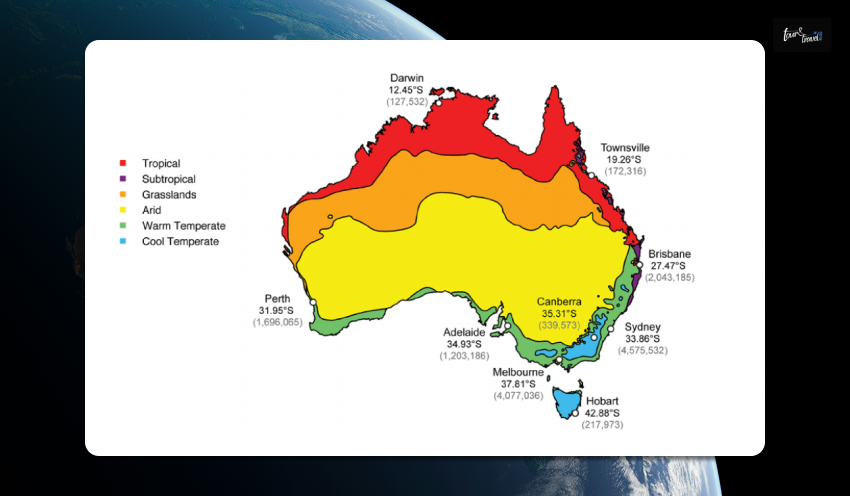
There are many climate maps available online. However, I am sharing with you this map, which was constructed using the data available from the Bureau of Meteorology’s website. What I will share with you differs from the map I provide, but you get an idea.

Check the map to learn about the general idea of climate and how it influences how you plan your itinerary when visiting Australia.

Best Time to Visit Tropical North!

Best Time to Visit Tropical North

If you plan to go to the northern section of Australia, be prepared for the tropical climate. This region consists of northern territory, Western Australia, and Queensland. This is a location that is mostly humid for most of the year. This region’s natural landscapes are unique, with many rainforests and wildlife.

Most of the plants and animals are interesting, massive, and colourful! I personally feel that waterfalls are lush, as the wilderness is completely wild, along with thriving coral reefs. You will experience flavorful and exotic fruits and vegetables.

If you can brave the tremendous heat, there are some beautiful places you must visit, such as the Daintree Rainforest, Airlie Beach, the Great Barrier Reef, Darwin, Cape Range National Park, and Kakadu National Park. The best time to visit the north of Australia is between May and October.

The region has both wet and dry seasons! The wet season persists from November to April. If you visit this region during this time, you will face extreme heat and humidity. Constant rain, tropical storms, and floods also occur during this time.

Hence, it would be best to prepare for road closures due to floods. You might get stuck in these closures, leading to travel delays! During the wet season, many national parks are closed. In the dry season, which continues from May to October, you can visit to enjoy sunny beach days.

Best Time to Visit Outback or Desert!

Best Time to Visit Outback or Desert

In this region, I have sectioned northern territory, western Australia, South Australia, and rural NSW or QLD, mostly the remote regions of Australia. The country’s middle can be highlighted as the outback, especially because it is away from the coast.

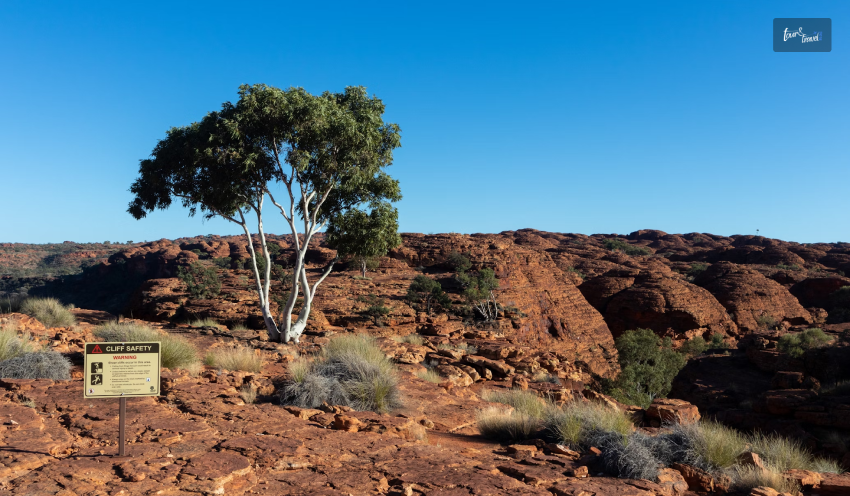
The Aussies call it the Red Center, which refers to the southern part of the Northern Territory. You can check out these beautiful places in the country’s center, such as Uluru Kata Tjuta National Park, Kings Canyon, Alice Springs, Lake Eyre, Broken Hill, Watarrka National Park, and Coober Pedy.

If you plan to visit this region of Australia, winter is the best time. The summers are dry and hot, while the winters are cool and mild. You should see it from June to August, especially because there is almost no rain.

If you are camping in this region, you can pack a warm sleeping bag and clothes. Carry water when you visit the desert, considering you need to be hydrated. If you are planning tours during the daytime, please carry caps, sunglasses, and towels, as the heat is intense.

Please don’t visit the outback region between November and March! Travelling is not fun when you are disturbed completely as the heat in the desert is extreme.

Best Time to Visit Temperate South!

Best Time to Visit Temperate South

The regions of coastal NSW, south Australia, south of Western Australia, and southern QLD all constitute the Temperate South. This region is considerable temperate with its hot summers and cold winters. However, several coastal places exist, such as the Gold Coast, the Sunshine Coast, Brisbane, and Noosa.

People mostly visit two specific regions in this section: New South Wales and Sydney. There are both summer and winter seasons. What’s more, you can visit the Blue Mountains, where you can catch some snow during winter. The western region of Australia has a very similar climate to New South Wales!

The beaches in Sydney are one of its kind which you must visit when you go!  The locations are beautiful, even though it can be chilly at times. You can check out places such as the Gold Coast, Kangaroo Island, Margaret River, Perth, Canberra, Brisbane, Blue Mountains, Noosa, Bondi Beach, and Byron Bay. You should consider what type of trip you are planning.

During the summer, the place is quite crowded. Even when booking flight tickets, you will see they are very expensive. And yet, this is when all the beach parties are going on, even with the sunny and hot weather. The daylight stays long so you can participate in outdoor BBQs and parties!

The weather is dreamy, and you can go hiking, sightseeing, surfing, and swimming! There are a lot of activities, along with positive vibes and beach parties. However, if you want to avoid the crowds, go during Spring or Autumn, as the weather is lovely. Even the flights are cheaper!

Best Time to Visit Far South!

Best Time to Visit Far South

When I talk about the far south, I mean locations such as Tasmania, Victoria, and Southwest NSW. Thus, the summers of these regions are quite warm while the winters are cold. You can visit during autumn and spring, as you can perform almost all outdoor activities.

You can do everything from hiking and camping between December and February. Even the flight prices are quite low during this time, along with a chance to avoid the crowd! In Adelaide and Melbourne, the weather has cool temperatures or, at times, rain. We cannot forget the beaches in Melbourne and their beauty!

You can plan to visit Mount Kosciuszko or snowy mountains for snowboarding or skiing. Of course, if you want consistent snow, you must go from June to September. If you travel to this region of Australia, you can visit Philip Island, Hobart, Melbourne, Great Ocean Road, Cradle Mountain, and Bruny Island.

Places like the Murray River Region offer all-season enjoyment! During winter, the flights are quite cheap, so you can visit during this time. Try to avoid the summer season, as it is one of the worst seasons to visit these regions.

Finishing Off…

To sum up, I suggest that the best time to visit depends on the regions you are visiting and the type of trip you are planning. After you have read the comprehensive list and guide that I have prepared for you, you will know how to plan your trip. 

Australia is a huge country, so it is better to plan your trip than plan it all at once. It is massive, so it will be difficult for you to enjoy it effectively when you visit.

Comment on which area you are planning to visit and why!

Learn More About:

Share on Social Media

Sagnika Sinha is a content writer who is passionate about writing travel vlogs, entertainment and celebrity articles and literature-based pieces. With a 4 years experience in teaching, she loves reading books. A procrastinator by nature, she loves travelling, listening to music, planting and gardening.

Leave a Reply

Your email address will not be published. Required fields are marked *

title-img Related

READ MORE Great Barrier Island hiking trails

What Are The Best Great Barrier Island Hiking Trails? An Ultimate Guide To Hiking Trails On Aotea Great Barrier Island

BY  Sibashree Nov 7, 2025

Hiking the Aotea Track up to the summit view of the Hirakimata Peak was one of the most rewarding experiences I had on the Great Barrier Island. The view after reaching the top took all our fatigue away.  However, the Great Barrier hiking trails are not just about panoramic summits. Hiking here also means walking along the rugged coastline, through the native forests, and to the geothermal springs. To cut a long story short, the best hikes on Aotea Great Barrier Island, New Zealand are the best routes for exploring its dramatic island.  Furthermore, you can be a beginner or a seasoned hiker. Great Barrier Island has trails that can accommodate all. So, this guide is about the trails you can explore for the perfect eco adventure. Why Is The Great Barrier Island A Hiker’s Paradise?  Cultural exploration, stargazing, off-grid living, exploring the biodiversity of the island, and the dramatic geothermal features make the Great Barrier Island a hiker’s paradise.  1. Dark Sky Sanctuary “Ecotourism is extremely important to Great Barrier Island and this International Dark Sky Sanctuary status will not only provide further tourism development and economic growth opportunities but also ensure the preservation of our exceptional starry skies." Izzy Fordham, Great Barrier Local Board Chair.  The designation of the Great Barrier Island as a Dark Sky Sanctuary in 2017 was not about getting a label to boost tourism. The island’s 60% area is a conservation park, and the local Maori people believe that the protection of the sky is important for the health and well-being of the local community.  Also, if New Zealand becomes a Dark Sky Nation, as aimed by the Royal Astronomical Society of New Zealand, the Great Barrier Island will have a pivotal role to play.  Nevertheless, as an activity, stargazing seems the most surreal experience during a multi-day hike on the Aotea track. Just relax and prepare for the next day after completing your day’s hike.  2. Off-Grid Living Sustainability is a choice or a way of living on the Great Barrier Island. So, there is complete reliance on solar power, and people here use composting toilets. Rainwater harvesting is another sustainable practice followed by the people of this island.  Nevertheless, thanks to the island's off-grid living, it has minimal to no light pollution and air pollution. Also, because of off-grid living, life on Great Barrier Island is deeply connected to nature. So, you can be the biggest homebody, but here you will feel the urge to experience the outdoors more intimately.  3. Biodiversity Of The Island “Great Barrier is at an exciting point in its history where the future of the islands flora and fauna looks bright.” - Go Great Barrier Island. The fact that 60% of the island is a conservation park speaks volumes about the island’s biodiversity. Furthermore, it is home to countless endangered species, including 13 species of lizards, the North Island Kaka Parrot, the Black Petrel, the Banded Rail, and the Pateke.  In addition, the native forest here is getting replenished quickly with the island authority being particular about pest control.  4. Geothermal Features Located within the Hauraki Rift, the Great Barrier Island has the Taupō Volcanic Zone and the Kaitoke Hot Springs. These geothermal zones, along with being natural spectacles, are also home to unique ecosystems where you will find New Zealand pigeon or kererū, fernbird, etc.  So, hiking through these geothermal zones is an exciting outdoor activity in the Aotea Great Barrier Island.  A Brief Comparison Table Of The Best Great Barrier Island Hiking Trails  Trail NameDurationDifficultyHighlightsAccessibilityAotea Track2–3 daysModerateForest, summit, hutsDOC huts, remoteKaitoke Hot Springs1.5 hrsEasyGeothermal poolsWheelchair-friendlyWindy Canyon1 hrModerateCliffs, panoramic viewsCar park accessHarataonga Coastal Walk4 hrsModerateBeach, forest, birdsTrailhead parkingPalmers Track2–3 hoursModerateStream crossings, dense bushNot recommended for people with fitness or mobility issuesWarren’s Track30–45 minutesEasyFamily-friendly loop near Tryphena, Kid-friendlyIt is not wheelchair-accessible. Whangaparaoa Beach Walk1–2 hoursEasyDune ecology, remote beachIt is not wheelchair-accessible due to a steep loop-walk area. Glenfern Sanctuary1–2 hrsEasyConservation, native birdsGuided tours available What Are The Best Great Barrier Island Hiking Trails? (Brief Overview) View this post on Instagram A post shared by Aotea Great Barrier Island (@greatbarrierislandofficial) Most of the hiking trails on the Great Barrier Island come with an easy to moderate difficulty level. Also, the Aotea track here is the only multi-day hiking trail on Great Barrier Island and the entire Auckland Region.  Let’s find out more about the Aotea track and other Great Barrier Island hiking trails.  1. Aotea Track (Multi-Day Circuit) View this post on Instagram A post shared by Kristina | New Zealand travel, hiking & outdoors (@kristinamonts) Aotea track allows you to experience the ultimate fusion of history and natural beauty. Here, you will find the surviving trees and a unique wildlife of Kahikatea, Rimu, and Kauri.  The plants you will come across here are the cabbage tree, Horoeka or lancewood, Mānuka, Kānuka, etc. Furthermore, you will spot birds like Riroriro (Grey Warbler), Kererū (Wood Pigeon), etc.  2. Mount Hobson / Hirakimata Summit Track View this post on Instagram A post shared by Walking Legends Guided Walks (@walkinglegendsnz) This hiking route allows an encounter with the remnants of the ancient native bush, such as lancewood and cabbage tree. Also, while walking, you can meet the endangered Chevron Skink, a symbol of the rich biodiversity of the Great Barrier Island. 3. Kaitoke Hot Springs Track View this post on Instagram A post shared by Auckland, New Zealand (@visitauckland) This easy hiking track continues along the Kaitoke Swamp to the Kaitoke Hot Springs. You can continue your walk and continue on the Peach Tree Track to reach the Hirakimatā peak.  Kererū or wood pigeon and Kōtare or kingfisher are the most popular birds here.  4. Windy Canyon Track View this post on Instagram A post shared by Auckland, New Zealand (@visitauckland) The Windy Canyon track is one of the most popular short hiking trails on the Great Barrier Island. You have to climb up the steps through rock walls, which look dramatic thanks to the rampage of the ancient force of nature.  As you reach the top of the canyon, you will see the wonderful views of the Okiwi Basin, Whangapoua Beach, Medlands Beaches, and Kaitoke.  5. Palmers Track After completing the Windy Canyon Track hike, you can continue on the Palmers Track. Here you will walk along the steep ridgeline, and it is the shortest route to Mount Hobson.  Furthermore, on your way, you will spot the endemic kānuka plants, and the wooden horse here is a telltale of the logging history of the island.  6. Harataonga Coastal Walk It is one of the easiest hiking trails in Harataonga. It is associated with the history of transportation on the island, as it used to be the connecting route between the northern and southern parts of the island.  7. Warren’s Track It is a beautiful hike to a waterfall with a gently graded climb. Once you reach the waterfall, you can take a swim in the stream beneath. The food passes through the Kauri plantation before it joins the Bridle Track.  Here, you will walk through an exotic forest. However, the last lap of the trek is a little difficult with a rocky surface.  8. Whangaparaoa Beach Walk View this post on Instagram A post shared by Working In New Zealand (@workinginnewzealand) This peaceful route takes us to the Stanmore Bay Beach through the Rata Road walkway. Most of the walk continues on a paved road. However, some sections have a boardwalk and gravel.  This road is ideal for a pram walk. However, the stretch between the Rata Road Reserve and Whangaparāoa town centre is steep enough, and you will have to cross a few roads.  9. Glenfern Sanctuary Walks View this post on Instagram A post shared by Glenfern Sanctuary (@glenfernsanctuary) The Glenfern Sanctuary is a family-friendly loop track that continues along the Aotea Stream. You have to walk through a stretch of regenerating bush and climb around 100 meters.  After climbing up, you will enjoy the most amazing views of the Hauraki Gulf. On the stretch, you will be able to spot black petrel and kaka nesting. Also, you will find here the Chevron skink, the rarest and largest reptile in New Zealand.  How To Reach The Best Great Barrier Island Hiking Trails? View this post on Instagram A post shared by Nicole Marinkovich (@nicoolemarinkovich) You will have to take a Great Barrier Flight or a ferry ride to reach the Great Barrier Island. Upon reaching the island, you will have to take local transport to reach the following trail heads.  Great Barrier Island Hiking TrailsTrail HeadAotea TrackWindy Canyon/Whangaparapara RoadMount Hobson / Hirakimata Summit TrackBrownlee AvenueKaitoke Hot Springs TrackWhangaparapara RoadWindy Canyon TrackOkiwi-Claris RoadPalmers TrackWindy CanyonHarataonga Coastal WalkHarataonga CampsiteWarren’s TrackOpposite the Akapoua Campground EntranceWhangaparaoa Beach Walk1.5 Km up from Okiwi AirfieldGlenfern Sanctuary Walks20 Glenfern Road What Are The Best Family-Friendly Trails On Great Barrier Island? Best for Seniors• Kaitoke Hot Springs• Glenfern SanctuaryBest for Kids• Warren’s Track• Harataonga Beach WalkFacilities• Toilets at Major Trailheads• Picnic Areas• DOC Signage What Is The Best Time For The Great Barrier Island Hiking Trails?  View this post on Instagram A post shared by Julia Cole (@juliagoesglobal) The hiking trails of the Great Barrier Island are ideal for all-season hiking. However, the hiking trails offer a unique experience in each season.  SeasonWhy Visit The Hiking Trails?Summer (December to February)• Pleasant Weather Conditions• Clear VisibilityAutumn (March to May)• Cooler Temperature• Fewer CrowdsWinter (June to August)• Wet and Muddy• Fewer CrowdsSpring (September to November)• Active Birdlife• Blooming Flora Sustainable Hiking Tips For The Trails On Great Barrier Island Leave No Trace Use Cleaning Stations for Kauri Dieback (A Deadly Disease of Local Kauri Trees) Prevention Use Bio-Degradable Soap Use Reusable Water Bottles Follow Local Guidance and Signage to Remain Respectful to Wildlife and Sacred Sites What To Pack For Hiking The Best Trails On The Great Barrier Island?  Your packing list will depend on whether you are going for a single-day hike or a multi-day hike.  Day Hike EssentialsMulti-Day Gear• Water (2L+)• Snacks• Sunscreen & hat• Rain jacket• Map or GPS• Sleeping Bag• Cooking Gear• First Aid Kit• Headlamp• Extra Layers Guided Hikes And Local Tours: Enhancing Your Hiking Experience On The Great Barrier Island  View this post on Instagram A post shared by Glenfern Sanctuary (@glenfernsanctuary) Glenfern Sanctuary Tours and Māori Cultural Tours are the two most popular guided tours on the Great Barrier Island.  1. Glenfern Sanctuary Tours The Guided Loop Track tour of Glenfern Sanctuary is an amazing experience as you walk through the native bush. Here, you will spot the magnificent kauri tree and the resident black petrel.  The tour is 1 hour and 30 minutes, and a group must have at least five members. The tour's charges are $50 per person.  2. Māori Cultural Tours Whangaparapara Harbour Historic Treks, Harataonga, and Aotea Track are some of the best hiking trails to learn about authentic Māori culture and tradition.  The Whangaparapara Harbour Historic Treks take you to places of Kauri logging and whaling in ancient times. On the other hand, at the Harataonga DOC Campsite, you will find the old settlement sites of the Māori tribe.  Moreover, the Aotea Track has Māori archaeological sites, and Hirakimata Peak itself reflects local Māori spiritual beliefs and significance.  Where To Stay Near The Best Great Barrier Island Hiking Trails?  DOC huts, eco-lodges, hostels, and camping are the best accommodation options near the best Great Barrier Island hiking trails.  Trail NameNearby AccomodationAotea Track• Mt. Heale DOC Hut• Kaiaraara DOC HutKaitoke Hot Springs• Barrier Beach Cottage• Wiltshire ManorWindy Canyon• Aotea LodgeHarataonga Coastal Walk• Tipi and Bob's Waterfront LodgePalmers Track• Tipi and Bob's Waterfront LodgeWarren’s Track• Medlands Beach Backpackers and VillasWhangapoua Beach Walk• Aotea LodgeGlenfern Sanctuary• Glenfern Sanctuary Things You Don’t Know About The Great Barrier Island Hiking Trails: (Unearthing The Secrets) From housing, the only multi-day hike in Auckland, to being the home to many endangered species, the Great Barrier Island has many secrets to share.  1. Aotea Track: The Only Multi-Day Hike On The Island The 25–30 km loop of the Aotea Track is the only multi-day hiking track in the Auckland region. It passes through volcanic terrain, native bush, and summit views.  It’s a rare wilderness experience so close to a major city.  2. You Can Rejuvenate And Soak In Hot Springs In The Middle Of A Hike As you walk through the Kaitoke Hot Springs track, you will find geothermal pools, offering you a natural spa experience.  These pools, hidden in bushes and set in an underdeveloped setting, offer the purest connection to nature.  3. The Summit Of Mt Hobson Is A Breeding Ground For An Endangered Seabird Black petrel (tāiko) is one of the rarest seabirds of New Zealand. Hirakimatā / Mt Hobson is the home ground of these birds.  So, hikers have to continue on the boardwalks to protect the nesting areas of the birds.  4. The Island Is Free Of Possums, Stoats, And Deer Because the Great Barrier Island is free of Possums, Stoats, And Deer, you will be able to spot more birds such as kākā, kākāriki, and pāteke, and different types of wildlife.  5. You Can Hike Along Historic Logging Tramlines Some parts of the Aotea Track pass through the old tramlines used during the kauri logging era. In these pockets, you will find the ruins of machinery and dams that were used in carrying the logs.  6. The Island’s Trails Pass Through Regenerating Forests Much of the forest you hike through is regrowth from early 20th-century logging, dominated by manuka and kanuka, with pockets of ancient kauri, rimu, and kahikatea still surviving. 7. There’s a Track Named After A Gold Prospecting Legend The Te Ahumata Track to the White Cliffs was a popular site of gold prospecting. The locals still believe that gold may be hidden in the mountain. Thus, the hike has an element of myth.  8. The Island Has A Rare Endemic Plant: The Great Barrier Tree Daisy On many trails of the Great Barrier Island, especially on the Mt Heale Hut route, you will find the endemic species of the Great Barrier Tree Daisy.  This plant grows nowhere else in the world.  9. You Can Build Your Own Loop Adventure You can customize your Aotea Track hiking route based on your interests and fitness level. It has feeder tracks such as: Palmers Track Peach Tree Track Tramline Track 10. The Island’s Māori Name Means “Light Striking the Cliff” The Great Barrier Island has geological and spiritual significance in the Māori tradition. Mount Hobson is called Hirakimatā in the Māori language.  It means the “lightning striking the cliff face.” Great Barrier Island Hiking Trails: Frequently Asked Questions (FAQs) Here are the frequently asked questions and answers about the Great Barrier Island hiking trails.  1. Do I Need A Permit To Hike On The Great Barrier Island? No, if you are on a day trek on any Great Barrier Island trail, you do not need a permit. However, if you are trekking the Aotea Trail, you will need to book the huts of the Department of Conservation well in advance. You can contact the booking office at +64 7 867 9080 or the DOC Customer Service Centre at 0800 275 362. The last time I checked, the huts were under maintenance. So, confirm the availability of these huts.  2. Is It Safe To Hike Solo On Great Barrier Island? Yes, hiking solo is safe on the Great Barrier Island trails. However, the trails are in remote locations, and mobile coverage is limited in these areas. So, you must keep someone informed about your hike, and carry a Personal Locator Beacon (PLB) and an offline map.  3. Are Dogs Allowed On Hiking Trails? No, dogs and pets are not allowed on the hiking trails on Great Barrier Island. The trails here are ideal for wildlife spotting. So, dogs are not allowed on these tracks to protect native wildlife. In addition, dogs are not allowed on these trails to prevent the spread of kauri dieback disease. 4. How To Reach The Great Barrier Island From Auckland? Taking a flight is the easiest option to reach the Great Barrier Island from Auckland. Barrier Air operates this flight service from the Auckland Domestic Terminal to the Claris Airport. Also, you can take a Sealink ferry from Auckland’s Wynyard Wharf to Tryphena. It is an unforgettable journey of 4.5 hours.

READ MORE Missouri

Show-Me: Discovering Missouri’s Hidden Gems

BY  Arnab Oct 14, 2023

Welcome to Missouri, the Show-Me State! Often overshadowed by its more well-known neighbors, Missouri is home to an impressive array of hidden gems and lesser-known attractions. It offers unforgettable experiences for both tourists and locals. In this guide, we'll uncover some of the state's unique destinations that even many locals may not be aware of. So get out your maps and cameras, and let's start exploring! As you explore these hidden gems in Missouri, remember to stay updated on traffic rules and regulations. If you find yourself dealing with Missouri traffic tickets, then familiarize yourself with the local laws and seek professional assistance. Drive safe and have a great time exploring the Show-Me State! City Museum The City Museum in St. Louis invites visitors to crawl, climb, and slide their way through an architectural labyrinth. It was created from repurposed urban and industrial objects. Converted from a former shoe factory, the museum features attractions like a 10-story spiral slide, a rooftop Ferris wheel, and MonstroCity, an outdoor space with multiple interconnected metal climbing structures. Meramec Caverns Located in Stanton, Missouri, Meramec Caverns is a breathtaking underground wonder. A vast system of limestone caves stretches over 4.5 miles, making it the largest commercial cave in Missouri. Inside, you'll find spectacular stalactite and stalagmite formations, as well as a unique wine table formation that took millions of years to form. The cave also played a vital role in the Underground Railroad movement and is believed to be a hideout used by the infamous outlaw Jesse James. The World's Largest Rocker Who wouldn't want to snap a photo with the World's Largest Rocker? Sitting at a whopping 42 feet, 4 inches tall, this gargantuan rocking chair can be found in the small town of Fanning, Missouri. Don't just stop for the photo-op, though. Stick around and enjoy the small-town charm and nearby attractions, such as the Fanning 66 Outpost, home to the eclectic Route 66 Red Rocker. Graham Cave State Park Delve into history at Graham Cave State Park, where ancient Native American tribes once sought shelter within the cave's depths. The 6,000-year-old structures and artifacts found within the cave make it one of North America's most significant archaeological sites. In addition to exploring the cave, the park offers hiking trails, picnic areas, and fishing opportunities on the Loutre River. Elephant Rocks State Park Located near Graniteville in the St. Francois Mountains, Elephant Rocks State Park features giant granite boulders that resemble a herd of elephants. This unusual geological formation offers visitors a one-of-a-kind hiking experience. The park also showcases Missouri's intriguing mining history and offers a playground for children and a picnic area for a relaxing family outing. The Jesse James Wax Museum Following the theme of Missouri's deep connection to the outlaw Jesse James, the Jesse James Wax Museum in Stanton presents a unique collection of lifelike wax figures depicting key moments in the life of the legendary figure. The museum also poses an intriguing question: Was it really Jesse who died in 1882, or is there a different story to be told? Discover the evidence and decide for yourself. The Missouri Botanical Garden With 79 acres of beautifully maintained gardens, the Missouri Botanical Garden in St. Louis is an oasis for plant enthusiasts and nature lovers. Discover rare and endangered plants, walk through themed gardens, and admire the historic architecture of the Climatron, the world's first geodesic dome greenhouse. Seasonal events and festivals make the garden an ever-changing and vibrant destination. The Saint Louis Loop Trolley Take a ride back in time on the Saint Louis Loop Trolley. This vintage electric trolley system connects St. Louis City with University City, passing through the historic Delmar Loop entertainment district. Hop on and off as you please, visiting art galleries, restaurants, and live music venues along the way. Missouri State Penitentiary Experience the eerie and fascinating history of the Missouri State Penitentiary in Jefferson City. This decommissioned prison, which operated from 1836 to 2004, offers guided tours that delve into its dark past. Learn about infamous inmates, daring escapes, and the penitentiary's role in Missouri's justice system. Ghost tours are also available for thrill-seekers looking for a paranormal experience. With the inclusion of specialized ghost hunting equipment, such as electromagnetic field (EMF) meters, infrared thermometers, and digital voice recorders, participants can actively engage in the quest for otherworldly encounters. Big Cedar Lodge Nestled in the Ozark Mountains, Big Cedar Lodge near Ridgedale is a luxurious and serene destination for relaxation, adventure, and outdoor pursuits. With exceptional accommodations, a world-class spa, and an array of activities like golfing, fishing, and horseback riding, it's a perfect retreat for those seeking an unforgettable getaway in Missouri's scenic wilderness. Conclusion Missouri's hidden gems offer a wide range of unique, unforgettable experiences for everyone. Whether you're interested in nature, history, or simply unique attractions, you're bound to have an amazing time exploring these lesser-known sites. So get your friends and family, and set out on a Show-Me State adventure like no other. If you have thoughts to share or questions to ask, then please leave a comment below. We would love to hear from you. Read Also: Top 12 Montana National Parks You Must Visit In 2023! 10 Best Places To Travel In April – Travel Guide 2022 4 Fun Trip Ideas To Plan For This Year

READ MORE Acropolis of Athens

Acropolis Of Athens Tickets

BY  Arnab May 12, 2023

The Acropolis of Athens is an iconic monument and a UNESCO World Heritage Site that attracts millions of visitors every year. It is a symbol of ancient Greek civilization and a testament to human achievement in architecture, engineering, and art. What’s even better? You get Acropolis Of Athen Tickets at quite affordable prices! The Acropolis of Athens is located on a rocky hill overlooking the city of Athens. It consists of several ancient buildings, including the Parthenon, the Erechtheion, as well as the Propylaea. These buildings were constructed in the 5th century BC and are considered some of the most impressive examples of classical Greek architecture. If the Acropolis of Athens is the place that you want to visit, you will need to purchase Acropolis of Athens Tickets. These tickets can be purchased online or even at the entrance of the site. The ticket includes access to the Acropolis as well as several other archaeological sites in Athens, including the Ancient Agora and the Roman Agora. Visitors to the Acropolis of Athens should be prepared for a steep climb to reach the top of the hill. However, the effort is worth it for the stunning views and the opportunity to see one of the most important historical sites in the world. The site is open year-round. But it can get crowded during peak tourist season, so it's best to arrive early in the day to avoid long lines. Site Monuments at the Acropolis of Athens Here are some of the site monuments you cannot miss while you are in Athens: The Parthenon The Parthenon is the most famous of the Acropolis site monuments as well as one of the most iconic landmarks in the world. It originates from the 5th century BC as a temple in dedication to the goddess Athena, the patron goddess of Athens. The temple features a massive colonnade, a pediment with sculptures depicting scenes from Greek mythology, and a frieze that tells the story of a religious procession. The Parthenon remains an outstanding example of classical Greek architecture. Despite earthquakes damaging it and other natural disasters over the centuries, it is a testament to the skills of the ancient builders who created it. The Propylaea The Propylaea is the monumental gateway to the Acropolis and originates from the 5th century BC. It features impressive columns and a grand staircase. Its design is a fitting entrance to the sacred site of the Acropolis. The Propylaea is an excellent example of classical Greek architecture. Its imposing presence still impresses visitors to the site today. The Erechtheion The Erechtheion is a temple in dedication to both Athena and Poseidon and it originates from the 5th century BC. The temple features several distinctive elements, including the famous Caryatids, columns shaped like female figures. The Erechtheion is famous for its intricate design. It includes a variety of different levels and sections, as well as stunning decorative elements such as sculptural friezes and ornate moldings. The Temple of Athena Nike The Temple of Athena Nike stands in honor of the goddess Athena. This was a symbol of victory and reached completion in the fifth century BC. The temple is a small but elegant structure featuring beautiful friezes and commanding views over the city of Athens. Despite its relatively small size, the Temple of Athena Nike is a significant example of classical Greek architecture and an important part of the Acropolis site monuments. The Odeon of Herodes Atticus The Odeon of Herodes Atticus is a semi-circular theater that was built in the 2nd century AD. It was constructed in honor of Herodes Atticus. He was a wealthy Roman citizen who sponsored many public works projects in Athens. The Odeon was used for concerts and other performances and is still used for cultural events today. It is a testament to the enduring legacy of the Acropolis site monuments. The architecture is an important reminder of the cultural significance of the ancient city of Athens. The Theatre of Dionysus The Theatre of Dionysus is an ancient Greek theater originating from the 5th century BC. It was the site of the first performances of many famous Greek plays. It includes the works of Aeschylus, Sophocles, and Euripides. The theater was in dedication to the god Dionysus. He is the patron of theater as well as wine and became the birthplace of theater. The Theatre of Dionysus is an important part of the Acropolis site monuments. It is a must-see destination for anyone who likes the history of theater. The Stoa of Eumenes The Stoa of Eumenes is a long-covered walkway that originates from the 2nd century BC. It held public gatherings and as a marketplace as well as is an excellent example of ancient Greek architecture. The Stoa features a colonnade with beautiful columns. Its location on the Acropolis offers stunning views of the surrounding area. The Temple of Olympian Zeus The Temple of Olympian Zeus is one of the largest temples in Greece. It has been standing tall since the 6th century BC. The temple is in dedication to the god Zeus and features a massive colonnade with 104 columns. Only 15 remain standing today. The Temple of Olympian Zeus is an impressive example of ancient Greek architecture. It is a reminder of the importance of religion in ancient Greek society. The Sanctuary of Asclepius The Sanctuary of Asclepius, a small temple, is a dedication to the god of healing as well as medicine. Its making date is in the 4th century BC. The temple features beautiful columns and a small altar and was a popular destination for pilgrims seeking healing as well as wellness. The Sanctuary of Asclepius is a reminder of the importance of health and wellness in ancient Greek society. It is an interesting addition to the other more well-known site monuments on the Acropolis. Read Also: The Best 5 Places To Visit In Sicily This Year 10 Best Places To Travel In April – Travel Guide 2022 10 Best Places To Travel In November – Travel Guide 2022