




Unique Things To Do In Phoenix: Enjoying The Sun And Warmth Year Round (Approved By A Local Travel Expert)

Dec 17, 2024

Last Updated on: Jul 4, 2025

Travel Blog

Golf, desert weather, long sunshine hours, and the most luxurious resorts! Every travel enthusiast appreciates these things about Phoenix, Arizona. 

Founded by Jack Swilling, the city of Phoenician is called the Valley of Sun. Further, people exploring the unique things to do in Phoenix also love to visit Glendale and Scottsdale. These two neighboring cities have their unique historical and cultural significance.

For example, Glendale was the home to the famous Baskin Robbins. In addition, it always has been at the epicenter of Arizona’s entertainment landscape. Today, it has the headquarters of  The Walt Disney Company and DreamWorks Animation.

Scottsdale, on the other hand, is famous for the McDowell Sonoran Preserve. It is the largest natural preserve in the country. You will also love the museums here.

Liam, the local travel expert I consulted, suggested a combined tour of Phoenix, Glendale, and Scottsdale for a unique experience. He said that the package tour would cost around $100 per person each day.

Further, he mentioned how Phoenix is different from Scottsdale and how the places complement each other.  

“Scottsdale is more upscale. You will love its swanky resorts. Scottsdale also has 200+ golf areas. Still, with outdoor trails and a peaceful environment, it is a more tranquil retreat for people.
Phoenix is about everything urban, and it’s high energy.”
Liam, Local Travel Expert, Phoenix

Liam was so passionate about Scottsdale that I had to stop him. Because my sole focus this time was on the unique things to do in Phoenix, and I wanted to get my insights and research approved by him.

Now, this is what I found out about the best activities in Phoenix.

Unique Things To Do In Phoenix, Arizona | Enjoy The Warmth And Sunshine 

Unique Things To Do In Phoenix, Arizona  Enjoy The Warmth And Sunshine

Thanks to the long hours of sunshine and its geographical location, Phoenix has an average highest temperature of 20-42 degrees Celsius. For the lowest temperature, the reading ranges between 7-22 degrees Celsius.

Further, with golf courses, golf clubs, Mountain Park, and natural abundance, Phoenix has been enjoying a rise in its tourism landscape. 

Data from Tourism Economics says that 46.7 million people visited Phoenix in 2023, and among them, 1.6 million were international tourists. 

Moreover, the total economic impact caused by the people of Phoenix in 2023 was $23 billion. This economic impact consisted the following factors.

  • Direct Impact
  • Indirect Impact
  • Induced Spending

Naturally, the unique things to do in Phoenix Arizona have fueled this growth and economic impact of tourism in the city. So, let’s explore them. But before that, let’s quickly learn the operational hours, entry fee and contact details of these places.

Phoenix HotspotAddressContact NumberHours OpenEntry Fee
Desert Botanical Garden1201 N Galvin Pkwy, Phoenix+1 480-941-1225Monday-Wednesday: 8 AM to 8 PM
Thursday: 8 AM to 9 PM
Sunday: 5:30 AM to 9:30 AM
Friday-Saturday: 8AM-4 PM, 5:30-9:30 PM
$12–25
The Phoenix Art Museum
1625 N Central Ave, Phoenix+1 602-257-1880Monday-Tuesday: Closed
Wednesday-Friday: 10AM to 8 PM
Saturday & Sunday: 10 AM to 5 PM
$0-23
Free admission on Wednesday between 3-8 PM
Wildlife World Zoo16501 W Northern Ave, Litchfield Park+1 623-935-94539 AM to 6 PM (Zoo Hours)Below 2 Years: Free
3-12 Years: $28
13+ Years: $49**
Phoenix Zoo455 N Galvin Pkwy, Phoenix+1 602-286-38009 AM to 4 PMAdult (14+): $39.95
Child (3-13): $29.95
Heard Museum 2301 N Central Ave, Phoenix+1 602-252-884010 AM to 4 PM$7–18
Chase Field 401 E Jefferson St, Phoenix+1 602-514-84001.5 Hours before the Game from Sunday to Thursday
2 Hours before the Game from Saturday to Sunday
$26 Onwards

You must carry cash while visiting the Wildlife World Zoo. You will have to pay extra if you use debit or credit cards. 

1. Visiting The Desert Botanical Garden

Visiting The Desert Botanical Garden

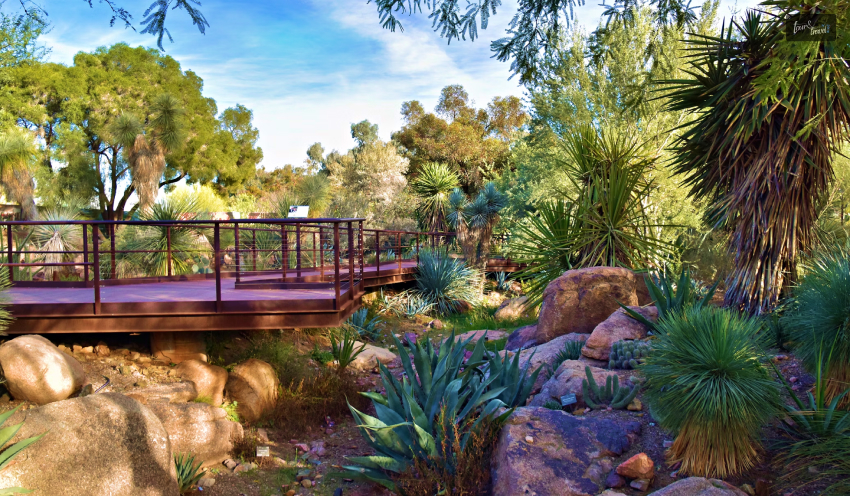
The Desert Botanical Garden will be the first activity on the list of unique things to do in Phoenix. It will take you on a trip to the Sonoran Desert and the vegetation there. 

The garden has beautiful landscapes with red rocks of the Sonoran Desert. Further, various cacti and plants add to the allure of the place. You will find as many as 50000 species of plants and cacti here.

Moreover, you can collect the best living souvenirs from the plant shop and Garden’s Gift. 

2. Exploring The Phoenix Art Museum

Exploring The Phoenix Art Museum

The Phoenix Art Museum has 20000 brilliant pieces of art by local and internationally acclaimed artists. Further, along with the walled or static artworks, you will find many interactive artworks here. 

Moreover, the museum hosts special exhibitions and events regularly and you must check the museum website before your visit. 

Above all, the Phoenix Art Museum is home to the Firefly Infinity Room. Here, you can enjoy the best visually psychedelic fun. 

3. Meeting Animals At The Wildlife World Zoo

The Wildlife World Zoo is a wonderful hotspot of 215 acres. Meeting the baby animals is the most fulfilling experience at the zoo. During a safari at the zoo, you will also meet rare sea animals and reptiles. 

This zoo is home to 600 species of animals and along with meeting the animals, you can even attend the shows and events.

Moreover, there are scopes for adorable animal encounters. So, you can get up close and personal with capybara, sea lion, and sloth. 

4. Spending Time With Animals At Phoenix Zoo

Spending Time With Animals At Phoenix Zoo

Phoenix Zoo is the largest privately-owned zoo in the USA. From the biggest land mammals to the marine creatures; you will find every variety in the zoo. 

Further, if you are traveling with little ones and want some hands-on fun, you can visit the petting zoo. You will also love the place as an avid birder. 

More than 3000 animals from over 400 species coexist here. Many of these species are also endangered or rare. You will meet African painted dogs, zebras, porcupines, Sumatran Tigers, Asian elephants, komodo dragons, etc. 

5. Explore Native American Art At The Heard Museum 

Heard Museum has the biggest collection of Native American work. So, if you are lover of history and art, you know your go-to destination in the state. 

The displays and presentations at the museum are stunning. Further, the museum curates the indigenous artistic excellence of American Indians and presents them at a global level.

6. Watching A Game At Chase Field 

Home to the Diamondbacks, Chase Field is a beautiful ground. Being air-conditioned, this ground is ideal for watching matches in any season. 

Further, the reasonable ticket prices make it an ideal destination for an outing with family or friends.

Are you looking for more unique things to do in Phoenix? You can try tubing in the Salt River, visit the Arizona Science Center, watch NBA matches at the Footprint Center, or kayak in the Tempe Town Lake. 

Also read

Share on Social Media

Meet Sibashree Bhattacharya, a travel enthusiast who has a decade-long experience in transcending virtual barriers with her words! Her deep love for travel is apparent from her travel escapades to the mountain, often taking her readers on a journey, her words acting as Portkey! Fun fact: Sibashree loves to dive deep into the history of the places she is about to visit, making her travels even more wholesome. If you were wondering how her articles are not short of time travel, this answers it!

Leave a Reply

Your email address will not be published. Required fields are marked *

title-img Related

READ MORE Must-Visit Places in Thailand

5 Must-Visit Places In Thailand: Should I Go To Phuket Or Krabi?

BY  Sibashree Aug 29, 2025

Thailand is planning a major tourism boom with the government offering 200000 free domestic flights for international tourists. It will make traveling more convenient and affordable for them.  It is important for Thailand as tourism is a major economic contributor to the country, and it has always been a global tourism hotspot with its beaches, rich culture, food, scenic beauty, and bustling markets. With warm, hospitable people, Thailand is also the land of affordable luxury.  Furthermore, from the ancient temples to the water sports hotspots, Thailand offers diverse attractions for its tourists. So, if you are a first-timer in the country, finding the key attractions or making an itinerary can be difficult for you.  So, in this Tour and Travel Blog, we will talk about the must-see places in Thailand on a short trip.  What Are The Must-See Places In Thailand? Enjoy The Diversity The Country Offers From the bustling city of Bangkok to the ecotourism hotspots in Chiang Mai, Thailand caters to all types of travelers.  Here are our favorites.   1. Bangkok: Offering The Perfect Blend Of Heritage And Modern Life Bangkok is about a mash-up of crazy traffic, golden temples, shopping malls, and little alleyways where people are grilling skewers right on the sidewalk.  The Grand Palace is probably the first stop for most people, and it’s where the Emerald Buddha is. And honestly, it’s more impressive in person than in any photo. Just a short walk away, Wat Pho features a reclining Buddha that occupies an entire hall. If you’re more into daily life, the markets are wild. Chatuchak Weekend Market is like a maze. You’ll think you’re going in circles, but then suddenly you’re eating something you can’t even pronounce.  At night, don’t bother going to bed early. Rooftop bars offer skyline views that remind you why the city never stops. 2. Phuket: The Largest Island In Thailand  Phuket’s the big island, the one everybody’s heard of. And yeah, it’s touristy, but there’s a reason people go. Patong Beach has people everywhere, music blasting, jet skis buzzing. Fun if that’s your thing. But if not, Kata and Karon beaches are way calmer. Food-wise? Fresh seafood everywhere, plus night markets that are fun just to wander through. And the nightlife in Patong… let’s just say you’ll either love it or hate it.  For a day trip, take a boat out to the Phi Phi Islands or Phang Nga Bay. The water’s almost too blue, and those limestone cliffs? Unreal. And for a stunning holiday, book the best Thailand holiday packages.  3. Chiang Mai: The Ecotourism Hotspot Of Thailand  Now, heading north changes the whole vibe. Chiang Mai is surrounded by mountains, slower paced, and feels way older. Wat Phra That Doi Suthep is the big one here—it’s up on a hill, and once you finally get there, the view makes the climb worth it. Nights are for wandering through the bazaars. Crafts, food, random souvenirs! You’ll end up buying something you didn’t plan on.  Oh, and cooking classes are big here too. They’re fun, messy, and you’ll leave thinking you’ve mastered Thai curry (spoiler: you haven’t, but close enough).  If you’re into animals, visit an ethical elephant sanctuary. Spending time with elephants up close is unforgettable, honestly. Furthermore, Chiang Mai is the ecotourism hub of Thailand, with the Tourism Authority of Thailand (TAT) identifying and promoting two ecotourism destinations in Chiang Mai.  Royal Park Rajapruek. Chiang Mai Royal Park Rajapruek is a botanical garden with international acclaim. Local and foreign tourists gather here to explore the 198 acres of area with rare plants and winter flowers of more than 1000 species.  The gardens here have plants from various countries such as Japan, India, Bhutan, and China. Furthermore, the Ho Kham Luang Royal Pavilion, or a Lanna-style structure, is the main attraction of this botanical park, and it stands for the rich heritage of Thai architecture and the morale of King Rama IX.  Moreover, this botanical park is a Net-Zero Carbon Park, and it aims to reduce carbon emissions and promote low-carbon tourism.  Queen Sirikit Botanic Garden The Mae Rim district of Chiang Mai is home to the Queen Sirikit Botanic Garden. Spanning over an area of 2,574 acres, it has more than 10 glasshouse zones.  Furthermore, it has a canopy walkway with an elevation of 400 meters. From there, you can enjoy a 360-degree view of the natural forests and trails around.  4. Ayutthaya: A UNESCO World Heritage Site An hour or so from Bangkok and you’re basically stepping into another century. Ayutthaya used to be Siam’s capital, and now its ruins and temples are everywhere. The kind of ruins that make you stop and go, “Wow, people actually built this hundreds of years ago.” Easiest way to see it? Rent a bike. Just ride around the historical park, stop whenever something catches your eye.  Don’t miss Wat Mahathat. It has the Buddha head wrapped in tree roots, which is the photo everybody takes, but it really is cool in person.  Wat Phra Si Sanphet shows off how grand the city must’ve been back in the day. 5. Krabi Province: Home To Over 100 Islands And The Thai Adventure Hub Cliffs, turquoise water, beaches! Everything is so perfect in Karabi.  Railay Beach is the spot most people talk about. You can only get there by boat, and it’s a mix of rock climbers scaling cliffs and people just lying in the sand doing nothing. Island-hopping is easy here. The Hong Islands are perfect if you want snorkeling or kayaking in quiet lagoons. Ao Nang’s where most travelers stay. It has enough hotels, restaurants, and bars to keep you busy without being overwhelming. Phuket Vs Krabi Beaches: Which One Is Better To Visit?  It’s a tough task! Can you pick a favorite? All the beaches of Phuket and Krabi are beautiful. However, Phuket is more accessible than Krabi. So, for a family holiday, these beaches will be ideal.  On the other hand, if you are traveling with friends or with your partner and you want a more adventurous experience, Krabi beaches are the places to visit.  Similarly, the beaches of Phuket are more crowded than those of Krabi. So, for better privacy and exclusive experiences, Krabi is a better destination.  Moreover, if you want to experience the nightlife of Thailand, Phuket Beaches, especially Patong Beach, are the ultimate destination. Mī khwām s̄uk̄h nı kār dein thāng!

READ MORE Maine national parks

A Complete Guide To Maine National Parks

BY  Mashum Dec 29, 2021

Are you like me? Who loves the wilderness and the solitude. I am a solo traveler and I have visited a lot of national parks in the USA, the best of them according to me is Maine National Parks. If we share the same interest then Maine is the perfect getaway from everything.  The state is considered to be the place where the beautiful rocky coastline, pine forests, lighthouses, and the Appalachian Trail await you!.  When we talk about National Parks in Maine, there is only one National Park in Maine, but there are four sites that have been affiliated with the National Park services along with these there is also one National Trail that starts from Maine itself.  Acadia National Park is the main park in Maine. Maine National Parks that are affiliated are:  Maine Acadian Culture Centre. Katahdin Woods And Waters National Monument. Saint Croix Island International Historic Site.  Roosevelt Campobello International Park.  In this article, I will be giving you a complete guide on how to enjoy Maine National Parks. Stay tuned! Acadia National Park Acadia National park is where the mountains meet the ocean. This beautiful spot is located southwest of Bar Harbor, Maine. This park embraces 47,000 acres that include half of Mount Desert Island, known to be the section of the Schoodic Peninsula. There are several small islands in between as well.  Acadia is known to be one of the 10 top National Parks in America, which attracts a lot of tourists.  Things To Do In Acadia National Park  Hiking hiking is the most popular and fun activity in Acadia National Park. For hikers they have 158 miles that are marked as hiking trails and your pets can accompany you there too. It is a great place to take your family with you and while walking you will be watching the ocean, flora, and wildlife.  Wildlife For many species, Acadia National Park is their home. Look out for otters, eagles, seals, painted turtles, deer, peregrine falcons, moose, black bears, and porcupines. Not just these but there are 338 species of birds that visit this place throughout different times of the year.  Water Activities To enjoy the ocean to the fullest, kayaking, canoeing, swimming, boating as well as exploring the tide pools are the right and fun choices to spend your afternoon. To spend some time with yourself you can also think about paddling around all the islands or maybe cam at some primitive sites. Solo Tours You can always explore the place by auto tours, or bus tours after a week of hiking when you just want to look around to find new interesting things. you can enjoy your own company as solo traveling. The night sky in Acadia gets stunning for being pitch black and some stars playing hide and seek. Other than this, in winter you can go ice fishing, snowshoeing, cross-country skiing, snow bowling, and dog sledding.  How To Get To Acadia National Park? From Mount Desert Island or Schoodic Peninsula, by car, it is really easy to drive to Acadia. The Rv campers must know that the historic bridges have high restrictions on roads. The rest of the roads do allow buses and long vehicles.  There are RV campsites that have a convenient bus system to drive tourists around the park. Therefore to explore po[ular locations you don’t need to hire a vehicle for that. Maine National Parks As I mentioned in the beginning, there are four affiliated sites that can somehow be considered National Parks in Maine. Let's see what they have to offer. Maine Acadian Culture Centre Maine Acadian Culture Centre is located in the U.S side of Saint John Valley. It shows the depth of the history of the Acadian settlers.  There are places for tourists to explore the intriguing architecture of the early 1900’s church, which is now home to Musee Culturel du Mont-Carmel. You can also just wander around all your own among the seventeen buildings of the indigenous Acadian settlement.  For those who would rather just stay outdoors than indoors and build memories to carry back home, have the Allagash Wilderness Waterway where angling, hunting, and canoeing are available.  Katahdin Woods And Waters National Monument  Possessing over 87,000 acres of Maine wilderness, this spot offers opportunities for outdoor roamers. This place is considered to be the hub for bird-watching and hiking. Katahdin is nominated as the international dark sky sanctuary.  Among the Maine National Parks, Acadia National park has a pristine National Monument whose location is perfect for date gazers and campers. To those who look for adventure during the wintertime as well, snow bowling is allowed in many areas,  and there are well-maintained trails for cross-country skiing. Hunting and fishing are also allowed here.  Saint Croix Island International Historic Site This place attempted to have a French Colonization, which now reminds historical events dating back to 1604. The trail is fine for visitors to leisurely walk and enjoys guiding themselves while they pass the bronze statues set in homage to French settlers and admire them.  There is a huge bird population and birdwatchers can easily report if they come across a new species of bird. Informal birds taking shadows are held through the entire summer.  Roosevelt Campobello International Park  This international park is to show respect to Franklin D. Roosevelt and his family.  This 2,800-acre island is full of forests, bogs, and beaches that offer an idyllic area, slow walks, and get-togethers.  People come across many cottages in the park including Roosevelt Cottage. This cottage is open to all tourists and provides guides that know how to answer the guests with politeness and information.  Appalachian National Scenic Trail  This Trail contains 2200 miles of habitual foot track. 281 of them are located in the state of Maine. It has ecosystems in the mountains that are quite picturesque. The tallest mountain in Maine, Katahdin, blemishes the starting of the trail and is the difficult mile on the route which is Mahoosuc Notch.  As the spot has a unique climate, it is also a hub for scientific research and studies. Workshops are available to educate people who wish to join the journey. There are plenty of exploration options for all skill levels, from friendly treks to thru-hikers. All the hikers that come from far places have to get a permit before starting their adventure.  Wrapping It All Up Here you go with everything you need to know before visiting the Maine National Parks. The place is considered to be the most beautiful National Park in America.  All ages can enjoy the view as well as the environment. You just have to take some time out of your busy schedule and visit the place with your family. I assure you the experience is going to be so good.  Read More: A Guide To National Parks In Alabama - Latest Guide A Guide To National Parks In Virginia - Latest Guide A Guide To National Parks In Wisconsin - Latest Guide Best Time To Visit Grand Canyon East National Park

READ MORE Cold-Weather Camping

Military-Style Winter Tents With Wood Stove: Dependable Comfort For Cold-Weather Camping

BY  Sibashree Nov 18, 2025

When temperatures drop and the snow keeps falling, a military-style winter tent with a wood stove becomes more than shelter—it’s the difference between enduring the cold and enjoying it.  Built for stability and warmth, these tents combine rugged fabrics, reinforced frames, and heat-safe stove jacks for reliable protection in harsh conditions. Today’s designs take that proven military strength and merge it with modern engineering.  An inflatable camping tent sets up fast without heavy poles, keeping your camp efficient and warm.  For longer expeditions, choosing the right winter tent ensures a safe balance between insulation and ventilation.  Moreover,  when your trip turns into true winter tent camping, a well-built hot tent lets you rest, dry gear, and cook inside while snow piles outside. Proper harsh cold-weather camping requires adequate gear. Thus, it is important to ensure that people do not suffer from a shivering cold. What Defines A True Military-Grade Hot Tent & How Does It Help In Cold-Weather Camping A military-grade hot tent is built to perform where the cold is relentless and the wind never stops.  Its strength begins with the fabric—dense, tear-resistant, and coated to block moisture while allowing controlled airflow.  Seams are double-stitched and heat-sealed to prevent leaks, and tension points are reinforced to hold shape under snow load.  Inside, an integrated stove jack made of fire-resistant material allows safe operation of a wood stove without damaging the canopy. Beyond materials, structure matters. The frame or inflatable skeleton must handle repeated freezing cycles without cracking or warping. Moreover,  the doors and vents are positioned for cross-ventilation to minimize condensation while maintaining interior warmth.  Moreover, this balance of durability, insulation, and controlled ventilation distinguishes an ordinary camping shelter from a genuine army tent with stove capability. The army tent is designed to keep crews safe and operational through winter extremes. 1. Stove Jack And Safety In Extreme Cold Start with fit and materials. The stove jack must be fire-resistant and matched to the pipe’s outside diameter so the collar seals without crushing the flue.  Add a heat shield or jack boot and use a short double-wall section near the exit to tame radiant heat.  Keep the chimney as straight and tall as practical, cap it with a spark arrestor, and confirm a steady draft before loading the firebox. Manage heat at the source. Set the stove on a fireproof mat, maintain clearances from walls and gear, and route guy lines where no one can bump hot pipe. Burn seasoned wood. Thus, wet or resinous fuel increases the risk of smoke, creosote, and CO. Vent with intent. Crack a low intake and a high exhaust vent to create cross-flow that controls condensation and carbon monoxide. Run a compact CO alarm. Operate with discipline. Gloves for pipe handling, daily ash removal, regular creosote checks, and no unattended flame. If no fire watch is planned, extinguish before sleep. 2. Why Inflatable Tents Fit Military-Style Needs Today Inflatable architecture replaces rigid poles with airbeams that keep even tension across the canopy, improving wind stability and snow-load handling. Setup is predictable: connect the pump, inflate to spec, and fine-tune guy lines without wrestling frozen joints or seized fittings.  With fewer metal bridges from inside to outside, an inflatable hot tent loses less heat to conduction and stays quieter in gusts. Cold-weather reliability improves, too. Multi-chamber designs add redundancy, and small punctures are field-repairable with a basic kit.  Curved geometry reduces flapping, helps shed spindrift, and preserves a clean stove clearance zone.  Packability is strong for the floor area—rolled beams ride securely on a sled or ATV, and the weight distribution is easier on long approaches. For teams that work in real winter, an inflatable winter tent delivers military-style discipline—fast deployment, controlled ventilation, and stable heat—without excess bulk.  RBM Outdoors focuses on this balance of durability and comfort, giving crews a 4-season shelter that performs when temperatures plunge. Thus, this acts as the ideal gear for cold-weather camping 3. Layout And Capacity For Winter Teams: Cold-Weather Camping Plan the space around heat and traffic. Start with a clear stove zone—an open buffer for safe clearances and wood handling—then set sleeping areas along the walls, keeping a center aisle free for movement.  Near-vertical walls and tall doors make cots practical; leave a small gap behind each cot for airflow and to keep fabric off hot gear.  Use a vestibule or annex for firewood, wet boots, and sled bags so the living space stays dry. For four people, aim for one dedicated drying line and a compact table; for six to eight, add a second line and a gear rack to keep gloves and layers rotating.  Suppose the tent has a divider, split “quiet sleep” and “task” sides to control light and noise.  Place a low intake vent opposite a high vent near the stove to move moisture out without dumping heat. 4. Set Up And Field Maintenance  Of Gear And Tents For Cold-Weather Camping Prep the site first: stamp a flat pad, face the door leeward, and mark a safe stove zone. Lay the footprint, clip or zip the floor, then inflate to spec using a gauge; set primary guy lines before tensioning secondaries.  In sugar snow, bury deadman anchors or use long snow stakes. Dry-fit the chimney, keep it as vertical as possible, add a spark arrestor, and place a fireproof mat under the stove. During use, clear spindrift from ridgelines, crack low and high vents, and re-tension lines after temperature drops.  Empty ash cold, check for creosote, and inspect the jack for heat glaze. Top up the airbeam pressure in deep cold and patch small punctures immediately.  For packout, cool, dry, vent, then roll toward open valves and lash low for transport. 5. Care And Storage Tips After The Trip Dry first, store second. After shutdown, crack the low and high vents to purge steam; brush off frost so meltwater doesn’t soak into the seams.  Let the liner reach room-dry before rolling. Empty ash cold, wipe the firebox, and knock creosote from pipe sections; a clean flue protects the jack and restores draft next trip. Inspect the jack panel for glazing or scorching, and replace it if it is fatigued. Protect fabrics and hardware. Rinse grit from zippers, treat sliders lightly, and check guy lines, stake loops, and tie-outs for fray.  Reproof high-wear zones if water no longer beads. For inflatable beams, equalize pressure at room temp, clear valves of ice, and store loosely—avoid long-term compression. Stash the tent in a cool, dry place off concrete, with a small desiccant pouch in the bag. Things To Remember About Cold-Weather Camping Tents  A military-style winter tent with a wood stove should deliver three things every time: safety, steady heat, and fast deployment.  Prioritize a fire-resistant jack, disciplined ventilation, and a layout that protects people and gear.  Inflatable designs add speed and stability in deep cold, while RBM Outdoors’ focus on durable materials and practical details keeps the shelter reliable through long winters.