Porto was on my mind for the longest time. It is the home to the best Port Wine, the beautiful Douro River, and colorful buildings.
Also, Porto has a crucial role to play in Portugal getting voted as the “Best Destination in Europe” at the World Travel Awards 2025. Porto itself has bagged the honor of the “Best Urban Destination of Europe.”
When I reached Porto, I found it very walkable. It is not as hilly as Lisbon. So, strolling was breezy, and the tram rides! Those rides were the highlights of my trip to Porto last year. I even found many adorable cat graffiti on the walls of the many buildings in Porto.
I met many volunteers at a hostel near the Old Town, and with such opportunities, Porto is now more open to budget travelers and backpackers. I also got a chance to meet many digital nomads and freelancers, and the most happening expat community.
While strolling across the Old Town and enjoying the tram rides are the activities I loved the most, there are many other things to do in Porto. I will talk about them in this Tour and Travel Blog guide.
How To Reach And How To Get Around Porto?
Porto is well-connected to the rest of the world through the Francisco Sá Carneiro Airport (OPO) or Porto Airport. It is just 11 km away from the City Center.
Thanks to the well-established public transport system, you will easily get a tram, metro, bus, cable car, or funicular to reach the City Center from the airport.
I took a tram ride from the airport to the City Center, living my ultimate Porto dreams.
Also, as I had done my research correctly, I bought a Standard Andante Card.
It was easier for me because I didn’t need to buy tickets separately for the train and metro rides during my days in Porto.
You can buy an Andante Card from any Andante Shop at airports or subway hotels. Also, check if the hotel you are staying in sells an Andante Card.
The Andante Card is rechargeable, and you can check the balance and recharge it at any kiosk at metro stations. The card will cost you 0.60€, and based on your travel plan, you will have to recharge the card.
What Are The Top Things To Do In Porto?
Porto once again drew the limelight with its signature Port Wine. The celebration of the Port Wine Day on 10th September 2025 included a “free-guided tasting,” a show of the vintage wine labels, and a one-of-a-kind tour of the Douro and Port Wine Institute (IVDP) building.
Yes, exploring the port houses and tasting the sweeter and richer versions of regular wines are some of the most delightful things to do in Porto. However, from the iconic tram rides to getting the amazing views of the city from the River Cruise, the city offers you endless options for exploration.
1. A Boat Cruise In The River Douro
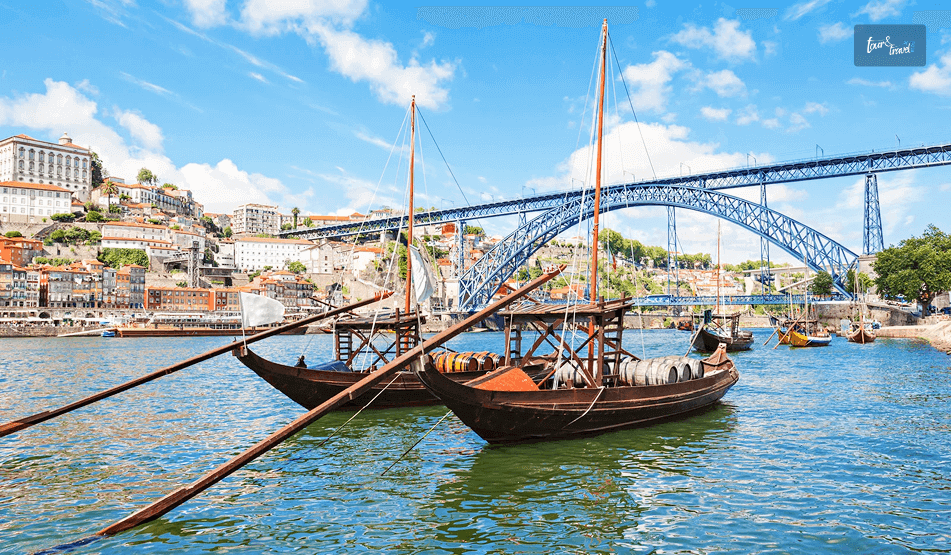
Taking a Rabelo boat ride on the River Douro is the best way to enjoy a slice of Portuguese history. These boats were earlier used for the transportation of port wines and people.
Today, these are cultural symbols of Porto, with the annual boat race during the Festa de São João do Porto or St. John’s Festival being a major attraction.
A rabelo ride exploring the major cultural sights visible from the river and the six iconic bridges cost me 20 Euros.
It was a slow-paced, relaxing, and enriching ride.
2. Enjoying A Ride In The Vintage Tram
The city I come from also has a story of tramlines and vintage trams, thanks to British Colonization. I am from Kolkata, the City of Joy, and Google says that the distance is 9,068 kms.
See how traveling brings two cities, thousands of miles apart, together.
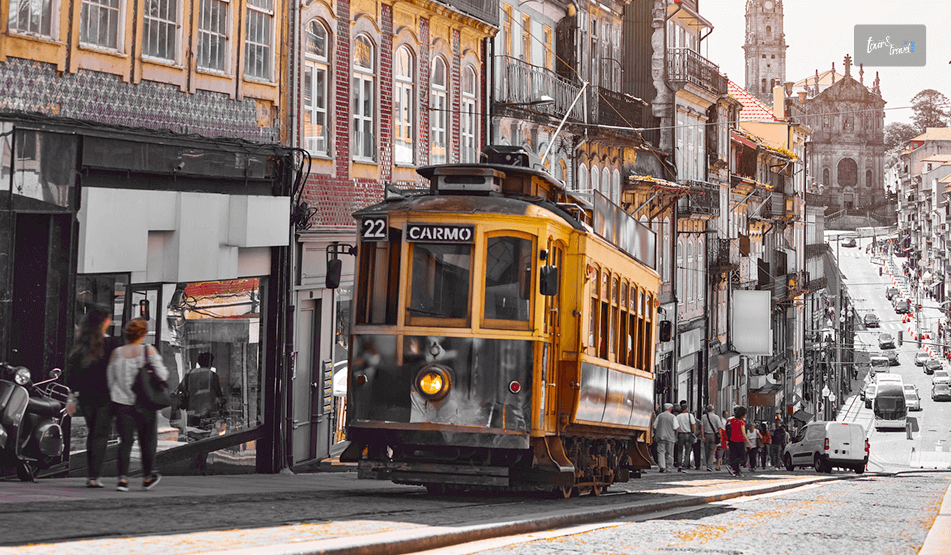
The trams here usually run on two lines, and on special occasions, you will find trams running on three lines.
I took a ride on the Line 1 route, from the Ribeira neighbourhood to the Foz Area. The Foz Area has beautiful beaches, and here you will see the mouth of the Douro River.
I had to pay €8 for the round trip, and you can even book a one-way ticket at €6.
3. Exploring The Port Houses
Vila Nova de Gaia, connected to Porto through the Douro River, is home to the famous Port Wine. In fact, the strict rules of the 17th century said that for a wine to be qualified as Port Wine, it had to be matured and stored in the premises of Vila Nova de Gaia.
So, the Port Houses are concentrated. So, it is easier to explore most of them on foot. I was at Taylor’s a Port House celebrating a legacy of 333 years in Port Wine-Making. It is one of the Port Houses, still owned by a family.
The tour at Taylor’s was self-guided. So, I loved how I could appreciate each process of wine-making and tasting at my own pace.
Along with Taylor’s, you can also plan a wine-tasting tour at Cockburns, Ferreria, and Calem.
4. Visiting The Porto Cathedral, Se Do Porto
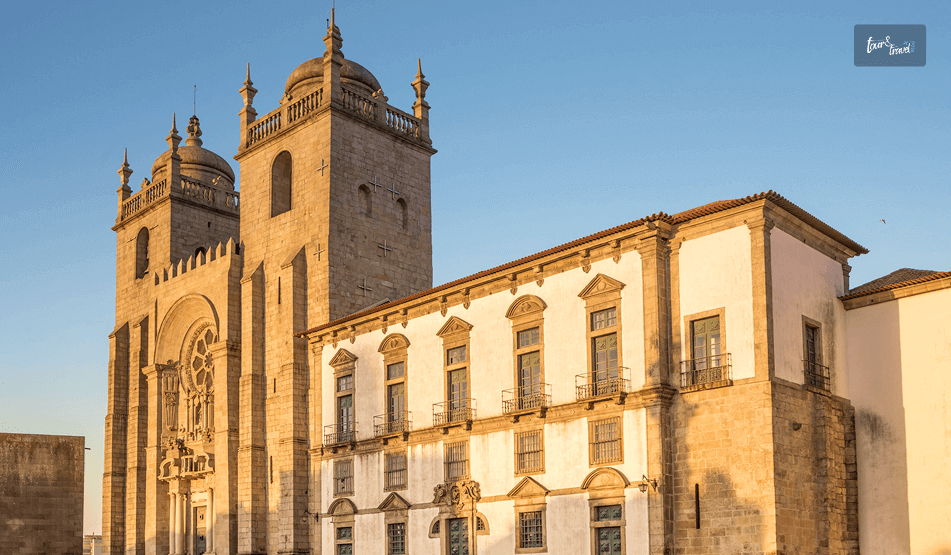
The Porto Cathedral, next to the remnants of the medieval walls, stands out with its fortress-like exterior. The cathedral remains open from 9 AM to 5:30 PM, and it offers free entry.
However, you will have to pay €3 if you want access to the cloister.
Predominantly Baroque in its architecture, the cathedral also shows the influence of the Gothic and Neoclassical styles. It is because the cathedral was first constructed in the 12th century, and it has been renovated many times.
5. Visiting The Palácio Da Bolsa
Address: R. de Ferreira Borges 11, 4050-253 Porto
Hours Open: 9 AM to 6:30 PM
Entry Fee: €14 for Adults, €9.50 for Students and Seniors, Free for Children below 12 Years
Palácio da Bolsa, a UNESCO World Heritage Site, is now home to Porto’s Commercial Association. It was built on the ruins of St Francis Convent, which was engulfed by fire during the Liberal Wars.
The building was built in 1842, and it was opened in 1891. The Pátio das Nações, or the central courtyard of the palace, with a glass enclosure, ensures adequate lighting throughout.
You can explore its beautiful architecture and learn more about its history by taking part in a 30-minute guided tour.
6. Enjoying A Cable Car Ride
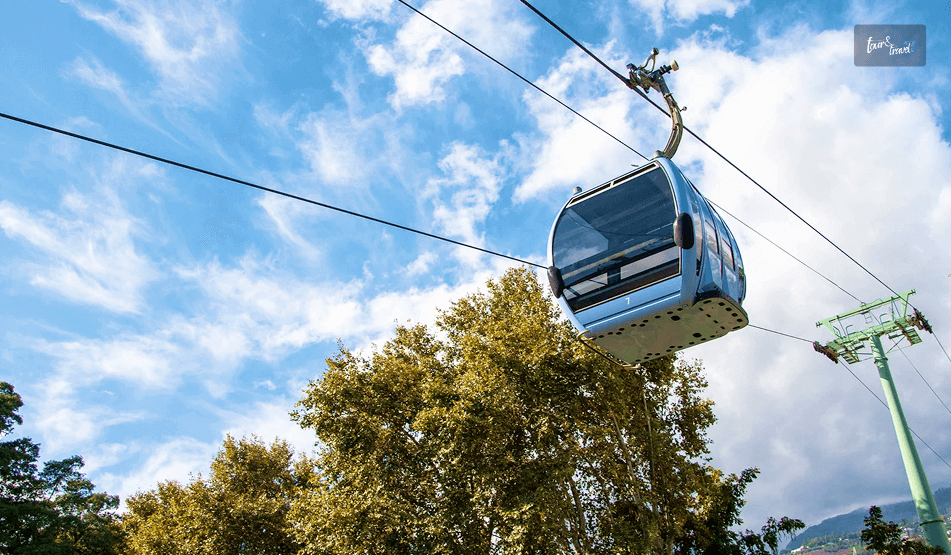
A funicular or cable car ride is the best way to enjoy amazing views of the Dom Luis I Bridge, the Douro River, and the Port cellars. The cable car or the Teleférico de Gaia in Porto connects Jardim do Morro with Vila Nova de Gaia.
This five-minute ride costs 6 euros one-way and 9 euros round-trip. For children aged 3 to 12, the ticket price is €3 for a one-way trip and €4.50 for a round trip.
You can use the Porto City Card if you are looking for discounts on this cable car ride.
7. Taking A Photo At The Dom Luís I Bridge
Théophile Seyrig, a student of Gustave Eiffel, is behind the construction of the Dom Luís I Bridge. This bridge on the Douro River serves as a prominent transportation link and icon of Porto. It connects Porto to Vila Nova de Gaia.
I loved walking through the low point and along the top. I took some lovely photos there and enjoyed a panoramic view of the city.
For more fun, you can take a cable car ride to the top of the bridge and then walk to the Cathedral and medieval walls.
8. Visiting The Historic Bolhao Market
The Bolhao Market is not just a place to find fresh fish, vegetables, and other produce. It is important for the history of the city and the people living there. The market is as old as the mid-1800s, and once the two-story building opened in 1914, the market shifted there.
In 2022, the building underwent a major renovation, and it is now accessible to visitors. The market remains open from 8 AM to 8 PM, and it remains open from 8 AM to 6 PM on Saturdays and Sundays.
The market also hosts many events, including opera performances and workshops.
9. Try Pastel De Nata: The National Pastry Of Portugal
Pastel De Nata, the century-old delicacy and the national pastry of Portugal, is the best dessert one can have in Porto. This dish has egg custard in a tart.
I had the best pastry at the Bolhão Market, and it cost me €1.50. I did not have much time. Otherwise, I would have loved to join a pastry-making class offered by many locals at their homes.
Food and attending cooking classes are some cool practices to break the ice and have an authentic cultural experience.
10. Indulging In The Quaint Little Charm Of The Time Out Market
After trying the best Pastel De Nata at the Bolhao Market, my next destination was the Time Out Market. I had some Caldo Verde soup and a Francesinha sandwich at the Time Out Market. These two items cost me €18.
The market opens at 10 AM and remains open till 11 PM (Up to 12 AM on Fridays and Saturdays).
Furthermore, if you want to try the best of the best in the Time Out Market, you can explore restaurants such as Padaria Ribeiro, Casa Inês, and Meia-Nau.
11. Exploring The Central Train Station Of Porto
The Central Train Station of Porto comes alive with the history of the city depicted through its blue and white ‘azulejo’ tiles. The main hall with 20,000 azulejo tiles is the main attraction of the architecture of this train station.
It was built in 1916, and you will get trains to the Douro Valley and other popular villages in the neighborhood from here.
The Central Train Station of Porto, or the São Bento Railway Station, is a UNESCO World Heritage Site, and previously it was the site of a Benedictine monastery.
12. Visiting Livraria Lello
Built in 1906, Livraria Lello remains the epicenter of Porto’s literary scene. It was named after prominent aristocrats and the founders, the Lello Brothers. And all the Potter Heads know this place as it inspired J K Rowling while writing Harry Potter,
Also, I was surprised knowing that I would need a ticket to enter this bookstore, the most beautiful in the world. The ticket costs 10 Euros, and the charge will be deducted from the price of any book you purchase.
Along with being a treasure trove of books, Livaria Lello stands out with its architectural magnificence. It has a stained-glass skylight, a unique staircase, and some brilliant woodwork.
13. Visiting The Chapel Of Souls
Location: R. de Santa Catarina 428, 4000-124 Porto, Portugal
Hours Open: Tuesday – Friday: 7:30 AM to 5:30 PM, Saturday: 7:30 AM to 12:30 PM and 4:30 PM to 5:30 PM, Sunday: 7:30 AM to 13:30 PM, Monday: Closed
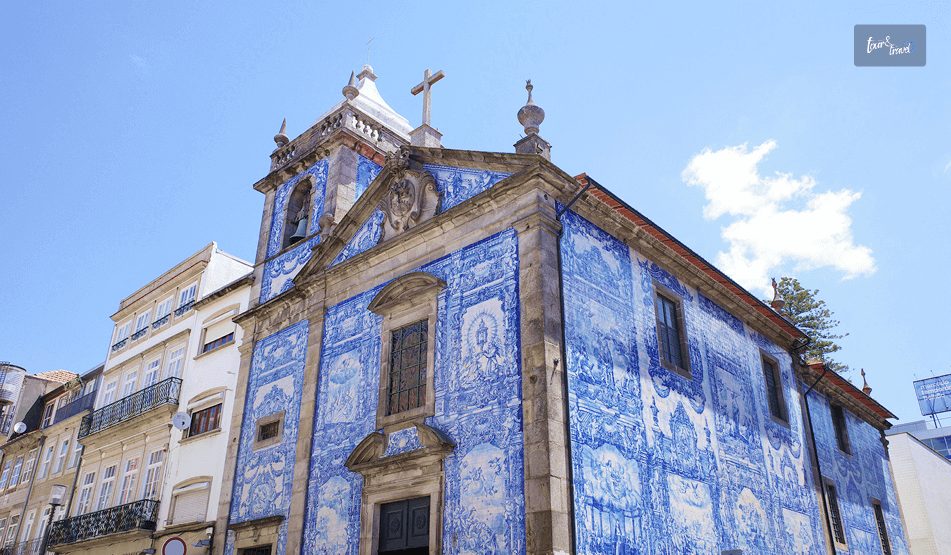
Porto made me fall in love with the iconic blue azulejo and white facade of the churches. Capela das Almas, or the Chapel of Souls, is another prominent structure, bearing these characteristics.
When I visited the chapel, it was in the afternoon, and the blue and white azulejos on its exterior looked more dramatic as the Sun changed color.
The beautiful facade of the building and its Neoclassical style are ideal for Insta-worthy photo ops. However, the place remains crowded, and the street is busy with cars.
So, I had a difficult time clicking the photos of the chapel.
14. Visiting The West Coast Of Portugal
It takes a bus ride and costs less than 10 Euros to reach the West Coast of Portugal from Porto. The bus ride takes just 15 minutes, or you can explore the route on foot.
I could not be there due to time constraints. However, Praia do Carneiro, the closest beach to Porto, offers the most relaxing beach experience. The esplanade is surrounded by palm trees, and the lighthouse and the 16th-century forts add to its historical significance.
Other popular beaches on the west coast of Portugal are Praia do Molhe, Praia de Gondarem, Praia dos Ingleses, etc.
15. Watching Sunset From The Guindalense Football Club
Address: Escada dos Guindais 43, 4000-337 Porto, Portugal
Hours: Tuesday to Friday – 10 AM to 11 AM, Saturday – 1 PM to 11 PM, Sunday and Monday – Closed
Entry: Free
The Guindalense Football Club is one of the best sunset points in the city. It also offers an amazing view of the river, Don Luis Bridge, and the city’s orange rooftops.
The food and beverages available at this club are reasonably priced. I talked to a few locals there, and the gentle breeze coming from the river made my sunset moments even more special.
16. A Day Trip To Braga And Guimarães
I loved the day trip to Braga and Guimarães from Porto. Braga is about 55 km from Porto, and Guimarães is about 48 km away.
I took a bus to Guimarães, and it took me less than an hour to reach Guimarães. I visited the Guimarães Castle and the historic center of Guimarães.
Braga is famous as the home to the Sanctuary of Bom Jesus do Monte, which is a UNESCO World Heritage Site. Also, the Baga Cathedral is an important landmark.
17. Enjoy A Fado Show
Watching a Fado Show at Ideal Clube de Fado was something I was not prepared for. For instance, I’d know that a musical performance in Porto would make me feel the melancholy and the sprinkles of warm yellow lights like an autumn afternoon.
Of course, I did not understand word-for-word, but every note, depicting emotions such as sorrow, love, and sadness, stirred me. It was the people, culture, and history of Porto talking to me through music.
Furthermore, you can explore options such as the Fonseca Cellar Tour & Fado Show or visit Calém Cellars to enjoy a Fado Show with the best Port Wine.
My Days In Porto, Portugal: A 3-Day Itinerary
My days in Porto were a little rushed, I admit, and I had to cover many places. However, you make it more relaxed if you have a trip plan of 5-7 days.
1. Activities On Day 1: Exploring The Heart Of Porto
Morning
Visiting Porto Cathedral (Sé do Porto)
Morning
Exploring the Old Town (Ribeira District)
Midday
Exploring the Bolhão Market
Midday
Lunch at Time Out Market
Afternoon
Vintage Tram Ride
Afternoon
Taking Photographs at Dom Luís I Bridge
Evening
Watching the sunset at the Guindalense Football Club
Evening
Attending Fado Show at Ideal Clube de Fado
2. Activities On Day 2: Wine, Culture, And Scenic Views
Morning
Exploring Port Wine Houses
Midday
Taking a Douro River Cruise Ride
Midday
Lunch in Ribeira
Afternoon
Reading and Buying Books at Livraria Lello
Late Afternoon
Visiting the Chapel of Souls (Capela das Almas)
Evening
Cable Car Ride
Evening
Dinner and Late Night Riverside Walk
3. Activities On Day 3: Day Trips And Hidden Gems
Morning
Day Trip to Braga & Guimarães
Midday
Lunch in Braga
Afternoon
Returning to Porto and Exploring the Central Train Station (São Bento)
Afternoon
Walking and Discovering Hidden Murals
Evening
Dinner and Leaving for the Airport
Is Porto In Portugal Safe For Women?
I found Porto safe and warm. Also, a vacation home booking portal, Holidu, has named Porto one of the safest cities in Europe for women digital nomads.
The portal has enlisted the safest cities after a data analysis from sources such as Nomads.com and Numbeo.
Furthermore, according to Numbeo, the crime rate in Porto is only 30.31, which is pretty low. In addition, the crime rating in “a physical attack because of your skin color, ethnic origin, gender, or religion” is just 13.61, which is very low.
Moreover, the rate of assaults is low in Porto, with a rate of 27.86.
Getting Lost Is The Best Thing You Can Do In Portugal
Nothing can be better than a city that allows you to breathe and get lost. Porto does exactly the same! I loved the Old Town area, especially where I could cherish the beautiful murals, the warmth of people, and the scent of freshly baked Pastel De Nata. Everything offered me a wholesome experience.
The more you walk through the alleys, the more you will discover cool buildings, architecture, and gardens. I am not sure whether you will agree with me because it’s not easy to put your mobile phone on flight mode while exploring a new country solo.
Still, I took the risk, and I carried my camera to take the photos. People talk about free things to do in Porto, I would say that it was something that did not charge me a penny, yet was priceless! Eu amo-te, Porto!
Also, this walkability factor adds a lot of soul to the city’s character. The “human-scale streets” keep reminding you that the city was built long before cars were invented. And as you walk through these streets, there is no barrier between you and the experience you soak in.
In the end, you have a story that is deep and personal.
Tourism In Porto Is More Than Being A Popular Destination
With the World Travel Awards conferring the title of “Europe’s Best Tourist Destination, 2025,” Porto is emerging as more than a popular tourist spot.
The city’s big win shows what the travelers truly value these days. As travelers, we love a city that is walkable, sustainable, authentic, and culturally rich. Also, you have to remember that the city has left names like Berlin, Barcelona, and Amsterdam behind to win this laurel.
The layered heritage of the city has played a major role in making it so rich in experience. You will love the Baroque churches, the Ribeira Riverfront, arty neighborhoods, and medieval lanes. So, despite rapid growth, the city has been careful to protect its heritage.
In addition, as major cities such as Venice and Barcelona struggle with overtourism and its impact on the environment and local communities, Porto is showing the way to low-impact travel. Walkability and tram rides contribute to the city’s low-impact tourism.
Overall, the win shows that authenticity is preserved and respected, and it is not a performance or a show. It also shows how successful the city has been in balancing authenticity with amenities, growth with sustainability, and mobility with walkability.
Sibashree is a travel, culture, and leisure writer who has been writing since the age of 12 and professionally since 2014. With more than a decade of travel writing experience and journeys across India and several parts of the world, she brings a deeply personal and thoughtful perspective to her work. A student of English Literature and Mass Communication, Sibashree has always viewed travel as more than movement — for her, it has been a way of understanding people, cultures, and herself. Her passion for spiritual exploration has also led her to many unusual and meaningful destinations over the years. Outside of writing, Sibashree enjoys watching European cinema, reading about global politics, and reflecting on the stories hidden within everyday places.
Portugal's Pena Palace is an outstanding masterpiece of Romanticism architecture that is nestled in the hills above the charming town of Sintra. This palace is a striking combination of Gothic, Moorish and Manueline styles that showcase the best of Portuguese culture and history. This majestic palace is not just a visual treat but also offers a unique opportunity to step back in time and experience the grandeur of a bygone era.
You might be missing out on a lot if you have still not booked Pena Palace Tickets. Let us take you to an unbelievable experience of this extraordinary destination.
History
The Pena Palace was built in the mid-19th century by King Ferdinand II, who was a German prince and the husband of Queen Maria II. He purchased the ruins of an old monastery that stood atop a hill in Sintra and transformed it into a magnificent palace. The construction of the Inside Pena Palace was completed in 1854, and King Ferdinand II spent many years refining and adding to the palace's design.
Architecture
The Pena Palace's unique architectural style is a combination of different architectural styles from different eras. The palace features Gothic towers, battlements, and Manueline-style arcades that create a stunning blend of different architectural styles. The palace also has Moorish-influenced decorative features such as horseshoe arches and minaret-style towers. The palace's colorful exterior is a striking blend of bright reds, yellows, and blues that make it stand out among the lush greenery that surrounds it.
The palace's design reflects the Romanticism movement, which was a cultural and artistic movement that originated in Europe in the late 18th century. Romanticism was a reaction against the Enlightenment era's emphasis on reason and logic and celebrated emotions, individualism, and nature. The Pena Palace's design embodies the Romanticism movement's principles, with its eclectic mix of architectural styles and its focus on nature, beauty, and emotion.
Interior
The Inside of Pena Palace is just as stunning as its exterior, with each room designed with its unique theme and style. The palace's rooms feature intricate carvings, detailed paintings, and ornate furnishings that take visitors back in time to the romantic era of the 19th century. The most impressive room in the palace is the Great Hall, which features a giant chandelier, intricate stucco work, and a beautifully decorated ceiling.
The palace's other rooms are equally impressive, with each room featuring unique design elements that showcase the palace's history and culture. The Arab Room, for example, features Moorish-inspired designs and decoration, while the Queen's Bedroom is a beautiful example of the palace's Manueline influences.
Gardens
The palace's gardens are just as impressive as the palace itself. The gardens feature a variety of exotic plants, including rare species from around the world. Visitors can explore the gardens' many paths and walkways, which lead to a stunning array of fountains, statues, and lookout points. The gardens also offer breathtaking views of the surrounding hills and countryside, making it a popular spot for photographers.
The park surrounding the palace covers over 200 hectares and includes several different gardens and forested areas. The gardens feature a wide range of plant species, including camellias, azaleas, rhododendrons, and magnolias. The park also includes several lakes, grottos, and waterfalls, which add to the park's natural beauty and charm.
Visiting Pena Palace
The Palace is open to visitors throughout the year, and visitors can purchase Pena Palace tickets online or at the palace's entrance. Visitors can choose to explore the palace's interior or gardens or purchase a combination ticket that includes access to both.
The palace can get crowded during peak season, so it's best to arrive early in the morning to avoid the crowds. It's also important to wear comfortable shoes, as there is a lot of walking involved in exploring the palace and gardens.
Guided tours are available for visitors who want to learn more about the palace's history and architecture. Audio guides are also available for visitors who prefer to explore the palace at their own pace. The palace's website provides detailed information on visiting the palace, including opening hours, ticket prices, and tour options.
Conclusion
Pena Palace is a must-visit destination for anyone visiting Portugal. It's a stunning example of Romanticism architecture that combines different architectural styles to create a unique and unforgettable experience. The palace's gardens are just as impressive as the palace itself, offering visitors a chance to explore a wide range of exotic plant species and stunning natural features.
Visitors to Pena Palace can step back in time and experience the grandeur and beauty of a bygone era. The palace's unique architecture and design elements are a testament to Portugal's rich culture and history. Whether you're a history buff, architecture enthusiast, or nature lover, Pena Palace is sure to impress and leave a lasting impression. Pena Palace is a true gem of Portugal, a perfect blend of different architectural styles and natural beauty. It's a unique destination that offers visitors a chance to explore the rich history and culture of Portugal while immersing themselves in the beauty and charm of the palace and its surroundings. A visit to Pena Palace is a once-in-a-lifetime experience that should not be missed.
Read Also:
Top 5 Travel Tips For Your Next Trip To China
The Iberian Peninsula epitomizes the ultimate European trip for many explorers.
The allure of a history etched into cobblestones, wine-soaked lunches, and sun-kissed coastlines promises a once-in-a-lifetime experience.
Still, when booking the flight ticket, one difficult question may catch you off guard. Spain vs Portugal? Which one will be the best bet for your next trip?
Despite having the same Mediterranean climate and sharing a peninsula as neighbors, each of these countries has its distinct soul.
Spain is like a tapestry of autonomous regions, and each region nurtures its own culture, identity, and personality. On the other hand, Portugal indulges in melancholy, and the experience here is more cohesive and intimate.
Moreover, the “fado” spirit and the maritime legacy set Portugal apart.
Hi, in today’s blog, I will do a Spain vs Portugal comparison, and the areas will be the similarities/differences in culture, safety, nature, and cost.
Spain Vs Portugal: Culture And Heritage
If grandeur is the main vibe of Spain, Portugal offers that intimacy to travelers who want to feel the connection in a new country.
The tempo of daily life is different in these countries, and that sets the foundation for a cultural divide.
The Intimacy Of Portugal
Have you ever been to Lisbon or Porto? You will notice how the heritage is linked to the sea. The Manueline architecture, with a decorative style featuring ropes, coral, and nautical symbols, further bears testament to its past.
Also, you will often notice calçada Portuguesa or calçada Portuguesa in the streets of Portugal. Moreover, with the azulejos or blue and white ceramic tiles, the buildings here exude an old-world charm.
The overall atmosphere can be described as saudade, meaning something deep and nostalgic. Also, the sunsets over the Tagus River are poetic and stir emotions.
Spain: A Kaleidoscope
In Spain, it’s like many countries in one nation. Andalusia, in the south, has the Moorish splendor of the Alhambra and the fiery passion of Flamenco.
On the other hand, Barcelona or Catalonia nurtures the surrealist modernism of Antoni Gaudí.
Furthermore, the Basque Country exudes a rugged, industrial-chic vibe and has a distinct language.
Spain Vs Portugal: Which One Is Safer?
Spain and Portugal are safe for travelers. However, the different vibes across the country create significant differences in how safe a traveler feels.
Safety In Portugal
Portugal is the 7th most peaceful country in the world according to the Global Peace Index 2025. Furthermore, in 2025, it became one of the best countries for expats due to its quality of living.
Nevertheless, the country is smaller, and its lower population density does not overwhelm you. You will feel safe and at ease even when you are in the heart of Lisbon.
So, even if you are a solo traveler or you are traveling with your family, you will enjoy a low-stress environment and warm hospitality.
Safety In Spain
Spain holds the 25th position in the Global Peace Index 2025. So, the country is safe. However, Madrid and Barcelona are global hubs. So, the usual perils of big cities will be there.
For example, though the violent crimes are rare, areas such as Barcelona’s Las Ramblas are infamous for pickpocketing incidents.
Also, with the recent struggle of overtourism, the attitude of the locals has changed a lot toward the tourists.
However, Spain has a world-class infrastructure. Also, thanks to its high-speed rail system (the AVE), you can easily navigate between cities.
Landscapes Of Portugal And Spain: The Atlantic Edge Vs. Mediterranean Bliss
The landscapes of both countries are unique and beautiful. However, the geography of Spain is more varied.
Here are more details.
The Rugged Coastline Of Portugal
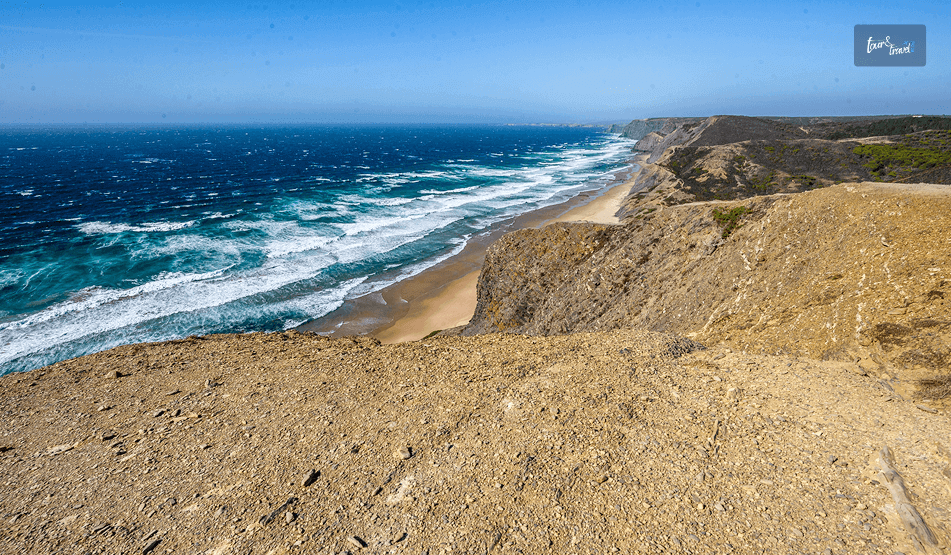
If you love the drama of the Atlantic, the rugged coastline of Portugal will win you over. You will find golden limestone cliffs and hidden sea caves, such as Benagil in the Algarve region in the south.
Also, if you are looking for volcanic landscapes, the Portuguese islands of Madeira and the Azores offer world-class hiking, whale watching, and a lushness that earned them the nickname "the Hawaii of Europe."
The Diverse Terrains Of Spain
The beaches of Costa del Sol and the Balearic Islands (Mallorca and Ibiza) coexist in Spain. In these places, you will find turquoise waters and a vibrant social scene.
Furthermore, the snow-capped Pyrenees mountains and the rugged, rainy green hills of Galicia are natural wonders of Spain.
Moreover, a historic pilgrimage route through northern Spain remains one of the world’s most iconic trekking experiences.
Portugal Vs Spain Food: Tapas Or Tascas?
Now, it’s difficult to choose a favorite between Portuguese and Spanish food. However, I find the food in Portugal to be more comforting.
Food In Portugal
The food culture of Portugal depends on the sea. You have to try salted cod or bacalhau here. The fun part is that every place you visit will serve you a different version of the same dish.
It’s like a family secret passed down across generations.
However, for me, the pastéis de nata, the blistered, creamy custard tarts, were the winner. The hint of cinnamon when it's warm! Heavenly!
Also, the Port wine from the Douro Valley or the light, effervescent Vinho Verde proudly hold the flag of Portugal high in the global gastronomic map.
Food In Spain
The land of tapas crawl, Spain, is all about sharing small plates of jamón ibérico, patatas bravas, and fresh seafood.
Furthermore, from the giant pans of saffron-scented paella in Valencia to the sophisticated "pintxos" in San Sebastián, the food scene here will offer you a varied experience.
Also, with the bold reds of the Rioja region being the crown jewels, Spanish wine is a connoisseur’s delight.
Cost And Accessibility: Which One Is More Budget-Friendly?
Despite consistent price increases in Lisbon, Portugal remains a favorite among budget-conscious travelers in Europe. The price for the high-end dining and boutique accommodations is way less than in London, Paris, or even Madrid.
Spain is expensive. However, its southern regions, like Andalusia, are quite budget-friendly.
Having said that, with a massive train network and many international airports, Spain is more accessible and ideal for planning multi-city itineraries.
And The Winner Is…
Your favorite between Portugal and Spain will depend on your personality.
For example, if you want a relaxed, romantic, and affordable getaway, Portugal is the best for you. It also allows you to do coastal hikes and enjoy the Atlantic breezes.
Overall, the experience here is something very nostalgic and intimate.
On the other hand, Spain is the place to explore iconic architectural landmarks and experience diverse regional cultures. Also, the nightlife here is iconic.
So, make your choice!
Being proactive for your trip can help you save from troubles and cherish your time there to the fullest. With the Christmas season in full swing, many families opt to travel to Europe to experience how Christmas is celebrated there.
From the lush architecture of Italy to the vibrant weather of Spain, all the way to the great wonder of the World in France. There’s a lot to explore in Europe and to make sure you do it in the right way, we have compiled a short list of essential tips that you should follow.
Read these tips to make the right decisions.
Europe: a sub-continent comprising 50 countries with diversified vibrant cultures, scenic views, gorgeous beaches, lush green forests, and a lot more. I can write a whole article just about the beauty of Europe but we better be focused on the tips that will help you for your next trip to the sub-continent.
Planning your trip to Europe can be an overwhelming task but not an overwhelming experience if you do know the dos and don’ts of the trip.
Well, if you are on equal footing, I am here with these travel tips to familiarize you with the dos and don’ts. So, hold with me, and let’s dive into the tips that can help you make your trip marvelous.
Book The Stuff Early
Air tickets, accommodation, inter or intra-city transportation, and everything that needs a booking, should be booked earlier.
So, the thing is you should dodge the demand. During the holiday season, in particular, the demand is huge for air tickets and accommodation. Booking them early is the way to go.
Also, I should mention here, the importance of a stable internet while booking so you don’t miss out on the limited number of your beloved seats. Spectrum provides one of the most reliable internet connections in the States. You can contact Spectrum Customer Service and get a plan according to your needs.
The high demand is one thing, there are many discounts available for early bookers. Check Upgraded Points and you can find the discounts for your airfare.
Circling to transportation, you have two options: one is using public transport which isn’t recommended for tourists and the other one is a car rental. Don’t forget to negotiate with the car dealers and be sure that you are getting a good deal.
Pack Like A Pro
Say, you are going on a 10-day trip and you’ll be roaming around three cities. 10 days is a long span and you might need every single thing you use in your routine, right? NO. Nada.
To be a pro-packer you just need to include the essentials in your bag and keep things light.
There are tons of pros for packing light. Mobility is going to be easy for you, you don’t need to pay for checked luggage, you don’t have to wait in long queues to get your bag and there are fewer chances of your luggage getting lost.
Now, what do we count as essentials? Here’s the full list of travel essentials that pro-travelers never skip.
Follow The Local Time
Traveling will most likely accompany jet lag.
Jet lag is basically a temporary sleep disruption for the reason for traveling in different time zones. OK. So, what to do? How do you deal with jet lag?
Adapt yourself to the time zone of the city that you are traveling to the night before your flight. This will help you get enough sleep so you don’t waste any moments of your precious time in Europe and also, you’ll adjust rather easily to the local time.
If your sleep schedule is during the flight then you can implement these tips to sleep on a plane:
Wear bed socks
Switch off your devices
Use a pillow for your lower back support
Skip alcohol and caffeine
Use an eye mask
Opt For Local Currency When Paying
Paying for stuff in Europe may have two possible payment currencies. One is the US dollar and the other Euros which would be the local currency in this case.
While many stores would love you to pay in USD, it’s not the best way. It will sound easy at first because you are already familiar with the currency but the difference in exchange rate can cost you more.
Now you may think why do they want the tourists to pay in USD?
It’s because they earn by giving you a heinous exchange rate of the currency. The bigger your purchase is, the more they’ll earn.
So, it’s always good to pay in local currency wherever you are, whether in Europe or in Bali.
Before You Land, Download Google Translate
How troubling that would be: you land in a foreign land and you can’t even communicate to get a taxi.
Yeah. The better way is to learn the basics of the language of the country you’ll be visiting. But I know, we all are on a tight schedule already. We can’t learn the language.
Tech to save your day! You can use Google Translate to transcribe the written stuff and translate your language into any language. So, there might not be any problems communicating.
Not to forget, usually, Google Maps is available on almost every mobile phone but getting it checked before landing can help you save from the risk of getting lost.
Read also:
6 Best Family Holiday Destinations In India
15 Best Places For Adventure Dates With Your Loved One









 Related