


What Is The Rome To Amalfi Coast Distance? How To Reach Amalfi Coast From Rome? 

Traveling from Rome to Amalfi Coast is easy thanks to the availability of diverse public transportation. 

So, if you want to give the notorious crowd in the Italian capital a miss, you can choose the enchanting coast. 

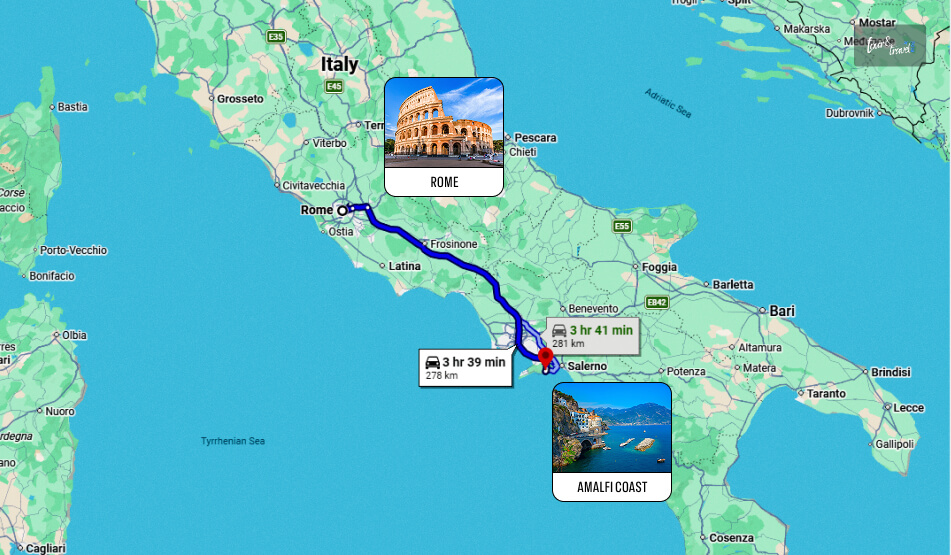
Here is more about traveling the Rome to Amalfi Coast distance of around 278 km. 

A Few Things To Remember Before Planning A Rome To Amalfi Coast Trip 

A Few Things To Remember Before Planning A Rome To Amalfi Coast Trip

If you are a first timer, you may find reaching the Amalfi Coast difficult. Also, the distance of 278 km may seem massive. 

However, as I have mentioned, thanks to a well-connected network of public transport, you will travel the distance in less than 4 hours. 

Having said that, you have to keep certain things in mind if you are planning a Rome to Amalfi Coast trip for the first time. 

1. Avoid A Rome To Amalfi Coast Day Trip 

Firstly, a day trip from Rome to the Amalfi Coast is not a suitable option. You will lose a lot of time traveling if you are planning a day trip or a round trip. 

Instead, you can use the time to explore the beautiful villages on the Amalfi Coast. 

Remember, it is the prettiest coast in Italy, one of the best summer destinations in Europe, and a UNESCO World Heritage Site. 

Moreover, the Amalfi Coast is one of the best beaches in Naples, Italy. 

So, it deserves a little more of your time.

Also, if you want to fuse the rich coastal experience with luxury, you can stay at any of the Le Collectionist villas. 

2. Travel In The High-Speed And Intercity Trains 

Now, TheLowDownUnder Travel inspires me always. So, of course, I would recommend enjoying the journey from Rome to Amalfi Coast in a high-speed or intercity train. 

These trains are the cheapest, most convenient, and they offer a culturally rich experience. 

Also, around 58 high-speed trains ply from Rome to Salerno daily, and you have multiple options in intercity trains. 

So, you can travel at a convenient time. 

However, if you want to travel in a high-speed train, you must book the tickets a day before. Otherwise, the tickets for your chosen slot may become unavailable, or the ticket price can shoot up. 

3. Enjoy A Ferry Ride From Salerno 

If you are traveling from Rome, Salerno is the most convenient gateway to exploring the Amalfi Coast. 

You will get the Sita buses easily from Salerno to reach the beautiful villages on the coast. 

However, to make the journey unforgettable, you can try this trick. 

The Salerno Railway Station, or Stazione di Salerno, is located at a distance of just 900 meters from the Piazza della Concordia or tourist port. 

You can take a short walk for 10 minutes and then board Travelmar ferries to explore Amalfi by sea. 

Multiple ferry rides are available on this route, and the ticket price is just 12,00 € for an adult. 

4. Traveling From The Fiumicino Airport To The Amalfi Coast 

If you are traveling from the Fiumicino Airport, you have to first reach the Roma Termini Station. 

So, take the Leonardo Express, available every 15 minutes. Moreover, the ticket price is just 14 Euros. 

Bus services such as Terravision and Sit Bus Shuttle are also available on this route. However, these take longer due to the city traffic.

How To Travel From Rome To Amalfi Coast? 

How To Travel From Rome To Amalfi Coast

You can travel from Rome to Amalfi Coast by train via Salerno. Otherwise, you can rent a car or drive a private vehicle to reach the Amalfi Coast from Rome via Naples. 

Here are more details. 

1. Traveling From Rome To Amalfi Coast By Train 

As I have mentioned, traveling by the intercity or high-speed trains is the best option for a trip to the Amalfi Coast from Rome. 

Italia Rail has enlisted 58 high-speed trains on the route, and they help you cover the distance in just 1 hour and 26 minutes. 

Moreover, the ticket price for these train rides starts from $12. 

Furthermore, Rail Europe runs multiple trains on this route, and the first one leaves Rome at 6:26 AM and reaches Salerno at 9:23 AM. 

Also, the fastest Rail Europe train on this route leaves at 7:30 AM and reaches at 9:05 AM. 

The ticket price for these trains ranges between 25 and 59 Euros. 

2. From Rome To Amalfi Coast Via Salerno 

From Salerno railway station, you can walk for five minutes and find the Sita Bus Terminal. Also, from here, you will find buses to all the towns on the Amalfi Coast. 

However, these buses are very busy during the summer months. 

So, for a more peaceful and comfortable journey, you can reach the Piazza della Concordia. 

From there, you will get ferries to the Amalfi Coast.

The first ferry starts from Salerno Concordia at 8:40 AM and reaches the Amalfi Coast at 9:15 AM. 

Moreover, the average time for this ferry ride is between 35 minutes and 1 hour and 10 minutes. Also, the ticket price is just 12 Euros. 

3. From Rome To Amalfi Coast Via Naples 

As an alternate route, you can take a train from Rome (Roma Termini) to Naples (Napoli Centrale). The high-speed trains are available from 7 AM to 9:53 PM in regular intervals. 

Furthermore, the travel time is between 1 hour and 8 minutes and 2 hours and 11 minutes. Also, the ticket price for the high-speed trains is between 49 and 52 Euros. 

Moreover, from Napoli Centrale, you can take the Circumvesuviana train to Sorrento. It departs from Piazza Garibaldi, the lower level of Napoli Centrale. 

The travel time by this train is between 1 hour and 15 minutes and 1 hour and 30 minutes. Also, the ticket price is about 4 Euros. 

Once you reach Sorrento, explore the beautiful coast and then take a Sita bus ride to Positano on the Amalfi coast. 

Rome To Amalfi Coast Distance: Frequently Asked Questions (FAQs)

Here are the frequently asked questions and answers about the Rome to Amalfi Coast distance.

1. Is There A High-Speed Train From Rome To The Amalfi Coast?

Yes, around 58 high-speed trains are available from Rome to Salerno, the gateway to the Amalfi Coast. 

Thanks to these high-speed trains, you can now travel a distance of more than 200 kilometers in less than an hour. Moreover, the ticket price starts from just 12 Euros.

2. Is It Worth Going To Amalfi Coast From Rome?

Yes, you must travel from Rome to the Amalfi Coast if you want to experience the iconic coastal life of Italy and its food. 

However, if you want a more relaxed itinerary, the Amalfi Coast can only suit you when you have at least 2 days for the trip. A day trip to the Amalfi Coast is exhausting.

3. How Far Is Amalfi From Rome By Plane?

A flight journey from Rome to the Amalfi Coast takes around 50 minutes, and daily flights are available on this route. 

Moreover, ITA Airways, Air France, and Lufthansa are some of the main airlines operating on this route. 

Also, the flight ticket costs between 132 Euros and 4000 Euros. 

Share on Social Media

Sibashree is a travel, culture, and leisure writer who has been writing since the age of 12 and professionally since 2014. With more than a decade of travel writing experience and journeys across India and several parts of the world, she brings a deeply personal and thoughtful perspective to her work. A student of English Literature and Mass Communication, Sibashree has always viewed travel as more than movement — for her, it has been a way of understanding people, cultures, and herself. Her passion for spiritual exploration has also led her to many unusual and meaningful destinations over the years. Outside of writing, Sibashree enjoys watching European cinema, reading about global politics, and reflecting on the stories hidden within everyday places.

Leave a Reply

Your email address will not be published. Required fields are marked *

title-img Related

READ MORE Explore The World With Their Kids

6 Reasons Parents Should Explore The World With Their Kids

BY  Ankita Jan 5, 2024

For parents, the opportunity to explore the world with their children is invaluable. Not only does it open the door to new experiences for the kids, but it also offers a chance for the family to grow closer together. Family-friendly destinations like Pigeon Forge, TN, are perfect examples of places that kids and adults love. These locations provide a diverse range of activities and experiences that can enrich a family vacation, making every moment memorable. In this article, we will delve into six reasons why parents should consider traveling the world with their kids. Diverse Experiences  When speaking of diverse experiences, Pigeon Forge is definitely going to top the list. Pigeon Forge, TN, is home to The Island, an entertainment complex that epitomizes the kind of diverse experience ideal for family travel. This location is more than an entertainment center. It is the ultimate attraction offering fun and learning. With an array of shops, restaurants, and attractions like The Great Smoky Mountain Wheel, The Island offers something for everyone in the family. The variety of experiences available at The Island means that parents and children can enjoy a range of activities together. You can explore unique shops and dine at family-friendly restaurants. Also, enjoy the spectacular views from the Great Smoky Mountain Wheel as part of experiences tailored to create lasting memories. The Island’s mix of attractions ensures that every family member’s interests are catered to. Such destinations showcase how travel can be both entertaining and educational for children. They learn through engaging and interactive experiences. Given the popularity of family-friendly attractions like The Island, Pigeon Forge sees an influx of vacationers every year. Educational Opportunities Traveling provides children with invaluable educational opportunities that extend far beyond the classroom. As families explore new places, children are exposed to different cultures, languages, and historical contexts. This exposure is not only educational but also eye-opening, providing real-life context to lessons learned in school. For instance, visiting historical sites offers a tangible connection to history. Encountering different cultures fosters a sense of global awareness and understanding. Thus, children learn about diversity and tolerance. Participating in language exchanges or trying new foods can also be fun, interactive ways to learn. These experiences contribute to a well-rounded education, where children learn about the world in an immersive and interactive way. Building Stronger Family Bonds Traveling together as a family is an excellent way to strengthen family bonds. Shared experiences, whether the excitement of exploring new destinations or overcoming the challenges of travel, bring families closer together. These shared memories become a foundation for stronger relationships. Activities that encourage teamwork, like hiking or navigating a new city, enhance family bonds. Children and parents learn to rely on and support each other in different situations. Involving children in travel planning also increases their sense of involvement and investment in the trip. They feel valued and heard, which is important for their self-esteem and the overall family dynamic. Family vacations are not only fun. They are an opportunity for deeper connection and understanding among family members. Developing Adaptability And Resilience In Kids Traveling is an excellent way for children to develop adaptability and resilience. When families explore new environments, children learn to adapt to different situations. It can be navigating a new city, trying unfamiliar foods, or interacting with people from diverse backgrounds! These experiences teach kids flexibility and problem-solving skills as they learn to handle unexpected challenges and changes in plans. The ability to adapt and bounce back from difficult situations is a crucial life skill. Travel exposes children to minor setbacks or changes. These include delayed flights or weather changes in a safe and controlled environment. Handling these situations helps children build resilience, equipping them with the ability to cope with bigger challenges in life. Moreover, overcoming these obstacles can boost their confidence and self-esteem, making them more willing to take on new challenges in the future. Encouraging Curiosity And Creativity Traveling with kids can significantly boost their curiosity and creativity. Being in a new place with different sights, sounds, and smells stimulates children’s senses and piques their curiosity. This natural curiosity can lead to a deeper interest in learning about the world around them. Different travel experiences, whether visiting museums or exploring natural landscapes, provide opportunities for creative thinking. Children are inspired to think outside the box and view the world from different perspectives. This exposure can lead to creative problem-solving and innovation. Additionally, these experiences can ignite a passion for new hobbies or interests, such as photography, art, or history, further enriching their lives. Promoting Physical Activity And Health Travel often involves a variety of physical activities that can be beneficial for both children and adults. Activities like hiking, swimming, or simply exploring a city on foot encourage physical movement. So, these are essential for maintaining good health. For children, engaging in physical activities while traveling can instill a lifelong appreciation for exercise and an active lifestyle. Outdoor activities, in particular, have numerous health benefits. They provide fresh air, help with vitamin D absorption, and reduce stress and anxiety. These activities also present an opportunity for families to spend quality time together, away from the distractions of technology and daily routines. Encouraging an active lifestyle through travel not only promotes physical health but also contributes to mental well-being. Let's Go On A Trip With Kids It is time to explore the world with your kids, as it offers far more than just a break from the routine. It is an enriching experience that contributes significantly to their development and strengthens family bonds. Traveling helps develop adaptability and resilience. It also fosters curiosity and creativity and promotes physical activity and health. Overall, the benefits of traveling with children are immense. These experiences not only create lasting memories but also lay a strong foundation for a well-rounded, healthy, and fulfilling life. As parents, taking the opportunity to travel with your kids is one of the greatest gifts you can give them. It is a world of learning, discovery, and togetherness. Read Also: 10 Best Things To Do In San Diego (USA) Cooking In Dublin: 7 Restaurants To Dine In With Your Family The Ultimate Guide To Travelling When You Have No Money Make Your Honeymoon A Truly Memorable Affair: Here’s How
READ MORE solo trip in India

Learn All About the Best Solo Trip in India Right Here! 

BY  Mashum Mar 22, 2025

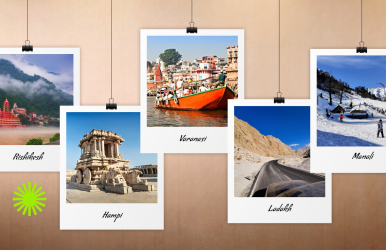
When you learn about these places, you realize they are made for solo travelers especially if you want to experience the full extent of it. Furthermore, when you are planning your solo trip to India, you must visit these places.   Try to be as open as possible to experiencing these places thus, meeting new people, making new acquaintances, and enjoying the journey. Also, try to learn the local tongue because it will help you connect with the people along with enjoying your trip.   Some of these places are the best places to visit in February, so you can plan accordingly.    Learn All About the Best Solo Trip in India Right Here!   If you love traveling and are planning to go on a solo trip in India, I have the perfect places for you. I have shared with you places depending on the type of traveler you are and what you look forward to when you travel solo to a place.   Most of these places that I have shared are suitable for solo traveling as well as quite popular. People from different countries visit these places additionally, even the local people travel to these places to enjoy and experience the beauty.   Nature Enthusiast Solo Traveler   If you are a nature lover, let me share with you some of the places you can visit for your solo trip in India. These places are the perfect example of nature at its best allowing humans to flourish amidst nature, experiencing the best of their life.   Darjeeling   Darjeeling is called the “Queen of the Hills” offering you some of the best views of the Himalayas. Nature is at its best here, which you can enjoy with leisure as the lifestyle there is quite relaxed as the locals are helpful and sweet-natured.   Let's not forget the tea plantation offering you some of the best tea in the world. You must get some when you visit. It is one of the most exotic places to travel in India.   Kasol   A perfect place for backpackers and nature lovers, Kasol is all but a huge landscape of lush greens and stunning scenery. Surrounded by hills, you will get many opportunities and stunning scenery. Kasol offers you an immersive experience that is unique for everyone!   Shillong   With gushing waterfalls, Shillong offers you one of the most majestic solo trips in India. Known as the “Scotland of the East”, Shillong is a place with majestic hills, showering the beautiful rays of sun on the Valley.   When you visit the place, you can enjoy a lot of elements including the pristine streams and deep gorges. The panoramic views of the hill create the perfect place for your nature attraction. Furthermore, you can go boating at the popular spot, the Umiam lake.   Beach Lover Solo Traveler   Beaches are the perfect place to be alone and unwind! So, let’s go on a solo trip in India to explore the beaches and enjoy the beautiful sunrises, sunsets, palm trees, wide expanse of water and so much more. If you are a national of India, you can visit the places to travel without a passport!   Pondicherry   If you are planning a solo trip in India, Pondicherry is one of the best options for you. Offering the unique combination of Indian and French culture, you will find Pondicherry as the best of both worlds.   Called the “French Riviera of the East” Pondicherry flaunts a serene atmosphere with beautiful beaches and colonial architecture. There are colorful houses with beautiful bougainvillea plants adorning the walls, a perfect spot for your solo trip picture, don’t you think?   Goa   Another place in India, Goa is a mixture of two cultures, Portuguese and Indian offers one of the best tourist experiences. As a solo traveler, it is one of the most popular destinations in India for its bustling nightlife, parties, serene beach life, delicious Goan delicacies and drinks.   Varkala   Known for its stunning sunsets, Varkala is in Kerala! When you are going on a solo trip in India, if you want cliffs, palm trees, and red sky, this is it for you. Whichever beaches you visit, you will see the red skies in the evening creating a beautiful view for you.   Additionally, if you are a spiritual person, Varkala for you is not just a cultural hub but also filled with temples. One such place is the pilgrimage site for Vishnu, Janardanaswamy Temple, and the Sivagiri Mutt monument for the social reformer, Sree Narayana Garu.   Culture Seeker Solo Traveler   India is a powerhouse of culture so if you are craving a cultural dose, these are the places for your solo trip in India. I have visited these places for their architecture, telling stories of the past, be it some ancient dynasty or the colonial transformations.   Hampi   A treasure trove, Hampi is a place in India that has several historical ruins speaking of the Indian culture. Visit this UNESCO World Heritage site situated along the Tungabhadra River to enjoy the immersive experience.   The capital of the Vijayanagara Empire, Hampi was abandoned in 1565, thus leaving ruins in its wake. As a history buff and diverse culture lover, I loved learning about the place, its palaces, temples and forts, most of them broken.   Varanasi   The spiritual city of India, Varanasi is the home of Shri Kashi Vishwanath, Lord Shiva where all goes to offer prayers. Often, people who are closer to death wish to visit the city to spend their last days of life.   With the ancient ghats and temples, you will experience some of the most beautiful and spiritual callings in your heart. You should not miss the mesmerizing Ganga aarti, a ceremony to worship the holy river Ganges. It is a grand affair with several priests worshipping using fire, incense sticks, flowers and other auspicious things.   Jaipur   When I went to Jaipur on a solo trip, my eyes took time to adjust to the vibrant hues of the place. Just like vibrant clothing, the culture is also vibrant as you will see people, quite funny and helpful. It is better to travel to these places with cash but if you do carry the best travel credit card, try to safeguard it!   The bustling markets offer different types of clothing along with the availability of delicious cuisine. Called the Pink City, Jaipur has historical palaces and forts, ancient stories of Kings and their practices, now shared by the people and the guides when you take a tour of the city.   Adventurer Solo Traveler   As an adventurer myself, solo traveling is one of the coolest experiences an individual can ever experience. So, what’s more? Check out these places that will bring the beauty of    Ladakh   Warm welcoming people in Ladakh offer you some of the best services to solo backpackers. If you are seeking peace and adventure together, let’s go to Ladakh with its winding roads, high-altitude passes, and snow-capped peaks.   The stunning landscapes will steal your breath away. As an adventurer, I am sure you will not be looking for leisure and luxury in Ladakh. Ultimately, it is perfect for a solo trip for mountain lovers!   Rishikesh   Known as the “yoga capital of India”, this is a popular destination for all who seek adventure and spiritual calling together. I would suggest going to Rishikesh if you have river rafting on your bucket list (approximately Rs. 600 to Rs. 2500 per person) and bungee jumping (approximately, Rs. 3700 per person).   For your spiritual calling, yoga retreats are there offering you panoramic views of the majestic Himalayas. Let's not forget the delicious local cuisine that is so affordable that your solo trip will be fun apart from being super affordable.   Manali   Are you too tired of your everyday corporate life? Want to escape to the hills soon? What better place than Manali for a solo trip? There are so many opportunities for a solo traveler in Manali, starting from river rafting, trekking and others.   As an adventurous explorer, you can go across several trails going zigzag in the Himalayas. Additionally, exploring the place will be perfect for your solo trip in India.   Let’s Go, Wanderer...   In conclusion, a solo trip in India encompasses various places, some of them better than others. You must visit the places described in this blog so that you can plan your trip accordingly. Plus, these places bring you some of the best memories in your life.   Comment below to let us know which of the locations in India is one of the best. Keep traveling and make memories while traveling solo.  Also read Top 10 Most Popular Paraguay Food That You Must Try. Top 13+ Famous Wonders Of India That You Must Visit.

READ MORE Tucumán nature guide

Tucumán Nature Guide: Exploring The Yungas Rainforest And High Andes

BY  Sibashree Jan 14, 2026

You think of the nature resorts, the famous wine tours, hiking, and birdwatching when we talk about exploring Tucumán. However, Tucumán has recently also emerged as an astrotourism hotspot.  The Ampimpa Astronomical Observatory in the Calchaquí Valleys of Tucumán is at the epicenter of this happening astrotourism scenario.  Now, this is an added feather to the crown of Tucumán, the smallest province of Argentina. It offers a vertical journey from the jungle to the desert in 50 kms.  Also, the nickname of Tucumán is not just a fancy phrase. It means a biological reality and refers to the historical event of Argentina’s independence from Spain in 1816.  Furthermore, El Jardín de la República, or the Garden of the Republic moniker, goes well with its subtropical climate and the lush landscape.   You guessed it right, as today, this Tucumán nature guide will take you to the Yungas Rainforest and the highlands of the Andes. Also, if you are planning a road trip, you must go through our Tucuman Argentina, itinerary. The Yungas Rainforest (The Green Belt) The Yungas Rainforest is known as the Green Belt, as it is an ecodiverse region. Home to a diverse flora and fauna, the Yungas Rainforest hosts a variety of bromeliads, orchids, and ferns.  Furthermore, among the animals here, you will find tapirs, wild cats, and panthers. You will even spot species such as Yungas Guan while birdwatching in Yungas, Argentina.  Also, it is home to the Campo Los Alisos in Tucumán, which helps to preserve the threatened ecosystem of the Yungas Rainforest region.  Moreover, containing around 50% of the biodiversity of Argentina, parts of the Yungas Rainforest are also marked as UNESCO Biosphere Reserves.  1. Parque Sierra De San Javier View this post on Instagram A post shared by Parque Sierra de San Javier (@parquesierradesanjavierunt) Parque Sierra de San Javier, or the San Javier Mountain Range Park, was established in 1974, and now the National University of Tucumán (UNT) maintains it.  It is one of the top nature reserves in Tucumán, Argentina.  The home to various flora and fauna of Argentina, this park also functions as the green lung by cleaning the air, protecting the watersheds for the city, and regulating the climate.  This park, furthermore, has many beautiful trails. You can enjoy an easy 30-minute jungle walk through the Cascada del Río Noque trail. If you are seeking silence while hiking in San Javier, Tucumán, you can opt for the Sendero Anta Yacu trek.  It is around 25 km west of Tucumán. If you are a budget traveler like me, you can take the Bus No 340 to reach the park.  2. Reserva Experimental Horco Molle View this post on Instagram A post shared by Asociación de Prestadores de Turismo Activo de Tucumán (@aptattucuman) This small but compact nature park is ideal for families. It is home to the tapir and condor rescue projects. It covers 600 acres and is just 15 km from the capital.  Also, it has picnic areas, barbecue areas, and play areas for children.  3. Aconquija National Park: The Untouched Wilderness View this post on Instagram A post shared by Parque Nacional Aconquija (@parquenacionalaconquija) Aconquija National Park, with over 600 species of endemic animals and birds, is the jewel of North America.  Taruca deer, puma, and ocelot are some of the endemic animals living here. In addition, you will find several Incan ruins scattered through the park. The Incan Highway remains, and the “Ciudacita” ruins are part of the UNESCO World Sites.  The Campo de los Aliso near Alpachiri is the main Aconquija National Park entrance. Furthermore, Cochuna is the wilder southern entrance of the Aconquija National Park.  Furthermore, the Mythical Trek of La Ciudacita, the Inca Ruins at 4400 meters, is the main highlight of this national park.   The High Andes & Puna (Tafí del Valle & Beyond) The harsh, cold conditions and a rich wildlife with the presence of vicuñas, flamingos are the highlighting features of the High Andes and Puna, at an altitude of 3000 meters.  This region has critical water resources that support livelihoods such as alpaca and llama. Let’s find out about the major nature reserves of this region.  1. Quebrada De Los Sosa Nature Reserve Take a drive up through Route 307 to find the Quebrada De Los Sosa Nature Reserve, where the jungle meets the clouds.  It is a 30 km-long gorge carved by the Los Sosa River, and it is home to more than 100 bird species.  With a winding pathway, it is also home to the Tafí del Valle. 2. Los Núñorcos & Reserva La Angostura Los Núñorcos, or the Cerro Núñorco mountain and Parque provincial Los Ñuñorcos are the prominent locations for hiking in Tucuman, Argentina.  As you explore the challenging trails here, you will enjoy a beautiful view of the Dique la Angostura lake and the Tafí del Valle. Tafí del Valle also has the Bald Mountain, or the Cerro El Pelao. You can start the trek near the Tafí del Valle center. It is a 1.5-hour-long trek.    Wildlife Watching Calendar In Tucuman, Argentina  Tucuman in Argentina is ideal for wildlife sightings throughout the year. Tafí del Valle and areas around Route 307, especially the best areas for wildlife spotting in Tucumán.  Check out the wildlife watching calendar in Tucuman below. Year-Round Sightings• Mammals: Capybaras, Some Foxes, and South American Sea Lions• Birds: Doves, Hummingbirds, and Toucans Spring (September to November) • Birds: Doves and Hummingbirds • Flowers: Pink Trumpets and Jacaranda treesSummer (December to February) • Mammals: Elephant Seals and Sea Lions• Birds: Penguins in Patagonia and Burrowing ParrotsAutumn (March to May)• Mammals: The Red Deer Rut• Birds: PigeonsWinter (June to August) • Reptiles: Yellow Anacondas• Birds: Waterfowl  What Are The Expert Tips For Hiking In Tucumán?  An entry to the Aconquija National Park is free. However, do you know that you have to register at the ranger station at least 48 hours in advance? It is crucial for the safety of the hikers. For more such insider knowledge, these expert tips will be very handy. 1. Bus #118 Is Your Friend  You don’t have to hire a car to see the jungle and the nature reserves. You can take the 118 bus from San Miguel de Tucumán directly to the foot of the San Javier trails.  The ticket price is even less than $1.  2. Watch The Fog (Neblina) The Fin del Mundo" statue area on route 307 is often the zero-visibility zone. There is dense fog in this area even at around 4 PM. You have to drive the car carefully, and there must be low beams to defeat the fog.  3. Ticks Exist In The Yungas  The lush greenery of the Yungas is ideal for picnics and nature exploration. However, there are ticks. So, you must check your ankles after a hike or use a blanket.  4. Hire A Guide For "La Ciudadacita" Are you planning a 4-day trek to La Ciudacita or the Inca Ruins? You must have a guide because the high altitude path, at an elevation of over 4000 meters, is unmarked. You need technical assistance for the navigation. Moreover, you must contact the Asociación Argentina de Guías de Montaña to hire a guide.  5. The "El Indio" Stop You will find the best dried meat or Charqui at the vendor stalls at the El Indio monument on Route 307. These stalls also have the best local honey.  Stop by these stalls and have the dried meat and honey for a great start to your hike.  6. The Waterfalls In Tucuman Are Seasonal  No Instagram reel will tell you that the waterfalls in Tucuman are seasonal. March to May, or the end of the rainy season, is ideal for visiting these waterfalls.  7. Beware Of The "Mala Mala" Local folklore speaks of the "Mala Mala" spirit in the mountains. Whether you believe it or not, respecting silence in nature is a huge part of the local culture. 8. No Cell Signal Once you pass the "El Indio" monument or enter Aconquija Park, your cell signal dies. Download offline maps (Maps.me or Google Maps) before leaving the city. 9. Condors Fly At Noon If you want to spot Andean Condors, look up between 11 AM and 1 PM when the thermal currents are strongest. They rarely fly early in the morning. Tucumán Nature Guide: Listen To The Authority Voices  Asociación Argentina de Guías de Montaña (AAGM): The Aconquija range is "one of the most undervalued trekking destinations in Argentina," offering Himalayas-like isolation without the crowds. Birding Ecotours (Global Operator) Rio Los Sosa is a prime spot for seeing the "Torrent Duck" (Pato de Torrente), a bird that can swim upstream in raging rapids. La Ruta Natural (Argentine Tourism Ministry) "Ruta de las Yungas" is a key scenic drive, highlighting the importance of driving slowly to spot the crossing fauna like the Corzuela (small deer). Tucumán Nature Guide: Frequently Asked Questions (FAQs) Here are the frequently asked questions and answers about the Tucumán Nature Guide.  1. What Is The Best Time Of Year For Hiking In Tucumán? April to September, or the dry season, is ideal for hiking in Tucuman. The cool temperature is ideal for outdoor exploration. On the other hand, heavy summer rains make the trekking trails here dangerous and muddy.  2. Do I Need To Pay To Enter The Nature Reserves? The entry fee to the national parks depends on the specific administrative and management authority. For example, you don’t need to pay any entry fee for the Aconquija National Park. However, prior registration is crucial. Further, for Reserva Horco Molle, you will have to pay an entry fee of $2.  3. Is It Safe To Hike Alone? Yes, it is safe to hike alone on the well-marked trails of Tucuman, such as the Rio Noque or Funicular. However, if you are going to high-altitude summits or jungle treks, you will need a guide. It is more crucial because of the presence of the fog and the absence of signage.  4. Are There Snakes In The Yungas? Yes, the Yungas have pit vipers or Yarará. So, you wear long trousers and watch your steps. Furthermore, you must follow the trail marks properly to not disturb the habitats of the snakes or other wildlife.  5. How Do I Get To Aconquija National Park Without A car? It is difficult to reach the Aconquija National Park without a car. You have to first take a bus to Concepción and then a local bus to Alpachiri. From Alpachiri, it is another 10 km taxi ride to the park entrance.  6. Can I Camp In The Reserves Of Tucuman? Yes, Aconquija National Park has designated wild camping zones (like Puesto La Mesada). However, Sierra de San Javier does not allow camping. So, it is for day use only. 7. What Is The "Yungas"? The Yungas, or a cloud forest in Tucuman, Argentina, is a mountain rainforest. It functions as a connector between the Andes and the Amazon.It has ferns, moss, and high humidity.  8. Can I See Toucans In Tucuman? Yes, you can see toucans in Tucumán. In recent years, toucans have made a comeback in this region.You can spot them in the trees around San Javier and Horco Molle. 9. What Is Hiking Altitude In Tucuman?  Hiking in Tucumán covers a wide altitude range, from the lows of San Javier (around 600 to 1200 meters) to the moderate Tafí del Valle (2000m). Furthermore, the Aconquija high summits reach more than 5000 meters. 10. Is The Water In The Streams Safe To Drink In Tucuman? No, the water in the Tucuman streams is not drinkable even with a clear view. Cattle graze in the higher areas and thus make the water unsuitable for drinking. So, you have to use purification tablets or a filter for purified drinking water.