



Unique Things To Do In Austin Texas | A Complete Texas Guide For You

Dec 18, 2024

Last Updated on: Jul 4, 2025

Travel Blog

Year-round sunshine and a pleasant weather condition make Austin the hub of outdoor pursuits. So, from hiking and biking to visiting the best parks, you have a lot of unique things to do in Austin Texas. 

Also, you must not forget that Austin is home to the Circuit of The Americas. It is the venue of the  Formula 1 United States Grand Prix. So, Austin is the place if you want a good mix of adrenaline rush and quiet retreat in nature.  

Moreover, tourism is in the soul of Austin. No wonder that almost every renowned platform like Forbes, Money Magazine, or the US News and World Report considers Austin one of the topmost places to sell for tourism.

So, do you also want to explore the things to do in Austin Texas? Here is your Tour and Travel guide. 

Unique Things To Do In Austin Texas (Including Free Activities While Traveling On A Shoestring)

Unique Things To Do In Austin Texas

Spring (March to May) and Autumn (September to November) are the best seasons to visit Austin. You can expect a mild temperature in these seasons, with temperatures recorded around 70 degrees F.

Avoid visiting Austin in the summer. The temperature shoots up to 90 degrees F, and the high humidity in the air makes it even more uncomfortable. 

Nevertheless, when in Texas, you must not miss the following activities.

1. Visiting The Zilker Metropolitan Park

Visiting The Zilker Metropolitan Park

The Zilker Metropolitan Park is located on the banks of the Colorado River. This 350-acre space is a great space for strolling. Here, you can also take a dip at the Barton Springs Pool. 

Moreover, the Zilker Metropolitan Park is the venue for some of the most happening events in the city. It hosts the ABC Kite Fest and Austin City Limits Musical Festival. 

2. Hiking And Biking At Ann And Roy Butler Trail

Hiking And Biking At Ann And Roy Butler Trail

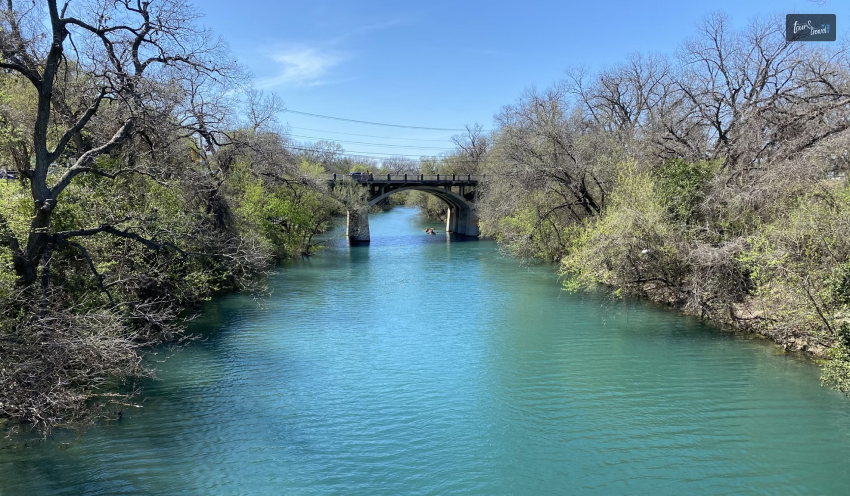
Are you looking for free things to do in Austin Texas, and want to spend some time in nature? You must visit the Ann And Roy Butler Trail for biking and hiking. The trail leads you to Lady Bird Lake. 

 It is also a popular place for running and walking for the locals. 

The trail has a 1.3-mile boardwalk, and from here, you can enjoy the most amazing views of Downtown Texas. Moreover, the highlights here are the zinc belts featuring the lyrics of the most famous songs of Texas. 

The fountains and scenic overlooks further make this place perfect for complete relaxation. Also, when you are at the Ann And Roy Butler Trail, you can see the Austin bats. Austin is famous for these nocturnal creatures and it is the biggest habitat of bats in the entire North America. 

3. Planning A Visit To Texas Capitol

Planning A Visit To Texas Capitol

If you are traveling on a shoestring and want to explore the best things to do in Austin Texas, a visit to the Texas Capitol is a great idea. It is free of cost, and you can explore the entire area in one to two hours.

In 1986, the Texas Capitol became a National Historic Landmark. Further, it has secured a place in the National Register of Historic Places.

The Texas Capitol is engineered with Texas granite and is even taller than the US Capitol in Washington DC by 14 feet. 

Today, the Goddess of Liberty statue at the top of this dome is made of aluminum. The earlier statue was made of zinc and it was replaced during the massive restoration work in the 1990s. 

4. A Free Visit To The University Of Texas In Austin

A Free Visit To The University Of Texas In Austin

A visit to the University of Texas in Austin is a must if you are looking for free things to do in Austin Texas. The Moody Center here is a popular venue for concerts and is widely visited by residents and tourists.

Do you want to watch a grand Broadway show? You can catch a show at the Bass Concert Hall. The Bass Concert Hall even hosts small traveling acts. 

However, to have the most maddening experience here, you have to visit the Darrell K. Royal-Texas Memorial Stadium. It can accommodate over 100000 visitors and the open-air setup resonated the cheer on the days of UT football games. 

5. Watch The Austin City Limits Live At The Moody Theater

Are you a fan of The Austin City Limits? You must plan a visit to the Moody Theater. In the history of American Television, Austin City Limits is the longest-running musical series. 

Before you catch a live screening of the series at Moody Theater, you can also take a tour. The tour starts from 11 AM from Monday to Saturday and continues for 90 minutes. 

6. Spending Some Time By Lake Travis

Spending Some Time By Lake Travis

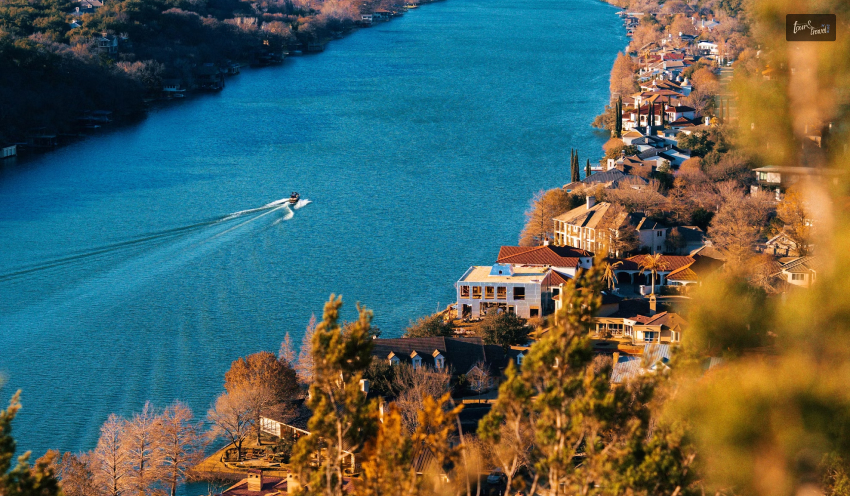
There is no dearth of natural wonders in Austin, and Lake Travis is surely one of the most prominent among them. Its shoreline is 271 miles and it has a length of 64 miles. 

Lake Travis is created by taming the water of the Colorado River with the Mansfield Dam. You can take a drive along the dam to assess the vastness and beauty of this lake. 

Furthermore, you can stop by the Mansfield Dam Park on the way. It is a beautiful place for a lot of outdoor pursuits. You can enjoy swimming, scuba diving, and hiking here. 

Moreover, the sunset looks most beautiful at Lake Travis. So, it is called the “Sunset Capital of Texas.” 

7. Visiting The Circuit Of The Americas

If you are in Austin in October and are a Formula 1 fan, you must visit the Circuit Of The Americas (COTA). It hosts the United States Grand Prix Race every October. Attend this event to experience the most beautiful fusion of light and speed.

With the crowd going crazy in the stadium for their favorite teams and racers, the ambiance becomes electric during the race. The racing track also has the Germania Insurance Amphitheater. It’s the largest venue for outdoor concerts in Austin. 

Moreover, you can visit the COTA tower here and reach the observation platform for a Hawkeye view of the racing track below and the entire surroundings. The ticket will cost you around $35.

Are you looking for more unique things to do in Austin Texas? You must plan a visit to South Congress Avenue, Blanton Museum of Art, and Sixth Street. 

Also read

Share on Social Media

Sibashree is a travel, culture, and leisure writer who has been writing since the age of 12 and professionally since 2014. With more than a decade of travel writing experience and journeys across India and several parts of the world, she brings a deeply personal and thoughtful perspective to her work. A student of English Literature and Mass Communication, Sibashree has always viewed travel as more than movement — for her, it has been a way of understanding people, cultures, and herself. Her passion for spiritual exploration has also led her to many unusual and meaningful destinations over the years. Outside of writing, Sibashree enjoys watching European cinema, reading about global politics, and reflecting on the stories hidden within everyday places.

Leave a Reply

Your email address will not be published. Required fields are marked *

title-img Related

READ MORE national parks in ohio

7 Best National Parks In Ohio You Should Know Before Going

BY  Abdul Aziz Dec 27, 2021

Are you a nature lover? Then, Ohio is the best place for the travel enthusiast. Ohio has hundreds of natural cliffs, hiking trails, and camping parks. Further, all the federal parks in Ohio are irresistibly beautiful and are full of natural beauty.  When you look at the map of Ohio, you will acquire knowledge about how many national parks are there in Ohio. The number of national parks in Ohio is eight. Further, the national parks in Ohio are the best tourist spots for national and international travelers. They are also the most popular camping spots. So, at Tour and Travel, we have decided to give you a brief idea about all the Ohio national parks. These places are great as budget-friendly tourist destinations and explore the nature and culture of Ohio at its best. List Of All 8 National Parks In Ohio If you are living nearby Ohio and still do not have ideas of camping in federal parks in Ohio. You have missed the beautiful view of nature. All the national parks in Ohio are becoming the best hanging-out spot for every adventure sports-loving person. Here are the names of the seven most popular Ohio national and state parks. 1. Cuyahoga Valley National Park Address: Ohio, USA Hours Open: 24 Hours Contact Number:  +1 440-717-3890 Fees: Free Cuyahoga Valley National park is one of the best national parks in Ohio. This national park lies between Cleveland and Akron. And it is situated along the Cuyahoga River. With the natural preserving beauty of the national park, the rich history of the place makes the park a unique tourist place. This national park is carrying the history of 19th-century waterway Canal exploration. On the north side of the park, a canal exploration center is present to deliver historical impressions to the visitors.  The Cuyahoga Valley railroad runs through the park, making the place more unique. This wildlife park is the home of amazing native wildlife and plants. Where to get a national parks access pass in Ohio? You only have to Buy the American annual pass and enjoy the park. The annual pass system has a special discount for military professionals and children. 2. John Bryan State Park Address: 3790 OH-370, Yellow Springs, OH 45387 Hours Open: One and a half hours before Sunrise to half an hour after Sunset Contact Number:  +1 937-767-1274 Fees: Free John Bryan state park is an extensive 752-acre state national park in Ohio. You hear about the Miami River, and This large green park is just right below the yellow spring and the Clifton. This park is a prevalent clamp ground among the local people. Apart from the beautiful scenic beauty, the long industrial history of the United States is adding more points. In the 19th century, industrial activity increased; therefore, water is no longer the economic source of water. For this reason, many of the factories are getting abandoned. And no longer in use. But the Clifton mill, which was built in 1802. This mill is now becoming a popular visiting place among tourists. 3. Nelson-Kennedy Ledges State Park Address: 12440 OH-282, Garrettsville, OH 44231 Hours Open: 7 AM to 7 PM Contact Number:  +1 330-235-0030 Fees: Free This park is a 167-acre public recreation park. When you are near Nelson township, this place is the best hiking spot for you. The Ledge park is full of hiking trails and camping spots. Beautiful waterfalls and native green plants are making this park look like heaven. This park is one of the best hiking spots for travelers as well as the national parks in Ohio. Nelson Kennedy ledges state park has a 3 miles long hiking trail.  As the park is situated on the natural landscape. Many dangerous paths are present in the park, but the marked hiking trails are guiding the right path of hiking. 4. Mohican-Memorial State Forest Address: 975 O D N R Mohican Road 51, Perrysville, OH 44864 Hours Open: 24 Hours Contact Number: +1 419-938-6222 Fees:  Free Have you seen the movie "The Last of The Mohican"? The natural beauty of the shooting spot is still getting most of the viewer’s attention. This state forest is situated in Ashland country, Ohio. This forest is quite popular among forest researchers. This large 4525 area of forest area is carefully looked over by the Ohio Division Of Natural Resources. This is the third most popular tourist destination in the United States. The Clear Fork River and Pine’s major streams are the two major rivers of the park.  The park’s best feature is 32 miles hiking, 22 miles bridle, 8 miles snowmobile, and 24-mile mountain biking trails. 5. Hueston Woods State Park Address: 6301 Park Office Rd, College Corner, OH 45003 Hours Open: 24 Hours Contact Number: +1 513-523-6347  Fees: Free This park lies in oxford city Ohio. The park belongs in the Butler and Pable country of Ohio city. It covers nearly 3000 acres of area and has 625 acres of a human-made lake. The state was bought in 1941. Initially, it was a prison camp, and after 1957 the park was open to regular visitors. And now, this is one of the best national parks in Ohio. This park has 12-mile long hiking trail and 19 miles of bridle trails along with 20 miles of mountain biking trails. The place’s camping facility is very organized, along with the hiking trails, golf course, and lodging facility. 6. Hocking Hills State Park Address: Logan, OH 43138 Contact Number: +1 740-385-6842 Hours Open: 10 AM to 5 PM Entry Fee: Free Are you searching for any national parks near Columbus, Ohio? Hocking Hills State Park is a good choice for you. This park belongs in the hocking hills region. A big part of Hocking state forest belongs in the hocking hills state park. This park has seven separate types of hiking areas, including different hiking trails. Cantwell Cliffs, Ash Cave, Conkle's Hollow, Old Man's Cave, Rock House, Cedar Falls, and a popular hiking route Hemlock Bridge Trail to Whispering Cave 7. Charles Young Buffalo Soldiers Address: 120 US-42, Wilberforce, OH 45384 Hours Open: 9 AM to 4:30 PM (Monday Closed) Contact Number:  +1 937-352-6757 Fees: Entry Free Do you want to see a national monument in Ohio? Visit this park, and you can see monuments along with enjoying the beautiful natural view. Charles Young Buffalo is one of the historical figures in his first days of life. He was an escaped slave. He was the first afro American soldier in the United States army. The house of the Buffalo soldier is one of the famous historical destinations among travelers. This is one of the most popular iconic monuments in Wilberforce, Ohio. When you plan to visit the Ohio parks, do not forget to visit this monument because the American civil war history was attached to this monument. 8. Dayton Aviation Heritage National Historical Park https://www.instagram.com/p/CjxhlbMMIAw/?img_index=1 Address: 16 S Williams St, Dayton, OH 45402 Contact Number: +1 937-225-7705 Hours Open: 9 AM to 4 PM (Monday Closed) Entry Fee: Free For all the literary enthusiasts and dark academia fans, Dayton Aviation Heritage National Historical Park in Ohio is one of the best places to visit. It remembers Paul Laurence Dunbar, an eminent poet and author.  The park also honors the aviation pioneers Orville and Wilbur Wright. A tour of this park will be a fulfilling and educational experience. Throughout the park, you will come across the following important spots: Carillion Historical Park Wright Cycle Shop Huffman Prairie Flying Field Paul Laurence Dunbar House Wright-Dunbar Interpretive Center Huffman Prairie Interpretive Center You can even opt for a ranger-guided tour of this best national park in Ohio. The only disadvantage of the park is that it does not have a camping ground. So, you cannot stay here.  However, you can always put up your tent in the private and public campgrounds near the park. So, check out the website of the Greene County Convention & Visitors Bureau to locate and reserve the campgrounds.  Frequently Asked Questions On National Parks In Ohio (FAQs) Q1: What is the newest state park in Ohio? A: Jesse Owens state park is the newest state park in Ohio. it is named after a world-famous athlete. It was created in the year 2018 out of a coal mining land that was owned by American Electric Power.  Q2: Which is the smallest state park in Ohio? A: Oak Point state park is known to be the smallest one in Ohio. Measures at 1.5 acres, despite being the smallest state park, it still offers a wide range of facilities for boaters, sightseers, and picnickers.  Q3: Are state parks free in Ohio? A: Ohio is one of the few states in the country that do not charge general admission and parking fee at its 74 state parks.  Wrapping It Up: All the Ohio state parks camping is the most favorite for the fitness enthusiast. The collection of these places are the most popular tourist destination among local and international travelers. National parks in Ohio list quite a long list. But these seven parks and sites are the best places where you can enjoy the hiking trails and camping.  If you are planning to visit Ohio parks for adventurous hiking, do not skip these popular parks. So what is your plan to visit? Do not forget to comment back to us.

READ MORE Cypriot tax system

How To Accurately Budget Your Relocation to Cyprus Using the 2025 Tax Calculator

BY  Sibashree Aug 27, 2025

Have you decided to relocate to Cyprus for career purposes? That would be a wise decision as this island nation follows one of the EU’s most simplified tax regimes for expats. Beyond the economic aspects, you also get to enjoy year-round sunshine and its rich cultural tapestry.  Yet, the core question that you must be clear about before living this coastal life is, at the end of the day, what your real take-home pay will be? Relocation can be costly since it involves several factors, one of which is your net income. This is why it is necessary to validate your take-home pay; rent, healthcare, school fees, and day-to-day expenses can quickly accumulate if your financial estimates are off. Fortunately, Cyprus mandates a transparent and predictable taxation system, which is rather easy to navigate with the help of a Cyprus salary calculator. This guide explains how Cyprus’s 2025 tax rules work, demonstrating salary breakdown interpretation and offering a step-by-step case study example for clarity.  Decoding the Cypriot Tax System: The Core Components As per the Cypriot tax system, your net salary isn’t just your gross salary after deducting “a flat tax.” Instead, it’s the final value of a progressive income tax system, and a few compulsory, specific deductions. When you understand all these core pillars, you can proceed toward accurate financial planning. The Progressive Income Tax Brackets (2025) For the 2025 tax year, typically running on a calendar-year basis, Cyprus applies a progressive structure: Annual income tax (€)Tax rate 0-19,5000%19,501-28,00020%28,001-36,30025%36,301-60,00030%Over 60,00035% Optimizing Around the €19,500 Tax-free Threshold A unique feature of Cyprus’s progressive income tax system is the €19,500 tax-free threshold. This threshold is indeed advantageous for those moderate and higher earners, protecting a significant portion of their income from taxation by lowering their effective tax rate.  That is why it is often suggested to optimize financial planning, such as contributing to approved pensions, life insurance, or charitable donations (within the 1/5 cap), to further reduce taxable income. Structuring income and deductions strategically around this threshold is one of the simplest ways to optimize your relocation budget. Social Insurance Contributions (Sic) Everyone, including you and your employer, is liable to contribute towards the national Social Insurance Fund, which supports pensions, sickness benefits, and unemployment protection.  However, the limit of contribution varies by party: Employee contribution: 8.8% of gross salary Employer contribution: 8.8% of gross salary Annual cap: €66,612 (as per 2025 figure) Now, this annual cap highlights that even if your yearly income crosses €66,612, you aren't liable to pay Social Insurance on the portion above that limit. For high earners, this annual cap significantly lowers the effective contribution rate. The General Healthcare System (Ghs / Gesy) The healthcare sector in Cyprus is funded by the General Healthcare System (GHS), the amount of which is contributed by everyone living and working in the country through the comprehensive GeSY healthcare system. They provide all-inclusive medical coverage to residents, including GP visits, specialists, and hospital services. Employee contribution: 2.65% of gross salary Employer contribution: 2.90% Cap: €180,000 annual earnings Unlike Social Insurance, the GHS cap is high, where most employees have to pay the full 2.65% on their entire income. Employer vs. Employee Contributions If you are an employee negotiating your salary, be clear about your gross salary (the basis for your tax obligations and deductions) and the cost to the company (gross salary plus employer-side contributions). For employees, the compulsory deductions include: 8.8% Social Insurance (capped) 2.65% GHS Income tax per progressive brackets For employers, the mandatory obligations are higher and include: 8.8% Social Insurance 2.90% GHS 2.0% Social Cohesion Fund (no cap) 1.2% Redundancy Fund 0.5% Human Resource Development Fund Up to 8.0% Central Holiday Fund (unless exempt) Now, assuming that you are an employee structuring your budget, prioritize employee deductions. However, do not ignore the employer’s additional costs; understanding them would be beneficial during salary package negotiations, provided that benefits are negotiable. Case Study Example: Net Pay on a €50,000 Gross Salary This hypothetical example of €50,000 annual gross salary would help understand what the final take-home pay looks like in 2025 for an employee with no special expat exemptions or extra allowances. Step 1: Calculate Deductions Social Insurance: 8.8% of €50,000 = €4,400 GHS: 2.65% of €50,000 = €1,325 Step 2: Apply Progressive Income Tax €0-€19,500 @ 0% = €0 €19,501-€28,000 (€8,500 @ 20%) = €1,700 €28,001-€36,300 (€8,300 @ 25%) = €2,075 €36,301-€50,000 (€13,700 @ 30%) = €4,110 Total income tax = €7,885 Step 3: Net Pay €50,000 − €4,400 − €1,325 − €7,885 = €36,390 per year≈ €3,033 per month (assuming 12 equal payments). However, if your employer pays a 13th salary, a common practice in Cyprus companies, your monthly net pay will be even lower but spread across 13 payments. For that, you can use a Cyprus salary calculator to model these variations instantly. How Employer Costs Compare Using the same case study example of €50,000 gross salary, here’s what the employer’s total annual outlay would look like: Social Insurance: €4,400 GHS: €1,450 Social Cohesion Fund: €1,000 Redundancy Fund: €600 HR Development Fund: €250 Holiday Fund (if not exempt): €4,000 Total Cost: With holiday fund exemption → €57,700 Without exemption → €61,700 This difference is the reason to negotiate your salary package as much as possible. Moreover, some employers even offset holiday fund obligations by allowing extra paid leave instead. Final Words Relocating to an entirely new place with a new environment and legal systems is an adventure. But by taking control of your financial details upfront, and using the progressive tax brackets, understanding obligated deductions, and leveraging a precise Cyprus salary calculator, you can overturn uncertainty into confidence.

READ MORE Lake Clark National Park

Lake Clark National Park And Preserve: Very Few Know How It Preserves The Alaskan Spirit And Culture

BY  Sibashree Sep 10, 2024

Lake Clark National Park is committed to subsistence. It’s a sincere effort not to impact the “physical and spiritual culture of Modern Alaska.” Further, the park authority wants to pass on the park’s history to the future generation and the public. So, it was not surprising when the park sought public opinion on the exploration of its mineral tracts (Johnson Tract).  Located in the Johnson River headwater, Johnson Tract is a polymetallic project, and mining of gold, silver, copper, zinc, and lead is possible here. Public comments on “transportation and port site easements” are invited so that there is better accessibility to Johnson Tract. However, the more important aspect of it is analyzing the environmental impact of the project on the park.  There will be the following activities, and the analysis report will likely be published in the fall of 2024.  Hydrological assessment Geotechnical assessment Surveys of cultural and natural resources  But that’s not all! There have been many published stories, such as “Dena'ina Ełnena,” “Canneries, Cabins, Caches,” and more on this national park. Moreover, storytelling by the Native community or the tradition of oral storytelling is still alive here as a part of the “University of Alaska Fairbanks program.”  The things I have discussed so far show how the park is focused on preserving its personal and shared identities. Now, I will delve into some related details and also talk about what makes Lake Clark National Park special in terms of places to visit and things to do.  Preserving History And Culture At Lake Clark National Park  Do you know the original name of Lake Clark? Dena’ina people call it “Qizhjeh Vena,” meaning “a place where people gathered lake.”  Further, the people of Dena’ina, or Athabascan culture, have made this region their home for thousands of years now. How they see the lake and the surrounding land as the main resource of their lives will change the common perspectives about this national park. It is not just a preserved space with wilderness, interesting landscapes, and scenic beauty! It is an account of human history.  Women were always taught to be independent in this culture. They knew how to set snares and ground squirrels. This was an important exercise so that they had to never be dependent on others for food.  Athabascan people, originally from Alaska, started residing here. Further, with time, they encountered people from Russia, the USA, Canada, and Western Europe. Thus, their way of living evolved. However, they have made an effort to preserve their old way of living, and subsistence is still the key to their lives.  I have already mentioned how the oral and written stories preserve the cultural spirit of the park for posterity. Further, the Natural and Cultural Museum of the park preserves many artifacts, geological samples, and ethnographic items so that you can learn about the physical, spiritual, and cultural transformations.  Here is a breakdown of the total 248,402 items preserved at the museum. Type of ItemNumbers Archeological Artifacts34,363Park Archive Documents202,397Historical Artifacts, Documents, And Photos4,663 Biological Specimens6,838Paleontological Specimens47Ethnographic Items16Geological Samples69Objects of Art 9 The museum specialists take special conservation measures to make these objects available for posterity.  These Are The Historically Significant Places In Lake Clark National Park And Preserve https://www.instagram.com/p/B_VbC2clywQ/ Many areas of the park have names in English and Dena’ina. The names in Dena’ina are crucial if you want to understand their significance and the story behind them. Here’s a brief list of the historical places to visit in this park.  Dena’ina Tinitun or Trails  Ancestral Telaquana Trail Tanalian Point Hnitsanghi’iy 'The Rock That Stands Alone' (Priest Rock) Qizhjeh Vena or Lake Clark Kijik (Qizhjeh) National Historic Landmark and Archeological District While the sites have historical significance, they also speak volumes about Dena’ina values and way of life. For example, the trails here show the importance of social, cultural, and ceremonial participation among Dena’ina people. Many also believe that these trails are like “geological and educational maps” for future generations.  Subsistence Is The Key At Lake Clark National Park And Preserve Dena’ina people believe that the wilderness and animals will be good. It is we, humans, who have to be respectful toward them. To adhere to this, people in Dena’ina culture develop a communal understanding, and learn how to make the most of the limited ecological resources available. To maintain the art of subsistence, the people of Dena’ina culture focus on the following aspects.  The Ethics of Taking Hunters need to donate some part of the meat to the ill, old people, and families. This exercise shows how the tribe prioritizes communal bonding. Further, along with food distribution, the exchange of knowledge and resources is equally important in this culture.  Hunting and Trapping https://www.instagram.com/p/B8M_BvyHeUx/ Hunting animals, especially caribou and moose, is important for survival. Further, the distribution of meat according to the “Ethics of Taking” also builds community cohesion.  Trapping is a year-long activity here. Small animals such as mink, river otter, and Alaska hare are trapped to support living. However, Dena’ina people learn the skills of not hurting others or non-targets while trapping small animals.  Plant Harvesting Dena’ina families use various parts of the plants for different purposes. They collect food from the plants, and some of the plants also have medicinal properties. Further, trees and plants are often sources of tools, fuel, wearable accessories, and ceremonial essentials for them.  Berries grow in abundance here. Northern black currant, crowberries, and blackberries are some common varieties. Crowberry and blackberry leaves are used to cure diarrhea. Further, the stems of crowberry have medicinal properties that cure kidney problems.  Fishing and Fish Camps Summer and fall are the seasons of salmon in the Lake Clark National Park and Reserve. During these seasons, this national park has the largest salmon migration in the world. Further, families reunite and celebrate, and tourists flock in great numbers to the park to see and catch salmon.  Pike, trout, grayling, and whitefish are other varieties of fish found here. In addition, there are Nundaltin Q’estsiq’ and other fish camps where fish is processed and a temporary community is built.  Ethnographic studies further support all these subsistence activities. These studies related to fishing and other outdoor activities and the art of Dena’ina people living around Lake Clark are crucial. These studies help the local people to respond better to the economic, environmental, and sociocultural changes.  Things To Do At Lake Clark National Park And Preserve The vast wilderness and unique geological features make Lake Clark National Park suitable for hiking, camping, boating, fishing, rafting, and many other outdoor pursuits. Make the most of your time at the park! 1. Rafting In The Wild River https://www.instagram.com/p/CeSJ6Hbo0gw/ Tlikakila, Mulchatna, and Chilikadrotna are three wild rivers in the park. All these rivers are great for rafting. However, you must adhere to the Alaska Office of Boating Safety guidelines to avoid mishaps.  2. Fishing https://www.instagram.com/p/Cvz9q0ns6ms/ May to October is the best season for fishing in the Lake Clark National Park. Lake Clark is the main fishing hub here, and you can also explore Crescent Lake and Silver Salmon Creek.  3. Hiking  https://www.instagram.com/p/CrgO6IoOATU/ Tanalian Trails are the most popular for your hiking expeditions in this park. You can walk to Tanalian Mountain, Kontrashibuna Lake, Beaver Pond, and Tanalian Falls.  Many hikers also try hiking the Lake Clark and Upper Twin Lake trails.  4. Bear Viewing  https://www.instagram.com/p/C9kRPM2OYmi/ Silver Salmon Creek, Chinitna Bay, and Crescent Lake are the best sites for bear viewing in Lake Clark National Park.  5. Camping  https://www.instagram.com/p/BCO9H6jgnnr/ The area near Hope Creek is suitable for camping. Cook Inlet Coast is another place where you can put up your camps.  Knowing The Wildlife At Lake Clark National Park And Preserve Lake Clark National Park And Preserve is the place where you will get to see a bear in the stream and coming out with a salmon between its teeth. Very few people know that this national park is home to as many as 37 terrestrial animals and 187 bird species.  Nonetheless, have a look at the table below to learn about the animals you will meet at this national park.  MammalsBrown bearsBlack bearsDall sheepCaribouWolvesMooseBirdsGolden-crowned sparrowBald eaglesGolden eaglesTrumpeter swansSea ducksOlive-sided flycatcherFishSockeye SalmonArctic GraylingRainbow troutPike Did You Know? People in the Lime Village believe that olive-sided flycatchers and golden-crowned sparrows announce the arrival of the salmon season (around 3.1 million every year).  Birds are seen around the inland lakes, mountains, and coastal areas.  Before You Set In… Lake Clark National Park is a place less trodden by. Here is a quick glance at the things you need to know.  Established: 2nd December, 1980 Area: 4,030,006 Acres Number of Visitors: 16,728 (2023) Best Time to Visit: Late Spring to Early Fall Highest Point: Redoubt Volcano (10,197ft) Visitors Center:  Port Alsworth Visitor Center  Entry Fee: Free Best Mode of Transport: Small Planes Run by Authorized Air Taxi Companies Yelp Rating: 4 Star Also read Why Include Whale Watching In Your LA Itinerary. Traveling On A Budget: Tips For Affordable Adventures. From Cocktails To Kickflips: Must-Try Activities In San Diego.