

Why Is Kawasan Falls Known For? (Description, Location, Activities, Timing, And More)

Aug 22, 2025

Last Updated on: Sep 25, 2026

Travel Guides

Thanks to Kawasan Falls and its associated canoeing activities, the Government of Badian in the Philippines is expecting a 50% tourism boom.

Earl Endab, the Badian Tourism Officer, has confirmed this in a conversation with The Freeman. 

However, Kawasan Falls, the multi-tiered waterfall in Badian, has always been the prime attraction of Cebu in the Philippines.

Also, it played an important role in the Balan tourism industry, contributing P500 in 2024. 

Now, what makes Kawasan Falls so special?

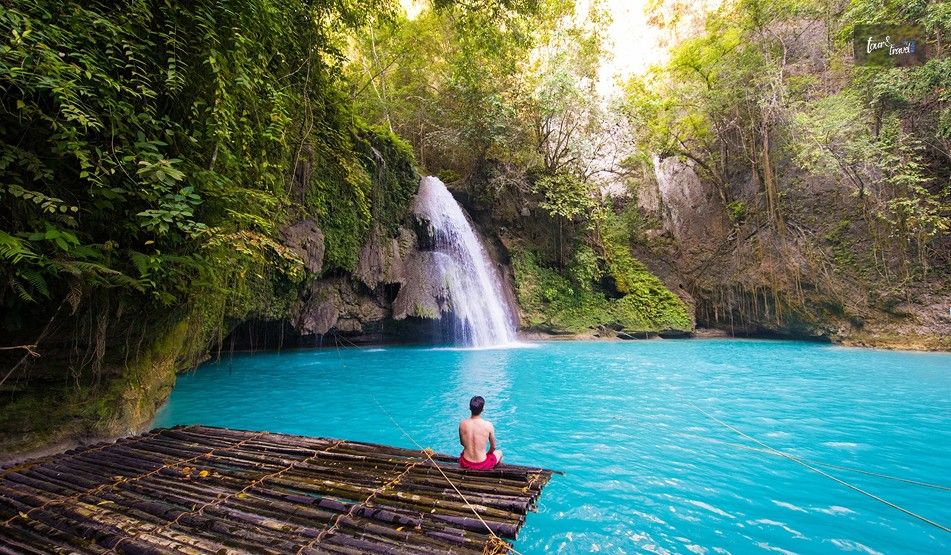
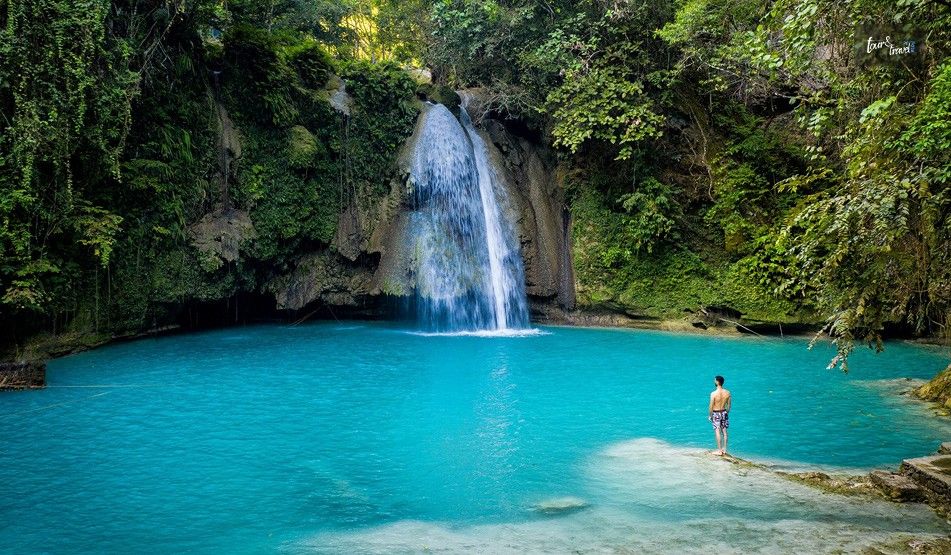
Turquoise blue water, refreshing pools, and lush green tropical surroundings have made Kawasan Falls the ideal place for relaxing and swimming. 

In this Tour and Travel Blog, I will discuss the following key areas about Kawasan Falls. 

What Is Kawasan Falls Description? Know The Key Features Of The Waterfalls 

What Is Kawasan Falls Description Know The Key Features Of The Waterfalls

Around 3 to 4 hours away from Cebu City, Kawasan Falls is at the foot of the Mantalongon Mountain Range.

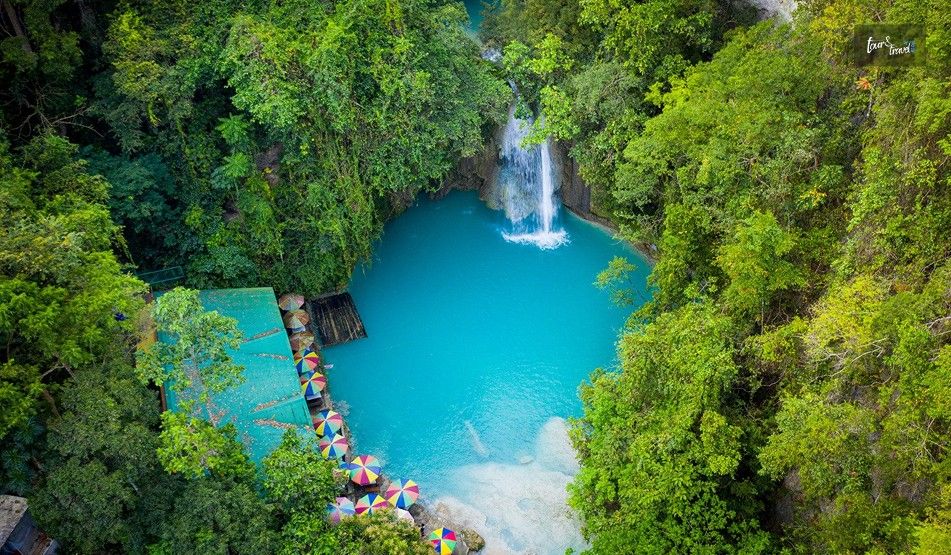
Due to the high amount of limestone deposits, the water of Kawasan Falls is deep turquoise in color.

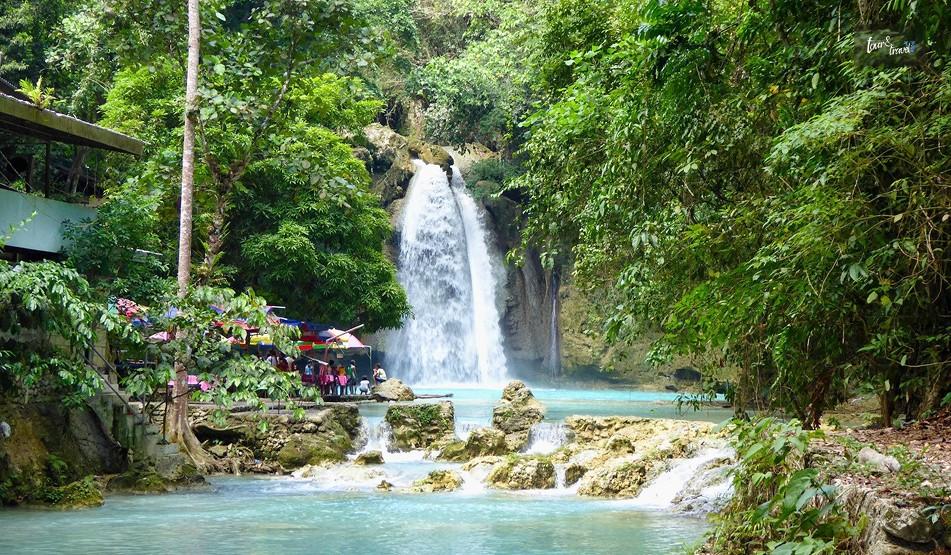
The height of Kawasan Falls is 40 feet. 

Furthermore, as the multi-tiered waterfall falls down, the volcanic rock formations make a pool with a depth of 11 meters.

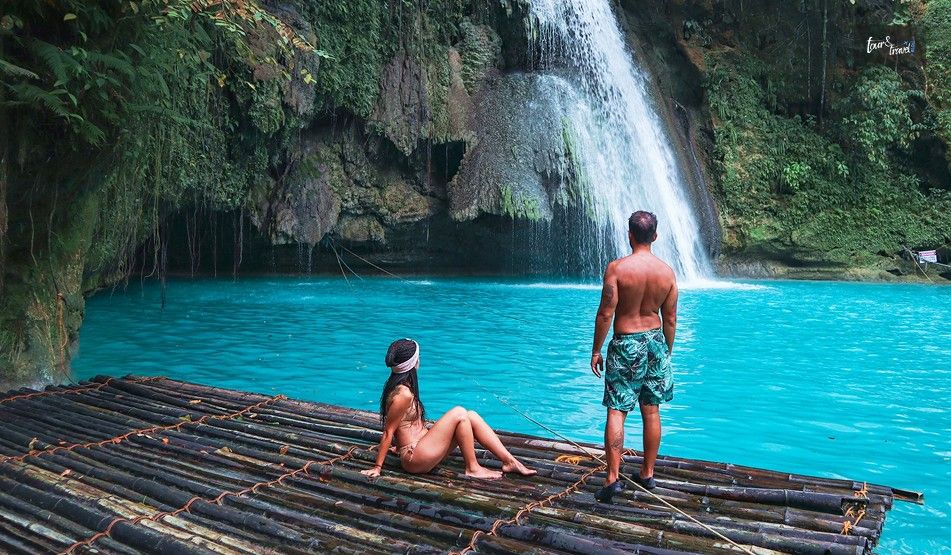
You can take a bamboo raft and reach under the falling water for a delightful “Waterfall Massage.” 

These waterfalls, as part of the Kawasan Falls, get their water from the Kabukalan Spring.

Then, the water passes toward the Tanon Strait and Matutinao River through the Kawasan Gorge. 

Moreover, Kawasan Falls are important for the overall ecotourism landscape of the Philippines.

It offers the perfect blend of a unique ecosystem, adventure activities, and scenic beauty. 

Here are the key features of Kawasan Falls.

Key Features of Kawasan FallsDetails
Main Falls•The first tier consists of a 40-meter-high waterfall that cascades down the Kawasan Gorge and forms a deep pool. 

•Swimming and bamboo rafting are popular activities here. 
Upper TiersYou can hike up the main waterfall, and there you will find many small waterfalls and different hiking spots. 
Canyoneering AdventureTake an adventurous canyoneering tour from Alegria to Badian. 

The activities on the way include:

•Cliff-jumping
•Trekking
•Swimming in the Matutinao River.
Lush Green SurroundingsEnjoy an immersive experience here thanks to the lush green tropical surroundings filled with the delightful chirping of birds. 
Easy Accessibility•You can take a drive from Cebu City and reach Kawasan Falls within 3-4 hours. 

•Then, you can take a walk of around 10-15 minutes along the river to reach the waterfall. 
Hours OpenEarly Morning to Late Afternoon
Kawasan Falls Entrance FeePHP 45

What Is The Kawasan Falls Location?

  • Province: Cebu, Central Visayas, Philippines
  • Town: Badian
  • Barangay: Matutinao

Located in South Cebu, the Kawasan Falls are nestled within the Barangay Matutinao Mountains.

The nearest municipality to here is Moalboal. It only takes 30-40 minutes to reach Kawasan Falls from Moalboal. 

Moalboal itself is known for the most vibrant marine life, with turtle sightings and a sardine run.

Moreover, Panagsama Beach here is a popular destination for scuba diving and snorkeling.

How To Reach Kawasan Falls From Cebu City? 

How To Reach Kawasan Falls From Cebu City

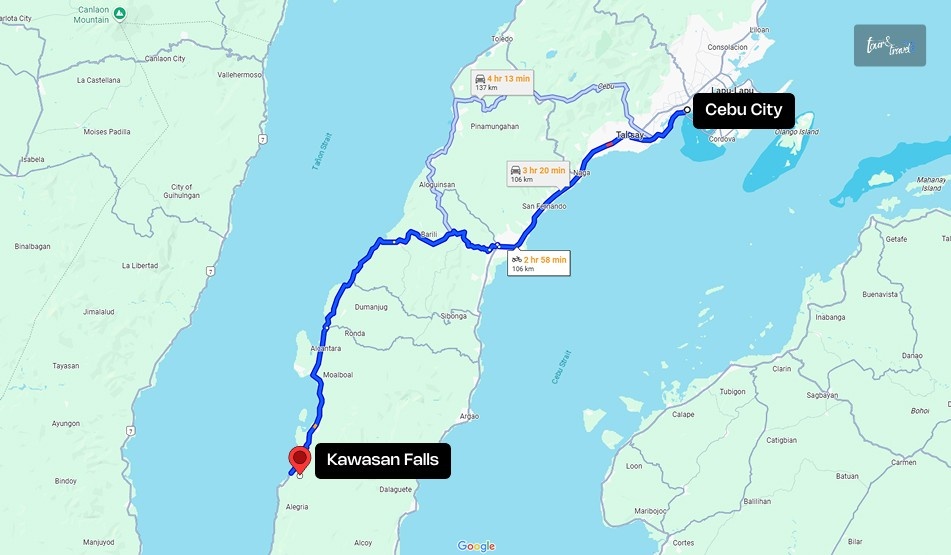
The distance between Cebu City and Kawasan Falls is close to 107 km.

You can either take a bus or a private car to travel the distance.

You can even opt for a shared van ride to reach Kawasan Falls. 

1. How To Reach Kawasan Falls From Cebu City By Bus?

You will easily find buses run by Ceres, the largest bus company in the Philippines.

Take the bus bound for Bato via Barili. 

After a 2- 2.5-hour ride on the bus, you will have to get off at Matutinao Church or the Sto.

Tomas De Villanueva Parish. From there, you will have to take a walk for 15-20 minutes to reach the waterfall. 

2. How To Reach Kawasan Falls From Cebu By A Private Car?

When you book a private car, you will get transportation assistance along with guided activities.

The journey by car takes around three to four hours. 

The journey will cost 200 PHP per person.

You can even take a motorcycle ride, available for 50 PHP per person. 

3. Take A Shared Van Ride From Cebu To Kawasan Falls 

You can take public vans for 120 PHP or shared vans from the GT Express Terminal in Cebu.

Shared vans are available till Moalboal.

From Moalboal, you can take any southbound bus to reach the gates of the Kawasan Falls.

Why Visit Kawasan Falls In Cebu? What is Kawasan Falls Known For?

Why Visit Kawasan Falls In Cebu What is Kawasan Falls Known For

Kawasan Falls is famous for its deep turquoise waters and pools, and it is a hotspot for canyoneering adventures and activities such as:

  • Sliding down rocks
  • Hiking
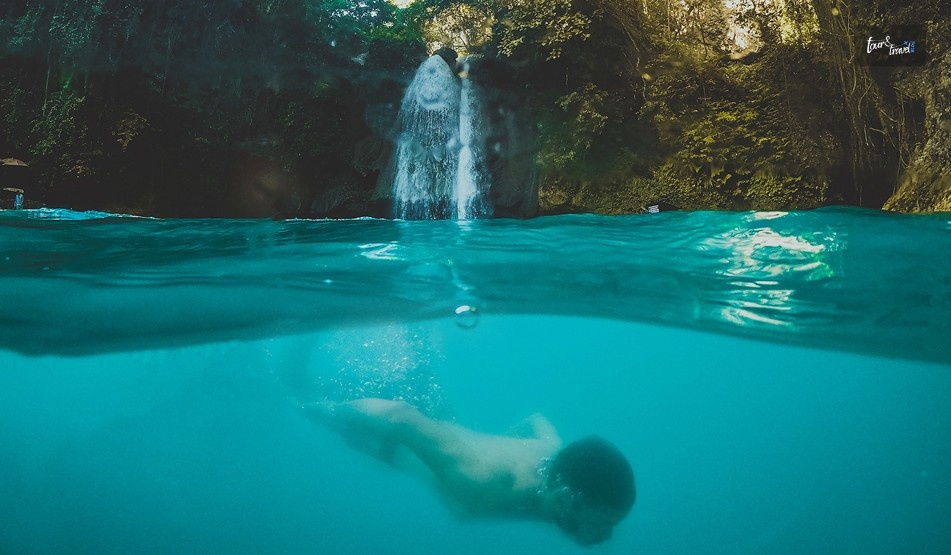
  • Swimming
  • Cliff jumping

Due to the thrills and challenges of the canyoneering route, it is also known as a natural obstacle course. 

Moreover, as you take the left side of the waterfall and walk through the path briefly, you will come across many small springs.

Also, Mainit Hot Springs, at the stop of Malabuyoc (to be found on the route from Oslob to Kawasan Falls), is a popular nearby attraction. 

Also, Kawasan Falls has always been crucial as an eco-tourism destination.

Now, everyone talks about the canyoneering adventures, lush jungle settings, multi-tiered formations, etc. 

However, there is more to it.

Ecotourism means balancing tourist activities with environmental benefits by following sustainable practices. 

Furthermore, ecotourism can boost local conservation efforts by creating employment opportunities and helping local commercial establishments. 

Top Things To Do At Kawasan Falls: Kawasan Falls Activities

Top Things To Do At Kawasan Falls Kawasan Falls Activities

From enjoying a relaxed picnic to having the most adventurous canyoneering activities, it offers you the most eclectic experience. 

Here are the things to do at the falls.

1. Canyoneering Adventure

Guided tours are a must for canyoneering adventures. 

2. Swimming In The Natural Pools

Cool down in the main basin of the first waterfall level.

It is perfect for casual swimmers and families. Here, you will get life vests available for rent. 

3. Bamboo Rafting

Are you ready for the ultimate “Water Massage” experience?

Rent a traditional bamboo raft and float directly to reach under the falls, and allow the mighty cascades of water to fall on you. 

4. Light Hiking To The Upper Levels

Once you are done with all the picnic fun and adventures at Kawasan Falls, you can go for a short hike for 10 to 15 minutes.

There, you can spot the second and third waterfalls. 

These places are ideal if you are looking for a less crowded and quieter experience. 

5. Picnicking

Tables and cottages are available for rent.

Bring your own food or grab some local eats nearby.

A Breakdown Of Kawasan Falls Levels

A Break down Of Kawasan Falls Levels
LevelHeightActivitiesTour and Travel Blog Comments
Kawasan Falls Level 140 Meters• Swimming
• Rafting
It is crowded, especially on weekends. 
Level 220 Meters• Swimming
• Relaxation
This is quieter.
Level 310 Meters• Hiking
• Spending Tranquil Moments
This offers the most immersive experience. 

What Is The Perfect Itinerary? 

Kawasan Falls is one of the few places that offer a spontaneous travel experience.

Nevertheless, your perfect itinerary looks like this. 

ActivitiesTimeThings to Do
Depart from Cebu City4:30 AM• Arrive Early
• Avoid Traffic
Stop for Breakfast at Carcar or Barili6:30 AM• Try Local Delicacies Such as Puto and Lechon. 
Arrive at Badian/Register8 AM• Register and Meet Your Guide. 
Start Canyoneering Adventure8:30 AM• Follow the Safety Briefing
• Get Ready with the Gear
Cliff Jumping, Sliding, and Trekking9 AM to 12 PM• Finally, Jump into Kawasan Falls. 
Lunch12:30 PM• You can choose a Tour Where Meals are included. 
Swimming or Bamboo Rafting1:30 PM• Relax at Kawasan Falls Level 1. 
Hike to the 2nd and 3rd Level2:30 PM• Enjoy an Immersive Experience at a Less Crowded Place. 
Freshen Up3:30 PM• Freshen Up at Basic Showers and Changing Areas. 
Leave from Kawasan Falls for Moalboal Beach4 PM• Enjoy the Local Marine World and Spot Marine Animals. 
Arrive in Cebu City from Moalboal Beach7:30-8 PM• Expect heavy traffic. 

What Is The Best Time To Visit Kawasan Falls? 

What Is The Best Time To Visit Kawasan Falls

The dry season from December to May is the best time to visit Kawasan Falls.

Moderate temperatures and clear skies make these months ideal for swimming and canyoneering. 

On the other hand, the wet season from June to November impacts water safety. 

Also, early morning is the best time of the day for visiting Kawasan Falls.

If you visit the waterfalls before 8 AM, you will enjoy better lighting, fewer crowds, and great photography opportunities. 

Budget And Expenses Of Visiting Kawasan Falls

The budget and expenses of visiting Kawasan Falls will depend on the mode of transport, the food you have, the group strength, etc. 

Nevertheless, roughly, your budget for visiting Kawasan Falls will look like this. 

ItemEstimated Cost Per Person
Bus Fare (Round Trip)₱ 300-400
Entry Fee₱ 45
Canyoneering Tour (Including Gear and Guide)₱ 2000
Lunch and Snacks₱ 200-300
Locker and Cottage Rental₱ 100-300
Total Estimated Cost ₱2645-3045

Where To Stay Near Kawasan Falls?

Badian is the closest to the falls.

This place has many basic hotels and homestays. However, Moalboal, at a distance of 30 minutes, has more luxurious beaches. 

Also, Alegria will be the right place to find accommodation if you are going on a canyoneering adventure. 

What Are The Best Instagrammable Spots At Kawasan Falls?

The top of the bamboo raft below the first fall is the best Instagrammable spot at Kawasan Falls.

Some other Instagrammable spots here are:

  • Mid-jump during canyoneering
  • Poolside at the second level
  • Jungle trail bridges leading to the falls
  • Drone shot above all three levels (with permission).

Conservation And Responsible Tourism At Kawasan Waterfalls

Conservation And Responsible Tourism At Kawasan Waterfalls

Cebu is projected to produce the highest amount of solid waste in 2025 in the Philippines.

Plastic bottles, scattered sachets, and plastic bags constitute the highest amount of waste produced in the region. 

A rise in the number of foreign tourist footfall here has led to the mounting waste.

In this context, ecotourism can be a great alternative to mass tourism. 

Kawasan Falls is a part of the 248 protected areas of the country.

Due to over-tourism, the site was temporarily closed in 2022 for rehabilitation.

Since reopening, visitor caps and strict regulations have been enforced.

Always follow “Leave No Trace” principles when you visit Kawsan Falls. 

  • Don’t pick plants or disturb wildlife.
  • Avoid loud music.
  • Bring your own trash back.
  • Stay on marked paths.

Travel Tips For Visiting Kawasan Falls

  • Wear aqua shoes or trekking sandals as the trails can be slippery. 
  • Use waterproof bags/cases to protect your electronics. 
  • Follow local guides’ instructions as a safety-first approach. 
  • Pack out your trash and respect nature.

Kawasan Falls: Frequently Asked Questions (FAQs)

Here are the frequently asked questions and answers about Kawasan Falls. 

1. Can Kids Visit Kawasan Falls? 


Yes. Kids can visit the first-level pool of Kawasan Falls.

However, canyoneering is only recommended for ages 12 and above.

2. How Long Does The Canyoneering Tour Take?


On average, the tour lasts 3 to 5 hours, depending on your pace and the weather.

The tour starts from the Matutinao River. 

3. What To Wear For Visiting Kawasan Falls? 


You must wear quick-dry clothes and water shoes or sandals with a good grip.

Furthermore, you will need a rash guard for sun and rock protection. 

Wear swimwear underneath if swimming is on the itinerary list. 

4. What Is The Weight Limit For Ziplining At Kawasan Falls? 


The weight limit for ziplining at Kawasan Falls is 100 kg.

If you exceed this limit, you will have to trek to the starting point.


Share on Social Media

Sibashree is a travel, culture, and leisure writer who has been writing since the age of 12 and professionally since 2014. With more than a decade of travel writing experience and journeys across India and several parts of the world, she brings a deeply personal and thoughtful perspective to her work. A student of English Literature and Mass Communication, Sibashree has always viewed travel as more than movement — for her, it has been a way of understanding people, cultures, and herself. Her passion for spiritual exploration has also led her to many unusual and meaningful destinations over the years. Outside of writing, Sibashree enjoys watching European cinema, reading about global politics, and reflecting on the stories hidden within everyday places.

Leave a Reply

Your email address will not be published. Required fields are marked *

title-img Related

READ MORE Winter Vacation

Traveling During Winter? Here Is A Winter Vacation Planning Checklist

BY  Ankita Oct 13, 2023

Winter vacations come packed with numerous fun activities. If you like skiing, this is the best time for you. The season is cold, allowing you to wear the warm clothes you have stuck away for a long time. You get to enjoy the warm coffee and cozy evenings. You can also enjoy watching the starry sky at night as you keep warm around a fire. Those who love being outdoors during the winter have the opportunity to plan a fantastic winter vacation. A successful vacation begins with proper planning. So, develop a checklist and prioritize the important things. Part of planning is packing all the items you will need during your winter trip, and there are several things to remember.  Here Are Ten Important Things For Winter Vacation  This article will present ten must-have things for winter vacation. This checklist will allow you to plan your winter holiday and enjoy the experience. 1. Medicines Carrying your medicines is a vital thing when going on a winter vacation. It is cold, meaning you could get the flu. Carry an anti-fungal cream, a cold and cough syrup, a balm for the headache, and flu medicines. Because of the abrupt change in temperatures, you may experience various issues, hence the importance of being prepared for minor illnesses. It is also crucial to carry your menstrual pads and tablets. 2. Thermal Wears It is vital to carry high-quality thermal wear when going on a winter vacation. The thermals maintain the warmth in your body during severe temperature drops. They are must-haves when packing for winter travel. Remember, thermal wear protects the entire body. It is allowed if you feel you cannot wear more clothes over the thermals, and the thermal wear will keep you warm. 3. Winter Jacket Winter jackets are the most essential items for a winter holiday. The jacket forms an outer layer over your sweater or thermal wear, insulating you from the cold. A great winter jacket provides warmth throughout the trip. It is a vital addition to the packing checklist. So, choose down jackets or army-type jackets for more comfort. If you want a carry-on bag only, it will be wise to wear some bulkier items like the winter jacket. This will free up space for other things. Furthermore, if you wear bulky items like boots and coats, you can bring more layers in the bag to keep yourself warmer. 4. Shoes No matter the time of the year you are traveling, carrying several pairs of shoes can be challenging and takes up space in the bag. Especially when traveling in the winter, packing several boots will only take up most of the space in the bag. You are not going to spend the whole holiday indoors. That means you will need quality winter shoes for the vacation. Your holiday will involve walking around and traveling.  So, pack winter shoes with warm socks to keep your feet warm. Wear high winter boots for more protection if snow is in your destination. Select a boot that works when working on the snow and a clear road. If you must pack several shoes, stuff them with gloves, hats, socks, and scarves to utilize the space inside. 5. Gloves and Socks Ensure your hands are warm throughout by wearing gloves. It is easy to ignore feet and hands essentials when packing for a winter vacation. If you don’t pack gloves and socks, you leave your hands and feet vulnerable to colds and infections. If you are going away with kids, ensure you carry woolen mittens to keep their tiny arms warm. By packing several gloves, hats, and scarves, you will change your daily looks without needing too much space in the bag. 6. Backpack Choosing a quality backpack or suitcase to keep your items is also essential. It should be light and enough to accommodate all your belongings. Choose a travel bag with several pockets to keep your things organized and categorized. It is advisable to avoid carrying a heavy load because managing it is tough, and you may miss the chance to have fun. Sometimes, you must pack bulky and thick items when traveling in cold weather. Fortunately, you can utilize packing cubes and compression bags to reduce the space hoarders in the luggage. These items can help maintain small luggage and keep your carry-on organized. 7. Sweaters A winter vacation packing list is not complete without packing sweaters. They are crucial because they provide warmth by adding protective layers to your thermal wear and jacket. If possible, it is better to carry a thick sweater for more warmth. 8. Thermo Flask Or Water Bottle Another crucial item on your packing checklist is a thermo flask or a water bottle. You will need to carry water or something warm like coffee in case there are no coffee shops in the area. Taking warm coffee, tea, or water in the flask will give you the warmth you need to relieve the cold. 9. Sunglasses Sunglasses may be an unlikely option for winter vacation, but they are also essential for packing. The morning sun and snow cause a reflection that could damage your eyes. Furthermore, just because the sun is not hot does not mean it doesn’t have UV rays. Therefore, sunglasses are essential items on the travel checklist. 10. Scarves And Caps Make sure your head and neck are well-protected from the cold. So, you need to pack some caps and scarves for this. Carry monkey caps since they provide warmth for the head and neck. Even though they may seem unattractive, these caps are the best to protect the whole head region from the cold. Ensure you also pack woolen scarves for the same purpose. Related: Must Pack Business Travel Packing List Along With Tips Enjoy Your Winter Vacation Going on a beach vacation during summer may be the easiest to pack. You only pack light-weight clothes, a swimsuit, and flip-flops, and you are good to go. However, packing for a winter vacation comes with some challenges. For starters, you must carry everything you need to keep yourself warm. You may also have a space problem because most winter clothes are bulky, and you must squeeze them in the carry-on. However, having a checklist is helpful since it helps you pack enough items in the bag. Read Also: Must Pack Business Travel Packing List Along With Tips Why Travel Trailers Are The New Vacation Norm

READ MORE universal pass

What Is Universal Pass? – Registration, Application, And Login

BY  Arnab Feb 22, 2023

You might be familiar with the term universal pass. It was quite popular during the covid-19 pandemic. People, especially the front workers of society, were allowed to have these passes, which helped them travel without restrictions during the covid lockdown. It is necessary to follow the covid 19 lockdown rules and regulations. However, living takes work, and work takes us outside our safe zone. That is why introducing the Universal Travel pass was a great decision. So, what is this travel pass, and how does it work? This article should give you a clean and complete overview of the same. What Is A Universal Travel Pass? The name of the passUniversal Travel passTypeQR code based.Levels of travel category5 different levels.Launched byMaharashtra governmentAdopted byCentral governmentApplicable inAcross IndiaPurposePublic transport free of covid restriction.EligibilityCitizens aged above 18 who have taken both doses of the vaccine and completed 14 days after their second dose.When to applyAfter 14 days of taking the second dose.Online applicationAvailable. Universal travel passes are electronic passes with a QR code. Fully vaccinated citizens of India are issued with QR Code-based universal passes that allow them restrictionless travel through different mediums of transport. The universal pass started with the Maharashtra State Disaster Management Authority. They started it in association with the Indian Railways. Two of these authorities ensured that people who are fully vaccinated and have the universal pass with them are eligible to travel through metros, local trains, and monorails in Mumbai. The Maharashtra government issued the pass in five degrees; people working at the forefront of society, like healthcare workers, utility, education workers, and other essential services, were prioritized to have the pass. Gradually, this travel pass became available to people from other cities in India. One only needs to get their vaccination done to be eligible for the universal travel pass. Why Was The Universal Pass Introduced? Following are the objectives for introducing the universal travel pass – People with this QR-based pass can travel safely across India during the covid pandemic. The travel pass was introduced to ensure that the education and healthcare system runs smoothly despite the obstacles caused by the covid pandemic. People had safer modes of transportation thanks to the e-pass or Qr code-based travel pass. There is no need for people with a travel pass to go through a physical examination to check whether they are fully vaccinated or not. The pass is proof of their vaccination. During the covid-19 restrictions, there were many incidents of people traveling with a fake ID. The universal travel pass put a stop to this practice. People with a travel pass can travel using any mode of transportation, be it a rickshaw or a train. The universal travel pass reduces the need for RT-PCR tests during any interstate travel. Who Are Eligible For A Universal Travel Pass? The adult people of India are eligible to have a travel pass. However, they need to fulfill two simple criteria to be eligible for the universal travel pass. Citizens need to have both doses of their covid vaccination done. Also, they need to spend a period of 14 days after the vaccination before they can apply for the universal pass. There is no need for children to apply for a travel pass. How To Apply For Universal Travel Pass? Here are the necessary steps for applying for a universal travel pass – First, navigate to epassmsdma.mahait.com. There, you will see the Citizen category. Under this category, you should click on Universal Pass for Double Vaccinated Citizens. Vaccinated individuals have to enter the mobile number they have used during their CoWin registration. An OTP will be provided to you. Now, you have to enter the OTP. The previous procedure will show the applicant’s Covid-19 vaccination details. The details of their beneficiaries will also be there. Now, the applicant's details will be visible along with a slot to upload their photos. Now, they must upload their photos (below 3 MB) and checkmark the declaration. Once they click on Apply, the photo will be uploaded. Then, the applicant will get a link to download their Universal Pass through SMS. Applicants now download and print their universal travel pass. One can use both computer and mobile devices to generate, download and print their universal passes. Once you go through these steps, universal travel pass downloading will be easier. Data Displayed On The Universal Travel Pass Here are the data displayed on the Universal travel pass - Name of the Travel Pass-holder. UTP holder’s gender. Age of the UTP holder. Picture of the applicant. Level of their travel category. The IDs of the applicant’s beneficiaries. QR code Date of both dozes of the covid vaccination. Frequently Asked Questions (FAQs): I hope you have found the information you were looking for regarding the universal travel pass Maharashtra. Here are some extra queries and answers in case you need them – 1. Can I Travel Using Universal Pass? Ans: The universal travel pass allows users to travel without any restrictions. The Indian railway and central government have issued this pass allowing citizens to travel across the country without any restriction. However, pass holders need to complete both the dozes of covid vaccines. 2. What Is The Process Of Universal Travel Pass? Ans: People with a universal travel pass can travel across the country without restriction. They need to have a printout of the travel pass while booking train tickets or using any other public transportation. Only fully vaccinated individuals are eligible for the pass. 3. Is Maharashtra Universal Pass Valid? Ans: You can use the universal travel pass all over the country, and the Maharashtra UTP is a valid government-issued document. This certificate is valid across all the states in India. The Central government has adopted the pass that the Maharashtra government initiated. 4. How Many Degrees Of UTP Are There? Ans: There are five degrees of UTP issued by the government of India. These degrees are issued according to the level of covid restriction applied to certain states. Bottom Line People having the universal travel pass can travel across different states based on the degree of their pass and the levels of restrictions applied to different states. If citizens need to go out during the covid lockdown, they should have the UTP with them along with other necessary documents. I hope that this article was helpful. If you have any questions about the same, you can approach us for clarification. Please comment below to engage with us. We cherish and encourage your support.

READ MORE What is the oldest country

What Is The Oldest Country In The World? Japanese And Other Civilizations Still Alive Today 

BY  Sibashree Apr 1, 2026

While Iran, one of the oldest countries in the world, is fighting back against the joint attack of the USA and Israel, it’s the correct moment to look back at the ancient civilizations of our world.  So, what is the oldest country in the world?  While some say it is Japan, some vouch for India, and China remains the oldest continuous civilization in the world.  Here, I have picked 10 countries that I can call the “Immortal Ten” because of the human resilience they have shown and how they have survived.  What Is The Oldest Country In The World?  The current geopolitical map, in fact, did not exist for a long time.  Most of the countries that are members of the United Nations came into being in the aftermath of 20th-century decolonization or the dissolution of Soviet-era empires.  But what lies under the modern borders and changing flags is a much deeper level of human history.  Although historians generally use continuous sovereignty to measure longevity.  However, a government can lose its sovereignty to an invader, but that does not necessarily mean the end of the culture.  The true measures of a lasting civilization are cultural continuity, the survival of language,  religion, social cohesion, and identity beyond the ruin of even the most magnificent palaces. So, each civilization that qualifies for this list has withstood conquest, colonization, or internal upheaval without losing its very foundation.  Here are the ten oldest civilizations that are still living today. 1. China, The Oldest Continuous Civilization In The World  China traces its origins back to the Shang Dynasty (c. 1600 BC) over 3,500 years ago.  The oracle bone script of the Shang did not simply get lost like the hieroglyphics of Egypt or the cuneiforms of Mesopotamia. Instead, it gradually transformed into the modern Chinese writing system in use today.  Furthermore, the "Imperial Logic" of China, a centralized bureaucracy under moral guidance by Confucianism, was the charter of the Han Dynasty. It continued to be the underpinning even through the rise and fall of the many dynasties.  Even when the country was dominated by foreign powers such as the Mongols (Yuan Dynasty) or the Manchus (Qing Dynasty), they did not "unmake" China.  Rather, the new rulers were "Sinicized, " taking on the Chinese ways of administration and language so as to stay in power.  The present-day People's Republic of China utilizes a model of central governance that is reflective of the bureaucratic mindset of the emperors who ruled the country some two millennia ago. 2. Egypt: The Tital Of Antiquity  Egyptian civilization rose to prominence around 3100 BC under Pharaoh Narmer, at least in theory.  For 3,000 years, it set the standard for administration, engineering, and art.  The native religion faded with Christianity, and later Islam, and Coptic was mostly replaced by Arabic.  Still, the Egyptian character stayed rooted in the Nile.  Foreign powers, such as the Persians, Romans, Ottomans, and British, could never fully erase that identity.  Furthermore, Cairo held a central role in Islamic thought for centuries.  Today, Egypt remains the most culturally influential nation in the Arab world. The people have outlasted every empire that tried to control them. 3. Iran: The Persian Resilience  Iran, once called Persia, ruled the world from 550 BC when Cyrus the Great built the Achaemenid Empire.  The culture soaked up new rulers instead of losing itself.  After Alexander took over, he started wearing Persian royal clothes.  When Islam came in the 7th century through Arab rule, Persians embraced the faith but kept their language and built a unique style of art and religion. Thus, eventually, the formation of Shi'a Islam happened.  Farsi stayed strong with its roots unchanged and gave rise to poetry that shaped global thought, in particular through Rumi and Hafez.  Now, Iran's Islamic Republic stands where the ancient emperors once did, same land, same heartland, 2,500 years later! 4. India: The Land Of Spirituality India's story starts with the Indus Valley Civilization (c 2500 BC).  After it faded, the Vedic traditions in the Ganges Valley shaped Hinduism.  Also, the thing is, India has always had this "Diversity in Unity. "  It survived Mughal rule and the British Raj without giving up its core values or spiritual roots.  Local languages, epics like the Mahabharata, and daily life structures held strong through centuries of outside control.  After its independence from British Rule in 1947, India became the world's largest democracy, built on an ancient foundation that still holds together today. 5. Greece: The Land Of Philosophy  Greek civilization had its beginnings in the Bronze Age with the Mycenaeans (c. 1100 BC). Furthermore, its most flourishing period was the 5th-century BC "Golden Age" of Athens.  After the Greek city-states were absorbed by Rome to some extent, Greek culture became the very foundation of the Roman Empire.  In the Byzantine Empire, Greek was the language of the state as well as the church, and it was through these that Classical knowledge was preserved through the Middle Ages.  Even under four centuries of Ottoman rule, Greeks maintained their identity through the Orthodox Church and the use of their ancient language.  Moreover, when modern Greece was liberated in 1830, in essence, it was not a matter of creating a new identity. It was about celebrating a nation and a culture that has been around for three thousand years. 6. Japan: The Land Of The Oldest Continuous Hereditary Monarchy Japan has the world's oldest continuous hereditary monarchy, beginning with a legendary founding in 660 BC and first documented records in the 6th century AD.  It modernized rapidly during the Meiji Restoration in 1868 without losing its traditional values.  Furthermore, unified by one language and Shinto and Buddhism, Japan was never colonized by a Western power.  Even after World War II destroyed much of its infrastructure, the imperial institution stayed intact as a symbol of continuity.  Probably more or less, Japan's blend of advanced industry and old social norms contributes to its stability.  Today, the nation remains one of the most enduring civilizations in history. 7. Ethiopia: The Highland Fortress Ethiopia stands as a symbol of African endurance.  Its origins go back to the Aksumite Empire (c. 100 AD), which was among the earliest nations to adopt Christianity in the 4th century.  For over seven hundred years, the Solomonic Dynasty, which asserted its lineage from the biblical King Solomon, ruled the country.  The challenging terrain of Ethiopia enabled it to be the only African country that was never colonized (although it was under an Italian occupation for a short time in the 1930s).  The Ethiopian Orthodox Church and the Ge'ez script were cultural foundations. It preserved national identity and sovereignty when the rest of the continent was carved up by Europe. 8. Jewish Civilization Starting in the kingdoms of Israel and Judah more than 3,000 years ago, Jewish civilization stands as the most remarkable example of cultural resilience in history.  After the Romans destroyed Jerusalem, the Jews spread out worldwide in a diaspora. Normally, a nation without a territory would lose its identity in a few generations.  However, Jewish civilization, through religious law (Halakha), the Hebrew script, and a strong tradition of education, was able to survive as a "portable nation".  The founding of the State of Israel in 1948 was the political expression of a cultural memory that had been kept alive for over 2,000 years. 9. Armenia: The First Christian State Armenia has been located in the Caucasus region for at least 3,000 years.  It was the first country to make Christianity its official religion in 301 AD.  Yes, the Armenian people had many influences. The Persian, Roman, Ottoman, and Soviet!   They still maintained their unique alphabet (created in the 5th century) and their national church.  Not even the atrocities of the 1915 genocide were able to sever the cultural connection of the modern Republic of Armenia with its ancient Bronze Age heritage. 10. Korea: The Hermit Continuity The Korean culture started with the kingdom of Gojoseon. Further, its cultural identity resulted in a unified nation by the 7th century.  Surrounded by a peninsula, Korea had its unique Hangul script and Confucian values. Thus, despite cultural influences from China and a very harsh period of Japanese colonization (1910-1945), it never lost its identity.  Even though North and South are separate nowadays, they both have the same original myths, language, and sense of ancestors' pride.