

What Is The Portland Maine To Bar Harbor Distance? Exploring Coastal Maine By Car

Knowing where the state of Maine is can be viewed as knowing what it means to go “down east.” 

By looking at a map, one would seem to be travelling in a northern/easterly direction. 

However, this term has its origins steeped in maritime history.

Sailors from Boston were navigating south of their port. Furthermore, they had to change their sails so that they could sail downwind on their way to Maine (also known as the Pine Tree State). 

So this linguistic peculiarity now serves as an analogy to describe life along the rugged coastline of Maine and how that affects the way you live, work, and play every day.

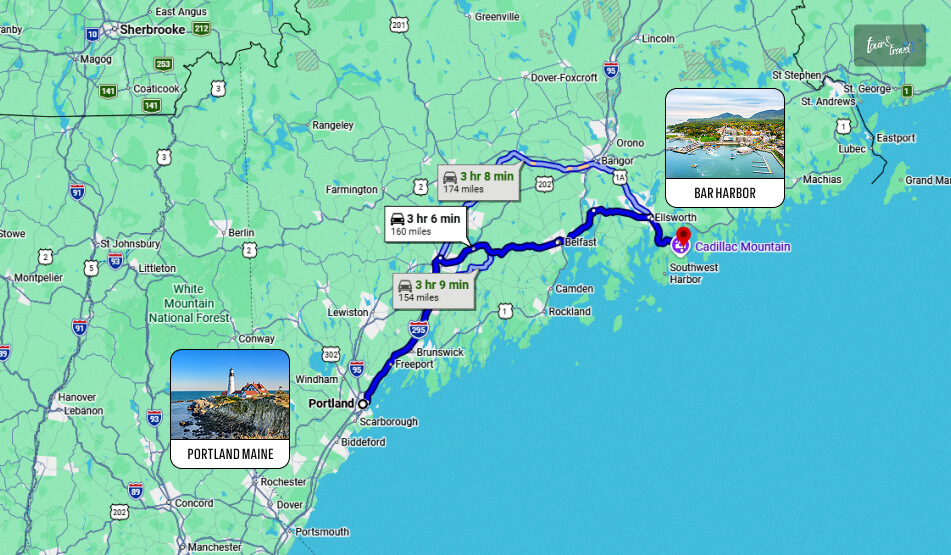
Bar Harbor, located about 155 miles northeast of Portland-Maine, is considered the “crown jewel” of Mount Desert Island. 

With the option of taking highway I-95, the fastest route available from Portland, the travel is less than 3 hours to the entrance of Acadia National Park.

However, I decided to take U.S. Route 1, one of the most scenic highways on the East Coast, due to its many curves, which require you to slow down and enjoy the essence of TheLowDownUnder Travel

The scenery will reward your patience by providing a “pictorial texture” that cannot be found anywhere else in America.

So, do you want to know more about the Portland Maine to Bar Harbor road trip? Here are the details. 

A Time Travel In Portland’s Old Port

A Time Travel In Portland’s Old Port

I started my Portland Maine to Bar Harbor road trip by indulging in the largest food scene of the state. 

Given the limited time in Portland (one night), I decided to spend it within the Old Port district. 

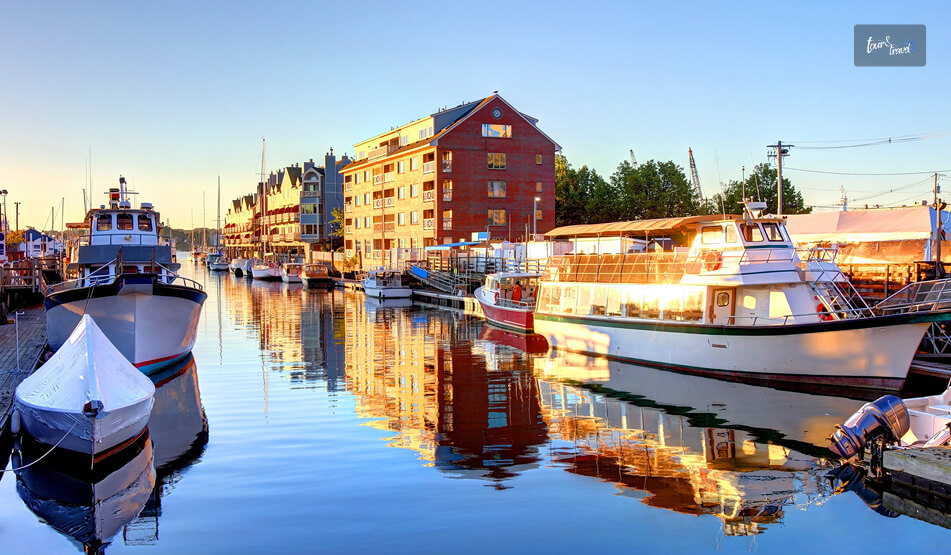
When you arrive in Old Port, all of the cobblestones have been drenched in salt, which gives you the impression that you aren’t going to be on vacation, but instead you have just completed a chapter in one of Herman Melville’s books.

The architectural splendor of the 1800’s is prominently displayed on the secure, weather-proofed, antique brick buildings and their well-worn piers.

Here, tourists and local fishermen have become blurringly intermingled as one does, sharing docks and vessels of their respective types. 

The Harbor is similarly blessed, with beautiful yachts docked near rusted fishing boats or lobster traps, all rocking together in unison as the water ebbs and flows with the tide.

I made my way to Scales, a restaurant located in a restored warehouse that extends out onto the wharf. 

Underneath its tall rafters and the large windows that covered the walls on both sides, I had my first culinary experience in the area.

The Lobster Revelation

Once, I was a lobster hater. I thought that a lobster was the least appealing of sea creatures, being little more than an aquatic creature that has no flavor. 

A whole lobster was just a lot of work for no real taste. My experience changed dramatically with the wonder of the Portland Lobster Roll.

I had the buttery, soft, and fresh buns, and delicious homemade lobster dressing on each roll. 

Along with a bowl of clam chowder that was creamy and full of brine, it was the best thing in New England.

The next day, I discovered another type of local genius at the Holy Donut. It is a “closet-sized” donut shop that features a “Maine [mashed] potato” as its secret ingredient. 

This potato gives the donuts their incredibly moist, dense texture and flavor. 

After sharing a [dark chocolate] donut and a [fresh-squeezed] lemon donut on a bench by the harbor, I saw a larger freighter passing through the morning fog. It was a sweet beginning to continue my trek north.

Mastering Slow Travel From Portland Maine To Bar Harbor Through Route 1 

Mastering Slow Travel From Portland Maine To Bar Harbor Through Route 1

Leaving the Portland area behind, I started heading north. The GPS wanted me to go back to I-95, but I went along the less popular Highway 1.

The road quickly became a narrow, two-lane, winding road. 

I continued to go through nearly empty dense pine forests. Some of the open areas had light-coloured wooden houses. It was a drive that forced us to take in all the little stuff.

The light on a weather vane! The woodsmoke mixed with salt air!

Now, this is the perfect kind of trip you can plan for your last-minute spring break

Maine is also one of the best places to visit in the fall and winter, thanks to its apple orchards and crimson colors. 

Moreover, it is among the top spots to see the Northern Lights in the USA

1. Finding Flannel In Freeport

My first stop was Freeport, which changed from a dying industrial mill to a shopping centre. It is also the home to the ‘mecca of plaid,” L.L. Bean.

The company began as Leon Leonwood Bean’s attempt to keep hunters’ feet dry, and is now an outdoor industry giant. 

The Freeport campus is large, with separate buildings for hunting, fishing, and skiing. 

After wandering through aisles of rugged gear, I came out “dressed the part” in a nice green and blue plaid shirt. 

I also slipped into Sea Bags, where old sailcloth is recycled into trendy nautical totes, showing that Maine’s maritime history is also a part of its contemporary economy.

2. Naval Giants And Lobster Jams 

Continuing north, I crossed the Kennebec River and entered Bath. The city is not dominated by tall buildings, but by the enormous cranes at Bath Iron Works. 

Since 1890, this shipyard has constructed close to 5,000 vessels, including the most advanced stealth destroyers for the Navy. 

The hulking ships at the shipyard reminded me of the industrial history of the state.

In the city of Woolwich, there is another type of giant.

At the Taste of Maine restaurant, there is a 70-foot giant lobster. This creepy installation is the perfect precursor to the traffic jam I was about to encounter in Wiscasset.

Wiscasset is the prettiest town in Maine, and food lovers know it for the traffic jam it creates with Red’s Eats. 

This food trailer with a striped awning is in a prime location, and the line is over a block and a half long. 

After a 45-minute wait, I received my bun, and to my surprise, there was so much lobster on it that it was nearly impossible to see the bun.

3. Harbors And Hidden Gems On The Way From Portland Maine to Bar Harbor

While technically off Route 1, any coastal trip would require a stop at Boothbay Harbor. The town’s history speaks through its winding, narrow streets, lined with aged buildings that tell their stories.

Before the Cow sat on a souvenir. After a jam, toy, and gift shop stroll, I made the encounter with coastal popcorn at the bench with haywire lobster traps, while the fleet of skiff passengers was in a hurry. Pure Maine’s untidy delight jingled at me.

The Hunt For Local Flavor

Driving up Lincolnville became a search for more local and primarily lobster-filled McLaughlin’s Lobster Shack, and some new chips. 

The gulls at the bay skimmed the water and the salt and mud scent left with the tide as I pulled the slaw and fries shrimp dinner up to the table under the sun.

4. Engineering Marvels And Military Shadows

While driving towards Bucksport, my journey brought me to a massive engineering structure, the Penobscot Narrows Bridge. 

The majestic cable-stayed bridge, with its webbed steel-and-cable strands, also features a tower with an observation deck at 437 feet.

The elevator ride to the top of the bridge is a mere minute, and the view is a breathtaking 360-degree sight of the river valley, the Bucksport Village, and the Fort Knox granite walls.

The Other Fort Knox

Maine’s Fort Knox is unlike its gold-named counterpart in Kentucky. 

This fort defended the Penobscot River Valley from British Navy invasions in the mid 1800s. 

I spent an hour exploring 144 acres while using our phone flashlights to navigate what one reviewer called a “catacomb of dark, forbidding tunnels” beneath the walls. 

The massive black cannons that never saw combat remain overseers to the river as silent sentinels.

5. Destination: Bar Harbor And Acadia 

After exploring leisurely for 175 miles over 9 hours, I arrived at Mount Desert Island. 

I checked into the historic Bar Harbor Inn, which sits along Frenchman Bay. 

The next day, I started my “Down East” pace by walking along the Shore Path (1.5 miles), which leads past the “cottages” (the term used by locals to describe their sprawling Gilded Age mansions).

I also visited prehistoric formations like Balance Rock. It is a glacial erratic that has been precariously balanced on the shore for more than 10,000 years! 

The Wilds Of Acadia 

Just up the road from my hotel was Acadia National Park, my favorite among the Maine national parks

This majestic national park has 47,000 acres of stunning granite peaks with ocean views. 

I spent the day hiking part of the park’s 120 miles of trails. The carriage roads of the facility were amazing. 

To end my adventures, I went to Atlantic Brewery and their BBQ restaurant. I had Mainely Meat there (yes, that is an accurate description)! 

For dessert, I enjoyed a flight of locally brewed ales, which were a perfect nightcap! 

The blueberry ale was sweet and highlighted Maine’s most famous crop.

However, the highlight was the Bar Harbor Real Ale, a nutty brown ale with an enormous malty backbone. 

The Real Ale complemented my platter of slow-roasted and smoked meats, which were my perfect “last supper” in the woods.

Overall, the Portland Maine to Bar Harbor was a fulfilling experience with nature and great food. 

Share on Social Media

Meet Sibashree Bhattacharya, a travel enthusiast who has a decade-long experience in transcending virtual barriers with her words! Her deep love for travel is apparent from her travel escapades to the mountain, often taking her readers on a journey, her words acting as Portkey! Fun fact: Sibashree loves to dive deep into the history of the places she is about to visit, making her travels even more wholesome. If you were wondering how her articles are not short of time travel, this answers it!

Leave a Reply

Your email address will not be published. Required fields are marked *

title-img Related

READ MORE is savannah georgia safe

Is Savannah Safe? What You Need to Know Before Visiting!

BY  Ankita Mar 12, 2024

Savannah, Georgia, is a beautiful and historic city that attracts millions of visitors every year. It is known for its charming architecture, culture, and cuisine. But is Savannah, Georgia, safe for tourists? How does it compare to other cities in terms of crime and violence? What are the best practices to stay safe and enjoy your trip to Savannah? In this article, I will answer these questions and more. I will show you the facts and figures about Savannah's crime rate, the safest and the most dangerous areas, the common scams and threats, and the tips and resources to protect yourself and your belongings. By the end of this article, you will better understand Savannah's safety situation and how to make the most of your visit. So, if you are interested in getting into this journey, keep reading this blog until the end… Is Savannah Georgia Safe? The first question that many travelers ask is: is Savannah Georgia safe? The answer is not so simple, as it depends on many factors, such as the location, the time, the activity, and the personal perception. Savannah is a large and diverse city, and like any other city, it has its share of crime and violence. However, it is not fair to label the whole city as unsafe or dangerous, as many areas are very safe and peaceful and many people are friendly and helpful. According to the latest data from the FBI, Savannah had a total of 3,559 violent crimes and 12,374 property crimes in 2019. Additionally, this means that the violent crime rate was 6.4 per 1,000 residents, and the property crime rate was 22.3 per 1,000 residents. These rates are higher than the national averages of 3.7 and 21.1, respectively. However, they are lower than some of the other major cities in Georgia, such as Atlanta, Augusta, and Columbus. The most common types of violent crimes in Savannah were aggravated assault, robbery, rape, and murder. Furthermore, the most common types of property crimes were larceny theft, burglary, and motor vehicle theft. Most of these crimes occurred in the downtown area, especially in the west and south parts, where there are more poverty, drugs, and gangs. The eastern and northern parts of the downtown area and the suburbs and islands are generally safer and quieter. How to Stay Safe in Savannah? Now that you have a general idea of the safety situation in Savannah, you might wonder: how can I stay safe in Savannah? What are the best practices to avoid trouble and enjoy my trip? Here are some tips and resources that can help you: Plan Your Trip in Advance Firstly, research the areas you want to visit, the activities, and places you want to stay. Check the reviews, ratings, and recommendations from other travelers and locals. Therefore, avoid the areas that are known to be unsafe, especially at night. Use a map or a GPS to navigate the city and avoid getting lost or wandering into unfamiliar places. Be Alert and Aware of Your Surroundings Pay attention to the people, the signs, and the situations around you. So, avoid distractions, such as your phone, your headphones, or your camera. If you see something suspicious, strange, or threatening, move away or report it to the authorities. Besides, trust your gut feelings, and do not ignore any red flags or warning signs. Protect Yourself and Your Belongings Do not carry or display any valuables, such as money, jewelry, passport, or electronics. Keep them in a safe place, such as a hotel safe, a locker, or a hidden pocket. Use a secure bag, such as a backpack, a crossbody, or a fanny pack, and keep it close to your body. Do not leave your belongings unattended, even for a moment. Lock your doors and windows, and do not open them to strangers. Furthermore, use a reliable transportation service, such as a taxi, a bus, or a ride-sharing app, and do not accept rides from strangers. Additionally, do not drink or use drugs, and do not accept any food or drinks from strangers. Do not get involved in any fights, arguments, or confrontations. And most importantly, do not break any laws, rules, or regulations. Seek Help and Support When Needed Lastly, if you are in trouble, need assistance, or have an emergency, do not hesitate to contact the authorities, such as the police, the fire department, or the ambulance. The emergency number in Savannah is 911. Additionally, you can also call the non-emergency number, which is 912-652-6500. You can also visit the nearest police station, hospital, or tourist information center. Moreover, you can also ask for help from the locals, such as the hotel staff, the shopkeepers, or the bystanders. Most of them are friendly and willing to help. Top 10 Safest Places to Visit in Savannah Savannah is a beautiful and historic city that has many attractions and experiences to offer. However, some travelers might be concerned about the safety situation in Savannah, as it has some areas that locals call unsafe or dangerous. Fortunately, there are also many places in Savannah that are very safe and peaceful, where you can enjoy your trip without any worries. I will show you the top 10 safest places to visit in Savannah. These are the places that have low crime rates, high security measures, and positive reviews from other travelers and locals. Let's get started! 1. Tybee Island Firstly, Tybee Island is a barrier island 18 miles east of Savannah. It is a popular destination for beach lovers, who can enjoy swimming, surfing, kayaking, fishing, and boating. The island also has a pier, a pavilion, a lighthouse, a museum, and a marine science center. Tybee Island is one of the safest places to visit in Savannah, as it has a low population density, a friendly community, and a dedicated police force. The island also has many hotels, restaurants, and shops that cater to visitors. 2. Forsyth Park Second, Forsyth Park is a 30-acre park in the heart of the historic district. It is famous for its iconic fountain, which was built in 1858 and resembles the one in Paris. The park also features a fragrant garden, a playground, a cafe, and a bandshell. Forsyth Park is one of the safest places to visit in Savannah, as it is well-maintained, well-lit, and well-patrolled. You can enjoy a picnic, a stroll, or a bike ride in the park, or catch a concert or a festival that takes place often. 3. Wormsloe Historic Site Wormsloe Historic Site is the former plantation of Noble Jones, one of the original settlers of Georgia. It features a majestic avenue of live oaks that leads to the ruins of the colonial estate. You can also see a museum, a theater, a nature trail, and a demonstration area that recreates the life of the 18th-century Georgia. Wormsloe Historic Site is one of the safest places to visit in Savannah, as it is in a secluded and scenic area, away from the city's hustle and bustle. You can appreciate Savannah's beauty and history in a serene and secure environment. 4. Telfair Museums Telfair Museums are the oldest public art museums in the South. They consist of three buildings: the Telfair Academy, the Jepson Center, and the Owens-Thomas House. The Telfair Academy houses a collection of 19th and 20th century American and European art, including works by Mary Cassatt, Childe Hassam, and Robert Henri. The Jepson Center showcases contemporary art and features a glass atrium, a sculpture terrace, and an interactive gallery for children. The Owens-Thomas House is a historic house museum that displays the lifestyle and furnishings of the early 19th century Savannah. Furthermore, Telfair Museums are one of the safest places to visit in Savannah, as they are in the east and north parts of downtown, which are generally safer and quieter. They also have high security standards and professional staff. 5. Savannah Botanical Gardens Savannah Botanical Gardens are a hidden gem that is located on the south side of the city. They are a 10-acre garden that features a variety of plants, flowers, trees, and ponds. You can also see a rose garden, a camellia garden, a fern garden, and a children's garden. Savannah Botanical Gardens are one of the safest places to visit in Savannah. This is because it is surrounded by a fence, a gate, and a security system. You can relax and enjoy the nature in a tranquil and protected setting. 6. Savannah College of Art and Design Savannah College of Art and Design (SCAD) is a private university that offers degrees in various fields of art and design. It has several campuses and buildings in Savannah, as well as in Atlanta, Hong Kong, and Lacoste. SCAD is one of the safest places to visit in Savannah, as it has a low crime rate, a strict code of conduct, and a comprehensive security program. You can visit some of the SCAD facilities, such as the SCAD Museum of Art, the SCAD FASH Museum of Fashion and Film, and the SCADshow Theater. You can also attend some of the SCAD events, such as the SCAD Savannah Film Festival, the SCAD Fashion Show, and the SCAD Sidewalk Arts Festival. 7. Skidaway Island State Park Skidaway Island State Park is a state park that is located on Skidaway Island, which is 15 miles southeast of Savannah. It is a 588-acre park that offers hiking, biking, camping, fishing, and birdwatching. You can also see a nature center, an observation tower, and a boardwalk. Skidaway Island State Park is one of the safest places to visit in Savannah, as it is managed by the Georgia Department of Natural Resources. This ensures the safety and the quality of the park. You can enjoy the outdoors in a clean and secure area. 8. Savannah Children's Museum Savannah Children's Museum is a museum that is designed for children and families. It is located in the historic Central of Georgia Railway Carpentry Shop building, which is part of the Georgia State Railroad Museum complex. It features over a dozen exhibits and activities that are interactive, educational, and fun. You can also see a maze, a slide, a sandbox, and a garden. Savannah Children's Museum is one of the safest places to visit in Savannah, as it is supervised by trained staff and volunteers, who ensure the safety and the enjoyment of the visitors. You can have a great time with your kids in a safe and stimulating environment. Read More: Is Cabo San Lucas Safe? – Let’s Find Out! 9. Cathedral of St. John The Baptist Cathedral of St. John the Baptist is a Roman Catholic cathedral that is located in the historic district. It is the oldest Roman Catholic church in Georgia, and the mother church of the Roman Catholic Diocese of Savannah. It is a stunning example of French Gothic architecture, with its twin spires, stained glass windows, and ornate interior. Cathedral of St. John the Baptist is one of the safest places to visit in Savannah, as it is a sacred and respected place, where people come to worship, pray, and admire. You can visit the cathedral during mass times or take a guided tour of the cathedral. 10. Savannah National Wildlife Refuge Last but not least, Savannah National Wildlife Refuge is a wildlife refuge located on the border of Georgia and South Carolina, along the Savannah River. It is a 31,551-acre refuge that protects and preserves various habitats and species, such as marshes, forests, wetlands, and islands. You can see animals such as alligators, deer, otters, bobcats, and over 300 species of birds. You can also enjoy hiking, biking, fishing, hunting, and photography. Savannah National Wildlife Refuge is one of the safest places to visit in Savannah, as it is regulated by the US Fish and Wildlife Service, which ensures the conservation and the security of the refuge. You can experience wildlife in a safe and responsible manner. Wrapping It Up! Therefore, the answer to the question of is Savannah Georgia safe is: it depends. Savannah is not a dangerous city, but it is not a crime-free city either. It has its safe and unsafe areas, its good and bad times, and its risks and rewards. The key is to be aware, informed, and prepared, and to use your common sense and intuition. Following the tips and resources I have provided in this article, you can stay safe and enjoy your trip to Savannah. Have a great time in Savannah! Read Also: Is San Francisco Safe? THIS Is What You Should Know! Is Barbados Safe? Why Do People Question The Safety In Barbados? Exploring Paraguay’s Culinary Delights With Travel Insurance In Mind

READ MORE Rental Villa

Tips For Planning The Perfect Getaway In A Rental Villa In Italy

BY  Ankita Dec 18, 2023

Imagine waking up to the serene sound of waves on the Amalfi Coast or savoring a cup of freshly brewed espresso on a sunlit terrace overlooking the rolling Tuscan hills. This is the enchanting promise of a villa rental in Italy—a unique blend of luxury, comfort, and cultural immersion that transforms an ordinary vacation into an extraordinary adventure. In this guide, we'll explore the intricacies of planning the perfect Italian rental villa getaway, from selecting the ideal location to making the most of your stay. Why Choose a Rental Villa in Italy Italy, with its rich history, stunning landscapes, and vibrant culture, offers a diverse array of rental villa options. These properties range from rustic farmhouses in the heart of vineyard country to opulent mansions on the shores of the Mediterranean. Unlike typical hotel accommodations, villas offer a heightened level of privacy and space, allowing you to unwind in a setting that feels genuinely your own. Moreover, a luxury villa rental in Italy is not just about luxurious lodging; it's about immersing yourself in Italian life, experiencing the local customs, and enjoying the freedom to explore at your own pace. Finding the Right Villa Selecting the perfect villa is a journey in itself. Start by considering the location—each region of Italy offers something unique. A villa in Tuscany might provide rustic charm and proximity to historic cities, while a Sicilian beachfront property offers stunning seascapes and a laid-back vibe. Consider the size and layout of the villa, ensuring it accommodates your party comfortably. Amenities are crucial too—do you need a fully-equipped kitchen, Wi-Fi, or a private pool? When it comes to amenities, think about your dream vacation and choose a villa that turns that dream into reality. Timing and Booking The best time to book a villa in Italy largely depends on your vacation preferences. The summer months are bustling with energy and warm weather, ideal for beachside villas or enjoying the lively Italian summer culture. However, the shoulder seasons—spring and autumn—offer milder weather, fewer tourists, and often more attractive rates. Regardless of the season, booking in advance is crucial, especially for popular destinations or unique properties. Early booking not only secures your preferred dates but often provides more competitive prices. Planning Your Stay Tailoring your stay is what sets a villa vacation apart. Beyond just a place to sleep, villas can be the centerpiece of your Italian adventure. Many offer unique experiences—imagine participating in a cooking class in your own kitchen, guided by a local chef, or enjoying a private wine tasting in the villa’s cellar. Plan these activities ahead of your stay to ensure availability and to fully immerse yourself in Italian culture. Also, consider any special requests or needs you might have—some villas offer services like childcare, personal trainers, or event planning. Making the Most of Villa Amenities The amenities offered by Italian villas are often what make your stay truly memorable. Many villas boast private pools, stunning gardens, and outdoor dining areas—perfect for enjoying the Italian sun. Inside, you might find fully equipped kitchens, state-of-the-art entertainment systems, and luxurious bedrooms. Some villas even come with staff—housekeepers, cooks, and concierges—who can enhance your stay by taking care of daily chores, preparing meals, or helping you navigate the local area. Exploring the Local Area Your villa rental is a gateway to exploring Italy's rich tapestry of culture and history. Venture out to local markets to sample fresh produce and regional specialties. Visit nearby historical sites and immerse yourself in Italy's deep history. Or simply stroll through local villages, enjoying the architecture and friendly faces. Remember, part of the joy of a villa rental is the freedom to explore at your own pace, discovering hidden gems and creating unique memories. Practical Considerations When planning your villa vacation, there are several practical considerations to keep in mind. Transportation is one—while some villas are easily accessible by public transport, others might require a car rental, especially in more remote locations. Familiarize yourself with the local language and customs to enhance your interaction with locals and enrich your experience. Safety is another consideration—ensure you are aware of any local guidelines or regulations, particularly if you're traveling with children. Conclusion Choosing a villa rental in Italy offers an exceptional opportunity to experience one of the world's most beloved destinations in a unique and intimate way. It's a chance to create a vacation that is not just a break from everyday life, but a rich, immersive journey into the heart of Italian culture and luxury. With careful planning and a spirit of adventure, your Italian villa getaway can be a dream come true, filled with memories that will last a lifetime. Read Also: Which Is The Largest Freshwater Lake In India? 12 Best Things To Do In Sanibel Island – Tour And Travel Guide Exploring The Unexplored: Which Is The Best Time To Visit Darjeeling?

READ MORE best hotels in rome

Eternal Elegance: A Guide to The Best Hotels in Rome

BY  Abdul Aziz Dec 27, 2023

Rome's hotel industry, like Rome itself, was not built in a day. Although luxurious suites have long been a feature of Italy's capital city, the industry has just begun to gain traction. There are new establishments popping up everywhere. A few have buzzing rooftop terraces and Michelin-starred restaurants, while others have opulent spas that are modeled after traditional Roman rituals. Here are the best hotels in Rome you can check out if you are planning to visit. Rome will undoubtedly mesmerize you. Best Hotels In Rome The greatest hotels in Rome blend in with the rich mosaic of art, culture, and cuisine of the Eternal City. These accommodations range from historic palazzos converted into opulent retreats to modern, art-filled sanctuaries. Let's look at some of the best hotels in Rome accordingly: Hotel Artemide Hotel Artemide is your four-star hotel option in Rome's downtown. The Spanish Steps, the Colosseum, and the Trevi Fountain are all very close by. Artemide is located in the center of Via Nazionale, a bustling, bright street with lots of stores. The Artemide Hotel is the ideal place to begin exploring the Eternal City. The Repubblica metro station stands only 100 meters away, and Termini Train Station is conveniently close by. As amenities, they provide their visitors with a fully-stocked gym, a complimentary minibar, and Wi-Fi in each room. Don't forget to visit Artemís Spa, where you can treat yourself or a partner to a massage. Lastly, don't forget to visit the Ambrosia Rooftop Restaurant & Bar, which is located on the hotel's seventh floor and offers a breathtaking view of the Rome skyline to round out the experience. Hotel Colosseum Because of its unique location in the heart of Monumental Rome, you will be able to explore the top tourist destinations on foot. The Domus Aurea, the Colosseum, and the Basilica of S. Maria Maggiore are all located very close to the hotel. Via Cavour will lead you across to Via Urbana. Known as "Vicus Patricius" in antiquity, it is most known for the visits that, according to tradition, St. Peter made to the home of a Christian senator located here. You can also visit the Imperial Fora and the Church of St. Pietro in Vincoli. It is home to Michelangelo's well-known Moses statue. A 360° panoramic view of Rome and its surroundings is available from the magnificent, furnished terrace on the eighth floor of Hotel Colosseum, which is perched atop Esquiline Hill. Guests can take in the view while sipping cocktails from the bar. There is Wi-Fi in every room and in the hotel's common areas. There's also a useable internet point. Information about transportation within the city is available at the reception. It includes car, scooter, and bicycle rentals, guided tours, taxis, as well as bus services. Hotel Barocco Situated in a refined edifice, Hotel Barocco provides a view of Piazza Barberini Square and its renowned fountain. Baroque maestro Bernini of Rome designed the structure. In 2019, the Hotel Barocco underwent a meticulous renovation to provide guests with an exceptional level of comfort as well as style. The hotel comprises only 37 rooms and employs 22 individuals. Modern amenities, impeccable cleanliness, a throwback atmosphere, and 21st-century technology combine to make a guest's stay at the Barocco a delightfully magical Italian experience. The knowledgeable staff at the Barocco Hotel is ready to assist you as needed. The Concierge serves as your point of contact for the vast array of experiences Rome has in store for you. The Reception is open at length, around the clock. Savor the mouthwatering American-style breakfasts, expertly crafted using carefully chosen ingredients. Within a ten-minute stroll are the Trevi Fountain, the Spanish Steps, and Via Veneto. Hotel Santa Maria Situated in a 16th-century cloister, the Hotel Santa Maria is a charming hotel that underwent a complete renovation in 2000. It also managed to preserve the original construction's character. It creates a very calming and romantic atmosphere while making a very nice base. The hotel is situated in the center of Trastevere, one of the oldest and most distinctive neighborhoods in Rome, in a historically significant area. The historical and archaeological highlights of the city are a short stroll from the hotel for the guests. With parking available in the private garage next to the hotel, you can simply drive to the establishment. The hotel's rooms are connected by a monastic portico. Look out onto either the rooftop garden, surrounded by evergreen vines, or an expansive, quiet garden with orange trees, flowers, and Mediterranean plants. These are the ideal places to enjoy breakfast on warm, sunny days in Rome or to unwind after a day of sightseeing. If you want to ride a bike through the narrow streets of ancient Rome, the hotel also has a number of bicycles available. A secured wireless LAN connects the hotel to the Internet. You can use your computer in comfort anywhere you choose, whether it's in your room, the garden, or the lounge bar. In case you are not carrying your personal computer, you can use the computer in the living room, which has a free internet connection. Domidea Hotel A contemporary 4-star hotel is Hotel Domidea. Only 300 meters separate it from the hotel, and with the Tor Sapienza Railway Station connecting it to the city center, it takes just 25 minutes to get there. The private shuttle bus that travels to metro B in five minutes is only available to guests who have reserved comfort rooms. The forte is the abundant continental breakfast, featuring a variety of sweet as well as savory options. The chic lounge bar located inside the hall is where it hosts happy hours in addition to live music. The rooms are incredibly roomy, and some of them have large balconies. There is no charge for parking. Additionally, the staff at reception recommended a number of nearby attractions and bike rides along the River Aniene, which is surrounded by a natural reserve. Wrapping Up To put it simply, Rome's hotels are now an extension of the immersive experience, not merely a place to rest after a day of touring the Vatican City, the Colosseum, and dozens of basilicas. They cannot be disregarded as a consequence. But choosing a base isn't simple when there are so many options available. We have listed the best hotels in Rome in different categories to make it easier for you to choose. That is regardless of whether you're looking for a modern place to stay in contrast to the history that lies outside or a romantic getaway. If you have thoughts to share or questions to ask, please leave a comment below. We would love to hear from you! Read Also: Tips For Planning The Perfect Getaway In A Rental Villa In Italy Sorting Out Christmas Vacation: 11 Best Places To Visit On Christmas This Year! The Italian Train Group FS Will Launch A New “Night Train Like Hotel”: Rome To Dolomites