



Top 8 List Of National Parks In North Carolina – Travel Guide

Sep 29, 2021

Last Updated on: Nov 13, 2025

Travel Guides

A long piece of green land from the Atlantic Coast to the feet of the Appalachian Mountainsins is North Carolina.

North Carolina is famous for its 500 miles of green stretchy land. And the multiple national parks in North Carolina are the best tourist spots in the entire nation. Nc national park is quite popular because of the natural greenery, and these parks are the home of many wildlife.

From the green smokey mountain to the Atlantic ocean, all you will find is ample green land full of wild lives. When you are in North Carolina, you can enjoy your travel days with multiple activities. But when you are in North Carolina, do not miss out on any of the national parks in North Carolina.

Because these parks are quite popular not only in North Carolina, the popularity of the parks is spread throughout the whole nation. Because of the rich history of the past.

The beauty of the Atlantis ocean seashore and the smokey mountains are the best part of national parks in North Carolina. The most significant advantage of the North Carolina National parks in the area is the combination of mountains, seashores, and the ocean. All you can enjoy in one single place.

Here are the names of the eight popular North Carolina national parks, which are the most attractive wildlife parks in the entire country.

1. Great Smoky Mountain National Park

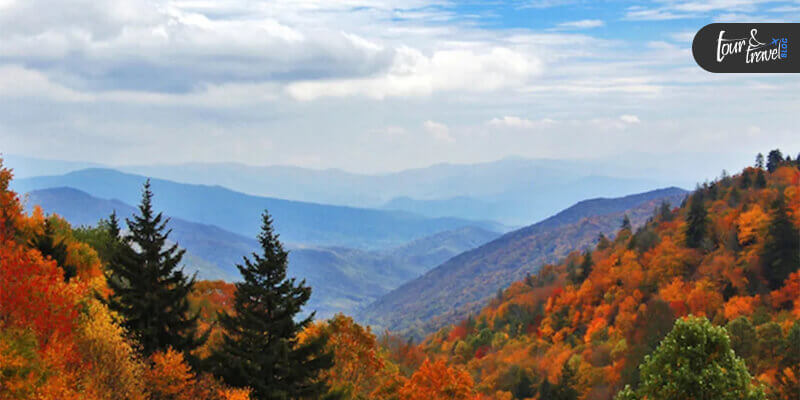
Great Smoky Mountain National Park

The Great Smoky Mountain national park is just situated in the middle of Tennessee and North Carolina. The ancient Great Smoky Mountain is carrying the impression of the past. 

And the national park’s natural beauty is so attractive that Smokey Mountains are becoming the most popular national park in North Carolina. And Smoky Mountain National park has the most significant North Carolina wildland. All-inclusive resorts in North Carolina near the Great Smoky Mountain national park cater to visitors seeking both adventure and relaxation amidst the area’s stunning natural beauty.

2. Blue Ridge Parkway

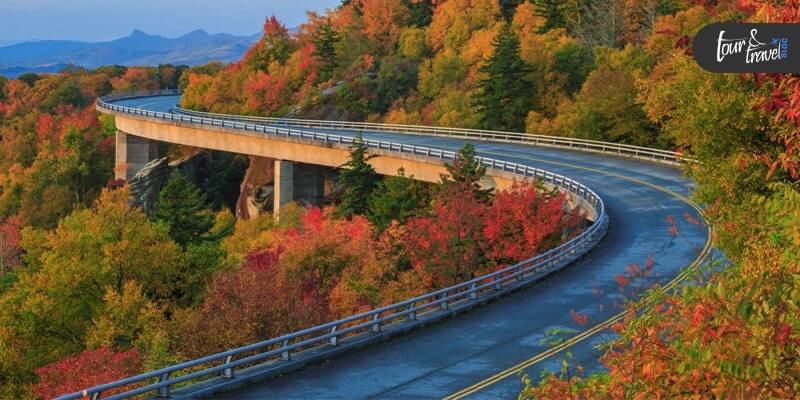
Blue Ridge Parkway

Blue Ridge Parkway is just under the feet of the North Carolina Blue Ridge mountains. The biggest attraction of the place is the mountain trails and the passway. This parkway is so vibrant that many of the visitors want to see the national parks in North Carolina. They alert one day for the Blue Ridge mountain visit.

You can enjoy the mountain view by slowly driving your car in the passway. The biggest attraction of the place is the top mountain view. Apart from the natural scenery, you can go camping or cycling to enjoy the tour.

3. Appalachian National Scenic Trail

Appalachian National Scenic Trail

When you want to visit the national parks near North Carolina, the Appalachian national trails are historically diverse and the most popular national parks in North Carolina. This is the best national park in North Carolina.

The mountain trail is 2,180 miles long. In 1937 the tracks were built for private citizens. But after that, now these trails are one of the popular national parks in Nc. When you plan to visit these national trails, many forest services, and voluntary services will help you reach the destination.

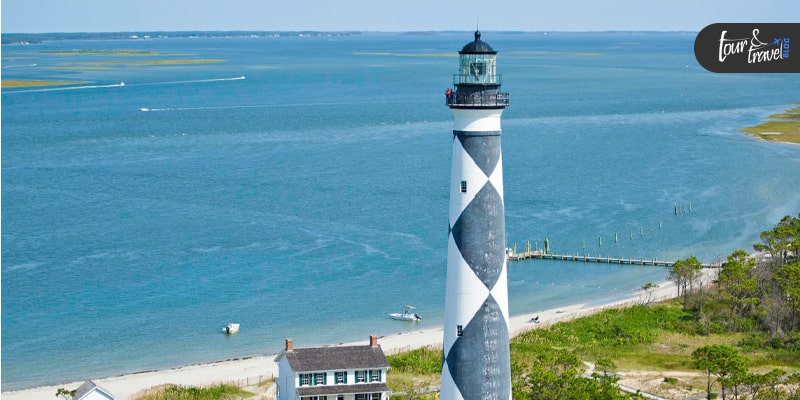
4. Cape Lookout National Seashore

Cape Lookout National Seashore

In the list of national parks in North Carolina, cape lookout national seashore is quite popular because this place is situated just beside the ocean. What do you expect when you are on the Cape lookout seashore? Only view?

All seaside entertainments are present here. You can go fishing. Visit the wildlife sanctuary; you have to bring your own tent or rent the tent for camping in the cape lookout. Keep your camping area clean because the park has stringent rules to maintain cleanliness.

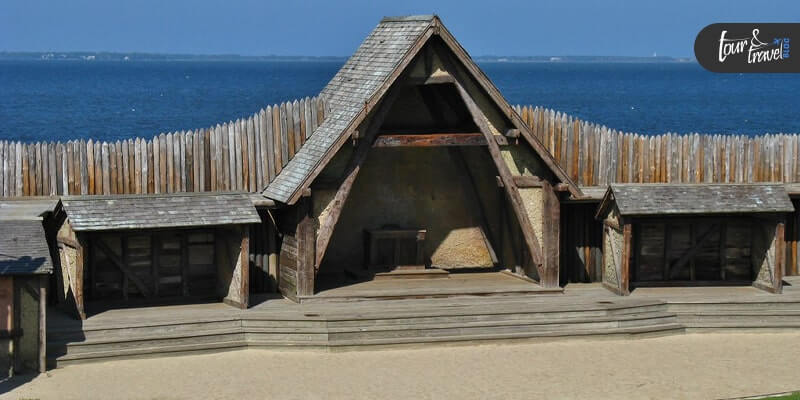
5. Fort Raleigh National Historic Site

Fort Raleigh National Historic Site

See the history and the origin of the first England settlements. One time this place is the home of the Native American, European American, and the African American. You can feel the past of the historic site’s biggest attraction is the 1869 monument.

The 1.25 miles long freedom trails are passing through the forest area. When you are visiting the place, you can take a tour of these walking trails. You can feel the history and the beauty of the forest in single hiking.

Read Also: Best National Parks In Hawaii

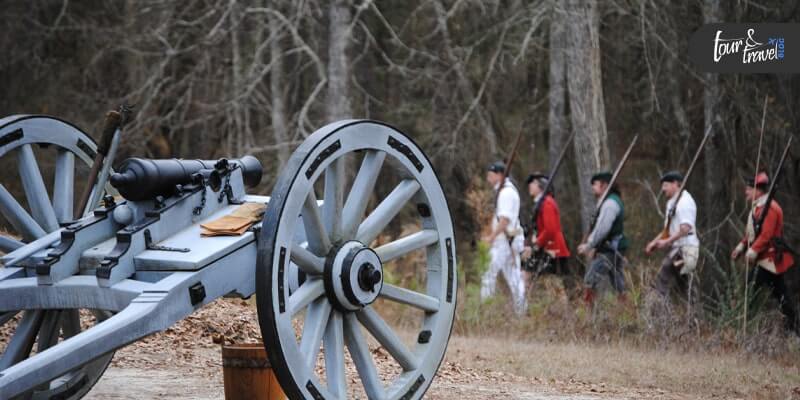
6. Moores Creek National Battlefield

Moores Creek National Battlefield

Moores National park was a battlefield. The battle between the loyalist forces and the North Carolina patriots. The battle between the loyalists and the patriots is remembered today. Among all the national parks in North Carolina, this is built on the battleground in respect of the patriots.

And this war is the starting of a new revolution in America by the winning of the patriots.

From this national battlefield, you will know the history, culture, and the starting of the new generations.

7. Carl Sandburg Home National Historic Site

Carl Sandburg Home National Historic Site image

This is the home of the Pulitzer winner poet and writer Carl Sandburg. The home is in the Handerson Vallie in the village of Flat Rock. In 1945 the Sandburg family was moving here to find solitude and calm nature.

This house is just right in the middle of the forest area. The surrounding areas are full of trees, and the natural, calm and quiet place is undoubtedly the best place for a writer. The library of the house is the greatest attraction. And the house has an attached farm within it.

Read Also: Best National Parks In Missouri That You Must Know

8. Guilford Courthouse National Military Park

Guilford Courthouse National Military Park

Guilford courthouse national military park is built in honor of the patriots who have fought the war in 1781. The biggest attraction of the place is their huge collection of the armory and the weapons of the battlefield. If you are in this military park, start to see the park from the museum.

The Guilford Courthouse National Military Park is just a 15-minute drive from Greensboro. You can visit the park in your car. Apart from the car, you can simply cycle around the park by bicycle. Or you can simply take a walk to see the surrounding places.

Frequently Asked Questions (FAQs)

How many nationakl park is in North Carolina?

Among the 41 state parks, there are 10 national parks and 4 national forests are in North Carolina. It also offers a range of outdoor activities, that includes swim,fishing, rides, biking, hicking, picnic and paddle.

What is the most visited national park in North Carolina?

Great Smoky Mountains  National Park is the most visited national park in North Carolina.

What is the only state without a national park in North Carolina?

Delaware can be considered as the only state that has no national park. Maybe not for long.

What is the largest national park in North Carolina?

Here is a list of largest national parks in North Carolina:

1. Great Smoky Mountains National Park

2. Blue Ridge Parkway

3.The Folkways Of Appalachia

4.Nanthla National Forest

5.Pisgah National Forest

Wrapping It Up:

Most of the visitors are asking about how many state parks are in North Carolina?

You get almost twenty options. But these eight national parks in North Carolina are just perfect for all types and all ages of visitors.

North Carolina’s natural ambiance and historical value is the best option for children. From one visit, your child is going to feel the glorious past of American history, and the naturally beautiful environment boosts up their mind in an open way. So what is your travel planning?

Do not forget to share your experiences with us.

You May Also Like: 

Share on Social Media

Subham Saha started his career as a professional web content writer. He has more than 4 years of experience in digital marketing. He also has a great knowledge in SEO, SMO, Website development, etc. He completed his graduation in Electrical Engineering. He is very passionate about building his career in the Digital marketing industry. Subham has a great interest in reading books about Business, Economics, Psychology, Technology, and History.

Leave a Reply

Your email address will not be published. Required fields are marked *

title-img Related

READ MORE Langkawi RORO Ferry

Langkawi RORO Ferry: Your Gateway To Island Paradise

BY  Ankita Jan 30, 2024

Langkawi RORO offers a wide range of on-board ferry services to passengers for their ferry trip to Langkawi. The ferry operator company is constantly making efforts to provide a reliable and speedy service for passengers. Langkawi Kedah RORO Service has trained staff who have been providing services to passengers for a long period of time. Book your Langkawi RORO ferry tickets and enjoy a fantastic sail experience between Kuala Kedah and Langkawi Jetty.  Langkawi RORO Ferry Ticket Online Booking Langkawi, a captivating island located in Malaysia's Kedah state. It is a sought-after travel destination that attracts tourists with its beautiful beaches, stunning landscapes, and lively culture. The most effective method to get to this paradise is to take the LK Roro Ferry. The greatest part about this ferry is probably the fact that you will be able to board it along with your cars. The Langkawi Kedah RORO Management Sdn. Bhd. is completely committed to offering extraordinary travel experiences to our loyal customers. Their focus is on providing an unrivaled passenger ferry that bridges Langkawi and the mainland. It operates all day and every day of the year. With more than two decades of experience in the field of ferry, Langkawi RORO ferry remains constant. Its commitment to maintaining the highest safety standards throughout every ferry operation. Amenities on the Langkawi RORO Ferry Services The Langkawi Kedah RORO ferry can accommodate a capacity of 400 passengers. They aim to reduce delays and wait times to ensure a relaxing environment for all of our guests. The ferry is designed to meet all demands for cargo and freight of passengers! catering completely to commercial and non-commercial needs. The journey by boat to Langkawi is distinguished by luxury and comfort. The vessels are outfitted with modern conveniences, which ensure the smoothest and most enjoyable trip. Popular Langkawi RORO Ferry Services Routes Kuala Kedah-Langkawi, as well as Langkawi-Kuala Kedah, is the most well-known route that is served using the RORO ferry. The Kuala Kedah Jetty has been serving as the beginning point for your Langkawi excursion. The busy jetty is a bustling hub, brimming with tourists eager to discover the island. Kuala Kedah to Langkawi : Travel Duration The length of your trip to Kuala Kedah to the Langkawi Jetty is contingent on a variety of elements, such as weather conditions and ferry speed. In general, the Kuala Kedah to Langkawi ferry ride takes between 1 45 minutes and 1 hour, giving you plenty of time to take in the views from the beach and prepare for the exciting experiences that lie ahead in Langkawi. Langkawi RORO Ferry Schedule 2023 Planning is the key to organizing a trip that is well-organized. This is also true for Langkawi travel. The timetable you check in advance lets you align your travel plans to the ferry schedule, which will ensure that you have a smooth experience. Langkawi RORO ferry departs daily at 01:30 pm. Langkawi RORO ferry sets off every day at 01:30 pm and departs from Kuala Kedah Jetty to get to Kuala Kedah on its Langkawi journey. The ferry leaves at 9:15 AM at the Langkawi Tanjung Lembung Port for the return trip via Langkawi up to Kuala Kedah. For more info, contact: Kuala Perlis: 604-985 1899 / 604-9852539 / 604-985 2690Langkawi: 604-966 1125 / 604-966 1126. Getting to Langkawi By Air If you are coming to the island from Singapore, traveling by air is your safest and most hassle-free choice. It will take a mere hour and a half if you take a direct flight in order to reach the island. You have the option of Air Asia and Scoot. They both offer direct as well as affordable flights from Singapore to Langkawi each day of the week. If you do not have a problem with connecting flights, Malaysia Airlines and Malindo Air both stop at Kuala Lumpur International Airport. Getting to Langkawi By Road There are no roads connecting Langkawi. But you can drive from the Malaysian mainland, such as Kuala Lumpur, using a car or a bus to any of the following spots.  Ferry Terminal in Kuala Kedah is located on the northwestern coast of Malaysia. If you are planning to ride along the North-South Expressway, you must take the exit at Alor Setar Selatan and then follow the road signs. It could take around 6 hours to reach Kuala Kedah via a car from Kuala Lumpur. The ferry terminal at Kuala Perlis, which is further up, will take you about an hour longer.  The regular coaches and buses are available between KL and Kuala Perlis, and it takes about 8 hours. The buses usually leave from the Pudu Sentral bus station or even the Hentian Duta bus station in KL. You will find the bus stand within walking distance from the ferry clock at Kuala Perlis.   Getting To Langkawi By Train If you're traveling from Kuala Lumpur, it's advisable to book an ETS (Electric Train Service) ticket to Arau. Being the royal capital of Perlis, Arau is regarded as the starting point for the journey to Langkawi and Thailand, where every adventurer begins their journey to the island via Kuala Perlis Ferry Terminal. Choosing Arau as your final stop is recommended as it is closer to the port, and the ferry ride's duration will be shorter.  The journey takes approximately four hours and 49 minutes and is considered the fastest inter-state train service in Malaysia. If you want to enjoy a picturesque journey and are not in a hurry to reach your destination, this is a great travel choice. Ticket prices range from RM72 to RM92, and you can book your journey on the official website. Upon arriving at your destination, you can hire a Grab car or a taxi to reach the ferry terminal, which operates from 7 am to 7 pm. Wrapping Up You must have a passport that is valid for at least 6 months, and you will need one blank page to make an entry of the immigration stamp. Furthermore, you will not need a visa to enter the country. You could be visiting for business or pleasure for a period of 90 days or less, and still, you wouldn’t need a visa. If you have thoughts to share or questions to ask, please leave a comment below. We would love to hear from you! Read Also: 5 Best Temples To Visit In Bangkok Top 5 Reasons Why You Should Travel A Country By Ferry The Reasons To Choose A Tropical Island Vacation Every Year

READ MORE

Grand Teton National Park Animals: Into The Wilderness

BY  Sibashree Sep 30, 2024

High in the mountains, Grand Teton National Park in Wyoming harbors a great ecosystem for wildlife viewing. It is just south of Yellowstone, another great destination for exploring diverse wildlife.  Further, as you indulge in the exotic beauty of the Teton Mountain Range and the Snake River, you will meet bison, bears, mountain lions, red squirrels, and even wolves. It is also home to the most colorful western tanager, bald eagles, and many other adorable birds. Are you charmed by the stealthy nature of reptiles and vipers? You can find garter snakes and rubber boa snakes here.  Fascinating! Isn’t it? Let me share a complete overview of wildlife at Grand Teton National Park. Don’t Miss Your “Spot” To Watch The Grand Teton National Park Animals You may not be a fan of Sheldon Cooper (from Big Bang Theory) and his obsession with his favorite spot. At Grand Teton National Park, you must know about the right spots for wildlife viewing.  Here, I have curated the best spots within the park where you can meet wildlife without causing any disturbance in the space wild creatures demand.  Oxbow Bend Oxbow Bend is one of the most beautiful vistas of the Grand Teton National Park. You often see a grizzly mother bear (grizzly No. 399) taking a stroll with her cubs. Further, the wetlands are mooses.  Oxbow Bend also attracts thousands of colorful birds and reptiles who graze around or visit to drink water here.  Moose Wilson Road The Moose Wilson Road stretches between the Craig Thomas Discovery & Visitor Center and the entrance of Granite Canyon Park.  It is hard to resist taking adorable snaps of bears indulging in berries here. You will also find moose in the wetlands.  National Elk Refuge Spanning 25,000 acres, the National Elk Refuge has 7,000 elk. The best time to visit the National Elk Refuge is between mid-December and early April. Take a horse-driven sleigh ride to meet Elks from a close distance.  The National Elk Refuge also has bison, mountain lions, bald eagles, and bears. Moreover, if you are lucky enough, you can meet wolves here.  Kelly Loop and Antelope Flats Kelly Loop and Antelope Flats are like a hidden gem in Grand Teton National Park. Look at the sagebrush to find a pronghorn or bison passing by.  Grand Teton National Park Animals (Mammals, Birds, Reptiles, Unusual Ones And More) Grand Teton National Park is a perfect coexistence of various species and a wonderful depiction of dependence in the food chain. Let’s find out who has made a home in this beautiful wilderness. Mammals At Grand Teton National Park As you explore the Grand Teton National Park, a small or big mammal will always be around you. Grizzly and black bears are the most prominent animals in the park, and you will also meet bison, moose, bighorn sheep, or elks.  Also, this park has wolves, wolverines, and mountain lions.  Small mammals in the park include red squirrels, chipmunks, Uinta ground squirrels, and long-tailed weasels.  Further, yellow-bellied marmots and squirrels will be your companion as you hike through the trails in the park.  Are you looking for mammals in the water? You will find the adorable muskrats, river otters, and beavers swimming around.  Do you know that moose is the largest antlered animal in the world? A moose can store 100 pounds of food in their stomach.A male moose can weigh as much as 1400 pounds.  Birds At Grand Teton National Park https://www.instagram.com/p/CgNiUMRMfpW/ The vibrant feathers of the western tanagers here are a treat to the eyes. Further, you will meet the calliope hummingbird, trumpeter swans, bald eagles, ospreys, and sage grouse in the park.  Do you know that Grand Teton National Park is the home to The calliope hummingbird? It is the smallest bird in North America and weighs even less than 1/10th ounce. Also, the largest waterfowl in North America, The trumpeter swan, lives here near spots like Swan Lake, Oxbow Bend, National Elk Refuge, and Flat Creek.  Do you want to watch birds romancing with their mates? Find out trumpeter swans moving in pair with their mate for life and sage grouses displaying their courtship in the sagebrush.  Reptiles At Grand Teton National Park https://www.instagram.com/p/CDlzaa-oYU5/ This nation is home to snakes such as rubber boa, valley garter snake, and wandering garter snake. These reptiles are found near the waterbodies in the park. You will also find the northern sagebrush lizard here. It is the only lizard species living in the park.  Amphibians At Grand Teton National Park  Despite a high elevation, cold temperature, and a dry climate, this national park has five species of amphibians. These are: Columbia spotted frogs Western tiger salamanders Western toads Bullfrogs Boreal chorus frogs Northern leopard frogs were found earlier in this area but have become extinct. If you want to spot these amphibians, you must visit Taggart Lake or String Lake.  Native Fish At Grand Teton National Park https://www.instagram.com/p/CgnT_ImrdGZ/?img_index=1 The native and non-native fish at Grand Teton National Park are vivid. Some (for example, mountain suckers) survive on mountain algae, while others (for example, cutthroat trouts) eat small fish and insects. For many animals and birds, like bald eagles, fish is the primary food source in the park. Further, fish is a secondary food source for the local inhabitants. In addition, by eating insects and algae, a fish keeps the spread of these elements in check.  Native Fish At Grand Teton National ParkUtah suckerFine spotted cutthroat trout of Snake RiverMountain suckerSpeckled daceUtah chubBluehead suckerNon-Native Fish At Grand Teton National ParkRainbow troutBrown troutLake troutGuppiesGoldfishGreen swordtail You will also find many aquarium species at Grand Teton National Park.  Species At Risk At Grand Teton National Park Grand Teton National Park is home to many species at risk and species of concern. Further, it has whitebark pine trees, which are up for listing.  Whitebark Pine Trees: Up For Listing  The invasive disease of blister rust and mountain pine beetles greatly harms these trees.  Alarmingly, an NPS Survey (2018) says that 57% of the trees were affected by blister rust, while the beetles harmed 30%. In addition, 40% of the total vegetation died.  Only 15% of the trees were able to produce cones. The pine nuts and seeds are an important food source for grizzly bears, squirrels, nutcrackers, black bears, and other animals in the area. Further, these trees play a crucial role in trapping and retaining snow, as well as in preventing the melting of snow. Thus, they prevent the erosion of steep slopes in the park. Do you know that grizzly bears eat whitebark pine nuts during hyperphagia? Hyperphagia refers to overeating before going into hibernation. These nuts are rich in protein and fat.  Species Of Concern After a magical recovery, Grand Teton National Park’s bald eagles are no longer endangered. However, these birds still fall into the category of the species of concern. Other species of concern in the national park are greater sage grouse and grey wolves. You will find the bald eagles near the Gros Ventre and Snake Rivers. They love eating fish and sometimes prey on carrion, waterfowl, and other small mammals. Greater sage grouse here are known for the most poetic display of their mating in the spring season every year. You will find them in spaces in the sagebrush.  Species At Risk  As a part of the Greater Yellow Ecosystem, Grand Teton National Park is home to around 800 grizzly bears. It has made a recovery from the list of endangered species after a long conservation endeavor and is now a species at threat or risk. Other species at risk at this national park are: Canada lynx Yellow-billed Cuckoo Western glacier stonefly The park gets filled with the knocking call of the yellow-billed cuckoo in the spring.  Small Creatures At Grand Teton National Park Insects play a very crucial role in the food chain system. They help pollinate flowers, function as nutrient recyclers, and feed many animals. So, when you see a violet lupine in Grand Teton National Park, you must know bees are around.  Along with bees,  Grand Teton National Park also has small and mighty ones, such as the Army Cutworm Moth (the food of grizzly bears during the fall season), Bark Beetles, carrion beetles, etc. Beetles are very important for the ecosystem of Grand Teton National Park. They break down woody plants and help return the nutrients to the soil. Further, carrion beetles recycle the minerals found in the corpse of an animal. Thus, these insects help with the decomposition and recycling of essential nutrients.  Over three million people visit Grand Teton National Park every year. Along with wildlife viewing, you can enjoy hiking, biking, fishing, climbing and mountaineering, and backcountry camping here. So, gear up for the best experience in the wilderness.  Also read Top 10 Most Popular Paraguay Food That You Must Try. Top 13 Famous Wonders Of India That You Must Visit! [Updated 2024] Top Tips For Motorbike Rental In Phuket – A Guide To Exploring The Island On Two Wheels.

READ MORE

The Glaciers of Wrangell-St. Elias National Park: Experience The Magnificence Of Nature 

BY  Sibashree Aug 9, 2024

Wrangell-St. Elias, a UNESCO World Heritage Site, is an icy wonderland. It is a place where active volcanoes and the largest glaciers, like Malaspina, coexist, making it “A Song of Ice and Fire.”  It also has some of the greatest mountain ranges in the world and mighty rivers. Further, unique geological features and weather conditions have made the national park a land of biodiversity and wilderness with a lot of mammals, birds, fish, and plants.  Let me take you on a tour of the Wrangell-St. Elias glaciers and everything the national park has to offer.   What Are The Notable Glaciers In Wrangell-St. Elias?  Nabesna Glacier, Malaspina Glacier, and Hubbard Glacier are the most notable ones in Wrangell-St. Elias National Park.   Along with these glaciers, you can also see glacier features like glacier caves, Jökulhlaups, and ice falls. Let’s briefly discuss the major glaciers and glacier features.   Malaspina Glacier Did you know that Malaspina Glacier is the “largest Piedmont glacier in the world?” Designated as a National Natural Landscape in 1968, it spans across 1,075,409 acres.   Further, its glacial mechanisms and fluctuations have made it a favorite of explorers. The glacier is also a favorite of space travelers as it looks vibrant from space.   In an article published by NASA Earth Observatory on 27th October 2023, we can find,  “The dark blueish-purple lines on the ice are moraines—areas where soil, rock, and other debris have been scraped up by the glacier and deposited along its edges. The zigzag pattern of the debris is caused by changes in the ice’s velocity. Glaciers in this area of Alaska periodically “surge” or lurch forward for one to several years. As a result of this irregular flow, the moraines can fold, compress, and shear to form the characteristic textures seen on Malaspina.”  Hubbard Glacier  Hubbard, “the sleeping giant,” is the largest when it comes to the tidewater glaciers in North America (75 miles long). The glacier gets its name from Gardiner Hubbard, National Geographic Society’s first president.   Also called the “Galloping Glacier,” it comes with tranquil blue ice. You can explore Hubbard Glacier through a cruise trip.   Visiting the Hubbard Glacier becomes more exciting as you meet the sea otters, whales, sea lions, and bears along the route.   Nabesna Glacier  With a length of 53 miles, Nabesna Glacier is the “longest interior valley glacier” in the world. However, there are concerns regarding the loss of ice mass in the glacier. A 2007 report says,  “Nabesna, the largest glacier in this region (˜1056 km2), lost mass four times faster during 2000–07 than during 1957–2000. Although accelerated, the mass change over this region is slower than in other glacierized regions of Alaska, particularly those with tidewater glaciers.”  Glacier Features In Wrangell-St. Elias  You will come across many fascinating glacier caves in Wrangell-St. Elias, especially near the Kennecott Mines National Historic Landmark.   Further, ice falls, or the fountains of the glacier, move very fast, and it’s fascinating to see how they form seracs or blocks.   Also, there are Jökulhlaups, or flooded glacier outbursts, adding to the various glacier features of the national park.    Amazing Glaciers of Wrangell-St. Elias National Park Facts  Mount  St. Elias, the largest peak of the national park, is the second-highest in the world.  Mount Wrangell, the only active volcano here, is one of the largest active volcanoes in North America.  It has Nabesna Glacier, Malaspina Glacier, and Hubbard Glacier, three of the largest in the world.   It is a part of the “world's largest international protected wilderness.”  Mid-May to mid-September is the best time to visit this park.   Wrangell-St. Elias: A UNESCO World Heritage Site  Home to countless glaciers and many high mountains, Wrangell-St. Elias National Park enjoys the status of a UNESCO World Heritage Site, with Kluane, Glacier Bay, and Tatshenshini-Alsek.   Also, Wrangell-St. Elias National Park is a part of the “largest non-polar icefield in the world.” You will find Dall's sheep, grizzly bears, caribou, and many other animals roaming in this part of the world.   Further, certain geographical and biological factors and “protection and management requirements” make this national park a place of outstanding universal value. Let’s discuss them in detail.   Rich In Biodiversity  The scenic beauty and geological diversity in the park are outstanding. It has sea mammals and other aquatic animals. Further, you can see many land mammals, birds, and different types of trees in this park.   The table below mentions some of the most popular birds, trees, and animals you can see here.   Land Mammals Brown Bears Polar Bears Black Bears Mountain Goats Dall Sheep Bison Coyotes Wolverine Porcupine Sea Mammals and Other Marine Creatures Whales Sea Lions Porpoises Harbor Seals Sea Otters Plants (936 Vascular Plant Species) Sedge Family Grass Family Sunflower Family Trees Willows Various Introduced Species Birds Bald Eagles Canada Geese Trumpeter Swans Wilson's Warblers American Robins  Home to boreal forest, Wrangell-St. Elias has one of the largest ecosystems in the world. Diverse geological features and unique weather conditions support this sprawling ecosystem or biodiversity.   Comes With Topographical Diversity   This national park is one of the most diverse in its topographical features. It has glaciers, rivers, river canyons, volcanoes, snow-capped mountains and whatnot!   Geomorphological features like hanging valleys, moraines, craters, and calderas also make this national park unique.   A Hub Of Active Tectonic, Volcanic, Glacial, And Fluvial Natural Processes   Like the entire Alaska, Wrangell-St. Elias is also in an area where tectonic, volcanic, glacial, and fluvial natural processes are common.   So, it has active and inactive volcanoes, the largest glaciers, and some prominent fluvial landforms. It has the mighty Copper River, Rivers of Life, and braided rivers formed of glacier water.   Final Words   Wrangell-St. Elias National Park has the highest glacier coverage among all national parks in America. It also has the active Mount Wrangell volcano, rivers, and wetlands, making it a place of geological interest.   Exploring the glacier caves and the ice falls here is a one-of-a-kind experience, and it’s wonderful to see how the richest biodiversity with mammals, birds, aquatic animals, and trees thrives here.   So, come and experience the brilliance of nature as you explore the largest glaciers of the world’s largest glaciers, such as Malaspina and Hubbard.   Or have you already been to this land of volcanoes and glaciers? Don’t forget to share your experience of the glaciers of Wrangell-St. Elias National Park tours.    Wrangell-St. Elias National Park FAQs   How Many Glaciers Are In Wrangell-St. Elias National Park?  Like the entire Alaska, Wrangell-St. Elias is filled with glaciers. According to the latest count of the National Park Service (NPS), the Wrangell-St. Elias National Park has 3,121 glaciers. Further, these glaciers cover a whopping “6,757 square miles of land.”  So, Wrangell-St. Elias has glaciers that cover 60% of all the glacier coverage in American National Parks. Glacier Bay in Alaska is the distant second to Wrangell-St. Elias. The glacier coverage at Glacier Bay is just 1/5th of Wrangell-St. Elias.  In addition, Malaspina, Hubbard, and the Bering glaciers, located along the park’s southern margin, are three of the largest glaciers in the world.   Having said that, glacier coverage in Alaska is shrinking, and  Wrangell-St. Elias is not an exception. From 1985 to 2020, it has already experienced a 5% reduction in its glacier coverage.   How many People Visit Wrangell-St. Elias National Park Each Year?  The National Park Service has a record of visitors to Wrangell-St. Elias National Park since 1982. Since then, this park has been enjoying thousands of footfalls every year.  2023 was one of the topmost years in terms of number of people visiting  Wrangell-St. Elias. It had 78,305 visitors in 2023.  In 2020 (the Covid-19 era), the park had 16,655 visitors. From 2021, the number of visitors has increased consistently. (Source)  What Is Unique About Wrangell-St. Elias National Park?  With the largest glaciers and volcanoes in the world, Wrangell-St. Elias is unique because of its geographical features. It is also one of the most prominent hubs of biodiversity. Thanks to its extensive glacier and volcanic coverage and rich wildlife, it has earned the status of a UNESCO World Heritage Site.  Among glaciers, Hubbard (one of the largest in the world and the largest tidewater glacier in North America) and Malaspina Glacier demand a special mention.   The Mount Wrangell volcano in this park is still active, and some other volcanoes here are Mount Drum, Capital Mountain, Skookum Creek Volcano, etc.  Further, it has an endangered sea mammal, Steller Sea Lion, and other marine animals. Bears, mountain goats, and sheep are common land mammals roaming here.   Also, you will find birds like the American robins, Wilson's warblers, and dark-eyed junco in this national park.   What Is The Highest Peak In Wrangell-St. Elias?  Mount St. Elias is the highest peak in Wrangell-St. Elias. With a height of 18,008 feet, it is also the second-highest peak in North America.   Having said that, Wrangell-St. Elias National Park celebrates the presence of four major mountain ranges in the world. It has the eastern part of the Alaskan Range, St. Elias, Chugach, and Wrangell.   Why Is Wrangell-St. Elias Protected?  Wrangell-St. Elias is protected to “preserve and protect ecological integrity and heritage resources of a vast ecosystem in south-central Alaska, while providing for public use in a wilderness setting.”  So, it is protected to preserve the local geology and diversity of the landscape with glaciers, volcanoes, and wetlands. It is also a measure to preserve wildlife and its inhabitants. Also read Ultimate Guide to Your Next Family Vacation in Israel. Paris Transforming Historical Sites Into Olympic Venues. Whales And Sea Lions! Exploring Wildlife At Kenai Fjords National Park.