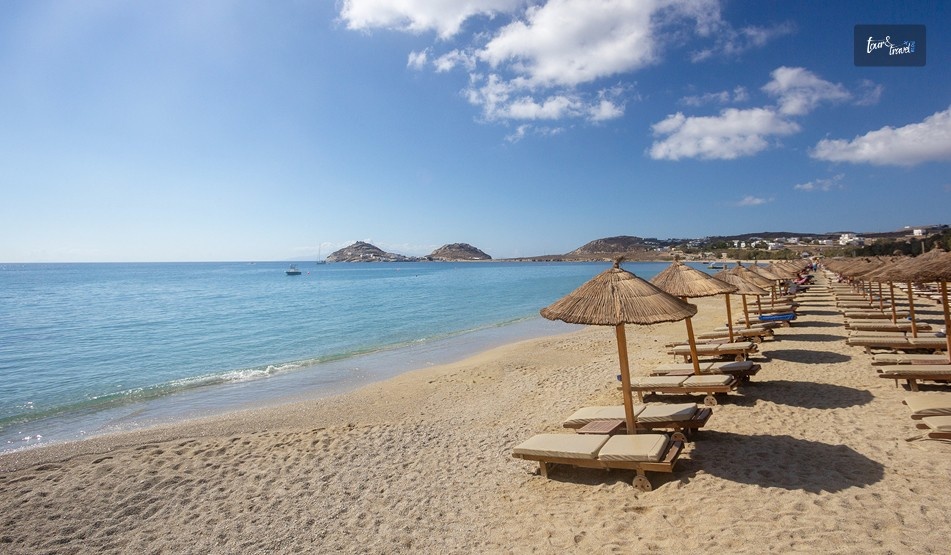
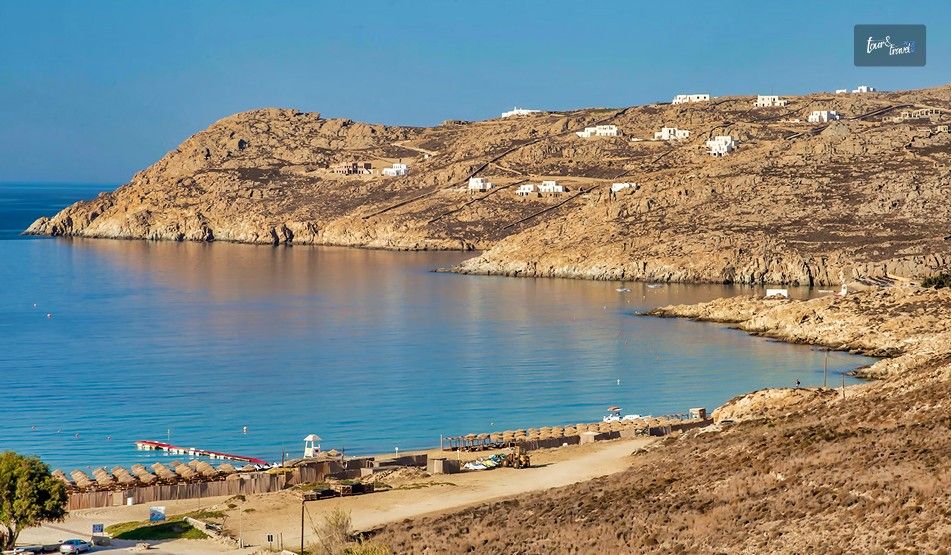
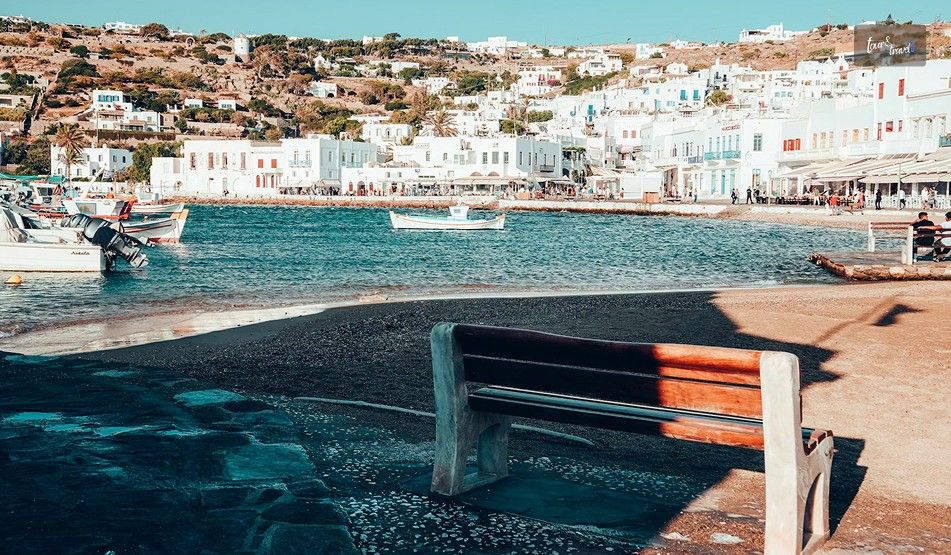
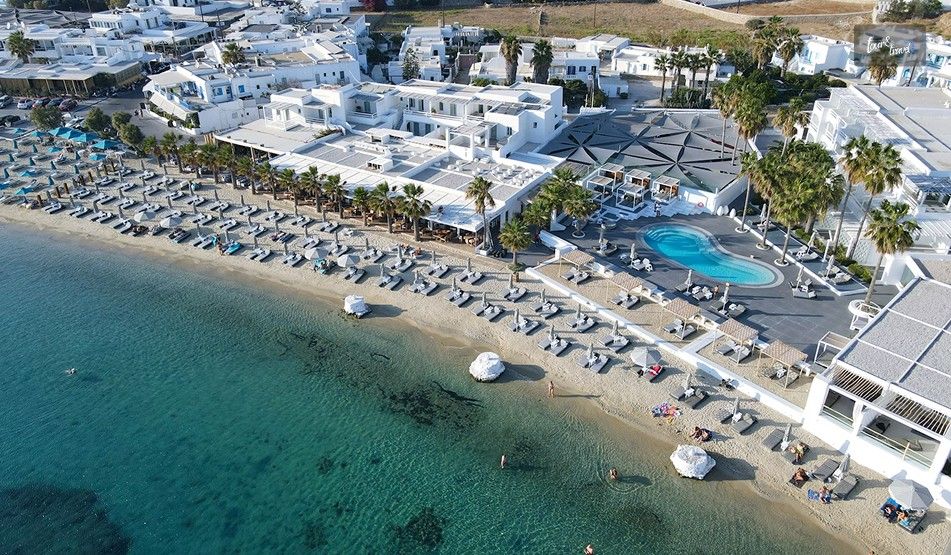

What Are The Best Mykonos Beaches? A Complete Guide To Party Hotspots And Hidden Gems 

Oct 11, 2025

Last Updated on: Nov 13, 2025

Europe

Inclusive! Pristine! Party Paradise! Beaches for everyone! 

Choosing adjectives for the Mykonos Beaches is surely a problem of plenty! Why? 

If you love tranquillity, the Agios Sostis Beach will appeal to you. However, Jackie O’ Beach Club is a favorite of the LGBTQIA+ travelers. So, Mykonos Beaches offer you a bit of everything! 

Furthermore, the Psarau Beach is where all the stars and elites gather. In addition, from icons such as Elizabeth Taylor and Paul Newman to Bella Hadid and Kendall Jenner today, Mykonos beaches have been the hub of celebrity tourism. 

Moreover, if you are planning a stay in luxury villas in Greece and a premium holiday, Mykonos beaches will surely be on your bucket list. 

Also, Mykonos beaches are crucial for luxury and high-end tourism in Greece. In fact, in the prime tourism season of April to August of 2025, Mykonos beaches have been one of the leaders in driving tourism in Cyclades. 

According to a Travel and Tour World Report, Mykonos has received around 604,963 air passengers in the same period. 

Nevertheless, in today’s blog, I will talk about the best beaches in Mykonos with transportation tips, detailed features, and local insights.

What Are The Best Mykonos Beaches? Party Hubs, Family-Friendly Beaches, Hidden Gems, And More

What Are The Best Mykonos Beaches Party Hubs Family-Friendly Beaches Hidden Gems And More

All the Mykonos beaches stand out with their distinct characteristics. It’s difficult to pick a favorite. So, here, I have tried clubbing the beaches into different categories.

It’s you who will pick the best one based on the kind of experience you want. 

1. Party Beaches In Mykonos

Paradise Beach and Super Paradise Beach are the best party beaches in Mykonos. 

• Paradise Beach

Distance from Mykonos Town: 5 Kilometers

One of the original nudist beaches in Greece, Paradise Beach is all about a carefree experience. The waves here are gentle, kissing the sandy shores and boulders. 

However, it is the Paradise Beach Club that makes the experience more happening. Have your favorite drink and grab a quick snack in the sitting area under the Sun.

Also, walking through the small lane with white-washed buildings on both sides is quite an experience. 

• Super Paradise Beach 

Distance from Mykonos Town: Around 7 Km

The Super Paradise Beach is a little dramatic with cliffs reaching the crystal clear water here. Also, don’t forget a speed boat ride here with the hilly topography surrounding the water. 

2. Family-Friendly Mykonos Beaches 

Platis Gialos and Ornos Beach are my favorite picks among the most family-friendly beaches in Mykonos. 

• Platis Gialos

Distance from Mykonos Town: 5 Km

Platis Gialos is one of the most accessible and family-friendly beaches. It has water taxi stops, and you will find water sports and yacht rentals here. 

Furthermore, it has two convenience stores for snacks and cold drinks. Also, on the shore, you will find Petasos Beach Resort and many other leading hotels of Mykonos. 

• Ornos Beach

Ornos Beach

Distance from Mykonos Town: 3 Km

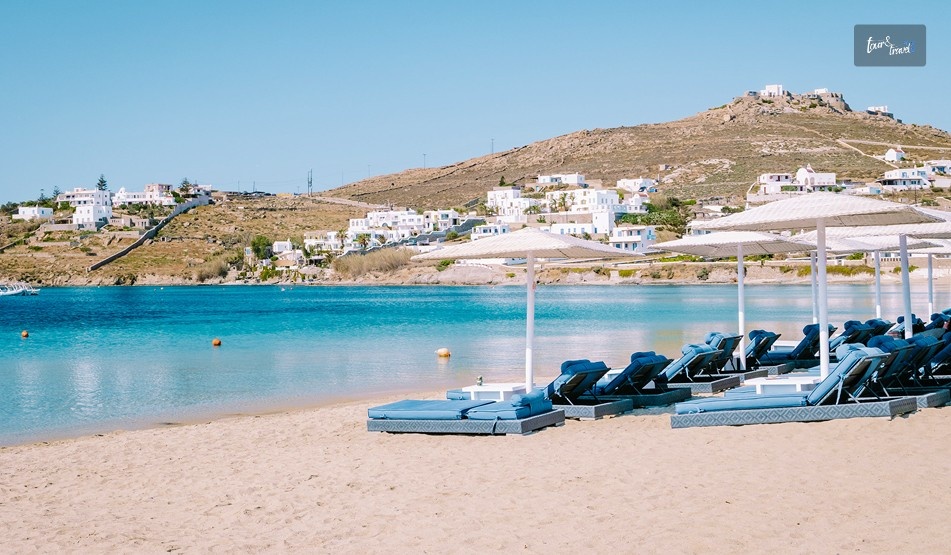
With clear and calm water, Ornos Beach is one of the best choices for families. You will find here sunbeds and other beach amenities for rent. 

Also, you can enjoy a charter boat ride. The food scene here is quite vibrant, and the shops in the locality are ideal for boutique shopping. 

Moreover, for a more happening experience, you can pay a visit to the Pasaji Beach Club. 

3. Secluded & Romantic Beaches

Agios Sostis and Fokos Beach are my favorite picks if you are looking for romantic and secluded beaches in Mykonos. 

• Agios Sostis

Distance from Mykonos Town: 8 Km

With hilly surroundings and crystal clear water, Agios Sostis is a quiet paradise. You have to take quite a descent through the stairs to reach the beach. 

It is not as commercialized as Paradise Beach or Platis Gialos, and that’s the whole fun. 

• Fokos Beach 

Distance from Mykonos Town: 12 Km

Fokos Beach is gorgeous, and it has a rocky landscape kissing the turquoise water. It is great for couples. 

4. Water Sports & Active Beaches

Want an adrenaline rush? Why don’t you plan a trip to Elia Beach and Kalafatis Beach? 

• Kalafatis Beach

Kalafatis Beach

Distance from Mykonos Town: 12 Km

Kalafatis Beach is ideal for windsurfing and water sports. Furthermore, you can try extreme tubing, jet skiing, and scuba diving here. You can contact Kalafatis Watersports at + 30 6945261242. 

• Elia Beach

Elia Beach

Distance from Mykonos Town: 10 Km

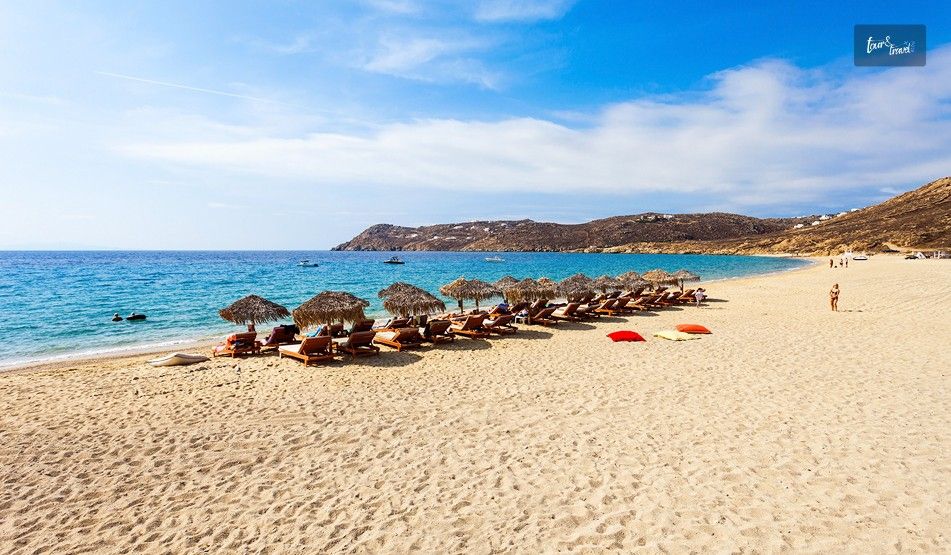
Elia Beach is the longest in Mykonos. It is less commercialized, with some water sports facilities, such as jet skiing. 

Furthermore, the main restaurant here serves amazing food and drink. Also, don’t miss exploring the secret coves on the western side of the beach. 

Beach Comparison: A Summary Table

Name of the BeachVibeAmenitiesAccessibilityBest For
Paradise BeachParty• Snorkeling
• Jet
• Skiing Bars
• Beach Club
• Water Taxi
• Taxi
• Bus
• Nightlife Experience
Super Paradise BeachParty• Bars
• Restaruants
• Party Events
• Watersports
• Wheel-Chair Accessible
• Entrance
• Restroom
• Bus
• Taxi
• Car
• Nightlife Experience
Platis GialosFamily-Friendly• Bars
• Restaurants
• Parasailing
• Jet Skiing
• Water Taxi
• Public Bus
Families
Ornos BeachFamily-Friendly• Umbrella and Sunbed Rentals
• Watersports
• Water Taxi
• Car
• Bus
Families
Agios SostisSecluded• Watersports and Rentals Dirt road and walksCouples
Fokos BeachSecluded• Traditional Taverna
• Free Parking Space
Well-maintained dirt roadCouples
Kalafatis BeachActiveWatersportsEasyAdventure Lovers
Elia BeachActiveJet SkiingEasyAdventure Lovers

Transportation Tips: How To Reach The Mykonos Beaches And How To Move Around? 

Transportation Tips How To Reach The Mykonos Beaches And How To Move Around

Did you know that Mykonos beaches are well-connected to Athens and other major cities through the Mykonos International Airport? In fact, you can take a flight of just 20 minutes to reach Mykonos from Athens. The ticket prices are around €40 to €80. 

Of course, you can take a ferry from the Port of Piraeus in Athens and reach Mykonos in 3 to 5 hours. However, that’s a waste of time as the locals suggest that ferry rides do not always offer the best of views, and with high winds, it can get really choppy. 

The ticket prices for a ferry ride from Athens to Mykonos Beaches will be around €40 to €150. Also, a ferry ride is suitable if you are visiting Platis Gialos, Paraga Beach, Paradise Beach, and other Mykonos beaches accessible by sea. 

Nevertheless, once you reach Mykonos, you can move around comfortably in local buses, scooters, and taxis. Here are the details. 

1. Local Buses To Move Around Mykonos Beaches 

Mykonos buses are the best option if you want to move around the beaches. Buses are easily available from the following locations and ply to the following destinations. 

Mykonos Buses Departure PointsDestinations 
Mykonos Buses Services KTEL Departure Point 1: Fabrica• Platis Yalos
• Psarou
• Ornos
• Ai Yannis
• ParadiseParanga
Mykonos Buses Services KTEL Departure Point 2: OTE• Ano Mera
• Kalafati
• Elia
Mykonos Buses Services KTEL Departure Point 3• Neo Limani
• Aghios Stefanos

You can contact (+30) 22890 23.360 or (+30) 22890 26.797 to learn about the timing and fare of these buses. 

2. Mykonos Taxis 

You can book a taxi for airport transfers and moving around the Mykonos beaches through your accommodation. However, in most cases, the taxi drivers will charge you around €15 to €20 extra. 

However, for airport transfers, you must take the KTEL buses from JMK Airport to the Mykonos Chora Southern Bus Station. 

From the Mykonos Chora Bus Station, you can go to the Fabrika Bus Station in the south or the Old Port Bus Station in the north based on the beaches you want to visit. 

Airport transfer to and from Mykonos in KTEL public buses will cost you €3. You can also buy shuttle tickets for airport transfers from the driver inside the bus. 

Insider Tip

You have to pay the bus driver in cash. Also, sometimes, the driver refuses to give you a change. So, carry small bills. 

3. Renting A Scooter In Mykonos

If you are traveling solo or with your partner, you can hire an ATV or a scooter to move around the beaches in Mykonos. 

For scooters, the daily rentals for the scooters will be around €25, and the car rental prices for a week will be close to €350-400 a week. 

What Is The Best Time To Visit Mykonos Beaches?

What Is The Best Time To Visit Mykonos Beaches

May to October or Late Spring to Autumn is the best time to visit the Mykonos Beaches. However, the summer months of July and August are the busiest on Mykonos Beaches. The temperatures in these months range between 20 and 28 degrees Celsius, and usually there is no rainfall in these months. 

These months also receive the longest sunshine hours. 

Are you planning to visit the Mykonos beaches in a different season? Here is a month-by-month breakdown of temperature. (Source: Greeka.com).

MonthsAverage Temperature (Degree Celsius)
January10.9 
February11.3
March13
April15.6
May19.5
June21.5
July23.5
August25.8
September23.2
October19.8
November16
December12.4

Local Etiquette For Visiting The Best Beaches In Mykonos

The locals in Mykonos are friendly and hospitable. They are also quite familiar with the consistent inflow of tourists, with Mykonos beaches being quite important for the luxury tourism landscape in Greece. 

Casual and comfortable clothes made of light fabrics are the best choices for the daytime. In the evening, you can wear the fancier outfits and turn the party mode on. 

Furthermore, tipping is quite popular in hotels and restaurants. At cafes and bars, the standard tipping charges are 10 to 15% of your service. 

Best Mykonos Beaches: Frequently Asked Questions (FAQs) 

Here are some frequently asked questions and answers about the best Mykonos Beaches. 

1. How Many Beaches Are In Mykonos?

Mykonos has more than thirty beaches. Along with being numerous, the beaches in Mykonos also differ in their characteristics. 
For example, Paradise Beach is ideal for party fun and experiencing a cosmopolitan vibe. On the other hand, Platis Gialo and Ornos beaches are more suitable for family fun. 
In addition, Kalafatis and Elia are ideal for watersports and adventures. 
Moreover, if you want to stay closer to Mykonos Town, Megali Ammos is an excellent option.

2. Which Has Better Beaches Mykonos Or Santorini?

I cannot pick a favorite between the Mykonos and Santorini beaches. The Mykonos beaches are ideal for idyllic beach getaways with long stretches of soft sand. 
The golden sand on the shore looks beautiful with turquoise water. So, be it the Elia Beach or Paradise Beach, all these offer a classic beach experience. 
On the other hand, the beaches in Santorini are more dramatic. Thanks to the volcanic landscape, the beaches here have pebbles and sand in black and red. Red Beach and Kamari are some of the most popular beaches in Santorini. 

3. What Is The Best Part Of Mykonos To Stay In?

The best part of Mykonos to stay in will depend on the kind of experience you want. Chora, or Mykonos Town, is the best place to stay if you want to make the most of the shopping and dining scene and enjoy the vibrant nightlife. 
Furthermore, Platis Gialos and Ornos are some of the chosen locations if you want to enjoy the gorgeous stretches of the sand and want to spend some time alone or with your partner/family away from the hustle and bustle. 

Read Also:

Share on Social Media

Meet Sibashree Bhattacharya, a travel enthusiast who has a decade-long experience in transcending virtual barriers with her words! Her deep love for travel is apparent from her travel escapades to the mountain, often taking her readers on a journey, her words acting as Portkey! Fun fact: Sibashree loves to dive deep into the history of the places she is about to visit, making her travels even more wholesome. If you were wondering how her articles are not short of time travel, this answers it!

Leave a Reply

Your email address will not be published. Required fields are marked *

title-img Related

READ MORE madeira portugal

What Is Special About Madeira Portugal? (Getting Into The Mood With Madeira Wine And More)

BY  Sibashree Sep 5, 2025

Funchal, the capital of Madeira Portugal was recently in the news for hosting the European Aquatics Artistic Swimming Championships from 2nd to 5th June in 2025.  However, Madeira, the Atlantic gem, has always been in focus as the home to a unique culture, history, and a beautiful landscape. Furthermore, it is home to the oldest Laurisilva Forests.  Also, despite being a popular tourism attraction, Madeira Portugal has been able to retain its pristine charm. This archipelago has the main island of Madeira and Porto Santo. These two are inhabited islands of the region.  Furthermore, the other two smaller islands, Selvagens and Desertas, are uninhabited. Moreover, Funchal, the capital of Madeira, is the hometown of soccer giant Cristiano Ronaldo. It can’t be bigger and better than this.  So, as you can see, Madeira is the focus of this Tour and Travel Blog. The key areas we will be talking about are:Where Is Madeira Portugal? Is Madeira Part Of Portugal? How To Get To Madeira Portugal?What To Do In Madeira Portugal?1. Exploring The Iconic Levada Trails: The Ultimate Outdoor Adventure 2. Feel The Ancient Connection In The Laurisilva Forest: A Precious Experience In Nature3. Enjoy The Thrill Of Walking On The Cabo Girão Skywalk4. Relax In Porto Moniz Natural Swimming Pools5. Wander Through Funchal’s Mercado Dos Lavradores And Buy Fresh Produce6. Tour Madeira’s Wine Cellars: A Unique Cultural Experience 7. Take A Cable Car To Monte For A Wonderful View Of The Funchal Coastline8. Go Whale Watching Or Dolphin Spotting: How About Some Marine Fun?9. A Food Tour In Madeira: This Is Something You Don’t Want To Miss10. Know About The Rural Heritage Of Madeira At The Town of SantanaWhere To Stay In Madeira Portugal? Madeira Wine Route: The Crown Jewel Of Tourism In Madeira Portugal 1. Between São Vicente And Seixal2. Estreito De Câmara De Lobos3. Experimental Viticulture Station4. Quinta De Santa Luzia5. Fajã Do Barro Viewpoint6. GinjasMadeira Portugal: Some Fun Facts That Truly Make This Atlantic Gem Special 1. The Largest Fireworks Displays In Madeira2. Flower Festival In Madeira Madeira, Portugal: Frequently Asked Questions (FAQs)  Where Is Madeira Portugal? Is Madeira Part Of Portugal?  Madeira, Portugal, is located in the North Atlantic Ocean. It is an autonomous region of Portugal and a part of the Macaronesia region.  This archipelago has the Canary Islands to the South and Morocco to the east. Furthermore, despite being a part of a European country, it is closer to Africa (450 km) than the mainland of Europe (1000 km). It is also the outermost region of the European Union.  Moreover, you can reach this beautiful archipelago from Lisbon by air in 90 minutes.  How To Get To Madeira Portugal? The Cristiano Ronaldo International Airport (FNC) in Funchal is the main access point to Madeira Portugal. It is well connected to major Portuguese cities such as Lisbon and Porto, and other European countries.  Furthermore, you can cruise to the Port of Funchal, the port city of Madeira, for a touch of luxury.  Once you reach Madeira, enjoy a ride in the local buses, rented cars, and cable cars to explore like a local.  What To Do In Madeira Portugal? Clichéd, it may sound! But truly, Madeira has something for every type of traveler. You can relax at the Madeira beaches, enjoy hiking, explore the charming towns, and soak in its unique culture.  Here are some unique things to do in this picturesque paradise.  1. Exploring The Iconic Levada Trails: The Ultimate Outdoor Adventure  It is unique when ancient irrigation trails double as the most scenic hiking trails. Yes, I am talking about the “Levadas” network of trails.  Levada do Caldeirão Verde and Levada dos 25 Fontes are the two most popular trails in this route. Overall, the 2000-kilometer scenic route of Levada trails consists of waterfalls, greenery, and mountain peaks.  2. Feel The Ancient Connection In The Laurisilva Forest: A Precious Experience In Nature You can hike through the Laurisilva Forest and feel ancient times speaking to you. The trails here are suitable for hikers of all skill levels.  Also, this UNESCO World Heritage Site is home to diverse flora and fauna. So, with some patience, you will be able to spot wildlife here.  3. Enjoy The Thrill Of Walking On The Cabo Girão Skywalk Cabo Girão in Madeira is one of the highest sea cliffs in Europe. The Cabo Girão Skywalk is located at a height of 580 meters, and as you walk through this transparent glass platform, you can see the stunning coastline of Madeira.  4. Relax In Porto Moniz Natural Swimming Pools Madeira is famous for its volcanic rock formations, and nowhere is this more evident than in Porto Moniz Natural Swimming Pools.  These pools are filled with crystal-clear seawater and surrounded by dramatic black lava rocks. It’s the perfect spot to relax, swim, and enjoy the beautiful scenery. 5. Wander Through Funchal’s Mercado Dos Lavradores And Buy Fresh Produce Funchal’s Mercado dos Lavradores, or the Farmers’ Market, is a place of bustling energy with exotic fruits, fresh produce, local cheese, and Madeira wine.  Don’t forget to buy specialties such as custard apples and passion fruits.  6. Tour Madeira’s Wine Cellars: A Unique Cultural Experience  Don’t miss a visit to the Madeira wine cellars and see the process of making fortified wine. You can even taste the best ones brewed and be a part of the guided tours conducted by some cellars.  7. Take A Cable Car To Monte For A Wonderful View Of The Funchal Coastline You can go for a cable car ride from the City Center to the town of Monte. Throughout the journey, you will enjoy a beautiful view of Funchal and the surrounding coastline.  The Monte Palace and Church of Our Lady of Monte are two notable attractions on this route.  8. Go Whale Watching Or Dolphin Spotting: How About Some Marine Fun? Madeira is one of the best places in Europe for marine wildlife spotting. April to October is the best time for these marine wildlife spotting tours.  Funchal is the main hub of these tours, and you can spot the adorable animals on a catamaran trip, sailing trips, and fast boats.  9. A Food Tour In Madeira: This Is Something You Don’t Want To Miss The local food of Madeira stands out with the use of exotic fruits, fresh seafood, and rich flavors. Try grilled meat on skewers or Espetada, salted cod or Bacalhau, and Madeiran flatbread such as Bolo do Caco.  Like Moroccan food, food in Madeira also has bread as a staple. Moreover, Madeira Cake is something that gives you a taste of the famous Madeira wine. It’s a dessert.  10. Know About The Rural Heritage Of Madeira At The Town of Santana The rural areas in Madeira still follow a lifestyle that speaks of the island’s history. The town of Santana is especially a place that preserves the rural heritage of the island at its best.  The houses here are triangular and they have thatched roofs. They are also colorfully painted.  Where To Stay In Madeira Portugal?  The best place to stay in Madeira Portugal depends on the kind of experience you want. Have a look at the table below to decide where to stay in Madeira.  Places to Stay in MadeiraExperience You Will Get Funchal• Vibrant Nightlife• Bustling Market• Cultural Exploration in the Historic Old TownPonta do Sol• Resort Experience• Beaches And Coastline• Ideal for RelaxationMachico• Local Experience• Peaceful and Ideal for Family Vacations• Conveniently Located for the Island ExplorationSão Vicente• Rural Experience• Traveling through the Central TunnelsSeixal• Natural Setting• Picturesque View of the North Coast Madeira Wine Route: The Crown Jewel Of Tourism In Madeira Portugal  The Wine Festival in Madeira in August-September is the pride of the local ethnographic and cultural identity. You never know when a wine cellar or brewer in rural Madeira will present you with a century-old elixir.  Nevertheless, irrespective of the time of your visit, you can visit the following places for a delightful wine tour in Madeira. 1. Between São Vicente And Seixal It is an iconic route filled with vine trails by the sea. So, it is ideal for a mixed experience of a coastal getaway and wine tourism.  2. Estreito De Câmara De Lobos Estreito de Câmara de Lobos covers an area starting from the coast to Jardim da Serra, which is at a height of 600 meters.  It is the largest vineyard area in Madeira.  3. Experimental Viticulture Station Located in Arco de São Jorge, the Experimental Viticulture Station is the best location to learn about wine production and the heritage of Madeira wine.  It has a vine and a wine museum. 4. Quinta De Santa Luzia Quinta de Santa Luzia belongs to the Blandy family, who still follow the traditions of Madeiran farms.  They still produce some grape varieties, which were used in the Madeira Wine Company’s wines.  5. Fajã Do Barro Viewpoint This viewpoint in Porto Moniz will present a never-ending stretch of vineyards in front of you. Moreover, from here you will see the vineyards of Fajã de Manuel and how the Atlantic embraces the coastal landscape of Arrudal da Ribeira da Janela.  6. Ginjas Enjoy the most fascinating view of the São Vicente valley from Ginjas. Here, you will notice vineyards on both sides of the mountain.  Madeira Portugal: Some Fun Facts That Truly Make This Atlantic Gem Special  Madeira has one of the biggest fireworks displays in the world, and during the springtime, it hosts one of the most vibrant flower festivals.  1. The Largest Fireworks Displays In Madeira Madeira celebrates New Year’s Eve with great pomp. Also, it once held the Guinness World Record for hosting the biggest firework display.  It took place at Funchal.  2. Flower Festival In Madeira  With its mild climate and volcanic terrain, Madeira gets an abundance of flowers such as orchids, bougainvillea, Bird of Paradise, etc.  The local markets also gear up during this festival, and traditional performances by children and adults celebrate the Madeiran tradition.  Madeira, Portugal: Frequently Asked Questions (FAQs)  Here are some frequently asked questions and answers about Madeira, Portugal.  1. What Is The Best Time To Visit Madeira, Portugal? April to June is the best time to visit Madeira. Along with being the season of the iconic flower festival, it is also the ideal time for spotting whales and dolphins.  2. How Far Is Madeira From Lisbon? It takes around 90 minutes to reach Madeira from Lisbon. There is no road connectivity. However, you can take a luxury cruise ride to the port city of Funchal.  3. Is Maderira Cheap or Expensive? Madeira is a more budget-friendly destination compared to other European cities and countries. There are many budget-friendly hotels, and local food here is also affordable. However, car rentals and short-term vacation rentals here can be a little expensive. A package for a person for a Madeira trip for 3 nights and 4 days can be around $1000.  4. Which Is Better, the Azores Or Madeira?  Your choice between Madeira and the Azores will depend on the kind of experience you want. The Azores, with its dramatic volcanic landscape, is more ideal for outdoor adventures. From a protected marine sanctuary to the hot springs, it also shows a massive geological diversity. Madeira, on the other hand, despite being a dolphin and whale spotting hub, has a more relaxed vibe. It is great for wine tasting, urban experiences, and cultural exploration.  Read Also: Lisbon To Porto Distance: Different Ways To Travel, Accommodation Options, And More “Winter Is Coming!” Where Is Hot In October? Explore Places To Visit In Europe Lisbon to Algarve Distance: Know The Best Ways To Travel And More

READ MORE Pena Palace

Pena Palace: A Quintessential Example Of Romanticism

BY  Barsha May 11, 2023

Portugal's Pena Palace is an outstanding masterpiece of Romanticism architecture that is nestled in the hills above the charming town of Sintra. This palace is a striking combination of Gothic, Moorish and Manueline styles that showcase the best of Portuguese culture and history. This majestic palace is not just a visual treat but also offers a unique opportunity to step back in time and experience the grandeur of a bygone era. You might be missing out on a lot if you have still not booked Pena Palace Tickets. Let us take you to an unbelievable experience of this extraordinary destination. History The Pena Palace was built in the mid-19th century by King Ferdinand II, who was a German prince and the husband of Queen Maria II. He purchased the ruins of an old monastery that stood atop a hill in Sintra and transformed it into a magnificent palace. The construction of the Inside Pena Palace was completed in 1854, and King Ferdinand II spent many years refining and adding to the palace's design. Architecture The Pena Palace's unique architectural style is a combination of different architectural styles from different eras. The palace features Gothic towers, battlements, and Manueline-style arcades that create a stunning blend of different architectural styles. The palace also has Moorish-influenced decorative features such as horseshoe arches and minaret-style towers. The palace's colorful exterior is a striking blend of bright reds, yellows, and blues that make it stand out among the lush greenery that surrounds it. The palace's design reflects the Romanticism movement, which was a cultural and artistic movement that originated in Europe in the late 18th century. Romanticism was a reaction against the Enlightenment era's emphasis on reason and logic and celebrated emotions, individualism, and nature. The Pena Palace's design embodies the Romanticism movement's principles, with its eclectic mix of architectural styles and its focus on nature, beauty, and emotion. Interior The Inside of Pena Palace is just as stunning as its exterior, with each room designed with its unique theme and style. The palace's rooms feature intricate carvings, detailed paintings, and ornate furnishings that take visitors back in time to the romantic era of the 19th century. The most impressive room in the palace is the Great Hall, which features a giant chandelier, intricate stucco work, and a beautifully decorated ceiling. The palace's other rooms are equally impressive, with each room featuring unique design elements that showcase the palace's history and culture. The Arab Room, for example, features Moorish-inspired designs and decoration, while the Queen's Bedroom is a beautiful example of the palace's Manueline influences. Gardens The palace's gardens are just as impressive as the palace itself. The gardens feature a variety of exotic plants, including rare species from around the world. Visitors can explore the gardens' many paths and walkways, which lead to a stunning array of fountains, statues, and lookout points. The gardens also offer breathtaking views of the surrounding hills and countryside, making it a popular spot for photographers. The park surrounding the palace covers over 200 hectares and includes several different gardens and forested areas. The gardens feature a wide range of plant species, including camellias, azaleas, rhododendrons, and magnolias. The park also includes several lakes, grottos, and waterfalls, which add to the park's natural beauty and charm. Visiting Pena Palace The Palace is open to visitors throughout the year, and visitors can purchase Pena Palace tickets online or at the palace's entrance. Visitors can choose to explore the palace's interior or gardens or purchase a combination ticket that includes access to both. The palace can get crowded during peak season, so it's best to arrive early in the morning to avoid the crowds. It's also important to wear comfortable shoes, as there is a lot of walking involved in exploring the palace and gardens. Guided tours are available for visitors who want to learn more about the palace's history and architecture. Audio guides are also available for visitors who prefer to explore the palace at their own pace. The palace's website provides detailed information on visiting the palace, including opening hours, ticket prices, and tour options. Conclusion Pena Palace is a must-visit destination for anyone visiting Portugal. It's a stunning example of Romanticism architecture that combines different architectural styles to create a unique and unforgettable experience. The palace's gardens are just as impressive as the palace itself, offering visitors a chance to explore a wide range of exotic plant species and stunning natural features. Visitors to Pena Palace can step back in time and experience the grandeur and beauty of a bygone era. The palace's unique architecture and design elements are a testament to Portugal's rich culture and history. Whether you're a history buff, architecture enthusiast, or nature lover, Pena Palace is sure to impress and leave a lasting impression. Pena Palace is a true gem of Portugal, a perfect blend of different architectural styles and natural beauty. It's a unique destination that offers visitors a chance to explore the rich history and culture of Portugal while immersing themselves in the beauty and charm of the palace and its surroundings. A visit to Pena Palace is a once-in-a-lifetime experience that should not be missed. Read Also: Top 5 Travel Tips For Your Next Trip To China 9 Things Every Traveler Should Know When Visiting Shanghai

READ MORE Kotor Montenegro travel itinerary

A Kotor Montenegro Travel Itinerary For 3 Days: How To Travel Kotor Montenegro On A Budget? 

BY  Sibashree Nov 25, 2025

My trip to Kotor, Montenegro, is filled with memories of the cats, who are the guardians of the city, and the smell of dew-drenched leaves as I went for a sunrise hike.  Also, along with being a hidden gem in the sustainable tourism scenario after a successful sustainability assessment by the Global Sustainable Tourism Council (GSTC), it has also emerged as the ultimate budget-friendly location of Montenegro.  In this blog, I will discuss a 3-day travel itinerary for Kotor, Montenegro, including hidden gems and essential tips. Why Visit Kotor, Montenegro? The International Trade Administration has confirmed that the tourism sector in Montenegro contributes 30% to the country’s GDP. In addition, ReportLinker predicts that the number of visitors to Montenegro will reach 3.4 million by 2028.  The same report anticipates that the tourism industry will reach a revenue of $95 million by 2028.  A UNESCO World Heritage Site, With Great Food, Community, Beauty, And Historical Charm Kotor, a UNESCO World Heritage Site, is the crown jewel of tourism in Montenegro. The deep bay waters here resemble the Nordic fjords. On the other hand, the coastal cliffs create the perfect backdrop for the city, exuding a medieval charm.  Now, Kotor and Montenegro as a country are planning to diversify their tourism portfolio, with a greater focus on cultural, ecotourism, and rural tourism.  In addition, the budget-friendly hostels in Kotor are more than cheap accommodations. They are the base for developing a backpackers' community.  Many of these hostels help you join pub crawls, hikes, local events, and more. As a result, Kotor, Montenegro, has become a favorite among backpackers, budget travelers, and solo travelers.  In addition, the rugged beauty of the Dinaric Alps meets the calmness of the Adriatic Sea in Kotor, Montenegro. So, every nook of Kotor is ideal for a photo-op.  Moreover, for me, exploring the maze of medieval lanes and the Venetian architecture was like time travel. Also, St. Tryphon’s Cathedral, dating back to the 12th century, stands as the eternal witness of human history in Kotor.  Furthermore, the family-run taverns here serve the most delicious yet simple food at an affordable price. Try the savory pastries! What Is The Best Time To Visit Kotor Montenegro? July and August are the peak months for visiting Kotor, Montenegro. However, if you want to travel to Kotor, Montenegro, on a budget, you need to plan a trip between November and February.  You will enjoy watersports and skiing in these months, and accommodations are available at a much more affordable price.  How To Get To Kotor & Move Around On A Budget? The Tivat Airport, 7 km away, is the gateway for Kotor to the rest of the world. You can travel this 7 km distance by road.  Other nearby airports to Kotor, Montenegro, are Dubrovnik Airport (Croatia, 44 km) and Podgorica Airport (40 km). In addition, Podgorica and Kotor get regular flights from countries such as Bosnia, Serbia, and Croatia.  Once you reach Kotor, you can explore the city and its surroundings in a boat. Don’t miss Perast on the route, as this village has fewer than 300 people, and it stands out with amazing scenic beauty.  Taxis, shuttles, and car rentals are other options if you want to explore Kotor by road. 3-Day Budget Itinerary For Kotor, Montenegro Here is a brief 3-day budget itinerary for Kotor, Montenegro. I will first share the days and activities, and then discuss why these attractions are special.  DaysActivitiesDay 1 - Exploring Kotor Old Town• Wandering through cobblestone streets.• Visiting St. Tryphon Cathedral.• Climbing the City Walls for panoramic viewsInsider Tip: Visit the City Walls early for a discounted entry. Day 2 - Visiting Perast & Our Lady of the Rocks• Taking a local bus to Perast.• Boat ride to the iconic island church.• Enjoying budget-friendly seafood at a local konoba.Day 3 - Visiting Lovćen National Park & Njeguši Village• Hiking or taking a shared taxi to Lovćen.• Visiting Njeguši for a traditional prosciutto and cheese tasting. 1. Exploring Kotor Old Town And City Walls Here are some interesting and unknown facts about Kotor Old Town and City Walls.  The Old Town's fortification system stretches 4.5 km. So, it is one of the longest fortification systems in Europe. It only follows the Great Wall of China.  You have to climb 1350 steps to reach the San Giovanni Fortress. The entry fee is €8. However, you can also take the secret route via the old trade path outside the northern gate. It’s free.  The Sea Gate Inscription above the main gate is a quote from Tito: “We don’t want others’, we don’t give our own”, commemorating liberation from Nazi occupation in 1944. Furthermore, the Pillar of Shame, hidden in a square, reminds us of a brutal activity in the city in the past. Criminals were tied to this pillar, and everyone used to throw stones and rotten food at them as a mark of punishment.  2. Visiting St. Tryphon Cathedral Built in 1166, the St. Tryphon Cathedral is even older than the Notre Dame Cathedral in Paris. It is one of the most ancient cathedrals on the Adriatic Coast. The cathedral has a 14th-century ciborium, which depicts the life of St. Tryphon. It is made of a red stone from Đurići. The goldsmiths of Kotor made the golden altarpiece of the cathedral in the 15th century. It has the figures of Christ, Virgin Mary, and 16 saints.  A devastating earthquake struck Kotor in 1667. Then, the bell tower of the cathedral fell, and it could not be rebuilt fully. Thus, the current cathedral structure is shorter by 2 meters than the original one.  In 2009, the St. Tryphon Cathedral got the status of a Papal Basilica. It is a rare honor for churches in the Balkan region. 3. Visiting Perast The 2-km-long main street of Perast was once a cultural hub during the days of the Venetian Republic.  The bell tower of St. Nicholas Church was built at a cost of 50000 Ducats in the 18th century. It was an unbelievable amount in that era.  Perast once stood as a reflection of the wealth in the Venetian Era. It had 16 palaces and 19 churches.  4. Knowing Our Lady Of The Rocks Rocks have piled up for centuries, and those rocks, along with sinking ships, have formed Our Lady of the Rocks, the only artificial island in the Adriatic Region.  The Fašinada festival is a popular ritual here, with its history dating back to 1452. It is a tradition to celebrate the island's foundation. Every 22nd July, the people of the island gather in decorated boats and they throw stones into the sea, as a symbolic exercise.  Furthermore, the Catholic church here has a tapestry made by Jacinta Kunić-Mijović. It was made using human hair, and Jacinta Kunić-Mijović made this tapestry while waiting 25 years for her fiancé to return from the sea.  The church also has the Death of the Virgin. It is a masterpiece by Tripo Kokolja. In total, the church has 68 paintings from Tripo Kokolja. 5. Visiting Lovćen National Park The Njegoš Mausoleum at Jezerski Vrh is one of the main attractions of the Lovćen National Park. Located at an altitude of above 1,660 meters, it is allegedly the highest mausoleum in the world.  200,000 Gilded tiles cover the dome of the mausoleum, and 13-ton granite statues of Montenegrin women guard the entrance of the national park.  Once you climb 461 steps and reach the top of the Mausoleum, you will enjoy panoramic views stretching toward Italy.  6. Exploring Njeguši Village It is the cradle of the royal Petrović-Njegoš dynasty of Montenegro. This family ruled over Montenegro from 1696 to 1918. Furthermore, it has the birthplace of Petar II Petrović Njegoš and many other 19th-century buildings. The birthplace of Petar II Petrović Njegoš is now a museum housing the first edition of his poem, Mountain Wreath, and original furniture. How Much Does A 3-day Trip To Kotor Cost On A Budget? Here is a detailed breakdown of the budget for a 3-day trip to Kotor, Montenegro.  CategoryBudget Cost (EUR)DetailsAccommodation (Hostel)€15–€25 per night, meaning €45–€75 for 3 nightsHostel prices are even lower from November to FebruaryLocal Transportation€6–€12 total• Local buses (€1–2 per ride). • Short taxi/shared rides within the bay (€3–5). • Free walking inside Old Town.Airport Transfers€8–€15 each way, meaning €16-€30• Airport transfer from Tivat is the cheapest.• From Dubrovnik/Podgorica, it will be at least €20-€35. Food (Budget Travelers)€15-€25 per day. So, it will be €45 to €75 in total. Choose Konobas & bakeries: • Pastries (€1–2), • Seafood Meals (€7–10)• Wine/Beer (€2–3)Activities and Entry Fees€20–€35 total• City Walls (€8, discounted early)• St. Tryphon Cathedral (€3)• Perast boat (€5–10) • Lovćen shared taxi/hike (€5–10)Day Trip to Perast & Our Lady of the Rocks€7–€12• Bus to Perast (€1–2), boat (€5–10)Lovćen National Park Day TripFree–€10• Free if hiking; €5–10 for shared taxi. • Mausoleum entry ~€5.Miscellaneous (water, snacks, souvenirs)€10–€20• Refillable water recommendedCollect small souvenirs €3–5.Total Estimated Budget for 3 days €139–€239• This is a cost breakdown for budget travelers. However, the budget for mid-range and luxury travelers will be different.  Day Trips & Hidden Gems Near Kotor Gornji Stoliv: It is a quiet coastal village. Vrmac Ridge: You will enjoy this scenic hike, and it is less crowded.  Church of Our Lady of Health: This chapel has a serene ambiance, and because of its location on a hilltop, it is often overlooked by tourists.  Vrmac Ridge: It is famous for the WWII bunkers, and it offers a beautiful panoramic view.  Blue Cave: It is a natural wonder of Kotor, Montenegro, and this natural sea cave has the most beautiful sapphire light and glow. You can reach the cave only by boat.  Secret Wine Bars: These secret wine bars are in the alleys of the Old Town. These places serve the best rakija and Montenegrin wines. Final Tips For Your Montenegro Getaway Kotor, Montenegro, gets busy in the summer season. Furthermore, early mornings are the busiest with the cruises docking in heavy numbers.  Also, there are some tips about the weather and travel you need to keep in mind.  Carry offline maps, as network connections may not always work.  Keep cash and small coins ready, as card transactions may not be accepted in local shops.  You must start hiking the steep route of the San Giovanni Fortress early in the morning to avoid the heat.  Use local buses for transportation, as they cost only €1–2 per ride.  Evenings are cool even in the summer season. So, you will have to pack layered clothes.  Dress modestly in churches, avoid loud behavior in Old Town squares, and learn basic Montenegrin greetings like “Hvala.” meaning Thank you. Choose konobas or local taverns for breakfast, lunch, and dinner. They are way affordable than the posh restaurants in the Old Square.  Kotor Montenegro Travel Itinerary For 3 Days: Frequently Asked Questions (FAQs) Here are the frequently asked questions and answers about the Kotor, Montenegro travel itinerary.  1. Is Kotor, Montenegro, Worth Visiting For 3 Days? Yes, three days are perfect to explore Kotor Old Town, Perast, Lovćen National Park, and enjoy hidden gems without rushing.The budget for your three-day travel in Kotor will be around €139–€239, and Kotor is safe for solo travelers if you follow the basic travel precautions.  2. Can I Visit Kotor On A Day Trip From Dubrovnik? Yes, you can visit Kotor on a day trip from Dubrovnik. However, if you want to at least try its best food and soak in the vibe of the Old Town, you must plan for an overnight stay.  3. Do I Need A Visa To Visit Montenegro? If you are from the USA or a country that is part of the European Union, you will not need a visa to visit Montenegro. If you are from any of these countries, you can enter Montenegro and stay there for 90 days without a visa. You must check the visa requirements of your country.  4. Are There Budget-Friendly Accommodations In Kotor? Yes, the guesthouses in Dobrota and hostels such as the Old Town Hostel Kotor are some of the most budget-friendly accommodations in Kotor, Montenegro. The hostel prices will be around 15-25 Euros per night.  5. What Are The Must-Try Local Foods In Kotor? Kotor is famous for its seafood, and you can have it at local taverns or konobas. Furthermore, if you are in Njeguši, you must try prosciutto, a dry-cured ham with a lot of flavors. Moreover, burek, or the savory pastry, is the highlight of the delicacies of Kotor.  6. Do I Need To Rent A Car In Kotor?  No, you don’t need to rent a car in Kotor, Montenegro if you are a budget traveler. Local buses and shared taxis are easily available, and they are even suitable for day trips to Perast and Lovćen. Otherwise, you can take the boat rides, which are also quite affordable.