


4 Most Interesting Cruises To Try During Your Exciting Trip to Lan Ha Bay

Sep 27, 2024

Last Updated on: Nov 21, 2024

Travel Blog

Imagine gliding through emerald waters, surrounded by towering limestone karsts and lush greenery, as the gentle breeze whispers tales of adventure. Welcome to Lan Ha Bay, a hidden gem in Vietnam that promises an unforgettable trip. Not just that, but if you want to visit the place for business purpose and open a branch there you need some expert assistance. However, for now, let’s just focus on the focusing on Lan Ha Bay and what is has to offer.

But what truly sets this destination apart are the unique cruises that offer a blend of luxury, culture, and thrill. In this article, we’ll dive into the four most interesting cruises you must try during your exciting trip to Lan Ha Bay.

Most Interesting Cruises At Lan Ha Bay

With its pristine and peaceful landscapes, including islands, caves, and forests, Lan Ha is not only an ideal destination for relaxation but also a great choice for exciting trips. To fully explore this bay, let’s look through the five most interesting cruises below!

Capella Cruise (from US $213/pax)

Capella Cruise is the only 5-star Lan Ha Bay cruise featuring interesting facilities like a Water Slide and Cigar/ Poker Club with many entertaining board games. Tourists will experience privileged services only on this ship, particularly personalized service. This includes everything from private dinners to speed boats and an exclusive deck for meetings with various opulent facilities. 

Capella Halong Bay Cruise has excellent customer satisfaction rates (9.6/10) and good reviews. The cruise ship has a variety of amenities that meet the demand of passengers onboard; the most prominent ones are a fitness center, mini golf, and bar & karaoke. 

Besides kayaking and swimming in beautiful attractions in Lan Ha Bay, there are many exceptional activities, such as enjoying the thrill of sliding into the water of the Ao Ech Area. In addition, you will get plenty of opportunities to enjoy the picturesque scenery and rocky Karst mountains and learn to make traditional Vietnamese food in the cooking class. 

Most Interesting Cruises At Lan Ha Bay

Capella Cruise offers top-notch service and full itineraries (2-day to 4-day) in Lan Ha Bay.

Heritage Binh Chuan Cruise (from US $186/pax)

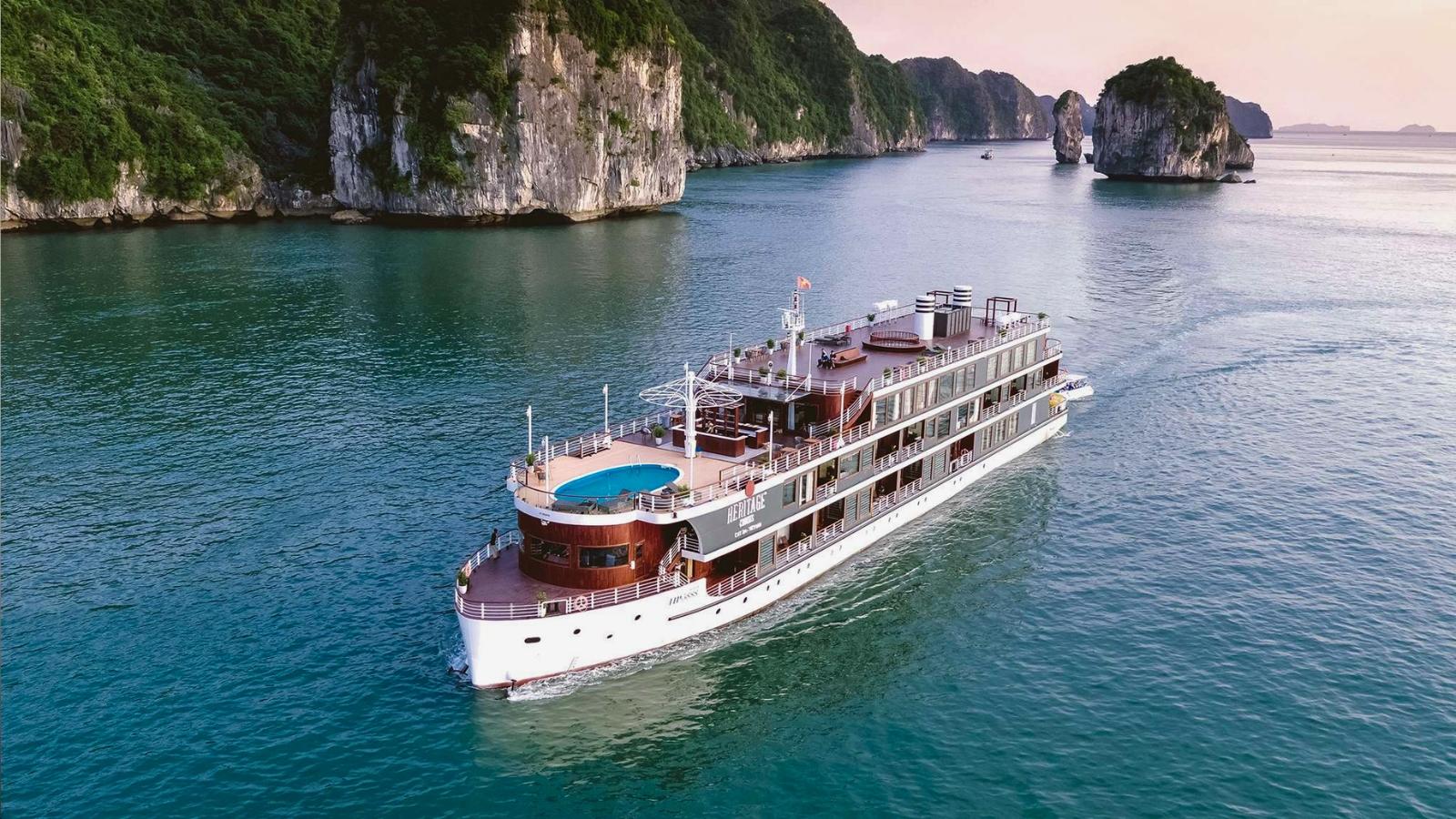
If you seek a tour that harmoniously combines the beauty of Vietnamese history, cuisine, and culture while exploring Lan Ha Bay, Heritage Cruises Binh Chuan is a perfect choice. It provides most lavish cruise experience while sailing from Lan Ha Bay to Cat Ba Island. The cruise exclusively offers artisanal boutique products along with an impressive art gallery and a culinary adventure with a royal-themed dinner.

Alongside exploring famous destinations such as Dark & Bright Cave and Viet Hai Village, you can use many services and activities to entertain while staying on the ship, such as reading in the library, practicing Vietnamese martial arts in the Vovinam Class, squid fishing, seeing the art gallery, etc.

Heritage Binh Chuan Cruise (from US $186/pax)

Boasting Vietnamese traditional aesthetics, Heritage Cruise is a top choice for culture vultures.

Le Theatre Cruise (from US $162/pax)

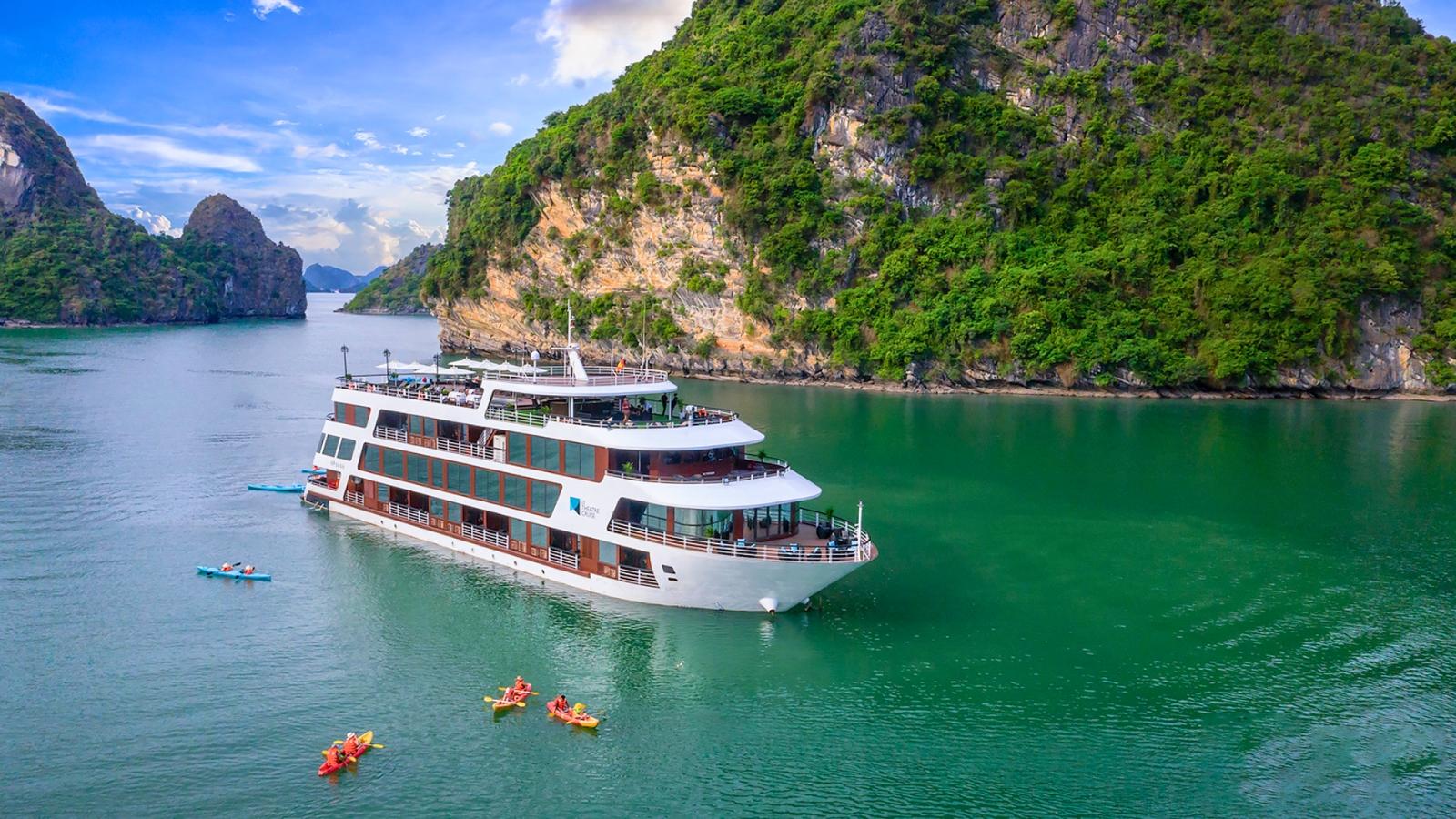
Le Theatre Cruise Halong Bay can be an ideal option for discerning travelers who are looking for a new adventure but with an elegant experience. Only on this cruise can tourists exclusively explore a unique itinerary while sailing from Lan Ha Bay towards Cat Ba Island. Each cabin on the ship is furnished with modern facilities and a contemporary style.

During the journey, you will participate in fantastic activities such as kayaking or swimming in Ao Ech Area, the most beautiful area in Halong Bay, and cycle around Viet Hai Village village, an ancient fishing village. 

Additionally, the cruise also offers a wide range of services that make your vacation more exhilarating.  Some of the most interesting ones include squid fishing with guidance from the coach, a Tai Chi class, and a cooking demonstration class where you can prepare traditional Vietnamese dishes.

Le Theatre Cruise (from US $162/pax)

Le Theatre Cruise provides a vibe of modern simplicity on Lan Ha Bay.

Emperor Cruise (from US $264/pax)

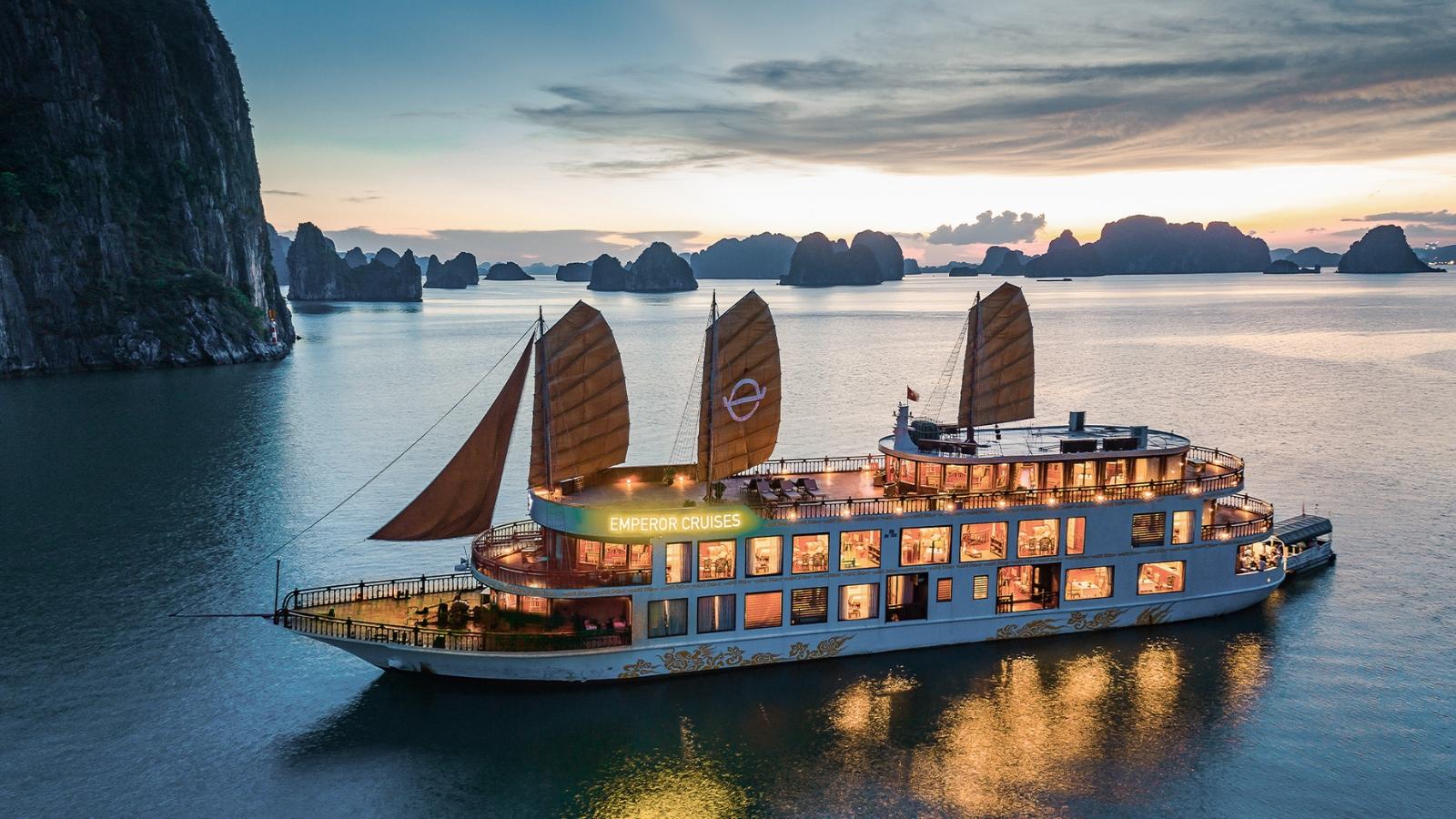
This is a small cruise ship that provides a truly all-inclusive cruising experience. Inspired by Emperor Bao Dai and his lavish lifestyle, Emperor Cruise offers you a royal-like experience with exquisite cuisine, and available butler service during your overnight cruise in Halong Bay. 

Moreover, The ship only has 10 high-class cabins with aristocratic decor inspired by royal style. 

Spending your trip on the Emperor Cruise will definitely give you a memorable experience with thrilling activities. 

This includes exploring Me Cung Cave, which is a magnificent complex cave with stalactites and stalagmites in Halong Bay, and kayaking/ swimming in Ba Trai Dao, the most stunning beach in Lan Ha Bay. Moreover, you can also try Vietnamese martial arts in the Vovinam class, which starts in the morning on the sundeck.

Emperor Cruise (from US $264/pax)

Emperor offers distinctive itineraries to explore Halong and Lan Ha Bay on a 3d2n cruise.

How To Pack For a Cruise Vacation: Tips and Advice

Packing for a cruise vacation can be both exciting and a bit challenging, but with the right tips, you’ll be ready for smooth sailing! Here are some handy tips and advice to help you pack efficiently:

Know Your Itinerary

 You need to research the destinations of your cruise very well. Also, check the weather and activities at each port of call to pack appropriate clothing and gear. In addition, you should go through the list of excursions and Activities being offered onboard. Accordingly, plan outfits for excursions, formal dinners, and onboard activities.

Pack Smartly

 When packing for a cruise vacation, layering is Key. Bring light layers to adapt to varying temperatures on the ship and at different destinations. Most cruises have formal nights, so pack a couple of dressy outfits along with casual wear. Most importantly, don’t forget swimsuits, cover-ups, and flip-flops for poolside lounging.

Pack Essential Items First

 When packing for your cruise vacation, keep your essential items like your passport, cruise tickets, and any necessary visas handy. While most cruise ships have medical centers, it is better to bring enough prescription medications and pack a small first-aid kit. What’s more, sunscreen, sunglasses, and a hat are essential for sunny days on deck.

Here are some more tips on how to pack for a cruise vacation.

  • Laundry Options: Check if the cruise offers laundry services or pack some detergent for hand-washing.
  •  Roll Your Clothes: Rolling clothes instead of folding can save space and reduce wrinkles.
  •  Packing Cubes: Use packing cubes to organize and compress your items.
  •  Multi-use Items: Choose items that can serve multiple purposes, like a sarong that can be used as a scarf, beach cover-up, or blanket.

Lan Ha Bay possesses many stunning and offbeat tourist attractions that are waiting for travel lovers to explore. If you are looking for the most interesting cruise options in Lan Ha Bay, please contact BestPrice Travel – a local expert and a reputable service provider with the most choices available.

Also read

Share on Social Media

Meet Sibashree Bhattacharya, a travel enthusiast who has a decade-long experience in transcending virtual barriers with her words! Her deep love for travel is apparent from her travel escapades to the mountain, often taking her readers on a journey, her words acting as Portkey! Fun fact: Sibashree loves to dive deep into the history of the places she is about to visit, making her travels even more wholesome. If you were wondering how her articles are not short of time travel, this answers it!

Leave a Reply

Your email address will not be published. Required fields are marked *

title-img Related

READ MORE Hot Springs National Park

Be Soothed And Meet History At Hot Springs National Park

BY  Sibashree Aug 20, 2024

The Arkansas Hot Springs National Park is a place where stories and histories are intertwined with natural abundance and unique geological features.  Home to 47 hot springs, this national park has been a place of healing and relaxation. These springs offer the ultimate spa treatment after you complete arduous hiking through the trails.    Are you ready to indulge in a therapeutic experience at this national park known as the American Spa? Let’s take a deep dive.  Also, I have grabbed this opportunity to talk about the rich history of the park.  Know The Hot Springs National Park History And Culture  The 5,500-acre landscape of the Hot Springs National Park tells us many tales from the trails and springs. This park has seen novaculite extraction by American Indians for thousands of years, as well as The Great Fire of 1878.  Even before the park’s designation as a Hot Springs Reservation in 1832, historic events like the Dunbar-Hunter Expedition took place here. Many historic places in the park, including the Hot Springs Mountain Tower, Arlington Lawn, and Stonebridge Area, have been narrating the stories of this park for centuries.  Hot Springs Mountain Tower Built in 1983, Hot Springs Mountain Tower is a great place for visitors to enjoy the panoramic view of the park and the surrounding area from a 1,256 ft height.  Don’t miss to catch a glimpse of the Ouachita Mountains from the open-air upper deck of the tower. The air-conditioned lower observation deck offers you the opportunity to explore exhibits related to the history of the locality and the park. Also, if you want to collect souvenirs, you can visit the gift shop at the base of the Hot Springs Mountain Tower. This tower was first built as a wooden structure in 1877 by Enoch Woolman. Further, in 1906, a new steel tower was built, and it was known as Rix Tower after Charles N. Rix, the then-president of Arkansas National Bank. However, the Rix Tower was taken down in 1971.  Bathhouse Row The Bathhouse Row is probably the most iconic and visited place in the Hot Springs National Park. It has 8 bathhouse buildings, all of them built between 1892 and 1923, adding to the historic and architectural value of the park. These eight bathhouses are: Lamar Bathhouse Buckstaff Bathhouse Ozark Bathhouse Quapaw Bathhouse Fordyce Bathhouse Maurice Bathhouse Hale Bathhouse Superior Bathhouse In 1987, Bathhouse Row with Grand Promenade became a National Historic Landmark District. Arlington Lawn The Arlington Lawn gets its name from the presence of the first two luxurious versions of the Arlington Hotel present here.  The first version of the hotel was built in 1875, and a second or grander version replaced it in 1893. The second version had a glorious run until 1923 when a fire broke it down. In 1925, the third Arlington Hotel (which you can see now) came up an unbelievable 500-room accommodation.  Whittington Park  Whittington Park got its name from Hiram Abiff Whittington, an early resident of Hot Springs. The greenway stretches along Whittington Creek, which stands between Sugarloaf Mountain and West Mountain.  Constructed in the late 1890s, Whittington Park was initially called Whittington Lake Reserve. You can enjoy a relaxing walk through this tree-shaded greenway.  Stonebridge Area  The Stonebridge Area is the best spot in the National Park to watch turtles. You will also see a waterfall area carving through step-like structures in the rocks.  Further, Lake Lillian, now known as Ricks Pond, is here with its tranquil beauty and turtles floating in the water.  What Is Hot Springs National Park Famous For?  Known as the American Spa, Hot Springs National Park has 47 natural hot springs. Since the early 1800s, people have been visiting this park to soak in the hot and cold springs here. Further, thanks to the healing geothermal waters here, bathhouses and a full-fledged bathing industry were built here. The average temperature of the bath springs water here is 143° Fahrenheit. You can soak in the springs in the Buckstaff and Quapaw bathhouses, as there are no opportunities for soaking in the water outdoors. You can even drink the water from these springs, and the geothermal water of the springs has healing properties.  Hot Springs In The National Park  Here are some of the hot springs in the national park. You will find hot springs In front of the Libbey Memorial Physical Medicine Center and the National Park Service Administration Building on Reserve St. Visit the Bathhouse Row and find the hot springs between the Hale and Maurice Bathhouses.  You will find the Noble Fountain at the Grand Promenade south entrance on Reserve St. If you want to touch the geothermal water of the springs, you can visit the shallow pool where the Display Spring falls.  Cold Water Spring Fountains  Happy Hollow and Whittington Spring are two cold water spring fountains in the national park. The origin of the Whittington Spring is the West Mountain, and the Hollow Spring comes from the North Mountain. Hiking And Camping In Hot Springs National Park Camping and hiking are two of the most fascinating things to do in Hot Springs National Park, Arkansas.  Hiking In Hot Springs National Park  Hot Springs and North Mountain Trails and West Mountain Trails are the two most popular destinations in the park for trekking. However, there is also a Sunset Trail, which is longer and passes through the remote areas of the park. Hot Springs And North Mountain Trails Along with the most amazing scenic view, these trails have highlight points such as Stephen’s Balustrade or the Grand Staircase, Gulpha Gorge Campground, Hot Springs Mountain Drive, and Fordyce Bathhouse.  West Mountain Trails If you want to explore the vivid wildlife of the Hot Springs, you will have to take the West Mountain Trails. Find the trails through the Canyon Trailhead and Whittington Park.  Sunset Trail The longest in the Hot Springs, the Sunset Trail, is a straight 10-mile hike. Also, if you want to complete the loop, you will have to cover 15-17 miles.  The best thing about this trail is that it takes you to places less trodden by in the park. Further, hiking in the long trail will be broken into three sections: West Mountain, Sugarloaf Mountain, and Stonebridge Road.  Camping In The Gulpha Gorge Campground This campground is most suitable for tents and RVs or recreational vehicles. Basic amenities like water, electricity, and sewage are available at the campground.  Further, there are facilities like pedestal grills and picnic tables.  You can stay for a maximum of 14 days at a stretch in the camp. In addition, the park authority does not allow camping for more than 30 days in a calendar year.  Final Words  The Hot Springs National Park has been consistently getting more than 2 million visitors for the last few years. In 2023, 2,502,967 people paid a visit to this park to indulge in the therapeutic experience of the hot springs, explore wildlife, and enjoy hiking. (Source) Further, you can never forget how significant this park is from the perspective of history and culture. Exploring the Stonebridge Area and spending some time in Whittington Park or other historic places in the park will help you learn how American Indians extracted novaculite from this park and made their tools and accessories.  In addition, prominent names in American history, such as Dr. Timothy L. Bottoms, Samuel Wesley Fordyce, and Robert Radcliff Stevens, are associated with this popular national park. So, you must visit this national park to enjoy nature at its best and see some pages of history unfurling before your eyes. What do you think of the other national parks in America, like the Biscayne National Park or the Everglades National Park? Don’t forget to share your ideas with us!  Hot Springs National Park FAQs  How Is Hot Springs National Park Wildlife? The Hot Springs is a crucial sanctuary for vivid animals. The “novaculite outcrops” and “lush creek valleys” make this national park a safe harbor for animals and birds.  Overall, this park has more than 50 species of mammals, over 100 bird species, 50+ fish species, and more than 70 species of reptiles and amphibians. The Copperhead snake is the most venomous reptile here, along with other venomous snakes. The park is also replete with lizards, frogs, salamanders, and turtles.  Bluegill and banded darter are some common fish in this national park. Further, this park is home to mammals like groundhogs, white-tailed deer, and squirrels. Moreover, pigeons, doves, falcons, herons, vultures, owls, and many other birds make this park delightful.  Also, watch out for the colorful butterflies and fireflies in the park. By the way, did you know that Arkansas has more than 5,000 species of moths and butterflies? What Are The Best Hot Springs National Park Activities? The most amazing thing to do at Hot Springs National Park is to soak in the hot springs and indulge in a therapeutic experience. The Buckstaff Bathhouse and The Quapaw Bathhouse offer you the most relaxing time.  Further, you can explore 26 miles of hiking trails in the park and enjoy biking to the North and West Mountains. You can take these rides on bicycles or e-scooters.  Also, if you are a birder, you will get to see great blue herons, vultures, falcons, and many other birds in the national park.  Shopping and exploring the Mid America Science Museum are some other activities to do when you are at the Hot Springs.  What Is The Hot Springs National Park Size? The Hot Springs National Park stretches across 5550 acres. As one of the oldest national parks in the USA, this national park was designated in 1921.  You will find many hiking trails and as many as 47 natural hot springs in the national park. The campground, visitor center, and gift shop further make it a place of versatile encounters with nature and history. Hot Springs and North Mountain Trails, and the West Mountain Trails are the most concentrated trekking zones in the park. However, if you want to explore more remote parts of the park, you can surely take the longer Sunset trail. Also read Why Include Whale Watching In Your LA Itinerary. Traveling On A Budget: Tips For Affordable Adventures. From Cocktails To Kickflips: Must-Try Activities In San Diego.

READ MORE Rio de Janeiro Travel Guide

Rio de Janeiro Travel Guide: What Your Brazilian Real Gets You

BY  Sibashree Sep 20, 2025

Rio de Janeiro sweeps you up the moment you arrive. Golden beaches stretch for miles, samba rhythms spill from bars in Lapa, and cable cars glide up Sugarloaf Mountain for some of the best views on Earth.  Life here is colorful and fast-moving, and part of slipping into that rhythm is knowing how far your Brazilian real will take you - from a chair on Ipanema beach to a plate of feijoada in a neighborhood café. Before we go on, here is a quick Rio de Janeiro travel guide. Just a quick note: exchange rates and prices don’t stay still. At the moment, 1 US dollar equals about 5.4 Brazilian reais, but it’s best to check the latest rates and costs before you travel. Rio de Janeiro Travel Guide: What To Expect? Rio de Janeiro is one of the best cities you can explore. It is one of those few places that has a care-free energy and will make you feel alive. The beaches, food, and major attractions will draw you to it without even trying too hard. Here is a simple Rio de Janeiro travel guide. Beaches - Rio’s Living Rooms The beaches of Copacabana and Ipanema are more than postcards - they’re part of daily life. Locals jog along the promenade in the morning, families gather for a swim, and groups of friends set up for impromptu games of beach volleyball or footvolley. Tourists blend right in, renting chairs and umbrellas from vendors for around R$10-15 per piece. Snacks come to you. Vendors walk the sand offering everything from ice-cold coconuts (R$8-10) to grilled queijo coalho (cheese skewers) for about R$12. You can even try a caipirinha mixed fresh on the spot, usually for R$15-20. These are usually cash-only transactions, and the small notes feel like part of the ritual - bargaining isn’t common, but handing over a few reais feels easy and authentic. Spend an afternoon at Arpoador, the rocky point between Copacabana and Ipanema, and you’ll see why locals gather here at sunset. It doesn’t cost more than a bus ride (R$5) to get there, and yet it’s one of the richest experiences you’ll take home. Food: From Street Bites to Sit-Down Meals Rio has a huge range of food. Starting from some humble bakeries to some fancy rooftop restaurants, Rio has it all. Start with breakfast like a local: pão de queijo (cheese bread) and strong coffee, often no more than R$10-15.  Step into a juice bar and you’ll find tropical flavors like passion fruit, guava, or the ever-popular açaí bowl, usually under R$20 for a generous portion. At lunchtime, the prato feito is king. This “set plate” of rice, beans, salad, and a protein such as beef, chicken, or fish costs R$25-35 and will keep you full all day.  You will get various self-service buffets that charge by weight. You will get roasted meats, vegetables, and farofa, and you will have to pay around R$30-40. For dinner, you can choose what you prefer. You can try something casual or something fancy. If you prefer a mid-range seafood meal along with drinks, it will cost somewhere around R$80-100 per person.  However, a proper night out in Ipanema at a fancy fine-dining spot might cost around R$200-250.  You can even visit Churrascarias, which is a Brazilian steakhouse. It is an event in itself. They have endless skewers of grilled meats, side dishes, and salad bars. You can expect to pay somewhere around R$120-180 per person. However, this does not include drinks. All these places accept cards, but it is better to keep some cash handy for bakeries and street food. Attractions: Big Names And Hidden Gems There are various major icons in Rio, and those are actually worth it. You can take the Sugarloaf Mountain cable car for around R$150, and the ride itself is a major part of the thrill. The glass walls will give you a 360-degree view of the way from above the city. You can visit Christ the Redeemer, resting on Corcovado Mountain, for R$100. The moment you stand at its feet and see the city from there, you get an amazing view. You can carry cards as both attractions accept payment in cards. However, it is better to carry some cash for small vendors, tacos, or snacks. Rio is also filled with a lot of gems that you can see for free or for a low cost.  The Selarón Steps, covered in colorful tiles from around the world, cost nothing to climb. A stroll through Santa Teresa’s narrow streets will take you past murals, studios, and cafés where you can pause for a R$12 espresso. At night, head to Lapa to experience samba at its source. Entry to some clubs is around R$30-50, and drinks inside range from R$15-25. Smaller bars may only accept cash, especially if you’re outside the main tourist drag. Getting Around Rio is quite a big city, but it is not difficult once you understand the system. You can take the metro, it's quite safe and clean, and a single ride costs around R$5.  Moreover, if you have a rechargeable RioCard, it will save you a lot of time and work. You will be able to use it for different types of transport, including trains and buses.  You can take a bus, which goes almost to the city, and the fare is quite similar to the metro. Here, you can get taxis for around R$6, and cross-town trips generally range around R$40-60. Also, Uber and other apps like these are popular, and often offer rides at a cheaper rate than a taxi. If you want, you can pay in-app with the card, and that way, you will not have to use cash for payment.  For day-trips outside the city, you will get intercity buses. This will help you explore the outskirts within a budget. If you are planning to visit the historic mountain town, Petropolis, you can explore it for around R$40-50. Moreover, if you are planning to take a longer ride to Búzios, the beach town, you will be able to visit it for around R$70-80. You can get the bus tickets online or from the bus station as well.  How Much To Budget You need to prepare a budget for a trip. However, the budget depends on the kind of trip you want to have. Budget travel: It will cost you around R$200-250 for a day, including hostels, street food, public transport, and free attractions. Mid-range: It will cost you around R$600. You will get comfortable hotels, visit some of the major landmarks, and have some casual as well as sit-down meals. High comfort: This will cost you around R$1000 and above. You will get four-star hotels, fine dining, and guided tours at this range.  However, the prices in Rio rise during any carnival or New Year’s, and this also varies depending on the neighborhood.  Ipanema and Copacabana are some of the premium places that tourists visit, but there are some block islands that will offer the same charm but at a lower price range. Spend Smart In Rio Start your trip with at least a little Brazilian real in your wallet. It will cover your first taxi or ride-share, snacks, or that first fresh coconut without delay. From there, cards will carry most of your expenses, but having R$100-200 in cash each day is wise for small payments. Stick to ATMs inside banks or malls when you need to withdraw. They’re safer and usually give fair rates. Avoid exchanging money at the airport - the rates are often poor, and the fees stack up quickly. Think about how you balance cash and cards. Use your card for hotels, restaurants, and tours, and keep your reais for buses, bakeries, street snacks, and tips. It’s a system that works well in Rio and lets you move through the city without stress. Enjoy Your Journey Landing in Rio with a Rio de Janeiro travel guide and Brazilian real already in hand saves you time and makes the city easier to navigate. You’ll breeze through those first transactions - a cab, a snack, a metro ride - and step right into the energy of the city. Rio rewards travelers who embrace both the big icons and the small everyday moments. The real you spend on a chair at the beach, a cup of coffee, or a bus ride across town is more than just money - it’s your ticket into the rhythm of the city.  As mentioned before, exchange rates and prices may change, but the value of those moments never does.

READ MORE Wildlife At Yellowstone National Park

Exploring Wildlife At Yellowstone National Park: Know The Mammals, Reptiles, Birds, Fish And More

BY  Sibashree Nov 11, 2024

The wildlife of Yellowstone National Park is as fascinating as its geology. So, along with the geysers, many tourists also visit this park to explore its wildlife. The grizzly bears, wolves, bison, and more make the park the biggest concentration of mammals in the lower 48 states. However, the park is also a popular birder hub with ospreys, eagles, and falcons. You just need to know the spots well to encounter these wild creatures, with respect, of course.  Here, I will give you a brief idea about the mammals, birds, reptiles, amphibians, and fish found in this park. I will also share where to spot them.  Mammals You Will See At Yellowstone National Park May to June or spring is the ideal season for watching mammals at Yellowstone National Park. You will especially get to see many bears and wolves in this season. Further, at the advent of the fall season, this park has elk bulls in great numbers.  Moreover, mammals like elk, bulls, and bison are also visible in the park in winter. Winter is also a great time to glimpse the Lamar Valley wolves. So, watching wildlife at Yellowstone National Park is a year-round activity.  Tour and Travel Tips For Wildlife Watching At Yellowstone National ParkTrek the park in the early morning or evening to have better visibility of the wildlife. The temperature remains moderate during these hours of the day.Further, you will need spotting scopes or binoculars to see the wild animals.Maintain at least 25 yards of distance from elk, bison, and other wild animals. However, for bears and wolves, you must maintain at least 100 yards of distance.  Let’s learn about the most prominent mammals in the park in detail.  American Bison Where to Find: Lamar and Hayden Valleys and the Grasslands Best Time to Find: July to August Did you know that bison in Yellowstone make up the largest (remaining) bison population on American public land?  The biggest mammals of the park, bison, have been there since pre-historic times. A male bison weighs 1,800 pounds on average, while the weight of a female bison is close to 1300 pounds.  Black And Grizzly Bears Where to Find: Mammoth and Tower Areas (Black Bear) and Lamar and Hayden Valleys (Grizzly Bears) Best Time to Find: May to June Black and grizzly bears co-exist in many parts of the national park. Grizzlies are bigger than black bears, with a hump on their shoulders and a rounder face. Bear safari is a popular activity in the park. However, you need to maintain a distance of at least 100 yards and follow all safety regulations, as bears can get violent, especially when they are with their cubs.  Elk Where to Find: Lamar Valley, Madison Canyon, Mammoth Valley Best Time to Find: September to November Due to the impressive antlers, elks are probably the most photographed animals in this national park. Do you know that the antler of an elk can grow up to 6 feet? Moose and deer, closely related to elks, are other prominent park mammals. Moose is the largest of the Cervidae family, and elks are the second largest.  Further, moose are seen in the park’s marshy areas and near water bodies. Bighorn Sheep Where to Find: Gardner Canyon and Near the Yellowstone River Best Time to Visit Bighorn Sheep in Yellowstone National Park - November and December The large and curved horns of bighorn sheep make them stand out. You will find these horns on the males. Bighorn sheep live in a herd, and in the fall season, the males get involved in loggerheads to win over their female companion.  There is one fascinating fact about bighorn sheep. When a baby bighorn sheep (lamb) is born, it can climb and walk within one day. Wolves Where to Find: Throughout the Park Best Time to See Wolves: May to June Around 100 wolves live in the Yellowstone National Park. Leopold packs, Yellowstone Delta, and Slough Creek are the biggest wolf packs in the park.  Wolves are native to the park. However, in 1995, they were re-introduced here.  Along with the types discussed, you will also find mammals like coyotes, martens, red foxes, wolverines, mule deer, marmots, and more in the park. Overall, around 67 species of mammals live here.  Amphibians In Yellowstone National Park Thanks to a unique geology, there are various ponds and wetlands across the Yellowstone National Park. Here, you will find the following varieties. Boreal Chorus Frog Western Tiger Salamander Western Toad Columbia Spotted Frog Plains Spadefoot Toad Further, these amphibians play a crucial role in the maintenance of the terrestrial and aquatic ecosystems of the park. Many mammals, birds, reptiles, and even fish prey on them. Also, they eat many vertebrate and invertebrate creatures to balance the food chain. Moreover, the amphibians in the park are indicators of high pollution rates or changes in the weather. They even indicate the advent of diseases and the arrival of any nonnative species.  So, research on amphibian populations in the park is crucial to know about any impending danger that may affect the ecosystem.  Reptiles At Yellowstone National Park Yellowstone has six species of reptiles. However, there is a greater scope for studying and identifying these reptiles. As of today, the reptile species found in the park are: Terrestrial garter snake Common garter snake Rubber boa Prairie rattlesnake Bullsnake Sagebrush lizard Prairie rattlesnake is the only venomous snake in the park, while bullsnake is the largest variety found here. Yellowstone National Park: A Birder’s Paradise A 2018 survey in Yellowstone National Park announced the presence of 82 species of birds in the park.  Further, the species of birds here are varied, and the table below mentions the variety you will come across in the park. OwlsNorthern saw-whet owl Northern pygmy-owlBoreal owl Great-horned owl EaglesBald eagleGolden eagleColony Nesting BirdsPelicanHeronsIbisesSong Birds Ruby-crowned kinglet American RobinDark-eyed junco You will also find birds like woodpeckers, ducks, geese, swans, falcons, and ospreys in this national park.  Fish In Yellowstone National Park Yellowstone National Park is home to many native and non-native fish species. Eastern Brook Trout, brown trout, lake chub, rainbow trout, and lake trout are some non-native fish species in the park. Further, this park has native fish species, such as mountain sucker, speckled dace, Utah chub, Redside Shiner, etc.  Human Imprint On Yellowstone National Park  The home to Native Americans, Yellowstone National Park displays a human tapestry of almost 11000 years. The natives of the place have survived on hunting and fishing. Further, they have known the medicinal properties of the herbs available in the park. In addition, the healing properties and religious importance of the thermal water here had a major impact on the local human lives.  Yellowstone National Park: At A Glance  How to Reach Yellowstone National Park: Reach the Yellowstone Airport and take a cab or bus to Yellowstone National Park. Highest Point: Eagle Peak Established: 1st March 1872 Designation: UNESCO World Heritage Site for “globally unparalleled assemblage of surficial geothermal activity.” Entry Fee: $25-80 based on the entrance pass  Visitor Centers: Albright Visitor Center, West Yellowstone Visitor Information Center, Grant Visitor Center, etc.  Also read Why Include Whale Watching In Your LA Itinerary. Traveling On A Budget: Tips For Affordable Adventures. From Cocktails To Kickflips: Must-Try Activities In San Diego.