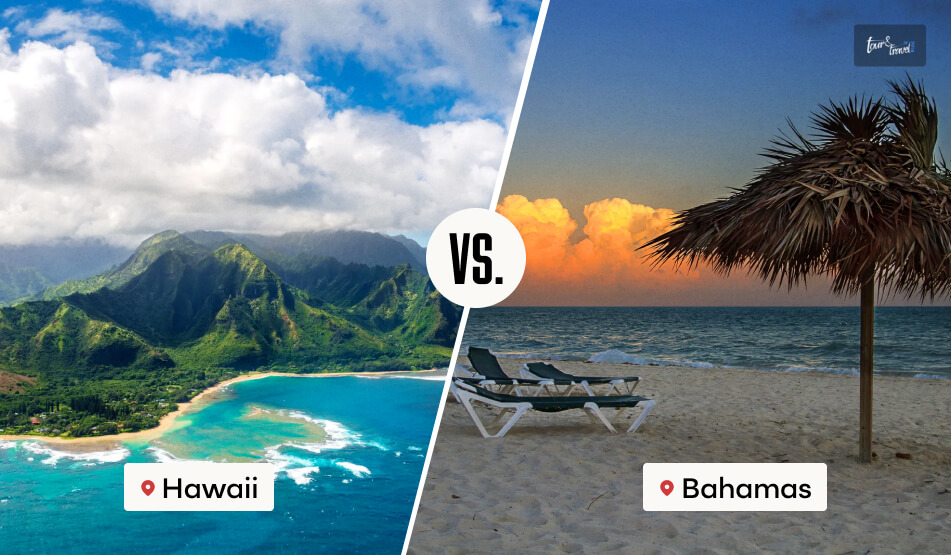

Hawaii Vs Bahamas Vacation: Which One Is The Better Spot For The Ultimate Tropical Experience?

The Bahamas and Hawaii! Two beautiful tropical destinations with beautiful beaches and natural abundance. But which one is better as a vacation spot? 

We will examine all aspects in this Hawaii vs. Bahamas comparison. And let’s begin with a brief understanding of the tourism landscape in both locations. 

2024 was a great year for the Bahamas tourism industry. 11.22 million international tourists visited the country in 2024. 

However, it has also been a challenging year for the country’s tourism ecosystem, with the crime rate going up and various countries issuing advisories about the need for taking increased caution during a trip to the Bahamas. 

On the other hand, Hawaii, the USA, welcomed 770,940 visitors in 2024, and the visitor spending in the same year was $1.55 billion.

So, 5000 miles apart from each other, the Bahamas and Hawaii are both growing massively as world-class tropical vacation spots. 

However, if you want detailed insights about Hawaii and the Bahamas as vacation spots and which one is better, you will have to read our Tour and Travel Blog.

How To Reach Hawaii Vs Bahamas From The USA? 

How To Reach Hawaii Vs Bahamas From The USA

If you are in the USA, you don’t need a passport or visa to travel to Hawaii. However, for a trip to the Bahamas, you will need a valid USA passport. 

You don’t need a visa, though, if you are visiting the Bahamas from the USA as a tourist.

Reaching Hawaii 

Hawaii has the Daniel K. Inouye International Airport. So, it is well connected to the other parts of the USA through flights. 

You will especially get multiple flights from California and Los Angeles to Hawaii. 

Also, once you reach Hawaii, you will get various cheap flights operated by Southwest Airlines and Hawaiian Airlines to hop between the Hawaiian islands. 

Reaching The Bahamas 

Though the Bahamas is not a part of the USA, the distance between the states on the west coast of the USA and the Bahamas is almost the same as their distance from Hawaii. 

In fact, flight charges from these states to the Bahamas are often less than the price of flight tickets to Hawaii. 

Hawaii Vs Bahamas: Quick Facts 

ComparisonThe BahamasHawaii
Size13,880 km²11,672 km2
Population403,0331450900
Capital NassauHonolulu
AirportLynden Pindling International Airport
Grand Bahama Freeport
Daniel K. Inouye International Airport

What Is The Best Time To Visit Hawaii Vs Bahamas? 

Despite being popular tropical destinations and sharing almost the same distance from the Equator, there are some differences in the weather conditions of Hawaii and the Bahamas. 

The shoulder seasons of spring and autumn are the best times to visit Hawaii. So, you can plan a trip to Hawaii during April and May or September and October. 

During April and May, the average temperature in Hawaii hovers around 20 degrees Celsius. On the other hand, the average temperature during September and October remains close to 25 degrees Celsius. 

On the other hand, mid-December to mid-April is the ideal time to visit the Bahamas. During these months, the temperature in the Bahamas remains between 22 and 24 degrees Celsius.

Weather Conditions In Hawaii Vs Bahamas 

With a predominantly tropical climate, Hawaii experiences a diverse range of weather conditions. 

It features volcanic mountains, including Powers Caldera, Mauna Kea, and Mauna Loa, among others. Mauna Loa is the tallest among them, with a height of 4205 meters.

So, you will experience a change in temperature and weather conditions in those mountains. Also, there will be natural calamities such as blizzards and thunderstorms. 

On the other hand, the Bahamas has a relatively seamless temperature scenario throughout the year. 

However, there is heavy rainfall in October, and hurricanes are frequent in the Bahamas from September to November.

Bahamas Or Hawaii For Family Vacation: Which One Is Safer?

The Bahamas and Hawaii are excellent choices for tropical getaways. However, Hawaii has more seamless weather conditions throughout the year. 

So, it can be a more suitable destination for family vacations. But which one is safer for a family vacation? Let’s find out!

Is The Bahamas Safe?

Is The Bahamas Safe

Also, there is a major concern about “is the Bahamas safe?”. The year 2024 has seen a sharp rise in the crime rate in the Bahamas. The Bahamas’ murder rate in 2024 was 29.7, which was 8% more than in 2023.

Moreover, the U.S. Travel Advisory, the Canadian Bahamas Travel Advice, and the “Foreign Travel Advice Bahamas” issued by the UK Government advise tourists to exercise increased caution during their trip to the Bahamas. 

There are even guidelines to avoid visiting various areas of Nassau and Freeport. In addition, all the advisories mention security threats such as violent crimes, sexual assaults, robbery, the unregulated boating industry, and increasing shark attacks in the Bahamas. 

So, if you want to plan a family trip to the Bahamas right now, it’s not the best time.

Is Hawaii Safe?

Is Hawaii Safe

Currently, Hawaii is safer, as evidenced by the 2025 Violent Crimes Comparison from the Honolulu Police, which shows improvements in crime records. 

First of all, there has been a remarkable improvement in forcible sex offenses. In 2025 so far, the forcible sexual assault cases recorded are 159, and in 2024, the recorded sexual assaults for the same time period were 230. 

Again, the number of murders and non-negligent manslaughter has gone down to 1 in 2025 from 11 in 2024. 

Also, the aggravated assault cases have gone down to 247 in 2025 from 254 in 2024. However, the number of robbery cases has slightly increased, with 128 cases reported so far in 2025, compared to 127 cases during the same period in 2024. 

So, Hawaii is now safer than the Bahamas when planning a family vacation.

Where To Stay In Hawaii Vs Bahamas? 

Hawaii and the Bahamas are both known for their luxury hotel and resort experiences. Further, some really big names offer their hospitality services in these locations.

Luxury Hotels To Stay In The Bahamas Luxury Hotels To Stay In Hawaii
Grand Hyatt Baha Mar
Atlantis
Hilton at Resorts World Bimini
Holiday Inn Express & Suites Nassau
Hilton Hawaiian Village Waikiki Beach Resort
Hyatt Centric Waikiki Beach
The Laylow, Autograph Collection
Holiday Inn Express Waikiki

Hawaii Vs Bahamas: It’s All About The Experience

From Oahu, the best Hawaii island to visit, to Paradise Island in the Bahamas, there is no dearth of attractions for tourists in these locations. 

So, we have done a Hawaii vs Bahamas comparison based on three factors: luxury accommodation, food scenes, and the places to visit. 

Hawaii Vs Bahamas Luxury Accommodation 

You already know that many luxury hotel brands have their presence in the Bahamas and Hawaii. 

Also, for a more opulent experience, you can choose luxury resorts with private beaches in both locations. 

Overall, in terms of elegance, comfort, and convenience, both places score equally in luxury accommodations.

Hawaii Vs Bahamas Food Scenes

You will fall in love with local delicacies such as Garlic Shrimp and Kalua Pork in Hawaii. For the most authentic culinary experience, you must choose the local eateries. 

These eateries offer the best of local flavors at affordable prices. So, you can use your money to engage in more adventurous activities in Hawaii. 

The Bahamas, on the other hand, allows you to taste the best Conch Fritters and Plantain Fries. Here, too, you can opt for local eateries instead of high-end dining places for the ultimate Bahamian delight.

Hawaii Vs Bahamas Tourist Attractions/Places To Visit

Some top tourist attractions in Hawaii include Pearl Harbor National Memorial, Waimea Canyon State Park, the USS Arizona Memorial, Iolani Palace, Waikiki Beach, and Oahu Beach, among others. 

The best places to visit in the Bahamas are Paradise Island, Nassau, Exuma Cays, Harbour Island, Bimini Islands, and Freeport.

Is Hawaii Or Bahamas Cheaper? Setting Your Budget Right 

The Bahamian Dollar, or the Bahamian currency, now has an exchange rate of 1=0.99 USD. Therefore, there will be little to no difference in travel costs between these two places. 

In fact, the rates of flights from many parts of the United States to the Bahamas are cheaper than those to Hawaii. 

However, the public transportation system in Hawaii is more developed than that in the Bahamas. 

Additionally, Hawaii offers a wider range of accommodations at various price points than the Bahamas. 

On average, a trip to the Bahamas will cost around $760, while a trip to Hawaii will cost approximately $670.

And The Winner Is…

Now, this is tough! The Hawaii vs Bahamas comparison as vacation spots has once again shown that both places are great tropical destinations. 

Further, both places boast a wonderful fusion of history and natural beauty. Also, both places are ideal for culinary tourism. 

However, a trip to Hawaii will be a little less costly as the accommodation options are diverse. Moreover, the rising crime rate in the Bahamas is a serious concern.

So, solely based on the safety parameter, Hawaii is a better vacation spot for now! 

Share on Social Media

Meet Sibashree Bhattacharya, a travel enthusiast who has a decade-long experience in transcending virtual barriers with her words! Her deep love for travel is apparent from her travel escapades to the mountain, often taking her readers on a journey, her words acting as Portkey! Fun fact: Sibashree loves to dive deep into the history of the places she is about to visit, making her travels even more wholesome. If you were wondering how her articles are not short of time travel, this answers it!

Leave a Reply

Your email address will not be published. Required fields are marked *

title-img Related

READ MORE Warm Weather Vacations

The 10 Best Warm Weather Vacations

BY  Nabamita Nov 30, 2023

When the chill of winter sets in, the allure of warm weather destinations becomes irresistible. From sun-drenched beaches to lush tropical forests, the world is brimming with spots perfect for shedding layers and basking in warmth.  In our roundup of the 10 best warm weather vacations, we explore diverse corners of the globe where the sun shines bright, the waters beckon, and the warm breeze carries the promise of unforgettable experiences. These destinations promise a respite from the cold and an adventure into the heart of warm weather bliss. 1. Seychelles Seychelles is a dreamy destination, known for its warm climate and stunning natural beauty. This archipelago in the Indian Ocean boasts 115 islands. Each is a slice of paradise with turquoise waters and white sandy beaches. The lush tropical forests are home to rare wildlife, enhancing its allure. Among the must-visit spots is Mahe Island, the vibrant heart of Seychelles. This island also attracts foreign entrepreneurs who come here to open offshore companies and trusts. Praslin Island offers the unique Vallee de Mai Nature Reserve. For a picturesque retreat, La Digue Island is unmatched with its iconic Anse Source D'Argent beach. 2. Anguilla Anguilla is a captivating warm weather destination, renowned for its serene beaches and crystal-clear waters. This Caribbean gem is a haven of tranquility, offering a perfect escape from the hustle of everyday life. Its coastline is dotted with over 30 stunning beaches, each with its unique charm. Shoal Bay East is a world-class beach known for its soft, white sands. Rendezvous Bay offers breathtaking sunsets and gentle waves, ideal for relaxation. For a touch of history, visit the Heritage Collection Museum. 3. Ibiza A jewel in the Mediterranean, Ibiza is famed for its vibrant nightlife and stunning beaches. This Spanish island attracts sun-seekers and party-goers alike with its warm climate and lively atmosphere. Its coastline is a mosaic of hidden coves and expansive sandy stretches, perfect for relaxation and water sports. Notable attractions in Ibiza include the bustling Ibiza Town, rich in history and culture. Playa d'en Bossa is renowned for its beach clubs and music scenes. For a quieter experience, visit the tranquil Cala Comte. Ibiza's blend of historical charm, natural beauty, and dynamic nightlife makes it a top warm weather destination. 4. Bali With its lush tropical climate, Bali is a premier destination for warm weather enthusiasts. This Indonesian island is famous for its lush landscapes, vibrant culture, and beautiful beaches. Its diverse environment ranges from volcanic mountains to tranquil rice paddies, offering a unique experience. Popular attractions in Bali include Ubud, the cultural heart, known for its art and traditional crafts. Seminyak boasts trendy beaches and upscale boutiques. For breathtaking natural beauty, visit the Tegallalang Rice Terraces. 5. Menorca Menorca is a serene Balearic Island known for its idyllic beaches and crystal-clear waters, This Spanish island offers a tranquil alternative to its busier neighbors. Its landscape is adorned with charming coves and lush greenery, creating a peaceful retreat. Ciutadella is a picturesque and historic city on the western coast of Menorca with charming old town, Gothic architecture, and beautiful harbor. Cala Macarella is famous for its turquoise waters and scenic beauty. The island's capital, Mahon, offers a rich cultural experience with its Georgian architecture. 6. Morocco Diverse landscapes and rich culture make Morocco a fantastic warm weather destination. It offers sun-drenched beaches, vast deserts, and vibrant cities. From the bustling souks of Marrakech to the serene Sahara Desert, each location presents a unique experience. The coastal city of Essaouira contains windy beaches and historic medina. The blue city of Chefchaouen enchants visitors with its picturesque streets. For a desert adventure, Merzouga is the gateway to the Erg Chebbi dunes. Morocco's mix of cultural heritage, natural beauty, and warm climate make it an intriguing and exciting vacation spot. 7. Panama Panama is the bridge between Central and South America. It’s a top choice for vacationers because of its warm climate and diverse landscapes. It offers lush rainforests, beautiful beaches, and vibrant city life. The Panama Canal, an engineering marvel, attracts visitors globally, while the capital, Panama City, blends modern skyscrapers with historic colonial architecture. For beach enthusiasts, Bocas del Toro is a must-visit with its crystal-clear waters and coral reefs. The San Blas Islands offer an authentic experience with indigenous communities. Boquete is perfect for nature lovers, with its coffee plantations and cloud forests. 8. Croatia Croatia is a stunning warm weather destination, celebrated for its crystal-clear Adriatic Sea and historic coastal towns. Its landscape is a picturesque blend of beautiful beaches, ancient ruins, and lush national parks. The country's unique culture and Mediterranean cuisine add to its charm. Known as the "Pearl of the Adriatic," Dubrovnik, enchants with its well-preserved medieval walls. The Plitvice Lakes National Park offers breathtaking natural beauty with its cascading lakes and waterfalls. Hvar Island is famous for its sunny beaches and vibrant nightlife.  9. Moskito Island Moskito Island, nestled in the British Virgin Islands, is an exclusive and luxurious warm weather haven. Known for its pristine beaches and crystal-clear waters, it offers an unparalleled private retreat. The island boasts lush landscapes, providing a backdrop for relaxation and adventure. Top attractions include private villas with breathtaking ocean views, offering ultimate privacy and comfort. Activities range from snorkeling in the vibrant coral reefs to exploring secluded coves by kayak. Moskito Island's fusion of exclusivity, natural beauty, and serene environment makes it an ideal spot for those seeking a high-end, tranquil warm weather vacation. 10. Necker Island Necker Island is a private oasis in the British Virgin Islands. This 74-acre island is enveloped by turquoise waters and coral reefs, offering a paradisiacal escape. It's famed for its commitment to conservation and sustainability, hosting diverse wildlife including flamingos and giant tortoises. The island features sumptuous accommodations, each with unique, opulent designs that blend seamlessly with the natural environment. Guests can indulge in activities like windsurfing, kitesurfing, and sailing in the clear waters. The Great House, perched on a hilltop, offers panoramic views of the Caribbean. It's the social hub for exquisite dining and entertainment. Read Also: Island Paradise Unveiled: Best Time To Visit The Philippines I Had No Idea When To Visit Mauritius Till I Went There THIS Time! Best Time To Experience Dubai: The City Of Gold

READ MORE

Do The Sand Dunes Come Alive At Kobuk Valley National Park?

BY  Sibashree Sep 11, 2024

Kobuk Valley National Park is surreal! Have you ever thought to meet sand dunes in the Arctic Circle? The unique geology of the park makes it possible. That’s not all! The Great Kobuk sand dunes stand here, along with the remains of the North American continental glaciers.  Three of the sand dunes in this national park are active or alive. The Great Kobuk Sand Dunes, Hunt River Dunes, and Little Kobuk Sand Dunes here cover a mesmerizing 20,000 acres of area in the park.   Today, hiking through these dunes is one of the most popular activities in the Kobuk Valley National Park.   While it is visually unusual or unexpected to see sand dunes in an Arctic National Park, you also need to understand that the Arctic region gets very little rainfall every year. So, this is also a desert region.   “Sand dunes in the Arctic landscape are not what you would expect. Since most people associate sand dunes with a hot desert environment, it is a visually unusual thing to see. In fact, what most people don't realize is that the Arctic is also a desert with very low levels of rainfall.”   - Christian, a Kobuk Valley National Park Worker  Having said that, how the sand dunes came to be here, and the experience of exploring them will be a great thing to discuss in this article.   This Is How The Kobuk Valley National Park Became The Land Of Sand Dunes   https://www.instagram.com/p/BWatGdVFuis/ Much of Alaska, including the Kobuk Valley National Park, falls in the Tundra region. Tundra, the coldest of the biomes, gets only around 150 to 250 mm of rainfall and snowfall yearly1. So, the national park has less rainfall than some of the most well-known deserts in the world.   Further, the sand dunes in the Kobuk Valley are as old as the Ice Age. Now, as the mighty glaciers moved forward and made a retreat, the rocks beneath got ground. Now, the blowing wind transported the sand into the empty and ice-free Kobuk Valley. The sand dunes in the park are up to 150 feet high, and they are the biggest, high-altitude, and most importantly, “active sand fields”  in the earth.   In The Land Of The Great Kobuk Sand Dunes  https://www.instagram.com/p/BgmZYDdAA_r/ Are you in the Sahara? No, you are around 35 miles above the Arctic Circle and still find the largest active sand dune field in the world. Today, it is a popular backpacking, hiking, and camping destination in the National Park. You must attend the Northwest Arctic Heritage Center to learn more about the outdoor pursuits in the land of sand dunes.  Let’s quickly look at why the Great Kobuk Sand Dunes is a preferred destination for camping, hiking, and backpacking.  The sand is steady enough for the landing of an aircraft with wheels.  You can put up your tent on any level surface.  Also, you can hike in any direction.  Further, you can board a float plane and reach the Kobuk River. From there, you can take a backpacking tour for around two miles and reach the dunes.  You must visit the Kotzebue Visitor Center if you have plans to take this backpacking journey to and from the Kobuk River.   There is no marked route for hiking.  In summer, the temperature in the sand dunes can reach up to 100 degrees Fahrenheit. Also, fall is the season to see caribou migration here.   However, there’s more to it! Let’s learn about the Great Kobuk Sand Dunes as relics of the Ice Age and how life thrived here.   Great Kobuk Sand Dunes: The Relics Of The Ice Age   https://www.instagram.com/p/BYwfdMYlr-0/ To know about the formation of the Great Kobuk Sand Dunes, we must go back to the Ice Age. Around 28000 years ago, glaciers in the mountains formed. I have already discussed how the glaciers ground the rocks and wind deposited them in the Kobuk Valley.   Further, approximately 14000 years ago, the glaciers made a massive retreat. As a result, there were 200,000 acres of sandy land formation on the river banks. Complex holocene activities and geomorphic preservations keep the sand dune field at the Kobuk Valley National Park active or alive. Along with the Kobuk Valley, small lakes in the park have also accumulated sand over thousands of years.   However, most of the landscape today is occupied by the vegetation of the national park, and the sand dune area consists of only 20,000 acres. The vegetation found here consists of the following varieties.  Wild rye  Grasses  Sedges  Kobuk locoweed  Wildflowers blooming occasionally  These species grow on the shifting sand, and they function as stabilizing agents. You can see shrubs, lichens, mosses, and algae following this vegetation. Finally, there are spruce, birch, and aspen trees covering the landscape.    The slopes of the Kobuk Valley sand dunes are the only place where Kobuk locoweeds grow. These plants belong to the pea family, and they are known for their purple flowers. If you want to see these flowers, you must visit the park in late June and July.   The inland dune field of Kobuk Valley National Park is surrounded by boreal forest.   Humans And Wildlife In The Great Kobuk Sand Dunes  https://www.instagram.com/p/Cv0EhpdLsJ5/ It’s amazing to see the Western Arctic Caribou walking through the Great Kobuk Sand Dunes. Fall and spring are the migration seasons for these animals. The north of Brook Range is the caribou herd’s calving ground, and they migrate to and from this place.   As the caribou herds pass through the sand dunes, their footprints remain in the ground for the longest time. According to National Park Service data, around 250,000 caribou pass through this national park annually.   No wonder that the Kobuk Valley National Park is one of the “last great migrations” remaining in the world. The table below gives you a brief idea about the animals and birds in the sand dunes.  Birds Sharp-shinned Hawk Golden Eagle Bald Eagle American Wigeon Northern Pintail Rough-legged Hawk Marsh Hawk Mammals Caribou Wolverine Muskox Snowshoe Hare Moose Gray Wolf Grizzly Bear Beaver Arctic Fox American Pine Marten Amphibians Wood Frog Fish Longnose Sucker Salmon* Northern Pike Alaska Blackfish Alaska Whitefish Humpback Whitefish Alaskan Stickleback Ninespine Stickleback  Human history in the Great Kobuk Sand Dunes is at least 8000 years old. They lived by the Kobuk River and were mainly focused on fishing, hunting, and trapping for survival. It is fascinating to visit the thousand-year-old hunting camps on the edges of the sand dunes.  The golden and shifting Great Kobuk Sand Dunes are located a few miles away from the Kobuk River. Further, the sand dunes soar up to 100 miles in the air.   Kobuk Valley National Park Is Also The Land Of Iñupiaq Subsistence  https://www.instagram.com/p/BWdjyOBl_Lw/ Human life, which started in the Great Kobuk Sand Dunes 8000 years ago, is still thriving with the mantra of subsistence. The Iñupiaq people here use the available natural resources to fulfil their physical needs and safeguard their spiritual and cultural requirements.   For example, they depend on caribou and salmon to feed themselves and their dogs. At the same time, caribou skin hide is extensively used to make parka jackets to combat Arctic winter. They also make mukluks or boots using reindeer skin to walk through the snow.   Further, the local people made baskets using birch and willow. Moreover, in darkness, caribou tallow or seal oil were the only ingredients to light up their stone lamps.   Irrespective of the trade with the coastal communities, the “customary, traditional and non-commercial” use of natural resources is still important in the park.   Iñupiat Ilitqusiat And Respecting The Ecosystem   https://www.instagram.com/p/CzjboNfsc4Y/ Aboriginal people in the Kobuk Valley National Park are committed to passing on their values from generation to generation. The Iñupiat Ilitqusiat value asks them to transfer the knowledge and skill of hunting and everything about life.  In addition, this transfer of knowledge helps to make the most of various seasons and subsistence opportunities. For example, the caribou season comes to this park after the salmon season.   Earlier, Noatak Valley was the destination for these people during the caribou season, and even today, some families move to Noatak Valley. Again, summer camping around the Kobuk River is common for fishing, especially catching salmon and whitefish.   Summer is also the season for harvesting berries and wild greens for the local people.  If you want to learn about the local people and their values, you must be respectful and understand their seasonal activities as a part of their subsistence practices.   Overall, the Kobuk Valley National Park is not just a place to see sand dunes and wildlife. It is a tapestry of human lives depending on nature.   Things To Know Before You Visit The Kobuk Valley National Park   For me, the sand dunes and Iñupiaq subsistence practices are the most fascinating things in the Kobuk Valley National Park. However, keep the following information handy if you are to pay a visit anytime soon.   Mode of Transport: Authorized air taxis from Kotzebue or Bettles  Visitor Center: Northwest Arctic Heritage Center  Entrance Fee: Free  Permits Required:  Commercial Use Authorization or CUA for commercial activities, Research Permits, Filming and Photography Permits  Activities to Do: Boating, fishing, camping and backpacking, hiking, flight-seeing and exploring nearby attractions  Best Time to Visit: June to July   Area: 1,750,000 Acres  Established: 2nd December, 1980  Number of Visitors: 17,616 (2023) (National Park Service Data)  Snowfall, downpours, and extreme weather conditions can occur in any season of the year. So, follow the instructions shared at the visitor center and keep your gear ready for survival!  

READ MORE Great Barrier Island beach guide

The Great Barrier Island Beach Guide: What Are The Best Beaches On The Great Barrier Island, New Zealand? 

BY  Sibashree Nov 17, 2025

The beaches add to the laid-back vibe and off-the-grid living of the Great Barrier Island, New Zealand. Surfing breaks, boating, canoeing, or just relaxing by the sea, the beaches are ideal for families, surfers, couples, nature seekers, and solo travelers.  Furthermore, it is the largest island of the Hauraki Gulf in the Auckland region, and it has protected the Auckland Harbour from the rampage of the Pacific Ocean and storms. It is now a Dark Sky Sanctuary and a boating paradise.  Also, while exploring the beaches of the Great Barrier Island, I saw a remarkable difference between the eastern and western beaches. The beaches on the eastern side have long white surf beaches and high cliffs. On the other hand, the beaches on the western side are way calmer and have deep, sheltered harbors.  Tryphena, on the southwestern side of the Great Barrier Island, is the largest settlement. The calmer and picturesque beaches of Tryphena are ideal for families. These are also ideal for spotting dolphins.  Whangaparapara Harbour, on the southeastern side, is another important beach location on the Great Barrier Island. I was fortunate enough to meet Tony & Carol Litherland, who have been living on a catamaran here since October 1979.  So, the top beaches to visit on Great Barrier Island, New Zealand, are beyond water and sand. They are the telltales of human history and home to distinct ecosystems.  In this article, I will share the Great Barrier Island beach guide, which will include the top beaches to visit on Great Barrier Island, including hidden gems, pet-friendly spots, and insider tips. What Are The Top Beaches To Visit On The Great Barrier Island?  The beaches of the Great Barrier Island get transformed into a planetarium after sundown. Being a dark sky sanctuary, it allows us to see the luminous arch of the Milky Way and the constellations.  While Medlands, Awana, and Kaitoke draw the crowds, the secluded beaches are the best for soaking in the real vibe of this nature-first island.  Nevertheless, let’s slip into a kayak and explore secluded coves, surfing beaches, and spot the most fascinating wildlife. 1. Medlands Beach Medlands Beach is also called Oruawharo Beach, named after the early settler family. It is ideal for surfers, and the Medlands Beach campground is one of the best camping spots on the Great Barrier Island. This campground is maintained by the Department of Conservation (DoC).  It is also home to Oyster catchers and Dotterels. The Medlands ecovision community group works hard to preserve the nesting community of birds here.  Furthermore, I saw many pet parents taking their dogs for a walk along Medlands Beach. The dogs are allowed off-leash at 100 meters south of the Lane Walkway. However, they have to stop at 100 meters north of the creek.  However, for me, the biggest attraction of the Medlands Beach has been the Good Heavens Dark Sky. In my Great Barrier Island travel tips, I have mentioned how the sunset moments were magical, adding to our anticipation for the stargazing moments.  2. Awana Beach The Awana Beach, on the eastern coast of the Great Barrier Island, is a popular surfing destination. The DoC campground on the northern end is a favorite spot for watching wetland birds.  Awana Beach is also a prominent location for wildlife tours in the Great Barrier Island for spotting marine life.  3. Kaitoke Beach On our way from Auckland to the Great Barrier Island, we met the long sandy stretch of Kaitoke Beach. Our flight overlooked the Kaitoke beach on its way to the runway.  It is a popular spot for watching hammerhead sharks and sting rays. 4. Whangapoua Beach Whangapoua Beach is a popular surfing spot, and it stands out thanks to the wonderful views of Rakitu Island and Hirakimata. Furthermore, the Whangapoua DOC campground, on the southern end of the beach, is a favorite of fishing and surfing enthusiasts.  In addition, the Northern end of the beach has the SS Wairaapa grave walkway. The grave has a white picket fence. Another major attraction of the beach is the Whangapoua to Harataonga coastal walkway.  5. Harataonga Beach Harataonga Beach has one of the most family-friendly hiking trails on the Great Barrier Island. It is a favorite spot for rock fishing and snorkeling.  You can reach the beach after a walk through the DoC campground. However, camping here is a little difficult, considering the gravel road leading to the campsite is quite bumpy for RVs and campervans.  6. Blind Bay Blind Bay, located on the western coast of the Great Barrier Island, is a lot calmer, and it is ideal for family vacations. Located in Okupu, this bay looks beautiful with the presence of magnificent pohutukawa trees.  What I loved the most about Blind Bay was how the dolphins came to the shore of the Okupu. You just need to get into a kayak and take a ride to spot the dolphins.  Furthermore, September to March is the ideal time for spotting Dotterel nests along the shoreline. Dogs are allowed on the Blind Bay. However, you have to keep them on the leash and ensure they only stick to the marked routes.  7. Gooseberry Flat & Pa Beach The Gooseberry Flat Beach is in the heart of the Great Barrier Island. It is around the corner from the Stonewall Village and the Pa Beach, below the Stonewall Village, is an ideal destination for a quaint boat ride.  However, the headland between these two beaches, featuring the most unique purple stone, is the highlight of this Gooseberry Flat & Pa Beach exploration.  Another fascinating thing on the beach is how sandbars have formed warm pools of water. Kids love to splash around these pools when the tide goes away.  From here, you can go to the southern end and take the walkway over to Mulberry Grove. 8. Mulberry Grove Beach The Mulberry Grove Beach on the Tryphena harbour is easily accessible. It is ideal for snorkeling, swimming, and boat launching.  Furthermore, the Mulberry Grove store behind the beach, a playground for young children, and the half pipe for skaters are some of the popular attractions of Mulberry Grove Beach.  You can also spot nesting native birds here. Moreover, indulging in an ice cream or fish and chips and watching the Sun go down with your family will be the most delightful moments on the Mulberry Grove Beach.  Camping And Eco Stays Near These Popular Camping Sites In Great Barrier Island, New Zealand The DoC campsites and eco-friendly lodges are the best options for staying near these beaches.  BeachesNearby AccommodationsMedlands Beach Campsite, Harataonga Beach Campsite, Awana Beach CampsiteDoC CampsitesMedlands BeachMedlands Beach Lodge• Address: Medlands Beach 149 Sandhills Road, Medlands, Tryphena 0961, New Zealand• Contact No: +64 9 429 0335 What Are The Best Beaches For Photography And Drone Footage? Kaitoke Beach is the ideal destination for sunrise photography. The beaches suitable for sunset photography are Blind Bay, Tryphena Bay, and Medlands Beach.  For drone photography during golden hours, use ND filters. Also, respect the privacy of the designated zones and ensure that flying birds are not harmed by flying drones.  What Is The Family-Friendly Beach Guide? Harataonga and Gooseberry Flat are the best options if you are on holiday on the Great Barrier Island with your family. These have shared areas, picnic tables, and toilets.  When exploring the family-friendly beaches of the Great Barrier Island, you will have to bring reef shoes, especially for hiking in the rocky areas. Moreover, determine the child safety zones by monitoring the tides.  What Are The Hidden Beaches And Local Secrets Of The Great Barrier Island? Yes, Kaitoke, Medlands, and Awana are the best crowd pullers of the Great Barrier Island. However, as I talked to the locals, they suggested some really cool hidden gems. These, with their unkempt beauty, helped us connect to the wild spirit of Aotea.  1. Puriri Bay North of the Tryphena Harbour, Puriri Bay is a quiet beach with a rocky shoreline. The low tide makes pockets of dark sand on the shore.  Puriri Bay is also famous for spotting dolphins in the summer season.  2. Schooner Bay Schooner Bay is another hidden gem near Tryphena. Visiting Schooner Bay is a bit of adventure and fun at the same time. You have to pass through a winding road to reach this spot.  It is a favorite for stargazers and couples, and with a cliffside landscape, it is one of the quietest beaches in the Great Barrier Island, New Zealand. The silence here is so powerful that the experience is almost spiritual.  3. Nagle’s Cove Nagle’s Cove is on the Northwest coast near Orama and Kawa. Framed by native bush and volcanic ridges, it exudes a remote and pristine vibe. You have to access it via a kayak or a boat, as there is no marked trail.  In addition, Motairehe Marae, affiliated with Ngātiwai Ki Aotea, is an important community center for weddings, social celebrations, and funerals.  Why These Hidden Beaches Are The Attractions You Must Not Miss? The hidden beaches of Great Barrier Island are beyond scenic. As cultural treasures or cultural taonga of the Great Barrier Island, New Zealand, they stand for the off-the-grid lifestyle.  They are also the telltale signs of the Māori heritage, and community spirit. To respect the local heritage and culture, you must stick to the following practices.  Avoiding Nesting Bird Zones  Leaving No Trace Staying on the Marked Path Cooperating with Biosecurity Measures  How To Explore These Hidden Beaches On The Great Barrier Island?  Renting an electric bike or a 4WD is the best way to explore the hidden beaches on the Great Barrier Island. Also, as always, it is best to take suggestions from the locals and cafe owners.  They can guide you to the best unnamed spots and directions where Google Maps fails or the network is unavailable.  Also, it’s unfortunate that we could not meet Benny Bellerby during our trip. But, he is like a wizard of the conservation process and stargazing on the Great Barrier Island. He is the adventure operator of Star Treks and is the most passionate about protecting the cultural and natural heritage of the island.  In addition, I have already mentioned Tony & Carol Litherland, who live on a catamaran on the Whangaparapara Harbour, epitomizing the signature hospitality of Great Barrier Island, New Zealand.  What Are The Adventure Add-Ons Near These Beaches Of The Great Barrier Island?  Glenfern Sanctuary, Windy Canyon, and the Kaitoke Hot Spring are the attractions near the beaches of the Great Barrier Island.  1. Glenfern Sanctuary Glenfern Sanctuary opens your door to the Kotuku Peninsula. It is located in the northwest of Great Barrier Island, and it takes us through nearby walking tracks such as the Cooper’s Castle Track. Aotea Track and Old Lady Track.  Furthermore, it is a must-visit to experience how biosecurity and the endeavors to protect the endangered plants, animals, and birds are essential for the Great Barrier Island.  2. Windy Canyon Windy Canyon and the Palmers Track, which continued from there, is one of the most picturesque hiking routes on the Great Barrier Island.  Along with being the route to Mount Hobson, it is also home to many rare species, such as black petrel and tomtit. Moreover, North Island robins are being reintroduced on this route. So, it is a wholesome hiking and birdwatching experience.  3. Kaitoke Hot Springs The walk to the sulphurous Kaitoke Hot Springs continues along the edge of the Kaitoke Swamp. It is one of the most accessible tracks with pushchairs, and the walk through the ancient shoreline continues through the Kaitoke wetlands and kānuka forest.  Furthermore, the umbrella fern and orchids near the creek keep the path filled with colors. Also, a nature soak after a long beach day feels very refreshing. What Are The Best Conservation And Safety Tips?  Aotea is not just a scenic destination. It’s a culturally rich and ecologically sensitive island with deep Māori heritage and a close-knit community. Respecting local customs and beach etiquette is essential for a positive experience and responsible tourism. 1. Respecting The Maori Heritage And Sacred Sites Avoid trespassing on private land or areas marked as tapu (sacred). Do not touch or move carvings, stones, or natural markers, as they may hold spiritual significance. Ask before photographing people or cultural sites, especially near marae (Māori meeting grounds). Learn basic greetings like “Kia ora” and show appreciation for local stories and traditions. 2. Being Mindful With Pets There are designated on-leash and off-leash areas on the Great Barrier Island, New Zealand. Furthermore, walking with the pets through the bird nesting areas, especially in the breeding season, is an absolute No-No.  Furthermore, after hiking, you have to clean your pet to stop soil transfer and prevent the resurgence of the Kauri Dieback disease. Proper disposal of the pets is also very important.  Moreover, you must be aware of the conservation and pet policies of the ferries and accommodations before taking them as your companions.  3. Leaving No Trace The Great Barrier Island does not have strategically placed dustbins. So, you will have to pack and carry all the biodegradable items, food scraps, and rubbish, especially when you are hiking and camping.  There is a dumping ground at Claris Landfill PDS at 70 Gray Road for cleaning the campervans and caravans. In addition, you cannot use detergent or soap when swimming on the beaches, as the practice can impact the marine life.  Moreover, staying on the marked trails while hiking is necessary to ensure protection of the flora and fauna from the Kauri Dieback Disease.  4. Respecting The Peace And Privacy If you are staying in eco lodges or near the residential areas, you have to keep your noise level in check, and you cannot play loud music. You have to be more mindful, especially when camping on the beaches.  In addition, be careful when using drones near the sacred sites and wildlife of the Great Barrier Island. You may need permission from local authorities for the same. 5. Being Safe During Swimming And Other Water Activities We could rarely find a lifeguard on the beaches of Aotea. Still, the western beaches of the Great Barrier Island are calmer and suitable for swimming. Also, you have to ensure that you are not blocking the surfing zones.  Stingrays and Jellyfish are common in the shallow waters of the Tryphena Harbour. So, be careful when swimming.  6. Supporting Local Sustainability Efforts We can support the local economy of the Great Barrier Island by shopping at the shops and businesses owned by the Island. Furthermore, you can protect marine life by wearing a reef-safe sunscreen.  Also, participate in beach cleanups and local cleanup activities. In addition, stick to the water conservation rules of the Great Barrier Island, as the supply of fresh drinking water is limited on the island.  7. Ask, Listen, And Learn You cannot know the Great Barrier Island unless you are talking to the locals. The island is the cradle of the incredible Maori heritage, and it is them who told us about Kupe, the mythical navigator and one of the first people to arrive on the Great Barrier Island.  The Okupu settlement or Ō-Kupe-Mai-Tawhiti is named after him.  8. Transport Tips Take a Barrier Air flight from Auckland to reach the Great Barrier Island in New Zealand. You can even take a SeaLink ferry and reach the Great Barrier Island from Auckland in 4.5 hours.  Also, once you reach the Great Barrier Island, you will have to rent a car, e-bike, or scooter to move across the rugged landscape of the island.  9. Embracing Local Culture Off-the-grid living is the essence of the Aotea Great Barrier Island, New Zealand. So, you will not find any banks or ATMs on the island.  You will have to pay by EFTPOS or credit card. However, sometimes the local businesses may refuse to take cards. So, carry enough cash to support your stay and other expenses on the Great Barrier Island.  Why The Beaches Of The Great Barrier Island Will Be On Your Bucket List?  Are you chasing waves, or are you seeking solitude and moments of introspection by the waters? The beaches of Great Barrier Island are ideal for both types of experiences. Add to that the rugged landscape and rich flora and fauna of the Great Barrier Island.  Before you plan your trip, you can read this Great Barrier Island beach guide to experience the magic of Aotea.