


Walking On Sunshine: Exploring The Magic Of Vietnam’s Golden Hand Bridge!

Oct 5, 2023

Last Updated on: Dec 13, 2024

Travel Guides

Are you one of those who loves taking stunning photographs of monuments worldwide? The Golden Hand Bridge is one of the striking monuments that can give you the perfect backdrop for your picture or a wallpaper-worthy photo.

The Golden Hand Bridge in Vietnam is an attraction in a themed park that was recently added to the list of beautiful places worldwide. The bridge’s construction started in July 2017 and was completed in April 2018.

A stunning and unique architectural wonder, Golden Hand Bridge deserves all the attention and popularity it is getting! It is beautifully located in the Ba Na Hills Amusement Park in one of the major cities, Da Nang, in Vietnam. The attraction has become viral due to social media platforms!

In this article, I am writing about how walking on the Golden Hand Bridge in Vietnam feels! It is like walking on sunshine as the environment adds up to the beauty of the bridge!

Walking On Sunshine: Exploring The Magic Of Vietnam’s Golden Hand Bridge!

Magic Of Vietnam's Golden Hand Bridge

The amusement park in which the Hand Bridge has been built is a Disney-style theme park known as Ba Na Hills. Hand bridge is another common name for the Golden Bridge! You can see it all over social media as people visit the place and create beautiful pictures.

If you want to visit the Golden Bridge Vietnam, you can take a guided tour of the Ba Na Hills from Hoi An or Da Nang! Along with the bridge, other things are included in the guide, such as Fantasy Park, the French Village, and the Cable car ride.

The whole trip will take at least 3 hours to cover! If you are taking a car ride from the city, it will take some time. You will have to pay 750000 dong to visit the bridge, which might seem more expensive for some, especially if the weather is overcast!

You still have to visit the bridge because it is one of a kind!

Costs Of Tickets To Visit Golden Bridge Da Nang!

Costs Of Tickets To Visit Golden Bridge Da Nang

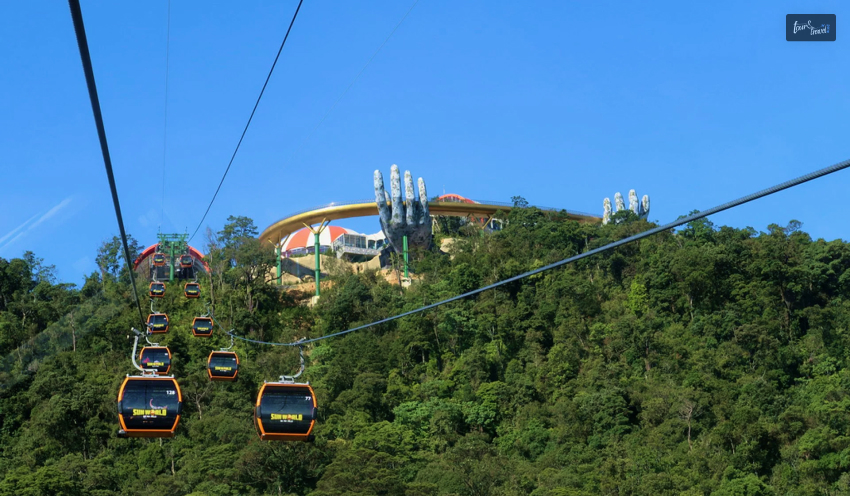
You do not have to pay any money to visit the bridge. However, the Ba Na Hills Resorts owns the Golden Bridge Da Nang Bridge. The bridge is included in the Sun World Ba Na Hills tourism complex, so the rate of visiting the resort is included in the ticket price for the cable car.

You have to reach the resort by car while reaching the hilltop of Ba Na Hills by cable car. The ticket price for adults for a round-trip is $38.30! You can visit the bridge in two seasons, extending from April to September and October to December.

For children whose height is between 1m and 1.4m, the round-trip tickets cost around $31.01! Children below that height can visit where their parents do not need to buy any tickets. There are also offers with a lunch buffet and combo cable car tickets priced around USD $46.38.

About Golden Bridge Da Nang!

About Golden Bridge Da Nang

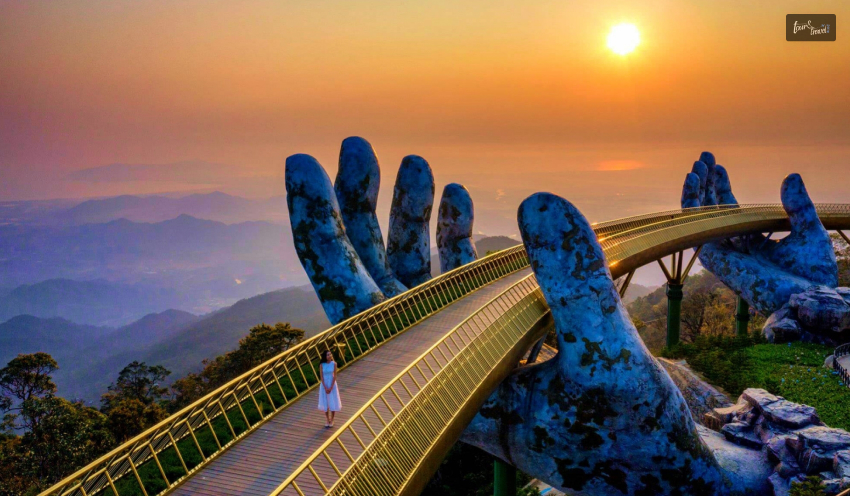
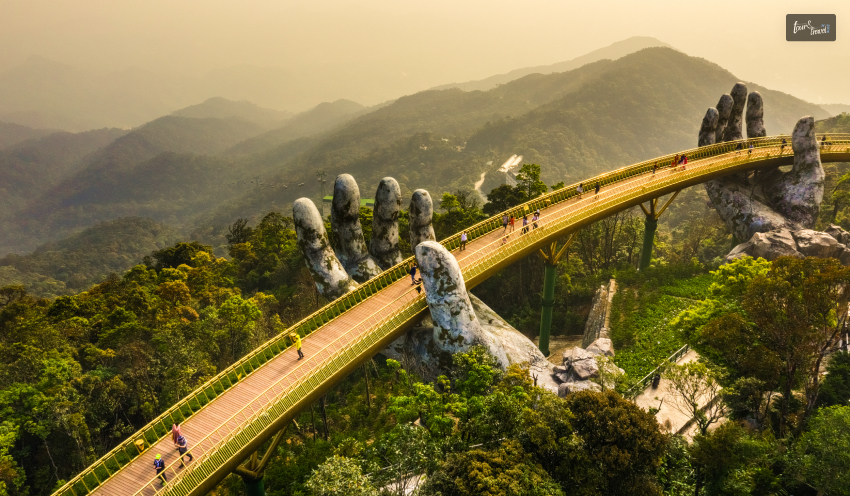
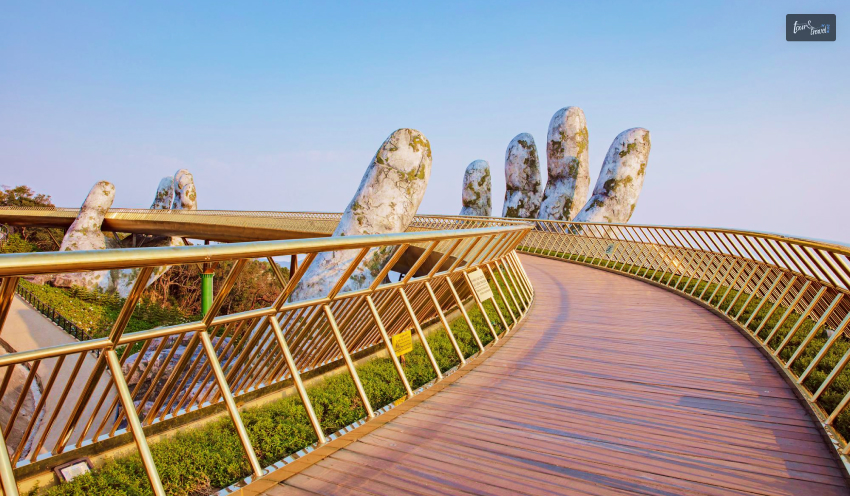
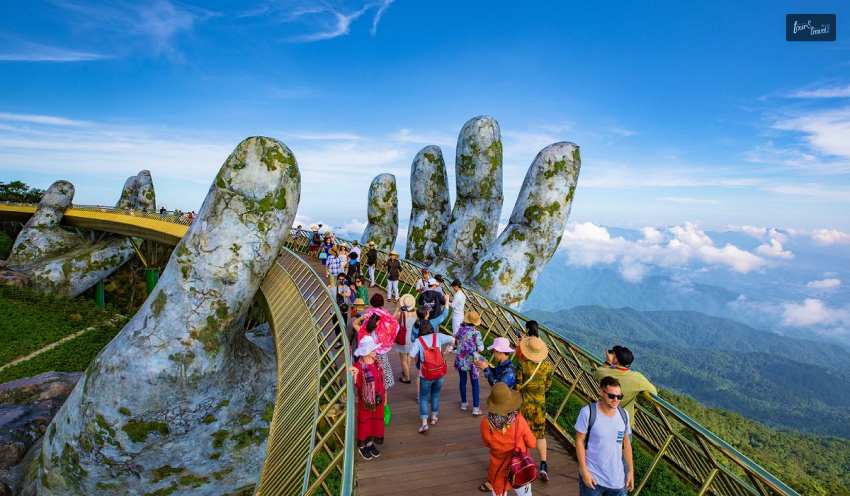
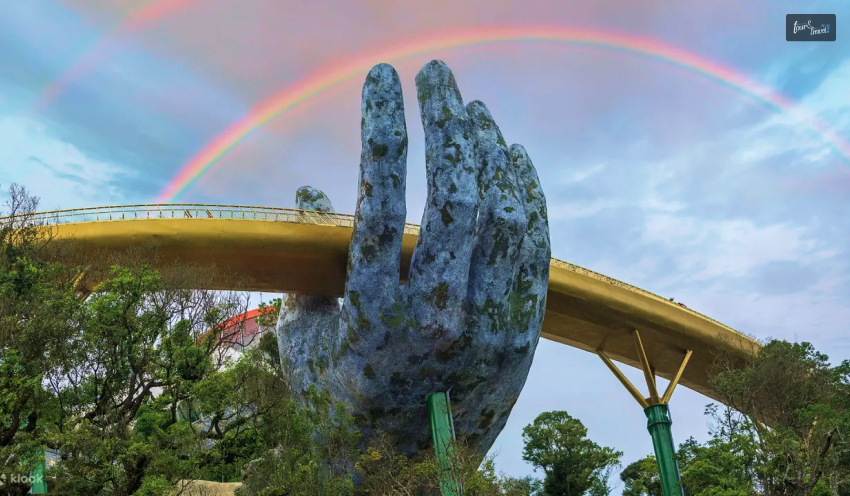
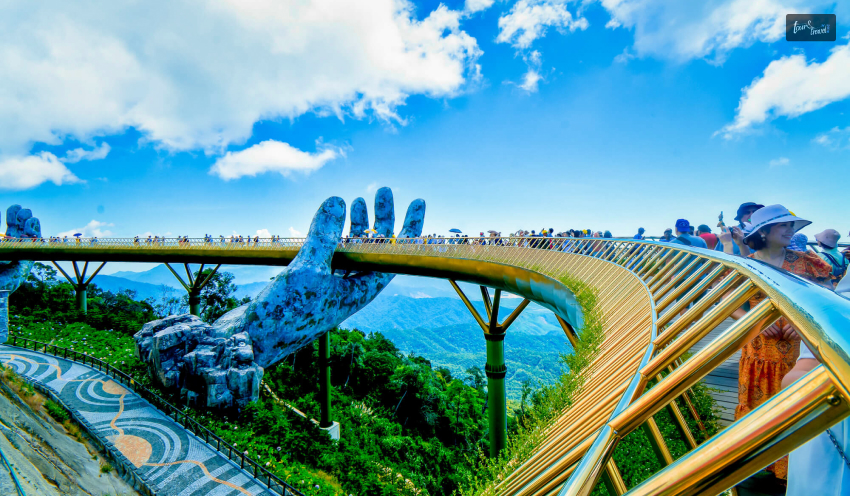
One of the most photographed spots located within Ba Na Hills, Golden Bridge Da Nang is a 500-foot-long bridge with railings shining in golden color. The bridge has been constructed with such a design that it is cradled between two colossal hands.

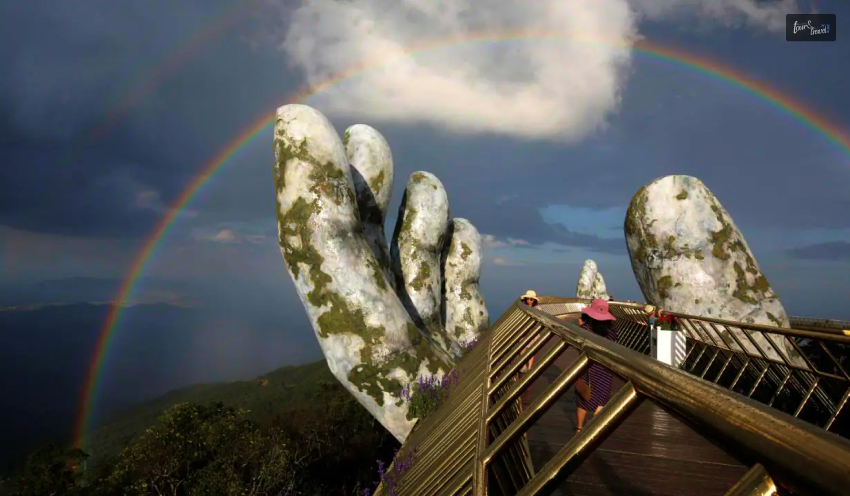
The hands are so big that they seem to be up in the clouds. Further, during rainy days, the clouds are covering the hands. The bridge is 12.8m wide with eight arches. The concept of the bridge was about walking across the hands of the God of mountains on the clouds.

The Hand Bridge in Vietnam acts as a connector between the cable car station, which is located at the hilltop, and the Paradise Gardens. Further, the bridge gives you a perfect view of the Annamitr Mountains and the East Sea.

I suggest you arrive early in the morning if you want an excellent picture of the attraction or get a photo of yourself on the bridge. When visiting the bridge, you can also cover fantasy parks, the French village, and a cable car ride, making it a complete circle!

How To Reach The Golden Bridge In Vietnam?

How To Reach The Golden Bridge in Vietnam

To reach the Golden Hands Bridge Vietnam from Da Nang City, you must go to Sun World Ba Na Hills first. You can go from Thien Thai Flower Garden or Marseille station to the Golden Hand Bridge. There are different transportation routes which you can take!

Car Rental In Da Nang

You can rent a car in Da Nang to travel to the bridge, especially with people ranging from 4 to 45 people. The rental vehicle is both cost-saving and flexible. The round trip ranges from somewhere $17.02 to $93.62.

Taxi

If you are looking for something reasonable, book a taxi if you are in a group of 4 to 7 people. The price of a round-trip taxi visit starts from $21.28 to $25.53.

Bus To Ba Na

If your budget is cheap, take a bus from Da Nang, which will take you to Ba Na in just 75 minutes. The bus is specifically for tourists, and the round-trip costs $6.38 per head. However, the timing could be more relaxed as tourists are picked up between 7:30 and 8:30 from Da Nang.

While returning, tourists are picked up from Ba Na between 14:30 and 15:30 to return once the Bridge tour is done. For tourists, it can be restrictive at times!

Transfer Car From Danang To Ba Na

The transfer car starts from 72 Nguyen Chi Thanh and takes tourists to Ba Na Hills, with the round-trip ticket costing around $2.98 per head. This transportation is convenient for visitors planning to visit Ba Na in the morning, but there will be issues for evening visitors!

Again, with the pocket-friendly rate, the car is restricted concerning the timing of the transfer car, which only functions between 8:30 in the morning and 18:00!

Motorbike Rental

If you are young and know how to ride a motorbike or your partner knows, go for the motorbike rental! It is one of the best choices for tourists because it creates opportunities for you to enjoy nature and its beauty.

This transportation choice lets you stay the most active concerning your travel plans. The motorbike rental price ranges from $4.26 to $6.38 per head.

What Is The Best Time To Visit The Golden Bridge Da Nang?

What Is The Best Time To Visit The Golden Bridge Da Nang

What is the perfect time to visit Golden Hand Bridge in Vietnam? The opening hours of the bridge start at 8:00 AM, while it closes at 18:30. Considering it is one of the recent and popular attractions on social media, there is a huge crowd.

You must know the crowded time while visiting the bridge is between 9 AM and 17:00. So, if you plan to visit the bridge to avoid the rush or the crowd, you must visit either before 9 AM or after 17:00 PM.

You can experience four seasons, namely summer, winter, spring, and autumn when you go to the bridge. The cool atmosphere you enjoy up on the bridge is amazing, along with the beautiful scenery.

When taking pictures of the attraction, you have to include one of the hands in your photo! It looks majestic! Along with that, you can also opt for panoramic photos. Either simulate the hand or stand inside it to show the magnificent perspective of it.

Places To Visit While On the Golden Hand Tour!

Places To Visit While On the Golden Hand Tour

Based on my understanding of other people’s experience of the place, you can visit the place either in the morning or afternoon. If you are hoping for foggy pictures or with the sun rising high on the clouds, go in the morning!

Sometimes, you can also catch birds flying, which is a beautiful visual! However, if you are looking for more light, glowing sun in your pictures, you can go in the afternoon. The sunset is just perfect in the afternoon, with a romantic vibe.

If you are visiting with your partner, it is the perfect time to go, especially when the photographs will be to die for! Apart from the Golden Hand Bridge, remember that there are other places to visit, such as an amusement park called the Fantasy Park.

How can you remember the restaurants and cafes that are of different styles? You have to try the delicious food and beverages there. Further, you gotta visit the Ling Ung Pagoda and the flower gardens.

Weather Must Be Taken Into Consideration!

Weather Must Be Taken Into Consideration
Image Source : images.rove.me/

The Golden Hand Bridge has been constructed to be up in the clouds. It is, therefore, important to consider the weather when visiting the Golden Hand Bridge.

According to a review on Tripadvisor by udontnomee3e, an overcast day is a bad day to visit the bridge! If the weather is rainy, cold, and cloudy, there is a high chance that you will not be able to enjoy the attraction or take good pictures.

The issue, however, with it is that you cannot know what the weather will be when you go up from below because the weather is completely different! During bad weather, the visibility becomes terrible, and the steps become slippery.

It isn’t obvious because when you are on the ground, you will not realize the weather status on the bridge. At the top, it might be completely different!

Highlight Of The Golden Hand Bridge!

Highlight Of The Golden Hand Bridge
Image Source: d13jio720g7qcs.cloudfront.net

The bridge has hosted a fashion show called “A Walk on a Cloud” fashion by the Fashion Voyage. It is a groundbreaking achievement, especially with the spectacular natural view and a harmonious blend of architecture.

The bridge has inspired many designers from the fashion industry to create something that represents out-of-the-world structure. Many couples have done their wedding photo shoots, especially if the location has been accessible.

Even though it looks artificial, the bridge is quite interesting in becoming a worldwide photography sensation. It is nothing close to Disneyland, but the amusement park in which it has been made has created quite a stir and an awareness!

Accommodation At Ba Na Hills!

Accommodation At Ba Na Hills

If you are planning to stay at Ba Na Hills, consider the tour of the Golden Hand Bridge, which can be completed in less than one day! There are other features and attractions that you have to complete, and then you have to book your accommodations there.

Some of the best hotels or resorts that you can book while on a trip to the Golden Hand Bridge are as follows:

Monarque Hotel – This hotel is a beautiful stay with all the amenities made available! The hotel is mostly for accommodation as the outside is so beautiful and filled with activities and attractions for you to visit. The distance of the hotel is 27.7 km from the Golden Bridge.

If you are on a romantic trip, this hotel is definitely for you, as it is perfect for a romantic getaway! As partners, you can enjoy yourselves in the pool apart from the beautiful scenery outside.

Muong Thanh Luxury Song Han Hotel – This hotel is 24.6 km from the bridge and is one of the best regarding family stays.

The hotel has all the services and amenities, especially with amazing staff services. Traveling as a family, this hotel will ensure all your and your family’s requirements are met.

Ba Na Hills Mountain Resort – The distance between the resort and the Golden Bridge is 25 km with an altitude of 1487 m! It is one of the favorites based on the guests’ ratings and reviews. Apart from having exotic theme parks, the resort offers many recreational activities!

Start Packing…

Have you started packing yet? Now that we have discussed all about Golden Hand Bridge, Vietnam, you have to visit once in a lifetime. Attractions like these worldwide urge us to see them and create memories of a lifetime.

As humans, we are supposed to enjoy the beautiful scenic views worldwide. Even artificial ideas, along with the beauty of nature, confirm our growth and survival. Golden Hand Bridge is worth visiting, along with facilitating accommodations and other attractions.

Comment below to tell me why you want to visit Golden Hand Bridge, or have you already checked it off the bucket list?

Read Also:

Share on Social Media

Sagnika Sinha is a content writer who is passionate about writing travel vlogs, entertainment and celebrity articles and literature-based pieces. With a 4 years experience in teaching, she loves reading books. A procrastinator by nature, she loves travelling, listening to music, planting and gardening.

Leave a Reply

Your email address will not be published. Required fields are marked *

title-img Related

READ MORE Great Barrier Island camping tips

The Best Great Barrier Island Camping Tips: Ultimate Guide To The Best Camping Spots On Great Barrier Island, New Zealand 

BY  Sibashree Nov 17, 2025

Spotting the burrows of the black petrels at Glenfern Sanctuary and the hillside was like magic! The burrows had eggs in a cream shade with tan freckles. They almost looked like the eggs of a hen, though slightly larger. Also, some chicks were chirping their hearts out inside the burrows. They looked like those squishy dog toys. Now, spotting birds is one of the most fulfilling activities when you are camping on Great Barrier Island, New Zealand. Furthermore, if days were about hiking and spotting the birds, the nights were about indulging in the surreal beauty of the celestial bodies at this designated Dark Sky Sanctuary. Moreover, camping in Great Barrier Island is a true off-grid and remote experience. No Streetlight!  No Public Rubbish Bins!  And, No Powered Camping Sites!  It’s just you, the camping tent, and the rugged beauty of New Zealand’s Hauraki Gulf. Hi, in today’s blog, I will talk about the Great Barrier Island camping tips. Here, you will learn about the must-book DOC sites, the non-negotiable biosecurity rules, and everything else you need to plan your adventure.  Camping In Aotea, Great Barrier Island: Setting The Right Mindset For Biosecurity And Sustainability View this post on Instagram A post shared by Department of Conservation (@docgovtnz) Aotea isn't a place that just hands you its beauty. It's a place that makes you earn it. It's a true adventure that rewards you for being self-sufficient.  It's the thrill of waking up to the raucous call of a Kākā parrot, not an alarm clock. It's the magic of watching the Milky Way rise over the dunes at Medlands Beach, and the peace of having a rugged, white-sand cove all to yourself.  Also, it is one of the rare islands that serve as sanctuaries, and with 60% of its area protected by the Department of Conservation, Great Barrier Island demands the utmost care for biosecurity and the adoption of sustainable practices. So, before you want to explore the best camping spots on Great Barrier Island New Zealand, you have to build your mindset. This is your invitation to join a small community of travellers who value wild, authentic, and responsible adventure.  1. Offering The True Off-Grid Experience  The campsites of the Great Barrier Island are exactly what the island is. They are not powered, and they have basic amenities. Furthermore, open fire is not allowed in these campsites. So, you will have to bring fuel-powered or gas cookers. Furthemore, the Department of Conservation camping sites have only a specific number of tents. So, you need to make the booking well in advance. Contact the Department of Conservation (DoC) at 0800 275 362. 2. The Golden Rule: "Pack In, Pack Out”  Zero waste and recycling are important for the sustainability and environmentally friendly practices of the Great Barrier Island. However, the island does not have public rubbish bins. So, whatever you carry to the island, you will have to take it back. You must use the official Orange Council bags with stickers for trash disposal. 3. Biosecurity Is Most Important  Protecting the Kauri trees from the infamous “Kauri Dieback disease” and the island's endemic animals requires a high level of biosecurity. So, when you leave for the Great Barrier Island from Auckland, you will have to check for ants and rats. Also, when you leave Great Barrier Island, check the tents and packs for skinks. In addition, the Phytophthora Agathidicida attack on the kauri trees has been a serious concern. Stopping the soil movement is crucial to stopping the attack of this dieback disease. Soil movement can happen through pigs, footwear, and vehicles. Therefore, the Department of Conservation (DoC) cleaning stations play an important role in cleaning and removing soil from your gear and footwear before entering a kauri forest on Great Barrier Island, New Zealand. In addition, you have to stick to the marked routes when hiking through the best Great Barrier Island hiking trails. 4. How To Book The Camping Sites: DOC Vs. Private  If you are camping in any of the DoC sites, you have to make the booking online well in advance. Private camping sites can be booked directly. Here is the step-by-step guide for booking a DoC Campsite on the Great Barrier Island. First, visit the Department of Conservation site for the particular campsite. For example, let’s talk about the Akapoua Bay Campsite. On the dedicated Akapoua Bay Campsite page, you will get to know about the campsite and the fees. The fees for the Akapoua Bay Campsite are $18 per night for adults, $9 per night for children ages 5 to 17, and $0 per night for infants ages 0 to 4. In addition, you can book a campsite pass from the Department of Conservation of New Zealand. It will give you access to all the bookable and non-bookable campsites in the country. If you need any assistance in booking the campsite pass, you can avail of that at a service tax of $10. For adults, the camping pass will cost $295.00 (365 nights), and for children between 5 and 17 years, the pass will cost $147.50. Moreover, for children below 5 years, the camping pass is free. If you need any assistance regarding the booking of the 1-year campsite pass or a pass for any specific site, you can contact Whakatū/Nelson Visitor Centre at +64 3 546 9339 or email them at nelsonvc@doc.govt.nz. The Kauaeranga Visitor Centre (+64 7 867 9080/kauaerangavc@doc.govt.nz) also offers the same assistance. What Are The Best Camping Spots On Great Barrier Island New Zealand?  View this post on Instagram A post shared by Department of Conservation (@docgovtnz) Digital detox has been a trending thing these days, and if you want to truly experience that and shut all the noise in your head, the camping spots on the Great Barrier Island will be the best for you. Further, the real magic of camping on Aotea starts after sunset. You haven't lived until you've watched the Milky Way rise over your tent from the dunes at Medlands. However, along with the Medlands Beach, there are 5 other DoC campsites in the Great Barrier Island, New Zealand. Here are the details. 1. Akapoua Bay Campsite  The sheltered waters of Port FitzRoy have a beautiful camping ground, which is like a gateway to the many walking tracks of the Great Barrier Island, New Zealand. From waking up with a 60-second dash of a cold shower to exploring the paths graced by the pohutukawa trees, the Akapoua Bay Campsite will offer you a peaceful and off-the-grid experience. The maximum number of campers on this site can be 75. Moreover, the camp is hosted from Christmas to the end of January. 2. Harataonga Campsite  This campground is very close to Harataonga Beach. So, it is an ideal camping site for swimmers and snorkeling enthusiasts. It can accommodate 120 campers, and this campsite is surrounded by bush and farmland. and camping takes place between Christmas and mid-February. Harataonga is for the romantic escape. 3. Awana Beach Campsite  The Awana Beach Campsite is a surfer’s dream. It has beautiful dunes and farmlands around. It can accommodate 120 campers, and the campground remains open from Christmas to the end of January. The only problem with this camping site is mosquitoes. So, you have to carry mosquito repellents. 4. Medlands Beach Campsite  The sound of the waves at Medlands. This is the music you will listen to when you go to sleep or wake up at the Medlands Beach Campsite. Medlands is like an all-rounder. It is ideal for families and surfers alike. The campsite remains open from Christmas to mid-February, and it can accommodate 120 campers. 5. The Green Campsite  You can boat in or walk in the Green Campsite, which remains open from 1st December to the end of February. With a capacity of accommodating only 30 campers, this campsite has a rich history associated with whaling, kauri logging, and timber milling. The waters of the Whangaparapara Harbour make it an idyllic retreat, and it is also the base of the Aotea Track. 6. Whangapoua Campsite  The Whangapoua Campsite is a surfer’s paradise, and it is located on the edge of the Whangapoua estuary. It is also a favorite camping site for fishing. With an accommodation capacity of 150 people, this campsite remains open from Christmas to the end of February. However, the biggest highlight of this camping site is the views of Rakitu Island and Mount Hirakimata. A Comparison Summary Table Of The DoC Camping Sites On The Great Barrier Island, New Zealand  DoC Campsite Access Landscape Facilities Activities Dog Access Fees Akapoua Bay Campsite Campervan, Car and Caravan Coastal Boat Launching, Cooking Shelter, Cold Shower, Non-Flush Toilets for Men and Women Boating, Fishing, Walking, and Tramping No Adults: $18 per night, Children of 5-17 years, $9 per night, and Children below 5 years: free Harataonga Beach Campervan, Car and Caravan Coastal Cooking Shelter, Cold Shower, Non-Flush Toilets for Men and Women Swimming, Snorkeling, Fishing No Adults: $18 per night, Children of 5-17 years, $9 per night, and Children below 5 years: free Awana Beach Campsite Campervan, Car and Caravan Coastal Cooking Shelter, Cold Shower, Non-Flush Toilets for Men and Women Kayaking and Canoeing No Adults: $18 per night, Children of 5-17 years, $9 per night, and Children below 5 years: free Medlands Beach Campsite Campervan, Car and Caravan Coastal Boat Launching, Cooking Shelter, Cold Shower, Non-Flush Toilets for Men and Women Fishing, Surfing, Swimming No Adults: $18 per night, Children of 5-17 years, $9 per night, and Children below 5 years: free The Green Campsite Boat, Foot Coastal Cooking Shelter, Non-Flush Toilets for Men and WomenHiking, Boating No Adults: $18 per night, Children of 5-17 years, $9 per night, and Children below 5 years: free Whangapoua campsite Campervan, Car and Caravan Coastal Cooking Shelter, Cold Shower, Non-Flush Toilets for Men and WomenFishing, Surfing No Adults: $18 per night, Children of 5-17 years, $9 per night, and Children below 5 years: free  Insider Tips For Camping At DoC Campsites On The Great Barrier Island If you are camping in a caravan or campervan, remember that the gravel roads leading to the camping sites, especially the Harataonga Campsite, are steep and winding. Also, the sites are off-the-grid. Furthermore, the campervans are not usually allowed on the beaches. The Best Private & Unique Camping Options On The Great Barrier Island View this post on Instagram A post shared by Department of Conservation (@docgovtnz) 1. Great Barrier Island Campground  The Great Barrier Island Campground, spanning over an area of 12 square acres, is an ideal camping ground for access to different beach activities. The camping site is located at a distance of just 200 meters from the beach. The camping fee at the Great Barrier Island Campground is $10 per person per night. You can contact them at 021 298 8905 for booking. 2. Mickeys Place  The O'Shea Family farm in Awana houses the Mickey's Place camping ground. It is a family-friendly camping site with the following facilities. A Communal Cooking Area  Flush Toilets  Showers  Patrick, Sean, and Mickey are the hosts of this campsite, and you can contact them at 09 4290 140. 3. Stray Possum  Stary Possum in Tryphena is an ideal camping site for backpackers. If you are camping here, you will have access to the kitchen, toilets, and showers of the adjacent Stray Possum Lodge. This camping site has 14 tents, and you can call 09 4290 109 for booking details. 21 Essential Great Barrier Island Camping Tips  I promised you tips, and here they are. Do not go to Great Barrier Island without reading this checklist.  • Packing And Food  1. Bringing a Gas Cooker  Open fires are banned in the Camping sites of the Great Barrier Island. So, you will have to bring a gas burner for preparing your food. 2. Packing Your Food  Groceries are not available everywhere, and they are even very expensive. So, it is better to collect and pack the groceries you will need before leaving Auckland. 3. Bringing a Good Chilly Bin  You will need this insulated chest for storing warm and cold food items. 4. Bringing a Red-Light Torch  The island is a Dark Sky Sanctuary. A red torch lets you stargaze without ruining your night vision.  5. Bringing Cash  EFTPOS (debit) is unreliable, and many camping sites only accept cash. 6. Packing Warm Clothes  The weather can suddenly become cold, even on summer days. So, you will have to pack layered clothes.  7. Carrying Mosquito and Insect Repellent  Sandflies and mosquitoes are notorious on Great Barrier Island. So, you will have to carry an insect repellent.  • On-Site & Facilities  8. Cold Showers  Most shower stations on the Great Barrier Island are cold water shower stations. This is great as the dash of cold water in the morning, literally works as the eye opener. 9. Long-Drop Toilets  The long-drop toilets are basic and waterless. Using these pit toilets can be challenging for some campers. 10. Drinking Water  The tap water available at these sites is not ideal for drinking unless it is purified or boiled. 11. Pet-Friendly  The DoC camping grounds are not accessible to dogs. This is crucial for the protection of wildlife, the safety of the pets, and soil movement, causing the resurrection of pets and parasites affecting the local flora and fauna. 12. Booking  The slots for camping sites such as Medlands, Akapoua get sold more than 6 months in advance for the Christmas and New Year periods. So, it is indeed a year-long planning. 13. Alcohol Rules  The consumption of alcohol can be banned in various camping sites, especially during the peak seasons. So, check with the camping site authority. • Transport & Logistics  14. Having a Vehicle  Having a vehicle is a must for moving around the rugged and large Great Barrier Island. You cannot walk between the sites.  15. Renting a 4WD (or 4WD-Capable)  The roads to various campsites are challenging. The road to Harataonga, especially, is very difficult. So, you will have to rent a 4WD-capable vehicle. 16. The Motorhome/Campervan Reality  The gravel roads are narrow, steep, and winding, and if you are planning to camp in a large RV, you will definitely struggle. 17. The Dump Station Nightmare  There is only one dump station in Claris, and it is only for black water or toilet waste. You will have to carry your grey water or sink with you. 18. Freedom Camping  Freedom camping on the Great Barrier Island, New Zealand, is a fascinating idea. However, the reality is quite different. It is heavily restricted, and sticking to the DoC sites is the best option.  • Safety & Etiquette  19. Using a Paper Map  Mobile network and GPS will not function in various parts of the Great Barrier Island. So, you will have to carry a paper map. 20. Tell Someone Your Plans  If you are hiking on the Great Barrier Island, you have to keep someone informed. The wilderness and remote locations of the hiking trails can throw many challenges, despite having an easy to moderately difficult level.  21. Being a Good Neighbour  You must respect the quiet, off-grid, and nature-first vibe of the Great Barrier Island. So, you have to keep the noise level down. How To Reach The Aotea Great Barrier Island With Your Camping Gear? For campers, especially the ones with campervans, traveling by the ferry from SeaLink is the best option. It is the only mode of transportation in which passengers and cars are both transported. It is a 4.5-hour picturesque journey from Auckland. Your Great Barrier Island Camping Adventure Is Calling Camping on the Great Barrier Island, New Zealand, is the right mix of adventure, soaking in nature, and cherishing the off-the-grid living of the island. However, it’s not going to be easy with the amenities at the campsites being basic, and even the gravel roads posing challenges for the big RVs and campervans. Also, you will have to take care of biosecurity and all the sustainability guidelines to ensure that the island, a sanctuary of wildlife, does not get impacted negatively. Conservation as a pristine sanctuary is the reason why camping in the Great Barrier Island allowed us to see a billion more stars and birds than I have ever seen in my life.

READ MORE Guide To Indiana National Parks

A Guide To Indiana National Parks – Latest Guide

BY  Mashum Aug 2, 2021

Indiana state is famous globally as the “Covered Bridge Capital” because there are 32 covered bridges alone in Historic Parke County, which are discoverable through a road trip. Apart from the Indiana national parks, the state is also famous by the name of “great lakes state” since it shares 40 miles of shoreline with Lake Michigan.  The four national parks in Indiana are renowned as outdoor adventure destinations, namely the Indiana Dunes National Park, President Lincoln’s Boyhood Cabin, George Roger Clark, and the Lewis and Clark Historic Trail. Of the four national parks, Indiana Dunes National Park is a must-see destination. Indiana Dunes National Park and George Rogers Clark National Historical Park are national parks in the term's true meaning. And, the other two national parks in Indiana, i.e., Lincoln’s Boyhood National Memorial and Lewis and Clark National Historic Trail, are the two memorial sites in Indiana, recognized for their routes of historical significance or original trails by the National Historic Trails. Let’s check more details about each of the national parks in Indiana and see how we can spend our day if we plan a trip there. The Four Noted Indiana National Parks 1. Indiana Dunes National Park:  Of the four celebrated Indiana national parks, this one is an unmissable destination if you are in the state. The national park shares 15 miles with the southern shore of Lake Michigan. Indiana Dunes National Park is spread over 15,000 acres and has a lot to offer.  Your search for rare species of birds will end here, along with 1,100 native plant species and the fun of flying kites on the sandy beach. You will feel enchanted with every step you take in this national park as this place is among the most biologically rich areas in the nation.   The park offers 50 miles of trails over rugged dunes, sunny prairies, mysterious wetlands, peaceful forests, and meandering rivers for hikers. Shall we now check out basic information about the national park to plan our tour accordingly? Directions To The Park: You can access Indiana Dunes National Park through Interstate 94, the Indiana Toll Road, U.S. Highway 12 & 20, Indiana State Road 49, and several other local roads. To visit the Indiana Dunes Visitor Center, you need to take Indiana State Road 49, between U.SD. Highway 20 and Interstate 94. Operating Hours Of The National Park: This Indiana national park has general areas that are open throughout the year but have specific hours of operation. The standard working hours of the general areas of the national park are Monday to Sunday from 06:00 am to 11:00 pm. The entrance to the Indiana Dunes National Park is through the west beach. The hours of operation of this portion of the park is Monday to Saturday from 07:00 am to 09:00 pm. Weather News: Usually, July is the warmest month in the national park, and January is the coldest month. June month witnesses the heaviest rainfall with 4.66 inches of rain on average. Entrance Fees To The Park:  West Beach - Standard Entrance Fee $6.00, Senior Pass Entrance Fee $3.00, Access Pass Entrance Fee $3.00, Bus Entrance Fee $30.00. Dunewood Campground - Standard Camping Fee $25.00, Senior Pass Camping Fee $12.50, Access Pass Camping Fee $12.50. This campground is 1.5 miles from the beach and boasts 67 campsites made for both RVs and tent camping.  One-half of the site is open for reserve, and the other half is given on a first-come-first-served basis. You will find showers and restrooms at the campground but no water or electric hookups.  Indiana Dunes Visitors Centers:  Dorothy Buell Visitor Center - This Indiana national park visitor center is open on all days except New Year’s Day, Thanksgiving Day, and Christmas Day. The operation hours are 09:00 am to 04:00 pm Central Time (Due to covid-19). At Dorothy Buell, you will view lobby displays, read brochures about Porter County, Dunes State Park, Indiana, and Indiana Dunes National Park. You can also shop in the Eastern National Bookstore and enjoy watching educational displays and two short orientation videos. Paul H. Douglas Center For Environmental Education - This visitor center is open from 09:00 am to 05:00 pm Central Time during Summers and from 09:00 am to 04:00 pm during Winters. This center is your gateway to the magnificent Paul H. Douglas Trail via Miller Woods. You will find a natural environment all through the center through its hands-on educational exhibits, animals, lectures, Nature Play Zone, ranger-guided hikes, and crafts. Popular Activities To Do At The National Park: Hiking. Picnic at the beach. Birding. Swimming. Fishing and Paddling. Geocaching. Horse Riding on the equestrian trails. Camping (Between April 1st to October 31st). Biking. Snowshoeing and cross country skiing. Shuttle Bus Services: During the summer period, on weekends, you can take the services of free shuttle buses from the Dunewood Campground to the beaches. You can stop at sites like the Miller Train Station, Marquette Park, Lake Street Beach, and The Douglas Center.  Pet Friendliness: Indiana Dunes National Park is completely dog-friendly. You can take your pet to almost all trails and other parts of the park, besides a few exceptions. For example, you cannot take your pets on Glenwood Dunes Trail’s equestrian part, in the lifeguard area of the West Beach, and the Pinhook Bog Trail. You can enjoy a free public wi-fi facility at the Indiana Dunes Visitor Center. 2. George Rogers Clark National Historical Park:  Located on Southwest Indiana and beside the Wabash River, George Rogers Clark National Historical Park is one of the small Indiana national parks, which has a few monuments, a picnic spot, statutes, and a visitor center as its main center of attraction. The national park is about an hour tour in total.   Why Was George Rogers Clark National Historical Park Built? George Rogers Clark National Park was built in the 1920s in memory of an American Colonel named George Rogers Clark, who captured Fort Sackville in 1779 and his army with help from French residents of the Illinois country. The capture of the fort guaranteed the United States a claim to the frontier, which is approximately an area as big as the original 13 states. The National Park is a memorial built to commemorate Clark’s success for his unmatchable success for the revolutionary war’s 150th anniversary. When you visit this national park’s visitor center, you will discover the fort’s history, how it was built, and how it felt living in the Pullman District. In addition, at the national park, you will be shown a 30-minute short film on the life of George Rogers Clark. Things To Do At The George Rogers Clark National Park A short walk around the nearby town of Vincennes will offer you the following things to do at this small Indiana national park: Dine at restaurants. Camping at Campgrounds. The Old Cathedral. State Historic Sites. Shops to shop. Antique Stores. There are particularly no campgrounds at George Rogers Clark National Park. But, visitors can find campgrounds for RV and tent camping at the Ouabache Trails Park, located in Vincennes.  Space For Pets: Your leashed pets can accompany you on the walkways around the Memorial and the visitor center, but their entry inside any buildings is strictly prohibited. Operating Hours: The park is open for visitors on all seven days of the week. At the same time, it is closed on most of the federal holidays except Independence Day, Labor Day, and Memorial Day. Timings for the Park District: George Rogers Clark Memorial is from 09:00 am to 04:45 pm on demand. Weather At The Park: The weather inside the national park is very much typical for the Midwest. Summer months can be hot and humid, and winters quite cool. Entrance Fees To The Park: For a George Rogers Clark National Park tour, there is no entrance fee charged.  The Visitors Centers To Visit: This Indiana national park has one visitor center with the same name as the national park. This center has a small exhibit area. You will be shown a short 30-minute introductory movie titled “Long Knives,” which tells about the backstory of George Rogers Clark and his military campaign. No drinks or food are allowed at the visitor center or Memorial. Services offered here are charging stations, restrooms, bookstores, and drinking fountains. 3. Lincoln Boyhood National Memorial:  In the southern part of Indiana and Lincoln City, you will find the third Indiana national park, named Lincoln Boyhood National Memorial. This is where former President Abraham Lincoln grew from youth to manhood before becoming the 16th President of the United States of America. Operating Hours Of The Lincoln Boyhood National Park: All visitors are allowed to tour the national park grounds and visit all the outside areas daily, between sunrise and sunset. Once you arrive at the park, there are plenty of things that you can do, such as two miles of trails, watching the sculptured panels on the outside of the Lincoln Memorial Visitor Center, visiting the Cabin-Site Memorial, the Pioneer Cemetery, and the Living Historical Farm. Unfortunately, the park is closed on almost all federal holidays. Weather At The Park: The climate in Southern Indiana is moderate, with a touch of warmness and moistness. The summers are warmer and winters cooler. It rains the most during Spring. Visitor Center At The Park: The Lincoln Boyhood park has a Memorial Visitor Center built in 1943 with two memorial halls and a connecting cloister. In the Memorial Court, you will find the works of E.H. Daniels and five sculptured panels that mark significant periods in Abraham Lincoln’s life. Taking a tour of the whole Memorial will take up to 30 to 60 minutes. There is also an orientation film shown at the visitor center every half an hour from 08:00 am to half an hour before the day’s closing. The Museum artifacts and exhibits speak about Abraham Lincoln’s life.  This national park is all about Lincoln’s family, boyhood, and frontier life in this Indiana national park area. During summers, the visitor center is open on all seven days from 09:00 am to 04:00 pm except for the federal holidays. And, at the time of the Fall season, the timings are 07:00 am to 03:00 pm. Place For Pets At The Park: Visitors are permitted to bring in their pets inside the park, but with certain restrictions. The pets must be restrained at all times on a leash, which should not be longer than six feet in length.  The pets are only allowed on the 2 miles of hiking trails and roads in the park and barred from entering public buildings. Things You Can Do At The Park: It will take at least two hours to complete a tour of the whole park. The indoor activities at the park include: Watching the Park Film at the Memorial, titled Forging Greatness and Lincoln in Indiana, which is 14 minutes in length. Paying a visit at the Lincoln in Indiana Museum, which would take around 15 to 30 minutes. The outdoor activities include: Hike the Trail of Twelve Stones, a type of front-country hiking of 20 minutes. Hike the Boyhood Trail, which is another front-country hike of 10 to 15 minutes. Visiting the Lincoln Living Historical Fa, you'll find a re-created homestead with outbuildings, log cabins, field crops, gardens, livestock, and split rail fences.  For kids of 05 years and above, there is a Junior Lincoln Boyhood Ranger Program. Lincoln Spring, which is an obscure waterway. The entry to the Lincoln Boyhood Indiana national park is free. 4. Lewis And Clark National Historic Trail:  The Lewis and Clark National Historic Trail is nearly 4,900 miles long, starting from Pittsburgh, Pennsylvania, to the Columbia River mouth, which is near the present-day Astoria, Oregon. This Indiana national park follows the historic incoming and outgoing routes of the Lewis and Clark Expedition along with the preceding section initiating from Pittsburgh, Pennsylvania, to the Wood River in Illinois. This Trail connects 16 U.S. States and many Tribal lands. Today, visitors are allowed to explore the whole Trail using varied transportation methods and interpretive means, following the approximate route of the Corps of Discovery, i.e. Lewis and Clark Expedition Members.  Places To Visit In Lewis And Clark National Park:  Lewis and Clark National Historic Trail Visitor Centers and Museums: At Lewis and Clark Historic Trail Museums and Visitor Centers and Cultural Centers, visitors can learn more about the expedition and experience blissful and diversified landscapes and communities on the Trail. Directions To The National Park: You will find the Lewis and Clark Indiana national park visitor center inside the DOI, National Park Service. Weather At The Park: The summers are sweltering, so you must drink plenty of water and wear sunscreen when stepping out for a tour of the Trail. The winters are icy, with ice settling on trails and sidewalks. Since this Trail covers 16 U.S. states, you must watch the weather prediction of the state you are planning to visit. The Final Thoughts We hope that the above comprehensive guide on Indiana national parks is a one-stop solution and a valuable guide for you if you plan a trip to any of the four national parks and trails. From serenity to beautiful natural landscapes, from magnificent and ancient monuments to rare species of animals, you will find every part of each of the four national parks surprising. More Resources: A Guide To National Parks In Georgia – Latest Guide 8 Best Bachelor Party Destinations To Visit In 2021 A Guide To National Parks In Michigan – Latest Guide 2021

READ MORE is cabo san lucas safe

Is Cabo San Lucas Safe? – Let’s Find Out!

BY  sagnika Jun 26, 2023

Are you considering making travel plans to visit Cabo San Lucas? The ultimate destination for adventurers can be dangerous because of the harsh weather and increasing crime rates. Want to know is cabo san lucas safe? Cabo San Lucas is 20 meters above sea level, while the geographical location is 22.88 degrees North and 109.90 degrees West. Thomas Ritchie founded the place in 1828. The climate of Cabo is a tropical thorn forest. However, there is a certain desert terrain spread. A critical icon can be found in the area, The Arch. In Spanish, "El Arco" is the natural stone arch that is well known worldwide and a symbol of Cabo San Lucas. Read the article to learn more about it. Also Read: How To Find The Best Ontario Cocaine Rehab Center? Is Cabo San Lucas Safe? Let's Find Out! Cabo San Lucas is situated in Mexico with picturesque beaches. It is a popular tourist destination rich in culture and boasting sumptuous local food. Almost 2.8 million travelers visit Cabo annually, and there are repeat visitors. The coastal life experience that Cabo San Lucas offers is quite beautiful at a meager price as compared to many other popular tourist destinations. The place is more alluring than other beach destinations, and the good annul the bad regarding tourism. The question arises Cabo San Lucas is safe because in recent times. The country of Mexico is going through a crisis of cartel warfare and drug-related violence. The U.S. government has issued a warning regarding the travel advisories in Mexico, and Cabo has been excluded. Cabo is a popular tourist spot and is considered safe for visitors. Yet some issues might put tourists at risk in recent times. Where Is Cabo San Lucas Situated? Cabo San Lucas is situated in the Baja California peninsula on the West Coast of Mexico at the southern tip. The overall positioning of the place is in the southeast of California, USA. Tourism In Cabo San Lucas The tropical weather in Cabo is perfect for visitors. The white sandy beaches and glistening blue waters create the perfect backdrop for tourists walking barefoot. Thousands of tourists frequent Cabo every month. There are certain things that you need to consider when you are traveling to Cabo, such as you should only buy bottled water, always staying in groups, and don't dress up too flashy. As a visitor, you must know that there are no lifeguards. Hence, you should always have local contacts who can help you. You must book with trusted sources for accommodations. How To Reach Cabo San Lucas? The time to reach Cabo San Lucas by flight from New York, Vancouver, Canada, and Chicago is 5 hours, while from Seattle and Atlanta, it takes 4 hours. Traveling from San Francisco to Cabo will take 3 hours, while from Dallas and Los Angeles, your flight will be two and a half hours long. Crime In Cabo Certain crimes are active in Cabo, and Interpol is working hard to prevent them. The Interior is performing criminal investigations and spearheading spontaneous crackdowns to stop crime. The concerns that are identified in Cabo are as follows: Drug Use and Sale Gang Activity Carjacking Scams Robbery Homicide Pickpocketing The total population of Cabo is 202,694, and most crimes are happening against the locals. The crimes are severe, so the authorities are taking a solid stand to curb the crime. The crime rate has increased to 80.29% in 2023. Thus, safety is a concern. The vibrant sceneries, nightlife, and natives are the attraction of Cabo, yet visitors might feel reluctant due to safety issues. Considering Cabo is right on the edge of the coastline, it is easy for drugs to pass from Mexico to other countries. It does contribute to more gang violence and drug-related crime in Cabo. It would be best if you stayed away from the coastal regions late at night as tourists and visitors. There is a higher risk of getting mugged. Venturing into tourist habited places such as shopping centers, tourist attractions, bars, and restaurants is a better idea to enjoy your trip. The most convenient transportation choices are Uber, Lyft, and Shuttle. Safety Concerns Cabo has topped the list of scams and frauds, making it difficult for the authorities. Before and after the peak season, the issues further increase. In 2022, at least 800 reported cases of fraud and scams. Kidnapping is another concern where the perpetrators ask for money after abducting loved ones. In Cabo, there are risks of tourists getting kidnapped in vehicles that pretend to be taxis but are not. The tourist destination ranks third in the statistics of kidnapping. The municipality of Cabo San Lucas has a negative image regarding managing crimes for locals and visitors. The center of Cabo has the best hotels, attractions, beaches, and accommodations where crime is controlled. Unfortunately, the back alleys and the side roads are not so safe. Los Cangrejos And Las palmas The neighborhood has some safety concerns, which are pretty high for crimes and theft. People are constantly falling victim. Santa Rosa In San Jose del Cabo Armed robbery, vehicle robbery, and assault crimes are common in Santa Rosa. Visitors must be careful of hot spots. This location has accommodations and tourist attractions, making it straightforward for visitors to fall victim. It would be best if you kept the windows of the cars locked. You must continue on the way if any strangers are asking for help or a lift. The reported crimes in this location are based on gas stealing. The neighborhood around the airport is primarily rural, which is considered dangerous. City Center The area is crowded, making it the perfect place for mugging and pickpocketing. Every day, twenty crimes are reported. Therefore, visitors must avoid congested areas. There is a high chance of losing your belongings because stealing is common. Conclusion Please read the article to learn the answer to is cabo san lucas safe and why you should be careful before you visit it. Comment below regarding your traveling preferences and whether you would like to visit Cabo someday. Read Also: How Safe Is Morocco For Travel? Is Spirit Airlines Safe? Get Your Answer Here! FAQ About Staying Safe With Holiday Royal Vacation Club