

Lankathilaka Viharaya, Polonnaruwa: Inside Sri Lanka’s Largest Image House

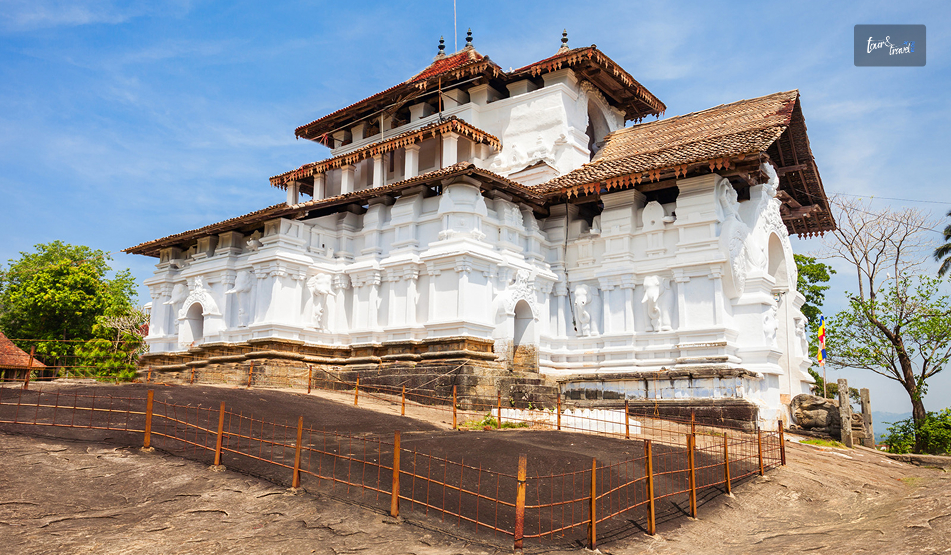
Lankathilaka Viharaya welcomed me with two towering walls on both sides of the path leading to the iconic Buddha statue.  

This clay-brick statue of Buddha has been lying headless for centuries now. It could be wear and tear or vandalism, leaving such a magnificent work of art destroyed.  

Luckily. I reached Lankathilaka Viharaya on a weekday morning, and it was before the tourist buses arrived. 

So, I enjoyed the calm ambiance of the image house and the other surrounding ruins in the complex.  

On the way to the image house, I noticed many ruins, including stupas and small pillars, which looked like they had been cut off at the top.  

Nevertheless, as I reached the image house, the main attraction of the site, this is what I saw.  

Lankathilaka Viharaya At A Glance 

Detail Fact 
Location Alahana Pirivena, Polonnaruwa ancient city, south of Kiri Vehera 
Builder King Parakramabahu I (1153–1186) 
Restored Under King Vijayabahu IV (inscription, 1270–1272) 
Type Gedige (vaulted) brick image house. It used to have five storeys. 
Height About 17 Meters The tallest entrance pillar is 17.7 Meters.  
Wall thickness About 4 Meters 
Headless Buddha statue Made of clay bricks The original height of the statue was around 12.5 meters.   
Time needed 30 to 45 minutes. 

My Walk Into The Nave

Lankathilaka Viharaya, Polonnaruwa: Inside Sri Lanka’s Largest Image House

Lankathilaka is in the northern monastic zone of Polonnaruwa. 

So, this time I reached it by bicycle from the main ticket office and museum. The rental charge was LKR 400 for a day.  

The Approach And The Twin Pillars 

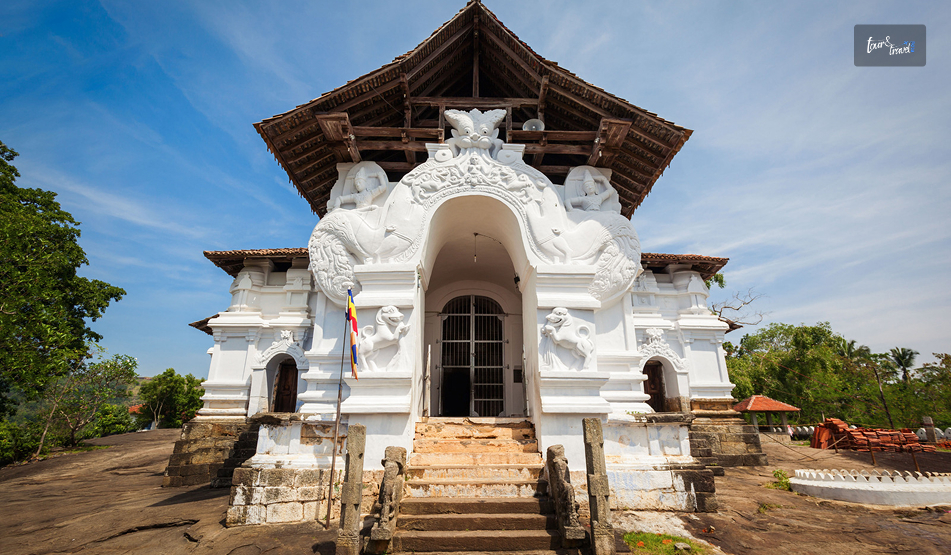
The brick pillars framing the entrance were enormous. The tallest pillar still has a height of around 17.7 meters.  

The carvings on the pillars were intricate. However, I could not decipher what those figures were.  

Inside The Headless Buddha’s Chamber 

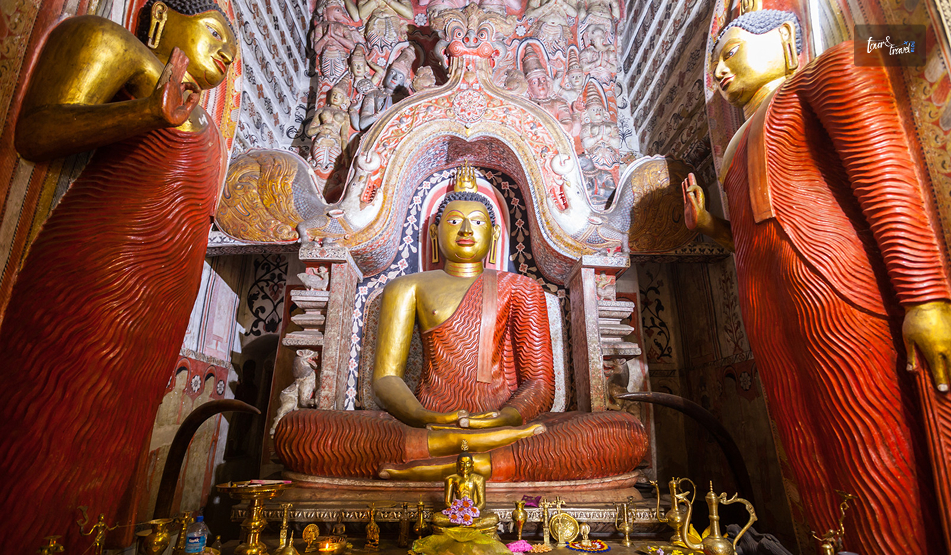
Barefoot on warm stone, I walked a narrow aisle between walls about 4 meters thick, and the standing Buddha appeared at the far end, cut off above the shoulders.  

The chamber does not have a roof. So, daylight completely bathes the statue and the chamber.  

Also, the image house has two stairways that lead to the entrance.  

Each step is around 4 inches in width and 1 foot in height. Furthermore, the steps run in an ascending order.  

So, you have to walk sideways on the steps, avoiding turning your back on the standing Buddha statue. Here, your back will stay against the wall.  

The Unique Architectural Style And Elements 

The image house has a Geḍi-ge architectural style, in which a semi-spherical or arched-shaped vaulted roof is the signature.  

Today, you cannot see the roof. However, the remains speak for the sophistication of the architecture.  

Furthermore, I saw the depiction of a Nagini on the balustrade here.  

Usually, we see a Naag, or male serpent, with guard stones and a moonstone at any temple entrance.  

So, the Nagini structure here is rare.  

Here, it is carved on the inner face of the balustrade near the entrance. It has equal hoods as the male counterpart carved on the opposite side.  

I am not sure about the interpretations. However, apparently, it looked like the equal role and power of the male and female serpents as guardians of the place.  

Light, Sound And Stillness 

I was standing halfway down the aisle.  

Standing there, I could only listen to my footsteps and distant birdsong. The walls were so thick that they muffled the noise of the outside world.  

This silence is what makes the place feel so devotional, even when the scorching rays of the sun reach the chamber and statue without any shelter.  

I stayed there for 1 hour, and along with the headless Buddha statue, the Nagini carvings stayed with me.  

I come from a land where the divine feminine and the divine masculine are one, and they are incomplete without each other.  

Did the Nagini carving opposite the Naag carving here also indicate the same? I am not sure, but I had this thought even after leaving Lankathilaka Viharaya.  

History: Why This Image House Exists

Lankathilaka Viharaya, Polonnaruwa: Inside Sri Lanka’s Largest Image House

Polonnaruwa was a royal capital from the 11th to 13th centuries. 

Also, King Parakramabahu I turned it into a city of monasteries, reservoirs, and shrines. 

Parakramabahu I And The Alahana Pirivena 

Lankathilaka was under the Alahana Pirivena monastery. 

Also, it is the largest image house of ancient Sri Lanka.  

Furthermore, it is one of three gedige shrines at Polonnaruwa, alongside Thuparama and Tivanka. 

The Vijayabahu IV Restoration 

An inscription records that Vijayabahu IV renovated it about a century later.  

These repairs changed a lot of the original architecture of the image house.  

Also, if you visit the National Museum in Colombo today, you will find dwarf-like stucco heads from Tivanka and Lankatilaka. 

From Abandoned Capital To World Heritage 

By the early 14th century, Polonnaruwa had been abandoned, and the jungle slowly covered its monuments until 19th-century excavations began.  

UNESCO listed the city in 1982.  

Walking the nave today, I found it hard to believe this shell sat under vegetation for centuries. 

How Lankathilaka Compares With Polonnaruwa’s Other Gedige Shrines

Lankathilaka Viharaya, Polonnaruwa: Inside Sri Lanka’s Largest Image House

Polonnaruwa has three vaulted image houses, and I visited all three in one day.  

Seeing them back to back showed me what makes Lankathilaka special with its sheer scale. 

Shrine What stands out 
Lankathilaka Walls about 17 meters high Colossal headless standing Buddha 
Thuparama Gedige Best-preserved early brick-and-stone temple, with a barrel-vaulted roof. 
Tivanka Image House Largest thrice-bent Buddha image, with surviving Jataka murals. 

If you only have time for one, I would choose Lankathilaka for drama and Tivanka for painted detail. 

Planning Your Visit 

Lankathilaka needs no separate ticket as the Polonnaruwa ancient city ticket covers all sites. 

Tickets And Timings 

Item Detail 
Foreign adult ticket US$25 
Site hours 7 am–6 pm daily 
CCF ticket counters 7 AM to 5 PM 
Online tickets Valid for 90 days 
Guide Charges LKR 2500-3000 for three to four hours.  

Pair It With Kiri Vehera And Gal Vihara 

Time Stop Notes 
7:30 AM Lankathilaka About 40 minutes 
8:20 AM Kiri Vehera About 30 minutes 
9:00 AM Gal Vihara About 45 minutes 

Is Lankathilaka Worth Visiting? 

Yes, Lankathilaka Viharaya is worth visiting. 

It is compact, and a ticket to this Vihara is included in the ancient city ticket.  

Furthermore, for photographers, it is a favorite spot because of the scale it offers. Bring a wide-angle lens or use the ultra-wide mode of your phone to capture the stupa perfectly.  

Also, if you are facing a shortage of time, visit Lankathilaka Viharaya on a combined trip to Gal Vihara. 

Share on Social Media

Sibashree is a travel, culture, and leisure writer who has been writing since the age of 12 and professionally since 2014. With more than a decade of travel writing experience and journeys across India and several parts of the world, she brings a deeply personal and thoughtful perspective to her work. A student of English Literature and Mass Communication, Sibashree has always viewed travel as more than movement — for her, it has been a way of understanding people, cultures, and herself. Her passion for spiritual exploration has also led her to many unusual and meaningful destinations over the years. Outside of writing, Sibashree enjoys watching European cinema, reading about global politics, and reflecting on the stories hidden within everyday places.

Leave a Reply

Your email address will not be published. Required fields are marked *

title-img Related

READ MORE Uppuveli Beach

Where Is Uppuveli Beach, Trincomalee? What Are The Best Things About The Beach?

BY  Sibashree Mar 24, 2026

After spending time in the northern city of Jaffna exploring everything it has to offer, I was looking forward to relaxing.  Jaffna has some beautiful temples, and despite being a slow travel destination, the rich Tamil culture and history offered a fulfilling experience.  However, I needed a place where I could relax and soak in the memories I have collected there. I intended to enjoy just those "beachy" times when I arrived at Trincomalee, and that is exactly what I found on the Uppuveli Beach.  This was the ultimate "holiday within my backpacking trip," and completely different from the beaches in Jaffna. Where Is The Uppuveli Beach? Uppuveli Beach is in Trincomalee. On the northeastern coast of Sri Lanka, it is further the epicenter if you are exploring the things to do in Trincomalee.  The distance between the Uppuveli Beach and the Trincomalee city center is just 6 kilometers. So, you can reach within a drive of just 15 minutes.  Moreover, it is famous for the beauty of the Bay of Bengal, and from here you can explore nearby attractions such as the Pigeon Island Marine National Park and Swami Rock. How To Reach Uppuveli Beach From Trincomalee? The Blue Bus Experience? You can travel from Jaffna to Trincomalee by bus like me. Trincomalee, anyway, is a major transport hub.  Furthermore, it is well-connected to Colombo, Kandy, and even Habarana, which is the major gateway to many other things to see in Sri Lanka, such as the Hurulu Eco Park, Sigiriya Rock, the Pidurangala Rock, and the Kaudulla National Park.  I reached Trincomalee from Jaffna by bus within 4 hours and 50 minutes. However, our driver, Ahoy, said that on days of dense traffic, it can take up to 5 hours and 30 minutes.  Travel From Jaffna To Trincomalee By Bus The blue buses from Jaffna to Trincomalee are the cheapest mode of transport. The ticket cost roughly 1100 LKR.  From Trincomalee To Uppuveli Beach  From the Trincomalee Bus Station, I took a tuk-tuk to the Uppuveli Beach. The tuk-tuk driver charged me 500 LKR.  The Experience At Uppuveli Beach  Uppuveli Beach is the place that offers you simplicity, and here, you will forget keeping track of your time.  You can swim, sunbathe, or just soak in the beauty of the golden hour, or just soak in the beauty of golden hour or count the waves like me.  The Golden Hour See a sunset on the beach while it’s still dark out.  Uppuveli faces the east, and it offers an amazing view of the Bay of Bengal when the sun rises.  The sky looks like it’s on fire with shades of pink and gold lighting up the clouds.  The Waves The waves were huge when I was there in July. The waves here rise really high above your head and can definitely knock you over if you don’t pay attention to them when swimming.  If you can catch the waves just right, they are also great for body surfing. As always, be respectful of the Indian Ocean.  What Are The Things To Do At Uppuveli Beach? Uppuveli offers a serene alternative to the more crowded southern beaches.  Boasting breathtaking turquoise waters and palm trees swaying in harmony with one another, Uppuveli is a welcoming community that exudes a sense of calm. 1. Marine Adventures At Pigeon Island Marine National Park The number one attraction in Uppuveli is Pigeon Island Marine National Park.  A 20-minute boat ride from the beach will take you to Pigeon Island, a protected sanctuary surrounded by colorful and lively coral reefs.  Pigeon Island is famous as one of the three places in the world where you can see black-tip reef sharks and giant sea turtles in the shallow waters (up to 12 feet).  You may also dive deeper by visiting several local dive shops that operate daily excursions to the Uppuveli Pinnacles and the famous shipwrecks in and around Uppuveli.  Local dive shops also provide excursions between March and September to boat watch for blue whales and pods of spinning dolphins. 2. Visit The Cultural Landmarks Of Swami Rock You may take a short tuk-tuk ride to the Swami Rock Temple located in Trincomalee town.  Swami Rock is perched on a cliff and provides some of the best views of the ocean as you look towards the Koneswaram Hindu Temple, which is located in the middle of the cliff and overlooks Trincomalee Harbor. The temple is dedicated to Shiva and is a great example of intricate Dravidian-style architecture.  In addition to the temple at Swami Rock, you will also see Lover’s Leap, which is nearby and steeped in local folklore. 3. Visit Fort Frederick And Find Spotted Deer On your way to the Koneswaram Temple, be sure to visit Fort Frederick. It is a 17th-century fortress built by the Portuguese.  Fort Frederick today is a peaceful area. It has many spotted deer, and you can see them roaming freely between colonial buildings and massive banyan trees. 4. Kanniya Hot Water Springs For something unique, head inland to the Kanniya Hot Water Springs.  There are seven stone wells here, each producing water at a slightly different temperature.  It’s a traditional site for ritual bathing. Also, people believe that water here has healing properties. Moreover, at Uppuveli Beach, you can have the best dining and drinking experience thanks to places such as Fernando’s Bar, Rice 'n' Curry, and Cafe on the 18th. Also, you will find Wanderers Hostel and other budget-friendly places to stay near the Uppuveli Beach.  When Is The Best Time To Visit Uppuveli Beach?  The best time to visit Uppuveli Beach is between February and August, and July is the peak month.  From August, the ocean starts getting a little rougher.  Moreover, as I have mentioned, it is best to hit the beach when it is still dark. Thus, you can enjoy the magic of the sunrise.  Also, if you want a drink by the sea, 3:30 PM to 4 PM will be the best. As you gulp down some cold Lion Lager, the Sun prepares to go to rest for the day.
READ MORE things to do in arugam bay

What Are The Things To Do In Arugam Bay? Know Why A Visit To Arugam Bay Is Worth It

BY  Sibashree May 29, 2026

Golden sands, world-class surf breaks, and a distinct bohemian charm!  All these make Arugam Bay, another southeastern coastal gem of Sri Lanka, stand out.  This sleepy fishing village wakes up with the swelling of the ocean. Also, the destination creates an expert balance between a high-energy aquatic sports culture and a deeply relaxing and off-the-beaten-path atmosphere.  You can even be an experienced longboarder ready to ride an iconic right-hand point break. You are also an enthusiast of slow travel, looking to explore ancient temples in the jungle or pristine national parks.  Arugam Bay offers an unforgettable tropical escape for all types of travelers.  Moreover, since Arugam Bay is not as busy as the traditional central southwestern travel loop of Sri Lanka, it still has a raw and authentic identity.  So, in this article, I will discuss the things to do in Arugam Bay and my experience there.  What Are The Things To Do In Arugam Bay?  Arugam Bay is not the usual idyllic coastal getaway you are looking for.  It is an adventure hub for surfers of all skill levels. Also, you can climb Elephant Rock and hike to the Ancient Kudumbigala Monastery. So, it is a versatile destination for backpackers, solo travelers, and families.  1. Learn To Surf The Legendary East Coast Waves  The local coastline is home to a happening surf community, and the dotting crescent bays offer optimal wave conditions for every tier of experience.  Moreover, as I walked through the main street, I found an abundance of surf shops offering professional instruction and gear rental.  Surfing For Beginners At Arugam Bay  If you are a beginner, you have to stick to the main crescent of Arugam Bay Beach.  Furthermore, the sandy bottom here is incredibly forgiving. So, if you are a beginner, you can pay 2,000 to 3,500 LKR to a local instructor for a 1.5-hour lesson.    Moreover, the board rentals are highly economical, and you have to pay around 400 to 800 LKR for a board rental for a day.  If You Are An Intermediate Or Advanced Surfer  You can take a short tuk-tuk ride north to Pottuvil Point or Whiskey Point.  Furthermore, if you are seeking maximum power, you must visit the Main Point or venture south to the secluded A-frame waves at Peanut Frame.  2. Relaxing At Arugam Bay Beach The central beachfront of Arugam Bay is one of the most beautiful shorelines in Sri Lanka.  The golden sand and leaning coconut palms welcome you to relax at the end of a multi-day itinerary.  Enjoy a fresh king coconut, lay out a towel, or rent a dedicated sunbed from popular beachside establishments like Friends Indeed or the Upali Beach Resort. Moreover, you can enjoy a refreshing swim. Also, if you don’t want to navigate around surfboard traffic, you can walk to the right-hand side of the bay. 3. Watching The Sunset From Elephant Rock  Elephant Rock is the best location to watch the sunset in Arugam Bay. I just took a short drive for 20 minutes from the town to reach this massive natural rock formation.  This rock formation stands at the end of the unpaved track where the jungle meets the sea.  The Climb  After reaching the trail, I had to take a steep 10-minute walk to reach the top of the Elephant Rock.  From the top of the rock, you will enjoy a 360-degree view of the wild coastline and watch surfers in action. Wildlife Precautions  At the base of the rock, there is a tidal lagoon, and it is a known habitat of wild crocodiles.  So, you must not wade into this water.  Moreover, elephants roam through this corridor during twilight frequently. So, you must come down from the rock and leave the place before darkness.  Cost  A tuk-tuk ride from Elephant Rock to Arugam Bay costs between LKR 800 and 1000. 4. Hiking To The Ancient Kudumbigala Monastery  The Kudumbigala Monastery is located at a distance of around 30 kilometers from Arugam Bay. This monastery was built in 246 BC during the reign of King Devanampiyatissa. This was a sweeping rock monastery, which was a sanctuary for the Buddhist monks who wanted to retreat from urban centers.  The site is expansive, and here, you will see around 200 ancient caves beneath monolithic boulders.  I trekked up a series of carved stone stairs through dense jungle canopy to reach the summit.  There stands the Belumgala Stupa, the only surviving cylindrical stupa of Sri Lanka. Moreover, from here, you can enjoy an uninterrupted view of the Kumana National Park's emerald forests extending all the way to the Indian Ocean. However, this area is a wild animal migration path. So, you have to exercise caution or hire an experienced local driver while exploring the area.  5. Wilderness Safari In Kumana National Park If you are done exploring the southwestern reserves, you can head to Yala East or the Kumana National Park.  Very close to the south of Arugam Bay, it offers an intimate environment for a wilderness safari as it receives a low volume of tourist jeeps.  Furthermore, this national park stands out as the sanctuary of many migratory birds, which mostly visit between April and July.  Also, take a usual 3-hour drive in the morning or afternoon. You will spot wild Sri Lankan elephants roaming the marshes, mugger crocodiles, wild boars, and golden jackals. Also, if fortune favors you, an elusive leopard.  Moreover, the national park remains open from 6 AM to 6 PM. So, you can easily arrange private 4x4 game drives. Choose experienced local services like Arugambay Agenda or Budget Arugam Bay Tours & Safari on the main strip. 6. Marveling At The Seaside Muhudu Maha Viharaya Stupa The Muhudu Maha Viharaya is amidst the sand dunes of Pottuvil Beach. It is a fascinating historic site, and it is known as the “Temple of the Ocean.”  Moreover, the history of the stupa goes back 2000 years, and this peaceful white stupa has many statues. 7. A Peaceful Pottuvil Lagoon Safari  If you want a non-motorized, tranquil experience, you must take a boat ride through the Pottuvil Lagoon's mangroves, operated by local fishermen. Moreover, this is an amazing activity to spot wildlife such as elephants, water buffalo, and monitor lizards up close.  You must join a local community-based tour of 2 hours here. The tour will cost 2,000 LKR ($6 USD) per person. Read Also: What Are The Places To Visit In Matara? A Southern Sri Lankan Commercial Hub With Dutch Colonial Heritage What Are The Best Places To See In The Sacred City Of Anuradhapura, Sri Lanka? Why Is Habarana Beyond Just A Gateway To The Cultural Triangle Of Sri Lanka?

READ MORE things to do in nara

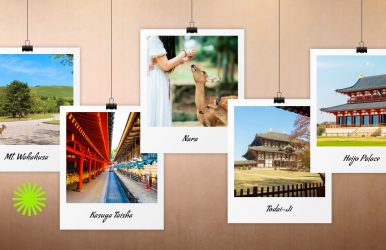
What Are The Things To Do In Nara? How To Plan A Two-Day Trip?

BY  Sibashree Mar 31, 2026

A trip to Nara was long overdue, and as the first permanent capital of the country, it is a must-visit.  Furthermore, this Japanese capital, before 794 AD (then Kyoto became the capital), has many UNESCO World Heritage Sites.  The Todai-ji Temple is the most famous among these 8 UNESCO World Heritage Sites. You will find one of the largest Buddha statues in the country here, and the statue is made of bronze.  Of course, the deer roaming in the city are beautiful, and you feel like getting transported to a bygone era.  It reminded me of one of the most famous literary works in our country, Shakuntalam Abhigyan, an immortal love story between King Dushyanta and Shakuntala, written by Kalidasa in Sanskrit.  Also, this is a place that will ask you to come back, and most people plan a day trip to experience its historical charm and natural beauty.  But, smitten by its beauty, I chose a 2-day trip, and here is the list of things to do in Nara. Also, I will discuss how I can get to Nara.  How To Reach Nara?  Nara is easily accessible from Kyoto, which is also famous for its history and cherry blossom season.  You can also visit Nara from the Osaka prefecture. So, overall, a visit to Nara can fit well into your itinerary of visiting the Kansai region of Japan.   Also, the robust railway system of Japan makes it easy and budget-friendly to visit Nara. A Japan Railway Regional Pass will be the best for traveling across Nara, Kyoto, Osaka, and Kobe, and the entire Kansai Region.  Also, when in Osaka, don’t forget to explore the street food stalls and have the best Osaka food, including Mochis and seafood delicacies.  Here is how you can travel from Kyoto to Nara. 1. Traveling From Kyoto To Nara Through The JR Nara Line You will get an express train or a local train from Kyoto to Nara every hour.  Furthermore, if you opt for the Miyakoji Rapid Service on this line, you will reach Nara within 45 minutes, and the ticket price will be 720 JPY.  Also, the local train services, with the same ticket price, will take about 70 minutes.  Once you reach the JR Nara station, you will get buses to the Nara Park and other top attractions in Nara.  2. Take The Kintetsu Railway To Reach Nara From Kyoto This is the most convenient way to reach Nara from Kintetsu Railway Station.  The train journey is the fastest, and the journey takes about 35 minutes by the express trains, and the ticket price is 1280 JPY.  Also, the regular trains take about 45 minutes to complete the journey. The ticket price is 760 JPY.  3. How To Reach Nara From Osaka The introduction mentions Osaka as an alternative base for a Nara trip, but the route details that follow only cover getting there from Kyoto.  Since a fair number of travelers base themselves in Osaka instead, here is how that leg compares. 4. JR Yamatoji Line vs. Kintetsu Nara Line RouteDeparture StationDurationTicket PriceJR Yamatoji Line (Rapid Service)JR Namba or Osaka StationAbout 45-50 minutes570 JPYKintetsu Nara Line (Limited Express)Kintetsu Namba StationAbout 35 minutes1,150 JPYKintetsu Nara Line (Regular/Rapid)Kintetsu Namba StationAbout 40-45 minutes680 JPY The Kintetsu Nara Line is the faster and more direct option from central Osaka.  It will drop you at Kintetsu-Nara Station, which sits closer to Nara Park than the JR station does.  If you are holding a Japan Rail Pass or a Kansai-wide JR pass, the Yamatoji Line is the better value even though the ride takes slightly longer.  Either way, both routes run frequently enough that there's no need to book ahead outside of major holidays. What Are The Things To Do In Nara?  From a visit to the Nara Park to exploring Heijo Palace and the temples, there are many things to do in Nara.  Here are the things I did during my 2-day stay.  1. Day 1 In Nara: Exploring The Nara Park  With deer passing by, Nara Park, the home to the main attractions in Nara, is a place you cannot simply miss.  The park is free to enter, and it remains open for 24 hours.  However, many attractions in the park close after 5 PM. So, you have to be early when visiting it.  Also, here are the attractions you will come across in the Nara Park, along with the deer passing by.  Recently, the number of deer in the park has gone up to a record high. However, the tourists bringing unapproved food for the deer remain a concern during Nara Park visits.  You can only feed them shika senbei, the approved crackers for deer. Also, these adorable creatures are revered as sacred. So, you have to be respectful in your behavior.  • Kasuga Taisha One of the UNESCO World Heritage Sites in Nara, Kasuga Taisha, takes us back to the Nara Period from 710 to 794 AD.  It is the most revered shrine among the Fujiwara clan as the tutelary shrine.  Furthermore, the main attraction of the shrine is the “Hall of Lanterns.” There, I saw many bronze lanterns illuminating the darkness.  During the special festivals, Setsubun Mantoro in February and Chugen Mantoro in August, all these lanterns are lit.  Moreover, you will find a cider tree in the inner shrine, and it is 1000 years old.  • Mt. Wakakusa I took the back road from Kasuga Taisha on the way to the Todai-Ji temple.  I came across many small shrines there. However, the highlight was Mt. Wakakusa.  This hill between the two shrines has a height of 350 meters. Also, on the 4th Saturday of January, it becomes the venue for the Wakakusa Yamayaki celebration.  People burn dead grass on the slopes, and this is a ritual that has been celebrated since the 18th century.  • Todai-Ji Todai-Ji is another UNESCO World Heritage Site, and one of the “Historic Monuments of Ancient Nara.” It was built in 752 AD, and it was the head of all the temples in the province. It even had a strong influence on the royal family.  In fact, with Todai-Ji being the seat of control even in the royal decisions, the emperor decided to move the capital to Nagaoka in 784 AD.  However, the main attraction of the Todai-Ji Temple is the massive Buddha statue, or Daibutsu.   A depiction of Dainichi Nyorai,  it represents the primordial Buddha in the orthodox East Asian Buddhist philosophy.  You will also find two similarly sized Bodhisattva statues here.  However, the temple and statues you see today were burned down, and they were rebuilt during the Edo period (1603–1868).  2. Things To Do In Nara: Day 2 I visited the Heijo Palace and many other temples of Nara on day 2.  • Visiting The Heijo Palace  When Nara was the capital, the Heijo Palace was the seat of power for the chrysanthemum throne.  It had a dimension of 1 kilometer, considering the other palaces and architecture of that time.  However, the remains of this UNESCO World Heritage Site in Nara are now at the Toshodai-ji Temple, nearby.  However, since the 1950s, archaeologists have been studying the remains of the Heijo Palace, and this has evoked further public interest.  That is why you can now see many placards there and read about the history and legacy of the site.  Moreover, the audience hall and two other parts of the palace were rebuilt. The restoration of the largest part, the audience hall, happened in 2010.  It was an ode to the 1300th anniversary of Nara as the capital of Japan.  • Toshodai-Ji As I have mentioned, the Toshodai-ji Temple has the remains of the Heijo Palace.  This temple dates back at least a millennium. Ganji, a Chinese monk, built this temple in 759 AD.  Monk Ganji brought Buddhism to Japan, and the Toshodai-Ji today is a UNESCO World Heritage Site.  • Yakushi-Ji It is a UNESCO World Heritage Site, and people here worship Lord Buddha as Yakushi Nyorai or the Medicine Buddha.  The dual main halls here have unique architecture, and each has a dedicated 3-story pagoda.  • Horyu-ji  Horyu-Ji is older than most temples in the Nara region, and Prince Shotoku founded it in 607.  Furthermore, this UNESCO World Heritage Site stands out with its wooden edifices, which are some of the oldest in Japan. This time, I missed many attractions such as Asuka, Omiwa Shrine, and Mount Yoshino. Some day for sure!  And till then, Sayōnara, guys! Also, if you can extend your trip, you can plan a visit to the Archaeological Institute of Kashihara.  It is around 24 km from Nara, and this museum in Kashihara City showcases the evolution of Japanese Civilization.  Here, you will find exhibits from the Jomon, Yayoi, and Muromachi periods. In addition, there have been sites of major excavations, such as the Takamatsuka Tomb. These sites are beyond the repositories of the country's history. They also help to connect to the spiritual heritage of the country.