
Wasgamuwa National Park: My Search For Sri Lanka’s Quietest Elephant Safari

Before I reached the Wasgamuwa National Park, I had already completed the classic Sri Lankan safari.  

In Yala National Park, the jeeps were queued, and when a leopard was spotted, all the vehicles were boxed around it.  

The chaos was such that I almost forgot I was in the wilderness.  

However, Wasgamuwa was the antidote I did not know I needed. 

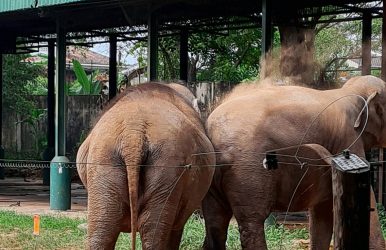
Our jeep drove in through the Handungamuwa entrance on a grey, humid morning, half-expecting another crowded circuit, and instead spent four hours without seeing another jeep.  

That is Wasgamuwa’s whole pitch! 

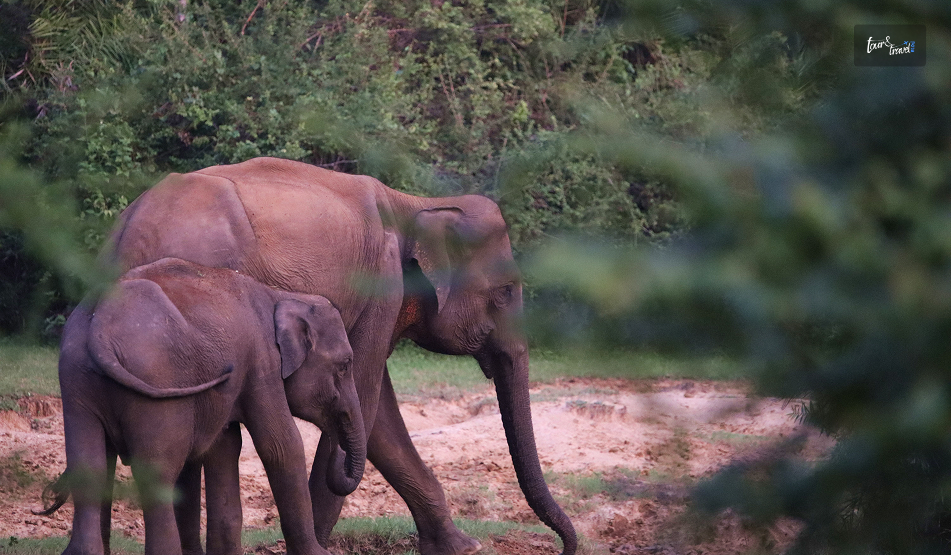
You will find the same elephants, sloth bears, and dry-zone forest you would find in  Sri Lanka’s headline parks, minus the traffic jam. 

Quick Facts: Wasgamuwa National Park 

Detail Information 
 Location Matale and Polonnaruwa Districts, Central/North Central Sri Lanka  
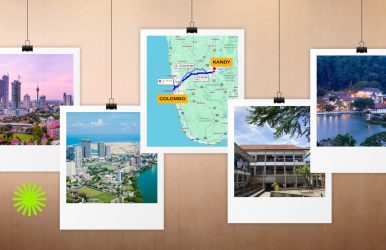
 Distance from Colombo   225 km (via Kandy–Hasalaka–Wilgamuwa Route) 
 Area   37,062 Hectares 
 Declared   7 August 1984 (Strict Nature Reserve since 1938) 
 Main Entrances   Handungamuwa Gate Kalundawa Gate  
Park Hours  6:00 AM to 6:00 PM Daily 
Ticket Counter Hours  6:00 AM to 4:00 PM 
Known for Wild Elephant Herds Sri Lanka’s Densest Sloth Bear Population  
Nearest Towns  Polonnaruwa (10 Km) Hasalaka Wilgamuwa  

How To Reach The Wasgamuwa National Park?

Wasgamuwa National Park: My Search For Sri Lanka’s Quietest Elephant Safari

The location of Wasgamuwa National Park is a little reclusive, for lack of a better word.  

It is neither part of the hill country nor is it included in the cultural triangle. So, often, it is left out of usual Sri Lanka trip itineraries.  

However, this national park is accessible from Colombo, Kandy, Sigiriya, Dambulla and Polonnaruwa.  

So, you can plan a cultural trip combined with a wildlife experience by including the Wasgamuwa National Park in your bucket list.  

From Colombo 

The most straightforward route runs via Kandy on the A1, then the A26 towards Mahiyangana.  

At Hasalaka, you turn off onto the Wilgamuwa road and follow it through to the park.  

Budget five to six hours for the roughly 225 km drive, longer if you get stuck in Kandy’s town traffic, which you almost certainly will around midday. 

From Kandy, Sigiriya, And Dambulla 

If you are already based in the Cultural Triangle, Wasgamuwa is a far more manageable side trip. 

From Kandy, it is about 50 km northeast via Hasalaka and Wilgamuwa. So, it is just around a 90-minute drive from the Colombo slog.  

On the other hand, Sigiriya Rock and the Dambulla Royal Cave Temple are around two hours away by road, and the route passes through Naula and Elahera.  

So, as I did, you can tack a Wasgamuwa morning safari onto a Sigiriya stay rather than treating it as its own base. 

The Expenses 

A private car rental or taxi fare from Colombo to the Wasgamuwa National Park will cost you LKR 15000 onward.  

So, the best option is to travel from Colombo to Kandy, stay there, and travel to the Wasgamuwa National Park from there.  

To know more details about how to travel from Colombo to Kandy, you can check my guide.  

From Sigiriya or the Dambulla Royal Cave, a public vehicle to this national park will cost you around LKR 10000.  

From Polonnaruwa 

Polonnaruwa is the closest major town, just 10 km from the park’s northern boundary. 

The  Wilgamuwa “Japan Bridge” gives easy access from the Mahaweli System C area. 

Despite the short distance, the taxi fare from Polonnaruwa to Wasgamuwa is quite high. It will be around LKR 7000.  

Also, for the jeep safari inside the national park, the cost will be around LKR 7500 to LKR 10000.  

Entrance Fees And Permits 

 Category   Approximate Cost (2026)  
 Foreign Adult (12+)   USD 12 
 Foreign Child (6–12 Years)   USD 6 
 Foreign Children under 6 Years    Free 
 SAARC Nationals USD 10 for Adults USD 5 for Children between 6 and 12 Years Free for Children below 6 Years   
 Locals   Adults: LKR 60 Children from 6 to 12 Years: LKR 30 Children below 6 Years: Free Students: LKR 20  
 Vehicle Entry Ticket   LKR 300  
 Foreign Group Fee Per Vehicle   USD 10 

What Is The Best Time To Visit Wasgamuwa National Park?

Wasgamuwa National Park: My Search For Sri Lanka’s Quietest Elephant Safari

You will have to decide the best time to visit the park based on the kind of experience you want.  

For Elephant Herds  

Wasgamuwa has a different timing for spotting the elephants than Minneriya.  

During the dry months (roughly June to September), much of Wasgamuwa’s elephant population actually migrates north toward Minneriya and Kaudulla in search of water, which is where you will find those spectacular 200-strong herds.  

So, if you want to spot the elephants, November to May is when more of them stay resident within Wasgamuwa itself, following the Mahaweli River corridor that forms the park’s eastern boundary. 

Weather And General Visiting 

The dry season from June to September offers comfortable safari conditions. 

The thinner vegetation makes it easy to spot sloth bears and leopards.  

October to January brings the northeast monsoon, when the park can turn muddy, and some interior tracks become difficult to navigate. 

What To See Inside The Park?

Wasgamuwa National Park: My Search For Sri Lanka’s Quietest Elephant Safari

The park offers the most wonderful fusion of wildlife and history.  

Wildlife 

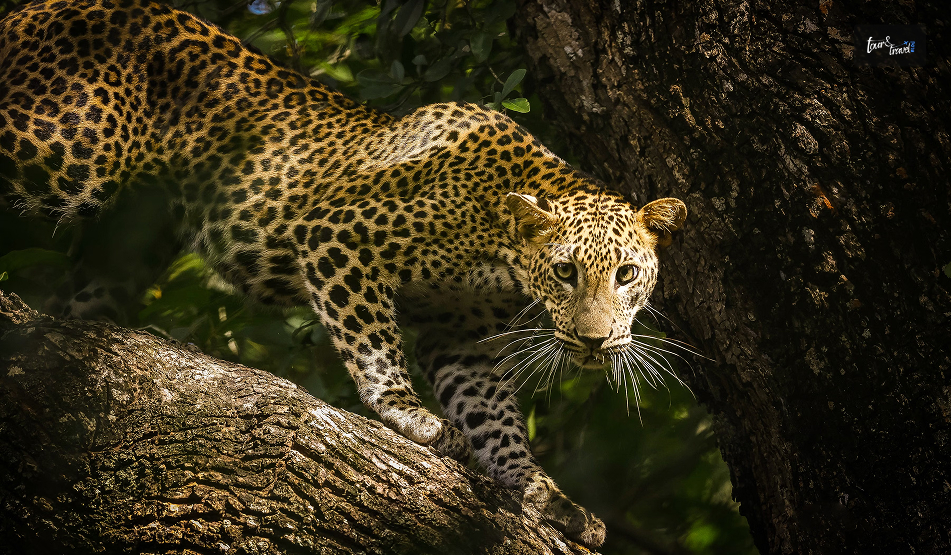
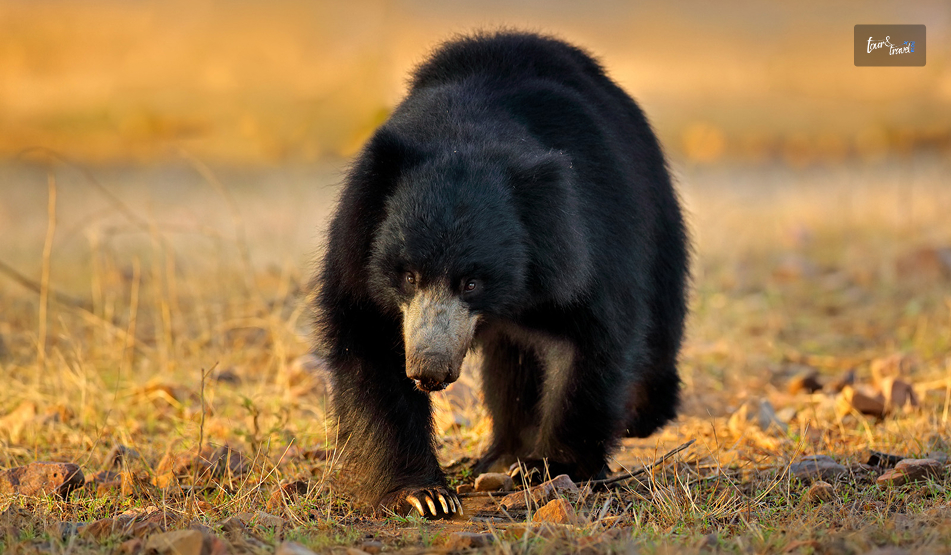
Wasgamuwa gets all the hype for its elephants. However, it also has sloth bears and leopards. 

In fact, many surveys suggest that sloth bear density in this park is highest in Sri Lanka.  

Also, some accounts suggest the park’s own name derives from “walas” (sloth bear) and “gamuwa” (wood). So, it is literally the forest of the sloth bears.  

Along with these three, you can even spot purple-faced langurs, wild boar, sambar, spotted deer, and water buffalo here. 

Moreover,  in the park’s pools and waterways reside water monitors, mugger and estuarine crocodiles, and pythons.  

Birdlife is understated but real.  I counted painted storks, white ibis, and several raptors circling over the grasslands in a single morning. 

Ancient Ruins Within The Park 

Long before it was a protected area, this land carried Anuradhapura- and Polonnaruwa-era settlement. 

I saw dagobas, an ancient canal system, and reservoir remains scattered through the jungle, well away from the standard vehicle tracks. 

Moreover, the area between the park and the Mahaweli River has a link to a battlefield from the Dutugemunu–Elara conflict of the 2nd century BCE. 

However, I could not visit most of the sites because I did not have the required special permission. Also, these are not part of the regular safari visits.  

Safari Timings And Practicalities 

Feature Half-Day Morning Half-Day Evening Full-Day Safari 
Timing 5:30 AM – 6:30 AM Start 2:30 PM / 3:00 PM – 6:00 PM Full day (split by picnic break) 
Duration 3 – 4 hours 3 – 4 hours All day 
Coverage Area Main tracks near Handungamuwa Gate Main tracks near Handungamuwa Gate Mahaweli riverbank sections 
Jeep Cost (LKR) 7,500 – 10,000 7,500 – 10,000 15,000 – 20,000 
Wildlife Focus General park wildlife General park wildlife Reliable elephant sightings 
Hotel Pickup 30–60 mins early (if less than 5 km from gate) Varies by hotel proximity 30–60 mins early (if less than 5 km from gate) 

A Sample One-Day Wasgamuwa Itinerary 

 Time   Activity 
 5:00 AM   Depart accommodation (Kandy base) 
 6:00–6:30 AM   Arrive at Handungamuwa Gate, complete entry formalities 
 6:30–10:00 AM   Morning Safari including Riverine Forest and Grassland Tracks 
 10:00–10:30 AM   Picnic/Tea Break Near Mahaweli Riverbank 
 10:30–11:30 AM   Continue Safari toward Interior Water Holes 
 11:30 AM   Exit Park and Return to Base 
 3:00–6:00 PM   Evening Safari Session with a Separate Entry 

Wasgamuwa does not have the wall-to-wall wildlife density of Yala or the spectacle of Minneriya’s Gathering.  

However, you will get a quiet forest to explore for several hours. Also, the elephants and sloth bears here are never performing for the tourists or camera lenses.  

So, I would pair it with a Cultural Triangle any day for the best value safari experience in the country. 

Share on Social Media

Sibashree is a travel, culture, and leisure writer who has been writing since the age of 12 and professionally since 2014. With more than a decade of travel writing experience and journeys across India and several parts of the world, she brings a deeply personal and thoughtful perspective to her work. A student of English Literature and Mass Communication, Sibashree has always viewed travel as more than movement — for her, it has been a way of understanding people, cultures, and herself. Her passion for spiritual exploration has also led her to many unusual and meaningful destinations over the years. Outside of writing, Sibashree enjoys watching European cinema, reading about global politics, and reflecting on the stories hidden within everyday places.

Leave a Reply

Your email address will not be published. Required fields are marked *

title-img Related

READ MORE how to get from colombo to galle

How To Get From Colombo To Galle: Know The Best Options For Traveling The Distance 

BY  Sibashree Jun 6, 2026

The historical Galle Fort, a UNESCO World Heritage Site, is going to play an important role in the tourism growth of Sri Lanka in 2026.  Its colonial-era landmarks, such as the Groote Kerk, the Dutch reformed church or the Galle Clock Tower, the living heritage, and the rich maritime history make Galle Fort such a prominent landmark in the landscape of cultural tourism in Sri Lanka.  It is also easily accessible from the Bandaranaike International Airport in Colombo, at a distance of around 153 km.  Various bus routes between Colombo and Galle, and the train connectivity ensure a smooth journey.  Here are more details about how to get from Colombo to Galle.  How To Get From Colombo To Galle? Know The Transport Options The best way to get from Colombo to Galle is to enjoy a scenic train ride. However, if you miss the train, you can also opt for a local bus ride.  Also, if the budget is not a constraint, you can book a ride from a ride-hailing app or book a cab to travel the distance by road.  Here, I will decode the train, bus, and private transfer journeys along with details such as the travel duration, ticket pricing, and amenities.  Moreover, the journeys in buses and local trains offer distinct cultural experiences, as I have mentioned in my Kandy to Ella train journey blog.  1. How To Get From Colombo To Galle By Train?  To get from Colombo to Galle, you can plan a coastal train ride.  Here, the railway track runs along the palm-fringed coasts for most of the journey.  Moreover, the ocean waters here will crash just meters away from your open window.  So, overall, it is, in no way, a mundane commute experience. You are going to have an experience of a lifetime.  You can have a look at the table below to know about the train timings. (Source: Sri Lanka Railways).  Departure From Colombo FortAvailableArrival In Galle 6:17 AM Saturdays, Sundays, and Holidays 8:32 AM6:50 AMEveryday9:29 AM8:35 AMEveryday10:49 AM10:30 AMEveryday12:49 PM2:40 PMEveryday4:57 PM3:50 PMEveryday5:57 PM4:47 PMEveryday7:04 PM5:32 PMMonday to Friday (Except Holidays)8:25 PM5:31 PMSaturdays, Sundays, and Holidays 8:05 PM5:51 PMEveryday9:29 PM6:16 PMExcept Saturdays and Sundays8:40 PM7:30 PMEveryday11:10 PM The trains have second-class and third-class sections.  The ticket price for the second-class commute is LKR 500, and for the third-class commute it is LKR 240.  How To Book The Tickets To Get From Colombo To Galle By Train?  You can book the ticket from Colombo to Galle online (reserved) or offline (unreserved).  If you are traveling between December and April, it is the peak season for a trip to Sri Lanka. So, you must book the tickets at least 32 days in advance from the Sri Lanka Railways online seat reservation portal.  However, in the off-season, you will get the tickets a few days before.  In addition, you can book a train ticket from the local counter at the Colombo Fort Railway Station.   2. The Colombo To Galle Express Bus: Speed And Comfort If you want a more comfortable journey to get from Colombo to Galle without spending much money, you can try the bus routes.  Express Highway Bus (EX01) Duration: 2 hours to 2.5 hours Route The bus travels through the Southern Expressway (E01).  Moreover, if you choose this route, you will be able to bypass every coastal traffic, and you will reach faster than the coastal route buses. Traveling Experience The buses are usually fast and relatively smooth.  Additionally, the buses are very comfortable, usually air-conditioned, and have comfortable cushioned seats.  Moreover, the journey through this route is through the highway, which means that you will not be able to see any ocean views. Where To Catch The Bus From These buses depart from the Makumbura Multimodal Center or the Colombo Bastian Mawatha Bus Terminal.  Additionally, these buses are frequent you will be able to catch a bus every 20 minutes to 30 minutes. Coastal Route Bus (Route 02) Duration: 3 hours to 4 hours Route Buses of this route pass through the coastline, giving you an amazing coastal view.  These buses pass through some magnificent towns like Mount Lavinia, Wadduwa, and Hikkaduwa, which enhance the beauty of the journey. Traveling These buses will provide you with an authentic and local Sri Lankan ride.  Sometimes the ride can also be chaotic but enjoyable. Moreover, if you choose these buses, be prepared for a bold and rapid ride.  These bus rides are often characterized by a stop-and-go rhythm because of their sudden bursts of speed.  Furthermore, these bus rides are enjoyable with loud, crowded, and vibrant locals hopping on and off, and street vendors selling snacks.  Finally, the most amazing part of this bus ride is the spectacular views of coconut palms and the Indian Ocean. You can also jump off and go around the beach towns along the way. Where To Catch The Bus From  You can catch these buses from the Central Bus Stand near the Colombo Fort Railway Station. Some Tips For Your Ride Here are some other details you need to know if you want to get from Colombo to Galle.  Ticket Prices These buses are very affordable. The ticket prices depend on whether you take a local non-AC bus or an AC highway bus. The ticket prices usually range between LKR 300 and LKR 1000. Luggage You usually won't find a cargo hold on coastal buses. In such situations, you will need to keep your backpack on your lap or squeeze it into overhead racks. Music And Noise If you have never been on a Sri Lankan bus, this is going to be a light-and-sound journey for you.  Public buses in Sri Lanka are known for their lively atmosphere, featuring Sri Lankan pop music and colorful interiors, which you can enjoy throughout the journey. Private Transfers And Taxis: Seamless Door-To-Door Service Suppose you are traveling with family or small children.  Or, if you are part of a group where everyone is carrying heavy luggage, you can choose a private transfer.  Also, a private transfer can be of two types.  Taking A Private Taxi  A private taxi will pick you up from the Bandaranaike International Airport or your hotel in Colombo and drop you off outside your accommodation inside the Galle Fort ramparts.  You will enjoy the ride through the Southern Expressway.  A private taxi ride on this route will take between 1.5 and 2 hours.  However, the charges will be really high as a standard sedan will cost between LKR 15000 and 20000.  Using Ride-Hailing Apps If you are traveling to Sri Lanka for the first time, you can avoid negotiating with unpredictable street drivers.  You can book a cab using local ride-hailing apps such as PickMe. It is the premier local Sri Lankan ride-hailing platform. Furthermore, you can also use Uber to operate reliably and extensively throughout the Colombo metropolitan area.  The price range for these cabs from Colombo Fort to Galle is between LKR 8000 and 12000.

READ MORE ella hotels

What Are The Best Ella Hotels? Where Can You Stay In Ella? 

BY  Sibashree Mar 31, 2026

From enjoying a train ride on the Nine Arch Bridge to Ella Rock, Ella has endless adventures to offer.  Exploring the things to do in Ella is also easier as the Ella Hotels offer the most comfortable and safe accommodations.  As a backpacker, I chose to stay in a hostel on my first visit. However, you can find many budget, mid-range, and luxury hotels in this beautiful hill country town.  So, here is a list of the best hotels to stay in Ella.  What Are The Best Ella Hotels?  I have divided the best Ella hotels into three different categories. So, you will find a good mix of luxury hotels, mid-range hotels, and budget hotels. Furthermore, I have also included the hostels and the eco-stays here.  And here are the details.  1. Luxury Ella Hotels There's a quiet magic when birds sing in the morning, and mist hangs on the tea bushes.  Moreover, Ella has upgraded its luxury offerings, blending colonial roots with modern sustainable design. • Nine Skies: Colonial Elegance Just outside Ella in Demodara, Nine Skies is a five-bedroom tea bungalow restored from old stock.  Furthermore, it sits like a piece of the English Lake District transplanted into the tropics.  Also, you begin your day with a Sri Lankan breakfast and then swim in an infinity pool that stretches over endless tea fields.  Moreover, the lifestyle is classic tea country, wrapped in a dream-like hotel setting. • 98 Acres Resort And Spa: Eco-Luxury Overlooking Little Adam's Peak, 98 Acres stands out as the region's top hotel.  Furthermore, the chalets use upcycled railway sleepers and local granite, with genuine, hands-on design.  Moreover, their spa features treatments with herbs grown on-site. Just a 15-minute walk from the Nine Arch Bridge, it's ideal for morning shots.  So, what else is there to say about this place? • Hide Ella: Modern Panoramic Views Hide Ella sits right into a 60-degree slope.  Every room faces the Ella Gap with clear, sweeping views.  The pool dips into the trees like you are floating through the canopy. It's a clean, sharp design, with no frills. Furthermore, it offers just pure view-focused living.  Why would anyone want anything else in Ella? 2. Mid-Range Ella Hotels For a bed that works, a shower that flows, and a balcony with real views, without the honeymoon price!  Ella's mid-range picks offer the best trade-off. Most focus on the view, which is Ella's strongest selling point. • Chill Ville Viewpoint Hotel It is set into the mountainside, and it is the most welcoming.  Cabins are clean, modern, with wood and concrete finishes.  They even include Yoga mats for stretching in the morning light.  If you want to go early to the Nine Arch Bridge, this is your only real shot, and it's just 800 meters away.  It seems like a good fit for quiet travelers who value space and scenery. • Country Homes Ella  It looks more like apartments than hotels.  Warm pine decor gives each suite a cozy feel.  The wide valley view from your room makes it hard to leave. In particular, when you know breakfast is often brought right to your balcony by the owners.  You get coffee at the same time clouds drift through the gap, arguably one of the most consistent perks in town. • Boutique Vibes: Morning Dew, EKHO, And Tip Top It seems to be a recurring motif in Ella. These hotels offer really amazing views and somewhat old-fashioned rooms.  Morning Dew, EKHO Ella, and Tip Top Boutique Hotel are, to some extent, this kind of hotel.  The furnishings in these places might give the feeling of the 1990s, but the rooftop pools and jacuzzis with a stunning view of Ella Rock offer a 5-star experience.  One of the advantages of choosing Tip Top is that you get the opportunity to see the train passing the Nine Arch Bridge from your private balcony. 3. Budget-Friendly Ella Hotels  Guesthouses once pulsed with life in Sri Lankan tourism.  Staying with a local family still gives the truest view of Ella.  You learn how daily routines move through the village. Nobody makes curry like a Sri Lankan grandmother. • Rowinrich Cottages: The Jungle Hideaway These loft-style cottages sit above a valley wrapped in jungle.  Backpackers find them ideal, glamping without dorm-sharing.  Forest sounds carry through at night.  Sunrises stretch across your terrace each morning. Just be warned: the road up is narrow and full of potholes. It's not easy to drive. • The Original Homestays: Idyll And Chamodya Idyll Homestay opened early in town.  Anil, who once worked on tea plantations, now manages one of Ella's most trusted homes.  Chamodya offers a clear view of Ravana Falls.  Both serve breakfasts packed with string hoppers, dhal, and fresh fruit, more than enough for hiking up Ella Rock. 4. The Hostels In Ella: The Most Happening Social Hubs  Like my trip to Jaffna, I also chose a hostel to stay in Ella.  The hostel scene in Sri Lanka has really taken off over the past few years.  Nowadays, staying in a hostel is not only about finding a cheap bed; it is also about experiencing a community, having superfast Wi-Fi, and going on shared adventures.  • Bunk Station A fairly new place in a peaceful and friendly atmosphere.  It's a quiet location away from the noise, but you can still walk to the town in ten minutes.  • Hangover Hostel Being part of a well-known chain of hostels in Sri Lanka, it is the best place to experience a social atmosphere. You will get AC rooms here, and the location is very central near the train station. • Backpacker's Paradise  If you are looking for the genuine "simple life" experience, you can camp in tents that are set up under thatched roofs.  Moreover, it is a very basic, cheap option, and they even have their own little dogs as residents.  So, what else do you need? 5. Eco-Friendly Stays In Ella  Ella is a place that feels like home.  Furthermore, Ella's environment is delicate, and these eco-friendly stays are actively preserving it. • Living Heritage Koslanda It lies halfway between Ella and Horton Plains.  Over the years, they've restored the forest and prioritized hiring local women, often left out of tourism jobs.  The place feels like a quiet, natural escape. • Arana Eco-Lodge And Yoga Center The lodge sits just ten minutes from town.  Rooms are treehouses built around living trunks.  Moreover, it operates like a forest monastery.  Also, electronics are minimal here. So, you can take part in sessions of Kundalini yoga and meditation here.  Moreover, vegan Sri Lankan meals take center stage here. You disconnect from Main Street noise and return to the wild.

READ MORE Hurulu Eco Park

Hurulu Eco Park Safari: Exploring The Wilder Side Of Sri Lanka

BY  Sibashree Mar 16, 2026

After Kaudulla National Park and Dehiwala Zoo, the Hurulu Eco Park was another destination for me to explore Sri Lanka’s wildlife.  If places such as Jaffna in northern Sri Lanka and Kandy in Central Sri Lanka have been the cultural hubs of the country, these parks have shown how people have lived here since eternity in collaboration with nature and wildlife.  The Hurulu Eco Park is especially very close to Habarana, the epicenter of cultural and historical landmarks such as the Sigiriya Rock Fortress, Pidurangala Rock, Ritigala Forest Monastery, and Ritigala Forest Reserve.  The distance between Habarana and the Hurulu Eco Park, at the edge of the Hurulu Forest Reserve, is just around 3 to 4 kilometers. However, despite the short distance, this eco park is quiet and understated.  Also, you know what makes Hurulu Eco Park different? Here, you relish the art of slow traveling and the scent of wet soil after a fresh spell of rain.  Furthermore, elephants are the heart of this eco park, and watching them grazing through the golden light is a delight.  Here is more about this beautiful eco park in Sri Lanka.  Hurulu Eco Park, Sri Lanka: Quick Details  Hours Open7 AM to 6 PMLast Time to Enter5 PMPark Entrance Fee- $15-25 for an Adult- $5 for Children above 6 Years- Free for Children below 6 YearsSafari Cost$65 OnwardSafari DurationAround 3 HoursBest Time to VisitDecember to June Where Is Hurulu Eco Park And How To Reach?  In Sri Lanka’s North Central Province, Hurulu Eco Park is between the landmarks such as Polonnaruwa (1 hour and 15 minutes), Anuradhapura (1 hour and 50 minutes), Dambulla (45 minutes), and Sigiriya (45 minutes).  So, often there is a safari add-on to explore these ancient cities and the cultural landmarks.  Furthermore, as mentioned, it is closest to Habarana. So, ideally, it should be your base.  Habarana also has many budget, mid-budget, and luxury accommodations. Moreover, most hotels in Habarana, Dambulla, and Sigiriya offer door-to-door safari facilities.  You can expect a pick up around one hour before the safari time.  Moreover, you can take a train from Trincomalee, Kandy, or Colombo to reach Habarana Junction. From there, you can take a 10-minute tuk-tuk ride to reach the eco park.  However, online booking for these train tickets may not work most of the time.  The Landscape Of Hurulu Eco Park  Hurulu Eco Park is a mix of open plains, rock, and jungle.  Furthermore, as a part of the dry evergreen forest area of Sri Lanka, it functions as an important corridor for elephants roaming between Minneriya and Kaudulla National Parks.  So, you can easily spot Sri Lankan elephants here, especially the mothers and babies making small groups and moving.  Along with elephants, you can also spot peacocks, spotted deer, macaques, langurs, and many birds here.  What I Saw At Hurulu Eco Park  I was initially disappointed the day I had to visit the Hurulu Eco Park. I thought that the tropical rain would mess up my safari experience.  However, I opted for an afternoon safari, and by the time I reached Hurulu, except for the heavy dampness in the air, everything was fine.  Also, the mud on the track was not a problem to start the safari in full swing.  After a few turns in the park, I could spot a herd of elephants, and they were winding up leaves and fruits with their trunks. Moreover, they were flapping their ears.  Then, after waiting for 15 minutes, the herd passed by and we continued our safari.  We passed through rocks, canopies, and bushes. I spotted a peacock and monkeys before reaching an open land. And that was the moment of the entire safari.  At least 25 elephants were grazing, and the younger ones were rolling in the mud.   Finally, the air became cooler, and the sky started getting red. So, our jeep driver planned a return.  How To Plan A Safari In The Hurulu Eco Park?  Safaris in Hurulu Eco Park include a guide, a jeep, park entry, and a pickup and drop off from Hurulu Eco Park.  Morning safaris are the best, ideally starting from 7 AM. Furthermore, like me, you can also opt for an afternoon safari at 1 PM.  Furthermore, each jeep carries about 6 tourists. Also, you must carry some water, wear sunscreen, and a hat. What Is The Best Time To Visit Hurulu Eco Park? The best time to visit Hurulu Rco Park is between December and June. Especially, February to April is the ideal time to see the lush landscapes and the biggest elephant herds.  Furthermore, the number of jeeps is quite low in these months.  Again, from May onward, the conditions become drier, and the elephants start moving from the Kaudulla National Park to the Minneriya National Park. So, in Hurulu Eco Park, you will notice smaller herds of elephants.  Moreover, from October to January is the wet season, and the jungle becomes the most vivid. So, these months are the best for photographers.  Photography Tips For Hurulu Eco Park  You will find a mix of open plains, forest shades, and red earth in Hurulu Eco Park. So, the landscape is challenging yet interesting for photographers.  Furthermore, for photography, you must bring a 70-200 mm lens. It is ideal to capture wildlife, and the wider lens is the best to frame the color and scale of Hurulu Eco Park during the golden hour.  Moreover, after the rain, the conditions become more ideal for photography. Grey elephants, red dust, and the green foliage create wonderful frames.  Again, the light filters through the tree branches becomes low in the late afternoon. So, you can capture the texture and warmth of the Hurulu Eco Park. Things To Keep In Mind For A Visit To Hurulu Eco Park  Do not use single-use plastic bottles during the safari to minimize the impact on the environment, wildlife, and marine life.  Furthermore, keep the water use to a minimum level to reduce the pressure on water resources.  Moreover, collect your souvenirs from the local shops and eat at the local eateries to help the economy of the community.