
What Are The Best Things To Do In Polonnaruwa? [Ultimate Travel Guide]

Polonnaruwa is filled with ancient structures, shrines, and temples. So, it draws the attention of people who are interested in visiting a place of great historical importance.

In this article, I will give you some important tips and talk about the places, sites, and the history of the place that drew my attention.

A Brief History Of Polonnaruwa

A Brief History Of Polonnaruwa

Before getting into other details, we should take a look at the history of the place. Furthermore, knowing the history of Polonnaruwa will make the trip more interesting.

Polonnaruwa was the second major capital of Sri Lanka, which came to prominence after the destruction of Anuradhapura in 993 AD.

Moreover, it was the most important commercial and religious center of that time. Polonnaruwa reached its golden age in the 12th century under King Parakramabahu I. 

The Chola Period (10th Century To 11th Century)

The South Indian Chola dynasty conquered the ancient capital of Anuradhapura and made Polonnaruwa their new capital.

Moreover, they renamed the city Jananathamangalam and built several Brahmanical monuments like the Siva Devale temple.

Furthermore, the Cholas chose Polonnaruwa over Anuradhapura as the capital because it was positioned strategically in the heart of Sri Lanka.

Additionally, the position of the city also gave them protection against the rebellion of the Ruhunu Sinhalese kingdom.

Sinhalese Golden Age (11th Century To 12th Century)

The strategically positioned capital couldn’t stay protected from the Sinhalese.

Eventually, in 1070, the Sinhalese King Vijayabahu I defeated the Cholas and restored Sinhalese rule. He also kept Polonnaruwa as the capital of the Sinhalese kingdom.

The city reached its highest glory under his successors:

King Parakramabahu 1 (1153 to 1186): King Parakramabahu 1 is often called the Great. He turned the city into a beautiful garden city during his rule.

Additionally, he built Vaijayanta Pasada (Royal Palace) and intricate temples like the Lankatilaka Temple.

Moreover, he built a massive 25-square-kilometer artificial lake known as Parakrama Samudra to secure water for his people.

King Nissanka Malla (1187 to 1196): King Nissanka Malla also tried to match his predecessors’ construction projects. In trying to do so, he ended up bankrupting the kingdom.

Decline And Rediscovery (13th Century Onwards)

There were several invasions and turmoils going on because of which the city’s resources and administrative system collapsed in the early 13th century. 

The capital moved to the southwestern side of the island, and gradually, the jungle spread through Polonnaruwa.

Finally, archeologists rediscovered the ruins of Polonnaruwa in 1860, and the forgotten city stands as a UNESCO World Heritage Site.

Places To Visit In Polonnaruwa

Polonnaruwa is a place of historical significance.

The ancient structures, shrines, and temples draw the attention of visitors.  What amazed me was the well-preserved ancient remains.

Moreover, I feel that a bicycle is an amazing option for traveling through the city.

Places I found most amazing in Polonnaruwa are:

The Gal Vihara

The Gal Vihara

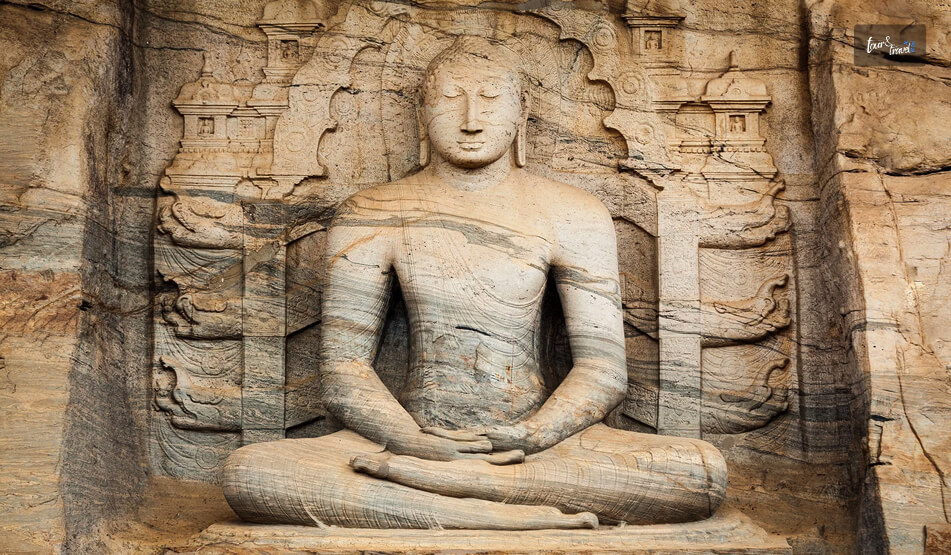
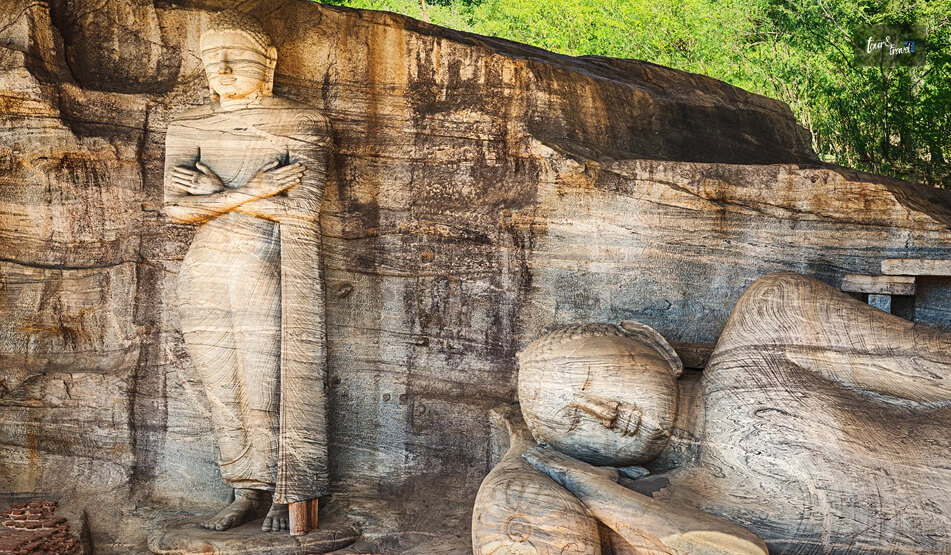
The Gal Vihara is four giant Buddha statues, which are carved out of a large granite gneiss rock. The images consist of a large seated figure, another smaller seated figure inside an artificial cavern, a standing figure, and a reclining figure.

Additionally, King Parakramabahu I fashioned this rock structure in the 12th century.

Moreover, there is a story regarding this rock structure, which is one of the four statues, that isn’t actually Buddha. Many people say that it is one of his grieving apprentices.

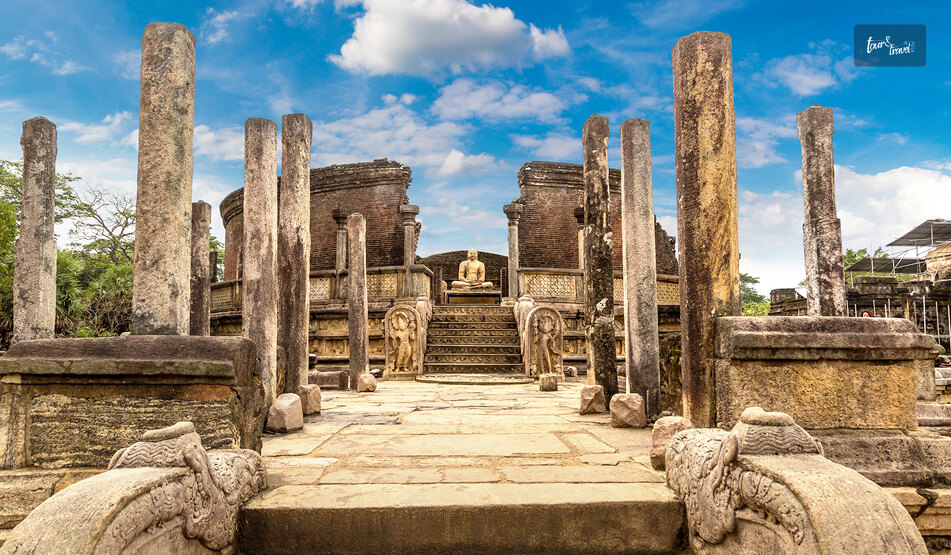
The Polonnaruwa Vatadage

The Polonnaruwa Vatadage

Remaining unnoticed for several centuries, the excavation of Polonnaruwa Vatadage started in 1903.

Many people believe that Parakramabahu 1 built this place to hold the relic of the tooth of Buddha.

Moreover, another group of people believes that King Nissanka Malla built this place to hold the alms bowl used by Buddha.

Additionally, the structure has two stone platforms decorated with stone carvings. You can enter the lower platform through a single entrance, which is facing the north.

You can enter the second platform through four doorways facing four cardinal points.

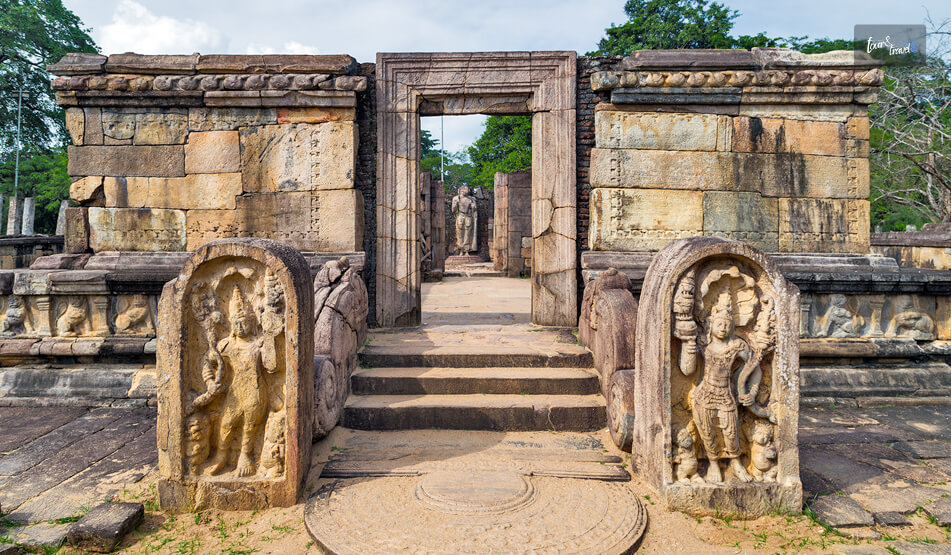
Hatadage

Hatadage

Hatadage is another place that I found very fascinating. This place is found next to the Vatadage.

This place holds a historical importance for tourists. Hatadage is located in the ancient city of Polonnaruwa. According to historians, King Nissanka Malla built this place.

Moreover, Nissanka Malla built this place as a shrine to keep the relic of the tooth of the Buddha.

Furthermore, many people say that the place holds sixty relics. I found this place very fascinating to visit.

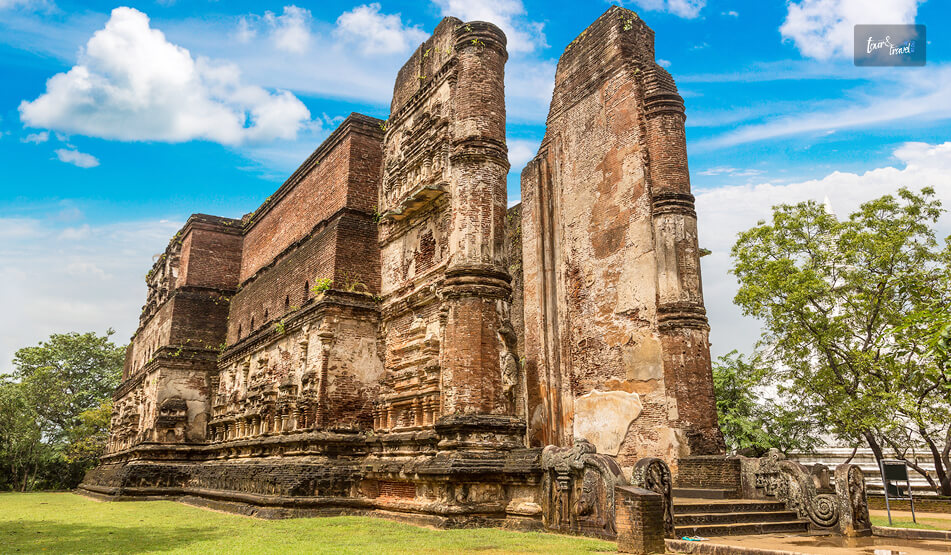
The Lankatilaka Temple

The Lankatilaka Temple

The Lankatilaka Temple is another interesting place to visit. The temple is located on Panhalgala Rock in Udunuwara.

Moreover, King Bhuvanekabahu 4 constructed this temple. Additionally, the temple has beautiful stonework, rock inscriptions in both Sinhala and Tamil, and a striking dragon arch.

The walls of the temple reach 17 meters in height and have a large statue of Buddha. Furthermore, the design of the stairways of the temple drew my attention.

Every step of the stairway is only 10 centimeters wide. So, it is difficult to climb. Moreover, with such short steps, the only way to climb down is sideways.

While climbing down this manner, you won’t be able to turn your back towards the statue of Buddha, which is also considered disrespectful.

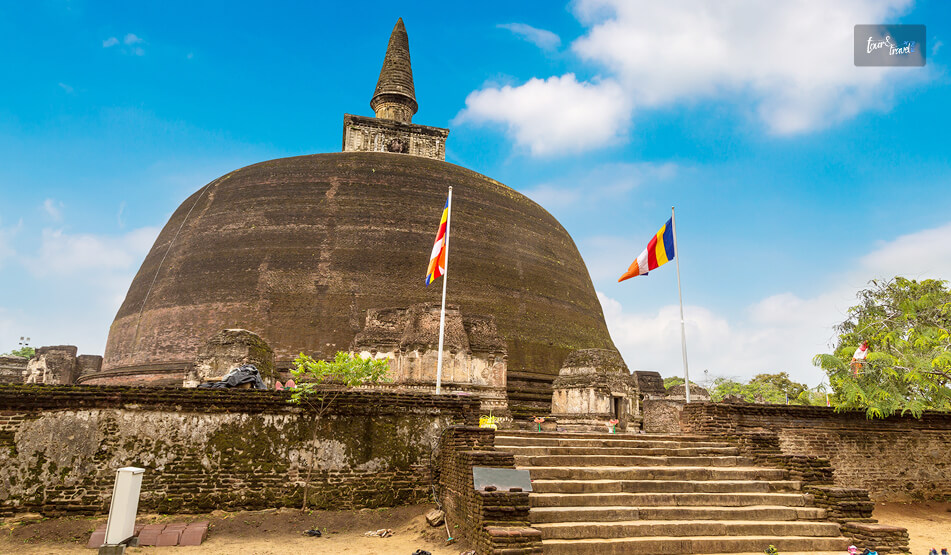
Rankoth Vehera Stupa

Rankoth Vehera Stupa

The Rankoth Vehera Stupa is the largest stupa in the ancient city of Polonnaruwa. King Nissanka Malla built it.

The fascinating part of the stupa is that it is built entirely of brick, and it is set upon a large square terrace. When you walk around the stupa, you will get to know how big it is.

How To Go Around Polonnaruwa?

How To Go Around Polonnaruwa

There are several ways to go around Polonnaruwa. The two most convenient ways are:

Bicycle

According to me, the best way to see Polonnaruwa is by bicycle.

Moreover, there are many ruins spread out throughout Polonnaruwa, and a bicycle will let you move freely from one place to another.

Furthermore, there are many hotels and shops in Polonnaruwa from where you can rent a bicycle. Finally, renting a bicycle will make your trip convenient and budget-friendly.

Tuk Tuk 

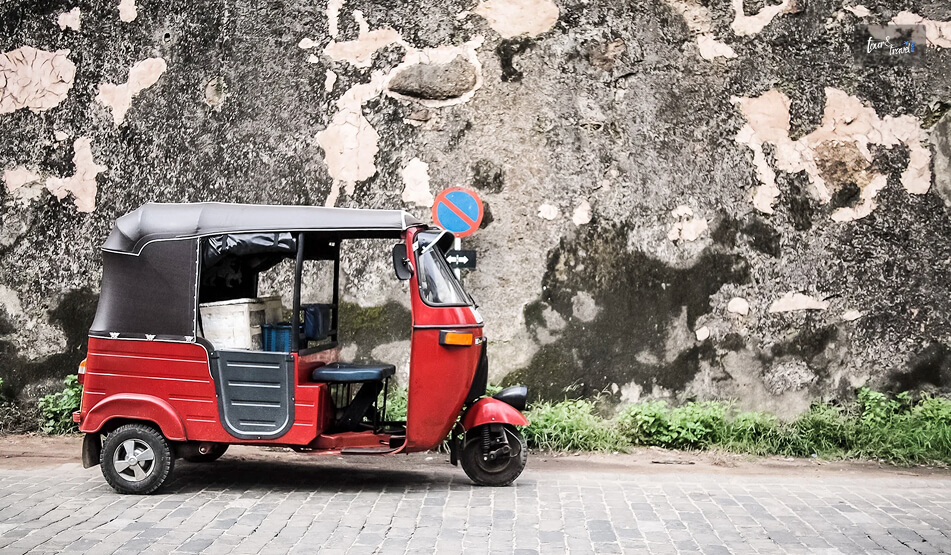
Tuk-tuk is also a good option for going around in Polonnaruwa.

Moreover, hiring a tuk tuk will also provide you with a driver as a guide, which is very amazing to see the ancient city.

Furthermore, you should choose a tuk-tuk if you are in a hurry. Though I prefer renting a bicycle.

How To Reach Polonnaruwa?

I will give a few routes for Polonnaruwa with cost and travel time. You can choose the convenient one for you.

From Sigiriya To Polonnaruwa

  • Bus: Sigiriya – Inamaluwa – Polonnaruwa – Kaduruwela | After a short tuk-tuk journey from Sigiriya to Inamaluwa, jump on the bus to Kaduruwela.
  • Cost: Tuk-tuk from Sigiriya to Inamaluwa 500 LKR, ($2.8) | Bus from Inamaluwa to Polonnaruwa 200 LKR, ($1) per person
  • Travel time: 1.5 hours

From Dambulla To Polonnaruwa

  • Bus: Dambulla – Polonnaruwa – Kaduruwela | Take a direct bus that heads for Kaduruwela from the Dambulla Main bus stop. The bus leaves every 20-30 minutes starting from 7 am.
  • Cost:  Bus from Dambulla to Kaduruwela – 220 LKR ($1) per person
  • Travel time: 1.5 to 2 hours

From Trincomalee To Polonnaruwa

  • Bus: Trincomalee – Habarana – Polonnaruwa | A quite difficult journey. From Trincomalee, take a bus heading for Dambulla or Colombo.
Tip: Before entering, ask if the bus driver stops in Habarana and if there is a connection to Polonnaruwa. Generally, you’ll find buses that stop in Polonnaruwa at the Habarana Junction.
  • Cost: Bus from Trincomalee to Habarana – 120 LKR, ($0.70) | Bus from Habarana to Polonnaruwa – 80 LKR, ($0,50)
  • Travel time: 4 hours

From Colombo To Polonnaruwa

  • Train: Colombo Fort – Polonnaruwa | A rough journey that is packed and heads out to the east coast of Sri Lanka. Personally, I recommend visiting Kandy and Sigiriya in between.
  • Cost: 2nd class: 350 LKR ($2) per person, 3rd class: 200 LKR ($1) per person
  • Travel time: 6.5 hours

What To Eat In Polonnaruwa?

What To Eat In Polonnaruwa

In Polonnaruwa, you should always go for authentic Sri Lankan rice and curry. I will mention some of the best dishes according to my choice:

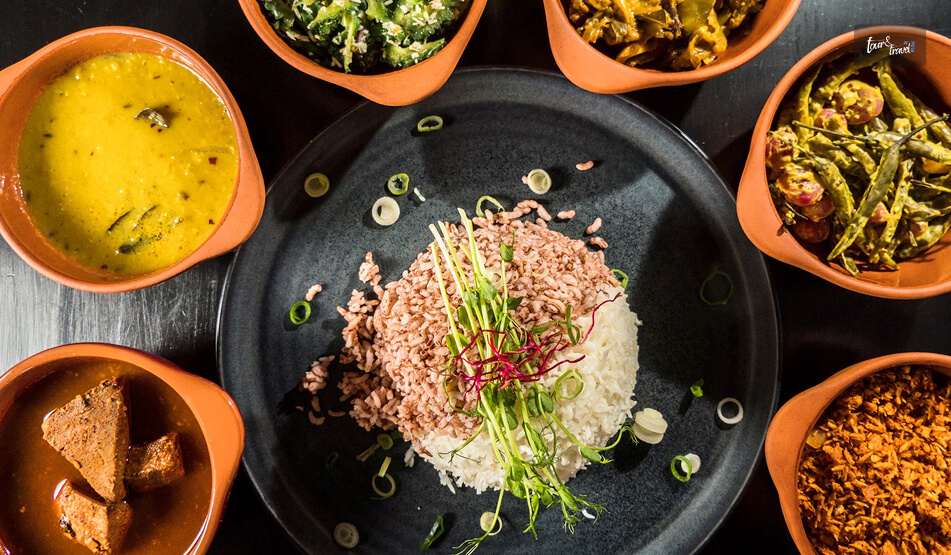
Traditional Rice And Curry

There are many places in Polonnaruwa where you can get an authentic Sri Lankan platter or buffet.

In this platter, you will get 10 to 30 freshly made vegetable and meat curries. Moreover, this will be served on a lotus leaf.

String Hoppers

String hoppers are a breakfast and dinner dish. It is made of steamed rice flour noodles. Additionally, they serve it with spicy coconut sambal (Pol Sambol) and dal (Lentil) curry.

Polos (Young Jackfruit) Curry

It is a green jackfruit curry. It is cooked slowly and looks like meat. Additionally, they cook it with regional spices, which enhance the taste of the dish.

Where To Eat In Polonnaruwa

There are some places you can go to get high-quality, authentic Sri Lankan food. I will share some places that I liked.

Jaga Food

It is a good place you can go to have your Sri Lankan buffet prepared in a traditional clay pot. Moreover, this is a place with an excellent outdoor seating arrangement.

Priyamali Gedara

It serves authentic, high-quality local home-cooked curries.

Tree Hut Restaurant

I found this place amazing because of its blend of traditional local dishes with Chinese-inspired options.

Share on Social Media

Sibashree is a travel, culture, and leisure writer who has been writing since the age of 12 and professionally since 2014. With more than a decade of travel writing experience and journeys across India and several parts of the world, she brings a deeply personal and thoughtful perspective to her work. A student of English Literature and Mass Communication, Sibashree has always viewed travel as more than movement — for her, it has been a way of understanding people, cultures, and herself. Her passion for spiritual exploration has also led her to many unusual and meaningful destinations over the years. Outside of writing, Sibashree enjoys watching European cinema, reading about global politics, and reflecting on the stories hidden within everyday places.

Leave a Reply

Your email address will not be published. Required fields are marked *

title-img Related

READ MORE Hello Kitty Shinkansen

Is Hello Kitty Shinkansen Discontinued? Looking Back At Everything This Iconic Bullet Train Offered

BY  Sibashree Apr 18, 2026

Yes, Hello Kitty Shinkansen is going to get discontinued in Japan. Now, during my last trip to Japan, a ride in this themed bullet train was surely my pookie moment.  It was an experience of a lifetime when I tried the best Osaka food and boarded the Hello Kitty Shinkansen train for a day trip to Kobe, Himeji, Okayama, Kurashiki, and Hiroshima.  However, JR West has decided to stop the operations of the Hello Kitty Shinkansen from 17th May 2026.  Now, it’s sad for everyone who loves Japanese culture. If the Japanese shrines and temples are the telltale of its history, religion, and society, the Hello Kitty Shinkansen has been a poster of the pop culture.  So, in this article, I will discuss how the beautiful 8-year-old journey of the Hello Kitty Shinkansen is going to come to an end, and what you can expect in the few days left until the last date of operation.  Hello Kitty Shinkansen: An Iconic Symbol Of Japanese Railway Branding  Hello Kitty Shinkasen started running on the Sanyō Shinkansen line on 30th June, 2018. It used to run from Shin-Osaka to Hakata (Fukuoka).  Furthermore, during this 8-year run, this themed bullet train has successfully served its purpose of reviving tourism in Japan.  Moreover, the Hello Kitty Shinkasen used 500-series bullet trains and featured the signature white-and-pink colors.  Also, the exterior was adorned with bows, the signature of Hello Kitty.  However, for the train, the bow represented a link between the cities on the route covered.  The Decor Which Made The Hello Kitty Shinkansen So Special Out of eight cars of the Hello Kitty Shinkansen, the decor of the first two cars was based on the theme.  Furthermore, the Hello Plaza in Car 1 was dedicated to exhibitions. It had exhibits dedicated to the cities crossed on the route.  Moreover, you could shop for souvenirs at the Hello Plaza.  Again, the second carriage, “KAWAII! ROOM,” was decorated in the style of Hello Kitty. The chairs, the wall art, and the ceiling were done accordingly.  Moreover, there was a photo area.  The rest of the carriage was like a normal bullet train, with subtle hints of the Hello Kitty theme.  Also, a unique melody was used for the announcement.  How Is The Farewell Event Of Hello Kitty Shinkansen Being Planned?  JR West is going to plan a series of commemorative events to bid farewell to this iconic bullet train.  As a passenger, you can leave a message on the board reserved for sharing memories. Furthermore, you can get stickers and limited edition souvenirs in the memory of the train.  Moreover, you can collect special merchandise from the Kyoto Railway Museum and specific JR West Stores. You will even find them online.  Having said that, there is still a month left for the Hello Kitty Shinkansen to get discontinued. So, let’s have a quick look at the operation days, timetable, and passes.  Hello Kitty Shinkansen Passes And Tickets You can ride the Hello Kitty Shinkansen with the Japan Rail Pass and other tickets. So, check out some of the pass options here.  1. JR-WEST All Area Pass You can buy this single pass to explore Sanyo, Hokuriku, Hakata, and other unexplored parts of western Japan.  Furthermore, it has a validity of 7 days.  Also, the pass price for adults is 26000 Yen, and for children, it is 1300 Yen. Moreover, it is free for children from 1 to 5 years.  This is the most recommended pass for riding the Hello Kitty Shinkansen.  2. Kansai - Hiroshima Area Pass With this Kansai to Hiroshima Pass, you can enjoy unlimited rides between these two locations.  It will also include a ride on the JR West Miyajima Ferry to Miyajima Island.  Moreover, the 5-day pass for Kansai - Hiroshima will cost 17000 Yen for adults and 8500 Yen for children.  3. Hiroshima-Yamaguchi Area Pass With this pass, you can enjoy an unlimited ride between Fukuoka and Yamaguchi. This pass is valid for 5 days, and for adults, it costs 15000 Yen, and for children, it is 7500 Yen.  Moreover, there are the Kansai-Wide Area Pass, Kansai-Hokuriku Area Pass, SANYO-SHINKANSEN One-way Ticket, and Okayama-Hiroshima-Yamaguchi Area Pass.  Hello Kitty Shinkansen Days Of Operation And Timetable  Hello Kitty Shikashen will now run every day. You can book the trains from https://www.klook.com/japan-rail/ or the West Japan Railway Company’s website.  Also, there are two trains, Kodama No. 942 and Kodama No. 949, running from Hakata to Shin-Osaka and Shin-Osaka to Hakata, respectively.  1. Time Table Of Kodama No. 942 (Hakata To Shin-Osaka) StationTiming Hakata7:04 AMKokura 7:22 AMShin-Shimonosheki 7:31 AMAsa7:43 AMShin-Yamaguchi7:53 AMTokuyama8:12 AMShin-Iwakuni8:25 AMHiroshima8:40 AMHigashihiroshima8:53 AMMihara9:12 AMShin-Onomichi9:18 AMFukuyama9:31 AMShin-Kurashiki9:45 AMOkayama10:09 AMAioi10:35 AMHimeji10:48 AMNishi-Akashi11:02 AMShin-Kobe11:12 AMShin-Osaka11:25 AM 2. Time Table Of Kodama No. 948 (Shin-Osaka To Hakata) StationTiming Shin-Osaka11:37 AMShin-Kobe11:50 AMNishi-Akashi12:01 PMHimeji12:15 PMAioi12:27 PMOkayama12:50 PMShin-Kurashiki1:02 PMFukuyama1:16 PMShin-Onomichi1:28 PMMihara1:41 PMHigashihiroshima1:56 PMHiroshima2:08 PMShin-Iwakuni2:29 PMTokuyama2:42 PMShin-Yamaguchi2:58 PMAsa3:11 PMShin-Shimonosheki 3:24 PMKokura 3:34 PMHakata3:51 PM There have always been high demands for the Hello Kitty Shinkansen. So, hurry a little if you want to experience a ride in the days remaining.  Moreover, train timings can change under unusual scenarios. So, always check the timing with local authorities before booking your tickets. What Are The Places To Visit On The Hello Kitty Shinkansen Route?  There are many stations on the Hello Kitty Bullet Train route. However, you cannot miss these places on the route.  1. Kobe I loved the Nunobiki Ropeway, which was very close to the Kobe Shinkansen station. The ropeway took me on a ride over the Nunobiki Waterfall and the beautiful Kobe Herb Garden.  It dropped us at the Observation Park, and as the name suggests, it offers amazing views of the city.  However, you can even take a local train to the city.  2. Himeji The Himeji Castle is one of the twelve original castles in Japan. It was built in 1609.  Also known as the White Heron Castle, it is the largest in Japan and is a UNESCO World Heritage Site.  3. Okayama The Korakeun Garden in Okayama is beautiful. Furthermore, the Kibutsu shrine, a little far away from the town, stands out with its amazing “timber-framed corridor.” Also, don’t forget a visit to the Okayama Castle, the main tower of which was completed in 1597.  4. Kurashiki The Bikan Historical Quarter is the main attraction of Kurashiki. Once you reach Kurashiki on the bullet train, you will get off and take a local train to reach the historical center.  It is also a pretty and quaint town. So, it is ideal for relaxation.  5. Hiroshima Hiroshima is one of the historic places to visit in Japan. The Atomic Bomb Dome and the Peace Museum here remind you of the futility of war.  The Future Of Themed Bullet Trains In Japan  As a tourist or a cultural enthusiast, you may think that the discontinuation of the Hello Kitty Shinkansen has put the future of the themed bullet trains in Japan at stake.  However, that is not the case.  Japan has just got a new theme-based bullet train called Super Mario Shinkansen in 2025. Also, JR Kyushu runs this train in Kyushu.  As the name says, Super Mario Shinkansen has pictures of the main characters, Mario and Luigi. Also, it shows how Japan still believes in using themed trains as powerful tools of regional tourism promotion among children and youngsters. 

READ MORE Jaffna Cultural Guide

A Jaffna Cultural Guide: How To Experience Tamil Culture In Jaffna? 

BY  Sibashree Jan 6, 2026

With the Sri Lanka Tourism Development Authority (SLTDA) planning to diversify the tourism offerings, Jaffna, the northernmost part, comes into the limelight. Jaffna is the place to know about the local Tamil culture and heritage of the country.  Jaffna has beautiful temples, and the Jaffna temple etiquette shows how the people here are sincere about their customs and traditions. Also, major festivals such as the Nallur Annual Festival are celebrated around the temples here.  On the other hand, the Jaffna food scene is a celebration of locally-sourced ingredients such as fresh seafood, palm flour, and roasted spices.  SLTDA is proactively improving the infrastructure without compromising the sustainability aspect. Thus, in 2026, Jaffna is going to emerge as an eco-tourism leader, which promotes its culture and heritage.  Also, during my last visit, I found Jaffna to be a rhythm. I woke up with the sound of temple bells at 5 AM and the smell of jasmine and roasted curry powder. As I crossed the Elephant Pass, it was a paradigm shift from the greens of the Sinhalese South. Suddenly, I was in a sun-drenched, rugged terrain of palmyrah palms and limestone.  The humble and soft curves of the Buddhist Stupas were replaced by the towering Gopurams of the Hindu temples.  Life moves at a gentle pace here, and everyone works together, keeping a century-old tradition and heritage alive.  In this Tour and Travel Blog, I will talk about how to experience Tamil culture in Jaffna, every day, through festivals, temple visits, and more.  How To Experience Tamil Culture In Jaffna? Reading The Streets And Daily Rituals  Taking a walk down the streets of Jaffna is the best way to learn about the local Tamil culture. And the best part is the inclusivity.  It does not matter the social strata you belong to. The customs, festivals, and temples are accessible to all. Nevertheless, these are the daily rituals and road customs that offer insights into the culture of Jaffna. 1. The Kolam (Doorstep Art) I walked along the lanes of Jaffna at dawn and saw women sweeping their doorsteps and drawing intricate geometric patterns with white rice flour. It is called the Kolam.  Kolam has deeper spiritual and environmental implications. Kolam at the doorstep is a gesture of non-violence or Ahimsa. Also, the design is made using rice flour, which ants and birds eat. Thus, the first act of the day becomes about giving.  Furthermore, during a special festival or wedding in the house, the white lines are bordered with Kaavi (red brick powder). The red lines offer spiritual protection from evil eyes.  Also, if you see a house with no Kolam for many days, it means that the family is mourning. It signifies that the rhythm of joy has paused for a certain period for the family. 2. The Pottu And Vibuthi (Forehead Markings) Pottu and Vibuthi are two different types of forehead markings, and these are the visual language of faith. a. Vibuthi (The Ash) Vibuthi means three horizontal lines drawn on the foreheads of the devotees of Shiva. It means the burning away of the ego and the impermanence of life.  Also, the followers of Lord Shiva often smear ash on their forehead after a morning temple visit.  b. The Sandalwood Paste It is a yellow dot made of sandalwood paste. Many people even smear the sandalwood paste on the entire forehead. It signifies mental clarity and cooling. c. Pottu (The Dot) Pottu, often red (vermillion), the dot symbolizes the "third eye" or the seat of Shakti (divine power). It means that a woman is married.  You will also notice black dots (with Kajal/Kohl) on the forehead of young children as a mark to ward off evil eyes.  3. The Home Visit Etiquette And Tamil Hospitality Customs The Tamil hospitality customs are warm and welcoming. However, when you visit a Jaffna home, you have to follow certain social norms.  Follow The Evil Eye Or Drishti Rule  You cannot praise the beauty and health of a child excessively when visiting their home. It is considered a bad omen or an act of jealousy. If you want to adore a child, praise them briefly and share your good wishes.  The Plate Rule Of Eating  It does not matter how much you liked the food. You cannot polish your plate. Contrary to Western culture, here, leaving a polished plate means that you are still hungry or the host failed to provide enough.  The custom is to leave a tiny, symbolic amount of food on the plate. It shows that you have been provided with an abundant amount of food. 4. Caste & Conservatism: Managing Expectations In my Jaffna travel guide, I have talked about the cultural richness of the Sri Lankan northern city. However, beyond the cosmopolitan buzz of Colombo, a socially conservative vibe reigns in this region of Sri Lanka.  So, PDA or public displays of affection, even holding hands, can draw uncomfortable stares from the older generation.  Furthermore, you cannot wear short skirts or shorts in public. Your clothing has to be modest, and usually your knees and shoulders should be covered.  Temple Culture Beyond Sightseeing: A Jaffna Cultural Guide The Nallur Kandaswamy Kovil is the majestic spiritual and cultural heart of the city. However, the village kovils or the smaller temples are the places where local communities gather, and the atmosphere is very intimate.  The Archana Basket Ritual At The Temples  You can buy a small wicker basket near the temple entrance. It contains bananas, a coconut, flowers, and betel leaves.  Once you enter the temple, you have to hand it over to the priest at the inner sanctum. He will offer the basket to the deity and chant a blessing.  Furthermore, the priest will return with a flaming lamp (Aarti). Hover your hands over the flame and then touch your eyes to receive the light’s blessing. The Temple Sound: Nadaswaram And Thavil When you are in Jaffna, you don’t have to look for music. The music will find you. The sound of Nadaswaram or a long wind instrument exudes a piercing and soulful melody.  Then, the Thavil or drum has a thundering sound, and it is heard during every major temple festival. Nallur Festival Traditions And Jaffna Festival Calendar FestivalMonthWhat to ExpectThai PongalJanuaryA harvest festival where "Pongal" (rice and milk) is boiled until it spills over, symbolizing abundance.Nallur FestivalAugustA massive 25-day celebration culminating in a grand chariot procession where thousands of men pull the deity's carriage.DeepavaliNovemberThe Festival of Lights; homes have oil lamps, and the city exudes the scent of traditional sweets. Immersive Cultural Experiences For an immersive cultural experience, you must meet a traditional weaver in Inuvil and see how artisans create the most intricate textiles on hand-operated looms from cotton and palmyrah fibers.  Also, you must give the restaurants a miss for the day. Visit a local homestay where you can have cooking lessons. Grind spices using a stone grinder or Miris Gala and feel the aroma.  Do you love Bharatanatyam Dance? Visit an art school like the Jaffna Kalai Thoothu. You can watch students rehearse this ancient, highly disciplined classical dance form. You can even join sessions such as the Vibrant Rhythms of Jaffna, where you can also try some moves.  The Authority Voices On The Jaffna Cultural Guide Anuk Arudpragasam (Booker Prize Shortlisted Author): “Jaffna is a place of memory. The culture here isn't just performed; it is held onto tightly as a way of surviving history.” (Context: Discussing the resilience of Tamil culture post-war). The "Jaffna Boy" (Local Cultural Blogger): “To know Jaffna, you must wake up before the sun. The culture lives in the sweeping of the front yard and the drawing of the Kolam before the heat sets in.” Serious Eats (Culinary Authority): “The hospitality in Jaffna is aggressive in the best way possible. You do not just 'eat' here; you are fed.” A Jaffna Cultural Guide: Know The Expert Tips  “Saptingala” or “Have you eaten?” This is the common term I have heard from the locals I encountered. Seldom have I come across a city where people are so caring, even in casual greetings.  However, it’s safe to say “Yes.” Otherwise, they will feel obligated to feed you. Apart from these gestures, some other things you need to keep in mind when you are in Jaffna. 1. Don’t Touch The Head The head is the most sacred part of the body. So, you cannot pat a child on the head. Furthermore, you cannot touch a priest or monk randomly.  2. Use Your Clean Right Hand  You have to keep your right hand clean. You must use your right hand for shaking hands, eating, giving money and gifts, and pointing.  3. Men And Shirts  You will often find older men not wearing a shirt in their house. There is nothing offensive about the custom. In the hot and humid north, it is a tradition that ensures comfort.  4. Don’t Photograph Women Bathing In Holy Places Keerimalai Springs is a holy bathing place, and local women often take a bath in sarees at public wells. You must not photograph them.  It is a daily ritual for them and not meant for any tourist show.  5. The Quintessential Jaffna Siesta  Most shops and house doors are closed between 1 PM and 4 PM. It is the Jaffna Siesta time. It once again shows how life in Jaffna moves at a different pace than the rest of the world.  6. Gold Is Security  Women in Jaffna roam around wearing massive amounts of gold jewelry. It is their financial security. Also, Thattam or the gold coin jewelry is especially famous here.  It is disrespectful if you ask a woman whether the ornaments she is wearing are real or not. It is always real.  7. The Jasmine Rule  During my stay in Jaffna, I always wore a string of fresh jasmine flowers in my hair. It was one of the reasons why I connected with the local people very quickly.  A Jaffna Cultural Guide: Frequently Asked Questions (FAQs) Here are the frequently asked questions and answers about the Jaffna cultural guide.  1. What Is The Main Religion In Jaffna?  Hinduism is the main religion in Jaffna. Furthermore, people here are mostly devotees of Lord Shiva and Murugan. The religious beliefs of the people here impact the local culture, food, and daily rhythm. 2. Can I Shake Hands With Local Women? The Jaffna society is conservative. So, most women here will not be comfortable shaking hands with you at the first meeting. You can fold your hands and say “Vanakkam” with a smile for a perfect greeting.  3. What Language Do The People In Jaffna Speak? Tamil is the primary language in Jaffna. People here rarely speak the Sinhalese language.Furthermore, you will find people speaking in English in hotels and other facilities. However, as you explore the villages, you will find very few people speaking English.  4. Is Jaffna Culture Similar To India?  Yes, the culture of Jaffna is very similar to that of Tamil Nadu in South India. In fact, if you visit Jaffna from Colombo, you will experience a huge cultural shift. The Tamil people in Jaffna are very protective and proud of their distinct identity, cuisine, and dialect.  5. Can I Enter A Home In Jaffna If I Am Invited? Yes, it is a huge honor to visit a home in Jaffna on invitation. Just remember to take off your shoes at the gate or door. Furthermore, when you visit a home in Jaffna, you can carry flowers and sweets as gifts. You must not carry alcohol as a gift if you are visiting a home in Jaffna for the first time. 6. Why Is Vegetarian Food So Common In Jaffna?  Vegetarian food is very common in Jaffna due to the strong Hindu influence. Many locals are vegetarians here due to religious beliefs. Also, many local Tamil families here follow the custom of eating vegetarian food on Tuesdays, Fridays, and other holy days. 7. Is It Rude To Leave Food On My Plate In Jaffna? No, it is not rude to leave food on your plate when you are eating in Jaffna. In fact, when you leave a little amount of food on your plate, in Jaffna, it means that the host has served you an abundant amount of food. If you polish your plate off completely, the host may serve you another mountain of rice, considering you are not full yet. 

READ MORE Tangalle Beach

What Are The Tangalle Beach Places To Visit? Is It Worth It? 

BY  Sibashree May 18, 2026

Tranquility, raw energy of nature, and the thrill of standing on the southernmost tip of Sri Lanka!  You get all of these when you are at Tangalle Beach. Also, with serenity and relaxation being two essential experiences here, you will get ample time to photograph the picture-perfect shoreline.  So, if you want to explore pristine beaches, have some fun spotting the turtles, and try some amazing local food, you must include a visit to Tangalle Beach in your Sri Lankan itinerary.  Why I Loved Tangalle Beach?  The quaint Tangalle Beach immediately impressed me with its stretches of golden beaches. Also, from the traditional fishing town of Ahangama to this small fishing village, it has been a lifetime experience for me to see how people here live in coexistence with nature.  Furthermore, the Rekawa Turtle Conservation Project was the biggest highlight of my Tangalle Beach visit.  Also, I could soak in the paradisiacal feel of this coastal town, unlike more prominent places such as the Hiriketiya Beach or the Kandy to Ella train, the crowd was way fewer.  That undertourism is a blessing in disguise, as in this way, the nature and wildlife of Tangalle Beach remain untouched.  Furthermore, I found a small but warm homestay on the east side. On the west, there are more high-end accommodations.  So, from backpackers to luxury travelers, everyone will enjoy Tangalle Beach, and you just need to place your feet on warm and golden sand. What Are The Things To Do In Tangalle Beach? Tangalle Beach offers a Bali vibe. As I have mentioned, it is the ultimate place to relax, and along with that, you can indulge in various adventure activities here.  You can even have a delightful wildlife experience here.  A Visit To The Udawalawe National Park At a distance of around 71 km from Tangalle Beach, the Udawalawe National Park is a must-visit.  Furthermore, as a home to around 400 elephants, it is one of the top attractions near Ella.  I loved the jeep safari here, and unlike many other national parks, spotting an elephant here on a jungle safari is almost guaranteed.  The entry fee to the national park is LKR 13,420, and the jeep safari charged me LKR 10000 during the last visit.  I was impressed with the entire conversation process, and it operated around the Elephant Transit Home (ETH).  The Department of Wildlife Conservation established it in 1995, and it runs on a strict 3-tier process.  Rescue Rehabilitate Release  This process ensures very little human interaction, and it works for the release of the orphaned elephants back into the wild.  Also, the conservation job does not end with the release of the elephants. The conservationalists keep monitoring the movement of the reintroduced elephants in the wild.  Watching Turtles At Tangalle Beach  Like Dalawella Beach, Mirissa Beach, and Mount Lavinia Beach, Tangalle is also a wonderful place for spotting endangered turtles.  The types of turtles you can see here are: Loggerheads Leatherbacks Hawksbills These turtles visit the beach when they want to lay eggs. Now, this is a huge advantage Tangalle enjoys as it is free from the impact of overtourism.  A Visit To The Rekawa Turtle Conservation Project Now, many tourists claim that if you visit the Rekawa Turtle Conservation Project between April and July, you can see the turtles hatching eggs.  However, this is not entirely true. There is no guarantee that you will see a turtle laying eggs or hatching.  There is an official announcement from the Rekawa Turtle Conservation Project. They have mentioned that there are high chances of seeing a turtle laying her eggs between 7:30 PM and 8:30 PM.  Furthermore, the conservation center offers a guided tour to the beach for spotting turtles between 7 PM and 6 AM.  Moreover, you cannot use flashlights or flash photography at this conservation center.  Whale Watching At Tangalle  During my stay in Tangalle, I booked an early morning tour that took me west to Mirissa Harbour.  We set sail at 6:30 AM into the calm Indian Ocean. About an hour out, the captain cut the engine.  Suddenly, a massive blue whale breached just seventy meters away, spraying a giant plume of water before diving and flashing its enormous tail flukes. It was breathtaking. While Tangalle itself lacks a major boat harbor, it serves as an excellent base. Most local operators provide seamless hotel pickups for the 60-to-90-minute drive to the boats. December to April is the best time for spotting whales and spinner dolphins at Tangalle Beach.  Also, if you are planning a whale watching tour, you must take sea-sickness pills before boarding.  A Visit To The Mulkiligara Raja Maha Vihara  Sri Lanka is the place where you will find the gems associated with Buddhism in every nook. The Mulgirigala or Mulkiligara Raja Maha Vihara is one such place.  It is an ancient Buddhist rock temple complex, and if you have loved the Dambulla Royal Cave Temple, you will also cherish this.  At a height of 205 meters, it also has the nickname of Little Sigiriya Rock or Punch Sigiriya.  Furthermore, this ancient rock temple complex is revered as an archaeological site. It harbors a religious history of around 2000 years.  King Saddhatissa of Anuradhapura built this Maha Vihara in the 3rd century BCE, and King Kawantissa and King Valagamba expanded it later.  Moreover, it is one of the designated temples in Anuradhapura to receive the Jaya Sri Maha Bodhi sapling.  After years of abandonment, it was finally reconstructed by King Keerthi Sri Rajasinghe in the 18th century.  Why I Loved Mulkiligara Raja Maha Vihara The temple complex spans across five different cave levels, and there are seven cave shrines.  The caves are home to brilliant frescoes, murals, and paintings depicting the stories of the Jataka, Lord Buddha, and other Hindu deities.  What is interesting here is that some of the artwork shows a prominent influence of the Dutch style.  Furthermore, after climbing 533 peaks, I reached the summit of the Stupa. At the summit, there is a small pagoda that houses sacred relics of Lord Buddha.  In addition, the unmarked dirt train behind the courtyard took me to a cliff ledge from where I enjoyed amazing views of the surrounding jungles and palm trees.