
Kalpitiya, Sri Lanka: The Sandbar Where The Wind Runs The Show

Mullaitivu left me quiet with the heavy history of the Sri Lankan Civil War. 

And Kalpitiya was another surprise during my trip to Sri Lanka.

Kalpitiya is a kitesurfing town, and in fact, Kalpitiya has been an important spot to boost tourism in Sri Lanka for the last 15 years with its kitesurfing adventures. 

Furthermore, in September 2025, Kalpitiya saw its longest kitesurfing adventure, “a nearly 200-kilometre journey from Anawasala point in Kalpitiya to Talaimannar.” 

Surfers from Sri Lanka, Italy and Germany took part in this surfing adventure. Also, Sara Johanna Berg, while speaking to The Sunday Times, said, 

“This water sport is spectacular, not only to practice but also to watch. However, it requires proper training and guidance.”

Sara also mentioned that with this event, she expected more participation from the Sri Lankan surfers. 

Nevertheless, Kalpitiya was more than a wind-scoured sandbar with a fort. It is also home to a distinct fishing culture. And yes, you will see many dolphins, probably the calmest in Kalpitiya. 

Here is what I did during my three days in Kalpitiya. This stretch of the northwest coast deserves more than a footnote in a Sri Lanka itinerary.

Kalpitiya Took Me By Surprise From The Moment The Journey Started

Kalpitiya is around 165 to 170 kilometers north of Colombo. A drive takes around three and a half hours. 

It is a peninsula in the Puttalam District and is located around 50 kilometers north of Puttalam Town. 

Furthermore, squeezed between the Puttalam Lagoon and the open Indian Ocean, Kalpitiya is a place famous for wind, kites, and dolphins. 

However, the journey from Colombo to Kalpitiya was no less “interesting.” 

Past Puttalam, the road narrowed, and the land on either side turned into salt pans, catching the light in long silver-white sheets.

My driver this time was Nimal, and he slowed down so I could photograph a row of old windmills turning lazily near the salterns.

Every detail on the way felt more like rural Netherlands than tropical Sri Lanka.

Nimal said, 

This whole peninsula used to belong to traders.

Then, he pointed toward the lagoon side and said, “Arabs, then the Portuguese, then the Dutch. Everyone wanted this exact strip of sand.

The Places To Visit In Kalpitiya 

What Nimal said made more sense to me when I reached Kalpitiya Fort, the main historical attraction in Kalpitiya. 

It was a fort that guarded a Cinnamon route. Here are more details about the fort. 

Kalpitiya Fort: Embodying The Portuguese And Dutch History

Kalpitiya Fort Embodying The Portuguese And Dutch History

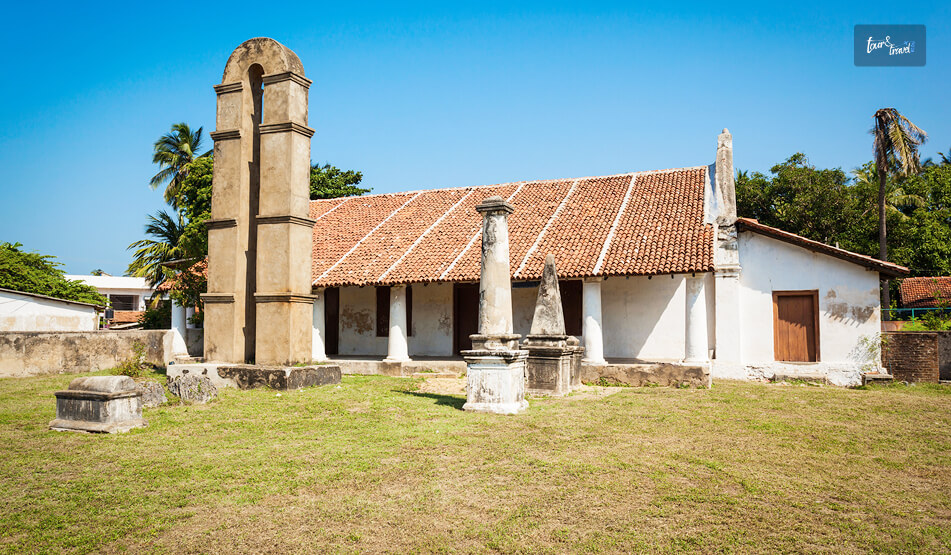
The Portuguese had laid the foundations of the Kalpitiya Fort earlier, and the Dutch built the fort on it between 1667 and 1676. 

It sits on the narrow point where the Puttalam Lagoon meets the sea. 

The walls of the fort are around four meters in height, and these are made of coral and limestone quarried from the surrounding coast.

Also, the single entrance to the fort faces the lagoon. Furthermore, the belfry and the pediment topping the entrance make it look like a church.  

However, this resemblance is not an accident.

The local accounts say that the Dutch built the entrance in that style to placate the Kandyan king who had granted them the land.

It was at a time when the fort’s real purpose was military and commercial rather than religious. 

A Guard To The Puttalam Lagoon

The Kalpitiya Fort guarded the entrance to Puttalam Lagoon.

The Dutch used the lagoon as a corridor to move cinnamon, areca nuts, and pearls toward Colombo. They had even dug a canal through Negombo for the purpose.

However, today, the fort functions as the navy base of Sri Lanka. If you want to visit this fort, you will have to carry your original passport as it is still an active military site. 

A young naval officer volunteered to show me around, and as I walked the bastions, the fort looked out over the lagoon on one side and the ocean on the other.

The two bodies of water were separated by a strip of land I could have walked across in under ten minutes.

Kudawa Beach: The Line Between Two Seas

Kudawa Beach The Line Between Two Seas

From the fort, I took a short ride to Kudawa Beach. 

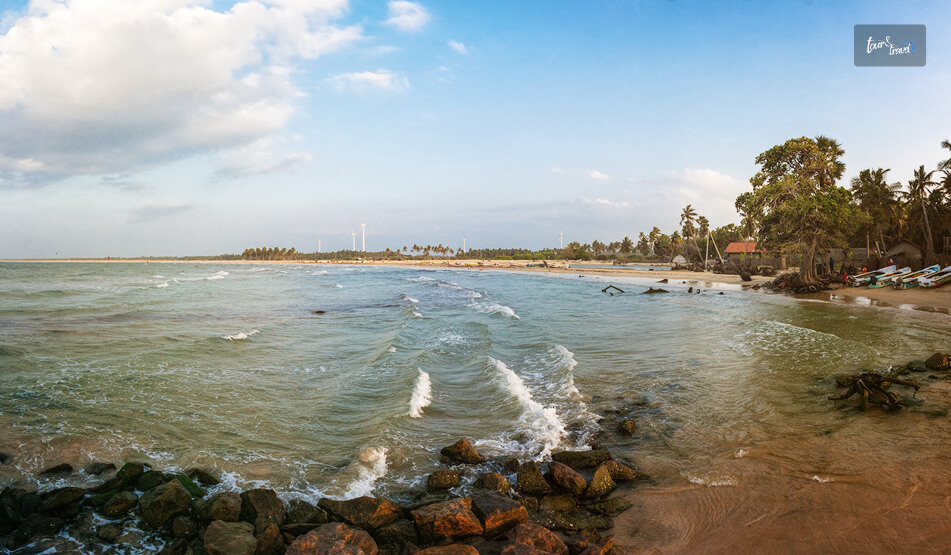
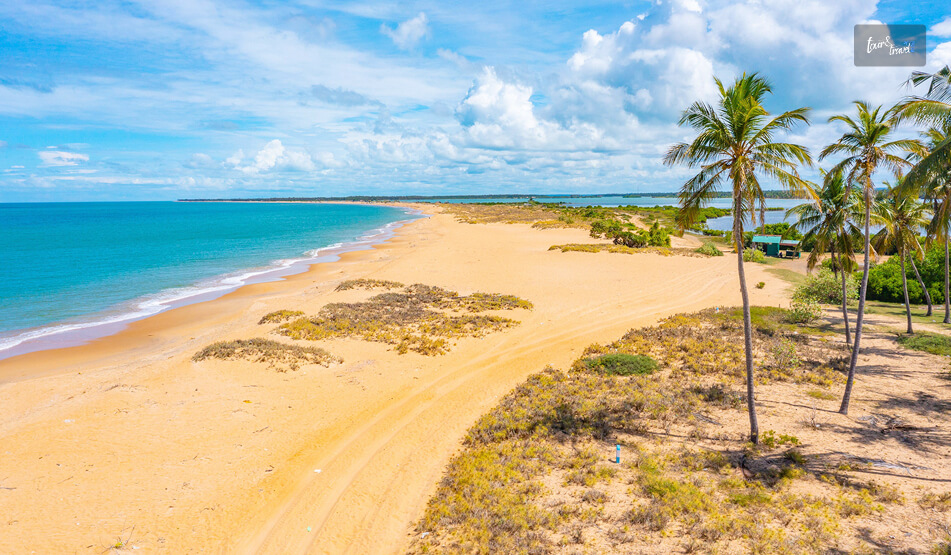
It is the main stretch of sand in Kalpitiya, and here a narrow sandbar visibly divides the turquoise ocean from the murkier, nutrient-rich lagoon. 

I arrived at the beach close to sunset, and without exaggerating a bit, it was the single sundowner spot I found anywhere on this Sri Lanka trip. 

There were no large resorts crowding the shorelines. However, there are around 30 kitesurfing schools around the coastlines and lagoons. 

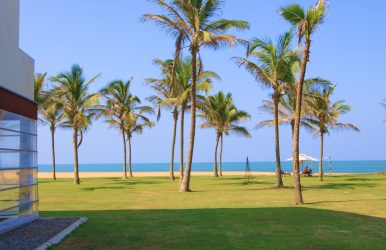
Also, there are small eco-resorts, and a handful of fishing huts with nets strung out to dry. 

At the beach, a fisherman mending his net nearby told me, half in English and half through gestures, that the wind here “never really stops between May and October.” 

I had to agree with him, as even if I stood still, my shirt kept snapping against my back. 

What Are The Things To Do In Kalpitiya? 

What Are The Things To Do In Kalpitiya

I had a wonderful time chasing the dolphins and trying to learn kitesurfing. Here is more about the best things to do in Kalpitiya. 

1. Chasing Dolphins Before Sunrise

Dolphin watching is the best experience to have in Kalpitiya. 

Our boat left from the lagoon, and it charged LKR 4000 per head. 

It was just after sunrise. So, the sea was at its calmest.

The boat headed out toward the Bar Reef area, where we spotted the spinner dolphins. I tried to keep a count, and it was close to sixty. 

Our guide told me that spinner dolphins are regular in this region between November and April. He mentioned spotting the “super-pods” of over a thousand dolphins during peak months. 

The dolphins did not perform tricks for us, and they simply existed around the boat. They spun, leaped, and occasionally arrowed straight toward the hull before diving under at the last second.

Our boat operator mentioned that between December and April, this area also has sperm whales and sometimes migrating blue whales. 

Each time a pod appeared, our boat operator cut the engine. Thus, the boat drifted rather than chasing them. 

He said it was a “standard practice” among the more responsible operators working the Bar Reef, one of Sri Lanka’s largest reef systems at roughly 307 square kilometers.

2. Learning To Kitesurf (I Failed At It)

Kalpitiya’s lagoon side is shallow and flat almost by design, which is exactly why it has built its reputation as one of the best beginner-friendly kitesurfing spots in Asia. 

However, I was not a natural. 

My instructor, a wiry local guy named Dinesh who has been teaching on this lagoon for years, kept the lesson simple. “Control the kite first. The board comes later,” he said, which is probably decent life advice too.

However, I barely made it. So, you must not trust the term “beginner-friendly” completely. 

What Is The Best Season For Kitesurfing In Kalpitiya? 

Kalpitiya has two kitesurfing seasons. 

The southwest monsoon, from May to October, brings strong, consistent wind for most of the day. So, it is for professionals and veterans. 

On the other hand, the northeast monsoon, from December to March, is gentler and generally considered the better window for first-timers.

I went in the second season. Still, I spent most of the first hour eating sand. 

3. Exploring The Places Near Kalpitiya 

Wilpattu National Park, the largest national park in Sri Lanka, is close to Kalpitiya. It is a drive of about 2 hours. 

The Wilpattu National Park is also famous for having a dense population of leopards. If you want to stretch the trip a little, you can visit the national park and plan a day safari. 

Moreover, the peninsula itself is scattered with fourteen small islands, some inhabited by fishing families, some given over entirely to mangroves and birdlife.

You can even explore these islands for a meaningful cultural experience.

How I Spent Three Days In Kalpitiya: The Itinerary 

DaysTimeActivity
Day 1MorningDrive from Colombo via Puttalam, Salt Pans and Windmills
AfternoonVisiting the Kalpitiya Dutch Fort
EveningSunset at Kudawa Beach
Day 2Early Morning Dolphin Watching Boat Trip Near Bar Reef
AfternoonRelaxing by the Lagoon
EveningTrying Fresh Seafood by the Beach
Day 3Early MorningKitesurfing Lesson
Late MorningDay trip toward Wilpattu National Park
Afternoon Island-hopping by Boat, Mangroves and Birdlife

Kalpitiya: A Coastline That Is Still Deciding What It Wants To Be 

Kalpitiya never tries to be Galle or Mirissa Beach. This is where it wins hearts. 

With its patchy hot water, basic rooms, and winds, it is as unpolished as Nimal warned me to be. 

But between a 350-year-old fort, a reef full of dolphins, and a lagoon that has quietly become one of the best kitesurfing classrooms in Asia, Kalpitiya gave me more range in three days than most single-purpose beach towns manage in a week.

If you are the kind of traveler who wants your itinerary to include a little bit of history, a little bit of wildlife, and a lot of wind in your hair, I would put this stretch of the northwest coast near the top of your list.

Share on Social Media

Sibashree is a travel, culture, and leisure writer who has been writing since the age of 12 and professionally since 2014. With more than a decade of travel writing experience and journeys across India and several parts of the world, she brings a deeply personal and thoughtful perspective to her work. A student of English Literature and Mass Communication, Sibashree has always viewed travel as more than movement — for her, it has been a way of understanding people, cultures, and herself. Her passion for spiritual exploration has also led her to many unusual and meaningful destinations over the years. Outside of writing, Sibashree enjoys watching European cinema, reading about global politics, and reflecting on the stories hidden within everyday places.

Leave a Reply

Your email address will not be published. Required fields are marked *

title-img Related

READ MORE where to stay in yala national park

Where To Stay In Yala National Park? Know The Best Accommodations 

BY  Sibashree Jun 3, 2026

The Yala National Park is the ideal place for a dawn safari. As the first rays of golden light pierce through the canopy and the untamed bush comes to life, you will enjoy an acoustic and raw symphony.  You will listen to the rumble of wild elephants and the exotic birdcalls. Furthermore, you will spot crocodiles gliding into still lagoons.  You will also find monkeys scampering through the treetops, and if you are extremely lucky, you can even see a Sri Lankan leopard.  So, no wonder that Yala National Park is a bucket-list destination when you are on a trip to Sri Lanka.  However, finding the right accommodation, the ultimate sweet spot to explore the Yala National Park, can be a daunting task.  You can find a wide range of accommodations here, including the avant-garde ones and the bush camps.  Furthermore, there are some family-run guesthouses and luxurious canvas cocoons. So, in this guide, I will discuss where to stay in Yala National Park.  Where To Stay In Yala National Park? Pick The Zone Based On The Experience You Want  Before you choose an accommodation for yourself, you must decide on the area you want to stay in.  You need to especially understand the entry points of Yala National Park and the surrounding regions.  It is more so because the logistics of your safari will depend on the base and the entry point to the national park you are choosing.  1. Tissamaharama Or Tissa Tissa is just a distance of 20 minutes from the Palatupana Gate, or the main gate of the Yala National Park.  So, this historic lakeside town serves as the primary gateway to the park. Also, here, you will get to indulge in a sense of wilderness paired with civilization.  Moreover, the town has strong infrastructure, such as  Pharmacies Small Restaurants ATMs Cafes  Moreover, you may not find massive architectural buildings, but you will get boutique lakeside hotels offering easy evenings, proper amenities, and strolling along the water.  2. Kirinda And The Palatupana Coast The Palatupana coast is located to the south of Tissa. Also, it is the place where the jungle collides with the crashing waves of the Indian Ocean. The Palatupana Coast further stretches into Kirinda. Kirinda has the most opulent coastline, with elephants wandering down onto the sand.  Furthermore, here, you will find the ultra-luxurious and specially designed eco resorts.  Also, staying here means that you are very close to the national park.  3. Inside The Buffer Zone  If you want the most immersive experience in the Yala National Park, you can choose one of the high-end camps within the protected buffer zones of Yala.  You will stay in canvas tents here, and you will love the experiences such as open-air dining, lantern-lit pathways, and dawn wake-up calls from wild peacocks. Moreover, you can find many other wildlife roaming around your tents.  The cost of staying in these high-end tents can be on the higher side. However, the experience of sitting around a campfire while the unseen jungle hums around you is unforgettable. 4. Katagamuwa And Kataragama Katagamuwa is on the quieter northern perimeter of Yala. It is a culturally rich and slower alternative to other accommodation zones in Yala.  Furthermore, Katagamuwa backs onto a multi-religious pilgrimage site, rarely visited by Western tourists.  If you choose to stay here as a backpacker, you will enjoy the morning wildlife safaris with a visit to historic sites in the evening.  The camps in these sectors are smaller. However, it is run by locals who have endless tales to share. Also, the camps here offer a highly personalized experience.  So, the warmth and the thrill of knowing the unknown stories about the historic places, more than make up for the lack of luxury.  Where To Stay In Yala National Park?  I have divided the best places to stay in and around the Yala National Park into three categories.  Luxury Accommodations Mid-Range Accommodations Budget-Friendly Stays  The Best Luxury Accommodations In Yala  If you want a perfect safari country reimagined, you can plan a stay at any of the luxury accommodations in Yala.  Here, you will find copper bathtubs and canvas tents beneath wild palms.  These luxury accommodations will offer you unmatched luxury without breaking your connection to the world.  Wild Coast Tented Lodge The Wild Coast Tented Lodge is a definitive and flagship safari lodge in Sri Lanka. It is located at a place where the jungle kisses the ocean.  Furthermore, this tented lodge has an otherworldly feel. The copper-toned canvas "cocoons" are scattered amidst the scrubs.  So, when the Sun is up, these tents look like giant desert beetles.  Moreover, inside the tent, you will find a fusion of colonial and contemporary aesthetics. There are leather campaign chairs, teak floors, canvas walls, and freestanding copper bathtubs.  Best Mid-Range Accommodations In Yala It is okay if you do not want to bear the premium price tags of the accommodations in Yala. The mind-range accommodations in Yala offer you immersive nature experiences, beautiful swimming pools, and superb tracking options.  Cinnamon Wild, Yala Cinnamon Wild is an amazing mid-range accommodation in Yala. It is right inside the active buffer zone of Yala.  Furthermore, its location between a crocodile-frequented freshwater lagoon and the ocean makes it more fascinating.  Also, elephants here stroll through the grounds regularly, and the 68 rustic chalets raised on stilts offer simple timber interiors and comfortable bedding.  Moreover, the property has a rooftop bar that looks across the forest canopy. So, this is ideal for sundowners.  In addition, the restaurant here serves authentic lagoon crab curry.  The Best Budget-Friendly Accommodations In Yala  You don’t need to spend a fortune if you want to experience the magic of Yala Safari. You will get amazing hospitality, clean rooms, and authentic experiences at these budget-friendly accommodations in Yala.  Mahoora Yala You can experience the genuine thrill of a buffer zone in Mahoora Yala.  The glamping camps here come without the price markup.  Furthermore, the safari tents are practical and well-equipped, featuring king beds, fans, and private ensuite bathrooms. Moreover, the camp is directly on the boundary of the park. As a result, the safari trucks will get you deep into leopard territory early in the morning.  Thus, you will be able to avoid the heavy line of the day tourists in the town. Read Also: What Are The Places To Visit In Matara? A Southern Sri Lankan Commercial Hub With Dutch Colonial Heritage Where To Stay In Mirrissa, Sri Lanka In 2026? Know The Best Accommodation Options What Are The Best Sri Lanka Travel Tips? Things You Need To Know

READ MORE things to do in sapporo

What Are The Unique Things To Do In Sapporo? Exploring The Capital Of Hokkaido  

BY  Sibashree Mar 31, 2026

If you want to explore offbeat Japan, you can surely visit Sapporo, the capital of Hokkaido Island.   Hokkaido Island,anyway, teaches the art of slow living and slow traveling.   The scenic beauty here is amazing, the winters are snowy, and the food and beer here are amazing.   Also, it is an amazing year-round destination, and the things to do in Sapporo are as diverse as they can be.   And here are the details. However, before that, let us talk about the best time to visit Sapporo.  What Is The Best Time To Visit Sapporo?   As I have mentioned, you can visit Sapporo throughout the year. However, December to February is the best time to plan a visit.   Especially, February is the month of the winter festival in Sapporo.   Moreover, April to May is the ideal time if you want to experience the Cherry Bloosm Season from the Hokkaido Shrine and Maruyama Park.   Also, the warm and humid summer months are ideal for enjoying the “beer garden events.”   In addition, from September to November, or the autumn months, are great for seeing the fall foliage, hiking, and attending the food festivals.   What Are The Most Unique Things To Do In Sapporo?   More than ticking the bucket list, in Sapporo, you need to soak in the laid-back vibe.   It is way less crowded than Osaka and Tokyo, and despite that, it has an important role to play in the tourism industry of the country.   That is why many people travel from Tokyo to Hokkaido.   1. Visiting The Parks And Gardens  As a nature lover since forever and daily walking the streets and parks of Sapporo, I have learned that Sapporo has lots of green spaces where you can enjoy nature.  The parks of Sapporo are the city's heart.   Odori Park is my usual starting point in the morning when I first walk.   This park is located in the center of downtown and is an ideal and convenient place to take a refreshing morning walk before starting your day.   On days when I want to be more active, I cycle, jog, or photograph all the amazing trees and flowers at Moerenuma Park. It is absolutely stunning how vast the area is!  You will probably find me at Maruyama Park, located next to Hokkaido Shrine, during the spring and fall months.   It’s an incredible place to see the cherry blossoms in full bloom, and it’s usually very pretty to see the fall leaves change color from green to red.   During the wintertime, it becomes a wonderful family-oriented ski resort that I simply love!  For a bit of a deeper dive, I love visiting the Hokkaido University Botanical Gardens. It’s a peaceful retreat where I can admire rare plants and learn about the indigenous Ainu culture.  2. Exploring The Galleries And Museums  Upon arriving in Sapporo, I did not take long to figure out that this is a city that has beautifully integrated its history with modernity, which is a masterclass.   I spent the first day of my trip exploring the history of the island of Hokkaido by visiting the Hokkaido Museum.  Then, I went to the Historical Village, which showed how the early infrastructure and primitive architecture were examples of the area's strength.   The Hokkaido University Museum is also a majestic place, with its enormous collection of extensive academic research and archaeological artifacts through the ages.  Of course, I couldn't resist a detour to the Sapporo Beer Museum. Learning the history of Japan’s iconic brew made that final tasting session feel well-earned.  As a fan of art, I was spoiled for choice with several locations from which I could pick my favorites.   The JR Tower Art Gallery has an impressive array of artwork, and at the Sapporo Art Park, there are some unbelievably large sculptures sitting throughout the grounds.   I was amazed at how much creativity and energy could be found in the city of Sapporo.   While looking at all the galleries, you can also plan a trip to Uji, located approximately 500 km south.   A visit to Japan would not be complete without enjoying a cup of matcha at this city's matcha capital.  3. Visiting The Shrines And Temples  Kyoto may have the most amazing shrines, but Sapporo also has some beautiful ones.   The Hookaido Shrine is the most popular among them, and you will find it just next to the Maruyama Park.   Furthermore, the Sapporo Suitengu Shrine is another place where families and pregnant women visit for a healthy baby.  Moreover, if you are a seeker and want some spiritual guidance, Joganji Temple is your place. It has the most meditative environment.  4.  Exploring The Historical Landmarks Of Sapporo  Sapporo has many historical places to visit, and you can start with the “Former Hokkaido Government Office.”   It has beautiful gardens, and with its insightful exhibitions, it offers a deep understanding of the local history.   The next place you can visit is the Sapporo TV Tower. It is an important landmark for broadcasting and tourism.   Furthermore, from the TV Tower, you can enjoy an amazing view of Odori Park and its surroundings.   The Clock Tower is another important landmark in Sapporo. It has been standing there since 1878.   However, for me, the most iconic historical landmark in the city was the Hoheikan Guest House.   This 1880 guest house in Nakajima Park had many important guests, including the royal family and important foreign guests.   In addition, for a culturally immersive experience, you can explore the Hokkaido historical village. It is like an open-air museum with distinct architecture, buildings, and Japanese townscapes.  5.  Souvenir Shopping   It’s a sin to visit Sapporo and not do some serious shopping.   Furthermore, souvenir shopping is one of the best things to do in Sapporo because of the diversity of stuff you can procure.   Firstly, the sweets here are amazing. You must try Marusei butter sandwiches and Royce chocolates.   Also, you will find skincare products made of horse oil.   In addition, you will love local crafts such as Ainu crafts and Otaru glassware.   Moreover, the best places for shopping in Sapporo are “Ario Sapporo Mall,” “Apia Mall,” “Sapporo Stellar Place Mall,” and “Tanukikoji Shopping Street.” 

READ MORE Vavuniya

Vavuniya, Sri Lanka: The Crossroads Of Tamil And Sinhalese Cultures Everyone Just Passes Through

BY  Sibashree Jul 17, 2026

Every guidebook I read before my third trip to Sri Lanka showed Vavuniya in the same way.  The map was also similar in its approach, and Vavuniya looked like a dot between Anuradhapura and Jaffna. It looked like a place that everyone passed through, but not a place to stop.  The feeling or vibe was similar to Mannar, as most forums wrote it off as “not much else.” However, when I actually went there, I realized what I would have missed.  So, when my driver, Ravi, suggested the Anuradhapura-to-Jaffna drive with a day in Vavuniya instead of pushing straight through, I said yes mostly out of stubbornness. I wanted to see what a “Nothing” town on Sri Lanka’s most historically loaded highway looked like up close.  Honestly, I was not prepared for how much those hours in Vavuniya would sit with me.  The Omanthai Moment  Around twenty minutes before reaching Vavuniya Town, Ravi stopped the car.  The road there narrowed and slowed at a junction called Omanthai. There was nothing very dramatic, and it only had a few roadside stalls, buses idling, and the ordinary chaos of the A9 highway. However, the stopover became unforgettable as Ravi tapped the wheel and said, almost as an aside,  “This was the checkpoint.  During the war, you couldn't cross here without permission. Now you don't even notice it unless someone tells you." That gap between what a place was and what it looks like now is, I've realised, exactly why Vavuniya stayed with me. Also, if Hikkaduwa was the spot to witness the rampage of the 2004 tsunami and the story of human resilience after it, Vavuniya was a story of how Sri Lanka continues to evolve despite a violent history of Civil War.  And that evolution probably shows in the recent reclassification of Sri Lanka's economy in 2026 as an upper-middle-income economy by the World Bank.  What The War Left Behind And What Has Been Rebuilt In Vavuniya?  Being from India, I felt connected to the civil war struggles in Vavuniya.  However, the information available to me was mostly in fragments. Standing in Vavuniya made the fragments feel connected.  During the 26-year conflict, Vavuniya functioned as a critical frontline and government-held enclave bordering LTTE territory to the north. In the final and brutal phase of the civil war, hundreds of thousands of people fleeing the fighting in the Vanni passed through Vavuniya.  Many people were even housed in transit camps, and the largest was known as Menik Farm as the conflict wound down in 2009.  However, you cannot spot any visible sign of these conflicts today.  I saw a town that was rebuilt as a meeting point and not a dividing line.  Tamil, Sinhalese, and Muslim communities live alongside each other here, and you can feel it in the built environment alone. A Hindu kovil, a mosque, and a church can sit within a few streets of each other, something I didn't see with the same density anywhere else on this trip. I want to be honest that this isn't a place with a museum or memorial that neatly packages this history for visitors. So, you have to arrive already curious and often ask. How I Spent A Slow Day In Vavuniya Town (The Places I Visited)  Vavuniya Town is walkable, and instead of being a bucket-list destination, it allows you to engage and get immersed in its spiritual, historical, and cultural vibe.  Nevertheless, these are the places I visited during my day trip to Vavuniya Town.  1. Kandasamy Kovil Kandasamy Kovil, a Hindu temple dedicated to Lord Murugan, is at the heart of the town. It is similar to the temples in Jaffna in vibe. However, you cannot expect the quintessential grandeur of the South Indian temples here.  I loved that there was no queue in the temple when I visited. Just a handful of locals were moving through their morning rituals as I stood at the edge and watched them.  2. The Vavuniya Archaeological Museum The Vavuniya Archaeological Museum was a short walk away from the Kandasamy Kovil.  It is a small museum that remains open from 8:30 AM to 5 PM and offers free entry.  Furthermore, it remains closed on Tuesdays.  You can explore this small museum in half an hour. However, that does not reduce the historical value of the pottery, statues, and inscribed stones on display. These made me familiar with the district's history back well before the war, back to the Rajarata and Vanniar periods I'd just been reading about on the drive in. 3. Vavuniya Kulam And Iratperiyakulam Lake In the late afternoon, Ravi drove me out to the tanks.  Vavuniya Kulam, the town's main reservoir, had a peaceful vibe. The locals were fishing or just sitting by the water as the light softened. Iratperiyakulam Lake, a little further out, had the same unhurried energy with no ticket booth and no crowd. 4. The Market This was definitely one of my favorite parts of a trip to Vavuniya.  I wandered the Vavuniya town market at dusk. Tamil, Muslim, and Sinhalese traders shared the same narrow lanes, selling produce, dried fish, spices, and fabric side by side. It was great to see and was tangible evidence that this town has genuinely moved past being a dividing line. One Day In Vavuniya: The Itinerary TimeActivity MorningArrive via A9, stop at OmanthaiLate Morning Visit to the Kandasamy Kovil and Archaeological MuseumAfternoon and Late AfternoonVavuniya Kulam and Iratperiyakulam LakeEveningExploring Town Market and DinnerNext MorningOnward to Jaffna What I Ate In Vavuniya  Like the food in Jaffna, Vavuniya also treated me with Tamil delicacies. So, rice and curries dominate the options.  I had a lunch plate with five or six vegetables and fish curries that easily rivalled anything I have had further south. In the evening, I found a roadside stall doing kottu roti, chopped and fried on a hot griddle with theatrical noise, which felt like the right way to end a day built around quiet places. Reaching Vavuniya And Getting Around Vavuniya is on the A9 highway, which is the main north-south highway of Sri Lanka.  Also, it is on the Northern Line railway connecting to Colombo in the south and Jaffna further north.  However, you can visit Vavuniya from Anuradhapura like me, and it is a fairly short onward drive.  If you are traveling from Colombo by road. It will be a long four-hour drive, though!  Within the town itself, everything I wanted to see was walkable or a short tuk-tuk ride away.  I didn't rent anything as Ravi's car covered the tanks and the outskirts, and my own feet covered the town centre and market. Why You Must Not Skip Vavuniya  Vauniya does not have the spiritual intensity of the Dambulla Royal Cave or the cultural grandeur of Kandy.  It also does not want to be a headline destination.  I understand why it gets treated as a highway stop rather than a place to stay. However, for me, that was exactly the point. I stood at a former front line that's now just a bus stop, eating a curry plate shared by three communities that were once defined by the war between them. Overall, it offered a northern Sri Lankan experience that is not curated for visitors or trying to grab attention.