
Maduru Oya National Park: A Quiet Corner Of Wild Sri Lanka

Everyone mentions elephants when talking about Maduru Oya. However, for me, it was different, though they were everywhere around me.  

It was the silence that grabbed my attention first.  

The week with crowded safari queues at Minneriya and Kaudulla was hectic. So, when I reached the Maduru Oya National Park, it felt like stepping into an empty room from a busy street.  

There was no convoy of jeeps kicking up dust or radio chatter between drivers racing to the same sighting. 

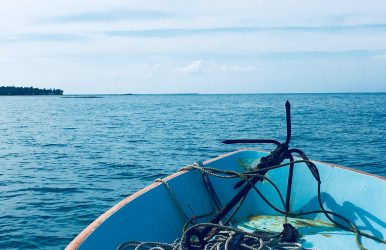
Just tall grass, a wide blue reservoir, and the low rumble of our jeep’s engine! 

Maduru Oya is in the dry zone of Sri Lanka, and it is around 314 kilometers from Colombo. Furthermore, it stretches over Polonnaruwa, Badulla, and Ampara districts. 

It became a national park in 1983 as part of the Mahaweli Development Programme.  

The Programme aimed to protect the catchment area of the Maduru Oya reservoir and four other tanks that feed the region’s irrigation network. 

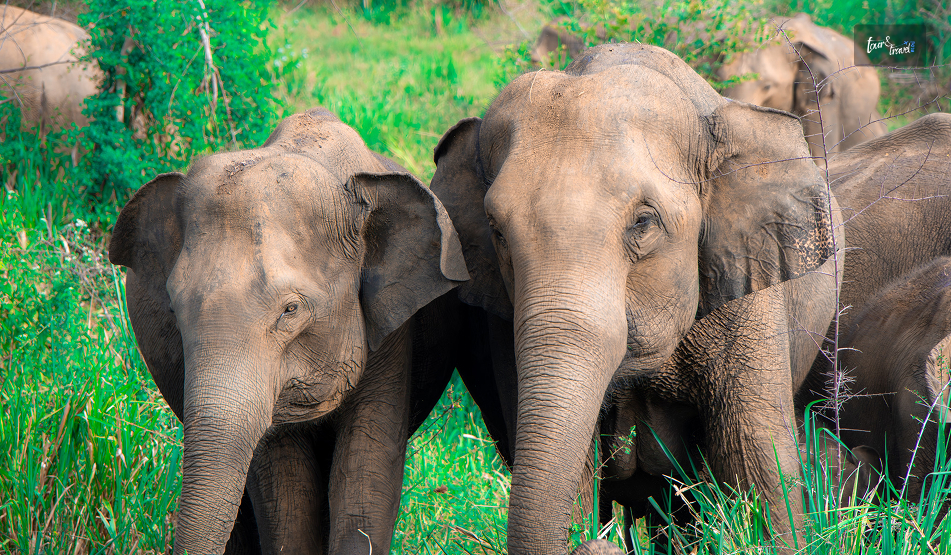
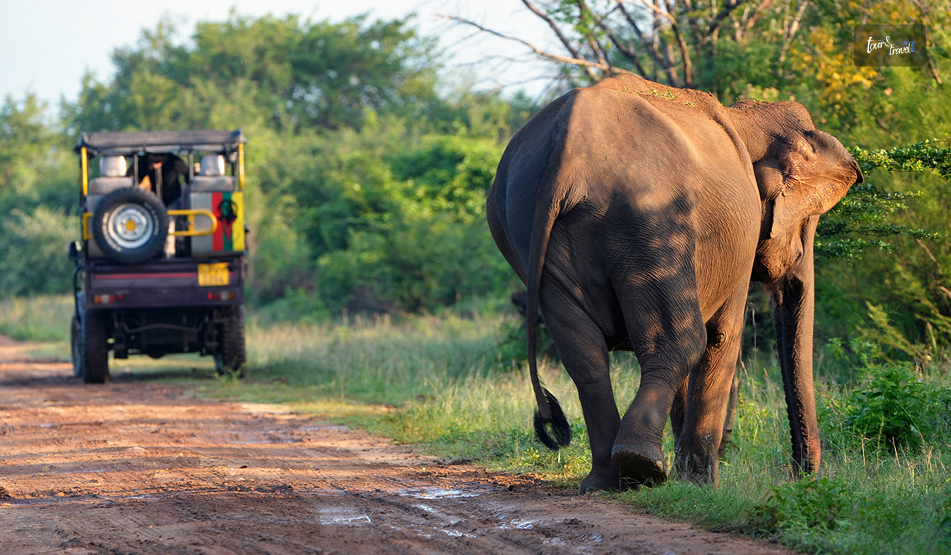
However, you do not remember all these details once you are inside the national park. You have your eyes set on a herd of elephants wading through the shallows with the reservoir stretching out behind them. 

Maduru Oya At A Glance 

Location Polonnaruwa, Badulla and Ampara districts, dry zone  
Distance from Colombo About 314 km (roughly 5–6 hours by road)  
Area 58,850 hectares  
Declared a national park 9 November 1983  
Best time to visit March to September (dry season, better water-point sightings)  
Known for Elephant herds, Vedda heritage, ancient Buddhist ruins  
Nearest hub Kuda Sigiriya / Mahiyanganaya area  
Hours 6 AM to 6 PM (The Ticket Counter Gets Closed at 4 PM.)  

Why Maduru Oya Doesn’t Feel Like Sri Lanka’s Other Parks

Maduru Oya National Park: A Quiet Corner Of Wild Sri Lanka

Fifteen percent of Maduru Oya is water, and 85% is landmass. This ratio shapes the characteristics of the park.  

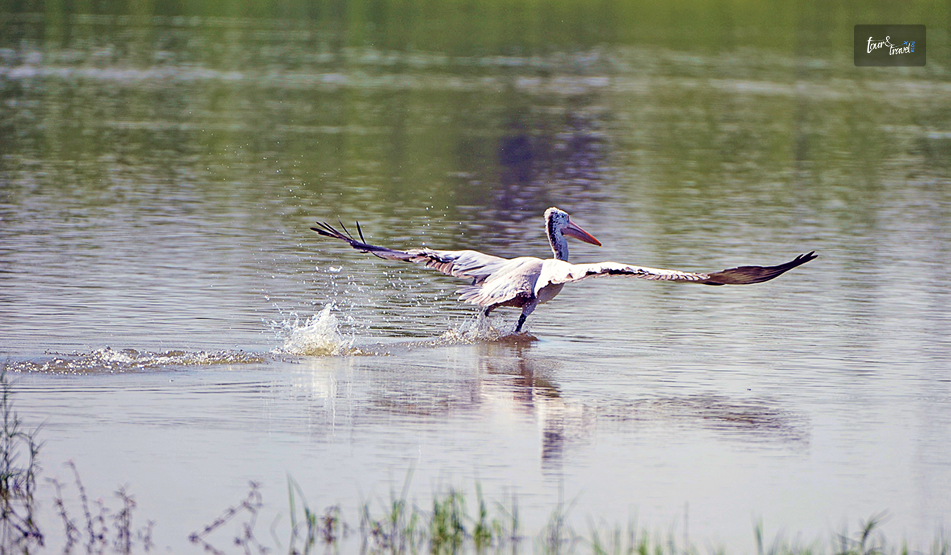
The reservoir and its surrounding wetlands draw the following birds and animals. 

  • Grey Pelicans 
  • Sea Eagles 
  • Painted Storks 
  • Elephants 

Also, the mix of open grassland, scrub, and water made every drive here feel more layered than the flatter areas.  

Furthermore, you will notice patches of tall secondary grass across the park due to the shifting of cultivation over the decades.  

Our guide kept reminding us that these are the places where elephants like to disappear. It happened twice or thrice! 

We spotted an entire herd of six or seven animals, and suddenly they were gone.   

The park’s boundaries lie in the low hills stretching from the Lunugala ridges. 

Also, to the southwest, a rocky mountain range spreads across roughly eight kilometres, giving the drive some visual relief from the flat dry-zone plains most visitors associate with Sri Lanka’s east. 

Wildlife: Elephants First, Everything Else After 

Maduru Oya is famous for its elephant population. Herds of elephants here are really large, and once you pass the tall grass, you will get long and easy-to-watch stretches without the sight of another vehicle.  

Along with elephants, you will also find the following wildlife here. 

  • Leopards 
  • Sloth Bears 
  • Sambar 
  • Spotted Deer 
  • Wild Boar 
  • Wild Buffalo 
  • Toque Macaques 
  • Purple-Faced Leaf Monkeys 

Moreover, if you are on a night-adjacent drive, you can spot nocturnal slender loris here.  

Reptile sightings are common too, with water monitors and the occasional mugger crocodile sunning near the reservoir’s edge. 

A Delight For Birders  

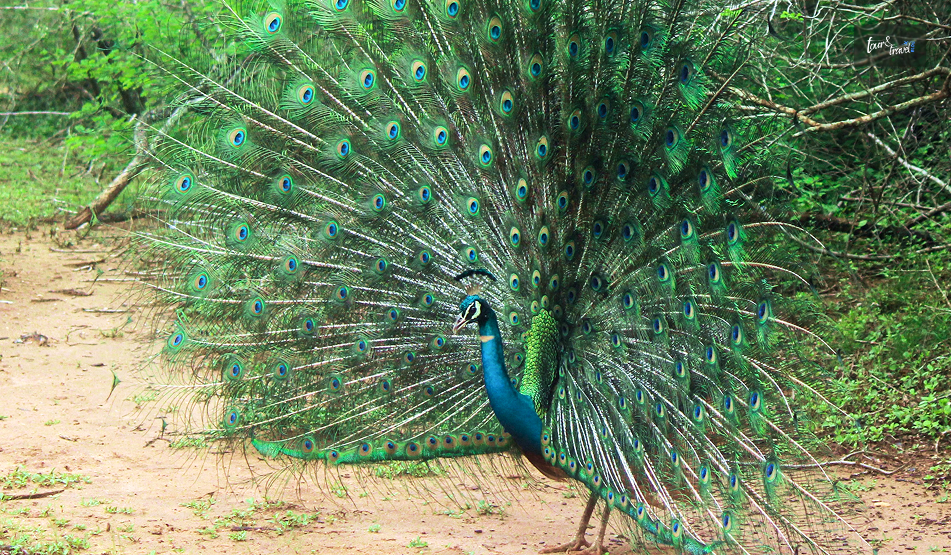
Birders have plenty to work with here, as close to a hundred species of birds call it home. Some species commonly spotted here are: 

  • Woolly-Necked Stork 
  • Openbill 
  • Painted Stork 
  • Racket-Tailed Drongo 
  • Sri Lanka Junglefowl 
  • Yellow-Fronted Barbet 
  • Spurfowl 

My trip has been mammal-heavy so far. So, Maduru Oya was a good place to slow down and let the birdlife catch up. 

Ruins The Safari Jeep Doesn’t Usually Stop For 

Maduru Oya also surprised me with the amount of history it stores inside.  

It has a scattering of ancient Buddhist ruins, shrines, hermitages, statues, and dagobas concentrated around areas like Henanigala, Kudawella, Gurukumbura, Uluketangoda, and Weerapokuna. 

Some of the Brahmi rock inscriptions here date back to the 1st to 3rd centuries BC. 

Also, an ancient sluice gate uncovered during construction of the Maduru Oya Dam is believed to date to around the 6th century BC.  

Most standard safari drives skim past these. 

If ruins interest you, mention it to your guide or driver before you set out, since a slightly different route can take you closer to them. 

The Vedda Community  

The park also sits within Vedda country.  

Sri Lanka’s indigenous Vedda community, believed by tradition to descend from King Vijaya and Queen Kuweni, live in and around the reserve. 

Some tours can arrange a respectful visit to learn about their way of life. I would treat this the way I would treat any community visit. 

Go through a reputable operator, and let the encounter be led by the community rather than treated as a photo stop. 

Planning Your Visit To Maduru Oya

Maduru Oya National Park: A Quiet Corner Of Wild Sri Lanka

Mahiyanganaya, Polonnaruwa, or the Kuda Sigiriya area are the common base areas for a visit to Maduru Oya.  

So, the park can easily fit into your itinerary as a side trip if you are already covering the Cultural Triangle.  

There is no public transport into the park itself. So, you will need a hired vehicle or a pre-arranged safari jeep. 

Most tour operators based in Habarana, Sigiriya, or Polonnaruwa can put together a half- or full-day excursion. 

Safaris And Costs 

Maduru Oya National Park: A Quiet Corner Of Wild Sri Lanka

A half-day safari jeep, roughly four hours, typically runs somewhere in the LKR 7,500–10,000 range. 

However, this varies by operator and season and rarely includes the park’s own entrance fee, which you pay separately at the gate.  

It is worth booking your jeep a day or two ahead during the dry season, when demand picks up.  

I would also second the advice I heard from more than one local guide. 

Go with a small group. Maduru Oya rewards patience and quiet, and a crowded jeep makes both harder to come by. 

Entry Fee 

Entry Fee and Charges to the Park How Much To Pay 
 Local Adults   LKR 60  
Local Children (6-12 years)  LKR 30 
Local Student  LKR 20 
Local Children (below 6 years)  Free 
Local Group Fee (per vehicle)  LKR 400 
Foreign Adults  USD 12 
Foreign Children (6-12 years)  USD 6 
 Adults from Foreign SAARC Countries    USD 10  
Children from Foreign SAARC Countries (6-12 years) USD 5 
SAARC Country Children (below 6 years)  Free of Cost 
Foreign SAARC Visitor Group Fee (per vehicle)   USD 10   
Taxes on Total Cost  18%  
Entrance Fee per vehicle LKR 300 

What Is The Best Time To Visit Maduru Oya National Park?

Maduru Oya National Park: A Quiet Corner Of Wild Sri Lanka

March through September is the sweet spot to visit Maduru Oya National Park.  

It is the dry season when wildlife concentrates around the designated water points of the park. So, sightings are more predictable.  

Early morning drives are cooler and calmer, and as with most Sri Lankan parks, the animals are noticeably more active before the heat of midday sets in. 

Where Does Maduru Oya National Park Fit In A Sri Lanka Itinerary?

Maduru Oya is not a park I would build an entire trip around. 

However, it is an excellent addition if you are already in the Cultural Triangle and want a safari experience without the crowds of Yala or Minneriya.  

Pair it with Polonnaruwa’s ruins in the morning and a Maduru Oya drive in the late afternoon, or use it as a quiet counterpoint after the more chaotic parks further south.

Share on Social Media

Sibashree is a travel, culture, and leisure writer who has been writing since the age of 12 and professionally since 2014. With more than a decade of travel writing experience and journeys across India and several parts of the world, she brings a deeply personal and thoughtful perspective to her work. A student of English Literature and Mass Communication, Sibashree has always viewed travel as more than movement — for her, it has been a way of understanding people, cultures, and herself. Her passion for spiritual exploration has also led her to many unusual and meaningful destinations over the years. Outside of writing, Sibashree enjoys watching European cinema, reading about global politics, and reflecting on the stories hidden within everyday places.

Leave a Reply

Your email address will not be published. Required fields are marked *

title-img Related

READ MORE Luang Prabang travel guide

Luang Prabang Travel Guide: Why I Loved It? (Activities, Attractions, History, Itinerary, And More)

BY  Sibashree Oct 21, 2025

2022 had taken me to the less frequented Luang Prabang in Northern Laos. Now, thanks to the place I call home, I have heard many stories about the Mekong River, and it has always been on my bucket list.  So, a trip to Luang Prabang was a dream-come-true moment for me.  Three years passed by, and today, before writing this Luang Prabang travel guide, I was researching updates about this UNESCO World Heritage Site. I found out that in the Smart Travel Asia Best in Travel Poll 2025, it has been voted as one of the best vacation destinations in Asia.  Furthermore, it has won third place in the Destination Management category of the 2025 Green Destinations Top 100 Story Awards at ITB Berlin. It is a recognition of how Luang Prabang follows a sustainable tourism practice.  So, the Tour and Travel World data looks very convincing about the arrival of 3,061,928 international tourists to Luang Prabang in the first eight months of 2025, recording a 15 percent clear growth YoY.  Nevertheless, beyond the numbers and accolades, Luang Prabang remains in my heart as a beautiful story that I will share in this Tour and Travel Blog.  Luang Prabang Location And Geography: An Overview  Luang Prabang is on a peninsula at the confluence of the Mekong and Nam Khan rivers. It is designated as a UNESCO World Heritage Site for being an “outstanding example of the fusion of traditional architecture and Lao urban structures with those built by the European colonial authorities in the 19th and 20th centuries.” Here are the important geographical data and statistics about Luang Prabang.  Rivers• Nam Khan and MekongPopulation• 47378 (Source: World Population Review)Primary Ethnic Group• The Kmhmu or KhmuMountains• Phou Nang, Phou ThaoForests• Luang Prabang Montane Rain Forests EcoregionDry Season• November to AprilWet Season â€˘ May to OctoberAverage Annual Rainfall â€˘ 1,600 MM (Source: North-Vietnam.com)Average Humidity• 70% (Source: North-Vietnam.com)Waterfalls• Kuang Si, Phu Fa WaterfallNatural Vulnerabilities• Landslides• Floods• DraughtsSpecial Geographical Feature• Mount Phousi, a Central High Hill with an Altitude of 150 MetersArea• 16,875 Square KilometersNatural Vegetation• Oak• Beech• Dipterocarpus• Bamboo• Laurel How To Reach Luang Prabang? I took a flight to the Luang Prabang International Airport (LPQ) via Bangkok. You can also take a connecting flight from Singapore. As the main gateway to the town, LPQ gets flights from the Suvarnabhumi and Don Mueang airports in Bangkok, Siem Reap, Hanoi, and Chiang Mai. After reaching the airport, I took a tuk-tuk to reach the town center. It cost me around $5 per person.  What Is The History Of Luang Prabang?  The legends and stories about Luang Prabang never end, and I can attest to that. Every time I visited a Vietnamese coffee shop or talked to my homestay owner, a new story came up.  Here are the key facts about the history of Luang Prabang.  The archaeological evidences suggest that the history of inhabitation in Luang Prabang goes back to 8000 B.C.  The city was initially known as Muang Sua, and by 1357, it was renamed as Maung Xieng.  Further, in the 14th century, Luang Prabang was home to the first Lao Kingdom, Lane Xang, built by King Fa Ngum.  After the city got a new name, it received a Phra Bang, or a golden image of Lord Buddha, from the Khmer monarchy. Thus, it got its current name, Luang Prabang.  Luang Prabang served as the ancient capital of Lane Xang till 1560. After that, King Setthathirath shifted the capital to Vientiane. During the rule of King Surigna Vongsa (late 17th century), Luang Prabang had its first interactions with the Western emissaries.  In 1694, after the demise of King Surigna Vongsa, Lane Xang was divided into three parts: Luang Prabang, Champasak, and Vientiane.  In the 19th century, the city witnessed much destruction by the black flag pundits.  Major restoration work by King Sisavang Vong took place during the span of 1904 and 1959.  It is said that Lord Buddha used to rest here on his pilgrimage route, smiling to indicate the future prosperity of the city.  Major Attractions in Luang Prabang, Laos In the recent annual Lighted Boat Festival, Luang Prabang grabbed all the limelight with its beautifully crafted boat and lighting, celebrating the 30th anniversary of its designation as a UNESCO World Heritage Site.  Along with the Old Town, these are other major attractions in Luang Prabang.  1. Kuang Si Falls I reached the Kuang Si Falls after visiting the Tat Kuang Si Bear Rescue Centre. The layered pools are the most amazing features of Kuang Si Falls.  After swimming in the pools, I took a walk along the bridge for stunning photos. The entry fee to Kuang Si Falls is around 60,000 KIP.  2. Mount Phousi Trekking to Mount Phousi was not as difficult as I thought. I wanted to take it a little slow and reach the top of Mount Phousi in less than an hour. The steps were not that steep.  The entry fee was 20,000 KIP, and it was almost sunset when I reached the Golden Stupa at the top of Mount Phousi. The red lights falling on the Golden Stupa looked magical, and the panoramic view was beautiful.  3. Royal Palace Museum Timing: 8 AM -11:30 AM and 1:30 PM to 4 PM The Royal Palace Museum stands as a testament to the opulence and royal grandeur of Laos in the pre-Communist era. Among the artefacts, the Phra Bang Buddha statue is the main attraction.  The former royal residence also stands out because of its fusion of Laotian and French architecture.  4. Wat Xieng Thong Hours Open: 8 AM to 5 PM Entry Fee: 30.000 Kip/Person Built in 1560, Wat Xieng Thong is one of the most revered temples in Laos. Setthatirath built this temple, and I loved the glass murals here.  5. Pak Ou Caves To explore more Luang Prabang temples, I reached Pak Ou Village. The tuk-tuk ride to the caves costs around 400000 KIP, and I reached the caves after a long boat ride. The journey was beautiful. The temples and Pak Ou caves with statues of Lord Buddha are the highlights of my Luang Prabang trip. The entry fee was 20000 KIP.  6. Luang Prabang Night Market Hours: 5 PM to 10 PM The Luang Prabang Night Market was a real surprise. Honestly, I did not expect this much fun. Hundreds of vendors were selling clothes, handicrafts, ornaments, ceramics, tea, and coffee.  I bought some textiles, bags, and ceramics. One thing - you have to be at the A game of your negotiation. Some vendors are really pushy.  7. Tad Sae Waterfall Hours: 8 AM to 7 PM Tickets: 15000 Kip for Locals and 30000 KIP for Foreigners (Free for Children below 8 Years) While Kuang Si is a more popular choice, it is bigger. However, I loved the Tad Sae Waterfall more. It is more relaxing, and for me, the nearby elephant park was an added attraction.  One of the best Luang Prabang waterfalls, Tad Sae Waterfall, is layered with crisscrossing decks. 8. Traditional Arts and Ethnology Centre Hours: 8 AM to 5 PM (Monday Closed) Entry Fee: Fee for Locals, 25000 KIP for Foreigners  View this post on Instagram A post shared by TAEC Museum | Shop | Cafe (@taeclaos) The board on the wall of the Traditional Arts and Ethnology Center sums up what experience you can expect here. You can combine your Mount Phousi trek with this Ethnology Centre visit.  It was a brilliant curation of more than 600 artefacts from over 20 ethnic groups in Laos.  9. Wat Mai Suwannaphumaham Hours Open: 8 AM to 5 PM Tickets: 10.000 Kip/Person Wat Mai Suwannaphumaham is one of the closest temples to the city center. It was built in 1796, and a major restoration work took place in 1821 under the leadership of King Manthathourath.  The temple has beautiful murals and sculptures on the wall, along with the golden statue of Lord Buddha.  10. Alms Giving Ceremony Some activities in Luang Prabang are free but priceless in terms of experience and learning. Giving alms to monks is a part of the social and religious practice of the place I belong to. Furthermore, giving alms to monks is like sharing your resources with the community.  I reached near the Joma Bakery Cafe on the Sakkalaine Road to take part in this ceremony.  The monks were happy with whatever they received. However, due to cultural differences, many tourists do not understand the significance or the courtesy of giving alms. 11. Ock Pop Tok Living Crafts Centre View this post on Instagram A post shared by Ock Pop Tok (@ockpoptok) Just around 2 km from the Night Market, Ock Pop Tok Living Crafts Centre is a place to learn about traditional Laoian textiles and craftsmanship. I took the free tuk-tuk ride from the Night Market to this crafts center.  Tuk-tuk services are available from 8 AM to 8 PM. 12. Phosi Market Hours: 7 AM to 5 PM View this post on Instagram A post shared by Mas El Mundo (@the_slowtraveller) Phosi Market is the biggest market in Luang Prabang, and the air here is heavy with the whiff of fresh produce and spices.  I talked to the local vegetable gardeners here and bought some local spices. Honestly, exploring the local markets is one of the best things to do in Luang Prabang Laos for solo travelers.  13. UXO Lao Visitor Center Hours Open: Monday to Friday - 8 AM to 11:30 PM and 1 PM to 7 PM Entry: Free View this post on Instagram A post shared by Raja Ray (@raja.ray) I took a 15-minute walk from the City Center to reach the UXO Lao Visitor Center. The center tells you that Laos has been the most heavily bombed nation, according to a per capita calculation.  Some of the bombs have not exploded, and they remain on the earth. They continue to create human casualties.  The documentary I saw here was heart-wrenching, and the survivor stories gave me goosebumps.  14. Whisky Village View this post on Instagram A post shared by LUCA CURTI GIALDINO (@lukectfd) I reached Whisky village in search of the authentic Lao rice whisky. The settlement of Whisky Village or Ban Xang Hai is quaint. Almost every bottle has an encapsulated reptile.  I finally could not muster the courage to buy a bottle. Instead, I collected some silk textiles with intricate weavework.  Is Luang Prabang For Every Traveler? Who Will Love It The Most? Luang Prabang is more suitable for solo travelers and couples.  Having immersive cultural and spiritual experiences with museum and temple visits is one of the best things to do in Luang Prabang Laos for solo travelers. I thoroughly enjoyed it as a solo traveler, be it a visit to Wat Xieng Thong or exploring the markets.  Furthermore, Luang Prabang celebrates romance like quiet luxury. A sunset cruise on the mighty Mekong River or a bath in the turquoise pools of Kuang Si Falls are some of the most romantic things to do in Luang Prabang, Laos.  However, Luang Prabang is versatile in terms of the types of travelers it caters to. Most importantly, it teaches the art of slow and meaningful tourism in which you build connections and garner experiences that last a lifetime.  Here is a quick breakdown of different places in Luang Prabang catering to different types of travelers.  Types of TravelersPlaces to Visit in Luang PrabangHistory Buffs• Wat Xieng Thong• Old Quarter• Wat Mai Suwannaphumaham• Wat Visounnarath• Pak Ou CavesNature Lover• Mount Phousi• The Mekong River• The Forest AreaWildlife Enthusiast• Luang Prabang Wildlife Sanctuary• Elephant Village Sanctuary• MandaLao Elephant Conservation:• Manifa Elephant CampBackpackers and Budget Travelers• Tad Sae Waterfalls• Kuang Si FallsCulture and Local Life Experience• Luang Prabang Old Quarter• Luang Prabang Night Market However, beyond everything, Luang Prabang continues to be the spiritual heart of Laos.  Luang Prabang And A Unique Spiritual Experience  A BBC report suggests that Luang Prabang has the highest per capita monk population of anywhere else in the world. However, the Buddhist heritage of the city is impacted by the rapid surge of tourists after the opening of the Laos-China Railway in 2021.  The significant customs, such as alms giving, have now become more commercialized, losing their community and spiritual experience.  To combat this commercialization, Anat Khamphew and many other former monks are setting up tour guiding companies such as Spirit of Laos and Orange Robe Tours.  These companies will help establish an authentic experience where significant spots and devotional symbols are not turned into backdrops for selfies and Instagram photos, and where monks do not receive leftovers and junk food as alms. It’s all about traveling the monk’s way. Budget And Expenses For The Luang Prabang Trip I was traveling solo, and the expense was around $30–$50 or 6,52,832.40 to 10,88,054.00 Laotian Kip per day. The entry fees are a little higher, considering the local currency.  My daily expenses included: Hostel Charge: $20 Per Night (Mid-range hotels available at around $50-80 per day) Food: $5-10 Travel: $5 Entry Fee: $5 What Is The Best Time To Visit Luang Prabang?  November to February is the best season to visit Luang Prabang. Just after the October rainfall ends, the city enjoys clear weather conditions with mild temperatures. So, it is the ideal time to explore the outdoor things to do in Luang Prabang, Laos.  Luang Prabang experiences heavy rainfall from June to October, and March to June is stuffy and hot.  Here is a breakdown of temperatures in Luang Prabang by month. (Source: National Oceanic and Atmospheric Administration, NOAA).  MonthsHighest Temperature (Degree Celsius)Lowest Temperature(Degree Celsius)January2814February3216March3419April3522May3524June3424July3324August3224September3323October3221November3018Decemeber2815 Luang Prabang Food And Customs I Loved Furthermore, food in Luang Prabang is fresh and wholesome, just as the city is. I fell in love with \(Mok\) \(Pa\), which is fish steamed and cooked in banana leaves. I also tried \(Laap\), a national Laotian dish, and I chose the version with minced meat.  Furthermore, I lost count of the coconut cakes I had in Luang Prabang. It was subtle, sweet, and hearty.  The markets are the best place to explore the local specialties of Luang Prabang. However, the food scene of the city came alive after sunset.  Also, I was quite happy with the experience of the places I ate, such as the Tamarind Restaurant and Bouang Asian Eatery.  Luang Prabang’s culture is deeply rooted in Theravada Buddhism. The daily alms-giving ceremony at dawn is a sacred tradition.  Locals wear traditional Lao sinh and celebrate festivals like Pi Mai (Lao New Year) and the Festival of Lights. You have to dress modestly, remove shoes before entering temples, and respect local customs. Luang Prabang Travel Guide: The Dos And Don’ts Here is a detailed checklist of the things to do and things to avoid in Luang Prabang. Have a look at the table below.  Checklist for Traveling to Luang Prabang, LaosMistakes to Avoid When Traveling to Luang Prabang, Laos• You will need a valid passport and a Laos visa (eVisa or visa on arrival).• Get your money converted to local currency (Lao Kip) or USD.• Have travel insurance and keep the documents handy.• Dress modestly for temple visits. Use a reusable water bottle. â€˘ Wear sunscreen and insect repellent.• Choose comfortable walking shoes.• Carry a rain poncho or umbrella (especially in the wet season).• Buy a local SIM card and have an offline map when exploring the city and beyond. â€˘ Be respectful toward local customs such as alms giving. â€˘ Check the license of the driver for scooter rentals, as incidents of scooter accidents are common. â€˘ Negotiate and agree upon the fare before the tuk-tuk ride starts. â€˘ Visiting during the burning season (March–April) due to poor air quality• Arriving without USD for visa fees• Overestimating travel time between attractions• Not booking transport in advance during holidays.• Visiting over-crowded areas, petty thefts are common.  My 5-Day Travel Itinerary In Luang Prabang I stayed in Luang Prabang for 5 days. The best thing about Luang Prabang is that it will not push you to rush. So, my five-day stay here was one of the most relaxed experiences I had. Here is what I did on those five days.  DaysItineraryDay 1: Arrival and Cultural Experience• Reaching the Luang Prabang International Airport• Checking into my hostel• Evening walk in the city center• Having authentic Laotian food at Tamarind Restaurant• Exploring the Night Market Day 2: Temple Visits and Spiritual Immersion• Alms Giving ceremony at sunrise• Breakfast Saffron Coffee• Visiting Wat Xieng Thong, Wat Mai Suwannaphumaham, and the Royal Palace Museum• Lunch at Bouang Asian Eatery• Climbing Mount Phousi for sunset viewsDay 3: Nature and Adventure• Day trip to Kuang Si Falls, visiting the Bear Rescue Center, and swimming in the turquoise pools. â€˘ Lunch at Kuang Si Butterfly Park Café• Back to the town and enjoying a sunset cruise on the Mekong River. â€˘ Dinner at Utopia BarI chose Utopia Bar as it is great for solo travelers. The live music and yoga sessions were the highlight. Day 4: Exploring Culture and Craft• Visiting the Traditional Arts and Ethnology Centre• Visiting the Ock Pop Tok Living Crafts Centre and taking a weaving class• Lunch at Coconut Garden• Afternoon visit to Phosi Market• Cooking class at Tamarind Cooking School in the eveningDay 5: Offbeat Exploration and Departure• Half-day boat trip to Pak Ou Caves• Whisky Village en route• Lunch on the boat• Last-minute shopping at Night Market• Departure from Luang Prabang International Airport Tips For A Seamless Travel Experience In Luang Prabang  Stay near the night market for easy access to food and shopping. Join a walking tour to meet fellow travelers and learn local history. Rent a scooter or join a shared tuk-tuk to Kuang Si Falls. Cultural workshops are great for solo bonding and learning. Book an airport transfer in advance to avoid last-minute stress. Is Luang Prabang Worth A Visit?  Luang Prabang is definitely worth a visit, and its charm as a spiritual hub is matchless. It’s like that quiet afternoon of an autumn when you see the golden light of the Sun caressing your windows and floors.  Furthemore, it is a blend of natural attractions, wildlife, religious centers, cultural heritage, markets, and a vibrant food scene. The UNESCO World Heritage site is also a friendly and affordable place to be for solo travelers.  There is a reason why National Geographic praises its spiritual ambiance and well-preserved heritage, or Discovery Travel emphasizes its cultural richness, eco-tours, and artisan tours.  Moreover, it epitomizes the tourism slogan of Laos, “Simply Beautiful!” It is the place where you have to experience and not just travel.  Luang Prabang Travel Guide: Frequently Asked Questions (FAQs)  Here are the frequently asked questions and answers about the Luang Prabang travel guide.  1. What Cultural Events Or Festivals Happen In Luang Prabang? Boun Pi Mai Lao, or the Lao New Year, is the biggest festival in Luang Prabang. It takes place around mid-April. Boun Suang Huea, or the Boat Racing Festival, in September, and Boun Lai Heua Fai, or the Festival of Lights in October, are also celebrated with great pomp. Furthermore, November is the month of the That Luang Festival at the That Luang Stupa. It is celebrated with a trade fair and religious ceremonies.  2. Is 2 Days Enough In Luang Prabang? While you can cover some important landmarks of Luang Prabang in two days, I think that you will need at least 2-3 days more to immerse yourself in the local cultural and spiritual experience.However, if you are in Luang Prabang for two days, you can explore the City Center, the National Museum, the Royal Palace, and the temples near the City Center on day 1. On day 2, you can plan a trip to the Pak Ou Caves and Kuang Si Falls.  3. When To Avoid Luang Prabang? Late February to April is the time to avoid visiting Luang Prabang. Extreme heat and stuffy weather make the days uncomfortable for outdoor exploration. June to October is another season to avoid due to heavy rainfalls and calamities such as landslides. Read Also: A Comprehensive Guide To The Main Types Of Asian Food That You Can Find In Singapore Sunrise Spots in Vietnam: Top Places to Catch the Best Morning Views 5 Must-Visit Places In Thailand: Should I Go To Phuket Or Krabi?

READ MORE Knuckles Mountain Range

Knuckles Mountain Range Sri Lanka: A Guide To The Wildest Central Highlands Of Sri Lanka

BY  Sibashree Aug 21, 2026

I saw the Knuckles Mountain Range from a distance, and I knew where it got its name from.  Near Riverston, the ridgeline transformed into a row of rounded peaks with unique folds. The folds further made it look like a clenched fist against the sky. I was expecting an extension of Nuwara Eliya or the charm of Ella in the Knuckles Mountain Range.  However, instead of the tea estates, I got days of cloud forest, leech socks, village guides, and a silence so complete that I could hear my own footsteps on the trail. Also, if you have loved Horton Plains National Park, you will definitely cherish the Knuckles Mountain Range, the less-polished and wilder counterpart. Where The Knuckles Mountain Range Is And The Mystery Behind Its Name The Knuckles Conservation Forest is in the Central Highlands of Sri Lanka. It is between the Kandy and Matale districts and at a distance of around 30 to 40 kilometers northeast of Kandy Town. Furthermore, it stands between the Kandy and Matale districts.   The Mountain Range gets its name from five or six peaks that you can see from certain angles. These peaks, with their folds and unique round shapes, resemble knuckles on a closed fist. However, the local name for the mountain range is Dumbara Kanduvetiya. The name means the "misty mountain range."  Honestly, I could relate to this name more during my visit. On the two days I visited the mountain range, the Sun was not out even when it was 9 AM.  In 2010, the Knuckles Mountain Range got the designation of a UNESCO World Heritage Site as part of the Sri Lankan Central Highlands listing.  It got the designation because of how many distinct climate zones and endemic species are packed into a relatively small area. How To Reach The Knuckles Mountain Range? Most people base themselves in Kandy or the small village of Meemure, Corbett's Gap, or Hunnasgiriya before heading in. I stayed in a homestay near Hunnasgiriya, which cut my morning drive to the trailhead down to about 40 minutes. FromDistanceApprox. Travel TimeKandy30–42 km (depending on trailhead)1.5 to 2 hours by tuk-tuk or carColombo140 km4 to 4.5 hours by carMatale25 km1 hourDambulla45 km1.5 hours There is no train access into the range itself. So, a hired vehicle, tuk-tuk, or your own transport is essentially mandatory.  Roads narrow into single-lane gravel past Loolwatte, and a couple of the approach roads are only comfortable in a 4WD or trail bike during monsoon months. What Makes Knuckles Different From Other Highland Parks If you have already read up on Horton Plains, you will know that the park is essentially a single well-marked loop trail to World's End.  Knuckles is the opposite. It is a sprawling, largely unmarked forest reserve with more than 35 identified peaks and a dozen-plus trail combinations, most of which require a local guide. I hired mine through the Forest Department office near the Wattegama entrance, and I am glad I did. Without him, I would have missed the point entirely where the trail splits toward Deer Park versus the summit route. Flora And Fauna The range spans five distinct climatic zones within a 20-kilometer radius, which is unusual anywhere in the world.  On my hike, I moved from dry-zone scrub near the base, through a submontane forest thick with orchids, into genuine cloud forest by midday, where the canopy dripped constantly even without rain. FeatureDetailsElevation range300 Meters to 1,863 Meters (Knuckles Peak)Endemic plant speciesOver 160 RecordedBird speciesAround 128 Bird Species, including the Endemic Sri Lanka Whistling ThrushNotable wildlifePurple-faced LangurRusty-Spotted CatKandyan DrongoBest known peaksKnuckles PeakGombaniyaCorbett's GapDeer Plateau I did not spot the rusty-spotted cat, and almost nobody does. However, I did have a long, unbothered staring match with a purple-faced langur troop near Deer Park, and the birdlife alone was worth the leech bites. Popular Trails And What To Expect You can choose the loops and trails in the Knuckles Mountain Range based on the kind of experience you want.  The Meemure Loop This is the trail most guides recommend for a first visit. It is a roughly 10-kilometer loop through the traditional village of Meemure, one of Sri Lanka's most isolated settlements. It is still reachable only by a single mountain road.  I spent a night here in a village home, ate red rice and jackfruit curry cooked over a wood fire, and left with a much better sense of why people describe Knuckles as a living landscape rather than just a park. Corbett's Gap And Riverston If you have limited time, Riverston is the easiest win.  It is a short drive-up viewpoint rather than a trek, and on a clear morning the "Bible Rock" formation and the valley below are genuinely dramatic.  I would treat this as a half-day add-on rather than the main event. Knuckles Peak Summit Trail This is the demanding one.  It is approximately a 14-kilometer round trip with a real elevation gain, usually done as a full-day hike starting before dawn.  Expect grassland patches, patana grass ridgelines, and a scramble near the top.  I would not recommend it without a guide or without reasonable fitness. Parts of the descent were harder on my knees than the climb up. TrailDistanceDifficultyTime NeededRiverston / Corbett's Gap1–2 Km ViewpointsEasy2–3 HoursMeemure Loop10 KmModerateFull day / OvernightKnuckles Peak Summit14 km round tripChallengingFull day (Start Pre-Dawn)Deer Park Trail6 KmModerateHalf Day Practical Tips From My Trip Leeches are real and constant in the wetter zones, especially June through September. So, leech socks aren't optional; I learned this the hard way on day one. Weather flips fast. I packed for cold cloud-forest mornings and sweated through humid valley afternoons on the same day. A guide is genuinely necessary for anything beyond Riverston. Trails are not signposted, and the Forest Department requires registered guides for most routes anyway. The best season is broadly February to April and August to September, avoiding the heaviest southwest monsoon rains. Phone signal disappears past Hunnasgiriya on most networks, so download offline maps beforehand. Entry to the Knuckles Mountain Range is free. However, based on the loop you take, the trekking and permit charges will be between LKR 1000 and LKR 2500.  Where To Stay Near The Knuckles Mountain Range? Options are simple by design. This is not a resort destination.  Homestays in Meemure and Loolwatte give the most authentic experience. On the other hand, Hunnasgiriya and Corbett's Gap have a handful of small eco-lodges with better amenities if you want a hot shower after the hike. Knuckles Mountain Range: The Ultimate Remoteness Of Sri Lanka Knuckles won't give you the manicured, easy-access experience of Horton Plains or the tea-country views of Nuwara Eliya.  What it gives instead is a genuine sense of remoteness. I found village life largely untouched by tourism, a forest that changes character every few hundred meters of elevation, and trails that still require a bit of local knowledge to navigate.  If World's End felt like Sri Lanka's highlands on display, Knuckles felt like walking into them.  I am already planning a return trip to attempt the summit trail from the Deanston side, weather permitting.

READ MORE things to do in nara

What Are The Things To Do In Nara? How To Plan A Two-Day Trip?

BY  Sibashree Mar 31, 2026

A trip to Nara was long overdue, and as the first permanent capital of the country, it is a must-visit.  Furthermore, this Japanese capital, before 794 AD (then Kyoto became the capital), has many UNESCO World Heritage Sites.  The Todai-ji Temple is the most famous among these 8 UNESCO World Heritage Sites. You will find one of the largest Buddha statues in the country here, and the statue is made of bronze.  Of course, the deer roaming in the city are beautiful, and you feel like getting transported to a bygone era.  It reminded me of one of the most famous literary works in our country, Shakuntalam Abhigyan, an immortal love story between King Dushyanta and Shakuntala, written by Kalidasa in Sanskrit.  Also, this is a place that will ask you to come back, and most people plan a day trip to experience its historical charm and natural beauty.  But, smitten by its beauty, I chose a 2-day trip, and here is the list of things to do in Nara. Also, I will discuss how I can get to Nara.  How To Reach Nara?  Nara is easily accessible from Kyoto, which is also famous for its history and cherry blossom season.  You can also visit Nara from the Osaka prefecture. So, overall, a visit to Nara can fit well into your itinerary of visiting the Kansai region of Japan.   Also, the robust railway system of Japan makes it easy and budget-friendly to visit Nara. A Japan Railway Regional Pass will be the best for traveling across Nara, Kyoto, Osaka, and Kobe, and the entire Kansai Region.  Also, when in Osaka, don’t forget to explore the street food stalls and have the best Osaka food, including Mochis and seafood delicacies.  Here is how you can travel from Kyoto to Nara. 1. Traveling From Kyoto To Nara Through The JR Nara Line You will get an express train or a local train from Kyoto to Nara every hour.  Furthermore, if you opt for the Miyakoji Rapid Service on this line, you will reach Nara within 45 minutes, and the ticket price will be 720 JPY.  Also, the local train services, with the same ticket price, will take about 70 minutes.  Once you reach the JR Nara station, you will get buses to the Nara Park and other top attractions in Nara.  2. Take The Kintetsu Railway To Reach Nara From Kyoto This is the most convenient way to reach Nara from Kintetsu Railway Station.  The train journey is the fastest, and the journey takes about 35 minutes by the express trains, and the ticket price is 1280 JPY.  Also, the regular trains take about 45 minutes to complete the journey. The ticket price is 760 JPY.  What Are The Things To Do In Nara?  From a visit to the Nara Park to exploring Heijo Palace and the temples, there are many things to do in Nara.  Here are the things I did during my 2-day stay.  1. Day 1 In Nara: Exploring The Nara Park  With deer passing by, Nara Park, the home to the main attractions in Nara, is a place you cannot simply miss.  The park is free to enter, and it remains open for 24 hours.  However, many attractions in the park close after 5 PM. So, you have to be early when visiting it.  Also, here are the attractions you will come across in the Nara Park, along with the deer passing by.  • Kasuga Taisha One of the UNESCO World Heritage Sites in Nara, Kasuga Taisha, takes us back to the Nara Period from 710 to 794 AD.  It is the most revered shrine among the Fujiwara clan as the tutelary shrine.  Furthermore, the main attraction of the shrine is the “Hall of Lanterns.” There, I saw many bronze lanterns illuminating the darkness.  During the special festivals, Setsubun Mantoro in February and Chugen Mantoro in August, all these lanterns are lit.  Moreover, you will find a cider tree in the inner shrine, and it is 1000 years old.  • Mt. Wakakusa I took the back road from Kasuga Taisha on the way to the Todai-Ji temple.  I came across many small shrines there. However, the highlight was Mt. Wakakusa.  This hill between the two shrines has a height of 350 meters. Also, on the 4th Saturday of January, it becomes the venue for the Wakakusa Yamayaki celebration.  People burn dead grass on the slopes, and this is a ritual that has been celebrated since the 18th century.  • Todai-Ji Todai-Ji is another UNESCO World Heritage Site, and one of the “Historic Monuments of Ancient Nara.” It was built in 752 AD, and it was the head of all the temples in the province. It even had a strong influence on the royal family.  In fact, with Todai-Ji being the seat of control even in the royal decisions, the emperor decided to move the capital to Nagaoka in 784 AD.  However, the main attraction of the Todai-Ji Temple is the massive Buddha statue, or Daibutsu.   A depiction of Dainichi Nyorai,  it represents the primordial Buddha in the orthodox East Asian Buddhist philosophy.  You will also find two similarly sized Bodhisattva statues here.  However, the temple and statues you see today were burned down, and they were rebuilt during the Edo period (1603–1868).  2. Things To Do In Nara: Day 2 I visited the Heijo Palace and many other temples of Nara on day 2.  • Visiting The Heijo Palace  When Nara was the capital, the Heijo Palace was the seat of power for the chrysanthemum throne.  It had a dimension of 1 kilometer, considering the other palaces and architecture of that time.  However, the remains of this UNESCO World Heritage Site in Nara are now at the Toshodai-ji Temple, nearby.  However, since the 1950s, archaeologists have been studying the remains of the Heijo Palace, and this has evoked further public interest.  That is why you can now see many placards there and read about the history and legacy of the site.  Moreover, the audience hall and two other parts of the palace were rebuilt. The restoration of the largest part, the audience hall, happened in 2010.  It was an ode to the 1300th anniversary of Nara as the capital of Japan.  • Toshodai-Ji As I have mentioned, the Toshodai-ji Temple has the remains of the Heijo Palace.  This temple dates back at least a millennium. Ganji, a Chinese monk, built this temple in 759 AD.  Monk Ganji brought Buddhism to Japan, and the Toshodai-Ji today is a UNESCO World Heritage Site.  • Yakushi-Ji It is a UNESCO World Heritage Site, and people here worship Lord Buddha as Yakushi Nyorai or the Medicine Buddha.  The dual main halls here have unique architecture, and each has a dedicated 3-story pagoda.  • Horyu-ji  Horyu-Ji is older than most temples in the Nara region, and Prince Shotoku founded it in 607.  Furthermore, this UNESCO World Heritage Site stands out with its wooden edifices, which are some of the oldest in Japan. This time, I missed many attractions such as Asuka, Omiwa Shrine, and Mount Yoshino. Some day for sure!  And till then, SayĹŤnara, guys!