
Where To Stay In Mirrissa, Sri Lanka In 2026? Know The Best Accommodation Options

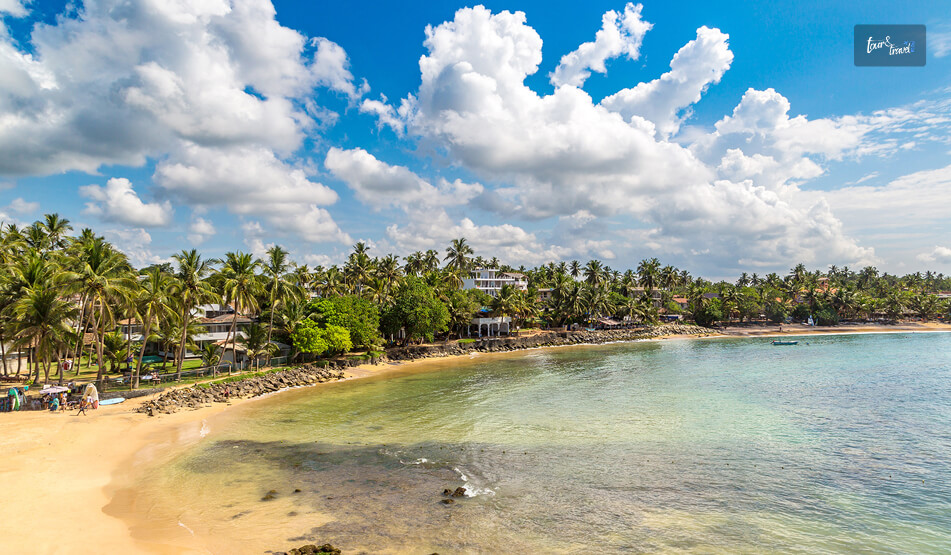
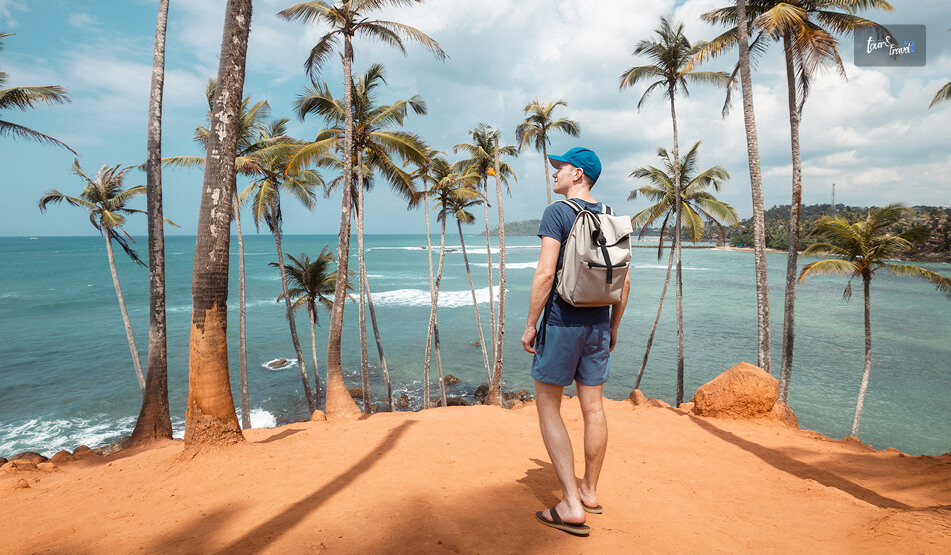
Mirissa Beach has been one of the most sought-after destinations if you want to explore the south coastal lifestyle of Sri Lanka. 

You can enjoy Mirissa with salt on your skin and a cold Lion beer in your hand. Furthermore, it is one of the most magical places to watch the sunset in Sri Lanka. 

It initially started as a sleepy surf stopover, and then it had a handful of guesthouses and beach shacks. 

Today, it is a small tourist town that buzzes with smoothie bowls, boutique stays, and a skyline that now brushes the palms.

During my first visit to Sri Lanka, Mirissa, still pristine, was the place to track tides and enjoy rice and curry for lunch. The beer and BBQ culture after dark was still an occasion. 

Also, as a backpacker, a family guesthouse near the Matara Highway was the accommodation I could manage at that time. 

However, today, Mirissa has changed. Despite the same south-coastal rhythm, the pace of life here has become faster and the accommodations smarter. 

So, here is a practical guide on where to stay in Mirissa. 

Where To Stay In Mirissa? My Quick Picks 

Before I get into the details about where to stay in Mirissa, here is my quick sneak peek into the top picks. 

Top PickMirissa Beach Villa
Best ValueD Canal House
Top VillaVilla Vista, Mirissa 
Best for FamiliesCasa Maria
Budget OptionBanana Bunks

Where To Stay In Mirissa? A Detailed Overview 

Based on the kind of experience you want, these are the best places to stay in Mirissa. I have picked them based on the pricing, amenities, and overall hospitality. 

1. Mirissa Beach Villa ( My Top Pick)

Mirissa Beach Villa ( My Top Pick)

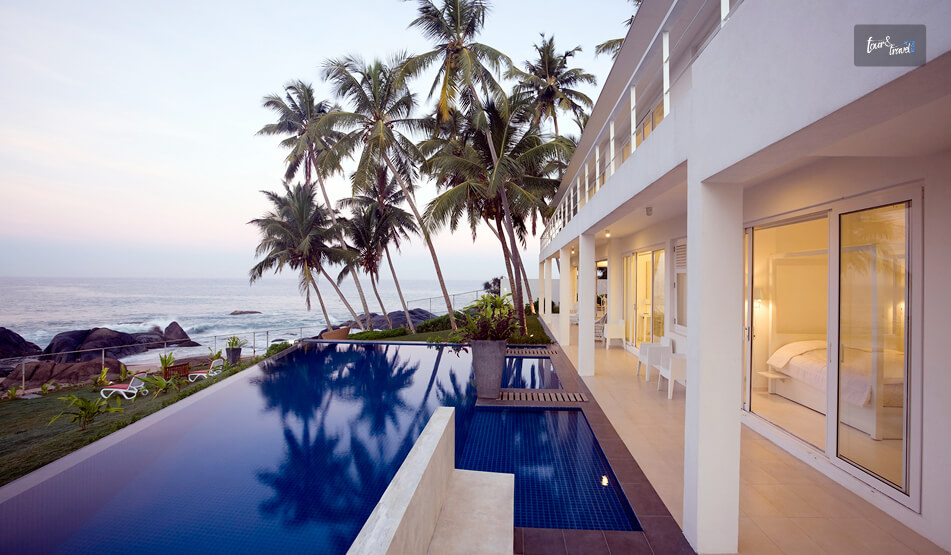
The Mirissa Beach Villa is a testament to the quintessential slow living style of the southern coast of Sri Lanka. 

It has a white-washed facade and arched verandas. Furthermore, its classy interiors have hand-crafted teak furniture, soft linens, and splashes of tropical color.

So, the moment you step in, you experience the warmth. Furthermore, the Mirissa Beach Villa never feels pretentious despite its elegance. 

Furthermore, it has six bedrooms that are open terraces. Some of them face the Indian Ocean, and some the garden. 

You can also enjoy your time in the dreamy infinity pool here. 

2. D Canal House: The Best Value Option 

D Canal House is stylish and peaceful. Furthermore, it is more personalized than other stays in Mirissa. 

Also, it feels like a tropical hideaway in comparison to a hotel. Furthermore, it is surrounded by waterways and coconut palms. 

Another great thing is that you can take just a short walk from D Canal House, and you will reach Mirissa Beach. 

Along with its closeness to nature, D Canal House also boasts typical Sri Lankan artistry. 

The whitewashed walls, terracotta floors, and bursts of local color in the form of handwoven textiles and painted tiles! Everything here is very local! 

Moreover, D Canal House has rooms and bungalows, and each has its own verandah overlooking the canal and the garden. 

In addition, the saltwater pool is the perfect spot to spend an afternoon.

3. Villa Vista Mirissa: The Best Villa Experience You Want

Villa Vista Mirissa The Best Villa Experience You Want

Villa Vista is perched high above Weligama Bay. It is a multi-level sanctuary with a polished concrete, timber, and glass structure. 

It opens to the sea and the jungle. 

Furthermore, Villa Vista is a part of The Serendipity Collection, offering the promised privacy. 

Also, the suits in Villa Vista are minimalist, and the open-plan living spaces are airy. Moreover, it has an infinity pool that is elevated above the palms. 

Moreover, Villa Vista stands out because of the details it takes care of. The furnishings here are locally crafted, and the walls slide away to allow the salty air in. 

In addition, it has a private chef and a concierge team taking care of all your requirements. You can even opt for optional in-villa spa treatments.  

4. Casa Maria: The Best Place To Stay For Families  

Casa Maria is bright, airy, and charming. The whitewashed facade of the hotel looks like a slice of coastal Europe translated into the southern coast of Sri Lanka. 

The rooms here are simple, and that is what offers the maximum comfort. It has white linens, concrete floors, and wide verandas overlooking the jungle and the pool. 

Moreover, it offers an aesthetic sense of space with three pools dotted around the property and plenty of quiet corners to unwind.

Here, the family room is the best option. It is spacious, comfortable, and carefully designed for kids and parents who want a more relaxing experience without compromising the charm of a boutique hotel. 

5. Banana Bunks, The Best Budget Option In Mirissa 

Banana Bunks, The Best Budget Option In Mirissa

Banana Bunks is a short walk away from the happening cafe scene of Mirissa. It is also very close to Coconut Hill. 

Also, if you want to know where to stay in Mirissa on a budget, Banana Bunks is the place you must choose. 

Here, the rooms have bright, earthy tones, and they are well-maintained. Furthermore, the beds here are comfortable, and the bathrooms are generous. 

Furthermore, some of the rooms here have amenities such as outdoor bathtubs and open-air showers. 

In addition, you will find leafy communal spaces, a small pool, and an easy connection to Petti Petti Club. 

The Petti Petti Club is the beachfront sister spot of Banana Bunks, and it is one of the coolest places to hang out in Mirissa. 

How Long Should You Stay In Mirissa?

The duration of your stay in Mirissa will depend on your itinerary. 

If you are planning a short trip, two nights are enough to explore the beach and enjoy the local cuisine and sunset scenes before heading to the Hiriketiya Beach, the fascinating Ella, and Udawalawe. 

However, if you want to enjoy a slow traveling experience, you can plan a stay of 3 to 5 nights here and sink into the rhythm. 

You can spend your time here enjoying surfing and whale watching. You will also love the long, lazy afternoons.

Share on Social Media

Sibashree is a travel, culture, and leisure writer who has been writing since the age of 12 and professionally since 2014. With more than a decade of travel writing experience and journeys across India and several parts of the world, she brings a deeply personal and thoughtful perspective to her work. A student of English Literature and Mass Communication, Sibashree has always viewed travel as more than movement — for her, it has been a way of understanding people, cultures, and herself. Her passion for spiritual exploration has also led her to many unusual and meaningful destinations over the years. Outside of writing, Sibashree enjoys watching European cinema, reading about global politics, and reflecting on the stories hidden within everyday places.

Leave a Reply

Your email address will not be published. Required fields are marked *

title-img Related

READ MORE talalla beach

Where Is Talalla Beach? Know The Top Attractions And The Best Time To Visit 

BY  Sibashree May 4, 2026

The southern shores of Sri Lanka have many amazing beaches stretching from Tangalle to Dondra Head, or the southernmost tip of the country.  Talalla Beach is one of them, and it has sea vines, golden sands, and sleepy hotels lining the coast.  Furthermore, if you are a fan of the TheLowDownUnder Travel philosophy, Talalla is the perfect pick.  Again, if you are visiting the Hiriketiya Beach or the Kudawella Beach, the Talalla Beach is just a short tuk-tuk ride away.  Moreover, it is a peaceful place to see the turtles hatching and surf.  Here is more about the things to do in Talalla Beach, the nearby attractions, and other details. Where Is Talalla Beach?  Talalla Beach is just 6.5 km away from the Dondra Head, the southernmost part of Sri Lanka.  Also, it is between Dickwella and Matara towns.  You can, of course, take a taxi from Colombo to reach Talalla Beach after a journey of 3.5 hours.  However, if you are also traveling on a budget like me, you can take a train from Colombo to Matara, and then you can take a tuk-tuk ride from there. It costs around LKR 1500.  Also, from Matara, you will get a local bus to Talalla Beach, and the ticket price will be LKR 50.  Nevertheless, I was already at the Kudawella Beach, which is around 7 km away. So, I boarded a tuk-tuk, and it charged me 500 LKR. Surfing And More: What Are The Things To Do At Talalla Beach?  Now, many travel guides claim that surfing is one of the best things to do in Talalla Beach. However, the reality is that Talalla Beach is not a surfing spot.  Still, if you are visiting Talalla Beach, you will find many surfing breaks or spots on the southern coast of Sri Lanka nearby.  1. Surfing Near Talalla Beach  Starting from the west to the east, these are some places to surf near the Talalla Beach.  Madiha  The left and right reefs at Madiha are one of the most challenging breaks in the southern coast of Sri Lanka. Early morning is the best time for surfing here. SK Town  SK Town is around 20 minutes away from Talalla Beach.  However, SK Town is still an emerging place for beginners and intermediate surfers.  The A-frame peaks here are powerful, and you will find a sandy bottom.  Dawn and late evening sessions are the best times for surfing in SK Town. Hiriketiya Hiriketiya is the most prominent place for surfing near Talalla Beach. You can do a surf camp here and explore the semi-hollow and fast left-hand break.  However, Hiriketiya is touristy, and that can be a problem for surfers.  Kudawella  If you have never tried surfing before, you must visit the Kudawella Beach.  The beach has its own break, and it is even more protected than Hiriketiya.  2. Watching Turtle Hatching From Mount Lavinia to Uppuveli Beach in Trincomalee, the beaches in Sri Lanka are famous for turtles.  However, at Talalla Beach, I had the unique experience of seeing turtles hatching from their eggs.  The small turtles break the egg shells and come out. Then, they immediately crawl toward the sea.  Furthermore, if you visit the beach at night, you can see turtles laying eggs.  3. Visiting The Lace Factory Now, the lace factory is not a tourist attraction in Talalla Beach. I luckily came to know about it from a local.  It was just a walk of 5 minutes from the beach, and the artwork I saw inside the factory was fascinating.  It was a great cultural experience seeing the locals preserving the traditional art form of the country.  4. Yoga Sessions The Talalla Beach Resort has a Yoga Shala.  If you are an early morning person, you can attend a Yoga session here and rejuvenate your mind and body.  5. Getting An Ayurvedic Massage  Like Southern India, Sri Lanka also has a tradition of Ayurvedic treatments.  You can avail yourself of some relaxing ayurvedic therapies and massages at the Taltalla beach houses. What Are The Places To Visit Near Talalla Beach?  You can combine your time at Talalla Beach with a fascinating wildlife experience, enjoying town life at Matara, and a delightful swimming experience at the Seethagalla natural seawater pool.  1. Udawalawe National Park Spotting elephants in the Udawalawe National Park is one of the best things to do in Ella.  Despite a distance of 161 km, a trip to Udawalawe National Park from Talalla Beach is worth it.  You just cannot miss the early morning safari here and spot the baby elephants and their mothers.  2. Matara  I loved Galle Fort. However, to me, Matara, at a distance of around 44 km, felt more intimate.  I enjoyed the cheerful voices and the sound of the balls getting struck when the youngsters were playing cricket inside the old fort.  Furthemore, I visited the Mid Mountain Tea & Spices here and collected some local brews as souvenirs.  3. Seethagalla Natural Seawater Pool The Seethagalla Beach is to the east of the Talalla Beach. It has sand with black patches and coconut trees.  Furthermore, this rugged cove has a tidal pool. It was a lovely swimming experience.  Where Is The Best Time To Visit The Talalla Beach?  The dry season, from November to March, is an ideal time to plan a trip to Talalla Beach.  These months offer the best wave conditions for swimming and surfing. Especially November to early January is the best window for surfing.  However, the temperature in these months ranges between 32 and 37 degrees Celsius. Moreover, the high humidity in the air makes it stuffy sometimes.  In addition, there can be sudden downpours.  Also, in a day, early mornings and late evenings are the best times for surfing as the winds are the weakest.  Moreover, if you are in Sri Lanka in April onward, you must look further east. Arugam Bay, especially, is a delightful location for surfing on the eastern coast of Sri Lanka in the wet season.   Where To Stay Near The Talalla Beach? Talalla Beach has limited accommodation options. However, the Talalla Sunshine Beach is a delightful option with 10 beautiful rooms and an uninterrupted view of the sea.  Also, it is just a few steps away from the beach. So, you can even walk to the beach at night for a serene experience.  Another popular option here is the Talalla Resort, which also functions as a retreat center and has spa and yoga facilities.

READ MORE Luang Prabang travel guide

Luang Prabang Travel Guide: Why I Loved It? (Activities, Attractions, History, Itinerary, And More)

BY  Sibashree Oct 21, 2025

2022 had taken me to the less frequented Luang Prabang in Northern Laos. Now, thanks to the place I call home, I have heard many stories about the Mekong River, and it has always been on my bucket list.  So, a trip to Luang Prabang was a dream-come-true moment for me.  Three years passed by, and today, before writing this Luang Prabang travel guide, I was researching updates about this UNESCO World Heritage Site. I found out that in the Smart Travel Asia Best in Travel Poll 2025, it has been voted as one of the best vacation destinations in Asia.  Furthermore, it has won third place in the Destination Management category of the 2025 Green Destinations Top 100 Story Awards at ITB Berlin. It is a recognition of how Luang Prabang follows a sustainable tourism practice.  So, the Tour and Travel World data looks very convincing about the arrival of 3,061,928 international tourists to Luang Prabang in the first eight months of 2025, recording a 15 percent clear growth YoY.  Nevertheless, beyond the numbers and accolades, Luang Prabang remains in my heart as a beautiful story that I will share in this Tour and Travel Blog.  Luang Prabang Location And Geography: An Overview  Luang Prabang is on a peninsula at the confluence of the Mekong and Nam Khan rivers. It is designated as a UNESCO World Heritage Site for being an “outstanding example of the fusion of traditional architecture and Lao urban structures with those built by the European colonial authorities in the 19th and 20th centuries.” Here are the important geographical data and statistics about Luang Prabang.  Rivers• Nam Khan and MekongPopulation• 47378 (Source: World Population Review)Primary Ethnic Group• The Kmhmu or KhmuMountains• Phou Nang, Phou ThaoForests• Luang Prabang Montane Rain Forests EcoregionDry Season• November to AprilWet Season â€˘ May to OctoberAverage Annual Rainfall â€˘ 1,600 MM (Source: North-Vietnam.com)Average Humidity• 70% (Source: North-Vietnam.com)Waterfalls• Kuang Si, Phu Fa WaterfallNatural Vulnerabilities• Landslides• Floods• DraughtsSpecial Geographical Feature• Mount Phousi, a Central High Hill with an Altitude of 150 MetersArea• 16,875 Square KilometersNatural Vegetation• Oak• Beech• Dipterocarpus• Bamboo• Laurel How To Reach Luang Prabang? I took a flight to the Luang Prabang International Airport (LPQ) via Bangkok. You can also take a connecting flight from Singapore. As the main gateway to the town, LPQ gets flights from the Suvarnabhumi and Don Mueang airports in Bangkok, Siem Reap, Hanoi, and Chiang Mai. After reaching the airport, I took a tuk-tuk to reach the town center. It cost me around $5 per person.  What Is The History Of Luang Prabang?  The legends and stories about Luang Prabang never end, and I can attest to that. Every time I visited a Vietnamese coffee shop or talked to my homestay owner, a new story came up.  Here are the key facts about the history of Luang Prabang.  The archaeological evidences suggest that the history of inhabitation in Luang Prabang goes back to 8000 B.C.  The city was initially known as Muang Sua, and by 1357, it was renamed as Maung Xieng.  Further, in the 14th century, Luang Prabang was home to the first Lao Kingdom, Lane Xang, built by King Fa Ngum.  After the city got a new name, it received a Phra Bang, or a golden image of Lord Buddha, from the Khmer monarchy. Thus, it got its current name, Luang Prabang.  Luang Prabang served as the ancient capital of Lane Xang till 1560. After that, King Setthathirath shifted the capital to Vientiane. During the rule of King Surigna Vongsa (late 17th century), Luang Prabang had its first interactions with the Western emissaries.  In 1694, after the demise of King Surigna Vongsa, Lane Xang was divided into three parts: Luang Prabang, Champasak, and Vientiane.  In the 19th century, the city witnessed much destruction by the black flag pundits.  Major restoration work by King Sisavang Vong took place during the span of 1904 and 1959.  It is said that Lord Buddha used to rest here on his pilgrimage route, smiling to indicate the future prosperity of the city.  Major Attractions in Luang Prabang, Laos In the recent annual Lighted Boat Festival, Luang Prabang grabbed all the limelight with its beautifully crafted boat and lighting, celebrating the 30th anniversary of its designation as a UNESCO World Heritage Site.  Along with the Old Town, these are other major attractions in Luang Prabang.  1. Kuang Si Falls I reached the Kuang Si Falls after visiting the Tat Kuang Si Bear Rescue Centre. The layered pools are the most amazing features of Kuang Si Falls.  After swimming in the pools, I took a walk along the bridge for stunning photos. The entry fee to Kuang Si Falls is around 60,000 KIP.  2. Mount Phousi Trekking to Mount Phousi was not as difficult as I thought. I wanted to take it a little slow and reach the top of Mount Phousi in less than an hour. The steps were not that steep.  The entry fee was 20,000 KIP, and it was almost sunset when I reached the Golden Stupa at the top of Mount Phousi. The red lights falling on the Golden Stupa looked magical, and the panoramic view was beautiful.  3. Royal Palace Museum Timing: 8 AM -11:30 AM and 1:30 PM to 4 PM The Royal Palace Museum stands as a testament to the opulence and royal grandeur of Laos in the pre-Communist era. Among the artefacts, the Phra Bang Buddha statue is the main attraction.  The former royal residence also stands out because of its fusion of Laotian and French architecture.  4. Wat Xieng Thong Hours Open: 8 AM to 5 PM Entry Fee: 30.000 Kip/Person Built in 1560, Wat Xieng Thong is one of the most revered temples in Laos. Setthatirath built this temple, and I loved the glass murals here.  5. Pak Ou Caves To explore more Luang Prabang temples, I reached Pak Ou Village. The tuk-tuk ride to the caves costs around 400000 KIP, and I reached the caves after a long boat ride. The journey was beautiful. The temples and Pak Ou caves with statues of Lord Buddha are the highlights of my Luang Prabang trip. The entry fee was 20000 KIP.  6. Luang Prabang Night Market Hours: 5 PM to 10 PM The Luang Prabang Night Market was a real surprise. Honestly, I did not expect this much fun. Hundreds of vendors were selling clothes, handicrafts, ornaments, ceramics, tea, and coffee.  I bought some textiles, bags, and ceramics. One thing - you have to be at the A game of your negotiation. Some vendors are really pushy.  7. Tad Sae Waterfall Hours: 8 AM to 7 PM Tickets: 15000 Kip for Locals and 30000 KIP for Foreigners (Free for Children below 8 Years) While Kuang Si is a more popular choice, it is bigger. However, I loved the Tad Sae Waterfall more. It is more relaxing, and for me, the nearby elephant park was an added attraction.  One of the best Luang Prabang waterfalls, Tad Sae Waterfall, is layered with crisscrossing decks. 8. Traditional Arts and Ethnology Centre Hours: 8 AM to 5 PM (Monday Closed) Entry Fee: Fee for Locals, 25000 KIP for Foreigners  View this post on Instagram A post shared by TAEC Museum | Shop | Cafe (@taeclaos) The board on the wall of the Traditional Arts and Ethnology Center sums up what experience you can expect here. You can combine your Mount Phousi trek with this Ethnology Centre visit.  It was a brilliant curation of more than 600 artefacts from over 20 ethnic groups in Laos.  9. Wat Mai Suwannaphumaham Hours Open: 8 AM to 5 PM Tickets: 10.000 Kip/Person Wat Mai Suwannaphumaham is one of the closest temples to the city center. It was built in 1796, and a major restoration work took place in 1821 under the leadership of King Manthathourath.  The temple has beautiful murals and sculptures on the wall, along with the golden statue of Lord Buddha.  10. Alms Giving Ceremony Some activities in Luang Prabang are free but priceless in terms of experience and learning. Giving alms to monks is a part of the social and religious practice of the place I belong to. Furthermore, giving alms to monks is like sharing your resources with the community.  I reached near the Joma Bakery Cafe on the Sakkalaine Road to take part in this ceremony.  The monks were happy with whatever they received. However, due to cultural differences, many tourists do not understand the significance or the courtesy of giving alms. 11. Ock Pop Tok Living Crafts Centre View this post on Instagram A post shared by Ock Pop Tok (@ockpoptok) Just around 2 km from the Night Market, Ock Pop Tok Living Crafts Centre is a place to learn about traditional Laoian textiles and craftsmanship. I took the free tuk-tuk ride from the Night Market to this crafts center.  Tuk-tuk services are available from 8 AM to 8 PM. 12. Phosi Market Hours: 7 AM to 5 PM View this post on Instagram A post shared by Mas El Mundo (@the_slowtraveller) Phosi Market is the biggest market in Luang Prabang, and the air here is heavy with the whiff of fresh produce and spices.  I talked to the local vegetable gardeners here and bought some local spices. Honestly, exploring the local markets is one of the best things to do in Luang Prabang Laos for solo travelers.  13. UXO Lao Visitor Center Hours Open: Monday to Friday - 8 AM to 11:30 PM and 1 PM to 7 PM Entry: Free View this post on Instagram A post shared by Raja Ray (@raja.ray) I took a 15-minute walk from the City Center to reach the UXO Lao Visitor Center. The center tells you that Laos has been the most heavily bombed nation, according to a per capita calculation.  Some of the bombs have not exploded, and they remain on the earth. They continue to create human casualties.  The documentary I saw here was heart-wrenching, and the survivor stories gave me goosebumps.  14. Whisky Village View this post on Instagram A post shared by LUCA CURTI GIALDINO (@lukectfd) I reached Whisky village in search of the authentic Lao rice whisky. The settlement of Whisky Village or Ban Xang Hai is quaint. Almost every bottle has an encapsulated reptile.  I finally could not muster the courage to buy a bottle. Instead, I collected some silk textiles with intricate weavework.  Is Luang Prabang For Every Traveler? Who Will Love It The Most? Luang Prabang is more suitable for solo travelers and couples.  Having immersive cultural and spiritual experiences with museum and temple visits is one of the best things to do in Luang Prabang Laos for solo travelers. I thoroughly enjoyed it as a solo traveler, be it a visit to Wat Xieng Thong or exploring the markets.  Furthermore, Luang Prabang celebrates romance like quiet luxury. A sunset cruise on the mighty Mekong River or a bath in the turquoise pools of Kuang Si Falls are some of the most romantic things to do in Luang Prabang, Laos.  However, Luang Prabang is versatile in terms of the types of travelers it caters to. Most importantly, it teaches the art of slow and meaningful tourism in which you build connections and garner experiences that last a lifetime.  Here is a quick breakdown of different places in Luang Prabang catering to different types of travelers.  Types of TravelersPlaces to Visit in Luang PrabangHistory Buffs• Wat Xieng Thong• Old Quarter• Wat Mai Suwannaphumaham• Wat Visounnarath• Pak Ou CavesNature Lover• Mount Phousi• The Mekong River• The Forest AreaWildlife Enthusiast• Luang Prabang Wildlife Sanctuary• Elephant Village Sanctuary• MandaLao Elephant Conservation:• Manifa Elephant CampBackpackers and Budget Travelers• Tad Sae Waterfalls• Kuang Si FallsCulture and Local Life Experience• Luang Prabang Old Quarter• Luang Prabang Night Market However, beyond everything, Luang Prabang continues to be the spiritual heart of Laos.  Luang Prabang And A Unique Spiritual Experience  A BBC report suggests that Luang Prabang has the highest per capita monk population of anywhere else in the world. However, the Buddhist heritage of the city is impacted by the rapid surge of tourists after the opening of the Laos-China Railway in 2021.  The significant customs, such as alms giving, have now become more commercialized, losing their community and spiritual experience.  To combat this commercialization, Anat Khamphew and many other former monks are setting up tour guiding companies such as Spirit of Laos and Orange Robe Tours.  These companies will help establish an authentic experience where significant spots and devotional symbols are not turned into backdrops for selfies and Instagram photos, and where monks do not receive leftovers and junk food as alms. It’s all about traveling the monk’s way. Budget And Expenses For The Luang Prabang Trip I was traveling solo, and the expense was around $30–$50 or 6,52,832.40 to 10,88,054.00 Laotian Kip per day. The entry fees are a little higher, considering the local currency.  My daily expenses included: Hostel Charge: $20 Per Night (Mid-range hotels available at around $50-80 per day) Food: $5-10 Travel: $5 Entry Fee: $5 What Is The Best Time To Visit Luang Prabang?  November to February is the best season to visit Luang Prabang. Just after the October rainfall ends, the city enjoys clear weather conditions with mild temperatures. So, it is the ideal time to explore the outdoor things to do in Luang Prabang, Laos.  Luang Prabang experiences heavy rainfall from June to October, and March to June is stuffy and hot.  Here is a breakdown of temperatures in Luang Prabang by month. (Source: National Oceanic and Atmospheric Administration, NOAA).  MonthsHighest Temperature (Degree Celsius)Lowest Temperature(Degree Celsius)January2814February3216March3419April3522May3524June3424July3324August3224September3323October3221November3018Decemeber2815 Luang Prabang Food And Customs I Loved Furthermore, food in Luang Prabang is fresh and wholesome, just as the city is. I fell in love with \(Mok\) \(Pa\), which is fish steamed and cooked in banana leaves. I also tried \(Laap\), a national Laotian dish, and I chose the version with minced meat.  Furthermore, I lost count of the coconut cakes I had in Luang Prabang. It was subtle, sweet, and hearty.  The markets are the best place to explore the local specialties of Luang Prabang. However, the food scene of the city came alive after sunset.  Also, I was quite happy with the experience of the places I ate, such as the Tamarind Restaurant and Bouang Asian Eatery.  Luang Prabang’s culture is deeply rooted in Theravada Buddhism. The daily alms-giving ceremony at dawn is a sacred tradition.  Locals wear traditional Lao sinh and celebrate festivals like Pi Mai (Lao New Year) and the Festival of Lights. You have to dress modestly, remove shoes before entering temples, and respect local customs. Luang Prabang Travel Guide: The Dos And Don’ts Here is a detailed checklist of the things to do and things to avoid in Luang Prabang. Have a look at the table below.  Checklist for Traveling to Luang Prabang, LaosMistakes to Avoid When Traveling to Luang Prabang, Laos• You will need a valid passport and a Laos visa (eVisa or visa on arrival).• Get your money converted to local currency (Lao Kip) or USD.• Have travel insurance and keep the documents handy.• Dress modestly for temple visits. Use a reusable water bottle. â€˘ Wear sunscreen and insect repellent.• Choose comfortable walking shoes.• Carry a rain poncho or umbrella (especially in the wet season).• Buy a local SIM card and have an offline map when exploring the city and beyond. â€˘ Be respectful toward local customs such as alms giving. â€˘ Check the license of the driver for scooter rentals, as incidents of scooter accidents are common. â€˘ Negotiate and agree upon the fare before the tuk-tuk ride starts. â€˘ Visiting during the burning season (March–April) due to poor air quality• Arriving without USD for visa fees• Overestimating travel time between attractions• Not booking transport in advance during holidays.• Visiting over-crowded areas, petty thefts are common.  My 5-Day Travel Itinerary In Luang Prabang I stayed in Luang Prabang for 5 days. The best thing about Luang Prabang is that it will not push you to rush. So, my five-day stay here was one of the most relaxed experiences I had. Here is what I did on those five days.  DaysItineraryDay 1: Arrival and Cultural Experience• Reaching the Luang Prabang International Airport• Checking into my hostel• Evening walk in the city center• Having authentic Laotian food at Tamarind Restaurant• Exploring the Night Market Day 2: Temple Visits and Spiritual Immersion• Alms Giving ceremony at sunrise• Breakfast Saffron Coffee• Visiting Wat Xieng Thong, Wat Mai Suwannaphumaham, and the Royal Palace Museum• Lunch at Bouang Asian Eatery• Climbing Mount Phousi for sunset viewsDay 3: Nature and Adventure• Day trip to Kuang Si Falls, visiting the Bear Rescue Center, and swimming in the turquoise pools. â€˘ Lunch at Kuang Si Butterfly Park Café• Back to the town and enjoying a sunset cruise on the Mekong River. â€˘ Dinner at Utopia BarI chose Utopia Bar as it is great for solo travelers. The live music and yoga sessions were the highlight. Day 4: Exploring Culture and Craft• Visiting the Traditional Arts and Ethnology Centre• Visiting the Ock Pop Tok Living Crafts Centre and taking a weaving class• Lunch at Coconut Garden• Afternoon visit to Phosi Market• Cooking class at Tamarind Cooking School in the eveningDay 5: Offbeat Exploration and Departure• Half-day boat trip to Pak Ou Caves• Whisky Village en route• Lunch on the boat• Last-minute shopping at Night Market• Departure from Luang Prabang International Airport Tips For A Seamless Travel Experience In Luang Prabang  Stay near the night market for easy access to food and shopping. Join a walking tour to meet fellow travelers and learn local history. Rent a scooter or join a shared tuk-tuk to Kuang Si Falls. Cultural workshops are great for solo bonding and learning. Book an airport transfer in advance to avoid last-minute stress. Is Luang Prabang Worth A Visit?  Luang Prabang is definitely worth a visit, and its charm as a spiritual hub is matchless. It’s like that quiet afternoon of an autumn when you see the golden light of the Sun caressing your windows and floors.  Furthemore, it is a blend of natural attractions, wildlife, religious centers, cultural heritage, markets, and a vibrant food scene. The UNESCO World Heritage site is also a friendly and affordable place to be for solo travelers.  There is a reason why National Geographic praises its spiritual ambiance and well-preserved heritage, or Discovery Travel emphasizes its cultural richness, eco-tours, and artisan tours.  Moreover, it epitomizes the tourism slogan of Laos, “Simply Beautiful!” It is the place where you have to experience and not just travel.  Luang Prabang Travel Guide: Frequently Asked Questions (FAQs)  Here are the frequently asked questions and answers about the Luang Prabang travel guide.  1. What Cultural Events Or Festivals Happen In Luang Prabang? Boun Pi Mai Lao, or the Lao New Year, is the biggest festival in Luang Prabang. It takes place around mid-April. Boun Suang Huea, or the Boat Racing Festival, in September, and Boun Lai Heua Fai, or the Festival of Lights in October, are also celebrated with great pomp. Furthermore, November is the month of the That Luang Festival at the That Luang Stupa. It is celebrated with a trade fair and religious ceremonies.  2. Is 2 Days Enough In Luang Prabang? While you can cover some important landmarks of Luang Prabang in two days, I think that you will need at least 2-3 days more to immerse yourself in the local cultural and spiritual experience.However, if you are in Luang Prabang for two days, you can explore the City Center, the National Museum, the Royal Palace, and the temples near the City Center on day 1. On day 2, you can plan a trip to the Pak Ou Caves and Kuang Si Falls.  3. When To Avoid Luang Prabang? Late February to April is the time to avoid visiting Luang Prabang. Extreme heat and stuffy weather make the days uncomfortable for outdoor exploration. June to October is another season to avoid due to heavy rainfalls and calamities such as landslides. Read Also: A Comprehensive Guide To The Main Types Of Asian Food That You Can Find In Singapore Sunrise Spots in Vietnam: Top Places to Catch the Best Morning Views 5 Must-Visit Places In Thailand: Should I Go To Phuket Or Krabi?

READ MORE Jimbocho Book Town

What Are The Things To Do In Jimbocho Book Town? Visit The Best Book Stores And Cafes 

BY  Sibashree Mar 30, 2026

Jimbocho Book Town is a massive book district or book town with more than 400 book stores.  It is one of the oldest and biggest in the world and is often uttered with respect equal to the Kaifeng and China book towns.  Also, it is a great place for dark academia fans, students, and readers, as they will find most of the second-hand books in Japan here.  Furthermore, it’s not just about the love for the book and the “intellectual” aspect of it.  Time Out has named it the best neighborhood in the world in 2025.  But do you know about the best book stores and cafes in the Jimbocho Book Town? Here is a detailed list.  However, let’s talk about the history, accessibility, and the best things to do in this book town.  Jimbocho Book Town: A Neighborhood That Survived World War II The Kanda-JinbĹŤchĹŤ area started getting many law schools in the late 19th century and early 20th century, and this is how the book town came.  Many bookshops opened then, and students of the law schools often sold their old books to these shops at a cheaper rate. Thus, this concept of second-hand books came.  New students used to buy these books because they were cheaper.  Furthermore, it is nothing short of a miracle that this book town survived the bombing and destruction during World War II.  Jimbocho started flourishing as a book town once World War II was over, and today, it is the most fascinating place for bibliophiles.  Furthermore, ShĹ«eisha (Jump Manga Magazines), Iwanami, and many other leading publication houses have their headquarters in the Jimbocho Book Town.  Moreover, the curry restaurants and cafes here have been hosting the most famous authors for the longest time.  I must mention Ladrio in this context. It was built in 1949 as the reading room of a bookstop. It was also the first place that brought Viennese coffee to Japan.  Now, it was more than an elevation in the texture and flavor. The whipped cream helped to keep the coffee warm for longer as the intellectuals here took part in debates and hot discussions.  How To Reach The Jimbocho Book Town?  The central location of Jimbocho in Tokyo makes it easy to visit. You can take a ride on the Subway network to make this commute.  Reach Jimbocho Book Town By Subway  The nearest subway station is the Jimbocho Station. You will take the subway to the station on the following lines.  Toei Mita Line Tokyo Metro Hanzomon Line And, Toei Shinjuku Line Moreover, once you reach the subway station and exit from A5 or A6, you can find the book stores along Yasukuni-dori.  Reach Jimbocho Book Town From Shinjuku And Shibuya The journey through the Toei Shinjuku Line from Shinjuku Station is the easiest way to reach the Jimbocho Book Town. It does not need any transfer.  Furthermore, the travel time is about 15 minutes.  On the other hand, from Shibuya Station, you can take a ride through the Tokyo Metro Hanzomon Line to reach Jimbocho Station within 20 minutes. Reach Jimbocho Book Town From Tokyo Station From Tokyo Station, you have to take a Rapid ride on the R Chuo Line and reach Kanda Station.  Then, you have to reach the Toei Mita Line or the Toei Shinjuku Line to complete the journey in 5 minutes. Shopping For Old And Rare Books And Magazines: The Best Thing To Do In Jimbocho Book Town  From antiquarian books and documents to specialized books and first editions, you will find all the books in the Hakusan-dori and Yasukuni-dori intersections of the Jimbocho Book Town.  Starting from the Meiji Era(1868-1912) to today, it has been a book town par excellence.  Furthermore, the Aozora Kohon Ichiba, or the annual Kanda Used Book Festival, draws book lovers across the globe to the Jimbocho Book Town.   This festival is held in late October or early November, and it was celebrated from October 24th to November 3rd in 2025.   What Are The Book Stores You Must Visit In The Jimbocho Book Town?  Do you think that the Jimbocho Book Town only has Japanese books? You will get books in various languages in the book stores here.  Here are the book stores you must visit.  1. Kitazawa Book Store  The Kitazawa Book Store is the best book store to find English books and classics in the Jimbocho Book Town.  It started in 1902 and has thus completed more than 125 years in serving as a beacon of Western literature connoisseurs in Jimbocho Book Town.  You will mostly find foreign and humanities-related books here.  2. Magnif Zinebocho Magnif Zinebocho is a paradise for readers and lovers of retro magazines. You will mostly find lifestyle and fashion magazines from the last few decades here.  Though it mostly sells Japanese retro magazines, you will also find magazines that overcome language barriers.  Furthermore, the Mondrian artwork on the bookstore’s facade is really impressive, and you will find retro magazines such as Olive and Relax. 3. Books Tokyodo Built in 1890, Books Tokyodo is one of the oldest book stores in the Jimbocho Book Town. Here, you will find books of different genres from the bygone eras and modern times.  Furthermore, it is one of the book stores that has helped to create a community of book lovers, and that is the most cherished thing about it.  4. Komiyana Tokyo The history of Komiyana Tokyo goes back to 1939. It is a dedicated 4-story building with each floor offering distinct attractions to book and art lovers.  You will find here books on history, Japanese art, Western art, and fashion.  Furthermore, it has the widest collection of photo books, and most of them are by the original photographers or painters.  Also, watch out for the weekend “Garage Sale” behind the shop.  You never know when you can find a diamond.  5. Bohemian’s Guild  The Bohemian’s Guild is a great place to find vintage books on visual art and design.  Furthermore, the bookstore has been there since the Taisho era (1912-1926). The first floor of the store has all the books and a warm lighting that, along with the brown wooden floor, creates an inviting atmosphere.  Furthermore, on the second floor, the book gallery allows you to explore the lithographs, paints and prints.   What Are The Best Cafes To Visit In The Jimbocho Book Town?  Kissaten, or the coffee house culture of Japan, is unique. The best cafes in the Jimbocho Book Town allow you to get familiar with that.  Furthermore, the cafes here celebrate the history and origin of the book town. So, here are my favorites. 1. Sabouru With an origin in 1955,  Sabouru stands out with its unique Showa-era charm and nostalgic vibe.  You must try the cream soda here, and it is available in seven colors. They also make an excellent strawberry juice smoothie.  Moreover, the adjacent Sabouru 2 is a popular place here to have classic “Japanese Napolitan Spaghetti.”  2. Milonga Nuova Built in 1953, Milonga Nuova is a paradise for Tango lovers.  Furthermore, the charcoal-roasted coffee here hits different, and that is often accompanied by the signature desserts.  Moreover, you will find more than 30 varieties of imported beers here.  Along with these cafes, Jimbocho Book Town also has various curry restaurants. From Mandala to Bondy, these restaurants celebrate the tradition started in the Meiji era.  The book lovers found it very convenient to eat curry with one hand while the other hand was busy holding the book or flipping the pages.  Read Also: Is The Japan Rail Pass Worth It In 2026? Should I Buy Or Avoid It As A Conscious Tourist? Cherry Blossom Kyoto Japan: 2026 Season And The Top Viewing Spots Osaka Food: Know What To Eat In The Streets Of Osaka