
The city of temples. The Tamil heart of Sri Lanka. The cultural hub of Sri Lanka.
All these things are true about Jaffna, the northern city. It’s not just about the Nallur Kandaswamy Kovil or the Naguleswaram Temple. There are two temples on average in the streets of Jaffna.
Along with the temples in Jaffna, the food, the festivals, and the warm hospitality make it a city to be explored, felt, and soaked in. Had I not been to Jaffna, I would have probably loved the average “3-day Jaffna travel itinerary” every blog is offering.
However, a city that wakes up to the sound of the temple bells and the smell of jasmine and follows the custom of Jaffna Siesta, cannot be explored in three 3 days.
You will at least need 5 days to know the spirit of Jaffna.
Also, it’s cruel to say that you can walk to the Jaffna Fort at noon. So, the average Jaffna travel itinerary you are going through now is unrealistic, and I am not sure how authentic they are.
So, here are the things to do in Jaffna for 5 days and how to explore the city.
Jaffna Travel Itinerary: It All Starts With The Colombo To Jaffna Train Journey
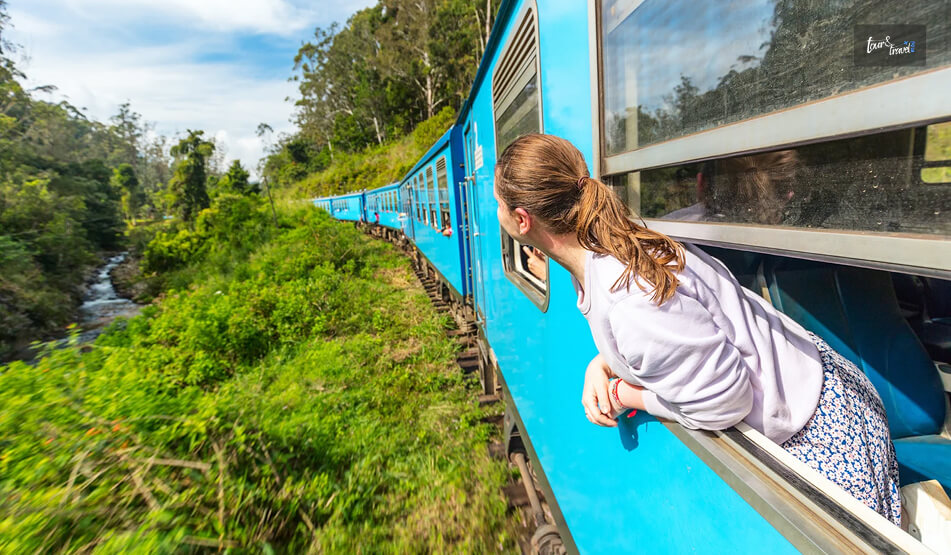
If you want an iconic train journey from Combo to Jaffna, take the Yal Devi Express from Mount Lavinia. The train starts from Mount Lavinia, and the Combo Fort is the 5th station on this route.
You can board the train from Colombo Fort at 6:40 AM. The train will reach Jaffna at 2:33 PM, and it is the 31st station on the route. The last or the 34th station on the route is Kankesanthurai.
The ride in this AC Saloon car costs LKR 2800 per person.
You can also take the 444421 InterCity Express from Mount Lavinia to Kankesanthurai. This train departs from the Combo Fort Station at 5:45 AM and reaches Jaffna at 11:49 AM. The ticket price is LKR 3200 per person.
This train ride is not just about traveling to Jaffna from Colombo. Here, you will pass through the Elephant Pass, which has expansive lagoons.
Also, as a war memorial and as the military base of the First Battle of Elephant Pass (Operation Aakaya Kadal Veli or Air-Sea-Land by the LTTE), it is an important landmark for cultural tourism in Jaffna.
Getting Around Jaffna: Why Do I Need A Scooter For Rent?
You can take a scooter for rent for a budget-friendly and flexible experience in Jaffna. Be it the Casuarina Beach or other beaches of Jaffna or the historical Jaffna Fort, a scooter or moped will give you the ultimate freedom to make the itinerary for Jaffna travel.
The charges for a bike rental will be around LKR 2500 per day.
If you don’t ride and need a more relaxed experience, you can take a tuk-tuk on hire, and the cost will be around LKR 4000-5000 per day.
5-day Jaffna Travel Itinerary: Soaking In The True Spirit Of Jaffna
From exploring Jaffna City to exploring the islands and temples, there is a lot to do in the Northern City of Jaffna.
So, let’s make the most of these 5 days in Jaffna.
Day 1: Arrival At Jaffna And Exploring The City
How about starting your day in Jaffna with the famous Jaffna coconut water or the signature ice cream at Rio Ice Cream? Here are the things you can do once you reach Jaffna after a long train journey from Colombo.
1. Morning: Check-In And Visit Rio Ice Cream For The Legendary Welcome
Rathinam Industrial Organisation(RIO) is a legendary landmark in Jaffna. It is like a community center where the locals love to have some refreshment in the middle of the day or at the end of the day to fight the soaring temperature.
Special Rio Sundae with the ultra-sweet syrup and nuts is the main attraction of Rio Ice Cream. Also, the ice cream here is completely natural and chemical-free.
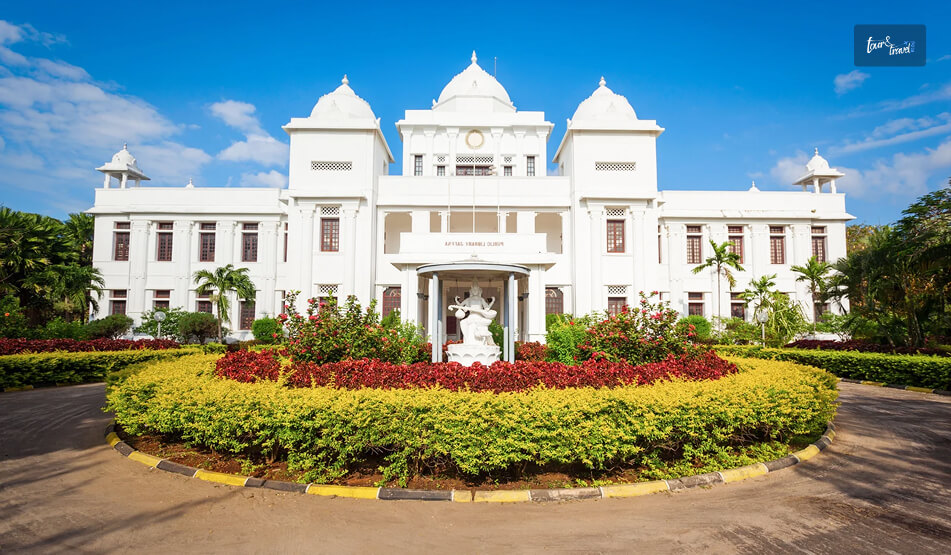
2. Afternoon: Visit The Jaffna Public Library
The Jaffna Public Library is a must-visit if you want to know about the local Tamil culture and heritage. It became a part of the Jaffna Town Development Board on 1st January 1935.
As of today, the library has a collection of more than 117199 books, 37968+ in the lending section, and more.
The library remains open from 8:30 AM to 6 PM from Tuesday to Sunday. On public holidays and Mondays, only the study hall and the magazine and newspaper sections remain open from 8:30 AM to 5:15 PM.
However, the public viewing hours are from 4 PM to 6 PM.
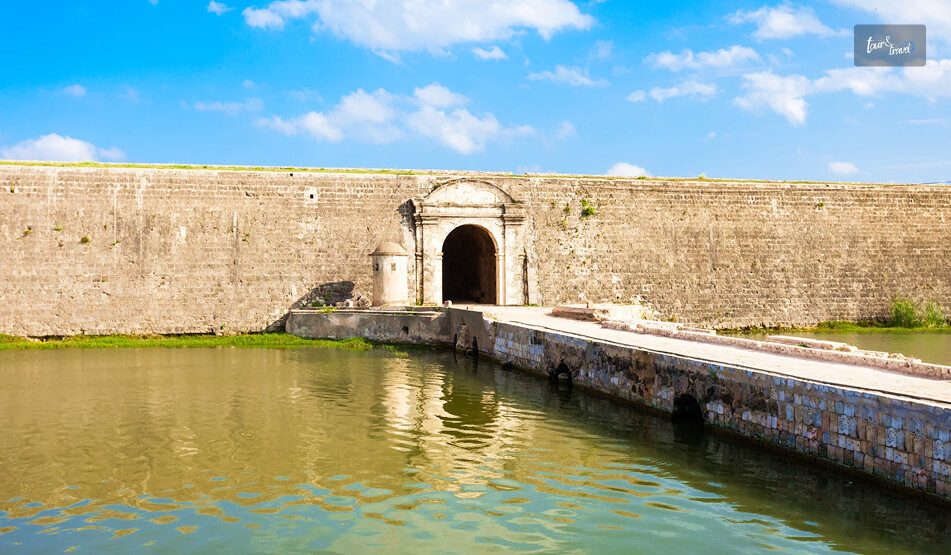
3. Evening: Visit The Jaffna Fort For Sunset Walk On The Ramparts
Visiting the Jaffna Fort and walking on its ramparts after sundown are the best ways to familiarize yourself with the city’s history. You can explore the walls and the barracks where thousands of civilians and military personnel used to live.
Furthermore, you can enjoy the beautiful view from the city and the Jaffna lagoon from the ramparts.
A Brief History Of The Jaffna Fort
Built in 1619 by the Portuguese colonialists.
Serving as the base for combating three Sri Lankan rebellions against the rule
Got captured by the Dutch in 1658
Got the famous defensive triangle in 1792
The British took control of the fort in 1795
Sri Lanka became independent in 1948
However, even after the independence, the Fort has been at the center of friction between the Sri Lankan government and the Liberation Tigers of Tamil Eelam (LTTE or Tamil Tigers).
So, 1990-2009 was a volatile year for Jaffna, and the Jaffna Fort witnessed many occurrences. However, post 2009, the restoration work for the Jaffna Fort was started with the financial aid of the Dutch Government, and the Jaffna Fort still stands today because of that.
Having dinner at the Malayan Café is the quintessential Tamil experience you want in Jaffna. The decor is quaint with marble top tables, and steaming hot dosas and Idlis here are served on banana leaves.
You will also get parathas and chutneys here. Don’t forget to bring cash because it does not have a digital payment facility.
Day 2: Hopping The Delft And Nainativu Islands
Let me share one update when you are making a trip to the Delft and Nainativu Islands. Only one boat is available from the Kurikadduwan Jetty at 8 AM.
So, if you miss the boat, unfortunately, your entire day is ruined. Nevertheless, here is how you will spend day 2 in Jaffna.
Morning In Delft Island
The Portuguese Fort and the ruins of the Old Stupas are the primary attractions on Delft Island.
You must also see the iconic Baobab Tree and the wild horses roaming on Delft Island.
Take a ferry from Delft Island to reach Nainativu.
Afternoon At Nainativu Nagapooshani Amman Kovil
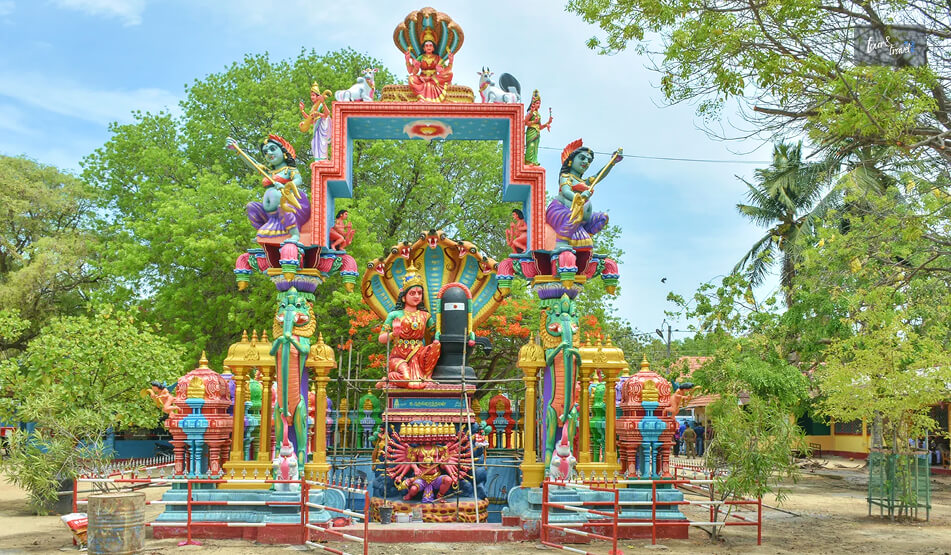
The Nagapooshani Amman Temple has Nagapooshani Amman, a form of Goddess Durga, as the presiding deity.
The statue of Goddess Nagapoosani here is accompanied by a Shiva Lingam and the ten-headed statue of Ravana at the base.
It features a Dravidian architecture with some modern features, as the current structure was rebuilt between 1720 and 1790 after the Portuguese destruction in 1620.
Returning To Jaffna By Boat And Having Seafood Dinner At Mangos
Take the return boat from Nainativu, and the last ferry is available at 4:30 PM. Then, end your day on a relaxing note with a hearty seafood dinner at Mangos.
Day 3: Soaking In The Spiritual Vibe Of Northern Sri Lanka
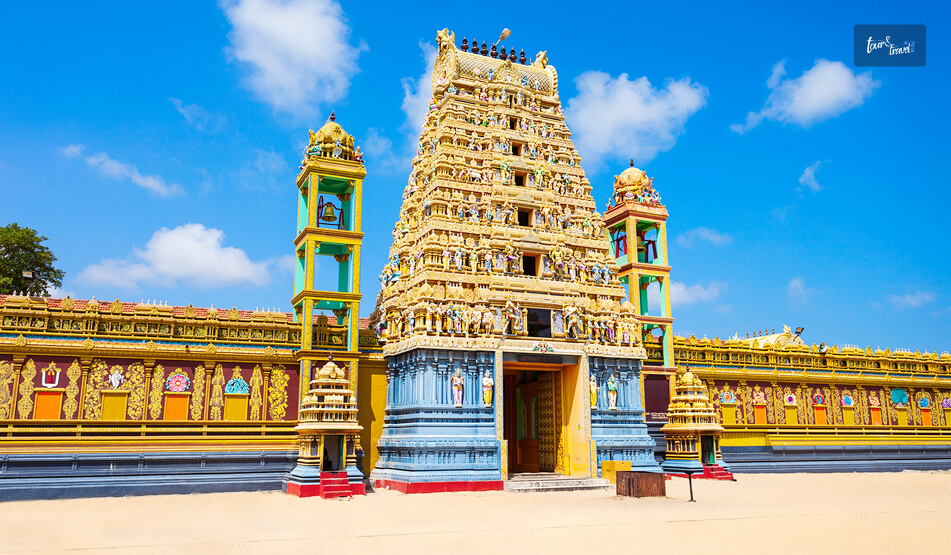
Start your day three in Jaffna with a visit to the Nallur Kandaswamy Kovil early in the morning. Be a part of the 10 AM Puja.
Then have traditional crab curry and rice for lunch before starting a drive to Point Pedro. If ordering Crab Curry, know that one portion is usually enough for two people. It is rich, spicy, and heavy.
The distance between Jaffna and Point Pedro is around 32 km.
Known as Paruthithurai in the local Tamil language, Point Pedro is the literal top of Sri Lanka. Despite being a crucial maritime getaway, Point Pedro has a pristine landscape, and it has maintained its authentic Tamil vibe.
Vallipuram Alvar Kovil and Sakkotai Cape sign are important stopovers between the Jaffna to Point Pedro journey.
The Vallipuram Alvar Kovil is one of the oldest Hindu temples in Jaffna. Archaeologists found a 2nd-century gold plate here, and the temple is dedicated to Lord Vishnu.
The Sakkotai Cape is the northernmost point of Sri Lanka. It has a concrete sign and an inscription, “Unity in Diversity is the Strength of Sri Lanka.”
The famous concrete sign saying “Point Pedro” is actually at Sakkotai Cape, a few kilometers away from the Point Pedro town center. Don’t get confused by Google Maps.
Day 4: Exploring The Ruins, Springs, And Myth Of Jaffna
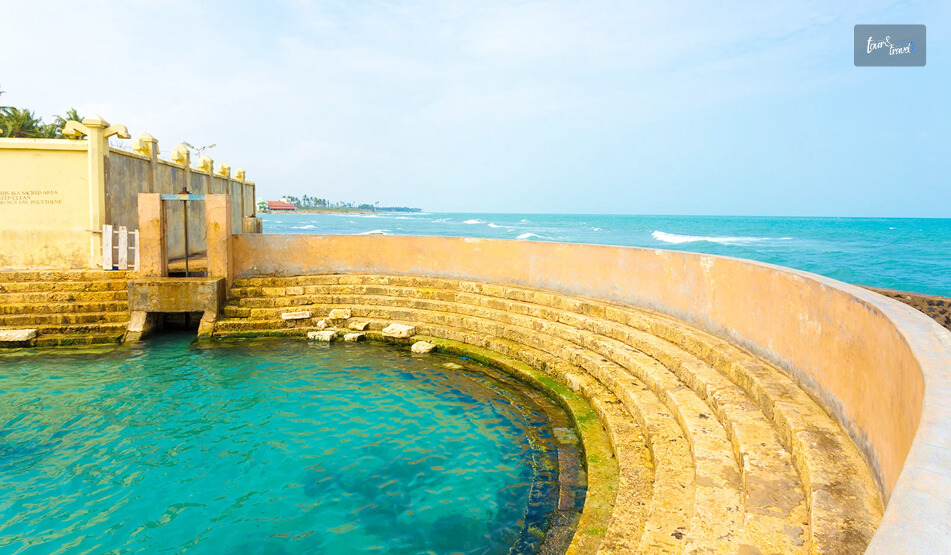
You can start your day four in Jaffna with a sacred bath at the Keerimalai Freshwater Springs next to the ocean. The water here is believed to have healing power.
In the midday, you can travel to Dambakola Patuna from Jaffna. It will take around 34 minutes. It is the place where Sanghamitta, the Buddhist daughter, and Great King Ashoka brought a sapling of the Bodhi Tree in the 3rd Century BCE.
Finally, in the afternoon, you can explore the mysterious mini-stupas or the Kantarodai Ruins, around 12 km away from Dambakola Patuna.
It is an archaeological site, and you must also visit the ancient Kadurugoda Vihara here.
Day 5: Getting Familiar With The Local Life Of Jaffna And Departing For Colombo
On day 5, explore the local Jaffna market for buying some Jaffna specials, including palmyra jaggery and curry powder.
Enjoy your last feast in Jaffna with Dosa and Vadai.
Then, you can plan your return to Colombo.
What Are The Expert Tips For Jaffna Travel Itinerary?
Did you know that the Sri Lankan Navy runs the boat to Delft? It always remains overcrowded, and the passengers wait at the Kurikadduwan Jetty.
So, if you want to catch the boat at 8 AM, you have to get there by 7:30 AM.
Do you want to know more such expert tips for your next trip to Jaffna? Check out the following points.
1. Bring Your Passport
When you are traveling from Jaffna to the nearby islands, you will have to cross military or navy checkpoints.
So, when you are from any other country, you will have to show your passport.
2. Sunday Is Dead
Jaffna celebrates Sundays as a real holiday, and most local shops and markets remain closed on Sundays.
So, choose a weekday if you want to explore the City Markets.
3. Cash Is King When You Are In Jaffna
You will get ATMs in Jaffna town. However, when you are driving to Point Pedro or taking a ferry to Delft Island, you will need cash.
Even small shops and the markets in Jaffna may not always accept cards. So, you have to carry small coins such as 100 and 500 LKRs.
4. You Must Cover Up At Nallur
Your clothing has to be respectful when you are in Nallur Kovil. If you are a woman, you have to cover your knees and shoulders.
Also, men must be shirtless when entering the temple. If you do not follow the clothing norm, you will be turned away at the gate.
5. Book Return Trains Early
If you are traveling from Colombo to Jaffna by train, you will have to book the tickets for Yal Devi and other passenger trains well in advance. The first and second class tickets get booked fast.
Ideally, you must book the train tickets 30 days before starting your journey.
6. Drink “Nelli” Cordial
Instead of Coke, try the local Nelli (Gooseberry) crush. It’s a Jaffna specialty and incredibly refreshing in the heat.
You can even drink the big coconut water.
7. Respect The “No Photo” Signs
Photography is not allowed in the inner sanctum of the Jaffna Kovils or temples. The priests are vigilant. So, do not even try breaking the norms.
Also, if you’re taking photos of the locals, always seek permission.
Authority Voices: What Experts Say About Traveling To Jaffna?
The Common Wanderer (Travel Bloggers): “Jaffna feels like the Sri Lanka of 20 years ago. No smoothie bowls, no yoga retreats—just raw culture, heat, and the most incredible hospitality.”
Rough Guides: “The journey to Delft Island is a rite of passage. The choppy ferry ride and the desolate coral landscapes make you feel like you’ve reached the edge of the world.”
Chef Peter Kuruvita: “To understand Sri Lankan food, you must go North. The cuisine here is uncompromised by tourism.”
Here are the frequently asked questions and answers about the Jaffna travel itinerary.
1. Is Jaffna Safe For Tourists?
Yes, Jaffna is a safe city for tourists. The strong presence of Tamil culture and a conservative society make it an ideal location for family trips.
Also, according to Numbeo, the crime rate in Jaffna is 50, which is moderate.
However, Jaffna has been hit by civil wars time and again, and the rampage of Cyclone Ditwah in November 2025 has been devastating.
Jaffna is still recovering from the aftermath.
2. What Is The Best Way To Get Around Jaffna?
Hiring a Tuk-Tuk is the most comfortable way to get around Jaffna. You can even book a scooty or moped to explore Jaffna at your own pace.
However, for the island visits, you will have to rely on the ferry services.
3. Can I Do Delft And Nainativu In One Day?
Yes, you can visit Delft and Nainativu in one day. However, to make your plan a success, you will have to start early from the Kurikadduvan beach.
Once you reach Delft, you can book a Tuk-Tuk or a moped to explore its important landmarks. Then, take the ferry to reach Nainativu Island.
4. Is There A Dress Code For The City?
There is no official dress code for the city of Jaffna. However, it is a culturally rich city with a Tamil conservative society.
So, you must opt for modest clothing such as sarees, full pants, long skirts, and tops and shirts with sleeves.
5. Can I Find Beer Or Alcohol In Jaffna?
Yes, you can have beer or alcohol in Jaffna. The Thalsevana Resort on the Kankesanthurai (KKS) Beach is the best place to have a chilled beer.
You will also find beer in the hotels. However, alcohol in Jaffna is expensive. You can do some duty-free shopping at the airport.
Furthermore, for the most authentic experience, you can try local brands such as Lion Lager or local spirits like Arrack.
6. Do They Speak English In Jaffna?
Yes, people speak English in Jaffna, especially when you are interacting with someone associated with the hospitality industry, the medical profession, or the legal field.
Also, you will find many people in Jaffna City speaking English. However, when you explore the villages or remote areas, people may not be fluent in English.
7. What If I Am Vegetarian?
Even if you are a vegetarian, the Jaffna cuisine has many delicacies for you. You can have Idli and dosa, which are vegetarian and vegan.
Also, Rasam, Sambar, and the curries made using pumpkin, drumsticks, and other vegetables are quite delicious.
Vegetarian food is available in Jaffna in abundance and with a variety because of the strong Tamil presence in the city. Most people here worship Lord Shiva and Vishnu.
8. How Long Is The Ride From Colombo To Jaffna?
A journey from Colombo to Jaffna takes around 7 hours if you are traveling by the Yal Devi AC saloon car or bus.
However, you can also take a flight from Colombo to Jaffna, and the travel time is around 1 hour and 30 minutes.
9. Is The Water In Jaffna Safe To Drink?
No, the water in Jaffna is not safe to drink because saltwater intrusion and groundwater contamination are quite high.
The groundwater of Jaffna is contaminated by agrochemicals, sewage, and harmful bacteria. So, it is safe to drink bottled water and water from filter dispensers.
Meet Sibashree Bhattacharya, a travel enthusiast who has a decade-long experience in transcending virtual barriers with her words! Her deep love for travel is apparent from her travel escapades to the mountain, often taking her readers on a journey, her words acting as Portkey! Fun fact: Sibashree loves to dive deep into the history of the places she is about to visit, making her travels even more wholesome. If you were wondering how her articles are not short of time travel, this answers it!
If you want to explore offbeat Japan, you can surely visit Sapporo, the capital of Hokkaido Island.
Hokkaido Island,anyway, teaches the art of slow living and slow traveling.
The scenic beauty here is amazing, the winters are snowy, and the food and beer here are amazing.
Also, it is an amazing year-round destination, and the things to do in Sapporo are as diverse as they can be.
And here are the details. However, before that, let us talk about the best time to visit Sapporo.
What Is The Best Time To Visit Sapporo?
As I have mentioned, you can visit Sapporo throughout the year. However, December to February is the best time to plan a visit.
Especially, February is the month of the winter festival in Sapporo.
Moreover, April to May is the ideal time if you want to experience the Cherry Bloosm Season from the Hokkaido Shrine and Maruyama Park.
Also, the warm and humid summer months are ideal for enjoying the “beer garden events.”
In addition, from September to November, or the autumn months, are great for seeing the fall foliage, hiking, and attending the food festivals.
What Are The Most Unique Things To Do In Sapporo?
More than ticking the bucket list, in Sapporo, you need to soak in the laid-back vibe.
It is way less crowded than Osaka and Tokyo, and despite that, it has an important role to play in the tourism industry of the country.
That is why many people travel from Tokyo to Hokkaido.
1. Visiting The Parks And Gardens
As a nature lover since forever and daily walking the streets and parks of Sapporo, I have learned that Sapporo has lots of green spaces where you can enjoy nature.
The parks of Sapporo are the city's heart.
Odori Park is my usual starting point in the morning when I first walk.
This park is located in the center of downtown and is an ideal and convenient place to take a refreshing morning walk before starting your day.
On days when I want to be more active, I cycle, jog, or photograph all the amazing trees and flowers at Moerenuma Park. It is absolutely stunning how vast the area is!
You will probably find me at Maruyama Park, located next to Hokkaido Shrine, during the spring and fall months.
It’s an incredible place to see the cherry blossoms in full bloom, and it’s usually very pretty to see the fall leaves change color from green to red.
During the wintertime, it becomes a wonderful family-oriented ski resort that I simply love!
For a bit of a deeper dive, I love visiting the Hokkaido University Botanical Gardens. It’s a peaceful retreat where I can admire rare plants and learn about the indigenous Ainu culture.
2. Exploring The Galleries And Museums
Upon arriving in Sapporo, I did not take long to figure out that this is a city that has beautifully integrated its history with modernity, which is a masterclass.
I spent the first day of my trip exploring the history of the island of Hokkaido by visiting the Hokkaido Museum.
Then, I went to the Historical Village, which showed how the early infrastructure and primitive architecture were examples of the area's strength.
The Hokkaido University Museum is also a majestic place, with its enormous collection of extensive academic research and archaeological artifacts through the ages.
Of course, I couldn't resist a detour to the Sapporo Beer Museum. Learning the history of Japan’s iconic brew made that final tasting session feel well-earned.
As a fan of art, I was spoiled for choice with several locations from which I could pick my favorites.
The JR Tower Art Gallery has an impressive array of artwork, and at the Sapporo Art Park, there are some unbelievably large sculptures sitting throughout the grounds.
I was amazed at how much creativity and energy could be found in the city of Sapporo.
While looking at all the galleries, you can also plan a trip to Uji, located approximately 500 km south.
A visit to Japan would not be complete without enjoying a cup of matcha at this city's matcha capital.
3. Visiting The Shrines And Temples
Kyoto may have the most amazing shrines, but Sapporo also has some beautiful ones.
The Hookaido Shrine is the most popular among them, and you will find it just next to the Maruyama Park.
Furthermore, the Sapporo Suitengu Shrine is another place where families and pregnant women visit for a healthy baby.
Moreover, if you are a seeker and want some spiritual guidance, Joganji Temple is your place. It has the most meditative environment.
4. Exploring The Historical Landmarks Of Sapporo
Sapporo has many historical places to visit, and you can start with the “Former Hokkaido Government Office.”
It has beautiful gardens, and with its insightful exhibitions, it offers a deep understanding of the local history.
The next place you can visit is the Sapporo TV Tower. It is an important landmark for broadcasting and tourism.
Furthermore, from the TV Tower, you can enjoy an amazing view of Odori Park and its surroundings.
The Clock Tower is another important landmark in Sapporo. It has been standing there since 1878.
However, for me, the most iconic historical landmark in the city was the Hoheikan Guest House.
This 1880 guest house in Nakajima Park had many important guests, including the royal family and important foreign guests.
In addition, for a culturally immersive experience, you can explore the Hokkaido historical village. It is like an open-air museum with distinct architecture, buildings, and Japanese townscapes.
5. Souvenir Shopping
It’s a sin to visit Sapporo and not do some serious shopping.
Furthermore, souvenir shopping is one of the best things to do in Sapporo because of the diversity of stuff you can procure.
Firstly, the sweets here are amazing. You must try Marusei butter sandwiches and Royce chocolates.
Also, you will find skincare products made of horse oil.
In addition, you will love local crafts such as Ainu crafts and Otaru glassware.
Moreover, the best places for shopping in Sapporo are “Ario Sapporo Mall,” “Apia Mall,” “Sapporo Stellar Place Mall,” and “Tanukikoji Shopping Street.”
Jimbocho Book Town is a massive book district or book town with more than 400 book stores.
It is one of the oldest and biggest in the world and is often uttered with respect equal to the Kaifeng and China book towns.
Also, it is a great place for dark academia fans, students, and readers, as they will find most of the second-hand books in Japan here.
Furthermore, it’s not just about the love for the book and the “intellectual” aspect of it.
Time Out has named it the best neighborhood in the world in 2025.
But do you know about the best book stores and cafes in the Jimbocho Book Town? Here is a detailed list.
However, let’s talk about the history, accessibility, and the best things to do in this book town.
Jimbocho Book Town: A Neighborhood That Survived World War II
The Kanda-Jinbōchō area started getting many law schools in the late 19th century and early 20th century, and this is how the book town came.
Many bookshops opened then, and students of the law schools often sold their old books to these shops at a cheaper rate. Thus, this concept of second-hand books came.
New students used to buy these books because they were cheaper.
Furthermore, it is nothing short of a miracle that this book town survived the bombing and destruction during World War II.
Jimbocho started flourishing as a book town once World War II was over, and today, it is the most fascinating place for bibliophiles.
Furthermore, Shūeisha (Jump Manga Magazines), Iwanami, and many other leading publication houses have their headquarters in the Jimbocho Book Town.
Moreover, the curry restaurants and cafes here have been hosting the most famous authors for the longest time.
I must mention Ladrio in this context. It was built in 1949 as the reading room of a bookstop. It was also the first place that brought Viennese coffee to Japan.
Now, it was more than an elevation in the texture and flavor. The whipped cream helped to keep the coffee warm for longer as the intellectuals here took part in debates and hot discussions.
How To Reach The Jimbocho Book Town?
The central location of Jimbocho in Tokyo makes it easy to visit. You can take a ride on the Subway network to make this commute.
Reach Jimbocho Book Town By Subway
The nearest subway station is the Jimbocho Station. You will take the subway to the station on the following lines.
Toei Mita Line
Tokyo Metro Hanzomon Line
And, Toei Shinjuku Line
Moreover, once you reach the subway station and exit from A5 or A6, you can find the book stores along Yasukuni-dori.
Reach Jimbocho Book Town From Shinjuku And Shibuya
The journey through the Toei Shinjuku Line from Shinjuku Station is the easiest way to reach the Jimbocho Book Town. It does not need any transfer.
Furthermore, the travel time is about 15 minutes.
On the other hand, from Shibuya Station, you can take a ride through the Tokyo Metro Hanzomon Line to reach Jimbocho Station within 20 minutes.
Reach Jimbocho Book Town From Tokyo Station
From Tokyo Station, you have to take a Rapid ride on the R Chuo Line and reach Kanda Station.
Then, you have to reach the Toei Mita Line or the Toei Shinjuku Line to complete the journey in 5 minutes.
Shopping For Old And Rare Books And Magazines: The Best Thing To Do In Jimbocho Book Town
From antiquarian books and documents to specialized books and first editions, you will find all the books in the Hakusan-dori and Yasukuni-dori intersections of the Jimbocho Book Town.
Starting from the Meiji Era(1868-1912) to today, it has been a book town par excellence.
Furthermore, the Aozora Kohon Ichiba, or the annual Kanda Used Book Festival, draws book lovers across the globe to the Jimbocho Book Town.
This festival is held in late October or early November, and it was celebrated from October 24th to November 3rd in 2025.
What Are The Book Stores You Must Visit In The Jimbocho Book Town?
Do you think that the Jimbocho Book Town only has Japanese books? You will get books in various languages in the book stores here.
Here are the book stores you must visit.
1. Kitazawa Book Store
The Kitazawa Book Store is the best book store to find English books and classics in the Jimbocho Book Town.
It started in 1902 and has thus completed more than 125 years in serving as a beacon of Western literature connoisseurs in Jimbocho Book Town.
You will mostly find foreign and humanities-related books here.
2. Magnif Zinebocho
Magnif Zinebocho is a paradise for readers and lovers of retro magazines. You will mostly find lifestyle and fashion magazines from the last few decades here.
Though it mostly sells Japanese retro magazines, you will also find magazines that overcome language barriers.
Furthermore, the Mondrian artwork on the bookstore’s facade is really impressive, and you will find retro magazines such as Olive and Relax.
3. Books Tokyodo
Built in 1890, Books Tokyodo is one of the oldest book stores in the Jimbocho Book Town. Here, you will find books of different genres from the bygone eras and modern times.
Furthermore, it is one of the book stores that has helped to create a community of book lovers, and that is the most cherished thing about it.
4. Komiyana Tokyo
The history of Komiyana Tokyo goes back to 1939. It is a dedicated 4-story building with each floor offering distinct attractions to book and art lovers.
You will find here books on history, Japanese art, Western art, and fashion.
Furthermore, it has the widest collection of photo books, and most of them are by the original photographers or painters.
Also, watch out for the weekend “Garage Sale” behind the shop.
You never know when you can find a diamond.
5. Bohemian’s Guild
The Bohemian’s Guild is a great place to find vintage books on visual art and design.
Furthermore, the bookstore has been there since the Taisho era (1912-1926).
The first floor of the store has all the books and a warm lighting that, along with the brown wooden floor, creates an inviting atmosphere.
Furthermore, on the second floor, the book gallery allows you to explore the lithographs, paints and prints.
What Are The Best Cafes To Visit In The Jimbocho Book Town?
Kissaten, or the coffee house culture of Japan, is unique. The best cafes in the Jimbocho Book Town allow you to get familiar with that.
Furthermore, the cafes here celebrate the history and origin of the book town. So, here are my favorites.
1. Sabouru
With an origin in 1955, Sabouru stands out with its unique Showa-era charm and nostalgic vibe.
You must try the cream soda here, and it is available in seven colors. They also make an excellent strawberry juice smoothie.
Moreover, the adjacent Sabouru 2 is a popular place here to have classic “Japanese Napolitan Spaghetti.”
2. Milonga Nuova
Built in 1953, Milonga Nuova is a paradise for Tango lovers.
Furthermore, the charcoal-roasted coffee here hits different, and that is often accompanied by the signature desserts.
Moreover, you will find more than 30 varieties of imported beers here.
Along with these cafes, Jimbocho Book Town also has various curry restaurants. From Mandala to Bondy, these restaurants celebrate the tradition started in the Meiji era.
The book lovers found it very convenient to eat curry with one hand while the other hand was busy holding the book or flipping the pages.
Read Also:
Is The Japan Rail Pass Worth It In 2026? Should I Buy Or Avoid It As A Conscious Tourist?
Cherry Blossom Kyoto Japan: 2026 Season And The Top Viewing Spots
Osaka Food: Know What To Eat In The Streets Of Osaka
If you are like me, your first trip to Japan probably started off in Tokyo, surrounded by bright neon lights and an astounding number of people moving around to get from place to place.
Tokyo is a logical starting point because of the many inexpensive daily flights that arrive, as well as its efficient public transportation, making it very easy to get around and communicate with those whom you meet there, because they speak some English.
But let me tell you a little secret I learned from spending two different trips to Japan over the course of three weeks.
Although I had fun in Tokyo, I’m definitely not a big progressive city person.
The real beauty and the heart of Japan are found away from the chaos of Tokyo. The true essence of Japan can be experienced at its best in either the peaceful mountains high above the sea or in the salty air along the coast of Japan.
So if you are planning on staying in Tokyo for more than three days, do yourself a favor and venture outside of the city limits.
These are my favorite day trips from Tokyo. You can travel to each of these destinations within 1 to 2 hours.
What Are The Best Day Trips From Tokyo?
Tokyo is an incredible gateway.
However, Japan’s true magic is often found in the places where the skyscrapers disappear.
Whether you want the spray of the ocean in Kamakura or the mountain air of Hakone, I promise that leaving the city for just a day will change how you see the country.
From Mount Fuji to Kyoto, the Soul of Japan, the day trips from Tokyo are as diverse as they can be.
Here is a detailed account of my experience in those places.
1. Mount Fuji And Kawaguchiko: The Icon
Travel Time: 2 Hours
How to Reach There: Highway buses from Shinjuku or Shibuya (~¥1,250–¥2,000 one way).
If I can only recommend one escape, it will be Kawaguchiko, a town located right at the foot of Mt. Fuji.
"Shy" Fuji hides behind a curtain of clouds and can be quite elusive. While I visited, Fuji showed off for me on several occasions.
I spent an entire day in this beautiful town, but would recommend an overnight stay at one of the many traditional ryokans situated on the lake if possible.
There, you will notice the the juxtaposition of Fuji's reflection on Lake Kawaguchi at sunrise will be a once-in-a-lifetime experience.
Highlights From My Visit
Climbing the 398 steps of Chureito Pagoda was strenuous.
However, the meditation-like calm through the forest made it worthwhile.
I was fortunate enough to see the iconic site of the Red Pagoda with Mt. Fuji as a backdrop, as the clouds rolled in and covered the summit of Fuji.
Hōtō noodles are a local specialty and are made up of thick, flat noodles cooked in a Japanese miso broth. Eating them will feel like a warm hug! So, don’t forget to try it.
2. Nikko: A Place Of Mist And Masterpieces
Travel Time: 2 Hours
How to Get There: Tobu Railway from Asakusa to Tobu-Nikko Station.
When you visit Nikko, you will see all that it has to offer in the stunning, misty forests and cedar trees.
Moreover, the detailed and ornate shrines seem to be jewelry boxes.
Insider Tip:
Arrive before 9 am at Lake Chuzenji to witness how the morning light creates an incredibly peaceful scene on the water.
If you arrive later than 9 am, visit the Toshogu Shrine first, which is where Shogun Tokugawa Ieyasu is buried and features the famous three monkeys, "See no evil, hear no evil, speak no evil".
Many people come to see Kegon Falls, but it can be crowded due to the high tourist volume.
Unless you arrive at dawn, I would recommend skipping Kegon Falls and enjoying the calm waters of the lake instead.
3. The Coastal Soul Of Japan: Kamakura
Travel Time: 1 hour
How to Get There: JR Yokosuka Line from Tokyo Station (¥940 one way).
Kamakura is also popular as the "Kyoto of the East," and I can see why.
Although it is an hour from Tokyo, when you are there, you will be surrounded by the smell of salt and incense from the temples instead of exhaust from busy streets.
Be sure to see the Great Buddha (Daibutsu) at Kotoku-in.
This is a large bronze hollow statue located outside.
Standing there, surrounded by trees and soft sea light, I felt a sense of peace and tranquility.
After visiting the Great Buddha, I walked to Yuigahama Beach to watch the surfers and the sunset before enjoying a meal of sukiyaki or shabu-shabu.
4. Hakone: A Breath of Mountain Air
Travel Time: 2 Hours
How to Get There: Odakyu “Romancecar” from Shinjuku. I recommend the Hakone Free Pass.
Tokyo is the pulse of Japanese culture, and it is in Hakone where you'll find peace after the city's frenzied pace. Hakone is a beautiful blend of modern and ancient.
The first stop for my visit was at the Hakone Open-Air Museum, where I walked among sculptures created by some of the most famous artists in the world, surrounded by natural beauty all around me.
Then, I took the Hakone Ropeway across the Owakudani Valley.
It is an active volcanic area where steam rises out of the ground, creating a picture of a living canvas.
On clear days, you may see Mt. Fuji as well.
The day was capped off with a boat ride on Lake Ashi aboard a vessel that resembled a "pirate ship."
I was hesitant about it being cheesy, but the sights were gorgeous.
5. The Easy Escape To Yokohama
Travel Time: 30 Minutes
How to get there: JR Tokaido or Keihin-Tohoku Line from Tokyo Station (¥480).
When I need to relax from the chaos of Tokyo, I tend to go to Yokohama.
Yokohama is the 2nd largest city in Japan. However, it has a much more relaxing atmosphere due to the harbor.
I enjoy taking a stroll along Minato Mirai, which is another word for "harbor view," while enjoying the ocean breeze.
For something "quirky", I went to the Cup Noodles Museum to create my own cup of noodles and to learn about the history of Nissin Food Products.
However, the highlight was visiting China Town, which is the largest in Japan.
My recommendation is to arrive at China Town around 4:00 or 5:00 PM.
It will be early enough to beat the dinner rush and late enough to see the entrance of all the glow from the lanterns.
Take a bag of roasted chestnuts and enjoy the view of the skyline from the water while riding on the Cosmo Clock 21 Ferris Wheel.
6. A Trip Back In Time To Kawagoe
Travel Time: 1 Hour
How to get there: Tobu Tojo Line from Ikebukuro or JR from Shinjuku.
If you want a taste of the Edo period without trekking all the way to Kyoto, go to Kawagoe.
It’s a walkable town full of clay-walled warehouses and wooden merchant houses.
When I arrived at 8 AM, I heard the Toki no Kane (Bell of Time) tolling in the stillness of the morning.
I went back 200 years in time.
If you have time to go to Candy Alley, everything is made from sweet potatoes, cakes, chips, and even ice cream!
I know it sounds strange, but I assure you that it is really good!
7. Kyoto: The Soul Of Japan
Travel Time: 2 Hours (by Shinkansen)
How to get there: Tokaido Shinkansen from Tokyo Station (¥13,320 one way).
I usually tell people to stay at least two days in Kyoto, but if a day trip is all you can manage, do it. It is expensive, but it is worth every yen.
To appreciate Kyoto fully, you should focus on finding peace and serenity rather than simply marking off temples from a to-do list.
Instead of fighting the crowds at the bamboo groves, I found my peace by sitting in the wonderful gardens of Kennin-Ji Temple and breathing the incense they burned there.
8. Enoshima: Islands And Icons
Travel Time: 2 Hours
How to get there: Odakyu Line from Shinjuku to Katase-Enoshima Station.
Enoshima is where Japan’s coastal charm meets its spiritual side.
It’s a small island with a bridge and shrines dedicated to the goddess of the sea.
Prepare to take many steps as you make your way to Iwaya Caves on the opposite end of the island.
The sound of waves'll surround you as you leave the noise of the city behind.
Furthermore, inside the caves, it’s a different world!
After you leave the caves and head back, stop at a vendor and buy some grilled fish or seafood so you can enjoy the smoky aroma of the grilled fish while walking through Enoshima Island.
9. Chichibu: Mountains And Moss
Travel Time: 2 Hours
How to Get There: Seibu Line from Ikebukuro to Seibu-Chichibu Station.
Chichibu is an outdoorsy place if you love the outdoors!
It's got mountains and has a strong cultural heritage.
If your timing is right in the spring, Hitsujiyama Park gets huge patches of pink and white moss phlox in bloom.
This area has deliciously filling meals, including miso potatoes and waraji katsu (a pork cutlet that’s named after a straw sandal because of how large it is).
10. Karuizawa: The Alpine Retreat
Travel Time: 1 Hour
How to get there: Hokuriku Shinkansen from Tokyo Station.
Finally, there is Karuizawa. This is where Tokyo’s elite found an escape from the summer heat, and it still feels incredibly sophisticated.
Renting a bicycle is one of the best ways to experience this area.
I spent my first morning biking through beautiful pine tree forests until I arrived at Kumoba Pond. The pond has such calm water that it feels like looking into a huge mirror!
In the winter, it turns into a beautiful, snowy retreat perfect for relaxing after spending several days in the city.
Read Also:
Is The Japan Rail Pass Worth It In 2026? Should I Buy Or Avoid It As A Conscious Tourist?
What Are The Things To Do In Oahu For Free? A Guide For Budget Travelers
Festivals Of Light And Color: Experiencing Japan’s Vibrant Matsuri