Making an itinerary for a food tour is difficult, as you cannot rush it.
The idea is not to consume as much as you can.
It’s about cherishing the flavors, the cultural content, the bonding, the tradition, and the people behind it.
Still, here is a 2-day itinerary for the Luang Prabang food tour.
Days
Activities
Day 1
• Exploring the morning market at Phousi Road and participating in the alms-giving ceremony
• Having coffee at Le Banneton
• Lunch and cooking class at Tamarind Restaurant
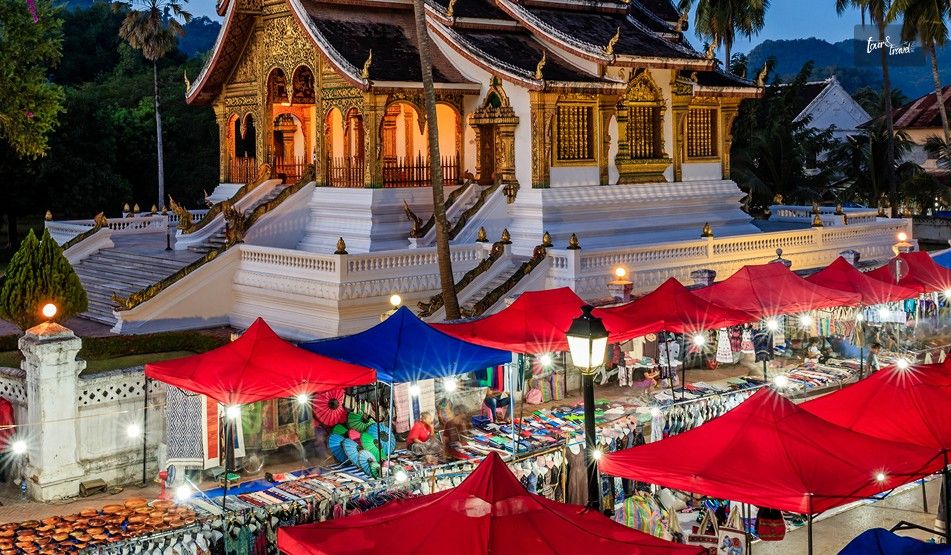
• Exploring the Night Market Food Alley
Day 2
• Mekong Breakfast Cruise
• Dara Market Visit
• Lunch at Khaiphaen Restaurant
• Visiting Whisky Village and trying Lao Lao Whisky
• Dinner at Manda de Laos
Luang Prabang Food And Buddhist Rituals
The Tak Bat Ceremony, or the alms-giving ceremony, makes the food tour in Luang Prabang associated with Buddhist rituals.
Monks are offered fruits and sticky rice at dawn.
Furthermore, food becomes the core of community celebration during festivals such as Pi Mai Lao or Lao New Year.
In these festivals, the local people prepare food for monks.
In addition, food tour organizers such as A Chef’s Tour organize a Luang Prabang Food Tour, including a Monk Blessing Ceremony.
Vegetarian Options In Luang Prabang Food
The vegetarian food options in Luang Prabang are many due to its Buddhist roots.
You just have to say “Bor Sai Nyam” or “No Meat” to vendors to get vegetarian food.
Here are the alternatives or vegetarian versions for the popular staples in Luang Prabang.
Common Food
Vegetarian Alternative
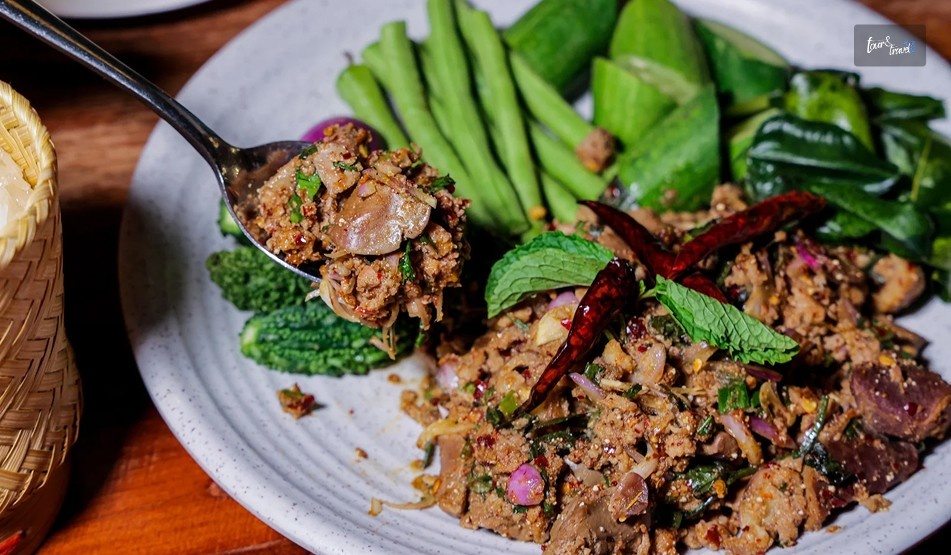
Larb
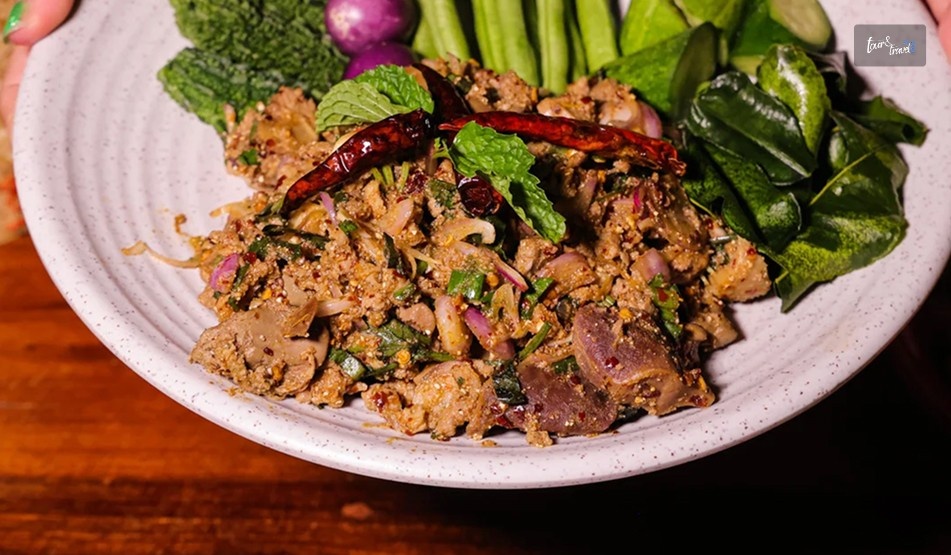
• Options with mushrooms and tofu are available.
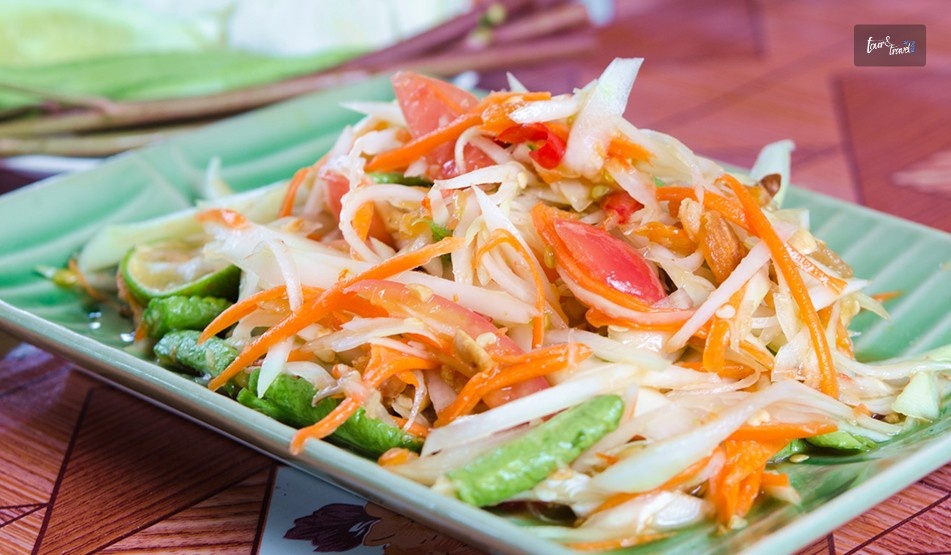
Papaya Salad
• Request not to use fish sauce in the dressing
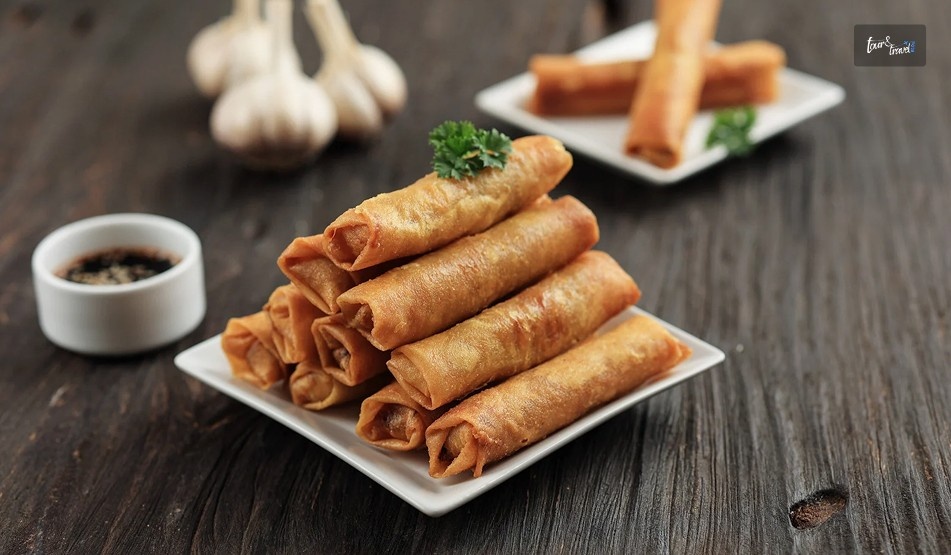
Spring Rolls
• Use veg fillings
Fruit Shakes
• Avoid dairy products in the fruit shakes
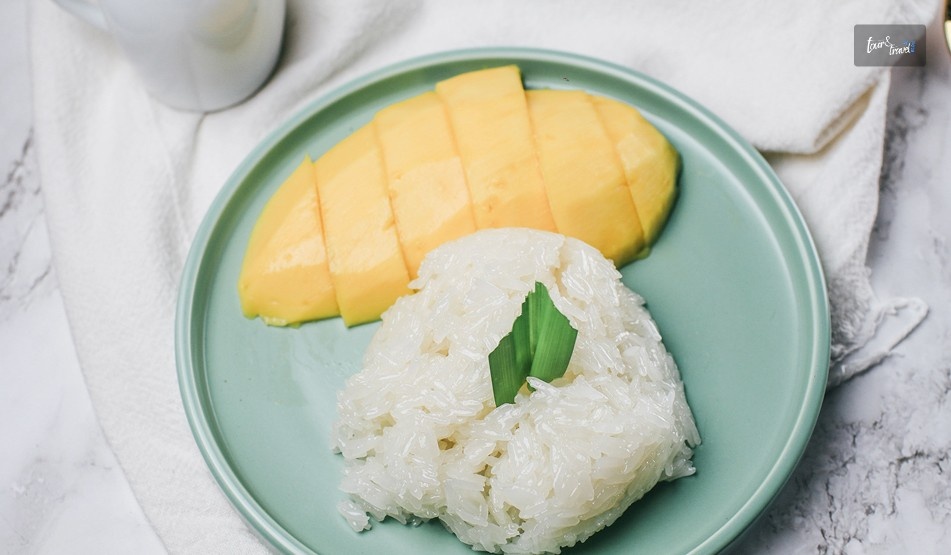
Sticky rice, the staple item in Luang Prabang food, is already a vegan item.
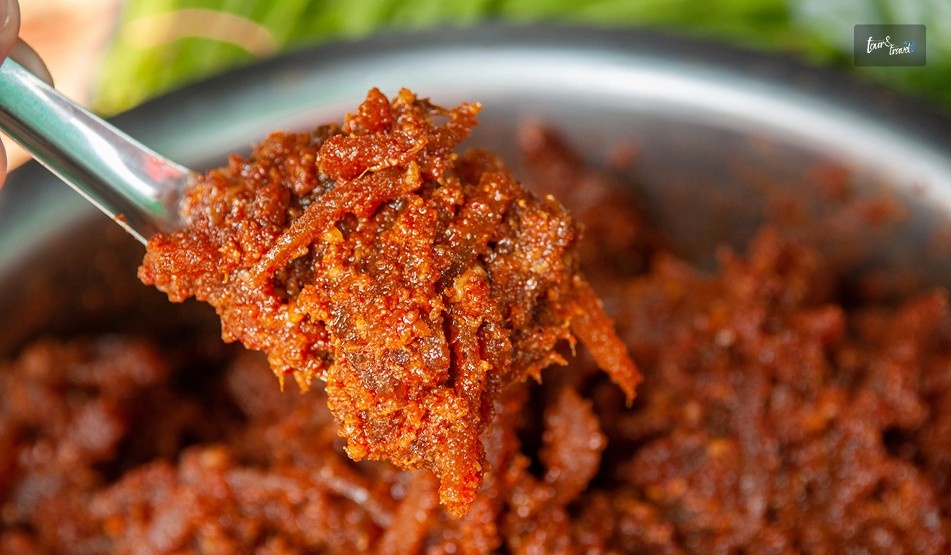
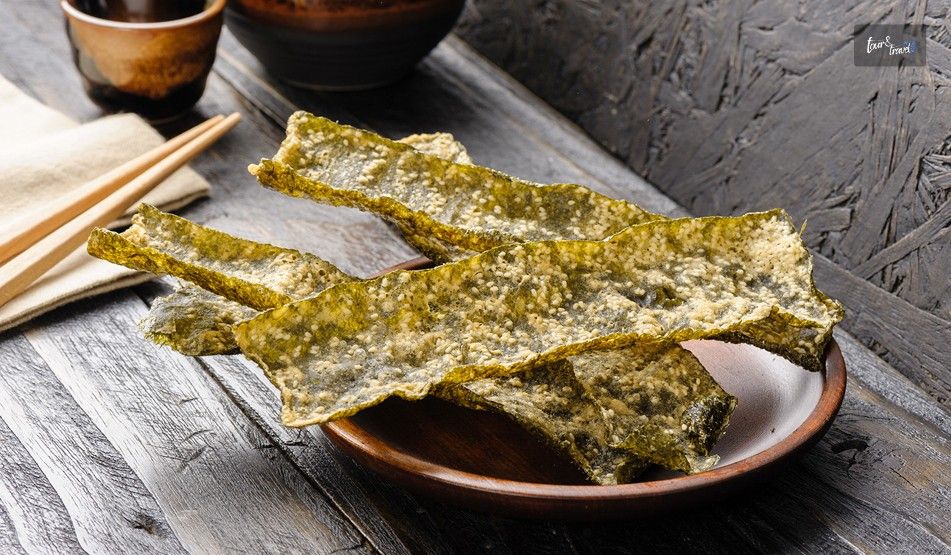
You can have it with any veg side or fried seaweed without the chilli and buffalo skin paste.
Estimated Food Prices In Luang Prabang
The budget of your food tour will depend on the places you eat.
For example, the same dish bought from a street stall will cost at least 10000 LAK when you eat at a top-grade restaurant.
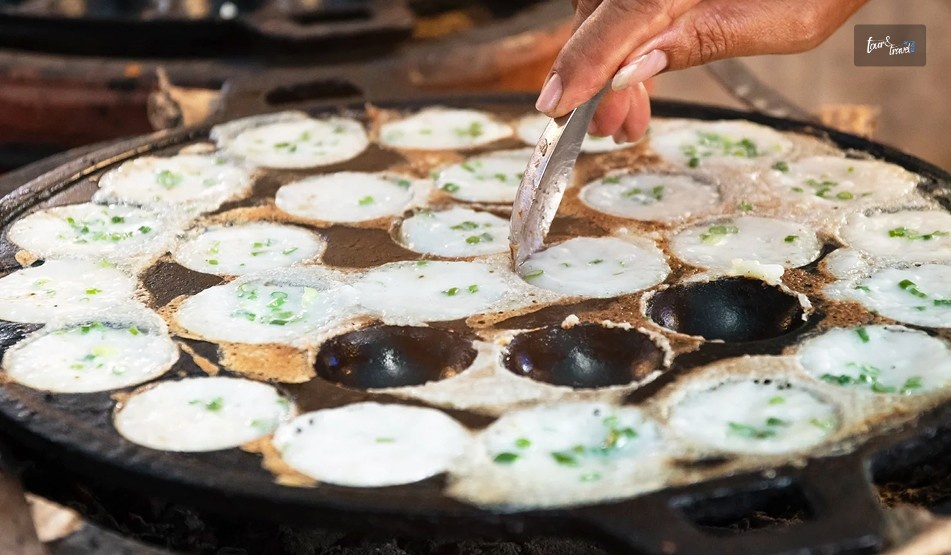
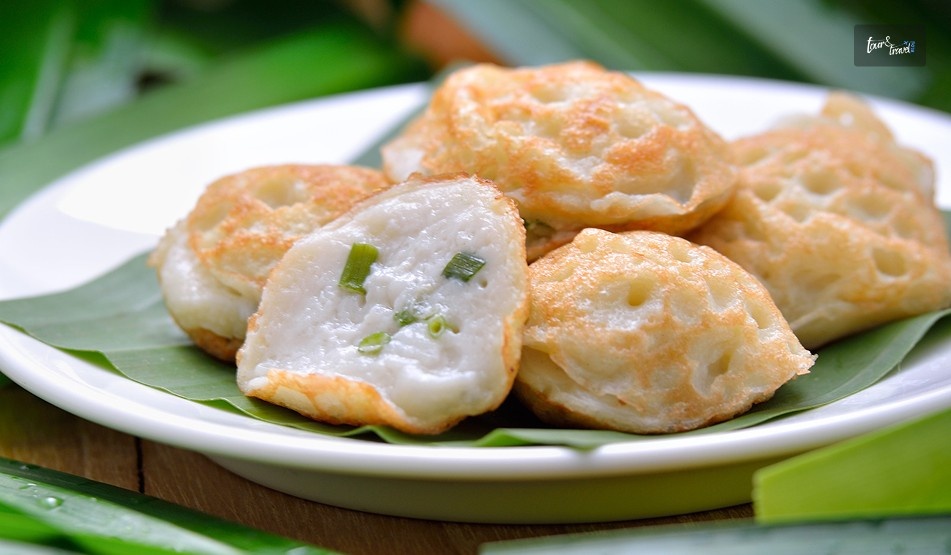
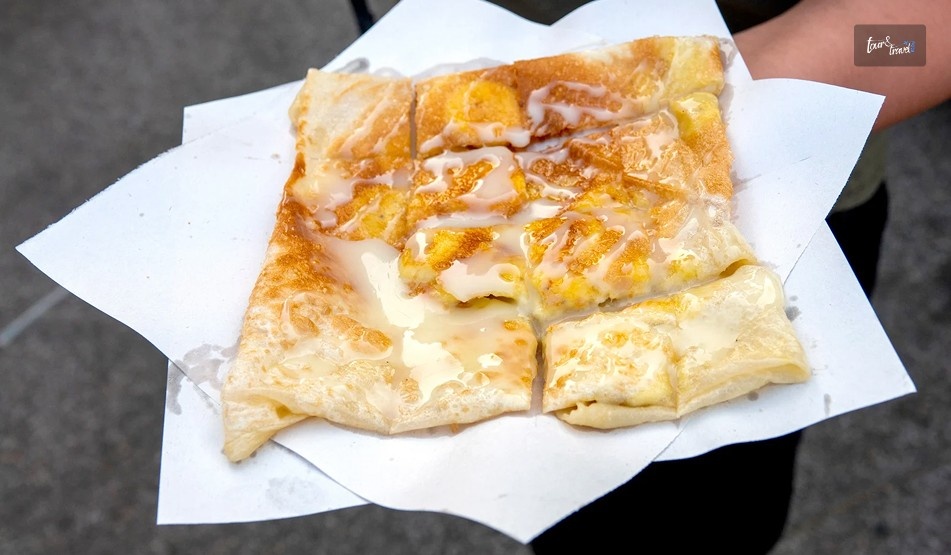
Furthermore, some delicacies such as the coconut pancakes or coconut rice cakes may not be available at all restaurants.
Dish
Street Stall Price
Restaurant Price
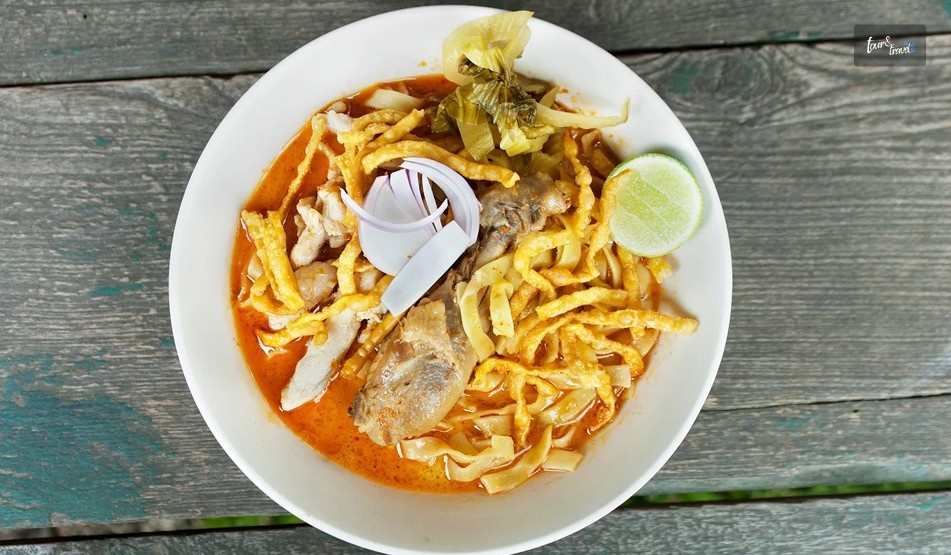
Khao Soi
10,000 LAK (\$0.50)
30,000 LAK (\$1.50)
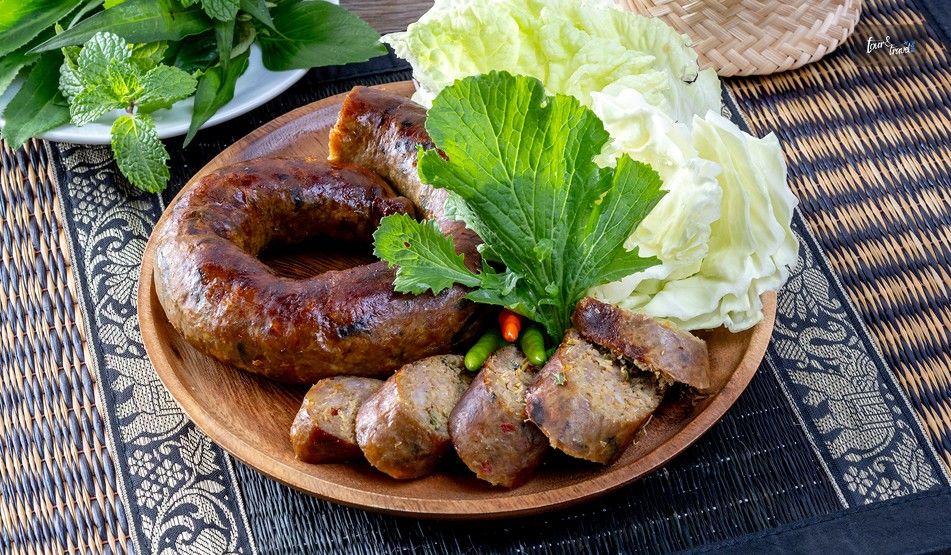
Lao Sausage
15,000 LAK (\$0.75)
40,000 LAK (\$2.00)
Grilled Fish
25,000 LAK (\$1)
60,000 LAK (\$3.00)
Larb
25,000 LAK (\$1.25)
70,000 LAK (\$3.50)
Things To Keep In Mind For A Delightful Luang Prabang Food Tour
Arrive at the morning market before 6 AM to talk to the local vendors and have freshly made coconut pancakes, steamed sticky rice, and khao soi. Arriving before the crowd helps you have authentic conversations with the local vendors.
You must follow where the locals are heading. A smart tip: Find the food stalls in the alleys near the temples. You will often notice long queues in front of those shops.
Also, most street foods cost between 5,000 and 20,000 LAK. So, carry small change.
Make sure that the vendor at the food stall you visit is wearing gloves and uses clean utensils.
Keep your behavior respectful while taking part in an alms-giving ceremony or food tours blessed by monks.
Sibashree is a travel, culture, and leisure writer who has been writing since the age of 12 and professionally since 2014. With more than a decade of travel writing experience and journeys across India and several parts of the world, she brings a deeply personal and thoughtful perspective to her work. A student of English Literature and Mass Communication, Sibashree has always viewed travel as more than movement — for her, it has been a way of understanding people, cultures, and herself. Her passion for spiritual exploration has also led her to many unusual and meaningful destinations over the years. Outside of writing, Sibashree enjoys watching European cinema, reading about global politics, and reflecting on the stories hidden within everyday places.
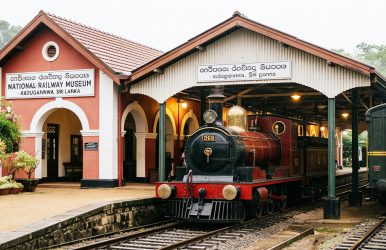
I forgot to mention one thing when I shared my experience of a train ride in the Demodara railway loop. This is a lesser-known loop, and I got to know about it from the National Railway Museum, Kadugannawa.
This museum is at a distance of just 15.1 km from Kandy. Today, it has many old machines, carriages, equipment, and locomotives.
Though everyone will have a visit to the National Railway Museum, Kadugannawa, in their itinerary of the things to do in Sri Lanka, I enjoyed my day there.
So, in this blog, I will talk about my experience at the National Railway Museum, Kadugannawan, its entry fee, timings, exhibits, and how it was opened at an opportune moment.
National Railway Museum, Kadugannawa: Quick Facts
Opening Date27th December, 2014 Opening Hours 9 AM to 4 PM (Only closed on Poya Day)Ticket Price - For Sri Lankan Adults: Rs. 50- Foreign Adults: Rs. 500- Children: Rs. 20- Children in School Uniform: Rs. 10
Why Was The National Railway Museum, Kadugannawa, Opened?
The National Railway Museum, Kadugannawa, was opened on 27th December, 2014, on the occasion of the 150th year of railway operations in Sri Lanka.
The first train of the Ceylon Railway ran from Colombo Terminus station to Ambepussa. The Duke of Brabant of Belgium was a passenger on this train.
On the occasion of the museum inauguration, a Memorial Stamp was also released. Furthermore, as souvenirs, there were a memorial DVD and a coffee table book.
Moreover, a Replica Steam Train ran from Colombo Fort to Kadugannawa, and it had special invitees as passengers.
It was a thoughtful move to commemorate the first train operation 150 years ago.
How To Reach The National Railway Museum, Kadugannawa?
You can reach the National Railway Museum, Kadugannawa, with a short train ride from Kandy.
However, if you miss the train, you can also take a bus. However, I don’t recommend a bus ride from Kandy to Kadugannawa because the bus ride through the Royal Botanic Gardens takes around 45 minutes to 1 hour.
Also, the bus is very crowded, and you will find every type of food vendor there.
Nevertheless, if you still want a bus ride, the ticket price will be 120 LKR (Around 36 Rs.) for a person.
Kandy To Kadugannawa Train Ride
I love train rides, and even if the queue for the third-class ticket was long, I enjoyed the entire experience.
Nevertheless, I took the Kandy to Polgahawela train that departed from the Kandy Station at 2:15 PM and reached the Kadugannawa Station at 2:55 PM.
The train halts at the Kadugannawa station for 1 minute. So, stand near the gate and be a little fast when alighting from the train.
I got a 3rd class ticket, and the ticket price was Rs. 40.
What Are The Things To See At The National Railway Museum, Kadugannawa?
The Kadugannawa Railway Museum is very close to the Kadugannawa Railway Station. It is a small space, and it includes a platform and 2 outside areas.
Furthermore, it is spread over a train shed.
I sat in a vintage train carriage at the museum, and it cost me around Rs. 296. The carriage also had an attendant who showed me the museum.
The Exhibits And Demonstrations I Loved
I especially loved the demonstration of the efficient token system that ensures that trains do not run into each other on the single-track mountain railway lines of Sri Lanka.
Furthermore, I found a massive model railway inside the museum. It shows the entire Sri Lankan railway network.
It was fascinating, and it highlighted the Nine Arch Bridge and how the train covers the spiral Demodara loop.
I also had a lot of fun getting in and out of the steam locomotives, carriages, and old engines at the museum.
Moreover, I saw a 10-minute-long video describing the railway network of Sri Lanka.
Overall, I spent around an hour at the museum and ended my time there with a cup of coffee at the in-house coffee shop. The coffee shop itself is inside a carriage.
The best things about the National Railway Museum, Kadugannawa, were that very few visitors were there.
So, as a curious soul and someone very fascinated by trains (my home is very close to a railway track), I had a gala time.
What Are The Other Places To Visit In Kadugannawa?
Kadugannawa, a short distance away from Kandy, is a serene place with many historical and cultural attractions.
So, once you have completed exploring the top attractions in Kandy and the National Railway Museum, Kadugannawa, you can visit these places.
1. Balana Fort
Balana Fort is located between Kadugannawa and Kandy.
Also, close to the Alagalla Mountain Range, its strategic position helped to protect the kingdom of Kandy from external attacks.
2. Captain Dawson Tower
The Captain Dawson Tower is at Kadugannawa Pass, and it is very close to the first modern expressway of Sri Lanka, the Colombo Kandy Road.
The construction of this expressway began under the supervision of Captain William Francis Dawson in 1820. So, this tower remembers and respects the contribution of Captain William Francis Dawson.
Moreover, it was built in 1832.
3. Lion’s Mouth Rock, Kadugannawa
It is an overhanging rock that you can find between the Balana and Kadugannawa railway stations.
The natural formation of the rock resembles a lion’s mouth.
Furthermore, when the train passes through the bend, there is a steep descent. So, the feeling of a drop makes the experience all the more thrilling.
4. Kadugannawa Rock View
If you are traveling from Colombo to Kandy or exploring the best attractions in Kadugannawa, the Kadugannawa Rock View is a place to relax.
The place is serene, and it offers amazing views of the lush surroundings. Furthermore, there are a few small shops on the way.
You can buy some souvenirs from these shops, and you will spot a lot of monkeys here.
Moreover, it was sunset time when I reached this viewpoint, and the experience was surreal.
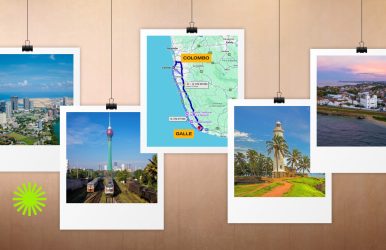
The historical Galle Fort, a UNESCO World Heritage Site, is going to play an important role in the tourism growth of Sri Lanka in 2026.
Its colonial-era landmarks, such as the Groote Kerk, the Dutch reformed church or the Galle Clock Tower, the living heritage, and the rich maritime history make Galle Fort such a prominent landmark in the landscape of cultural tourism in Sri Lanka.
It is also easily accessible from the Bandaranaike International Airport in Colombo, at a distance of around 153 km.
Various bus routes between Colombo and Galle, and the train connectivity ensure a smooth journey.
Here are more details about how to get from Colombo to Galle.
How To Get From Colombo To Galle? Know The Transport Options
The best way to get from Colombo to Galle is to enjoy a scenic train ride.
However, if you miss the train, you can also opt for a local bus ride.
Also, if the budget is not a constraint, you can book a ride from a ride-hailing app or book a cab to travel the distance by road.
Here, I will decode the train, bus, and private transfer journeys along with details such as the travel duration, ticket pricing, and amenities.
Moreover, the journeys in buses and local trains offer distinct cultural experiences, as I have mentioned in my Kandy to Ella train journey blog.
1. How To Get From Colombo To Galle By Train?
To get from Colombo to Galle, you can plan a coastal train ride.
Here, the railway track runs along the palm-fringed coasts for most of the journey.
Moreover, the ocean waters here will crash just meters away from your open window.
So, overall, it is, in no way, a mundane commute experience. You are going to have an experience of a lifetime.
You can have a look at the table below to know about the train timings. (Source: Sri Lanka Railways).
Departure From Colombo FortAvailableArrival In Galle 6:17 AM Saturdays, Sundays, and Holidays 8:32 AM6:50 AMEveryday9:29 AM8:35 AMEveryday10:49 AM10:30 AMEveryday12:49 PM2:40 PMEveryday4:57 PM3:50 PMEveryday5:57 PM4:47 PMEveryday7:04 PM5:32 PMMonday to Friday (Except Holidays)8:25 PM5:31 PMSaturdays, Sundays, and Holidays 8:05 PM5:51 PMEveryday9:29 PM6:16 PMExcept Saturdays and Sundays8:40 PM7:30 PMEveryday11:10 PM
The trains have second-class and third-class sections.
The ticket price for the second-class commute is LKR 500, and for the third-class commute it is LKR 240.
How To Book The Tickets To Get From Colombo To Galle By Train?
You can book the ticket from Colombo to Galle online (reserved) or offline (unreserved).
If you are traveling between December and April, it is the peak season for a trip to Sri Lanka. So, you must book the tickets at least 32 days in advance from the Sri Lanka Railways online seat reservation portal.
However, in the off-season, you will get the tickets a few days before.
In addition, you can book a train ticket from the local counter at the Colombo Fort Railway Station.
2. The Colombo To Galle Express Bus: Speed And Comfort
If you want a more comfortable journey to get from Colombo to Galle without spending much money, you can try the bus routes.
Express Highway Bus (EX01)
Duration: 2 hours to 2.5 hours
Route
The bus travels through the Southern Expressway (E01).
Moreover, if you choose this route, you will be able to bypass every coastal traffic, and you will reach faster than the coastal route buses.
Traveling Experience
The buses are usually fast and relatively smooth.
Additionally, the buses are very comfortable, usually air-conditioned, and have comfortable cushioned seats.
Moreover, the journey through this route is through the highway, which means that you will not be able to see any ocean views.
Where To Catch The Bus From
These buses depart from the Makumbura Multimodal Center or the Colombo Bastian Mawatha Bus Terminal.
Additionally, these buses are frequent you will be able to catch a bus every 20 minutes to 30 minutes.
Coastal Route Bus (Route 02)
Duration: 3 hours to 4 hours
Route
Buses of this route pass through the coastline, giving you an amazing coastal view.
These buses pass through some magnificent towns like Mount Lavinia, Wadduwa, and Hikkaduwa, which enhance the beauty of the journey.
Traveling
These buses will provide you with an authentic and local Sri Lankan ride.
Sometimes the ride can also be chaotic but enjoyable. Moreover, if you choose these buses, be prepared for a bold and rapid ride.
These bus rides are often characterized by a stop-and-go rhythm because of their sudden bursts of speed.
Furthermore, these bus rides are enjoyable with loud, crowded, and vibrant locals hopping on and off, and street vendors selling snacks.
Finally, the most amazing part of this bus ride is the spectacular views of coconut palms and the Indian Ocean. You can also jump off and go around the beach towns along the way.
Where To Catch The Bus From
You can catch these buses from the Central Bus Stand near the Colombo Fort Railway Station.
Some Tips For Your Ride
Here are some other details you need to know if you want to get from Colombo to Galle.
Ticket Prices
These buses are very affordable. The ticket prices depend on whether you take a local non-AC bus or an AC highway bus. The ticket prices usually range between LKR 300 and LKR 1000.
Luggage
You usually won't find a cargo hold on coastal buses. In such situations, you will need to keep your backpack on your lap or squeeze it into overhead racks.
Music And Noise
If you have never been on a Sri Lankan bus, this is going to be a light-and-sound journey for you.
Public buses in Sri Lanka are known for their lively atmosphere, featuring Sri Lankan pop music and colorful interiors, which you can enjoy throughout the journey.
Private Transfers And Taxis: Seamless Door-To-Door Service
Suppose you are traveling with family or small children.
Or, if you are part of a group where everyone is carrying heavy luggage, you can choose a private transfer.
Also, a private transfer can be of two types.
Taking A Private Taxi
A private taxi will pick you up from the Bandaranaike International Airport or your hotel in Colombo and drop you off outside your accommodation inside the Galle Fort ramparts.
You will enjoy the ride through the Southern Expressway.
A private taxi ride on this route will take between 1.5 and 2 hours.
However, the charges will be really high as a standard sedan will cost between LKR 15000 and 20000.
Using Ride-Hailing Apps
If you are traveling to Sri Lanka for the first time, you can avoid negotiating with unpredictable street drivers.
You can book a cab using local ride-hailing apps such as PickMe. It is the premier local Sri Lankan ride-hailing platform.
Furthermore, you can also use Uber to operate reliably and extensively throughout the Colombo metropolitan area.
The price range for these cabs from Colombo Fort to Galle is between LKR 8000 and 12000.
Yes, the Hello Kitty Shinkansen is going to be discontinued in Japan.
Now, during my last trip to Japan, a ride on this themed bullet train was surely my pookie moment.
It was an experience of a lifetime when I tried the best Osaka food and boarded the Hello Kitty Shinkansen train.
It was for a day trip to Kobe, Himeji, Okayama, Kurashiki, and Hiroshima.
However, JR West has decided to stop the operation of the Hello Kitty Shinkansen from 17th May 2026.
Now, it’s sad for everyone who loves Japanese culture.
If the Japanese shrines and temples are the telltale signs of its history, religion, and society, the Hello Kitty Shinkansen has been a poster of pop culture.
So, in this article, I will discuss how the beautiful 8-year-old journey of the Hello Kitty Shinkansen is going to come to an end.
Also, I will talk about what you can expect in the few days left until the last date of operation.
Hello Kitty Shinkansen: An Iconic Symbol Of Japanese Railway Branding
Hello Kitty Shinkansen started running on the Sanyō Shinkansen line on 30th June, 2018.
It used to run from Shin-Osaka to Hakata (Fukuoka).
Furthermore, during this 8-year run, this themed bullet train has successfully served its purpose of reviving tourism in Japan.
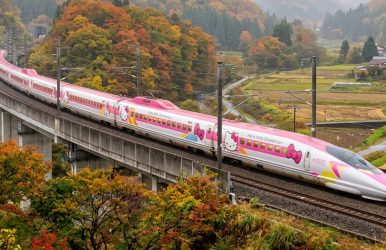
Moreover, the Hello Kitty Shinkansen used 500-series bullet trains and featured the signature white-and-pink colors.
Also, the exterior was adorned with bows, the signature of Hello Kitty.
However, for the train, the bow represented a link between the cities on the route covered.
The Decor Which Made The Hello Kitty Shinkansen So Special
Out of eight cars of the Hello Kitty Shinkansen, the decor of the first two cars was based on the theme.
Furthermore, the Hello Plaza in Car 1 was dedicated to exhibitions.
It had exhibits dedicated to the cities crossed on the route.
Moreover, you could shop for souvenirs at the Hello Plaza.
Again, the second carriage, “KAWAII! ROOM,” was decorated in the style of Hello Kitty.
The chairs, the wall art, and the ceiling were done accordingly.
Moreover, there was a photo area.
The rest of the carriage was like a normal bullet train, with subtle hints of the Hello Kitty theme.
Also, a unique melody was used for the announcement.
How Is The Farewell Event Of Hello Kitty Shinkansen Being Planned?
JR West is going to plan a series of commemorative events to bid farewell to this iconic bullet train.
As a passenger, you can leave a message on the board reserved for sharing memories.
Furthermore, you can get stickers and limited-edition souvenirs in memory of the train.
Moreover, you can collect special merchandise from the Kyoto Railway Museum and specific JR West Stores.
You will even find them online.
Having said that, there is still a month left before the Hello Kitty Shinkansen is discontinued.
So, let’s have a quick look at the operation days, timetable, and passes.
Hello Kitty Shinkansen Passes And Tickets
You can ride the Hello Kitty Shinkansen with the Japan Rail Pass and other tickets.
So, check out some of the pass options here.
1. JR-WEST All Area Pass
You can buy this single pass to explore Sanyo, Hokuriku, Hakata, and other unexplored parts of western Japan.
Furthermore, it has a validity of 7 days.
Also, the pass price for adults is 26000 Yen, and for children, it is 1300 Yen.
Moreover, it is free for children from 1 to 5 years.
This is the most recommended pass for riding the Hello Kitty Shinkansen.
2. Kansai - Hiroshima Area Pass
With this Kansai to Hiroshima Pass, you can enjoy unlimited rides between these two locations.
It will also include a ride on the JR West Miyajima Ferry to Miyajima Island.
Moreover, the 5-day pass for Kansai - Hiroshima will cost 17000 Yen for adults and 8500 Yen for children.
3. Hiroshima-Yamaguchi Area Pass
With this pass, you can enjoy unlimited rides between Fukuoka and Yamaguchi.
This pass is valid for 5 days, and for adults, it costs 15000 Yen, and for children, it is 7500 Yen.
Moreover, there are the Kansai-Wide Area Pass, Kansai-Hokuriku Area Pass, SANYO-SHINKANSEN One-way Ticket, and Okayama-Hiroshima-Yamaguchi Area Pass.
Hello Kitty Shinkansen Days Of Operation And Timetable
Hello Kitty Shikashen will now run every day.
You can book the trains from https://www.klook.com/japan-rail/ or the West Japan Railway Company’s website.
Also, there are two trains, Kodama No. 942 and Kodama No. 949, running from Hakata to Shin-Osaka and Shin-Osaka to Hakata, respectively.
1. Time Table Of Kodama No. 942 (Hakata To Shin-Osaka)
StationTiming Hakata7:04 AMKokura 7:22 AMShin-Shimonosheki 7:31 AMAsa7:43 AMShin-Yamaguchi7:53 AMTokuyama8:12 AMShin-Iwakuni8:25 AMHiroshima8:40 AMHigashihiroshima8:53 AMMihara9:12 AMShin-Onomichi9:18 AMFukuyama9:31 AMShin-Kurashiki9:45 AMOkayama10:09 AMAioi10:35 AMHimeji10:48 AMNishi-Akashi11:02 AMShin-Kobe11:12 AMShin-Osaka11:25 AM
2. Time Table Of Kodama No. 948 (Shin-Osaka To Hakata)
StationTiming Shin-Osaka11:37 AMShin-Kobe11:50 AMNishi-Akashi12:01 PMHimeji12:15 PMAioi12:27 PMOkayama12:50 PMShin-Kurashiki1:02 PMFukuyama1:16 PMShin-Onomichi1:28 PMMihara1:41 PMHigashihiroshima1:56 PMHiroshima2:08 PMShin-Iwakuni2:29 PMTokuyama2:42 PMShin-Yamaguchi2:58 PMAsa3:11 PMShin-Shimonosheki 3:24 PMKokura 3:34 PMHakata3:51 PM
There has always been high demand for the Hello Kitty Shinkansen.
So, hurry a little if you want to experience a ride in the remaining days.
Moreover, train timings can change under unusual circumstances.
So, always check the timing with local authorities before booking your tickets.
What Are The Places To Visit On The Hello Kitty Shinkansen Route?
There are many stations on the Hello Kitty Bullet Train route.
However, you cannot miss these places on the route.
1. Kobe
I loved the Nunobiki Ropeway, which was very close to the Kobe Shinkansen station.
The ropeway took me on a ride over the Nunobiki Waterfall and the beautiful Kobe Herb Garden.
It dropped us at the Observation Park, and as the name suggests, it offers amazing views of the city.
However, you can also take a local train to the city.
2. Himeji
The Himeji Castle is one of the twelve original castles in Japan. It was built in 1609.
Also known as the White Heron Castle, it is the largest in Japan and is a UNESCO World Heritage Site.
3. Okayama
The Korakuen Garden in Okayama is beautiful.
Furthermore, the Kibutsu Shrine, a little far away from the town, stands out with its amazing “timber-framed corridor.”
Also, don’t forget a visit to the Okayama Castle, the main tower of which was completed in 1597.
4. Kurashiki
The Bikan Historical Quarter is the main attraction of Kurashiki.
Once you reach Kurashiki on the bullet train, you will get off and take a local train to reach the historical center.
It is also a pretty and quaint town.
So, it is ideal for relaxation.
5. Hiroshima
Hiroshima is one of the historic places to visit in Japan.
The Atomic Bomb Dome and the Peace Museum here remind you of the futility of war.
The Future Of Themed Bullet Trains In Japan
You may think that the discontinuation of the Hello Kitty Shinkansen has put the future of the themed bullet trains in Japan at stake.
However, that is not the case.
Japan will have a new theme-based bullet train called the Super Mario Shinkansen in 2025.
Also, JR Kyushu runs this train in Kyushu.
As the name suggests, Super Mario Shinkansen has pictures of the main characters, Mario and Luigi.
Also, it shows how Japan still believes in using themed trains as powerful tools of regional tourism promotion among children and youngsters.







 Related