
Grand Teton National Park Animals: Into The Wilderness

Sep 30, 2024

Last Updated on: Nov 18, 2024

Travel Guides

High in the mountains, Grand Teton National Park in Wyoming harbors a great ecosystem for wildlife viewing. It is just south of Yellowstone, another great destination for exploring diverse wildlife. 

Further, as you indulge in the exotic beauty of the Teton Mountain Range and the Snake River, you will meet bison, bears, mountain lions, red squirrels, and even wolves. It is also home to the most colorful western tanager, bald eagles, and many other adorable birds.

Are you charmed by the stealthy nature of reptiles and vipers? You can find garter snakes and rubber boa snakes here. 

Fascinating! Isn’t it? Let me share a complete overview of wildlife at Grand Teton National Park.

Don’t Miss Your “Spot” To Watch The Grand Teton National Park Animals

Don’t Miss Your “Spot” To Watch The Grand Teton National Park Animals

You may not be a fan of Sheldon Cooper (from Big Bang Theory) and his obsession with his favorite spot. At Grand Teton National Park, you must know about the right spots for wildlife viewing. 

Here, I have curated the best spots within the park where you can meet wildlife without causing any disturbance in the space wild creatures demand. 

Oxbow Bend

Oxbow Bend

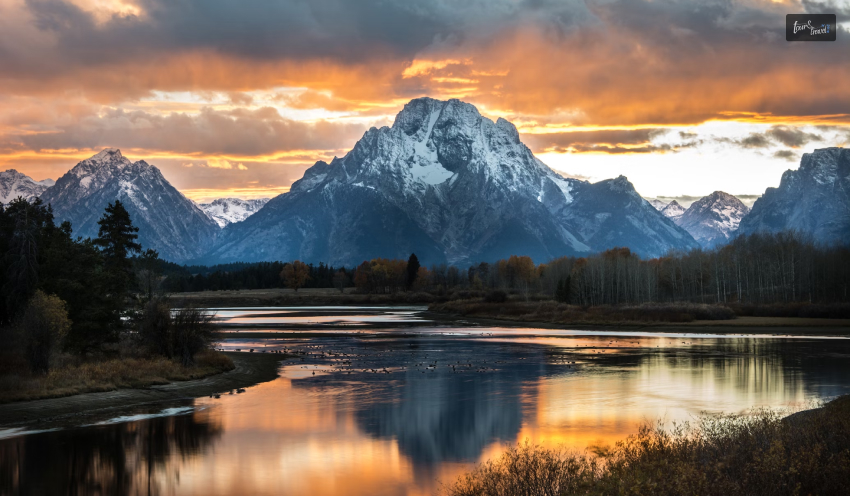
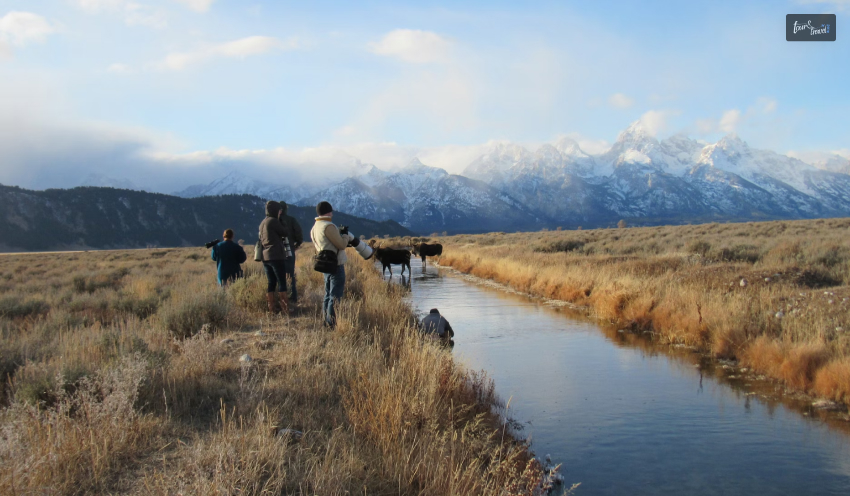
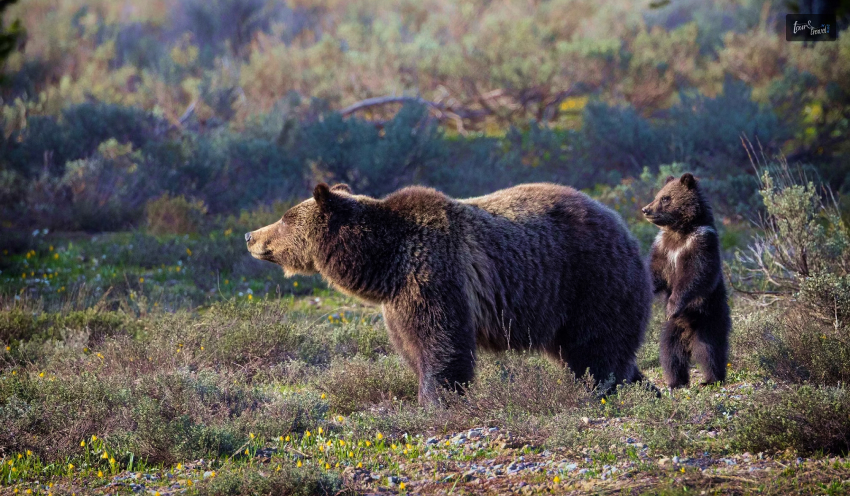
Oxbow Bend is one of the most beautiful vistas of the Grand Teton National Park. You often see a grizzly mother bear (grizzly No. 399) taking a stroll with her cubs. Further, the wetlands are mooses. 

Oxbow Bend also attracts thousands of colorful birds and reptiles who graze around or visit to drink water here. 

Moose Wilson Road

The Moose Wilson Road stretches between the Craig Thomas Discovery & Visitor Center and the entrance of Granite Canyon Park. 

It is hard to resist taking adorable snaps of bears indulging in berries here. You will also find moose in the wetlands. 

National Elk Refuge

National Elk Refuge

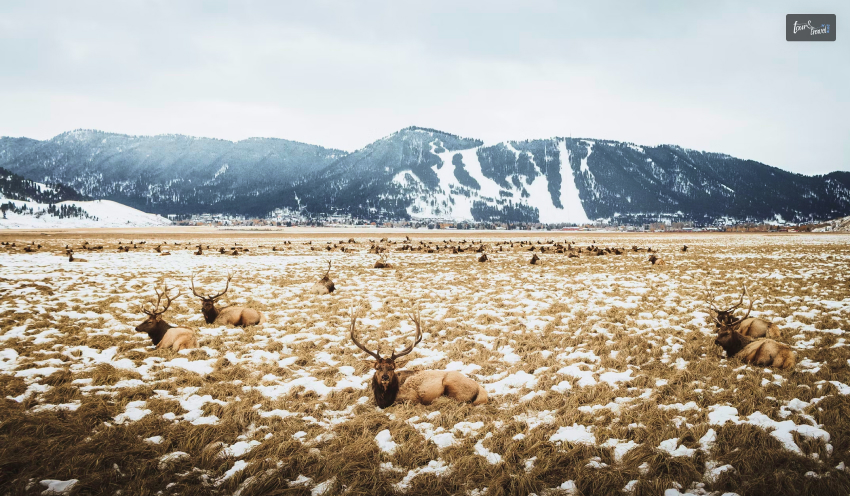
Spanning 25,000 acres, the National Elk Refuge has 7,000 elk. The best time to visit the National Elk Refuge is between mid-December and early April. Take a horse-driven sleigh ride to meet Elks from a close distance. 

The National Elk Refuge also has bison, mountain lions, bald eagles, and bears. Moreover, if you are lucky enough, you can meet wolves here. 

Kelly Loop and Antelope Flats

Kelly Loop and Antelope Flats

Kelly Loop and Antelope Flats are like a hidden gem in Grand Teton National Park. Look at the sagebrush to find a pronghorn or bison passing by. 

Grand Teton National Park Animals (Mammals, Birds, Reptiles, Unusual Ones And More)

Grand Teton National Park Animals

Grand Teton National Park is a perfect coexistence of various species and a wonderful depiction of dependence in the food chain. Let’s find out who has made a home in this beautiful wilderness.

Mammals At Grand Teton National Park

Mammals At Grand Teton National Park

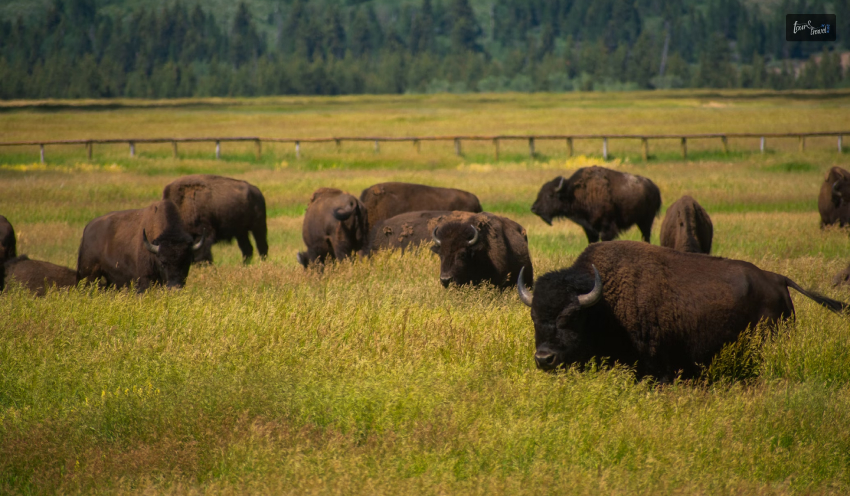
As you explore the Grand Teton National Park, a small or big mammal will always be around you. Grizzly and black bears are the most prominent animals in the park, and you will also meet bison, moose, bighorn sheep, or elks. 

Also, this park has wolves, wolverines, and mountain lions.  Small mammals in the park include red squirrels, chipmunks, Uinta ground squirrels, and long-tailed weasels

Further, yellow-bellied marmots and squirrels will be your companion as you hike through the trails in the park. 

Are you looking for mammals in the water? You will find the adorable muskrats, river otters, and beavers swimming around. 

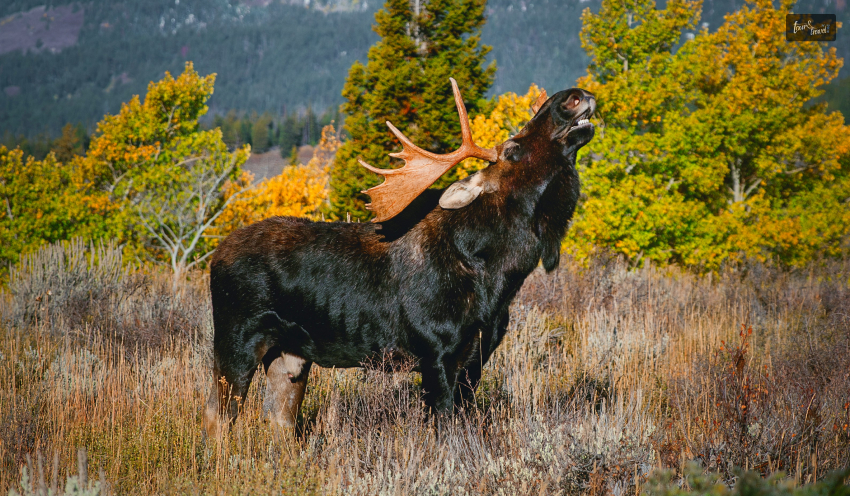
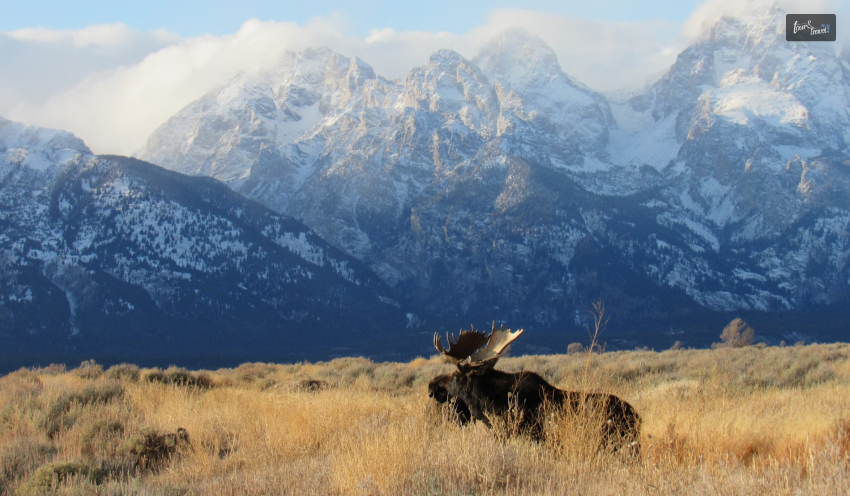
Do you know that moose is the largest antlered animal in the world? A moose can store 100 pounds of food in their stomach.
A male moose can weigh as much as 1400 pounds. 

Birds At Grand Teton National Park

The vibrant feathers of the western tanagers here are a treat to the eyes. Further, you will meet the calliope hummingbird, trumpeter swans, bald eagles, ospreys, and sage grouse in the park. 

Do you know that Grand Teton National Park is the home to The calliope hummingbird? It is the smallest bird in North America and weighs even less than 1/10th ounce. 
Also, the largest waterfowl in North America, The trumpeter swan, lives here near spots like Swan Lake, Oxbow Bend, National Elk Refuge, and Flat Creek. 

Do you want to watch birds romancing with their mates? Find out trumpeter swans moving in pair with their mate for life and sage grouses displaying their courtship in the sagebrush. 

Reptiles At Grand Teton National Park

This nation is home to snakes such as rubber boa, valley garter snake, and wandering garter snake. These reptiles are found near the waterbodies in the park.

You will also find the northern sagebrush lizard here. It is the only lizard species living in the park. 

Amphibians At Grand Teton National Park 

Amphibians At Grand Teton National Park 

Despite a high elevation, cold temperature, and a dry climate, this national park has five species of amphibians. These are:

  • Columbia spotted frogs
  • Western tiger salamanders
  • Western toads
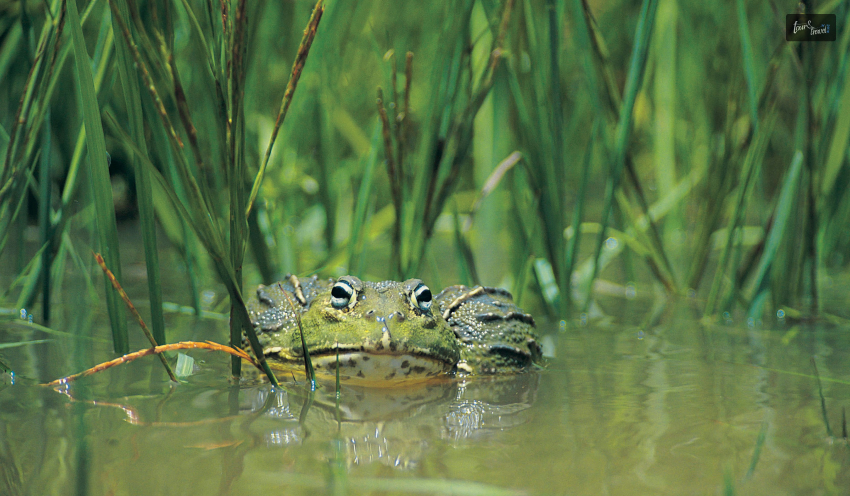
  • Bullfrogs
  • Boreal chorus frogs

Northern leopard frogs were found earlier in this area but have become extinct. If you want to spot these amphibians, you must visit Taggart Lake or String Lake. 

Native Fish At Grand Teton National Park

The native and non-native fish at Grand Teton National Park are vivid. Some (for example, mountain suckers) survive on mountain algae, while others (for example, cutthroat trouts) eat small fish and insects.

For many animals and birds, like bald eagles, fish is the primary food source in the park. Further, fish is a secondary food source for the local inhabitants. In addition, by eating insects and algae, a fish keeps the spread of these elements in check. 

Native Fish At Grand Teton National ParkUtah suckerFine spotted cutthroat trout of Snake RiverMountain suckerSpeckled daceUtah chubBluehead sucker
Non-Native Fish At Grand Teton National ParkRainbow troutBrown troutLake troutGuppiesGoldfishGreen swordtail

You will also find many aquarium species at Grand Teton National Park. 

Species At Risk At Grand Teton National Park

Species At Risk At Grand Teton National Park

Grand Teton National Park is home to many species at risk and species of concern. Further, it has whitebark pine trees, which are up for listing. 

Whitebark Pine Trees: Up For Listing 

The invasive disease of blister rust and mountain pine beetles greatly harms these trees. 

Alarmingly, an NPS Survey (2018) says that 57% of the trees were affected by blister rust, while the beetles harmed 30%. In addition, 40% of the total vegetation died. 

Only 15% of the trees were able to produce cones. The pine nuts and seeds are an important food source for grizzly bears, squirrels, nutcrackers, black bears, and other animals in the area. Further, these trees play a crucial role in trapping and retaining snow, as well as in preventing the melting of snow.

Thus, they prevent the erosion of steep slopes in the park.

Do you know that grizzly bears eat whitebark pine nuts during hyperphagia? Hyperphagia refers to overeating before going into hibernation. 
These nuts are rich in protein and fat. 

Species Of Concern

After a magical recovery, Grand Teton National Park’s bald eagles are no longer endangered. However, these birds still fall into the category of the species of concern.

Other species of concern in the national park are greater sage grouse and grey wolves.

You will find the bald eagles near the Gros Ventre and Snake Rivers. They love eating fish and sometimes prey on carrion, waterfowl, and other small mammals.

Greater sage grouse here are known for the most poetic display of their mating in the spring season every year. You will find them in spaces in the sagebrush. 

Species At Risk 

As a part of the Greater Yellow Ecosystem, Grand Teton National Park is home to around 800 grizzly bears. It has made a recovery from the list of endangered species after a long conservation endeavor and is now a species at threat or risk.

Other species at risk at this national park are:

  • Canada lynx
  • Yellow-billed Cuckoo
  • Western glacier stonefly

The park gets filled with the knocking call of the yellow-billed cuckoo in the spring. 

Small Creatures At Grand Teton National Park

Insects play a very crucial role in the food chain system. They help pollinate flowers, function as nutrient recyclers, and feed many animals. So, when you see a violet lupine in Grand Teton National Park, you must know bees are around. 

Along with bees,  Grand Teton National Park also has small and mighty ones, such as the Army Cutworm Moth (the food of grizzly bears during the fall season), Bark Beetles, carrion beetles, etc.

Beetles are very important for the ecosystem of Grand Teton National Park. They break down woody plants and help return the nutrients to the soil. Further, carrion beetles recycle the minerals found in the corpse of an animal. 
Thus, these insects help with the decomposition and recycling of essential nutrients. 

Over three million people visit Grand Teton National Park every year. Along with wildlife viewing, you can enjoy hiking, biking, fishing, climbing and mountaineering, and backcountry camping here. So, gear up for the best experience in the wilderness. 

Also read

Share on Social Media

Sibashree is a travel, culture, and leisure writer who has been writing since the age of 12 and professionally since 2014. With more than a decade of travel writing experience and journeys across India and several parts of the world, she brings a deeply personal and thoughtful perspective to her work. A student of English Literature and Mass Communication, Sibashree has always viewed travel as more than movement — for her, it has been a way of understanding people, cultures, and herself. Her passion for spiritual exploration has also led her to many unusual and meaningful destinations over the years. Outside of writing, Sibashree enjoys watching European cinema, reading about global politics, and reflecting on the stories hidden within everyday places.

Leave a Reply

Your email address will not be published. Required fields are marked *

title-img Related

READ MORE Luang Prabang temple guide

Luang Prabang Temple Guide: What Are The Top Buddhist Temples To Visit In Laos?

BY  Sibashree Nov 3, 2025

I visited Luang Prabang in 2022, and the capital of the ancient Laotian kingdom was slowly recovering from the rampage of COVID-19. The misty mornings were special, with hundreds of monks walking through the narrow streets with their alms bowls.  People gather and offer fruits and rice to the monks. The monks silently accept the offerings, then quietly return to the temples.  Even today, with skyrocketing tourism numbers, Luang Prabang remains one of the most unspoiled places on earth. Buddhism and a strong belief in the power of nature have helped the city to maintain its authentic charm.  Also, the 32 Buddhist temples present in Luang Prabang today are a telltale of the history, myths, and spiritual beliefs associated with the city’s origin. In this Luang Prabang temple guide, I will talk about the top Buddhist temples to visit in Luang Prabang Laos. Of course, the Golden City Temple or Wat Xieng Thong is the most famous among them. It was built in 1560.  What Are The Top Buddhist Temples To Visit In Luang Prabang Laos?  As the mornings in Luang Prabang are special with the quietude and humility of the alms giving ceremony, the evenings are magical with the evening chants of the monks in the temples.  The sound of the chants echoes through the valley with the Mekong River passing by dreamily and the outlines of the mountains fading into the darkness.  I used to get lost in my thoughts that these temples were the sites of the coronation of many Laotian kings. Also, despite their intricate designs, they look like an extension of the ethereal natural landscape here.  Nevertheless, these are the top Buddhist temples to visit in Luang Prabang, Laos.  1. Wat Xieng Thong Also known as the “Monastery of the Golden City,” Wat Xieng Thong evokes awe. Built in 1560, it is home to the famous reclining Buddha Sanctuary or the Red Chapel.  It also stands out with its architectural excellence, including the multi-tiered roofline and beautiful mosaic work.  2. Wat Mai Suwannaphumaham View this post on Instagram A post shared by Marek Kotlarski (@mkotlarski) Wat Mai, or the New Temple, is the largest in Luang Prabang. It looks exquisite with the gilded bas-relief panels on the façade.  Also, it is historically important as it served as the residence of the highest Lao Buddhist dignitary till 1975.  3. Wat Visounnarath (Wat Visoun) Wat Visoun has a distinctive, spherical, and unique stupa called "That Mak Mo” or the “Watermelon Stupa.” It has a rounded shape.  Also, Wat Visounnarath was founded in 1512. So, today, it is the oldest operating temple in Luang Prabang.  4. Wat Aham View this post on Instagram A post shared by Austin Bush (@bushaustin) Wat Aham is also known as the Monastery of the Open Hearted. It is located next to Wat Visoun.  Wat Aham is famous for its two ancient banyan trees on its grounds. Locals believe that these trees are home to the guardian spirits of the city.  5. Wat That Luang Locals call Wat That Luang the Monastery of the Royal Stupa. The ashes of King Sisavang Vong, who died in 1959, are present in the golden stupa in the temple grounds. Even before that, it was used to cremate many members of the royal family.  6. Wat Chom Si Located on the top of Mount Phousi, Wat Chom Si was the best temple I visited in Luang Prabang. The spiritual energy there was so high.  I don’t know whether it’s the joy of reaching the temple after a trek or the magical views of the Mekong River from the top! Everything looks and feels so magical here! 7. Wat Sop Sickharam The structure of the Wat Sop Sickharam temple, what we see today, is the renovated form of the 19th century. However, the origin of the temple goes back to the 16th century.  Its architecture is a wonderful fusion of the French Colonial Style and traditional Lao architecture.  8. Wat Pa Phai The congregational hall or the traditional Lao-style sim is the highlight of Wat Pa Phai. Furthermore, its facade is unique with exterior columns and a verandah.  It also has another name, “The Monastery of the Bamboo Forest.”  9. Wat Sene Souk Haram Wat Sene Souk Haram looks dazzling with its golden and red ornamentation. It is known as the Temple of 100,000 treasures, as it was built with 100,000 stones collected from the Mekong River in 1718.  10. Wat Nong Sikhounmuang Wat Nong Sikhounmuang has recently gone through a major renovation. It is home to one of the largest and richest pagodas in Luang Prabang.  Furthermore, you can spot it from a distance due to its vibrantly colored roof in the traditional Thai style.  11. Wat Khili View this post on Instagram A post shared by Nat & Ricky Dunn (@lifedunndifferently) The large gold Wheel of Life on the front gable of Wat Khili will be the first thing to catch your notice. Furthermore, it has low roofs and a red facade with golden columns.  It shows influence from the Xieng Khouang province and was built in 1773.  12. Wat Phon Phao Wat Phon Phao has a unique octagonal structure, and with the sunlight falling over it, it uses its golden glow to illuminate the city.  The paintings in the interior of this temple are beautiful, and they depict the Buddhist philosophy of life and death.  13. Wat Manorom Wat Manorom is home to a 6-meter-high bronze Buddha statue, which dates back to the 14th century. Apart from being a temple, it is also an important community center for the locals.  In fact, all the temples in Luang Prabang help nurture community bonding. Also, historically, it used to be the home of the largest number of monks.  14. Wat Ho Pha Bang (inside Royal Palace) The Wat Ho Pha Bang, or the Temple of the Pha Bang, houses the Phra Bang Buddha image, the palladium of Laos.  This temple is located inside the Royal Palace grounds.  15. Wat Mahathat Wat Mahathat was founded in 1548. It houses the ashes of the revered Prince Phetsarath, who declared the independence of Laos in 1945.  It also has a highly ornamented facade.  16. Wat Xieng Mouane View this post on Instagram A post shared by nrq (@nrqpapa) Wat Xieng Mouane is important for its role in promoting traditional art and culture. Furthermore, I loved the gilding and traditional woodwork in the temple.  17. Wat That Phoun Wat That Phoun is one of the most peaceful temples I have visited in Luang Prabang. Also, once you enter the temple, it’s like an art gallery with a wonderful display of paintings.  The entrance gates are adorned with serpent deities or Nagas, and the temple also functions as a cremation location.  18. Wat Long Khoun “Wat Long Khoun is where our kings once meditated. It’s quiet, sacred, and often overlooked.” - Somsack, my local guide.  This former royal meditation retreat is a wonderful example of Lao architecture in the 18th century, and it has the most illustrious Jataka murals, depicting the last lives of Lord Buddha.  19. Wat Phra Bat Tai Wat Phra Bat Tai in Luang Prabang is very similar to Prabhas Tirtha in India. Prabhas Tirtha has the footprints of Lord Krishna, and War Phra Bat Tai has a huge footprint of the Buddha.  Furthermore, its architectural style shows a wonderful fusion of Thai, Lao, and Vietnamese architectural styles.  It is also where I found it the easiest to interact with the monks and share our philosophies about life.  20. Wat Phon Heuang The traditional stenciling on the temple's ceiling instantly evoked a sense of awe. Furthermore, I saw how it is an important social area or hub for the local community. It is so because it is one of the prime locations for participating in the alms-giving ceremony.  In addition, when I visited, it had not been extensively renovated. So, it was like connecting to the past for me.  Wat Xieng Mouane: The Lesser-Known Temple Of Luang Prabang  View this post on Instagram A post shared by Ruprecht Lin (@boblinize) Wat Xieng Maen is a hidden gem if I talk about the top temples to visit in Luang Prabang. It was founded in 1592.  I took a ferry across the Mekong River to reach this temple. It is a quiet escape, and it is significant as it was home to the famous Phra Bang Buddha image for a short period.  Accessibility Ratings Of The Best Temples In Luang Prabang  Check out the table below to know about the most accessible Buddhist temples in Luang Prabang.  TempleWheelchair AccessStairsQuiet ZonesWat Xieng Thong✅Minimal✅Wat Mai✅Few steps✅Wat Visoun✅Ramp available✅Wat Aham✅Flat terrain✅ Photography Tips Golden Hour: 6:00–7:00 AM and 5:00–6:30 PM. Best Angles: Capture rooflines from low angles; use temple doorways for framing. Respectful Shots: Avoid interrupting rituals or photographing monks without consent. Gear: Use a wide-angle lens for interiors and a tripod for low-light shots. Temple Etiquette & Dress Code In Luang Prabang Dress Modestly: Shoulders and knees covered. Avoid tight or revealing clothing. Remove Shoes: Always take off footwear before entering the temple interiors. Avoid Pointing Feet: Never point your feet toward Buddha statues or monks. Photography: Ask permission before photographing monks or rituals. Alms Giving: Participate respectfully in morning alms (Tak Bat) by kneeling and remaining silent. What Is The Best Time To Visit The Temples In Luang Prabang? Luang Prabang’s temples are open year-round, but timing enhances the experience: MonthHighlightsNovember–FebruaryCool, dry weather is ideal for walking tours.Mar–MayHot but less crowded and good for early morning visits.June–OctoberRainy season, and it stands out with its lush greenery and fewer tourists. Best Time of Day To Visit The Temples In Luang Prabang  Sunrise: Wat Chom Si after a climb to Mount Phousi Midday: Wat Mai, with its shaded interiors, is the perfect late morning and afternoon refuge.  Sunset: Wat Xieng Thong is ideal for golden hour photography.  Walking Routes & Maps: Exploring The Best Temples Of Luang Prabang  Visiting all the temples in Luang Prabang is not possible in a single visit to the city. Instead, for a short trip to the city, you can follow these temple tour routes.  1. Temple Trail Route (2–3 Hours) Start at Wat Xieng Thong.  Walk to Wat Sop Sickharam.  Continue to Wat Sene.  Visit Wat Mai.  End at Wat Visoun. 2. Sunset Spiritual Loop (1 Hour) Climb Mount Phousi to Wat Chom Si. Descend to Wat Aham. Finish at Wat That Luang. Luang Prabang Temple Guide: Frequently Asked Questions (FAQs) Here are some frequently asked questions and answers about the Luang Prabang temple guide.  1. How Many Temples Are In Luang Prabang? Luang Prabang, a UNESCO World Heritage Site, has 32 operational Buddhist temples. These temples with their beautiful murals, paintings, and sculptures depicting the life and lessons of Lord Buddha, are prominent social, religious, and community centers. Furthermore, they show a wonderful fusion of Lao, Thai, and Khmer architectural styles in their architecture.  2. Can I Visit The Temples In Luang Prabang During Festivals? Yes, you can visit the temples in Luang Prabang during major festivals such as Boun Pi Mai, the Lao New Year, and Boun Khao Phansa, or the start of the Buddhist Lent. However, you have to be patient as there will be crowds, and you have to follow the etiquette. 3. Are Women Allowed To Give Alms? I found out that people taking part in the alms-giving ceremony were mostly women. However, my guide told me to follow some strict rules. You cannot touch the robes of the monks or make any physical contact with them. Also, you must kneel down before them while offering the alms. 

READ MORE card-img

Connemara National Park: Where Guglielmo Marconi Invented The First Full Duplex Radio 

BY  Sibashree Sep 10, 2024

Connemara National Park has been an important Irish national park, having won the Green Flag Award in 2018. This international benchmark shows its worth as a green space and park. Further, in 2021, it also sought the New Heritage Site Accreditation, which shows the quality of the national park and how it is maintained in a sustainable way.   Moreover, this park is even rich in geology and houses many historical and archaeological sites. In addition, as an outdoor enthusiast, you can explore its various hiking and walking trails.   So, want to tour this Irish national park, which has a dash of history, culture, natural abundance, and more? Here is a complete guide for you.   Important Information About Connemara National Park  Visiting Time: 9 am to 5:30 pm  Entry Fee: Free  Closed On Christmas Day, St. Stephen’s Day, and Red and Orange Weather Alert Days  Amenities: Education Center, Visitor Center, Playground, Cafe, Toilets and Picnic Areas  How to Reach: You can reach this national park by train, car, or bus. You have to reach Galway City first and then take a bus (or private car) to reach the park.  Main Access Point: Near Letterfrack along the N59  Pet Friendliness: Dogs are Welcome to Walk the Trails   Fascinating Geology Of Connemara National Park  The national park is a part of the Twelve Ben area. So, the park also has underlying metamorphic rocks. The sediments forming these rocks are aged between 700 to 550 million years.   Further, you will find schists and gray marbles around the edges of the rocks. Moreover, at the top, you will see quartzite. In addition, it is astonishing to know that the final shaping of the park took place around 10000 years ago or during the last ice age.  The park has a rocky formation with boulder clay and a deposit of sand and gravel. The distinct geological features have contributed to the type of vegetation found in this area.   What Animals Are In Connemara National Park? Which Plants Does This Park Have?  The International Union for Conservation of Nature, or IUCN, has marked Connemara National Park as a Category II Protected Area. So, there is a constant endeavour to safeguard the landscape, wildlife, and ecology of the park unadulterated.   The park has many heritage breeds along with a wide range of protected flora and fauna. In addition, there are some conservation projects to protect the flora and fauna. The table below shows the details.  Birds* Stonechats Wrens Robins Peregrine Falcon Merlin Sparrowhawk Kestrel Mammals Nocturnal Animals  Pine Marten Bats Foxes Badgers  Diurnal Animals   Pygmy Shrews Red Deer Wood Mice Otters Hares Stoats Connemara Ponies Other Fauna Freshwater Pearl Mussel Salmon Trout Smooth Newt Common Frog Rare and Protected Plants and Other Flora Sundews Butterwort Purple Moor Grass Roseroot Purple Saxifrage Starry Saxifrage Pale Butterwort Lesser Twayblade Mountain Sorrel St. Patrick’s Cabbage St. Daboec’s Heath Heritage Breeds Connemara Ponies Cladoir Sheep Moiled Cattle Old Irish Goats Galway Sheep Conservation Projects** Control of Rhododendron Mweelin Exclosure New Found Wood Connemara Pony Cladoir Sheep Preservation Committee Irish Moiled Cattle & Conservation Grazing  *The national park has a large number of birds in the winter. Many native birds of Ireland, such as woodcock, song thrush, mistle thrush, snipe, and starling, increased in numbers in this season.   Moreover, fieldfare, redwing, and many other birds from Northern Europe flock to this park in great numbers during winter.   **The conservation projects in the park are designed to maintain biodiversity. These also try to eradicate the negative impacts on the rare and protected flora and fauna of the park.   Habitats Of Connemara National Park  Connemara National Park has wet boglands and uplands as its habitats. Further, the extremely wet boglands are the hubs of various vegetation. However, the uplands have drier mountain bog communities.  Boglands   Boglands are found in the low-lying areas of the park. Further, in these wet boglands, you will find the western blanket bog. In addition, purple moor grass surrounds this western blanket bog, and thus, it has a grass-like appearance.   In the national park, you will find these boglands near the pool surface, slope inclines, flat lands, and flushes. However, these boglands can appear on your route if you're hiking off trails, and there can be swallow pools. So, be careful!  Uplands   The mountainous and rocky uplands also house a wide variety of vegetation. The grasslands and heather here are also home to some rare and endangered animals, such as red deer and Old Irish Goats.  Moreover, the heathlands here are drier due to a higher altitude.  Hiking And Walking At Connemara National Park  For hikers, all roads in the Connemara National Park lead to the Diamond Hill summit. , panoramic views of Letter Hill or Tully Mountain. Twelve Bens and Kylemore Abbey are also visible from the mountain summit. However, the national park has three more major hiking trails. Check out the table below.  Name of the Trail Difficulty Level Distance (in Km) Upper Diamond Hill Difficult 3.7 Lower Diamond Hill Moderate 3 Sruffaunboy Trail Easy 1.5 Ellis Wood Nature Trail  Easy 0.5  If you are planning to complete a multi-day hiking trip in the national park, you can consider camping here. However, you have to abide by the Wild Camping Code and the regulations related to the Camping Exclusion Zone.   Moreover, you can take a walk (self-guided) through the Tree Trail in the park. It begins from the Car Park Kiosk, and throughout the trail, you will meet tree varieties such as holly, hazel, oak, and Scots’ Pine.   Did You Know?  Through the Connemara National Park West Center and the Letterfrack Village, you can have a thought-provoking walk. The trail you will take is known as the Poetry Trail. Further, in various locations along the path, you will find nine poems by eminent Irish poets like Mary O’Malley and Moya Cannon, which are placed on plaques.   In addition, it is a one-of-a-kind experience for poetry lovers. Some of these nine poems talk about the park and its importance in Irish history. Further, the remaining ones are more generic in nature.   Exploring History At Connemara National Park  The archaeological and historical sites at Connemara National Park tell the tales of human lives and the history of the park for thousands of years. The park’s two megalithic tombs (West and East Tomb) in the park were already popular. However, thanks to the surveys of Helen Riekstins, an archaeologist and national park guide, we have 13 other sites that add to the importance of the park.   Among these 13 sites, six further have been visited by NMS or the National Monuments Service and Department of Housing, Local Government and Heritage. Here are the visited sites.  A standing stone  A cairn  Enclosures  A pre-bog wall  Nearby hut  A house  Further, the other seven sites are to be a part of the Record of Monuments and Places (RMP) review for inclusion.   The pre-bog wall is likely to be associated with neolithic farming. On the other hand, the hut sites and standing stones are believed to be from the Bronze Age.   Connemara National Park has sites that are 10000 years old. These sites existed as coastal middens and belonged to the Mesolithic or Stone Age.  Many archaeological and historical sites are found near Diamond Hill, Letterfrack, and Mweelin.   The megalithic tombs in the park are around 4000 years old.   Connemara National Park is a twin historic site with Terra Nova National Park in Newfoundland. These twinning sites speak for the cultural bond between Ireland and Canada.  Guglielmo Marconi, who received the patent for two-way radio in 1912, is associated with the place. Between Diamond Hill and Mweelin, he suspended the wires, and the current site of Bunaboghee Bog and Park Office had the second line. Here, he invented the first Full Duplex Radio.   So, the presence of various archaeological sites and the association with famous personalities make this park a delightful site for history lovers. Moreover, the Letterfrack Industrial School (1890) is a site important in modern history. Further, the school’s graveyard here tells the grave tales of injustices to the boys resting there.   Final Words   Located in County Galway, Connemara National Park covers around an area of 2,000 hectares. The park opened its door to visitors in 1980, and since then, it has been a place of attraction with its scenic beauty, geological variety, rich wildlife, and hiking trails.   The park also hosts many events like the Summer Evening Lecture Series and Heritage Week Celebration. Moreover, stargazing has become a popular activity in the park, and adults and children over 7 years of age can participate in the star-watching event. You can also check the National Parks website for the latest events at Connemara National Park.  So, are you planning a visit to this historically and naturally rich Irish national park anytime soon? Or have you already been to this wonderful place? Don’t forget to share your experience with us!  Also read Why Include Whale Watching In Your LA Itinerary. From Cocktails To Kickflips: Must-Try Activities In San Diego. Lake Clark National Park And Preserve: Very Few Know How It Preserves The Alaskan Spirit And Culture.

READ MORE Big Trip

Use These Resources When Planning A Big Trip

BY  Arnab May 3, 2023

Planning a big trip can be both exciting and overwhelming. From deciding on a destination to booking your flights and the necessary accommodations, there are a lot of factors to consider while you are planning a successful trip. Fortunately, there are numerous resources available to help make the planning process more manageable. In this article, we will explore some of the best resources to use when planning a big trip. Travel guidebooks Travel guidebooks are an excellent resource when planning a big trip. They offer valuable information about a destination, including its history, culture, and popular attractions. Guidebooks also provide practical information like maps, transportation options, and accommodation recommendations. Guidebooks can be purchased at bookstores, online retailers, or borrowed from a library. Some popular travel guidebook series include Lonely Planet, Fodor's, and Rick Steves. Online travel forums Online travel forums are a great resource for getting insider tips and recommendations from other travelers. Forums like TripAdvisor and Lonely Planet's Thorn Tree forum allow you to ask questions, read reviews, and get advice from experienced travelers. You can also search for threads on specific topics like budget travel, solo travel, or adventure travel. When using travel forums, be sure to read reviews and advice from multiple sources to get a well-rounded perspective. You can also contribute to the community by sharing your own travel experiences and tips. Travel blogs Travel blogs offer a more personal perspective on a destination and will usually list some of the best things to do in Lenexa, KS, as an example. These will often be written by experienced travellers or locals, or someone who is at least strongly familiar with the area. They can provide detailed information about a destination, including off-the-beaten-path attractions, restaurant recommendations, and unique experiences. Many travel bloggers also offer practical tips like how to save money or travel sustainably. You can find travel blogs by searching online or on social media platforms like Instagram or Pinterest. The best travel sites will have all the honest opinions you need to plan. Additionally, some travel blogs may incorporate a QR code to provide even more comprehensive information. Travel booking websites Travel booking websites like Expedia, Kayak, and Booking.com offer a one-stop shop for booking flights, accommodations, and activities. These websites allow you to compare the best prices from the best vendors for the things you want. When using travel booking websites, be sure to read the terms and conditions carefully and understand any restrictions or limitations. You may also want to consider booking directly with airlines and hotels, as they may offer better deals or loyalty programs. Travel insurance providers Travel insurance can provide peace of mind and financial protection in case of unexpected events like flight cancellations, lost luggage, or medical emergencies. Many travel insurance providers offer customizable plans that can be tailored to your specific trip needs and budget. When choosing a travel insurance provider, be sure to read the policy carefully and understand what is covered and what is not. You may also want to consider purchasing insurance from a provider that specializes in travel insurance, as they often offer more comprehensive coverage. Planning a big trip can be a daunting task, but with the right resources, it can also be an enjoyable and exciting experience. Travel guidebooks, online travel forums, travel blogs, travel booking websites, and travel insurance providers are just a few of the many resources available to help you plan a successful trip. By using these resources, you can make informed decisions and ensure that your trip is both memorable and stress-free. Read Also: 7 Key Points To Remember While Planning Your Honeymoon Trip 5 Things You Can Carry For An Amazing Trip On A Budget Booking.Com – Best Review By Users In 2022