
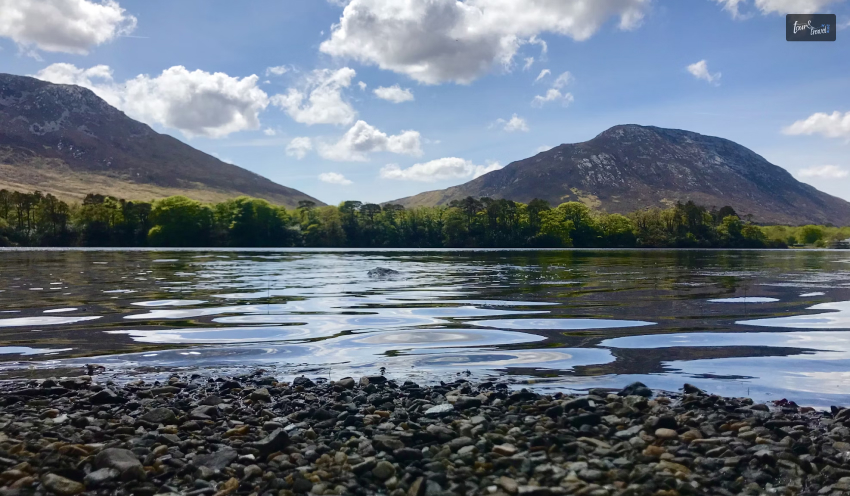






Connemara National Park: Where Guglielmo Marconi Invented The First Full Duplex Radio 

Sep 10, 2024

Last Updated on: Nov 18, 2024

Travel Guides

Connemara National Park has been an important Irish national park, having won the Green Flag Award in 2018. This international benchmark shows its worth as a green space and park. Further, in 2021, it also sought the New Heritage Site Accreditation, which shows the quality of the national park and how it is maintained in a sustainable way.  

Moreover, this park is even rich in geology and houses many historical and archaeological sites. In addition, as an outdoor enthusiast, you can explore its various hiking and walking trails.  

So, want to tour this Irish national park, which has a dash of history, culture, natural abundance, and more? Here is a complete guide for you.  

Important Information About Connemara National Park 

Important Information About Connemara National Park 

Visiting Time: 9 am to 5:30 pm 

Entry Fee: Free 

Closed On Christmas Day, St. Stephen’s Day, and Red and Orange Weather Alert Days 

Amenities: Education Center, Visitor Center, Playground, Cafe, Toilets and Picnic Areas 

How to Reach: You can reach this national park by train, car, or bus. You have to reach Galway City first and then take a bus (or private car) to reach the park. 

Main Access Point: Near Letterfrack along the N59 

Pet Friendliness: Dogs are Welcome to Walk the Trails  

Fascinating Geology Of Connemara National Park 

Fascinating Geology Of Connemara National Park 

The national park is a part of the Twelve Ben area. So, the park also has underlying metamorphic rocks. The sediments forming these rocks are aged between 700 to 550 million years.  

Further, you will find schists and gray marbles around the edges of the rocks. Moreover, at the top, you will see quartzite. In addition, it is astonishing to know that the final shaping of the park took place around 10000 years ago or during the last ice age. 

The park has a rocky formation with boulder clay and a deposit of sand and gravel. The distinct geological features have contributed to the type of vegetation found in this area.  

What Animals Are In Connemara National Park? Which Plants Does This Park Have? 

What Animals Are In Connemara National Park?

The International Union for Conservation of Nature, or IUCN, has marked Connemara National Park as a Category II Protected Area. So, there is a constant endeavour to safeguard the landscape, wildlife, and ecology of the park unadulterated.  

The park has many heritage breeds along with a wide range of protected flora and fauna. In addition, there are some conservation projects to protect the flora and fauna. The table below shows the details. 

Birds* Stonechats 
Wrens 
Robins 
Peregrine
Falcon 
Merlin 
Sparrowhawk 
Kestrel 
Mammals Nocturnal Animals  

Pine
Marten 
Bats 
Foxes 
Badgers  

Diurnal Animals   

Pygmy
Shrews 
Red Deer 
Wood Mice 
Otters 
Hares 
Stoats 
Connemara Ponies 
Other Fauna Freshwater Pearl Mussel 
Salmon 
Trout 
Smooth Newt 
Common Frog 
Rare and Protected Plants and Other Flora Sundews 
Butterwort 
Purple Moor Grass 
Roseroot 
Purple Saxifrage 
Starry Saxifrage 
Pale Butterwort 
Lesser Twayblade 
Mountain Sorrel 
St. Patrick’s Cabbage 
St. Daboec’s Heath 
Heritage Breeds Connemara Ponies 
Cladoir Sheep 
Moiled Cattle 
Old Irish Goats 
Galway Sheep 
Conservation Projects** Control of Rhododendron 
Mweelin Exclosure 
New Found Wood 
Connemara Pony 
Cladoir Sheep Preservation Committee 
Irish Moiled Cattle & Conservation Grazing 

*The national park has a large number of birds in the winter. Many native birds of Ireland, such as woodcock, song thrush, mistle thrush, snipe, and starling, increased in numbers in this season.  

Moreover, fieldfare, redwing, and many other birds from Northern Europe flock to this park in great numbers during winter.  

**The conservation projects in the park are designed to maintain biodiversity. These also try to eradicate the negative impacts on the rare and protected flora and fauna of the park.  

Habitats Of Connemara National Park 

Habitats Of Connemara National Park 

Connemara National Park has wet boglands and uplands as its habitats. Further, the extremely wet boglands are the hubs of various vegetation. However, the uplands have drier mountain bog communities. 

Boglands  

Boglands are found in the low-lying areas of the park. Further, in these wet boglands, you will find the western blanket bog. In addition, purple moor grass surrounds this western blanket bog, and thus, it has a grass-like appearance.  

In the national park, you will find these boglands near the pool surface, slope inclines, flat lands, and flushes. However, these boglands can appear on your route if you’re hiking off trails, and there can be swallow pools. So, be careful! 

Uplands  

The mountainous and rocky uplands also house a wide variety of vegetation. The grasslands and heather here are also home to some rare and endangered animals, such as red deer and Old Irish Goats. 

Moreover, the heathlands here are drier due to a higher altitude. 

Hiking And Walking At Connemara National Park 

Hiking And Walking At Connemara National Park 

For hikers, all roads in the Connemara National Park lead to the Diamond Hill summit. , panoramic views of Letter Hill or Tully Mountain. Twelve Bens and Kylemore Abbey are also visible from the mountain summit. However, the national park has three more major hiking trails. Check out the table below. 

Name of the Trail Difficulty Level Distance (in Km) 
Upper Diamond Hill Difficult 3.7 
Lower Diamond Hill Moderate 
Sruffaunboy Trail Easy 1.5 
Ellis Wood Nature Trail  Easy 0.5 

If you are planning to complete a multi-day hiking trip in the national park, you can consider camping here. However, you have to abide by the Wild Camping Code and the regulations related to the Camping Exclusion Zone.  

Moreover, you can take a walk (self-guided) through the Tree Trail in the park. It begins from the Car Park Kiosk, and throughout the trail, you will meet tree varieties such as holly, hazel, oak, and Scots’ Pine.  

Did You Know? 

Through the Connemara National Park West Center and the Letterfrack Village, you can have a thought-provoking walk. The trail you will take is known as the Poetry Trail. Further, in various locations along the path, you will find nine poems by eminent Irish poets like Mary O’Malley and Moya Cannon, which are placed on plaques.  

In addition, it is a one-of-a-kind experience for poetry lovers. Some of these nine poems talk about the park and its importance in Irish history. Further, the remaining ones are more generic in nature.  

Exploring History At Connemara National Park 

Exploring History At Connemara National Park 

The archaeological and historical sites at Connemara National Park tell the tales of human lives and the history of the park for thousands of years. The park’s two megalithic tombs (West and East Tomb) in the park were already popular.

However, thanks to the surveys of Helen Riekstins, an archaeologist and national park guide, we have 13 other sites that add to the importance of the park.  

Among these 13 sites, six further have been visited by NMS or the National Monuments Service and Department of Housing, Local Government and Heritage. Here are the visited sites. 

  • A standing stone 
  • A cairn 
  • Enclosures 
  • A pre-bog wall 
  • Nearby hut 
  • A house 

Further, the other seven sites are to be a part of the Record of Monuments and Places (RMP) review for inclusion.  

The pre-bog wall is likely to be associated with neolithic farming. On the other hand, the hut sites and standing stones are believed to be from the Bronze Age.  

  • Connemara National Park has sites that are 10000 years old. These sites existed as coastal middens and belonged to the Mesolithic or Stone Age. 
  • Many archaeological and historical sites are found near Diamond Hill, Letterfrack, and Mweelin.  
  • The megalithic tombs in the park are around 4000 years old.  
  • Connemara National Park is a twin historic site with Terra Nova National Park in Newfoundland. These twinning sites speak for the cultural bond between Ireland and Canada. 
  • Guglielmo Marconi, who received the patent for two-way radio in 1912, is associated with the place. Between Diamond Hill and Mweelin, he suspended the wires, and the current site of Bunaboghee Bog and Park Office had the second line. Here, he invented the first Full Duplex Radio.  

So, the presence of various archaeological sites and the association with famous personalities make this park a delightful site for history lovers.

Moreover, the Letterfrack Industrial School (1890) is a site important in modern history. Further, the school’s graveyard here tells the grave tales of injustices to the boys resting there.  

Final Words  

Located in County Galway, Connemara National Park covers around an area of 2,000 hectares. The park opened its door to visitors in 1980, and since then, it has been a place of attraction with its scenic beauty, geological variety, rich wildlife, and hiking trails.  

The park also hosts many events like the Summer Evening Lecture Series and Heritage Week Celebration. Moreover, stargazing has become a popular activity in the park, and adults and children over 7 years of age can participate in the star-watching event. You can also check the National Parks website for the latest events at Connemara National Park. 

So, are you planning a visit to this historically and naturally rich Irish national park anytime soon? Or have you already been to this wonderful place? Don’t forget to share your experience with us! 

Also read

Share on Social Media

Sibashree is a travel, culture, and leisure writer who has been writing since the age of 12 and professionally since 2014. With more than a decade of travel writing experience and journeys across India and several parts of the world, she brings a deeply personal and thoughtful perspective to her work. A student of English Literature and Mass Communication, Sibashree has always viewed travel as more than movement — for her, it has been a way of understanding people, cultures, and herself. Her passion for spiritual exploration has also led her to many unusual and meaningful destinations over the years. Outside of writing, Sibashree enjoys watching European cinema, reading about global politics, and reflecting on the stories hidden within everyday places.

Leave a Reply

Your email address will not be published. Required fields are marked *

title-img Related

READ MORE White Water Rafting

8 Tips For A Fun And Memorable White Water Rafting Experience

BY  Arnab Dec 27, 2023

White water rafting delivers a thrilling experience, balancing stunning natural vistas with adrenaline-fueled excitement. If you're new to this adventure, you likely have queries and considerations regarding what to expect and how to prepare for maximizing your thrill.It might surprise you, but white-water rafting can be equally thrilling for beginners and experienced adventurers, provided you choose the right location and know what to expect. Here Are Eight Prime Ideas For A Fun And Memorable White Water Rafting Experience In this blog post, we'll provide eight essential tips and insights to ensure your first expedition is both enjoyable and safe, leaving a memorable impact. 1. Choose the Right Attire Staying in your boat for the entire duration of the outdoor adventure won’t stop you from getting wet. Anticipate getting wet on your journey, and don waterproof and anti-chafing garments that can serve as a barrier between you and the raft. Fabrics such as cotton and wool take an extended period to dry and draw heat away from your body, potentially leaving you feeling cold. Ideally, you want to go for synthetic materials that dry quickly and don’t absorb a lot of water. When picking shoes, choose those that have laces. Flip flops and sandals can easily get lost if you happen to lose balance or fall into the water. Depending on the weather forecast and expected temperatures, you can wear a wetsuit. It will offer extra buoyancy and protect you from temperature drops that characterize the colder months. 2. Always Bring a Helmet Safety is of key concern whenever you go on an outdoor adventure and rafting is not an exception. Make sure you have all your safety equipment, including a helmet. White water rafting rivers often have rocks, branches, and logs lining the bottom and you may not notice them from your sitting position in the boat. If you happen to fall into the water, hitting your head against one of these could leave you with severe injuries that you want to avoid. Always keep your helmet on to stay on the safe side. 3. Know What to Do if You Fall Out of the Raft You may take every precautionary measure but even your guide may not stop you from falling into the water. In the eventuality of it occurring, your subsequent actions could carry significant weight. Upon entering the raft, ensure to don your life vest and maintain its presence until disembarking from the boat. If you fall into the water, stay calm swim towards the vessel, and grab the outside safety line. Call out to the guide or rafting mates and wait for someone to pull you back in. If you can’t swim towards the raft, call out to a rafting mate and they will toss you the throw bag and a paddle that you can hold onto. If neither of these is possible, lie in the whitewater swimming position and wait for a guide to reach you. 4. Listen to Your Guide White water rafting guides are experienced in handling the wilderness and river terrain. Whether you're a first-timer or an experienced rafter, it's crucial to heed instructions attentively when they are given. These directives will provide essential information for navigating challenging waters, including what to avoid, where to swim, and when to paddle. They may seem like simple instructions but they dictate the speed, direction, and weight balance of your vessel. 5. Master the T-Grip The T-grip is an important aspect of white water rafting as it is the only way to ensure that the paddle does not slip out of your hands. The T-grip is the end part of the paddle-shaped like a “T” and is made of hard plastic. Most white water rafting guides will always show you the T-grip before you set out. Essentially, you need to keep one hand at the base of the paddle on the shaft while the other holds firmly over the T-grip. This ensures that you have control of the paddle and cushion any blows to you or your rafting mates in case of anything. 6. Practice Your Swimming Like we said before, you cannot stop yourself from falling into the water when you go white water rafting. Understanding the different swimming techniques such as aggressive and defensive swimming can be a lifesaver if you find yourself in the water. Rivers meant for white water rafting have high currents so you need to be sure with what you are doing. If you choose to swim to the banks, make sure you only go for the banks and avoid standing still in the water even if you need time to think. Standing still or walking in the river could cause foot entrapment which could be dangerous. 7. Research Your Destination Different rafting sites offer different experiences. You could find a beautiful river headed up by a dam that allows for scheduled water releases like the Pigeon River. A Yellowstone whitewater rafting day trip, on the other hand, will bring with it the excitement of Class II and Class III white water rapids allowing you to relax and enjoy the pristine wilderness. Taking time to familiarize yourself with the destination allows you to prepare in terms of choosing attire and packing guides. You want to go with a guide who has sailed the same waters for a while. 8. Avoid Carrying Electronics White water rafting is nothing like riding in a fishing boat or a yacht. The waves will constantly toss you around in the raft and some water will definitely get in potentially damaging your electronics. At the very worst, your device could fall into the water and get lost in case of an accident. Even then, white water rafting is not one of those adventures where you can pull out your phone to snap a quick photo. It is an activity that requires you to stay fully engaged and attentive to the paddling patterns and commands from your guides. Some companies will provide you with photographers so they can capture every memorable moment. Endnote You will definitely have lots of fun when you go rafting so make sure you do it with a group of people you are close to. The adrenaline rush will be a source of new memories you will cherish. However, make sure you follow your guide’s instructions to stay safe especially if it is your first time. Read Also: 10 Best Things To Do In Prague Five Tips for First Time Traveler to India

READ MORE Raja Ampat marine life guide

Raja Ampat Marine Life Guide: What Marine Species To See In Raja Ampat, Indonesia?  

BY  Sibashree Dec 29, 2025

Have you ever been to a place where the clarity of the water feels like liquid air? Yes, you have heard it right. I am talking about the waters of Raja Ampat in Indonesia. Also, the dense coral reefs here look like a kaleidoscope in motion.   Its strategic location in the Coral Triangle in West Papua has also blessed it with a diverse marine life. Did you know that Raja Ampat has “75% of the known coral species” and more than 1,320 species of reef fish (Source: UNESCO)?   No wonder it is called the Amazon of the Seas. Also, with UNESCO designating it as a Biosphere Reserve on 27th September, 2025, it is now one of the just two places on the earth to have the distinction of being a UNESCO Global Geopark and Biosphere Reserve at the same time.   So, consisting of four islands (Raja Ampat means Four Islands), Waigeo, Salawati, Batanta, and Misool, Raja Ampat is like the biological "bullseye” as the most diverse marine habitat on the planet.   Hi, in this Raja Ampat marine life guide, I will be talking about what marine species to see in Raja Ampat Indonesia.   Also, if you want to make the most of the underwater wonderland of Raja Ampat, check out our Raja Ampat diving trips.   With an unbelievable marine life and rock formations that go back to 400 million years, Raja Ampat is the “living laboratory” of marine conservation according to UNESCO.   So, when the water here has more than a thousand species to spot, let’s find out the Big 5 of the water here. These creatures are unique, and they are majestic. They also represent the mystery of water.   1. Manta Rays (Oceanic Manta And Reef Manta)  Raja Ampat is one of the rarest places in the world to have oceanic and reef Manta Rays. You can even spot them at the same time at the same cleaning station.   Oceanic Manta Vs Reef Manta   Reef Mantas, with even a massive 5-meter wingspan, are smaller than the Ocean Mantas. The wingspan of the Ocean Mantas is close to 7 meters.   Furthermore, Reef Mantas stay in large, social groups, while the Oceanic Mantas are pelagic wanderers.   Also, Oceanic Mantas feature a “T” shape on their shoulders. On the other hand, you can identify Reef Mantas from the “Y” or “V” shapes on their back.  What Are The Best Sites For Spotting Manta Rays In Raja Ampat?  Manta Sandy in the Dampier Strait and Magic Mountain in Misool are the best places for spotting Manta Rays.  In the Dampier Strait is a quintessential cleaning station for Reef Mantas. The site is shallow, and you will find the Reef Mantas moving over the "bommes" with cleaner wrasse doing their work.  Furthermore, Magic Mountain is the place where you will find both species. So, it looks like a Manta Ballet against the backdrop of the dark blue water. 2. Walking Shark Raja Ampat (Epaulette Shark) And Where To Find Them The Walking Shark, or the Epaulette Shark, is the mascot of Raja Ampat. These are called walking sharks because they can use their pectoral and pelvic fins like legs. So, they do not swim and “walk” across the sea floor.  These are nocturnal hunters, strictly. If you are going night snorkeling at Sawinggrai or Arborek, you will spot them walking past your mask. It’s a surreal experience, I must say! 3. Wobbegong Sharks The Wobbegong Sharks usually rest on the seabed. They also remain tucked under a coral ledge.  Wobbegong Shark Sightings: Spotting The Masters Of Camouflage  These sharks are also known as “Carpet Sharks.” They have mottled and ornate patterns. So, they can disguise themselves well. You will also spot a beard of fleshy tassels around their mouths.  You will often mistake these predators for a piece of weed-covered reef. Sardine Reef in the Dampier Strait and various areas around Misool to find the Wobbegong Sharks.  4. Pygmy Seahorses Pygmy Seahorses in Raja Ampat come in various species, such as Bargibant’s, Denise’s, and Pontoh.  Bargibant’s is the most popular, and they have pinkish nodules, which match the color of their host coral. Bargibant also hides in the Gorgonian fans. They never leave their specific host fan, spending their entire lives blending into its polyps. Denise’s pygmies are slender, and the whitish Pontoh pygmies are found on hydroids and algae.  Pygmy Seahorse Habitats In Raja Ampat  You will love exploring the top Raja Ampat dive sites in search of the Pygmy Seahorses. Dampier Strait, especially sites such as Cape Kri, Blue Magic, and Misool, are the best sites to spot these adorable marine creatures.  5. Cetaceans (Whales And Dolphins) The archipelago has deep-water trenches and powerful currents. So, the water is an important highway for marine animals.  Spotting The Whales And Dolphins The Dampier Strait is a primary migration corridor. So, you will frequently spot Spinner and Bottlenose Dolphins near your diveaboards in Raja Ampat.  Furthermore, you will find Pilot Whales, Sperm Whales, or Orcas in the deep channels between the islands.  Rare & Macro Critters: A Photographer’s Dream Raja Ampat coral diversity and the macro critters make it a favorite of photographers. You will come across diverse, bizarre animals in the reef.  1. Nudibranchs And Flatworms: The Living Jewels Underwater Nudibranchs or sea slugs are vibrant, and they shine like jewels in the deep blue water of Raja Ampat, thanks to their neon shades.  You will find various species of nudibranchs and flatworms in the waters of Raja Ampat. Chromodoris is the most common species, and they look unreal. They feel like they're straight from the pages of sci-fi movies.  You will find them in Misool areas such as Nudi Rock and Lalosi in the Dampier Strait.  2. Blue Ringed Octopus And Cuttlefish The tiny and lethal marine wonders, blue-ringed octopuses, come with a brown body. They pulse with glowing blue rings when they feel threatened.  Another marine wonder is the Broadclub Cuttlefish. They use their skin as a television screen. So, you will notice changing colors and patterns in seconds.  Misool, Dampier Strait, and water near Mioskon Island are the best places to find these macro marine creatures.  3. Wonderpus And Mimic Octopus  You will find Mimic Octopus mainly in sandy areas. As the name suggests, they can impersonate other sea animals such as lionfish and sea snakes.  Wonderplus has long and slender arms. Also, Wonderplus has intricate white patterns on its rusty brown body.  Spot these stunning marine animals in the water of Misool, Waigeo, and Batanta.  Marine Life By Habitat: Where To Look The best diving and snorkeling site for you in Raja Ampat will depend on the marine experience/animals you want to encounter.  So, you have to understand the habitat.  1. The Blue Water Mangroves The Blue Water Mangroves are in the Passage or near Gam Island. These are not usual muddy mangroves.  The water here is crystal clear, and it functions as a juvenile fish nursery where you can see soft corals growing on tree roots. It is a rare phenomenon.  2. The Seamouts Magic Mountain or Sardine Reef are the seamouts, and they are the main action spots because of their position in the path of strong currents.  The strong current here attracts many pelagic species. So, you will find "walls" of Bigeye Trevally, schools of Grey Reef Sharks, and thousands of Barracuda.  3. The Muck  Muck diving is a technical term, and it means exploring the sandy bottoms of the water. It is wrong to consider this place as empty, as you will find the rarest critters, such as Bobtail Squid, Seahorses, and Frogfish, here.  These critters usually remain hidden in plain sight.  Raja Ampat Marine Life Calendar Do you have some must-see species in mind when exploring the Raja Ampat marine life? You have to know the ideal season for spotting them, as the marine life of Raja Ampat changes with each season. MonthWater ConditionsManta SightingsHighlightsOctober - NovemberCalm seasModerateWhale shark season (Cendrawasih)December - FebruaryPeak calmVery HighPeak Manta season; large schoolsMarch - MayGlassy waterModerateGreat for Cetaceans (Whales/Dolphins)June - SeptemberWindy/ChoppyLowBest for Macro and Nudibranchs Snorkeling Vs. Diving In Raja Ampat: What Can You See? The reefs of Raja Ampat are healthy, and the water is crystal clear. So, even if you are not a professional diver, you can see most of the marine life in the top 5-10 meters of water. In other words, the marine life of Raja Ampat is equally accessible to a snorkeler and a diver.  Still, here is a quick breakdown of the experience you can expect during snorkeling and diving.  1. What You Can See In Snorkeling See blacktip reef shark pups, green turtles, and massive giant clams, just a few meters from the beach. Furthermore, you will spot Manta Rays at Manta Sandy from the surface.  Other icons to spot for snorkelers are the Wobbegong Shark and the endemic Papuan Walking Shark under the jetties or in the shallow reef flats.  The Blue Water Mangroves are the ideal spots for snorkeling if you are looking for unique habitats. Here, you will find vibrant corals growing on mangrove roots.  However, if you are looking for an aquarium effect, you have to snorkel near village jetties such as Arborek or Sauwandarek. These jetties function as artificial reefs. So, you have to just look down from the pier to find massive schools of batfish, fusiliers, and giant clams. 2. What You Can See During Diving  Pygmy Seahorses or Wobbegong Sharks typically hide at depths of 15–30 meters. So, divers can easily access them, and a snorkeler may not find them easily.  While snorkelers see the "greatest hits," divers get access to the sheer scale and the "hidden" details of the Coral Triangle. Also, as a diver, you can sit at the corner of a reef, such as Cape Kri, with strong currents, to find the Grey Reef Sharks, Giant Trevally, and Barracuda hunting in the deep blue. Furthermore, sites such as Friwen Wall or Melissa’s Garden offer dramatic drop-offs where you can see the transition from sun-drenched hard corals to deep-water Gorgonian sea fans. Moreover, divers can enjoy the underwater mystery at night to the fullest. Spot panish Dancers, Eels, and Crustaceans that hide in the deep crevices of the reef.  "The Nocturnal Shift": Why Night Diving Is Mandatory After sundown, the waters of Raja Ampat transform into a completely different landscape. The reef looks surreal.  Night is the only time to spot the Walking Sharks hunting.  Furthermore, once the Sun sets, marble shrimps, slipper lobsters, and sponge crabs come out from the cracks in the coral. So, it is like a crustacean explosion.  Want to see the bioluminescence? Just turn your dive light off and wave your hands. You will find the bioluminescent plankton sparkling in the water.  Quick Comparison: Snorkeling Vs. Diving FeatureSnorkelingScuba DivingEffortLow Effort: Jump in from the beach or boat.High Effort: Gear setup and boat transit.VisibilityBest in the top 5m (sunlight).Great at all depths (up to 30m+).Best ForCoral gardens, Turtles, and reef sharks.Pygmy seahorses, Drift dives, Walls.Main AdvantageUnlimited time; "unplugged" feel.Observing behavior; seeing tiny life.ConstraintLimited by surface weather/choppiness.Limited by "no-decompression" time. Conservation And Responsible Interaction A collective conservation effort between the visitors and local communities helps to maintain the fragile beauty of Raja Ampat.  The Raja Ampat Marine Park Entry Tag (PIN): All visitors must pay an entry fee. This "PIN" supports the patrol boats that prevent illegal fishing and funds community health and education programs. Rules for Manta interaction: To keep the Mantas coming back, there are strict rules. No touching, no chasing, and no flash photography at cleaning stations. Always stay lower than the Mantas and give them plenty of space to fly. Lens Guide For Photographers: Capturing The Marine Life Of Raja Ampat  Raja Ampat is a real test for photographers as the marine life is happening and unpredictable.  If you want to capture the Mantas, schools of fish, and the stunning reefs, you can use the Wide Angle (10mm - 24mm).  On the other hand, if you want to shoot the Pygmy seahorses, shrimps, and Nudibranchs, you must use the 60mm/100mm macro lenses.  Raja Ampat Marine Life Guide: Expert Tips Check the Current: The "split current" at Cape Kri brings the most action. You have to dive with the current.  Look for Gorgonians: Stop swimming and stare at a Gorgonian fan to find the pygmy seahorses. The bumps, looking out of place, indicate their presence.  Don't Ignore the Jetty: The pillars under Arborek Jetty are world-class. They are covered in soft corals and schools of Batfish. Night Snorkeling is Safe: Don't be afraid! Shallow night snorkeling or night diving is the best way to see the Walking Shark. Manta Hygiene: At cleaning stations (like Manta Sandy), stay low and don't exhale bubbles directly under a Manta; it can startle them. Mangrove Magic: Visit the "Blue Water Mangroves" near Gam. The water is crystal clear, showing soft coral growing on tree roots. Reef Hook Etiquette: Only hook onto dead rock. Never hook onto live coral or sponges. The "60-Minute" Rule: Keep your camera battery 100% charged, as many sites are shallow and dives can last over an hour.  Watch the Triggerfish: Titan Triggerfish are aggressive when nesting. If they raise their dorsal fin, you must swim away horizontally. Listen Underwater: In the Dampier Strait, you can often hear the clicks of dolphins before you see them. Listen To The Authority Voices: A Raja Ampat Marine Life Guide  Want to know what the authorities are saying about the Raja Ampat Marine Life? I have curated their take on the Raja Ampat waters and marine life from their various interviews and insights.  1. Mark Erdmann, The VP Of Marine Asia-Pacific, Conservation International Overtourism remains a concern for the conservation of the Raja Ampat marine life. In a Raja Ampat Research & Conservation Centre Report, Mark Erdmann mentioned, “If there is nothing else done to further control and limit the growth of tourism in Raja Ampat, there is no doubt that within five years we are going to see major problems in places like the Dampier Strait, where it is already reaching the carrying capacity.” He also said,  “Misool represents one of the most pristine reef systems left on earth — one of only a handful of places in the universe where biodiversity is improving rather than declining.” 2. Sylvia Earle (Oceanographer & Explorer) She has designated the Coral Triangle (specifically the Birds Head Seascape) as a "Hope Spot," calling it one of the most important places for marine biodiversity on Earth. Dr. Sylvia Earle designated the Misool Marine Reserve in South Raja Ampat as a “Mission Blue Hope Spot” in 2017.  Max Ammer (Pioneer Of Diving In Raja Ampat) Max Ammer has veen always vocal about the resilience of Raja Ampat’s reefs against coral bleaching. That is why it is stronger than the Great Barrier Reef.  Raja Ampat Shows How Vibrant And Resilient The Ocean Can Be  You can be a first-time snorkeler or a seasoned diver. You will feel a rare and strong connection to the marine world in Raja Ampat. The “Amazon of the Seas” continues to thrive, and with the conservation guidelines and respect intact, it balances the presence of macro and micro marine life.  Plan at least a diving expedition for 7 days, especially in the Dampier Strait region in central Raja Ampat, to meet the Big Five and more. Raja Ampat Marine Life Guide: Frequently Asked Questions (FAQs) Here are the frequently asked questions and answers about the Raja Ampat marine life guide. 1. What Is The Most Famous Marine Animal In Raja Ampat? The Raja Ampat Walking Shark, the Carpet Sharks, Pygmy Seahorses, and Manta Rays are some of the most famous and big marine animals in Raja Ampat.However, the colorful corals and endless schools of fish here, along with the macro critters, create an unforgettable marine experience. Raja Ampat became a Shark Sanctuary in 2013. So, you will see different species of sharks here, including: • Wobbegong (Carpet) Sharks• Whale Sharks:• Blacktip & Whitetip Reef Sharks:• Walking Sharks• Grey Reef SharksAlso, barring some minor threats from the Wobbegong sharks (because of their hiding nature), no major threat is observed or reported from the sharks in Raja Ampat.  2. Are There Sharks In Raja Ampat? Are They Dangerous? December to March is the best time to see Manta Rays in Raja Ampat. The plankton blooms are highest in these months, and you will find Manta Rays following each other, creating a train. The northwest monsoon winds create deep-water upwellings, leading to the higher visibility of Manta Rays.  3. Can I See Marine Life If I Only Snorkel? Yes, you can see marine life in Raja Ampat if you snorkel in areas such as Blue Water Mangroves, Friwen Wall, and Arborek Jetty. Within 5 to 10 meters of water, you will find marine life such as Giant Clams, Sea Turtles, Manta Rays, and diverse schools of fish. 4. Is Raja Ampat Safe For Beginner Divers? Yes, Raja Ampat has sites such as Arborek or Sawardarek, which are ideal for beginners. Also, many dives are simple drift dives where the current carries you once you jump into the water. However, you must not overlook the down-welling nature, strength, and unpredictability of the Raja Ampat waters. So, you will need expert guides. 5. What Are Walking Sharks? The Epaulette Sharks or Walking Sharks are harmless carpet snacks. Their movement looks like a walk thanks to their pectoral and pelvic fins, like legs. These endemic species are spotted best at night when they are out hunting.  6. Do I Need A Wetsuit For Raja Ampat? Wearing a wetsuit is not mandatory if you are a snorkeler in Raja Ampat. However, you can wear a 1mm to 2mm thick wetsuit to float effortlessly and provide sun protection. If you are a scuba diver, you will need a 3mm wetsuit even when swimming in the Raja Ampat waters, with an average temperature of 28 to 30 degrees Celsius. The wetsuit ensures that your body remains warm in the water. Also, it protects your body from tiny stinging planktons and hydroids. 7. Are There Whales In Raja Ampat? Yes, there are various species of whales in Raja Ampat. You can spot varieties such as Bryde’s Whales, Pilot Whales, Sperm Whales, Omura’s Whales, and Killer Whales. The Dampier Strait and the Sagawin Strait, to the south of Batanta Island, are the best places to spot these whales. 8. What Is The Visibility Like In Raja Ampat Water? The average visibility in the water of Raja Ampat is around 15 to 25 meters. However, the visibility of the water depends on multiple factors, such as the presence of plankton and nutrients, and the season. In the peak or dry season, between October and April, the visibility is around 15 to 30 meters. On the other hand, in the windy season, from June to September, the visibility is around 10 to 20 meters.  9. Are There Saltwater Crocodiles In Raja Ampat? Yes, there are saltwater crocodiles in Raja Ampat. However, the sightings are rare, and you will find them in areas such as Blue Water Mangroves, The Passage, and remote islands such as Batanta.   

READ MORE travel essentials for men

Gentlemen On The Go: Travel Essentials For The Modern Man 

BY  Rishab Dey Jan 3, 2024

You can't skimp on selecting the proper assortment of travel accessories for men, regardless of your level of packing expertise. It makes sense that you would want to be ready for anything that might come up. However, you should first make decisions about what should remain and what should go based on your travel destination, length of stay, and itinerary flow. Of course, there are also individual factors to consider. For example, some men might choose to travel with a garment bag, while other men are happy to stuff their clothing and toiletries into compression packing cubes. Even though it could seem like a fruitless endeavor to gather the appropriate travel accessories, we are here to help. We've sifted through our travel tests to identify the essentials that are helpful for every guy, such as luggage trackers that assist you in finding your belongings after landing in a foreign nation and travel adapters that keep your electronics charged. To find the best travel accessories that will support you on many future adventures, we are making a list of travel essentials for men. Travel Essentials For Men  If you are planning a trip and feel stumped, we have mentioned some of the most important travel essentials for men. You simply cannot miss them at any cost. This list (in no particular order) will prepare you prepared about what to pack for your trip. Headphones Even when you leave the house, you can't skip this one. If you don't encounter a bothersome whiner, what good are planes and travel? If you want to pass the time during the flight by watching TV, listening to music on your own device, or doing anything else. It's always better to have comfortable headphones of your own than the terrible headphones that airlines provide. Mens travel is incomplete without the headphones.  Shave Soap Shaving cream contributes to the total amount of liquids you are permitted to bring on travel. You'll find that each time you go on a trip, you have to purchase a new can of shaving cream, which you then have to throw out when you return. Alternatively, get a bar of travel-sized shaving soap and simply lather it up!  Battery Power  Phones are necessary, just like water. They need to be charged all the time. Your battery may drain faster while traveling because you'll be using other apps like social media and GPS, shooting more photos and videos, listening to music, and maybe watching more videos than usual. If you are worried about the life span of the battery on your phone, get a portable charger.  Valuables It is crucial to carry valuables with you when traveling, as they will undoubtedly save you from many awkward situations. Avoid putting anything valuable in your luggage. Think about your passport, wallet, camera, and phone. You should always be in the center of things. Bring a tiny purse if you would rather not keep your valuables in your pockets.  Sneakers The most visually appealing component of your ensemble is your shoes, which are also a necessity for exploring new locations. It is an accessory that you must have. Every time you visit a new place, your itinerary will determine the best shoes to wear while traveling. But choosing the right shoes is just as important as choosing the right clothes. You can choose from a variety of options, such as loafers, sneakers, travel shoes, sports shoes, etc., depending on the type.  Hand sanitizer  Towels are not as suitable or environmentally friendly as hand towels. Instead, use paper towels or tissues. It can be useful to wipe away perspiration or to pat dry your face after washing. A hand towel is among the most important items you should always carry in your bag.  Comb Traveling can be exhausting if you are stuck on an airplane for an extended period of time and don't feel refreshed. Additionally, if you want to feel clean and kept, you should brush your hair. It is also a good idea to have it in case something goes wrong with your luggage.  Wardrobe  Let's now discuss the most crucial aspect of traveling—the one you have been waiting for. How can you forget about clothes and fashion? Let's be clear. A great trip is meaningless if you can't post any eye-catching photos to brag about on Instagram. Thus, in order to rock your next trip, these are the travel essentials for men as far as clothes are concerned.  Solid Color Upper Wear When it comes to style simplicity, this is the best choice. Solid men's hoodies and other plain clothing speak to versatility. Chunky clothing isn't appropriate for every occasion. However, a basic black t-shirt can be your go-to choice for a beach walk or a party. Adding a few simple accessories and experimenting will give you a look that works for most occasions. You simply cannot bring your entire wardrobe with you when traveling, so make sure the pieces you choose are versatile. That's what you need most when traveling.  Cozy Jeans  You just cannot picture a travel bag without jeans, no matter how much you love or hate them. It is a single item that complements the atmosphere of every event. It can be difficult to choose, so go for the pair that best suits your body type, is fashionable, and works for a variety of settings. A deep blue—almost black—might be the best choice for you.  Button Downs Either in the city or the country, simple button-down shirts look great with shorts or long pants, dress shoes, or sneakers. Cotton shirts are the way to go for any situation; a button-down shirt is more adaptable than a basic t-shirt. These items are, therefore, unquestionably essentials for any traveler; a trip wouldn't be possible without them.  Styling Instruments  You simply cannot afford to miss anything when it comes to styling, smelling your best, or looking your best when you travel because it is an experience that you will cherish for the rest of your life. These are a few travel essentials for men to ensure a picture-perfect and laid-back experience.  Wrapping Up  When traveling, comfort is something you should never compromise. You need to consider what extras will contribute to a more pleasurable and seamless travel experience. Does your dopp kit have smooth, user-friendly zips, or do they clog easily? Will that pillow keep your head from dropping or keep you from slouching while flying? Ultimately, you should gather travel accessories that facilitate rather than complicate your trip. If you have thoughts to share or questions to ask about travel essentials for men, please leave a comment below. We would love to hear from you! Read Also: A Detailed Guide On Malaysia Bay – From Traveling To Outing Planning A Vacation To Bali? Read This Blog!