






Do You Know The Best Time To Visit Australia? Read All About It! 

Apr 27, 2024

Last Updated on: Jul 22, 2026

Travel Guides

Are you planning to visit Australia recently? Do you wonder about the right time to visit? If you ask me, you can visit anytime between September and November.

Another time to visit is between March, April, and May.

Let me share important details about visiting Australia. I will share important places in the different regions, accordingly, deciding on the right weather to visit.

Some of the best times you can see these places are the ones I will discuss in the article.

Want to know about things to do in Australia? Keep reading! You will also learn that sometimes it is not right for you to visit; hence, plan your trip accordingly.

However, if you are willing to establish a holding company, Australia can be a great place to visit and explore first. The market is exciting, and companies in that place are eager to explore.

Do You Know The Best Time To Visit Australia? Read All About It!

Do You Know The Best Time To Visit Australia

An Amazing country, Australia is a perfect place for travelers.

I am sharing how you can create an itinerary to visit Australia. Traveling to Australia makes you feel like you have reached a new world. Read more about this different world and how to make the best of it.

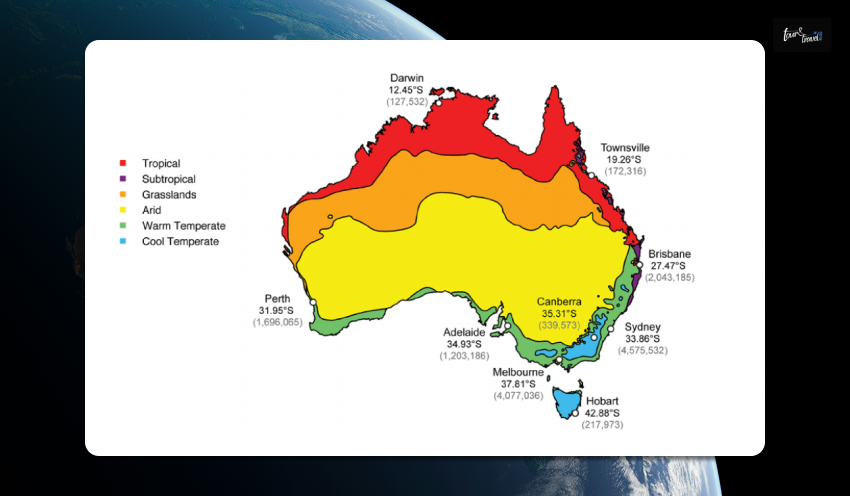
Let me also share with you the climate of Australia based on its geography.

As a traveller, you can decide which places to visit when there are different regions. The segregated areas are the perfect places to plan your itinerary!

Regions and Their Best Time

Regions and Their Best Time

Let me break down Australia into different regions, and you can read about the climate in these regions.

Furthermore, I will also share the climates of these regions with you so you can plan your visits accordingly.

There are many climate maps available online. However, I am sharing with you this map, which was constructed using the data available from the Bureau of Meteorology’s website.

What I will share with you differs from the map I provide, but you get an idea.

Check the map to learn about the general idea of climate and how it influences how you plan your itinerary when visiting Australia.

Best Time to Visit Tropical North!

Best Time to Visit Tropical North

If you plan to go to the northern section of Australia, be prepared for the tropical climate. This region consists of northern territory, Western Australia, and Queensland.

This is a location that is mostly humid for most of the year. This region’s natural landscapes are unique, with many rainforests and wildlife.

Most of the plants and animals are interesting, massive, and colourful! I personally feel that waterfalls are lush, as the wilderness is completely wild, along with thriving coral reefs.

You will experience flavorful and exotic fruits and vegetables.

If you can brave the tremendous heat, there are some beautiful places you must visit, such as the Daintree Rainforest, Airlie Beach, the Great Barrier Reef, Darwin, Cape Range National Park, and Kakadu National Park.

The best time to visit the north of Australia is between May and October.

The region has both wet and dry seasons! The wet season persists from November to April. If you visit this region during this time, you will face extreme heat and humidity.

Constant rain, tropical storms, and floods also occur during this time.

Hence, it would be best to prepare for road closures due to floods. You might get stuck in these closures, leading to travel delays! During the wet season, many national parks are closed.

In the dry season, which continues from May to October, you can visit to enjoy sunny beach days.

Best Time to Visit Outback or Desert!

Best Time to Visit Outback or Desert

In this region, I have sectioned northern territory, western Australia, South Australia, and rural NSW or QLD, mostly the remote regions of Australia.

The country’s middle can be highlighted as the outback, especially because it is away from the coast.

The Aussies call it the Red Center, which refers to the southern part of the Northern Territory.

You can check out these beautiful places in the country’s center, such as Uluru Kata Tjuta National Park, Kings Canyon, Alice Springs, Lake Eyre, Broken Hill, Watarrka National Park, and Coober Pedy.

If you plan to visit this region of Australia, winter is the best time.

The summers are dry and hot, while the winters are cool and mild. You should see it from June to August, especially because there is almost no rain.

If you are camping in this region, you can pack a warm sleeping bag and clothes.

Carry water when you visit the desert, considering you need to be hydrated.

If you are planning tours during the daytime, please carry caps, sunglasses, and towels, as the heat is intense.

Please don’t visit the outback region between November and March! Travelling is not fun when you are disturbed completely as the heat in the desert is extreme.

Best Time to Visit Temperate South!

Best Time to Visit Temperate South

The regions of coastal NSW, south Australia, south of Western Australia, and southern QLD all constitute the Temperate South.

This region is considerable temperate with its hot summers and cold winters.

However, several coastal places exist, such as the Gold Coast, the Sunshine Coast, Brisbane, and Noosa.

People mostly visit two specific regions in this section: New South Wales and Sydney. There are both summer and winter seasons.

What’s more, you can visit the Blue Mountains, where you can catch some snow during winter.

The western region of Australia has a very similar climate to New South Wales!

The beaches in Sydney are one of its kind which you must visit when you go!

The locations are beautiful, even though it can be chilly at times.

You can check out places such as the Gold Coast, Kangaroo Island, Margaret River, Perth, Canberra, Brisbane, Blue Mountains, Noosa, Bondi Beach, and Byron Bay.

You should consider what type of trip you are planning.

During the summer, the place is quite crowded. Even when booking flight tickets, you will see they are very expensive.

And yet, this is when all the beach parties are going on, even with the sunny and hot weather.

The daylight stays long so you can participate in outdoor BBQs and parties!

The weather is dreamy, and you can go hiking, sightseeing, surfing, and swimming! There are a lot of activities, along with positive vibes and beach parties.

However, if you want to avoid the crowds, go during Spring or Autumn, as the weather is lovely. Even the flights are cheaper!

Best Time to Visit Far South!

Best Time to Visit Far South

When I talk about the far south, I mean locations such as Tasmania, Victoria, and Southwest NSW. Thus, the summers of these regions are quite warm while the winters are cold.

You can visit during autumn and spring, as you can perform almost all outdoor activities.

You can do everything from hiking and camping between December and February. Even the flight prices are quite low during this time, along with a chance to avoid the crowd!

In Adelaide and Melbourne, the weather has cool temperatures or, at times, rain. We cannot forget the beaches in Melbourne and their beauty!

You can plan to visit Mount Kosciuszko or snowy mountains for snowboarding or skiing. Of course, if you want consistent snow, you must go from June to September.

If you travel to this region of Australia, you can visit Philip Island, Hobart, Melbourne, Great Ocean Road, Cradle Mountain, and Bruny Island.

Places like the Murray River Region offer all-season enjoyment! During winter, the flights are quite cheap, so you can visit during this time.

Try to avoid the summer season, as it is one of the worst seasons to visit these regions.

Finishing Off…

To sum up, I suggest that the best time to visit depends on the regions you are visiting and the type of trip you are planning.

After you have read the comprehensive list and guide that I have prepared for you, you will know how to plan your trip. 

Australia is a huge country, so it is better to plan your trip than plan it all at once.

It is massive, so it will be difficult for you to enjoy it effectively when you visit.

Comment on which area you are planning to visit and why!

Learn More About:

Share on Social Media

Mashum Mollah is the feature writer of Search Engine Magazine and an SEO Analyst at Real Wealth Business. Over the last 3 years, He has successfully developed and implemented online marketing, SEO, and conversion campaigns for 50+ businesses of all sizes. He is the co-founder of Social Media Magazine.

Leave a Reply

Your email address will not be published. Required fields are marked *

title-img Related

READ MORE denver to colorado springs

Denver To Colorado Springs Distance: An Overview Of The Ways To Travel

BY  Sibashree Mar 13, 2026

The “Mile High City,” Denver, can be a wonderful base if you are traveling to Colorado Springs. Both are wonderfully blessed by the Rocky Mountains and beautiful waterfalls. Furthermore, for adults, the things to do or the fun activities in Denver are diverse. Nevertheless, this time, it is about seeing beyond the hot springs in Denver and the Rocky Mountain National Park. In fact, it’s time to plan a trip from Denver to Colorado Springs, home to the Pikes Peak Cog Railway, Garden of the Gods, and the U.S. Olympic & Paralympic Committee. Furthermore, with a distance of less than 100 miles, these two cities are well-connected by bus, air, shuttle services, and smooth driving roads. Keep reading to know how to travel the distance. What Is The Denver To Colorado Springs Distance?  The distance between Denver and Colorado Springs is around 70 miles or 110 km. Traveling this distance by road via I-25 S takes about 1 hour and 10 minutes. However, you can also take a city-to-city bus or a bus shuttle. Moreover, you can fly from the Denver Airport to the Colorado Springs Airport. So, here is a summary of the travel time based on the modes of transport. Denver to Colorado Springs Modes of Transport Travel Time (Approx) Denver to Colorado Springs by City to City Bus 1 Hour and 15 Minutes Denver to Colorado Springs Shuttle Bus Service 1 Hour and 15 Minutes Uber or Lyft Services 1 Hour and 30 Minutes By Car 1 Hour and 10 Minutes By Flight (Excluding the Airport Transfers) 45 Minutes  So, taking a bus or a private car rental is the best way to travel from Denver to Colorado Springs. Thus, you can strike a balance between the travel time and budget. How To Travel From Denver To Colorado Springs? Have you decided to take a flight from Denver to Colorado? Or, have you booked an Uber service for the trip?  Know the best choices before preparing your itinerary. 1. Denver To Colorado Springs City-To-City Buses  Bustang is the best bus service from Denver to Colorado Springs. The Bustang buses start from the Denver Union Station, and the ticket price is just $13. Furthermore, these buses have free Wi-Fi and washroom facilities. Moreover, you can take the Flixbus services, and the ticket price starts from around $14. Unfortunately, the Regional Transportation District, or RTD, does not have a bus from Denver to Colorado Springs. 2. Bus Shuttles  Bus shuttle services are available from Denver to Colorado Springs. However, you must only opt for trusted options such as Grehound. Greyhound offers two bus shuttle services from Denver to Colorado Springs. Both buses depart from the Denver Union Station Bus Concourse and travel to Colorado Springs Tejon Park-N-Ride. One bus departs from Denver at 7 PM and reaches Colorado Springs at 8:30 PM. Furthermore, the ticket price is $35.98. On the other hand, the second bus departs at 8:10 PM and reaches Colorado Springs at 9:25 PM. The ticket price is $18.98. 3. Uber Or Lyft Services From Denver To Colorado Springs  If you are traveling from Denver to Colorado Springs for the first time, taking an Uber or Lyft service will be the safest option. An Uber ride to complete the trip takes around 1 hour and 30 minutes, and the travel price is $135. On the other hand, a Lyft ride for this route will cost you between $120 and $165. With Lyft, you can make a booking 90 days in advance. Also, consider a 2% surcharge for airport pickups and drops. 4. Traveling From Denver To Colorado Springs By Car  A car drive or ride in a rented car from Denver to Colorado is beautiful. The journey via Interstate-25 takes around 1 hour and 10 minutes to 1 hour and 30 minutes. However, this route can have the most notorious traffic on certain days, and then the travel time will shoot up to 2 to 3 hours.  Furthermore, from March to May, hailstorms are common in the area. So, when traveling in these months, choose a 4WD or a vehicle that has tires to withstand extreme weather conditions. Moreover, the road expansion on Interstate-25 has made the ride bumpy. Nevertheless, a car rental for this journey will cost you between $70 and $120. Also, if you follow traffic updates and find the I-25 route busy, you can opt for alternatives such as Highway US-85/CO-105, Highway 83, and CO-67. However, these are longer routes and can stretch your travel time by an hour or so. 5. Fly From Denver To Colorado Springs  The Denver International Airport is located at a distance of around 23 miles from Denver. However, it is not just an airport that serves Denver. It is often the choicest airport for travelers from other countries due to its mid-continent location. Furthermore, the Colorado Springs Airport is located around 12 miles away from the city. The flight duration between these two airports is around USD 120 to 670. The fastest flight on this route takes 45 minutes to complete the journey. Moreover, private cars, Uber, Lyft services, and buses are frequently available for airport transfers. Traveling From Denver To Colorado Springs: Tips To Remember March to May and September to October, or the spring and autumn seasons, are ideal for a trip from Denver to Colorado Springs. Especially, Denver is one of the best places to visit in December in the USA. Furthermore, if you want to bypass the traffic on this route, you must plan a trip before 7 AM or after 7 PM. Also, Friday afternoons are the busiest. So, avoid a car ride in those hours and check the traffic conditions on platforms such as the COtrip website. Moreover, if you find the I-25 route to be busy, you can take Highway 83, which runs parallel and usually has less traffic. Traveling From Denver To Colorado Springs: Frequently Asked Questions (FAQs)  Here are the frequently asked questions and answers related to the Denver to Colorado Springs trip.  1. Is It Better To Fly Into Colorado Springs Or Denver?  The better option to fly into between Colorado Springs and Denver airports depends on the part of Colorado you want to explore. For example, if you want to explore the northern part of Colorado and have cheaper and more diverse flight options, the Denver International Airport will be a better choice. On the other hand, the Colorado Springs Airport is ideal for the Southern Colorado attractions. 2. How Much Is The Train From Denver To Colorado Springs?  No passenger train runs between Denver and Colorado Springs.  However, you can enjoy a scenic train ride in the Pikes Peak Area on the Pikes Peak Cog Railway. This train passes through ethereal Alpine landscapes before it reaches its summit at 14115 foot. 3. Is There A Shuttle Between Colorado Springs And Denver? Yes, there is a shuttle service between Colorado Springs and Denver. Reputed names such as Greyhound offer shuttle bus services on this route. The travel time is around 1 hour and 15 minutes, and the ticket price is around $18.98 to $35.98. 

READ MORE

Must Pack Business Travel Packing List Along With Tips

BY  Abdul Aziz Aug 24, 2023

As a frequent business traveler, you understand the significance of having an efficient suitcase. From traveling for short meetings to attending lengthy conferences, having essential items can make all the difference in how smoothly everything runs. This blog post offers a complete packing list for business travelers and includes helpful advice to ensure they're fully prepared for their professional adventure. So grab your suitcase and begin packing like an expert! How To Pack For A Business Trip Packing for a business trip requires careful thought to bring everything you need for meetings and presentations while maintaining an attractive appearance. Here is a step-by-step guide to packing efficiently: Make A Checklist: Draft an essential items list that covers clothing, toiletries, electronics, documents and any special items required for meetings. Check The Weather: Research the weather forecast for your destination during your trip. This will help you determine the appropriate clothing to pack. Choose Versatile Clothing: Opt for versatile pieces that can be mixed and matched to create different outfits. Stick to a color palette that coordinates well. Includes business attire like suits, blouses, dress shirts, slacks, skirts, and comfortable shoes. Formal Attire: If you have formal events or meetings, pack appropriate attire such as a formal suit, tie, and polished shoes. Accessories: When accessorizing an outfit, bring along accessories to enhance its style. Ties, scarves, belts, and jewelry can all add the perfect finishing touches and complete their style. Toiletries: When traveling abroad, travel-sized items such as toothbrushes, toothpaste, shampoo/conditioner/soap, deodorant, razor, and any medications required for your trip are essential. Electronics: When traveling for business, always pack all necessary equipment, such as your laptop, chargers, smartphone, and any essential accessories, such as power banks or headphones, that may be needed. Documents: Organize and pack essential documents such as your passport, identification card, boarding pass, travel itinerary, business cards, and meeting materials. If you need fresh business cards for networking, you can easily get a custom business card print with Adobe Express, ensuring a professional look. Additionally, digital tools can help convert text to speech, making it easier to review travel details or meeting notes on the go. Work Essentials: Include a notepad, pens, and any work-related materials needed for meetings or presentations. Shoes: Pack comfortable yet professional shoes that match your outfit. If you're attending formal events, pack appropriate formal shoes. Outerwear: Pack a versatile jacket or blazer that complements your business attire. Also, consider packing an umbrella in case of unexpected weather changes. Gym Gear: If you plan to work out during your trip, pack gym clothes, sneakers, and any necessary accessories. Chargers And Adapters: Ensure you have the right adapters and chargers for the electrical outlets at your destination. Packing Strategy: Use packing cubes or folders to organize clothing and minimize wrinkles. Roll clothes to save space and reduce wrinkles. Check Airline Restrictions: Familiarize yourself with your airline's baggage allowance and restrictions to avoid surprises at the airport. Travel-Size Laundry Supplies: When packing for travel, remember a small bottle of laundry detergent or stain remover in case any laundry needs arise. Medications: In terms of medications, be sure to pack sufficient supplies of medicines necessary for the duration of your journey. Personal Items: Include items like your wallet, keys, and regularly used items. Double-Check Before Leaving: Double-check your checklist to ensure you have everything essential. Pack Light: Try to pack efficiently and avoid overpacking. Focus on the essentials to make your trip more manageable. Business Travel Packing Tips And Tricks Embarking on a business expedition demands more than a suitcase; it requires a masterful symphony of strategy and practicality. These indispensable tips and ingenious hacks will be your guiding stars, ensuring your seamless and stylish journey. Strategic Selection Based On Itinerary: Craft your wardrobe like an artist's palette, with each garment chosen for a purpose. Analyze your Itinerary, from meetings to downtime, and curate outfits that effortlessly transition. Versatility is your ally. Hotel Amenities As Allies: Embrace the luxury of your chosen abode. Leverage hotel amenities like laundry services, hairdryers, and irons. Leave these bulky items behind, freeing up precious space in your luggage. The Art Of Packing Cubes: Unravel the magic of packing cubes. These versatile compartments can transform chaos into order, granting each item its enclave within the suitcase symphony. Prioritize Quality Luggage: Your suitcase is more than storage; it's a partner in your journey. Opt for quality and durability. A well-designed bag can safeguard your belongings and enhance your travel experience. Medicine And Essentials First: Begin your packing symphony by arranging essential medications and personal items. Build from this foundation, securing your well-being before diving into other necessities. Liquid Allowance Awareness: Navigate the labyrinth of liquid restrictions set by airlines. Prioritize travel-sized toiletries or consider solid alternatives to avoid spillage and streamline security checks. Virtual Documents And Backup: Liberate yourself from paper documents. Digitize your essentials – from travel itineraries to business documents. A cloud-based backup ensures access regardless of circumstances. Minimalist Shoe Strategy: Shoes are notorious space-hoggers. Choose a versatile pair for formal events and another for casual strolls. Your feet and luggage will thank you. Clever Clothing Coordination: Opt for a color scheme that allows mix-and-match possibilities. Each garment should complement others, maximizing outfit options while minimizing the number of pieces. Roll, Don't Fold: Tame clothing in bulk with the roll, not fold technique. This minimizes wrinkles and opens up additional space for more necessities. Elegance In Accessories: Elevate your outfit with carefully selected accessories. A statement tie, scarf, or jewelry can transform a simple attire into an impressive ensemble. Power Of Reusable Bags: Pack a collapsible tote bag. It's ideal for unexpected purchases, separating dirty laundry, or accommodating an impromptu excursion. Backup Charging Arsenal: Keep a dedicated charging kit with spare cables, a power bank, and adapters. You won't scramble for power amidst vital engagements. Emergency Clothing Stash: Unexpected spills or mishaps are inevitable. Pack a compact emergency clothing kit, including spare socks, a shirt, and an accessory to freshen up quickly. Tech Armor For Gadgets: Your device is vital. Shield them with protective cases and sleeves to ensure they reach your destination unscathed. Travel Insurance: Non-Negotiable: Protect your journey with comprehensive travel insurance. A safety net is invaluable, whether for trip cancellations or medical emergencies. Decanting For Delicate Liquids: Opt for small, leak-proof containers for cosmetics or toiletries prone to leakage. This ensures your essentials remain intact and your luggage spill-free. Tailored To Tees: Pack clothes that align with your style. Feeling confident in your attire can significantly impact your overall outlook and performance. Digital Detox Deliberation: Reflect on the necessity of every tech gadget. A temporary digital detox can foster mindfulness and enhance your experience. Return With Room: Leave room in your luggage for souvenirs or potential acquisitions. A well-planned packing strategy ensures your journey concludes with a sense of accomplishment. Travel with Travel-Wise! The leisure trend has rapidly gained popularity as an effective way to combine business travel with pleasure. An itinerary that provides both productive work time and leisure activities is critical to maximize the experience of any trip. Travel-Wise provides an intuitive trip planner that makes travel plans tailored to your preferences easier than ever, enabling you to combine productivity with enjoyment for any upcoming business trip seamlessly. With Travel-wise on your side, creating the ideal business trip is now more manageable than ever! Read Also: How To Save Money On A Trip To Abu Dhabi 7 Tips To Make The Most Out Of Your Trip To Gatlinburg

READ MORE Modes of Transportation Analyzed for traveling

7 Modes of Transportation Analyzed: What is the Most Cost-Effective Way to Reach the Airport?

BY  Abdul Aziz Jun 24, 2024

If you are planning to fly out of an airport this travel season, you need to spend a little time thinking about how you will get there. Transportation to an airport can quickly get expensive, and perhaps you do not have a whole lot of extra cash at the moment, especially if you’ve spent a lot on tickets, hotel accommodations, etc. Finding a more reasonably priced option means you can save money that will likely come in handy at another point during your trip. Maybe you need to save cash for a Los Angeles van rental or for getting into museums and other attractions once you arrive at your destination. In these circumstances, keeping as much money in your pocket as possible when heading to the airport is often crucial. We will discuss seven modes of transportation that are worth your consideration in the following article. Most Cost-Effective Way to Reach the Airport Read this article till the end to know which is the most cost-effective ride to the airport. You Can Walk Is it possible to walk to an airport? Sometimes it is, but that would have to mean you would already have to be pretty close to it. The most practical time to walk to an airport is if you stayed at a hotel adjacent to it the previous night. Most other times, it is not possible or practical. Whenever you can manage it, though, you will presumably pay nothing. It really does not get much better than that if you are attempting to conserve your money. You will even get some exercise by walking, which is nice. If you can walk to the airport, make sure to watch out for traffic and only use roads with sidewalks. Using airport access roads or ones only intended for cars is dangerous. Saving money is great, but not if it comes at the possible price of being hit by a taxi or airport shuttle. You Can Consider Hiring an Uber or Lyft In the past decade, hiring an Uber or Lyft has become a piece of common knowledge in the urban scene. You can book a ride on these rental cars within seconds with the help of apps on your phone. If you are not a very tech-savvy person, you can still get the Lyft or Uber app, order a vehicle for yourself, and ride to the airport with someone else handling the driving duties. The real drawback with either Uber or Lyft is the expense. During surge hours pricing can become quite expensive in the case of these rental cars. At certain hours when the demand for these rental cars increases, Uber or Lyft increases their pricing as well. Hiring a rideshare vehicle off hours is almost always cheaper. You Can Hire a Taxi The option of hiring a taxi can be efficient and expensive. For example, if you book a cab from Midtown Manhattan to JFK it will easily cost you $50 or more. This cost varies based on the demand of the cab, city or state, and other circumstances affecting the booking prices. If you are in a smaller city with a less busy airport, getting a taxi may not break the bank. If you are considering this option but have a tight budget, it never hurts to go online and do a little research before you flag down the nearest taxi on the street. Take a Hotel Shuttle Hotel shuttles are usually free if you are staying at that hotel, so getting to the airport that way is certainly an attractive prospect. Hotel shuttles are usually clean and well-maintained. They are also generally air-conditioned, which is nice. You should have at least a couple of dollars to tip the driver if you go this route. $5 for a tip is usually the expected amount, but the driver will likely be happy if you give them anything, since not all travelers do. Get a Public Bus or Train Cities that have public buses and trains you can take to the airport are another one of the cheaper options in most instances. These choices can save money, but they often take much longer to get to the airport because they make many stops. If you decide to grab a train or bus, make sure to leave yourself plenty of time for this reason. Rent a Town Car You might also rent a town car if you have enough money. A town car offers a VIP feeling, meaning you get a ride to the airport in style. Then this experience comes at a high cost so you will try this only when you feel like treating yourself.  Again, if you can afford the cost of renting a town car then that is a great advantage. Your advantage is that you get to enjoy the ride alone without sharing it with anyone. It will also most likely be air-conditioned and comfortable. The only danger if you decide on this option is a chatty driver. If you do not mind making small talk, though, that might not be a significant source of concern for you.   Take an Airport Shuttle Many airports operate shuttles that will pick you up throughout the city. Generally, you can find the operating routes of these airport shuttles through the airport’s website and choose the shuttle accordingly.  On the other hand, a hotel shuttle is free, unlike an airport shuttle which can be expensive. Conclusion To recap, walking is usually your only free option. Taking public transportation can keep the price down while getting a hotel shuttle is generally free.  Other options can be expensive for you such as Lyft, Uber, or hiring a taxi or town car. Then again this expense comes with an advantage of not sharing the ride with anyone. If these options don’t work for you, then just ask a family member or a friend to drive to the airport if they are available. This is only an option in cities where you know someone, though. If someone you know is willing to give you a lift, you might be obliged to buy them breakfast or something along those lines as a way of saying thank you.   Know More: How To Stay Safe In New Orleans: A Traveler’s Guide Is San Francisco Safe? THIS Is What You Should Know! Is Savannah Safe? What You Need To Know Before Visiting!