

Here Are 10 Vacation-Worthy Things To Do In Sevierville 

Aug 10, 2023

Last Updated on: Sep 19, 2025

Travel Guides

Sevierville, Tennessee, is a charming city. It lies nestled in the breathtaking beauty of the Great Smoky Mountains. 

Guess what? Over 10 million people come to Sevierville each year to enjoy a plethora of fun-filled activities.

So, you can safely say that Sevierville is the ideal location for anyone seeking a unique and memorable vacation experience. 

Every traveler can find something to enjoy in the city of Sevierville, whether you want to engage in thrilling experiences or immerse yourself in the culture and music. 

What Are Some Vacation-Worthy Things To Do In Sevierville? 

Discover Sevierville’s top features as we guide you through a number of thrilling attractions that will make your trip genuinely unforgettable. 

1. Go On The Zipline At Foxfire Mountain Adventures 

If you are an adrenaline junkies seeking a thrill, you should really visit Foxfire Mountain Adventures. 

Additionally, it is home to the Goliath Zipline. This offers an exhilarating ride at speeds of up to 55 miles per hour!

As you soar 475 feet off the forest floor, you are sure to make some amazing memories gliding through the lush green views from this one-of-a-kind vantage point. This two-hour zipline tour promises an unforgettable adventure for those seeking an adrenaline-pumping experience amidst the Smoky Mountains. 

2. The Perfect Retreat After A Long Day 

After a long day full of adventure and excitement, you will need a place where you can kick back, relax, and enjoy some quality time with your friends and family. With over 1,459 hotels and places to stay, choosing the right hotel in Sevierville TN, can be taxing. 

However, looking at user reviews can streamline the decision-making process and help you to highlight the better choices for your stay. The Lodge at Five Oaks, for example, is voted number 1 on trip advisor and is an excellent choice for those looking for a stunning location with exceptional services.

3. Exciting Water Adventures At The Smokies’ Wilderness

If you enjoy water parks, then Wilderness at the Smokies is a must-visit destination.

This expansive resort boasts three distinct waterparks. So, it offers a plethora of thrilling experiences for all ages.

Also, you can see the “Wild Vortex,” a near-vertical, looping body waterslide. It will leave you breathless with excitement as you soar down at exhilarating speeds. 

The Timber Rattler is considered the longest tube slide in the entire state. It is further followed by the “Smokies Surf Rider,” which gives you an ultimate surfing experience. It will guarantee hours of laughter, joy, and endless fun. Families with little adventurers can also head to “Cubs Climbing Den,” an interactive playhouse designed to engage a younger demographic with the excitement of adventure. 

4. Take A Selfie Around The Statue Of Dolly Parton

A trip to Sevierville isn’t complete without paying homage to the Queen of Country Music herself, Dolly Parton.

Head to the Courthouse lawn at Sevier County, where a magnificent bronze statue of Dolly stands tall. Crafted by local artist Jim Gray over 30 years ago, this six-and-a-half-foot-tall sculpture is a tribute dedicated to the legendary performer’s roots. 

5. Discover Underground Beauty Across Forbidden Caverns 

Delve into the fascinating world beneath the Earth’s surface around Forbidden Caverns, boasting the longest rare cave onyx wall.

A guided tour will take you through a mesmerizing underground journey, passing unique formations with towering chimneys and grottos. 

6. Animal Encounters At “Rainforest Adventures Discovery Zoo” 

Embark on a unique animal adventure offered by the classic Rainforest Adventures Discovery Zoo, home to more than 600 animals and representing over 130 species.

Among the highlights are the adorable golden-headed lion tamarins, one of the smallest and rarest species of monkeys. 

Visitors can also meet other exotic creatures, such as African crested porcupines, poison dart frogs, and rose hair tarantulas.

This fascinating zoo offers a rare opportunity to encounter and learn about diverse and rare creatures from around the world. 

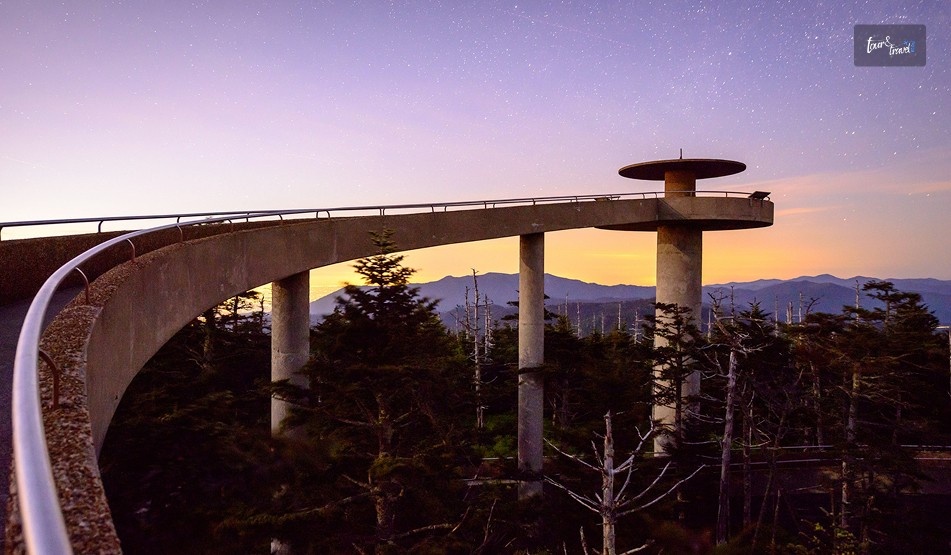
7. Breathtaking Panoramas From Clingmans Dome 

Breath taking Panoramas From Clingmans Dome

If you’re a nature lover or someone who enjoys hiking, Clingmans Dome should definitely be on your bucket list.

It’s an incredible spot, reaching 6,643 feet, making it the highest point in the Great Smoky Mountains National Park and even along the entire Appalachian Trail. 

The hike to the observation tower is short but challenging, with a steep paved trail that leads you up to some breathtaking views.

Once you reach the top, you’ll be greeted with a stunning 360-degree panorama of the Smoky Mountains and the surrounding landscape.

On clear days, you can see for over 100 miles in every direction! Standing at this remarkable peak, you can really soak in the peace of the wilderness and appreciate the awe-inspiring beauty of nature. It’s truly a moment to cherish. 

8. Exciting Baseball Action At Smokies Stadium 

If you’re a sports fan, you’ll feel right at home in Sevierville when you visit Smokies Stadium.

It’s a great spot to catch a game featuring the Tennessee Smokies, the Double-A affiliate of the Chicago Cubs.

What really makes this ballpark special is the nod to the charm of Wrigley Field, creating a cozy atmosphere where you can really connect with the game and the players.

And the fun doesn’t stop between innings! You can join in on outdoor games and activities that keep the excitement alive.

Spending an afternoon at Smokies Stadium is more than just a game; it’s a chance to create some wonderful memories while celebrating America’s favorite pastime. 

9. Explore Ancient Treasures At Smoky Mountain Relic Room 

History buffs and collectors will find their haven at the “Smoky Mountain Relic Room.”

Step into a treasure trove of artifacts spanning over 3.5 billion years, representing various geological eras and human history. Browse through tons of relics as well as fossils, each with its own unique story to tell. 

From prehistoric fossils to ancient artifacts, this collection is guaranteed to ignite your curiosity and appreciation for the past. The epic Relic Room, nestled within “Smoky Mountain Knife Works,” also offers an impressive array of knives and blades, from historical pieces to modern marvels, making it a haven for collectors and outdoor enthusiasts alike. 

10. Tennessee Museum Of Aviation’s Sky-High Adventure 

Sevierville is home to one of America’s most prominent aviation locations; the Tennessee Museum of Aviation! This marvelous location is home to hundreds of historical artifacts and exhibits that bring the fascinating history of flight to life. You can even climb into an A-4 Skyhawk Cockpit and look at the world through the eye of an experienced pilot. 

The aircraft collection at this museum is stunning in its own right! Featuring airworthy warbirds and vintage planes, this museum is the only one in the U.S. housing two airworthy P-47 Thunderbolts. 

10 Vacation-Worthy Things To Do In Sevierville Explained 

Tennessee’s Sevierville offers visitors an unbeatable combination of:

  • Breathtaking natural scenery 
  • Fascinating history 
  • Exhilarating experiences 

Everything about being here is exciting, from paying homage to the legendary Dolly Parton to flying through the treetops. ‘ 

Whether you are traveling with family or seeking solo adventures, Sevierville offers an abundance of unique experiences that will leave you with cherished memories for years to come.

Read Also:

Share on Social Media

Sibashree is a travel, culture, and leisure writer who has been writing since the age of 12 and professionally since 2014. With more than a decade of travel writing experience and journeys across India and several parts of the world, she brings a deeply personal and thoughtful perspective to her work. A student of English Literature and Mass Communication, Sibashree has always viewed travel as more than movement — for her, it has been a way of understanding people, cultures, and herself. Her passion for spiritual exploration has also led her to many unusual and meaningful destinations over the years. Outside of writing, Sibashree enjoys watching European cinema, reading about global politics, and reflecting on the stories hidden within everyday places.

Leave a Reply

Your email address will not be published. Required fields are marked *

title-img Related

READ MORE Tucumán wine tour guide

The Best Tucumán Wine Tour Guide: How To Explore The Higlands Of Northern Argentina?

BY  Sibashree Jan 13, 2026

Along with the cultural richness of Tucumán, what hooked me was the community bonding and development. For the longest time, grape growing has been a part of local life. Now, in 2016, the Bodega Los Amaichas built the Amaicha del Valle community to take the local tradition and use it for the benefit of local people. It is the first indigenous community-owned winery in South America. Furthermore, Mendoza may get all the spotlight as the home of world-class Malbecs. But for travelers like me, who want a more rugged and authentic experience, Tucuman is the ultimate destination in Northern Argentina. Also, the wine tour in Tucuman is almost like a time capsule. The viticulture here is defined by family legacies, indigenous roots, and vineyards that touch the clouds.  In this Tucumán wine tour guide, I will talk about why Tucumán is an alternative to Mendoza, the route, the top wineries, and the specialty of local wines. For more on this beautiful province in Northern Argentina, you can check out my Tucumán Argentina itinerary. Why Is Tucumán The "Untouched" Alternative To Mendoza?  The flat plains of Mendoza are ideal for massive production. However, the vineyards of Tucumán are in the narrow folds of the Calchaquí Valley. So, the experience in Tucumán is more like a boutique. Furthermore, there are very few crowds in Tucumán, and the terroir is not just about the soil. Here, people celebrate a 10,000-year-old connection to the land. As Visit Argentina says, “The dry climate, the wide temperature range, the gentle winds, and sunshine 350 days a year create the characteristics of Tucumán wine: intense colors, simple and spicy aromas, and ripe, sweet, and fruity flavors.”  The Concept: "Vinos De Altura"  Wine is a high-altitude sport in Tucumán. Grapes are grown under extreme conditions at an altitude of 2000 to 3000 meters. Also, the struggle is here with intense UV radiation and a dramatic jump in temperature between sun-scorched days and freezing nights. As a result, the grapes here have thicker skins to protect themselves. The thicker skin further leads to intense tannins and deeper colors. In addition, the aromatic profile here is more concentrated than in the lowlands. The Route: From Jungle To Vineyards (Route 307)  The drive to the wine country of Tucumán is one of the most spectacular road trips in South America. The journey from San Miguel to Amaicha del Valle starts in the subtropical and humid rainforest of the Yungas. Then, you will climb Route 307 to witness a radical transformation of the landscape. Your eyes will settle down with the lush ferns and moss-covered trees of the Quebrada de Los Sosa. Wait for 2 hours, and the Calchaquí Valley will appear with an arid landscape and cactus. Then, you will cross the Abra del Infiernillo at an elevation of 3000 meters before you descend to the Amaicha del Valle wineries. Visit Argentina promotes the "Ruta del Vino" as a cultural corridor, linking the wine not just to gastronomy, but to the Pachamama (Mother Earth) festivities in February.  Map Of The Ruta Del Vino Tucumán (Ruta 40 Connection)  Technically, Tafí del Valle is the beginning point of the Tucumán Wine Route. Then, it continues to the Amaicha del Valle and Colalao del Valle. Finally, there is a link with Ruta 40, and then it advances to the ruins of Quilmes and the border of Salta. What Are The Top Wineries To Visit In Tucumán?  The top wineries of Tucumán offer a diverse experience. While Bodega Comunitaria Los Amaichas offers an authentic local experience, Finca Albarossa is more about a boutique feel. 1. The Indigenous Icon: Bodega Comunitaria Los Amaichas  This is the only winery in Argentina and one of the few in the world that is owned and operated by an indigenous community.  This winery has a cactus wood and stone architecture. The Amaicha del Valle community governs it, and every custom here respects the Mother Earth or Pachamama. I have seen people offering wine to Mother Earth before drinking. Furthermore, the Sumak Kawsay Malbec, meaning the good living, is the best wine to taste here. It offers the most authentic wine experience. The wine gere is robust, unfiltered, and has a deep, earthy taste. 2. The Heritage Player: Bodega Chico Zossi  This winery is family-run and located in Colalao del Valle, and it has been operating since 1900. As you walk through Chico Zossi, you will feel like you are at a family home. The production level is small and artisanal. Furthermore, the wine-making technique here has been passed down through four generations of the Zossi family. 3. The Modern Estate: Las Arcas De Tolombón  Las Arcas De Tolombón is the most awarded winery in the province. It has a Siete Vacas or Seven Cows label. There is a local legend behind the name. It is about the seven cows that would appear in the desert in prosperous times. The wine you will get here is a standout. You will love the floral and crisp flavor of it, along with the sweet perfume. 4. The Boutique Stop: Finca Albarossa  Finca Albarossa exudes sheer Italian elegance with a touch of Andean ruggedness. It is a boutique winery and hotel. So, it is an excellent experience to enjoy a glass of Malbec while watching the sunrise. Thus, it completely justifies its name, Finca Albarossa, where Albarossa means the “Red Dawn.” Understanding Tucumán Wines: What To Drink?  Amanda Barnes of the South America Wine Guide often highlights that the Calchaquí Valley doesn't stop at the Salta border. She praises Tucumán for its "extreme terroir" and the preservation of the Criolla grape varieties.  Tucumán Wines are different with a diverse flavor. From the signature purple to white wines, here are the varieties you can try. 1. Torrontés  If you want the quintessential wine experience of the north, you can try Torrontés. I would rather call it the flagship white of the North. It stands out with a refreshing aroma of peach and jasmine. However, the palette of this wine is dry and refreshing. Tim Atkin, the British Master of Wines, regularly scores Northern Argentine wines highly, noting that the Torrontés from this region is the most aromatic white wine in the world.  Even if you are a red wine drinker, you must try the Torrontés here. It is the only grape variety native to Argentina, and the Tucumán expression is floral and unique.  2. High-Altitude Malbec  I was looking for an alternative to the jammy Mendoza Malbecs. The high-altitude malbec, standing on the opposite spectrum of the flavor profile, comes with a spicy and structured flavor. This wine comes from the grapes with Soun-toughened skins. So, these have a signature dark purple hue. 3. Vino Patero  Vino Patero is an experience. It has an intense, sweet, and fruity flavor. This boutique wine was made traditionally by pressing the grapes by foot. The “Patero” part in Vino Patero comes from " pata " or foot. This wine is artisanal, and it is unfiltered. Vino Patero is a frequently served beverage at the local festivals, and you will have it along with empanadas. Things To Remember For Planning Your Tucumán Wine Tour  Best Time to Visit • February/March - Harvest Season, and for the Vendimia Festivities• August - Pachamama Festival Mode of Transport• Rental Car  Vendimia festivities are a celebration of the grape harvest. The Pachamama Festival, on the other hand, is a sacred week-long celebration to sink into the local culture. You will not get any Uber services here. Buses are available, but they do not take you to the remote areas. Where To Stay On The Wine Route In Tucumán?  Do you want to sleep in a vineyard? Estancia Río de Arena on Ruta 40 is the perfect place, exuding a rustic "hacienda" feel. Get out of our room, and within a minute, you will walk into the tasting room. If you need a budget option, look for Hospedajes in Amaicha del Valle. These locally run facilities are clean and authentic, and they will even guide you on which Vino Patero is the best in town. Expert Tips On The Best Tucumán Wine Tour Guide  The Sacred City of Quilmes is just 15 minutes away from the wineries. Also, the early mornings are the ideal time to explore the ruins. Do you want more such insights about exploring the wineries of Tucumán? Check out the following points. 1. Respect The Siesta Amaicha and Colalao del Valle turn into ghost towns between 1 PM and 5 PM. Most wineries shut their door during these hours. So, schedule your trip at 10 AM or after 5:30 PM. 2. Designated Driver Is Essential, And Check The Fuel Route 40 has narrow roads and even gravel. The route also often has goats/llamas and other stray animals. So, professional expertise and familiarity with local road conditions are important. Fill your tank in Tafí del Valle. There are long stretches on Route 40 without reliable gas stations between Amaicha and Cafayate. 3. Book "Los Amaichas" In Advance  The local people run "Los Amaichas. These people also work in the field. So, you must keep them informed about your arrival via WhatsApp so that a guide is available to open the cellar for you. 4. Cash Is King Smaller wineries rarely accept credit cards, and if you want to buy bottles from them, you will need to pay them in cash. Also, the ATMs in Amaicha often run out of cash. So, you have to bring a stack of Pesos from the city. 5. Try The Mistela  Along with the signature Tucuman wine, you can also try Mistela. It is a fortified wine with a very sweet taste. It is a cultural staple. So, you have to sip it slowly and savor its strong taste. 6. Get Enough Sun Protection The wineries are at a height of more than 2000 meters. So, the UV index is high, and within 10-15 minutes, you can get sunburned. So, wear a hat and sunscreen if you are doing the wine tasting outdoors. 7. Ask For The "Reserva"  In small boutique wineries like Chico Zossi, the "Reserva" bottles are often only $2-$3 more than the table wine but are aged significantly better.  Tucumán Wine Tour Guide: Frequently Asked Questions (FAQs)  Here are the frequently asked questions and answers about the Tucumán wine tour guide. 1. Can I Visit Wineries Without A Tour?  Yes, you can go on a self-drive tour on Route 40 and explore the wineries. However, you will have to book an appointment via WhatsApp. Booking is crucial as these wineries are small, family-run operations. 2. What Is The Best Winery For Lunch?  Bodega Río de Arena near the Quilmes Ruins is the best winery for lunch. It has a hotel and restaurant on-site. You can have excellent llama meat and empanadas there.  3. How Far Is The Wine Region From Tucumán City?  The wineries are around a 3.5 to 4-hour drive from the city.On the route from the city to the wineries, you have to cross a mountain range. So, it is not your usual day trip in Argentina. It is best to plan an overnight stay in Amaicha or Tafí del Valle.  4. Is It Safe To Drive Route 307?  Route 307 is a paved and scenic route. However, it is a mountain road and has many curves. Furthermore, the road is often misty. So, you must avoid driving at night. 5. Are The Wine Tours In English?  Yes, you can attend wine tours in English in larger wineries like Las Arcas de Tolombón.  However, if you want a tour of the smaller family wineries or the community wineries, the tours will be mostly in Spanish.  6. Can I Bring Kids For The Wine Tours In Tucuman?  Yes, you can bring kids for the wine tours in Tucuman. This is where the wineries of Tucuman are different from the wine estates in Mendoza.  The Tucumán wineries are more like farms, and they are very family-friendly. In fact, Río de Arena even has a petting zoo with llamas.  7. When Is The Harvest Season In Tucuman?  Late February to March is the harvest season in Tucuman. However, it is the busiest time in the Tucuman wineries. So, you will have to book the facilities in advance.On the other hand, August is the month of the sacred Pachamama Festival. 8. Why Is The Community Winery Famous?  Bodega Los Amaichas is the first winery in Argentina and the third winery in the world owned entirely by an indigenous community. The Bodega Los Amaichas tour reflects the Diaguita worldview of "Sumak Kawsay" (Good Living).  Read Also: The Best Places To See Northern Lights In The USA: When And Where To Watch Aurora Borealis Jaffna Travel Itinerary For 5 Days: What Are The Places To Visit And Local Transport What Are The Best Places To Visit In December In The USA? Vote For Your Favorite

READ MORE delft island

Delft Island, Jaffna: How To Visit And The Places To Visit On This Coastal Island

BY  Sibashree Mar 11, 2026

I traveled extensively across Jaffna, the Tamil heartland of Sri Lanka. The Delft Island, a boat ride away, offered the most historically and culturally enriching experience during my entire Jaffna trip. Yes, the day trip to Delft Island was a bit rushed, as you have to catch the 8 AM boat from Kurikadduwan Jetty. Otherwise, your entire day will be ruined. However, after traveling 30 kms off the coast of Jaffna, Delft Island unfolded its mystery before my eyes. Overall, it is a limestone and coral island that has all the drama. At the same time, there is something very authentic about this island. Local history and culture exude through every corner. That is what won me over as a follower of the TravelDownUnder principles. Here is more in this travel guide. I will begin with where Delft Island is located and the modes of travel to and around Delft Island. Then, I will talk about its history, significance, and things to see. Where Is Delft Island? Delft Island is in the Palk Strait, and it separates Southern India from Sri Lanka. It is a small island with a maximum width of 6 km and a length of 8 km. With such a tiny landscape, it is surprising to find out how much the island has to offer to the visitors.  How To Visit Delft Island From Jaffna? As I have mentioned, if you include a visit to Delft Island in your Jaffna travel itinerary, you have to be very particular about your timings. You have to reach Kurikadduwan Harbour at least by 7:30 AM to catch the ferry at 8 AM. To reach the harbour, you will have to take bus 776 from the Jaffna Bus Station, or you can take a tuk-tuk.  The bus ticket costs LKR 90, and the tuk-tuk ride costs LKR 2000. Furthermore, the return ferry from Delft Island starts at 2:30 PM. Once you reach the Kurikadduwan Jetty, you will get the bus to Jaffna. The return bus was very crowded, and you must not expect the best infrastructure during the jetty ride. Still, the hassle is worth it. How To Move Around Delft Island? Once you arrive on Delft Island, you can take a tuk-tuk ride to explore the main attractions. Many tuk-tuk drivers wait for the tourists aligned with the arrival time of the ferries. You can book a tuk-tuk ride for 4-5 hours, and the cost will be around LKR 2000-2500. Why Visit Delft Island, Jaffna? The history of Delft Island goes back to the time of the Chola Dynasty. Since then, the island has gone through various reigns, including the Portuguese, Dutch, and finally the British colonial periods. As you walk through the roads graced by palm trees and the sea breeze touches your cheeks, you will find how history speaks here, through the ruins, dirt roads, coral walls, and quaint villages. You suddenly start missing your home, especially the afternoons of summer vacations, when time was simpler. There is a rustic charm here that you cannot miss. The locals here are very hospitable. However, the only thing I missed was that there were no restaurants. So, if you are planning a food tour in Jaffna, Delft Island can be a disappointment. Still, here are more reasons to visit this beautiful coral island. Delft Island: A True Hidden Gem And In Close Encounter With Nature After Lonely Planet named Sri Lanka the best travel destination in the world in 2019, Colombo and Kandy became overcrowded. That’s a big turn-off for backpackers like me. So, it’s important to find a break in the north of the country and visit Jaffna temples and other attractions, where you can experience the spirituality, understand the local people, and most importantly, experience the story of human resilience. This is because this part of the country is still rebuilding after the civil war ended in 2009. Delft Island. Jaffna takes these humane aspects and the rawness of Northern Sri Lanka to a new level. In this age of 5G, Delft Island still has 3G connections. Also, the rise in sea levels still impacts the crops, ancient sites, homes, and the entire livelihood of the island. So, when I started exploring the island, I had to walk through the ankle-deep water in the fields. I had no problems in cherishing the experience as everything reminded me of my home.  Stories That Make Delf Island Fascinating Ancient Tamil legends and forgotten colonial ambitions have intertwined in the landscape and livelihood of Delf Island. Moreover, you have to listen to the inside stories here if you enjoy a good mix of history and local folklore. 1. The Growing Stone  There is a limestone outcrop on the island that keeps growing physically. Now, scientifically, it is the calcite and coral deposits that are to be blamed for the growth. However, for local devotees and the followers of Lord Mahadeva like me, it is a Swayambhu Lingam. This self-manifested form of Lord Shiva resembles Nakathampiran, or a multi-headed cobra. I made some offerings there, following the local customs, and had my moments. 2. The Giant’s Footprint Nobody Remembers The indentation close to the Sarapiddi area grabbed my attention. It was around 40 inches in length. There is a local belief that this is the left footprint of Lord Hanuman. Some even say that it is the footprint of Lord Shiva. Nevertheless, a similar indentation, resembling the right foot of the same identity, can be found on the Neduntheevu island. 3. The Wild Ponies And Their Secret Lives The Portuguese and the Dutch brought the wild ponies here. These feral ponies are the descendants of the European mares and Arabian stallions. They grew in numbers and were celebrated during the time of Lieutenant Nolan. He conducted a huge horse-breeding program. By the end of the British Era, most of these ponies were abandoned, and today they are a protected species of the island. So, you cannot take them outside the island. 4. The King Vedi Arasan Vedi Arasan, or the King of Firecrackers, was a celebrated Mukkuvar king here. He was the helm of the pearl trade in the Palk Strait. Furthermore, local stories suggest that the Dutch Fort was built on the foundation of the king’s ancient palace. 5. The Pigeon Cote Or The Dove Cote  The Pigeon Cote or the Dove Cote near the ruins of the Dutch Hospital is a witness to the colonial past of the island. It is 2 meters in length, and it shows how pigeons used to function as the physical internet connection. They were trained, and they used to fly between the Jaffna Mainland and the Delft Island. Though the pigeons were used to carry military dispatches, they were also used for the dissemination of personal letters. 6. The Massive Baobab Tree  The Baobab Tree is a telltale of how Arab traders enjoyed supremacy in this region. The hollow in the trunk of this ancient tree is large enough to accommodate two people.  Furthermore, prisoners were often kept inside the big hollow during transition.  What Are The Things To See In Delft Island, Jaffna? Delft Island may be small in size. However, its diverse cultural and historical attractions will keep you busy. However, these are the attractions you must not miss. The Portuguese And Dutch Fort  This fort is one of the most prominent attractions on Delft Island. It is a free place to visit. The Portuguese built this fort, and then the Dutch occupied it. Moreover, this fort has a coral and limestone structure. So, it stands out because of its unique architecture. The Baobab Tree  The Arab merchants brought the giant baobab tree in the 16th century. You suddenly feel that you are in Africa. The Old Dutch Hospital And Pigeon Nest  The Dutch built this hospital, and in the early 1900s, it became an administrative center. You can still see an inscription of the British Emblem on the Courts. Furthermore, the Pigeon cote or pigeon nest near the hospital shows how pigeons used to function as messengers between Jaffna Mainland and Delft Island. Where To Eat And Drink On The Delft Island? You can eat at the Delft Hotel near the jetty. You can eat parathas, rice, wade, and dosai. Also, you will find many local vendors selling snacks. However, you will not find a hotel on Delft Island. So, carry adequate snacks and water when traveling to Delft Island.

READ MORE best time to visit Sikkim

Which Is The Best Time To Visit Sikkim? – Travel Guide

BY  Mashum Sep 16, 2022

Sikkim is a small kingdom state tucked wavy into the lap of the Himalayas. It is known for its culture, heritage, and, of course, beautiful scenic beauty. Here in this beautiful city, you can experience a peaceful atmosphere among the mountains and the greenery. But do you know when the best time to visit Sikkim is? If not, then continue to scroll down this article. Welcome To Sikkim! Sikkim is among those places in India that you need to visit once to gaze upon the beautiful Kangchenjunga, the highest mountain peak in India and the third highest in the World. Here you will see the beautiful harmony between modern and traditional cultures and heritage. Tourists visit this beautiful state in India practically all year round. But like any other tourist destination, there is the best time to visit Sikkim as well. You can visit Sikkim with both your friends and always with your family. There is a lot to do for everyone here in Sikkim. Best Time To Visit Sikkim Whether you are visiting Sikkim for a solo or a big fat family vacation, or a getaway with your friends, these are the months you look for to travel. March - June ☀️July - October ☔November - February ❄️ 5c - 25c4c - 17c-5c - 7c Sikkim has a lot of beautiful places to visit with different scenic beauties. So the terrains and beauty you will witness in the North of Sikkim will be very different in South Sikkim. March - June March to June is considered the best time to visit Sikkim. The weather is pleasant, and you won’t have any problem traveling to different places. There won’t be any roadblocks like during winter or monsoon.  During this time, you can easily enjoy the beautiful flowers that will fully bloom during these months. And as for gazing upon the beautiful mountain peaks, you can easily see the Kanchenjunga due to the lack of rain or snow clouds. However, due to pleasant weather, the mountain peaks are visible. July - October From July to October, it is considered the monsoon season. The first few showers of rain nourish the mountains and the hills. It rejuvenates the beautiful green landscape. But it is advised that you not visit any hilly region during the monsoon months, as the danger of roadblocks and even landslides are dangerous for tourists. However, you can plan to stay here but try to avoid Northern Sikkim. November - February November to February are the winter months and the best time to visit Sikkim to see snow. The whole landscape is covered in a thick layer of beautiful fluffy snow, which looks like something out of a painting. If you are capable of handling the snow, then surely you should visit Sikkim during these months to experience it fully. If you are lucky enough, you can even witness snowfall here. So for Christmas, have a white winter wonderland here in Sikkim. Different Climates In Sikkim Like any other tourist destination, you can divide each season into months, and on the basis of that, you can plan your trip.  ☀️Summer In Sikkim The summertime in Sikkim is an enjoyable time for tourists to visit the hill station. Therefore, if you are looking for Sikkim best time to visit, then I will advise you during the summertime. But even though it is the summertime, don’t forget to bring woolen clothes, as the temperature might drop at any time. It is easier for sightseeing in such pleasant and clear weather. So it is the best time to visit Gangtok Sikkim, the Yumthang valley, and Rumtek Monastery. ☔Monsoon In Sikkim During the monsoon months, Sikkim usually gets heavy showers each year, and this causes roadblocks and landslides each year. Although the weather during these months is chilly, you can enjoy it a lot.  One of the best advantages of the months is that you can get many discounts on travel and hotels since it is off-season. So you can take advantage of that. ❄️Winter In Sikkim The snowy months are the best time to visit Sikkim Gangtok. The valley and the mountains are covered in beautiful layers of white snow; it is just like heaven. The temperature falls to -5 degree celsius, so don’t forget to bring enough warm clothes and gear along with you. Even though the weather is quite chilly, it is bearable, and you won’t feel any discomfort due to the cold. There are a lot of snow sports you can enjoy at this time, like snowboarding and skiing. So I would recommend to you the best time to visit Sikkim is during the winter months. Frequently Asked Questions (FAQs): Now that you know which is the best time to visit Sikkim, if you have any more questions, then here are some of the questions asked by others. 1. How Many Days Are Sufficient For Sikkim Trip? Ans: Sikkim is considered to be one of the most beautiful and heavenly places in India. So as to explore the place in its entirety, then you would require about 12-15 days to the max. But if you want to skip a few places, then you can say there for about 8 to 10 days as well. 2. Where Is Snowfall In Sikkim? Ans: To experience snowfall and snow, you have to travel towards Northern Sikkim. Places such as Yumthang Valley, Zero Point, and Gurudongmar Lake are a few of the areas in Northern Sikkim that experience snow and snowfall during the winter months. 3. Which Is The Coldest Place In Sikkim? Ans: The coldest place in the whole of Sikkim is a part of the Northern Sikkim called Zero Point. It is best for its snow-covered valleys and landscape. If you want to enjoy beautiful snow, then this is the place for you. Visit Now! Now that you know what the best time to visit Sikkim is, you can easily plan your next trip to Sikkim. Don’t forget to pack enough warm clothes and necessary gear to beat the chilly weather.  If you find this article helpful, then write down in the comment section which is your favorite hill station in India or in the World.