


Travelocity Review- Login, Services, And Travel Experiences

Apr 24, 2023

Last Updated on: Aug 29, 2025

Travel Blog

It’s only normal that you have already heard of big companies like Skyscanner, Expedia, or even Booking.com, for that matter. These are all known as OTAs or Online Travel Agencies. Travelocity sell traveling services, making it relatively more convenient for their customers to plan a vacation with different alternatives from a single platform.

With more options, detailed information, and instantaneous booking procedures, OTAs are ideal when you are planning your next trip. While some OTAs provide multiple services, others focus on specific services like vacation rentals and accommodation. Plus, you can also compare rates, especially when you have a strict budget.

Travelocity is one such multi-service OTA. Although it’s an established brand, the question is – are they keeping up with its current market competitors? Before you can invest your money in Travelocity, let’s check out all that you need to know about the same.

So, What Is Travelocity?

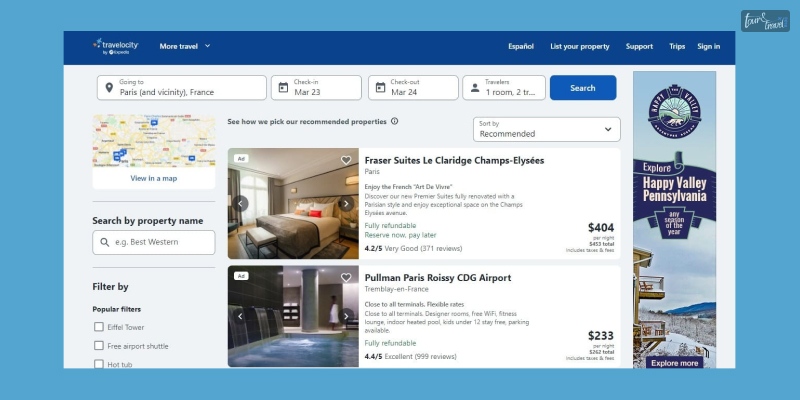
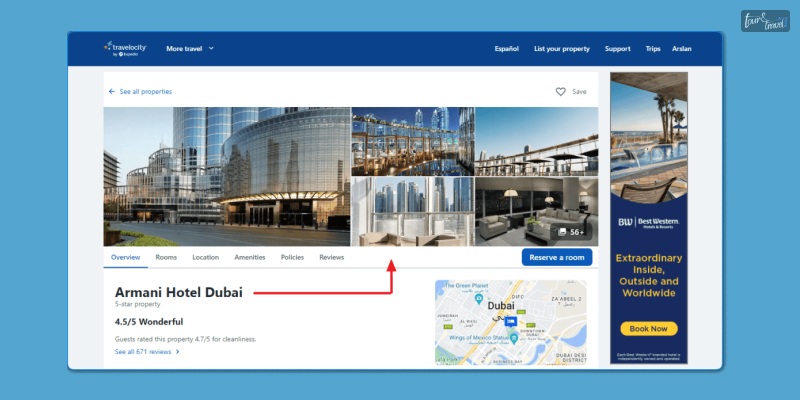
The Travelocity website was first launched in 1996 – it is a travel agency online that offers a wide selection of services. The popular Expedia Group, a leading global travel service agency, owns and manages Travelocity. On this platform, you can book car rentals, travel packages, cruises, hotel deals, and flights.

Additionally, you can even reserve tickets for various popular attractions, share vacation plans with family and friends, and read engaging travel content.

The App:

Before you can look for the best Travelocity flights online, let’s find out more about the all-elusive Travelocity mobile app. The app version also helps users to browse as well as manage their reservations easily. Plus, it’s available for iOS and Android services – users automatically get notified about gate numbers and flight status for tracking delays.

Additionally, guests can communicate with different hotels by directly messaging via the application. More importantly, guests can also access all their travel data in a single place, even when they are offline.

You can easily download the Travelocity app via your Android or iOS devices to ensure that you are able to obtain a convenient experience.

What Does Travelocity Offer?

Obviously, Travelocity offers so much more than just flights – from exciting Travelocity cruises and accommodations to really great Travelocity car rental services and even entire trip packages, you will get everything on this platform. Stay tuned to find out more!

  • Stays: You can choose your accommodation from a wide selection of resorts, hotels, condominiums, and other types of stays.
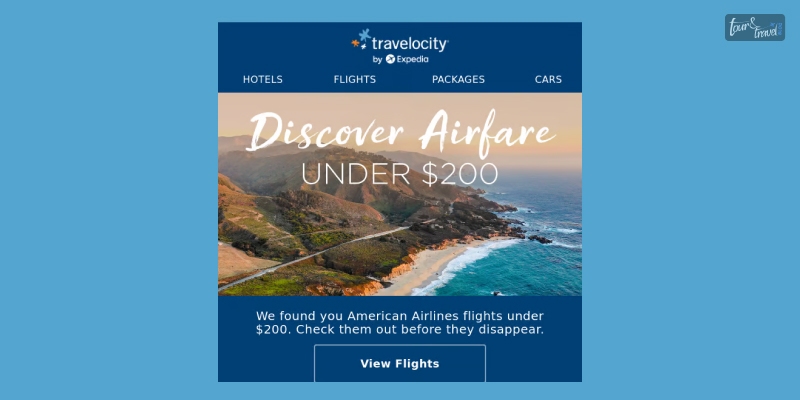
  • Flights: You can book airline tickets to your chosen destinations at both standard and bargain rates.
  • Cars: You will find rental cabs and cars offering pickup and drop from/to the airport.
  • Vacation Packages: You can book all-inclusive travel itineraries, including car rentals, accommodation, or/and flights.
  • Travel Deals: You can enjoy discounted offers under travel deals.
  • Activities/Things To Do: You can book tickets and make reservations for popular tourist attractions, exciting experiences, performances, and concerts.

Using The Travelocity Platform: The Pros And Cons

If you are already looking for ‘flights Travelocity,’ then stop – first, let’s find out the benefits of using this platform. And not just that – we also need to be aware of all the cons that are associated with using Travelocity. So without wasting time, let’s get started!

The Advantages Of Travelocity:

The advantages or rather the pros of using Travelocity are as follows,

  1. It’s a convenient platform – one single platform provides multiple solutions.
  1. Users can enjoy a wide range of choices when it comes to planning the perfect vacation.
  1. The Travelocity price guarantee is unbeatable, making the app ideal for budget-friendly trips.

The Disadvantages Of Travelocity:

The disadvantages or rather the cons of using Travelocity are as follows,

  1. The customer service provided by Travelocity is definitely not at par with the company’s top competitors online. Plus, customer support is mostly unresponsive.
  1. Although the platform promises no cancelation issues, so many customers have complained about the same.

Exploring The Travelocity Application: Is Travelocity Legit?

Before spending money on the Travelocity platform, it’s best to check out a few Travelocity reviews from Google Play for the most effective results. Stay tuned to find out whether the platform is worth spending your time or money on.

Review By Deborah Eddy:

Enjoy using the app. It’s easy to use, with lots of choices that are discounted off the airline and hotel websites. Love having one-stop shopping. Had an issue once where I couldn’t complete a booking correctly. It took a while to get someone on the phone to help. Don’t stop having a live person for ‘support’ issues.

Review By TMH:

Love this app! It is my go-to travel app. It’s easy to use, has great deals, dual-pay options, and easy cancellations. One time I accidentally booked the wrong date for a staycation with my daughters. The Travelocity rep not only canceled my booking without charge but the rep also worked with the hotel to give me an upgraded room that same night at the same price. Amazing!

Review By BM:

Horrible experience all around, with the service. Had to cancel my flight, and I purchased a cancellation policy. Sadly things happen, and plans change. Don’t need credit for a future flight, I need my funds back. I had to file a claim, where you have to attach files of everything, then proof of the reason why you cancel. I probably won’t get my money back.

Review By Jaleen Martin:

Absolutely love the app! Very self-explanatory and so simple to use. My first go-to app when planning a trip is Travelocity. The only thing I don’t care for is when you have to talk to customer service, you can’t find a single person who speaks clear English at all. So terribly hard to understand. I hope to see improvement on that part soon.

And It’s A Wrap!

And that’s a wrap on Travelocity. Now that you are aware of all the services you can get on this platform, you can go check out individual features, like this rental car services or accommodation options for your next vacation.

So, what are your thoughts on using OTAs or Online Travel Agencies for planning a vacation? Have you used this in the past – then feel free to share your experiences mentioned below in the comments.

Read Also:

Share on Social Media

Barsha Bhattacharya is a senior content writing executive. As a marketing enthusiast and professional for the past 4 years, writing is new to Barsha. And she is loving every bit of it. Her niches are marketing, lifestyle, wellness, travel and entertainment. Apart from writing, Barsha loves to travel, binge-watch, research conspiracy theories, Instagram and overthink.

Leave a Reply

Your email address will not be published. Required fields are marked *

title-img Related

READ MORE how far is russia from alaska

Bridging Continents: Unveiling The Mystique Of Russia And Alaska’s Proximity!

BY  sagnika Sep 20, 2023

Did you know that the United States took Alaska away from Russia? Do you know how far is Russia from Alaska? The two Diomedes Islands, belonging to the USA and Russia, have a mysterious relationship due to their standard time and geographical features. Read the article to uncover the truth behind the mysterious relationship! The two largest countries worldwide, the United States and Russia are 21 hours apart. Alaska is situated nearest to Russia, being a state of the U.S. The Bering Strait is the geographic point between the borders of Russia and the United States! Want to learn more about this point? Keep reading. Isn't it weird that Little Diomede residents depended on helicopters for food? Marine beings play an important role; hence, I will highlight the significance of aquatic animals in the mystery. Bridging Continents: Unveiling The Mystique Of Russia And Alaska's Proximity! How far is Alaska from Russia? You have to read the article to learn about how the two nations, the United States and Russia, are claiming their rights on the two Diomedes Islands. Guess the interesting aspects of the Island and why it is all mysterious. The time and the geographical differences between the two points of the Islands make you question the International Date Line and the American-Russian maritime border. Being a day ahead by a day of the Big Diomedes as compared to Little Diomedes makes you question the time zone concerns! It is quite curious to know how the islands have been named and their significance concerning the history of Alaska and Russia. There are Alaskan natives to be considered among all these political, geographical, and time zone aspects. Want to know the distance between Alaska and Russia? Separated By Geography And United By Mystery! Want to know how far is Russia from Alaska? The closest geographical connection between Russia and Alaska is the Diomede Islands, which are 2.4 miles apart. Water is separating the two Islands, in another way, separating the two countries. The two islands are the extremes of the two countries, thus claiming the big and the little Diomedes Islands as the symbolic sentinels. The two countries have a history of heroic explorers who have sledded, kayaked, and swum across the distance. A 2.4-mile distance between the two Islands is connected with the water body, the Pacific Ocean. With a very rocky history, the Islands share an indigenous group of people; however, it needs to be considered more important by the nations. The Bering Strait The narrowest point between the Seward Peninsula (U.S.) and the Kamchatka Peninsula (Russia) is 55 miles, separating Alaska from Russia. This waterway was discovered by a second European, a Danish explorer, Vitrus Bering, who inspired the Berling Strait. The first explorer of this frigid waterway was the Russian explorer Semyon Dezhnev! Vitrus Bering named the place Greek Christian Saint Diomede because he discovered the Islands on 16 August 1728. This day coincides with the feast day. Hence, the Island was named the Big Diomede Island and the Little Diomede Island. The Bering Strait is significant because it is the only marine gateway that allows mass migration of gray whales, bowhead, and beluga. It is known as an important ecological zone for marine animals. Seals, walruses, fish, and other marine animals can access nutrient-rich Arctic Ocean environments through this zone. The Big Diomede Island The Ratmonov island is towards Russia and is also claimed as Russian Island, which is the nation's easternmost point. It was in 1867 that the Alaskan Territory was sold on a $7 million sale. During the Cold War and World War II, the Island was a perfect location for the outposts of the Soviet military. The rocky Island is flat and houses up to 11 species of birds with rough weather with clouds and storms. The Little Diomede Island Little Diomede Island is the smallest of the two Islands, with a population of 80 to 100 citizens! You can only access the Island by waterways or through one heliport in town. They receive their supplies from mainland Alaska as these are the only two ways! During the harsh winters, the Island is covered with thick ice sheets, so the locals must carve the ice sheets to create landing zones. It is situated in the eastern area. The Time Difference Between The Two Islands! So, if you are wondering, how far away is Alaska from Russia? The International Date Line (IDL) separates the two Islands, Big Diomedes Island and Little Diomedes Island, which makes the time difference so apparent! The Big Diomedes Island is known as Tomorrow Isle as it is 21 hours ahead of time. So, wanna know how far from Russia to Alaska? The Little Diomedes Island is known as the Yesterday Isle because it was further back then. Overall, the two islands are separated by 23 hours. The 9 hours have been adjusted concerning daylight saving time! Apart from that, 12 hours have been established for managing the timezone of the Island along with the nations! So now you have got the answer to your question, how far is Russia from Alaska! Alaska Was Taken Away From Russia! It was in 1867 that Alaska was purchased from Russia by the United States, thus becoming a political separation. During this time, a new border was drawn across the two islands. During the Cold War, the section of the Bering Strait was nicknamed the "Ice Curtain" between the two Islands. The islands are situated south of the Arctic Circle, about 52 miles apart. Read More: Six Important Factors To Consider Before Planning Alaska Fishing Trip The Politics Of Diomede Islands! The Indigenous Inupiat people claim the two Diomedes Islands as theirs; however, both the nations, the USA and Russia, have disrespected these claims. The two countries have made national declarations regarding the Diomedes Islands as their extreme points. The Bering Strait can become a bottleneck for ship traffic that will pollute the ecosystem. The narrow area acts as a pathway with a fragile ecosystem with oil spills and engine noise. Finishing Off… So, to answer, how far is Russia from Alaska? For the answer, read the article! When learning about the political history of Alaska related to Russia and the USA, there is the question: How far is Russia from Alaska? It was important to understand how close the countries are, and yet there is a time gap between them. The interesting thing was naming the Islands and how it impacted people's perceptions. Apart from the mystery, the concern is how nobody is giving importance to the indigenous people of Alaska! The governments of both Russia and the United States are not concerned about the people. Comment to let us know your perspective on the time difference between the Big and Little Diomedes islands! Read Also: These Are The Closest Beaches To Ohio That You Need To Go For A Dreamy Vacation! Paradise Found: Exploring Manuel Antonio, Costa Rica’s Tropical Gem! Check Out These Beaches That Are Closest To Tennessee’s Knoxville!

READ MORE custom itineraries

Are There Minimal Group Sizes Or Custom Itineraries?

BY  Sibashree Sep 5, 2025

If you’ve ever tried planning a trip with friends or family, you’ve probably asked the same thing: Do we even have enough people for this to count as a group? Or maybe the opposite: can we just make our own plan instead of sticking to theirs? Most companies draw the line somewhere around 8–10 people. That’s the usual cutoff for a group booking. Still, if you’ve got fewer folks, don’t stress.  Many operators will let you set up a custom plan—though, yep, it usually costs extra. That’s just the baseline, though. Everything shifts depending on what kind of trip you’re eyeing, where you’re headed, and even when you go. Those details can totally change the rules. So, if you are also wondering how custom itineraries help groups to plan for the perfect getaway, you are at the right place. In this blog, I am going to delve into the various aspects of custom itineraries for different group sizes. Looking into how they help and how to negotiate them. So, keep reading to know more! What Are Custom Itineraries? Unlike normal or fixed itineraries, custom itineraries refer to personalized travel plans that include a meticulously designed guide for trips. By covering how to travel, where to stay, and what to do, they provide the perfect tour guide. In addition to this, they consider the budget for the trip. So, the guide covers all the tour spots that can be managed within the budget range, which prevents overspending or going beyond the budget. Moreover, they are not generic and do not fit all. That is, based on your specific needs and demands, the itinerary is created with recommended activities, tickets, accommodation options, and more. So, it provides a completely tailored trip guide with detailed planning that meets your requirements. How Do Custom Itineraries Help Group Trip Planning? Generally, travel agents use custom itineraries while planning group trips for parties that do not fall within the size limits. So, they collect the necessary details from the group. Focusing on their budget, trip demands, accommodation needs, and activity plans. Moreover, they use the details to create a perfect group trip plan. Also, they recommend certain activities, trip destinations, and a comprehensive guide for the trip. In addition to this, solo travellers also use custom itineraries for travelling to their favorite places with their preferences. So, based on their destination plans and staycation ideas, they create the custom itineraries. Also, this helps in making the trip memorable and enjoyable without indulging in unnecessary activities, just because it is mentioned in the itinerary. How Do Group Size Requirements Vary By Trip Type? Not every trip plays by the same numbers. Adventure stuff—like safaris or hikes—tends to keep it small.  Sometimes just 4–6 people, which makes sense when you think about logistics (and honestly, it feels better that way). But if you’re talking about big bus tours or a cruise excursion, that number jumps. Think 15–20 people minimum just to make the math work out. Cultural things, like a city walking tour or even a cooking class, usually land in the middle. Around 6–8 people keep it personal but still cover costs. What Seasons Affect Group Size Requirements? Season matters—a lot. In busy tourist months, operators are usually chill because they can mash smaller groups together and still hit their targets.  Off-season? Totally different. They might stick to the rules harder or even raise the minimum just to cover expenses. There’s a silver lining, though. During shoulder seasons, many companies bend the rules a bit to pull in more bookings.  If you can travel, then you’ll probably find more flexibility (and better prices, too). What Hidden Costs Should You Consider With Custom Groups? Custom sounds amazing, right? But here’s the catch: it’s rarely just the base price. Extra fees sneak in. Private guide? Extra.  Special access after hours? Extra. Even behind-the-scenes admin costs for coordinating all the moving parts—yep, also extra. So, with the custom planning for the trips, there are always hidden costs associated with every activity and tour plan. Transport can be tricky too. Smaller groups split costs across fewer people, so per-person prices climb fast. And mid-sized groups?  They’re stuck in that awkward middle—too many for a small van but not enough to fill a full coach. In those cases, a van rental for 15 passengers is often the sweet spot. Oh, and some places add “exclusivity” charges if you want the space or service all to yourself. Always, always ask for a breakdown before you lock anything in. What Options Exist For Groups That Don't Meet Minimums? Didn’t hit the magic number? No big deal. A few workarounds exist. You could pay a small-group supplement (basically a surcharge for being fewer people).  Or, an easier option, join another group that’s already booked and running. Another route: check if the company offers “guaranteed departures.” That means the trip happens no matter what.  Downside is, you won’t usually get custom tweaks—it’s more of a fixed plan. But hey, at least you know the trip won’t get canceled. How Can You Negotiate Custom Itineraries? If you’re leaning toward a custom trip, here’s the trick: go in with a clear list of what really matters and what you can bend on. Operators are way more open to changes when you’re flexible. List out your must-haves (non-negotiable stuff) and your nice-to-haves (things you’d love but could swap).  Be ready to compromise on timing, hotels, or smaller activities. That balance—firm on priorities but loose on details—usually gets you the best outcome. Custom Itineraries For Group Trips So, where does that leave you? Well, step one is simple: jot down a wish list. Split it into “musts” and “maybes.”  When you bring that to an operator, you’ll not only save time but also make it easier for them to build something that actually works.  They see what’s important, and you still give them room to figure out the logistics. That’s how you get a trip that feels like yours without breaking all their rules. Read Also: Planning To Travel The World? How To Pack Up Your Life So It’s Ready For You When You Get Back Are You Planning A Trip To Osaka? This Is Your Quintessential Guide A Step By Step Guide On Planning A Luxury Travel Vacation

READ MORE natural drug detox

Nature’s Healing: How Camping Can Aid Drug Detoxification

BY  Sibashree Oct 22, 2025

I’ve got to say that recovering from any kind of addiction is a messy business. It’s never just about flushing things out of your system. It’s about fighting your thoughts, your habits, and all those little triggers.  Lately, I’ve noticed more people stepping outside to heal. Camping, of all things, has become one of those hidden gems in detox. Being out there, far from traffic noise and glowing screens, surrounded by trees and honest silence? It hits differently. Some even find it just as helpful as staying in a structured facility like the detox clinic. The Therapeutic Power Of Nature Have you ever stepped outside and just felt your shoulders drop? Nature does that.  Science loves to back this up, and Harvard even found that twenty minutes in fresh air can lower cortisol, the nasty stress hormone that spikes during detox. And honestly, that relief matters. Stress is like gasoline poured straight on withdrawal. When you’re camping, you can’t help but notice how calm things get. No alarms, no rush. Just breathing, listening, thinking.  It’s almost strange how fast you start noticing yourself again. For folks coming out of a storm of substance use, that reconnection to your emotions, your body, your thoughts isn’t just nice, it’s necessary. Camping Facilitates Natural Drug Detox By Improving Sleep Cycles  Camping improves your internal body clock as you are continuously exposed to the natural light cycle. So, by regulating your internal clock, you will get more sleep.  Furthermore, during camping, you remain busy with physical activities. You are hiking through trails, setting up the tent, cooking, and doing other recreational activities or survival chores. This is also crucial for improving your sleep cycle and quality.  Moreover, when camping in remote areas, you cannot use your phone, and you are also away from the daily stressors. With no pressure of deadlines and ETAs and all the chaos in your head vanishing in the thin air, you actually get a better sleep.  Community And Support There’s something wild about how people open up under the stars. I’ve seen it, how those late-night talks by a campfire, voices crackling right alongside the flames, do the magic. That’s a real connection, and it’s gold during detox. A big part of healing is not doing it alone. Most programs preach about support networks, but in the woods, that happens naturally.  You gather wood together, laugh over burnt marshmallows, and share your stories without judgment.  The National Institute on Drug Abuse even says social support can make or break recovery. Makes sense as feeling seen keeps you anchored when cravings hit or the loneliness creeps in. No clinic room can fully replace that kind of bond. Physical Activity And Mindfulness Camping gets your body moving, whether you plan it or not. You set up a tent, haul water, and climb a hill.  Little things that make you tired in a good way. That movement pumps out endorphins, which do wonders for mood, especially when detox brings anxiety or sadness along for the ride. Then there’s the quiet stuff, too. You find yourself being mindful without calling it that! Staring at a lake, flipping fish over a grill, sitting in silence until time just fades! It grounds you.  That kind of focus pulls you away from cravings and teaches you how to ride emotions instead of running from them. Funny how stillness can feel like a workout for your mind. Disconnecting From Technology Let’s be honest. We live glued to screens now. Scrolling when we’re bored, anxious, lonely, or anytime you name it. But camping forces a break.  The first few hours feel weird, almost twitchy without your phone, then a calm sets in. You start talking more, thinking more. Maybe even remembering what silence sounds like. People in recovery deal with enough mental noise already, and research shows that too much screen time can make anxiety and depression worse.  So, cutting that off, even for a weekend, resets something inside you. Suddenly, you’re aware of how addicted we all are to distraction more than anything else. Structured Activities And Goal Setting Some camping programs add a bit of structure, such as goal setting, small group reflections, maybe even creative tasks.  It’s not rigid like rehab, just guided enough to keep you focused. When done right, it helps you rebuild a sense of direction. There’s actually data from the American Psychological Association saying people who set specific, meaningful goals reach them more often.  And out there, surrounded by nature, those goals feel a bit more real. People talk about dreams they’d forgotten or things they want back in life. It’s refreshing—and it sticks. Camping: Setting The Rick Backdrop For Healing After Addiction Recovery Camping won’t magically erase struggle, but it changes the backdrop in a way that makes healing possible. It mixes nature’s quiet strength with genuine community and gentle self-discipline. It is kind of the opposite of everything that fed addiction in the first place. For many who’ve tried both, it’s a beautiful complement to formal detox options like those at the Detox Clinic.  Out there, in the dirt and sunlight, recovery starts to feel less clinical and more human again. Maybe that’s why so many find clarity under a canopy of stars instead of beneath a roof. Furthermore, camping boosts your self-sufficiency. If you are a solo backpacker, you have to dig the soil and set up the tent, light the fire, and do everything else. So, camping is a great confidence booster. You understand that you survive on your own and how strong you are.  All these help us create a positive image of ourselves in our minds. So, you don’t need to rely on any external stimulator or drugs anymore.  In addition, an inclination toward drugs arises from negative thoughts about our capabilities. Camping helps us overcome logistical and physical challenges. So, we become more confident about our abilities.