




Using Google Flights To Find Cheap Flights In 2023? All That You Need To Know!

Apr 18, 2023

Last Updated on: Sep 19, 2024

Travel Blog

While there are multiple search engines for finding cheap flights – maybe you use a tool like Hopper or Skyscanner or depend on a travel agency online such as Expedia or Priceline. But there’s one option that’s always better than the rest – yep, we are talking about Google Flights.

Yep, that’s right!

Google is undoubtedly the best search engine in the world today – and it doesn’t fail to impress when it comes to finding cheap flights. It’s a crazy tool – and it comes with multiple features that will help you find the best prices. And not just that – thanks to its Price Guarantee feature, if the flight fares drop after the booking has already been made, you might get a refund.

It also comes with a variety of filters that can be used for finding the best flights that you want in reality. And at the same time, avoid the flights you don’t want to check out. Additionally, you can definitely use this tool for searching different carriers and directly booking any airline as compared to other third-party websites.

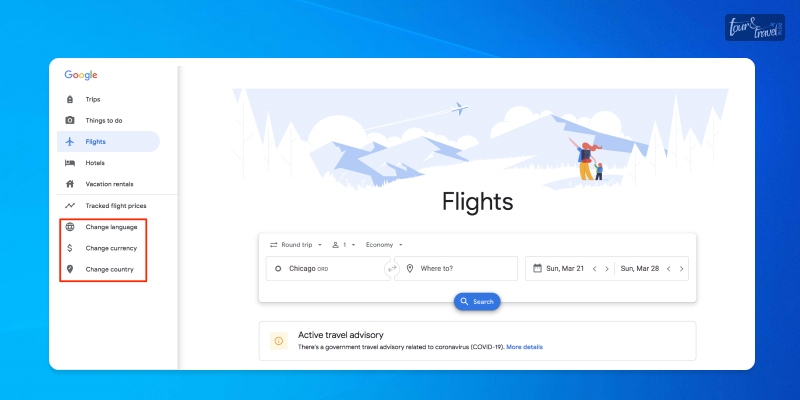
Today, we are here to help you find out how to use Google Flights – the tips and tricks you need to find the best deals online.

But First, What Are Google Flights?

Why will you waste time looking up ‘flights Google’ on Google when you can directly book flights on Google Flights itself? So, what are Google Flights?

Google Flights can be defined as a type of metasearch engine that uses a global distribution system for tapping into the different flight inventories offered by all airlines in the entire world. You cannot define the same as an online travel agency or OTA like Orbitz or Priceline.

How Do Google Flights Work?

Before you book yourself a GG flight, let’s find out how this is work. This is basically a type of metasearch engine that uses different itineraries, seating orders, and flight schedules to display multiple flight prices on hundreds of tickets, inclusive of taxes. The metasearch engine uses different information on extra fees for avoiding baggage fees as well as basic economy.

Once you determine the flight you need, you can directly book with your preferred airline or any travel agency online. Google Fights is basically a search, too, like Google itself – technically, you are not really booking flights via Google.

Top Tips For Using Google Flights:

Are you already busy typing ‘Google flights San Diego’ or some other location? Then stop! Because we have six top tips that will help you to use this – stay tuned to find out more!

1. Filter For Stops To Get The Flights You Want:

Flying non-stop is an ideal situation. Google Flights, in fact, make it pretty easy to look for nonstop flights – there’s a filter dedicated to finding the best nonstop flights. At the same time, it is crucial to remember that one-stop flights can help you save on costs, especially if you are flying internationally.

2. Search For The Airlines You Want:

Are you a diehard United fan? Or do you prefer flying on Delta? Google Flights can help you narrow down search results to certain airlines.

3. Search Multiple Cities To Find Better Deals:

Google’s ability to search multiple destination cities and departure points is completely unparalleled. It is pretty useful when you are seeking international flights, and you are confused about whether you should fly straight to Venice or first stop at Rome.

Other Things That You Can Do:

Apart from the tips we have mentioned in detail above, scroll down and find out what else you can do while using this.

  1. Using Google Flights to explore,
  2. Using Price Alerts, and
  3. Watch your carbon footprint.

What Is The Best Way To Book Cheapest Flights On Google Flights?

During the holiday season, it is quite important to have the bookings of the flight at a lower rate so that you don’t spend all your money. It is also important to consider that there are certain tools that are appropriate in overall using the application!

Insights On The Cheapest Time!

While following Google Flights, you get to evaluate an average on the same route of travel! When booking flights, it is also important to learn about the lower prices on a regular basis so that you can select the specific days when the fares are at their lowest.

The upgraded insights are being launched by Google Flights as they use reliable trend data based on the chosen destination and dates. Further, you can also curate your itinerary by following the insights.

Price Tracking!

If you turn on the price tracking, it will help you evaluate the lower fares of the flights along with the overall significance of the price drops. You will learn about the evaluation of the prices along with the way flexibility becomes an important part of this process.

For example, if you have to attend an event after 6 months, it will help you a lot if you deal with the bookings by putting specific dates and tracking the prices. This will lead to you understanding the way the feature will help you to have a cheaper booking price.

Price Guarantee!

When you search for flights on Google Flights, you will find some colorful price guarantee badges. This is to ensure that the flights that are with that tag show prices that will not go lower. Hence, you can finalize on the booking of the flights. 

With this tag, you can also monitor the prices of flights before takeoff! It will help in managing the differences on Google Pay. It is a pilot program hence, not available with all departing flights.

Exploring Google Flights: Pros And Cons!

Before you get all excited and Google flights to Las Vegas, it’s only practical to find out the pros and cons of this metasearch engine. Scroll down and find out the pros and cons of booking flights with the help of Google Flights.

Pros Of Google Flights:

Just for the simple reason that this is not really an OTA, it is anyway better than almost all other tools. So before you can look up ‘Google flights Las Vegas,’ let’s check out the top advantages of using this search engine.

  1. You can pretty much always directly book with any airline of your choice. You might come across multiple options for booking with different other sites, but at the same time, cutting out in-between costs while booking flights is more crucial than ever. Dealing with any airline agent is always better than dealing with bad customer support from some small online travel agency.
  1. Google Flights will enable you to look for multiple airports simultaneously, thereby helping you to find the cheapest airport to fly to or depart from, for that matter. And isn’t that the key to saving money on flights, especially when you are flying internationally?
  1. None of the search engines will do a better job when it comes to showing months’ worth of flights, especially when you are trying to land the cheapest airline deals. You will even get notified if shifting your travel dates by a day or two can save reduce your expenditure.

Cons Of Google Flights:

Having noted down all the pros of using this, you might already be typing ‘google flights Seattle’ or some other location, but wait! this is not entirely perfect. It is close to perfect, but there are certain drawbacks. These drawbacks are as follows,

  1. Since Google Flights depend mostly on featuring airfare from the different airlines directly, you can, at times, come across cheaper fares via OTAs that end up cutting deals with various carriers for listing highly discounted flights.
  1. Google is almost always updating the inventory of different available flights. Occasionally, we might stumble upon certain issues that arise from outdated pricing. This means you might come across a price that you like, only to click and find out that the price has gone up.
  1. While a majority of flights are available through Google Flights, only a handful don’t really list their fares or on other search engines, for that matter.

And It’s A Wrap!

Google Flights is one of the coolest apps that we can use if we have regular flight business! The tools available help in utilizing resources along with making it easier for us to spend the right amount of money!

And that’s a wrap on the Google Flights. What are your thoughts booking Google Flights? And while sharing your thoughts, don’t forget to share your experiences associated to Google Flights in the comments below.

Read Also:

Share on Social Media

Barsha Bhattacharya is a senior content writing executive. As a marketing enthusiast and professional for the past 4 years, writing is new to Barsha. And she is loving every bit of it. Her niches are marketing, lifestyle, wellness, travel and entertainment. Apart from writing, Barsha loves to travel, binge-watch, research conspiracy theories, Instagram and overthink.

Leave a Reply

Your email address will not be published. Required fields are marked *

title-img Related

READ MORE Cold-Weather Camping

Military-Style Winter Tents With Wood Stove: Dependable Comfort For Cold-Weather Camping

BY  Sibashree Nov 18, 2025

When temperatures drop and the snow keeps falling, a military-style winter tent with a wood stove becomes more than shelter—it’s the difference between enduring the cold and enjoying it.  Built for stability and warmth, these tents combine rugged fabrics, reinforced frames, and heat-safe stove jacks for reliable protection in harsh conditions. Today’s designs take that proven military strength and merge it with modern engineering.  An inflatable camping tent sets up fast without heavy poles, keeping your camp efficient and warm.  For longer expeditions, choosing the right winter tent ensures a safe balance between insulation and ventilation.  Moreover,  when your trip turns into true winter tent camping, a well-built hot tent lets you rest, dry gear, and cook inside while snow piles outside. Proper harsh cold-weather camping requires adequate gear. Thus, it is important to ensure that people do not suffer from a shivering cold. What Defines A True Military-Grade Hot Tent & How Does It Help In Cold-Weather Camping A military-grade hot tent is built to perform where the cold is relentless and the wind never stops.  Its strength begins with the fabric—dense, tear-resistant, and coated to block moisture while allowing controlled airflow.  Seams are double-stitched and heat-sealed to prevent leaks, and tension points are reinforced to hold shape under snow load.  Inside, an integrated stove jack made of fire-resistant material allows safe operation of a wood stove without damaging the canopy. Beyond materials, structure matters. The frame or inflatable skeleton must handle repeated freezing cycles without cracking or warping. Moreover,  the doors and vents are positioned for cross-ventilation to minimize condensation while maintaining interior warmth.  Moreover, this balance of durability, insulation, and controlled ventilation distinguishes an ordinary camping shelter from a genuine army tent with stove capability. The army tent is designed to keep crews safe and operational through winter extremes. 1. Stove Jack And Safety In Extreme Cold Start with fit and materials. The stove jack must be fire-resistant and matched to the pipe’s outside diameter so the collar seals without crushing the flue.  Add a heat shield or jack boot and use a short double-wall section near the exit to tame radiant heat.  Keep the chimney as straight and tall as practical, cap it with a spark arrestor, and confirm a steady draft before loading the firebox. Manage heat at the source. Set the stove on a fireproof mat, maintain clearances from walls and gear, and route guy lines where no one can bump hot pipe. Burn seasoned wood. Thus, wet or resinous fuel increases the risk of smoke, creosote, and CO. Vent with intent. Crack a low intake and a high exhaust vent to create cross-flow that controls condensation and carbon monoxide. Run a compact CO alarm. Operate with discipline. Gloves for pipe handling, daily ash removal, regular creosote checks, and no unattended flame. If no fire watch is planned, extinguish before sleep. 2. Why Inflatable Tents Fit Military-Style Needs Today Inflatable architecture replaces rigid poles with airbeams that keep even tension across the canopy, improving wind stability and snow-load handling. Setup is predictable: connect the pump, inflate to spec, and fine-tune guy lines without wrestling frozen joints or seized fittings.  With fewer metal bridges from inside to outside, an inflatable hot tent loses less heat to conduction and stays quieter in gusts. Cold-weather reliability improves, too. Multi-chamber designs add redundancy, and small punctures are field-repairable with a basic kit.  Curved geometry reduces flapping, helps shed spindrift, and preserves a clean stove clearance zone.  Packability is strong for the floor area—rolled beams ride securely on a sled or ATV, and the weight distribution is easier on long approaches. For teams that work in real winter, an inflatable winter tent delivers military-style discipline—fast deployment, controlled ventilation, and stable heat—without excess bulk.  RBM Outdoors focuses on this balance of durability and comfort, giving crews a 4-season shelter that performs when temperatures plunge. Thus, this acts as the ideal gear for cold-weather camping 3. Layout And Capacity For Winter Teams: Cold-Weather Camping Plan the space around heat and traffic. Start with a clear stove zone—an open buffer for safe clearances and wood handling—then set sleeping areas along the walls, keeping a center aisle free for movement.  Near-vertical walls and tall doors make cots practical; leave a small gap behind each cot for airflow and to keep fabric off hot gear.  Use a vestibule or annex for firewood, wet boots, and sled bags so the living space stays dry. For four people, aim for one dedicated drying line and a compact table; for six to eight, add a second line and a gear rack to keep gloves and layers rotating.  Suppose the tent has a divider, split “quiet sleep” and “task” sides to control light and noise.  Place a low intake vent opposite a high vent near the stove to move moisture out without dumping heat. 4. Set Up And Field Maintenance  Of Gear And Tents For Cold-Weather Camping Prep the site first: stamp a flat pad, face the door leeward, and mark a safe stove zone. Lay the footprint, clip or zip the floor, then inflate to spec using a gauge; set primary guy lines before tensioning secondaries.  In sugar snow, bury deadman anchors or use long snow stakes. Dry-fit the chimney, keep it as vertical as possible, add a spark arrestor, and place a fireproof mat under the stove. During use, clear spindrift from ridgelines, crack low and high vents, and re-tension lines after temperature drops.  Empty ash cold, check for creosote, and inspect the jack for heat glaze. Top up the airbeam pressure in deep cold and patch small punctures immediately.  For packout, cool, dry, vent, then roll toward open valves and lash low for transport. 5. Care And Storage Tips After The Trip Dry first, store second. After shutdown, crack the low and high vents to purge steam; brush off frost so meltwater doesn’t soak into the seams.  Let the liner reach room-dry before rolling. Empty ash cold, wipe the firebox, and knock creosote from pipe sections; a clean flue protects the jack and restores draft next trip. Inspect the jack panel for glazing or scorching, and replace it if it is fatigued. Protect fabrics and hardware. Rinse grit from zippers, treat sliders lightly, and check guy lines, stake loops, and tie-outs for fray.  Reproof high-wear zones if water no longer beads. For inflatable beams, equalize pressure at room temp, clear valves of ice, and store loosely—avoid long-term compression. Stash the tent in a cool, dry place off concrete, with a small desiccant pouch in the bag. Things To Remember About Cold-Weather Camping Tents  A military-style winter tent with a wood stove should deliver three things every time: safety, steady heat, and fast deployment.  Prioritize a fire-resistant jack, disciplined ventilation, and a layout that protects people and gear.  Inflatable designs add speed and stability in deep cold, while RBM Outdoors’ focus on durable materials and practical details keeps the shelter reliable through long winters.

READ MORE national parks in florida

Top 12 National Parks In Florida That You Must Visit In 2024

BY  Ankita Jul 20, 2023

Are you thinking about visiting some of the national parks in Florida? Well, if your answer is a YES, then you have reached the right place! Some people picture castles, roller coasters, and Mickey Mouse-shaped pretzels when they think of parks in the Sunshine State, but Florida's national parks are just as well-known as its amusement parks. Amazing ecological and biological diversity can be found on protected lands from the panhandle to the tip of the Keys. Florida is the only area on Earth where alligators and crocodiles cohabit; the mangroves here serve as kayak mazes, rockets blast off over lagoons, and alligators and crocodiles share the same territory. Keep reading this article till the end to learn about the national parks in Florida that you must visit this year… Top 12 National Parks In Florida That You Must Visit! There are a number of things that Florida, the Sunshine State, is famous for, and one of them is the National parks. These are a blend of nature and the history that humankind has made. So, if that is something that you want to know, then you have reached the right place! Here are the top 12 best national parks in Florida that you need to visit in 2023: 1. Big Cypress National Preserve The majority of people only experience Big Cypress National Park as a parallax of sawgrass and cypress trees against the billowy clouds of the Florida sky as they speed along I-75 or U.S. 41 via the windows of their vehicle. Most people only attend the visitor center because of need. However, some do so out of curiosity. Big Cypress is only one of two places on Earth where the ghost orchid may be found. It also serves as a refuge for the endangered American alligator, and Florida's elusive but threatened panther population. Big Cypress was the first National Park Service unit east of Colorado to get this recognition as a Dark Sky Place, and it continues to be the southernmost Dark Sky Place in Florida. This national preserve's swamp waters flow softly, producing the ideal environment for the name-bearing cypress trees to grow tall and strong and create a maze beneath their canopy for tourists who are more interested in aquatic activities. Big Cypress is one of the last remaining undeveloped areas in South Florida, where backcountry camps, swamp buggies, and airboats retain a traditional way of life that was developed by indigenous peoples and the pioneering spirit of early settlers. Big Cypress truly has something for everyone, so we are now challenging everyone to give something back to Big Cypress in exchange. 2. Biscayne National Park The most amazing features of Florida's seas are actually located below the surface. When people think of Florida's shores, they typically picture gentle waves lapping at the soft sand under a bright sun. Four separate ecosystems, covering about 173,000 acres, merge to form rich edge communities, or "ecotones." These edges are home to an astounding variety of animals, including pelicans, manatees, sea turtles, hundreds of different types of colorful fish, and flora that are unique to the United States. Over 600 native fish, neotropical water birds, migratory habitat, 20 threatened and endangered species, such as the Schaus' swallowtail butterfly and Florida semaphore cactus, as well as the previously mentioned sea turtles and manatees, can all be found in the park. It also includes the Florida Reef, the only live coral barrier reef in the continental United States, and the northernmost part of the third-largest coral reef system in the world. A number of shipwrecks along Biscayne National Park's Maritime Heritage Trail have found their final resting places because of this reef, a project that was made possible with The Alliance's assistance. 3. Castillo de San Marcos National Monument Castillo de San Marcos National Monument preserves the oldest masonry fortification in the continental United States and interprets more than 450 years of cultural crossings. It was constructed by the Spanish in St. Augustine to protect Florida and the Atlantic trade route. In case you are wondering about all the things that you can do here, I have you covered. You can engage with the park rangers that are eager to answer your questions. They also provide the tourists with several interpretive opportunities that are active and available throughout the day. You can attend formal presentations where a thematic program that lasts 15 to 20 minutes will be played. You can interact directly with cultural artifacts, get answers to your burning questions, and spend as much or as little time as you like at ongoing informal stations. The historic Cannon demonstration or Musket takes place on the weekends mostly. These are held at 10:30 a.m., 11:30 a.m., 01:30 p.m., 02:30 p.m., and 03:30 p.m. on Saturdays and Sundays. The volunteers and rangers also dress up in period costumes to give the tourists the best experience of traveling back in time. You can take pictures of them and with them to experience the lives of the colonists that lived here. 4. Canaveral National Seashore Canaveral National Seashore is a unique location since it's conceivably the only spot in the world where rocket ships, alligators, and nudist beaches coexist. On the east coast of central Florida, Canaveral preserves one of the state's longest stretches of undeveloped coastline. Mile after mile of pristine shoreline offers a tranquil haven for sunbathers, sea turtles, and the occasional nudist; Apollo Beach, at the northern end of Beach Road, is the alternative to the crowded Playalinda Beach right across the street. If viewing rocket launches from the adjacent Kennedy Space Centre on the park's beaches isn't your thing, you can also go kayaking through Mosquito Lagoon, a sizable estuary that occupies two-thirds of the park (but remember the insect spray). 5. De Soto National Monument Conquistador Hernando de Soto's army of soldiers, paid mercenaries, artisans, and clergy arrived in Tampa Bay in May 1539. They encountered ferocious resistance from natives defending their homes. De Soto's search for glory and treasure would be a four-year, 4,000-mile journey filled with mystery, conflict, disease, and discovery that would shape American history. Today, there are a number of things that you can experience at the De Soto National Monument. You can try on the European armor that consists of helmets as well as breastplates. This is one of the most popular activities of the people or tourists visiting this national park in Florida. Aside from that, taking a fishing class and bird viewing are additional popular activities in this national park. Numerous bird species, including gulls, great egrets, herons, as well as American white pelicans, can be found at DeSoto National Memorial.  If you're lucky, you might also catch a glimpse of bald eagles on the Manatee River scavenging for food! The De Soto Rancho Fishing Clinic is available in the park for adults and children aged 7 and older. Participants gain knowledge of fishing gear, casting, fish identification, and knot-making! 6. Everglades National Park Everglades National Park, the most recognizable national park in Florida, is the Yellowstone of swamps, a 1.5 million acre subtropical wilderness teeming with terrifying species that makes Jurassic Park seem like a petting zoo and jet-black waterways and mangrove-lined coastlines. This enormous park, the third largest in the contiguous United States, is too big to handle all at once. Alligator sightings are practically guaranteed along the Anhinga Trail, a leisurely 0.8-mile loop that leaves at the Royal Palm Visitor Centre. You can rent kayaks and paddle up the Flamingo Canal on unnervingly quiet water while passing through deep forests and mangrove tunnels to Coot Bay by continuing to travel along the Main Park Road until it ends at the Flamingo Campground. Keep a watch out for American crocodiles and also manatees along the trip. They enjoy the brackish waters close to the shore. 7. Fort Matanzas National Monument The next on the list of the best national parks in Florida is Fort Matanzas. From Fort Jefferson to Fort Barrancas, forts are as central to Florida’s national parks as gators as well as mangroves. Chief among them is Fort Matanzas National Monument. It's one of the oldest fortresses in the state and is also one of the first forts-as-national monuments in the nation, designated back in 1924. Originally built by Spanish settlers in 1742 to fortify the Matanzas Inlet in St. Augustine, it remains a resolute structure that stretches 50 feet on each side and is 30 feet high. Today, the fort is accessible via ferry, with ranger programs that shed light on its storied history. Other park activities include relaxing at a beach or following the boardwalk trail off the visitor center parking lot, which zigzags through a shaded hammock forest. 8. Dry Tortugas National Park Seventy miles off the coast of Key West is Dry Tortugas National Park, an aquatic wonderland of 99 percent water. The only land out here, seemingly in the middle of the gulf, is a handful of tiny keys, including the main attraction: Garden Key. After the two-to-four boat ride from Key West’s Yankee Freedom ferry terminal, dock at Garden Key to explore Fort Jefferson, an ironclad fortress built in the 1800s that looks like a brick Pentagon. Originally built to defend the Southern coast of the U.S. after the War of 1812, the fort also served as a temporary prison before earning national park status. Today, the structure—and the surrounding keys and waters—tells the stories of maritime combat and marine wildlife, best observed from the Garden Key beaches or along the underwater snorkel trails that surround the fort. 9. Silver Springs State Park For years, tourists have flocked to this location just to take glass-bottomed boat trips through the state's breathtaking springs. In reality, Silver Springs State Park's glass-bottom boat trips were introduced over a century ago, and they continue to be popular in this area of north-central Florida between Orlando and Gainesville. It's understandable, given that the park is home to surreal, crystal-clear water and a variety of animals, including otters, manatees, alligators, rabid rhesus macaques, and monkeys. Despite the fact that swimming is prohibited (due to the aforementioned alligators), Silver Spring is a kayaker's and paddle boarder's heaven, and there are 15 miles of shady hiking trails circling the 4.5-mile Silver River. 10. Point Washington State Forest Point Washington State Forest on Florida's panhandle is a refuge of tall trees and hiking trails. Located seemingly miles away from the state's more well-known parks, you will find the longleaf pine as the main attraction. It is a tree that is so tall that it resembles a hybrid of a redwood and a palm. The Eastern Lake Trail System, which supports the park's recreational options, is surrounded by these pines for miles. The trail system here contains several unpaved trails for cyclists and hikers despite being as flat as a pancake. The nearby Grayton Beach State Park, which follows the coast as well as offers coastal forest trails, swimming chances, and kayaking on dune lakes, is definitely worth exploring. 11. Bahia Honda State & National Park Bahia Honda State Park is a pastoral pit stop on the road to Key West out in the Keys. Calusa Beach, off Big Pine Key, serves as the park's focal point. Its turquoise waters entice swimmers, snorkelers, as well as kayakers alike (equipment for both activities is available for rent). At the summit of the iconic Bahia Honda Bridge lies a truly picturesque setting. It is a historical structure dating back to the early 1900s. This was originally a crucial component of Henry Flagler's ambitious Overseas Railroad to Key West. A little route along a portion of the bridge will lead you to one of the Keys' highest spots. Here you may enjoy panoramic views of the bay below. Stay for a photo-worthy sunset and afterward stargazing if you want to remember it forever. 12. Apalachicola National Park A stone’s throw from the state capital of Tallahassee, Apalachicola National Forest is a natural haven. Florida's largest national forest clocks in at a whopping 633,000 acres. This park has two main sections. They are Bradwell Bay Wilderness and Mud Swamp/New River Wilderness. Between the two, visitors can paddle, swim, hike, fish, and go off-roading or horseback riding. The park also exhibits striking biological and ecological diversity. It goes from longleaf pine sandhills and pine flatwoods to coastal plain hammocks, basin swamps, and floodplain forests. The area teems with wildlife, like woodpeckers, bobcats, gray foxes, as well as alligators. Drink in the diversity on a one-mile loop at the Camel Lake Trail. You can also enjoy by kayaking to Owl Creek from Hickory Landing. You can also take a two-mile route along the Apalachicola River. This gets paddlers up close and personal with that classic Florida river swamp terrain. Wrapping It Up! In case you were searching for the best national parks in Florida, I hope that this blog has been of help to you. If there are any other queries related to the same, feel free to let me know. All that you need to do is scroll down till you reach the bottom of the page. Then leave your comments and queries in the box below. And I will be there to answer them all for you! Read Also: Is It Worth It To Stay In An All-Inclusive Resort In Florida? Indian Buffet Near Me In Florida – Best Buffets For You 10 Best Fishing Charters In Florida To Visit Top 8+ Splash Pad Near Me In Florida

READ MORE

Exciting Zipline Tour at Selvatica’s Thrilling Adventures

BY  Sibashree Jul 18, 2024

Zipline Tour: Ziplining has been steadily gaining more popularity in recent years. Venturing into the mountains of Costa Rica or attempting a local zip line course can trigger a dopamine boost by conquering fears, attracting many enthusiasts. Many people who choose to try zip lining are scared of heights, yet they demonstrate courage by facing their fears and participating in the activity. Gaining knowledge from new experiences and challenges allows you to move beyond your comfort zone and into the stretch zone, where substantial personal development takes place. Utilizing these teachings in various areas of your life is what will guide you to achieve maximum success. Are you looking forward to experiencing a zipline tour in Cancun and Riviera Maya? Allow me to explain to you the reasons why you should. Or you can visit the official Selvatica website to know more about it. 1: The Ultimate Adrenaline Rush As you ascend the zip tower for the first time, anxiety grows with each step you take. Ultimately, you will reach the top and face the decision to either proceed bravely or turn back and descend the steps. Even though zip lining doesn't cause the same stomach-churning feeling as a roller coaster, the excitement stems from trusting yourself, your guides, and your equipment when you leap off the platform. Gaining trust in the idea that circumstances outside of your influence will result in a positive outcome can be applied in different areas of life, allowing you to welcome challenges and move forward. 2: Amazing Views Changing your point of view allows you to discover a whole new world of beauty that was previously unseen. The zipline tour in Cancun and Riviera Maya provides a high-flying perspective of the world below by taking you up and over or through the trees. The chance to observe the trees from a higher vantage point is rare, so we should always seize it. If the world seems dull, change the way you see things, you can - Experiment with new activities, and View the beauty of the world from a different perspective 3: A Fun-with-Family Experience The zipline tour in Cancun and Riviera Maya is an ideal adventure suitable for individuals of every age. This, in turn, makes it a great choice for families looking for a fun activity. It also offers a special chance for multiple generations to share in a new experience. And you will also get to form a connection through memories that will endure forever. Bring the entire family on a zip line expedition and enjoy the sights, sounds, and views inquisitively! However, make sure to verify the age and weight restrictions of your zip line destination before making reservations for kids 4: A Great Go-Pro Venture In addition to taking selfies, zipline tour in Cancun and Riviera Maya also provides amusing video footage through a go pro camera on your helmet while you ride their zipline, which is necessary for everyone's safety. Zip-lining provides a unique nature experience that will bring you joy every time you recall it, whether you're back at work, reflecting on a team-building outing, or studying at home for upcoming exams. 5: Overcoming the Fear of Height The zipline tour in Cancun and Riviera Maya doesn’t really look exciting to people who have a fear of heights. However, if you are doing it nonetheless, it should make you a little bit braver when it comes to dealing with heights. Also, in a way, it will look cool to see yourself soaring through the sky, right? Also, another exciting thing zip-line could offer a fantastic and thrilling experience that you'll want to have over and over. TL;DR, there are a few certainties when it comes to Zip-Line. For example, you’ll soar over some of the tallest peaks you’ve ever experienced before. Secondly, the enjoyment of doing something new will be over the top. Thirdly, as you will move rapidly through the sky, a sensation of flight will ensnare your senses. Fourthly, as it’s an adventurous exercise, you are bound to experience a surge of adrenaline. And finally, the view from above is unparalleled. 6: Safety Standards over Everything Else Safety is always the top priority on the zipline tour in Cancun and Riviera Maya. Every course must adhere to numerous safety requirements, including regular checks by third-party vendors and daily inspections by the team. You can be confident that all aspects of your tour, such as the trees, platforms, harnesses, and helmets, are well-maintained, which allows you to trust both your equipment and the knowledgeable guides leading you. 7: The Connection to Nature The zipline tour in Cancun and Riviera Maya provides a chance to reconnect with the natural world and admire the beauty of the environment. Flying alongside birds, seeing an alligator 60ft below, and viewing the ocean from the trees is an amazing experience that allows you to imagine swinging from tree to tree. In order to link yourself with nature, you need to fully involve yourself in nature, there's no telling what you might discover. Bonus: Fun Exercise You do not have to be in great physical shape to have fun on the zipline tour in Cancun and Riviera Maya, but it is an excellent way to incorporate some physical activity into your routine. From navigating stairs carrying extra gear, to engaging your core while descending, to using your arms to guide your way, to practicing balance on aerial obstacles or suspension bridges, it's not a typical workout, but it's an enjoyable way to exercise and tone your muscles Ziplining: Doing Something Memorable! Zip lining is a memorable adventure that will stay with you for a long time. It's a chance to try something different and enjoy a new experience with loved ones. It is these shared experiences that unite us and allow us to achieve incredible feats while forming meaningful relationships. Zip lining results in creating memories that endure throughout one's life. The zipline tour in Cancun and Riviera Maya is a thrilling experience that allows you to overcome fears, enjoy stunning views, and bond with loved ones in a safe and controlled setting, boosting confidence and creating lasting memories. However, don't just believe us, try the excitement firsthand! Also read Beginner Tips For Your First Camino De Santiago. Boat Charter Miami: Essential Tips For A Great Experience. Guide To Visiting Hegra (Madain Saleh) And The Al Ula Valley.