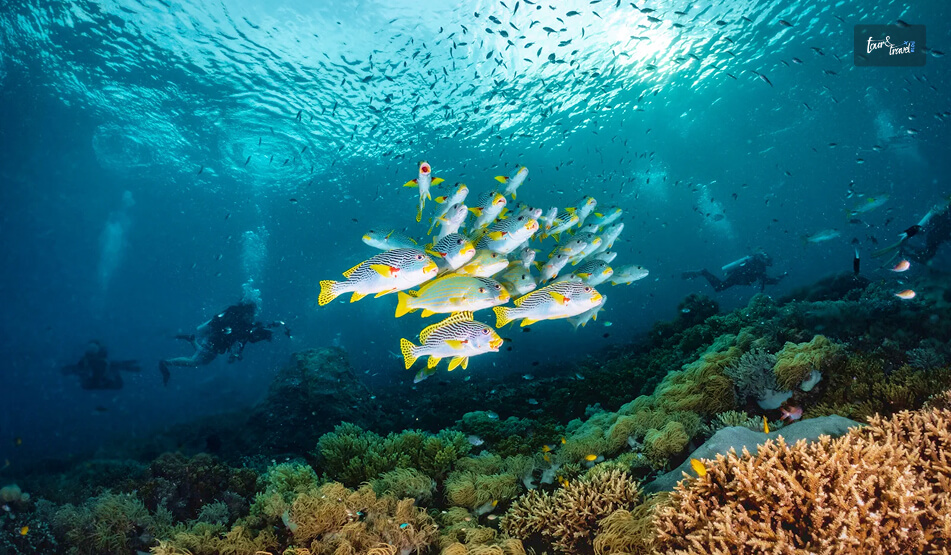
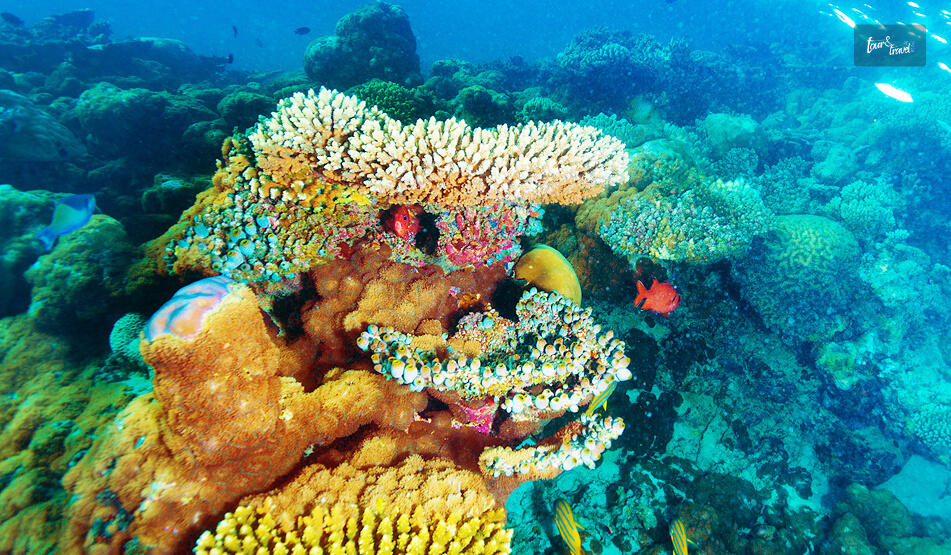


Have you ever been to a place where the clarity of the water feels like liquid air? Yes, you have heard it right. I am talking about the waters of Raja Ampat in Indonesia. Also, the dense coral reefs here look like a kaleidoscope in motion.
Its strategic location in the Coral Triangle in West Papua has also blessed it with a diverse marine life. Did you know that Raja Ampat has “75% of the known coral species” and more than 1,320 species of reef fish (Source: UNESCO)?
No wonder it is called the Amazon of the Seas. Also, with UNESCO designating it as a Biosphere Reserve on 27th September, 2025, it is now one of the just two places on the earth to have the distinction of being a UNESCO Global Geopark and Biosphere Reserve at the same time.
So, consisting of four islands (Raja Ampat means Four Islands), Waigeo, Salawati, Batanta, and Misool, Raja Ampat is like the biological “bullseye” as the most diverse marine habitat on the planet.
Hi, in this Raja Ampat marine life guide, I will be talking about what marine species to see in Raja Ampat Indonesia.
Also, if you want to make the most of the underwater wonderland of Raja Ampat, check out our Raja Ampat diving trips.
With an unbelievable marine life and rock formations that go back to 400 million years, Raja Ampat is the “living laboratory” of marine conservation according to UNESCO.
So, when the water here has more than a thousand species to spot, let’s find out the Big 5 of the water here. These creatures are unique, and they are majestic. They also represent the mystery of water.
1. Manta Rays (Oceanic Manta And Reef Manta)
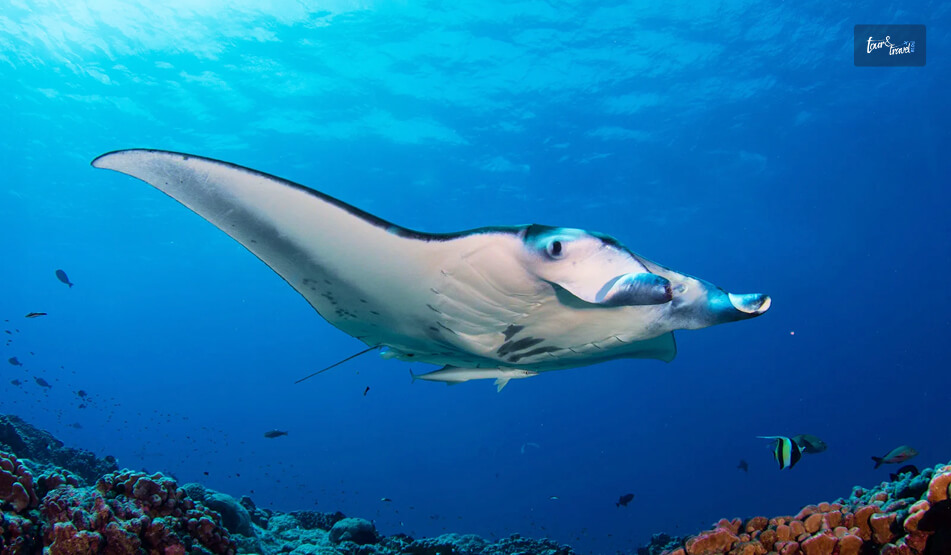
Raja Ampat is one of the rarest places in the world to have oceanic and reef Manta Rays. You can even spot them at the same time at the same cleaning station.
Oceanic Manta Vs Reef Manta
Reef Mantas, with even a massive 5-meter wingspan, are smaller than the Ocean Mantas. The wingspan of the Ocean Mantas is close to 7 meters.
Furthermore, Reef Mantas stay in large, social groups, while the Oceanic Mantas are pelagic wanderers.
Also, Oceanic Mantas feature a “T” shape on their shoulders. On the other hand, you can identify Reef Mantas from the “Y” or “V” shapes on their back.
What Are The Best Sites For Spotting Manta Rays In Raja Ampat?
Manta Sandy in the Dampier Strait and Magic Mountain in Misool are the best places for spotting Manta Rays.
In the Dampier Strait is a quintessential cleaning station for Reef Mantas. The site is shallow, and you will find the Reef Mantas moving over the “bommes” with cleaner wrasse doing their work.
Furthermore, Magic Mountain is the place where you will find both species. So, it looks like a Manta Ballet against the backdrop of the dark blue water.
2. Walking Shark Raja Ampat (Epaulette Shark) And Where To Find Them
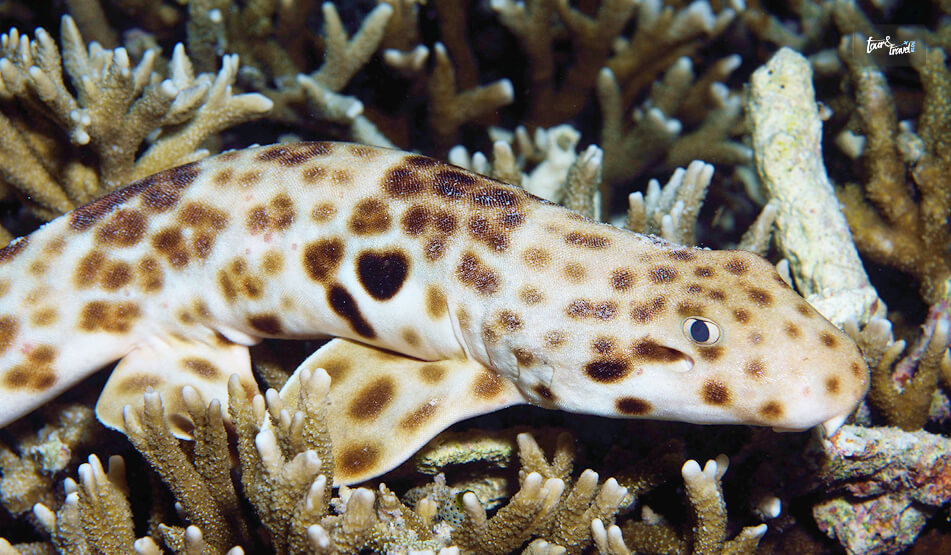
The Walking Shark, or the Epaulette Shark, is the mascot of Raja Ampat. These are called walking sharks because they can use their pectoral and pelvic fins like legs. So, they do not swim and “walk” across the sea floor.
These are nocturnal hunters, strictly. If you are going night snorkeling at Sawinggrai or Arborek, you will spot them walking past your mask. It’s a surreal experience, I must say!
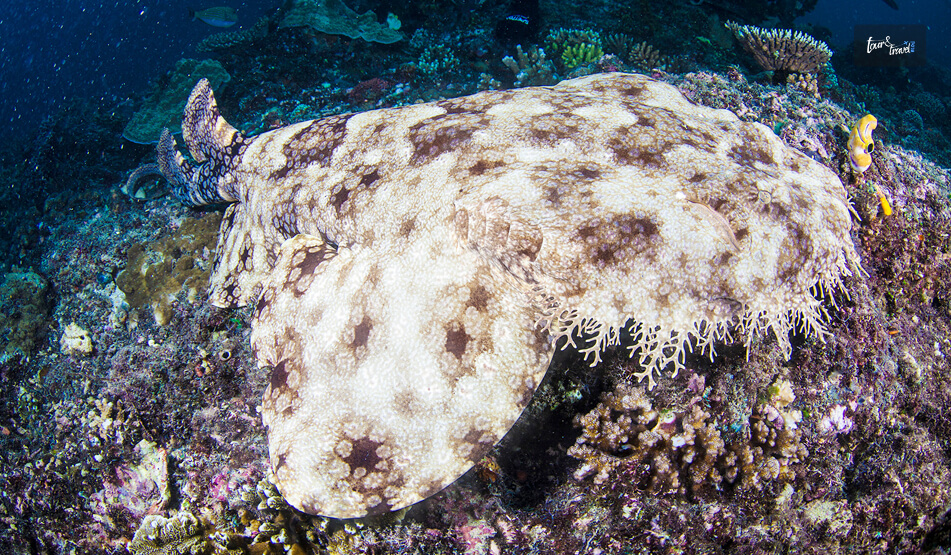
3. Wobbegong Sharks
The Wobbegong Sharks usually rest on the seabed. They also remain tucked under a coral ledge.
Wobbegong Shark Sightings: Spotting The Masters Of Camouflage
These sharks are also known as “Carpet Sharks.” They have mottled and ornate patterns. So, they can disguise themselves well. You will also spot a beard of fleshy tassels around their mouths.
You will often mistake these predators for a piece of weed-covered reef. Sardine Reef in the Dampier Strait and various areas around Misool to find the Wobbegong Sharks.
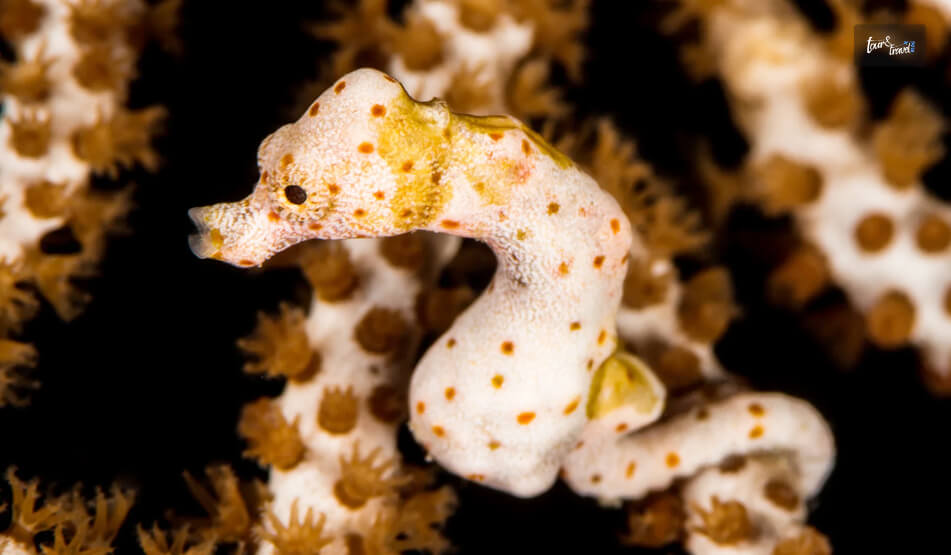
4. Pygmy Seahorses
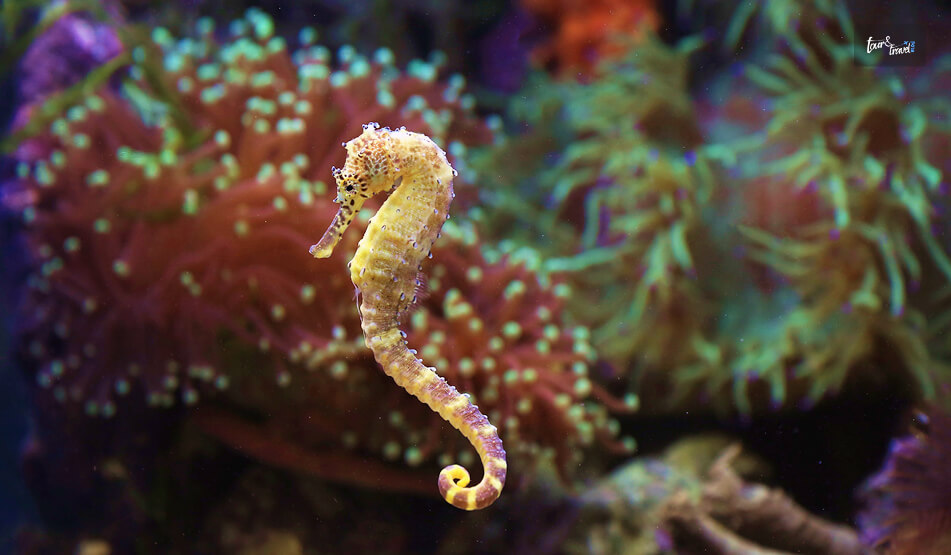
Pygmy Seahorses in Raja Ampat come in various species, such as Bargibant’s, Denise’s, and Pontoh.
Bargibant’s is the most popular, and they have pinkish nodules, which match the color of their host coral. Bargibant also hides in the Gorgonian fans. They never leave their specific host fan, spending their entire lives blending into its polyps.
Denise’s pygmies are slender, and the whitish Pontoh pygmies are found on hydroids and algae.
Pygmy Seahorse Habitats In Raja Ampat
You will love exploring the top Raja Ampat dive sites in search of the Pygmy Seahorses. Dampier Strait, especially sites such as Cape Kri, Blue Magic, and Misool, are the best sites to spot these adorable marine creatures.
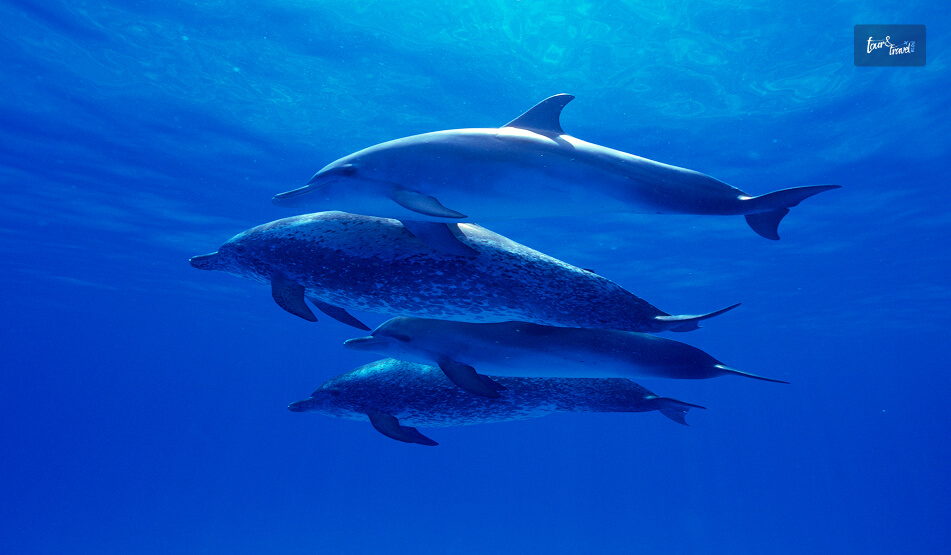
5. Cetaceans (Whales And Dolphins)
The archipelago has deep-water trenches and powerful currents. So, the water is an important highway for marine animals.
Spotting The Whales And Dolphins
The Dampier Strait is a primary migration corridor. So, you will frequently spot Spinner and Bottlenose Dolphins near your diveaboards in Raja Ampat.
Furthermore, you will find Pilot Whales, Sperm Whales, or Orcas in the deep channels between the islands.
Rare & Macro Critters: A Photographer’s Dream
Raja Ampat coral diversity and the macro critters make it a favorite of photographers. You will come across diverse, bizarre animals in the reef.
1. Nudibranchs And Flatworms: The Living Jewels Underwater
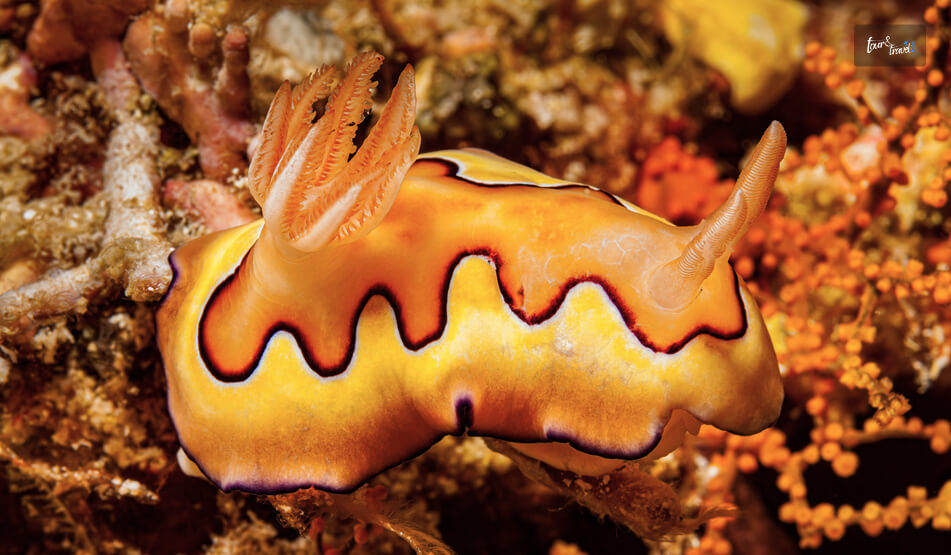
Nudibranchs or sea slugs are vibrant, and they shine like jewels in the deep blue water of Raja Ampat, thanks to their neon shades.
You will find various species of nudibranchs and flatworms in the waters of Raja Ampat. Chromodoris is the most common species, and they look unreal. They feel like they’re straight from the pages of sci-fi movies.
You will find them in Misool areas such as Nudi Rock and Lalosi in the Dampier Strait.
2. Blue Ringed Octopus And Cuttlefish
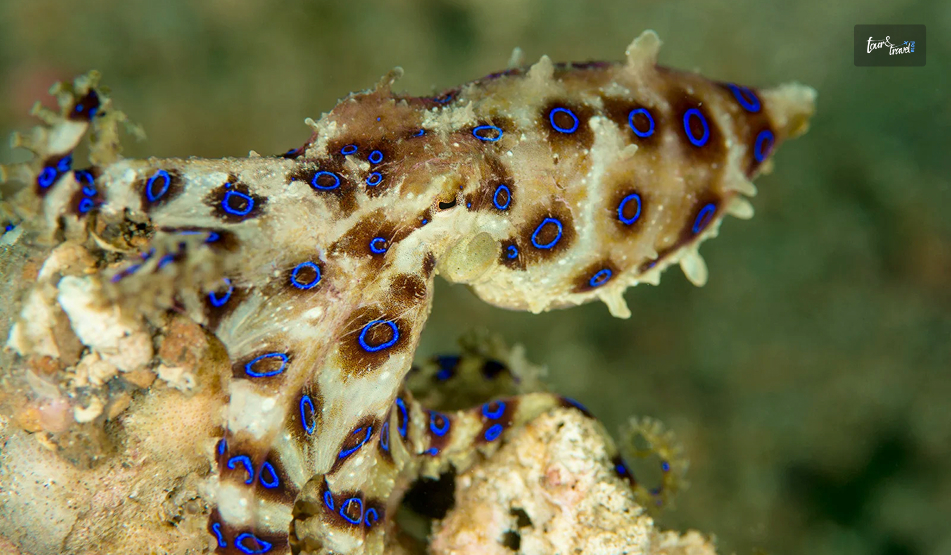
The tiny and lethal marine wonders, blue-ringed octopuses, come with a brown body. They pulse with glowing blue rings when they feel threatened.
Another marine wonder is the Broadclub Cuttlefish. They use their skin as a television screen. So, you will notice changing colors and patterns in seconds.
Misool, Dampier Strait, and water near Mioskon Island are the best places to find these macro marine creatures.
3. Wonderpus And Mimic Octopus
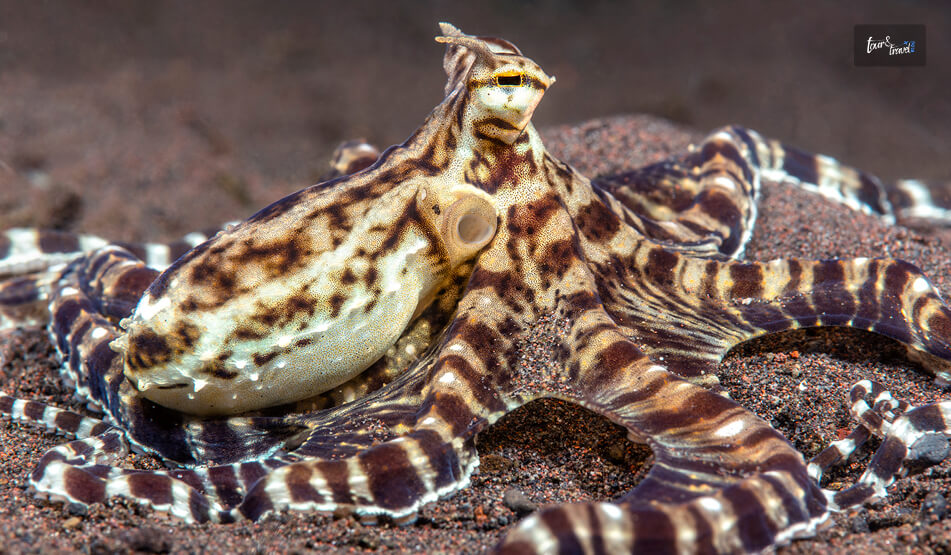
You will find Mimic Octopus mainly in sandy areas. As the name suggests, they can impersonate other sea animals such as lionfish and sea snakes.
Wonderplus has long and slender arms. Also, Wonderplus has intricate white patterns on its rusty brown body.
Spot these stunning marine animals in the water of Misool, Waigeo, and Batanta.
Marine Life By Habitat: Where To Look
The best diving and snorkeling site for you in Raja Ampat will depend on the marine experience/animals you want to encounter.
So, you have to understand the habitat.
1. The Blue Water Mangroves
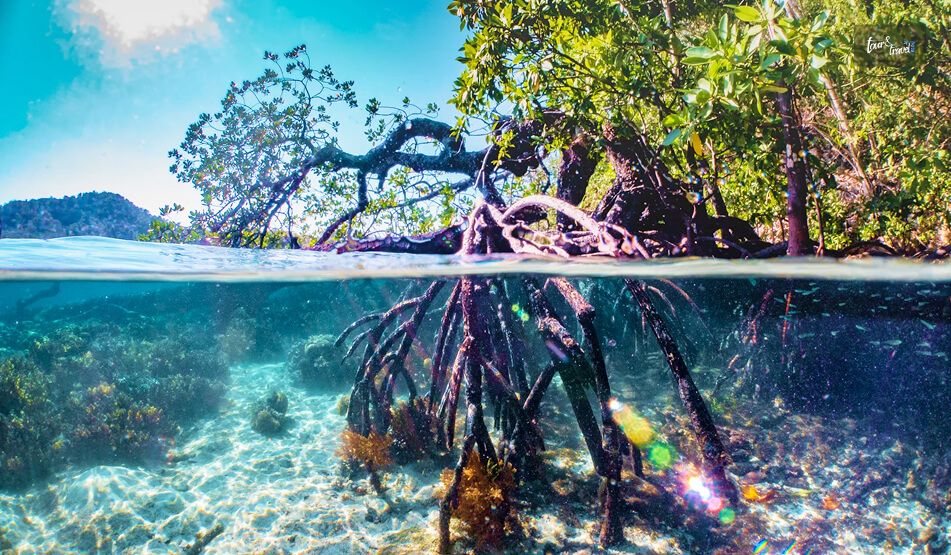
The Blue Water Mangroves are in the Passage or near Gam Island. These are not usual muddy mangroves.
The water here is crystal clear, and it functions as a juvenile fish nursery where you can see soft corals growing on tree roots. It is a rare phenomenon.
2. The Seamouts
Magic Mountain or Sardine Reef are the seamouts, and they are the main action spots because of their position in the path of strong currents.
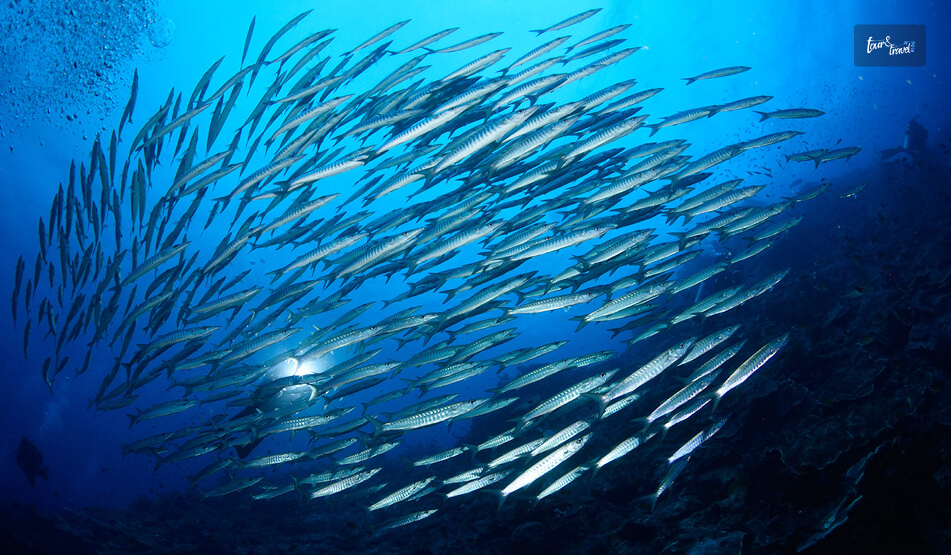
The strong current here attracts many pelagic species. So, you will find “walls” of Bigeye Trevally, schools of Grey Reef Sharks, and thousands of Barracuda.
3. The Muck
Muck diving is a technical term, and it means exploring the sandy bottoms of the water. It is wrong to consider this place as empty, as you will find the rarest critters, such as Bobtail Squid, Seahorses, and Frogfish, here.
These critters usually remain hidden in plain sight.
Raja Ampat Marine Life Calendar
Do you have some must-see species in mind when exploring the Raja Ampat marine life? You have to know the ideal season for spotting them, as the marine life of Raja Ampat changes with each season.
Month
Water Conditions
Manta Sightings
Highlights
October – November
Calm seas
Moderate
Whale shark season (Cendrawasih)
December – February
Peak calm
Very High
Peak Manta season; large schools
March – May
Glassy water
Moderate
Great for Cetaceans (Whales/Dolphins)
June – September
Windy/Choppy
Low
Best for Macro and Nudibranchs
Snorkeling Vs. Diving In Raja Ampat: What Can You See?
The reefs of Raja Ampat are healthy, and the water is crystal clear. So, even if you are not a professional diver, you can see most of the marine life in the top 5-10 meters of water. In other words, the marine life of Raja Ampat is equally accessible to a snorkeler and a diver.
Still, here is a quick breakdown of the experience you can expect during snorkeling and diving.
1. What You Can See In Snorkeling
See blacktip reef shark pups, green turtles, and massive giant clams, just a few meters from the beach. Furthermore, you will spot Manta Rays at Manta Sandy from the surface.
Other icons to spot for snorkelers are the Wobbegong Shark and the endemic Papuan Walking Shark under the jetties or in the shallow reef flats.
The Blue Water Mangroves are the ideal spots for snorkeling if you are looking for unique habitats. Here, you will find vibrant corals growing on mangrove roots.
However, if you are looking for an aquarium effect, you have to snorkel near village jetties such as Arborek or Sauwandarek. These jetties function as artificial reefs. So, you have to just look down from the pier to find massive schools of batfish, fusiliers, and giant clams.
2. What You Can See During Diving
Pygmy Seahorses or Wobbegong Sharks typically hide at depths of 15–30 meters. So, divers can easily access them, and a snorkeler may not find them easily.
While snorkelers see the “greatest hits,” divers get access to the sheer scale and the “hidden” details of the Coral Triangle.
Also, as a diver, you can sit at the corner of a reef, such as Cape Kri, with strong currents, to find the Grey Reef Sharks, Giant Trevally, and Barracuda hunting in the deep blue.
Furthermore, sites such as Friwen Wall or Melissa’s Garden offer dramatic drop-offs where you can see the transition from sun-drenched hard corals to deep-water Gorgonian sea fans.
Moreover, divers can enjoy the underwater mystery at night to the fullest. Spot panish Dancers, Eels, and Crustaceans that hide in the deep crevices of the reef.
“The Nocturnal Shift”: Why Night Diving Is Mandatory
After sundown, the waters of Raja Ampat transform into a completely different landscape. The reef looks surreal.
Night is the only time to spot the Walking Sharks hunting.
Furthermore, once the Sun sets, marble shrimps, slipper lobsters, and sponge crabs come out from the cracks in the coral. So, it is like a crustacean explosion.
Want to see the bioluminescence? Just turn your dive light off and wave your hands. You will find the bioluminescent plankton sparkling in the water.
Quick Comparison: Snorkeling Vs. Diving
Feature
Snorkeling
Scuba Diving
Effort
Low Effort: Jump in from the beach or boat.
High Effort: Gear setup and boat transit.
Visibility
Best in the top 5m (sunlight).
Great at all depths (up to 30m+).
Best For
Coral gardens, Turtles, and reef sharks.
Pygmy seahorses, Drift dives, Walls.
Main Advantage
Unlimited time; “unplugged” feel.
Observing behavior; seeing tiny life.
Constraint
Limited by surface weather/choppiness.
Limited by “no-decompression” time.
Conservation And Responsible Interaction
A collective conservation effort between the visitors and local communities helps to maintain the fragile beauty of Raja Ampat.
The Raja Ampat Marine Park Entry Tag (PIN): All visitors must pay an entry fee. This “PIN” supports the patrol boats that prevent illegal fishing and funds community health and education programs.
Rules for Manta interaction: To keep the Mantas coming back, there are strict rules. No touching, no chasing, and no flash photography at cleaning stations. Always stay lower than the Mantas and give them plenty of space to fly.
Lens Guide For Photographers: Capturing The Marine Life Of Raja Ampat
Raja Ampat is a real test for photographers as the marine life is happening and unpredictable.
If you want to capture the Mantas, schools of fish, and the stunning reefs, you can use the Wide Angle (10mm – 24mm).
On the other hand, if you want to shoot the Pygmy seahorses, shrimps, and Nudibranchs, you must use the 60mm/100mm macro lenses.
Raja Ampat Marine Life Guide: Expert Tips
Check the Current: The “split current” at Cape Kri brings the most action. You have to dive with the current.
Look for Gorgonians: Stop swimming and stare at a Gorgonian fan to find the pygmy seahorses. The bumps, looking out of place, indicate their presence.
Don’t Ignore the Jetty: The pillars under Arborek Jetty are world-class. They are covered in soft corals and schools of Batfish.
Night Snorkeling is Safe: Don’t be afraid! Shallow night snorkeling or night diving is the best way to see the Walking Shark.
Manta Hygiene: At cleaning stations (like Manta Sandy), stay low and don’t exhale bubbles directly under a Manta; it can startle them.
Mangrove Magic: Visit the “Blue Water Mangroves” near Gam. The water is crystal clear, showing soft coral growing on tree roots.
Reef Hook Etiquette: Only hook onto dead rock. Never hook onto live coral or sponges.
The “60-Minute” Rule: Keep your camera battery 100% charged, as many sites are shallow and dives can last over an hour.
Watch the Triggerfish: Titan Triggerfish are aggressive when nesting. If they raise their dorsal fin, you must swim away horizontally.
Listen Underwater: In the Dampier Strait, you can often hear the clicks of dolphins before you see them.
Listen To The Authority Voices: A Raja Ampat Marine Life Guide
Want to know what the authorities are saying about the Raja Ampat Marine Life? I have curated their take on the Raja Ampat waters and marine life from their various interviews and insights.
1. Mark Erdmann, The VP Of Marine Asia-Pacific, Conservation International
Overtourism remains a concern for the conservation of the Raja Ampat marine life. In a Raja Ampat Research & Conservation Centre Report, Mark Erdmann mentioned,
“If there is nothing else done to further control and limit the growth of tourism in Raja Ampat, there is no doubt that within five years we are going to see major problems in places like the Dampier Strait, where it is already reaching the carrying capacity.”
He also said,
“Misool represents one of the most pristine reef systems left on earth — one of only a handful of places in the universe where biodiversity is improving rather than declining.”
2. Sylvia Earle (Oceanographer & Explorer)
She has designated the Coral Triangle (specifically the Birds Head Seascape) as a “Hope Spot,” calling it one of the most important places for marine biodiversity on Earth.
Dr. Sylvia Earle designated the Misool Marine Reserve in South Raja Ampat as a “Mission Blue Hope Spot” in 2017.
Max Ammer (Pioneer Of Diving In Raja Ampat)
Max Ammer has veen always vocal about the resilience of Raja Ampat’s reefs against coral bleaching. That is why it is stronger than the Great Barrier Reef.
Raja Ampat Shows How Vibrant And Resilient The Ocean Can Be
You can be a first-time snorkeler or a seasoned diver. You will feel a rare and strong connection to the marine world in Raja Ampat. The “Amazon of the Seas” continues to thrive, and with the conservation guidelines and respect intact, it balances the presence of macro and micro marine life.
Plan at least a diving expedition for 7 days, especially in the Dampier Strait region in central Raja Ampat, to meet the Big Five and more.
Raja Ampat Marine Life Guide: Frequently Asked Questions (FAQs)
Here are the frequently asked questions and answers about the Raja Ampat marine life guide.
1. What Is The Most Famous Marine Animal In Raja Ampat?
The Raja Ampat Walking Shark, the Carpet Sharks, Pygmy Seahorses, and Manta Rays are some of the most famous and big marine animals in Raja Ampat. However, the colorful corals and endless schools of fish here, along with the macro critters, create an unforgettable marine experience. Raja Ampat became a Shark Sanctuary in 2013. So, you will see different species of sharks here, including:
Also, barring some minor threats from the Wobbegong sharks (because of their hiding nature), no major threat is observed or reported from the sharks in Raja Ampat.
2. Are There Sharks In Raja Ampat? Are They Dangerous?
December to March is the best time to see Manta Rays in Raja Ampat. The plankton blooms are highest in these months, and you will find Manta Rays following each other, creating a train. The northwest monsoon winds create deep-water upwellings, leading to the higher visibility of Manta Rays.
3. Can I See Marine Life If I Only Snorkel?
Yes, you can see marine life in Raja Ampat if you snorkel in areas such as Blue Water Mangroves, Friwen Wall, and Arborek Jetty. Within 5 to 10 meters of water, you will find marine life such as Giant Clams, Sea Turtles, Manta Rays, and diverse schools of fish.
4. Is Raja Ampat Safe For Beginner Divers?
Yes, Raja Ampat has sites such as Arborek or Sawardarek, which are ideal for beginners. Also, many dives are simple drift dives where the current carries you once you jump into the water. However, you must not overlook the down-welling nature, strength, and unpredictability of the Raja Ampat waters. So, you will need expert guides.
5. What Are Walking Sharks?
The Epaulette Sharks or Walking Sharks are harmless carpet snacks. Their movement looks like a walk thanks to their pectoral and pelvic fins, like legs. These endemic species are spotted best at night when they are out hunting.
6. Do I Need A Wetsuit For Raja Ampat?
Wearing a wetsuit is not mandatory if you are a snorkeler in Raja Ampat. However, you can wear a 1mm to 2mm thick wetsuit to float effortlessly and provide sun protection. If you are a scuba diver, you will need a 3mm wetsuit even when swimming in the Raja Ampat waters, with an average temperature of 28 to 30 degrees Celsius. The wetsuit ensures that your body remains warm in the water. Also, it protects your body from tiny stinging planktons and hydroids.
7. Are There Whales In Raja Ampat?
Yes, there are various species of whales in Raja Ampat. You can spot varieties such as Bryde’s Whales, Pilot Whales, Sperm Whales, Omura’s Whales, and Killer Whales. The Dampier Strait and the Sagawin Strait, to the south of Batanta Island, are the best places to spot these whales.
8. What Is The Visibility Like In Raja Ampat Water?
The average visibility in the water of Raja Ampat is around 15 to 25 meters. However, the visibility of the water depends on multiple factors, such as the presence of plankton and nutrients, and the season. In the peak or dry season, between October and April, the visibility is around 15 to 30 meters. On the other hand, in the windy season, from June to September, the visibility is around 10 to 20 meters.
9. Are There Saltwater Crocodiles In Raja Ampat?
Yes, there are saltwater crocodiles in Raja Ampat. However, the sightings are rare, and you will find them in areas such as Blue Water Mangroves, The Passage, and remote islands such as Batanta.
Meet Sibashree Bhattacharya, a travel enthusiast who has a decade-long experience in transcending virtual barriers with her words! Her deep love for travel is apparent from her travel escapades to the mountain, often taking her readers on a journey, her words acting as Portkey! Fun fact: Sibashree loves to dive deep into the history of the places she is about to visit, making her travels even more wholesome. If you were wondering how her articles are not short of time travel, this answers it!
High in the mountains, Grand Teton National Park in Wyoming harbors a great ecosystem for wildlife viewing. It is just south of Yellowstone, another great destination for exploring diverse wildlife.
Further, as you indulge in the exotic beauty of the Teton Mountain Range and the Snake River, you will meet bison, bears, mountain lions, red squirrels, and even wolves. It is also home to the most colorful western tanager, bald eagles, and many other adorable birds.
Are you charmed by the stealthy nature of reptiles and vipers? You can find garter snakes and rubber boa snakes here.
Fascinating! Isn’t it? Let me share a complete overview of wildlife at Grand Teton National Park.
Don’t Miss Your “Spot” To Watch The Grand Teton National Park Animals
You may not be a fan of Sheldon Cooper (from Big Bang Theory) and his obsession with his favorite spot. At Grand Teton National Park, you must know about the right spots for wildlife viewing.
Here, I have curated the best spots within the park where you can meet wildlife without causing any disturbance in the space wild creatures demand.
Oxbow Bend
Oxbow Bend is one of the most beautiful vistas of the Grand Teton National Park. You often see a grizzly mother bear (grizzly No. 399) taking a stroll with her cubs. Further, the wetlands are mooses.
Oxbow Bend also attracts thousands of colorful birds and reptiles who graze around or visit to drink water here.
Moose Wilson Road
The Moose Wilson Road stretches between the Craig Thomas Discovery & Visitor Center and the entrance of Granite Canyon Park.
It is hard to resist taking adorable snaps of bears indulging in berries here. You will also find moose in the wetlands.
National Elk Refuge
Spanning 25,000 acres, the National Elk Refuge has 7,000 elk. The best time to visit the National Elk Refuge is between mid-December and early April. Take a horse-driven sleigh ride to meet Elks from a close distance.
The National Elk Refuge also has bison, mountain lions, bald eagles, and bears. Moreover, if you are lucky enough, you can meet wolves here.
Kelly Loop and Antelope Flats
Kelly Loop and Antelope Flats are like a hidden gem in Grand Teton National Park. Look at the sagebrush to find a pronghorn or bison passing by.
Grand Teton National Park Animals (Mammals, Birds, Reptiles, Unusual Ones And More)
Grand Teton National Park is a perfect coexistence of various species and a wonderful depiction of dependence in the food chain. Let’s find out who has made a home in this beautiful wilderness.
Mammals At Grand Teton National Park
As you explore the Grand Teton National Park, a small or big mammal will always be around you. Grizzly and black bears are the most prominent animals in the park, and you will also meet bison, moose, bighorn sheep, or elks.
Also, this park has wolves, wolverines, and mountain lions. Small mammals in the park include red squirrels, chipmunks, Uinta ground squirrels, and long-tailed weasels.
Further, yellow-bellied marmots and squirrels will be your companion as you hike through the trails in the park.
Are you looking for mammals in the water? You will find the adorable muskrats, river otters, and beavers swimming around.
Do you know that moose is the largest antlered animal in the world? A moose can store 100 pounds of food in their stomach.A male moose can weigh as much as 1400 pounds.
Birds At Grand Teton National Park
https://www.instagram.com/p/CgNiUMRMfpW/
The vibrant feathers of the western tanagers here are a treat to the eyes. Further, you will meet the calliope hummingbird, trumpeter swans, bald eagles, ospreys, and sage grouse in the park.
Do you know that Grand Teton National Park is the home to The calliope hummingbird? It is the smallest bird in North America and weighs even less than 1/10th ounce. Also, the largest waterfowl in North America, The trumpeter swan, lives here near spots like Swan Lake, Oxbow Bend, National Elk Refuge, and Flat Creek.
Do you want to watch birds romancing with their mates? Find out trumpeter swans moving in pair with their mate for life and sage grouses displaying their courtship in the sagebrush.
Reptiles At Grand Teton National Park
https://www.instagram.com/p/CDlzaa-oYU5/
This nation is home to snakes such as rubber boa, valley garter snake, and wandering garter snake. These reptiles are found near the waterbodies in the park.
You will also find the northern sagebrush lizard here. It is the only lizard species living in the park.
Amphibians At Grand Teton National Park
Despite a high elevation, cold temperature, and a dry climate, this national park has five species of amphibians. These are:
Columbia spotted frogs
Western tiger salamanders
Western toads
Bullfrogs
Boreal chorus frogs
Northern leopard frogs were found earlier in this area but have become extinct. If you want to spot these amphibians, you must visit Taggart Lake or String Lake.
Native Fish At Grand Teton National Park
https://www.instagram.com/p/CgnT_ImrdGZ/?img_index=1
The native and non-native fish at Grand Teton National Park are vivid. Some (for example, mountain suckers) survive on mountain algae, while others (for example, cutthroat trouts) eat small fish and insects.
For many animals and birds, like bald eagles, fish is the primary food source in the park. Further, fish is a secondary food source for the local inhabitants. In addition, by eating insects and algae, a fish keeps the spread of these elements in check.
Native Fish At Grand Teton National ParkUtah suckerFine spotted cutthroat trout of Snake RiverMountain suckerSpeckled daceUtah chubBluehead suckerNon-Native Fish At Grand Teton National ParkRainbow troutBrown troutLake troutGuppiesGoldfishGreen swordtail
You will also find many aquarium species at Grand Teton National Park.
Species At Risk At Grand Teton National Park
Grand Teton National Park is home to many species at risk and species of concern. Further, it has whitebark pine trees, which are up for listing.
Whitebark Pine Trees: Up For Listing
The invasive disease of blister rust and mountain pine beetles greatly harms these trees.
Alarmingly, an NPS Survey (2018) says that 57% of the trees were affected by blister rust, while the beetles harmed 30%. In addition, 40% of the total vegetation died.
Only 15% of the trees were able to produce cones. The pine nuts and seeds are an important food source for grizzly bears, squirrels, nutcrackers, black bears, and other animals in the area. Further, these trees play a crucial role in trapping and retaining snow, as well as in preventing the melting of snow.
Thus, they prevent the erosion of steep slopes in the park.
Do you know that grizzly bears eat whitebark pine nuts during hyperphagia? Hyperphagia refers to overeating before going into hibernation. These nuts are rich in protein and fat.
Species Of Concern
After a magical recovery, Grand Teton National Park’s bald eagles are no longer endangered. However, these birds still fall into the category of the species of concern.
Other species of concern in the national park are greater sage grouse and grey wolves.
You will find the bald eagles near the Gros Ventre and Snake Rivers. They love eating fish and sometimes prey on carrion, waterfowl, and other small mammals.
Greater sage grouse here are known for the most poetic display of their mating in the spring season every year. You will find them in spaces in the sagebrush.
Species At Risk
As a part of the Greater Yellow Ecosystem, Grand Teton National Park is home to around 800 grizzly bears. It has made a recovery from the list of endangered species after a long conservation endeavor and is now a species at threat or risk.
Other species at risk at this national park are:
Canada lynx
Yellow-billed Cuckoo
Western glacier stonefly
The park gets filled with the knocking call of the yellow-billed cuckoo in the spring.
Small Creatures At Grand Teton National Park
Insects play a very crucial role in the food chain system. They help pollinate flowers, function as nutrient recyclers, and feed many animals. So, when you see a violet lupine in Grand Teton National Park, you must know bees are around.
Along with bees, Grand Teton National Park also has small and mighty ones, such as the Army Cutworm Moth (the food of grizzly bears during the fall season), Bark Beetles, carrion beetles, etc.
Beetles are very important for the ecosystem of Grand Teton National Park. They break down woody plants and help return the nutrients to the soil. Further, carrion beetles recycle the minerals found in the corpse of an animal. Thus, these insects help with the decomposition and recycling of essential nutrients.
Over three million people visit Grand Teton National Park every year. Along with wildlife viewing, you can enjoy hiking, biking, fishing, climbing and mountaineering, and backcountry camping here. So, gear up for the best experience in the wilderness.
Also read
Top 10 Most Popular Paraguay Food That You Must Try.
Top 13 Famous Wonders Of India That You Must Visit! [Updated 2024]
Top Tips For Motorbike Rental In Phuket – A Guide To Exploring The Island On Two Wheels.
People are calling Dubrovnik a travel secret, a hidden gem in the Mediterranean region, and whatnot!
I don’t agree with these, as for the longest time, Dubrovnik has been famous as the “Pearl of the Adriatic.”
Also, the Old Town of Dubrovnik was designated as a UNESCO World Heritage Site in 1979. Moreover, this city in Croatia has been facing overtourism since the HBO series Game of Thrones became so huge.
It is the filming location of the series.
Even if you are not a Game of Thrones fan, you will love the blue water of the Adriatic Sea, the walls around the Old City, the cobblestone streets, and, overall, the quaint charm.
While it takes almost a week to explore the best of Dubrovnik and indulge in its happening culinary scene, here I have curated a quick itinerary of what to do in Dubrovnik.
This time, the best activities in Dubrovnik span over 3 days, and here you go! However, before that, I want to share how I fell in love with this Mediterranean gem and what the best time to visit this beautiful city is.
What Is The Best Time To Visit Dubrovnik?
May to September is the best time to visit Dubrovnik.
Pleasant weather conditions
Affordable hotel rates
Less crowd
An ideal situation for exploring beaches and water activities
These are the benefits of scheduling your trip to Dubrovnik during these months.
Further, have a look at the table below to understand the weather conditions of Dubrovnik by month.
MonthsHighest Temperature (°C)Lowest Temperature (°C)Days of RainfallJanuary13710February1499March15109April17128May22156June27205July30223August31233September27204October23177November191110December 15810
Moreover, if you want to explore the festive scenario of Dubrovnik, you can plan your visit during the following months.
Festivals in DubrovnikTimeSignificance of the FestivalFestival of St. Blaise3rd FebruaryThe two-day festivities include a grand procession, and the city celebrates St. Blaise, its patron saint, on this day. It is also an intangible cultural heritage identified by UNESCO. Dubrovnik Summer FestivalJuly-AugustUnique cultural programs and artistic performances are the festival's highlights. Festivities take place across various areas of Dubrovnik. Dubrovnik Winter FestivalNovember to JanuaryThe historic Old Town comes to life with music, lights, family fun, and more. Dubrovnik Good Food FestivalOctoberIt is a two-week-long food festival, including vibrant events. Stradun ClassicSeptember to OctoberMusicians around the globe perform at Stradun Classic. Midsummer SceneJune-JulyThis festival takes place at the Lovrjenac Fortress.Croatian and British theatre artists collaborate to perform the celebrated Shakespearean plays.
How I Fell In Love With Dubrovnik?
Being the biggest fan of Game of Thrones, I, of course, got to know about this beautiful Croatian City.
Dubrovnik was the King’s Landing or the capital of Westeros in the series. The Red Keep and the unforgettable scene of Cersei’s “Walk of Shame.”
Then, I researched Dubrovnik and its magnificent walls surrounding the Old Town, and the seafood delicacies here made me fall in love with the city.
So, if you thought that Dubrovnik was all about pasta and pizza and exploring the Old Town on the hottest days, it’s time to guide you on how to do it right.
What To Do In Dubrovnik: A Complete 3-Day Itinerary For You
Here is what to do in Dubrovnik during a 3-day trip.
Day 1: What To Do In Dubrovnik
Your day 1 in Dubrovnik will be focused on exploring the walled Old City. You can also take your time to relax by the pool or the sea, visit the local restaurants, enjoy a cable car ride, indulge in fine dining and the best wines, and end your day with a night stroll.
1. Exploring The Walled Old City Of Dubrovnik
The Dubrovnik Old City celebrates Croatia's rich medieval history. It is a UNESCO World Heritage Site, and taking a stroll across the cobblestone street and visiting places like the Cultural History Museum are the ultimate experiences here.
“The 'Pearl of the Adriatic', situated on the Dalmatian coast, became an important Mediterranean sea power from the 13th century onwards. Although severely damaged by an earthquake in 1667, Dubrovnik managed to preserve its beautiful Gothic, Renaissance and Baroque churches, monasteries, palaces and fountains. Damaged again in the 1990s by armed conflict, it is now the focus of a major restoration programme co-ordinated by UNESCO.”
- UNESCO World Heritage Convention
2. Relaxing By The Pool Or The Sea
If you want a delightful beach experience, you can visit Mlini Bay or Lapad Peninsula in Dubrovnik.
However, if you are feeling too lazy to explore the beach, you can explore hotels with pools for the perfect lounging time.
3. Visiting Local Restaurants
Dubrovnik has places such as Proto, where you can have the best shrimp, scallops, and octopus delicacies.
Further, fish cooked in sea salt is something you cannot miss in Dubrovnik.
4. Enjoying A Cable Car Ride
A ride on the Dubrovnik Cable Car before Sunset is truly magical. During this ride, you can enjoy the changing colors of the Sun in the sky.
Further, as you approach the top of Mount Srd, you will see wonderful views of the Elafiti Islands to the north.
5. Fine Dining And Wine Tasting
Local restaurants, such as Panorama Restaurant in Dubrovnik, offer wonderful views alongside the best local cuisine.
They serve amazing steak sandwiches and Chicken “Rustico.”
Furthermore, you can taste red, white, rosé, and sparkling wines here. D’Vino Wine Bar is another hotspot in Dubrovnik to relish the best of Croatian wines.
6. Taking A Walk In The City At Night
Are you a Dark Academia fan? Do you want to enjoy your “Everything is Grey” moment in the city?
Take a walk around the city at night when there are no cruise passengers, and the lights and darkness create a mysterious ambiance.
Day 2: What To Do In Dubrovnik
Kayaking, chilling by the beach, and exploring the City Walls are some of the best activities you can do on day 2.
1. Adventurous Kayaking In Dubrovnik
Kayaking at the City Beach will be the best way to start your second day. Kayaking tours start here at $43.
2. Relaxing At The Beach
If kayaking is not your forte, you can plan a visit to the City Beach and enjoy the crystal clear water and Sunshine while exploring the views of the Old City.
3. Exploring The Walls of Dubrovnik During The Sunset
You can take a 2-hour walk along the city walls to relish the beauty of the Sunset. Once you reach the top, you can also grab some local snacks and the best coffee at the cafes.
You need to buy tickets to explore the City Walls, and the ticket prices are:
During the high season, tickets for adults to explore the City Walls cost 40 EUR, while children's tickets are 15 EUR.
However, in the low season, ticket prices are 15 EUR for adults and 5 EUR for children.
4. Relishing Croatian Peka Meal
If you're looking for a fun-filled community-building experience, consider the Peka Meal in the signature Dubrovnik style.
Here, you will have the option of lamb, veal, or octopus in a communal pot. Further, potatoes will be cooked over the coal and served to everyone.
Day 3: What To Do In Dubrovnik
Your day three will begin a journey to Lokrum Island. This Island houses the Benedictine Monastery and the Dubrovnik Visitor Center.
The Visitor Center has the Iron Throne, where you can sit and live your Game of Thrones moments.
Furthemore, the Dalmatian Coast has rock slab beaches. You can jump into the water there and enjoy the most unique views of the Old City.
Additionally, you can visit Mljet Island, home to the Mljet National Park and stunning saltwater lakes.
Then, the Red History Museum, located across from the Gruž Ferry Port, will be your next destination. The ticket to the museum is 9 EUR for adults, 7.20 EUR for seniors and university students, and 3.60 EUR for primary and secondary students.
Furthermore, for students under the age of 10, admission to the museum is free.
Where To Stay In Dubrovnik?
Hotel Dubrovnik Palace and Hotel Excelsior are two of the best places to stay in Dubrovnik. Hotel Excelsior is located close to the walls of the Old Town and the City Beach.
On the other hand, Hotel Dubrovnik Palace offers a luxury resort experience, and it offers the best views of the Adriatic Coast.
The Breeze Airways are a team of hospitality, aviation, and tech enthusiasts who believe that flying is the greatest opportunity and privilege in the world. They also believe that flying should be both a great experience and accessible to everyone.
The Breeze Airways™ is a relatively new airline that merges kindness with technology. They provide non-stop services between the under-served routes across the United States of America. They work to provide travelers with affordable fares.
Keep reading till the end to find out more information on breeze airways reviews!
About Breeze Airways
Image Source: www.bostonglobe.com
Breeze Airways is a relatively novel American low-cost airline which has its headquarters in Utah’s Cottonwood Heights. The airline was originally established by David Neeleman. It was launched on 27th May of the year 2021. Its inaugural flight was from Tampa International Airport to Charleston International Airport. The Breeze Airways reviews state that they are an amazing airline.
Keep reading till the end to find out more about breeze airlines reviews!
Leadership Team
The Leadership team of Breeze Airways consists of the following people: David Neeleman as the founder and CEO; the president is Tom Doxey; the chief operations is overseen by Mike Wuerger; Natalie Atwood as the Chief People Officer; the general counsel being John Varley; the chief financial officer being Trent Porter and Lukas Johnson as the chief commercial officer.
Breeze Airways Destinations
Here are the following list of destinations where Breeze Airways extends its services to:
StateCities
AlabamaHuntsvilleArizonaPhoenixArkansasFayetteville CaliforniaLos AngelesSan BernardinoSan FranciscoSanta AnaConnecticutHartfordFloridaFort MyersJacksonvilleOrlandoSarasotaTampaVero BeachWest Palm BeachGeorgiaSavannahKentuckyLouisvilleLouisianaNew OrleansMainePortlandNevadaLas VegasNew YorkIslipSyracuseWhite PlainsNorth CarolinaRaleighOhioAkronCincinnati/CovingtonColumbusOklahomaOklahoma CityTulsaPennsylvaniaPittsburghRhode IslandProvidenceSouth CarolinaCharlestonTennesseeNashvilleTexasSan AntonioUtahProvoVirginiaNorfolkRichmondWest VirginiaCharleston
BreezePoints Rewards Program
Breeze Airways very recently started a rewards program for their users in the United States. The Breeze Airways reviews state that they have a points program. It is very straightforward, where one point equates to one cent. A user earns points based on a certain percentage of the cost of their base fare.
Tip: Is breeze airways safe? Their airline is completely safe to use.
Earning Of BreezePoints
The Breeze Airways awards points are based on the cash cost of the base fare and other forms of ancillary fees. A user can earn points based on the following rates:
For economy tickets, the fares earn 2% of the base fare.
For premium economy tickets, fares earn about 4% of base fare.
The carry-on and checked baggage purchases earn 4%. The oversized bag fees, however, do not earn points.
The pet-in-cabin purchases also earn 4%.
The seat selection purchases earn 4%.
They also effectively indicate how many points a user earns for a flight on the "Payment and Summary" screen when a user checks out.
Keep reading just a bit more to find out about breeze airways review!
Expiration Of BreezePoints
The BreezePoints generally expire 24 months - from the original issued date. There's no way to extend the validity of these life points.
For instance, if you earn 500 points from downloading of the application of Breeze in the month of May 2021, then you must make sure to use up those 500 points by the month of May, 2023 (and this is to be done even if you earn additional BreezePoints.
Breeze Airways Reviews
Here are a few breeze airways reviews left by people who have already used their services:
Delta Platinum Medallion flyer for over 10 years, and Northwest before that. I gladly take Breeze anytime possible from Fort Myers, Sarasota, Charleston and Hartford. Planes are new, seats are spacious and comfortable, the lavatories are larger then the phone booths on most legacy carriers where if you are 6'-2" or taller good luck hitting your head on the fuselage ceiling. Love Breeze hope they expand service and show what flying should be like.
– G. Marko
Breeze is a new airline and I imagine a lot of their flights might get shuffled around. I see a common theme from the reviews are connections that don't have direct flights otherwise. It's possible that this review may not stand the test of time, but I for now, I had an amazing experience. My seat reclined super far and I could not have had better sleep in a newer plane. I plan to urge my travel partners to add Breeze into their systems ASAP so I can book easier for work.
– S. Thomas
Our family of 6 flew out of Akron to Tampa. From booking flights, customer reps at both airports, aircraft condition, flight staff, comport on board to special requests-zero issues and only praise for Breeze. My wife an I travel a lot and using Breeze was the most pleasant recent experience we've had vs. other major airlines. Flight cancellations/delays are not specific to one airline-watch the news these days. Staff shortages are now the norm. All Airline apps have their issues in our experience. We will use Breeze as much as possible when available for our domestic destinations.
– Bryan Bryce
Breeze turned out to be a great airline. Staff was great, plane was clean and very nice, seats were roomy. Plane was on time going and just about 20 minutes late leaving Las Vegas . All of our luggage went to a different airport in Florida but they were in contact with us before we reached the terminal and stayed in contact until they had it delivered to our house by the next day. I will definitely be using Breeze in the future!
– Richard Licare
Editor's Two Cents
Yes, in my perspective! An excellent airline is Breeze Airways. They have unbeatable low prices, and their onboard amenities are on par with those of any other airline. particularly if, like me, you spring for an Extra Legroom seat.
I had no complaints whatsoever regarding this flight, and I can't wait to use Breeze once more. Unfortunately, given their busy schedule, I'm not sure when I'll get the chance to do so. They should rank higher on my list of the greatest US airlines to fly with if they can expand their route network into something more substantial. It's not a very convenient airline to fly with until that happens.
Above all, you must realize that a Breeze Airways seat with extra legroom isn't all that superior to a regular seat. Additionally, since this airline primarily operates shorter routes, you might want to reconsider paying the extra cost for even a small amount of additional space. Maybe it's not even worthwhile.
Pros
The E195 Extra Legroom seats have a luxurious appearance thanks to their white leather-like covering. Look-wise, it's very similar to Virgin America First Class.
It's an amazing bargain. The guy in front of me mentioned to his seatmate that he paid $134 for his last-minute ticket, and I paid only $124 for my seat.
The extra benefits that come with the seat, like priority boarding, complimentary snacks, a free checked bag, etc., are good. For a Southwest Airlines Business Select seat, you would still receive less for a much higher price.
Cons
If your flight is less than an hour, it's probably not worth it to pay extra for an Extra Legroom seat. There is some additional legroom, but not much.
The actual seats are comparable to those in basic economy. No additional padding or lower back support will be provided.
The snacks offered in these first-class seats are comparable to those found in regular economy on almost all US airlines.
To Wrap It Up!
That is all for information regarding Breeze Airways and their operations. Thank you for reading up till here. I hope you found the information useful. Let me know in the comments your thoughts on the same.
Read Also:
The Ultimate Guide To Finding Cheap Flights To Chicago Using Google Flights
Using Flightscanner To Find Cheap Flights In 2023? All That You Need To Know!
Hopper Flights Review- Login, Services, And Travel Experiences
Aainflight Review- Login, Services And Travel Experiences