
What Are The Places To Visit In Meghalaya? – Travel Guide

Aug 17, 2022

Last Updated on: Sep 1, 2025

Travel Guides

Meghalaya, or the Abode of Clouds, here you will find that nature has to give. It is one of the best places for its biodiversity richness. Known best for its famous monsoon seasons, Meghalaya has the most dramatic natural terrains with rich cultural festivals.

Having such beautiful natural diversities, which are among the best places to visit in Meghalaya. The tribals of Garos, Jaintias, and Khasis make up the majority of the population.

Meghalaya: Abode Of Clouds!

Located in the northeastern parts of India, with Shilong as its capital. During the British rule of India, it was dubbed the “Scotland of the East.”

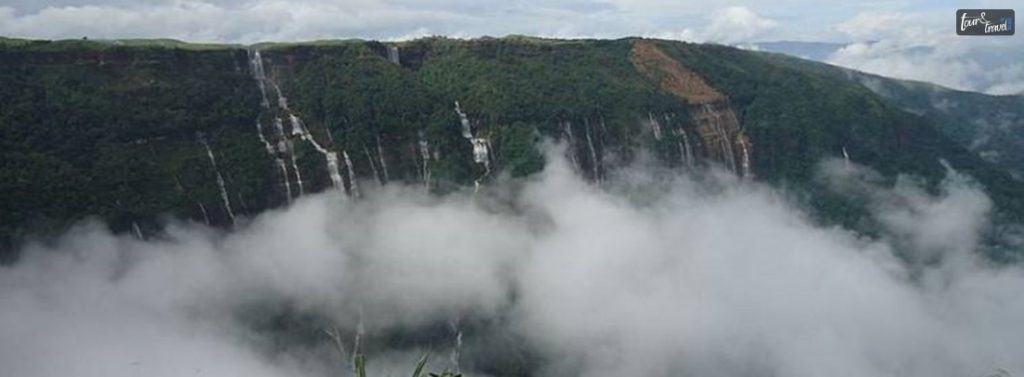
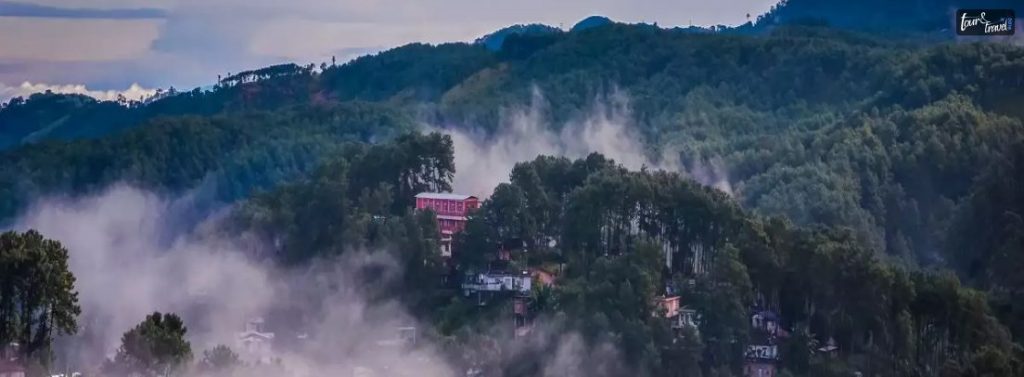
With a range of beautiful terrains, Meghalaya is surely going to surprise your imagination. With beautiful greenery everywhere, with forests, valleys, waterfalls, and mountains, that are one of the best places to visit in Meghalaya.

But since Meghalaya is known for its monsoon seasons, what is the best time to visit there?

What Is The Best Time To Visit Meghalaya?

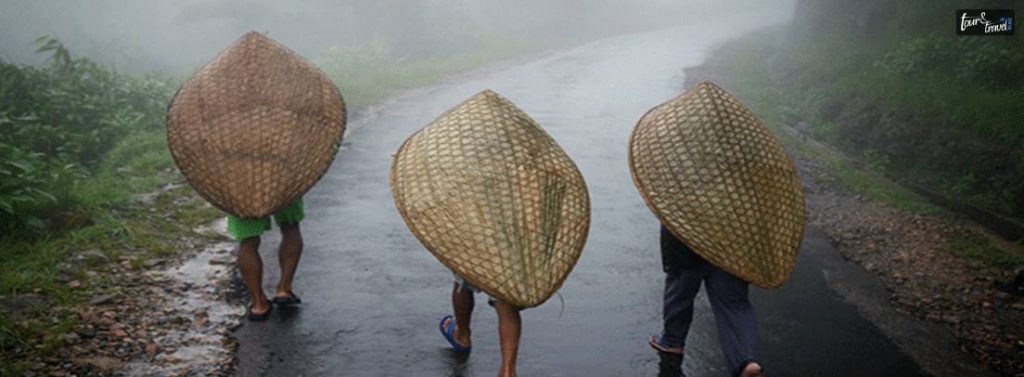
Since Meghalaya is one of the wettest places in India, with the occasional cloudbursts and landslides, you need to know the best time to visit there.

Weather Condition In Meghalaya

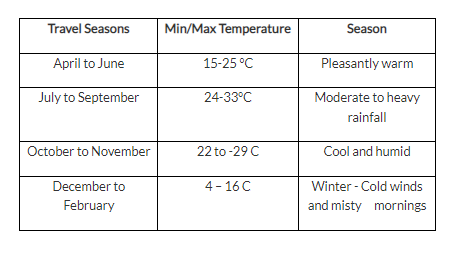
Oct-Feb = 9c        Apr-Jun = 21c        June-Oct =15c 

Peak Season

When the temperature is between 16c and 31c, that is the best time to visit Meghalaya. This will probably be from April and June. During this time, Meghalaya has the optimum temperature for you to explore the place.

Shoulder Season

From the months of November to March receives a moderate amount of tourists, as the weather is cold and misty at the same time.

Low Season

The lowest season for tourism in Meghalaya is from July to October. During this time, the state receives about moderate to heavy rainfall.

Season to visit  Meghalaya

Best Places To Visit In Meghalaya

Now that you know what the best time to visit Meghalaya is, you need to know what are the top Meghalaya tourist places.

1. Cherrapunji

Popularly regarded as the wettest place on Earth, Cherrapunji has the best lush greenery you will ever see. Here you will find the highest rainfall any time of the year.

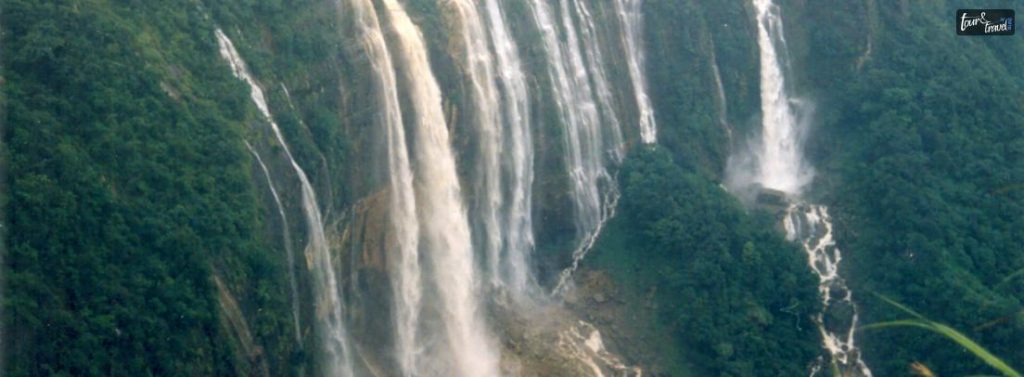
Tourists from all over the world come here to see the most beautiful waterfalls, like Dain-Thlen,Nohkalikai, and Kyrem. Cherrapunji is one of the best places to visit in Meghalaya.

Specialty – An abundance of natural scenic beauty and environmental attractions.

Places To Stay – Polo Orchid Resort Cherrapunjee, Jiva Resort Cherrapunjee and Saimika Resort.

Attractions – Krem Mawmluh, Wakaba Falls, Double Decker Living Root Bridge, and also Nohkalikai Waterfalls.

How To Reach – From Guwahati, it’s 166km, And from Cherrapunji Umroi Airport, it’s 79km.

2. Shillong

Known as the Scotland of the East, Shillong is the capital of Meghalaya. Away from the bustling life of the city, Shillong has beautiful forests, hills, and mesmerizing scenic beauty. Shillong is considered the Meghalayan Gateway.

Popular landmarks of Shillong are Elephant falls, Maharam, Lady Hydari Park, Bhowal, Mylliem, and Langrim.

Specialty – Mesmerizing view, the beauty of nature, and its popular landmarks.

Attractions – Elephant falls, Maharam, Lady Hydari Park, Bhowal, Mylliem, and Langrim.

Places To Stay Pinewood Hotel, The Loft-Executive Inn, Hotel Polo Towers Shillong, and Tripura Castle.

Location – East Central Meghalaya.

Best Time To Visit – From September to May.

3. Mawsynram

Out of all the places in Meghalaya, Mawsynram receives the most rainfall each year. This is why here you will find the most greenery and beautiful green hills and valleys. Mawsynram receives about 11,872 mm of rainfall each year.

Specialty – The most beautiful waterfalls.

Location – The East Khasi Hills, Meghalaya.

Best Time To VisitFrom April to June.

4. Balpakaram National Park

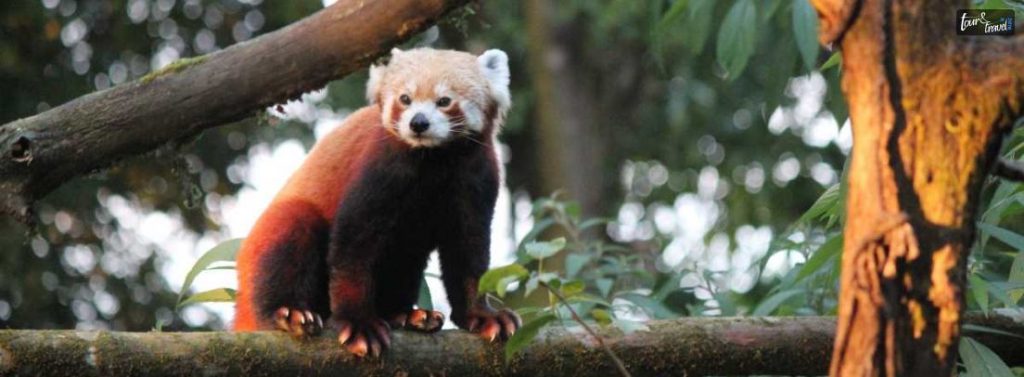
Known as a traveler’s paradise, the Balpakaram National Park is a “Land of Spirits” for its rich natural biodiversity. With its beautiful wildlife with animals like Tiger, Leopard, Deer, Buffalo, Elephant, and Red Panda.

Specialty – It is rich in natural biodiversity.

Location – Western Meghalaya and Garo Hills.

Best Time To Visit From October to March.

Entry Free – Free.

5. Nohkalikai Falls

The Nohkalikai Falls is the 4th most noted waterfalls in the World. The height of this fall is about 335 meters from the cliff to the ground. The falls are considered “the pride of the territory of Meghalaya.”

Specialty – It is like paradise with an extraordinary scenic view.

Entry Fee – INR 10.

Timing – From 8 am to 5 pm.

6. Double-decker Living Root Bridge

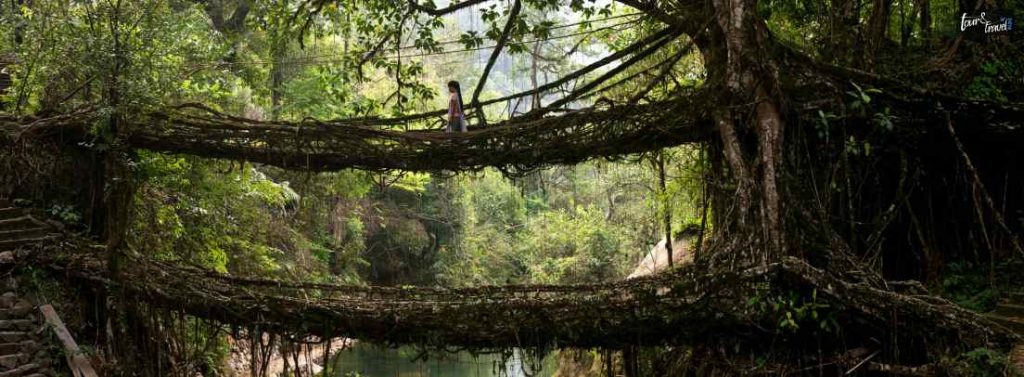
Located in Cherrapunji, the double-decker living root bridge is famous all over, as the bridge is made up of roots. The roots are of rubber trees. The bridge is about 3km long and about 2400ft in height.

Specialty – The oldest of natural bridges.

Location – Cherrapunji, Meghalaya.

Best Time To Visit – Anytime other than from May to September, due to the slippery.

Trek Time – It takes about 4 to 6 hours.

7. Kyllang Rock

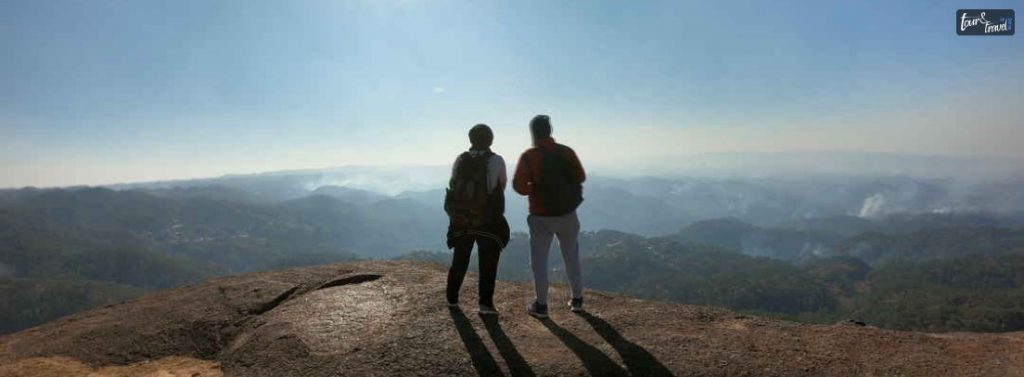
This extraordinary rock is made entirely out of red stone. The rock is 54ooft above sea level and 1000ft in width. The hike up the rock gives a beautiful scene with rhododendrons and shrubs.

Specialty – It is on the highest points in all of Meghalaya.

Location – West Khasi Hills, Shillong, Meghalaya.

Best Time To Visit – Anytime, except the monsoon.

Read Also: Which Is The Largest Freshwater Lake In India?

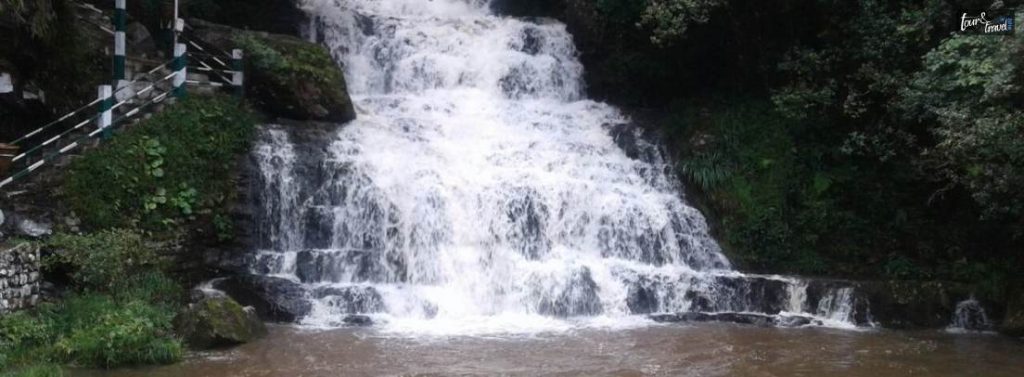
8. Elephant Falls

Meghalaya is known to have the best waterfalls in all of India. And Elephant Falls is definitely one of that beautiful waterfalls. It is called Elephant falls as it has an Elephant-shaped stone at its foot of it. It is one of the best places to visit in Meghalaya.

Specialty – The falls are surrounded by beautiful scenic beauty.

Location – It is only 12km from Shillong.

Best Time To Visit – During Monsoon.

Read Also: Top 10 Famous Wonders Of India

Frequently Asked Questions (FAQs):

Now that you know what the best time to visit Meghalaya and the best tourist places is, you won’t have any other problems. But if you do, here are some questions asked by other people.

1. What Is The Popular Place Of Meghalaya?

The most popular Meghalaya places to visit are:

1. Mawsynram
2. Nohakalikai Falls
3. Mawlynnong Village
4. Umiam Lake
5. Seven Sisters Falls
6. Living Root Bridges

2. Does Meghalaya Have Snow?

Though the state of Meghalaya has a higher elevation, it doesn’t receive any snowfall throughout the year. But due to humidity and low temperature, frost forms which can look like snow but are not.

3. What Is Famous Food Of Meghalaya?

The food that is famous in Meghalaya is a spicy preparation of fish or meat and rice. They are great at rearing pigs, goats, cows, ducks, and fowl for their meat.

Visit Now!

If you are an avid nature lover, then visiting Meghalaya should definitely be on your bucket list. There are some beautiful places to visit in Meghalaya. And if you are a mountain lover, then you need to visit here once.

Hopefully, this article encourages you to book your tickets soon for Meghalaya. Let us know in the comments where in India you wanna visit next.

Read Also:

Share on Social Media

Nabamita Sinha loves to write about lifestyle and pop-culture. In her free time she loves to watch movies and TV series and experiment with food. Her favourite niche topics are fashion, lifestyle, travel and gossip content. Her style of writing is creative and quirky.

Leave a Reply

Your email address will not be published. Required fields are marked *

title-img Related

READ MORE Great Barrier Island hiking trails

What Are The Best Great Barrier Island Hiking Trails? An Ultimate Guide To Hiking Trails On Aotea Great Barrier Island

BY  Sibashree Nov 7, 2025

Hiking the Aotea Track up to the summit view of the Hirakimata Peak was one of the most rewarding experiences I had on the Great Barrier Island. The view after reaching the top took all our fatigue away.  However, the Great Barrier hiking trails are not just about panoramic summits. Hiking here also means walking along the rugged coastline, through the native forests, and to the geothermal springs. To cut a long story short, the best hikes on Aotea Great Barrier Island, New Zealand are the best routes for exploring its dramatic island.  Furthermore, you can be a beginner or a seasoned hiker. Great Barrier Island has trails that can accommodate all. So, this guide is about the trails you can explore for the perfect eco adventure. Why Is The Great Barrier Island A Hiker’s Paradise?  Cultural exploration, stargazing, off-grid living, exploring the biodiversity of the island, and the dramatic geothermal features make the Great Barrier Island a hiker’s paradise.  1. Dark Sky Sanctuary “Ecotourism is extremely important to Great Barrier Island and this International Dark Sky Sanctuary status will not only provide further tourism development and economic growth opportunities but also ensure the preservation of our exceptional starry skies." Izzy Fordham, Great Barrier Local Board Chair.  The designation of the Great Barrier Island as a Dark Sky Sanctuary in 2017 was not about getting a label to boost tourism. The island’s 60% area is a conservation park, and the local Maori people believe that the protection of the sky is important for the health and well-being of the local community.  Also, if New Zealand becomes a Dark Sky Nation, as aimed by the Royal Astronomical Society of New Zealand, the Great Barrier Island will have a pivotal role to play.  Nevertheless, as an activity, stargazing seems the most surreal experience during a multi-day hike on the Aotea track. Just relax and prepare for the next day after completing your day’s hike.  2. Off-Grid Living Sustainability is a choice or a way of living on the Great Barrier Island. So, there is complete reliance on solar power, and people here use composting toilets. Rainwater harvesting is another sustainable practice followed by the people of this island.  Nevertheless, thanks to the island's off-grid living, it has minimal to no light pollution and air pollution. Also, because of off-grid living, life on Great Barrier Island is deeply connected to nature. So, you can be the biggest homebody, but here you will feel the urge to experience the outdoors more intimately.  3. Biodiversity Of The Island “Great Barrier is at an exciting point in its history where the future of the islands flora and fauna looks bright.” - Go Great Barrier Island. The fact that 60% of the island is a conservation park speaks volumes about the island’s biodiversity. Furthermore, it is home to countless endangered species, including 13 species of lizards, the North Island Kaka Parrot, the Black Petrel, the Banded Rail, and the Pateke.  In addition, the native forest here is getting replenished quickly with the island authority being particular about pest control.  4. Geothermal Features Located within the Hauraki Rift, the Great Barrier Island has the Taupō Volcanic Zone and the Kaitoke Hot Springs. These geothermal zones, along with being natural spectacles, are also home to unique ecosystems where you will find New Zealand pigeon or kererū, fernbird, etc.  So, hiking through these geothermal zones is an exciting outdoor activity in the Aotea Great Barrier Island.  A Brief Comparison Table Of The Best Great Barrier Island Hiking Trails  Trail NameDurationDifficultyHighlightsAccessibilityAotea Track2–3 daysModerateForest, summit, hutsDOC huts, remoteKaitoke Hot Springs1.5 hrsEasyGeothermal poolsWheelchair-friendlyWindy Canyon1 hrModerateCliffs, panoramic viewsCar park accessHarataonga Coastal Walk4 hrsModerateBeach, forest, birdsTrailhead parkingPalmers Track2–3 hoursModerateStream crossings, dense bushNot recommended for people with fitness or mobility issuesWarren’s Track30–45 minutesEasyFamily-friendly loop near Tryphena, Kid-friendlyIt is not wheelchair-accessible. Whangaparaoa Beach Walk1–2 hoursEasyDune ecology, remote beachIt is not wheelchair-accessible due to a steep loop-walk area. Glenfern Sanctuary1–2 hrsEasyConservation, native birdsGuided tours available What Are The Best Great Barrier Island Hiking Trails? (Brief Overview) View this post on Instagram A post shared by Aotea Great Barrier Island (@greatbarrierislandofficial) Most of the hiking trails on the Great Barrier Island come with an easy to moderate difficulty level. Also, the Aotea track here is the only multi-day hiking trail on Great Barrier Island and the entire Auckland Region.  Let’s find out more about the Aotea track and other Great Barrier Island hiking trails.  1. Aotea Track (Multi-Day Circuit) View this post on Instagram A post shared by Kristina | New Zealand travel, hiking & outdoors (@kristinamonts) Aotea track allows you to experience the ultimate fusion of history and natural beauty. Here, you will find the surviving trees and a unique wildlife of Kahikatea, Rimu, and Kauri.  The plants you will come across here are the cabbage tree, Horoeka or lancewood, Mānuka, Kānuka, etc. Furthermore, you will spot birds like Riroriro (Grey Warbler), Kererū (Wood Pigeon), etc.  2. Mount Hobson / Hirakimata Summit Track View this post on Instagram A post shared by Walking Legends Guided Walks (@walkinglegendsnz) This hiking route allows an encounter with the remnants of the ancient native bush, such as lancewood and cabbage tree. Also, while walking, you can meet the endangered Chevron Skink, a symbol of the rich biodiversity of the Great Barrier Island. 3. Kaitoke Hot Springs Track View this post on Instagram A post shared by Auckland, New Zealand (@visitauckland) This easy hiking track continues along the Kaitoke Swamp to the Kaitoke Hot Springs. You can continue your walk and continue on the Peach Tree Track to reach the Hirakimatā peak.  Kererū or wood pigeon and Kōtare or kingfisher are the most popular birds here.  4. Windy Canyon Track View this post on Instagram A post shared by Auckland, New Zealand (@visitauckland) The Windy Canyon track is one of the most popular short hiking trails on the Great Barrier Island. You have to climb up the steps through rock walls, which look dramatic thanks to the rampage of the ancient force of nature.  As you reach the top of the canyon, you will see the wonderful views of the Okiwi Basin, Whangapoua Beach, Medlands Beaches, and Kaitoke.  5. Palmers Track After completing the Windy Canyon Track hike, you can continue on the Palmers Track. Here you will walk along the steep ridgeline, and it is the shortest route to Mount Hobson.  Furthermore, on your way, you will spot the endemic kānuka plants, and the wooden horse here is a telltale of the logging history of the island.  6. Harataonga Coastal Walk It is one of the easiest hiking trails in Harataonga. It is associated with the history of transportation on the island, as it used to be the connecting route between the northern and southern parts of the island.  7. Warren’s Track It is a beautiful hike to a waterfall with a gently graded climb. Once you reach the waterfall, you can take a swim in the stream beneath. The food passes through the Kauri plantation before it joins the Bridle Track.  Here, you will walk through an exotic forest. However, the last lap of the trek is a little difficult with a rocky surface.  8. Whangaparaoa Beach Walk View this post on Instagram A post shared by Working In New Zealand (@workinginnewzealand) This peaceful route takes us to the Stanmore Bay Beach through the Rata Road walkway. Most of the walk continues on a paved road. However, some sections have a boardwalk and gravel.  This road is ideal for a pram walk. However, the stretch between the Rata Road Reserve and Whangaparāoa town centre is steep enough, and you will have to cross a few roads.  9. Glenfern Sanctuary Walks View this post on Instagram A post shared by Glenfern Sanctuary (@glenfernsanctuary) The Glenfern Sanctuary is a family-friendly loop track that continues along the Aotea Stream. You have to walk through a stretch of regenerating bush and climb around 100 meters.  After climbing up, you will enjoy the most amazing views of the Hauraki Gulf. On the stretch, you will be able to spot black petrel and kaka nesting. Also, you will find here the Chevron skink, the rarest and largest reptile in New Zealand.  How To Reach The Best Great Barrier Island Hiking Trails? View this post on Instagram A post shared by Nicole Marinkovich (@nicoolemarinkovich) You will have to take a Great Barrier Flight or a ferry ride to reach the Great Barrier Island. Upon reaching the island, you will have to take local transport to reach the following trail heads.  Great Barrier Island Hiking TrailsTrail HeadAotea TrackWindy Canyon/Whangaparapara RoadMount Hobson / Hirakimata Summit TrackBrownlee AvenueKaitoke Hot Springs TrackWhangaparapara RoadWindy Canyon TrackOkiwi-Claris RoadPalmers TrackWindy CanyonHarataonga Coastal WalkHarataonga CampsiteWarren’s TrackOpposite the Akapoua Campground EntranceWhangaparaoa Beach Walk1.5 Km up from Okiwi AirfieldGlenfern Sanctuary Walks20 Glenfern Road What Are The Best Family-Friendly Trails On Great Barrier Island? Best for Seniors• Kaitoke Hot Springs• Glenfern SanctuaryBest for Kids• Warren’s Track• Harataonga Beach WalkFacilities• Toilets at Major Trailheads• Picnic Areas• DOC Signage What Is The Best Time For The Great Barrier Island Hiking Trails?  View this post on Instagram A post shared by Julia Cole (@juliagoesglobal) The hiking trails of the Great Barrier Island are ideal for all-season hiking. However, the hiking trails offer a unique experience in each season.  SeasonWhy Visit The Hiking Trails?Summer (December to February)• Pleasant Weather Conditions• Clear VisibilityAutumn (March to May)• Cooler Temperature• Fewer CrowdsWinter (June to August)• Wet and Muddy• Fewer CrowdsSpring (September to November)• Active Birdlife• Blooming Flora Sustainable Hiking Tips For The Trails On Great Barrier Island Leave No Trace Use Cleaning Stations for Kauri Dieback (A Deadly Disease of Local Kauri Trees) Prevention Use Bio-Degradable Soap Use Reusable Water Bottles Follow Local Guidance and Signage to Remain Respectful to Wildlife and Sacred Sites What To Pack For Hiking The Best Trails On The Great Barrier Island?  Your packing list will depend on whether you are going for a single-day hike or a multi-day hike.  Day Hike EssentialsMulti-Day Gear• Water (2L+)• Snacks• Sunscreen & hat• Rain jacket• Map or GPS• Sleeping Bag• Cooking Gear• First Aid Kit• Headlamp• Extra Layers Guided Hikes And Local Tours: Enhancing Your Hiking Experience On The Great Barrier Island  View this post on Instagram A post shared by Glenfern Sanctuary (@glenfernsanctuary) Glenfern Sanctuary Tours and Māori Cultural Tours are the two most popular guided tours on the Great Barrier Island.  1. Glenfern Sanctuary Tours The Guided Loop Track tour of Glenfern Sanctuary is an amazing experience as you walk through the native bush. Here, you will spot the magnificent kauri tree and the resident black petrel.  The tour is 1 hour and 30 minutes, and a group must have at least five members. The tour's charges are $50 per person.  2. Māori Cultural Tours Whangaparapara Harbour Historic Treks, Harataonga, and Aotea Track are some of the best hiking trails to learn about authentic Māori culture and tradition.  The Whangaparapara Harbour Historic Treks take you to places of Kauri logging and whaling in ancient times. On the other hand, at the Harataonga DOC Campsite, you will find the old settlement sites of the Māori tribe.  Moreover, the Aotea Track has Māori archaeological sites, and Hirakimata Peak itself reflects local Māori spiritual beliefs and significance.  Where To Stay Near The Best Great Barrier Island Hiking Trails?  DOC huts, eco-lodges, hostels, and camping are the best accommodation options near the best Great Barrier Island hiking trails.  Trail NameNearby AccomodationAotea Track• Mt. Heale DOC Hut• Kaiaraara DOC HutKaitoke Hot Springs• Barrier Beach Cottage• Wiltshire ManorWindy Canyon• Aotea LodgeHarataonga Coastal Walk• Tipi and Bob's Waterfront LodgePalmers Track• Tipi and Bob's Waterfront LodgeWarren’s Track• Medlands Beach Backpackers and VillasWhangapoua Beach Walk• Aotea LodgeGlenfern Sanctuary• Glenfern Sanctuary Things You Don’t Know About The Great Barrier Island Hiking Trails: (Unearthing The Secrets) From housing, the only multi-day hike in Auckland, to being the home to many endangered species, the Great Barrier Island has many secrets to share.  1. Aotea Track: The Only Multi-Day Hike On The Island The 25–30 km loop of the Aotea Track is the only multi-day hiking track in the Auckland region. It passes through volcanic terrain, native bush, and summit views.  It’s a rare wilderness experience so close to a major city.  2. You Can Rejuvenate And Soak In Hot Springs In The Middle Of A Hike As you walk through the Kaitoke Hot Springs track, you will find geothermal pools, offering you a natural spa experience.  These pools, hidden in bushes and set in an underdeveloped setting, offer the purest connection to nature.  3. The Summit Of Mt Hobson Is A Breeding Ground For An Endangered Seabird Black petrel (tāiko) is one of the rarest seabirds of New Zealand. Hirakimatā / Mt Hobson is the home ground of these birds.  So, hikers have to continue on the boardwalks to protect the nesting areas of the birds.  4. The Island Is Free Of Possums, Stoats, And Deer Because the Great Barrier Island is free of Possums, Stoats, And Deer, you will be able to spot more birds such as kākā, kākāriki, and pāteke, and different types of wildlife.  5. You Can Hike Along Historic Logging Tramlines Some parts of the Aotea Track pass through the old tramlines used during the kauri logging era. In these pockets, you will find the ruins of machinery and dams that were used in carrying the logs.  6. The Island’s Trails Pass Through Regenerating Forests Much of the forest you hike through is regrowth from early 20th-century logging, dominated by manuka and kanuka, with pockets of ancient kauri, rimu, and kahikatea still surviving. 7. There’s a Track Named After A Gold Prospecting Legend The Te Ahumata Track to the White Cliffs was a popular site of gold prospecting. The locals still believe that gold may be hidden in the mountain. Thus, the hike has an element of myth.  8. The Island Has A Rare Endemic Plant: The Great Barrier Tree Daisy On many trails of the Great Barrier Island, especially on the Mt Heale Hut route, you will find the endemic species of the Great Barrier Tree Daisy.  This plant grows nowhere else in the world.  9. You Can Build Your Own Loop Adventure You can customize your Aotea Track hiking route based on your interests and fitness level. It has feeder tracks such as: Palmers Track Peach Tree Track Tramline Track 10. The Island’s Māori Name Means “Light Striking the Cliff” The Great Barrier Island has geological and spiritual significance in the Māori tradition. Mount Hobson is called Hirakimatā in the Māori language.  It means the “lightning striking the cliff face.” Great Barrier Island Hiking Trails: Frequently Asked Questions (FAQs) Here are the frequently asked questions and answers about the Great Barrier Island hiking trails.  1. Do I Need A Permit To Hike On The Great Barrier Island? No, if you are on a day trek on any Great Barrier Island trail, you do not need a permit. However, if you are trekking the Aotea Trail, you will need to book the huts of the Department of Conservation well in advance. You can contact the booking office at +64 7 867 9080 or the DOC Customer Service Centre at 0800 275 362. The last time I checked, the huts were under maintenance. So, confirm the availability of these huts.  2. Is It Safe To Hike Solo On Great Barrier Island? Yes, hiking solo is safe on the Great Barrier Island trails. However, the trails are in remote locations, and mobile coverage is limited in these areas. So, you must keep someone informed about your hike, and carry a Personal Locator Beacon (PLB) and an offline map.  3. Are Dogs Allowed On Hiking Trails? No, dogs and pets are not allowed on the hiking trails on Great Barrier Island. The trails here are ideal for wildlife spotting. So, dogs are not allowed on these tracks to protect native wildlife. In addition, dogs are not allowed on these trails to prevent the spread of kauri dieback disease. 4. How To Reach The Great Barrier Island From Auckland? Taking a flight is the easiest option to reach the Great Barrier Island from Auckland. Barrier Air operates this flight service from the Auckland Domestic Terminal to the Claris Airport. Also, you can take a Sealink ferry from Auckland’s Wynyard Wharf to Tryphena. It is an unforgettable journey of 4.5 hours.

READ MORE certified translation for immigration

How to Navigate Visa & Immigration Translations When You Travel Long-Term

BY  Sibashree Oct 22, 2025

Traveling long-term or moving abroad is an exciting adventure. But if your journey involves applying for visas, immigration permits, or residency, you’ll quickly discover that documentation is one of the biggest hurdles. Among the most common requirements are visa translation services and certified translations of official documents. Whether you are applying for a student visa, a work permit, or reuniting with family overseas, presenting correctly translated documents can make or break your application. Authorities want clear, accurate, and verifiable translations, and failure to meet those standards often leads to delays or even rejections. This guide explains everything you need to know about visa and immigration translations, including why certified translations are required, what documents usually need them, and how to avoid common pitfalls. Why Visa Translations Are Crucial When immigration officers review applications, they must be able to fully understand the documents submitted. If your birth certificate, marriage certificate, or bank statement is in another language, it must be translated into the official language of the country you are applying to. Here’s why translations are necessary: Legal clarity: Immigration authorities cannot legally assess documents they don’t understand. Consistency: Translations ensure names, dates, and details match across multiple documents. Compliance: Many countries require certified translations to confirm that translations are accurate and complete. What Are Certified Translations? Not all translations are equal. For immigration, you need certified translations. A certified translation includes: A complete and accurate translation of the original document. A signed statement (certificate of accuracy) by the translator or translation company confirming the translation’s authenticity. Contact details of the translation provider for verification if needed. This certificate is essential because it gives immigration officers confidence that the document is trustworthy and complies with their standards. Common Documents That Require Certified Translations When applying for visas or residency, the following documents are often requested in translated form: Birth certificates Marriage or divorce certificates Death certificates (in cases of dependent claims) Passports and ID cards Academic transcripts and diplomas Criminal record checks Medical records or vaccination certificates Bank statements and tax returns Employment contracts or pay slips Before submitting your application, carefully check the requirements of the immigration authority you are applying to, as these can vary from country to country. How to Handle Certified Translations for Visa Applications If you are preparing for long-term travel or immigration, here’s how to approach the translation process: Identify which documents need translationReview the checklist from the immigration authority. Don’t assume that only personal records need translation—financial and academic documents are often required too. Choose a reliable certified translation providerLook for services that are recognized by immigration authorities. For example, Certling offers certified translations accepted by USCIS in the U.S., UKVI in the U.K., and IRCC in Canada. Submit clear scans or photos of your documentsHigh-quality images prevent errors and ensure no details are missed in the translation. Check turnaround timesVisa applications often have strict deadlines. Many providers offer standard and express delivery options—use express services if you’re short on time. Verify acceptance guaranteesEnsure the translation provider guarantees compliance with immigration authorities. This gives peace of mind if your documents are ever questioned. Innovation in Visa Translations The translation industry has modernized significantly. Companies like Certling use AI and machine vision to analyze documents, count words instantly, and provide transparent per-word pricing. This innovation eliminates overcharging based on per-page pricing models and saves applicants money. Other key advancements include: Selective translation tools: Applicants can exclude unnecessary sections of documents, such as logos or stamps, lowering costs. Secure file handling: Professional providers use encrypted systems and delete documents after delivery to protect your data. Instant online quotes: You can now upload documents and get pricing within seconds, reducing guesswork. FAQs on Visa & Certified Translations Do I always need certified translations for visa applications? Yes, in most cases. Immigration authorities typically require certified translations of any foreign-language documents. Can I translate the documents myself? No. Self-translations are not accepted. Certified translations must come from a qualified translator or company. How long does the process take? This depends on the provider. Standard services may take a few days, while express options can deliver certified translations within 24 hours. What happens if immigration rejects my translation? Reputable companies often provide corrections or revisions free of charge if authorities raise issues. Certling, for example, includes this as part of their service. Are digital copies of certified translations acceptable? Yes, many immigration authorities now accept certified translations in PDF form. However, some may request physical copies, so confirm with your local authority. The Role of Certified Translation Services in Your Journey Securing a visa or residency isn’t just about submitting the right forms. It’s about presenting complete, clear, and compliant documentation. Certified translation is a critical part of this process. Providers like Certling specialize in certified translations for immigration and visa applications. They offer word-based pricing, fast turnaround, and acceptance guarantees for major authorities across the U.S., U.K., Ireland, and Canada. While your focus may be on the exciting parts of long-term travel, taking care of certified translations early ensures your journey won’t be delayed by paperwork. Final Thoughts Navigating the visa application process can be overwhelming, especially when traveling long-term or moving abroad. Certified translations are not just a formality—they are a legal requirement that can significantly affect your success. By understanding what certified translations are, why they matter, and how to get them done correctly, you’ll be better prepared to handle the complexities of immigration paperwork..

READ MORE Best Beaches in Croatia

Why Should You Visit Croatian Beaches By Boat? Which Are The Top 10 Best Beaches To Visit?

BY  Sibashree Oct 24, 2025

Croatia is home to some of the most breathtaking beaches in the world. Moreover, tourists can see crystal-clear waters, hidden coves, and pristine silver sand beaches. Statistica reports suggest that almost 20 million arrivals were recorded in Croatia,  Therefore, a large number of tourists from around the world visit Croatia. This often makes several spots and destinations very crowded.  However, many travellers do not like being in highly crowded places. Thus, people often prefer to visit beaches that remain untouched by people and are clean. Moreover, Croatia’s coastline is home to hundreds of breathtaking beaches. The list of attractions includes things like hidden coves and pebbly bays to soft sandy lagoons. However, we will inform Tour and Travel readers about the less crowded beaches accessible by waterways.   Therefore, the best way to explore all these beaches is by boat or yacht. Moreover, tourists can anchor in crystal waters and explore every hidden corner of the Adriatic. Which Are The Top 10 Best Beaches in Croatia To Visit By Boat? Croatia is home to some of the most beautiful beaches in the world. However, we have sifted out the names of some of the best beaches in Croatia for you to visit. All these beaches are best visited by boat. Thus, let us know in detail about these beaches. 1. Zlatni Rat (Golden Horn) – Brač Island Zlatni Rat is one of the most beautiful beaches in Croatia. Moreover, the beach stretches out into the sea like a golden horn. However, the golden-stretching beach constantly changes shape with the wind and ocean currents. Zlatni Rat is located on the island of Brac. The island is one of the most significant geomorphological wonders in the world. Moreover, the Island offers some of the most incredible scenery. The water surrounding the Island becomes turquoise blue to dark blue within just 20 metres. The Island also houses decades-old pine trees that were once planted by the locals to create natural shade around the place. Therefore, the white pebbles and turquoise water turn the Island into a dream stop for sailors.  Thus, the tourists can simply drop anchor nearby with a Split yacht rental and relax in the blue waters.  Moreover, tourists can spend the afternoon swimming, participating in other watersports such as windsurfing, or enjoying the lively Bol promenade. Zlatni Rat is one of the best beaches in Croatia for spending some time alone. 2. Stiniva Beach – Vis Island The island of Viz serves as the home to Stinava Beach. Stinava Beach is one of the best beaches in Croatia.  Moreover, Stinava Cove is popular among tourists for its high cliffs that form the entrance to the sea.  Furthermore, the Tourism Organization European “Best Destinations” considers the beach as the most beautiful beach in Europe. Vis attracts people from all over the world because of its mild Mediterranean climate. The beach remains hidden between the cliffs. Hence, the tourists can only reach the place by a short hike. However, the boat serves as the more scenic path to reach the place. The tiny pebble beach and emerald-green water make it one of the most photographed places in Croatia. Arrive early in the morning for calm seas and perfect light. 3. Dubovica – Hvar Island Tourists should take a short sail from Hvar Town. Moreover, they will reach Dubovica Beach. The beach is one of the most peaceful coves, framed by stone houses and olive trees.  The tourists visiting the place will witness calm, transparent waters. Moreover, the tourists should go prepared for water sports activities.  The place provides ideal spots for swimming and snorkeling right from their yacht.  Moreover, the rustic beach bars onshore also add to the island's authentic charm. 4. Pasjača Beach – Konavle, Near Dubrovnik The place is carved beneath towering cliffs. Hence, Pasjača is one of Croatia’s most dramatic beaches.  Moreover, the beach is a mix of fine sand and pebbles. However, the beach remains accessible only via a steep path from the cliffs above. Thus, tourists find it difficult to reach the place. However, the travellers can always reach the beach by sea. Moreover, people should anchor their boats offshore and enjoy the untouched beauty and serenity. Moreover, the place remains a hidden paradise. Far away from the chaos and crowded places. Thus, it is one of the best beaches in Croatia. 5. Sveti Jakov – Dubrovnik Travellers who sail near Dubrovnik should definitely visit Sveti Jakov Beach. Moreover, the place is located just outside the Old Town. Therefore, people can enjoy stunning views of the city walls and Lokrum Island from the spot.  Moreover, the pebble-and-sand beach offers a very relaxed vibe. Hence, the beach provides ideal conditions for swimming. Travellers can also take in the historic skyline from the comfort of their yacht. 6. Sakarun Beach – Dugi Otok People know Sakarun Beach for the rare sandy beaches on the Adriatic. Moreover, Sakarun feels almost Caribbean with its shallow turquoise bay and soft white sand.  The place is surrounded by a pine forest. Moreover, the yachts cruising the Zadar archipelago find the place to be a popular destination. The anchorage is calm, making it ideal for a lazy day in paradise. 7. Lubenice Beach – Cres Island Perched below the medieval village of Lubenice, this hidden cove offers a wild, natural setting and crystal-clear water.  Lubenice Beach is difficult to reach by land, which makes arriving by boat the perfect option. It’s quiet, pristine, and ideal for a refreshing swim far from the crowds. 8. Nugal Beach – Makarska Riviera Nugal Lies between cliffs and pine trees. Hence, Nugal serves as one of Dalmatia’s most peaceful beaches.  The beach has gained popularity for its privacy and naturist-friendly atmosphere.  However, travellers can access the beach only on foot or by boat. Hence, the place remains a true hidden gem for those seeking peace while sailing. 9. Pupnatska Luka – Korčula Island Korčula, Pupnatska Luka is one of the most beautiful bays in Croatia. Moreover, the beach features smooth pebbles, crystal-clear water, and lush green hills in the background.  Therefore, the Sailors often stop here for swimming and lunch, thanks to the small local konoba (tavern) nearby. The sheltered bay offers safe anchoring and a perfect island escape. 10. Rajska Plaža (Paradise Beach) – Lopar, Rab Island Rajska Plaža boasts long stretches of fine sand and shallow, warm water. Moreover, most of the Croatian beaches do not offer this. Hence, these conditions remain ideal for families and others.  Moreover, the beach is one of the few where you can anchor nearby and swim ashore easily.  The 2-kilometer sandy bay is surrounded by cafés and restaurants, making it a lively stop on your northern Adriatic route. Things To Remember While Visiting The Best Beaches In Croatia  Croatia houses several beaches. Moreover, people can access several beaches by hiking trails as well. However, the route to several hiking trails involves steep hills and cliffs.  Thus, the waterways serve as the best way of transportation to visit the best beaches in Croatia.