
Isurumuniya Temple, Anuradhapura: A Guide To Sri Lanka’s Rock-Carved Temple Of Legends

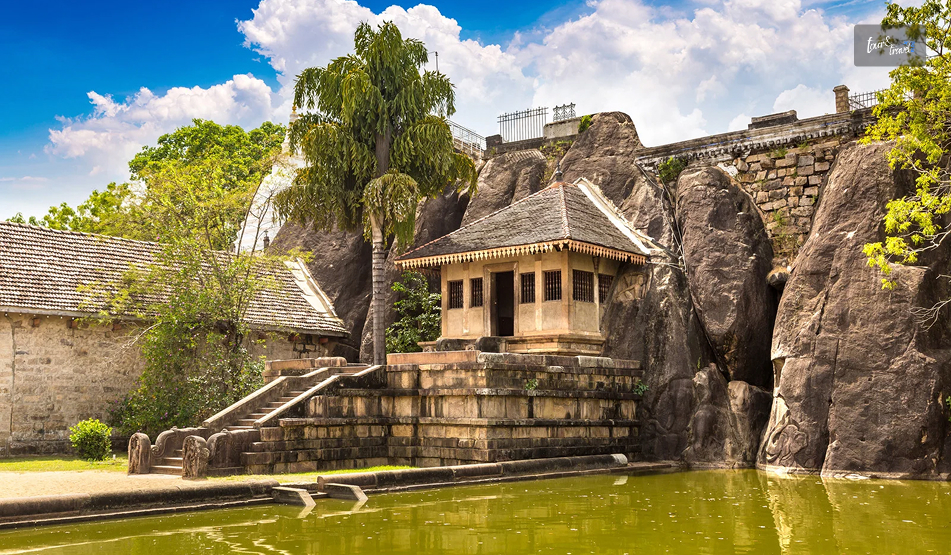
Have you seen the reclining Buddha inside Isurumuniya Vihara, a modest rock temple wedged between two granite boulders on the edge of Tissa Wewa? 

I have been to Dambulla Royal Cave Temple and seen the massive reclining Buddha statues there.  

However, the one in Isurumuniya felt intimate. It can be a very personal thing, but here I feel at home.  

Also, even after multiple visits to the Isurumuniya Temple, each time, the carvings, the pond, or the small museum behind the stupa surprised me with something new.  

In this guide, I have talked about my experience at the temple along with its history, legends, and other practical details you need to know.  

Isurumuniya Temple: At A Glance  

Quick Facts Details 
Location East bank of Tissa Wewa, Anuradhapura, North Central Province 
Built by King Devanampiya Tissa (307–267 BCE) 
Renovated by King Kasyapa I (473–491 CE) 
Famous for Isurumuniya Lovers Bathing Elephants Man and Horse Royal Family Carvings 
UNESCO Status Part of the Sacred City of Anuradhapura, Inscribed in 1982 
Typical Visit Length 45 Minutes to 1.5 Hours 

The History Behind Isurumuniya’s Two Boulders

Isurumuniya Temple, Anuradhapura: A Guide To Sri Lanka’s Rock-Carved Temple Of Legends

The story of Isurumuniya started in the 3rd century BCE.  

It was not long after Buddhism arrived on the island. Since then, it has been reshaped by royal hands more than once. 

A Monastery Built For 500 Royal Novices 

King Devanampiya Tissa, the same ruler who welcomed the Buddhist missionary Mahinda to Sri Lanka, founded Isurumuniya. 

However, Isurumuniya was then known as Meghagiri Vihara.  

Furthermore, the temple history records say that five-hundred children of high-caste families used to stay here during their training.  

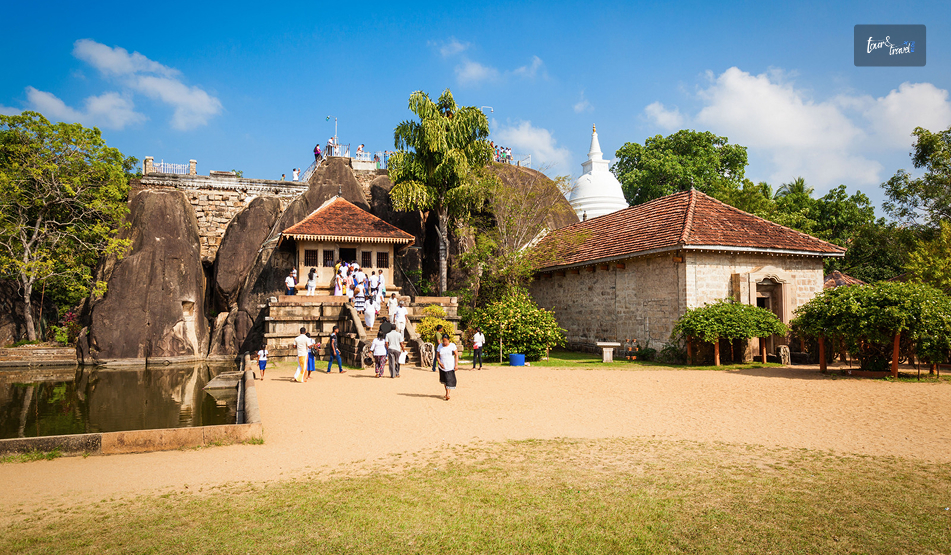
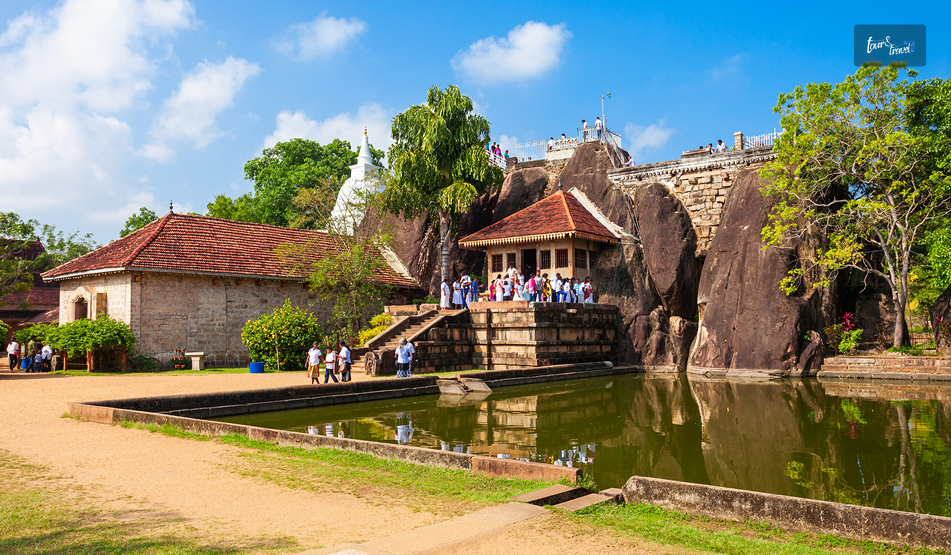
I was standing in the small courtyard with the rock hemming it on three sides.  

I could picture how contained and disciplined that original community must have felt. 

King Kasyapa I’s Renovation 

After centuries, King Kasyapa I, who is more famous for building the Sigiriya Rock Fortress, renovated Isurumuniya. 

He renamed it Boupulvan, Kasubgiri Radmaha Vehera. 

The name was a combination of his own name with those of his two daughters.  

The Carvings That Make Isurumuniya Worth The Detour 

Isurumuniya is small. 

However, four carvings here specifically get all the attention.  

Also, if we delve into the art history of Sri Lanka, these are some of the most reproduced images.  

I spent longer looking at these than at anything else in Anuradhapura. 

The Isurumuniya Lovers 

I saw the Isurumuniya Lovers, or the Lovers of Isurumuniya sculpture, in the museum. 

It depicts a man and woman sitting closely together.  

According to local legends, the lovers are Prince Saliya, son of King Dutugemunu, and Asokamala, a woman of lower caste for whom he is said to have given up his claim to the throne.  

However, there is another version about the sculpture, and this one is favored by past Archaeological Commissioner Senarat Paranavitana. 

This version identifies the pair as the mythic king Kuvera Vaisrawana and his queen Kuni. 

Nevertheless, the granite relief dates between the 4th and 8th centuries CE.  

Also, it has prominent Gupta influence, and it is very similar to Indian sculptures in that era.  

The Bathing Elephants 

I saw this carving low into the rock beside the pond.  

Because of this position beside the pond, it looked like the elephants were wading in from the water itself.  

Art historian D.T. Devendra noted that the animals are rendered inconsistently, some frontal, and some in profile. 

This has led scholars to suggest two sculptors worked on them at different times.  

They are the first thing you see on entering, and are reflected in the pond at the right angle. 

The Man And The Horse 

This carving is probably the most debated at the site, and it has had multiple interpretations for a century.  

Paranavitana read it as Parjanya, a Vedic rain deity, with his horse standing in for Agni, fire, together heralding the monsoon.  

Devendra proposed a very different subject. 

He interpreted it as Alexander the Great and his horse Bucephalus, carved in the 7th century CE.  

I find the ambiguity part of the appeal, and nobody working at the site could give me a definitive answer either. 

The Royal Family Carving 

A granite plaque showing five human figures, generally read as a royal household, rounds out Isurumuniya’s core sculptures.  

It gets far less attention than the Lovers, and I would argue that is a reason to slow down and look at it properly rather than rushing past. 

Walking The Temple Grounds

Isurumuniya Temple, Anuradhapura: A Guide To Sri Lanka’s Rock-Carved Temple Of Legends

Isurumuniya is compact enough to see in under an hour. 

However, for me, it was a slow, deliberate walk rather than a quick loop. 

The Lotus Pond And Rock-Cut Shrine 

You enter past a square pond fed by Tissa Wewa, with the Bathing Elephants carved into the rock face above it.  

The Irish writer and archaeologist John Still called this corner “the most picturesque” spot in all of Anuradhapura. 

Also, having stood there at both midday and closer to sunset, I would agree the light matters. 

Visit it in the late afternoon if you can.  

Steps guarded by two carved muragal (guardstones) lead up to the old shrine room, cut directly into one of the two boulders, where a seated Buddha statue sits inside the original rock-cut sanctum.  

A separate, more modern shrine building nearby holds a large reclining Buddha and a Bo tree said to be grown from a sapling of the sacred Sri Maha Bodhi. 

The Museum With The Original Lovers Carving 

Behind the main shrine, a small on-site museum houses the original Isurumuniya Lovers relief along with other artifacts recovered from the site.  

It is easy to miss if you only walk the outdoor courtyard, and I nearly did on my first visit.  

Ask a temple attendant if you are unsure where the entrance is. 

It was not signposted clearly from the pond area. 

Isurumuniya Practical Guide: Tickets, Timings, And Best Time To Visit

Isurumuniya Temple, Anuradhapura: A Guide To Sri Lanka’s Rock-Carved Temple Of Legends

Isurumuniya sits inside the Sacred City of Anuradhapura. 

However, you need to buy a separate ticket.  

This is something many first-time visitors miss.  

Entrance Fees 

There is no entry fee to the Isurumuniya Temple for locals.  

However, SAARC visitors and other foreign tourists above 10 years of age need to pay an entry fee of LKR 500.  

The ticket counter opens at 7 AM.  

Opening Hours And Best Time To Visit 

Isurumuniya Temple is open from 7 AM to 5:30 PM.  

However, the heat is scorching at midday.  

So, an early morning visit before 8 AM or a late afternoon visit around 3:30 to 4 PM will be the ideal time.  

Also, Poson Poya (the June full moon, marking the arrival of Buddhism in Sri Lanka) is the most sacred date on the Anuradhapura calendar. 

It draws large crowds across the sacred city, Isurumuniya included.  

This festival also falls within the comfortable window of May to September, or the dry season.  

From October, the northeast monsoon sets in and November brings the heaviest rain. 

A Half-Day Itinerary Around Isurumuniya 

Time Stop What to Expect 
7:30 AM Isurumuniya Temple Arrive early for soft light on the Bathing Elephants and a quieter courtyard. 
8:15 AM Isurumuniya Museum See the original Lovers carving up close. 
9:00 AM Vessagiriya Short walk or tuk-tuk ride to the cave-hermitage ruins nearby. 
10:00 AM Sri Maha Bodhi Pay respects at the sacred fig tree in Mahamevnawa Garden. 
11:00 AM Ruwanwelisaya Circle the great white stupa before the midday heat sets in. 

Continuing Your Anuradhapura Journey 

Isurumuniya works best as one stop in a longer day around the sacred city rather than a standalone visit.  

If you’re building out a full itinerary, it pairs naturally with Ruwanwelisaya, Jetavanaramaya, and Abhayagiri. 

Also, if you want to extend your trip, do not miss Mihintale, the place where Buddhism first reached Sri Lanka.

Share on Social Media

Sibashree is a travel, culture, and leisure writer who has been writing since the age of 12 and professionally since 2014. With more than a decade of travel writing experience and journeys across India and several parts of the world, she brings a deeply personal and thoughtful perspective to her work. A student of English Literature and Mass Communication, Sibashree has always viewed travel as more than movement — for her, it has been a way of understanding people, cultures, and herself. Her passion for spiritual exploration has also led her to many unusual and meaningful destinations over the years. Outside of writing, Sibashree enjoys watching European cinema, reading about global politics, and reflecting on the stories hidden within everyday places.

Leave a Reply

Your email address will not be published. Required fields are marked *

title-img Related

READ MORE what to do in Weligama

What To Do In Weligama In 2026? Beach, Nightlife, Water Sports, And More

BY  Sibashree May 27, 2026

From the beaches of Jaffna to Weligama, Sri Lanka has so many places that can teach you the art of slow traveling and the TravelDownUnder philosophy.  The southern coast of Sri Lanka, especially, has a distinct magic. Furthermore, the Hiriketiya Beach and Mirissa Beach often steal the social media limelight.  However, Weligama is an exception even in this age of Instagram craze. The region has a legendary surf culture and a salty heart.  So, surfing is the most popular answer when you ask what to do in Weligama.  It has a massive, shallow crescent bay that transforms everyday ocean swells into beautifully consistent, beginner-friendly rollers. However, surfing is not the only activity you will love in Weligama. Even if you never plan on waxing a surfboard, the laid-back beach town pulls you in with an infectious, slow-paced lifestyle.  Moreover, here you will spend the mornings in flat whites, hide from the tropical Sun in shaded pools in the afternoon, and enjoy the distinct nightlife.  So, as I was on a backpacking trip to Sri Lanka, I enjoyed every bit of this remote coastal area.  I have penned my experience, the best things to do in Weligama, what to eat, and more in this article.  What To Do In Weligama? Indulging In The Quintessential Coastal Experience In Sri Lanka According to a recent report of the World Economic Forum regarding the Jobs and the Future of Work, 25% of the workforce in the world will be fully digital.  With this shift in the workforce, there will also be a paradigm shift in the way young people and professionals travel.  The digital nomads especially look for budget-friendly and beautiful locations that offer them the ease and amenities of working.  In this regard, Weligama in Sri Lanka remains a prominent choice, and even according to a survey of the Hotel With Tub website, Weligama has secured the 43rd place among the 100 best destinations for digital nomads in the world.  It is affordable, and you must try the following attractions here.  1. Enjoying The Quintessential Weligama Surf Experience  Surfing is the very fabric of Weligama. Decades ago, some eager travelers chased the rumor of finding the perfect breaks in this sleepy fishing hub.  Today, it is one of the premier learning grounds for surfers in Asia.  The gentle sandy floor of the slope reaches across hundreds of meters in the water. Thus, the incoming waves lose their chaotic bite and turn into rolling whitewash,  With the waves getting predictable, even if you are stepping onto a board for the first time, you can walk down the main beach strip to find dozens of local wooden shacks offering board rentals and affordable one-on-one coaching. However, that does not mean that Weligama will disappoint the advanced surfers. For example, Kima Surf Camp is a high-end hub for premier surfers.  Housed within a meticulously restored colonial mansion, it pairs intensive, expert-led coaching with a vibrant communal lifestyle, yoga classes, and poolside recovery sessions.  2. Attending A Rooftop Yoga Session At Hangtime Hostel  The neighboring Ahangama is a more popular place for the niche Yoga subculture. However, the Yoga studios in Weligama stand out because of their amazing views.  The Hangtime Hostel is the place I visited, and the open-air rooftop platform grounded me as soon as I stepped in.  Also, it offers a quick relief from the street noise, and on one side, it offers the most amazing view of the expansive Indian Ocean.  On the other hand, the dense, emerald canopy of the Sri Lankan jungle sways in the breeze.  Like every day, the classes began at 9 AM, and I was a little early to reach as I wanted to secure a good spot.  Furthermore, the session was on Power Vinyasa, and it cost around LKR 2500.  3. Chasing Horizons In The Golden Hour  Along the southern coast of Sri Lanka, Sunset is more than a natural occurrence that takes place daily.  It is like a social ritual and a magic of nature that brings people together. It is an amazing experience to see the Sun dipping into the water.  However, only the locals know the right time to start a short scooter ride to reach The Cliff and see the most vibrant sunset.  It is over rugged coastal rocks, and this open-air tiered place ensures that every single table is positioned for panoramic ocean views.  Overall, it is a complete fusion of the upscale "sunset lounge" aesthetic and the unpretentious warmth that defines Sri Lanka.  Furthermore, to attend this perfect fusion, The Cliff has leaned on tropical flavors without the use of artificial sugar.  Also, I had the most amazing grilled octopus here with pillowy flatbread.  4. Exceptional Brunching Experience At Nomad Cafe Weligama has a booming cafe culture, and Nomad Cafe is surely the crown jewel. It began its journey as a modest, five-table passion project, and now it is an experience in its own right.  Foodies frequently travel from nearby towns to experience the great food and ambiance here. You must not miss the Flat White here.  Moreover, the menu of Nomad Vafe deftly bridges European brunch staples with vibrant, fresh flavor profiles. The undeniable star of the show is the rösti eggs Benedict. I loved its texture play with perfectly poached eggs and rich, velvety hollandaise balanced precariously on a shatteringly crispy potato hash brown. Moreover, if you are looking for something with a kick, don’t miss their smoky and perfectly spiced shakshuka.  5. Coworking At Plan B For Community And Connection  As I have already mentioned, Weligama is a prime location for digital nomads. Plan B is one of the prime destinations for digital nomads here.  Furthermore, if you need to answer emails, crunch numbers, or take a Zoom call without sacrificing your tropical state of mind, Plan B is the place to be.  It is an excellent fusion of a cozy garden cafe, coworking hub, and coliving space. Furthermore, there is a shaded courtyard at the epicenter of the cafe.  The space hums with gentle productivity; you will find professionals from across the globe typing away over iced lattes while jazz music filters through the trees.  Moreover, the beauty of Plan B is inclusivity. You will not need a formal workspace pass to enjoy the grounds.  Their smoothie bowls are amazing, and so are the traditional Sri Lankan hoppers and decadent eggs Florentine. You will also find many delightful vegan options here. 6. Enjoying Seafood By The Shore: A Culinary Feast At Maru Weligama is not just about cafes and local rice-and-curry spots when it comes to food. Maru, for example, is a place that elevates the beachfront dining experience.  It is right against the ocean’s edge, and the restaurant celebrates the bounty brought in daily by Weligama’s fishing fleets.  Furthermore, the menu here focuses heavily on bright, clean, and coastal flavors.  For example, the shrimp ceviche is a masterclass with fresh flavors and the right acidic balance. It is perfect for a hot midday meal.  Moreover, if you are looking for something hearty and healthy, try their assorted teriyaki and fresh fish poke bowls with crisp veggies, seasoned sushi rice, and premium cuts of fish.  In addition, Maru offers the most delightful perk in the form of the on-site swimming pool. I took a dip there before and after the meal.  So, it is an amazing base camp to escape the intense midday Sun, work, enjoy the ocean breeze, and indulge in a leisurely lunch.  7. Unwinding At Zephyr Zephyr becomes the go-to place after the surfboard rental shacks close their doors. It offers meticulously crafted cocktail, and the nightlife here is not pretentious.  Instead, you will find a highly sophisticated, relaxed beachside aesthetic here.  Moreover, the bar staff here is well aware of the finer details of classic cocktails.  Their espresso martini is properly frothy and bitter, while their classic mojito relies on freshly plucked mint and perfectly balanced lime juice.  While primarily celebrated for its drinks, Zephyr surprises many with its highly curated food menu.  Instead of heavy entrees, they specialize in elevated small plates designed to complement the spirits.  The seared tuna plate, crusted in local spices and perfectly rare at the center, is an absolute must-try. Like Maru, Zephyr features a pool that adds to its luxury-resort feel.  Essential Day Trips Beyond Weligama Bay You can extend the list of what to do in Weligama thanks to its unique geographic location.  It is a delightful epicenter for exploring the culture, wildlife, and history of southern Sri Lanka. 1. Galle Fort You can take a tuk-tuk ride for 45 minutes to reach Galle Fort.  It is a A gorgeous UNESCO Heritage site filled with 16th-century Portuguese and Dutch colonial architecture, high-end boutiques, jewelry galleries, and a striking seaside lighthouse. 2. Handunugoda Tea Estate The tea estate is a 45-minute scooter ride from Weligama.  It is a lush lowland plantation producing legendary "Virgin White Tea," completely untouched by human skin during harvesting. Here, you will enjoy fascinating machinery tours and extensive tea tastings. 3. Yala National Park  You can take a car ride of 3 hours to reach the Yala National Park.  The Yala National Park is an intense, bucket-list wildlife safari. Leave in the pre-dawn hours to spot wild Asian elephants, crocodiles, leopards, and diverse birdlife in their natural habitats.

READ MORE Anuradhapura

What Are The Best Places To See In The Sacred City Of Anuradhapura, Sri Lanka? 

BY  Sibashree Apr 21, 2026

Anuradhapura is a part of the Golden Triangle of Sri Lanka along with the Dambulla Royal Cave Enclave, Polonnaruwa, and Sigiriya Rock Fortress.  Furthermore, the Sacred City of Anuradhapura, a UNESCO World Heritage Site, was built from the “cutting of a Bodhi Tree” or the “Tree of Enlightenment.”  Before 993, when it was abandoned due to an invasion, it was the political and religious capital of Ceylon, the previous name for Sri Lanka.  Also, if Jaffna attracted me with its Tamil Culture and Hindu Temples, Anuradhapura was a great calling because it was the first place to adopt Buddhism outside India, the country I belong to.  Moreover, Jetavanaramaya, the early 4th-century BCE Stupa, was once the “third-largest man-made building in the world,” with an original height of 122 meters.  However, while the Jetavanaramaya Stupa continues to evoke awe with its grandeur and mystery, the other ruins and remains of Anuradhapura also wait to tell you the history and cultural richness of the region.  So, here is a brief discussion on the places I visited in Anuradhapura.  What Are The Places To Visit In Anuradhapura?  I was staying in a guest house near the Sacred City of Anuradhapura. I rented a bicycle from my guest house for LKR 500, and I took the back route as the staff in the guesthouse guided me.  Off the main road, the cycling experience was beautiful, and I loved spotting the roaming peacocks and little children waving at me.  Beyond the charming views and ambiance, I noticed one more thing. In Anuradhapura, the past and the present walk side by side.  There have been no evictions of the locals in the name of preserving or promoting the ancient ruins and remains in a UNESCO World Heritage Site.  Nevertheless, after talking to the local children for a while, I reached the entrance of the Anuradhapura Sacred City. The entry fee was around 9500 LKR or INR 2800.  However, remember that the ticket includes archaeological sites such as Jetavanaramaya, Abhayagiriya, Ruwanwelisaya, and Thuparamaya. So, if you want to explore other sites such as the Isurumuniya Viharaya, you will need to pay separate fees.  Nevertheless, these are the places I visited in Anuradhapura.  “This sacred city was established around a cutting from the 'tree of enlightenment', the Buddha's fig tree, brought there in the 3rd century B.C. by Sanghamitta, the founder of an order of Buddhist nuns.  Anuradhapura, a Ceylonese political and religious capital that flourished for 1,300 years, was abandoned after an invasion in 993.  Hidden away in dense jungle for many years, the splendid site, with its palaces, monasteries, and monuments, is now accessible once again.” - UNESCO World Heritage Convention.  1. Abhayagiri Vihara Stupa Complex The Abhayagiri Vihara Gargantuan Stupa is magnificent, and the brick stupa creates a contrast against the bright blue sky and the lush greenery of Anuradhapura.  King Vattagamani Abhaya or Valagamba founded this Stupa in the first century BCE. This prominent center of Mahayana Buddhism remains an active place of worship.  Also known as the Northern Monastery or Uttara Vihara, it changed the course of Buddhism in Sri Lanka by deviating from the monolithic tradition of Theravada Buddhism.  Moreover, the Abhayagiri Vihara Stupa is the first Stupa in Sri Lanka to house the tooth relic of Buddha.  Also, the Abhayagiri Dagoba or Stupa at the epicenter of the Abhayagiri Vihara Complex is one of the largest stupas in Sri Lanka.  The Structure And Architecture Of The Abhayagiri Vihara Apart from the Stupa or Dagoba, most parts of the Abhayagiri Vihara are in ruins. There were living houses for the monks and students, libraries, dinner halls, and meeting halls surrounding the Stupa.  Here is a detailed overview of the structures as I saw them. However, the heat will be scorching, and you will find langur monkeys roaming around.  So, try to be there by 6 AM, when the gates open, or after 4 PM. The Sacred City remains open till 8 PM. However, it will take you around an entire day if you want to explore the major ruins of the Anuradhapura Sacred City. The Dagoba Or The Stupa  The Stupa or Dagoba in the Abhayagiri Vihara is in a well-preserved condition. The massive bell-shaped structure of the stupa has a height of around 120 meters, and at its widest, the circumference is close to 350 meters.  The dome, made of brick and lime mortar, has four entrances, and you will find a Devatakotuva or a cylindrical spire and Hataraskotuva or a square-shaped structure as the crowns of the Stupa.  Image Houses, Refectories, And Sub Shrines  I saw the remains of various refectories, image houses, living complexes, and sub-shrines around the stupa.  Among the smaller stupas, the Indikatu Seya and Silasobbhakandaka Cetiya are the most common.  Meeting Halls The remains of the meeting halls or Uposathagharas have been found in the complex.  These Uposathagharas were multi-storied, and Ratnaprasadaya or the jewel mansion was most prominent among them.  Congregation Hall The Sannipatasala, or the congregation hall near the southern entrance of the stupa, is the largest hall in the complex.  The image of Nagaraja, or the king of snakes, or Virupaksha, the protector of the Western Direction, was found in this congregation hall, which is now in ruins.  You can see this image at the Abhayagiri Museum.  Abhisheka Mandapa Or Anointing Pavilion The Abhisheka Mandapa had a stepped entrance, and people believe it to be the place where the statues of Lord Buddha and other Bodhisattvas were consecrated.  Some even consider this the bathing house or Snanghara.  Stone Slabs  Many stone slabs with inscriptions in Nagari Script have been found in this site.  Again, there are two moon stones in Anuradhapura, and one was found at the Queen’s Pavilion and the other at Mahasena’s Palace.  These moon stones are significant features of Buddhist stupas or shrines, as these semi-circular stone structures depict the Buddhist Samasara.  The Dining Room The dining room or hall of the Abhayagiri Vihara has a stone-clad trough, and it is ideal for storing or serving rice that could feed 5000 monks.  Furthermore, there was a dining area, hearths, underground channels, grinding stones, and a sundial in the site Faxian or Fa-Hien described as the dining hall.  The dining hall also has two courtyards.  The Bodhi Tree Shrine The Bodhi Tree Shrine, or the Bodhighara is a subsidiary shrine of the Abhayagiri Stupa. As a token of Buddha’s enlightenment, Sanghamitta, a Buddhist nun from India, brought saplings of the Bodhi Tree.  She planted the saplings in Abhayagiri, and many patrons built small aediculae-like shrines around these trees.  These sub-shrines had images of Lord Buddha in a meditative or Samadhi posture and his footprints.  Moreover, excavation of Buddha statues took place in the Bodhighara sites, and one of them is from the 3rd century BCE, and these resemble the sculptures of the great Gupta dynasty in India.  You can visit the Anuradhapura Archaeological Museum if you want to see these Buddha statues. The Ponds  The tanks and reservoirs near the living quarters were the main sources of water for the complex.  However, water in these reservoirs or tanks came from the Kuttam Pokana or Twin Ponds to the far east of the Stupa.  Moreover, these rectangular ponds were built by Aggabodhi I in the 6th or 7th century CE, and they have shallow ridges, and the inner walls are made of polished stone.  However, for me, the most fascinating thing was the stone slab with the motif of a hooded cobra.  Also, this hooded cobra or Naga establishes a deep connection with India, as Nagas and water have deep connections in Indian mythology.  As I walked further, I came across the Elephant Pond or Eth Pokuna. It is the largest artificial tank in Sri Lanka, and it is the main water supply for all the tanks and reservoirs in the Vihara Complex.  Here also, I noticed a depiction of a hooded cobra on a stone slab.  At the end of exploring the Abhayagiri Vihara Stupa Complex, I must tell you that you must read a little about the place before a visit.  Otherwise, it will be difficult for you to catch up when the guide shares the details.  2. Jethawanaramaya Stupa You will also find the Jetavanaramaya Stupa in the Sacred City of Anuradhapura. It was one of the largest man-made structures in the world, and it ranked only after the Great Pyramids of Giza.  The original height of this structure was 122 meters, and after restoration, the height is now 71 meters.  The stupa, built by King Mahasena in the 3rd Century AD, is a part of a large Jetavana Vihara complex that used to house around 200 monks. Also, like the Abhayagiri Vihara, it has a brick architecture.  This once again indicates how ancient Anuradhapura was a hub of brick production. In fact, Ruwanwelisaya, the most sacred stupa of the country inside the Anuradhapura Sacred City Complex, also had a brick architecture.  However, for the recent restoration, they used cement in the outer layer of the stupa.  Moreover, massive excavation works have taken place in the Sacred City of Anuradhapura, and the gold panels showing the imagery of the Bodhisattva and the partial inscriptions of the Prajñāpāramitā Sutra.  Now, Prajñāpāramitā Sutra is the foundational text of Mahayana Buddhism. This shows how the Jethawanaramaya Stupa was the hub of different Buddhist thoughts and schools. However, you can see these gold panels now at the Colombo Museum.  Also, I came to know about another fascinating thing from a monk here, that the stupa used to have a diamond in the crown. It used to turn aside lightning during the monsoon season.  3. The Gleaming White Ruwanwelisaya Stupa  The Ruwanwelisaya Stupa is most famous among the locals and followers of Buddhism.  Now, unlike the Ritigala Forest Monastery, the Ruwanwelisaya Stupa or the other stupas in the complex are live hubs of Buddhist practices.  Also, the Ruwanwelisaya Stupa is especially famous for housing the remains of Lord Buddha.  Originally, the Ruwanwelisaya Stupa was much smaller than the Jethawanaramaya Stupa. However, thanks to continuous maintenance, it now stands at a height of 100 meters.  Now, this was my experience in the ancient ruins of Anuradhapura. If you want to explore more, you can visit the Kaudulla National Park, at a distance of less than 2 hours, and the Hurulu Eco Park, at a distance of 1 hour and 50 minutes.   Location And How To Reach Anuradhapura?  Anuradhapura City is located on the banks of the Malwathu Oya. It is the capital of the central-west region of Sri Lanka and the district of Anuradhapura.  Anuradhapura is a 4-hour journey from Colombo and Kandy.  Once I explored the top attractions in Kandy, I took a minivan, which cost me LKR 1600. Now, you will also get private and public buses.  However, I had luggage and wanted to keep the schedule flexible. So, I chose the minivan.  Things To Remember For A Trip To Anuradhapura The Sun is merciless in Anuradhapura, even if you visit the Sacred City in winter. It becomes unbearable past 11 AM.  So, you have to really start early.  Also, carry water and wear full-sleeve clothes to maintain the dignity of the place and protect your skin from the Sun.  Moreover, as I have mentioned, visiting a place like Anuradhapura demands preparation. So, study well and have basic ideas about these stupas beforehand. 

READ MORE maduru oya

Maduru Oya National Park: A Quiet Corner Of Wild Sri Lanka

BY  Sibashree Aug 29, 2026

Everyone mentions elephants when talking about Maduru Oya. However, for me, it was different, though they were everywhere around me.   It was the silence that grabbed my attention first.   The week with crowded safari queues at Minneriya and Kaudulla was hectic. So, when I reached the Maduru Oya National Park, it felt like stepping into an empty room from a busy street.   There was no convoy of jeeps kicking up dust or radio chatter between drivers racing to the same sighting.  Just tall grass, a wide blue reservoir, and the low rumble of our jeep's engine!  Maduru Oya is in the dry zone of Sri Lanka, and it is around 314 kilometers from Colombo. Furthermore, it stretches over Polonnaruwa, Badulla, and Ampara districts.  It became a national park in 1983 as part of the Mahaweli Development Programme.   The Programme aimed to protect the catchment area of the Maduru Oya reservoir and four other tanks that feed the region's irrigation network.  However, you do not remember all these details once you are inside the national park. You have your eyes set on a herd of elephants wading through the shallows with the reservoir stretching out behind them.  Maduru Oya At A Glance  Location Polonnaruwa, Badulla and Ampara districts, dry zone  Distance from Colombo About 314 km (roughly 5–6 hours by road)  Area 58,850 hectares  Declared a national park 9 November 1983  Best time to visit March to September (dry season, better water-point sightings)  Known for Elephant herds, Vedda heritage, ancient Buddhist ruins  Nearest hub Kuda Sigiriya / Mahiyanganaya area  Hours 6 AM to 6 PM (The Ticket Counter Gets Closed at 4 PM.)   Why Maduru Oya Doesn't Feel Like Sri Lanka's Other Parks Fifteen percent of Maduru Oya is water, and 85% is landmass. This ratio shapes the characteristics of the park.   The reservoir and its surrounding wetlands draw the following birds and animals.  Grey Pelicans  Sea Eagles  Painted Storks  Elephants  Also, the mix of open grassland, scrub, and water made every drive here feel more layered than the flatter areas.   Furthermore, you will notice patches of tall secondary grass across the park due to the shifting of cultivation over the decades.   Our guide kept reminding us that these are the places where elephants like to disappear. It happened twice or thrice!  We spotted an entire herd of six or seven animals, and suddenly they were gone.    The park's boundaries lie in the low hills stretching from the Lunugala ridges.  Also, to the southwest, a rocky mountain range spreads across roughly eight kilometres, giving the drive some visual relief from the flat dry-zone plains most visitors associate with Sri Lanka's east.  Wildlife: Elephants First, Everything Else After  Maduru Oya is famous for its elephant population. Herds of elephants here are really large, and once you pass the tall grass, you will get long and easy-to-watch stretches without the sight of another vehicle.   Along with elephants, you will also find the following wildlife here.  Leopards  Sloth Bears  Sambar  Spotted Deer  Wild Boar  Wild Buffalo  Toque Macaques  Purple-Faced Leaf Monkeys  Moreover, if you are on a night-adjacent drive, you can spot nocturnal slender loris here.   Reptile sightings are common too, with water monitors and the occasional mugger crocodile sunning near the reservoir's edge.  A Delight For Birders   Birders have plenty to work with here, as close to a hundred species of birds call it home. Some species commonly spotted here are:  Woolly-Necked Stork  Openbill  Painted Stork  Racket-Tailed Drongo  Sri Lanka Junglefowl  Yellow-Fronted Barbet  Spurfowl  My trip has been mammal-heavy so far. So, Maduru Oya was a good place to slow down and let the birdlife catch up.  Ruins The Safari Jeep Doesn't Usually Stop For  Maduru Oya also surprised me with the amount of history it stores inside.   It has a scattering of ancient Buddhist ruins, shrines, hermitages, statues, and dagobas concentrated around areas like Henanigala, Kudawella, Gurukumbura, Uluketangoda, and Weerapokuna.  Some of the Brahmi rock inscriptions here date back to the 1st to 3rd centuries BC.  Also, an ancient sluice gate uncovered during construction of the Maduru Oya Dam is believed to date to around the 6th century BC.   Most standard safari drives skim past these.  If ruins interest you, mention it to your guide or driver before you set out, since a slightly different route can take you closer to them.  The Vedda Community   The park also sits within Vedda country.   Sri Lanka's indigenous Vedda community, believed by tradition to descend from King Vijaya and Queen Kuweni, live in and around the reserve.  Some tours can arrange a respectful visit to learn about their way of life. I would treat this the way I would treat any community visit.  Go through a reputable operator, and let the encounter be led by the community rather than treated as a photo stop.  Planning Your Visit To Maduru Oya Mahiyanganaya, Polonnaruwa, or the Kuda Sigiriya area are the common base areas for a visit to Maduru Oya.   So, the park can easily fit into your itinerary as a side trip if you are already covering the Cultural Triangle.   There is no public transport into the park itself. So, you will need a hired vehicle or a pre-arranged safari jeep.  Most tour operators based in Habarana, Sigiriya, or Polonnaruwa can put together a half- or full-day excursion.  Safaris And Costs  A half-day safari jeep, roughly four hours, typically runs somewhere in the LKR 7,500–10,000 range.  However, this varies by operator and season and rarely includes the park's own entrance fee, which you pay separately at the gate.   It is worth booking your jeep a day or two ahead during the dry season, when demand picks up.   I would also second the advice I heard from more than one local guide.  Go with a small group. Maduru Oya rewards patience and quiet, and a crowded jeep makes both harder to come by.  Entry Fee  Entry Fee and Charges to the Park How Much To Pay  Local Adults   LKR 60  Local Children (6-12 years)  LKR 30 Local Student  LKR 20 Local Children (below 6 years)  Free Local Group Fee (per vehicle)  LKR 400 Foreign Adults  USD 12 Foreign Children (6-12 years)  USD 6  Adults from Foreign SAARC Countries    USD 10  Children from Foreign SAARC Countries (6-12 years) USD 5 SAARC Country Children (below 6 years)  Free of Cost Foreign SAARC Visitor Group Fee (per vehicle)   USD 10   Taxes on Total Cost  18%  Entrance Fee per vehicle LKR 300  What Is The Best Time To Visit Maduru Oya National Park? March through September is the sweet spot to visit Maduru Oya National Park.   It is the dry season when wildlife concentrates around the designated water points of the park. So, sightings are more predictable.   Early morning drives are cooler and calmer, and as with most Sri Lankan parks, the animals are noticeably more active before the heat of midday sets in.  Where Does Maduru Oya National Park Fit In A Sri Lanka Itinerary? Maduru Oya is not a park I would build an entire trip around.  However, it is an excellent addition if you are already in the Cultural Triangle and want a safari experience without the crowds of Yala or Minneriya.   Pair it with Polonnaruwa's ruins in the morning and a Maduru Oya drive in the late afternoon, or use it as a quiet counterpoint after the more chaotic parks further south.