


Why 2025 Is the Right Time To Buy A Static Caravan In Yorkshire

Jul 30, 2025

Last Updated on: Aug 8, 2025

Travel Blog

If you are looking for a more flexible and affordable way to enjoy UK holidays, 2025 could be the ideal time to buy a static caravan in Yorkshire. 

North Yorkshire is one of the best regions for this kind of purchase. You can pick a locality from coastal views to peaceful countryside, and you will have a variety of amazing caravan parks to choose from.

Moreover, Yorkshire offers simple travel access and various attractions for all seasons. If you get a caravan in this locality, you will always be close to a refreshing break with a lot of space to unwind. So, here is your simple guide to buying a static caravan.

What to Consider When You Buy A Static Caravan In Yorkshire

Buying your first static caravan can feel like a big step. You might worry about costs such as site fees, or you may wonder what exactly is included in the typical static caravan sale. 

You may also simply feel unsure where to begin. Moreover, you might ask yourself: “should I choose a coastal location, a quiet countryside setting, or a family-friendly park?”

The key is good planning. Look at everything from the initial purchase price to ongoing site fees, insurance, and utility costs. Knowing these details upfront will help you feel confident in your decision. 

You should also think about how often you will use the caravan.

Static caravan ownership offers many potential benefits:

  • You will have a ready-to-use holiday base whenever you need a break
  • You can avoid booking stress and high-season accommodation rates

If you are looking for a place to start, there are various holiday homes for sale in North Yorkshire at locations such as Tocketts Mill Country Park that offer scenic surroundings, well-maintained parkland, and a friendly community feel. 

These parks often come with on-site amenities such as cafés, walking routes, and play areas, which will help make each and every stay of yours even more comfortable.

Guide To Buying A Static Caravan

If this is your first time, here is your guide to buying a static caravan. There are various things that you need to consider while buying a caravan. Here are those mentioned. 

1. Pick The Right Park

When you are choosing a holiday park, there are certain things that you need to consider as well. Consider your requirements. What are the things that you require? Check how long the park is open throughout the year. 

Moreover, check whether you like the locality and whether it is close to your home. There are various holiday parks available; you just have to pick the location according to your preference. 

2. Pick The Right Home

There are different types of static caravans and lodges available across different holiday parks. However, to pick the right kind of caravan, you have to have a clear idea of how you will use it.

Think whether you will be using it as a permanent residence, a holiday home, or for short-term accommodation. Moreover, you have to consider other factors, like the number of residents, the size and layout of the caravan, and storage capacity.

3. Understand The Budget

There are various initial costs that you have to consider when you are thinking of a budget. You have to think about the purchase price, the transport and setting up cost, as well as the setup cost.

Mostly, you will focus on the purchase price, but you have to take a look at other expenses as well. Moreover, there are other areas where you have to focus on. For example, the utility bills and annual site fees. Maintenance and repairs also cost a lot,

One of the major parts of the expense is associated with the annual site fee that you have to pay. This covers a lot of park facilities as well, like entertainment venues and a swimming pool.

4. Check The Running Cost

Before you go ahead and buy a static caravan, you need to understand the ongoing cost and whether it will fit your budget. Check if these additional fees are included in the expenses apart from the monthly repayments:

  • Insurance
  • Pitch fees
  • Water and drainage rates
  • Gas and electricity
  • TV and the internet
  • Servicing and maintenance

5. Finalise The Caravan

If you are a first-time buyer or a seasoned caravan owner trying out something new, you can even ask for recommendations from other owners before you finalise the house. This is quite helpful, and they will be able to help you guide to buying a static caravan.

The caravan community is huge and supportive as well. With so many online groups and forums that maintain statistics, it would be easier to make a decision. 

You can join any of these communities, and you will be able to communicate with a lot of owners who have dealt with the same issues for years now. They will help you finalise your caravan.

The Journey To Your Holiday Home

Your journey to the idea of purchasing a static caravan will probably begin with the idea of escaping to nature or the coast without constantly having to plan. But for that, you will need a guide to buying a static caravan.

You can start looking things up on the internet or with friends who have their own caravans. Initially, it might seem like a lot of work, but later on, you will know that it was worth it. When you go through one step at a time, things will become simpler.

Eventually, your idea turns into a clear plan. You find the right caravan in the right location and feel ready to take the next step of committing to a purchase. 

With all the details in place and your questions answered, buying a static caravan in Yorkshire becomes less of a dream and more of a smart move towards easier and more enjoyable holidays.

Share on Social Media

Sibashree is a travel, culture, and leisure writer who has been writing since the age of 12 and professionally since 2014. With more than a decade of travel writing experience and journeys across India and several parts of the world, she brings a deeply personal and thoughtful perspective to her work. A student of English Literature and Mass Communication, Sibashree has always viewed travel as more than movement — for her, it has been a way of understanding people, cultures, and herself. Her passion for spiritual exploration has also led her to many unusual and meaningful destinations over the years. Outside of writing, Sibashree enjoys watching European cinema, reading about global politics, and reflecting on the stories hidden within everyday places.

Leave a Reply

Your email address will not be published. Required fields are marked *

title-img Related

READ MORE how many miles is 20000 steps

How Many Miles Is 20000 Steps? An Easy Pace Calculator And Guide

BY  Sibashree Feb 10, 2026

How Many Miles Is 20000 Steps? Key Takeaways: Are you an adult? Taking 20000 steps is equal to walking 8-10 miles. However, this exact calculation depends on many factors, such as the walking pace, stride length, and height of a person. Furthermore, men often cover more distance in miles in 20000 steps, as their average stride length (2.5 feet) is longer than that of women (2.2 feet). The “miles-to-step ratio” depends on your walking speed. For example, if your walking speed is 2 mph, you will need to take more steps each mile than anyone walking at a speed of 4 mph. If you are on a fitness journey, as part of your everyday regimen or for your next trek expedition, you must divide your 20000 steps into various sessions. Thus, your goal becomes achievable, and you can enjoy more health benefits. You can use SOLE Treadmills or similar fitness equipment for perfect distance tracking. Moreover, it comes with joint-protective technology. Thus, it helps maintain safety during high-volume walking to reach 20000 steps in a day. What Is The Significance Of 20000 Steps For Your Fitness Goal? For the longest time, taking 10000 steps has been considered the Gold Standard for regular fitness activities. However, if you want to push your boundaries as a fitness enthusiast, you can double it and make it 20,000 steps. Do you know what this ambitious goal of taking 20000 steps means for the distance covered? The calculation or the process of converting steps to miles is not as easy as it looks. As a fitness enthusiast or mountaineer working on your fitness goals, you have to understand this conversion. It is important to set realistic expectations and avoid injuries. For many people, taking 20000 steps, equivalent to walking 8-10 miles daily, is a major fitness commitment.  It’s like exploring Manhattan on foot in a day with plenty of zigzagging walks through the neighborhoods. Overall, walking 20000 steps means dedicating 3-4 hours of your time to walking on a daily basis. Once again, the distance in miles covered in 20000 steps will depend on your gender, walking pace, and height. Moreover, the terrain you are walking on will determine how many miles you will be covering. Your 20k Steps Calculator: A Quick Guide  How many miles is 20000 steps?  Well, you can choose conversion estimates to get some basic ideas. However, individual or specific stride length is a more dependable factor for accurate calculations. Do you want a quick reference? Refer to these general guides to know how much distance you are covering in 20000 steps. Height Stride Length (Average)Miles (Approx) You Will Cover in 20000 StepsLess than 5'3" 2.0 feet 7.5-7.6 Miles 5'3" to 5'7" 2.3 feet 8.2-8.3 Miles 5'8" to 6'0" 2.5 feet 9.5 Miles More than 6'0" 2.7 feet 10.2 Miles  The calculation process is simple. First, multiply 20000 by your stride length.  Then, divide the result by 5280. However, remember that this calculation is done considering you have an average walking pace of 3 miles per hour. So, the actual distance will be different if you are walking at a slower pace through any crowded street or market, or if you are walking briskly. You can use a fitness tracker to calculate the miles covered with your 20000 steps in a day by adjusting your walking speed. Naturally, the result will be more accurate. For Men: How Far Is 20,000 Steps?  If a man and a woman have the same height, the stride length of the man will be longer. So, a man will walk a longer distance with the same number of steps he takes. On average, a man has around 2.5 feet of stride length when he is walking at his usual pace. Thus, for a man of average height, 20000 steps means covering around 9.5 miles. Also, for men, height plays an important role in deciding the stride length. If you are a man and have a height of 5'6", you will have a stride length of around 2.2 feet. So, when you take 20000 steps, you will cover around 8.3 miles of distance. At the same time, if your height is 6'2", your stride length will be at least 2.8 feet. So, in 20000 steps, you will cover around 10.6 miles. Moreover, your stride length is impacted by your walking speed. Suppose you are walking briskly at a speed of 4 mph. your stride length will go up by around 10-15%. So, if you usually cover a distance of 9.5 miles with 20000 steps, when you are walking briskly, you will cover around 11 miles in 20000 steps. How Many Miles Is 20000 Steps For Women?  I have already mentioned that women have a shorter stride length than men, even if the height is the same. So, when a woman of average height is walking at a normal speed, the stride length will be 2.2 feet per step. Thus, we get an average calculation of 20000 steps for a woman, and that is 8.3 miles. Now, you have to understand this difference, especially if you have a walking partner of a different gender.  The goals will be different for both of you. Understanding Walking Pace: How Long Does It Take To Complete 20K Steps?  Of course, your walking pace will determine how much time you will need to complete 20000 steps. Know the approximate distance covered when you are walking at slow, average, or brisk speed. Time To Complete 20k Steps During Slow Walking If you are walking at a leisurely pace and your speed is around 2 mph, your stride length becomes shorter. So, the number of steps you take to cover a mile will be more. Someone of average height can cover a mile in around 2400 steps. If you follow this pace, you will complete walking close to 8.3 miles in a day. Also, the overall time will be close to four hours and ten minutes. Walking at a slow pace is usual when you are walking with your children or elderly parents.  Or, the pace becomes slow when you are shopping or walking through an overcrowded space. Also, injury and mobility issues are major reasons for slow walking. However, slow walking also has health benefits. You may take more time to gather the steps, but it will help you. It is especially important if you are recovering from mobility issues or injury, or you have just begun your fitness journey. How Much Time Is Taken To Complete 20K Steps At An Average Walking Speed(3 MPH)  The average walking speed of an adult during a purposeful walk is around 3 mph. At this pace, you will have to take 2000-2200 steps to complete walking a mile. Thus, you will walk close to 9-10 miles at the end of 20000 steps.  Overall, it will take 3 hours to complete the walk. So, on an everyday basis, you will have to devote a significant amount of your time to completing 20000 steps. It may seem difficult. However, you can easily adjust this time in your daily routine. You can even combine your regular walking sessions with other active choices to complete the count in a day. Complete 20k Steps Faster With Brisk Walking  Suppose you are walking at a pace of 4 mph. This is the speed of power walking and brisk walking. Your strides will become naturally longer at this pace. So, you will take fewer steps to complete 20000 steps. The number of steps taken will be close to 1800 or 1900. Furthermore, at this pace, you will complete 10.5-11 miles, and the total time required will be 2 hours and 40 minutes. Brisk walking reduces the daily time commitment to complete 20000 steps. At the same time, it has major health benefits such as better muscle engagement, faster calorie burn, and improved cardiovascular health. Jogging Vs. Walking: How These Impact Your Journey Of Completing 20K Steps? You can combine jogging with your daily walk to change your “Steps-to-Miles Ratio” dramatically. If you are jogging at five to six miles per hour, your stride length will go up massively. So, when you are jogging, you are usually completing 1400 to 1500 steps per mile. Thus, at this pace, you will cover around 14 miles at the end of walking 20000 steps. However, be realistic and consider your fitness level when combining jogging with walking.  It’s all right that you will cover more distance in a shorter time this way. Still, if you get injured or have a sprain, the recovery time will be longer. Having said that, many experts and fitness enthusiasts follow a mixed approach of walking and jogging for high-volume training. Thus, the entire process becomes more sustainable. How Many Miles Is 20000 Steps: Frequently Asked Questions (FAQs)  Here are the frequently asked questions and answers about how many miles to complete in 20000 steps. 1. Does Walking 20000 Steps Mean Running 10 Miles? Yes, walking 20000 steps can be similar to running 10 miles in terms of the distance covered. However, they are not the same in terms of cardiovascular benefits or calories burned.Also, running 10 miles may not always mean completing 20000 steps. When we run, our stride length becomes longer, and the pace is higher. So, when running, we can cover the distance of 10 miles (achievable after a walk of 20000 steps) in 15000 steps. Going by this calculation, we will cover around 17-20 miles of distance after 20000 steps of running.  2. How Many Calories Can I Burn Walking 20000 Steps? The amount of calories burned after completing 20000 steps will depend on many factors. The major determining factors are your walking speed, the terrain, and your body weight. For example, your weight is 160 pounds, and you are walking on a flat terrain at an average speed.Then, you will be able to burn 800-1000 calories after completing 20000 steps. With all the other factors unchanged, a person weighing 200 pounds will lose close to 1400 calories after a walk of 20000 steps.Moreover, calorie burning will be 20-30% more if you are doing brisk walking or climbing uphill. 3. Can I Divide My 20,000 Steps Into Different Sessions In A Day?  Yes, you can divide your 20000 steps into many sessions in a day. Thus, you have a practical and flexible fitness regimen, and it is more beneficial for your health.For example, you can take 5k steps in the morning, during your lunch hours, and after dinner. Thus, you are completing 15k steps in three sessions. You can complete the remaining 5k steps through intentional movements or activities. 4. What Will Happen If I Walk 20K Steps Every Day For A Month?  If you walk 20k steps every day for a month, you will notice amazing mental and physical transformations. If you are on a healthy diet, the first thing you will notice is the weight loss. You can lose up to 8 pounds of weight with this habit. Furthermore, your cardiovascular health will improve, and your leg muscles will be more defined. Your endurance level will also go up. Moreover, the mental benefits of completing 20k steps are lower stress levels, better sleep quality, improved mood, and a boost in energy level. Read Also: Minus 40°C Or Minus 40°F: What To Know Before Planning Your Next Mountain Escapade? The Iberian Dilemma: Comparing Spain Vs Portugal For Your Next European Adventure What Are The Unique Things To Do In Thailand, Phuket? The Ultimate Guide
READ MORE Sri Lanka travel tips

What Are The Best Sri Lanka Travel Tips? Things You Need To Know

BY  Sibashree Jun 1, 2026

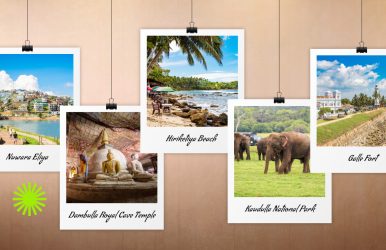
Sri Lanka, with its lush green highlands, deeply ingrained history, and turquoise coastlines, has earned the place of a premier travel destination in the world. You can add to that the welcoming locals and cultural richness in the country. The cultural inclusiveness here shows in the Jaffna Tamil culture and ancient Buddhist sites such as the Sacred City of Anuradhapura and Dambulla Royal Cave Temple.  The Year in Review (2025) data of the Sri Lanka Tourism Development Authority (SLTDA) further vouches for the growth of the country in the tourism sector.  The report says that the number of tourist arrivals in Sri Lanka from January to December 2025 was 2,362,521. Also, the tourism revenue for the same period was 3.2 billion USD.  Moreover, even though the country is similar to Ireland in size, its geographical diversity is astonishing.  Hiriketiya Beach, misty mountain tea plantations such as Nuwara Eliya, UNESCO World Heritage Sites such as Galle Fort, and national parks such as the Kaudulla National Park attract every type of traveler.   However, thanks to this diversity, traveling through the tropical paradise requires a complete understanding of the following areas.  Local Logistics Cultural Expectations Seasonal Weather Patterns So, in this article, I will synthesize my firsthand travel experience into actionable Sri Lanka travel tips.  Pre-Arrival Logistics And Practical Information Understanding the climate and visa system is important if you are traveling to Sri Lanka for the first time.  Furthermore, your packing strategy has to be on point to beat the tropical heat of the island country.  Understanding Sri Lanka's Unique Dual Monsoon System Sri Lanka has a dual monsoon system. It means that two opposite sides of the island country experience rainfall at different times.  The southern and western coasts of the country, including the beautiful Ella and the cultural hub of Kandy, experience monsoon from April to August.  On the other hand, the northern and eastern coasts experience the monsoon season from October to February.  So, December to March is the ideal window to visit Sri Lanka if you want to explore different parts of the country.  Navigating Visa Requirements And Extensions You have to secure an e-Visa online before you reach Sri Lanka.  A standard tourist visa will allow 30 days with double entry, and the application should happen at least two weeks in advance.  Furthermore, if you want to spend longer in the country, you can extend your visa up to 30 days each time.  You have to visit the Department of Immigration in Colombo for the extension of the visa. Update: Sri Lanka's New Free Tourist ETA Scheme (May 2026): What Changed  Sri Lanka's visa system has changed in a way worth flagging directly.  As of May 25, 2026, the government waived the ETA processing fee entirely for nationals of 40 countries. These include the US, UK, Canada, Australia, most of the EU, India, China, and several Gulf states.   Eligible travellers still need to apply for an Electronic Travel Authorization before departure.  The fee is gone, not the application.  Also, the visa remains a 30-day, double-entry authorization, matching what this guide already describes.   Maldivian nationals get a 90-day version under a separate reciprocal arrangement.  Furthermore, the nationals of the Maldives, Seychelles, and Singapore, who did not need an ETA at all. However, they are now required to apply for one, albeit for free.   Sri Lankan diplomatic missions have since put out reminders that the ETA still needs to be secured before you fly.  The on-arrival option listed on the official portal has caused some confusion. Also, airlines have reportedly denied boarding to a handful of travellers who assumed 'free' meant 'not required.'  What This Means For Your Trip  Practically, this does not change much about how you should plan.  You still need to apply through Sri Lanka's official ETA portal before you travel.  You should still do it at least two weeks ahead, as this guide recommends. It is because processing delays have not gone away just because the fee has.   It means that the cost estimate in older trip-planning spreadsheets and blog posts is now wrong for most Western and several Asian nationalities.  Budget for a free application rather than the roughly $50 the ETA used to cost.   It is also worth double-checking your specific nationality against the current list before booking flights. The fee waiver applies to a named set of 40 countries rather than all visitors.  Also, the list has already been amended once since May to add a few more nationalities.   When in doubt, check directly with Sri Lanka's Department of Immigration and Emigration or your nearest Sri Lankan embassy ra. Packing Strategies For Intense Tropical Heat Sri Lanka experiences temperatures between 26°C and 30°C throughout the year.  So, you must pack breathable and lightweight clothing made from linen or cotton.  Furthermore, you must include high-SPF sunscreen, a wide-brimmed hat, and a reusable water bottle. Having said that, the central hill country is significantly cooler, so a light jacket or fleece is necessary for evenings. Sri Lanka Travel Tips For Money Matters, Budgeting And Technology  While we have become comfortable with digital payments, most parts of Sri Lanka may depict a different picture.  And it was one of the main challenges I faced on my first visit to Sri Lanka. Here are more such Sri Lanka travel tips you need to know.  The Realities Of Local Infrastructure And Connectivity  Sri Lanka offers fast, affordable 4G and 5G networks. Once you land at the Colombo Airport, you can buy an easy tourist SIM package from Dialog at the airport.  It offers cheap data packages, and you can easily do a top-up recharge of the SIM at local shops.  Cash Vs. Card And The Art Of Tipping The high-end venues of Sri Lanka will accept cards. However, Sri Lanka is still a cash-driven economy.  So, you can withdraw local rupees (LKR) from local ATMs and avoid high fees.  Also, tipping in Sri Lanka is not mandatory, though it is appreciated. So, whenever you are visiting a restaurant or taking a service, you can pay 500 LKR as a tipping charge for a reasonable gesture.  However, remember that service charges are often included in the restaurant bills.  Cultural Norms, Etiquette, And Historical Context You have to respect the history of Sri Lanka and especially have an idea about how the country suffered during the 1983–2009 civil war. This era left deep scars on the country, especially in the northern region and, more specifically, the Tamil Hub of Jaffna.  So, when you explore this part of Sri Lanka, you can expect a distinct cultural experience. The Hindu temples in Jaffna and the Tamil influence here make it a place to tread respectfully.  Being Respectful To Buddhism  Buddhism is central to Sri Lankan life. So, you must always keep your behavior toward Buddha images respectful.  Any display of disrespectful behavior toward Buddha can also cause legal problems.  Never wear clothing featuring the Buddha, and ensure any tattoos of him are covered.  Do not take selfies with your back to a Buddha statue, and never climb or touch them. Dress Codes And Daily Conservatism When you are outside beach areas, you must dress conservatively to avoid unwanted attention.  Also, cover your shoulders and knees when visiting temples.  Moreover, remove your shoes at sacred sites and carry a sarong for covering up when needed.  Food, Drink, And Culinary Customs In Sri Lanka, you will love the “Rice and Curry” lifestyle. Furthermore, the use of fresh seafood, spices, and coconut in the curries offers you a distinct gastronomic delight.  The local hotels or small eateries are the best places if you want to try the authentic flavors of Sri Lanka.  Furthermore, the spice levels and the use of coconuts differ from one region to another. For example, food in Jaffna is the spiciest, and as you come to the central or the southern regions, the food becomes mellower.  Iconic Street Foods To Discover In Sri Lanka  You cannot miss Kottu Roti, wade, and egg hoppers when you are in Sri Lanka. Also, food etiquette is very important if you want to know about Sri Lanka travel tips.  It is customary to eat with your right hand, even if in many places, they will offer you cutlery. Furthermore, you will get many vegetarian and vegan options in curries.  The vegetable curries here have coconut milk instead of any dairy products.  Sri Lanka Travel Tips For Transportation And Getting Around What is the first thing that comes to your mind when you hear about the transportation in Sri Lanka?  It is the Kandy to Ella train journey, of course.  It offers the most amazing views of plantations and waterfalls.  However, being an iconic train route, the Kandy to Ella route needs advance booking.  Also, buy a third-class ticket to experience the train journey with open doors and a lively atmosphere.  Surviving The Wild Public Bus Network Of Sri Lanka  Public buses in Sri Lanka offer frequent, fast, and cheap services.  However, sometimes you can experience aggressive driving, and there will be limited space for luggage.  Navigating Local Tuk-Tuks And Ride-Hailing Apps For short trips, use the PickMe or Uber apps for transparent pricing,  Furthermore, tuk-tuks are frequently available. However, negotiating the price with them, especially in tourist-heavy spots, can be a challenge.  Health, Safety, And Responsible Travel It is safe to carry a reusable water bottle with a filter to reduce plastic waste and still drink safe water.  Furthermore, you must carry your own medication and a first-aid kit. Also, if you have to take anti-inflammatories, you must visit a local doctor and get a prescription.  Animal Welfare And Ethical Wildlife Excursions Visit places such as the Hurulu Eco Park and the Elephant Transit Home in Udawalawe for responsible, respectful animal encounters. Furthermore, avoid elephant rides to support ethical wildlife viewing.

READ MORE Moving To New Jersey

Moving To New Jersey: 10 Tips To Help

BY  Sibashree Jun 6, 2023

Moving to a state like New Jersey can be an exciting adventure. But it also comes with its own complicated challenges. Luckily, certain tips can help make your transition smoother when moving to the Garden State. These tips cover all aspects of long-distance moving. That includes researching the cost of living and learning local laws. Keep reading for ten tips to help you make a stress-free move to New Jersey. Research The Different Regions Before moving to New Jersey, research its different regions. The state has diverse regions, each with its own pros and cons. Considering your preferences and priorities can help you decide faster. If you're looking for a bustling urban environment with easy access to work opportunities, you should consider Newark and Jersey City. These regions are known for their proximity to New York City and vibrant city life. Conversely, if you prefer a quieter suburban setting with excellent school districts should consider Montclair or Princeton. If you prioritize scenic beauty and recreational opportunities, consider the Delaware Water Gap, the Palisades, or Cape May. Arrange Necessary Services Research the utility companies that serve your region in New Jersey. If you're still using utility services at your current location, inform your providers about your move. Then, contact the utility companies serving your new address in New Jersey. If applicable, arrange electricity and water meter readings at your new home. It can also help to hire professional movers with experience in long-distance moves. These companies will efficiently transport your belongings and guide you through the process. Look for a reputable New Jersey long-distance moving company that provides comprehensive moving services tailored to your needs. Consider The Cost Of Living This state has a higher cost of living than most states in the United States. Research your potential cost of living to ensure financial stability after your home. For example, it has some of the highest property taxes in the country. Research the property tax rates in your intended region, as they can vary significantly. Also, learn the state’s income tax rates and any other relevant taxes to gauge your tax burden. You can reduce this tax burden by taking advantage of every tax incentive that applies to you. For instance, if you have a family with dependents, look into any 2025 tax credits for dependents that you qualify for. Plenty of tax professionals can also help you get the most out of your tax return. You must also consider essential expenses like groceries, healthcare, utilities, and insurance. Research local grocery stores and compare prices to ensure they’re under budget. To stay within your budget, conduct research on local grocery stores, compare prices, and take into account the insights provided in our article on the best homeowners insurance to make well-informed decisions regarding insurance coverage Plan Your Housing In Advance Planning your housing in advance is crucial when moving to New Jersey. Research neighborhoods to find areas that match your preferences and needs. Consider your safety, proximity to schools or workplaces, amenities, and community atmosphere. You can browse real estate websites and rental platforms for available properties in your area. Consider contacting a reputable real estate agent who specializes in the local market. They can provide valuable insights and show you suitable properties. If you want to live near the water in an urban hub, consider looking at new developments in Newark. For example, you can check out the rental options at parq930.com to see what is available in the area. If possible, plan a visit to New Jersey before your move. Walk around, visit local shops, and get a feel for the community. Understand The Transportation Options New Jersey Transit operates an extensive train network. The NJ Transit Rail service connects various parts of the state to New York and Pennsylvania. Familiarize yourself with the train lines, schedules, and ticketing options beforehand. NJ Transit also operates a comprehensive bus network for urban and suburban areas. Research bus routes, timetables, and fare options to familiarize yourself with this mode of transportation. New Jersey also offers light rail systems in select areas, like the Hudson-Bergen Light Rail and the Newark Light Rail. These systems provide extra transportation options for commuters and residents in specific regions. Learn The Local Laws And Regulations New Jersey has its own driving laws and regulations that may differ from those in other states. Educate yourself on traffic rules, speed limits, and seat belt requirements. Familiarize yourself with the state's housing regulations, especially if you plan to rent. Understand tenant rights, landlord responsibilities, lease agreements, and eviction procedures. If you'll work in New Jersey, research the state's employment laws. Understand your rights as an employee, minimum wage requirements, overtime regulations, and workplace safety standards. Research Schools And Education Options Don't forget to research the school districts in your desired area. School districts vary in quality, resources, extracurricular activities, and academic programs. Browse district websites, school rankings, and parent reviews to gain insights. Consider your child's educational priorities and needs. Are you seeking a district specializing in STEM programs, arts, or special education? Identify the educational offerings that align with your child's interests and learning style. Connect With The Local Community Joining online forums or social media groups of New Jersey residents can help connect with the local community. These platforms allow you to ask questions, seek recommendations, and make friends. Look for groups specific to your city or interests to find like-minded individuals. Connecting with locals helps you stay informed about upcoming events, festivals, and activities. These events are enjoyable and a great way to meet new people, spend your weekends, and learn more about local culture. Explore Recreational Activities Don't forget to take advantage of the state's diverse recreational activities. For example, New Jersey boasts beautiful beaches along its coastline. Explore popular spots like Atlantic City and Cape May, or opt for more secluded beaches like Island Beach State Park. New Jersey also has many state parks and natural reserves for outdoor exploration. Visit the picturesque Delaware Water Gap and the serene Barnett Lighthouse State Park for hiking trails, camping sites, wildlife observation, and scenic views. More importantly, the state has a diverse culinary scene. Explore local restaurants, food markets, and food festivals to savor their culinary delights. Update Your Documents And Licenses Finally, update your documents and licenses to ensure a smooth transition into your new community. This helps you stay compliant, keep accurate records, and become a resident. Complete these tasks on time to avoid any potential penalties or complications. Note the required documents and visit the appropriate government offices to complete the paperwork. Conclusion Moving to a new state like New Jersey can be a significant undertaking. But the right preparation and knowledge can make the process more manageable. The steps above will help you settle into your New Jersey home. Read Also: Moving To Paris – How To Start The Most Beautiful Places In The World Top 10 National Parks In Oregon That You Need To Explore In 2023!